






Abstract
The brain is highly susceptible to oxidative injury, and the pentose phosphate pathway (PPP) has been shown to be affected by pathological conditions, such as Alzheimer's disease and traumatic brain injury. While this pathway has been investigated in the intact brain and in astrocytes, little is known about the PPP in neurons. The activity of the PPP was quantified in cultured cerebral cortical and cerebellar neurons after incubation in the presence of [2-13C]glucose or [3-13C]glucose. The activity of the PPP was several fold lower than glycolysis in both types of neurons. While metabolism of 13C-labeled glucose via the PPP does not appear to contribute to the production of releasable lactate, it contributes to labeling of tricarboxylic acid (TCA) cycle intermediates and related amino acids. Based on glutamate isotopomers, it was calculated that PPP activity accounts for ∼6% of glucose metabolism in cortical neurons and ∼4% in cerebellar neurons. This is the first demonstration that pyruvate generated from glucose via the PPP contributes to the synthesis of acetyl CoA for oxidation in the TCA cycle. Moreover, the fact that 13C labeling from glucose is incorporated into glutamate proves that both the oxidative and the nonoxidative stages of the PPP are active in neurons.
Introduction
Glucose, the most important energy source in the brain, is metabolized via the pentose phosphate pathway (PPP) in addition to glycolysis and glycogen synthesis (McKenna et al, 2012). Metabolism of glucose via the PPP is particularly important for formation of ribose-5-phosphate used in the synthesis of nucleotides and for production of NADP+/NADPH required for lipid biosynthesis (Vannucci and Simpson, 2003) as well as regeneration of reduced glutathione (White et al, 1988). The activity of the PPP is high in the developing brain, reaching a peak during myelination, but it is believed to be less pronounced in the adult brain (McKenna et al, 2012).
The PPP is divided into two stages, i.e., the oxidative and the nonoxidative stages. After the nonoxidative stage, the metabolites may reenter the glycolysis at the level of fructose-6-phosphate or glyceraldehyde-3-phosphate (G-3-P). Glucose-6-phosphate dehydrogenase, the key enzyme in the PPP, constitutes the first step in the oxidative stage and appears to have a crucial role in the cellular response to oxidative stress (Filosa et al, 2003). Pathological conditions are known to alter the activity of the PPP. Amyloid
The PPP activity has repeatedly been analyzed using radioactively labeled glucose. In one of the first studies on PPP activity, the contribution of this pathway to glucose metabolism (GM) was quantified by measuring the amounts of [2-14C]glucose incorporated into glycogen as [2-14C]glucose and [1-14C]glucose units generated by direct glycogen synthesis or after PPP metabolism, respectively. The authors concluded that the whole-brain value for PPP is 3% to 5% of glycogen synthesis (Hostetler and Landau, 1967). However, it should be noted that in the brain, glycogen is mainly produced and localized in the astrocytes (Cataldo and Broadwell, 1986) and thus, this value reflects the PPP in astrocytes only. Commonly, activity of the PPP is quantified by analyzing the difference in 14CO2 production from [1-14C]glucose and [6-14C]glucose (Herrero-Mendez et al, 2009; Katz and Wood, 1960; Katz et al, 1966; Wood et al, 1963) a method applicable to all cell types. Using this technique, Bauer and Brand (1982) found that 2% of glucose was metabolized via the PPP in rat cerebral cortical synaptosomes. In contrast, Allaman et al (2010) and Takahashi et al (2012) found that 60% to 70% of the CO2 produced from glucose in astrocytes is generated via PPP. It should, however, be noted that measuring the 14CO2 production from [1-14C]glucose and [6-14C]glucose has limitations since only the first step of the PPP is analyzed, i.e., the oxidative stage, and extensive tricarboxylic acid (TCA) cycle activity after glycolysis can produce large amounts of 14CO2 from both precursors concealing the quantification of PPP activity. Furthermore, two parallel incubations must be performed for each measurement, and thus inter sample variability increases the uncertainty of the results. Some of these restrictions can be overcome by analysis of isotopic composition of triose phosphate derivatives such as lactate rather than CO2 (Katz and Wood, 1960; Katz et al, 1966; Wood et al, 1963).
13C-Labeled glucose can be used in combination with magnetic resonance spectroscopy (MRS) or mass spectrometry (MS) to quantify PPP activity. Thus, it is possible to measure PPP activity by determining the labeling pattern in lactate released from cultured cells after parallel incubations with [1-13C]glucose and [6-13C]glucose (Kingsley-Hickman et al, 1990). Still, two parallel incubations are needed for each measurement. This problem was circumvented by using [1,6-13C2,6,6-2H2]glucose, and it was found that PPP activity contributes 9.4±2.1% to the synthesis of lactate released to the medium in cultured glioma cells (Ross et al, 1994). This same strategy combined with microdialysis was used to show that 3.5±0.4% of glucose was metabolized via PPP in the rat brain (Ben-Yoseph et al, 1995). Furthermore, it has been shown that primary mixed cultures of neurons and glial cells from neocortex exhibit a PPP activity accounting for 0.25±0.3% of the conversion of glucose to lactate, a value that was increased to 22.2±0.6% in the presence of H2O2 (Ben-Yoseph et al, 1996). Another substrate used is [1,2-13C]glucose, leading to double labeling in lactate from glycolysis, and both mono- and double labeling from PPP (Dusick et al, 2007). However, both methods rely on the assumption that the incorporation of label into lactate found in the medium reflects total the PPP activity.
Little is known about the PPP activity in neurons specifically with regard to its role in amino-acid neurotransmitter synthesis as well as its contribution to the formation of acetyl CoA for oxidation in the TCA cycle. The present study was undertaken to measure PPP activity in neurons cultured from cerebral cortex and cerebellum. [3-13C]Glucose was used to selectively investigate the contribution of the PPP to its metabolism
Materials and methods
Materials
Pregnant NMRI mice and 7-day-old NMRI mice were bought from Taconic M&B (Ry, Denmark). Fetal calf serum was purchased from Seralab Ltd. (Sussex, UK) and culture dishes and flasks were obtained from Nunc A/S (Roskilde, Denmark). Culture medium (Dulbecco's minimum essential medium; DMEM) was bought from Sigma-Aldrich (St Louis, MO, USA) while [2-13C]glucose (99%) and [3-13C]glucose (99%) were purchased from Cambridge Isotope Laboratories, Inc. (Andover, MA, USA). Deuterated water (D2O; 99%) was bought from C/D/N Isotopes Inc. (Quebec, Canada). All other chemicals were of the purest grade available from regular commercial sources.
Preparation of Neuronal Cultures
All animals were euthanized in accordance with the general ethical guidelines stated by the European Convention 2010/63/EU and the Danish Animal Experiments Inspectorate.
Monotypic cultures of cerebral cortical neurons were prepared as described by Hertz et al (1989). The cerebral cortices were isolated from 15-day-old mice embryos and briefly exposed to mild trypsinization (0.25 mg/mL trypsin, 15 minutes, 37°C) followed by trituration in a DNase solution (75 i.u./mL) containing soybean trypsin inhibitor (0.53 mg/mL). The cells were suspended in a slightly modified Dulbecco's medium (Hertz et al, 1982) containing 31 mmol/L glucose, 24.5 mmol/L KCl, 7
Cerebellar neurons were isolated and cultured from cerebella of 7-day-old mice essentially as described by Schousboe et al (1989). The tissue was exposed to mild trypsinization (0.25 mg/mL trypsin, 15 minutes, 37°C) followed by trituration in a DNase solution (75 i.u./mL) containing soybean trypsin inhibitor (0.53 mg/mL). The cells were suspended in a slightly modified Dulbecco's medium (Hertz et al, 1982) containing 12 mmol/L glucose, 50
Incubation Experiments
The culture medium was removed from cell cultures in the 80-cm2 flasks and the cells were washed once with 37°C warm phosphate-buffered saline containing 137 mmol/L NaCl, 2.7 mmol/L KCl, 7.3 mmol/L Na2HPO4, 1.5 mmol/L KH2PO4, 0.9 mmol/L CaCl2, and 0.5 mmol/L MgCl2, pH 7.4. Next, the cells were incubated with serum-free DMEM containing 6 mmol/L [2-13C]glucose for 4 hours. After incubation, the incubation medium was collected and lyophilized before analysis by gas chromatography-mass spectrometry (GC-MS). The cultures were washed once with ice-cold phosphate-buffered saline to halt metabolism. Subsequently, ice-cold ethanol was used to extract the intracellular contents and the soluble components were separated from the insoluble material by centrifugation at 20,000
The cells cultured in the 35-mm Petri dishes were treated as described above; however, these cells were incubated in serum-free DMEM containing 6 mmol/L [3-13C]glucose for 4 hours and the lyophilized cell extracts were thereafter analyzed by GC-MS.
Protein Analysis
The pellets dissolved in 1 mol/L KOH were used for determination of the cellular protein content using the Lowry protein assay and bovine serum albumin as standard (Lowry et al, 1951).
Magnetic Resonance Spectroscopy
The lyophilized extracts of cells incubated in the presence of [2-13C]glucose were dissolved in 0.2 mL 99% D2O containing 0.01% ethylene glycol as internal standard. The pH was adjusted to be between 6.5 and 7.5. Proton decoupled carbon spectra were obtained on a BRUKER DRX500 spectrometer (BRUKER analytic GmbH, Rheinstetten, Germany). Spectra were accumulated using a 30° pulse angle, 25 kHz spectral width with 64 K data points. The acquisition time was 1.3 seconds, and a 0.5-second relaxation delay was used. The number of scans was in average 60,000.
High-Performance Liquid Chromatography
Amino acids in cell extracts were quantified by HPLC on a Hewlett Packard 100 system (Agilent Technologies, Palo Alto, CA, USA). The amino acids were precolumn derivatized with
Gas Chromatography-Mass Spectrometry
The medium samples from neurons incubated in the presence of [2-13C]glucose and cell extracts from neurons incubated in the presence of [3-13C]glucose were lyophilized and later redissolved in HCl. The pH was adjusted to <2 and the samples were dried under atmospheric air. The amino acids were in multiple steps extracted into an organic phase of ethanol and benzene and dried again under atmospheric air before derivatization with
Data Analysis
Relevant peaks in the magnetic resonance spectra from glutamate and
The atom percent excess 13C values for glutamate, GABA, citrate, alanine, aspartate,
All statistical analyses were performed using SPSS (IBM, Oslo, Norway). The cerebellar and cortical neurons were compared using unpaired Student's
Glucose Metabolism and 13C Labeling of Products
Glucose-6-phosphate represents a branch point in GM because it is a common substrate for enzymes involved in glycolysis, PPP, glycogenesis, and glycogenolysis. Of these, only glycolysis and PPP are active in neurons. Thus, in the following, the term GM will be used to refer to the concerted action of PPP and glycolysis.
[2-13C]Glucose
When metabolized via glycolysis, [2-13C]glucose yields equal amounts of unlabeled pyruvate and [2-13C]pyruvate. The labeled pyruvate can be converted to [2-13C]lactate or [2-13C]alanine which may be released to the medium. Alternatively, the label from [2-13C]pyruvate can be incorporated into TCA cycle intermediates after conversion to [1-13C]acetyl CoA (Figure 1).
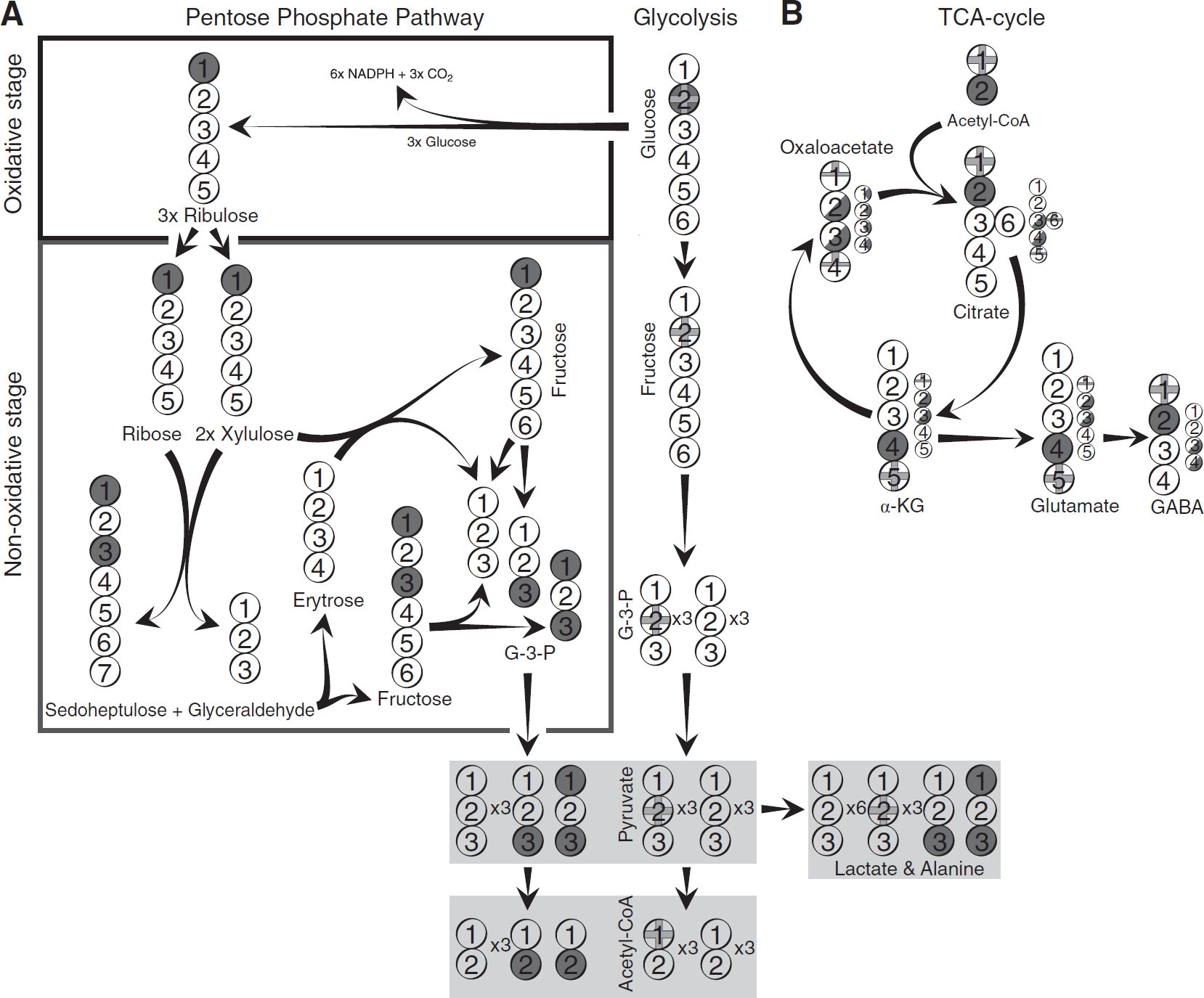
Simplified presentation of 13C-labeling patterns of metabolites from incubation of cells with [2-13C]glucose representing the pentose phosphate pathway (PPP), glycolysis, and tricarboxylic acid (TCA) cycle activity. The circles symbolize the carbon backbone of the molecules. Dark grey circles mark the position of the label resulting from the PPP. Filled circles indicate that all the molecules are labeled in the position indicated. Half-filled circles indicate that 50% of the molecules formed are labeled in that position. Grey crosses mark the position of the label resulting from glycolysis. Complete crosses indicate that all the molecules are labeled in the position indicated. Demi-crosses indicate that half of the molecules are labeled in that position. Panel
[1-13C]Acetyl CoA enters the TCA cycle by condensing with oxaloacetate to form [1-13C]citrate. [1-13C]Citrate is converted to [1-13C]aconitate, [1-13C]isocitrate and then
Having completed one cycle, labeled oxaloacetate merges with acetyl CoA (unlabeled, or labeled after glycolysis or PPP) for a second turn. Second turn metabolites are illustrated by smaller models in Figure 1 (for simplicity, only the second turn metabolites derived from condensation with unlabeled acetyl CoA are shown). Hence, the second turn of the TCA cycle contains [5-13C]citrate or [6-13C]citrate if the label from glucose is converted to pyruvate via glycolysis. The 13C label in the C6 position of citrate is lost when [6-13C]isocitrate is transformed to
When [2-13C]glucose is metabolized via the PPP, the result will be more complex. The first step, constituting the oxidative stage of the PPP, produces [1-13C]ribulose-5-phosphate, CO2, and NADPH from [2-13C]glucose-6-phosphate and NADP+ (Katz and Wood, 1960; Wood et al, 1963). If the pentose sugars are not used for synthesis of nucleotides, then they will be further metabolized via the nonoxidative stage of the PPP to fructose-6-phosphate and the glycolytic intermediate G-3-P. Per three molecules of [2-13C]glucose metabolized via the PPP, one molecule of [1-13C]fructose, one [1,3-13C]fructose, and one unlabeled molecule of the glycolytic intermediate G-3-P are formed. These metabolites can then be converted to pyruvate by glycolytic enzymes. Alternatively, fructose-6-phosphate can recycle through the PPP. Not taking this cycling into account, PPP metabolism of three molecules of [2-13C]glucose will generate five molecules of pyruvate: one [3-13C], one [1,3-13C], and three unlabeled. Thereafter, the pyruvate molecules may be converted to lactate or alanine displaying the same labeling pattern as pyruvate or the five pyruvate molecules may be converted into two molecules of [2-13C]acetyl CoA plus three molecules of unlabeled acetyl CoA.
The TCA cycle metabolism of [2-13C]acetyl CoA gives rise to formation of [4-13C]glutamate, [2-13C]GABA and equal amounts of [2-13C]- and [3-13C]oxaloacetate in the first turn of the TCA cycle. When 13C-labeled oxaloacetate condenses with (unlabeled) acetyl CoA the label in glutamate will be equally divided between the C2 and C3 positions in the second turn of the TCA cycle. In the third and subsequent turns, the 13C label of glutamate will be equally divided between the C1, C2, and C3 positions as well as ¼ of the label being lost. GABA will be labeled in the C3 and C4 positions from the second and subsequent turns of the TCA cycle. Consequently, when [2-13C]glucose is converted to [2-13C]acetyl CoA after metabolism via the PPP, the 13C label in TCA cycle intermediates is not lost as rapidly as it is when [1-13C]acetyl CoA is generated via glycolysis. Moreover, it should be noticed that [1-13C]glutamate can be generated from [1-13C]acetyl CoA in the second turn of TCA cycle metabolism or from [2-13C]acetyl CoA in the third turn. Hence, although 13C-labeled pyruvate derived from both glycolysis and PPP activity is metabolized in the TCA cycle beyond the first turn, the isotopomers generated from each of the two metabolic pathways can no longer be distinguished after subsequent turns of TCA cycle metabolism. Therefore, only first turn metabolites were used for the calculations.
Calculation of the PPP/GM ratio from [2-13C]glucose
Taking advantage of the different isotopomers generated after glycolytic and PPP metabolism of [2-13C]glucose, PPP/GM ratios can be calculated by dividing the amount of isotopomer generated after PPP activity by the sum of isotopomers produced from the combined activities of glycolysis and PPP. For the extracellular compartment, the PPP/GM ratio is calculated by using the percent 13C enrichment, i.e., dividing the double labeling by the combined mono- and double labeling of lactate or alanine generated from metabolism of [2-13C]glucose. Mono-labeled lactate and alanine originate from both glycolysis and PPP while double labeled lactate and alanine reflect PPP activity. However, it is necessary to adjust for the redistribution of 13C-labeled carbon atoms in the nonoxidative stage of the PPP. One molecule of double-labeled lactate or alanine corresponds to the utilization of three molecules of 13C-labeled glucose via PPP.
Thus, the relation can be expressed as follows:

This can be simplified to equation (2):

If all [2-13C]glucose metabolized via the PPP were labeled, then it would give rise to equal amounts of mono-labeled and double-labeled lactate and alanine. Thus, the contribution from PPP to mono labeling would be equal to the amount of double labeling. However, the labeled glucose may be mixed with unlabeled metabolites downstream of the oxidative stage of the PPP, which may lead to a dilution of the label, and thus an underestimation of the PPP/GM ratio based on lactate and alanine. The same equation is valid for calculation of the PPP/GM ratios using results obtained from experiments employed [3-13C]glucose.
For the intracellular compartment, PPP/GM ratios are calculated based on the amount of isotopic 13C labeling from [2-13C]glucose incorporated into glutamate and/or GABA obtained from MRS in combination with HPLC analyses. Metabolism of three molecules of [2-13C]glucose via the PPP leads to formation of two molecules of [4-13C]glutamate. The amount of 13C label in the C5 position of glutamate from glycolytic activity, however, corresponds directly to the amount of glucose consumed by glycolysis. Therefore, the amount of 13C label in glutamate and GABA generated by way of PPP metabolism must be divided by two and multiplied by three to calculate the amount of [2-13C]glucose metabolized via the PPP. Thus, the PPP/GM ratio can be expressed as follows:

In GABAergic neurons, glutamate can be converted to GABA, and therefore a similar calculation based on the 13C-labeling pattern in GABA can be applied:

[3-13C]Glucose
If [3-13C]glucose is metabolized via the PPP, then the result after the nonoxidative stage is one molecule of [2-13C]fructose, one [2,3-13C]fructose as well as one unlabeled G-3-P per three molecules of [3-13C]glucose entering the PPP. Subsequent glycolytic activity leads to formation of five molecules of pyruvate, i.e., three unlabeled, one [2-13C] and one [1,2-13C] labeled, which can be converted to lactate or alanine exhibiting similar labeling patterns. Alternatively, the pyruvate molecules can be decarboxylated by pyruvate dehydrogenase resulting in unlabeled acetyl CoA as well as two molecules of [1-13C]acetyl CoA. Condensation of [1-13C]acetyl CoA with oxaloacetate will give 13C labeling in TCA cycle metabolites. These labeling patterns are identical to the ones derived from [2-13C]glucose metabolized solely via glycolysis (see above and Figure 1). Consequently, in the first turn of the TCA cycle, all the TCA cycle intermediates as well as glutamate, GABA, and aspartate will be labeled in one carbon atom (M+1) (Figure 2).
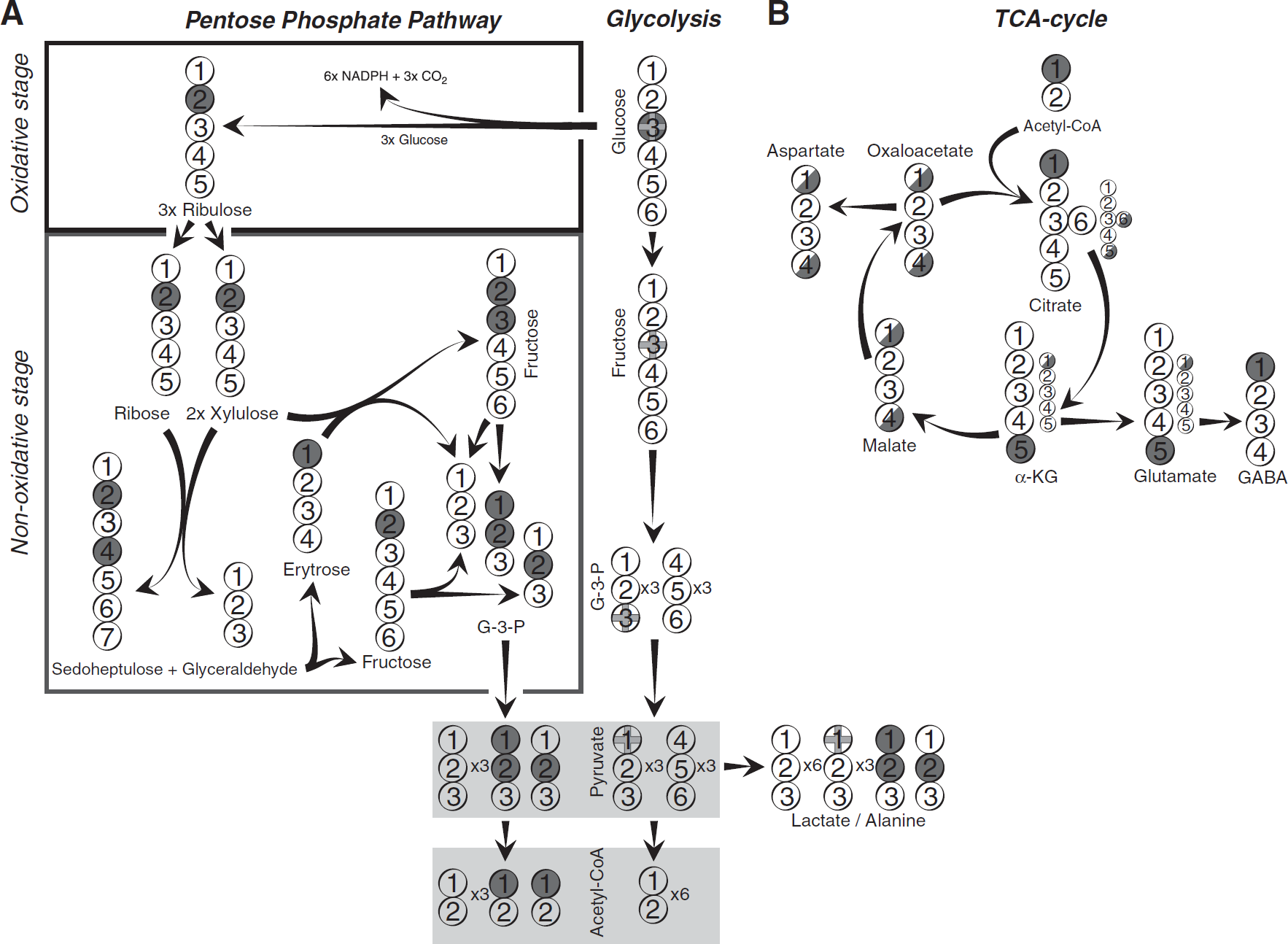
Labeling patterns from [3-13C]glucose resulting from the pentose phosphate pathway (PPP), glycolysis, and tricarboxylic acid (TCA) cycle activity. The circles symbolize the carbon backbone of the molecules. Dark grey circles mark the position of the label resulting from the PPP. Filled circles indicate that all the molecules are labeled in the position indicated. Half-filled circles indicate that 50% of the molecules formed are labeled in that position. Grey crosses mark the position of the label resulting from glycolysis. Panel
Metabolism of [3-13C]glucose via glycolysis also yields two molecules of pyruvate; i.e., one unlabeled and [1-13C] labeled. The latter can be converted to [1-13C]lactate or [1-13C]alanine; however, the 13C label is lost when pyruvate is converted to acetyl CoA. Consequently, TCA cycle metabolism of pyruvate generated from [3-13C]glucose via glycolysis does not lead to labeling of any intermediates or their derivatives such as glutamate and GABA. Therefore, all 13C label observed in TCA cycle intermediates and their derivatives is the result of PPP activity.
Results
The intracellular content of glutathione (oxidized plus reduced), glutamate, GABA, alanine, and aspartate is shown in Figure 3. The neocortical and cerebellar neurons displayed similar amounts of glutathione, and the levels were in accordance with amounts previously reported by Dringen et al (1999). The neocortical neurons have been characterized as mainly GABAergic, while the cerebellar neurons in culture have been shown to be mainly glutamatergic (Schousboe et al, 1985). This is reaffirmed here as observed by the significant differences in glutamate and GABA levels between the two preparations of cultured neurons; the glutamate content was highest in cerebellar neurons while GABA was highest in neocortical neurons. In addition, the amount of aspartate was significantly higher in the neocortical compared with cerebellar neurons.
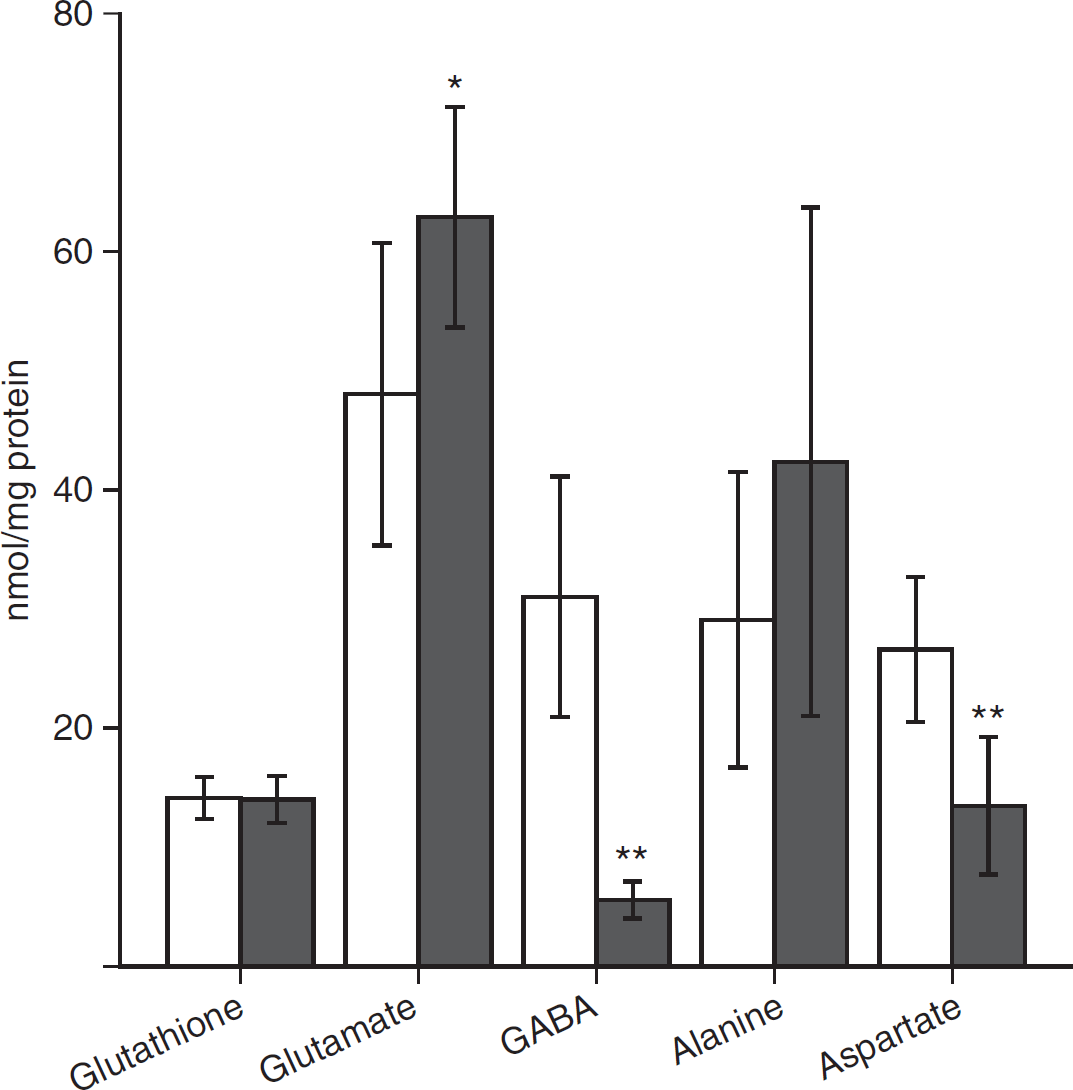
Cortical (open bars) and cerebellar (filled bars) neurons were incubated for 4 hours. Cell extracts were analyzed by high-performance liquid chromatography (HPLC). For more details, see Materials and methods. Results are presented as mean±95% confidence interval (CI) (
Figure 4 shows typical spectra of cell extracts from cerebellar and neocortical neurons incubated with [2-13C]glucose. In both cell types, 13C labeling was present in each of the five carbon positions of glutamate. In the neocortical cultures also 13C labeling of GABA could be detected, in line with the GABAergic nature of the cells. It is notable that the C5 peak of glutamate was considerably higher than the other glutamate peaks consistent with a high glycolytic compared with PPP activity.
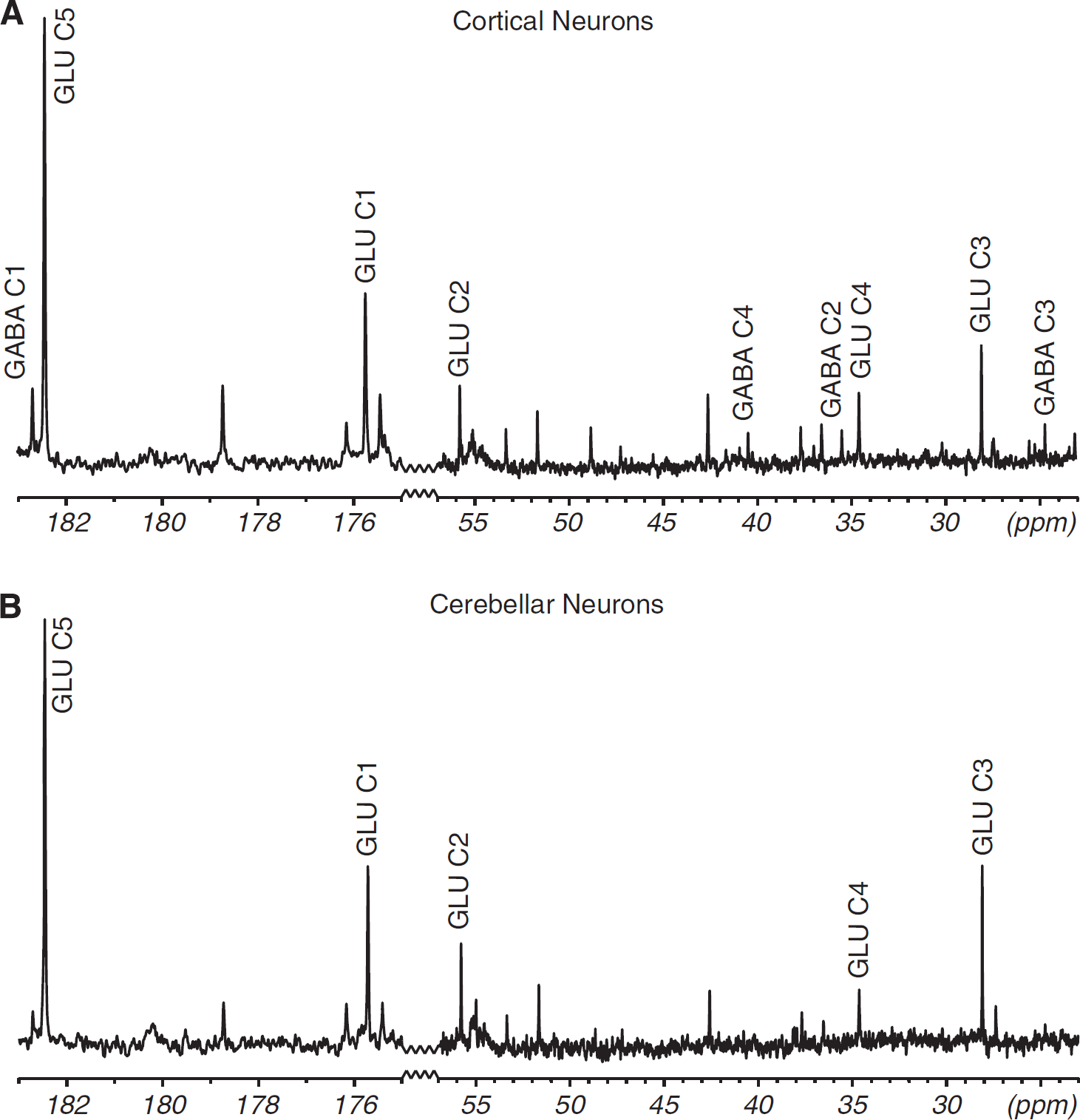
13C Magnetic resonance (MR) spectra of the cell culture extracts from incubation with [2-13C]glucose. (
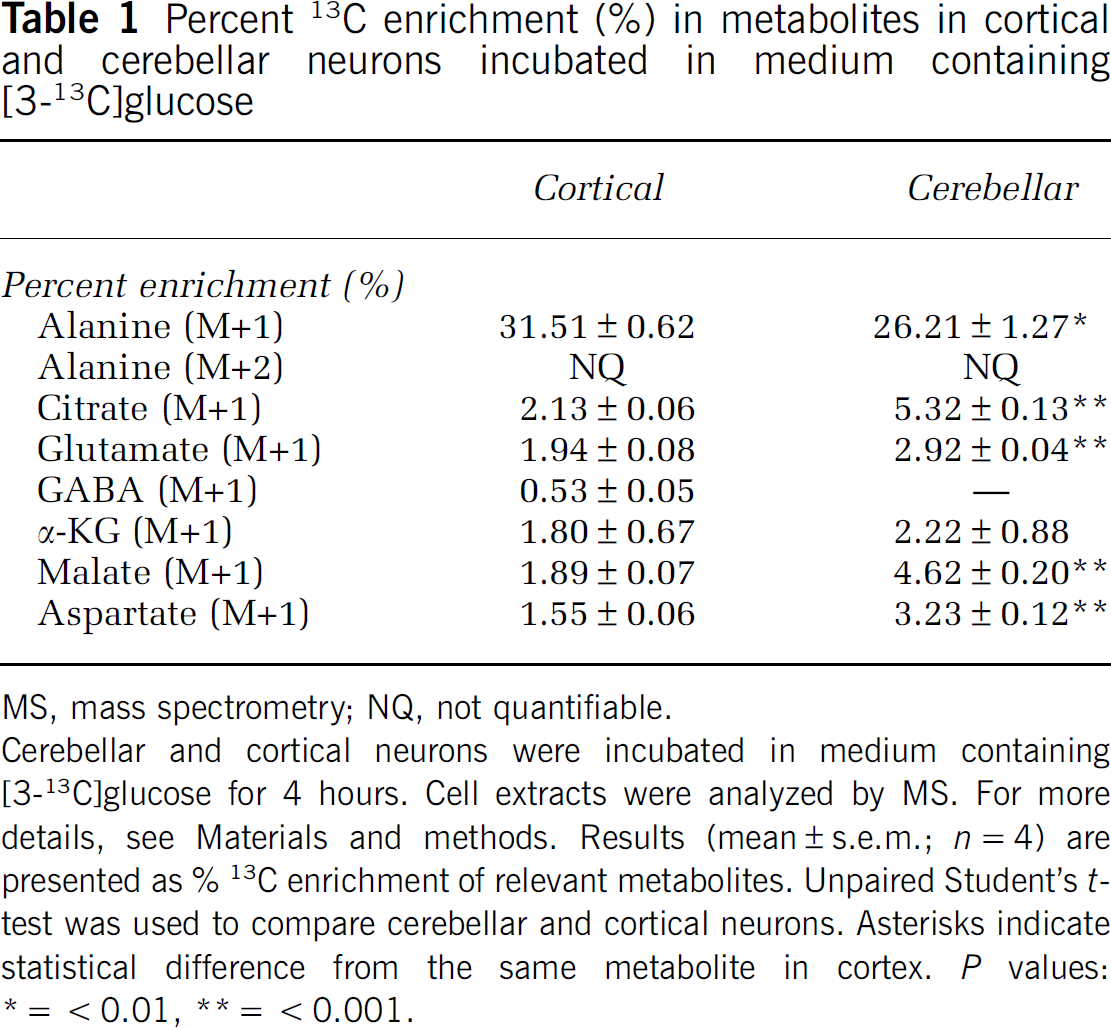
The percent enrichment in intracellular alanine, citrate, glutamate, GABA,
Percent 13C enrichment (%) in metabolites in cortical and cerebellar neurons incubated in medium containing [3-13C]glucose
MS, mass spectrometry; NQ, not quantifiable.
Cerebellar and cortical neurons were incubated in medium containing [3-13C]glucose for 4 hours. Cell extracts were analyzed by MS. For more details, see Materials and methods. Results (mean±s.e.m.;
It should be noted that the 13C labeling of the metabolites could be increased by the presence of an active pyruvate carboxylation process in the small population of astrocytes in the neuronal cultures. The astrocytic population in cerebellar granule cells is between 5% and 10% (Drejer et al, 1985; Schousboe et al, 1985). An analogous labeling experiment in cultured cerebellar and cortical astrocytes has been conducted to calculate pyruvate carboxylation activity and related metabolism (Brekke et al, 2012). Applying labeling data obtained using [2-13C]glucose, it was calculated that the pyruvate carboxylase activity of the above-mentioned astrocyte population could contribute to 1% to 4% of the labeling in the relevant positions in glutamate (i.e., the amount of labeling in the C2 position would be 1.98 nmol/mg protein instead of 2.08 nmol/mg protein). This would again maximally lead to a 4.5% overestimation of the labeling from PPP when applying [3-13C]glucose (i.e., the percent enrichment for glutamate would be 2.79% instead of 2.92%). In neocortical cultures, the percentage of astrocytes is only 5% (Larsson et al, 1985), and would maximally lead to a 3% overestimation (i.e., the percent enrichment in glutamate would be 1.88% instead of 1.94%). Thus, it was concluded that the contribution of pyruvate carboxylase activity was negligible.
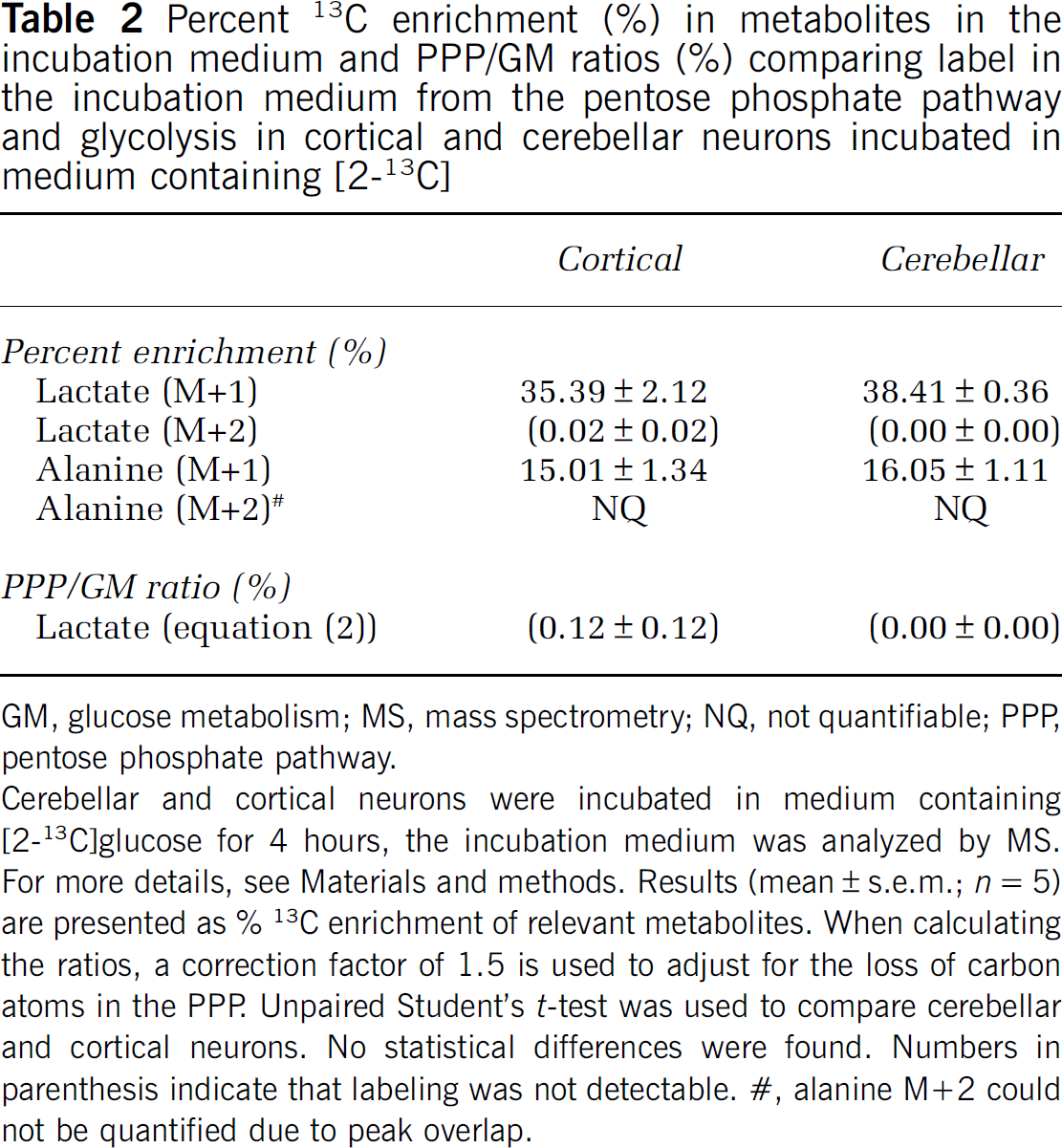
The percent enrichment in lactate and alanine in the medium resulting from incubation with [2-13C]glucose is presented in Table 2. The levels of double-labeled lactate were very low, and consequently the PPP/GM ratios for lactate were low, indicating a negligible PPP activity associated with extracellular lactate. Double-labeled alanine was not quantifiable due to low quantities and an overlapping peak. Thus, the PPP/GM ratio could not be calculated for alanine.
Percent 13C enrichment (%) in metabolites in the incubation medium and PPP/GM ratios (%) comparing label in the incubation medium from the pentose phosphate pathway and glycolysis in cortical and cerebellar neurons incubated in medium containing [2-13C]
GM, glucose metabolism; MS, mass spectrometry; NQ, not quantifiable; PPP, pentose phosphate pathway.
Cerebellar and cortical neurons were incubated in medium containing [2-13C]glucose for 4 hours, the incubation medium was analyzed by MS. For more details, see Materials and methods. Results (mean±s.e.m.;
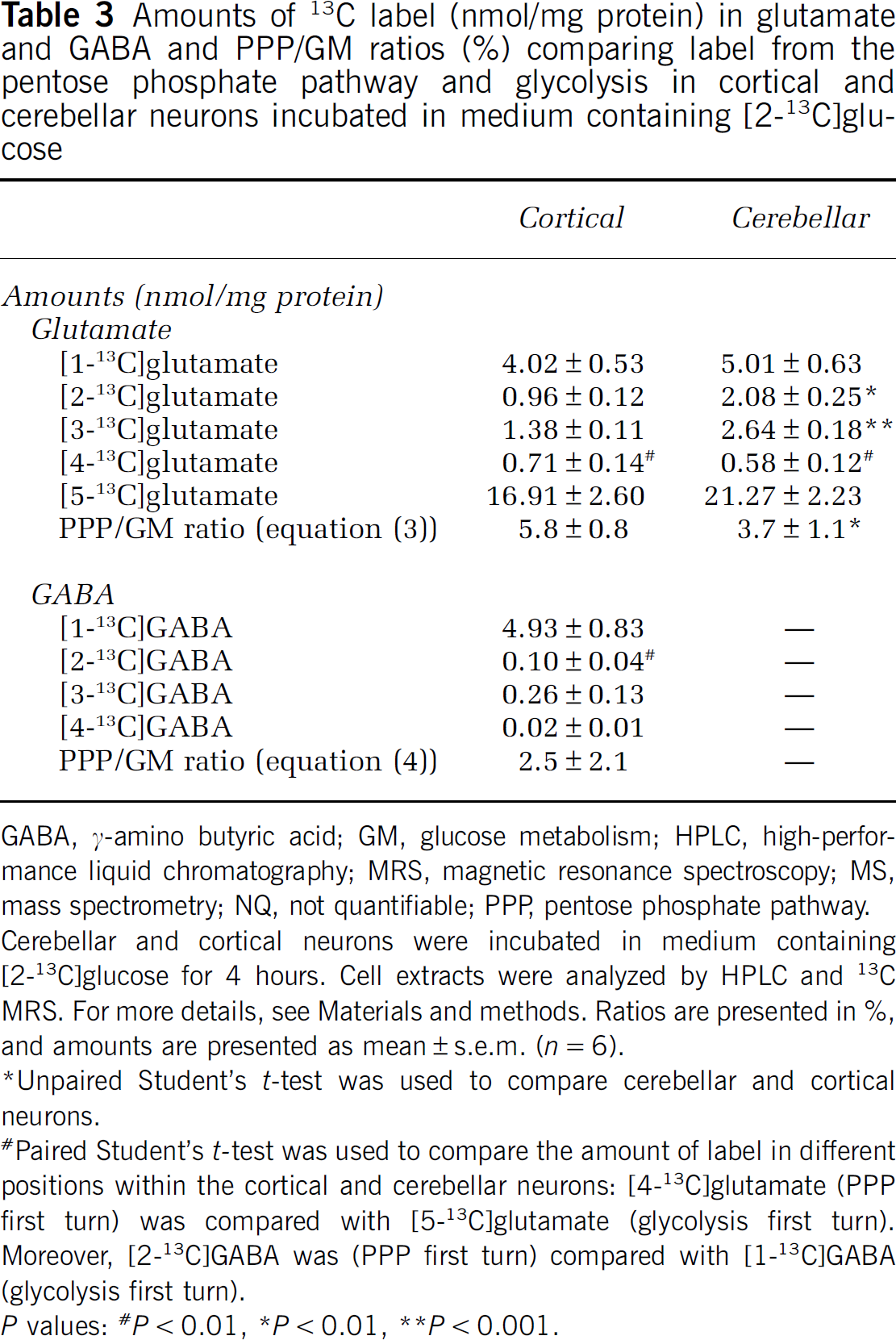
Table 3 presents the amount of different isotopomers of glutamate generated after metabolism of [2-13C]glucose. The amounts of different isotopomers of GABA in neocortical neurons are also listed. To obtain information about the relative contribution from PPP and glycolytic activity to the production of pyruvate which is subsequently metabolized in the TCA cycle, the amount of [4-13C]glutamate originating from PPP activity was compared with that of [5-13C]glutamate generated after glycolysis. Moreover, there was significantly higher 13C labeling in the C1 compared with the C2 position of GABA. These results confirm that glycolysis is significantly more active than the PPP. The values for PPP from the second turn of the TCA cycle, i.e., the amounts of [3-13C]glutamate and [2-13C]glutamate, were slightly higher in cerebellar compared with cortical neurons. Based on the amounts of labeling, PPP/GM ratios for glutamate and GABA could be calculated. The ratio for glutamate was higher for cortical neurons (6%) compared with cerebellar neurons (4%).
Amounts of 13C label (nmol/mg protein) in glutamate and GABA and PPP/GM ratios (%) comparing label from the pentose phosphate pathway and glycolysis in cortical and cerebellar neurons incubated in medium containing [2-13C]glucose
GABA,
Cerebellar and cortical neurons were incubated in medium containing [2-13C]glucose for 4 hours. Cell extracts were analyzed by HPLC and 13C MRS. For more details, see Materials and methods. Ratios are presented in %, and amounts are presented as mean±s.e.m. (
∗Unpaired Student's
#Paired Student's
Discussion
Several previous studies have been aimed at elucidating the quantitative importance of the PPP for GM in the brain. However, due to methodological limitations, it has been difficult to obtain a reliable quantification of this pathway for GM (Ben-Yoseph et al, 1995; Herrero-Mendez et al, 2009; Katz et al, 1966). The use of [3-13C]glucose allows a conclusion regarding significant presence of PPP associated with the TCA cycle, while applying [2-13C]glucose allows a reliable calculation of the PPP/GM ratio. In the present study, these principles have been combined to unequivocally show a significant contribution of PPP activity to GM. This is, to our knowledge, the first demonstration that carbon atoms in pyruvate formed via the PPP are incorporated into TCA cycle intermediates and neurotransmitters.
Pentose Phosphate Pathway Activity in Relation to Tricarboxylic Acid Cycle Metabolites and Neurotransmitters
The presence of mono labeling in TCA cycle intermediates and related amino acids (see Figure 2) constitutes an independent proof of PPP activity using [3-13C]glucose in combination with MS analyses. Moreover, this is reinforced by the finding of label in the C4 position of glutamate in both types of neuronal cultures, and the C2 position of GABA in the cerebral cortical cultures when [2-13C]glucose was used as substrate. The only other metabolic pathway that could theoretically produce 13C label in these positions is pyruvate carboxylation followed by backflux and thereafter pyruvate recycling. This is unlikely since pyruvate carboxylation is only operative in astrocytes (Patel, 1974; Yu et al, 1983). Thus, the only way to get 13C label into glutamate C4 and GABA C2 in neurons is via the PPP. Due to a fourfold to fivefold higher total glucose consumption in cerebellar granule cells compared with cortical neurons (Hertz et al, 1988), it is necessary to compare PPP activity relative to GM. The PPP/GM ratio calculated based on 13C labeling in glutamate (Table 3) was significantly lower in cerebellum compared with cortex. It should be noted, however, that the two types of neuronal cultures were maintained under slightly different glucose concentrations. It has recently been shown that glucose availability during culturing influences the expression of enzymes relevant for metabolism of glucose via the PPP (Takahashi et al, 2012).
Pentose Phosphate Pathway Activity in Production of Extracellular Lactate
We found that pyruvate derived from [2-13C]glucose via the PPP did not contribute detectably to the production of lactate in the medium. This is in accordance with the findings of Ben-Yoseph et al (1996), who used the incorporation of label from [1,6-13C2,6,6-2H2]glucose into lactate released to the medium to study the PPP in mixed cultures consisting mainly of neurons but also of glia from neocortex. They reported basal levels of the PPP to be 0.25±0.3% of GM. However, this ratio could be increased to 22.2±0.6% during oxidative stress. Thus, it is probable that also the PPP activity of neurons can be increased (Appel and Parrot, 1970; Hothersall et al, 1982). In glial cultures, the basal activity was 6.9±1.8%, and could be increased to 66.7±0.8% of GM when subjected to oxidative stress (Ben-Yoseph et al, 1996). Since both our result and the findings of Ben-Yoseph et al (1996) point to negligible labeling of extracellular lactate from neurons, this indicates that the 3.5±0.4% labeling detected in lactate using
Compartmentation of Metabolism
To explain the difference in the results obtained for extracellular lactate and for TCA cycle-related metabolites, it is necessary to consider compartmentation of pyruvate metabolism. Extensive compartmentation of the intracellular pyruvate and lactate pools has previously been observed in astrocytes (Bakken et al, 1997; Obel et al, 2012; Sickmann et al, 2005; Sonnewald et al, 2004). A similar compartmentation of the pyruvate pool is likely to exist in neurons. We suggest that there is one pool of pyruvate in association with the production of releasable lactate, which is almost exclusively derived from glycolysis, while there is another pool of pyruvate that is converted to acetyl CoA and associated with the TCA cycle to which the PPP contributes considerably. This compartmentation is likely to involve also glycolytic enzymes and intermediates and suggests that the glycolytic enzymes catalyzing the conversion of fructose-6-phosphate and G-3-P generated after PPP activity are located in an intracellular microenvironment distinct from that of the glycolytic enzymes metabolizing glucose not entering the PPP. During oxidative stress neurons do label extracellular lactate via the PPP, but it is unknown whether the metabolic compartments are affected differently. Hence, analysis of lactate in the extracellular milieu provides an incomplete picture of the importance of the PPP in cellular metabolism, especially with regard to neuronal metabolism.
Quantitative Comparison of Glycolysis and Pentose Phosphate Pathway in Neuronal Cell Cultures
To compare glycolysis and PPP activity quantitatively, we used [2-13C]glucose that gives rise to different labeling patterns in glutamate depending on the pathway (Figure 1). Our results point to very active glycolysis relative to PPP as observed by several fold higher 13C label in glutamate C5 compared with C4. In addition, the PPP/GM ratios calculated on the basis of glutamate isotopomers show that the PPP accounts for only 4% to 6% of the GM. It should be noted that to observe 13C labeling in glutamate from [2-13C]glucose, the glucose must in fact have passed through
Conclusion
We have shown that incubation with [2-13C]glucose and [3-13C]glucose in combination with MRS and MS can be used to estimate PPP activity in intact monolayers of cerebral cortical and cerebellar neurons in culture. This is the first demonstration that pyruvate generated from glucose via the PPP contributes to the synthesis of acetyl CoA for oxidation in the TCA cycle and leads to labeling of TCA cycle intermediates and related amino acids. Interestingly, the PPP does not contribute detectably to the production of releasable lactate in neuronal cultures. In both neocortical and cerebellar neurons, there is significantly more glycolysis compared with PPP activity. In cortical neurons, PPP activity contributes to ∼6% of the glutamate labeling, while this ratio is ∼4% in cerebellar neurons. Whereas PPP activity at the level of lactate has previously been shown in preparations of neocortical neurons (Ben-Yoseph et al, 1996; Herrero-Mendez et al, 2009) the present study represents, to our knowledge, the first direct demonstration of PPP activity in glutamatergic cerebellar granule neurons.
Footnotes
Acknowledgements
Both laboratories contributed equally to this research. The technical assistance from Lars Evje and Heidi Nielsen was very much appreciated. Financial support from the Danish Medical Research Council (09-063393, 10-094362) is cordially acknowledged.
Disclosure/conflict of interest
The authors declare no conflict of interest.