




Abstract
BACKGROUND:
Gastric cancer (GC) is the third leading cause of cancer-related death in the world. Dysfunction of long noncoding RNAs (lncRNAs) in cancers, especially those with role in pluripotency, are approved by increasing evidence.
OBJECTIVE:
SOX2 overlapping transcript (SOX2OT) lncRNA, is aberrantly expressed in different cancers; however its role in gastric cancer is still controversial.
MATERIALS AND METHODS:
In this study, the expression of SOX2OT was evaluated in 33 matched pair tumor and non-tumor gastric samples and AGS and MKN45 gastric and NTERA2 embryonic carcinoma cell lines by real time PCR.
RESULTS:
Our finding revealed a significant decrease in the expression of SOX2OT in gastric tumor samples compared to their matched non-tumor samples (
CONCLUSION:
Simultaneous expression of SOX2 and SOX2OT was reported in some cancers. Regarding to the decreased expression of SOX2OT in the present study in concurrent with downregulation of SOX2 in our previous study, it seems that SOX2OT plays a tumor suppressor role in GC and may be useful biomarker for diagnosis of GC.
Introduction
Long noncoding RNAs (lncRNAs), by more than 200 nt in length, play a crucial role in the transcriptional and post-transcriptional regulation of many genes in various processes (cell cycle, pluripotency, development, etc.). According to the reference human genome annotation for the ENCODE project (GENCODE release 23), it is estimated that our genome caries near to 16,000 genes that encode more than 28,000 well defined lncRNA transcripts [1]. Recently growing body of studies demonstrating the role of aberrantly expressed lncRNAs in cancer promotion and progression. Identification of lncRNAs with roles in cancer, especially those with tissue-specific expression pattern, eventually can leads to new prognostic biomarkers [2, 3, 4, 5].
There are similarities between early embryogenesis and tumourigenesis in different aspects such as cell invasive behaviors, gene expression and protein profile [6]. It has been showed that dysfunction of key pluripotency genes like SOX2 contributes in tumor initiation and progression [4]. SOX2 is settled down in the intronic region of a large lncRNA called SOX2 overlapping transcript (SOX2OT) and its transcription is regulated by SOX2OT in the same orientation. Therefore, it seems SOX2OT involves in pluripotency as well [5, 7, 8]. Aberrant expression of SOX2 and SOX2OT has been reported in some cancers [5, 9, 10]. Although, there is a controversy for SOX2 and SOX2OT expression in GC [3].
According to the Globocan 2012 database, GC is the third leading cause of cancer-related death worldwide. In Iran, Golestan in south of the Caspian Sea and Ardabil provinces have represented the highest incidence of GC [11, 12]. In our previous study, we reported a decreased expression of some key regulators of pluripotency including SOX2 gene in gastric cancer (GC) [5, 13].
Considering the impact of SOX2OT on SOX2 regulation, and contribution of pluripotency factors in tumorigenesis, the aim of the present study was to evaluate the expression pattern of SOX2OT and its correlation with SOX2 expression in gastric adenocarcinoma.
Materials and methods
Patients and clinical samples
Gastric adenocarcinoma and their matched non-tumor tissue samples were obtained from Iran National Tumor Bank (33 matched pairs) which is funded by the Cancer Institute of Tehran University, for Cancer Research. The experimental procedures were approved by the ethical boards of Tehran and Zanjan University of Medical Sciences (TUMS & ZUMS, A-12-861-1).
Clinico-pathological characteristics of the patients with GC. A total of 33 pairs of gastric adenocarcinoma and their matched non-tumor tissue samples, were acquired. The stage of tumors was determined by TNM system according American Joint Committee on Cancer (AJCC). The system is based on the extent of the tumor (T), the extent of spread to the lymph nodes (N), and the presence of distant metastasis (M)
Clinico-pathological characteristics of the patients with GC. A total of 33 pairs of gastric adenocarcinoma and their matched non-tumor tissue samples, were acquired. The stage of tumors was determined by TNM system according American Joint Committee on Cancer (AJCC). The system is based on the extent of the tumor (T), the extent of spread to the lymph nodes (N), and the presence of distant metastasis (M)
The human GC cell lines; AGS and MKN45 (Pasteur Institute of Iran) and embryonic carcinoma cell line NTERA2 (NT2; provided as a gift by Dr. Peter Andrews, Sheffield University) were cultured in appropriate media (DMEM or RPMI, Gibco) supplemented with penicillin/streptomycin (100 U/ml and 100
RNA extraction, cDNA synthesis and real-time PCR
TRIzol solution (Invitrogen) was used for total RNA extraction from both tissue samples and cell lines according to the manufacturer’s instruction. After performing DNase treatment (TAKARA), cDNA synthesis (TAKARA) was carried out and followed by quantitative real time PCR using SYBR Premix Ex Taq II (TAKARA) and Step One Plus instrument (Applied Biosystems). The primers of SOX2OT were designed on the last exon to detect all variants of SOX2OT (Table 2). The PCR efficiency value was obtained using LinRegPCR (12.x) method (AMC,
The primer sequences used in the present study
The primer sequences used in the present study
F: Forward primer and R: Reverse primer.
Subsequent to the efficiency correction and normaliziation to internal controls, data analysis was conducted by GenEX software (MultiD) and Statistical Program for Social Sciences (SPSS) software version 20 (SPSS Inc.) according to Pffafl formula [14]. In brief, the expression level of SOX2OT in tumor and non tumor samples was normalized to that of the least expressed sample. Although, for comparative gene expression in different grades of gastric adenocarcinoma the fold change of gene expression in tumor samples was normalized related to non-tumor samples. A threshold value of 0.05 was considered to be statistically significant.
Results
Comparative SOX2OT gene expression in gastric samples
Despite of GC cell lines, the expression of SOX2OT was only detected in 64% of tumor and 54% of non-tumor gastric samples (data not shown). Comparing the expression of SOX2OT in tumor versus non tumor samples, a significant decrease was obtained in tumor samples (
Comparative SOX2OT expression between tumor and non-tumor of gastric samples. Histograms show the median value of SOX2OT relative gene expression in tumor and non-tumor samples and circle is outlier. Note that the expression of SOX2OT is significantly down-regulated in tumor vs. non-tumor samples (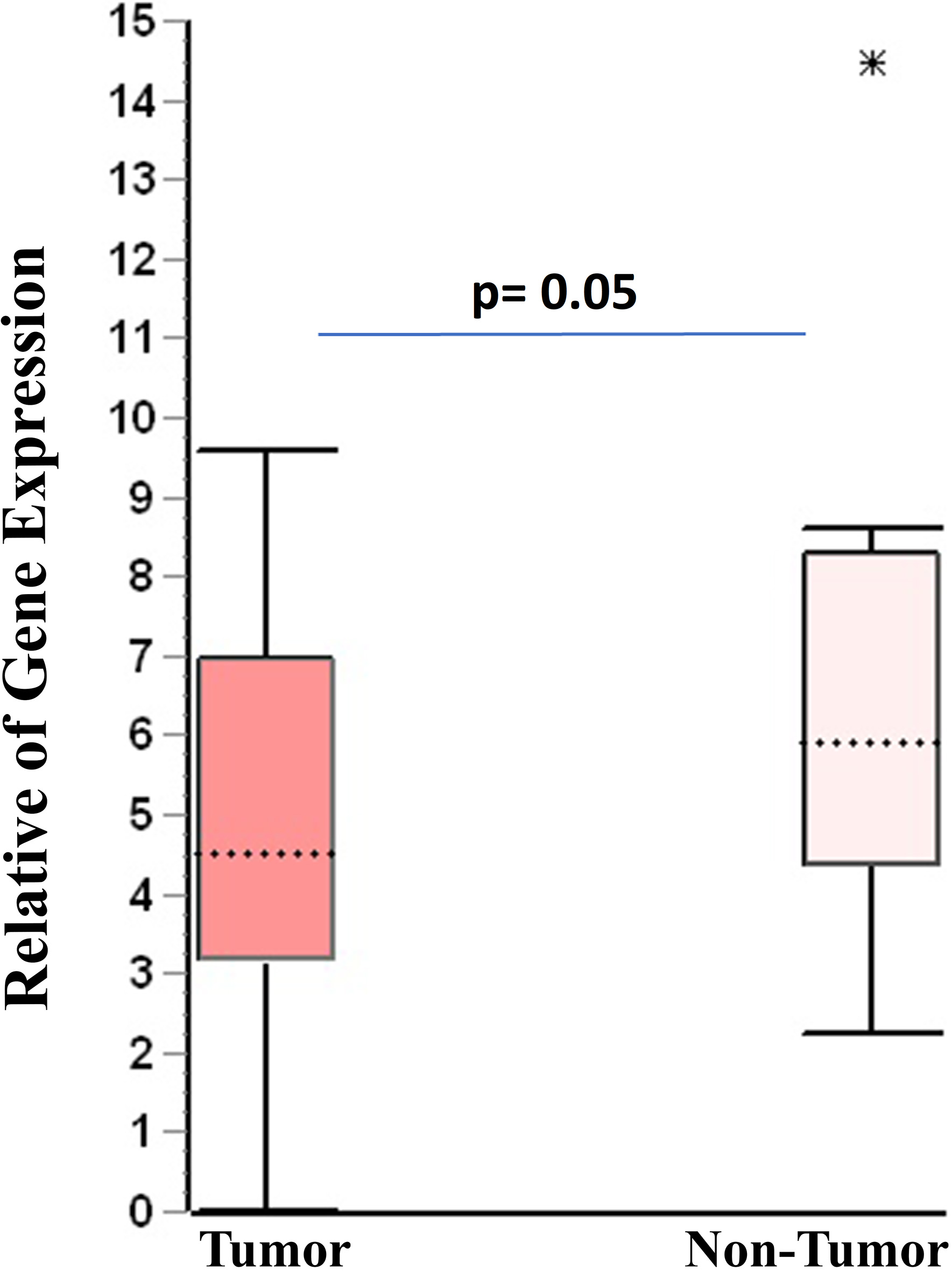
Furthermore SOX2OT showed a lower expression in high grade (III) compared to low grade (I and II) of gastric malignancy, although the statistically significance difference was borderline (
Comparative SOX2OT expression in different grades of gastric adenocarcinoma. A) Box plots show the median value of SOX2OT fold of gene expression (tumor vs. non-tumor samples) and circle is outlier.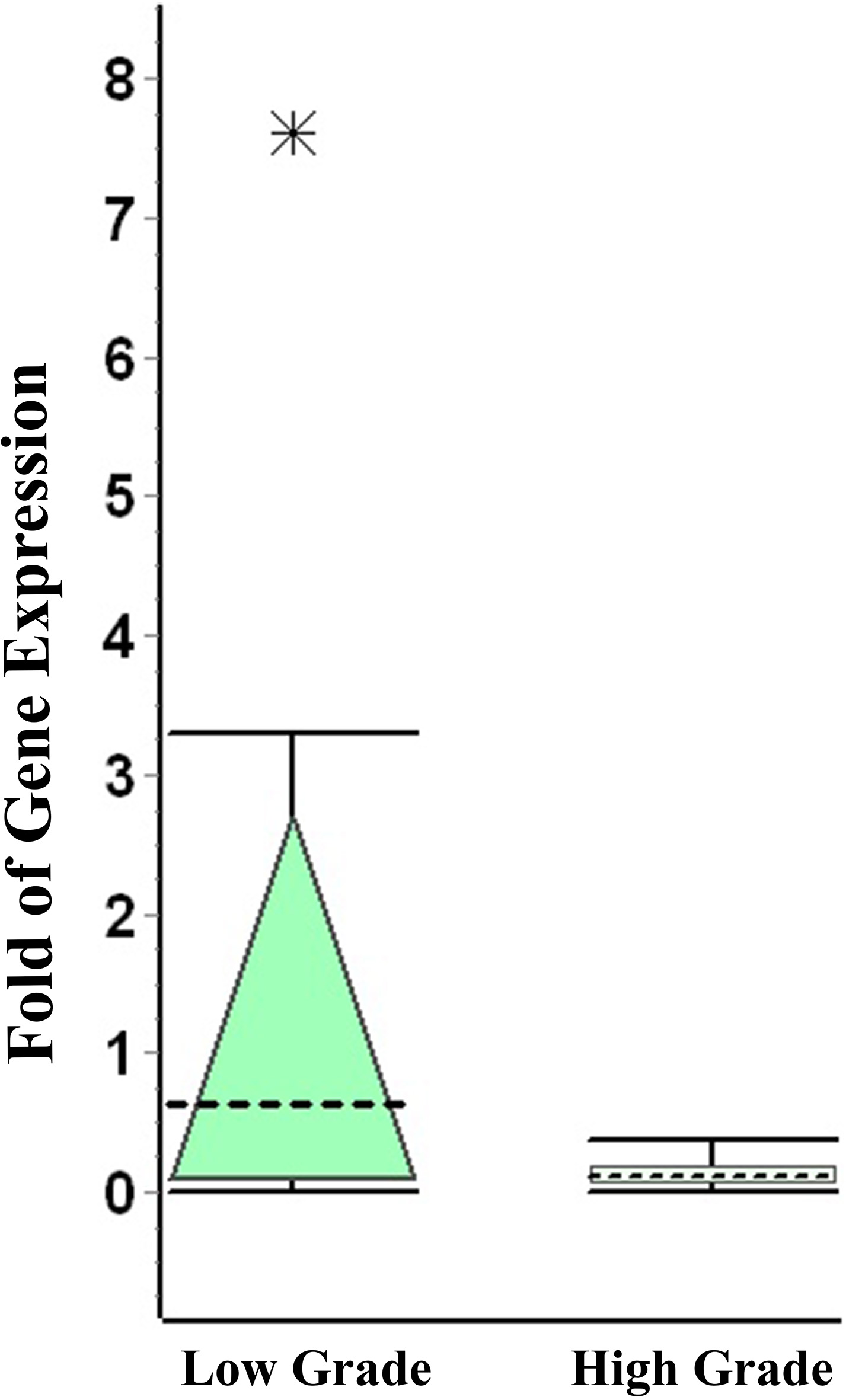
The expression of SOX2OT compared between AGS and MKN45 human GC cell lines and NT2 embryonic carcinoma cell as a positive control for the expression of pluripotent factors. As we expected, SOX2OT expression was higher in NT2 compared to AGS and MKN45 cell lines (at least 20 times,
Comparision of SOX2OT expression in GC cell lines and NT2 embryonal carcinoma cells. Histograms represent value of means 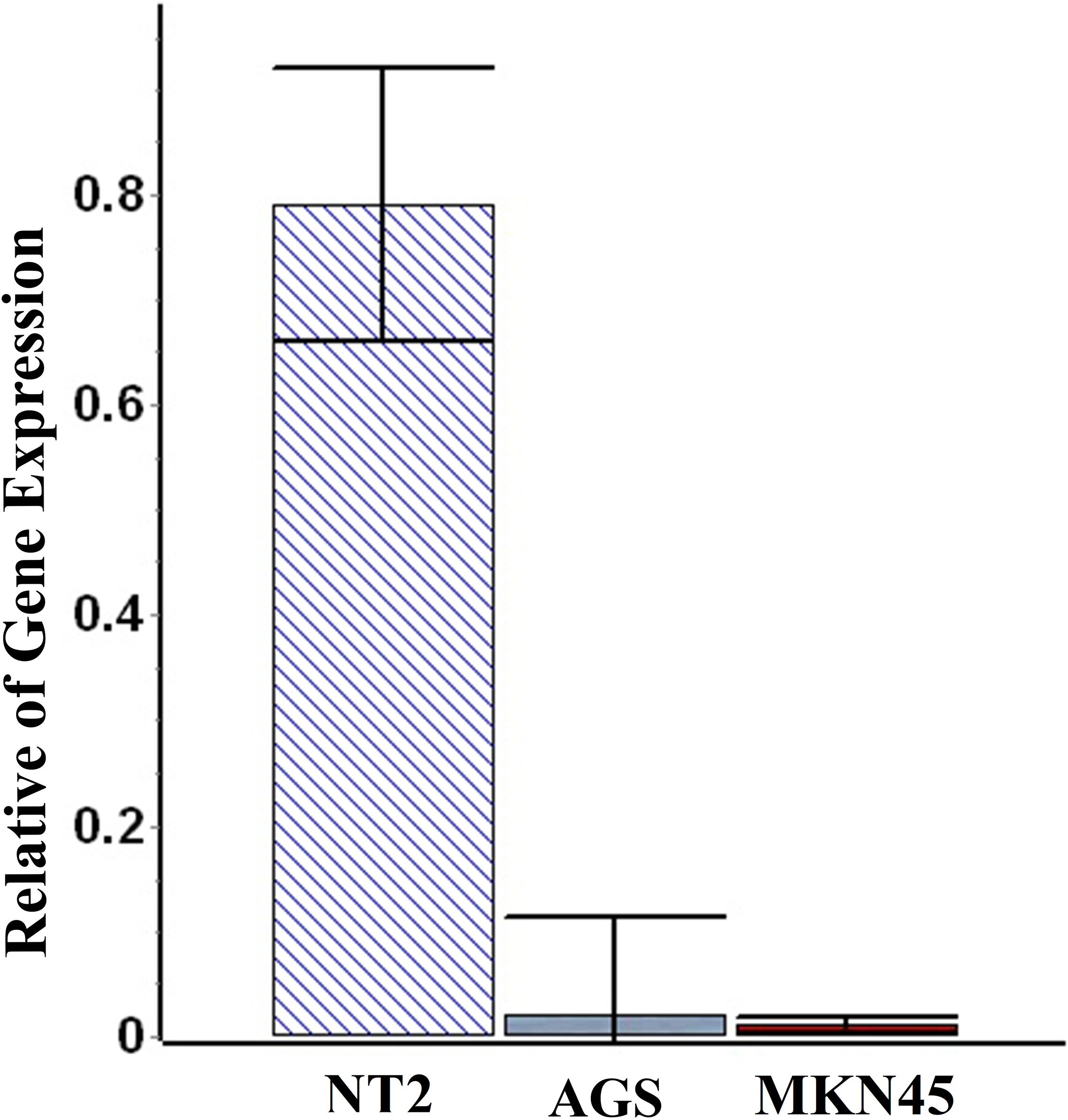
Although overexpression of SOX2OT has been reported in some cancers such as esophageal squamous cell carcinoma [4, 9], breast [5] and lung cancer [10] and also in different cancer cell lines [7], there is still a controversy for the expression of SOX2OT in GC. While one report claimed the overexpression [15], the other report revealed a downregulation of SOX2OT expression in GC [16].
On the other hand, differential expression of SOX2 gene was reported in cancers [3]. while SOX2 plays an oncogenic role in esophagus [17], breast [18] and lung [19, 20], it showed SOX2 inhibits metastasis in GC [21]. Also currently, Sarkar et al have intensely clarified that SOX2 prevents tumorigenesis in gastric tissue through preventing Wnt/b-catenin signaling pathway and it has tumor suppressor activity in gastric tissue [22].
In our previous study, we reported a significant decreased of SOX2 expression beside other pluripotent factors in GC samples [23]. The same result was obtained for SOX2OT expression in the present study. On the other hand, it showed that the ectopic expression of SOX2OT in breast cancer leads to an almost 20-fold increase in SOX2 expression [5]. These results altogether indicate the concordance between SOX2OT and SOX2 gene expression.
SOXOT gene expression found to be correlated to poor prognosis in some cancers [24, 25]. In our study downregulation of SOX2OT was detected in all grades of malignancy, but, we didn’t detect any correlation between SOX2OT gene expression and lymph node metastasis (N), invasion depth (T) and distance of metastasis (M). The larger sample size may be needed to determine prognostic value of SOX2OT expression in GC.
Differential expression of SOX2T variants in tissue-specific manner and also origin of cancer might be able to explain the mentioned arguments about SOX2 and SOX2OT expression in different cancers [7]. Although, evaluating the expression of SOX2OT in gastric cancer stem cells (CSC) can be more valuable.
It showed that SOX2OT displays a highly expression in embryonic stem cells [7]. So we detected a high level of SOX2OT expression in accompany to SOX2 (data not shown) in NT2 rather than GC cell lines, AGS and MKN45.
Conclusion
Altogether, regarding to the regulatory role of SOX2OT in SOX2 expression there was a simultaneous decreased expression of SOX2OT and SOX2 in GC samples and cell lines. Therefore, it seems the same as SOX2, SOX2OT has tumor suppressor activity in GC as well and it may be useful biomarker for GC diagnosis.
Footnotes
Acknowledgments
This work was supported by a research grant from Cancer Gene Therapy Research Center (CGRC) and Student Research Committee, in Zanjan University of Medical Sciences (ZUMS). The sample of this study was provided by Iran National Tumor Bank (which is funded by the Cancer Institute of Tehran University, for Cancer Research). We are grateful to Dr. Forouzandeh Fereidooni, the previous head of the Iran Tumor Bank, Dr. Fatemeh Kamali and Dr. Amirnader Emami Razavi for supplying clinical samples and providing patient’s clinico-pathological information.
Conflict of interest
There is no conflict of interest between the authors.