






Abstract
Young people aged between 16 and 24 have the highest prevalence of mental health problems of any age group, with mental and substance use disorders having their first onset before age 24 in 75% of cases [1,2]. However, the majority of young people who meet the criteria for a mental disorder either delay or fail to seek professional help for these problems. The 2007 Australian National Survey of Mental Health and Wellbeing (NSMHWB) showed that among young people aged between 16 and 24, only 32% of those with anxiety disorders, 49% of those with affective disorders and 11% of those with substance use disorders had sought professional help in the previous 12 months [3].
In order to prevent adverse social, educational and vocational outcomes, there is a need for young people to have early access to appropriate professional or self-help interventions [4,5]. It may be argued that mental health literacy, which has been defined as ‘knowledge and beliefs about mental disorders which aid in their recognition, management or prevention’ (p.182), is particularly critical in young people due to the potential for lifelong consequences of untreated mental disorders [6].
While it is known that mental health literacy varies with age, there has been relatively little examination of the various components of mental health literacy in young people [7]. One of the few population surveys to have done this was the 2006 National Survey of Youth Mental Health Literacy, which involved 3746 young Australians aged 12–25 years and 2005 of their co-resident parents [8]. The survey assessed a number of components of mental health literacy which may affect whether an individual suffering from a mental disorder receives appropriate treatment. These include recognition of disorders and beliefs about treatments. Accurate recognition of disorders is of importance as it has been shown to be associated with help seeking and use of appropriate treatments [9,10]. However, among young people, rates of recognition of disorders in vignettes are generally low, with between 50–70% of young people able to identify depression and 25–33% able to identify psychosis [11–13]. Studies examining help-seeking intentions and beliefs about help seeking in young people show that they vary in the ways in which they would prefer to cope with mental health issues. Rather than accessing professional services, they often prefer to seek help from family or friends, or to use lifestyle/complementary treatments [8,11,12,14].
However, the studies that have assessed mental health literacy in adolescents and young adults have mostly been focused on depression or on mental illness more generally [11,15]. The 2006 Youth Mental Health Literacy survey was one of the few to assess mental health literacy in relation to anxiety disorders, through the inclusion of a social phobia vignette. However, given the high prevalence of anxiety disorders in young people there is a need to further explore mental health literacy in relation to these disorders [3]. The aim of the study was to carry out a national survey in order to assess young people's recognition and beliefs about treatment and outcomes for depressive disorders, anxiety disorders and psychosis/schizophrenia.
Methods
The 2011 survey involved computer-assisted telephone interviews (CATI) with 3021 young people aged between 15 and 25. The survey was carried out by the survey company Social Research Centre. A ‘dual frame’ approach was used, with the sample contacted by random-digit dialling of both landlines and mobile phones. This approach was taken in order to minimize the potential bias of collecting data solely from households with a landline telephone connection, which may under-sample younger people, particularly young men [16]. In order to achieve a mobile/landline distribution representative of the Australian population, targets of at least 1200 mobile and 1800 landline interviews were set. Interviews were conducted between January and May 2011. Up to six calls were made to establish contact. The response rate was 47.9%, defined as completed interviews (3021) out of sample members who could be contacted and were confirmed as in scope (6306). Interviewers ascertained whether there were residents in the household within the age range and, if there were multiple, selected one for interview using the nearest-birthday method. Oral consent was obtained from all respondents before commencing the interview. Respondents aged below 18 could only commence their interviews after their parents provided oral consent. This study was approved by the University of Melbourne Human Research Ethics Committee.
Survey interview
The survey interview was based on a vignette of a young person with a mental disorder. On a random basis, respondents were read one of six vignettes: depression, depression with suicidal thoughts, depression with alcohol misuse, social phobia, psychosis/schizophrenia and post-traumatic stress disorder (PTSD). Each vignette had two versions. The respondents aged 15–17 years were read a version of the vignette portraying a person aged 15 years, whereas those aged 18–25 years were read one portraying a person aged 21 years. The details of the vignettes were altered slightly to be age appropriate (e.g. reference to functioning at school versus in a course). The vignettes have been published previously [17] with the exception of the PTSD vignette which is given here:
John is a 15 (or 21) year old living at home with his parents. Recently his sleep has been disturbed and he has been having vivid nightmares. He has been increasingly irritable, and can't understand why. He has also been jumpy, on edge and tending to avoid going out, even to see friends. Previously he had been highly sociable. These things started happening around two months ago. John has a part-time job in a newsagent shop and has found work difficult since a man armed with a knife attempted to rob the cash register while he was working four months ago. He sees the intruder's face clearly in his nightmares. He refuses to talk about what happened and his family say they feel that he is shutting them out.
After being presented with the vignette, respondents were asked what, if anything, they thought was wrong with the person described in the vignette, what they would do to seek help if they had the problem and a series of questions about the likely helpfulness of a wide range of interventions (rated as likely to be helpful, harmful or neither for the person described in the vignette). The interventions were: a typical GP or family doctor, a lecturer or teacher, a counsellor, a telephone counselling service such as Lifeline, a psychiatrist, a psychologist, help from close family, help from close friends, John/Jenny tried to deal with his/her problems on his/her own, vitamins and minerals, St John's wort, antidepressants, antipsychotics, tranquillizers such as Valium, sleeping pills, becoming more physically active, getting relaxation training, practising meditation, having regular massages, getting acupuncture, getting up early each morning and getting out in the sunlight, receiving counselling, receiving cognitive behaviour therapy, looking up a website giving information about (his/her) problem, reading a self-help book on (his/her) problem, joining a support group of people with similar problems, going to a local mental health service, being admitted to a psychiatric ward of a hospital, using alcohol to relax, smoking cigarettes to relax, using marijuana to relax, cutting down on use of alcohol, cutting down on smoking cigarettes, and cutting down on marijuana.
Respondents were also asked questions about their beliefs and intentions about first aid, beliefs about prevention, stigmatizing attitudes and social distance, exposure to mental disorders, the Kessler 6-item (K6) symptom questionnaire [18], exposure to campaigns and media items about mental health, and sociodemographic characteristics. Data relating to these latter questions is reported elsewhere [19].
Content analysis of responses to open-ended questions
Responses were coded based on the categories identified from the previous survey [8]. Responses to the question of what was wrong with the person in the vignette were: depression, schizophrenia, mental illness, stress, nervous breakdown, psychological/ mental emotional problem, has a problem, cancer, nothing, don't know. A content analysis of responses that did not fit these pre-coded categories led to post-coding of 35 other categories. Many of these were used to describe the social phobia or PTSD vignettes. They include anxiety/anxious, anxiety disorder, social anxiety/social phobia, shy, low self-confidence/low self-esteem, PTSD, fear/scared, trauma and alcohol problems. For simplicity, the post-coded response categories reported here include those that were either the most accurate, or those nominated by more than 10% of the sample.
Responses to the question about what they would do if they had the same problem as the person in the vignette were: would seek help from both parents, would seek help from mother, would seek help from father, would seek help from another person (specify), would seek help from service (specify), and don't know. A content analysis of the responses to the other person and other service led to post-coding of 23 other categories: beyondblue, chaplain/pastor, counsellor, community health centre/clinic, drug and alcohol rehabilitation centre, other family member/relative, friend, GP/doctor, telephone helpline, hospital, internet/phonebook, mental health clinic/service, nurse, other adult person, other mental health professional, other organization, other professional, psychiatrist, psychologist, spouse/partner, social welfare support services, teacher/lecturer and student or youth services. Categories reported here include those nominated by more than 5% of the sample. Responses were coded with a ‘yes’ or ‘no’ in each category, so that multiple categories were possible.
Statistical analysis
The data were analysed using percentage frequencies and 95% confidence intervals, using survey weights to give greater population representativeness. A pre-weight was applied to adjust for the dual frame design and the respondent chance of selection. The achieved sample was close to the Australian national population in terms of gender and geographic distribution. However, there was an under-representation of 22 to 25 year olds. A population weight was used to adjust for this bias. All analyses were performed using Intercooled Stata 10 (StataCorp, College Station, TX, USA).
Results
Overall, 1278 participants (47.6%) were contacted by mobile phone and 1743 (52.4%) by landline. The numbers assigned to each vignette were: depression, n = 506; depression with suicidal thoughts, n = 502; depression and substance abuse, n = 499; psychosis/schizophrenia, n = 501; social phobia, n = 507; and PTSD, n = 506.
Table 1 shows the percentage of respondents mentioning the categories to describe the problems shown in the vignettes. The term ‘depression’ was most often used to describe the depression, depression with suicidal thoughts and depression and substance abuse vignettes. ‘Schizophrenia’ and ‘depression’ were the terms most often used for the psychosis/schizophrenia vignette.
Percentage (and 95%CI) of respondents mentioning each category to describe the problem described in the vignette
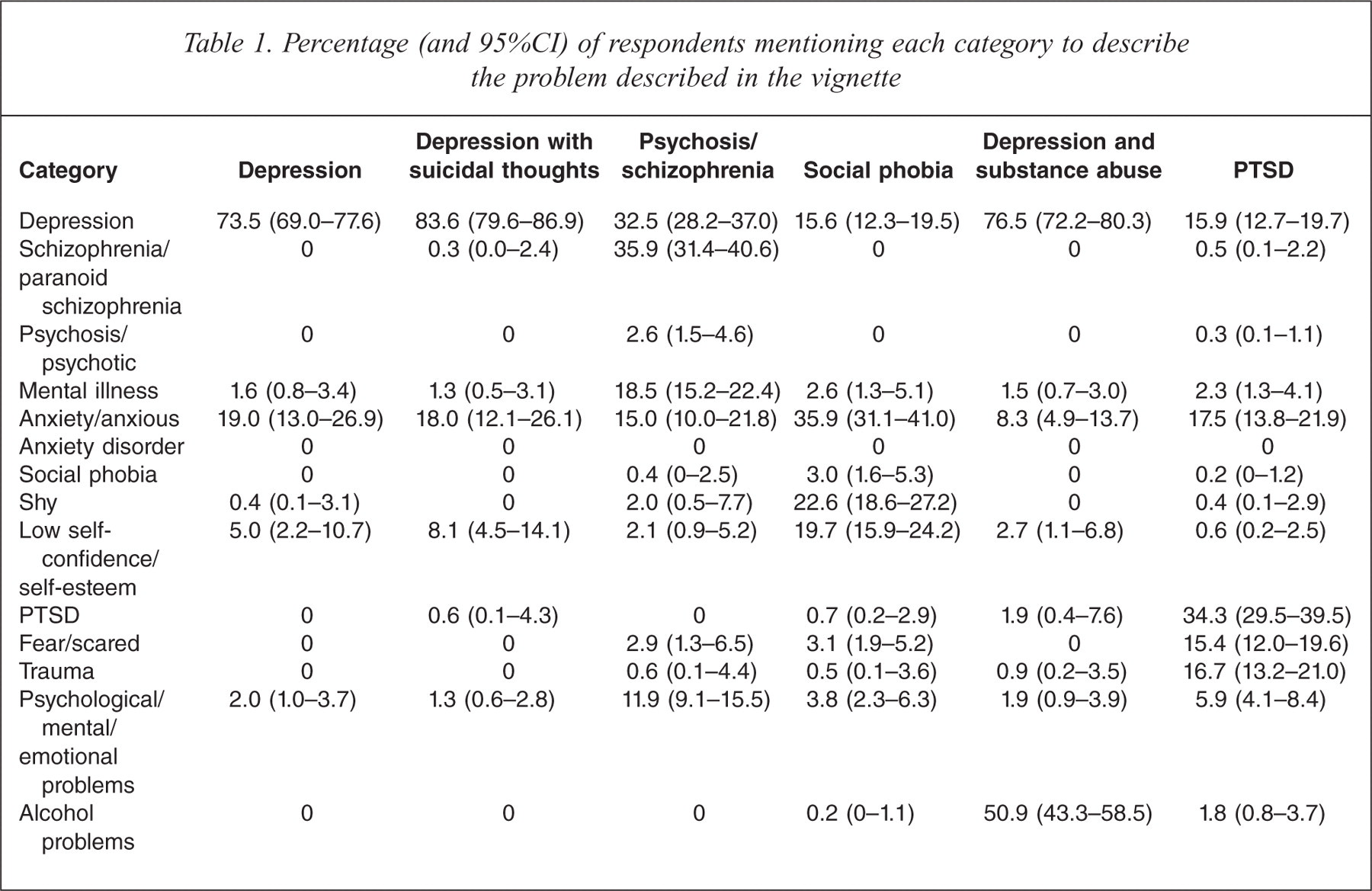
The term social phobia was only used by 3% of respondents, who were much more likely to use lay terms such as ‘anxious’, ‘shy’ or ‘low self-confidence’ to describe the problem. Approximately one third of respondents used the term ‘PTSD’ to describe the PTSD vignette. Other common responses include ‘trauma’, ‘fear’ and ‘depression’.
Help-seeking intentions
Table 2 outlines the number of respondents who would seek help if they had a problem similar to that described in the vignette. Across vignettes the great majority of respondents reported that they would seek help, with symptoms of depression with suicidal thoughts and PTSD most likely to lead to help seeking.
Percentage (and 95%CI) of respondents who would seek help if they had a problem similar to that shown in the vignette
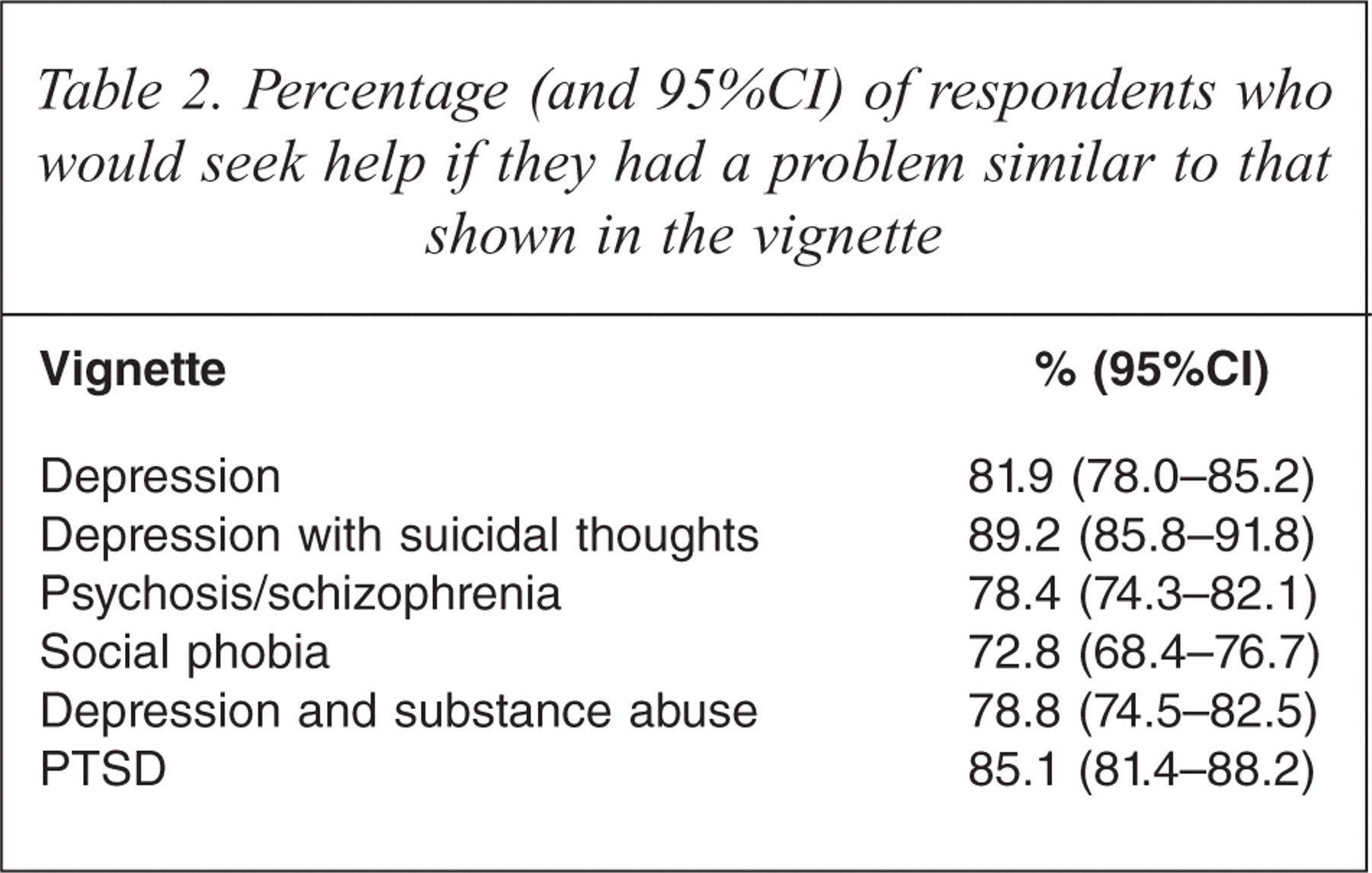
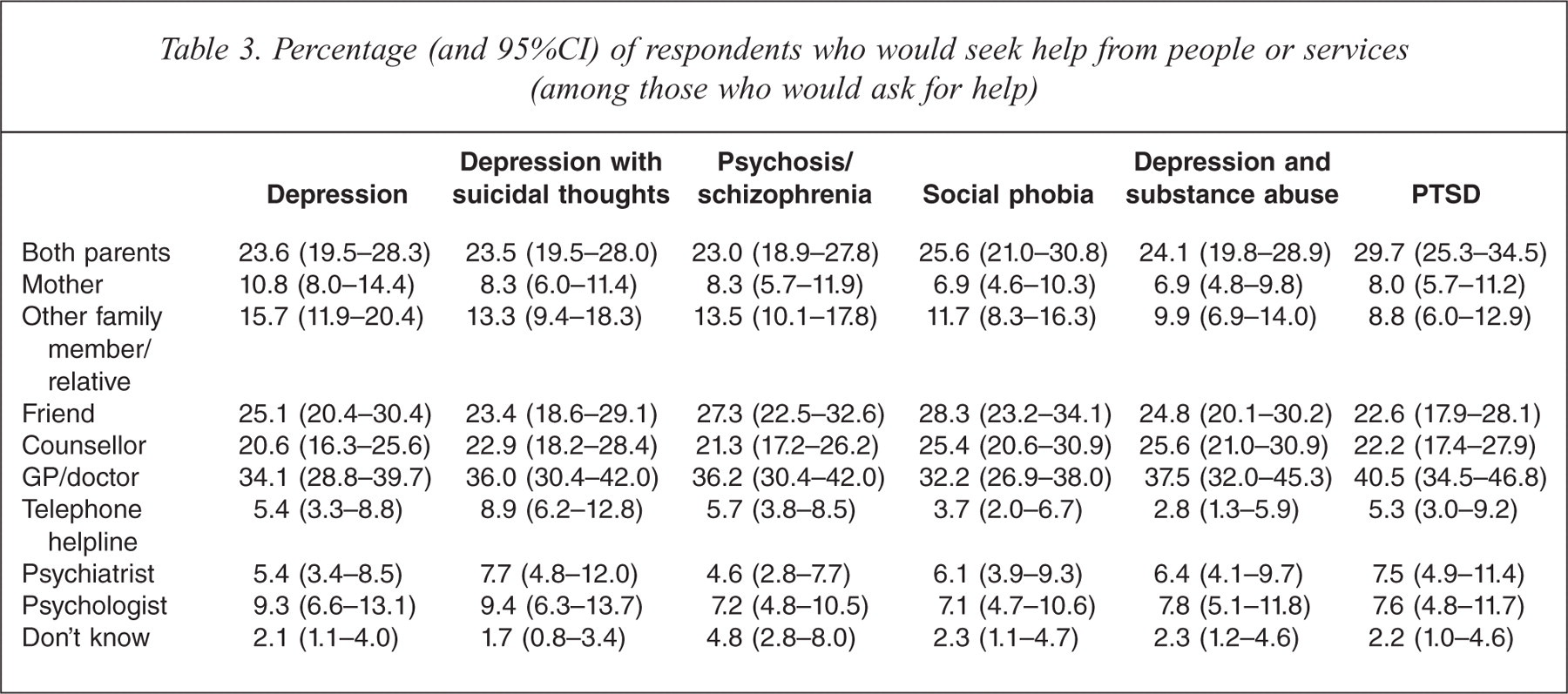
Table 3 outlines the people or services that those with an intention to seek help would access. Across all vignettes, a GP or family doctor was the most common single category. Parents, friends and counsellors were also highly rated, with between 20% and 30% of respondents nominating them as likely sources of help. When various categories of family member were aggregated, informal help-seeking from family was the most common.
Percentage (and 95%CI) of respondents who would seek help from people or services (among those who would ask for help)
Beliefs about specific interventions
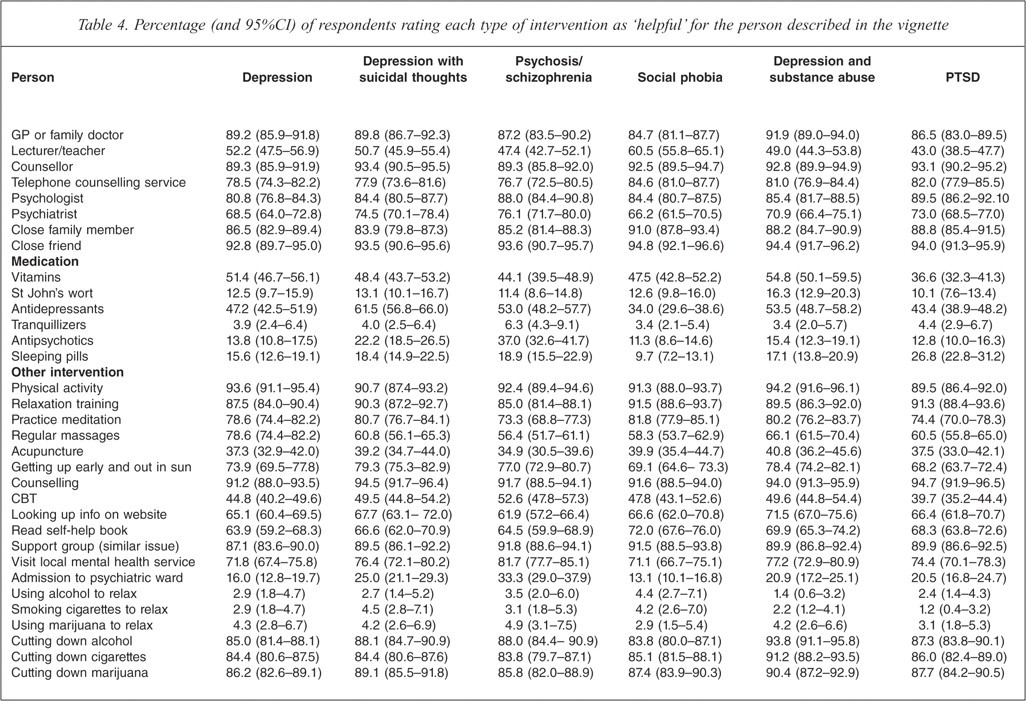
Table 4 shows respondents' ratings of the helpfulness of specific interventions, while Table 5 shows ratings of harmfulness. In terms of people who might help, for all vignettes close friends received the highest rating, closely followed by GPs and counsellors. Teachers were least likely to be rated as potentially helpful and most likely to be rated as harmful. Approximately 60% of respondents across all vignettes believed that dealing with the problem alone would be harmful.
Percentage (and 95%CI) of respondents rating each type of intervention as ‘helpful’ for the person described in the vignette
Percentage (and 95%CI) of respondents rating each type of intervention as ‘harmful’ for the person described in the vignette
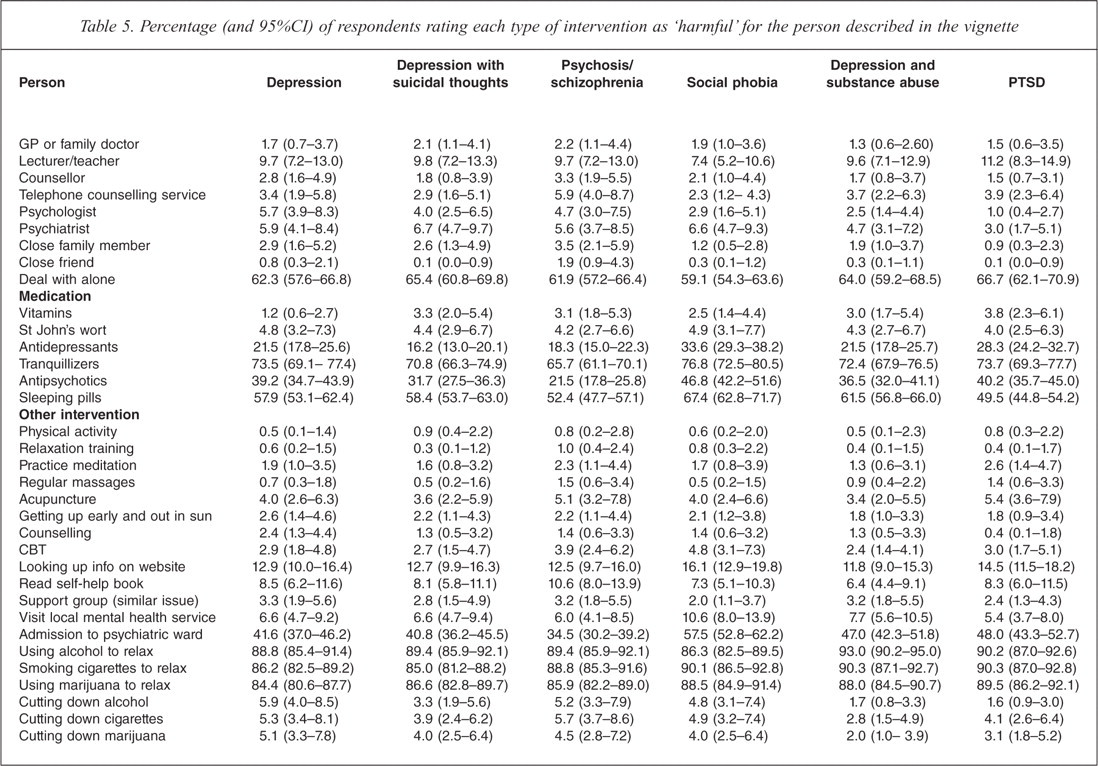
In terms of medications that might help, for depression, depression with substance abuse and social phobia, vitamins were rated as the most likely to be helpful, while antidepressants were rated as the most likely to be helpful for the other vignettes. Tranquillizers and sleeping pills were rated as the medications most likely to be harmful across all vignettes.
For all vignettes, the most highly rated other interventions were physical activity, support groups, relaxation training and cutting down on alcohol, cigarettes and marijuana. Using substances to relax were considered the most likely to be harmful across all vignettes. Admission to a psychiatric ward was seen as likely to be helpful by 33% of respondents in the case of the psychosis vignette.
Discussion
This survey showed that rates of recognition of depression in a vignette were relatively high with almost 75% of respondents using the correct label. Rates of recognition for psychosis/schizophrenia were lower, with around one third of respondents correctly labelling the disorder. In relation to a PTSD vignette, 34.3% of respondents used the label ‘PTSD’ while 16.7% used the label ‘trauma’. These rates of recognition are comparable to those for the psychosis/schizophrenia vignette, and represent relatively high rates compared to those for the social phobia vignette, for which only 3% of respondents used the label ‘social phobia’.
Relatively few studies have assessed mental health literacy in relation to anxiety disorders in young people [13,20], despite the fact that anxiety disorders have higher prevalence than affective disorders, with 9.3% of 16–24 year olds affected in any 12 month period, compared to 4.3% for affective disorders [3]. Of the anxiety disorders, PTSD is the most common and social phobia the next most common, with 12-month prevalence rates in all age groups of 6.4% and 4.7% respectively [21]. As far as we are aware, this is the first population survey to assess the mental health literacy of young people in relation to PTSD.
It has been estimated that approximately 50% of Australians between the ages of 20 and 29 have been exposed to at least one potentially traumatic event (PTE) during their lifetime [22]. PTEs include a range of major life stressors such as natural and technological disasters, combat exposure, rape, physical assault, child abuse, severe car crashes, and sudden death of a loved one. It is possible that the relatively high rates of recognition of PTSD compared to social phobia may be due to media coverage of PTSD in veterans returning from wars in Afghanistan and Iraq as well that following natural disasters such as cyclones, floods and bushfires. Intention to seek help from a GP was highest for the PTSD vignette in the current study. However, results from the current survey show that most young Australians do not correctly label PTSD in a vignette, and while most people do not develop PTSD as a result of exposure to PTEs, the high numbers experiencing PTEs in the Australian population point to the need for education about signs, symptoms and appropriate treatments for the disorder.
Recognition of social phobia was notably lower than that for all other vignettes. For this vignette, respondents were much more likely to use lay terms such as ‘anxious’ (35.9%), ‘shy’ (22.6%) and ‘low self-confidence’ (19.7%) revealing that they were much less likely to view the symptoms described in the vignette in pathological terms.
While the correct use of the term ‘depression’ appears to be common, results from the present survey suggest that its use may be over-generalized, as it was also commonly used to describe the other disorders in the vignettes. For the psychosis/schizophrenia vignette, similar percentages of people used the terms ‘depression’ and ‘schizophrenia’ and those given the social phobia vignette were more likely to use the label ‘depression’ than ‘social phobia’. For PTSD, it was the third most common label after ‘PTSD’ and ‘trauma’. These data point to the need to build on young people's knowledge of depression in order to differentiate its symptoms and treatments from other disorders, particularly anxiety disorders which are less well recognized than depression.
Help-seeking intentions and beliefs about the helpfulness of interventions
Overall help-seeking intentions were lowest for social phobia, while those for PTSD came second only to depression with suicidal thoughts. This is perhaps not surprising in the context of the tendency to label social phobia in non-pathological terms. It is possible that the attribution of an external cause for PTSD (which was described in the vignette) reduces some of the barriers to help-seeking for this disorder, including embarrassment and concern about a doctor's negative feelings [8,23]. While other studies have shown a lower perceived need for help for anxiety disorders [24], results of the current study show that it is likely to be important to tailor education about recognition and help-seeking according to disorder, and that such education should focus on social phobia as a priority.
When young people were asked about where they would go for help if they had a problem similar to that described in the vignette, they were most likely to nominate family members (either parents, mothers or other family members). These findings are similar to those of the 2006 survey of mental health literacy which showed that family and friends were more likely (in adolescents) or equally likely (in young adults) to be the most commonly nominated sources of help [8]. Such findings point to the need for interventions to improve mental health literacy in parents and friends. However, respondents in the current study were more likely to nominate GPs as sources of help than those in the 2006 study. This may be due to campaigns, such as those run by beyondblue, that aim to improve mental health literacy in young people [25–27]. The results are encouraging in the context of findings from a follow-up survey of participants from the 2006 survey that showed that help seeking tended to be better predicted by intentions to seek help than by beliefs about the helpfulness of interventions [28]. However, there is still potential for mental health literacy gains in the areas of recognition and treatment beliefs for all the mental disorders covered in this survey, particularly psychosis/schizophrenia and anxiety disorders.
When asked about the helpfulness of various people, close friends received the highest ratings for all vignettes. GPs, counsellors and psychologists also received high ratings. These results are similar to those from the 2006 survey [14]. However, only around 60% of young people thought it would be harmful for the person in the vignette to deal with the problem alone. These rates are lower than those seen in adult surveys [29]. While respondents gave high helpfulness ratings to antidepressants for depression with suicidal thoughts, psychosis and PTSD, they were more likely to consider vitamins as helpful for depression, social phobia and depression with substance abuse. Around 37% of respondents rated antipsychotics as helpful for psychosis/schizophrenia, rates which were notably higher than for other disorders. However, respondents gave higher helpfulness ratings to lifestyle interventions such as physical activity, relaxation and getting out more than those generally endorsed by health professionals such as seeing health professionals and cognitive behaviour therapy (for depression) and admission to a psychiatric ward, seeing a psychiatrist and using mental health services (for psychosis) [30,31]. The gap between public and professional beliefs is of concern as it may limit adherence to recommended treatments and suggests the need to educate young people about appropriate treatments. It is encouraging to note that using substances to relax were considered the most harmful interventions across all vignettes, including the PTSD vignette, which has been linked to higher levels of substance use [32]. However, there is a need for further research into the links between attitudes and help-seeking behaviours.
Conclusions
Overall, it appears that, while beliefs about the importance of seeking professional help have moved closer to those of health professionals since the 2006 survey, there is still potential for young people's mental health literacy to improve in the areas of recognition, and treatment beliefs for all the mental disorders covered in this survey, particularly social phobia which has very low recognition rates and a lower perceived need for treatment.