






Abstract
Bark extracts are important sources of natural dyes. They possess many functional properties of potential interest to the textile industry. Currently, textiles with eco-friendly functional finishing are increasingly sought for in medical and protective clothing due to stringent environmental laws and the associated toxicity of synthetic agents. In view of this, recent studies on bark extracts for multi-functional finishing of textiles, particularly for antimicrobial and UV protective finishing, is reviewed. Bark extracts from various trees are able to effectively impart antimicrobial resistance and UV protection properties to treated fabrics; however, their long-term sustenance and strength depend on a multitude of factors. However, the application of bark extracts on several types of textile fabrics have no significant impact on textile quality.
Introduction
Textiles with multifunctional finishing are a subject of intense research in the recent past due to increase in demand for hygienic and protective clothing for healthy living. In this direction, the application of synthetic agents to impart antimicrobial functional finishing to textiles was developed. Pertaining to antimicrobial textile materials, various synthetic products, like triclosan (C12H7Cl3O2), chlorine-based products, and positively-charged poly(hexamethylene biguanide) (C8H19N5), have been popularly used in the industry for many years. However, these synthetic agents are hazardous due to their toxicity, side effects, and environmental pollution. Recently, as scientists are exploring the use of nano particles for gaining functionality at a lower percent of add-on, nano-silver has emerged as a popular and effective antimicrobial. It is true that nano-silver is not as toxic as the previously mentioned chemicals, but cost, difficulties in nano particle preparation, nano toxicity, durability, and other issues are major obstacles to its use.
UV-protective materials also have importance in daily life as harmful UVC (directly reach to the earth from sun) radiation can cause cancer due to the high energy of irradiation. Most textile materials easily allow UV-ray transmission to our bodies through their structure and may cause serious health problems. From the last few decades, researchers have tried to use different organic and inorganic synthetic UV-protective substances for textile treatment. Among the various developments, metal compounds (e.g., zinc oxide, titanium oxide, alumina, stannous chloride, and their nano forms) based finishes, synthetic polyphenolic compounds like benzophenone, 2-hydroxy phenyl benzotriazoles, benzoic acid esters, and hindered amines) have been used popularly for natural and synthetic textiles. Most of them are colorless, costly, are not easily available, and also have toxic effects.
Taking into account that natural dyes are non-allergic, non-toxic, easily available, comparatively cheaper, and eco-friendly for use on textiles, with some having inherent additional properties (e.g., antimicrobial and UV absorbance), these dyes can serve the dual purpose of a dye and a functional agent. This reduces the number of processing steps in industrial textile fnishing with the added benefit of environmental safety.1-4 Among natural dyes 5 from plant sources, bark extracts from the barks of different trees are being increasingly used for multifunctional finishing due to the sustainability of this resource, multi-functionality associated with variation in chemical constituents, and a variety of natural sources of origin.
The bark is the outermost region of the tree trunk formed due to the secondary growth of the cork cambium, which protects the tree from physical factors such as rain, wind, high temperatures, and from attacks by microbes, insects, and other organisms. Since trees are abundant in nature and bark is shed by trees on a regular basis, using bark for multifunctional finishing of textiles can be economically cheap and environmentally sound. Bark extracts as natural dyes are traditionally known to have several useful properties with the potential to be used in innovative textile finishing. The multifunctional properties in bark extracts are due to the presence of secondary metabolites of chemical constituents such as phenolics, tannins, flavones, flavonoids, hydroxyquinones, alkaloids, terpenes, and terpenoids. The diversity in bark extracts gives opportunities for screening their multifunctional potential. Eco-friendly natural dyes from bark extracts having antimicrobial effects 3 and UV protective properties 6 are desired for technical textiles and for protection against UV rays. This study reviews the progress of bark extract use for imparting antimicrobial and UV-protection functionalities on textiles.
Bark Extracts for Textile Finishing
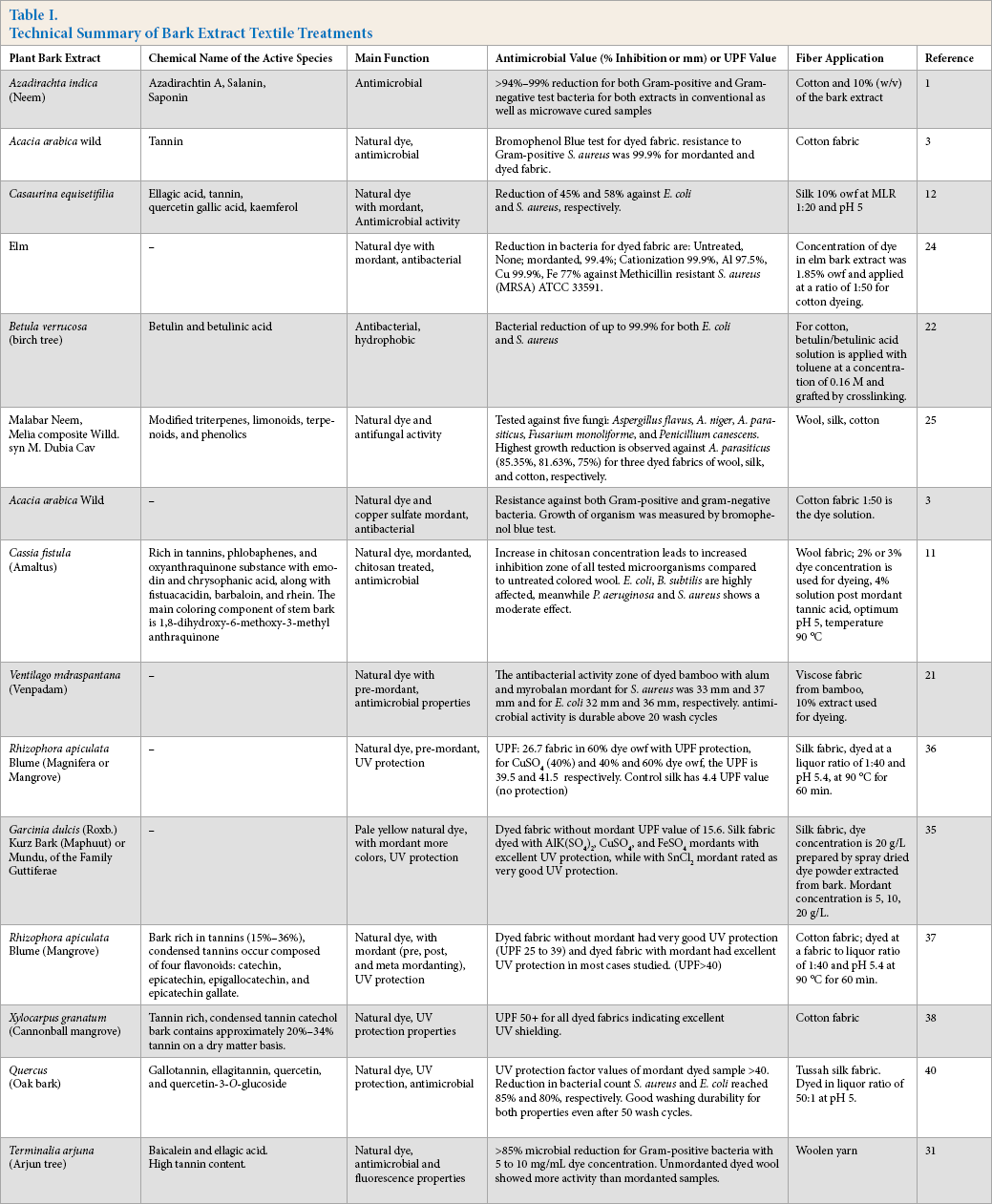
The main source of natural dyes is either plants or microorganisms. The dyes from plant sources have different origins. Their overexploitation may lead to the depletion of natural resources and may even result in the extinction of certain plant species. Thus, Global Organic Textiles Standards (GOTS) was created to protect these endangered plants from being used in the extraction of natural dyes. 7 On the other hand, extraction of dyes from the bark sources is an ecologically sustainable approach as it uses the bark, which is regularly shed of by trees without harming the trees. Bark is easy to collect, store, and transport. Natural dyes with antimicrobial properties are useful in textiles, in addition to imparting colors. Natural dyes are useful for making medicinal garments, sanitary napkins, socks, and other textiles, as they provide both attractive color and antimicrobial properties on the dyed fabric.2-5 A summary of the bark extracts and their applications covered in this review paper are given in Table I.
Technical Summary of Bark Extract Textile Treatments
Natural fabrics absorb more moisture that synthetic fabrics. Hence they are susceptible to growth of microorganism, causing unhygienic conditions and the microbial degradation of fabrics. Patel and Tandel have used natural dyes from bark extracts from
Bark extracts are increasingly being screened for use in the antimicrobial finishing of natural fiber fabrics (e.g., cotton, wool, silk, and linen) to protect these fabrics from microbial degradation. Recently, studies on the application of natural dyes as antimicrobial finishing on textiles are growing due to bans on some synthetic dyes and to address the challenges of antibiotic resistant microbes in medical garments that can lead to and hospital cross-infections.4,7
Researchers have studied the antibacterial finishing of cotton textiles using neem (
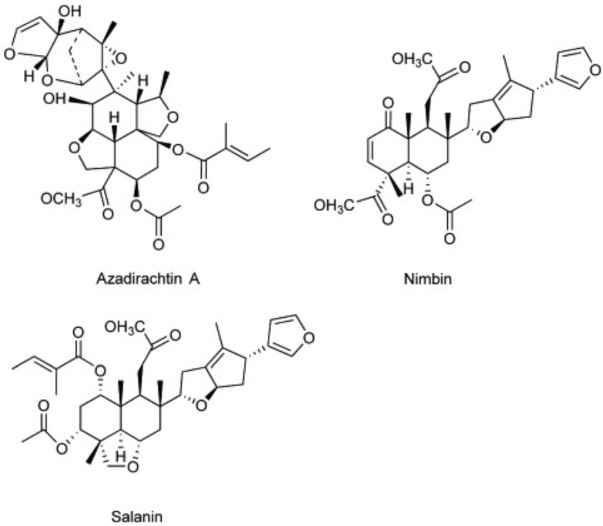
Neem seeds have been prevalently used as a source of bio-insecticide, being rich in azadirachtin A compared to other parts of the plant, 10 The efficacy of neem bark and leaves extract as a natural dye and its anti-moth properties on woolen fabric are evaluated. Results showed that bark extract is efficient as an anti-moth agent without mordants. Improved efficacy is noticed in fabric treated with alum and tin chloride as mordants. This is attributed to high concentrations of azadirachtin A and cyanogenic glucosides (HCN) in bark extracts. The mechanism of action is through hydrolysis of cyanogenic glucosides, forming hydrogen cyanide and aldehydes or ketones. Simultaneously, the high level of azadirachtin A makes the fabric antifeedant. The anti-moth property is similar to commercial anti-moth agents. 10
The bark extract of
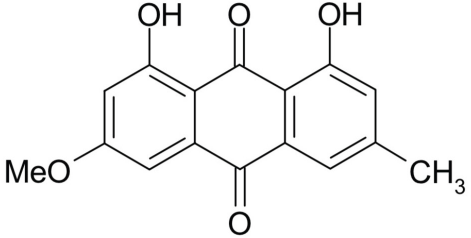
Structure of 1,8-dihydroxy-6-methoxy-3-methyl anthraquinone, the main dye component in
In another study by Narayanaswamy et al., the properties of
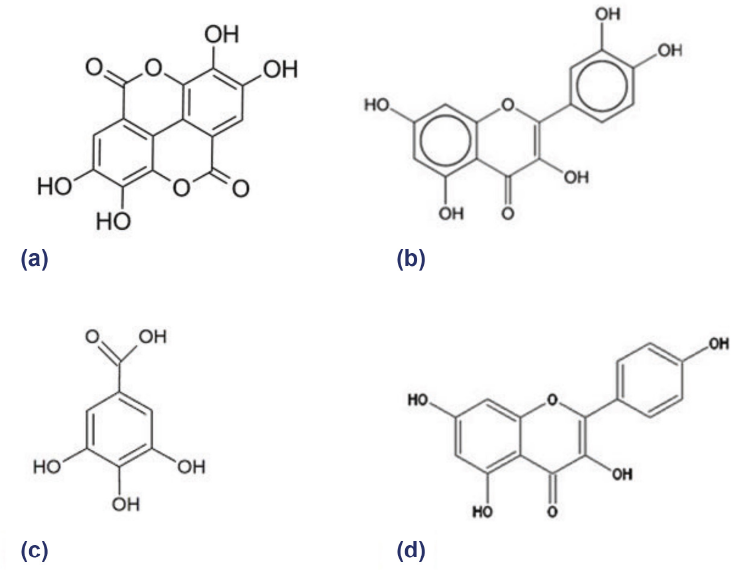
The study by Borges reveals the mechanism of gallic acid action,
13
a hydroxybenzoic acid and a hydroxycinnamic acid, on
Very recently, Salim et al. proposes that Aleppo pine (
Sahoo et al. dyed silk fiber by using the bark extract of sal (
Javakabanu and Manimekalai studied the antimicrobial activity of bamboo fiber made fabric treated with venpadam (
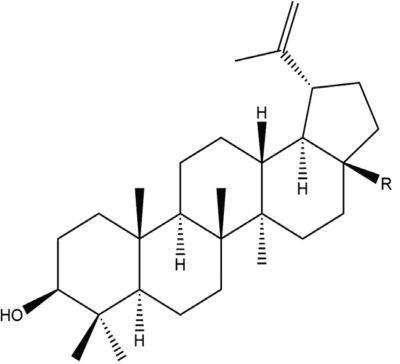
Structure of betulin and betulinic acid active ingredients present in birch tree bark. 21
In another study, a cotton knit was dyed with elm bark (EB) extract. The knit is preprocessed with a cationizer. Dyeing with a copper mordant displayed high levels of antimicrobial activity that resisted super bacteria. The bacterial reduction rate of cotton knits dyed with EB extracts (after 24 h incubation) were studied: for untreated (0%), for mordanted (99.4%), for cationization (99.9%), and were simultaneously dyed and mordanted with aluminum sulfate (97.5%), copper sulfate (99.9%), and ferrous sulfate (77%) in separate baths. The concentration of dye in the elm bark extract was 1.85% owf applied at a liquor ratio of 1:50 for dyeing test cotton. The super bacteria used is methicillin resistant
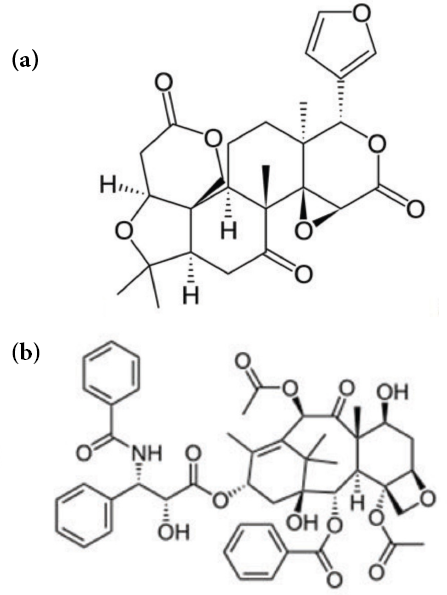
Pal et al. studied the antifungal activity of natural colorants from Malabar Neem (Melia composite) bark on cotton, silk, and wool against five strains of pathogenic fungi. The antifungal activity was effective in cotton fabrics treated with natural dye at concentrations greater than 100 mg/mL. 25 Among the fabrics studied, wool fabrics exhibited remarkable antifungal activity. The study proposed that the property of the dye may be due to the presence of many chemical constituents like limonoids, terpenoids, and phenolics. Limonoids are tetranortriterpenes, and terpenoids are compounds containing multiple isoprene units (Fig. 5). Phenolics are phytochemical components, and aromatic compounds (containing benzene rings) with hydroxyl groups and three carbon side chains. The bark extract is not only a good source of dye, but is also a sustainable alternative for imparting protective finishing to different kinds of textile materials.
Although the role of secondary metabolites as antimicrobial agents are traditionally well known and experimentally proven, the studies on mechanism of action of secondary metabolites are still a subject of intensive research. These mechanisms of secondary metabolites are important as they are being increasingly explored as alternatives for antibiotics in light of multiple drug resistance to pathogenic bacteria, as substrates for innovative drug design and development, and sources of components for health and personal care products. 28
Studies have reported the existence of more than one possible mechanism of action for secondary metabolites. This is possibly due to the structural complexity and other properties such as the hydrophobic nature of secondary metabolites. 29 Scalbert 30 has reviewed the antimicrobial activity of tannins, which is one of the major components of almost all bark extracts. The mechanism includes both direct and indirect modes of action. The inhibition of extracellular microbial enzymes, substrate deprivation for microbial growth, and iron deprivation constitute indirect mechanisms (bacteriostatic), while inhibition of oxidative phosphorylation is a form of direct action (bactericidal) on microbial metabolism.
Another recent work studied the antimicrobial and fluores-cent properties of
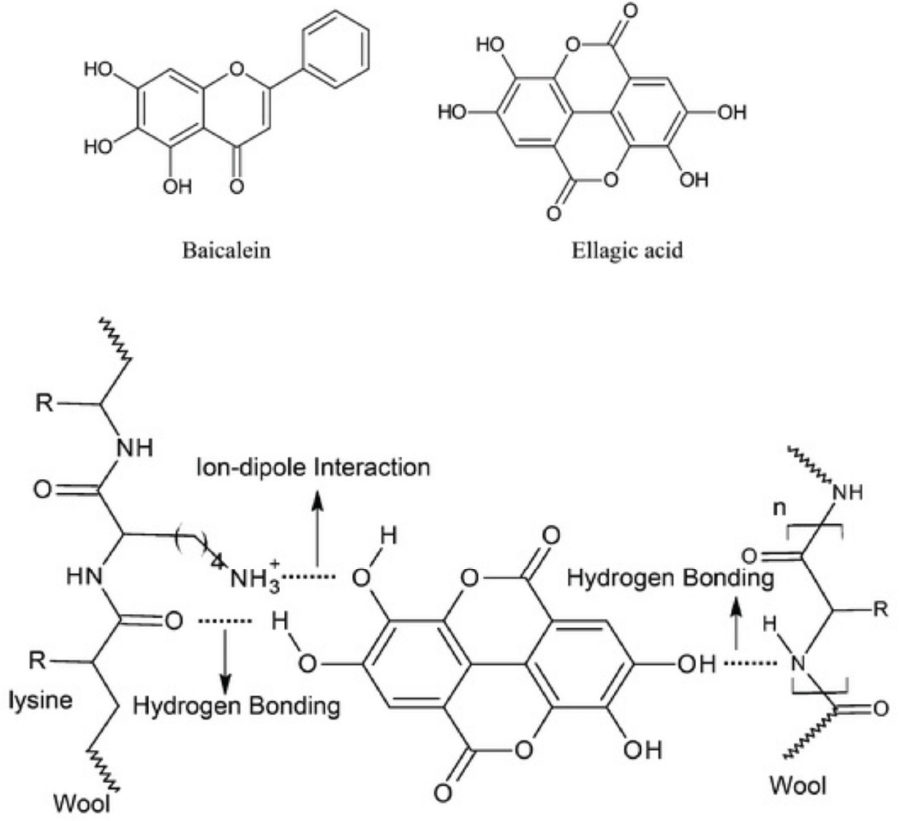
Structures of the main coloring components of
The antibacterial activity of the arjuna bark extract is attributed to its high tannin-based polyphenol content. Although its mechanism of action is not precisely known, it is predicted that tannin polyphenols are responsible for the loss of structural integration and protein functionality of the bacterial cell wall. This phenomenon occurs due to the hydrogen bonding, reaction with sulfydryl groups, or by covalent bond formation between tannins and proteins. In the study, Gram-positive bacteria were more susceptible to the antimicrobial effect of the dye than Gram-negative bacteria, with maximum inhibition reported by
Bark Extracts for UV Protection
UV-protective textiles are important for use in our daily life as it guards us from UV rays that may potentially damage skin or cause cancer due to over exposure. UV rays have been classified as UVA, UVB, and UVC, depending on the intensity of the exposure. UVC has wavelengths less than 280 nm. This highly-energized ray has different detrimental effects on the human body. Generally, the ozone layer of the atmosphere protects the earth from solar UVC rays. UVC rays may also reach the earth's surface due to a small depletion in the atmospheric ozone layer. For this reason, protection against UVC rays is one of the utmost important measures for maintaining good human skin care.
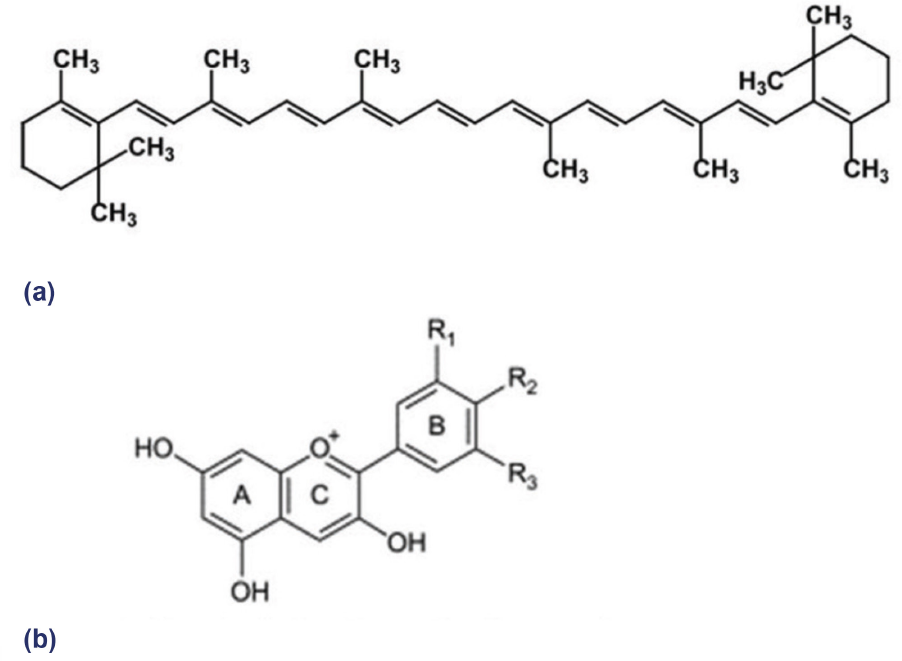
The UV-protection performance of textiles is measured by the UV Protection Factor (UPF). Textile materials having a UPF value > 50 are UV resistant, and materials having a UPF < 10 exhibit low resistant against UV rays. 6 Textile coverings having lower UPF values can increase the risk of skin disease. 32 Scientifically, the UV protective property of any textile depends on its cover factor (low cover textiles can easily transmit UV rays to underlying material), color (dark colors can absorb more UV rays than light colors), the chemical groups present in the dyes used to color textiles, and structural properties of the textile materials (e.g., the UPF of virgin wool and silk is greater than virgin cotton with the same cover factor). A UPF factor of 50+ for any textile material is excellent for protecting the underlying surface from harmful UVC rays. Most research studies have shown that tannins as mordants were efficient in absorbing UVA radiation as compared with natural dyes used. This indicates that tannin rich dyes are potential sources for imparting UV protection properties to fabrics. The efficiency of UV radiation absorbance by tannins was similar to carotenes and anthocyanins (Fig. 7). 33
UV-protective properties of silk fabric could be improved by incorporating the bark extract of kurz (
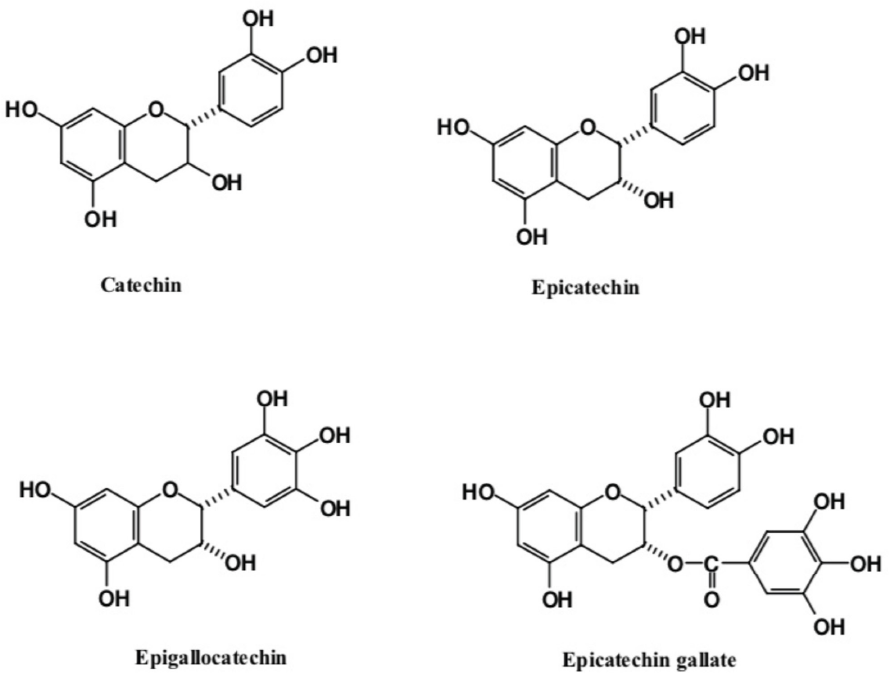
Extract of the mangrove plant (
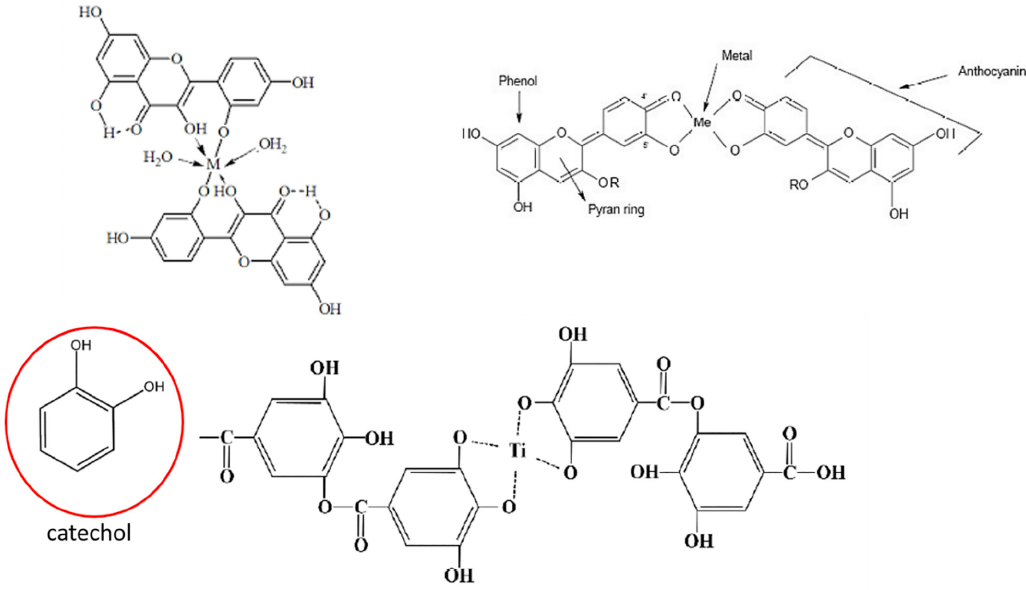
Structure of catechol and its chelating mechanism with metal ions. 39
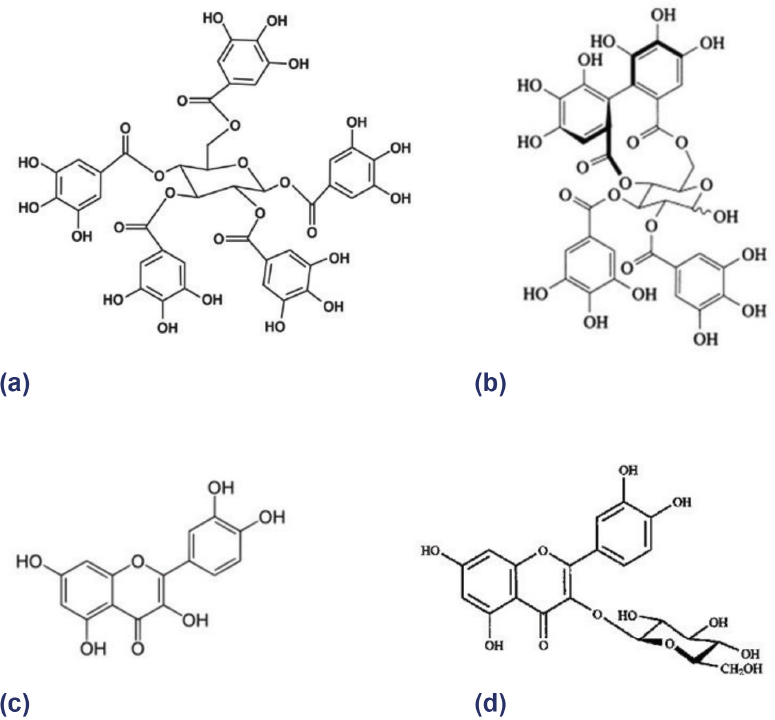
Jia et al. studied the effect of dyeing and functionality of tussah silk fabric treated with oak bark (
The UPF value of untreated wool (15-20) and silk (10-15) is higher than other natural fibers of cellulosic and ligno-cellulosic origin, having UPF values less than 10. 41 It means the efficacy of blocking the UV rays is greater for these protein fibers compared to cellulosic fibers. However, any textile material having UPF factors greater than 50 is considered to be UV resistant in terms of transmission of harmful UV rays. Therefore, in spite of the comparatively higher inherent UPF values of the protein fibers, they need additional treatment to reach UPF values greater than 50. However, relatively less external treatment is required for UPF factor improvement due to the comparatively higher UPF factor of the base polymeric material itself.
Han et al. reported that control wool fabric is 20% resistant against
Conclusion
Research on multi-functional finishing of textiles is gaining momentum as the unexplored properties of bark extracts from many bark sources, with their special constituents, are being revealed. However, the problems of poor binding, poor fastness, unreliability, non-repeatability, and the wastage of dye extract exist. Bark is a renewable resource that is shed by trees and is also a waste product in timber processing. Tough available in abundance, it is not currently being used effectively. Also, the presence of a wide variety of tree species in varied geographical regions provides a wide diversity in sources of bark extracts and their properties. The screening and characterization of bark extracts for functional properties on textiles is a challenging task due to the variety of resources and their complex chemical constituents. Owing to their great diversity in multi-functional properties, barks of different trees can be promising candidates for the creative and green technical finishing of textiles in the coming years.
Footnotes
Acknowledgement
The authors are grateful to the Department of Science and Technology, Government of India for the financial grant (Project File No. DST/TDT/SHRI-08/2018, under the Science and Heritage Research Initiative). This review article was prepared as a part of our research.