




Abstract
In early 2007, American pet food ingredients leading to nephrotoxic renal failure of dogs and cats raised serious concerns about the safety of pet foods. Major pet food companies recalled more than 1,000 commercial pet foods in consideration of pet safety. A similar pet food-associated outbreak of nephrotoxic renal failure occurred in Asia, in late 2003 and 2004, resulting in a similar extensive pet food recall. At that time, contamination of ingredients with a nephrotoxin-producing fungus at a pet food production facility was suspected. However, toxicologic evidence to substantiate a mycotoxicosis was lacking. Moreover, the renal lesions were not typical of those reported with fungal nephrotoxins. During 2003 and 2004, 14 dogs were presented to the Veterinary Medical Teaching Hospital of Konkuk University, Seoul, Korea, with renal failure and distinctive renal pathologic findings. Grossly, the kidneys were greenish in color with greenish uroliths in the renal pelvis or bladder. Histologically, characteristic crystals with pinwheel radiating striations were present in distal tubular segments. Toxicologic analysis identified melamine, cyanuric acid, and ammelide in deparaffinized formalin-fixed kidney samples.
Background
In early 2007, pet food ingredients leading to nephrotoxic renal failure of dogs and cats in the United States were confirmed to contain melamine, cyanuric acid, and other related compounds by the U.S Food and Drug Administration (FDA) and veterinary diagnostic laboratories. This resulted in major pet food companies recalling many brands of commercial pet food in consideration of pet food safety. 24 In March 2007, it was reported that at least 471 cases of renal failure had been reported in a 10-day period, and 104 dogs and cats had died. 2 The total number of affected animals is impossible to determine but is speculated to be in the thousands. The FDA and the U.S. Department of Agriculture identified contaminants in vegetable proteins imported from China and used as ingredients in pet food. The contaminants were identified as melamine and cyanuric acid. 21, 24 Melamine is a chemical that is marketed as a fertilizer or is combined with formaldehyde for producing melamine resin, which is a highly durable thermosetting plastic. Cyanuric acid can be produced by hydrolysis of crude or waste melamine and is also used to stabilize chlorine in swimming pools. It has been speculated that melamine was added intentionally to raise the apparent protein content of the food, as the protein concentration is measured by analysis of total nitrogen content. It is unclear if cyanuric acid was also intentionally added or if it was produced as a melamine by-product. 4
Prior to the outbreak of melamine-associated renal failure in American pets, Asian countries had recalled pet foods associated with renal failure in 2003 and 2004 because of suspected mycotoxin contamination. Southeastern Asian countries, including Korea, identified a rise in renal failure in dogs. 1 A single brand of dry pet food manufactured in Thailand and sold in Japan, South Korea, and Southeast Asia was strongly suspected to contain mycotoxin-contaminated raw materials, prompting a widespread pet food recall in these countries. 1 In 2005, dog owners in Korea sued the pet food company and were awarded 1.2 million dollars in association with the deaths of 1,000 dogs caused by pet food–induced renal failure or complications of renal failure. 8
Although the pet food–associated outbreak of renal failure in Asia was originally attributed to mycotoxin contamination, scientists examining dogs and cats affected with pet food nephrotoxicosis in 2007 noted a similarity in the renal lesions present in these 2 outbreaks. Subsequently, both outbreaks were attributed to melamine/cyanuric acid toxicosis. 5
For this study, the histology of all cases that were submitted to the Konkuk University Veterinary Medical Diagnostic Laboratory and diagnosed as renal disease from 2003 through 2007 were reviewed. Thirty cases submitted in 2003 were identified with renal disease. Of these, 20 cases of renal disease did not contain renal calculi or intratubular crystals, and 1 case had only oxalate crystals in the proximal tubules; these cases were removed from further study. The remaining 9 cases of renal disease had lesions characteristic of melamine/cyanuric acid–associated renal failure (MARF) as described in the United States in 2007. In 2004, an additional 5 cases were identified with similar histologic findings. No additional cases consistent with melamine/cyanuric acid toxicosis were identified in 2005–2007.
The renal tissues of MARF from these 14 dogs were included in this study. The recall of the pet food occurred in April 2004, and the 14 dogs died between March 2003 and April 2004. Although information about the brand of pet food that they had ingested was not available, the recalled brand was one of the most popular pet foods in Korea at that time. All kidney specimens were fixed in 10% neutral buffered formalin for 24 hours and subsequently embedded in paraffin. Serial 4-um sections were acquired from each paraffin block and stained with hematoxylin and eosin (HE). Serial sections were stained immunohistochemically to differentiate distal tubules (cytokeratin-positive) from proximal tubules (cytokeratin-negative).
Briefly, sections were deparaffinized and treated with 3% hydrogen peroxide (H2O2) solution for 20 minutes at room temperature. After washing with phosphate-buffered saline (PBS) 3 times, the antigens were retrieved by boiling the sections in Tris-EDTA buffer (pH 9) for 10 minutes in the microwave oven (high power). The slides were washed 3 times in PBS after cooling. Subsequently, sections were incubated with 1 : 100 diluted antibodies against cytokeratin (DakoCytomation, Carpinteria, CA) for 2 hours at room temperature. For secondary polymer, Envision system-HRP was used. The secondary polymer was applied to each slide for 40 minutes at room temperature, and the slides were washed with PBS 4 times. Next, the slides were incubated with substrates for Envision system-HRP (Dako REAL Envision kit [K5007]; DakoCytomation) until desired staining intensity developed. The color reaction was stopped by washing in distilled water twice, and the studies were counterstained with Harris hematoxylin.
To estimate the degree of fibrosis, Masson's trichrome staining was performed. Each serial section was stained with Masson's trichrome staining method according to standard histochemical methods. 20
Histopathologic Findings
Histopathologic renal lesions were present in all 14 dogs with MARF. The characteristic polarizable crystals were in distal nephron segments (distal straight and convoluted tubules, and collecting ducts) (Fig. 1a, 2a). Although crystals were limited to the distal tubules and collecting ducts, some cases also had evidence of proximal tubular injury. The damaged proximal tubules had fewer epithelial nuclei, and small numbers of necrotic cells were observed. Intracellular hyaline droplets were observed in the proximal tubules. The light green to brown color crystals were easily detected without polarization with the appearance of “pinwheels,” having 2 or more concentric circles with radiating striating spokes. The characteristic pinwheel crystals were 10–40 µm in this study. Small crystals appeared as globular aggregates, and large crystals with a diameter >30 µm were commonly observed in chronic cases of MARF. The crystals were observed both in the renal cortex and medulla, but larger crystals were more common in the medulla. Distal tubules and collecting ducts were dilated both in the presence and absence of crystals as previously described. 5 Two cases (Table 1, No. 1 and No. 6) of MARF showed very few crystals in the cortex; most of the crystals were in the medulla. Eight of 14 cases had features of acute MARF characterized by severe distal tubular necrosis with intratubular crystals (Fig. 1a, 1b, Table 1) without significant interstitial fibrosis or inflammation (Fig. 1c). They were all classified as acute renal failure in the hospital. Six cases were classified as chronic MARF. They also showed renal distal tubular necrosis and intratubular crystals (Fig. 2a, 2b). In addition, they had histopathologic changes of moderate to severe renal interstitial fibrosis, which were indicative of chronic stages of MARF (Fig. 2c, Table 1). The inflammation around crystal-containing tubules was prominent, and infiltrating lymphocytes were often present in the chronic stage of MARF. Some tubules containing crystals were cytokeratin-negative because of the presence of large crystals causing tubular epithelial loss (Fig. 2b). Metastatic calcification in the kidney was detected in 3 cases (Table 1, Nos. 2, 4, and 7), and 1 case had renal tubular cysts (Table 1, No. 14). Three of the 6 cases of chronic MARF had greenish uroliths composed of aggregates of melamine/cyanuric acid crystals. These crystals were present in the renal pelvis, ureter, or urinary bladder; similar uroliths were described in previously described cases of chronic MARF in dogs. 15 Uroliths were not present in acute cases of MARF.
Clinical, pathologic, and toxicologic findings in dogs with melamine-associated renal failure.*
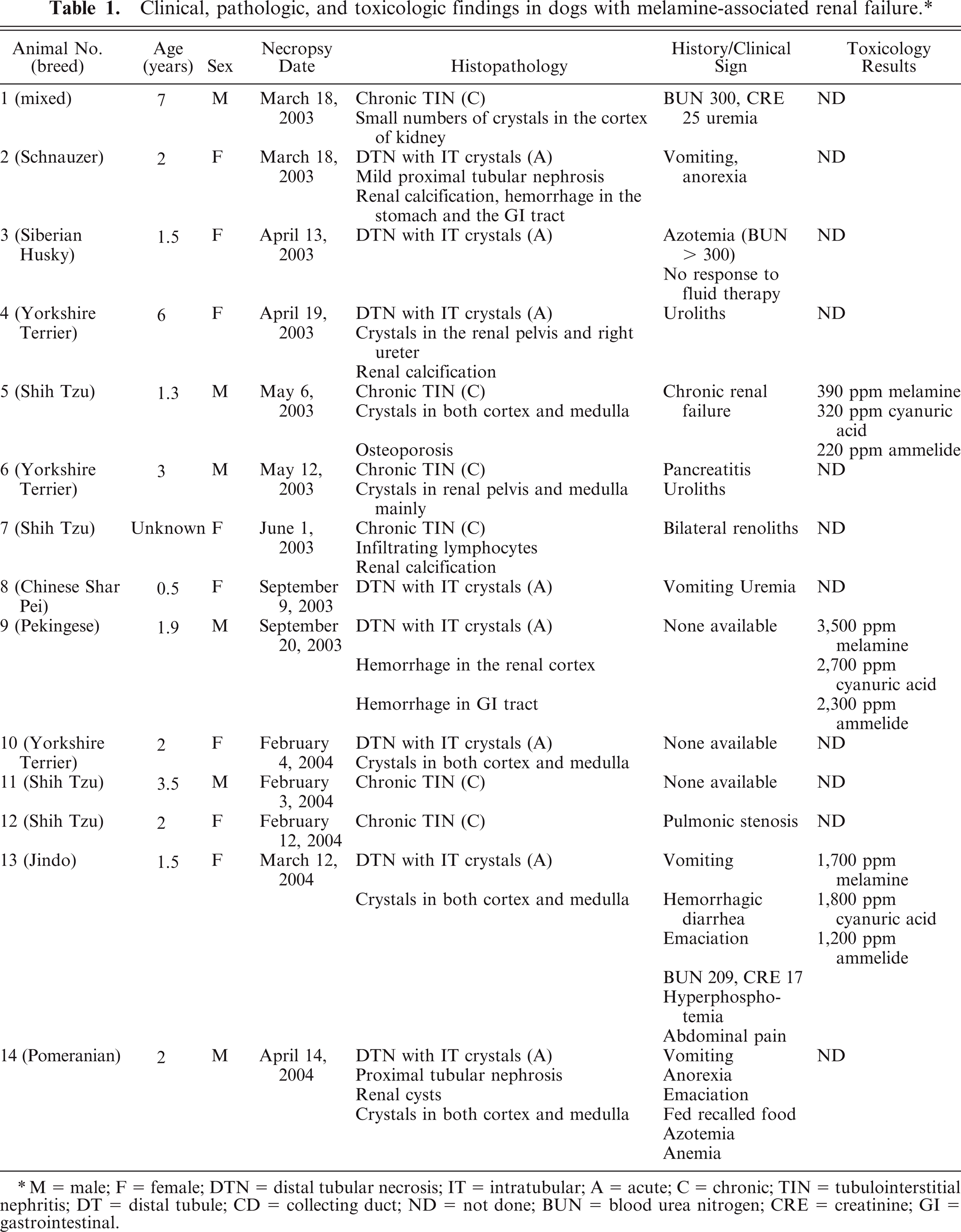
M = male; F = female; DTN = distal tubular necrosis; IT = intratubular; A = acute; C = chronic; TIN = tubulointerstitial nephritis; DT = distal tubule; CD = collecting duct; ND = not done; BUN = blood urea nitrogen; CRE = creatinine; GI = gastrointestinal.
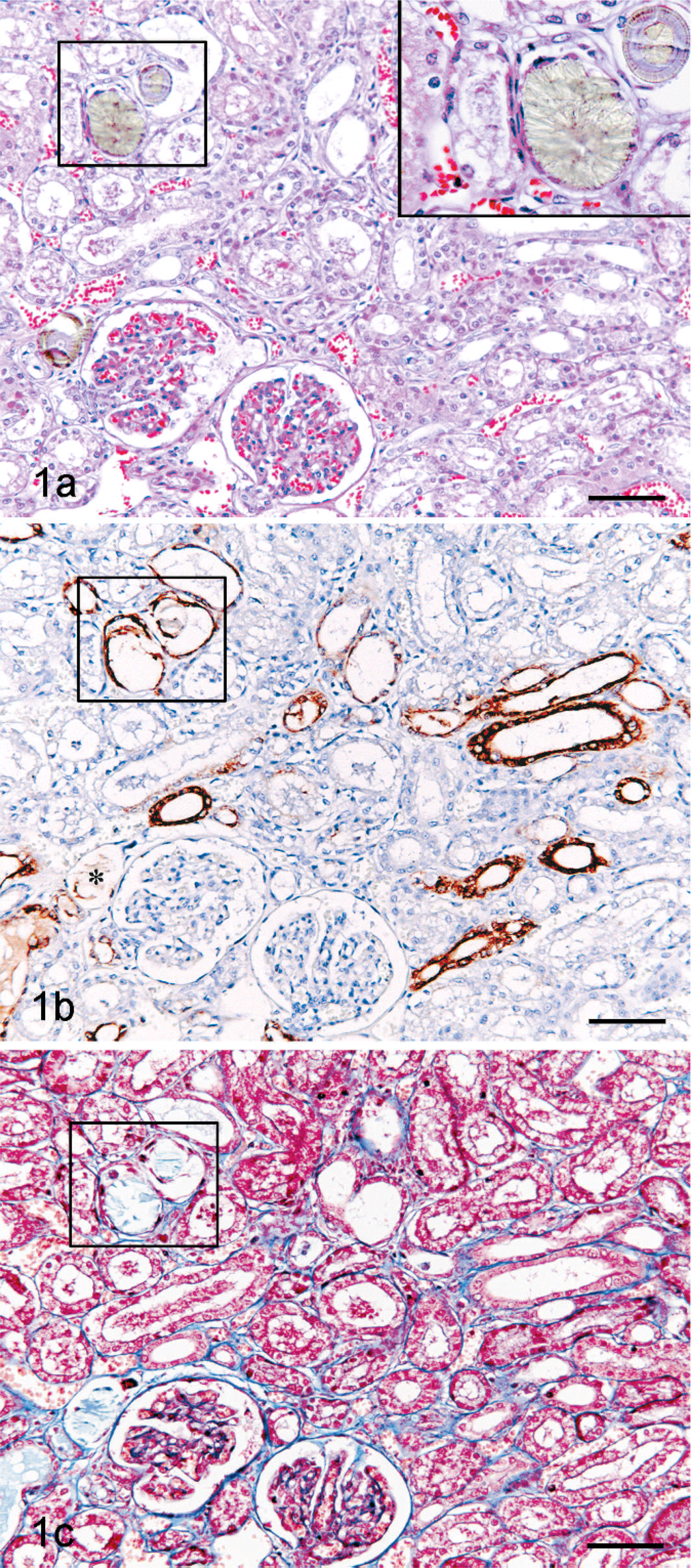
Kidney; dog with acute melamine associated renal failure (MARF). Fig. 1a. Histologic diagnosis of MARF based on renal crystal characteristics. Dilated distal tubules contain melamine/cyanuric acid crystals with radiating spokes and concentric striations (box). HE. Bar = 70 µm. Inset: Detail of melamine associated crystals. Fig. 1b. The distal segments (distal tubule or collecting ducts) containing crystals were cytokeratin positive in serial sections. Some tubules that contained crystals were disrupted with loss of epithelium, and cytokeratin staining was not present (∗). Crystals are dissolved in slides processed for IHC (box). Horseradish peroxidase (HRP), hematoxylin. Bar = 70 µm. Fig. 1c. Interstitial fibrosis is not evident in the acute stage of MARF. Crystals are dissolved in slides stained with Masson's trichrome (box). Masson's trichrome stain. Bar = 70 µm.
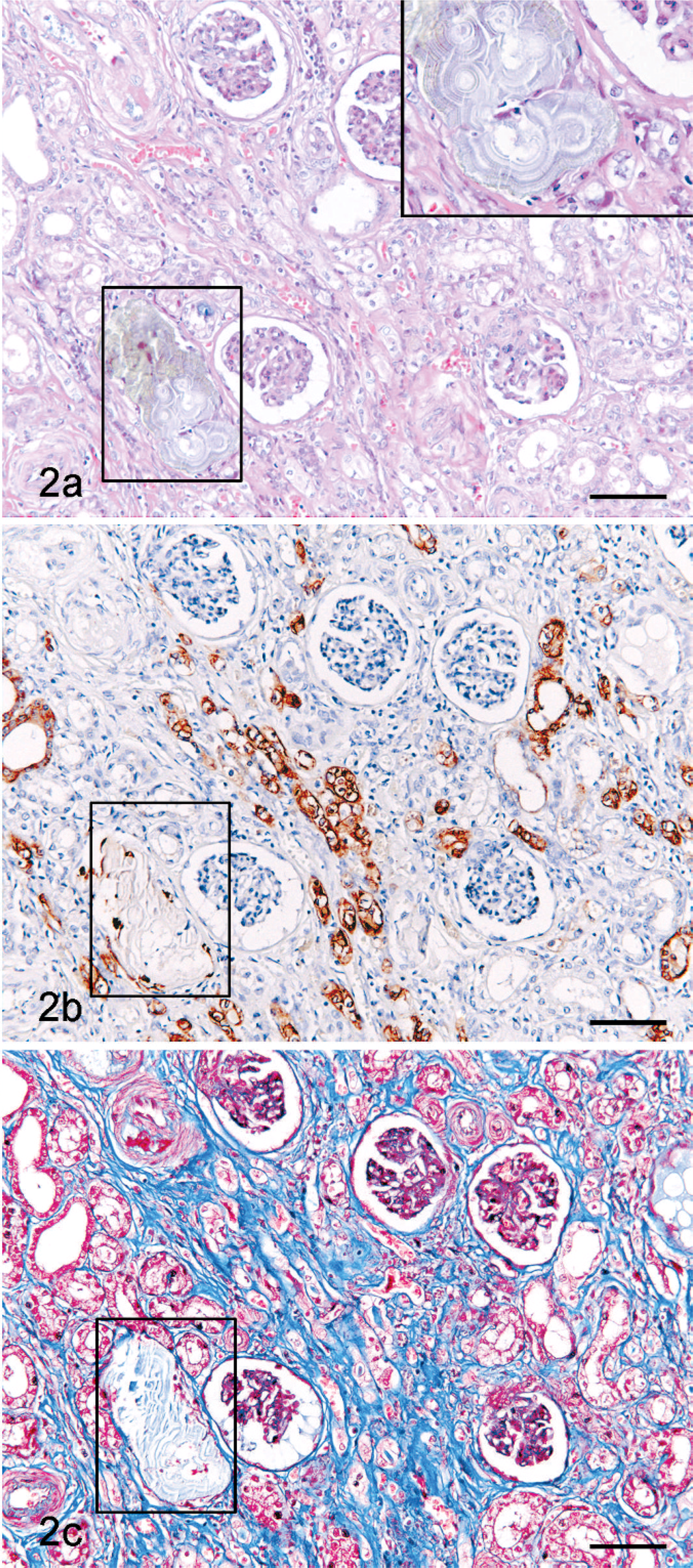
Kidney; dog with chronic MARF. Fig. 2a. Large crystals with radiating spokes and concentric striations were found in the dilated distal tubules (box). HE. Bar = 70 µm. Inset: Detail of melamine associated crystals. Fig. 2b. In serial sections, the tubule containing crystals was dilated, but the remaining tubular epithelial cells were cytokeratin positive. Horseradish peroxidase (HRP), hematoxylin. Bar = 70 µm. Fig. 2c. In serial sections, chronic MARF is characterized by extensive interstitial fibrosis. Masson's trichrome stain. Bar = 70 µm.
Extrarenal lesions of uremia were present in 4 cases. Hemorrhage in the stomach and the gastrointestinal tract was found in 2 cases (Nos. 2 and 9). Microscopically, the surface epithelium exhibited coagulative necrosis with hemorrhage and neutrophilic inflammation. The mucosa had multifocal mineralization of gastric glands. Arteriolar deposition of mineral was also present in the gastric submucosa (data not shown). Two cases of chronic MARF (Nos. 5 and 6) had secondary renal fibrous osteodystrophy. Case No. 5 had osteoporosis that was characterized by thin bony trabeculae. Case No. 6 also had pancreatitis, which was not noted in any of the other dogs and was likely unrelated to the nephrotoxicosis.
The most common clinical signs in these cases were vomiting and anorexia. Most of the cases died from renal failure. The 3 cases with laboratory data were severely azotemic with marked elevations of blood urea nitrogen (BUN) (BUN > 200, reference range 20–34 mg/dl), high serum creatinine, and hyperphosphatemia.
The characteristic crystals are unique features of MARF, and they are considered pathognomonic for this toxicosis. In April 2007, researchers at the University of Guelph (Canada) created crystals that were morphologically similar to those found in animals with MARF by adding a combination of melamine and cyanuric acid to cat urine in vitro. 19 Finally, FDA studies identified the material in the pet food and in affected kidneys as melamine with varying amounts of cyanuric acid, ammelide, and ammeline. 3, 6, 24
Toxicologic analyses for detection of melamine, cyanuric acid, ammelide, and ammeline were performed on 3 cases (Table 1, Nos. 5, 9, and 13) by liquid chromatography/tandem mass spectrometry as previously described. 10 The 3 kidney samples from these cases were retrieved from paraffin blocks, and both melamine and cyanuric acid were detected in all 3 samples. In case No. 5, cyanuric acid and melamine were present in the kidney at 320 ppm and 390 ppm, respectively. Ammelide was also present at 220 ppm. Renal tissue from case No. 9 contained 2,700 ppm of cyanuric acid, 3,500 ppm of melamine, and 2,300 ppm of ammelide. The kidney sample from case No. 13 contained 1,800 ppm of cyanuric acid, 1,700 ppm of melamine, and 1,200 ppm of ammelide. Ammeline was not detected in any of the 3 tested samples. Although only 3 samples were tested, it is interesting that kidney from the acute cases of MARF had much higher concentrations of all 3 compounds compared with the chronically affected animal. Additional testing of both acute and chronically affected animals is necessary to determine the significance of this observation.
Melamine alone is generally not known to be toxic. A previous study found that large doses of melamine given orally to rats, rabbits, and dogs showed no significant toxic effects. 18 In this study, oral administration of 125 mg melamine/kg body weight to dogs had a diuretic effect, but no other effects were observed. There is only limited data on the toxicity of cyanuric acid to mammals. Sodium cyanurate fed subchronically to rats and mice at up to 700 mg/kg and 2,200 mg/kg, respectively, caused bladder calculi and some associated bladder epithelial changes but no other adverse effects. 12 However, another study, conducted after the 2007 pet food recall, demonstrated that ingestion of a combination of melamine and cyanuric acid can lead to acute renal failure in cats. 21 The current hypothesis is that although neither melamine nor cyanuric acid is toxic alone, the combination of these 2 chemicals results in characteristic crystal formation and renal toxicity. 4, 7, 21 The source of the cyanuric acid, ammelide, and ammeline is still unclear; they might also have been intentionally added, or they may be melamine by-products.
In this study, histopathologic and toxicologic analyses of renal tissue substantiated the finding that the large outbreak of renal disease in 2003 and 2004 Korea was caused by MARF as has been previously reported in the United States. 5, 23 Thompson et al. reported a method to distinguish melamine-containing crystals and calcium oxalate crystals in dogs with suspected pet food–induced nephrotoxicosis. 23 However, present retrospective study demonstrated that the characteristics of acute and chronic stage MARF were studied in serial sections of 14 Korean dogs. In addition, the histologic features of the acute and chronic stage of MARF kidney were also illustrated, and the dissolved crystals in the tissue section during the process of Masson's trichrome stain and immunohistochemistry (IHC) were confirmed. The melamine/cyanuric acid “pinwheel” crystals observed in HE-stained tissue were not visible in sections stained with Masson's trichrome or in slides processed for cytokeratin IHC. Masson's trichrome stain includes 2 hours of fixation in 56°C Bouin's fixation solution, which was identified as causing crystal dissolution. If slides were fixed in 56°C Bouin's fixation solution 2 hours prior to routine HE staining, intratubular crystals were lost. IHC also includes a heating stage for antigen retrieval, which also dissolve melamine/cyanuric acid crystals. Intratubular crystals were not observed in slides heated before HE staining.
In the 2003 outbreak of acute renal failure in Asia, fungal contamination or mycotoxins (ochratoxin and citrinin) in the contaminated pet food were considered potential causes of the renal failure. 15 Some species of Aspergillus can produce large amounts of oxalates on feedstuffs, causing oxalate nephrosis in animals ingesting contaminated feed. 25 However, melamine/cyanuric acid crystals differ from oxalate crystals in histologic appearance and primary tubular location. The long-term ingestion of ochratoxin A can induce nephropathy in pigs. 17, 25 However, renal lesions of tubular necrosis/degeneration occur primarily in the proximal convoluted tubule of dogs experimentally administrated ochratoxin A and citrinin. 14, 16 In contrast, the tubular necrosis of MARF involves the distal tubular segments. Further, renal crystals deposition is not described in ochratoxin A or citrinin toxicosis. In addition, histologic changes in the kidney of the 14 dogs in this study were identical to those seen in cases of pet food–associated renal failure in 2007.
Although the ingredients of pet foods recalled in Asia 2003–2004 were not available for melamine/cyanuric acid analysis, the characteristic renal histologic findings and the finding of melamine, cyanuric acid, and ammelide in archived kidney sections strongly suggest that similar practices resulted in both pet food–associated outbreaks of renal failure. Interestingly, the 2007 outbreak in the United States affected more cats than dogs, and the lack of renal failure in cats in Korea was initially viewed as evidence that the outbreaks were unrelated. However, the population of pet cats in Korea is very low. No tissues were submitted from cats to the Konkuk University Veterinary Medical Diagnostic Laboratory in 2003 and 2004. Although tissues from dogs, pigs, rats, mice, birds, and reptiles were submitted to the laboratory, there was not a single feline submission between 2003 and 2008. Therefore, it is concluded that this apparent difference in species susceptibility in the Asian and U.S. outbreaks is attributed to marked differences in the makeup of the pet population in Asia and the United States.
In summary, this report showed that the outbreak of pet food–associated renal failure in 2003 and 2004 in Asia was, like the 2007 U.S. outbreak, caused by melamine and cyanuric acid contamination.
Footnotes
Acknowledgements
Thanks to Ms. R. H. Jang for excellent technical assistance. This study was supported by Konkuk University in 2008.