



Abstract
Sixteen animals affected in 2 outbreaks of pet food-associated renal failure (2 dogs in 2004; 10 cats and 4 dogs in 2007) were evaluated for histopathologic, toxicologic, and clinicopathologic changes. All 16 animals had clinical and laboratory evidence of uremia, including anorexia, vomiting, lethargy, polyuria, azotemia, and hyperphosphatemia. Where measured, serum hepatic enzyme concentrations were normal in animals from both outbreaks. All animals died or were euthanized because of severe uremia. Distal tubular lesions were present in all 16 animals, and unique polarizable crystals with striations were present in distal tubules or collecting ducts in all animals. The proximal tubules were largely unaffected. Crystals and histologic appearance were identical in both outbreaks. A chronic pattern of histologic change, characterized by interstitial fibrosis and inflammation, was observed in some affected animals. Melamine and cyanuric acid were present in renal tissue from both outbreaks. These results indicate that the pet food-associated renal failure outbreaks in 2004 and 2007 share identical clinical, histologic, and toxicologic findings, providing compelling evidence that they share the same causation.
Large outbreaks of nephrotoxic renal failure attributed to ingestion of toxin-containing pet foods occurred in dogs and cats in 2004 and 2007. 2,4,6 In 2004, outbreaks of renal failure linked to ingestion of specific commercial dog foods occurred in dogs from Asia. Reports of this outbreak were limited to a single publication from Korea, 6 a single case from Taiwan (Armed Forces Institute of Pathology [AFIP] Slide Conference 12, Case III, contributed by Animal Technology Institute Taiwan, Jan 12, 2005), and media reports within the affected countries. 1,5 The nephrotoxicosis in Asia was attributed to mycotoxin (particularly ochratoxin, citrinin, or both) contamination of raw materials in a manufacturing plant in Thailand (AFIP Slide Conference 12, Jan 12, 2005). 1,6 An estimated 6,000 dogs 5 (AFIP Slide Conference 12, Jan 12, 2005) and a smaller number of cats (K. Jeong, personal communication) developed nephrotoxic renal failure in 2004. A second outbreak of pet food–associated nephrotoxic renal failure occurred in early 2007, affecting large numbers of dogs and cats in North America. Several major commercial pet food companies recalled more than 1,000 potentially contaminated pet food products, with most of the recalled food being produced by the Canadian company Menu foods. 16 The toxic compound(s) in this recent outbreak have been proposed to be melamine and cyanuric acid, which were present in wheat gluten, rice protein, and corn gluten imported from China and used as a pet food ingredient. 4,11 It is presumed that melamine was intentionally added by suppliers in China to falsely elevate the measured protein content and, hence, the monetary value of these products. 3,4,13 Although melamine alone does not cause renal failure in toxicology studies in dogs and rodents, 10,12 melamine and cyanuric acid in combination form insoluble crystals that obstruct and damage renal tubules and are presumed to cause renal failure. 11 The purpose of this study was to describe and compare the clinical, histologic, and toxicologic characteristics of these 2 outbreaks of pet food-associated renal failure in dogs and cats.
Tissues from 10 cats and 6 dogs were included in this study. Fourteen of these animals died between late February and early June 2007 and were submitted to the University of Georgia Athens Veterinary Diagnostic Laboratory for necropsy (4 animals) or as tissues from private practitioners (10 animals). The remaining 2 dogs were submitted to the College of Veterinary Medicine, Kyungpook National University, Korea, in March 2004. Fifteen animals, including the dogs submitted in 2004, were reported to have ingested one of several types of recalled pet foods, although a history of eating recalled pet food could not be confirmed in 1 animal from 2007.
All tissues were fixed in 10% neutral buffered formalin, embedded in paraffin according to standard methods, sectioned at 3 μm, and stained with hematoxylin and eosin. Gross and microscopic digital images of paraffin-embedded renal tissues from the Korean dogs were submitted to one of the authors (CAB) in June 2007; these paraffin-embedded tissues were similarly sectioned, stained, and examined histologically. Selected formalin-fixed, 4–6-μm-thick paraffin-embedded sections of kidney were stained immunohistochemically to differentiate proximal (pancytokeratin-negative) from distal (pancytokeratin-positive) renal tubules and to differentiate epithelial cells from epithelioid macrophages. Briefly, sections were heated for 30 min at 60°C, deparaffmized, and stained with a 1:100 dilution of antibodies against cytokeratin a for 45 min with a TechMate 500 Immunostainer. b
To evaluate the effects of formalin and alcohol fixation on crystal preservation, replicate samples of renal tissue from 1 dog (animal 11) were placed in both absolute alcohol and formalin at the time of necropsy. After fixation for 24 hr, samples of this tissue were routinely processed into paraffin. To evaluate the effect of long-term formalin fixation on renal crystal preservation, additional renal tissue from this dog was processed into paraffin blocks after 6 wk of formalin fixation.
Renal tissue, urine, or both from 6 animals were submitted to the California Animal Health and Food Safety Laboratory System for analysis of melamine and cyanuric acid content. Because fresh tissues were not available from the Korean dogs, renal tissue was retrieved from the paraffin block of animal 15 by heating and melting the paraffin, removing the paraffin with 3 changes of 100% xylene, rehydration through graded concentrations (100% to 70%) of alcohol, and a final wash with flowing tap water. For these analyses, melamine cyanurate, melamine, and cyanuric acid were extracted from renal tissue by homogenization in acetonitrile/water/diethylamine; this solvent dissolves melamine cyanurate into melamine and cyanuric acid. After dilution and sonification, the reconstituted extracts and urine samples were analyzed by liquid chromatography and mass spectrometry c,d with the use of atmospheric pressure chemical ionization. Cyanuric acid and melamine were analyzed in negative and positive ion modes, respectively. Positive control tissue samples were fortified with crystalline melamine cyanurate or melamine and cyanuric acid; bovine kidney samples were used as negative controls. Fresh renal tissue and renal tissue retrieved from the paraffin block from a dog with ethylene glycol toxicosis were submitted, along with samples from the 6 animals with melamine-associated renal failure (MARF), to serve as additional negative controls. This technique allowed detection of melamine and cyanuric acid at a minimum concentration of 5 ppm.
All 16 animals had clinical and laboratory evidence of uremia. Clinical signs of anorexia, vomiting, lethargy, polyuria, and polydipsia were observed in all animals. Clinical pathologic data was available in 15 of 16 animals (including both of the dogs from Korea). Abnormalities present in the 14 cases from 2007 included azotemia, with serum creatinines ranging from 7 to 15 mg/dl (reference range 0.9–2.1 mg/dl) in 14 of 14 tested animals and blood urea nitrogen greater than 130 mg/dl (reference range 20–34 mg/dl) in 12 of 12 tested animals. Hyperphosphatemia, with values ranging from 11.3 to 25 mg/dl (reference range 3.2–6.2 mg/dl), were present in all tested (n = 8) animals. Serum hepatic enzyme concentrations (alanine aminotransferase and alkaline phosphatase), were available in 9 animals and were within the normal reference ranges in these animals. The dogs from the 2004 outbreak were similarly azotemic and hyperphosphatemic and lacked elevations in serum hepatic enzyme concentrations (2 of 2 animals). All animals died or were euthanatized because of severe uremia.
Eight of 16 animals had extrarenal lesions attributed to uremia, including both dogs from the 2004 outbreaks (Table 1), consisting of oral ulcers along the ventrolateral aspect of the tongue, mineralization of the middle third of the gastric mucosa, and mineralization of pulmonary smooth muscle and alveolar walls. Histologic evidence of toxic hepatic injury was absent (11 of 11 animals in 2007; 2 of 2 animals in 2004).
Histologic renal lesions were present in all 16 animals with MARF, with unique polarizable crystals present in distal tubules or collecting ducts in all animals. The proximal tubules, identified by their larger epithelial cells and extensive luminal brush border, appeared largely unaffected and did not contain these unique crystals. These light green to slightly basophilic crystals were easily seen without polarization and varied in appearance with larger round crystals with radiating striations and small crystals appearing as globular aggregates (Fig. 1A, 1B). Crystals with an identical histologic appearance were also evident in distal tubules and collecting ducts of the dogs from the outbreak in Asia in 2004 (Fig. 2E, 2F). Variable numbers of pale green, glassy crystals within proximal tubules were also appreciated when viewed with polarized light in some animals, which was attributed to secondary oxalosis associated with tubular injury (Fig. 1C). Animal 1, which was submitted 1 month before the pet food recall, was initially diagnosed as oxalate nephrosis secondary to ethylene glycol toxicosis. Although the numbers of polarizable intratubular crystals seen in ethylene glycol toxicosis are typically greater in animals with MARF, this is not a reliable means of differentiation between these 2 nephrotoxicoses (Fig. 1D, 1E). In addition, crystal characteristics are difficult to appreciate at lower magnification, making distinction between ethylene glycol toxicosis and MARF difficult unless tissues are viewed at higher magnification. Oxalate crystals are predominantly in proximal tubules, lighter green with a glassy appearance, often oblong in shape, and more difficult to appreciate without polarization (Fig. 1C). In contrast, melamine/cyanuric acid crystals are predominantly within distal tubular segments, green to blue in appearance, often exhibit striations, and easily visualized histologically without polarization.
Similarly, the slide presented to the AFIP slide conference was diagnosed as oxalosis-associated nephrotoxicosis, and potential causes of oxalate nephrosis (e.g., ethylene glycol toxicosis, ingestion of fungal or plant-associated oxalates) were considered as the cause of the lesions. A section of renal tissue from animal 1 was examined (C. Brown), and the lesions were identical to those seen in animals with MARF (data not shown). In particular, there was distal tubular necrosis with characteristic intratubular round greenish striated crystals.
Pathologic and toxicologic findings in dogs and cats with melamine-associated renal failure.
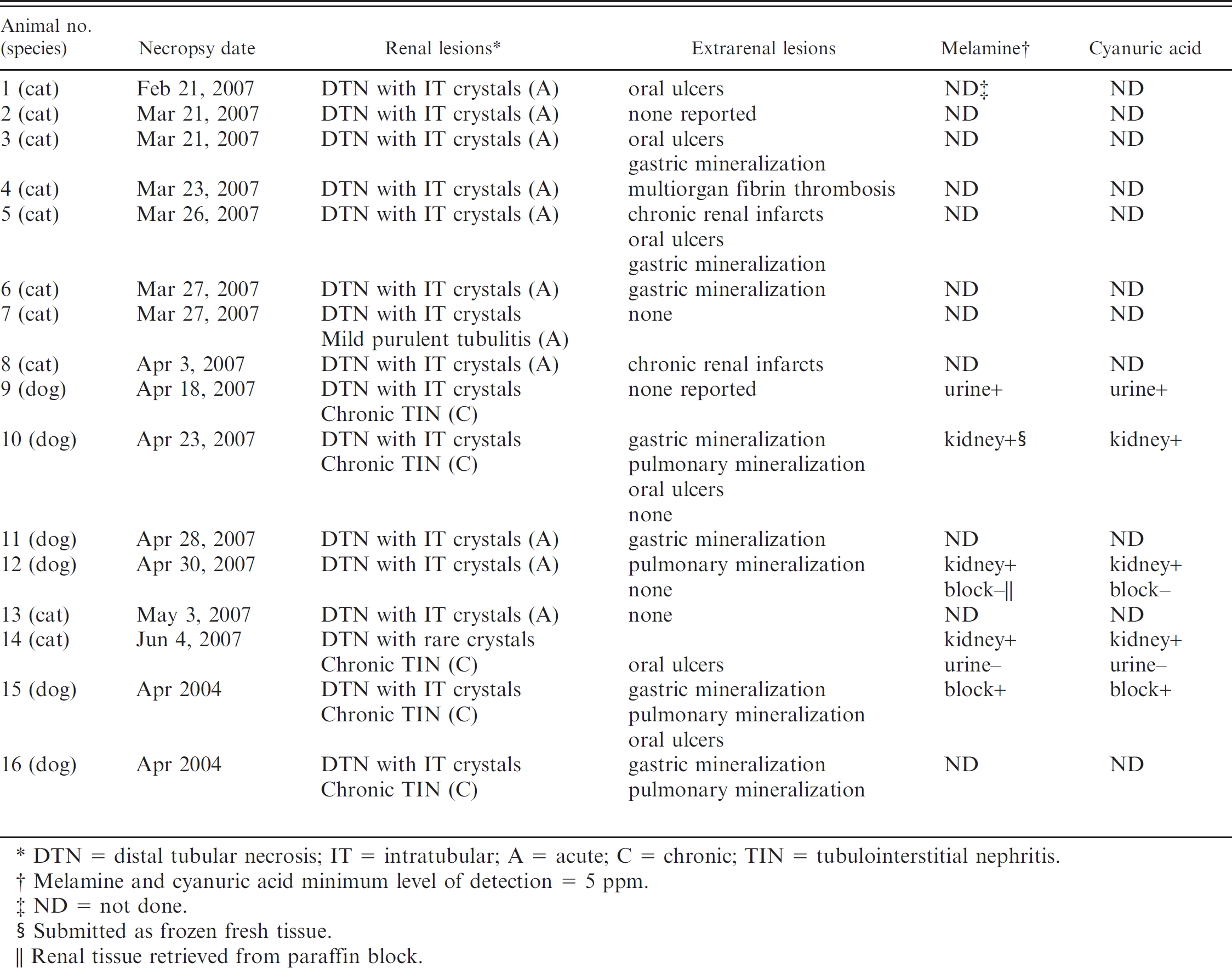
DTN = distal tubular necrosis; IT = intratubular; A = acute; C = chronic; TIN = tubulointerstitial nephritis.
Melamine and cyanuric acid minimum level of detection = 5 ppm.
ND = not done.
Submitted as frozen fresh tissue.
Renal tissue retrieved from paraffin block.
Eleven animals (9 cats, 2 dogs) had renal lesions largely confined to the tubules and were interpreted to be associated with acute MARF (Table 1). Profiles of distal nephron segments (distal tubules and collecting ducts) were dilated both in the presence and absence of associated crystals, fewer epithelial nuclei were present, epithelial cells were attenuated, and small numbers of necrotic cells were observed in tubular lumina (Figs. 1A, 1B, 2A). Mild anisokaryosis with occasional mitotic figures, indicative of tubular epithelial regeneration, was often present. In some animals, there was an associated acute tubulitis, typically within the medulla, with intratubular and peritubular neutrophils (Fig. 2B). Focal proliferation of tubular epithelial cells over the intraluminal crystals was occasionally observed (Fig. 2B, 2C). Findings in tissues from animals affected in the United States in 2007 were identical to those observed in the dogs from Asia that died in 2004.
Five animals (1 cat, 4 dogs) had, in addition to renal distal tubular necrosis and characteristic intratubular crystals, lesions of mild to moderate renal interstitial fibrosis and lymphoplasmacytic inflammation, which were indicative of chronic stages of MARF. The inflammation surrounding crystal-containing tubules was more prominent than in acute MARF and consisted of moderate numbers of lymphocytes, plasma cells, and macrophages, with only rare neutrophils (Fig. 2F). Larger crystals were more common in the medulla of these chronic cases, and some of these foci exhibited tubular rupture (Fig. 2D, 2F). These liberated interstitial crystals were surrounded by macrophages, multinucleated giant cells, and fibrous connective tissue. Large aggregates of crystals were often present in the papilla and were present as grossly visible renoliths in some animals. Chronic renal lesions in the 2007 outbreak were seen in animals that presented at least 4 weeks after the March 16, 2007, pet food recall (Table 1). Similarly, the dogs from the 2004 Korean outbreak with identical chronic MARF lesions had been ingesting the recalled pet food for approximately 1 month before necropsy. One cat (animal 14) presented to a local practitioner in March 2007 with acute renal failure and a history of consumption of recalled pet food. The diet was changed at that time and the cat was treated symptomatically for renal failure for 3 months before euthanasia and necropsy. Although the lesions of interstitial fibrosis and lymphoplasmacytic interstitial nephritis predominated in this cat, scattered characteristic crystals were still evident, and melamine and cyanuric acid were detectable in samples of fresh kidney (Table 1).
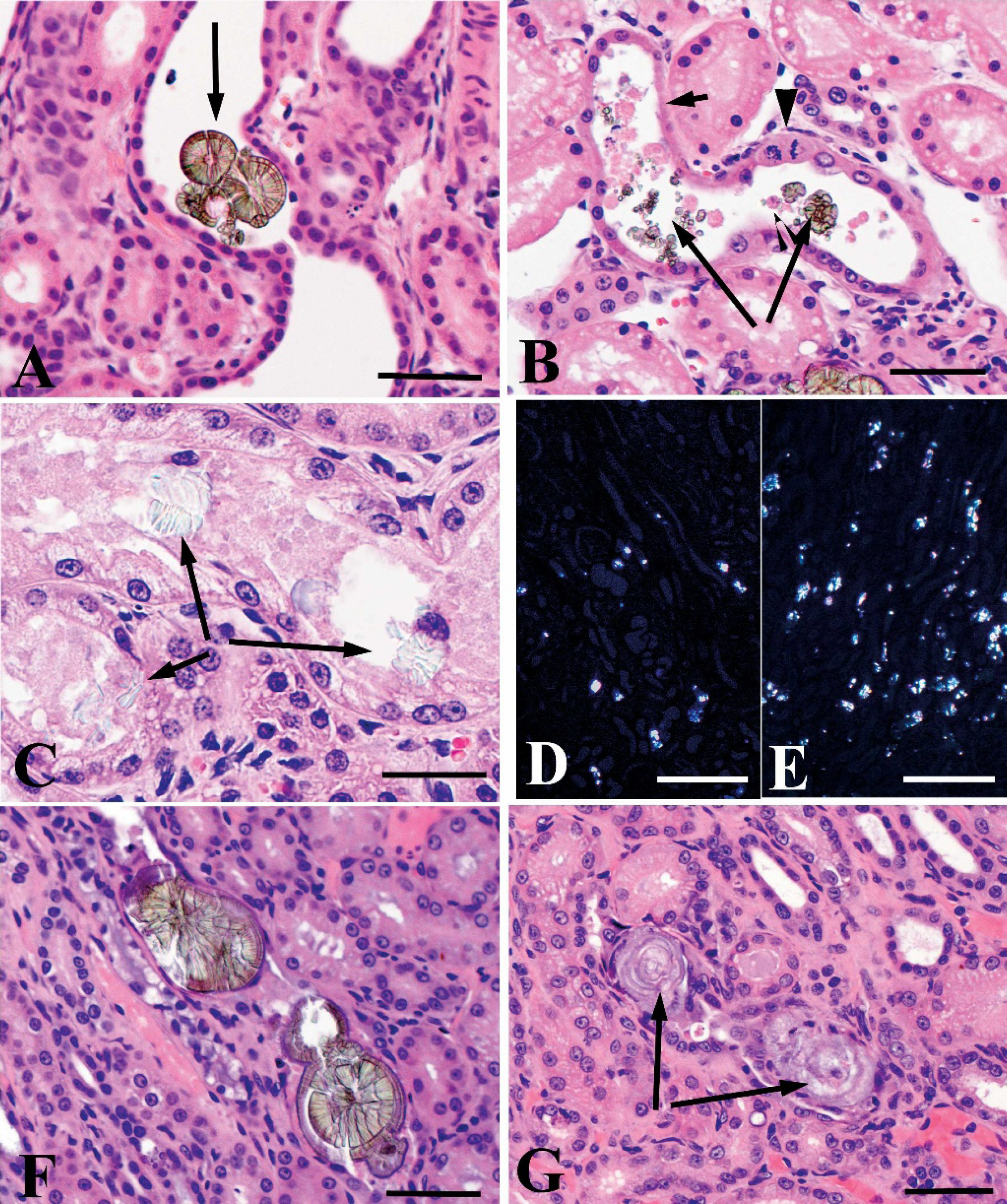
Histologic diagnosis of melamine-associated renal failure (MARF) based on renal crystal characteristics.
Because histologic diagnosis of MARF is dependent on the finding of characteristic crystals in distal tubular segments, preservation of these crystals during fixation and processing is critical. The duration of formalin fixation in these cases varied from 1 to 8 days, and crystals were readily identified in each animal. Sections of kidney fixed in formalin for 24 hours contained similar numbers of crystals as tissues fixed in absolute alcohol for 24 hours and acetone-fixed frozen sections (data not shown). However, dissolution of crystals was noted in tissues subjected to 6 weeks of formalin fixation (Fig. 1F, 1G), indicating that prolonged formalin fixation might interfere with the histologic diagnosis of MARF. Because the rate of crystal dissolution in formalin had not been determined, formalin fixation time should be kept to a minimum to ensure crystal preservation.
Toxicologic analyses for detection of melamine and cyanuric acid was performed on 8 samples (4 fresh kidney samples, 2 tissues retrieved from paraffin blocks, and 2 urine samples) from 6 different animals (4 dogs, 2 cats). Melamine and cyanuric acid were detected in all 6 animals, including 6 of 6 kidney samples and 1 of 2 urine samples (Table 1). Melamine and cyanuric acid were detected in the kidney but not the urine of animal 14; this animal had not been ingesting recalled pet food for 3 months before its death, so continued excretion of larger detectable amounts of melamine and cyanuric acid would not be expected. Samples of kidney from 2 animals were retrieved from the paraffin-embedded block. Melamine and cyanuric acid were detected in fresh kidney but not in the renal block tissue from animal 12; this was likely because of the small size of the block tissue available in this animal. The renal block sample from one of the 2004 Korean animals was positive for both melamine and cyanuric acid.
The 2 outbreaks described in this study were widespread and catastrophic. It has been estimated that over 6,000 animals were affected in the 2004 incident 5 (AFIP Slide Conference 12, Jan 12, 2005) and although the number of animals affected in 2007 is currently undetermined, the FDA has received over 10,000 complaints related to this outbreak. 14
Renal lesions present in both outbreaks were characteristic, consisting of distal renal tubular dilation and necrosis with unique intratubular melamine/cyanuric acid crystals. The involvement of distal tubular segments in MARF is unusual, as most nephrotoxins exert their toxic effects on proximal tubules. 15 The polarizable melamine/cyanuric acid crystals present in MARF might be misidentified as oxalate crystals, leading to the erroneous diagnosis of oxalate nephrosis. However, the dense striated nature and distal tubular location of melamine/cyanuric acid crystals readily distinguishes them from oxalate crystals, which are more transparent in appearance and are present within proximal tubules.
Animals in this study demonstrated both an acute and chronic phase in the histologic appearance of MARF. In acute cases, the distal tubules exhibited necrosis with initial multifocal mild acute neutrophilic tubular inflammation and incorporation of some crystals into the tubular wall because of epithelial overgrowth. In chronic cases, crystals are larger with associated chronic lymphoplasmacytic to granulomatous tubulointerstitial inflammation and fibrosis. Tubular rupture associated with large crystal accumulation results in further interstitial inflammation and fibrosis. Large crystal deposits in the papilla can result in renoliths.
In this study, there was an apparent species difference in the occurrence of MARF, with more cats (n = 10) than dogs (n = 4) presented for necropsy in 2007. The reason for this apparent increased susceptibility in cats compared with dogs is undetermined, although physiologic differences in tubular function between cats and dogs could be associated with an increased sensitivity to MARF in cats. In addition, cats might be more likely to be fed wet or pouched foods (which were more common on the pet food recall list) exclusively than are dogs. Cats were also more likely to die with acute MARF (9 of 10 affected cats in 2007, data not available for 2004) than chronic MARF (1 of 10 affected cats). Of the 4 dogs with MARF in 2007, 2 died with acute disease and 2 had chronic disease; both dogs in 2004 had chronic MARF.
The addition of melamine, cyanuric acid, or both to enhance apparent protein content of vegetable concentrates is reportedly commonplace in some regions. 3 Because chronic interstitial fibrosis is a self-perpetuating process and a common finding in animals with chronic kidney disease, sublethal MARF could represent an important, previously unrecognized cause of chronic kidney disease in dogs and cats. Interestingly, the contaminated wheat gluten in the 2007 outbreak was a human food–grade product. The potential effects of ingestion of similarly contaminated material by people are unknown.
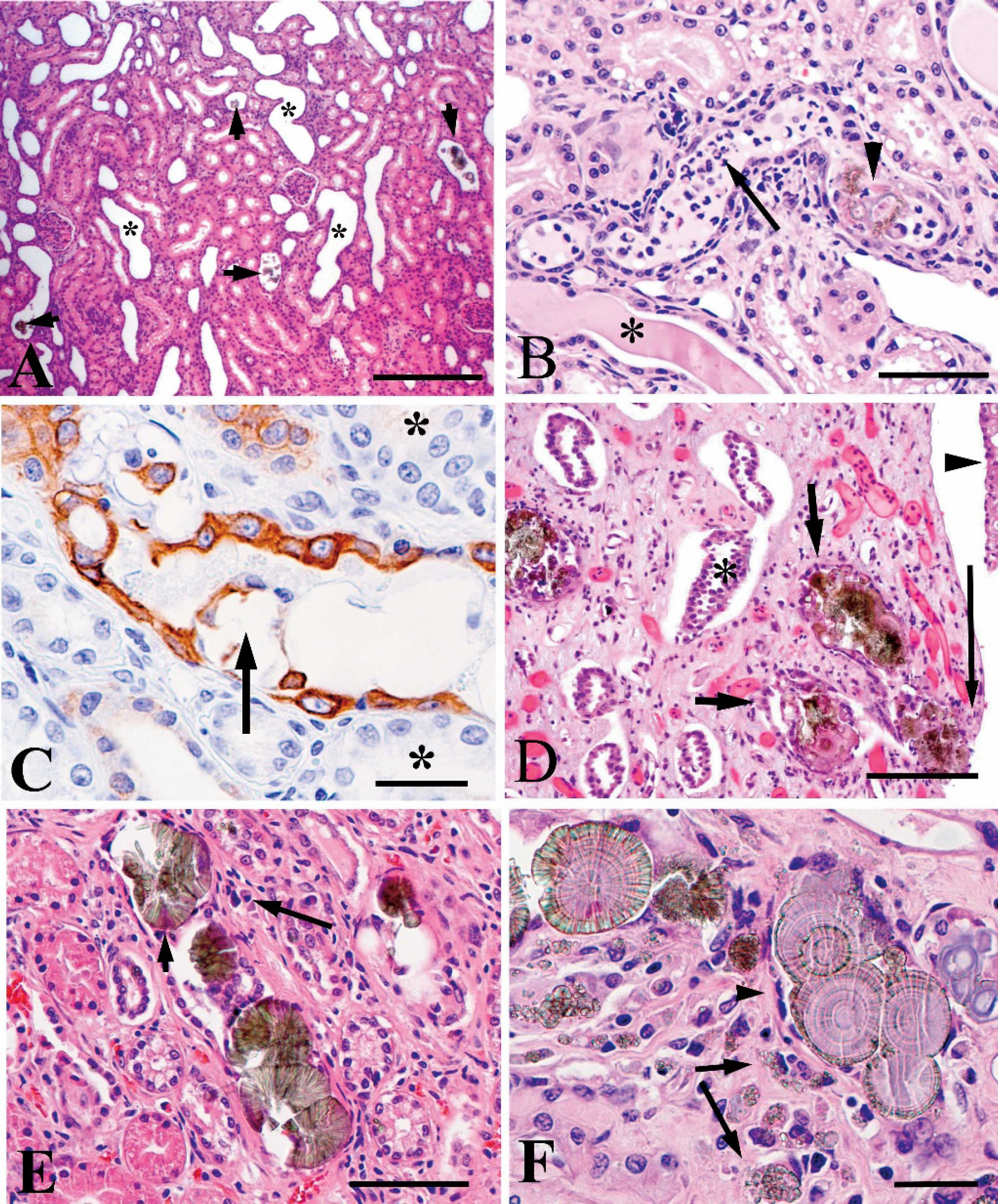
Renal histologic lesions present in cases of acute,
The 2004 outbreak of pet food–associated acute renal failure was initially attributed to mycotoxicosis. Although some species of Aspergillus might produce large quantities of oxalates on feedstuffs, causing oxalate nephrosis in animals consuming these contaminated feeds, 17 oxalate nephrosis was not present in animals with MARF. The nephrotoxic mycotoxins, ochratoxin and citrinin, also were considered potential causes of the 2004 nephrotoxicosis. Pathologic changes in the kidneys of dogs with experimental ochratoxin A nephrosis primarily involve the proximal tubules. 8 Although citrinin nephrotoxicity might involve the proximal and distal tubule in dogs, 8 citrinin is primarily a proximal tubular intoxicant 9 and has been associated with clinicopathologic evidence of hepatic injury. 7 The authors are not aware of any association of either of these toxins with the presence of unique intrarenal or urinary crystals or uroliths.
This study provides compelling evidence that the pet food-associated renal failure outbreaks in 2004 and 2007 share causation. In particular, the outbreaks share identical clinical, histologic, and toxicologic findings. Given the unique nature of the histologic features and the specificity of the toxicologic tests in this study, it is reasonable to conclude that both are examples of MARF. Although the source of melamine and cyanuric acid responsible for the 2007 MARF outbreak has been identified as vegetable protein concentrates imported from China, the source in the 2004 outbreak remains undetermined.
Footnotes
a.
Pancytokeratin, Dako Corporation, Carpinteria, CA.
b.
BioTek Solutions, Inc, Santa Barbara, CA.
c.
Microm Biosystems HPLC, Microm BioResources, Auburn. CA.
d.
4000 QTRAP, Applied Biosystems, Concord, ON, Canada.