




Abstract
Although metastases to the adrenals are common in humans, they have not been thoroughly studied in animals. The purpose of this retrospective study was to document the types of malignant tumors that metastasize to canine, feline, equine, and bovine adrenals, and the rate at which they do so. The average rate of adrenal involvement in metastatic cancer was 112/534 (21.0%) in dogs, 12/81 (14.8%) in cats, 18/67 (26.9%) in horses, and 5/16 (31.3%) in cattle. In dogs, 26 different tumor types metastasized to the adrenals. Pulmonary, mammary, prostatic, gastric, and pancreatic carcinomas, and melanoma had the highest rates of metastasis to the adrenal glands in dogs. Hemangiosarcoma and melanoma had high rates of adrenal involvement in horses. In cats and cattle, relevant data were only available for lymphoma. Adrenal metastases usually occurred in the late stages of the disease. One dog had developed Addison's disease (hypoadrenocorticism) secondary to lymphoma. Metastatic lesions represented 126/472 (26.7%) of canine, 12/20 (60.0%) of feline, 21/80 (26.3%) of equine, and 5/9 (55.5%) of bovine adrenal neoplasms. This study shows that adrenal glands should be thoroughly examined during both clinical work-up and postmortems when disseminated neoplasia is suspected.
Metastatic tumor is the most common neoplastic lesion in the adrenal glands of humans and is especially common with lung, breast, and gastric carcinomas, and melanoma. 1 , 13–15 , 24 , 34 , 36 They are the fourth most common site of metastasis after lung, liver, and bone. 15 The common occurrence of metastases to the adrenals is thought to be related to the rich sinusoidal blood supply. 13 , 16 Adrenal metastases only infrequently cause hypoadrenocorticism, possibly because an estimated 90% of the adrenal cortex must be compromised before abnormal gland function is detectable and hyperplasia of the remaining adrenal may compensate for the loss of tissue. 4 , 13 , 16 When hypoadrenocorticism does occur, the resulting clinical signs may be overlooked and wrongly attributed to nonspecific effects of widespread neoplastic disease. 13 , 16 , 25 , 30 , 36 Also, the use of treatment protocols that include steroids may mask symptoms and complicate the diagnosis of hypoadrenocorticism. 25 , 30 , 36
In domestic animals, metastases to the adrenal glands have only been occasionally described, mostly as single cases. 2 , 3 , 5–8 , 10 , 19–23 , 26–29 , 31–33 , 35 , 37–39 To the authors' knowledge, there are no published reports on the rate of adrenal involvement in metastatic disease for specific tumor types in domestic animals. Hypoadrenocorticism due to tumor spread has been reported in two cats but has not been reported in other animals. 29
In this study, we describe the rate and features of metastatic lesions to the adrenal glands of domestic animals.
Materials and Methods
The records of canine, feline, equine, and bovine patients admitted to the Veterinary Medical Teaching Hospital (School of Veterinary Medicine, University of California, Davis, CA) from October 1983 through May 2003 were reviewed for the presence of metastatic disease involving the adrenal glands. The total number of cases for each tumor type that had at least one recorded metastasis to the adrenals in a given species was investigated. Signalment and clinical information was retrieved from the hospital records. The number of primary adrenal tumors for each species was also obtained from these records.
Only cases with full postmortem examination including histologic evaluation of the adrenal glands were included in the study. Metastasis was used broadly to indicate multiorgan involvement for both epithelial and nonepithelial tumors. Locally invasive tumors without metastases were not included in this study. Tumors were grouped by either site of origin or cell type. All available material was retrieved and reviewed for confirmation of the diagnosis and description of the morphologic features of the metastases. Features that were evaluated for each affected adrenal gland included location and distribution of the neoplastic cells within the adrenal gland and extent of damage to the adrenal gland. Infiltration by neoplastic cells was considered mild when only a few small clusters of neoplastic cells were present, moderate when neoplastic cells effaced portions of the adrenal without disrupting the overall architecture, and severe when the architecture of adrenal gland was disrupted and large portions of the gland were effaced by the neoplastic cells. Information regarding other sites of metastasis was obtained from the hospital records and review of the histology slides. Lymph nodes were grouped into abdominal, thoracic, and peripheral lymph nodes as sites of metastasis.
All tumor types/sites for which there was a record of metastasis to the adrenals for a given species were investigated, but limited weight was given to tumor types/sites with a total number of cases less than 10. A chi-square test for homogeneity was used to compare rates of metastasis for lymphoma in canine, feline, equine, and bovine adrenal glands.
Results
A summary of the frequency of tumor metastasis to the canine adrenal glands is presented in Table 1. Metastases to the adrenal glands were identified in 112 of 534 cases (21.0%) diagnosed with disseminated neoplasia. Affected dogs represented 44 different breeds, with Labrador Retrievers (n = 18), Golden Retrievers (n = 12), and German Shepherds (n = 12) being the most common breeds. Fifty-three dogs were males, 28 of which were castrated, and 61 were females, 47 of which had been spayed. The average age for these animals was 9.7 years (2–16 years), and the average weight was 29.6 kg (3.1–49.0 kg). Twenty-six different tumor types metastasized to the adrenals. For the 112 cases where a site of origin or a cell type could be determined, carcinomas had the highest number of metastases (45/112, 40.2%), followed by round cell tumors (30/112, 26.8%), nonlymphoid sarcomas (27/112, 24.1%), melanoma (6/112, 5.4%), and neuroendocrine tumors (4/112, 3.6%). In addition, six anaplastic carcinomas, four undifferentiated sarcomas, and four undifferentiated neuroendocrine tumors involved the adrenal glands. Gross lesions to the adrenals were seen at necropsy in 45/112 (40.2%) cases. Histology slides were available for review in 107 of 112 cases, including 69 cases where both adrenals were present on the slides. Metastases were bilateral in 38 of these 69 cases (55.1%). The distribution of the tumor cells in the adrenals and the severity of the infiltration were highly variable for each tumor type. Neoplastic cells were limited to the cortex in 50/107 (46.7%) cases, involved the cortex and medulla in 35/107 (32.7%) cases, and were restricted to the medulla in 22/107 (20.6%) cases. The distribution of neoplastic cells was similar for both adrenals when metastases were bilateral. One notable finding was that all metastases from melanomas were restricted to the medulla, occasionally compressing the adrenal cortex. In 68/107 (63.6%) cases, the infiltration was considered severe, whereas it was noted as mild or moderate in the remaining cases. The severity of infiltration by neoplastic cells was also similar for both adrenals when metastases were bilateral. The pattern of infiltration (focal, multifocal, obliterating) was variable for each tumor type. In milder infiltrations by round cell tumor, mainly lymphomas and mast cell tumors, neoplastic cells tended to form small nodules within the zona fasciculata and reticularis (Fig. 1). In mild infiltrations by carcinomas, the neoplastic cells often dissected the cortex along the vascular sinusoids (Fig. 2). These patterns were less apparent when larger portions of the adrenal glands were effaced by the neoplasm. Necrosis was the most common change in the adrenal glands associated with metastases. When tumors metastasized to the adrenals, an average of 4.5 (range 1–12) other organs or systems were involved. Lungs, liver, spleen, abdominal lymph nodes, thoracic lymph nodes, kidneys, heart, and central nervous system were involved in over 20% of cases with metastases to the adrenals. In cases where only one or two organs or systems were involved, the central nervous system was often affected. A 9-year-old, 54-kg, intact male Doberman Pinscher with disseminated lymphoma was diagnosed with hypoadrenocorticism (Addison's disease). The lymphoma obliterated most of both adrenals and involved the spleen, mesenteric lymph nodes, liver, and myocardium. The diagnosis of hypoadrenocorticism was based on an adrenocorticotropic hormone (ACTH) stimulation test performed 2 days before the animal's death, which revealed a low-normal baseline serum cortisol concentration of 1.9 µg/dl (reference range 1–6 µg/dl) and an abnormally poor response to ACTH administration with a post-ACTH serum cortisol concentration of 2.1 µg/dl (reference range 6.5–15 µg/dl). During the 20-year period investigated, 195 cases with adrenocortical tumors and 151 cases with pheochromocytomas were identified from surgical biopsies or necropsies. These included 154 adrenocortical adenomas, 41 adrenocortical carcinomas, 84 benign pheochromocytomas, and 67 malignant pheochromocytomas. When considering all metastatic lesions identified including the 14 poorly differentiated neoplasms, secondary tumors represent approximately 26.7% (126/472) of the neoplastic lesions in the canine adrenals.
Metastases to the canine adrenal glands.
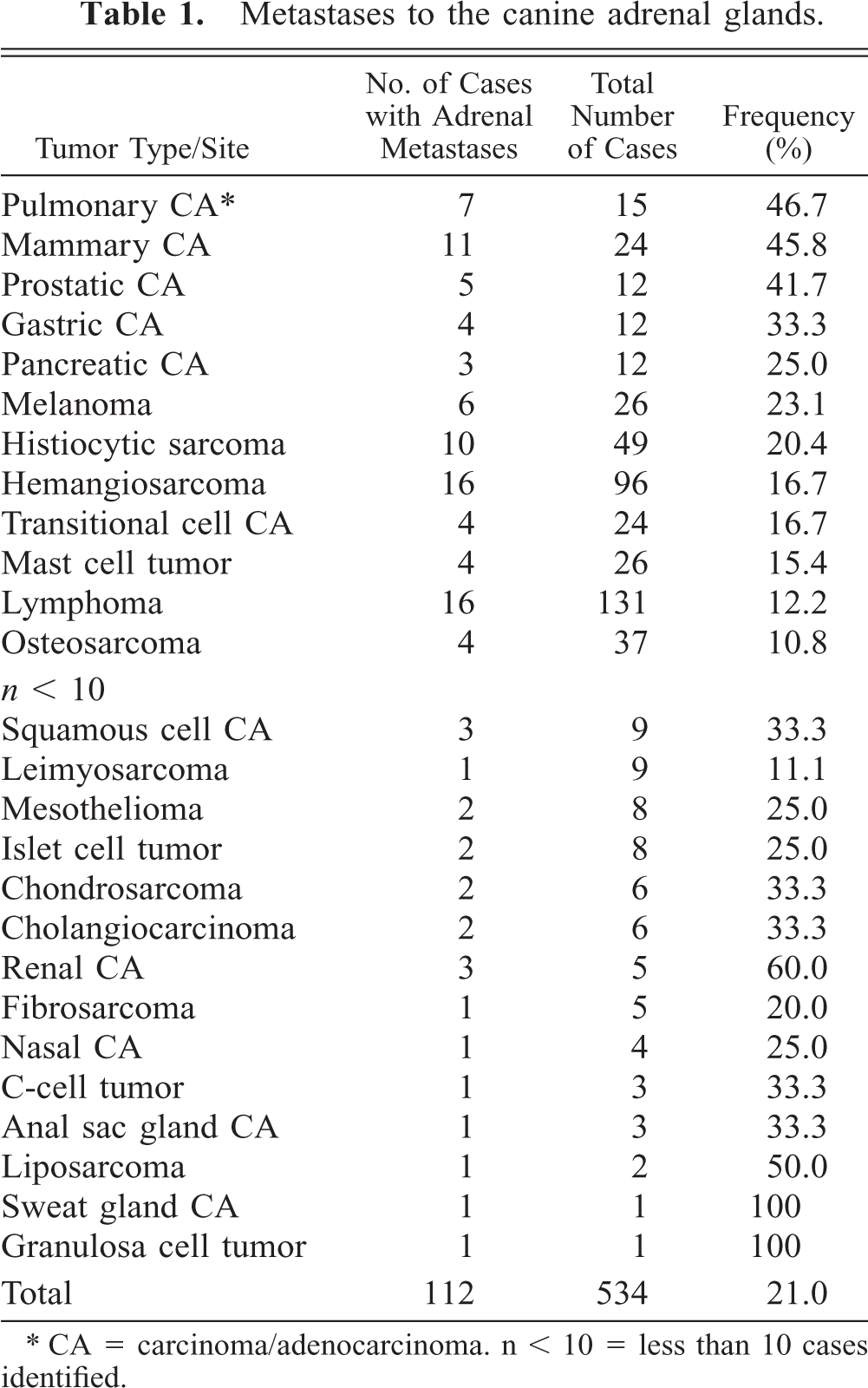
∗CA = carcinoma/adenocarcinoma. n < 10 = less than 10 cases identified.
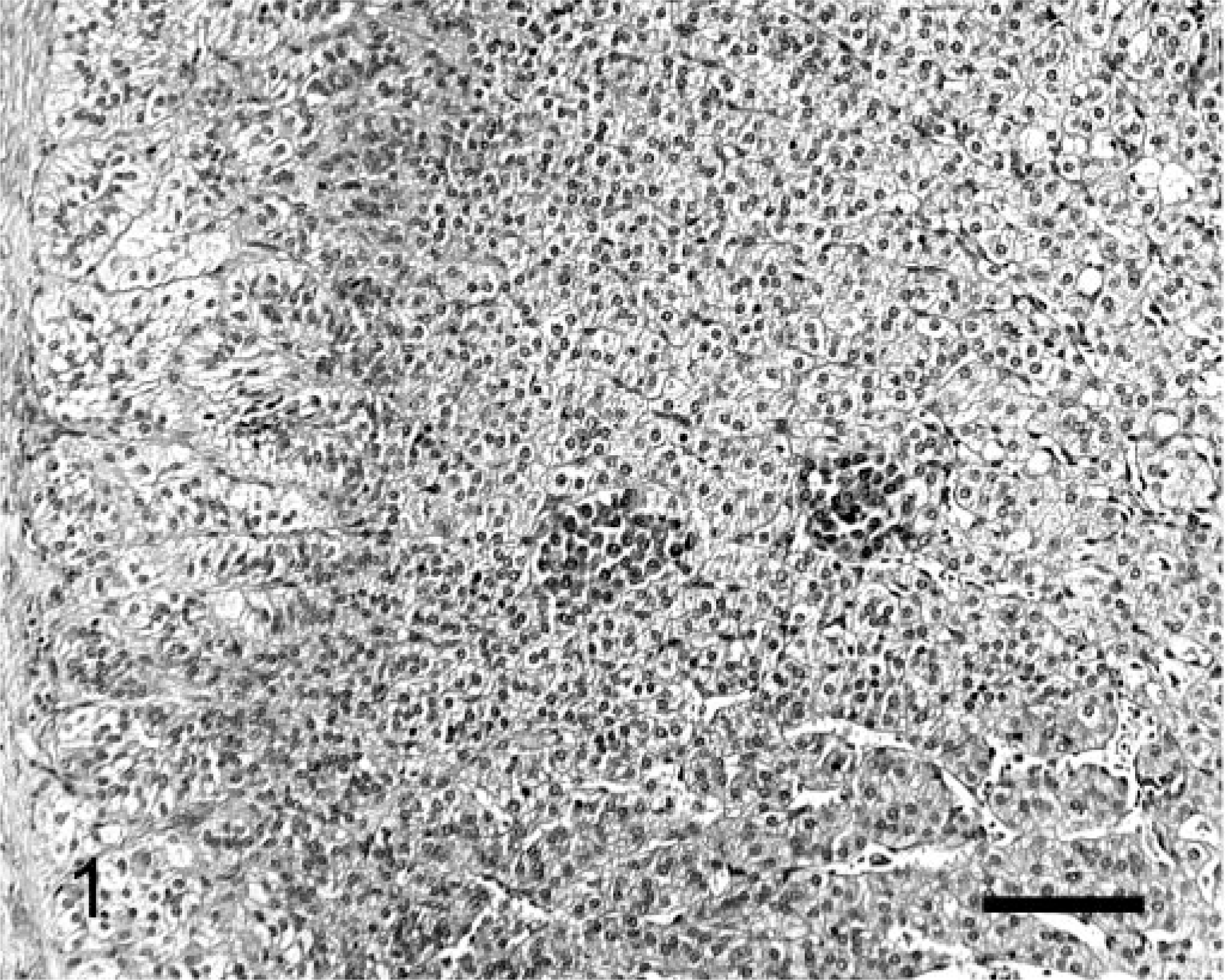
Adrenal gland, disseminated mast cell tumor; Labrador Retriever. Small nodules of neoplastic cells expand the zona fasciculata. HE. Bar = 100 µm.
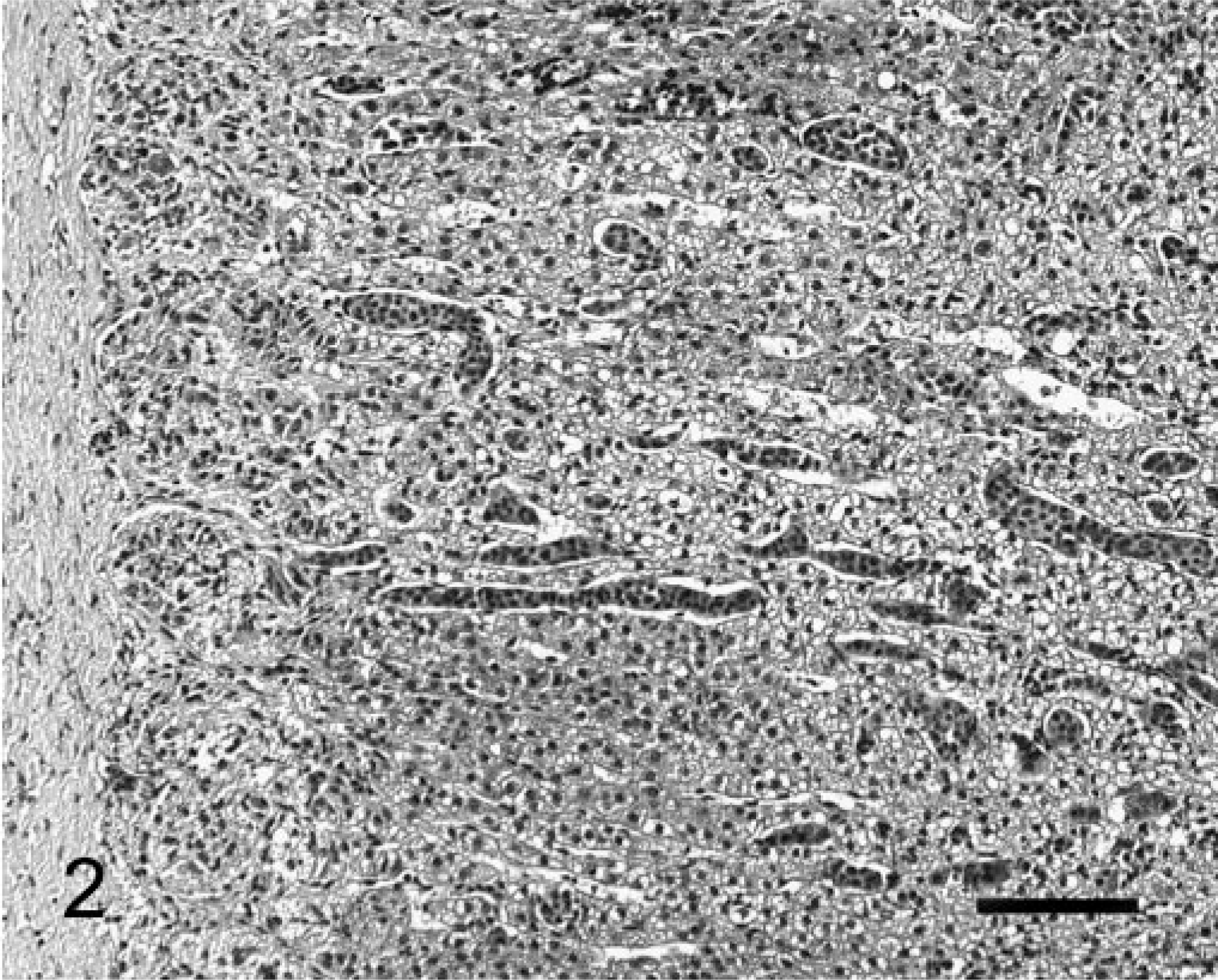
Adrenal gland, metastatic nasal adenocarcinoma; German Shepherd. Neoplastic cells dissect along the vascular sinusoids of the adrenal cortex. HE. Bar = 100 µm.
A summary of the frequency of tumor metastasis to the feline adrenal glands is presented in Table 2. Metastases to the adrenal glands were identified in 12 of 81 cases (14.8%) diagnosed with disseminated neoplasia. These include nine Domestic Shorthairs, one Domestic Longhair, one Siamese, and one Persian. One was an intact male, eight were castrated males, and three were spayed females. The average age for these cats was 8.8 years (1–17 years), and the average weight was 3.9 kg (2.7–5.2 kg). Weight was not available for four cats. Five different tumor types were represented including lymphoma, transitional cell carcinoma, melanoma, thyroid follicular carcinoma, and fibrosarcoma. One cat (fibrosarcoma) had gross lesions to the adrenals at necropsy. Histology slides were available for review in 10 of 12 cases; both adrenals were present on the slides for all 10 cases. Metastases were bilateral in 5 of these 10 cases (50.0%). Neoplastic cells were limited to the cortex in 5/10 (50.0%) cases, involved the cortex and medulla in 2/10 (20.0%) cases, and were restricted to the medulla in 3/10 (30.0%) cases. The sole melanoma metastasis to the adrenals formed a well-circumscribed nodule within the medulla. The infiltration of neoplastic cells was considered severe and obliterated large portions of the adrenals in 6/10 (60.0%) cases. The pattern of infiltration was variable between tumors. The difference in histologic patterns between carcinomas and round cell tumors noticed in dogs was not evident in cats. Necrosis was the most common change in the adrenal glands associated with metastases. When tumors metastasized to the adrenals, an average of 4.5 (range 2–7) other organs or systems were involved. Lungs, liver, abdominal lymph nodes, thoracic lymph nodes, kidneys, intestines, and pancreas were involved in over 20% of cases with metastases to the adrenals. Three of the six cats with lymphoma tested for feline leukemia virus were positive. All three cats with lymphoma tested for feline immunodeficiency virus were negative. One cat with a transitional cell carcinoma was positive for feline immunodeficiency virus. During the period investigated, six adrenocortical tumors (three adenomas, three carcinomas) and two pheochromocytomas (one benign, one malignant) were diagnosed. Metastatic lesions therefore represent approximately 60.0% (12/20) of the neoplastic lesions in the feline adrenals.
Metastases to the feline adrenal glands.
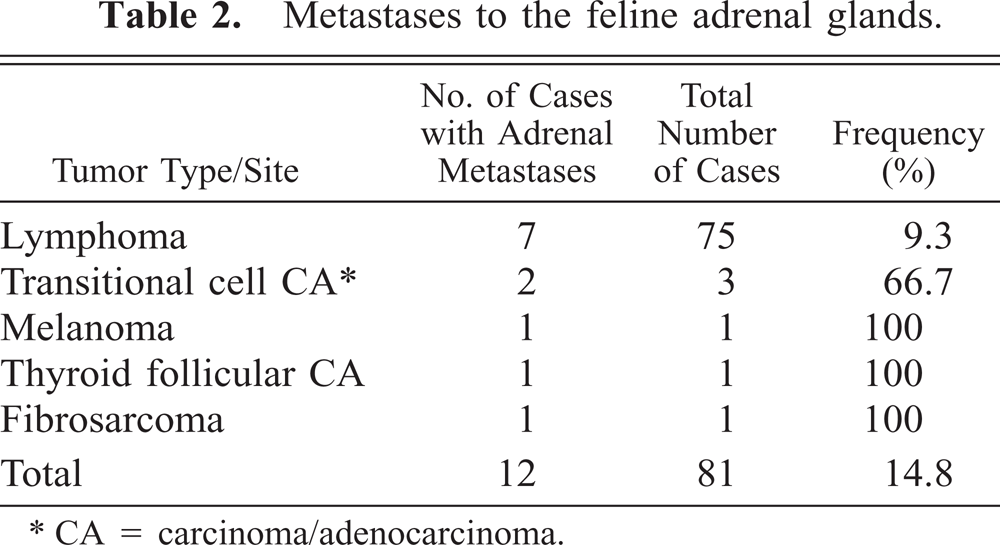
∗CA= carcinoma/adenocarcinoma.
A summary of the frequency of tumor metastasis to the equine adrenal glands is presented in Table 3. Metastases to the adrenal glands were identified in 18 of 67 cases (26.9%) diagnosed with disseminated neoplasia. Affected horses represented 10 different breeds, with Quarter Horse (n = 6) being the most common breed. Eleven were intact mares, and seven were geldings. The average age for these horses was 18.1 years (4–25 years). Age was not available for one horse. Weight was only available for four horses and averaged 392.8 kg. Six different tumor types were represented including hemangiosarcoma, melanoma, lymphoma, squamous cell carcinoma, renal adenocarcinoma, and colonic adenocarcinoma. In addition, two anaplastic carcinomas and one undifferentiated neuroendocrine tumor involved the adrenal glands. Gross lesions to the adrenals were seen at necropsy in 13/18 (72.2%) cases. Histology slides were available for review in 14 of 18 cases, including 13 cases where both adrenals were present on the slides. Metastases were bilateral in 5 of these 13 cases (38.5%). Neoplastic cells were limited to the cortex in 10/14 (71.4%) cases, involved the cortex and medulla in 2/14 (14.3%) cases, and were restricted to the medulla in 2/14 (14.3%) cases. The infiltration of neoplastic cells was considered severe in 10/14 (71.4%) cases. The difference in histologic patterns between carcinomas and round cell tumors noticed in dogs was not evident in horses; the tumors often formed large expansile masses that obliterated portions of the adrenals. When tumors metastasized to the adrenals, an average of 5.0 (range 1–10) other organs or systems were involved. Lungs, liver, spleen, abdominal lymph nodes, kidneys, pancreas, peritoneum, and skeletal muscle were involved in over 20% of cases with metastases to the adrenals. All cases of melanoma were in gray horses. Two of the melanomas were restricted to the medulla and two involved both the medulla and cortex. During the period investigated, 21 cases with adrenocortical tumors and 38 cases with pheochromocytomas were identified. These included 18 adrenocortical adenomas, 3 adrenocortical carcinomas, 36 benign pheochromocytomas, and 2 malignant pheochromocytomas. When considering all metastatic lesions identified including the three poorly differentiated neoplasms, secondary tumors represented approximately 26.3% (21/80) of the neoplastic lesions in the equine adrenals.
Metastases to the equine adrenal glands.
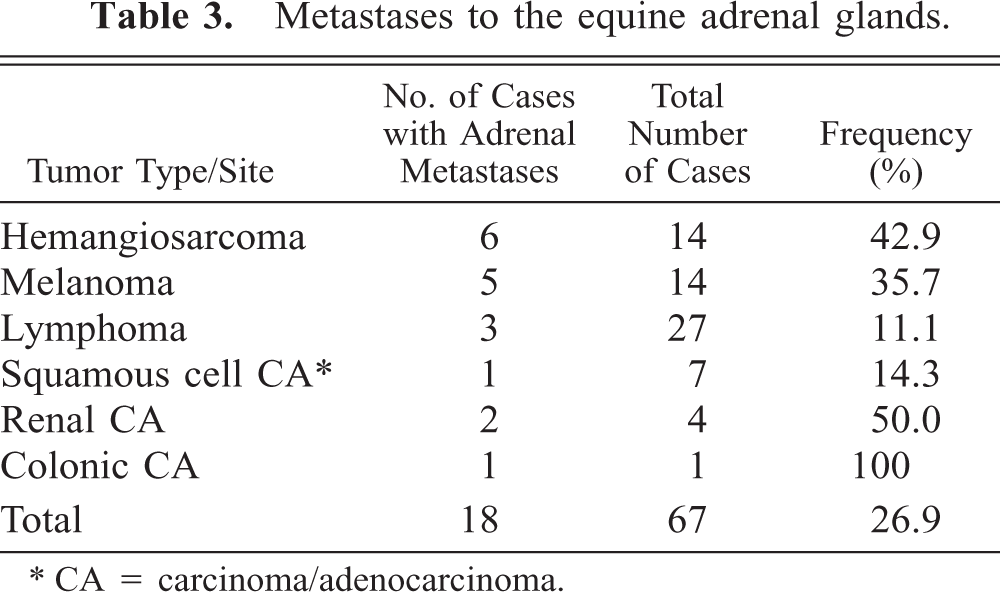
∗CA= carcinoma/adenocarcinoma.
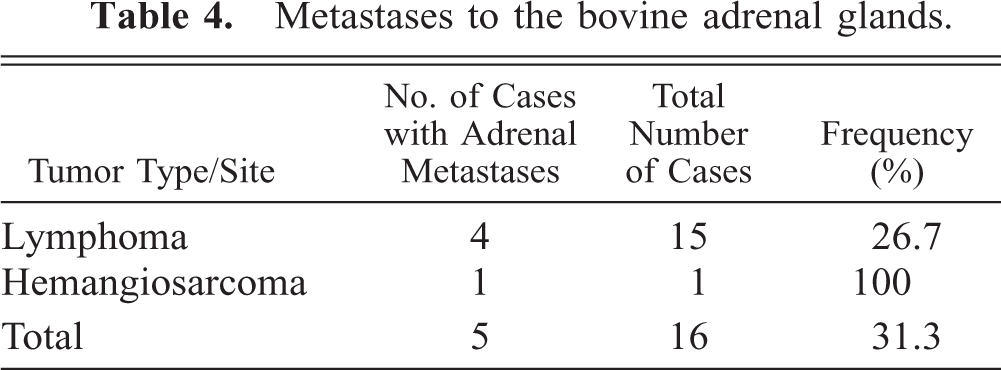
A summary of the frequency of tumor metastasis to the bovine adrenal glands is presented in Table 4. Metastases to the adrenal glands were identified in 5 of 16 cases (31.3%) diagnosed with disseminated neoplasia. These include three Holstein cows, one Angus, and one Polled Hereford. All were females. The average age for these animals was 4.5 years (4–6 years). Age was noted as adult for one cow. Weight was only available for two cows and averaged 467.5 kg. Four lymphomas and one hemangiosarcoma involved the adrenal glands. Gross lesions to the adrenals were seen at necropsy in three of five cases. Histology slides were available for review in all five cases with both adrenals present on the slides. Metastases were bilateral in four of five cases. Neoplastic cells were limited to the cortex in all five cases. The infiltration of neoplastic cells was considered severe in one of five cases. Histologically, the lymphomas and the hemangiosarcoma formed variably sized nodules in the adrenal cortex. Hematopoietic elements were admixed with neoplastic cells in two of four bovine lymphomas. When tumors metastasized to the adrenals, an average of 5.0 (range 2–8) other organs or systems were involved. Lungs, liver, spleen, abdominal lymph nodes, heart, and uterus were involved in over 20% of cases with metastases to the adrenals. The two cows with lymphoma that were tested for bovine leukemia virus were positive. The rate of metastasis to the adrenals of lymphoma in cattle was higher (26.7%) than that in other species but was not significantly different. During the period investigated, two adrenocortical adenomas and two benign pheochromocytomas were diagnosed. Metastatic lesions therefore represent approximately 55.5% (5/9) of the neoplastic lesions in the bovine adrenals.
Metastases to the bovine adrenal glands.
Discussion
Metastases to the adrenal glands are common in humans, especially with lung, breast, and gastric carcinomas, and melanoma. 1 , 13–15 , 24 , 34 , 36 Little information has been published on adrenal metastases in domestic animals. In dogs, there are descriptions of adrenal metastasis from pulmonary carcinoma, gastric carcinoma, lymphoma, hemangiosarcoma, chondrosarcoma, nephroblastoma, transitional cell carcinoma, melanoma, mast cell tumor, and multiple myeloma, and metastatic lesions have been reported to represent up to 34% of neoplastic diseases in the adrenal glands. 5 , 7 , 8 , 10 , 22 , 26 , 32 , 33 , 37–39 In horses, malignant melanoma has been previously reported to involve the adrenals in 36% of the cases, the same rate as in this study. 19 A plasmacytoma and a hemangiosarcoma with metastases to the adrenals have also been reported in horses. 6 , 23 Lymphoma and metastatic endometrial carcinoma have been reported to involve the adrenal glands in cats; only 11 cases of metastatic lesions to the adrenal glands of cats were recorded in 24 years in the Veterinary Medical Database. 26 , 27 , 29 , 31 , 32 A number of secondary tumors to the adrenals have been described in cattle including pulmonary carcinoma, rhabdomyosarcoma, fibrosarcoma, mastocytoma, and lymphoma. 2 , 3 , 20 , 21 , 28 , 35
There are many similarities between the metastatic spread to the adrenals in dogs and humans. The overall rate of metastasis to the adrenal in dogs was 21.0% (112/534), which is similar to reports in humans of 20–30%. 1 , 25 , 30 As in humans, metastatic epithelial tumors frequently involved the adrenals. 1 , 15 , 16 , 18 , 30 , 34 Carcinomas accounted for over 40% of the metastases to the adrenals in dogs, and pulmonary, mammary, prostatic, gastric, and pancreatic carcinomas had the highest rate of metastasis. In contrast, metastases to the adrenals from carcinomas were much less frequent in other species. Transitional cell carcinoma (2) and thyroid follicular carcinoma (1) were the only epithelial tumors to metastasize to the feline adrenals. Only four carcinomas metastasized to the adrenal glands in horses, including two renal carcinomas, one squamous cell carcinoma, and one colonic carcinoma. Squamous cell carcinoma is a very common malignancy in horses; however, only seven cases were included in this study. 32 A major challenge in accumulating data in all species, but especially in horses, was the fact that adrenal glands were not always sampled for histologic evaluation; over 90 cases of squamous cell carcinoma with metastatic spread and full necropsies were identified in horses (data not shown), but only in seven were the adrenals examined histologically. This might explain the low metastatic rate of carcinomas to the adrenal gland found in the horse in this study. Carcinomas involving the adrenal glands in cattle have been reported for pulmonary carcinomas, but none were identified in this study. 3 , 35
The only nonepithelial tumor that had an adrenal metastatic rate above the overall average of 21.0% for dogs was melanoma, at 23.1% (6/26). In the National Radiobiological Archives reported by Myers (1997), lymphoma, hemangiosarcoma, and melanoma were the most common metastatic tumors found in the adrenals of dogs. 26 Our results are similar in that lymphoma and hemangiosarcoma had the highest number of cases with adrenal metastases, each representing 14.3% (16/112) of all cases with adrenal metastases. However, both lymphoma and hemangiosarcoma had low rates of metastasis to the adrenals below the overall average, at 12.2% (16/131) and 16.7% (16/96), respectively. There were fewer cases of melanoma with adrenal gland involvement (6), but melanoma had a higher rate of metastasis to the adrenal (23.1%). Therefore, it appears that the high number of metastasis to the adrenals from lymphoma and hemangiosarcoma is related to the high frequency of these tumors in dogs and their widespread dissemination, and not to an intrinsic predilection for the adrenals. This is in contrast to hemangiosarcoma and melanoma in horses, which had high rates of metastasis to the adrenals comparable with carcinomas with a predisposition to metastasize to the adrenals in dogs and humans. The rate of metastasis in lymphoma was comparable in all species. This suggests that there may be a similar mechanism by which neoplastic lymphocytes target the adrenals.
The significance of the different histologic patterns between round cell tumors and carcinomas in dogs is not known. Neoplastic round cells formed small nodules within the zona fasciculata and reticularis, whereas neoplastic epithelial cells often dissected the cortex along the vascular sinusoids. This may be a consequence of the method by which these tumors disseminate or tumor cell characteristics. The affinity of melanoma to the adrenal medulla has been described for human melanoma and is believed to be due to a favorable growth environment in the medulla. 9 , 17 , 24
Like in humans, metastases to the adrenal glands in domestic animals usually occurred in the late stages of the disease, as evidenced by the high number (4.5–5.0) of organs or systems involved in the presence of adrenal metastases for all species. 16 , 18 There were, however, a small number of cases where only one or two organs or systems other than the adrenals had metastases, indicating that adrenal metastases can occur early in disease process. These were often animals that had central nervous system involvement and were euthanatized because of poor prognosis. In humans with lung cancer, metastases to adrenals are considered to occur early mainly by lymphogenous spread and develop later by hematogenous routes. 11 , 12
In domestic animals, hypoadrenocorticism secondary to metastatic or multicentric neoplasms has only been reported in two cats with lymphoma. 29 In this study, a single dog with lymphoma was diagnosed with hypoadrenocorticism; none of the other animals in the study were tested to evaluate adrenal function in the presence of adrenal metastases. It is reasonable to assume that, as in humans, hypoadrenocorticism secondary to metastatic disease may be underdiagnosed and clinical signs of the disease may be wrongly attributed to the nonspecific effects of widespread neoplastic disease. 13 , 16 , 25 , 30 , 36 Humans who develop adrenal hypofunction due to metastases often have bilateral involvement of the adrenals. 18 , 25 , 30 , 36 Animals in this study often had bilateral adrenal metastases including 55.1% of canine and 50.0% of feline cases. However, because animals with metastatic cancer are often euthanatized because of poor prognosis, adrenal metastases may not always have time to occur and damage to the adrenals may not be severe enough to cause adrenal insufficiency.
In summary, metastases to the adrenal glands are common in domestic animals with metastatic cancer. Certain types of tumor have a much higher rate of metastasis to the adrenals than others. The fact that gross lesions were only seen in 40.2% of the canine cases and 8.3% of the feline cases emphasizes the importance of histologic examination of adrenal glands in the context of a full thorough necropsy. Also, metastatic tumors should be included in the differential for adrenal masses during clinical work-up because metastatic lesions represented 26.7% of canine, 60.0% of feline, 26.3% of equine, and 55.5% of bovine adrenal neoplasms in this study.
Footnotes
Acknowledgements
We express our sincere thanks to Esi Djan, Barry Puget, and Marty Ynostroza for their outstanding technical assistance.