






Abstract
Cage bedding for laboratory rodents can influence animal wellbeing and thus the experimental data. In addition, a large amount of used bedding containing excrement is discharged as medical waste from life science institutes and breeding companies. We developed a ground-breaking system to improve fresh bedding and recycle used bedding by applying a soft hydrothermal process with high-temperature and high-pressure dry steam. The system removes both harmful organic components and aromatic hydrocarbons that can affect animals’ metabolism. The purpose of the present study was to evaluate the chemical and physical properties of the improved fresh bedding and the recycled used bedding treated by the system. The results showed that 68-99% of the predominant aromatic hydrocarbons were removed from fresh bedding treated at 0.35 MPa and 140°C for 120 min (‘improved bedding’). In addition, 59.4-99.0% of predominant harmful organic compounds derived from excrement were removed from used bedding treated at 0.45 MPa and 150°C for 60 min (‘recycled bedding’). The soft hydrothermal treatment increased the number of acidic functional groups on the bedding surface and gave it the high adsorptive efficiency of ammonia gas. Harmful substances such as microorganisms, heavy metals and pesticides decreased below the detection limit. The results clearly showed that the improved and recycled bedding is safer for laboratory rodents and has the potential to ameliorate conditions in primary and secondary enclosures (e.g. cages and animal rooms) used for maintaining laboratory animals. This process may be one of the most advanced techniques in providing an alternative to softwood and other bedding, economizing through the recycling of used bedding and reducing bedding waste from animal facilities.
Keywords
Cage bedding for laboratory rodents poses an environmental factor that can influence animal wellbeing and subsequently, the experimental data. Several studies have attempted to develop desirable characteristics and means of evaluating bedding. Although softwood bedding is widely used, many studies have cautioned against softwood shavings because they contain volatile and harmful components such as terpenes and aromatic compounds; moreover, they emit aromatic hydrocarbons that induce hepatic microsomal enzymes and cytotoxicity in animals (Vesell 1967, Jones 1977, Kraft 1980, Weichbrod et al. 1986, 1988, Gibson et al. 1987, Thigpen et al. 1995). In addition, a large amount of used bedding containing excrement and urine is discharged as industrial waste from life science institutes and breeding companies. Used bedding is disposed of as hazardous waste, and this costly process is a burden on research expenses. Although a few studies have tried to improve bedding, no attempt has been made to recycle it.
Water is an environmentally friendly extraction medium. In addition to hot water extraction and steam extraction, investigations on superheated water and/or superheated steam have become prevalent. As high-temperature and high-pressure dry steam is not coexisting liquid, it is below saturated vapour pressure but still possesses relatively high pressure. It has the potential to promote organic reactions such as the selective extraction of organic compounds from biomass and drying biomass. Soft hydrothermal processing is a means of producing dry steam and treating biomass (Yamasaki 2003). Its extraction technique is based on the use of water as the solvent at a temperature range of 100-200°C and a pressure below saturated vapour pressure. The process lies in the low-density water molecular area of the steam field and is characterized by a lower dielectric constant (ε) than that of ordinary water. The dielectric constant is a key parameter in interpreting solvent-solute interactions and can be related to polarity. Water's dielectric constant is high at room temperature and decreases with increasing temperature. A high dielectric constant favours the solubility of high polar and ionic compounds, which creates the possibility of accelerating the extraction reaction process of organic compounds (Andersson et al. 2002).
The purpose of this study was to investigate improvements in fresh softwood bedding and recycling of used softwood bedding using the soft hydrothermal process and to evaluate the chemical and physical properties of the treated bedding.
Materials and Methods
Bedding and animals
Four types of bedding were used in this study: fresh bedding (Tokoziki, Dohoh-rika, Sapporo, Japan), used bedding, improved bedding and recycled bedding. Fresh bedding consisted of new spruce (Picea sitchensis) shaved to rectangular chips of almost 10 × 15 × 0.3 mm. Chips were sterilized with an autoclave before use. Used bedding was fresh bedding that had been used for maintaining five to eight mice or three to four rats in 225 × 338 × 140 mm or 345 × 403 × 177 mm (W × L × H) cages, respectively, for seven days at the Institute for Animal Experimentation at Tohoku University Graduate School of Medicine, Sendai, Japan. Improved bedding and recycled bedding were fresh bedding and used bedding, respectively, treated using the soft hydrothermal process. Animals were maintained under specific pathogen-free conditions at 23 ± 3°C and 55 ± 10% room humidity with a 12 h light/dark cycle and allowed free access to food and water. All experiments conformed to the Guide for the Care and Use of Laboratory Animals of Tohoku University.
Processing of bedding using small-scale apparatus
To determine suitable processing conditions for the bedding, a small-scale apparatus was used. This apparatus had a flow-type extraction system of the soft hydrothermal process consisting of a reactor with a 49.5 mm inner diameter, 1000 mm length and 1.92 L volume; an electric heater for the reactor; a steam generator with a 4 kW electric heater; a regulator of nitrogen gas and a condenser of exhausted steam. In the reactor, eight sample cups (120 mm length × 49 mm diameter each) with meshed bottoms (1 mm diameter) were installed, and 40 g of fresh bedding was packed into each cup. The steam generator provided the saturated steam with countless round brass balls (3.18 mm diameter) to heat the water instantly to the required temperature. Steam was subsequently carried into the reactor, turned into dry steam by superheating from 100 to 200°C using the electric heater, and allowed to flow through the sample cups to extract lipophilic compounds from the bedding. Finally, a flow of exhausted steam was sent into the condenser, cooled below 20°C and condensed into liquid for further analysis.
Processing of bedding using large-scale apparatus for a practical study
A large-scale apparatus for the soft hydrothermal process consisted of four main components: a cylindrical reactor with 400 mm inner diameter, 1260 mm length and 158.3 L volume, equipped with a 9 kW electric heater; a steam generator with a 24 kW electric heater; a regulator of nitrogen gas and a reservoir of extracted product (Figure 1). The linked pipes were made of stainless steel. To spread dry steam over the bedding uniformly and instantaneously, we installed six equal fan-wise sample cases (115 mm2 trapezoid section × 700 mm length with approximately 8.0 L volume) horizontally in the reactor and rotated them manually with a handle three times per hour. Nitrogen gas served as a carrier and a regulator of the dry steam.
Schematic diagram showing the flow-type extraction apparatus used in the soft hydrothermal process. (1) Water softener, (2) water tank, (3) plunger pump, (4) steam generator, (5) condenser, (6) back pressure regulator, (7) line heater, (8) reactor, (9) reactor heater, (10) safety valve, (11) steam trap, (12) control valve, (13) condenser, (14) extract reservoir, (15) deodorization, (16) N2 gas, (17) compressor, (18) N2 gas mass flow controller (19) sample cages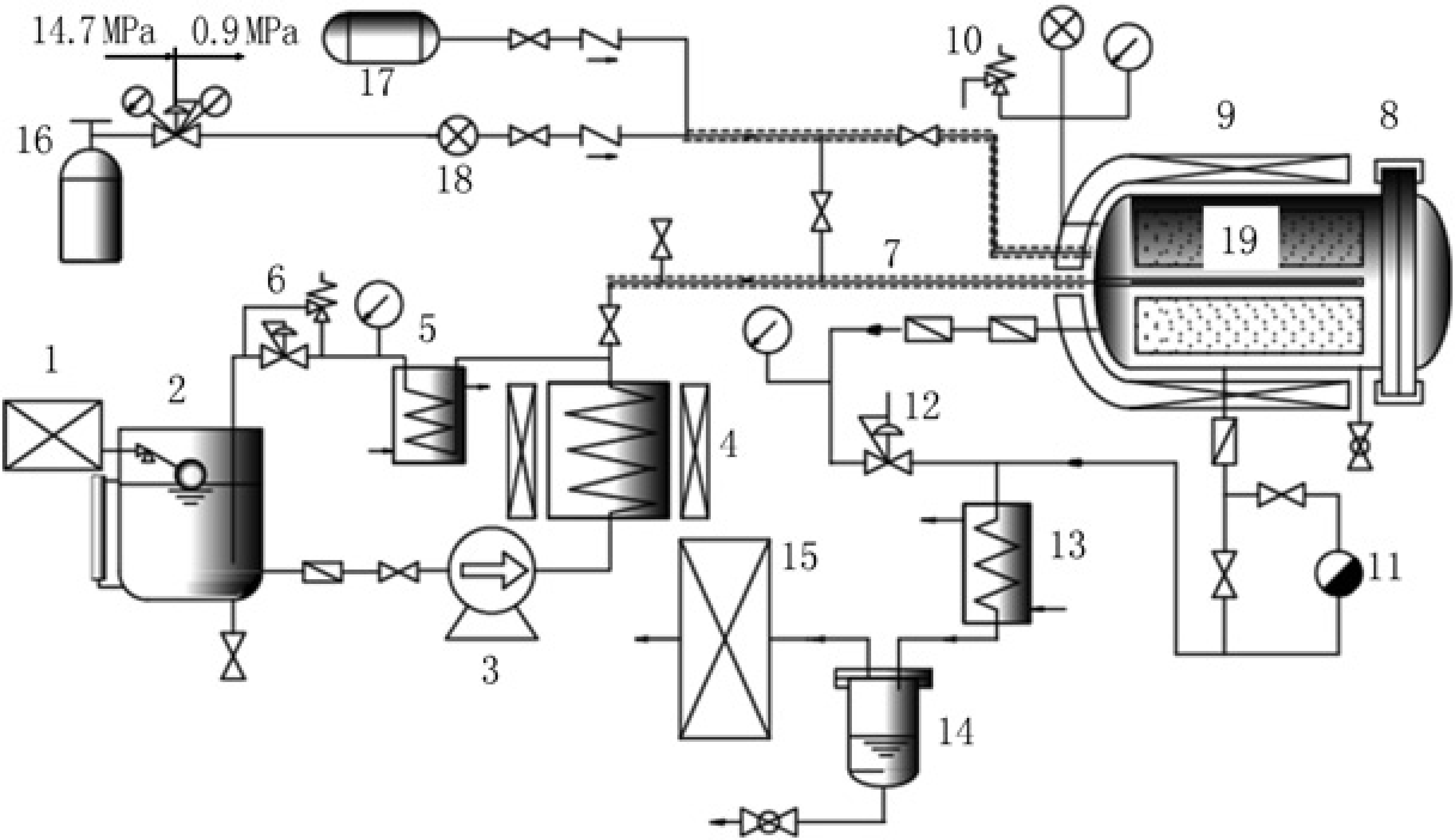
In all, we placed 2.5 kg of fresh or used bedding packed into the six sample cases installed in the reactor. The steam generator and the reactor were heated to between 100 and 200°C, and then the appropriate water was fed for preparing dry steam. The pressure in the reactor was maintained below the saturated steam pressure. After treatment, the bedding was shaken for one minute in a portable sieve shaker with a 5 mm Japanese Industrial Standard sieve to remove debris or excrement. The bedding was immediately sealed in plastic bags until used in the experiment. The flow of steam was sent into the reservoir for cooling below 20°C, directly fed into the condenser and separated into gas and liquid for further analyses.
Physical and chemical characterization of the bedding
The reduction rate of the bedding weight, which indicates the amount of organic substance and moisture removed from the bedding using the soft hydrothermal process, was calculated as follows:




To study the ammonium absorption ability of the fresh and improved bedding, we dried the bedding sieved through 5.0 mm and 7.5 mm mesh in a desiccator for one day. Ammonia gas was prepared by vapourizing ammonia solution (28%; Wako Pure Chemical, Osaka, Japan) in a 20 L TEDLAR bag (GL Science, Tokyo, Japan) to the required concentration. The gas was transferred to a 20 L sealed glass chamber containing 5.0 g of the bedding through a stopcock connected to the bag. The concentration of ammonia gas was measured using a gas sampling pump kit (GV-100S model; Gastec, Ayase, Japan) and quick measuring detector tubes (tube no. 3L; Gastec).
Statistical analysis
Results are expressed as means ± standard deviation. Statistical significance was assessed as P < 0.05 in a two-way analysis of variance.
Results
Determination of conditions for producing improved bedding
The preliminary experiments were performed with the small-scale apparatus to determine the optimal condition for producing improved bedding. The fresh bedding was treated in the following four ways: (a) 0.35 MPa pressure and 140°C for 30 min, (b) 0.35 MPa and 140°C for 60 min, (c) 0.5 MPa and 170°C for 30 min and (d) 0.5 MPa and 170°C for 60 min. The quality of the improved bedding was evaluated on the reduction rate of the weight, colour and brashness. The reduction rate reflects the removal of organic substances and moisture from the bedding, and the colour is attributable to the browning reaction. The reduction rates at 0.35 MPa and 140°C for 30 min; 0.35 MPa and 140°C for 60 min; 0.5 MPa and 170°C for 30 min and 0.5 MPa and 170°C for 60 min were 14.5%, 14.3%, 17.3% and 17.9%, respectively. The browning reaction and brashness were in excess under both 170°C conditions. Although both 140°C conditions were suitable for the reduction rate, colour and brashness, we chose 0.35 MPa and 140°C for 60 min to extract sufficient lipophilic compounds from the bedding.
Production and analyses of improved bedding
The fresh bedding was treated using the large-scale apparatus at 0.35 MPa and 140°C for 60 min to produce the improved bedding. The moisture contents were 12.5% and 1.7% for fresh and improved bedding, respectively, indicating that an 86.4% reduction occurred after the dry steam treatment. According to GC/MS analyses of dichloromethane extracts in the fresh bedding, the five main components were p-tert-butyl-phenol, 1-cyclohexene-1-carboxylic acid, 2,4-dihydroxybenzaldehyde, 2,4-bis(1-methyl-1-phenylethyl)-phenol and 2,4-bis(dimethylbenzyl)-6-t-butylphenol (Table 1). These are the derivatives of unsaturated fatty acid and phenol. The total ion chromatogram with the integrated peak area values added up the main components as comprising 93.1%. After treatment with dry steam, all the compounds decreased markedly by approximately 68-99%, indicating that (a) dry steam has the potential to effectively extract these organic components from the wood and that (b) the fresh bedding was a greatly improved bedding for laboratory rodents.
Comparison of extracted organic compounds from fresh bedding and improved bedding by gas chromatography-mass spectrometry analysis
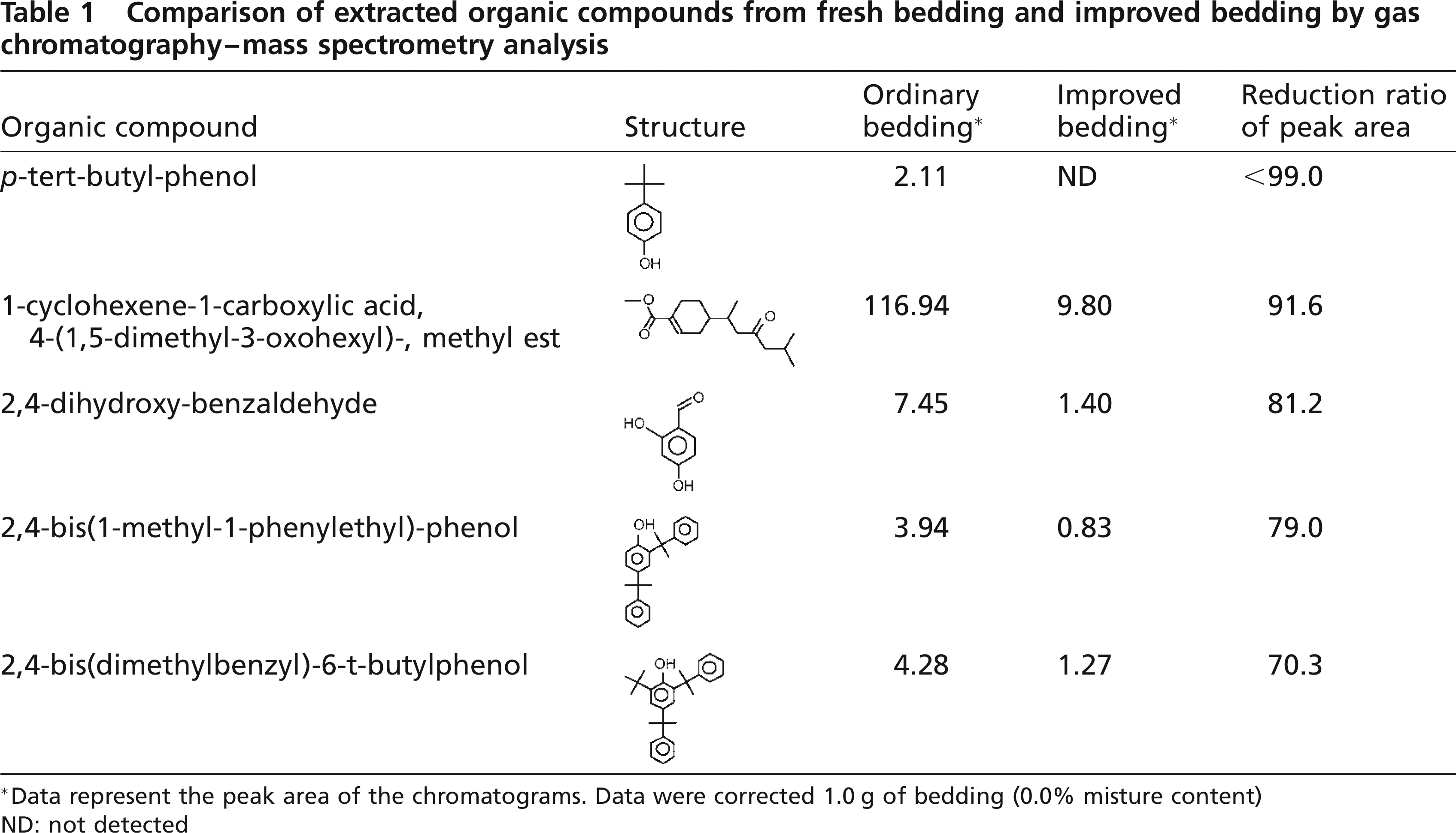
Data represent the peak area of the chromatograms. Data were corrected 1.0 g of bedding (0.0% misture content)
ND: not detected
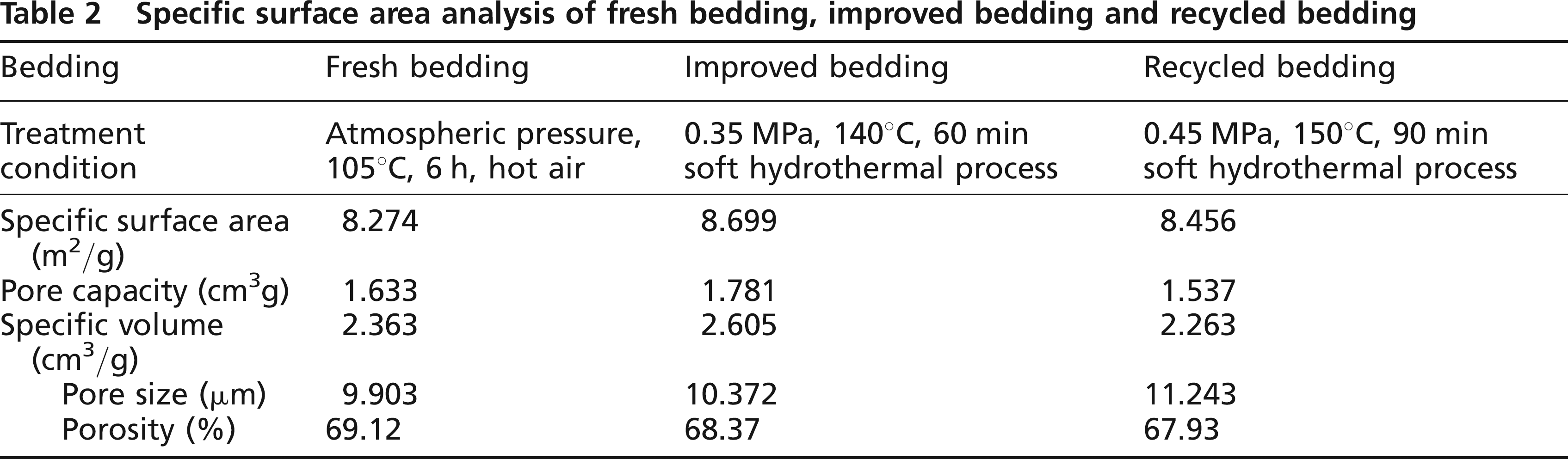
Few differences were detected in the specific surface area and porosity between the fresh and improved bedding (Table 2).
Specific surface area analysis of fresh bedding, improved bedding and recycled bedding
Ability of the improved bedding to absorb ammonia
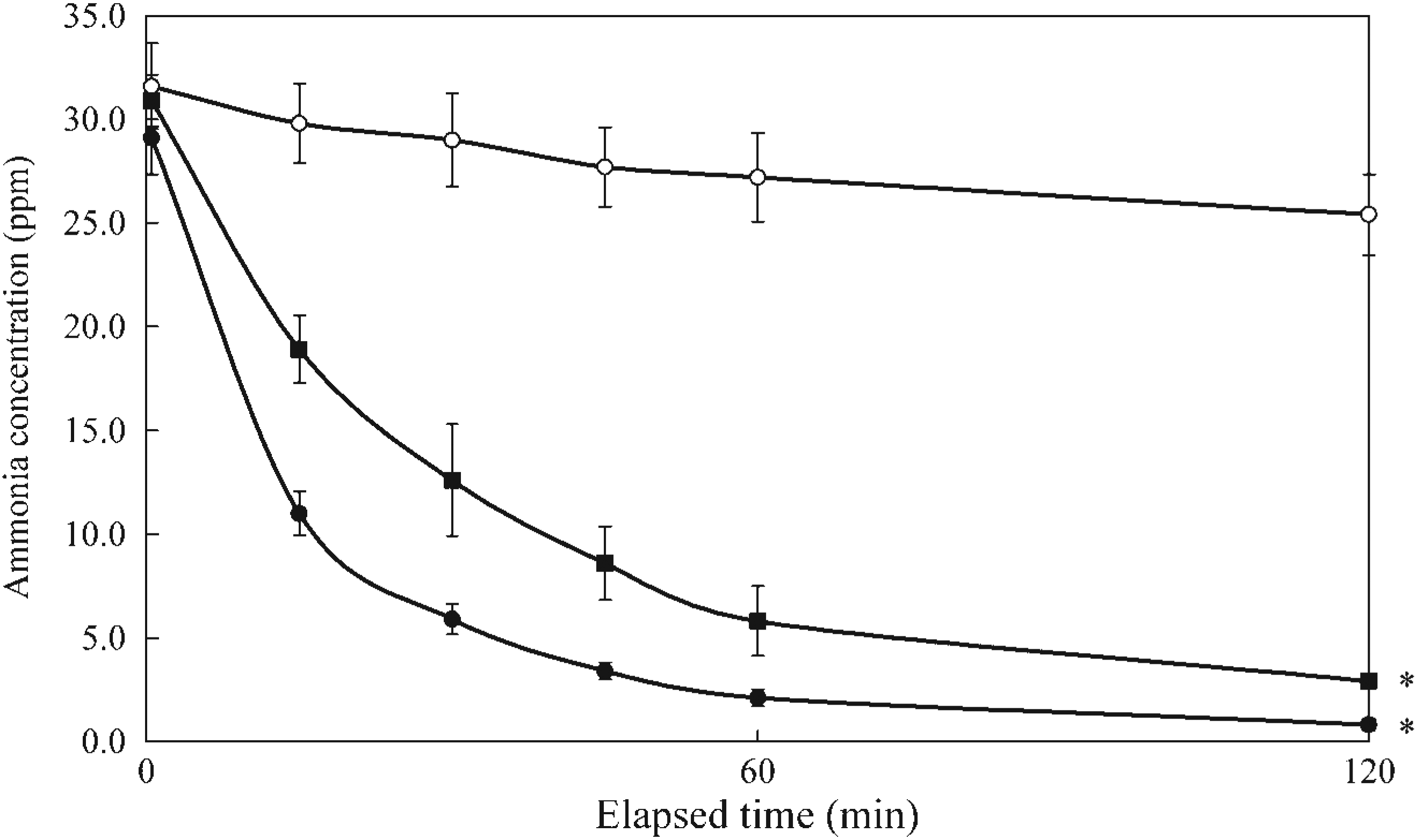
The van Krevelen diagram of the bedding showed that the atomic ratio of oxygen and carbon (O/C) versus that of hydrogen and carbon (H/C) decreased proportionately according to the increasing treatment temperature, suggesting that high temperature promotes the dehydration of the wood in the soft hydrothermal process (Figure 2). Therefore, we examined whether the improved bedding had an increased ability to absorb ammonia in the air. The adsorption speed of the improved bedding was much faster than that of the fresh bedding. Indeed, the reduction rate of the ammonia in the air increased from 36.6% for the fresh bedding to 63.1% for the improved bedding 15 min after the glass chamber was filled with 30 ppm ammonia gas (Figure 3). It also increased from 56.6% for the fresh bedding to 79.7% for improved bedding at 30 min. The same tendency was also observed when the glass chamber was filled with 60 ppm ammonia gas (data not shown). These results showed that the soft hydrothermal treatment increased the number of acidic functional groups on the bedding surface and gave it a high adsorptive efficiency towards ammonia gas.
The van Krevelen diagram of fresh and improved bedding. (a) Fresh bedding. (b) Fresh bedding dried with an electric air oven at 0.1 MPa and 105°C for 6 h. (c)-(f) Improved bedding treated by the large-scale apparatus at (c) 0.35 MPa and 140°C for 60 min, (d) 0.35 MPa and 155°C for 60 min, (e) 0.35 MPa and 170°C for 60 min and (f) 0.35 MPa and 185°C for 60 min. O/C: atomic ratio of oxygen and carbon; H/C: atomic ratio of hydrogen and carbon Time course changes in adsorptive efficiency of ammonia concentration in the container. The initial ammonia concentration in the container was 30 ppm. Adsorption experiments were conducted in five replications. Data in the graph were represented as the averaged values of the replications, with the vertical bars showing the standard deviation among five replications. Statistical analysis was performed using two-way analysis of variance (*P < 0.05). Open circles: no bedding (control); closed squares: fresh bedding; closed circles: improved bedding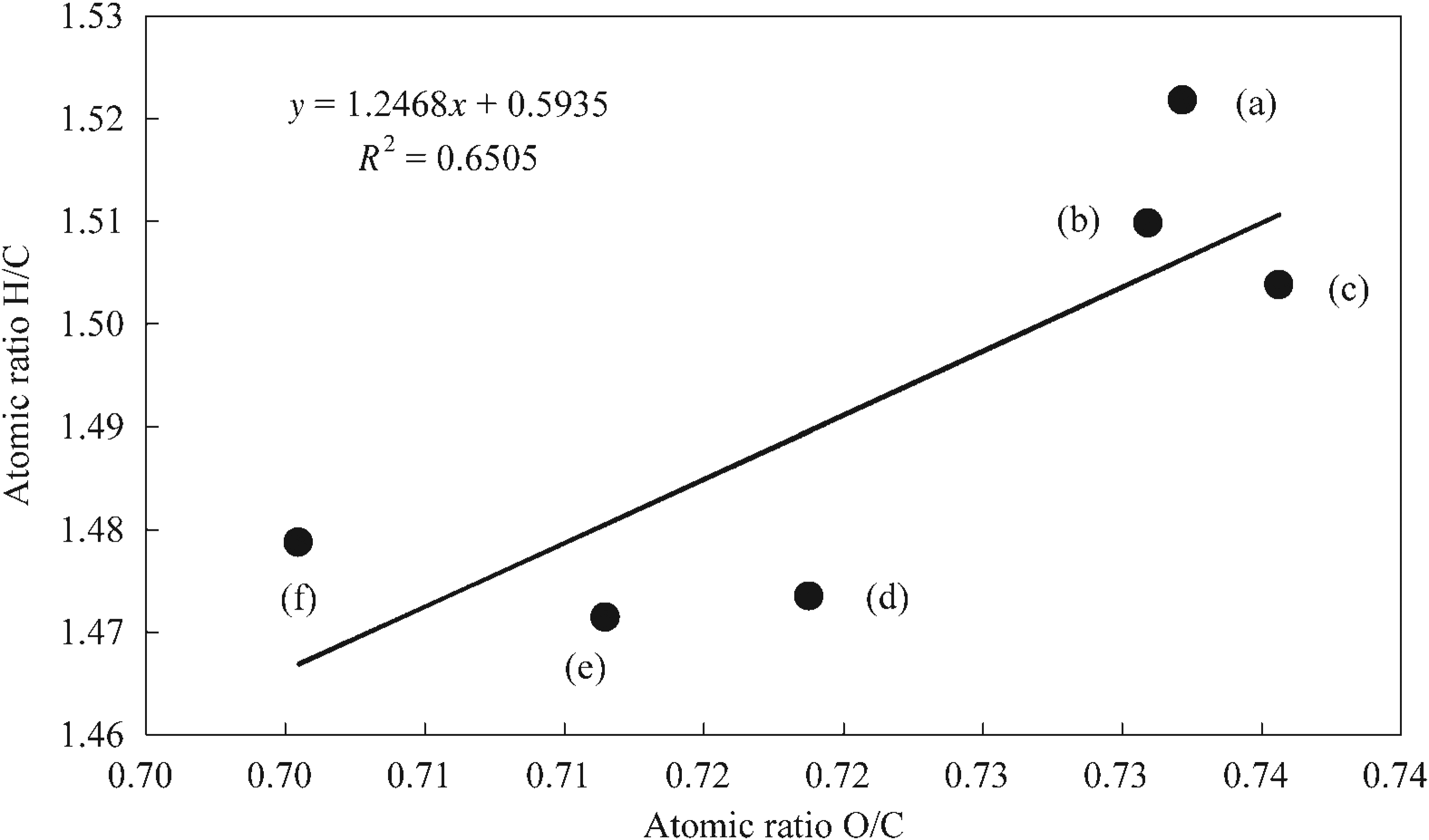
Determination of conditions for production and chemical and physical analyses of recycled bedding
To determine the optimal conditions for producing recycled bedding, a model of used bedding produced by adding water to the fresh bedding was treated with the large-scale apparatus with a series of varying pressures, temperatures and times. Adding water equal to 50% of the initial fresh bedding weight led to a 33.3% augmentation in the weight of the model bedding. The reduction rates for the treated bedding were 28.3%, 38.0%, 40.0% and 43.2% at 0.45 MPa and 150°C for 60 min; 0.45 MPa and 150°C for 90 min; 0.45 MPa and 150°C for 120 min; and 0.45 MPa and 150°C for 150 min, respectively. The reduction rate of 38.0% at 0.45 MPa and 150°C for 90 min was both quick and sufficient to remove the water added to 33.3% augmentation in the weight of the model bedding. Therefore, we chose 0.45 MPa and 150°C for 90 min to produce the recycled bedding from used bedding using the large-scale apparatus.
Moisture contents were 22.3 ± 7.6% (n = 11) and 7.4 ± 0.5% (n = 3) for the used and recycled bedding, respectively, indicating that a 66.8% reduction occurred after dry steam treatment. According to GC/MS analyses of dichloromethane extracts from the used bedding, the five main components were 1-cyclohexene-1-carboxylic acid, (Z,Z)-9,12-octadecadienoic acid, (E)-9-octadecenoic acid, cholesterol and beta-sitosterol (Table 3). Whereas 1-cyclohexene-1-carboxylic acid is derived from fresh wood bedding, the other four products are derivatives of saturated carboxylic acid (octadecanoic acid), unsaturated carboxylic acid (octadecenoic acid) and lipoid (cholesterol and beta-sitosterol) in the excrement of laboratory rodents. Total ion chromatogram with the integrated peak area values added up the main components as comprising 80.8%. After treatment with dry steam, all compounds decreased markedly, by approximately 60-99%. The results indicated that most organic components in the used bedding that could affect the health and physiology of laboratory rodents were removed by the dry steam treatment.
Comparison of extracted organic compounds from used bedding and recycled bedding by gas chromatography-mass spectrometry analysis
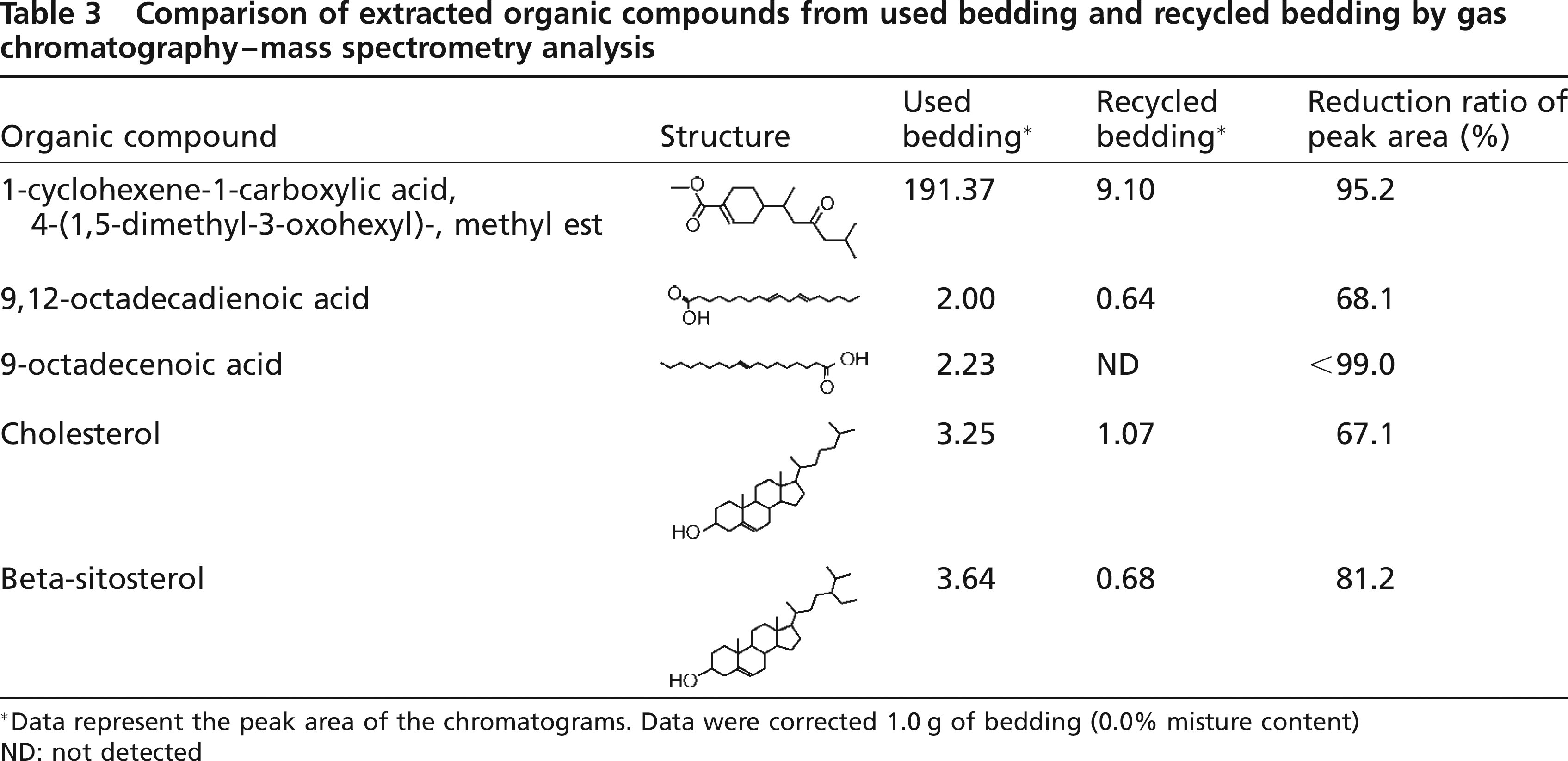
Data represent the peak area of the chromatograms. Data were corrected 1.0 g of bedding (0.0% misture content)
Analyses of surface structure and specific surface area of recycled bedding
Scanning electron microscopy photographs showed that the fresh bedding had a large number of fine fibres on its tracheid and vessel elements, and the soft hydrothermal process markedly decreased the number of fine fibres in the recycled bedding (Figure 4). The original structure and brashness of the wood were scarcely changed by treatment. Few differences were observed in the specific surface area and porosity between the fresh and recycled bedding (Table 2). These data revealed that the soft hydrothermal process did not make fresh and used bedding more fragile, but reduced the number of fine fibres. In other words, the treatment decreased the amount of airborne dust particles in the animal room, and the durability of the bedding was not compromised.
Scanning electron microscopy photographs of fresh and recycled bedding. (a) Fresh bedding. (b) Bedding treated at 0.45 MPa and 150°C for 90 min. Bars represent 30 μm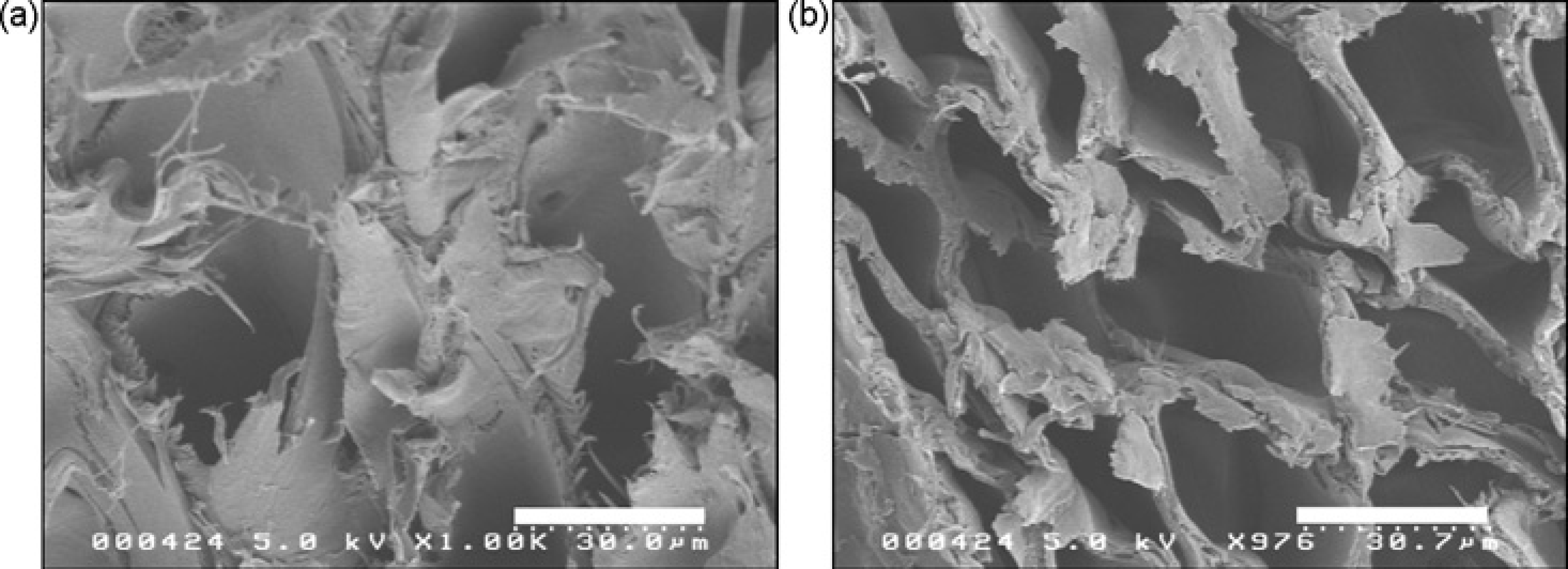
Toxic analyses of the recycled bedding
Microbiological organisms (Bacillus coliformis, Salmonella and moulds) were negative and chemical properties of pesticides, heavy metals, polychlorinated compounds and mycotoxins were below the detection limit, indicating that the recycled bedding was suitable for reuse (Table 4).
Toxic analysis of recycled bedding
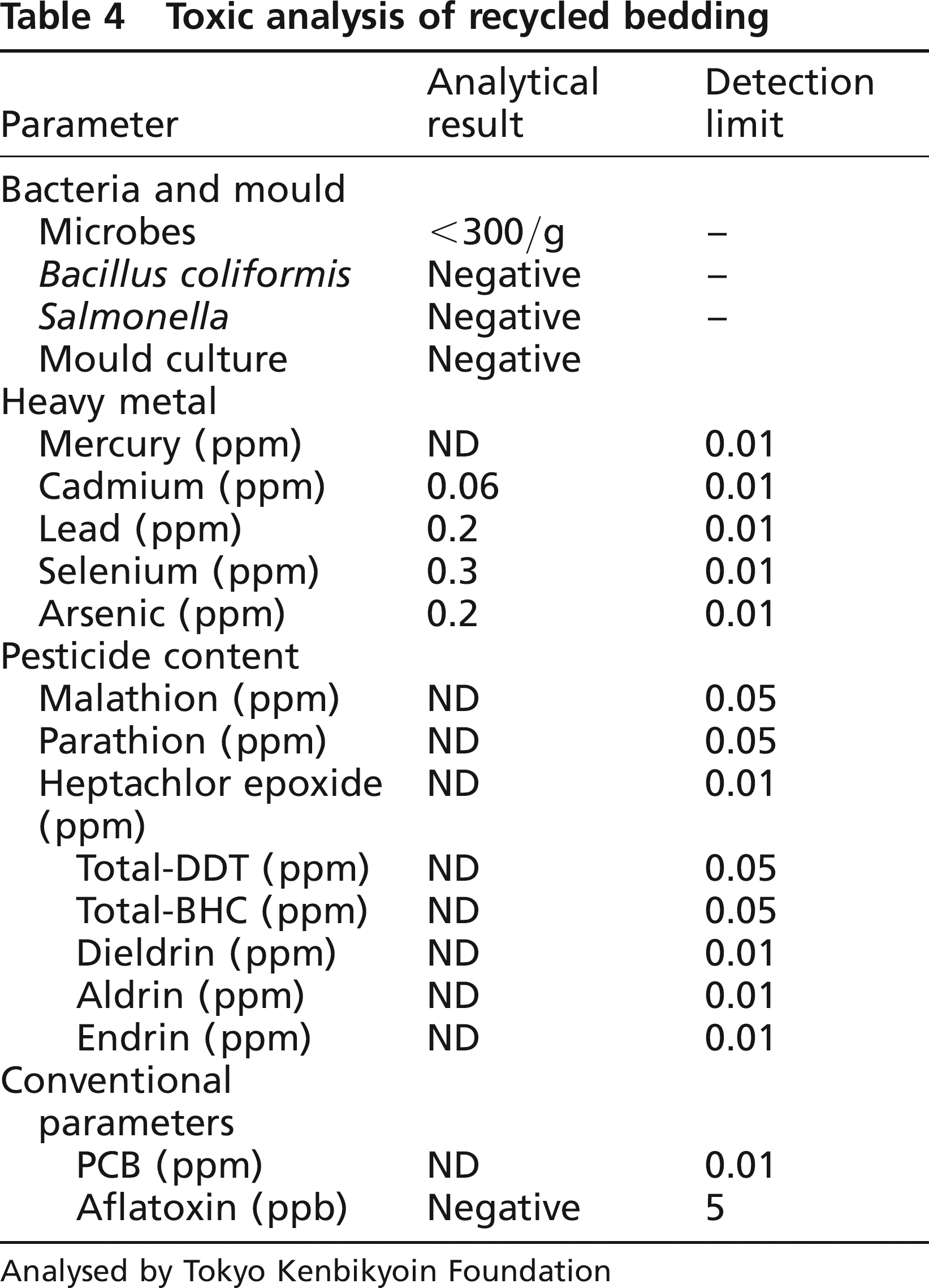
Analysed by Tokyo Kenbikyoin Foundation
Discussion
Several studies have attempted to extract useful or harmful components from biomass, primarily through isolation by distillation or solvent extraction. The disadvantages of distillation are low yield and long extraction time, and solvent extraction is toxic and produces degraded unsaturated compounds (Lehotay 1997, Kubatova et al. 2002, Ebrahimzadeh et al. 2003). Recently, a great deal of research has been conducted to develop new techniques for effective extraction, such as CO2 supercritical fluid extraction or vacuum pyrolysis, which have succeeded in producing lipophilic substances such as carboxylic acids, resin acids, aldehydes, ketones, steroids and other plant extracts from biomass (Pakdel & Roy 1996, Kim et al. 1999, Povh et al. 2001). Water is also an environmentally friendly extraction medium. In addition to hot water extraction and steam extraction, research on superheated water and superheated steam has become prevalent. Superheated water has been applied instead of organic solvent to analyse contaminated compounds in sediment or soil (Kipp et al. 1998, Smith 2002, Priego-Lopez & de Castro 2004), and superheated steam has been used in a high temperature range as a drying medium for wood or a reaction medium for improving the adsorption capacities of solid biomass residues (Minkova et al. 2000, Elustondo et al. 2002, Rupar & Sanati 2003, Taechapairoj et al. 2003).
Softwood shavings and chips are used as bedding for laboratory rodents in many animal facilities, but they emit aromatic hydrocarbons that induce cytotoxicity and hepatic microsomal enzymes such as P-450, thus affecting the results of animal experimentation (Potgieter et al. 1995, Tamasi et al. 2001, Buddaraju & Van Dyke 2003, Davey et al. 2003). In this article, we reported a new and advanced extraction and drying system, or soft hydrothermal process, that improves fresh softwood bedding and recycles used bedding by reducing aromatic hydrocarbons and/or harmful organic components. The optimal conditions for improving fresh bedding and recycling used bedding were 0.35 MPa and 140°C for 60 min and 0.45 MPa and 150°C for 90 min, respectively. These conditions were very mild for the softwood bedding, whose structures remained sufficiently intact to maintain laboratory rodents. In addition, the adsorption capacity of the softwood bedding increased for ammonia gas in the animal rooms, as well as for water in urine. In general, carbonification of cellulose or lignin, the main components of wood, occurs when temperatures reach up to 300°C, resulting in the formation of acidic functional groups such as carboxyl and phenolic hydroxyl on the wood surface (Nishimiya et al. 1998, Asada et al. 2002). Based on this study, we suggest that the formation of acidic functional groups is initiated by the promotion of dehydration below 200°C on the wood surface. The groups on the surface of the softwood bedding have a high adsorption potential of environmental chemicals as base or ammonia gas. As a result of the soft hydrothermal treatment, the number of acidic functional groups increases on the surface of the bedding, increasing the adsorption potential of ammonia gas in the cages to ameliorate conditions in the primary and secondary enclosures for animals by lowering the ammonia concentration.
Used bedding is wet and contains the urine and faeces of the laboratory animals. Autoclaves using saturated vapour for sterilizing the bedding cannot remove harmful chemical and organic components and cannot dry the woodchip bedding while simultaneously sterilizing it. Soft hydrothermal processing is an effective method for improving fresh bedding and recycling used bedding. Using improved and recycled bedding, we have been maintaining mice for several months and analysing their growth and blood components. So far, the data have indicated few differences except for a suppression in the induction of P-450, a microsomal enzyme in liver, when compared with animals maintained using fresh bedding (data will be presented elsewhere).
This is the first report on improving softwood bedding and recycling used bedding for maintaining laboratory rodents such as rats and mice. The results indicate that the soft hydrothermal process is one of the most advanced techniques for improving bedding, providing an alternative to the use of softwoods containing aromatic compounds that deleteriously affect animal metabolism and reducing bedding waste from animal facilities.
Footnotes
Acknowledgement
We sincerely thank the staff of Tohoku University Graduate School of Medicine Institute for their assistance in Animal Experimentation.