




Abstract
Persistent energy poverty and governance challenges persist in constraining sustainable energy transitions in West Africa, despite the region's abundant renewable energy potential. This study conducted a bibliometric analysis of renewable energy governance research within the ECOWAS region from 2005 to 2025, using 594 Scopus-indexed documents screened through PRISMA protocols. Bibliometrix (R Studio) and VOSviewer were applied to analyse publication trends, collaboration networks, keyword co-occurrence, and thematic evolution. The results revealed an annual publication growth rate of 24.8%, increasing from fewer than 10 articles per year prior to 2010 to 84 publications by 2025. Nigeria (25.7%), Ghana (13.0%), and Senegal (1.6%) accounted for over 40% of total research output, supported by high international collaboration (38.22%), but with limited intra-ECOWAS research linkages. Thematic mapping identified five dominant research clusters: renewable energy technologies and governance frameworks, energy-environment-economy modelling, decarbonisation and planning tools, socio-institutional and gender dimensions, and energy efficiency and circular economy strategies. Emerging research frontiers included hybrid energy systems, green hydrogen, digitalisation, and gender-responsive governance. The novelty of this study lies in its systematic quantification of the intellectual structure, growth dynamics, and thematic evolution of renewable energy governance research in ECOWAS. The findings provide evidence-based insights to guide policymakers, researchers, and development partners in strengthening regional collaboration, aligning governance reforms with energy transition goals, and prioritising future research directions that integrate equity, resilience, and circularity into energy policy design.
Keywords
Introduction
Energy governance and policy transitions in West Africa are critical for addressing persistent energy challenges, fostering sustainable development, and achieving climate goals (Ackah and Graham, 2021; Agoundedemba et al., 2023; Ofosu-Peasah et al., 2024). The region, comprising sixteen member countries under the Economic Community of West African States (ECOWAS), continues to face energy poverty and infrastructural deficits despite abundant renewable energy potential. About 29% of the 694 million people globally lacking access to electricity reside in West Africa, representing one of the highest concentrations of energy-deprived populations worldwide (Touray and Hao, 2025). Moreover, nearly 900 million Africans depend on traditional biomass fuels for cooking, exposing households to indoor air pollution (Mumuni and Issah, 2025).
The Economic Community of West African States (ECOWAS) region (Figure 1) spans a broad geographical area, stretching from Cabo Verde in the Atlantic Ocean to Nigeria in the east. It comprises Benin, Burkina Faso, Cabo Verde, Côte d’Ivoire, The Gambia, Ghana, Guinea, Guinea-Bissau, Liberia, Mali, Niger, Nigeria, Senegal, Sierra Leone, and Togo, with a combined population exceeding 420 million as of 2024.
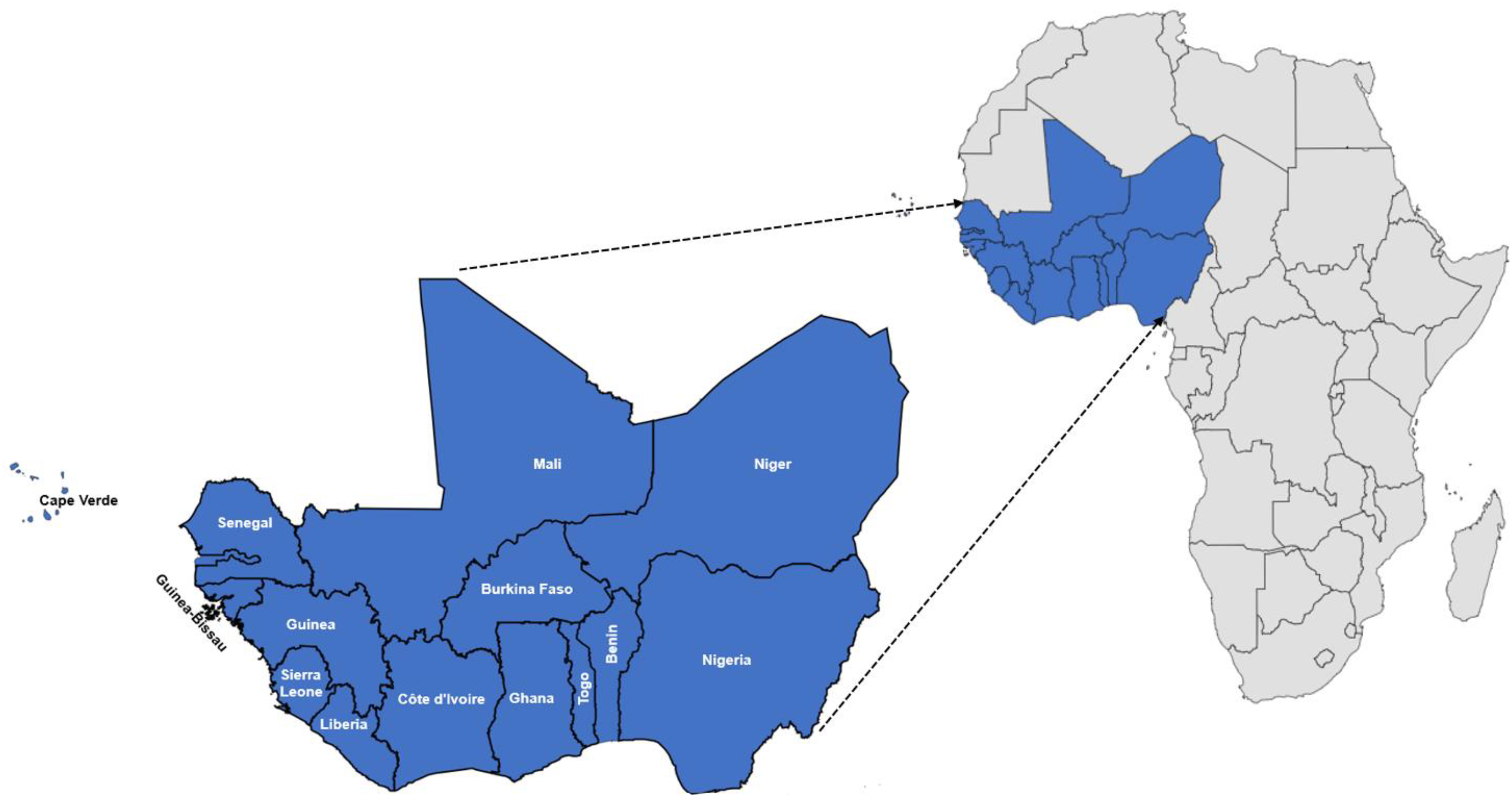
Left: ECOWAS region. Right: Location of the ECOWAS region in Africa. Published under open access (Odoi-Yorke, Agyekum et al., 2025a).
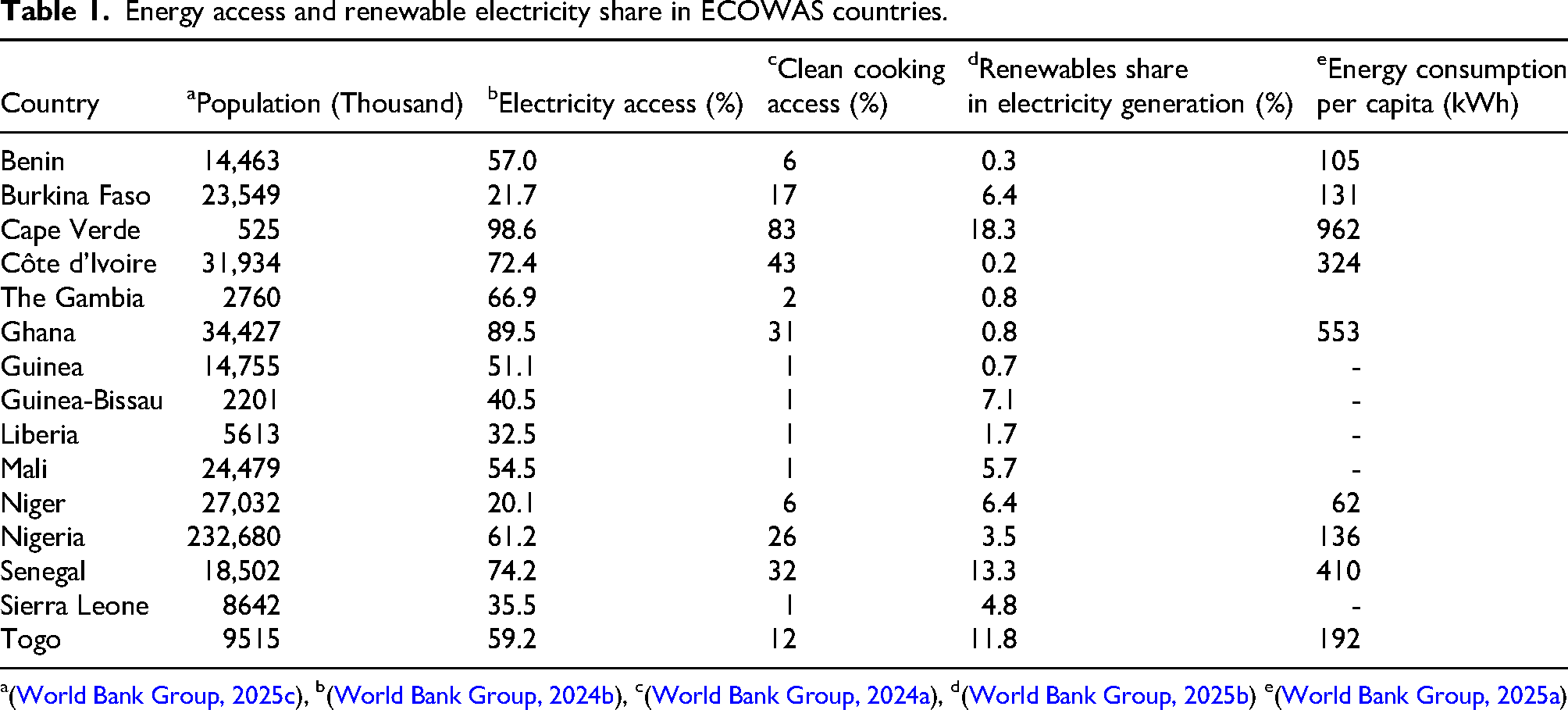
Despite their collective efforts under ECOWAS frameworks, member states exhibit significant disparities in energy access, renewable energy shares, and per capita electricity consumption, as presented in Table 1. Within the region, Cabo Verde has the highest electricity access rate (98.6%), the highest share of renewable energy (18.3%), and the highest clean cooking access rate (83%). Conversely, several mainland countries, such as Guinea, Sierra Leone, and Liberia, have clean-cooking access rates below 2% and electricity access rates under 40%, illustrating widespread energy deprivation. Nigeria, despite being the region's largest economy and population centre, still has lower electricity access (61.2%) and a low share of renewable electricity (3.5%). At the same time, Ghana and Côte d’Ivoire lead in overall access but remain heavily reliant on fossil-fuel-based generation. These statistics underline a persistent “energy divide” within the ECOWAS bloc, rooted in governance, infrastructural, and economic disparities.
Energy access and renewable electricity share in ECOWAS countries.
The continent possesses substantial renewable energy potential estimated at 310 GW, which could supply half of Africa's total electricity generation capacity (Ackah and Graham, 2021). Despite this potential, West Africa confronts a “double energy squeeze” characterised by high costs of both traditional energy and imported commercial energy. The complexity of energy transitions in the region is further aggravated by unique socio-economic, political, and environmental characteristics, necessitating an in-depth understanding of governance structures and policy frameworks (Fischedick et al., 2020).
One of the primary obstacles to effective energy governance in ECOWAS countries is the insufficient public investment in energy infrastructure, especially in renewable energy, alongside limited electricity access and high energy prices (Ofosu-Peasah et al., 2024). These conditions have led to widespread access-based energy poverty, where households remain connected to grids but face irregular supply and unaffordable tariffs. Asongu and Odhiambo (2021) noted that weak institutional and political governance in Sub-Saharan Africa (SSA), including West Africa, is negatively correlated with the adoption of renewable energy. Effective control of corruption, regulatory quality, and institutional accountability is therefore pivotal, as African nations are often described as being “locked in a low-energy-efficiency state,” with only a 21–24% chance of transitioning out in the short to medium term (Akorli and Adom, 2023).
Financial constraints and policy uncertainties further worsen the governance challenge. Maliszewska-Nienartowicz and Stefański (2024) found that around 70% of respondents identified inadequate government financial support as a critical barrier to energy transition, while 40% cited policy uncertainty regarding national subsidies. In view of this, regional integration has therefore become a basis of energy policy reform across ECOWAS. The establishment of the West African Power Pool (WAPP) by ECOWAS aims to integrate national power systems into a unified regional electricity market, enhancing energy security and cost efficiency (Akinyemi et al., 2019; Ojomo, 2023). Complementing this, the ECOWAS Centre for Renewable Energy and Energy Efficiency (ECREEE), established in 2010, promotes the deployment of renewable energy and energy efficiency policies (Hancock, 2015). These regional initiatives are instrumental in overcoming the fragmentation that has historically characterised African energy governance (Späth et al., 2022).
Additionally, cross-border learning and comparative experiences can enhance ECOWAS energy transition strategies. For instance, Morocco's proactive policy framework, anchored in clear renewable energy targets, green financing mechanisms, and robust institutional coordination, could provide insights for similar programmes like the West Africa Clean Energy Corridor. Nonetheless, the contextual differences between North and West Africa, such as resource endowments, governance cultures, and access to financing, necessitate adaptive policy learning (Okpanachi et al., 2022). Effective governance is thus pivotal to realising sustainable energy transitions, given the intrinsic link between poverty and energy deprivation (Bazilian et al., 2014).
In this context, United Nations Sustainable Development Goal 7 (SDG 7), which seeks to ensure universal access to affordable, reliable, sustainable, and modern energy, is relevant to West Africa. Thus, achieving SDG 7 in the ECOWAS region requires effective governance, characterised by policy coordination, performance monitoring, market transformation, fiscal discipline, and behavioural and organisational innovation (Torriti, 2024). The energy transition in West Africa also depends on the coordinated involvement of multiple actors. Government ministries, regional renewable energy development associations, international organisations, private sector entities, micro-financing institutions, and end-users all play complementary roles in accelerating renewable energy deployment (Lee and Liao, 2024). Local market intermediaries play a vital role in bridging the gap between technology providers and rural consumers.
Existing scholarly efforts have examined various aspects of energy governance in the region, though mainly through traditional and narrative review approaches. Akpahou et al. (2023a) conducted a traditional review of Benin's renewable energy situation, evaluating institutional frameworks and policy targets. Yusuf et al. (2024) analysed Liberia's energy policies, highlighting governance challenges and opportunities for reform. Ndayishimiye et al. (2025) focused on the political economy of power generation and grid infrastructure challenges in SSA. Similarly, Usman et al. (2025) examined Nigeria's energy transition narratives, emphasising the potential of solar, wind, hydro, and biofuels. In contrast, Owebor et al. (2025) employed a systematic review of Nigeria's power sector contribution to net-zero targets. Ackah and Graham (2021) compared governance systems between West Africa and the European Union. Ballo et al. (2022) reviewed energy legislation for green hydrogen development in ECOWAS, and Aboagye et al. (2021) discussed Ghana's renewable energy resources and ongoing projects.
Despite this extensive work, no study has applied a bibliometric approach to assess research trends, thematic evolution, and knowledge structures specific to renewable energy governance within the ECOWAS region. The present study, therefore, seeks to bridge this methodological gap by systematically mapping the scholarly and thematic development of this emerging field. Notably, the Bibliometrix package and VOSviewer software (Liu and Kou, 2026; Liu et al., 2025b) have been extensively utilised in related energy research domains to uncover publication dynamics, collaboration patterns, and thematic developments. For instance, Bibliometrix has been applied in studies on solar energy (Elomari et al., 2022; Obaideen et al., 2023), green hydrogen research (Osman et al., 2025), electric vehicles and renewable energy for sustainable mobility (Tahir et al., 2025), clean cooking energy technologies (Afrane et al., 2022; Ngusa, 2025), microgrid performance (Tahir et al., 2024), and mini-grids for rural electrification (Odoi-Yorke et al., 2024) and biofuel production (Odoi-Yorke et al., 2025a). Leveraging these tools allows a holistic understanding of research evolution, institutional collaboration, and conceptual interlinkages.
Accordingly, the main goal of this study is to analyse the trends and thematic evolution of renewable energy governance research within the ECOWAS region. To achieve this goal, the study pursues the following specific research objectives: (i) to examine how publications on renewable energy governance in ECOWAS countries have evolved over time; (ii) to identify the countries leading research output and scholarly collaboration in this field; (iii) to analyse the dominant and emerging keywords impacting renewable energy governance research in ECOWAS; (iv) to assess how thematic areas in renewable energy governance have evolved both conceptually and temporally; and (v) to identify the key thematic clusters and conceptual linkages that define the field and examine their alignment with established theoretical frameworks. The study findings provide empirical insights into the current state of renewable energy governance research in West Africa, highlighting opportunities for enhanced collaboration, informed policymaking, and strategic alignment with continental and global sustainability agendas.
The remaining parts of this paper are presented in the following order:
Materials and methods
Figure 2 illustrates the methodological framework employed to achieve the study's primary objective. This study's methodological framework is guided by the Preferred Reporting Items for Systematic Reviews and Meta-Analyses guidelines to ensure transparency, reproducibility, and rigour in the data extraction processes (Agyekum et al., 2025b; Albhirat et al., 2024). The Scopus database was selected for this analysis due to its comprehensive coverage and global scope, providing a broader dataset than alternatives such as Web of Science or PubMed. Moreover, Scopus has been widely utilised in prior bibliometric research (Agyekum et al., 2025a; Sekyere et al., 2025). The study used the following Boolean search query in the Scopus database to retrieved bibliometric data: TITLE-ABS-KEY (“renewable energy” OR “clean energy” OR “green energy” OR “sustainable energy” OR “solar energy” OR “solar power” OR “solar PV” OR “solar photovoltaic” OR “solar thermal” OR “concentrated solar power” OR “CSP” OR “wind energy” OR “wind power” OR “onshore wind” OR “offshore wind” OR “hydropower” OR “hydro energy” OR “small hydropower” OR “micro hydro” OR “geothermal energy” OR “geothermal power” OR “bioenergy” OR “biomass energy” OR “biogas” OR “biofuel” OR “biofuels” OR “biodiesel” OR “bioethanol” OR “waste to energy” OR “ocean energy” OR “marine energy” OR “tidal energy” OR “wave energy” OR “current energy”) AND (“West Africa” OR “Western Africa” OR “ECOWAS” OR “Economic Community of West African States” OR “Benin” OR “Burkina Faso” OR “Cape Verde” OR “Cabo Verde” OR “Côte d’Ivoire” OR “Ivory Coast” OR” Gambia” OR “Ghana” OR “Guinea” OR “Guinea-Bissau” OR “Liberia” OR “Mali” OR “Mauritania” OR “Niger” OR “Nigeria” OR “Senegal” OR “Sierra Leone” OR “Togo”) AND (“electricity governance” OR “energy governance” OR “renewable energy governance” OR “energy sector governance” OR “power sector governance” OR “electricity regulation*” OR “energy regulation*” OR “renewable energy polic*” OR “energy polic*” OR “electricity polic*” OR “governance framework*” OR “institutional framework*” OR “regulatory framework*” OR “energy transition governance” OR “energy planning” OR “electricity market reform*” OR “energy reform*” OR “energy sector reform*” OR “governance mechanism*” OR “institutional arrangement*” OR “energy governance structure*” OR “electricity governance structure*”).
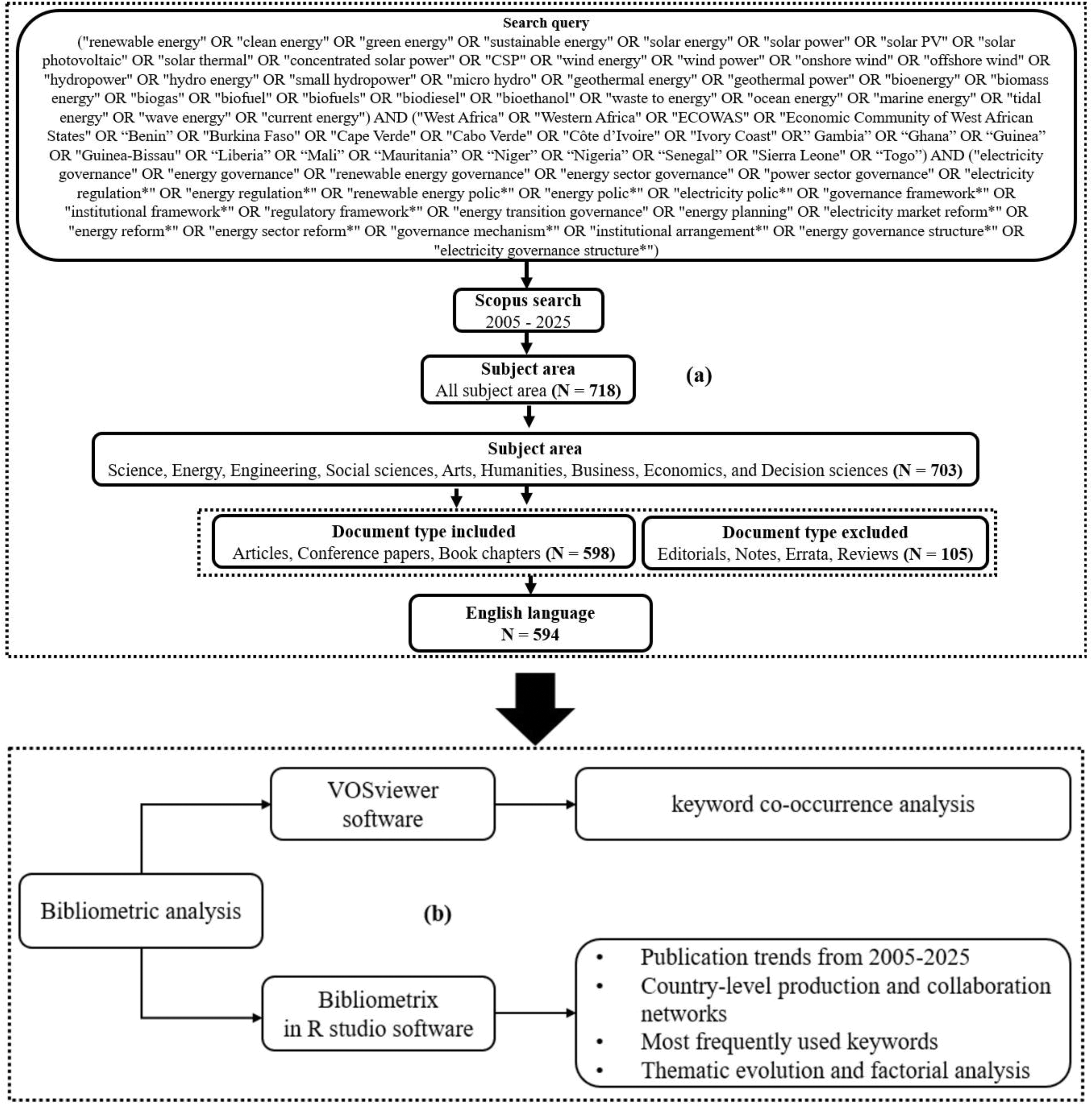
Study framework adopted, (a) data retrieval and screening process from the Scopus database, and (b) bibliometric workflow illustrating analyses performed using bibliometrix (R studio) and VOSviewer software.
The study scope comprised two decades of research, from 2005 to 2025. The initial search executed on October 28, 2025, yielded 718 documents across all subject areas, which underwent a systematic filtering involving multiple inclusion and exclusion criteria to ensure relevance and quality. The dataset was first filtered by limiting the subject areas to science, energy, engineering, social sciences, arts, humanities, economics, and decision sciences, resulting in a reduced dataset of 703 documents. Afterwards, document type filtering retained only peer-reviewed articles, conference papers, and book chapters, reducing the dataset to 598 documents. A final language filter restricting the dataset to English-language publications yielded 594 documents. The final dataset was exported in CSV format for the analysis.
The final dataset was exported into the Bibliometrix and VOSviewer software for bibliometric analysis. Bibliometrix, developed by (Aria and Cuccurullo, 2017), an open-source R package designed for bibliometric and scientometric analysis, was utilised to conduct the following: (i) publication trend analysis; (ii) geographical research contributions and collaborations; (iii) keywords analysis and trending topics; (iv) thematic evolution mapping of key themes; and (v) factorial analysis of keywords. Complementing these quantitative analyses, VOSviewer software was employed to generate network visualisation maps of keyword co-occurrence patterns (Kumar et al., 2024; Liu et al., 2025a). It is worth mentioning that the identified keyword clusters were further supported and validated through a systematic qualitative review of the literature, which thoroughly examined and discussed these themes, confirming their significance and relevance in previous studies conducted with the ECOWAS region.
Results and discussion
Summary of bibliometric indicators and publication trends
Figure 3 summarises the bibliometric indicators. It can be observed that the dataset comprises 594 documents from 211 sources, with an annual growth rate of 24.8%, which indicates academic interest in renewable energy governance within the ECOWAS region. This growth highlights the urgency of energy transition needs and the region's emphasis on the pivotal role of renewable energy in achieving sustainable development. The research community comprises 1899 authors, utilising 1642 keywords. This implies thematic diversity and multidisciplinary approaches to investigating renewable energy governance challenges. Notably, the complete absence of single-authored documents (0%) is coupled with an international co-authorship rate of 38.22% and an average of 6.83 co-authors per document, underlining the inherently collaborative nature of this research domain. This collaborative trend stems from the complexity of renewable energy governance issues, which necessitate interdisciplinary expertise comprising policy analysis, engineering, economics, and environmental sciences.

Summary of bibliometric indicators.
Figure 4 displays the trend in the number of articles published from 2005 to 2025. The early period (2005–2010) exhibited minimal scholarly output, with annual article production ranging from 1 to 9 publications per year. This demonstrates limited academic activity with renewable energy governance issues during this formative stage. This period coincided with the early implementation of the ECOWAS Energy Protocol (2003), which established the legal framework for regional energy cooperation (ECOWAS, 2003); however, it had yet to catalyse substantial research interest. Likewise, the growth period (2011–2016) saw a gradual but consistent upward trend, with the number of publications increasing from 14 to 25 articles annually. This expansion can be attributed to several pivotal developments, including the launch of the ECOWAS Renewable Energy Policy (EREP) in 2012, which set ambitious targets of achieving 10% renewable energy in the electricity mix by 2020 and 19% by 2030 (Maman Ali and Yu, 2021). In addition, the establishment of the ECOWAS Centre for Renewable Energy and Energy Efficiency (ECREEE) in 2010 (Hancock, 2015) provided institutional infrastructure that could stimulate research capacity and interest. The Paris Agreement in 2015 further drew global attention to climate change mitigation, prompting increased scholarly scrutiny of regional governance mechanisms for renewable energy transitions.
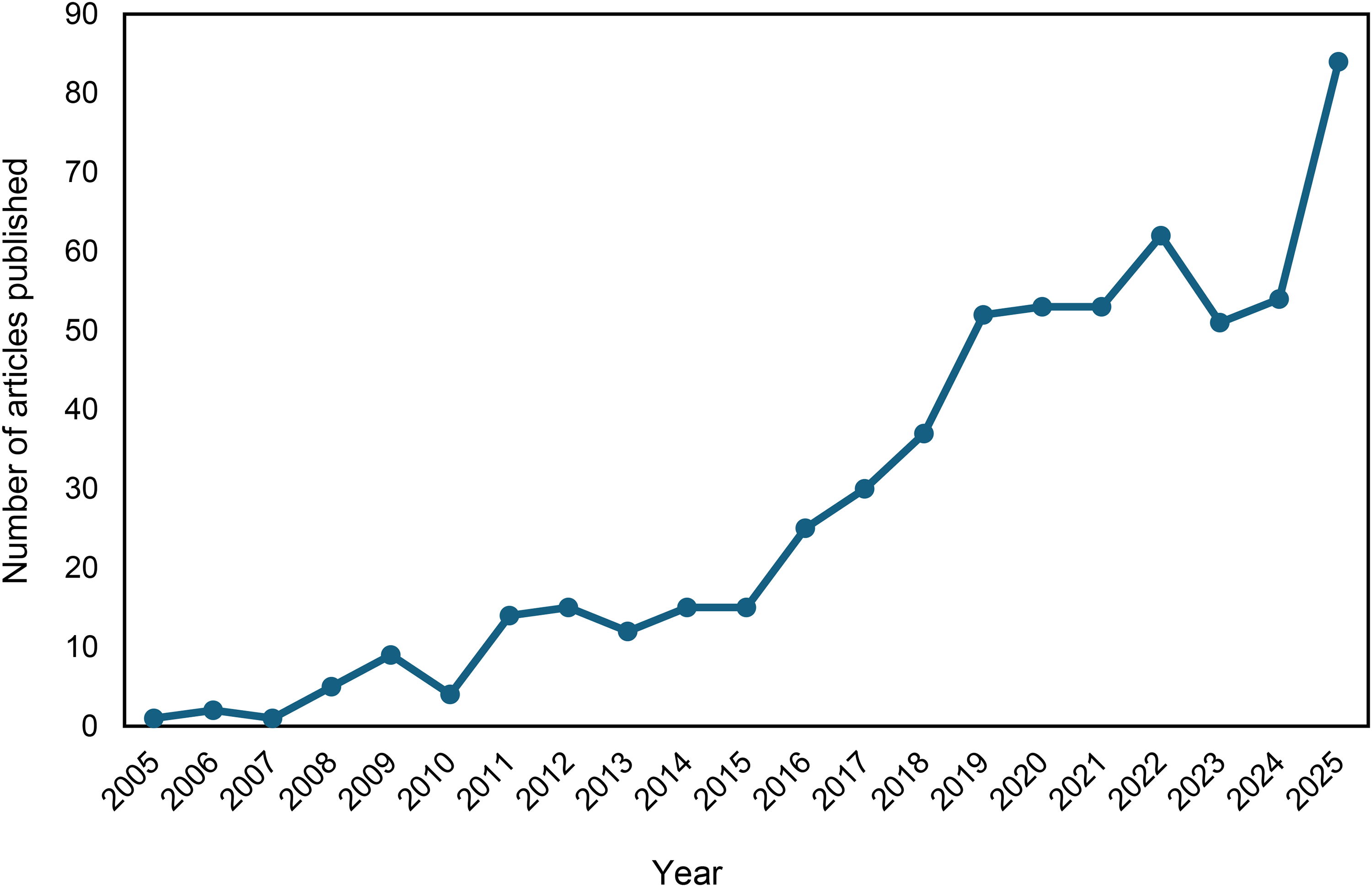
Trend in annual article production.
Similarly, the acceleration period (2017–2025) exhibits a surge in research productivity, with the number of publications increasing from 30 in 2017 to 84 in 2025. The years 2019–2021 demonstrated sustained high output (52–53 articles annually), which increased further in 2022 (62 articles) and reached higher levels by 2025 (84 articles). This surge can be linked to multiple reinforcing factors: the operationalisation of the ECOWAS Regional Electricity Regulatory Authority (ERERA), enhanced by various capacity-building initiatives; the implementation of Nationally Determined Contributions (NDCs) under the Paris Agreement, requiring countries to develop concrete renewable energy strategies; and international funding from entities such as the African Development Bank's Sustainable Energy Fund for Africa and the EU-Africa Infrastructure Trust Fund.
Furthermore, the COVID-19 pandemic (2020–2021) may have paradoxically catalysed research through an increased focus on energy access, resilience, and green recovery frameworks. The recent surge suggests keen interest in renewable energy governance as a critical research domain, possibly driven by the African Continental Free Trade Area's emphasis on sustainable industrialisation and the African Union's Agenda 2063 aspirations.
Country research contributions and collaboration networks
The country's contribution to renewable energy governance research is illustrated in Figure 5(a). It can be seen that Nigeria is the major contributor, accounting for 25.7% of the total research output, followed by Ghana at 13.0% and Senegal at 1.6%. This contribution is noteworthy, given that the region comprises only 15 member states, yet outperforms the research output of major industrialised nations, including the UK (7.5%), China (5.0%), the USA (4.5%), and Germany (3.4%). The disproportionate engagement of foreign countries in ECOWAS renewable energy governance research suggests multiple strategic needs. European nations, such as the UK, Germany, France, and the Netherlands, which are inhibited by limited domestic renewable energy potential and ambitious decarbonisation targets, view ECOWAS countries as critical partners for understanding governance frameworks that can facilitate cross-border energy transitions and investment opportunities.
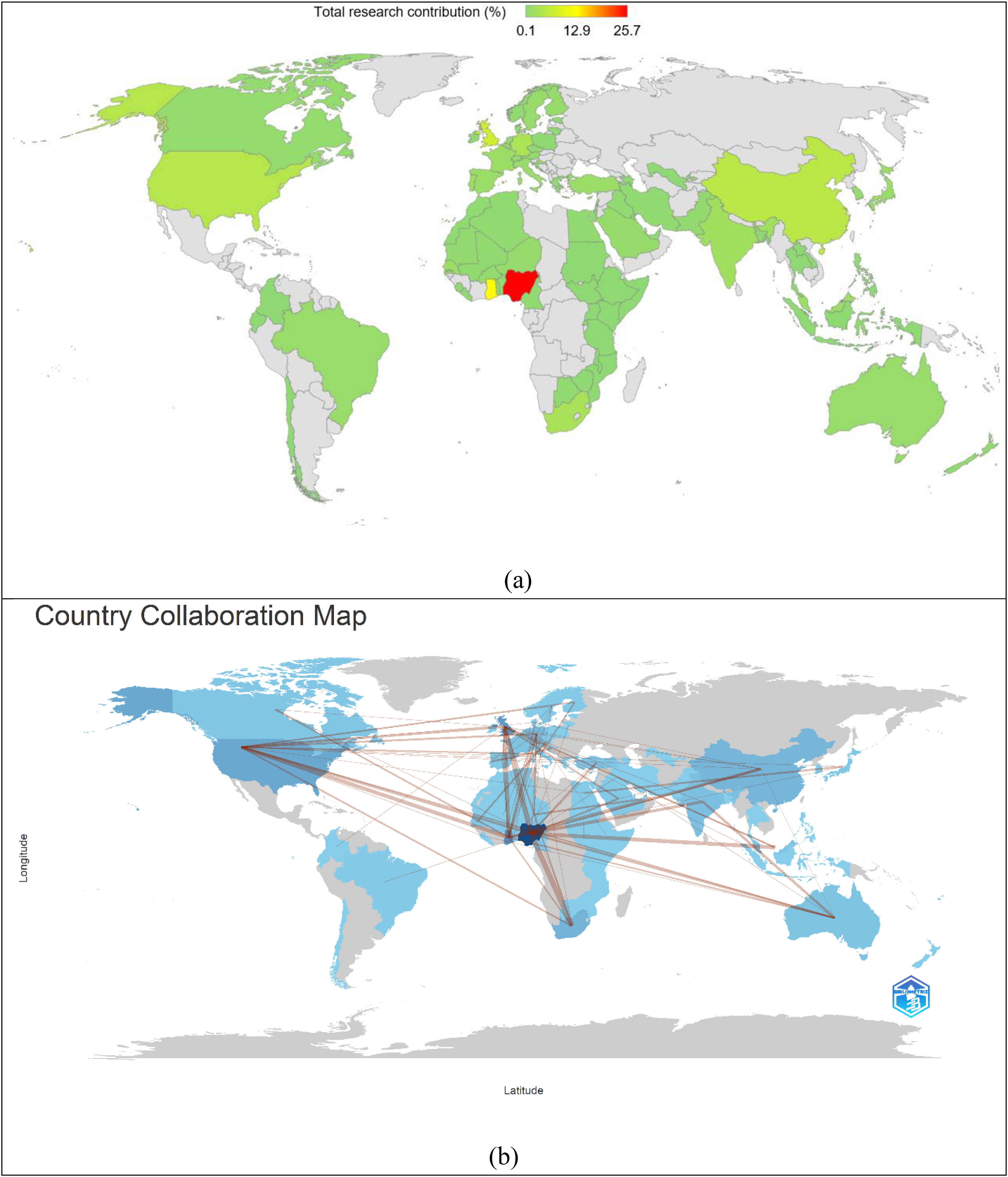
(a) country research contribution and (b) research collaboration networks.
Likewise, Asian countries, primarily China, Japan, and South Korea, contribute significantly due to their commercial interests in deploying renewable energy technology across Africa, necessitating a comprehensive understanding of the regulatory sectors and policy environments. North American and Australian researchers collaborate with ECOWAS on renewable energy governance to examine comparative policy frameworks, technology transfer mechanisms, and lessons applicable to their own energy transitions, while also supporting capacity building through international development partnerships.
In Nigeria, the National Renewable Energy and Energy Efficiency Policy (NREEEP), adopted in 2015 (Energy Commission of Nigeria, 2014), alongside the Renewable Energy Master Plan, could have catalysed academic inquiry by establishing clear targets and institutional frameworks that require continuous evaluation and refinement. The establishment of the Nigerian Energy Commission and dedicated research institutes has created an environment conducive to policy-oriented research. Ghana's contributions could be attributed to the Renewable Energy Act of 2011 (Act 832), which established feed-in tariffs, net metering systems, and renewable energy purchase obligations (PURC, 2011).
In addition, Senegal's contributions could be due to the SENELEC (Société Nationale d'Électricité du Sénégal) reforms and the National Action Plan for Renewable Energy, which have prioritised research-informed policymaking. The establishment of regional centres of excellence in renewable energy, supported by the World Bank's West African Power Pool initiative, has attracted international research partnerships and positioned Senegalese institutions as knowledge brokers within the ECOWAS region. These policy frameworks have created virtuous cycles where research informs policy refinement, which in turn generates new research questions, establishing ECOWAS countries as essential laboratories for understanding renewable energy governance in developing contexts.
Figure 5 (b) displays the research collaborations of the ECOWAS region with other countries. The figure employs a colour-coded system where blue-shaded countries denote active contributors in the collaboration network, and grey-shaded countries indicate non-contributing nations. The connecting lines between countries depict collaborative relationships, with their thickness indicating the strength or frequency of research collaboration. The figure illustrates a geographically diverse collaboration network that extends beyond the ECOWAS region to encompass partnerships with North America, Europe, Asia, and Australia. This global reach suggests that renewable energy governance research in ECOWAS countries benefits from international knowledge exchange and cross-continental expertise. Collaborations between European countries may be driven by historical ties, development partnerships, and shared interests in sustainable energy transitions. The connections with North America and Asia indicate that ECOWAS research institutions are engaging with multiple knowledge hubs worldwide.
However, the figure also highlights potential concerns regarding research autonomy and South-South collaboration. The concentration of connections radiating from a central West African hub toward developed nations in the Global North suggests a pattern in which ECOWAS countries may be more integrated into North-South research partnerships than into intra-regional or South-South collaborations. This pattern has important implications for knowledge production and research agenda-setting in renewable energy governance. Although international collaborations bring valuable resources and expertise, overreliance on partnerships with developed nations may lead to research priorities influenced by externally driven agendas rather than locally identified needs. The fewer visible connections among ECOWAS member states themselves, or with other African regions, suggest opportunities for strengthening regional research networks. Enhanced intra-ECOWAS collaboration could facilitate more contextualised approaches to renewable energy governance that address shared regional challenges, promote the integration of indigenous knowledge, and build sustainable research capacity within West Africa. Policymakers and research funding agencies should consider initiatives that balance global partnerships with stronger regional research ecosystems to ensure that renewable energy governance research adequately addresses ECOWAS-specific contexts and priorities.
Analysis of the most occurring keywords and trend topics
The word cloud in Figure 6 illustrates the frequency distribution of keywords derived from the dataset. It is worth noting that the size of each keyword corresponds to its frequency of occurrence in the dataset. This implies that larger words appear more frequently and thus represent dominant research themes, and smaller words indicate topics that are less frequently discussed. It can be observed that “renewable energy” is the largest word in the figure. This signifies its centrality and dominance within the research domain. Closely following are keywords such as “energy,” “Nigeria,” “Ghana,” “sustainable development,” “energy policy,” and “energy transition,” which highlight the multidimensional and country-specific nature of renewable energy governance in West Africa. The emergence of Nigeria and Ghana as key players highlights their pivotal role in shaping the discourse on renewable energy within the ECOWAS subregion.

Word cloud of author keywords.
Nigeria, being the largest economy and most populous nation in West Africa, has emerged as a key driver of renewable energy policy experimentation and institutional reform. Similarly, Ghana's appearance as a frequent keyword suggests its proactive stance on energy transition and its ongoing commitment to improving rural electrification and access to clean energy. The relative absence or smaller size of other member states, such as Mali, Togo, or Sierra Leone, implies that research attention remains unevenly distributed, concentrating primarily on countries with comparatively advanced policy frameworks and research infrastructures. This imbalance suggests an urgent need for a more inclusive research agenda that integrates lesser-studied ECOWAS countries to ensure equitable policy development and knowledge dissemination across the region.
The frequent appearance of keywords such as “energy policy,” “energy transition,” and “sustainable development” demonstrates the alignment of renewable energy research with global sustainability agendas and regional energy transition goals. These terms suggest a strong policy orientation, emphasising the institutional, regulatory, and governance aspects of renewable energy adoption. The presence of “climate change” and “energy efficiency” as recurring terms indicates a keen interest in the environmental and economic co-benefits associated with renewable energy deployment. Similarly, keywords such as “electricity,” “energy access,” and “rural electrification” highlight the persistent developmental challenge of universal energy access in West Africa. These findings suggest that renewable energy governance research extends beyond technical analyses to comprise social, economic, and policy considerations.
From a governance perspective, the dominance of “energy policy” suggests that researchers are paying close attention to institutional mechanisms, regulatory frameworks, and policy coherence in driving the adoption of renewable energy. The integration of terms like “sustainability,” “economic growth,” and “energy security” further indicates that the literature explores the broader socio-economic implications of renewable energy transitions. The co-occurrence of “sub-Saharan Africa,” “West Africa,” and “ECOWAS” demonstrates that researchers are situating the discussion within both regional and continental contexts, thereby emphasising the interconnectedness of national energy transitions and regional integration efforts.
Figure 7 displays the trending topics from 2012 to 2025. The horizontal lines in the figure indicate the duration over which specific topics remained active in the literature. The circles denote the frequency of term occurrence, with larger circles indicating higher frequencies within the research domain during specific time periods. The positioning of these circles along the timeline indicates when particular topics gained attention or reached their peak research interest.

Trending topics from 2012–2025.
It can be observed that the figure shows a clear evolution in research priorities, with early-stage topics such as biofuels and hybrid systems emerging around 2014–2016, suggesting initial explorations into alternative energy sources. Notably, hybrid energy systems and green hydrogen have gained attention in recent years (2023–2024), as indicated by their large circle sizes. This shift suggests a growth of the research domain from basic renewable energy concepts toward more integrated energy solutions. The emergence of green hydrogen in recent years is significant, as it aligns with global trends toward clean energy carriers and indicates that ECOWAS research is keeping pace with international developments in next-generation energy technologies.
Geographically specific terms such as West Africa, Ghana, and Nigeria appear in the 2020–2022 period, suggesting a mid-period intensification of country-specific case studies and regional analyses. This temporal clustering suggests that researchers have shifted from general discussions of renewable energy to contextualised investigations that take into account the unique socio-economic, political, and infrastructural challenges facing individual ECOWAS nations. The frequency of these geographic terms suggests sustained but not overwhelming attention to localised implementation challenges.
Thematic terms, including environmental sustainability, carbon emissions, and climate change, demonstrate a sustained presence across the timeline, with notable activity in the 2022–2024 period, indicating the integration of environmental imperatives into energy governance research. Terms like energy transition, sustainable development, and renewable energy throughout the timeline emphasise their foundational importance to the research domain. However, the relatively dispersed positioning of circles for these terms suggests that, though these concepts remain consistently relevant, research attention has fluctuated rather than intensified in a linear manner.
Network visualisation of keyword co-occurrence
Figure 8 displays the network visualisation of keyword co-occurrence into clusters. The co-occurrence analysis was conducted using VOSviewer software on 1644 keywords extracted from the dataset. A minimum occurrence threshold of three was applied, resulting in 146 keywords meeting this criterion. For each of these 146 keywords, the total strength of co-occurrence links with other keywords was calculated, and all 146 keywords with the greatest total link strength were selected for analysis. The selected keywords were then clustered using VOSviewer's clustering algorithm, which generated 12 thematic clusters based on the patterns of keyword co-occurrence. The following sub-sections discuss the implications of each cluster, supported by relevant qualitative insights from the literature.

Network visualisation of the co-occurrence of keywords in clusters.
Renewable energy technologies and policy frameworks, and regional energy governance
Likewise, the keywords “off-grid” and “small hydropower” signify research attention to decentralised energy systems as pathways to rural electrification. Ayodele et al. (2019) demonstrated the viability of hybrid microgrids for rural microfinance institutions in Ajasse-Ipo, Nigeria, showing that a solar PV/battery/diesel hybrid reduced emissions by 50%. Cantoni et al. (2021) examined Burkina Faso's 33 MW Zagtouli solar plant near Ouagadougou, uncovering issues of energy justice where residents of the nearby Zagtouli village remained “off the grid” despite their proximity to the facility. These examples demonstrate that technical feasibility alone cannot guarantee equitable energy access; governance and inclusion are equally crucial.
Similarly, institutional and regulatory structures, represented by the keywords like “policies”, “public policy”, “regulation”, and “renewable energy policy”, are pivotal in this cluster. For example, Pavanelli et al. (2023) traced the evolution of Nigeria's electricity sector and identified five governance phases that were influenced by colonial rule, military regimes, and hybrid governance systems. Ogbodo-Nathaniel et al. (2024) identified the absence of coherent renewable energy legislation in Nigeria, calling for a unified legal framework and stronger regulatory institutions to ensure the effectiveness of policy. Similarly, Nwozor et al. (2020) attributed weak compliance and limited investments in gas-gathering infrastructure to poor institutional coherence and unattractive economic incentives. In Benin, Akpahou et al. (2023a) reported that, while national electricity access remains at around 41%, a heavy dependence on imported natural gas persists, despite ongoing renewable projects supported by policy frameworks that require reinforcement. Ugwu et al. (2022) echoed these challenges, linking low renewable energy utilisation in Nigeria to non-implementation of existing policies, financial bottlenecks, and limited research investments. Extending this analysis, Amankwah-Amoah and Hinson (2024) examined institutional dysfunction in scaling solar PV across SSA, revealing how misaligned governance mechanisms impede both upstream innovation and downstream adoption. It is worth mentioning that these findings emphasise that policy coherence, institutional stability, and regulatory enforcement are indispensable to effective renewable energy deployment in the region.
Furthermore, the presence of “forecasting” and “electricity consumption” further indicates scholarly focus on predictive modelling and infrastructure planning. Agyekum et al. (2021) optimised PV site selection in Ghana using the Analytical Hierarchy Process (AHP) and density-based clustering, identifying the Wa region as optimal due to its high irradiance of 1998.55 kWh/m2/year and 264 km2 of suitable land. Similarly, Ayodele et al. (2016) evaluated the wind power potential across fifteen locations in Nigeria. The authors found Jos and Kano to be economically viable for grid integration. Wole-Osho et al. (2016) compared the renewable energy potential across Nigeria, Ghana, Mali, and Senegal. The authors revealed that, despite Nigeria having robust policy backing, hydropower development lagged. Mali and Senegal demonstrated higher solar and wind potential. However, both faced insufficient policy implementation, with Senegal being constrained by the absence of wind harnessing policies, despite having a strong rural electrification framework. More recently, Akporhonor et al. (2024) assessed Nigeria's wind energy trajectory, highlighting the persistent gap between potential and installed capacity due to weak policy prioritisation relative to solar and hydro resources. These forecasting-based studies underline the importance of data-driven planning and regional collaboration in optimising resource deployment.
Energy-environment-economy nexus: Scenario modelling and emissions analysis
Similarly, the inclusion of analytical methodologies such as scenario analysis, system dynamics, and LEAP in Cluster 2 highlights the modelling tools commonly employed to project future energy pathways and inform sustainable policy options. Bayode et al. (2025) concluded that their integrated deep learning-MCDM framework provides a robust assessment of Nigeria's energy transition, with the hybrid deep learning model achieving high predictive accuracy, recording R2 values of 0.99 for 1-h, 0.80 for 1-day, and 0.24 for 1-week forecasts. Akpahou et al. (2025) used an open-source energy modelling tool to assess four scenarios for Ghana's renewable energy production targets. The study projected increased total generation and installed capacity across all cases, with natural gas expected to dominate by 2070 under the Business-as-Usual (BAU) scenario. The analysis further showed that GHG emission reductions were achievable if nuclear power complemented renewables, providing cost savings of USD 11–14 billion compared to BAU. Parallel scenario-based studies accentuate similar dynamics in other ECOWAS countries. Halarou et al. (2024) found that Niger's electricity demand is projected to reach 13.2 TWh under the Reference scenario and 16.6 TWh under the high-demand scenarios by 2050. Likewise, Akpahou et al. (2024a) employed LEAP to forecast Benin's energy demand and found that Benin's total energy demand is expected to increase from 164 PJ to 445 PJ by 2050 under a Business-as-Usual scenario, with corresponding increases in GHG emissions across the assessed scenarios. Adelaja et al. (2022) reported that residential areas account for approximately 70% of the total energy consumption at the University of Lagos, highlighting the need for targeted demand-side management interventions.
Likewise, scenario-based modelling also extends to long-term electrification and decarbonisation planning. Yetano Roche et al. (2020) concluded that under the Green Transition scenario, Nigeria could achieve its 2030 electricity access targets, with grid-connected users reaching Tier 3 access and off-grid users attaining Tier 2 access levels. Sessa et al. (2021) reported that combining grid extension with decentralised solar PV in Mali could reduce biomass consumption by 50–71%. In the work of Conteh et al. (2023), the authors established that Sierra Leone's electricity demand is projected to increase by 1812.5 GWh under the Base scenario, 1936 GWh under the Middle scenario, and 2635.8 GWh under the High scenario over the study period. These findings illustrate a consistent regional trend where rising population and economic activities outpace energy supply, necessitating forward-looking strategies. Studies focusing on sectoral emissions further broaden Cluster 2's scope. Saisirirat et al. (2022) developed a detailed vehicle ownership model for Ghana to estimate energy demand and explore emission reduction strategies in road transport. The model indicated potential GHG reductions of 8.4% and 11.1% by 2030 under alternative and extreme scenarios, with minimal arable land requirements for biofuel expansion. Complementarily, Amo-Aidoo et al. (2022) revealed that achieving 15% solar penetration under a visionary supply scenario in Ghana could enable universal electricity access and offset more than 13 million metric tonnes of CO2 by 2030.
Furthermore, cluster 2 shows that ECOWAS countries are integrating modelling frameworks to align national energy plans with climate and development goals. The reliance on LEAP and related system dynamics tools suggests a keen emphasis on data-driven and evidence-based policymaking. For instance, Kumi and Mahama (2023) projected Ghana's electricity demand to increase from 10,129 GWh in 2016 to 24,151.4 GWh by 2030 under four LEAP-based supply scenarios, all of which meet the cumulative demand of 237,570.5 GWh. Okoh and Okpanachi (2023) employed LEAP and the Announced Pledges Scenario to assess Nigeria's pathway toward carbon neutrality, aligning national goals with international climate commitments. These modelling efforts not only support emissions reduction strategies but also provide policy insights into managing the trade-offs between growth and sustainability. For ECOWAS countries pursuing economic advancement and adhering to climate commitments, scenario analysis tools help identify optimal energy pathways that balance affordability, accessibility, and environmental responsibility.
Decarbonisation strategies and energy system planning tools
A key focus of this cluster is strategic energy planning, utilising modelling platforms such as EnergyPLAN and RETScreen. Studies within this theme explore how technological combinations can achieve both electrification and emission reduction objectives. For example, Bamisile et al. (2020) presented an economically viable renewable plan to achieve 100% electrification in Nigeria by 2030 through the analysis of 99 EnergyPLAN scenarios. The results revealed that integrating natural gas with solar PV or onshore wind technologies is the most sustainable pathway. Extending this regional perspective, Ishaku et al. (2022) developed an EnergyPLAN-based model to achieve universal electricity access and a 48% renewable energy share in West Africa by 2030. It was observed that integrating natural gas (42 GW) with wind (13 GW), solar PV (13 GW), and hydropower (29 GW) could cut carbon emissions by nearly 50%.
In addition, terms such as “electric vehicles”, “hydrogen economy”, and “energy storage” included in this cluster demonstrate research areas focused on next-generation decarbonisation technologies. For example, Bamisile et al. (2021) reported that integrating wind, solar PV, concentrated solar power, hydropower, and pumped hydro storage in Nigeria is more effective when coupled with plug-in electric vehicles and hydrogen production, as these options enhance the utilisation of renewable-based electricity. Ampah et al. (2023) revealed that integrating electric vehicles, power-to-gas (hydrogen), and pumped hydro storage in Ghana's power sector enables solar and wind penetrations of 32.66% and 38.11%, respectively, by 2030. Complementing these results, Gomes et al. (Gomes et al., 2025) demonstrated through EnergyPLAN modelling that integrating electric vehicles, smart charging, and vehicle-to-grid (V2G) services in Cabo Verde's Santiago Island improves renewable energy penetration and short-term system balancing. The importance of “energy storage” for renewable integration is further highlighted in Eshiemogie et al. (2025), who employed EnergyPLAN and machine learning algorithms to assess Nigeria's electricity scenarios for 2050. The study found that incorporating storage technologies increased the share of renewable electricity by 37% and reduced CO2 emissions by 19.14%. Such insights confirm that battery energy storage systems, pumped hydro, and V2G services are crucial for optimising renewable energy utilisation in regions with high demand and intermittent supply. For ECOWAS countries, these opportunities suggest an option to leapfrog carbon-intensive pathways and adopt modern, sustainable energy infrastructures.
In parallel, RETScreen-based studies in this cluster emphasise techno-economic evaluation and policy-relevant feasibility assessments for renewable energy and hybrid systems. For instance, Yakub et al. (2022) evaluated a PV/diesel hybrid system for a rural healthcare centre in northern Nigeria, using RETScreen, and achieved annual savings of USD 30,583 with a payback period of 1.3 years. Luqman et al. (2023) found that a grid-connected PV system at Federal Polytechnic Mubi yielded a positive net present value (USD 681,164) and an 11.9% internal rate of return, reducing emissions by 670.9 tCO2. In Ghana, Asamoah et al. (2023) assessed four potential 50-MW wind farm sites and found financial viability across all locations. Odoi-Yorke et al. (2023) confirmed that a 10 MW wind power project in Adafoah could reduce CO2 emissions by 33% at a levelized cost of 0.143 USD/kWh. Similarly, Akpahou et al. (2023b) found that a 10 MW grid-tied PV system in seven Benin cities could reduce CO2 emissions by up to 76%, with levelized energy costs ranging from 0.110 to 0.125 USD/kWh. These project-based assessments illustrate how RETScreen enables the identification of financially viable and environmentally beneficial investments in renewable technologies. Further applications expand to hybrid systems and sectoral solutions. Elegeonye et al. (2023) validated the Gbamu-Gbamu solar/battery/diesel mini-grid's viability in Nigeria, achieving a 92.9% GHG reduction with a 4-year payback. Muteba et al. (2023) found that a micro-hydropower plant in Taraba State, Nigeria, has levelized electricity costs ranging from 101–140 USD/MWh, with equity payback periods between 4.6 and 13.2 years.
Expanding beyond individual projects, research also comprises innovative hybrid concepts and cross-sectoral integrations. Alhassan et al. (2023) proposed a 420 MWp floating PV-hydro hybrid system on Ghana's Akosombo Dam, generating 520,233 MWh annually and avoiding over 308,900 tCO2 emissions. Adebanji et al. (2024) concluded that solar PV deployment in Kajola Village, Nigeria, is economically viable only under policy conditions that provide investor incentives such as subsidies or tax relief. This cluster also features forward-looking national-level decarbonisation strategies, where Akpahou et al. (2024b) modelled Benin's pathways to achieve 24.6%, 44%, and 100% renewable energy integration by 2025, 2030, and 2050, respectively. Supplementing this, Addai et al. (2025) assessed small hydropower potential along Ghana's Tano River Basin using SWAT and RETScreen, identifying 24 viable sites with annual emission savings of 66,382 tCO2 and NPV above USD 175 million.
Socio-institutional dimensions of energy transitions: equity, gender, and sustainable development
Likewise, community-driven initiatives further demonstrate how institutions and incentives facilitate inclusive transitions. Xinhui and Guoping (2021) revealed that a bottom-up incentive framework embedded in an integrated water, sanitation, and biogas system for Winneba, Ghana, can enhance local participation and underscore the importance of institutional collaboration in supporting sustainable energy transitions. Agbaam et al. (2025) reported that Ghana's transition toward solar PV reflects a gradual but cumulative third-order institutional change. However, progress is constrained by conflicting interests between renewable energy advocates and fossil fuel actors, underlining the need for regulatory stability, effective enforcement, and cross-sector coordination. Complementing this, Afful-Dadzie et al. (2022) concluded that incentivising private sector participation in Ghana's Renewable Energy Master Plan could generate annual savings of up to USD 265 million and reduce unmet electricity demand by 6.5%. Mahama et al. (2021) identified high interest rates, limited access to long-term capital, grid constraints, and currency instability as significant challenges for renewable developers. Similarly, Ankrah Twumasi et al. (2022) found that household income and renewable energy costs influence adoption, while financial literacy plays a modest but positive role. These findings suggest that fiscal incentives, such as tax rebates and consumer subsidies, can drive broader adoption in low-income contexts.
Furthermore, the juxtaposition of fossil fuels with clean energy, solar, and biofuels in this cluster suggests the ongoing debates about fuel substitution and political economy dynamics. The connection to the SDGs situates energy transitions within a broader development agenda. Akrofi et al. (2024) revealed that, despite incentives such as net metering, capital subsidies, and soft loans, incoherent policy and regulatory frameworks, as well as sectoral fragmentation, hinder the expansion of residential solar PV in Ghana. Nevertheless, partnerships between foreign and local solar companies, as shown by Edze (2025), have fostered skill development and local capacity building, aided by sustainability-driven procurement practices from development finance institutions. However, significant gaps remain. Nyasapoh et al. (2025) found that Ghana's renewable energy penetration stands at only 4.77%, well below the national target of 10%. Bridging this gap requires investment in energy storage, smart grids, and tailored incentives.
Energy efficiency and circular economy approaches to energy system optimisation
Circularity thus provides a pathway for waste valorisation and resource recovery in renewable energy systems. Circular approaches also extend to the valorisation of municipal and agricultural waste in the region. Sarquah et al. (2025) noted that refuse-derived fuel produced from municipal solid waste (MSW) in Kumasi, Ghana, meets international standards for thermal applications, with heating values ranging from 14 to 22 MJ/kg. Sarpong et al. (2025) further showed that adopting circular economy practices in oil palm processing through briquette and green gas production from palm waste can reduce deforestation and GHG emissions and advance multiple SDGs. Cazier et al. (2024) highlighted the potential of lignocellulosic industrial residues for bioenergy production, noting that reducing transformation costs remains a key barrier to broader adoption within circular and green chemistry frameworks.
The economic aspects of energy transition in this cluster are reinforced by financial development and willingness to pay (WTP), both of which influence market acceptance and investment readiness. Numerous studies have explored WTP across ECOWAS contexts. Ugulu and Aigbavboa (2019) found that urban households in Lagos, Nigeria, displayed above-average interest in solar PV electricity, with higher WTP under government fiscal incentives of 50–60%. Bhandari et al. (2020) reported that collaborative consumption and community ownership in a rural Niger village could reduce monthly energy expenses by 80%, increasing WTP from 17% to 81%. Bokonon-Bokonon-Ganta et al. (2019) demonstrated that though rural Beninese communities were motivated to adopt solar PV, high upfront costs constrained uptake relative to their annual savings. In Ghana, Adjakloe et al. (2021b) observed low household awareness of renewable energy, with hydro and solar being the most used sources. Menyeh (2021) showed that developer track record and project viability were the most valued investment attributes influencing WTP for renewables. T. R. Ayodele et al. (2021) reported that Nigerian consumers were willing to pay 5–10% more than the current electricity prices, driven by factors such as age, income, and education. Korzhenevych and Owusu (2021) established that rural Ghanaian households were willing to pay about 30 GH₵/month (≈US$5), twice the current tariff, for reliable renewable-powered electricity. Nketiah et al. (2022) further revealed that government involvement enhances WTP for green electricity through attitudes and subjective norms. These findings are consistent with Nduka Nduka (2023), who observed that Nigerian households’ WTP for solar PV increased under subsidy and monthly payment schemes, while Ackah et al. (2024) showed that factors such as income, fuel expenditure, and awareness of emissions influenced willingness to adopt electric vehicles in Ghana.
However, a robust regulatory framework underpins these market mechanisms. Wang (2025) compared solar transitions in Nigeria, showing that although international organisation-led projects enhance decentralised electrification, they face financial sustainability risks. In contrast, multinational-led projects drive large-scale deployment but confront regulatory and market uncertainties. Bala et al. (2024) found that green levies have a positive influence on the development of green technology when reinforced by foreign direct investment. Conversely, Chinasaokwu Okorieimoh and Augustin Ehimen (2026) revealed that overlapping mandates, weak enforcement capacity, and fragmented donor involvement hinder the deployment of decentralised renewable energy in Nigeria, Liberia, and Malawi.
Development-energy-climate linkages: African macro-level perspectives
The emergence of “GDP” in this cluster implies research exploring the role of energy as a driver of economic growth across African economies. Sane et al. (2022) found that agriculture, electricity consumption, and GDP were significant predictors of CO2 emissions in Nigeria, confirming that industrial expansion directly increases environmental pressures. Somoye et al. (2022), however, introduced nuance by revealing a non-linear relationship between renewable energy and GDP growth, where positive renewable energy shocks reduce real GDP in the long run, while negative shocks increase it. This counterintuitive finding highlights the transitional economic frictions inherent in renewable integration. Extending the analysis to a regional scale, Khan (2023) reported that across 10 ECOWAS countries, the relationships between key explanatory variables and CO2 emissions are heterogeneous, reflecting divergent national pathways. Tang et al. (2025) found that spatial spillover effects influence CO2 emissions in 16 West African countries, and their results do not support the Environmental Kuznets Curve hypothesis for the subregion.
Likewise, the co-occurrence of “non-renewable energy,” “oil and gas,” and “SDG 7” in this cluster indicates the structural duality confronting African economies: they remain fossil-fuel dependent even as they commit to universal clean energy access. The energy-economic linkages, as well as gender mainstreaming, are also vital social dimensions of sustainable energy transitions. Integrating gender perspectives into energy policy ensures equitable access, enhances women's participation in the energy workforce, and tailors interventions to gender-specific needs. Maduekwe et al. (2019) analysed ECOWAS's pioneering Regional Policy on Gender Mainstreaming in Energy Access, developed through extensive multi-stakeholder collaboration under the ECOWAS Centre for Renewable Energy and Energy Efficiency. Clancy and Mohlakoana (2020) evaluated gender audits as a mechanism for mainstreaming and found them only partially effective due to persistent conceptual and political barriers. At the local level, Adjakloe et al. (2021a) identified significant gender differences in household clean energy choices in Ghana's Cape Coast Metropolis, with men more likely to adopt cleaner options. Building on institutional perspectives, Maduekwe and Factor (2021) argued that ECOWAS's Directive on Gender Assessment in Energy Projects has the procedural legitimacy to influence domestic policy. Similarly, Antwi (2022) found that Niger's gender-sensitive energy access efforts are at an early stage, with emerging gender equity leading to increased male support for women's empowerment. Appiah et al. (2024) observed that both international donor influence and domestic civil society advocacy drove Sierra Leone's National Action Plan for gender mainstreaming in energy access. In Senegal, Gning and Muchapondwa (2025) demonstrated that the gender strategy within the Programme d’Urgence de Développement Communautaire empowered rural women, enhancing their entrepreneurial roles through improved access to electricity. These studies confirm that gender mainstreaming is essential for achieving just and inclusive energy transitions across ECOWAS countries.
Rural electrification and decentralised renewable energy systems for off-grid communities
Biomass energy, mostly from agricultural residues, is a central theme in this cluster. Key terms such as “agricultural residues,” “biodiesel,” and “jatropha” indicate attention to locally available and renewable energy feedstocks that can enhance energy access and reduce waste. Agricultural residues from staple crops, such as rice, maize, cassava, and sorghum, are widely recognised as a resource capable of supporting rural electrification and clean cooking. Same et al. (2025) estimated that West Africa could generate nearly 402 million tonnes of biomass annually, equivalent to 6960 PJ of energy, with cereal straw residues identified as the most suitable feedstock, offering a realisable energy potential of about 614 PJ, sufficient to meet roughly 20% of the region's total energy demand. Additionally, country-level assessments highlight the diversity and potential of biomass resources. Odoi-Yorke et al. (2022) found that Ghana has a technical bioenergy potential of approximately 401 PJ per year, based on approximately 29 million tonnes of surplus crop residues. However, the estimated cost of biomass gasification and combustion (0.29–0.34 USD/kWh) exceeds residential electricity tariffs. Similarly, Barry et al. (2022) reported that Burkina Faso generates about 8 million tonnes of agricultural residues annually, mainly cotton stalks and rice husks, with a sustainably mobilisable bioenergy potential of nearly 45,000 tonnes of oil equivalent after accounting for ecological limits and competing uses. Dawaki et al. (2023) and Umar et al. (2024) extended this analysis to Nigeria, demonstrating that the combined use of agricultural residues and organic wastes could yield between 14.5 and 29.7 TWh of electricity annually, resulting in a reduction of over 700,000 tonnes of CO2-equivalent emissions. Jegla et al. (2025) estimated that residues from 8 major crops could yield between 20,991 and 42,293 tonnes of biohydrogen annually in Togo, equivalent to 2.5–5.1 PJ.
Parallel to agricultural residues, Jatropha curcas has attracted attention as a biodiesel feedstock that can grow on marginal lands without displacing food crops (Ouattara et al., 2014). The concept of hybrid energy systems is another critical strand of research in this cluster, which combines solar, biomass, and conventional energy sources to optimise reliability and cost-effectiveness. Bhandari et al. (2018) revealed that an autonomous hybrid PV/battery/biodiesel system for a university campus in northern Ghana achieves a levelized cost of electricity (LCOE) of 0.28 EUR/kWh, which is approximately 2% lower than the prevailing grid electricity tariff. Similarly, (Bobyl et al., 2025) found that off-grid PV/diesel/battery hybrid systems in rural Nigeria can reduce total net present costs by about 70% and lower energy costs to 0.183 USD/kWh compared with diesel-only configurations. Ezekwem et al. (2024) reported that optimised grid-connected hybrid systems for rural Nigerian communities can achieve LCOE as low as 0.018 USD/kWh, substantially below prevailing grid tariffs. These findings affirm that hybrid renewable systems are practical and economically competitive solutions for decentralised electrification in rural areas of ECOWAS.
Emerging within this technological sector, green hydrogen research marks a frontier in renewable energy storage, sector coupling, and long-term decarbonisation. Studies in this cluster emphasise hydrogen's potential to transform intermittent solar and wind resources into storable, transportable, and clean energy carriers. Odoi-Yorke et al. (2025b) evaluated the potential for solar and wind-based hydrogen production across 15 ECOWAS countries, identifying Niger, Mali, and Cape Verde as prime nations due to their resource abundance and low production costs. Boubé et al. (2025) quantified solar-based hydrogen generation potentials exceeding 5900 megatonnes per year, with production costs ranging from €4.72 to € 5.99/kg by 2030 in Niger. In addition, hydrogen initiatives are explored through cross-sector integration and regional innovation. Aremu et al. (2025) projected that utilising excess hydropower from Nigeria's Jebba Station for hydrogen generation could produce 59,111 tonnes of hydrogen, re-electrifying 1182 GWh and avoiding 0.52 million kilograms of CO2 emissions. Segura-Rodríguez et al. (2025) concluded that repurposing excess generation from abandoned mini-grids in Mali for hydrogen production can yield levelized profits of up to 0.103 EUR/kWh, while Adjoino Indi et al. (2025) show that solar PV-based hydrogen systems are technically viable for island electrification in Guinea-Bissau. Jobe et al. (2025) alluded that The Gambia has a combined bioenergy and hydrogen generation potential of about 64.5 MW and 6.2 million kilomoles, respectively. This implies that hydrogen can complement traditional renewable energy sources, providing long-duration storage and enhancing the resilience of off-grid energy systems.
Bioenergy systems: policy instruments and implementation barriers
Similarly, other studies have identified numerous technical, financial, institutional, and social barriers that hinder the diffusion of bioenergy technology. Nygaard and Bolwig (2018) revealed that Ghana's jatropha biofuel sector collapsed despite foreign investment due to high capital requirements, large volume demands, and weak domestic learning capabilities. Global market pressures and inadequate institutional learning prevented the development of a sustainable local niche. Osei-Marfo et al. (2018) identified high installation costs, unstandardised digester designs, and insufficient professional expertise among service providers as major obstacles in Ghana. With only 21% of practitioners being engineers, system inefficiencies and user dissatisfaction were prevalent. The study recommended establishing regulatory bodies, offering soft loans, and enforcing standardised training and certification schemes to enhance technical performance and foster consumer trust. The work of Laré et al. (2024) deepened understanding of biogas adoption dynamics through a regression analysis of 147 rural households in Burkina Faso. Although perceptions of toilet-linked anaerobic digesters were positive, adoption remained low due to a lack of financial resources, limited water access, and inadequate awareness. Subsidies significantly improved the likelihood of adoption, highlighting the importance of financial incentives. However, water scarcity negatively influenced uptake, demonstrating contextual constraints in rural settings. Similarly, Issahaku et al. (2025) analysed small-scale biogas digesters in Ghana. They found that high upfront costs, limited awareness, and gender disparities in technical participation hindered the diffusion of these systems. Despite these constraints, digesters could meet nearly half of household cooking fuel needs and manage over 6000 tonnes of daily organic waste.
Expanding beyond cassava and biogas, several studies in this cluster explored forecasting and potential assessments for alternative biomass sources. For instance, Ali et al. (2020) estimated that Mauritania could produce 2.45 billion cubic meters of biogas annually from livestock and slaughterhouse wastes, equivalent to 52,704 million megajoules of energy. Arthur et al. (2025) found that cocoa pod husks in Ghana offer substantial biomethane potential, with Western North identified as the most promising region, capable of producing up to 175,000 tonnes of feedstock annually and projected biogas yields of 200–300 m3 per tonne, aligning agricultural waste valorisation with national renewable energy targets.
Regional energy crisis response and decarbonisation pathways
Technical innovations form a major theme within this cluster, especially the use of photovoltaic, wind turbine, and hybrid systems that combine renewable resources to improve reliability and performance. Hybrid systems that integrate solar, wind, and storage technologies are relevant in areas with weak or non-existent grid connections. The GIS is primarily used to support spatial planning, mapping of renewable resources, and the optimisation of energy infrastructure deployment. GIS facilitates data-driven decision-making by identifying the most suitable locations for renewable energy installations, considering environmental, socio-economic, and technical criteria. At the regional level, Bimenyimana et al. (2025) employed a multi-attribute decision-making framework that integrates GIS, AHP, and Weighted Linear Combination (WLC) to assess solar site suitability across the ECOWAS region. The study revealed solar radiation levels ranging from 3.31 to 6.73 kWh/m2/day and found that roughly 84% of ECOWAS land is moderately to highly suitable for solar PV installations. Niger, Mali, and Burkina Faso emerged as the most suitable countries, with suitability levels of 99.35%, 96.08%, and 93.36%, respectively. Country-specific GIS analyses complement these regional studies by providing detailed insights into the distribution of renewable resources and the siting of projects. In Niger, Laouali et al. (2019) used multi-criteria analysis and satellite imagery to identify three optimal sites for solar PV deployment near Niamey, with an average annual energy potential of 45.13 GWh. Similarly, Dadjiogou et al. (2022) developed solar irradiation atlases for Togo using adaptive neuro-fuzzy inference systems, achieving a high predictive accuracy (R2> 0.98). In Ghana, Agyekum et al. (2021) combined AHP with density-based clustering to prioritise solar farm development sites, identifying Wa in the Upper West Region as the top location with high irradiance (1998.55 kWh/m2/year) and 264 km2 of suitable land.
Similarly, research on wind energy potential within ECOWAS also employs GIS and statistical modelling. Brown-Acquaye et al. (2019) utilised fuzzy analytic hierarchy processes within ArcGIS to identify suitable wind farm locations in Zamfara State, Nigeria, effectively addressing uncertainty in human decision-making. Attabo et al. (2023) expanded this analysis to Nigeria's coastal and offshore zones, using Weibull distribution functions to characterise wind regimes. Their study showed that offshore locations had up to four times greater wind potential than coastal sites, classifying them as class IIIb wind sites. The economic analysis revealed that a 60 MW offshore wind farm could yield net gains of USD 62 million with a payback period of only 5.74 years and a LCOE as low as 0.04 USD/kWh.
Bioenergy-carbon-growth nexus: economic viability and environmental sustainability
Cluster 10 comprises five strategically interconnected keywords, such as “bioenergy”, “carbon emissions”, “economic growth”, “levelized cost of energy”, and “sub-Saharan Africa”. This cluster captures a critical nexus in renewable energy governance research within the ECOWAS region. It highlights the intricate interplay between energy transition pathways, environmental sustainability, and socioeconomic development in West African countries. The thematic convergence of these terms shows the pressing need for balanced policy frameworks that advance decarbonisation while supporting inclusive economic growth and energy access across the sub-region. The coexistence of bioenergy and carbon emissions within the cluster highlights the dual environmental narrative that affects the energy dialogue in SSA. Bioenergy has both opportunities and challenges. For example, biomass is a sustainable alternative to fossil fuels when sourced responsibly, but traditional biomass use continues to drive deforestation, indoor air pollution, and ecosystem degradation. Mohammed et al. (2015) revealed that excessive reliance on wood-based bioenergy in Nigeria, Ghana, and Uganda, driven by limited access to modern energy sources, has intensified the use of fuelwood and charcoal, leading to adverse impacts on human health, biodiversity, and environmental sustainability.
The inclusion of “economic growth” as a core keyword emphasises that renewable energy governance in ECOWAS countries cannot be detached from broader development imperatives. Policymakers face the dual challenge of meeting rising energy demand driven by rapid industrialisation and urbanisation, while achieving emissions reduction goals. Elum et al. (2017) argued that converting agricultural and municipal wastes into bioenergy in Nigeria can reduce GHG, ease energy shortages, and support job creation, thereby linking climate change mitigation with cleaner environments, poverty reduction, and sustainable economic development. Agbossou et al. (2022) revealed that under a baseline scenario, emissions are projected to increase by approximately 42% to roughly 30 million tonnes by 2030. However, the implementation of targeted mitigation measures could reduce GHG emissions by around 20% and black carbon emissions by more than 75%.
The inclusion of the “LCOE” within this cluster highlights the persistent concern with the economic viability and financial competitiveness of renewable energy technologies in SSA. Despite global declines in renewable technology costs, local deployment in West Africa remains constrained by limited access to finance, inadequate infrastructure, and high investment risks. To address these barriers, Gavaldà et al. (2022) developed a life-cycle cost modelling toolkit for assessing the costs of biomass-based electricity and heat generation. Case studies from a Kenyan tea factory, a Tanzanian wood-processing enterprise, and a Ghanaian oil palm mill confirmed the toolkit's flexibility across different feedstocks and business models, enabling investors and plant managers to evaluate bioenergy options as market conditions evolve. Several techno-economic assessments further demonstrate the region's focus on cost optimisation and energy efficiency. Cudjoe et al. (2021) found that biogas power generation from food waste in Accra and Kumasi could deliver 60.63–300.49 GWh per year with positive net present values of USD 217.8 million and USD 156.1 million, respectively. Dodo et al. (2022) advanced this analysis by designing a hybrid solar PV/biogas system using MSW in Igu Village, Nigeria. It was observed that a configuration comprising a 500 kW biogas generator, 800 kW of PV panels, and 5000 battery strings achieved an LCOE of $0.2917/kWh and an annual operating cost of $182,934. Similarly, Habib et al. (2025) optimised solar PV/biogas hybrid systems for Rosso, Mauritania. They achieved an LCOE as low as 0.036 USD/kWh, offsetting 1220 tonnes of CO2 annually while maintaining a 100% renewable energy fraction.
The explicit reference to “sub-Saharan Africa” in this cluster situates these issues within a broader regional development and governance framework. Institutional capacity limitations, fragmented regulatory regimes, and challenges to cross-border coordination persist, complicating the achievement of cohesive renewable energy goals. Effective renewable energy governance in ECOWAS must therefore adopt integrated frameworks that simultaneously advance energy access, affordability, and environmental sustainability. Strengthening carbon accounting systems, emissions monitoring, and data-driven planning tools will be essential to tracking progress toward national and regional climate commitments. Moreover, innovative financing instruments such as blended finance, risk guarantees, and green bonds can help reduce the effective LCOE of renewable projects and attract private investment. Regional cooperation offers additional opportunities for developing bioenergy value chains, harmonising regulatory standards, and leveraging economies of scale to boost renewable energy competitiveness. By aligning national strategies under a unified ECOWAS framework, member states can build resilient, low-carbon energy systems that drive sustainable industrialisation, reduce emissions, and promote inclusive economic growth across sub-Saharan Africa.
Energy governance, market design, and energy security in West Africa's power sector
“Market design,” in this cluster, is another defining theme, comprising decisions on industry structure, ownership, pricing, and regulation that strike a balance between investment incentives, affordability, and service quality. In view of this, Arowolo (2019) proposed reverse auction mechanisms for decentralised off-grid solar PV deployment in Nigeria, suggesting that well-designed market instruments, grounded in institutional capacity and robust regulatory frameworks, could attract private capital and expand access to renewable energy. Beyond Nigeria, Ofosu-Peasah et al. (2024) assessed energy security across Burkina Faso, Nigeria, and Ghana through an Energy Security Index comprising eight dimensions and 24 indicators. The findings revealed persistent challenges, including low public investment, high energy costs, limited access, inefficiencies, and governance weaknesses. Similarly, Bissiri et al. (2024) examined the policy, planning, and regulatory dynamics of the West African Power Pool (WAPP) in Burkina Faso, Côte d’Ivoire, Ghana, and Mali. The study exposed fragmented regulatory frameworks and inconsistent renewable energy policies that hindered cross-border electricity trade and private sector participation. Harmonising national policies under the leadership of ECOWAS and WAPP was deemed essential for regional energy integration and improved security. Similarly, Francis et al. (2022) found that renewable energy adoption in Ghana is hindered by weak stakeholder consultation, limited access to finance, and political interference, suggesting that transparent policymaking, effective stakeholder coordination, and predictable financial frameworks are crucial for a successful energy transition. Complementing this, Kyere et al. (2024) reported that household adoption of solar PV systems in Ghana is strongly influenced by behavioural factors, including cost perceptions, perceived technological complexity, and attitudes toward energy independence, highlighting the importance of demand-side interventions, public education, and supportive market design.
Energy poverty alleviation: clean cooking and mini-grid solutions
At the household level, several studies have elucidated the health and behavioural dimensions of fuel choices. For example, Martey et al. (2024) found that Ghanaian households using solid biomass were 25% more likely to report ill health, with the use of wood posing greater risks than charcoal. Adjei-Mantey (2024) further demonstrated that the presence of health facilities, particularly those at lower tiers, increased the likelihood of adopting cleaner cooking fuels, highlighting the intersection of health infrastructure and energy behaviour. Similarly, Mawusi et al. (2025) analysed Ghana's clean cooking transition, revealing that despite initiatives such as the Gyapa Improved Cookstove and National LPG Programme, only 31% of households had access to clean cooking. Affordability, fragmented supply chains, limited infrastructure, and sociocultural barriers persisted, particularly in northern Ghana.
Parallel analyses from Nigeria reinforce these regional patterns. Ayodele-Olajire et al. (2025) found that the adoption of clean cooking remains constrained by high fuel costs, unreliable supply chains, and limited social acceptance. Oyeniran et al. (2025) revealed that urbanisation, income, and education promoted transitions to clean fuels, whereas large family sizes and a lack of energy literacy hindered them. Adebayo (2025) argued that renewable energy consumption and ICT development improve access to clean fuels in Nigeria, while political instability and limited financial inclusion significantly constrain progress. In the work of Dimnwobi et al. (2025), the authors reported that stronger governance quality, particularly in terms of control over corruption, the rule of law, and accountability, significantly improves access to clean cooking. In contrast, high public debt supports progress only at higher quantiles through government spending on sustainable energy infrastructure.
Similarly, mini-grids are another critical element within this cluster, bridging the gap between grid extension and individual solar home systems. Mini-grids provide higher-capacity electricity for both domestic and productive uses. Opoku et al. (2023) found that a 30.6 kW mini-grid in Ghana generates 56.98–119.86 kWh of redundant energy per day, which could be effectively repurposed for cooking using thermal battery systems. Ramos-Galdo et al. (2025) demonstrated that integrating electric pressure cookers into PV mini-grids raised investment costs marginally but had minimal impact on the LCOE, and facilitated Tier 4 energy access and reduced deforestation in refugee communities. Vassiliades et al. (2022) proposed a phased business model for clean cooking enterprises, with government-driven early stages, incentive-driven mid-life, and private-sector-led maturity, to strengthen the enabling ecosystem.
Conceptual structure of the theme: thematic evolution and factorial analysis
Figure 9 presents the thematic evolution of themes across four time periods: 2005–2018, 2019–2021, 2022–2023, and 2024–2025. It can be observed that fundamental energy access challenges, with themes including rural electrification, renewable energy resources, and biomass utilisation, dominated the initial research period (2005–2018). This emphasises the critical baseline conditions in West Africa, where energy poverty and limited grid infrastructure necessitate immediate attention to basic electrification needs. The occurrence of household energy concerns and clean energy initiatives indicates early attention to the dual challenges of energy access and environmental sustainability. This foundational period established the groundwork for subsequent policy development by identifying key barriers and opportunities in renewable energy deployment across the region.

Thematic evolution of keywords from 2005 to 2025.
Similarly, the transition period (2019–2021) marked a significant transition toward policy-oriented research and regional coordination. The emergence of energy planning, policy frameworks, and Africa-specific considerations suggests a development of the research field from descriptive studies to prescriptive governance frameworks. The continued significance of renewable energy themes, coupled with new emphases on energy consumption patterns and intensity metrics, indicates a greater understanding of energy systems dynamics. The appearance of photovoltaic and clean energy topics suggests technological advancement and diversification of renewable energy portfolios beyond traditional biomass sources.
Likewise, the period (2022–2023) captures a thematic convergence, with energy planning, policies, and West Africa emerging as central nodes. The integration of bioethanol, energy sustainability, and hydropower suggests multiple renewable energy pathways tailored to regional contexts. The simultaneous consideration of economic growth and environmental sustainability highlights awareness of the complex trade-offs inherent in energy transitions. Ghana's specific mention highlights the emergence of country-level case studies that provide empirical evidence for broader regional policy frameworks.
Furthermore, the most recent period (2024–2025) shows a comprehensive, multi-dimensional approach to renewable energy governance. The emergence of renewable energy alongside energy efficiency and environmental sustainability indicates a systems-level perspective that transcends single-technology solutions. The inclusion of financial development and electricity access demonstrates that successful energy transitions require coordinated policy, financial, and infrastructural interventions. The explicit focus on West Africa and individual countries, such as Ghana, suggests a movement toward contextualised, implementable governance frameworks rather than generic policy prescriptions.
This thematic evolution carries several important implications for researchers, policymakers, and development practitioners. First, the progression from infrastructure to governance demonstrates the field's maturity and the region's advancement along the energy development continuum. Second, the specificity of geographic and technological focus enables more targeted, evidence-based policy interventions. Third, the integration of economic, environmental, and social dimensions reflects the adoption of sustainable development principles in energy planning. Future research should build upon this integrative foundation by examining implementation challenges, monitoring policy effectiveness, and facilitating knowledge transfer across West African nations to accelerate the region's transition to renewable energy.
Figure 10 utilises multiple correspondence analyses to display the thematic structure. The colour coding delineates thematic clusters. The blue constellation denotes the dominant research domain comprising environmental sustainability, energy policy, and renewable energy technologies (solar, wind, biofuels); the green cluster captures the nexus between renewable energy sources and electricity access, highlighting infrastructure deployment concerns; while the red cluster, positioned in the periphery, emphasises demand-side considerations including household energy consumption and carbon emissions.

Factorial analysis of keywords.
The spatial distribution of keywords along the horizontal axis differentiates between macro-level governance frameworks on the right (economic growth, policy, sustainable development) and micro-level implementation challenges on the left (household, energy demand, emissions). The vertical axis distinguishes between regional aspirations and pan-African objectives at the top (ECOWAS, a prominent node) versus country-specific and technical concerns toward the bottom (Ghana, Nigeria, West Africa, hydropower, and biomass). The tight clustering of terms like “energy security,” “energy transition,” “environment,” “climate change,” and “photovoltaic” within the blue zone indicates these concepts form the theoretical backbone of current research, suggesting how researchers conceptually link renewable energy governance to broader climate mitigation and energy security imperatives. Notably, ECOWAS occupies a pivotal position, highlighting its centrality as both a research focus and an institutional framework through which regional energy governance is analysed.
The policy-oriented keywords, including sustainable energy policy, energy policy, and renewable energy policy, alongside technological descriptors, indicate a research sector that emphasises prescriptive governance frameworks and technical solutions. However, the relative isolation of “electricity access” and “rural electrification” in a separate cluster suggests these implementation challenges may be undertheorized within mainstream governance discourse. The presence of “energy poverty” and demand-side variables (household energy demand) in the periphery reveals a potential blind spot: the socioeconomic dimensions of energy transitions may receive insufficient attention in relation to policy design and technology deployment. Furthermore, the positioning of specific countries (Ghana, Nigeria) away from the central governance cluster suggests a gap between regional policy frameworks and country-specific research, indicating that national implementation contexts may be inadequately integrated into regional governance analyses. This structural mapping thus reveals that while ECOWAS renewable energy governance research has established a robust policy-environment-technology nexus, it may benefit from greater emphasis on implementation mechanisms, equity considerations, and the translation of regional frameworks into context-sensitive national strategies that address the lived realities of energy poverty in member states. Table 2 summarises the research objectives as questions, along with their corresponding key findings and future directions.
Summary of key findings and future directions.

Conclusions and way forward
This study analysed the evolution and structure of renewable energy governance research in the ECOWAS region using a bibliometric approach applied to 594 peer-reviewed documents published between 2005 and 2025. The results indicate a rapidly expanding policy-relevant research domain, characterised by a 24.8% annual growth rate in publications and a significant increase in output, from fewer than 10 articles annually before 2010 to 84 publications by 2025. This growth suggests the rising urgency of governance-oriented solutions to persistent energy access deficits and energy transition challenges in West Africa. The analysis further shows that research production is highly concentrated, with Nigeria, Ghana, and Senegal contributing over 40% of total publications. At the same time, international co-authorship accounted for 38.22% of all documents. However, collaboration among ECOWAS member states remains weak, indicating a structural gap in regional knowledge exchange and the coordination of research agendas.
Thematic and network analyses revealed that renewable energy governance research in ECOWAS is organised around five major clusters: (i) renewable energy technologies and governance frameworks, (ii) energy-environment-economy modelling and emissions analysis, (iii) decarbonisation strategies and energy system planning tools, (iv) socio-institutional and gender dimensions of energy transitions, and (v) energy efficiency and circular economy approaches. These clusters highlight a progression from technology-centric studies toward more integrated governance, equity, and sustainability perspectives. Notably, the use of modelling tools such as LEAP, EnergyPLAN, and RETScreen, alongside emerging themes including green hydrogen, hybrid systems, digitalisation, and gender-responsive governance, indicates a shift toward data-driven, forward-looking policy analysis aligned with climate and development objectives.
Despite these advances, several gaps persist. These include weak intra-regional collaboration, limited attention to digitalisation and smart grids, insufficient exploration of financial innovation and carbon markets, and limited perspectives on gender-inclusive and circular economy approaches. Addressing these shortcomings requires stronger regional research consortia, improved funding mechanisms, and wider adoption of policy-oriented, data-driven methodologies. Sustaining progress will also depend on institutionalising collaboration, strengthening research capacity, and embedding social and gender equity within energy governance frameworks. Future research should adopt interdisciplinary approaches that integrate policy analysis, technology deployment, and behavioural insights, while prioritising comparative, cross-country studies within ECOWAS to address imbalances in country coverage. Deeper empirical assessments of governance effectiveness and closer linkage between bibliometric evidence and governance performance indicators would further enhance the contribution of this research field to sustainable energy transitions in West Africa.
From a scientific perspective, this study advances the literature by systematically mapping the structure and thematic evolution of renewable energy governance research in ECOWAS, addressing a clear methodological gap. From a practical perspective, the findings offer evidence to inform targeted policy interventions, especially the need to strengthen regional research collaboration, harmonise governance frameworks, and integrate social equity, gender inclusion, and circular economy principles into energy policies. The results are especially relevant for regional institutions, national energy ministries, and development partners seeking to align governance reforms with SDG 7 and long-term decarbonisation pathways.
Footnotes
Acknowledgements
This research received no specific grant from funding agencies in the public, commercial, or not-for-profit sectors.

Funding
The authors received no financial support for the research, authorship, and/or publication of this article.
Declaration of conflicting interests
The authors declared no potential conflicts of interest with respect to the research, authorship, and/or publication of this article.
Data availability statement
No data was used for the research described in the article.