



Abstract
The transition from fossil fuels to low or zero-carbon alternatives needs to consider factors such as energy security, affordability, and sustainable development. While renewable energy is often said to be the way forward, the pathway for the transition is not clear. In response, this paper analysed the various dimensions that influence the energy transition in Aotearoa New Zealand. The study used qualitative tools, including expert interviews, to provide an interpretative perspective on renewable energy policy. It was observed that Aotearoa New Zealand has a positive outlook with its commitment to a just energy transition. The major strength includes a renewable energy-centric electricity sector and a holistic approach beyond fuel replacement. The analysis identified opportunities such as reductions in energy consumption, rapid decarbonisation of agriculture and awareness initiatives. Nevertheless, weaknesses such as coordination issues, and overreliance on subsidies have been identified as well. Policymakers need to find ways to balance economic growth, a just transition and overall energy consumption reduction. The paper strongly advocates for informed and collective decision-making to solve complex issues to ensure a sustainable and equitable future.
Introduction
Initiating a transition from the current fossil fuel-based global economy to a more sustainable economy powered by low or no carbon sources is critical for humanity (IPCC, 2023). Accelerating such an energy transition is necessary for long-term energy security, price stability and national resilience (IRENA, 2022).
Essentially an energy transition refers to shifting from one energy resource to another, or a set of resources (Carley and Konisky, 2020). Considering the basic definition of a transition, it is important to reflect on whether the transition in the contemporary energy system is simply a fuel replacement process. Energy transitions are not just about energy systems and economic models, rather they bring forward critical opportunities to reshape consumer behaviour with green technology adoption (Mulvaney, 2020). An example is the call for a Green New Deal in the USA, which specifically merges social justice and equity within climate change and energy transition goals (Carley and Konisky, 2020). Prioritising the concepts of equity, energy justice, social justice, inclusion and just transitions could assist in reducing emission-intensive consumption using behavioural and lifestyle changes. Broadly they could lead to more sustainable outcomes, reduce trade-offs, and support transformative changes (IPCC, 2023).
Under such challenging conditions, governments must work on agendas such as energy security, resilience, and affordability without further investment in fossil fuels (IRENA, 2022). With nearly 80% of the global population living in net energy-importing countries, transitioning to a more renewable energy-based system could not only diversify energy supply options but also alleviate economies from fossil fuel price fluctuations (IRENA, 2022). Similarly, this energy transition could help in creating employment opportunities, poverty reduction and an inclusive, equitable and stable world.
Much like its global counterparts, Aotearoa New Zealand has also begun its energy transition journey. Unlike many other countries aspiring to a transition, the country has many natural advantages like a large renewable resource base owing to it being an island nation with plentiful water resources, and relatively consistent wind, solar and geothermal resources (EECA, 2024). The main challenges for the country include decarbonisation of end-use sectors using clean power and increasing investments in technologies that facilitate significant emissions cuts across all sectors.
According to data from the Energy Efficiency and Conservation Authority (EECA) and the National Energy Research Institute (NERI), fossil fuels supply nearly 70% of Aotearoa New Zealand's total energy requirements (NERI, 2023). In particular, fossil fuels significantly dominate transport energy (99%) and industrial energy (60%) (EECA, 2024), whilst conversely, 87% of electricity is generated using renewable energy sources in the year 2023 (MBIE, 2023b) as illustrated in Table 1 (Transpower, 2024).
Generation capacities.

Hence, while supplying 70% of the country's energy, fossil fuels also generate nearly all the energy sector's greenhouse gases (GHGs) and two-thirds of the total non-biogenic (combustion fossil fuels) net GHGs (NERI, 2023). This is particularly important as 40% of the country's total emissions come from activities such as driving cars, freight transport, air travel and the burning of gas and coal for manufacturing or electricity generation (EECA, 2024). Therefore, any possible scenario for an energy transition in New Zealand must address the energy sector's fossil fuel usage. In summary, Aotearoa New Zealand is still developing a long-term energy strategy, though a recent emission reduction plan has been formulated. However, a lack of clarity on pathways to meet the targets creates an uncertain policy environment which in turn jeopardises the government's 2030 targets (International Energy Agency, 2023). To reach its 2050 targets, the country will need to increase the scope of policies to reduce GHGs and there is no domestic consensus about how to make this transition a just one (White and Leining, 2021).
Objective of the paper
The paper aims to present the results of a qualitative analysis using data collected from experts across the spectrum of fields associated with the energy transition in Aotearoa New Zealand. The qualitative analysis allows the emergence of specific themes related to the transition, which can be compared with established global energy transition frameworks and with the Government's Emission Reduction Plan. This triangulation allows the authors to understand the current position of the country's energy transition concerning global policy frameworks and the perception of the experts.
Method
The research employed a qualitative approach rooted in grounded theory and thematic analysis. This approach enables policy analysis to enhance the understanding of related individual and organisational dimensions (Yin, 2014). The study employed qualitative research tools to understand the subjective opinions, actions, social contexts, and underlying motives of research participants (Fossey et al., 2002; Quintão et al., 2021). Specifically, to understand the connections and dependencies of different factors influencing the energy transition.
Research themes
Three major pre-determined research themes were used to construct a holistic picture of Aotearoa New Zealand's energy transition:
Conceptualisation of the country's energy future; Identification of the crucial factors involved in the transition; and Evaluation of the policies already in place, and what can be done for further improvement.
Research design and data collection
Policy analysis tends to be a complicated process of synthesizing relevant information, which includes research results, to produce policy decisions among a set of alternatives with the assistance of reason and evidence (Patton et al., 2015). To optimise the focus of the study and determine which of the policies have the maximum impact on New Zealand's energy future, a two-step research design was used:
Step 1: Conducting research interviews with experts from fields influencing the energy transition;
Step 2: Using the data collected from the interviews to triangulate the most important policies and compare them to global energy transition policy frameworks.
Now, as renewable energy development is a process involving multiple stakeholders, it is frequently influenced by industries like energy, transportation, government, and manufacturing. In turn, these influences impact various spheres of modern society; like economic growth, energy access and environmental sustainability. Given this scenario, it was necessary to ensure diversity in the pool of interviewees, to ensure the research themes were examined from multiple perspectives. Therefore, experts from different fields were contacted and eventually interviewed. Many of the experts could broadly be categorised as being associated with organisations which belong to a particular sector within the sectors which influence renewable energy development. However, it is important to mention that there were some experts who either had experience in or were working for, organisations that could be associated with multiple influencing sectors. In this respect, Figure 1 shows the sectorial classification of the experts, whilst Table 2 provides a more specific insight into the profile of each interviewee.

Sectorial classification of the interviewees.
Interviewees’ profiles.

Ethics approval
The research has been approved by the ethics committee of Victoria University of Wellington under the identification number 0000031117.
Interviews
Qualitative interviews have been extensively used in renewable energy-oriented case study research. Researchers have applied this method to study successful renewable energy programmes and deployment policies with a focus on flexibility, awareness, stakeholder engagement and evaluation frameworks (Ince et al., 2016; Langer et al., 2016; Sovacool, 2013; Yoon and Sim, 2015).
As such, the interviewees were requested to respond orally, in an online interview, to eight open-ended questions, with their responses transcribed for thematic coding. They were free to talk about any question in detail and to not respond to any of the questions if they felt uncomfortable. The questions were as follows:
What is your interpretation of the concept of “sustainable energy transitions”? Can you please explain how a renewable energy policy can be framed or formulated? What factors do you deem necessary for a smooth transition to a renewable energy future? Please explain the category of the factors related to your area of expertise. Could you tell us in detail about the policy measures taken in your field of expertise towards the goal of renewable energy development? With a socio-economic gap evident between the developed and the developing nations, how can we obtain a globally unified renewable energy transition? How can a renewable energy system be different from the pre-established fossil fuel monopoly? Could you please explain if there are any shortcomings in the concept of renewable energy transition?
Subsequently, the interview data was transcribed and coded thematically.
Theme development
The thematic analysis of the interviews followed an inductive approach, deemed necessary to reduce the bias associated with the knowledge base of the authors. The rationale for reducing the bias was that data identified from the interviews would be independent, and any convergence between the interview data and the policy frameworks would be seen as validation of the data. Thus, the interviews would best serve their purpose when coded inductively. Considering this, a neutral stance was adopted during the analysis, the relevant information was coded accordingly.
Given the exploratory nature of the study, the inductive approach was relevant, as it provided a systematic approach with coding, which allowed the researchers to observe transparency and thus offer credible interpretations of the data (Gioia et al., 2013). Considering the inductive nature of the interview research and the interactive communication with participants, two main observations were made. Firstly, the initial questions posed had the potential to evolve during the interview process, necessitating reconciliation with the main research objective. Secondly, the interactive nature of the conversations influenced the coding process, making it more dynamic and reflective of the participant's perspective. These observations further validated the inductive approach, as it does not confine the researchers to preconceived codes, but allows for the emergence of codes from the interactive conversations (Skjott Linneberg and Korsgaard, 2019).
Validation
Observing the principles of construct validity is the most important test for exploratory case studies (Yin, 2014). Three main tactics were employed as a part of observing construct validity in the context of this case study considering the main instrument for the research was qualitative interviews (Yin, 2014).
Use of multiple sources of evidence: In the context of this study, since “interviews” were the single source of evidence, to validate the results obtained from the interview analysis, the data were compared to real-world policy frameworks and Aotearoa New Zealand's future emission plans. This approach served two main purposes. Firstly, it was used as a parallel source of evidence and, secondly, it was used to validate and compare the interview findings. This approach when combined with the inductive coding approach of the interview data validates the instrument as the codes coming from the interviews are inductive in nature and thus independent of any prior bias. Creating a case study database: As the main data for the study comes from the interviews, the authors provide the interview transcripts as supplementary material for further validation. Abiding by the the ethical committee approval concerning the identification of the experts, the authors decided to share only one of the coded transcripts, as in some areas it could lead to the interviewees becoming personally identifiable. As some of the comments from the interviewees were frank in nature, identification of the interviewees could have potential repercussions for them.Although, further data can be made available upon request. Establishing a chain of evidence: The coded data (transcripts) are highlighted as a part of the supplementary material. Ethical issues were taken into account and some edits were made to the original transcripts.
Policy review
Once the data were collected and the emerging trends were analysed, the responses were triangulated to the proposed research themes. The triangulation of data from multiple sources has been previously used to validate the interview instrument used in qualitative research (Humble, 2009). The proposed policy review was used as a method for data triangulation as a measure of ensuring the reliability and validity of the qualitative interviews. Triangulation of data was particularly suited for this study as this method has been previously used to improve qualitative studies involving multiple perspectives such as data sources, researchers, and theories (Santos et al., 2020).
To understand the overall position of New Zealand's future energy plans, the analysed data from the interviews were compared to the Emissions Reduction Plan of the New Zealand Government and existing global frameworks (more specifically, the results were compared with IRENA's Just and Inclusive Energy Transition (IRENA, 2021) and the IEA's Clean Energy Transitions Program (International Energy Agency, 2022)). This approach served to validate the findings of the qualitative interviews and the convergence of these three streams of data allowed for an understanding of the strengths, weaknesses, opportunities, and threats (SWOT) related to New Zealand's energy transition.
Hence, the SWOT technique was employed to understand the results of the triangulation of the data from the mentioned sources and to arrive at a rational qualitative conclusion (Mostaghimi and Rasoulinezhad, 2022; Shadman et al., 2021). SWOT analysis enhances the rigour and credibility of the study as it allows for a comprehensive understanding of the policy review and has been extensively used in studying renewable energy transition real-world studies like Japan, South Korea and Taiwan (Madurai Elavarasan et al., 2020), Iran (Mostaghimi and Rasoulinezhad, 2022), Poland (Igliński et al., 2016), Spain (Terrados et al., 2007). Using the technique strengths, weaknesses, opportunities and threats associated with the policy were identified which added another dimension to the data triangulation (Yang et al., n.d.). Moreover, it allowed for the identification of patterns and trends without the need for quantitative data which may or may not be available. SWOT analysis has been broadly used for energy planning purposes and in the case of this renewable energy transition study was to understand the strengths of New Zealand's approach to transition, identify potential weaknesses, exploit opportunities, and avoid threats while comparing New Zealand with global standards.
Coding results
Having undertaken the interviews, and thematically analysed the results, it was observed that the responses of the experts exhibited repetitive patterns. This suggested that although the cohort of interviewees was relatively diverse, there was significant convergence and that this in turn validated the sample size.
It was further observed that while several factors shared a significant convergence amongst the experts, many other factors were mentioned by fewer experts, less than 50% in most cases. The rationale behind including them in the analysis is that, since the coding was inductive, the emergence of these factors was independent of any suggestions given to the participants. Therefore, these factors can be viewed as inductive emergences rather than responses. Moreover, the fact that convergences for some factors were low should not be understood as those factors being less important. Rather it should be construed as a result of the inductive diversity of the research interviews.
Table 3 provides an initial view of the coding process, and the columns “Name” and “Description”, provide information on the research themes and codes. The column “Files” represents the number of experts who talked about a particular theme or underlying code. The analysis process began with iterative reading of the data. This allowed for familiarisation with the data. Multiple readings of the data allowed the authors to identify sub-themes under each of the research themes. This allowed for further identification of influential factors associated with New Zealand's energy transition.
Results – Coding description of the interviews.
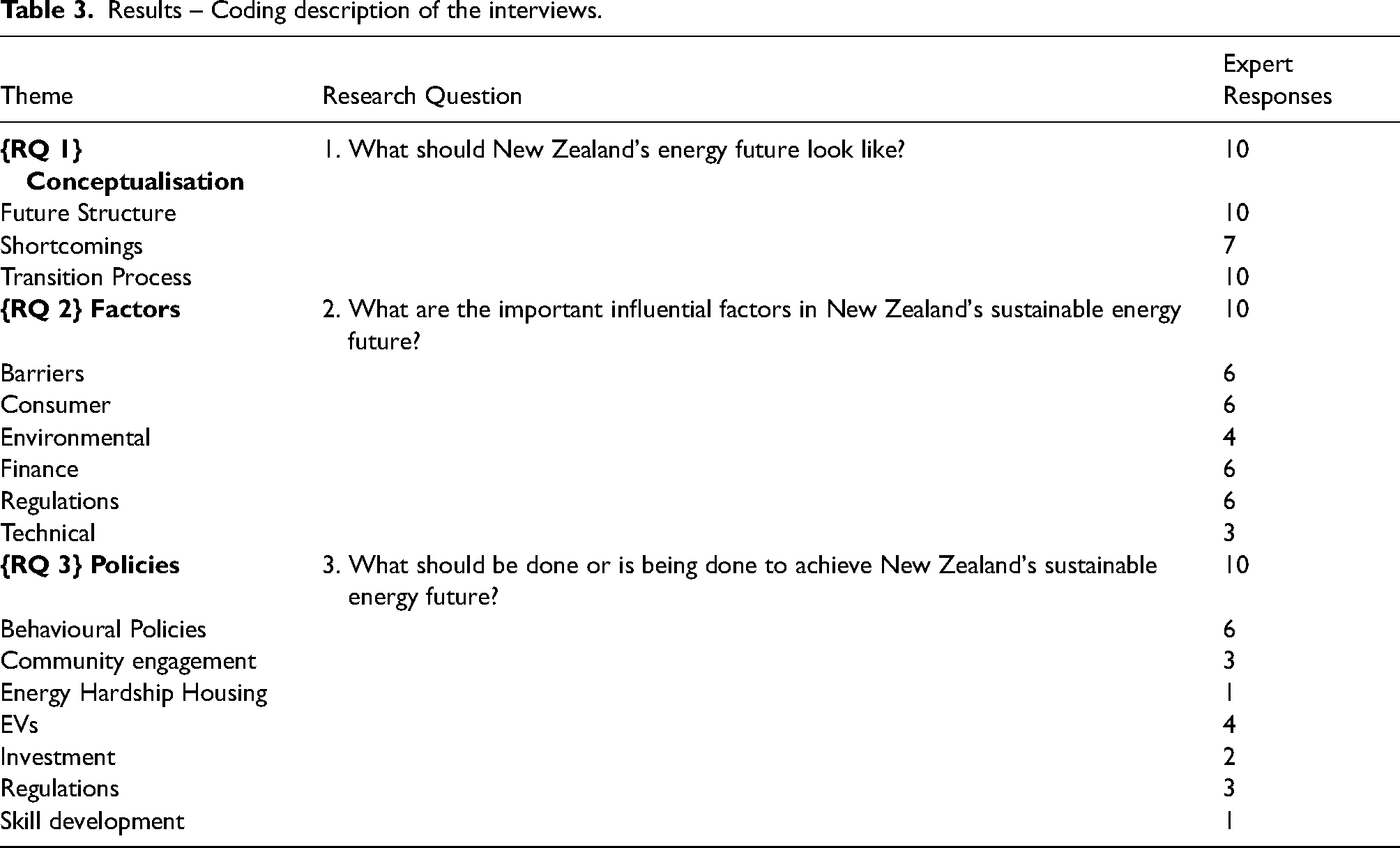
The initial reading identified 16 sub-themes for the major research themes. Each of these sub-themes was further analysed and a total number of 64 factors were identified. These factors included current policies in place, barriers to development and corrective measures as suggested by the experts.
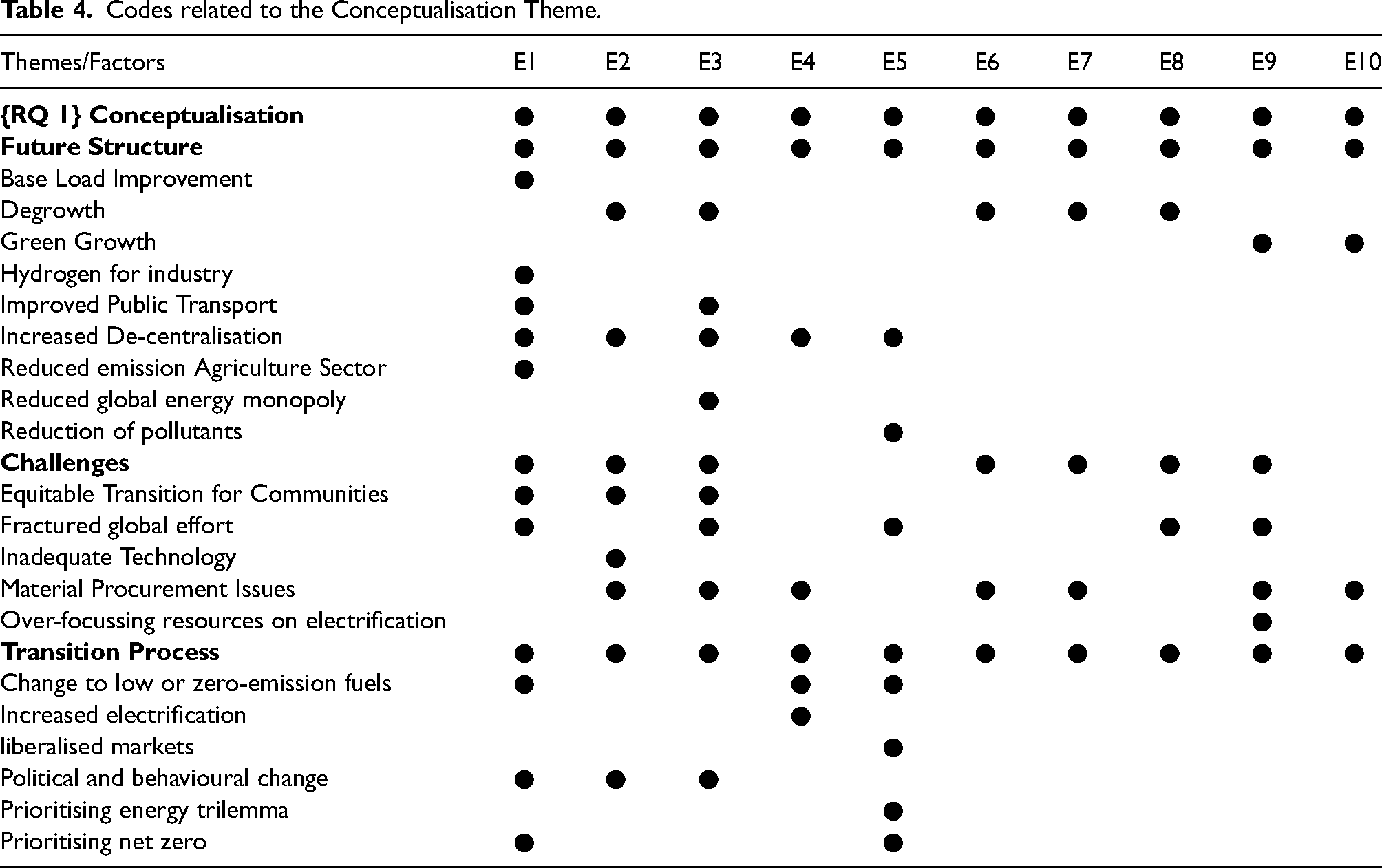
A multi-faceted nature tends to be the reality of the energy transition, with numerous actors directly or indirectly involved or influencing this transition. Table 4 illustrates the factors that were realised through the thematic analysis of the interview data and convergence in the experts’ responses. Under the research theme of “Conceptualisation”, three initial broad sub-themes were identified. These sub-themes address the dimensions of how the future structure should look, what could be the shortcomings of the transition, and what the transition process should be. The first column represents the number of experts who mentioned the factor and the references column represents the total number of times a particular factor was mentioned. After a detailed thematic analysis of the three sub-themes, a total number of 20 factors were identified.
Codes related to the Conceptualisation Theme.
Similarly, analysis of the interview data initially revealed 6 sub-themes as illustrated in Table 5. The data went through further iterations of reading and thematic analysis, which led to the identification of 25 influential factors broadly categorised under the initial themes. The expert convergence related to the factors has also been displayed in Table 5. The categorisation was based on the interpretation and analysis of the data by the authors and was not directly mentioned by the experts. This could result in certain factors appearing seemingly identical, although it is important to understand that the analysis was based on context and interpretation and not just description of the data. Another important factor in this case is that these factors are not mutually exclusive nor entirely unrelated.
Codes related to the second theme “Factors”.

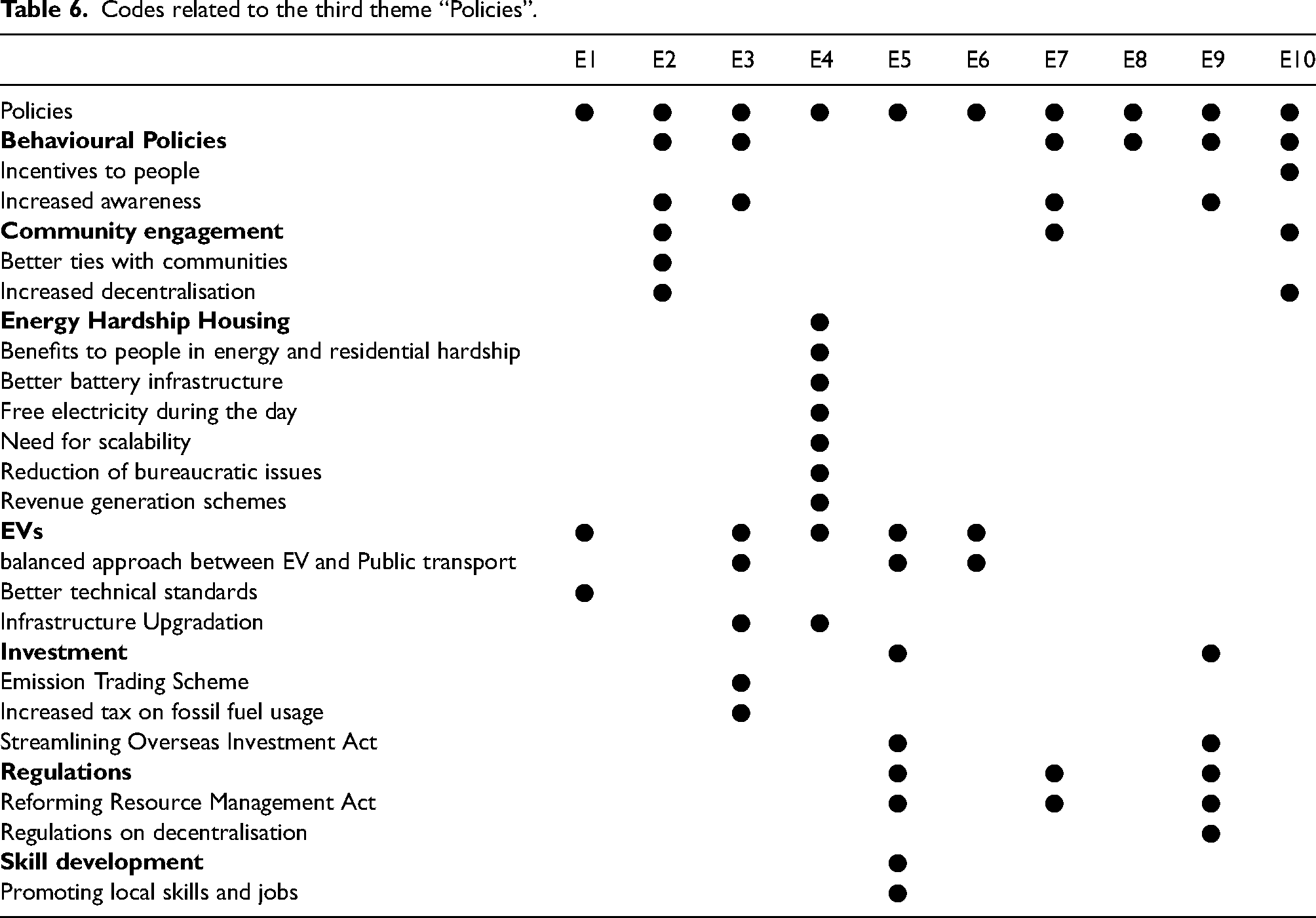
Further, analysis of the data led to seven sub-themes under the “Policies” theme (Table 6). When the data was put through further analysis and multiple rounds of coding, a total number of 19 factors were identified. The expert convergence related to the factors is illustrated in Table 6 as well. The identified factors were either associated with ongoing successful policies or were policy-based measures which could be used to improve the current system.
Codes related to the third theme “Policies”.
Discussion
Theme 1 - conceptualisation
The thematic analysis of the interview data revealed certain sub-themes that are in line with the ongoing debates and discussions in the field of sustainable energy. Under the research theme of “Conceptualisation”, three initial broad sub-themes were identified. These sub-themes reflect a broader recognition of the need for transformative change (illustrative responses are shown in italics).
Future structure
In analysing the convergence among the experts regarding the future structure of the energy sector, it became evident that concepts of degrowth and decentralisation resonated strongly with several of the interviewees. While providing a new outlook towards the future, the degrowth model appears to reflect a scepticism towards current energy-use lifestyles. “I think a big chunk of that transition is going to involve probably a bit of a grief, where we’re currently in denial, we’re going to get angry and then slowly we’re going to accept that there's a degrowth model here.”
Five of the experts also believed that renewable energy allows for more distributed generation supported by decentralising the energy system structure. Their responses suggested that increased decentralisation would mean greater power to the communities and further democratisation of energy. Factors such as improvement in the public transport system along with a reduction in energy monopolies, agricultural emissions and pollutants further strengthen the concept of degrowth and decentralisation. “The whole concept of the community energy is one that lots of M “My general vibe is that if we were to put all of our innovation into greening our current level of consumption, we might be able to maintain it. I think the general standard of living, that we have now, on average, could be sustainable.”
Challenges
Significant convergence was observed regarding material procurement issues. Seven experts referred to material procurement as a shortcoming both in terms of renewable energy development and sustenance. Constraints related to availability, unethical sourcing and potential mining impacts tended to be the most important issues. “A lot of people are worried about whether we have enough lithium or cadmium or cobalt, all these various things that we need for an energy transition”.
Similarly, fractured global efforts for transition were another factor, which was seen as a challenge for the energy transition by five experts. Focusing on a more community level, three experts emphasised on equitable transition of the communities. Shortcomings related to technological issues were also observed in terms of issues like inadequate technological advancement and overfocusing resources on electrification. Significant differences in financial resources and technological advancements between developed and developing economies, along with rapid industrialisation aspirations of developing countries, could potentially result in a slow and tedious energy transition.
Analysis of the data revealed that there tends to be a divide between the actual transition and an equitable transition for communities. This could be understood in terms of the need for extensive decentralisation as well. Debates on issues like building a social license for equitable change, gaining social acceptability of change, and doing it rapidly because of time constraints, have not been resolved yet. “How do you build a social license for the change? Because the risk is really big. How do you kind of build the case for change? How do you bring people with you?”
What could be understood here is that, while electrification does help in the reduction of emissions, there could potentially be more ways of using renewable energy in the total primary energy supply, which could include heating, cooling, and innovations in transport.
Transition process
Analysis of the data revealed that the focus of the change should be initiating political and behavioural changes with three experts agreeing on this matter. Initiating the transition process by changing to low or zero-emission fuels was agreed upon by three experts, and this view was further strengthened by two other experts recommending focusing on net zero as the first goal of transition. “It's also probably about significant political and behaviour change, which is probably the least discussed or understood part of it”.
“I would just say that what we're talking about is a transition to a much lower emissions energy system”.
In summary, it could be deciphered from the data that an ideal transition situation would involve change in the system and business-as-usual. While renewable energy resources could be limited by geography, an overall focus should be on achieving net zero first by using low-carbon fuels and increased electrification. This would allow us to maintain the energy trilemma. “It's really about changing the current energy sources that we have, that have been dominated by fossil fuels, particularly for the last couple of hundred years into energy that is renewable by which it pretty much means zero or low emissions”.
“I guess any new policy has to be seen to be palatable to the electorate, to the people, or it has to be sold on the basis that it's vital”.
Theme 2 - factors
The sub-themes under the theme “Factors” tend to get more specific than the larger holistic sub-themes of the “Conceptualisation” theme. It can be observed that sub-themes under this category are usually mentioned by one or two experts but on the other hand, the range of sub-themes under this category tends to increase due to the diversity of the opinions.
Barriers
Significant convergence was observed on the sub-theme of barrier identification, with six experts directly referring to factors that either are or could act as barriers to the energy transition in New Zealand. The barriers identified are mutually inclusive and correlated when observed under the broader perspectives of community and technology.
Issues like energy hardship for certain communities have impacted the trust between the communities and the bureaucracy negatively. The complexity of the energy system structure in New Zealand, combined with the limited awareness of the consumer, further expands the gap between the consumer and the system. “The barriers exist around trust, there is clearly a Te Tiriti M
On the technical side, it was noted that barriers such as infrastructural issues exist as reducing investment in fossil fuels would slow investment in their infrastructure, but this would automatically exclude vectors such as biogas and hydrogen that use similar infrastructure. In the same context, the influence of fossil fuel industries on politics cannot be ruled out. It could be understood from the data that New Zealand must still solve intermittency and storage issues. A much-discussed example of that would be the failure of the Lake Onslow project (Beehive, 2023). This does show a lack of foresight around where generation should be, which in an ideal case should be in the communities where they need it so that efficiency is not lost by utilising the national grid.
Perhaps more tellingly, it was noted that New Zealand's energy market needs to be reformed in terms of regulations to accommodate small and distributed retailers as the existing market processes and electricity authority are very conservative in this regard. Rules around allowing innovators access to the market to promote good competition and better prices with better outcomes should be the priority. “In terms of barriers, some of the other stuff that comes up quite a lot is market design and technical standards. So, if you're trying to do innovative things with solar energy, and putting energy back into the grid, there might not be a market seller energy into or the rules for connecting”.
One of the most important challenges for New Zealand is increasing the share of renewable energy and the supply of energy while not compromising on reliability and affordability. New Zealand aims to focus on direct electrification, and technologies such as green hydrogen and biomass (MBIE, 2023a). The New Zealand government's energy strategy, in agreement with the view of the experts regarding these issues, aims to address these challenges by building substantially more generation and transmission capabilities by 2050. This would ensure that the electricity system reduces its reliance on fossil fuels to manage times when enough renewable energy is not available during peak demand or with intermittent generation (MBIE, 2023a). Another important technical challenge that directly impacts renewable energy is the production of low-emissions steel from New Zealand iron sands, and the government is promoting green hydrogen for the direct reduction of the iron sands (Ministry for the Environment, 2022).
While technical challenges do pose a threat, there are various other challenges associated with renewable energy that the New Zealand government aims to address. These include challenges associated with funding and infrastructure challenges. Funding challenges were identified by the experts as well and in this regard, the Emissions Reduction Plan mentions various funding opportunities such as the Endeavour Fund, the Strategic Science Investment Fund, Te P
Consumer
The consumer is one of the most important players in the transition, if not the most important one, as six of the experts directly mentioned factors addressing consumer issues. It has been stressed that the transition process should be a process of evolving consumers while following their choices as well. “I think just the other one that's probably quite big is consumer choice and preferences”.
Disconnection between communities and policies has been a major issue as pointed out by two of the experts. Examples like not enough consideration of indigenous rights and consultations or the existence of communities in areas like Hokianga where 80% of the community is not connected to the grid illustrate that the view towards consumers tends to be limited and transactional only. “They don't trust the government and they don't trust the local network because the local network hasn't put any network into their system for the last 150 years. So, there's some pretty deep cultural issues there, trust issues and they're fair”.
It is paramount for the energy system to promote genuine acceptability and not just gain tribunal authorisation by appeasement. One of the ways this could be achieved is by increasing public knowledge and maturity in engagement with energy and public transport. “We need considerably increased knowledge, maturity of our society in terms of their engagement with energy”.
Environmental
Data revealed that renewable energy can never be assumed to be benign when it comes to environmental issues. Two major environmental concerns were interpreted from the interview data. One is centred around renewable energy equipment manufacturing and recycling while the other is based around the local ecosystem disruption due to renewable energy generation.
While appearing to be simple on the surface, renewable energy production has certain nuances that could be detrimental in the long term. Questionable labour conditions in some countries and the existence of coal power plants in such regions to support mining, processing, and renewable energy equipment production raises questions about the carbon and energy payback, and sustainability in general, of the components. “You read about …. something close to slave labour going on in some countries”.
Importing this equipment into New Zealand makes the whole process of transition further complicated. The lack of infrastructure to recycle renewable energy equipment is also a major long-term concern.
Considerable ecosystem disruption has been caused by hydroelectric projects that were built in the previous century. The legacy prevails with concerns about the social and economic costs of existing damming of the waterways, which the Onslow project brought to the fore. “It does involve in case of existing hydro, accepting that some pretty massive social costs and environmental costs were imposed”.
Another example that was raised is offshore wind projects and their coastal environmental issues that are still understudied, and communities tend to be deeply concerned about impacts on species like M “There's only probably two or three hundred of those dolphins left in the world. So, anything that's going to impact the breeding grounds and the feeding grounds for that dolphin, are immediately treated with high suspicion”.
Financial
Six experts referred to financial factors to be significant in New Zealand's energy transition. Being a small country with limited domestic financial capacity, it is believed that foreign financial investment is the most important aspect of financial factors in the energy transition for New Zealand. Government sources of funding projects have been limited as can be observed in the case of the solar programme for the M “And of course, the reason, I talk about business a lot is because ultimately I think what you need in place for an orderly transition is private investment”.
Regulations
The regulatory dimension highlights the importance of the government in the energy transition. The government's role becomes important as it can directly influence and improve factors such as building a suitable regulatory environment for the energy transition which allows fast-track building. “So, thinking about renewable energy in terms of solar farms and wind farms, there's a framing there around how do you enable a regulatory environment where that can get built quite quickly”. “Robust institutions, stable and predictable energy policy or climate policy and overall, just an enabling regulatory environment are required”. “I think there will need to be some sort of government support or policy interventions to make sure that the people that are renting, or as you say, in energy hardship, aren't left behind”.
Technical
Three important factors were highlighted in the analysis of the data associated with technical factors by three of the experts. It could be deciphered that the availability of renewable energy sources, both in terms of energy resources and equipment manufacturing resources, is a challenge. “I suppose that the first one that pops into my mind is the availability and the feasibility of renewable energy generation”. “I guess the other piece that we haven't talked about is the challenge of matching supply to demand in terms of time”.
In terms of addressing the technical challenges and knowledge development the New Zealand Government's research, science and innovation (RSI) system supports communities by providing grants. One such example is the Orion Energy Accelerator, which was a 2021 partnership between Canterbury electricity lines company Orion, the Ministry of Awesome – a startup support organisation, and Ara Ake (previously the National New Energy Development Centre)– an organisation dealing with future of energy development. This 10-week mentorship programme was open to individuals and startups, producing innovative ideas across the energy sectors including, but not limited to, smart grids, e-mobility and electric vehicles. This initiative provided collaborative opportunities to two start-ups working with Orion: one will save millions of dollars in network upgrades, and the other is a promising solution to energy poverty (Ministry for the Environment, 2022).
Furthermore, the New Zealand government aims to upgrade the transmission and distribution infrastructure. This includes the electricity authority looking at how to increase security and resilience in the electricity system and the commerce commission focusing on improving asset management practices for managing risk and resilience. The overall aim is to increase demand flexibility and increase distributed energy resources that will help manage electricity infrastructure risk and improve resilience. A few examples include rooftop solar photovoltaics, in-home batteries, small wind turbines, micro hydro systems, and demand response technology (Ministry for the Environment, 2022).
Theme 3- policies
Behavioural policies
Potentially viewed as one of the most important factors of the transition, behavioural policies were stressed throughout the data by six experts. The analysis revealed that the process related to change of behaviour should be a two-way process. “I just think there will be a premium for people who are flexible with their energy demands, a cost premium”.
“but ultimately, people are going to have to choose to give up some flexibility in exchange for hopefully some sort of dividend, price dividend”.
Community engagement
While behavioural policies work on an individual level, community-based engagement is equally necessary for larger changes. Increased decentralisation could play an important role in communities like those living in energy poverty in the Northland and Tair “Places like Northland and Tairawhiti, I think there's a really strong case for more decentralization”.
Better ties with the communities and community-based organisations will allow social upliftment and increased confidence in the communities. A well-structured decentralised system could allow the promotion of small home systems which could better control energy consumption and a secure energy future without dependence on fossil fuel-rich countries for energy supply. “So from a policy point of view, if you're just requiring them to do a really good job of asking their communities what they want, then those network organizations have to invest”
Energy hardship housing
One of the foremost goals of the transition should be addressing energy hardship and housing issues, although only 1 expert talked about this issue and its sub-factors. While there have been initiatives to address this problem, these initiatives could work effectively if barriers such as bureaucratic issues are removed. It is important to emphasise the scalability of the programme and add schemes that would allow revenue generation for the system. Consumers could be rewarded for their cooperation with a reward system and free electricity during the day, which is seen in the housing scheme of K “In an ideal world, I would like to put solar on like a third of our homes and then be producing Government or private? Now, when I say our homes, I mean a third of public homes and producing enough generation to almost subsidise the whole housing stock because then we would be producing probably about as much electricity as our customers are using”.
Electric vehicles
The data analysis revealed that there is considerable debate around the inflow of EVs into New Zealand. three out of five experts who talked about EVs as being part of the energy future stressed a balanced approach towards EVs. Incentives related to increased public transport use would allow a balanced approach to EVs increase which would lead to increased energy demand as well. “I think you have to provide a really good public transport system. I've given talks where I've said, imagine a future where the buses and the trains are just so frequent and so reliable, you wouldn't even think about owning a car and people just look at you in disbelief”.
“It's not just one silver bullet, It's a menu of solutions. So part of it will be behavioural, so switch people to public transport. Some of it will be a time of use, so making sure that the EV charging happens overnight”.
This perspective finds strong backing in New Zealand's emissions reduction plan which aims to expand electric vehicle accessibility, decarbonisation of heavy transport and promotion of walking, cycling and public transport (Ministry for the Environment, 2022). According to the Ministry of Business, innovation and Employment, the emission reduction plan aims for the increase of zero-emission vehicles to 30 per cent of light vehicles and reduce 35 per cent of emissions from freight transport by 2035. MBIE estimates the target to be around 1.5 million more EVs in the fleet by 2035. The New Zealand government invested $120 million in the upgradation of the EV infrastructure in the budget of 2023 for further certainty to people adopting EVs (MBIE, 2023a).
Investment
As already mentioned, investment tends to be one of the most important aspects of the transition if not the most. In the case of New Zealand, this becomes even more important due to limited local capital market potential. To counter this issue, removing barriers and streamlining the Overseas Investment Act could have a marked impact. “So like in terms of specific policy measures, liberalizing of our foreign investment program, of the markets. It's access to global capital markets”. “If you want to emit lots of greenhouse gases then you have to pay. for the privilege of doing that. Or you have to find offsets to compensate for those things. So yeah, the emissions trading scheme, I guess, is a main tool in the toolbox of how government might help businesses or persuade businesses or sectors of the economy to move in the right direction”.
This can be further enhanced by using a tax on fossil fuel usage, by making sectors pay more money for using inefficient internal combustion engines and that money could go for energy transition-based subsidies. “And I suppose at the other end of the scale, charging users for the use of fossil energy, you know, the so-called UTE tax, I guess, is an example of making people pay more if they're going to buy an inefficient… internal combustion engine vehicle and that money that goes from that can be used to subsidize electric vehicles”
Regulations
In terms of regulations, particular emphasis was laid upon reforming the Resource Management Act. Easier consenting for renewable energy development and fast-tracking projects are the aspects which are being redefined by the New Zealand Government. “In terms of other policy measures, there's a lot of focus at the moment, and I think rightly about resource management, consenting regulations in New Zealand, essentially, we need to streamline that so it's easier to get consented for renewable energy developments”.
“The Resource Management Act you hear a lot about it. There's a huge debate about whether the market is working or not”.
Skill development
Labour and skill are very important ingredients of a successful transition. “I guess just to give you one other example, which also comes to another ingredient that you need for a successful transition is labour and skills”.
“on the labour side, it's making sure that we're putting in place the foundations now where we're building the cohort of engineers, project managers, Geotech, all of that stuff so that we know we've got the people either coming up in New Zealand or where we're importing high-skilled people who can support that transition”.
Cross-referencing with IEA and IRENA transition frameworks
Cross-referencing the data from the thematic analysis of the expert interviews with globally recognised transition frameworks allows the enhancement and validation of the overall research approach. To do this, two internationally recognised transition frameworks were used: (1) the Clean Energy Transitions Programme (CETP) (International Energy Agency, 2022) and the Just and Inclusive Energy Transition Programme (JIET)(IRENA, 2021; IRENA and ILO, 2022). The reasons behind choosing these two programmes for comparison were that these programmes were developed by international energy organisations, IEA and IRENA, and these programmes focus on just energy transitions. Moreover, these programmes were actively involved in supporting transition movements across the globe in various countries by initiating programmes and advising governments. CETP has been actively engaging with countries like China, India, Brazil, Indonesia, and South Africa along with promoting multilateral coordination. JIET has been working on macroeconomic and social benefits like the promotion of energy jobs, improving local value creation and increased energy access, gender equality in the renewable energy sector, and promoting education and skills across the globe. Finally, the global frameworks and the interview-based analysed data shall be compared with New Zealand's very first Emission Reduction Plans that aim to proceed towards a productive, sustainable, and inclusive economy as illustrated in Table 7 (Ministry for the Environment 2022).
Comparison with global frameworks and emission reduction plan.

In terms of the comparison with the policy frameworks, the following approach was observed:
Five or more experts in agreement would be remarked as a strong convergence Two to five experts in agreement would be remarked as moderate convergence One to two experts in agreement would be remarked as weak convergence In case none of the experts mentions a certain policy, it would be remarked that the policy was not mentioned. Strength: Instances where the ERP aligns with both the transition frameworks and expert opinions represent strength. This indicates a robust foundation and support for the emission reduction plan. Weakness: Areas where there is a convergence between the transition frameworks and the expert opinions but no plans mentioned by the ERP. These discrepancies may signal gaps in the emission reduction plan. Opportunity: If the ERP coincides with the transition frameworks and receives either weak or moderate or even no convergence from the experts, it still represents an opportunity. This is because of the sample size of the experts, it could be possible that experts do not reach the same conclusion. These areas signify potential areas for enhancement. Threat: If in any case there exists no convergence between the experts and the transition frameworks and there exists no active plan in the ERP, this instance would be labelled as being a threat. This scenario represents a disconnect between identified priorities, and actual strategies and would potentially act as a hindrance for the ERP.
Since the study aims to provide policy insight into New Zealand's energy transition, the outcome is based on the comparison of the emission reduction plan and the international transition framework. The interview data acts more as a guide, giving the perspective of experts from the various fields associated with the energy sector. In analysing the emission reduction plan concerning transition frameworks and expert opinions, the outcomes have been categorised into four areas:
Conclusion
New Zealand puts forward a positive image with its aims toward a just energy transition. The major strength of New Zealand's current position is the share of renewable energy resources available at its disposal due to historical and geographic reasons. This is apparent in the country's electricity sector, which is centred around renewable energy sources such as hydropower, geothermal and wind.
Another strength is New Zealand's aim towards a just energy transition and not just replacing the fuel in use. The collected data and the comparison with global just energy transition frameworks and the emission reduction plan revealed possible opportunities for further improvements. The plans, as per the Emission Reduction Plan, are based on the reduction of energy consumption, decarbonisation of industries, increase in carbon offset by afforestation, increase in awareness and transition support for communities. All these and many other opportunities have been identified as potential game-changers for New Zealand's energy future.
However, weaknesses were also identified during the study which include inter-ministerial coordination issues, lesser emphasis on off-grid energy access to communities and regional economic development to attract investments, methane emission mitigation and overreliance on a subsidy-based market design.
Looking to the future, policymakers need to decide whether New Zealand would aim for continuous economic growth while maintaining the aim for a just transition or an overall reduction in energy consumption using appropriate measures while enhancing the overall position in terms of energy hardship and community development.
Supplemental Material
sj-docx-1-ren-10.1177_27533735241266300 - Supplemental material for Policy insights into Aotearoa New Zealand's energy transition
Supplemental material, sj-docx-1-ren-10.1177_27533735241266300 for Policy insights into Aotearoa New Zealand's energy transition by Zuhaib Tayar Mirza, Timothy Anderson, Alan Brent, and Jeff Seadon in Renewable Energies
Footnotes
Declaration of conflicting interests
The authors declared no potential conflicts of interest with respect to the research, authorship, and/or publication of this article.
Funding
The author(s) disclosed receipt of the following financial support for the research, authorship, and/or publication of this article: The research was supported by the Chair in Sustainable Energy Systems in the Wellington Faculty of Engineering and the Doctoral Scholarship programme of Te Herenga Waka Victoria University of Wellington.
Supplemental material
Supplemental material for this article is available online.
Author biographies
References
Supplementary Material
Please find the following supplemental material available below.
For Open Access articles published under a Creative Commons License, all supplemental material carries the same license as the article it is associated with.
For non-Open Access articles published, all supplemental material carries a non-exclusive license, and permission requests for re-use of supplemental material or any part of supplemental material shall be sent directly to the copyright owner as specified in the copyright notice associated with the article.
