




Abstract
A potential solution to Zimbabwe's energy issues could be harnessed from the country's growing interest in renewable energy systems (RES) for use in industry. Energy security, reduced reliance on fossil fuels, and promotion of sustainable industrial growth could be achieved by tapping into the nation's abundant renewable resources, which include hydroelectric power, solar power, and wind power, among others. Potential benefits to the environment, grid reliability, and energy costs could accrue from the incorporation of RES. However, challenges like upfront costs, power grid integration issues, and the need for supportive legislation should be addressed. The use of RES could provide Zimbabwe with a future energy that is safer, more sustainable, and more cost-effective. Owing to the dearth of studies considering RES integration across the different sectors in Zimbabwe, hence, this presents the status and energy policy evolutions, a concise strength, weaknesses, opportunities and threats (SWOT) framework with outstanding challenges, and proposed solutions for sustainable energy development in Zimbabwe.
Keywords
Introduction
Like many countries across the globe, Zimbabwe faces significant challenges in meeting its energy demands while simultaneously striving for sustainability and economic growth (Chipango, 2021). The generation of electricity from conventional energy sources, for example, the use of coal at Hwange Power Station, one of the largest power stations in the country, remains the primary source of energy in the country; however, the country also relies on hydropower production from Kariba Power Station, which is one of the oldest power providers in the country and is no longer efficient. As conventional energy sources are becoming increasingly scarce and environmentally damaging, there is a growing need to adopt renewable energy systems (RES) to address these issues. Consequently, energy issues in Zimbabwe affect the economy, production, and other sectors, as energy contributes highly to the economic advancement of most southern African countries (Hlongwane and Daw, 2023; Kumba et al., 2023; Nyasha, 2024).
The nation's energy sector is characterised by a mix of conventional and renewable sources, with conventional sources dominating the energy supply (Chiwaridzo, 2023); however, the reliance on conventional power sources, such as coal are highest, posing significant challenges to meeting the country's energy demands, given the increasing retirement of coal mines due to the age, and the need for abating the environmental and public health consequences.
Zimbabwe's primary issue in its energy sector's inadequate and aging infrastructure continues to be a challenge. There are about four coal-powered thermal stations in the country, namely Munyati Power Station, Harare Power Station, Bulawayo Power Station, and Hwange Power Station, which have operated since the country gained independence approximately 50 years ago (Government of Zimbabwe, 2019). However, the electricity production capacity at power stations like Bulawayo, Munyati, and Harare is facing a notable deficit due to outdated infrastructure, leading to frequent breakdowns and regular maintenance of the stations, hence reducing optimal and continuous operations.
The ageing infrastructure of power stations in Bulawayo, Munyati, and Harare had become a pressing issue for the country, contributing to a substantial shortfall in electricity production (Kaseke, 2012) and impeding economic growth. In working towards attaining high economic growth rates, Zimbabwe aims to reach upper-middle-income status by 2030 (Government of Zimbabwe, 2019). However, this objective cannot be achieved without stable, modern, or dependable energy.
Zimbabwe Electricity Supply Authority (ZESA), the state-owned and main national power utility company, has failed to meet electricity demand owing to ageing coal-fired power plants experiencing frequent breakdowns and less efficiency. This chronic energy deficit has stimulated the government to focus on renewable energy sources. ZESA has been actively promoting renewable energy projects and integrating renewable energy sources into the national grid to diversify the energy mix and enhance energy security in the country. Various studies have highlighted the potential of renewable energy sources such as solar and wind to address energy security in Zimbabwe (Kaseke, 2012; Makonese, 2016).
The country continues to grapple with significant power shortages, as evidenced by the disparity between the available generation capacity of 1585 MW and peak demand of over 2500 MW, leading to power outages (Mushosho and Qutieshat, 2024). Consequently, the electricity shortage has a notable adverse effect on Zimbabwe's industrial sectors, leading to increased expenses for the nation's economy (Kaseke, 2012).
According to the World Bank (World-Bank, 2024), power shortages are estimated to result in significant economic losses for the country, 6.1% of GDP annually. The economic strain imposed by electricity shortages, especially in the industrial sector, has been evident through a reduction in current operations. These effects cause decreased economic growth and household incomes.
With Zimbabwe's energy demand reaching about 2500 MW while the production capacity is still limited to less than 1500 MW, there is a need for more energy initiatives beyond the current enacted policies in the country to curb the problem of energy demand.
The current situation necessitates a paradigm shift towards a more sustainable and secure energy future (Twidell, 2021). RES offer a compelling solution, harnessing Zimbabwe's abundant natural resources like solar radiation, hydropower potential, and wind currents. Integrating these technologies, which offer a sustainable and environmentally friendly alternative to conventional energy sources, into industrial operations can provide numerous benefits and opportunities to address these challenges and promote sustainable industrial growth.
A considerable body of literature on integrating RES in Zimbabwe exists, and this has emerged as a pivotal solution to mitigate the challenges associated with conventional energy sources (Maronga et al., 2021). According to Garfias Royo et al. (Garfias Royo et al., 2022), linking with sustainable development, they state that renewable energy technologies offer a sustainable and environment-friendly alternative to fossil fuels, promising greater energy security, reduced greenhouse gas emissions, and enhanced energy resilience. Moreover, integrating RES into the Zimbabwean industry holds the potential to bolster energy management practices and improve overall energy efficiency. Additionally, it is also important to analyse factors that influence the adoption of these technologies.
Integrating renewable energy systems in the Zimbabwean industry offers a promising pathway towards achieving energy security, reducing carbon emissions, and promoting sustainable industrial development. By overcoming the existing barriers and leveraging the country's renewable energy potential, Zimbabwe can pave the way for a more resilient and sustainable future.
In this work, the exploration of the potential of sustainable energy systems to solve Zimbabwe's energy challenges is discussed across other sectors. By harnessing Zimbabwe's abundant renewable resources, such as hydroelectric, solar, and wind power, an opportunity exists to enhance energy security, reduce reliance on fossil fuels, and promote sustainable industrial growth. This paper delves into the potential of RES integration in the Zimbabwean industry. By exploring the available renewable resources, assessing the technical and economic feasibility of different RES technologies, and examining successful case studies, this study provides a comprehensive framework for the different sectors to consider when transitioning towards a more sustainable and secure energy future.
The study is structured into six sections, which are as follows, introduction; sustainable energy markets in Zimbabwe; energy policies and supporting programs for renewable energy in Zimbabwe; renewable energy technologies projects and investment opportunities in Zimbabwe; challenges and solutions for renewable energy integration in Zimbabwe's industrial sectors with a SWOT evaluation; and conclusion.
Sustainable energy market in Zimbabwe
The sustainable energy market in Zimbabwe has witnessed notable developments in recent years, driven by various factors, including government initiatives, private sector investments, and increasing awareness of the benefits of renewable energy (Moyo, 2014). Zimbabwe's total energy supply encompasses all energy generated or imported, excluding any energy that is exported or stored. Biofuels and waste constitute the predominant energy sources, accounting for 71% of the total energy supply, as in Figure 1(a) and (b), for total energy supply and domestic energy production, respectively. Domestic energy production includes fossil fuels, nuclear fission, and renewable energy sources like hydro, wind, and solar photovoltaic systems. In meeting demand and finding a balance between the total energy supply and domestic production, Figure 1(c) highlights the export-import energy dynamics of Zimbabwe, with imports consistently outperforming exports.

Evolution of the energy mix and CO2 emissions in Zimbabwe.
The evolution of the electricity generation in Figure 1(d), as previously mentioned in section 1, shows hydropower taking the highest share while the total final consumption is shown in Figure 1(e), which encompasses the energy consumed by end users for a range of functions, including residential heating and cooling, lighting, running gadgets and appliances, as well as powering cars, equipment, and industries. The residential sector constituted 75% of the total energy demand in 2021. The allocation of energy demand among various sectors within a nation can greatly impact its energy needs and the specific energy sources it relies on to meet those needs.
As in Figure 1(f), the primary origin of CO2 emissions is largely due to the very high energy intensity of coal employed for electricity production and heating. Coal, being the main source of CO2 emissions in Zimbabwe, accounts for 57% of all emissions produced by burning fuels. Zimbabwe mostly relies on hydroelectric, coal, and solar power for electricity generation. In 2021, hydropower constituted 70% of the overall electricity production but with one of the least energy intensities.
As can be seen from Figure 1, Zimbabwe is actively giving higher importance to renewable energy sources to reduce CO2 emissions and lessen dependence on imported fossil fuels. Renewable energy sources are employed to generate electricity, supply heat to residential and commercial buildings, and decrease carbon emissions in specific parts of the transportation sector. Biomass-derived biofuels and residual materials offer ecological and climatic advantages compared to the burning of fossil fuels.
The utilisation of traditional biomass for heating and cooking remains prevalent in Zimbabwe's energy mix and is being given high priority for achieving clean cooking, sustainable energy development and climate goals, including the IEA's Net Zero scenario.
The oil supply in Zimbabwe plays a pivotal part in its energy consumption and exerts a significant influence on the climate, given that oil is accountable for the second-greatest volume of CO2 emissions globally. Efforts are currently underway to eradicate carbon emissions from various industries, including transportation. Nevertheless, accomplishing this goal is especially challenging in Zimbabwean industries such as aviation, where alternative energy sources are incapable of matching the substantial energy capacity offered by imported petroleum fuels. Zimbabwe's coal supply significantly contributes to its energy provision, accounting for 12.9% of the total energy supply in 2021. Coal is a widely exchanged fossil fuel, and its burning is accountable for many global CO2 emissions.
Figure 2 shows Zimbabwe's position in both African and global ranking across different indicators. On average, Zimbabwe's ranking is fairly good in terms of emissions from the different energy technologies, which may have been a result of a corresponding performance in total energy consumption and electricity production.
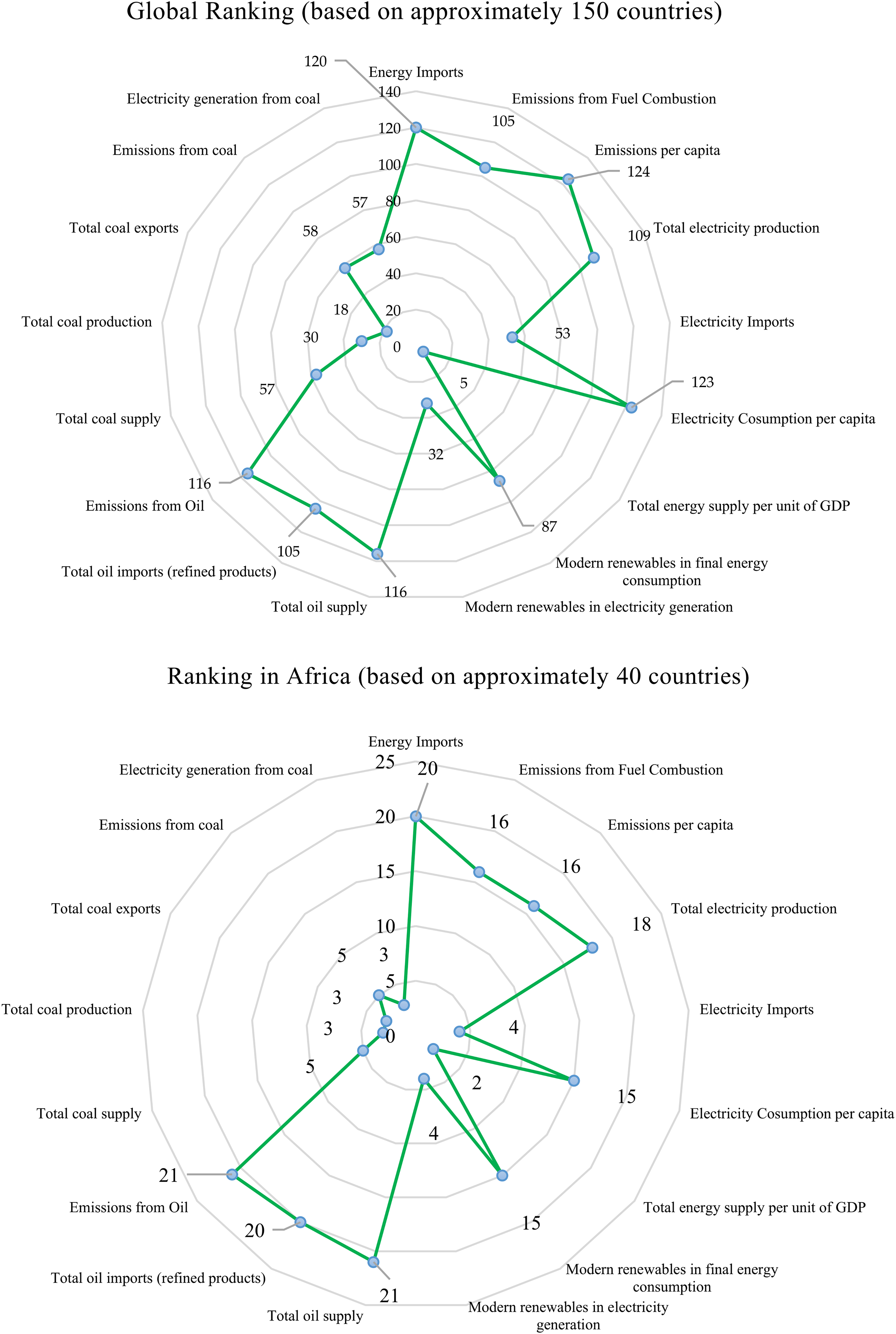
Performance of Zimbabwe across different indicators at the regional and global levels. Data from IEA (IEA, 2021).
In terms of coal production, Zimbabwe shows a high ranking of 3 in Africa and 30 globally, with a corresponding high ranking in coal exportation, implying less utilisation of conventional fuels within the country. At the same time, the modern renewables used in each electricity generation show a good ranking performance of the fourth position in Africa, and thirty-second globally.
The renewable energy market in Zimbabwe is a topic of growing interest, with a focus on the development and utilisation of renewable energy technologies to curb the country's energy crisis. The government of Zimbabwe has put down various initiatives to promote renewable energy technologies, such as the Rural Sustainable Energy Development Projects, which aim to improve health, education, production, business, livelihoods, and the overall quality of life. A recent article by Mushosho et al. (Mushosho and Qutieshat, 2024) provides a comprehensive review of the country's energy policies regarding adopting renewable energy. The findings of the research stress that there is a need for a conducive environment that enables the growth of renewable energy. Moreover, limited funding, technical support, poor administration, and a lack of knowledge also hinder the penetration of renewable energy in Zimbabwe.
According to Mbohwa and Siso (2009), renewable energy is crucial in Zimbabwe's electricity industry, offering cost-competitive alternatives to conventional sources with untapped potential for industrial applications despite existing barriers. The current energy situation in the Zimbabwean economy is unfavourable, especially in the mining industry, since all mining companies require stable and reliable power for their operations. However, several mining organisations in Southern Africa have agreed that there is a need to improve efficiency and reduce reliance on coal electricity; hence, there is a need to incorporate renewable energy from coal (Maronga et al., 2021).
The renewable energy market in the Zimbabwean industry is experiencing a gradual but noticeable transformation driven by a combination of factors, including technological advancements, changing market dynamics, and increasing environmental awareness (Nyasha, 2024). Industries across various sectors, including manufacturing, agriculture, mining, and commercial enterprises, increasingly recognise the potential benefits of integrating renewable energy systems into their operations. Department of Energy stated that policy options and instruments are being explored to promote the cost-competitive nature of renewable energy technologies in various applications within the country. Despite these challenges, there is potential for a country to increase its utilisation of renewable energy resources, mainly through implementing hybrid PV and wind systems (Kaygusuz, 2012).
Developing renewable energy technologies, such as solar, wind, and battery storage, is crucial for addressing energy shortages in the country, reducing greenhouse gas emissions, and promoting sustainable development in Zimbabwe by accessing modern energy. The growing adoption of solar photovoltaic (PV) systems is a notable trend in the renewable energy market in the Zimbabwean industry. Industries leverage solar energy to power their operations, reduce reliance on the national grid, and mitigate the impacts of frequent power outages. Manufacturing companies install rooftop solar panels to generate electricity for their production processes, while mining operations use solar PV systems to power their remote facilities and reduce diesel consumption owing to load shedding.
However, a study by Nkomo J. and Goldstein H. (Nkomo and Goldstein, 2006) counterargues that reducing imported liquid fuel and promoting coal resources in Zimbabwean mining and manufacturing can enhance energy efficiency and resource allocation while reducing environmental damage. Therefore, with supportive policies, incentives for renewable energy investments, and increased collaboration between government, private sector, and development partners, the renewable energy market in Zimbabwean industries is poised for further growth and expansion. By embracing renewable energy solutions, industries can enhance their energy resilience, reduce operational costs, and contribute to sustainable development goals.
The Zimbabwe Energy Regulatory Authority (ZERA) recognises the significance of renewable energy resources in ensuring sustainable growth and has prioritised promoting their use. To this end, ZERA is committed to increasing investment and adoption of renewable energy technologies, including solar photovoltaic, biomass, geothermal, small and large hydropower plants, and wind energy. ZERA believes renewable energy would be vital in achieving universal access to modern energy by 2030, as outlined in the country's energy policy.
The different energy technologies utilised across the major companies (based on Zimbabwean stock market capital) are presented in Table 1.
Major Zimbabwean industrial businesses and their utilisation of RE technology.

Source. Authors' elaboration.
Most of the companies, as in Table 1, utilise energy from the national grid in running their operations; hence, energy independence by these companies is highly desirable, and it, should come from renewable energy.
The distribution of renewable energy capacity in Zimbabwe for the year 2022, as reported by the International Renewable Energy Agency (IRENA) (IRENA, 2023), highlights a significant reliance on hydroelectric power, which accounts for 89% of the country's renewable energy capacity, as shown in the chart in Figure 3.

Share of renewable energy mix in Zimbabwe (2022). Data Source, IRENA (IRENA, 2023).
The dominance of hydroelectric power is primarily attributed to Zimbabwe's abundant water resources, which have been harnessed through the construction of large-scale hydroelectric dams such as the Kariba Dam and smaller hydropower projects across the country. Kariba Dam continues to provide water from the Zambezi River to power the Kariba Hydro Power Station, one of the oldest power stations in Zimbabwe, built-in 1959. Hydroelectric power is crucial in meeting Zimbabwe's electricity demand by providing a reliable and relatively inexpensive energy source.
Bioenergy, including biogas and biofuels, accounts for 3% of Zimbabwe's renewable energy capacity as of 2022. Biomass energy sources such as crop residues, wood waste, and animal manure are widely used for cooking, heating, and small-scale electricity generation in rural parts of the nation. Biogas digesters are also utilised for household energy needs and agricultural, school, and industrial applications. While bioenergy contributes significantly to meeting energy needs in rural areas, its utilisation in industrial and commercial sectors remains relatively limited.
Despite the country's abundant solar resources, solar energy, which recently has seen an increasing adoption, as shown in Figure 4, represents only 8% of Zimbabwe's renewable energy capacity. Solar power has enormous potential to diversify Zimbabwe's energy mix and provide decentralised electricity solutions, particularly in remote and off-grid areas. However, barriers such as high upfront costs, limited access to financing, and inadequate infrastructure have hindered the widespread adoption of solar energy technologies in Zimbabwe.

Evolution of electricity generation by sources from hydropower (non-combustible), biofuels and waste in Zimbabwe. Data Source: IEA (IEA, 2021).
The renewable energy market in Zimbabwe holds immense potential for driving sustainable development, enhancing energy security, and mitigating the impact of climate change. Despite facing challenges and underutilisation of capacity (highlighted in Figure 5), the country has made significant strides in harnessing its renewable energy resources, mainly hydroelectric power. However, there is still a need for concerted efforts from the government, the private sector, and development partners to promote the uptake of other renewable energy sources, such as solar and bioenergy. In the next section, current and planned energy policies are discussed.
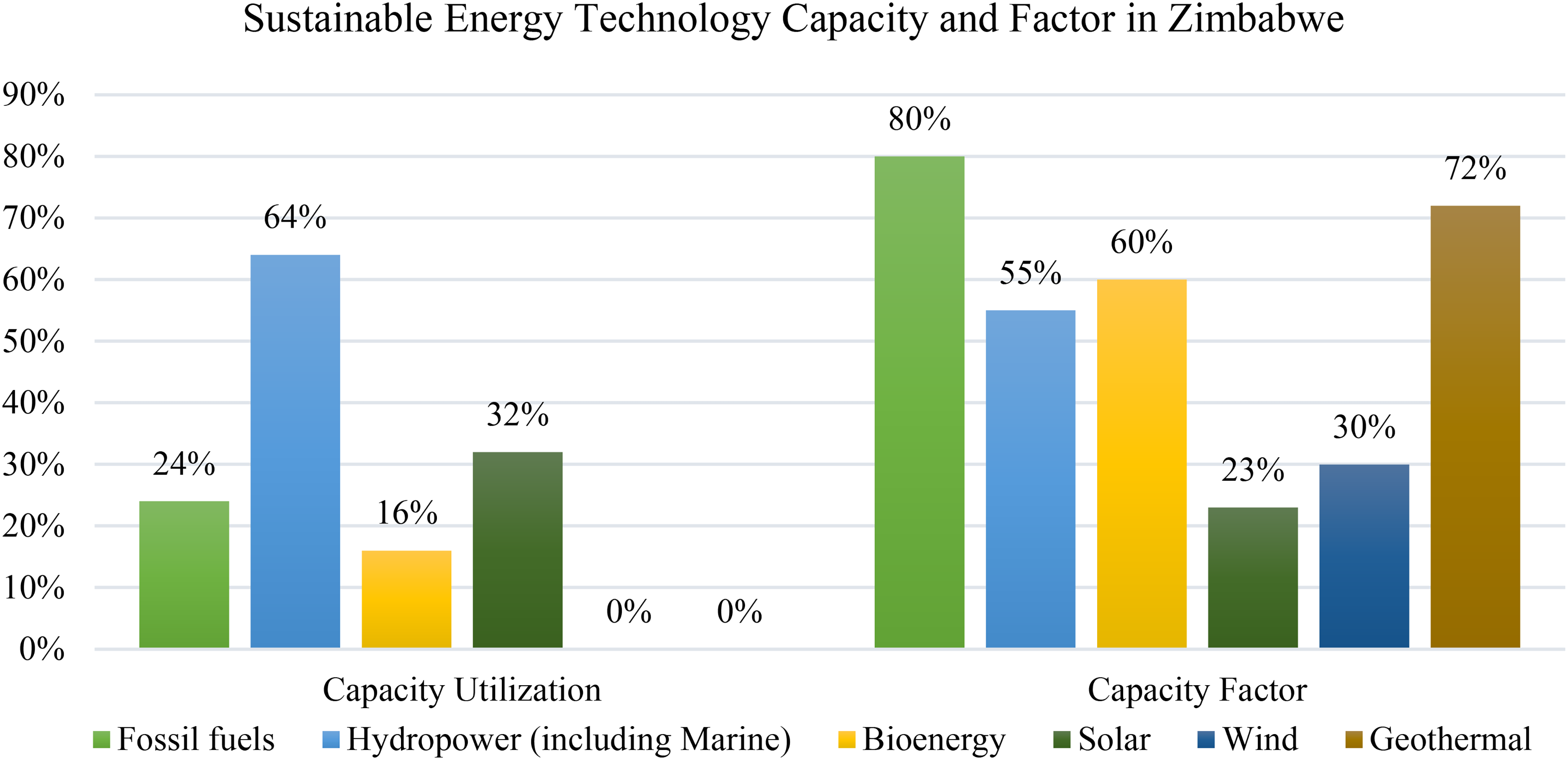
Underutilisation of sustainable energy capacity (2021) and factor in Zimbabwe. Data Source: Capacity Utilisation, IRENA (IRENA, 2023), and Capacity Factor, Zimbabwe's NREP (Mutume, 2023).
Energy policies and supporting programs for renewable energy in Zimbabwe
Adopting renewable energy technologies in Zimbabwe represents a critical step towards addressing the country's energy challenges while fostering sustainable development. Mbohwa (Mbohwa and Siso, 2009) highlighted the country's abundant renewable energy sources and the potential of RETs to alleviate energy shortages. Several research studies have explored the potential and challenges of Zimbabwe's renewable energy technologies (RETs) (Maramura et al., May 2020; Twidell, 2021). With an increasing demand for energy and concerns over the reliability of conventional energy sources, Zimbabwe has embraced various renewable energy solutions to diversify its energy mix and enhance energy security.
Energy plays a significant role in Zimbabwe's economic and social development (Hosier, 1988). Zimbabwe's energy policy shows a strong commitment to renewable energy. Achieving the ambitious targets would require a concerted effort from the government, private sector, and international actors. Overcoming implementation challenges and attracting investment are crucial for a sustainable energy future in Zimbabwe. To address this, the government has implemented various policies, with a recent focus on renewable energy sources. Table 2 summarises key aspects of Zimbabwe's energy policy landscape, from legislation to programs in support of high-share renewable energies.
Energy policies, legislation, and programs with support for renewables in Zimbabwe.

The National Renewable Energy Program (NREP), established from the framework in the National Energy Policy (NEP) of 2012, aims to meet the country's energy demand using sustainable and renewable resources, hence providing a comprehensive framework for optimal energy supply and use to ensure access to modern energy services for socio-economic development (Government of Zimbabwe, 2019).
The renewable energy targets set by Zimbabwe in the NREP for 2030 outline the country's aspirations to diversify its energy mix, enhance energy security, and reduce greenhouse gas emissions, as presented below. Overall, these renewable energy targets underscore Zimbabwe's vision for a sustainable energy future driven by a mix of hydroelectric, solar, wind, biomass, and other renewable energy technologies. Achieving these targets would require concerted efforts from policymakers, investors, and stakeholders to overcome challenges and capitalise on the country's renewable energy potential. Grid-connected Renewable energy targets are shown in the Figure 6 (Mutume, 2023).

Evolution of RE in the Zimbabwean national mix. Data Source, Zimbabwe's NREP (IRENA, 2023).
In the next section, current and potential renewable energy, storage, and transportation electrification projects are presented and discussed.
Renewable energy technologies projects and investment opportunities in Zimbabwe
The case studies of renewable energy projects and technologies in Zimbabwe showcasing both examples and proposals of how these technologies have been implemented, as well as the promising value across different sectors to positively impact energy access, environmental sustainability, and economic development, are discussed subsequently.
Hydro power projects
Kariba power station
The Kariba dam is one of the largest artificial dams in the world and is in the southern hemisphere between Zimbabwe and Zambia. It was constructed along the Zambezi River for hydroelectric power generation for Zambia and Zimbabwe. Kariba Power Station is a prominent symbol of Zimbabwe's energy landscape, representing the country's reliance on hydroelectric power. For decades, electricity in Zimbabwe has been produced from hydropower, with Kariba Power Station known as the country's most significant contributor to power, producing close to 600 MW under normal operations. The Power Station has long been a cornerstone of Zimbabwe's electricity generation, providing a significant portion of the country's power supply as it is owned and operated by the state-owned Zimbabwe Power Company (ZPC). The Kariba plant facility initially comprises an underground powerhouse with six vertical shaft turbine units. At the time of commissioning in 1959 and 1962, each unit had a rated capacity of 111 MW, which was later upgraded to 125 MW. The Kariba power station's electricity is fed into Zimbabwe's national grid via a 330 kV switching station by ZESA.
Research by Shafiullah et al. (2021) stresses that it is evident that Zimbabwe's major dams have a significant hydropower potential. However, hydropower production in Zimbabwe faces challenges due to environmental concerns, erratic rainfall patterns impacting water levels, the need for sustainable operation, and the ageing infrastructure of hydropower stations, coupled with changing environmental conditions such as drought and hydrological patterns, which has posed significant challenges to its operations and reliability. A study by Shumba et al. (2018) noted that hydropower production in Zimbabwe is affected by water level fluctuations due to factors such as rainfall patterns and land use changes, which affect the electricity generation capacity at Kariba Dam. Therefore, upgrading infrastructure, enhancing climate resilience, and diversifying energy sources are crucial to ensure station reliability and sustainability. Additionally, implementing water management strategies, fostering stakeholder collaboration, and investing in research and innovation would play pivotal roles in optimising operations and mitigating environmental impact.
Kupinga hydropower station
The Kupinga Hydropower Station is a testament to Zimbabwe's renewable energy ambitions, nestled amidst the scenic landscapes of the country's rural regions. Located along the Kupinga River, this hydroelectric facility harnesses the natural flow of water to generate clean, sustainable electricity for local communities and industries. The power station provides a third of the power to Chipinge, a small town in southern Zimbabwe. It comes at a time when the government is intensifying efforts to boost electricity generation, provide access to reliable power throughout the country, and unlock opportunities for rural communities through job creation and the empowerment of local people. Kupinga Renewable Energy has a capacity of 1.6 MW and was commissioned in September 2017. Despite its small scale, the station's significance lies in demonstrating the potential for decentralised hydroelectric power to support Zimbabwe's energy transition towards a more resilient and sustainable future.
Hauna hydroelectric power station
The Hauna hydroelectric power station, located at the heart of Zimbabwe's Eastern Highlands, symbolises the nation's commitment to harnessing its natural resources for sustainable energy generation. Situated along the Pungwe River, this hydroelectric facility harnesses flowing water to produce clean and renewable electricity. The installed capacity of 2.3 MW and its relatively small capacity, the Hauna Hydroelectric Power Station, play a crucial role in enhancing energy access and reliability, particularly in rural areas with limited grid connectivity. The station's contribution to Zimbabwe's energy mix underscores the importance of decentralised energy solutions in driving socio-economic development and promoting environmental sustainability.
Several micro-hydropower projects were developed in Zimbabwe to harness the energy potential of small rivers and streams. These projects, often initiated by community-based organisations and supported by non-governmental organisations and development agencies, provide clean and renewable electricity to rural communities for domestic and productive use. Examples include the Mvurwi and Pungwe micro-hydropower projects, which have helped improve livelihoods and promote sustainable development in rural areas.
Biomass and solar PV
Biomass
An analysis of the potential generation of electrical power from biogas in Zimbabwe to complement grid power was performed (Mutate et al., 2023). This study aimed to determine the current production of biogas in a country that can be used to generate electricity. The results of this study would help engineers and potential investors realise the feasibility of biogas technology, which is harnessed by industrialised countries such as Germany and China. The sugar industry in Zimbabwe has been exploring biomass as a renewable energy source. Companies such as Tongaat Hulett Zimbabwe, which operates sugar mills in the country, have implemented biomass cogeneration projects to generate electricity from sugarcane bagasse, a by-product of sugar production. With the use of biomass energy for process heating and power generation, the sugar industry can reduce its reliance on grid electricity and contribute to sustainable energy production.
Solar PV
Several studies have been conducted to increase Zimbabwe's share of renewable energy or meet grid-connected renewable energy targets (Twidell, 2021). Notwithstanding, solar PV uptake is still small in the country, but some gradual changes have been made in recent years.
The first example is the Riverside Solar Power Station, which illuminates Zimbabwe's path toward a sustainable and prosperous future powered by the sun. The Riverside Solar Power Station occupies 40 hectares outside Mutoko, Zimbabwe. The first development stage was installing a 2.5 MW capacity on one-quarter of the available land. This was completed in 2018. This solar PV power station was the first purpose of building a grid-tied solar PV power station in Zimbabwe. It is based in Mutoko, following a collaboration between ZESA and the government.
Another example is the Gwanda Solar Project in Matebeleland, Zimbabwe. Gwanda Solar PV Park is a ground-mounted solar project. Project construction is expected to commence by 2024. Subsequently, it would enter commercial operations by 2026. The power generated from the project would be sold to Zimbabwe Electricity Transmission & Distribution under a power purchase agreement.
Multiple companies in Zimbabwe intend to install solar panels to support their operations as they are frequently compelled to use backup diesel generators for over 12 h. Tanganda Tea Company, located in the Chipinge district of eastern Zimbabwe, has installed nearly 4.6 MW of solar panels to power their factories on their agricultural estates. Mining companies are also in the run to install their solar systems as the power problem is increasing daily. Companies like ZIMPLATS are the leading mining companies in Zimbabwe, specialising in platinum group metals such as platinum, palladium, rhodium, iridium, ruthenium, and osmium. It has already invested in a 185-MW solar power plant to power its mining operations and support the United Nations’ sustainable development goals. Other retailing companies like Pick n Pay, OK, and SPAR have done the feasibility of using solar power as it is being used in South Africa.
In the rural and off-grid areas of Zimbabwe, decentralised solar energy solutions provide access to electricity to communities that are not connected to the national grid. Organisations like Practical Action and Oxfam have implemented off-grid solar projects to electrify schools, health clinics, and households in partnership with local communities and international donors. These projects typically involve installing solar panels, batteries, and energy-efficient appliances, enabling communities to meet their energy requirements for lighting, communication, and productive use.
These case studies demonstrate the diverse applications of renewable energy technologies in Zimbabwe, spanning utility-scale solar power plants, industrial biomass cogeneration, off-grid solar solutions for rural electrification, and micro-hydropower projects for community development. Case studies of renewable energy projects in Zimbabwe underscore the country's strides towards a sustainable energy future. From the hydroelectric power of Kariba to decentralised solar solutions in rural areas and ambitious solar projects such as Gwanda, these initiatives showcase Zimbabwe's commitment to harness its abundant renewable resources. While challenges remain in financing, policy support, and technical capacity, these examples highlight a country's progress in embracing renewable energy as a critical driver of sustainable development.
Transportation electrification with E-mobility aid
The feasibility of constructing a biogas-powered electric vehicle (EV) charging system in Zimbabwe can be explored. Biogas, a renewable fuel derived from organic waste, is a sustainable solution for EVs and reducing reliance on fossil fuels. The framework for the EV-bioenergy value chain could include biogas production, purification, storage, power generation, and an EV charging system.
Prior to such development, the economic analysis needs to consider capital and operational costs, including equipment, installation, and site acquisition. The biogas-powered EV charging stations are technically viable for Zimbabwe, though high upfront costs are a challenge. However, low operational expenses due to readily available biogas and power generation offer promise. Over time, revenue from charging EVs can lead to a positive return on investment.
To improve system efficiency and reduce costs, further research is recommended in optimising biogas production, refining biogas purification methods, and exploring more efficient electricity generation from bioenergy technologies. The development of a biogas-powered EV charging infrastructure presents a promising opportunity for Zimbabwe, aligning with its pursuit of sustainable transportation solutions and reducing reliance on fossil fuels.
Potentials for green hydrogen production
Zimbabwe is making substantial progress in embracing hydrogen as a sustainable energy source. Presently, Zimbabwe does not engage in extensive hydrogen manufacturing. However, the primary emphasis lies on the advancement of green hydrogen production, which involves harnessing renewable energy sources such as solar and hydropower. The Zimbabwe Hydrogen Association (ZHA) is working together to create a pilot plant that would showcase the practicality of producing and using hydrogen. The Ministry of Energy and Power Development acknowledges the significance of “clean hydrogen” as a top priority in the substitution of fossil fuels (Energy Capital and Power). It also advocates for the utilisation of underutilised renewable resources for the generation of hydrogen. The Green Hydrogen Atlas Project investigates Zimbabwe's capacity for generating green hydrogen, utilising the nation's rich renewable resources.
One promising technology is electrolysis, which utilises electricity to separate water molecules into hydrogen and oxygen. Solar and hydropower are now leading the way in the generation of environmentally friendly hydrogen. The 178 GWh Green Hydrogen Project, which has been contracted with the French company HDF Energy, is scheduled to commence building in 2024/2025. It is projected to provide an annual electricity output of 178 GWh (Energy Capital and Power). The ZHA Research Initiative is now investigating the possibilities of hydrogen as a sustainable solution. The government's emphasis on renewables and hydrogen presents attractive investment prospects.
Potentials for hydro pump energy storage
A pump energy storage plant is a hydropower system used to store electrical energy during excess supply and convert it to power during peak demand. In Zimbabwe, the power crisis and increasing integration of renewable energy sources like solar PV and the largely accepted bioenergy would lead to the need for energy storage. Abandoned mines and transboundary aquifers in the country can be refurbished to operate as pump energy storage plants.
Using abandoned coal mines is a viable option as the power available in PHE is a function of height, and most mines are deep underground. Deploying existing infrastructure in abandoned mines can reduce the cost of constructing the plant.
New studies and future work to guide the government and investors in promoting this initiative could investigate the impact of power integration on voltage and power quality in a distribution system, aiming to use control strategies to maintain the balance between future energy supply and demand. Hence, the modelling, design, and implementation for the performance of an underground hydro-pumped energy storage system (UPHES) powered by a hybrid solar-bioenergy scheme can be developed.
SWOT evaluation and way- forward for renewable energy integration in Zimbabwe's industrial sector
The industrial sector is a significant energy consumer in Zimbabwe, and its reliance on fossil fuels contributes to environmental degradation and energy insecurity. Renewable energy (RE) technologies offer a promising solution, but their integration necessitates a comprehensive understanding of the Strengths, Weaknesses, Opportunities, and Threats (SWOT). The summary in Figure 7 presents factors and key areas to inform strategic decision-making.

SWOT Evaluation for the Integration of Renewable Energy in Zimbabwe.
Figure 7 presents a strong foundation for RE development in Zimbabwe. There is great potential for the development of solar and wind power in the country because of its high levels of solar radiation and because it is located in areas with strong wind potential (Makonese, 2016; Mushosho and Qutieshat, 2024), with bioenergy seen to be a short-term remedy for increasing RE access (Maramura et al., 2020; Mutate et al., 2023) and reducing the economic and socio-cultural impact of lack of access of RE (Manyonga, 2018). The government's regulatory structure is also beneficial because it is committed to promoting RE through policies that align with its Vision 2030 (Government of Zimbabwe, 2019).
A multitude of issues in Zimbabwe hinder the use of renewable energy sources. Problems with industrial systems designs, including renewable energy system design, implementation, and education, are compounded by a lack of qualified technical personnel (Kumba et al., 2024). Additionally, there are obstacles to integrating large-scale renewable energy projects due to the outdated grid infrastructure. Renewable energy deployment is further hindered by the high upfront costs, limited access to finance and instability of energy prices (Nkomo and Goldstein, 2006).
Many benefits accrue to Zimbabwe because of its reintegration. By lowering emissions of greenhouse gases and reliance on fossil fuels, RE can provide energy security while also contributing to the mitigation of climate change. The industry also presents opportunities for investment and the creation of jobs (Akpan and Olanrewaju, 2023). Additionally, microgrids can be set up with the help of renewable energy technology, providing electricity to underserved and isolated areas (Mhandu and Longe, 2022; Samu et al., 2016; Shafiullah et al., 2021)]. The potential benefits of renewable energy sources include but are not limited to reducing reliance on imported fossil fuels, creating more employment possibilities, and addressing climate change and air pollution issues.
RE expansion in Zimbabwe is threatened by multiple factors. Investments in renewable energy (RE) might be halted by policy uncertainty, and climate change's effects, such as extreme weather events, can compromise RE generation (Chivhenge et al., 2023). Community opposition may slow the adoption of renewable energy, particularly in more remote areas. In addition, there are challenges to effective planning and advancement (Aniebo and Akpan, 2022) due to uneven competition from existing energy sources and insufficient access to data on renewable energy, which have often been the case in many developing countries, including Zimbabwe (Oyewo et al., 2023).
In order to enhance the integration of renewable energy in Zimbabwe's sector, a number of crucial measures can be implemented based on the highlights of the SWOT analysis. Integrating RE sources into the industrial sector presents a promising solution to address these challenges. The crucial measures harness the strengths and opportunities as potential solutions to the challenges, weaknesses, opportunities, and threats hindering the widespread adoption of RE in Zimbabwe's industries. These challenges and potential solutions are summarised and outlined in Table 3 as follows.
Challenges and solutions for the integration of renewable energy in Zimbabwean industries.
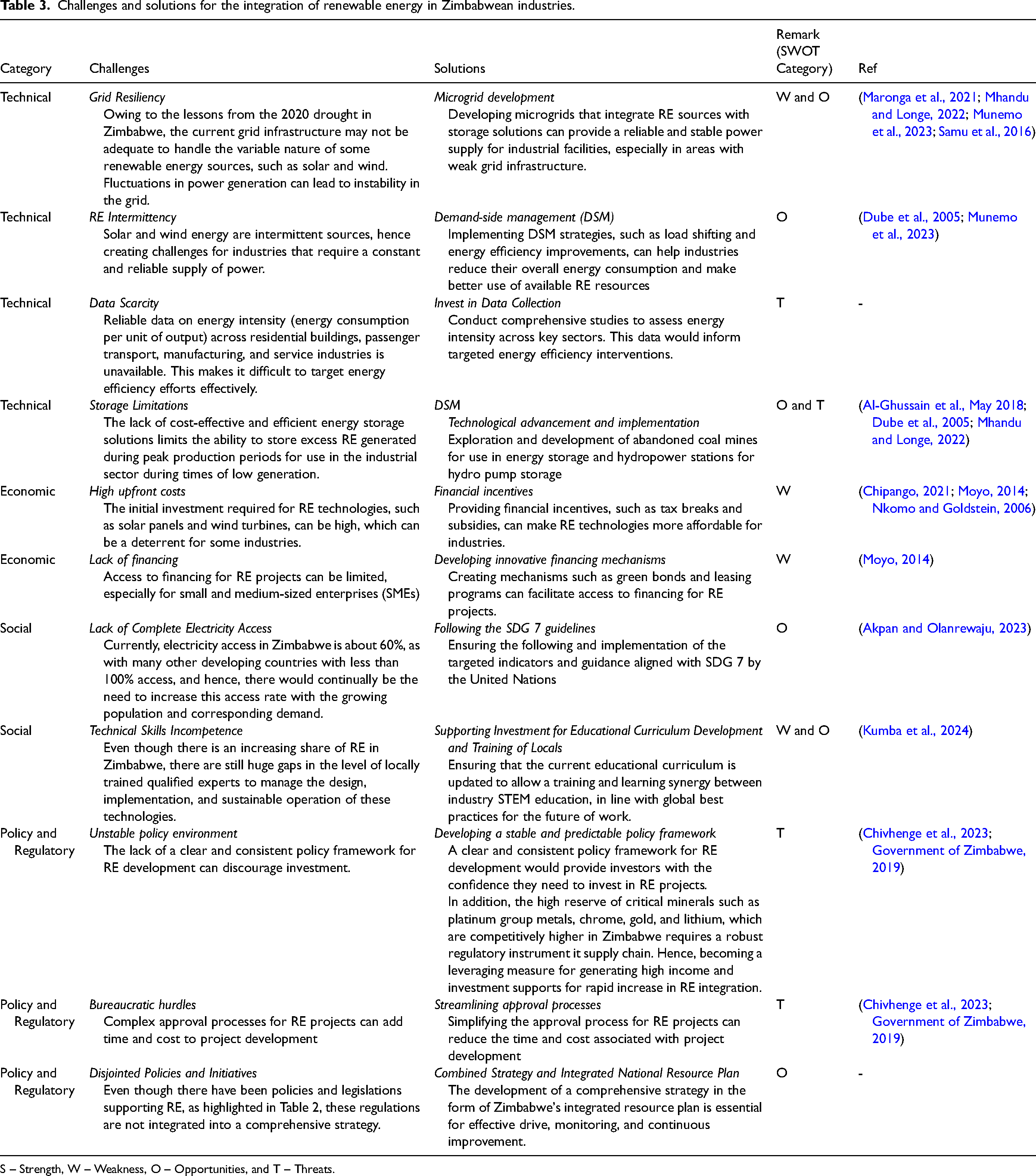
S – Strength, W – Weakness, O – Opportunities, and T – Threats.
Conclusion
This study looks at the potential of renewable energy systems in Zimbabwe to contribute to addressing the current energy challenges and encourage long-term industrial development. Zimbabwe has the potential to increase energy independence, decrease the use of fossil fuels, and foster long-term industrial development with its wealth of renewable energy sources like hydropower, solar power, and wind power. Accelerating technology, shifting market dynamics, and heightened environmental consciousness are all factors shaping Zimbabwe's renewable energy market.
RE technologies, such as solar photovoltaic, geothermal, hydropower facilities, wind, and biomass, are primarily managed by the Zimbabwe Energy Regulatory Authority (ZERA). In the southern hemisphere, between Zambia and Zimbabwe, stands the Kariba Dam, which, when operating normally, contributes significantly to Zimbabwe's power generation—nearly 600 MW. Problems with the climate, unpredictable rainfall, and outdated infrastructure are limiting hydropower generation in Zimbabwe. Increasing the station's reliability and sustainability requires upgrading infrastructure, making it more resilient to climate change, and diversifying the station's energy sources.
To power one-third of the small town of Chipinge in southern Zimbabwe, the Kupinga Hydropower Station, which is situated along the Kupinga River, produces clean, sustainable electricity for both residents and businesses. Sustainable energy is improved in remote locations with poor grid connections using the Hauna Hydroelectric Power Station. For the purpose of enhancing rural residents’ quality of life and fostering long-term economic growth, micro-hydropower projects have also been designed in a number of cases to tap into the waterpower of smaller rivers and streams.
A growing number of businesses, such as those outlined in Table 1, are seeing the value in incorporating renewable energy systems into their processes, and this is true across a wide range of industries, supporting the country's energy policies and legislations highlighted in Table 2. Renewable energy solutions offer numerous advantages to enterprises, including increased energy resilience, decreased operational costs, and support for sustainable development objectives.
In Zimbabwe's renewable energy sector, apart from the predominant hydropower, solar PV systems are becoming increasingly popular. In order to run industrial operations, lessen their load on the national grid, and guard from the effects of frequent power outages, industries are gradually adopting solar energy. This is evidenced by the increasing share of solar in the RE national mix.
Utilising biogas technology, developed nations such as China and Germany may augment grid electricity while making a sustainable impact on energy output. Projects like the Gwanda Solar Project and the Riverside Solar Power Station show that Zimbabwe is actively working towards reducing fossil fuels.
In this study, and apart from the current energy infrastructure, we also discussed Zimbabwe's potential to explore the feasibility of developing hydrogen-pumped storage from the abandoned or soon-to-be-decommissioned coal mines, green hydrogen production from the high solar irradiation and using transportation electrification transition to increase RE share by the utilisation of the low operational expenses resulting from high bioenergy potentials as primary resources for independent charging infrastructure, that may be connected to the national grid.
Subsequently, this study introduces a SWOT evaluation to identify promising areas and limitations for the enhancement of RE integration in Zimbabwe. As a key component of long-term economic growth and environmental protection, a number of steps grounded in the SWOT analysis have been discussed in section 5 and outlined in Table 3, which can be taken in Zimbabwe to improve the integration of renewable energy. These areas include.
Microgrid development from RE to help in managing the current grid challenges. Implementing demand-side management strategies, such as load shifting to RE utilisation from the microgrids and hydro-pumped storage development to manage RE intermittency. Energy efficiency improvements to reduce load demands and reduce Carbon footprint emanating from the energy supply chain and in managing the unstable energy availability. Investing in data assessment facilities and models to have localised data for planning and decision-making. Promotion and sustaining financial incentives to support RE integration Increasing electricity access in line with SDG7. Funding the improvement of RE educational programs and the professional development of residents’ technical competence. The establishment of a stable and uniform policy framework, such as an integrated resource plan for Zimbabwe, to address the challenges of bureaucracy and disjointed efforts in RE integration.
Zimbabwe could attain energy security, environmental sustainability, and economic diversification through the adoption of renewable energy technology. Zimbabwe has the potential to maximise its renewable energy resources and achieve a more environmentally sustainable future through the implementation of favourable legislation, substantial infrastructure investments, and active promotion of public engagement in sustainable energy development.
Footnotes
Statement of authors’ contributions
Conceptualisation, J.A.; Methodology, J.A; Analysis, J.A; Writing and Original Draft preparation, J.A, and H.K.; Review and Editing, J.A, and O.O.; Validation, J.A, and H.K.; and Project Administration, J.A. and O.O.
Acknowledgements
The authors appreciate the support of the Durban University of Technology, South Africa.
Declaration of conflicting interests
The authors declared no potential conflicts of interest with respect to the research, authorship, and/or publication of this article.
Funding
The authors received no financial support for the research, authorship, and/or publication of this article.
