



Abstract
Financial concerns have increasingly impacted university students across the United Kingdom in recent years. Despite increased focus on interventions to support students experiencing financial hardship, a lack of attention has been paid to the key role of higher education staff in supporting students to navigate the complexities of financial hardship alongside academic study. Seventy-six academic and professional service staff from a university in the North East of England completed an online qualitative survey, which explored their experiences of supporting students facing financial hardship. Deductive content analysis was conducted to apply a materialist-psychosocial-behavioural model to participant responses. The materialist theme detailed issues with accommodation, basic resources and information and support. Psychosocially, participants commented on the pressure and stress encountered by students, which was exacerbated by a combination of factors including stigmatisation and class that existed alongside experiences of financial hardship. Behaviourally, staff reported course attendance, engagement and retention being negatively impacted by students working excessive hours and commuting long distances in an effort to improve their financial circumstances. Findings also drew attention to some staff and specific groups of students, including PhD students and caregivers, unequally impacted by experiences of financial hardship, which has implications for widening participation agendas, staff workloads and well-being.
Introduction
A university education is widely regarded as a catalyst for positive life change and upward social mobility (Christensen and Craft, 2021). But the divide in educational, social and cultural opportunities between more and less affluent groups can limit academic and economic prospects for people from lower socioeconomic groups (Graham et al., 2024). While succeeding in university is challenging for all students (Gravett and Winstone, 2021; Hayman et al., 2024), challenges are particularly pronounced for students from less affluent backgrounds, who often face extreme financial pressures and are more likely to encounter discrimination, academic disruption and social exclusion (Hayman et al., 2024; Hossain et al., 2023). These students are also more likely to have greater family, work and caregiving commitments and are at a greater risk of dropout and achieving lower degree outcomes (Hayman et al., 2024; Reay, 2018; Reay et al., 2010).
Across the United Kingdom (UK) higher education (HE) sector, widening participation (WP) has become a well-established strategy for addressing inequalities and providing opportunities for underrepresented student groups to pursue HE (Campbell and McKendrick, 2017; Jones et al., 2025). This agenda has achieved relative success over recent decades, as evidenced by the increasing percentage of students from non-traditional and underserved backgrounds securing places at university (UCAS, 2024). For instance, the entry rate of state school students in England who were in receipt of free school meals (an indicator of material deprivation) at age 15 rose from 13% in 2012 to 19.1% in 2023 (Universities UK, 2025). However, it must be noted that this positive finding is alongside an increase in the total numbers of students entering HE, meaning there remains a significant absolute gap in the representation of students from underserved backgrounds (Bolton, 2025; UCAS, 2024). Furthermore, those from underserved backgrounds are less likely to secure entry to the most prestigious universities thus leading to differing patterns of representation across the sector (Bolton, 2025).
The recent global cost-of-living crisis has further influenced student decision-making regarding HE participation (International Monetary Fund, 2023; Richards, 2025). Recent data from the annual Advance HE Higher Education Policy Institute (HEPI) Student Academic Experience Survey found that 75% of the 10,319 full-time undergraduate students surveyed reported that financial concerns or challenges negatively impacted their studies. Furthermore, the survey asked respondents to consider the extent to which they feel their course represents value for money and whilst historically poor value perceptions were driven by tuition fees, cost of living concerns have become the most significant factor associated with poor value (Neves et al., 2024). While many students do not consider leaving their course, of those who do, financial difficulties are cited as the main reason (Neves et al., 2024). Moreover, specific groups are at greater risk of what has been termed a ‘cost of learning crisis’ including black students, those from low-income backgrounds and care experienced students (Freeman, 2023).
The current UK HE cost-of-learning crisis is exacerbated by the slow response of devolved governments in addressing financial support available to students. Financial assistance primarily consists of student finance loans and grants/bursaries provided by the UK Government, with variations in tuition fees and financial aid across the four devolved nations (House of Commons Library, 2022). Student finance eligibility is influenced by household income, with lower-income students qualifying for greater support (UK Government, 2025). However, these students often come from households where parental financial assistance is limited and, in some cases, parents themselves do not have a minimum acceptable standard of living (Hill et al., 2024). Despite increases in maintenance support, the real value of such support has declined with recent figures suggesting that the maximum maintenance loan now only covers around 50% of student outgoings (Hill et al., 2024, 2025).
Cost of living has a clear impact on learners, not only in terms of increased likelihood of withdrawing from study but also in terms of mental health and well-being and opportunities to fully participate in university life (Freeman, 2023). In response, universities have increasingly implemented financial support measures including hardship funds and raised awareness of available financial aid (Freeman, 2023). Additionally, institutions have introduced measures to provide free food, with over 27% of UK universities now operating food banks (Hill et al., 2024).
Study rationale and aim
While increased recognition of and response to student financial hardship is positive, there has been little acknowledgement of the important role that academic and professional service staff play in supporting students to navigate the complexities of academic study alongside financial hardship. This is surprising as staff are often the first point of contact for students experiencing crisis giving them privileged insights into students’ needs and experiences (Hughes et al., 2018). Students also want more contact hours with academic staff to support pastoral as well as academic needs (Neves et al., 2024). As the student cost-of-learning crisis continues, more in-depth understanding of student needs is essential to ensure that investment is targeted towards the most effective resources (Freeman, 2023). The current study aimed to address existing evidence gaps by exploring the perspectives of HE academic and professional service staff regarding their experiences of supporting students facing financial hardship.
Method
Approach
A qualitative survey was employed to provide participants with the opportunity to share their views and experiences regarding student hardship through a series of open-ended questions. Despite being largely underutilised, the qualitative survey is reported to be an accessible method, which can generate rich insights from diverse participant groups, including participants who may be unable or unwilling to take part in face-to-face interviews or focus groups (Braun et al., 2021). Given that university staff often encounter significant time constraints (Jayman et al., 2022), this method was particularly suitable in the university context, as it facilitated participation without imposing excessive demands on respondents time. Furthermore, the political, professional and emotional sensitivity of the topic of student hardship may have left some staff hesitant to share their perspectives in a face-to-face setting. Braun et al. argue that qualitative surveys are useful in this regard as they provide a level of anonymity that is not afforded through other qualitative approaches such as interviews or focus groups. While online qualitative surveys can be challenging for groups who lack internet access and/or encounter difficulties with literacy (Braun et al., 2021), these limitations were not relevant to the current population of interest.
Study context and participants
This study was undertaken at a socially inclusive HE provider based in the Northeast of England (hereafter referred to as PYC). PYC has a commitment to equity of access to and success in HE for its learners, many of whom come from underserved backgrounds. Young people in the Northeast of England are among the least likely in the UK to attend university (Office for National Statistics, 2022). Despite this, PYC continues to attract a significant number of students from diverse backgrounds, which places a substantial responsibility on the university to provide adequate support.
Seventy-six staff (33 males; 39 females; 1 non-binary; 3 prefer not to disclose) participated in the study between September and December 2023. Most participants were academic staff (n = 68) with the remaining eight employed in student-facing professional service roles. Forty-four participants had directly assisted students experiencing financial hardship during the 2022-23 academic year. Of the 32 participants who had not supported students with financial hardship, 5 were aware of students who had experienced financial hardship during the previous academic year. Further exploration of the data showed no differences between staff who had supported students and those who had not in terms of gender, job role or department. All participants engaged regularly with undergraduate and postgraduate students in various roles across the university so were able to provide input on the topic of student hardship.
Materials and procedure
The survey, developed for the purpose of the study, began with demographic questions asking participants to share their age, gender, department, university role and how this role involved supporting students. Subsequent open questions focused on participants’ awareness of students experiencing financial hardship and their experiences of providing support in this context. Where participants had provided support, they were invited to reflect on what had worked well and what challenges they had encountered. All participants were also invited to share their views on what more could be done to support students experiencing hardship and what support would help them to work more effectively with these students.
Following university ethical approval, the survey was shared via email through various networks with the aim of recruiting university staff with student-facing roles. Upon clicking the survey link, participants were presented with information about the study, including details of their rights to confidentiality, anonymity and to withdraw from the study by closing their web browser at any time. Participants consented to take part by clicking the relevant ‘agree’ option following presentation of the research information and were then directed to complete the survey questions. Participants were advised to avoid disclosing any information that could identify themselves or students they worked with, but they were assured that any identifying information included in their responses would be anonymised. On submission of their responses, participants were presented with debrief information and were advised of appropriate mechanisms of support available if the survey raised issues for them that they wished to discuss further.
In the initial stages of data collection, a review of the first ten responses was conducted to ensure that the survey was functioning correctly, and questions were being answered in sufficient detail to allow for subsequent analysis. This review revealed that although responses were anonymous, some participants chose not to disclose their age, and one participant added a note questioning the relevance of this information. The demographic question about age was therefore removed to prevent potential discomfort amongst participants. No further issues were identified, and all participants who opted to take part completed all survey questions in full.
Conceptual model and analysis
Financial hardship has been defined as ‘difficulty meeting basic needs and financial responsibilities’ (Jiménez-Solomon et al., 2022: 2). This aligns with terminology adopted across the UK HE sector to refer to students who are struggling financially and require additional monetary support (Government, nd; Lewis, 2025). However, focussing on money alone is reductive and fails to capture the various factors that can influence how a person experiences and manages financial hardship.
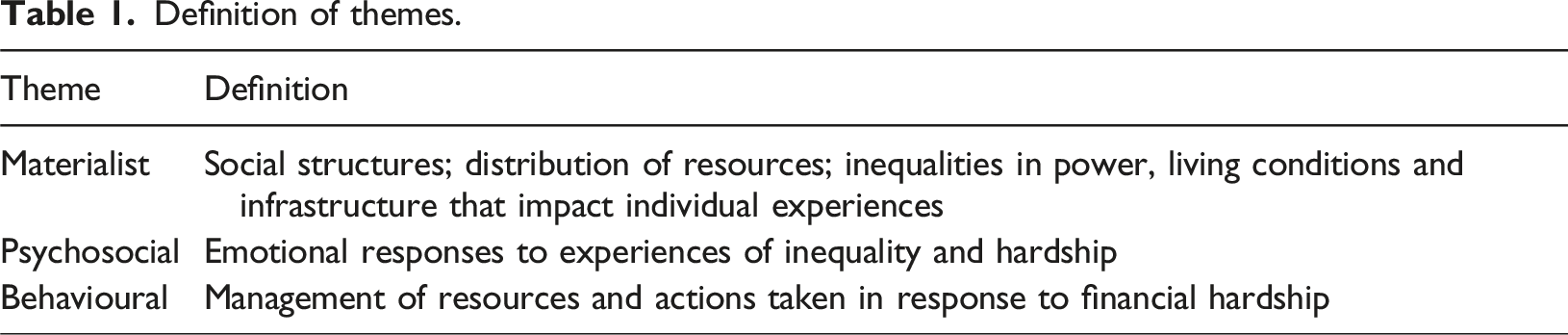
The materialist-psychosocial-behavioural model has been applied in previous research exploring experiences of financial hardship to provide a more detailed understanding of the socioeconomic environment and people’s needs within that context (Mattheys et al., 2016; Tucker-Seeley and Thorpe, 2019). For instance, if a person is experiencing financial hardship, it could be that they simply do not have enough money to meet their basic needs; or they might need help to effectively manage the money they have available; or they might benefit from support to manage their emotional responses to their financial situation (Tucker-Seeley and Thorpe, 2019). In each case, the response required is different; therefore, a more nuanced understanding of needs is necessary to inform more effective interventions.
Definition of themes.
Positionality
The current research was underpinned by a relativist ontology and subjective epistemology, which acknowledge that the construction of reality and knowledge is dependent on individual interpretations and assumptions (Poucher et al., 2020). Indeed, the conceptualisation of the research was driven by the research team’s shared interests in student outcomes in HE and intersectional factors that can impact these outcomes. Specifically, the first, second and fourth authors teach, supervise and support undergraduate and postgraduate students, and the third author works in a student-facing professional support role in the HE sector.
Through an iterative process of disciplinary, methodological and positional reflexivity, the research team made methodological and analytical decisions based on their own experiences and knowledge (Paulus et al., 2025). Drawing on their understanding of the existing demands on staff time in HE coupled with the sensitivity of the topic under investigation, the research team decided that an online qualitative survey was the most appropriate approach to data collection. The team also recognised a lack of theory and rigorous evidence underpinning approaches to student support for financial hardship in HE. They therefore utilised a conceptual model as part of the data analysis process to provide a more detailed and theory-driven understanding of current issues and potential solutions to the ongoing challenge of financial hardship across the HE sector. Additionally, the team met at various points throughout the project to discuss and question their own and each other’s assumptions about the project and the resulting dataset.
Findings
Drawing on the materialist-psychosocial-behavioural model, the findings detail staff experiences of supporting students with financial hardship. Staff quotations are included to illustrate themes throughout. Demographic labels have been included alongside quotations to provide context, though details have been minimised to reduce the risk of identifying individual staff members or the students they have supported.
Theme 1: Materialist
The materialist theme related to the contextual factors that staff believed to influence students’ experiences. Participants outlined a complex interplay of key systems, structures and policies that can impact students’ access to resources and exacerbate inequity. These were organised into three distinct subthemes: Accommodation; Cost of Learning; and Information & Support.
Accommodation
University is traditionally a rite of passage that offers many students a first opportunity for independence outside of the family home. However, participants suggested that access to affordable accommodation for students is a problem with ‘outsourced’ provision resulting in high rental charges and private companies ‘making excess profits’ (Principle Lecturer and Personal Tutor).
When asked to reflect on how they became aware of students experiencing financial hardship, participants mentioned that students had disclosed struggles surrounding requirements to provide excessive amounts of money up front before being able to rent accommodation. This was suggested to be particularly prevalent amongst international student cohorts, who typically do not have the support of a UK-based guarantor (i.e. a named person who is contractually obliged to cover the cost of rent if the student is unable to pay) and have limited access to financial support (i.e. No Recourse to Public Funds), higher tuition fees and NHS surcharges to manage when wishing to study in the UK (Odumade and Graham, 2019). Suitable accommodation for students with families was also reported to be difficult to find.
In some cases, participants had stepped in to negotiate with landlords and estate agents to have upfront fees reduced, but this appeared to be done on a case-by-case basis and relied on students raising the issue with them. ‘I have offered to write letters to estate agents to try and help with accommodation and reduce the need for 6-months rent up front […] For one estate agent they reduced the length of the rent they required the student to pay up front’ (Professor and Module Lead).
It was therefore argued that a more joined up approach is needed through the provision of university accommodation that reduces reliance on the private rental sector or ‘More funding/support for accommodation costs for private renting’ (Lead Specific Learning Difficulties Tutor). Rent holidays, flexible payment schedules and more collaborative work with landlords to ensure that upfront fees for accommodation are not prohibitive were also offered as potential solutions.
Cost of learning
Although the resources required for university study vary according to programme, engagement with face-to-face teaching typically involves travel to campus or a placement setting, access to food and drink outside of the home and access to books and equipment. However, staff highlighted how these seemingly simple provisions can be difficult for students to access when finances are stretched. ‘Students have asked to meet with me and have disclosed how financial issues are impacting their ability to attend campus regularly and to replace broken or outdated technology e.g. laptops’ (Assistant Professor).
Several participants pointed out how some students struggled to attend campus due to the high cost of travel. Furthermore, for students who engage in placement opportunities, field trips and conferences, travel and associated costs can be limiting. In some cases, students can claim back placement costs and access bursaries, but these are not offered universally and sometimes only partially cover the costs incurred (e.g. Turing Scheme). ‘Students often raise concerns in relation to being able to meet the costs of being on placement, whether this be directly through transport etc. or indirectly through being less available for part time work while they work full time hours on placement. Some students are able to claim placement expenses back but this is retrospective and not all students are eligible’ (Head of Subject).
The high cost of food was also consistently raised as a financial burden for students, but one that could be easily addressed through the provision of healthy and affordable food options on university premises. A number of staff proposed interventions such as free breakfast offers, reduced price meals and hot drinks on campus as effective means of support, which could also incentivise students to attend campus more often. ‘Explore cost effective mass catering for breakfasts and other meals. Similar to breakfast clubs that exist elsewhere. Students have somewhere to get fed well, and these events may even become vibrant social gatherings which enhance campus cultures’ (Personal Tutor).
Participants also drew attention to specific groups of students who are unequally impacted by financial challenges, which negatively influence their educational experiences. Costs incurred are often outside of annual course fees but can make a difference to whether a student is able to continue with their studies or fully access the opportunities made available to them. PhD students were repeatedly highlighted as one group who face a range of financial challenges but receive limited financial support. In one case, a participant reflected on a situation where an international PhD student took an authorised break in study but was then unable to return to PYC from their home country as they could not afford to pay the associated costs (e.g. NHS surcharge). Students with caring responsibilities are also disadvantaged due to limited financial support. ‘One student at the moment in year [x] is experiencing childcare issues, cannot afford to pay for wraparound care in order to start a shift at 7.30am. May not find a solution to this and student may have to interrupt studies’ (Head of Education).
These contextual constraints, which are hindering the experiences of underserved groups, are at odds with the achievement of upward social mobility that HE is said to promote (Christensen and Craft, 2021; Wanti et al., 2022). They also challenge the WP agenda by placing barriers in the way of groups that universities are striving to engage with. Supporting WP students to access placement opportunities can enhance a range of skills and qualities including social and cultural capital, job readiness and confidence, but financial constraints remain a pervasive barrier to accessing such opportunities (Mellors and Vicencio, 2025).
Information and support
Participants acknowledged that student financial hardship is ‘All encompassing and complex’ (Student Mentor). Against a backdrop of changing fee and financial support structures, increased living costs and in some cases professional body requirements, participants explained feeling powerless in helping students to improve their circumstances enough to make a difference. ‘I think most of the issues are related to the change in the wider economic landscape that has hit the UK over the last 15 years’ (Programme Leader).
Working in student-facing roles meant that participants were a key source of support and information for students facing hardship; they therefore strived to make a difference through direct academic support, the provision of information, signposting and advocacy. However, there was inequity across responses in terms of staff confidence in finding and accessing information to support students experiencing hardship. For some participants, ‘Having information readily available to signpost [students] when needed’ (Specific Learning Difficulties Tutor) and ‘Having clear sources of university level support to signpost to’ (Head of Subject) were recognised as factors that worked well for them when providing support to students. For others, they would welcome more direct information and training specifically focused on student hardship. ‘To be informed of the current financial support available to help students experiencing hardship, the teams who can support the students with which type of hardship, to help and give the relevant support as soon as possible’ (Academic Support Co-ordinator).
Yet, it was clear that consultation would be required to determine the best method of sharing information amongst staff as some shared feelings of overwhelm with the vast amount of information they already receive. ‘I am sure there is some excellent support and guidance available, but I am simply blind to this if so. Academics are busy with many competing roles and responsibilities, so it is easy to forget/lose track etc’ (Lecturer).
It is important to note that university processes encourage academic staff to signpost students to relevant services across PYC without further intervention beyond the provision of support for academic tasks. Therefore, some participants described how they provided additional support with assignment preparation and applications for deadline extensions, but signposted students onto relevant support services for other issues, including financial hardship. Though it was clear that some participants had become more involved in reaching out to services inside and outside of the university on behalf of students. ‘Sometimes this means actually taking them to [support service] and starting conversations with the support worker for them’ (Module Lead/Personal Tutor/Cohort Lead).
Where staff were keen to provide support, limitations on access to student information, which is determined by job role, could slow down processes. ‘[Team] does not have full access to student info and has to contact programme leads or personal tutors to confirm each student’s exceptional circumstances, new end dates etc’ (Academic Support Co-ordinator).
There was also some frustration that once staff had passed students over to other services, there was no feedback loop in place to inform them of subsequent support received by the students they had helped and they were often left wondering whether the guidance they had offered had been effective. ‘Some students do fulfil the hardship fund criteria. Not all students feedback, would be of benefit to be alerted (only if students consents) that they have been approved / not approved’ (Head of Education).
Additionally, staff sometimes struggled with the complexity of information surrounding access to support such as classifications in line with POLAR quintiles. POLAR refers to Participation of Local Areas. It is a measure of how likely young people are to participate in HE in different areas of the UK and is frequently used as an indicator of disadvantage in the HE sector (Office for Students, 2022). It was therefore proposed that there is a need for ‘Clear concise information in an easy and accessible place’ (Deputy Faculty Pro Vice Chancellor for Education). There were also suggestions that classifications and criteria used to determine who should be entitled to support are too rigid and are removed from the reality of students’ experiences. ‘There are students who don’t have financial support from their parents but are not classed as estranged’ (Student Mentor).
Theme 2: Psychosocial
From a psychosocial perspective, participants highlighted the pressure and stress that they witnessed amongst students experiencing financial hardship. They described students appearing overwhelmed and tired and how this consequently impacted their ability to focus on academic work, leading to worries about timely completion of assignments. However, it is essential to point out that the specific psychosocial impacts of financial hardship alone proved difficult to ascertain as participants referred to financial hardship as being ‘intertwined with other aspects such as disability’ (Personal Tutor/Module Tutor) and ‘mental ill health’ (Head of Subject). While it is largely acknowledged that there is a relationship between financial hardship and psychological distress (Ryu and Fan, 2023; Jackson et al., 2025), it is also the case that other intersecting factors and experiences, such as caring responsibilities and long hours in paid employment, could place additional pressure on students alongside their financial circumstances. It is therefore essential to take a holistic view of student experiences to identify how financial hardship fits amongst other personal and lifestyle factors that might also contribute to experiences of pressure and stress.
These challenges were described by participants as being further compounded by some students feeling reluctant or unable to reach out for help until issues became too serious for them to cope with independently. ‘I think [student] has buried his head in the sand, but he now feels panic as he has assignment submissions and does not know where to start’ (Personal Tutor and Module Tutor).
In some instances, participants reported students being unable to navigate university support systems or lacking understanding of the support available. ‘The student I supported has additional learning needs and they reported [..] the process of identifying and applying for support was hugely challenging and prohibitive’ (Postgraduate Programme Lead). ‘An international student who was thinking I might be able to help personally with her fees’ (Programme Lead).
This is unsurprising given that some participants reported experiencing difficulties themselves with finding and accessing relevant information to support students. Another issue that was believed to hinder student access to support was the stigma and shame associated with not being able to manage financially. ‘I feel that students need to feel encouraged to be open about this, as perhaps there is a stigma around it/anxiety around sharing this information with staff’ (Assistant Professor).
Such a response to financial hardship is not unusual. Stigma is said to create individualised narratives that portray poverty as a matter of personal responsibility and choice rather than systemic injustice (Tyler and Campbell, 2024). Such narratives can lead people to be reluctant to seek help until they reach crisis point (Garthwaite, 2016).
Moreover, family background was said by participants in the current study to play a role in help-seeking and was particularly relevant for working class students who would see their help seeking as a burden on others and would be ‘unwilling to take handouts [financial support] even when they know they exist’ (Lecturer).
While gender, race and disability are widely acknowledged to intersect with poverty (Bixby, 2024) and are addressed in many HE policies and interventions (see, e.g. Advance HE, 2025a; Advance HE, 2025b), the relevance of family background to HE experiences is underacknowledged. Challenges such as substance use, poor health and family breakdowns are more prevalent amongst families experiencing poverty (Cameron, 2018; Farooq et al., 2024). This means that for students entering HE from WP backgrounds, there might be some who maintain caring responsibilities for family members alongside their studies or continue to live in their family home where circumstances are difficult. Even without such events, the social and economic circumstances in which a person grows up can influence their thoughts, feelings and behaviours (Manstead, 2018).
While participants in the current study suggested that allowing students to submit queries through an online system as a first step to accessing support might be effective in reducing apprehension surrounding financial help-seeking, there were concerns that the complex and intersectional nature of financial hardship possibly requires more direct and bespoke support. ‘When signposting, I find that asking people to log requests through their student portal can feel a bit uncomfortable, as it’s a very “faceless” form of support for things that are quite sensitive and complicated. But then again perhaps this can have benefits too where there are issues that are quite stigmatised, I am not sure’ (Lecturer/Personal Tutor/Research Supervisor).
Participants also reflected on the importance of creating supportive and non-judgmental environments that include a strong network of colleagues who are suitably qualified to help students with the complex issues that surround financial hardship. It was proposed that support needs to be holistic, well-publicised and embedded throughout the student experience. ‘It would be advantageous to have a dedicated member of staff within each department who could be a first point of contact for these problems’ (Programme Leader).
A proactive approach involving information sharing at induction sessions and open conversations across programmes was suggested as a way to reduce stigma and encourage students to seek support before issues become too overwhelming to manage. ‘Embedding engagement with [support] teams within modules and, if possible, assessments would help drive engagement and awareness’ (Study Skills Tutor).
Alongside formal support structures, staff consistently mentioned the value of listening to students and recognising the magnitude of the difficulties they are facing. As well as offering reassurance, staff reflected on the importance of being solution focused and often provided practical support around managing assignments and accessing broader pastoral support with the aim of alleviating stress and worry. ‘There have been several instances where students have told me they thought about quitting but stuck with it with the support of their tutors and were glad they did’ (Programme Lead/Module Lead/Personal Tutor).
However, the emotional toll of supporting students with the complexities of financial hardship and other intersecting challenges did not go unrecognised. Participants suggested that providing support is challenging to manage amongst other competing job demands and the sensitive nature of the issue can make it difficult to gauge an appropriate level of involvement and discussion surrounding students’ finances. The challenging nature of this issue therefore warrants further support for staff. ‘Drop-in sessions for staff might be helpful, not only to help us with information but to allow us the opportunity to share our experiences in supporting students as they can often be quite upsetting to deal with’ (Assistant Professor/Programme Lead/Personal Tutor).
These findings support recent calls for more attention to be paid to the risk of compassion fatigue amongst HE staff (Wehlberg, 2023). Compassion fatigue refers to feelings of physical and emotional exhaustion that result from repeated exposure to other people’s suffering in caregiving environments (Stoewen, 2019). Compassion fatigue is commonly associated with caring professions such as nursing and social work, where there is an expectation that staff will deal with people experiencing trauma and distress. Staff within these roles are therefore trained in understanding and recognising compassion fatigue and generally have mechanisms in place to support their own well-being within these contexts (McNaughton-Cassill et al., 2023). This is not the case for academic staff within HE whose roles are focused on the development and teaching of subject-specific knowledge. While there has been growing recognition for the caring role that HE staff undertake, particularly since the COVID-19 pandemic, there is a general lack of formal acknowledgement of and support for compassion fatigue across the HE sector (McNaughton-Cassill et al., 2023; Raimondi, 2019). This is concerning as compassion fatigue can lead to feelings of apathy, anger and distress, which are counterproductive to job performance and satisfaction in student-facing roles (McNaughton-Cassill et al., 2023; Wehlberg, 2023).
Theme 3: Behavioural
Behavioural factors outlined by participants encompassed the actions that students take in response to their experiences of financial hardship, including help-seeking and management of resources. Despite concerns expressed by participants about the stigma attached to financial hardship, it was apparent that some students have proactively reached out for help with monetary issues and discussed the challenges they are facing through tutorials and supervision meetings. Participants also mentioned how students would make comments in classes and discuss issues with peers that made their financial challenges apparent. ‘In my role as their personal tutor and acting programme leader [students] have discussed this with me’ (Lecturer).
Several participants indicated how financial hardship often becomes obvious when students discuss the necessity for engagement in paid employment. This was a particular source of concern amongst participants as some students are working excessive hours in low paid jobs that are difficult to manage around their studies. ‘Quite a lot of students have had to work more hours than they would like in order to keep studying. Some work full time jobs alongside a full-time course’ (Programme Lead/Module Tutor/Personal Tutor). ‘Appointments missed or cancelled either because they have to work extra shifts or they are so tired after working additional jobs, they slept in’ (Specific Learning Difficulties Tutor).
Recent surveys have shown that students across the UK are working more hours to make up the shortfall in Government financial support (Freeman, 2023). However, in doing so, students are working an average of 42 hours per week across university study and paid employment, which is greater than the average number of hours worked in full-time paid employment (Neves et al., 2024). This is problematic as excessive working hours can negatively impact students’ academic performance and university attendance (Freeman, 2023). Furthermore, mature students and those with caring responsibilities have relatively higher combined hours of university study and paid work (Neves et al., 2024) drawing attention to inequity of opportunities for underserved groups.
Participants also reflected on students managing their finances by choosing to live further away from the university to access cheaper accommodation, though this resulted in longer commute times and higher travel costs that could negatively impact student attendance. It has been reported that UK universities are facing an attendance crisis, which is often attributed to students spending more hours in paid work (Woon, 2024). Experiential learning experiences, which provide real-world, job relevant skills, have been promoted as a way to motivate students to attend and engage in classes (Woon, 2024). However, participants in the current study suggested that decisions to engage in different university experiences, including placements and fieldwork, can be financially driven. So, even if classes are perceived to be highly valuable and engaging, some students face too many other competing demands to be able to attend. ‘Two students have separately told me that they commute from very long (2 hours plus) distances to save money and cannot come in every day. Several other students have told me that they choose to do a simulated module rather than a real client one because they cannot afford to be coming into university every day’ (Principle Lecturer/Personal Tutor).
These trade-offs made by students to save money show how financial inequalities in HE can impact students’ educational engagement and experiences. Ultimately, financial pressures can result in some students having to suspend their studies or exit university completely. ‘Students unable to repeat due to lack of funds for fees and to support themselves due to cost of living expenses […] students then seeking to exit university’ (Academic Support Manager).
Despite the well-established notion that a university education should be accessible to anyone who wants to attend and has the ability to do so (Moser, 2024), the findings outlined in the behavioural theme illustrate the ways in which university study is greatly impacted by factors beyond motivation and attainment alone. This is especially important to acknowledge in the post-92 university context of the current study. Post-92 institutions typically embrace the WP agenda, offering more accessible entry criteria and valuing non-traditional experiences and routes into HE (Crozier et al., 2008). While these approaches can be beneficial in attracting a more diverse student population, it is essential that universities recognise the ongoing challenges that students from diverse backgrounds face. Furthermore, as some of the challenges encountered by students are driven by external forces, such as national cost of living pressures, universities and policymakers need to take a dynamic approach to student support that recognises and adapts to the changeable landscape beyond university campuses throughout the entire student journey.
Discussion
This study explored the qualitative reflections of HE academic and professional service staff on their experiences of supporting university students facing financial hardship. The findings detail materialist, psychosocial and behavioural factors relating to student hardship and draw attention to several key considerations for HE institutions and policymakers seeking to effectively support students, particularly those from WP backgrounds.
Firstly, the findings showed that affordability of resources such as food and accommodation, which are required to meet a person’s basic needs, is placing considerable strain on student finances. This is unsurprising given recent rises in living costs across the UK, which have left many people struggling to afford basic necessities (Brown et al., 2023). However, the HE student population has received relatively little attention within this landscape despite research showing that students in the UK are living just £2 per week above the destitution line, which is ultimately compromising their access to and continuation in HE (Russell Group, 2023, as cited in Beck, 2024). The effects of such financial difficulties are being felt most acutely by underserved groups such as disabled students and those with caring responsibilities (Russell Group, 2023, as cited in Beck, 2024). Therefore, as well as providing financial support, WP programmes need to recognise and support students with the range of nuanced contextual factors that can limit their access to valuable, career-enhancing experiences, including but not limited to support with identifying affordable, accessible childcare, nutritious food and local transport links.
Interestingly, the theme encompassing behavioural factors showed that students are being proactive in trying to manage their experiences of financial hardship, though some of the strategies adopted have the potential to detrimentally impact student outcomes. Of great concern amongst participants in the current study was student engagement in excessive hours of employment that is generally low paid and difficult to manage around university study. This finding aligns with concerns nationally that many HE students, particularly those from underserved backgrounds, are missing out on important learning opportunities as a result of needing to work to support themselves financially (Freeman, 2023; Neves et al., 2024). This need to work is potentially being driven by the shortfall in maintenance support, which is means tested and allocated to help students with living expenses (Hill et al., 2025). Recent figures suggest that the maximum student maintenance loan, which has not kept pace with real time increases in living costs, now only covers approximately half of the amount students require to cover basic expenses such as accommodation, food and travel (Hill et al., 2025). These findings draw attention to a clear need for a review of the student maintenance support system to bring it in line with student living expenses in the modern financial climate. Without such a review, many students, particularly those from underserved groups, will continue to be excluded from full participation in university life and the benefits gained through work placements and networking opportunities consequently widening the gap that the WP agenda was designed to address (Connell-Smith and Hubble, 2018).
Finally, the current findings contribute to a relatively limited and complex body of literature focussing on the impacts of financial hardship on student mental health. While more research is needed to examine causal links, existing evidence has shown a relationship between financial stress and poorer mental health amongst UK students (McCloud and Bann, 2019). The psychosocial factors identified by participants in the current study support this link but also draw attention to how difficulties associated with financial hardship can be especially challenging to address due to stigmatisation. Financial hardship is a hidden problem, which students are often reluctant to discuss until they have exhausted all known options resulting in staff supporting with issues that have become relatively complex and multifaceted over time. Help-seeking behaviours can be further compounded by class and family background, which can leave students feeling reluctant to accept financial help even when it is available. Such feelings of shame associated with financial hardship can lead individuals to withdraw and isolate themselves from social situations, even if people within those contexts could help to alleviate financial difficulties. This is particularly prevalent in situations where levels of social comparison and inequalities are high (Gladstone et al., 2021). It is therefore essential that efforts to tackle hardship in HE simultaneously address stigma. Participants in the current study proposed that opening up conversations about financial hardship from the onset of students’ HE experiences could help to reduce stigma and related barriers to help-seeking by ensuring that conversations about hardship are not only necessary when the issue is encountered. Though, it is important to recognise that the implementation of such mechanisms would require understanding of the complexities surrounding financial hardship including the ways in which it can form part of a wider experience of poverty, which often intersects with other stigmatised characteristics and experiences (Bixby, 2024; Cameron, 2018; Farooq et al., 2024).
In addition to the psychosocial challenges experienced by students, the current findings draw attention to difficulties experienced by staff when supporting students. Participants reflected on how they provide a range of academic, emotional and practical support, some of which goes beyond job role expectations. These findings provide support for greater recognition of the risks and impacts of compassion fatigue in HE (Wehlberg, 2023) as well as evaluation of the workload implications of providing support to students experiencing financial hardship. Interestingly, responsibilities for supporting students with hardship are not experienced equally as 35% of participants in the current study had not supported and were not aware of students who had experienced financial hardship during the previous academic year. Further exploration of staff characteristics in relation to this question showed no specific pattern relating to gender, job role or department. Therefore, more research is needed to identify the circumstances in which staff are approached in HE contexts to support students experiencing financial hardship to support more accessible and streamlined signposting mechanisms.
Limitations and future directions
While the current findings provide novel insights into the experiences of HE staff, it is important to acknowledge the limitations of the research. Firstly, the findings are based on the views of staff from one university, which actively engages and supports a high proportion of students from underserved communities. Further research is needed to explore the perspectives of staff from a range of universities across the UK to determine whether similar experiences are reported. This is especially important as this study highlighted the complexity of the issues that staff are supporting students with, which in turn has implications for staff workloads and support, which are issues of concern nationally (Brewster et al., 2022; Smith, 2024). Similarly, with student attendance also a cause for concern nationally (Woon, 2024), there is a need to explore the extent to which financial hardship is playing a role in this.
Furthermore, the current study relied on the views of staff only with no reference to student perspectives. However, it is important to note that some of the current findings support previous research that has provided accounts of students’ experiences of financial hardship (Russell Group, 2023, as cited in Beck, 2024). Taken together, the current and previous findings highlight a need for students and HE staff in student-facing roles to be more involved in the co-production of policies and interventions designed to support students ensuring the needs and experiences of both groups are acknowledged.
Conclusion
Overall, the current study illustrates the need for multidimensional approaches to supporting students experiencing financial hardship. The identification of materialist, psychosocial and behavioural factors linked to student hardship provides a framework for universities and policymakers to further explore student hardship and to initiate necessary structural, cultural and policy changes from a multidimensional, evidence-based perspective. The critical role of staff in student-facing roles should not be underestimated within this sphere. Even when formal student support processes are available, many staff inadvertently become a trusted first point of contact for students facing difficult circumstances. Therefore, the practical and emotional toll of this responsibility needs to be adequately recognised and supported. Additionally, the current findings draw attention to an urgent need to explore the prevalence and impacts of stigma and shame surrounding financial hardship within universities and how this is experienced by various underserved groups that universities are striving to attract.
Footnotes

Ethical considerations
Full ethical approval was obtained from Northumbria University. All participants provided informed, written consent before taking part.
Funding
The authors received no financial support for the research, authorship, and/or publication of this article.
Declaration of conflicting interests
The authors declared no potential conflicts of interest with respect to the research, authorship, and/or publication of this article.
Data Availability Statement
Participants did not provide consent for data to be shared; therefore, data are not accessible outside of the research team.