




Abstract
This study sought to find: How is language used to describe social mobility in Access and Participation Plans of universities in England? Are there differences in how social mobility is discussed by universities in England in relation to the university’s HE grouping? Are there implications for particular student groups due to the language and focus of Access and Participation Plans? The study focuses on universities in England, drawing on a sample of 25. We have used publicly available Access and Participation Plans for each university to develop a corpus for each grouping. The corpora were then analysed and coded to identify inductive themes from the data. They were further analysed using a Foucauldian Discourse Analysis to identify the power relationships. The findings show the plans discussed widening participation in similar ways but lacked specific commitments and detail about how they intended to achieve that. This helps to reveal the intent and clarity of widening participation efforts in universities. Universities appeared to miss a ‘big picture’ approach to enabling social mobility. The language in Access and Participation Plans appeared to be focused on meeting the requirements set by the OfS rather than a considered intersectional approach to enabling social mobility.
Introduction
Within England, higher education (HE) is currently experiencing a crisis. The sector is reeling from the effects of policy decisions which have limited the numbers of international students entering England’s institutions and significant staff redundancies to address deficits have occurred nationwide in universities. In addition, traditional undergraduate degrees are now competing with degree apprenticeship providers to recruit students and therefore there are alternative routes through which young people can gain degrees. It is a critical time for institutions which need to recruit as many students as possible to balance the books. Widening access to students is now, more than ever, an urgent priority for universities which need to secure student income to guarantee their survival. At the same time, student rights as consumers of HE are enshrined in legislation which shapes institutional policy. Given this challenging context, we became interested in how institutions are promoting access and participation through their policies to improve both recruitment and retention of students.
Existing studies have focused on the marketisation of HE (Nixon, 2017) and its impact on students (Bunce et al., 2017; Fitzsimons, 2011) and staff (Bulpitt, 2012; Furlong, 2014; Tate and Glazzard, 2024). Within England, HE providers are required to demonstrate through their Access and Participation Plans how to increase access and participation of specific population groups. The widening participation agenda is not a recent development but the UK government’s commitment to it reflects the views of politicians that universities are the engines of social mobility, and the route through which students can gain access to highly skilled employment.
This paper makes an important contribution to knowledge. First, our review of the literature on social mobility in HE did not reveal any studies which had systematically analysed the language used in university Access and Participation Plans (APPs) across different university groupings. We therefore make the reasonable assumption that this study is the first study to attempt this within the context of HE in England. Second, our approach takes a post-structuralist lens and uses a Foucauldian Discourse Analysis; hence power relationships are traced through dynamic networks and help to contextualise our data (Khan and MacEachen, 2021). This approach helps to surface the power relationships that are embedded in the production and articulation of APPs, and how focusing on particular ‘priority groups’ within them can lead to disparities for other student groups. We did not source studies which utilised this conceptual lens and we therefore make a reasoned assumption that this is the first study within the field to do this.
This paper explores how social mobility positioning in APPs (2020-2024) varies across English universities. Social mobility was posited by the UK Government as a key driver for sector reorganisation in the 1990s, and it was assumed that through structural change to widen participation, more opportunities would be created for more people (Lunt, 2008). In 2018, the Office for Students (OfS) subsumed the responsibilities for the Office for Fair Access (OFFA). OFFA was a public body that regulated fair access to HE in England, with a particular focus on safeguarding access for people from low-income backgrounds and under-represented groups (OFFA, 2014). In 2018, following the introduction of the OfS a shift appeared to move towards enabling social mobility through equitable approaches such as targeted widening participation activities (Cook et al., 2018) and active collaborative pedagogies (McNeil et al., 2021). The Social Mobility Commission, an organisation of the UK Government, maintains HE on the agenda as a key enabler of opportunity and states that universities must target widening participation (Social Mobility Commission, 2024). In England, as a requirement of registration with the OfS, thus allowing them to legally operate, universities must produce a clear strategic approach to widening participation and pathways into study. There are minimum considerations, including groups that must be included (OfS, 2024). These student groups include mature, Indices of Multiple Deprivation Quintiles 1 & 2 (the top 40% of the most socio-economically deprived areas in the UK), Care Experienced, Ethnic Minority backgrounds, and Gypsy, Roma, and Traveller communities.
In this study, we provide insights into our recent research that analysed the APPs of 25 universities in England for the period 2020-2024. To give greater insight into the strategic positioning of universities in the sector, corpora for five different groups were developed. Each corpus was analysed for the occurrence rate of ‘Social Mobility’, the top 10 keywords, and the top 15 phrases. The data allowed us to see how Social Mobility positioning varies across the sector. We present our findings regarding how language reflects various commitments by universities to widening participation. We argue that the focus on specific demographic groups by the OfS has led to positive impacts for those groups. However, the focus on increasing access and participation for specified groups has resulted in a lack of attention to those under-represented groups which are not a policy priority. We argue that this focus on specific groups has led to lack of intersectional considerations, and in some cases, there is greater inequity. We discuss the implications of this for universities and there widening participation efforts.
Social mobility: Defining what we mean
Social mobility is rooted in the idea of an egalitarian society; hence, there is movement through the structure of social stratification, that is, someone from a working-class background being able to move into more highly skilled employment (Heath and Li, 2024). The rationale for social mobility is rooted in moral discourse which emphasises its role in individual empowerment and opportunity as well as economic arguments relating to workforce productivity, income and taxation. Due to the emphasis on increasing earning potential, social mobility as a concept is therefore usually related to social class.
The Social Mobility Commission (2024), of the UK Government, defines social mobility as ‘the link between a person’s occupation or income and the occupation or income of their parents’. This means that if there is a strong link then there is a lower likelihood of social mobility (i.e. if a person has a low income or is in a low skilled job then it is likely that their parents also had a low income/low skilled job). However, where there is a weak link then there is a higher likelihood of social mobility, thus meaning that if strategies for mobility work, there is less probability that someone whose parents are from a low-income background will also be in a low-income job. In terms of social mobility, globally, the UK has remained static at 21st place out of 82 countries in the World Social Mobility Index for over 5 years and evidence suggests that low social mobility could damage the UK economy by up to £1.4 trillion by 2060 (WEF, 2020; World Population Review 2025). The relatively static rating of UK shows that social mobility is not improving, and that institutions such as universities still have a significant role to play in maintaining and providing more opportunities for people to be socially mobile.
Social justice is perhaps more difficult to define than social mobility, although it is often framed in terms of equality and equity (Bell, 2016). It is a term which means different things to different people with various vested interests and therefore understandings and interpretations of social justice vary across individuals, groups and within and between societies. The concept of social justice emphasises working collectively or individually to benefit a particular community or communities, to provide more opportunities (Bettez and Hytten, 2013). The term is often used in reference to social inequalities, particularly in relation to race, ethnicity, disability, gender and sexual orientation. The advancement of social justice therefore addresses ways of increasing equity through the provision of opportunities for individuals, groups and communities who tend to have less power, status and privilege due to these characteristics. These opportunities can sometimes be seen as enabling a particular under-represented/under-achieving aspect of the population or it might be in redress for adverse circumstances. However, as social justice is complex and interpretations of the term can change and often, as in the case of the UK Government’s Social Justice Strategy (Department for Work and Pensions, 2012), no one definition is provided, but rather it is articulated through a set of principles.
Bell (2016) views social justice as something which incorporate a range of aspirations, providing full and equal participation in all social institutions with an emphasis on the fair and equitable distribution of material and non-material goods, as well meeting the needs and rights of individuals. Furthermore, it is about recognising and addressing the challenges associated with belonging to a particular demographic and championing positive action.
It is important to recognise that although social mobility and social justice are terms which are often used interchangeably, and the terms are variously interpreted, they are in fact separate concepts (Wood et al., 2023). Social mobility places emphasis on social class and level of income, whereas social justice focuses more sharply on the systemic discrimination of individuals and groups (Wood et al., 2023). The vocabulary used by universities can be indicative of their underlying commitments to widening participation.
Social mobility and education
Since the early 1990s, HE institutions in England have focused on widening access (Rainford, 2021) as a response to policy which has concentrated on the massification of HE. To increase access, universities have invested resources into various widening participation initiatives, including interventions which are implemented in schools and further education colleges to raise the aspirations of students. Although attempts to raise aspirations are indeed laudable, critics have emphasised that this individualises the problem by placing the responsibility on students, rather than addressing the systemic issues in society which create or perpetuate disadvantage (Allen and Hollingworth, 2013; Archer et al., 2014; Baker, 2017; Mendick et al., 2018; St Clair et al., 2013). Consequently, aspiration itself is viewed as an individual quality (Spohrer, 2011) which is necessary for students to gain future employability (Brooks, 2018). Thus, policy initiatives have increasingly been underpinned by neoliberal principles which position HE as playing an essential role in contributing to the economy.
Rainford’s (2021) critique of government policies that focus on aspiration makes an important contribution to the field. He argues that framing ‘aspiration’ narrowly (i.e. in terms of going to university and getting a graduate-level job), is problematic if these future goals are not compatible with what students actually want. Policy, through its emphasis on raising aspirations and widening participation in HE, has perpetuated the myth that it is necessary to be middle class to succeed (Boliver, 2017), by allocating greater status to a university education over other forms of education and training and by assigning greater value to some careers over others. Researchers have also emphasised that social mobility can be damaging for some individuals (Abrahams and Ingram, 2013; Reay et al., 2010), especially if opportunities are promised but then subsequently not made available (Slack, 2003).
Globally, HE is seen as the primary route to prestigious careers and financial rewards (Jerrim and Vignoles, 2015). However, compared to other countries, the UK is one of the least socially mobile societies (Sutton Trust, 2017, 2019) and is characterised by persistent patterns of inequality (Hannon et al., 2017; Jerrim, 2013; O'Sullivan et al., 2019). However, research shows that a significant proportion of students from low socio-economic backgrounds do not have the aspirations to go to university (Campbell and McKendrick, 2017) and that even if they do attend, lack of economic, social and cultural capital (Costa et al., 2020; Friend, 2021; Mayne et al., 2015) can negatively impact on both their experiences and achievement. For example, research shows that widening participation students are more likely to experience poor overall wellbeing (Arday, 2018; Macaskill, 2013; McCloud and Bann, 2019; Royal College of Psychiatrists, 2021) than other students.
Given these issues, it is clearly not enough for universities to demonstrate a commitment to widening participation through statements in their APPs. These commitments that are outlined in policy documents need to be translated into practice by ensuring that students are adequately supported during their transitions into, and through, HE. Evidence suggests that widening participation students are less likely to gain a good degree at the end of their studies (Cameron et al., 2018) and that staff may not always understand the issues that students face (Mayne et al., 2015). This suggests that although these students have already experienced social, cultural and economic disadvantage prior to entering HE, universities still have a long way to go to increase equity and promote social inclusion (Reay et al., 2010).
Theoretical framework
We draw on Foucault’s (1991) concept of governmentality to frame this study. As a concept, governmentality is concerned with the disciplinary power held by institutions, such as prisons, hospitals, schools and universities. Within a neoliberal climate, educational institutions have become competitive and operate in accordance with market principles (Adeyeye, 2024). In the UK and elsewhere, the HE sector has become commercialised, and institutions have become increasingly accountable for the quality of the student experience, league table positions and research outputs (Adeyeye, 2024). Governmentality is associated with surveillance, measures of accountability and standardisation, which, arguably, combine to create a performance culture (Ball, 2016) and regimes of surveillance. Foucault was interested in how individuals internalise and reinforce power dynamics. In defining governmentality, Foucault described it as a ‘power which strategically does not force compliance, nor deny them choice, but facilitates individual’s willingness to adopt certain technologies and ultimately engages them actively in processes of normalization, eventually rendering them as docile’ (Foucault, 1997: p. 292).
Foucault outlined three concepts that support disciplinary power. First, hierarchical observation, which draws on Jeremy Bentham’s model of the Panopticon, is ‘a planned gaze’ (Foucault, 1977: p. 170-171). The gaze of surveillance makes everything visible. Second, normalising judgements are employed to homogenise individuals by establishing norms. Rewards are issued for compliance against these, and punishments are delivered for non-compliance (Foucault, 1977). Third, the examination is a ‘normalising gaze', which measures distances from the norm (Foucault, 1977). It makes visible, categorises, sorts, and determines inclusion or exclusion from the norm. These techniques are often subtle but result in self-surveillance and conformity. Foucault was interested in how power relations circulate and sweep through institutions and between people, rather than ‘top-down’ sovereign power. Foucault (1978) also introduced the concept of 'biopower' to signify the way in which power operates on two levels by regulating both whole populations and individuals. The concept of biopower is concerned with the way in which power operates on individuals through dispersed networks and manifests intself in day-to-day practices, resulting in self-surveillance and self-policing Foucault (1978).
Methods
Data collection
This study involved the analysis of the APPs of 25 purposively sampled universities in England that were retrieved through the publicly available register of Higher Education Providers on the OfS’ website. This sample size provides representation of the 124 recognised universities in England at the time of the APPs being produced (OfS, 2023). The universities were split into five grouping based on the characteristics of the universities; each grouping contained five universities. The university groupings were identified through common alliances that formally or informally exist within HE in England, namely: New Universities, Plate Glass, Post-92, Red Brick, and Russell Group. The Russell Group, as a formal alliance, has a clear identified membership. Post-92s were identified as they were formed following the Further and Higher Education Act of 1992. The other groups were guided by the definitions set out by Tate (2024). The table below sets out these characteristics.
Definitions Used to Categorise Universities in England for This Study.
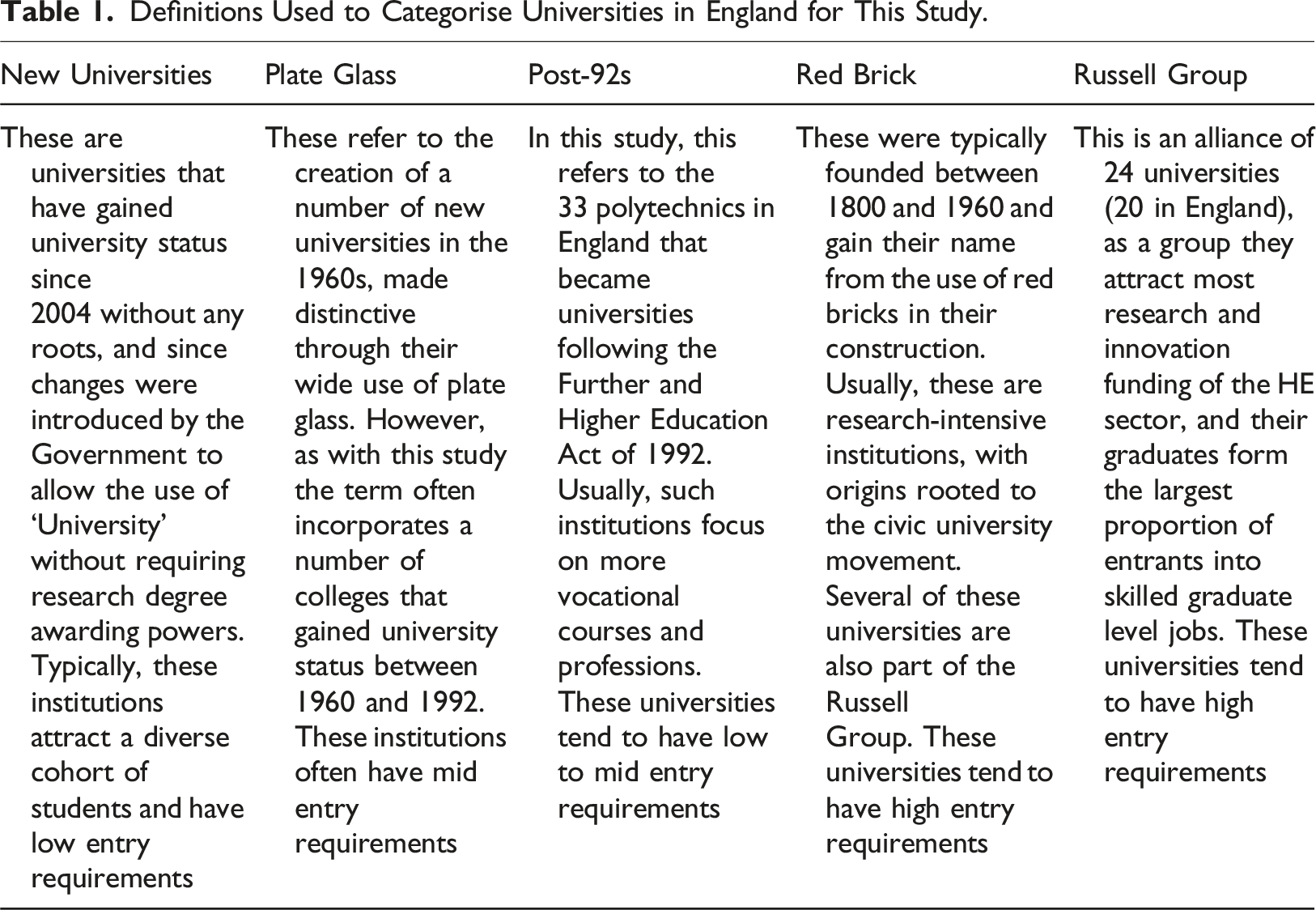
Figure 1 shows that there was a 4-stage approach to this study. The first two stages focused on the collection and ordering of the data and the second two focused on the analysis of the data to provide robust insights. The process of assembling a corpus of this kind was selective to illustrate the APPs for the period 2020-2024 from across the HE sector, specifically of universities in England. Therefore, universities were found by membership groups/acknowledged groupings of universities as set out in previous studies such as Tate (2024) and Whyte (2015). This identified universities based upon their characteristics such as formal alliances and date of university recognition. Only recognised public universities were included in this study, therefore, alternative, private, and specialised Higher Education Providers were not included as part of this study. Process of data collection and analysis.
The groupings of corpora provide a broad range of universities. Those universities selected ensure that there was representation of the range of universities found in England’s HE sector. To choose those universities to be included in each corpora grouping, an alphabetical list of universities was written, and a cycle of every fifth university selected until five had been identified. It should be noted that universities were allocated to groupings based upon existing public information about memberships of the university, and the date it was recognised as a university. This approach provided a consistent and purposive approach to the parameters of our data sources, helping to potentially make more robust insights across corpora groupings (Baker, 2023). Where a university that appeared in more than one group was identified to be selected, but was already included in another grouping, the subsequent university in the list was selected instead.
Data analysis
In analysing the corpora there were two steps. First, there was an analysis of the corpora data using inbuilt analyses tools in the Sketch Engine software. Second, a Foucauldian Discourse Analysis (FDA) was utilised to consider the context in which the APPs were produced (Campbell, 2013) and thus helping to reveal implicit power relations. Here, it is important to note that whilst a FDA is rooted in post-structuralist theory, it is also grounded in constructivism as meaning is made from the actions and practices of entities and individuals involved in the texts (Khan and MacEachen, 2021). This means that through this study we take a post-structuralist lens to help trace the power relations that might exist through the texts and help to see the context and purpose in which the APPs were created (Fairclough, 1998). Furthermore, utilising a FDA approach helps to providing a better understanding of the potential histories and power developments that have given rise to the situation in which, for example, APPs have been developed (Foucault, 1991; Khan and MacEachen, 2021). Such power relations and narratives are important when a government directive or policy is reproduced in formal documents outlining universities’ strategic direction (Campbell, 2013; Fairclough, 1998). In particular, the FDA approach helps to highlight the ‘policy rhetoric’ and the way in which they might be embodied by entities and individuals (Sharp and Richardson, 2001). In this case, the policies focused on how universities are enacting widening participation initiatives and removing barriers to participation. Each text grouping was compiled using APPs from five universities for the period 2020-2024, and the analysis was conducted to show the differences in language relating to social mobility and HE across the different university groupings. Through identifying differences in the language, this formed the basis of the discussion which focuses on the perspectives and relative value different university groupings place on social mobility. In addition, through revealing power relations and context, there is potential for greater nuance in the discourse of the documents.
By using Sketch Engine, a range of outputs were produced for each text and for each grouping including the top 50 words, N-gram, and concordance for ‘social mobility’. This identification of the most frequently occurring words and phrases is important as this helps with identifying the repeated linguistic articulation that forms the basis of a discourse (Sharp and Richardson, 2001). By analysing each text, it ensured that any outliers could be identified, and action taken so that the whole data set for the grouping was not skewed. However, there were no outliers. Each analysis type was exported as a PDF for further analysis and ease of reference. Following that, the grouping of documents (each corpus) was analysed using a FDA, as described above, and then presented in a range of graphical and visual formats to aid in contrast and comparison in the data and help to illustrate the findings.
Findings
The findings from this study are insightful as they show how social mobility vocabulary varies across the different university groupings. Whilst each grouping has language related to widening participation, this is not necessarily to do with social mobility per se. Nonetheless, counting the number of times that social mobility is mentioned in the university groupings helps to illustrate the vocabulary used.
Figure 2 shows that all but one of the groupings had 12-20 mentions of social mobility. Interestingly in the Red Brick grouping, there were only 5 mentions of social mobility. There were two universities in the New Universities grouping that did not mention social mobility, two universities in the Plate Glass grouping that did not mention social mobility, and two universities in the Red Brick grouping that did not mention social mobility. Hence, 24% of the overall sample failed to mention social mobility at all in their APP. Graph showing the occurrence rate of the wording ‘Social Mobility’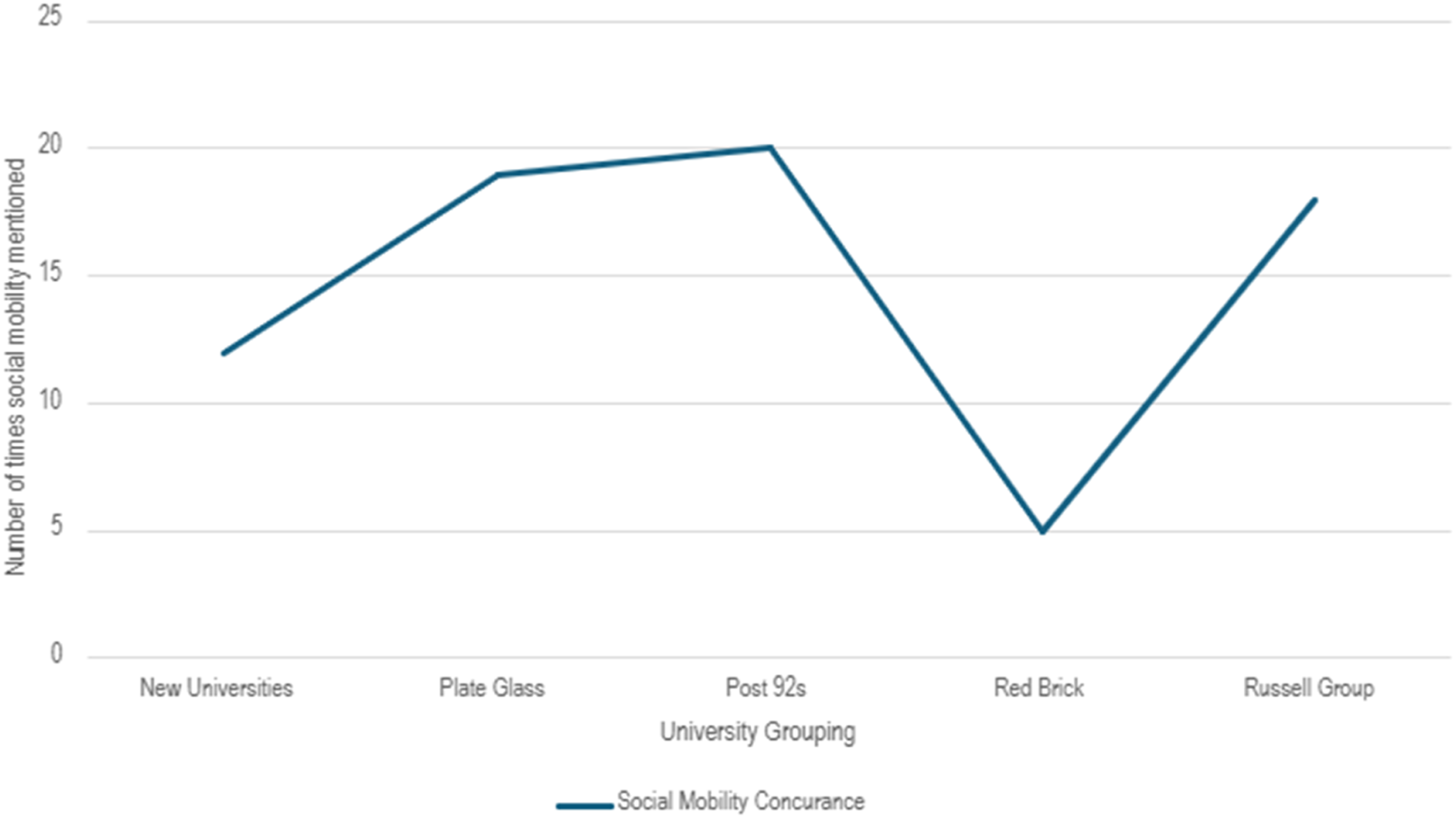
Figure 3 shows that there were only two keywords that appeared within the top 10 keywords. Here, ‘top 10’ refers to those that appeared most frequently across the 5 APPs in each university grouping. The two keywords that appeared across all groups were ‘Participation Plan’ and ‘Mature Student’. Whilst the former may be evident in the relationship to the documents that are being discussed, the latter is interesting in that this demographic was a particular focus. Nonetheless, as illustrated above, across the university groupings there appeared to be a commonality of vocabulary being used. In the case of the New Universities, Plate Glass, and Post-92s (pink highlighting), there was a slightly greater focus on particular student demographics, which appeared to align with the priority groups of the OfS. Each grouping had at least one keyword that was specific to that grouping in the top 10 keywords. These distinctive keywords were interesting as they provided insight to the area of focus that the grouping might have in terms of the rhetoric and focus for social mobility. Table of top 10 keywords for each university grouping.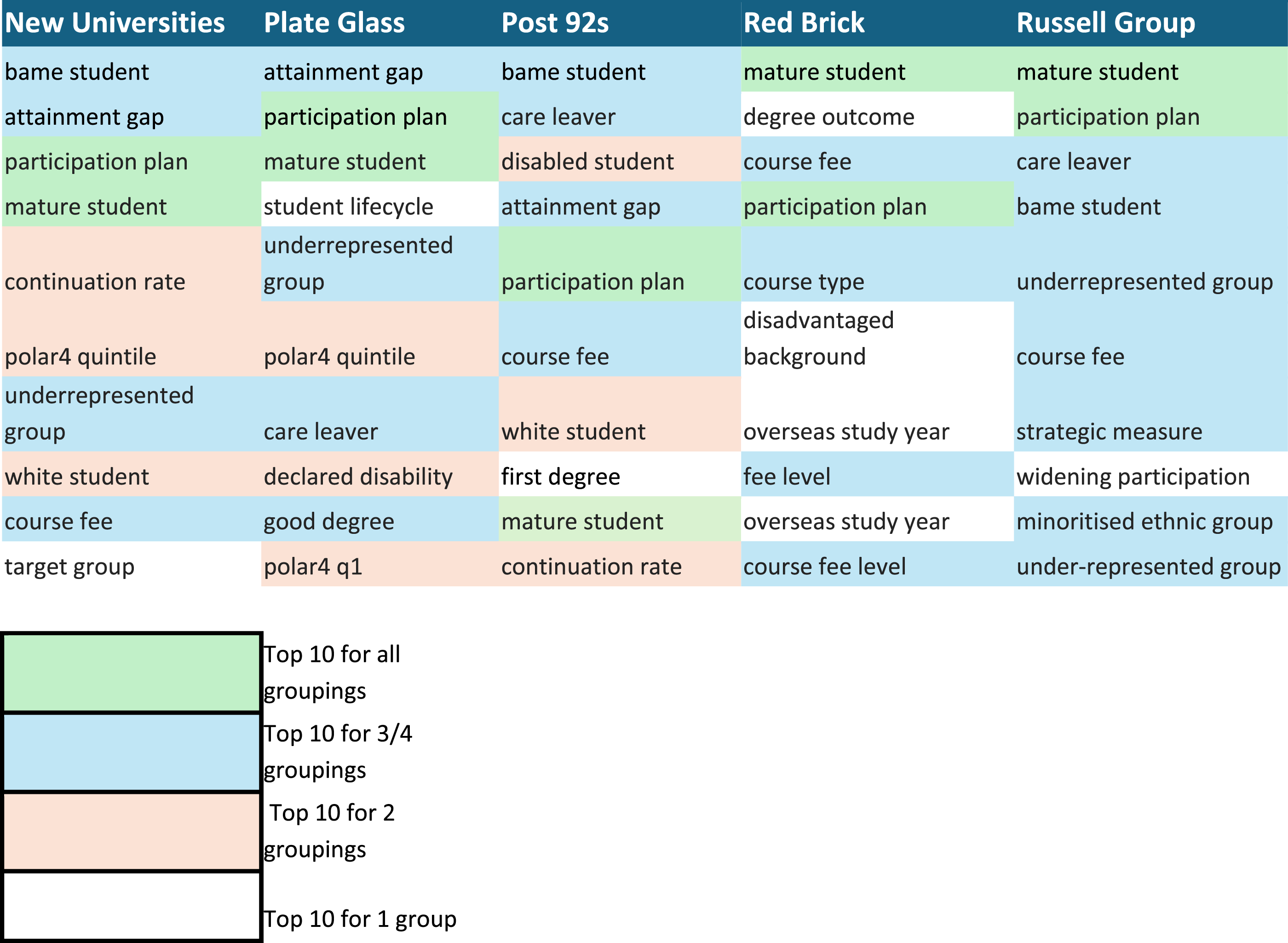
Figure 4 shows the occurrence rate of the codes in the N-gram outputs. This represents the number of times that a word had been allocated to that particular code. It is based on the production of the top 15 N-grams for each university grouping. This allowed for 8 codes and one ‘other’ category to be produced. These codes were driven through inductive categorisation based upon the reading and data from the APPs. These codes were useful as they provide insight to the tone and focus of the APPs for the grouping. Whilst there was a large uniformity to the code occurrence rate, nonetheless there are some points to note. First, the New Universities used more language related to governance matters and were the only grouping to mention the ‘OfS’ within the corpus analysis outputs (in 3 of the 15 N-grams). Second, the Plate Glass universities discussed ‘Erasmus’ and ‘International Students’ much more than any of the other universities, thus raising a question about why this is the case. Third, the Post-92 university grouping made strong statements of commitment and action, in contrast with New Universities. Finally, the Russell Group made no commitment or evidence of language committing them to action, within the top 15 N-grams. The language from the N-grams in Figure 4 provide nuance and highlights the potential demographics/audience of the university which is not evident in Figure 3 alone. Occurrence of codes in N-gram outputs.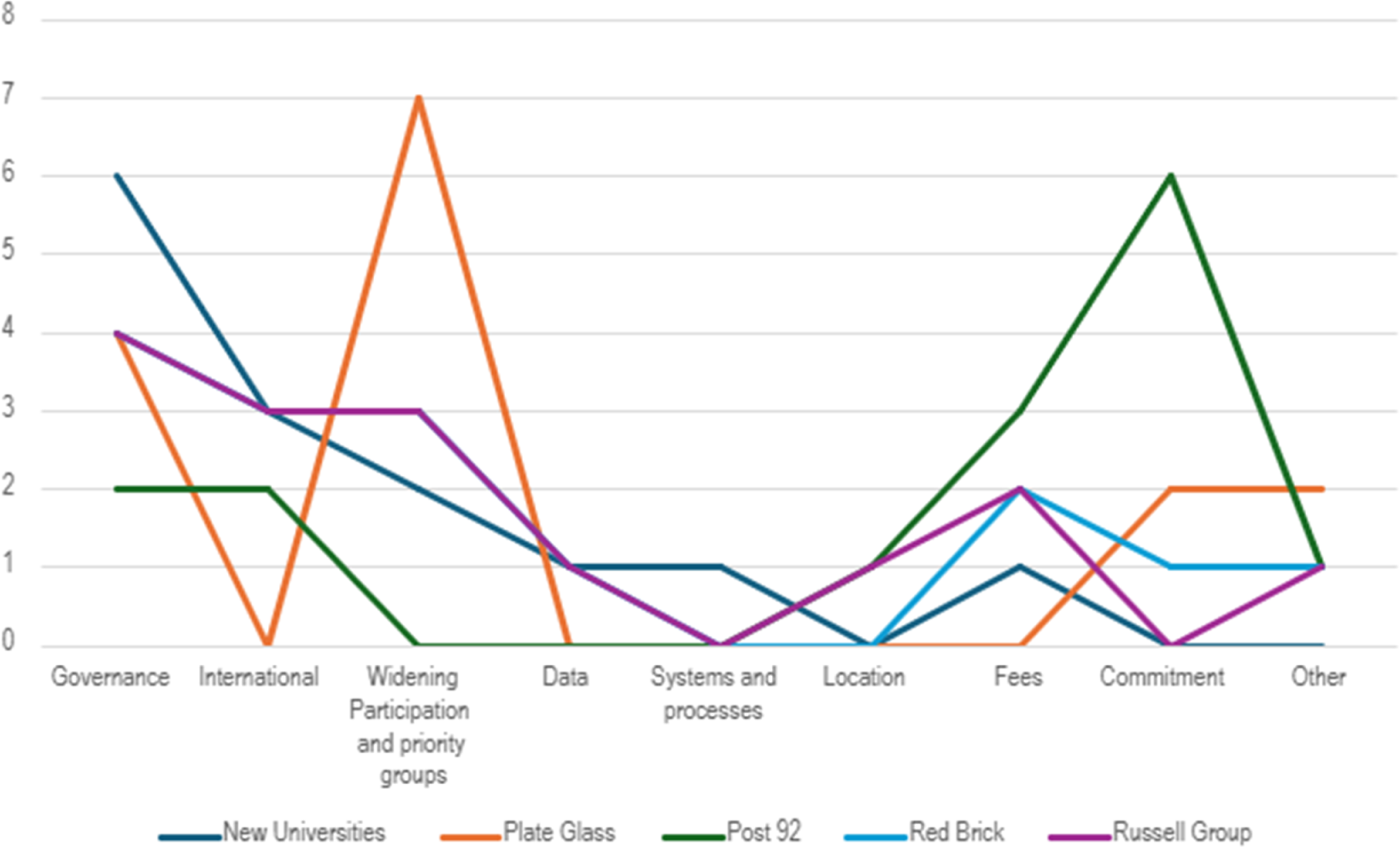
In line with the concept of biopower (Foucault, 1997, Foucault, 1978), universities are monitored by the regulator through providing numerous returns of data. This facilitates the systematic tracking of progress in relation to access and participation efforts. Some universities in their APPs discussed how they had established their own data dashboards to facilitate better internal monitoring of performance, thus arguably, encouraging self-policing by the schools and departments. Additionally, two universities in the sample mentioned the tracking of individual students from particular demographic groups to better understand the barriers they face and what the university could do in the future to address those challenges. Such tracking is reminiscent of the student body becoming an object that is legitimised for understanding, regulating, and shaping (Dean, 2013).
Analysis and discussion
The plans that we reviewed demonstrated examples of Foucault’s (1991) concept of governmentality, particularly in relation to the expectations placed on students to adopt specific market principles. The emphasis on developing employability skills within the APPs suggests that the institutions had embraced specific market values which were subsequently passed down onto students. It is clear from the plans that students were expected to progress from their degrees and into highly skilled ‘graduate’ employment. However, as Rainford (2019) has pointed out, these aspirations might not be aligned with students’ personal aspirations and goals for their futures. In addition, the identification of specific and distinct of student groups in the APP targets for monitoring purposes can be damaging. Students might not wish to be labelled in particular ways and treated as units of analysis and although this is seemingly done with good motivations in mind, labels and categories can create subtle and overt forms of othering. This was evident through the use of targeted interventions directed at specific population groups.
Foucault’s concept of hierarchical observation (Foucault, 1977) was evident through the way in which particular students are marked out, labelled and tracked. Foucault conceptualised that power operates horizontally as well as being hierarchical and is sometimes invisible and operates in silence. This was evident in the APPs that we reviewed through the way in which multiple job roles were created to ensure that students are recruited and retained. We suggest that students who are targeted for interventions, including those who are categorised as BAME, those from low socio-economic backgrounds and disabled students can rarely escape the gaze of surveillance (Foucault, 1977) which, in some respects, restricts students’ agency. Foucault’s concept of the norm (Foucault, 1977) was also evident in the APPs that we reviewed through the use of numerical targets for student recruitment, retention and employability. In addition, his concept of the examination (Foucault, 1977) was also evident through the use of disability assessments, assessment of student mental health, and fitness to practice policies. The idea of the Panopticon also is evident through the ongoing and intensive disclosure of data to the OfS, meaning that universities modify their practices as they face potential scrutiny in relation to their APPs.
The findings reveal that across our sample, there was a greater emphasis on social mobility in the APPs in the Post-92 institutions. This is perhaps unsurprising given that these institutions were originally created to attract students who might not have gained access to more elite institutions (Rainford, 2019). Furthermore, Post-92 universities have often been marketed as vocational institutions (Sumner, 2023). Interestingly, the Russell Group universities in our sample also had a focus on social mobility in their APPs. In recent years, these institutions have come under increasing scrutiny from the media, due to their status as elite institutions and their emphasis on recruiting younger students from fee-paying independent schools. This scrutiny has highlighted recruitment policies which disadvantage students from state schools and which, arguably, contribute to cycles of intergenerational poverty (Boliver, 2017). One of the consequences of inequitable recruitment policies is that some Russell Group institutions have started to offer funded scholarships to increase the recruitment of students from disadvantaged backgrounds, such as the Stormzy Scholarship which aims to recruit more Black UK students to the University of Cambridge. However, as discussed by Madriaga (2023), even with the likes of scholarships and initiatives to support specific groups, the structural barriers prevent meaningful inclusion of marginalised groups.
The institutions which were least likely to mention social mobility were the Red Brick institutions and interestingly, two of the institutions in this group made no mention of social mobility in their APPs. It is possible that the Red Brick institutions, which arguably are positioned between Russell Group and Post-92 institutions, are seeking to establish their identities as research-intensive rather than teaching-intensive universities. Therefore, these institutions might be attempting to recruit particular types of students, that is, those who are able, self-sufficient and productive and are motivated to take up a position in the graduate labour market. Nonetheless, there is a perceived politics as to the ‘status’ of particular universities in terms of the ‘type’ of student they attract (Boliver, 2017; Clark and Hordosy, 2019). These are neoliberal students; they enable universities to thrive in league tables which measure both teaching and research excellence because they complete their degrees and gain highly skilled graduate employment (a measure of teaching excellence) (Mintz, 2021). However, their self-sufficiency and independence also does not detract academic staff away from their research. Here, there is a focus on use of large data sets and key metrics as proxies for student success, such as continuation from one stage or phase of an academic programme to another, and the number of ‘good degree’ (2:1 or 1st) outcomes (Williamson, 2019).
We therefore argue that the commitment of HE institutions to social justice is likely to be dependent on the type of institution, the history of the institution, as well as performance in teaching and research league tables. Although universities should be committed to widening access and participation for all, some institutions might not be willing to take a risk by recruiting students who might not complete their academic programmes, might not take up highly skilled employment after leaving and might require high levels of support, thus, potentially distracting staff from research commitments (Evans et al., 2015; Rainford, 2019). We argue that university league tables, such as the Teaching Excellence Framework (TEF) and the Research Excellence Framework (REF) in the UK might be, at least in part, responsible for limiting institutional commitments to social mobility. Additionally, financial stability seems a key driver rather than a social driver for universities. This is particularly the case in a neoliberal, marketised sector which positions universities as competitors (Tate, 2024), with each vying for funding from students. Student decisions about which university to attend may also be influenced by league table rankings. Additionally, government-funding can also be influenced by performance in key metrics such as research excellence, and therefore if university ranks lower on league tables, it may have less access to funding.
One of the problems is that policies of access and participation are underpinned by practices which focus on raising aspirations of specific students, including those who are disadvantaged. However, policy continues to adopt a narrow view of what counts as aspiration. Thus, policy aspirations tend to promote middle-class and mobile futures (Boliver, 2017; Loveday, 2015), but these may not be the aspirations that young people hold for themselves (Rainford, 2021). Policy discourse positions students as future workers (Brooks, 2018), undertaking highly skilled graduate level jobs and relocating to big cities to chase a graduate salary. As Rainford (2021) argues, students who do not hold these aspirations are viewed through a deficit lens, with students who choose not to attend university being positioned as lacking aspiration. This narrow framing of what counts as success needs to be broadened out so that future careers are not placed in hierarchy and so that middle-class lifestyles are not seen as the only successful future life.
That said, we believe that all students have the right to attend university, should they wish to do so. University education plays a fundamental role in shaping students’ values, attitudes and ultimately their life chances. We are concerned about the variability in universities’ commitment to social mobility in the APPs that we reviewed. We are also concerned that APPs place students into distinct groups, for example, those who are white, disabled, mature, black and minority ethnic (BAME), Polar 4, among others. Our concern specifically relates to the lack of attention in APPs to intersectional identities. From this, we conclude that students who are Lesbian, Gay, Bisexual and Trans/Transgender or Queer (LGBTQ+) are not an OfS priority group to target for accessing HE. There was no mention in the plans of students who are LGBTQ+ and disabled, students of colour who are also disabled and/or LGBTQ+, and White students who are disabled and/or LGBTQ+. We are also concerned that specific priority groups that are mentioned by the Department for Education (DfE) (2024) differ to the priority groups that are mentioned by the OfS. Given that these two organisations are both responsible for HE in England, this ambiguity within policy documents can result in different universities prioritising different groups, which arguably, is unhelpful and will result in limiting access. For example, students with English as an Additional Language, is identified as a priority group for the DfE for measuring widening participation, but in contrast this is not considered by the OfS. Similarly, as previously discussed, students eligible for FSM is also a DfE measure, but this is not a priority group for the OfS. We assume that this is due to the DfE being primarily concerned with all phases of education, not just HE. The OfS is concerned with regulating a sector with 26% of the student body being non-home students, therefore certain measures may not be available or as relevant for HE compared to primary and secondary education.
Our data show that across our sample of universities, APPs generally did not give enough attention to systems and processes which will promote equity. There was also a lack of attention to outlining the commitments that the universities intended to make to promote access and participation, with the exception of Plate Glass universities and Post-92 institutions, which outlined their commitments. We find it concerning that Russell Group institutions and New Universities made no commitments to access and participation in their plans across the sample of plans that we reviewed. In relation to widening participation and priority groupings, Plate Glass universities gave more attention to this, but interestingly, Post-92 institutions gave less attention to this aspect in their plans. Across our sample, Russell Group universities and New Universities gave the highest attention to international students, but Plate Glass institutions did not focus on this particular group of students.
Our findings highlight variable levels of commitment to social mobility and social justice across the sample. Even where plans refer to widening participation and to specific groups of students, these are not always underpinned by a set of clearly stated commitments which are outlined on the plans. In addition, across nearly all institutions in the sample, plans did not give adequate attention to the systems and processes needed to secure access and participation. There was also a lack of emphasis throughout most of the plans on the location of the institution and how location can become a barrier to access and participation.
Through a post-structuralist approach, utilising the FDA, there are clear flows of power within our corpus data particularly when considered the qualitative data aspects (Khan and MacEachen, 2021). Much of the language utilised across the corpora mirror that of the OfS expectations for continuing fulfilment of the conditions of recognition for universities to be HE providers in England. Key aspects of those OfS registration conditions include reporting and acting on ‘continuation rates’, which were captured within the top 10 keywords for two of the five groupings. Interestingly, there seems to be a correlation in APPs where there is a stronger likelihood of a keyword across all or most of the groupings occurring if it is a an OfS requirement/focus, for example, mature students. Interestingly, where the OfS has targeted a particular university grouping for the need to widen participation, APPs in that grouping appeared to have responded by including a response/discussion on that, for example, the Russell Group reaching under-represented groups. Our data show a clear power dynamic within the production of APPs, and, due to this, universities appear to be more restricted in how they create their APPs. Furthermore, some universities appear to be reluctant to outline specific commitments in their APPs to certain groups of students. In line with Foucault’s (1977) ideas, universities are clearly influenced by the power of the regulator (in this case, the OfS) for fear of ramifications to their registration. There is a clear power dynamic in determining who is a ‘priority’, and who might be subject to widening participation activities. This raises questions about certain bodies becoming a politicised entity becoming a ‘site’ of intervention that can be measured and monitored (Dean, 2013; Foucault, 1977). We argue that the arms-length monitoring of universities performance against the OfS performance indicators and the public nature of APPs are examples of Foucault’s concept of hierarchical observation. In addition, the institutional submission of data to the OfS is an example of Foucault’s concept of the examination and the introduction of national benchmarks data against which institutions can evaluate their own performance against the OfS performance indicators is an example of Foucault’s concept of the norm. All are examples of Foucault’s concept of governmentality.
Conclusion
The language used in APPs for universities in England shows that there is a much greater focus on social justice, seeking to provide a more encompassing approach to widening participation for a range of demographic groups. Where social mobility is mentioned, it is often used alongside other widening participation vocabulary and is used almost interchangeably with social justice. The emphasis on priority groups within the APPs suggests that the universities in our sample were trapped in a cycle of compliance by addressing the requirements of the regulator. However, APPs without tangible commitments risk being of limited value to broader efforts to supporting all under-represented and minority groups in England’s universities. However, the results show that there is a general rhetoric relating to widening participation and social justice. We found that in our sample it was only the Post-92 universities that provide prominent tangible commitments to enabling that to happen. For example, one university noted the lack of neurodiverse students being supported and committed to a 1.2% increase in its student body of students with Cognitive and Learning Disabilities.
Our findings demonstrate that there is variability across different groupings of universities in relation to their emphasis on social mobility and social justice. Importantly, we found that APPs do not always outline specific commitments to students which will guarantee access and participation, nor do they always outline the systems and processes which institutions have established to secure access and participation. The priority given to university location and fee arrangements to secure access and participation is also variable across the different groupings of universities, but, in the main, plans give inadequate attention to these aspects. The lack of attention to stating commitments, lack of reference to systems and processes, and lack of attention to location and student fees, while at the same time emphasising university governance structures, illustrate the gap between policy and practice. Access and participation, and therefore social mobility and social justice, are not facilitated through the words used but by actions on the ground. Actions can only be implemented if there are clearly stated public commitments that will meaningfully enable access and participation and against which the university can be held accountable. In addition, access and participation can only be enabled if there are systems and processes in place to translate the rhetoric of university policies into practice. By focusing on particular groups of students, universities then prioritise working with those groups resulting in a lack of support and equity for other under-represented groups (Bhopal and Pitkin, 2020). Therefore, it shows an extent of performativity by universities, to meet the OfS conditions, to have an APP in place.
There are several implications arising from this study. First, university leaders need to clearly state their commitments which they will enact to guarantee access and participation. Second, universities need to consider more carefully the policies, systems and processes which need to be established to ensure access and participation, including considerations about location of study and student fees. Third, universities need to give increased attention to students’ intersectional identities, particularly given that overlapping identities can result in multiple inequalities. Fourth, there is a need for HE regulators to agree which groups of students are to be classed as priority groups, given the disparity which currently exists in relation to this. Fifth, universities should consider ways of enabling access including the use of technology, flexible programmes of study, shortened programmes and the delivery of HE within communities. Finally, the needs of students in non-priority groups require consideration, both at policy level and at operational level. Universities should be driving social mobility and social justice for all students and therefore facilitating access and participation for all. There is a danger that the identification of priority groups in APPs and in national policies can result in the systemic exclusion of students who fall outside of these priority groups. It is important that access and participation arrangements focus on facilitating inclusion for all, rather than limiting the focus to specific identified groups.
The limitations of the study need to be acknowledged. First, data were drawn from a small sample of 25 institutions. The relatively small sample, and the focus on England, limits the generalisability of the findings. We also acknowledge that the focus on analysing documents limits the validity of the findings.
This is the first study to use a Foucauldian Discourse Analysis approach to provide an insight into how APPs for universities in England articulate their commitments to widening participation in terms of social mobility. Specifically, the study has shown how social mobility appears to be disappearing from the lexicon used in widening participation in England’s HE sector. It shows that universities have an increasing focus on particular student groups to the detriment of others and that could lead to further exclusion for other student groups. Future research could explore the research questions on a larger scale using survey data and validity could be strengthened by collecting qualitative interview data from staff and students. We also recognise that there may have been changes in the approach to APPs by the OfS for the strategic cycle 2025-2030.
Footnotes
Declaration of conflicting interests
The authors declared no potential conflicts of interest with respect to the research, authorship, and/or publication of this article.
Funding
The authors received no financial support for the research, authorship, and/or publication of this article.
Ethical Considerations
As the data used is publicly available documents, and involved no primary data. As this study draws upon secondary sources in the public domain and did not involve human or animal participants, institutional ethical approval was not required. Nonetheless, to help protect institutions, the names of universities for this study are anonymised.

Data Availability Statement
Anonymised data is available upon request from the authors.