



Abstract
In spite of a recruitment drive in Scotland, little is known about where and whether Widening Participation students see their inclusion in the university setting, or what helps education students from a WP background to feel included. The current project explored education students’ perceptions of inclusion at a Scottish university. A total of N = 66 students responded to a survey or took part in a focus group to determine their individual definitions of inclusion and then perceptions of inclusion both inside the university classroom and within the student body. Definitions of inclusion typically focused on meeting learners’ needs and equality of access for all learners. Reflexive thematic analysis was used to explore participants’ perceptions of their own inclusion. Findings revealed that inclusion (and lack of inclusion) happened at different levels within the university. There were positive experiences of inclusion with themes of classroom engagement, lecturer approachability, and an inclusive course ethos. Students also identified areas where they felt a greater sense of inclusion could be achieved. We discuss the implications of these findings in terms of support for WP education students.
In the United Kingdom, higher education institutions (HEIs) focus on an inclusive approach to university education, driven by an equal opportunities framework (e.g. Quality Assurance Agency for Higher Education, 2023). In Scotland, in particular, Jenny Gilruth states that the Scottish Government’s steadfast commitment to free tuition means that, unlike elsewhere in the United Kingdom, Scottish students studying in Scotland do not incur additional debt…this government is committed to the right to free education (Scottish Government, 2024: 21).
Part of this drive towards access to education for all may be seen in schemes at universities, which encourage students with the academic potential to apply, regardless of their background. Many universities now have Widening Participation [WP] programmes. Such schemes typically focus on both access to and retention of students from diverse backgrounds. Nonetheless, the national drive to recruit these students is not necessarily matched with commensurate measures to help these students when they arrive at university, nor with efforts to account for their lived experience or cultural capital in the content of the curriculum (e.g. Neves and Brown, 2022). This paper pertains to research which aims to foreground WP Education students’ thoughts around inclusion and belonging at one university in Scotland, their perceptions of inclusion, and what would enhance their sense of inclusion at university.
Higher education in Scotland
In Scotland, United Kingdom, political narratives emphasize equal access to university as a means of promoting social inclusivity. As a result, higher education (HE) tuition is fully funded by the government for Scottish domiciled (home) students (Lasselle, 2016; Rainford, 2016). This approach contrasts with policies in England and Wales, United Kingdom, where neoliberal frameworks treat HE as a private product funded by individual students. In direct parallel with Scottish policy, education students in Scotland, including student-teachers, learn about inclusion in relation to professional values, that is, ‘that everyone deserves equal economic, political, and social rights’ (GTCS, 2021, online). In other words, breaking down barriers to education is not only the work of university access programmes; it is also taught as a core professional value to education students for their later career. The dual messaging around inclusion, for both Scottish university and school education, and the ways that WP education students see inclusion, given this messaging, are the topic of the current research.
Who is a ‘WP’ student?
A WP agenda exists concurrent to university access policies in many European countries, as well as in the United Kingdom and Australia (Osborne, 2003). This is especially targeted at traditionally under-represented groups, who often face institutional inequalities in the education system that contribute to qualification-awarding gaps in school (Vignoles and Murray, 2016). The notion of who counts as a WP student is not static, nor formally defined. However, WP is widely recognized as an overarching term encompassing fully or partially government-funded strategic initiatives aimed at addressing educational disparities and achieving proportional representation in HEIs for under-represented groups (e.g. Tham et al., 2023). For the purpose of the present paper, students who are typically targeted by universities’ outreach programmes will be referred to as ‘WP students’, and consist of students that fall into one or more of the following categories: disabled students, students with a Global Majority ethnic identity, first in household to attend university, those who accessed further education (a HNC or HND) to attend university, a student-parent or carer and care-experienced students. Further to this, male students studying education are also seen as WP students, as they are an under-represented group in teaching. (e.g., General Teaching Council for Scotland, 2024).
Conceptualizing inclusion in HE
One ongoing challenge in this area is the absence of a consistent definition or theory of inclusion (e.g. Florian and Spratt, 2013), when considering who counts as a WP student (or indeed when considering the inclusion of any student). Some researchers conceptualize inclusion by contrasting it with integration. Integration refers to those disabled students (per se) who are able to conform to the standardized requirements of mainstream institutions, while (genuine) inclusion entails a comprehensive transformation of content, teaching methods, and pedagogy to ensure an equitable and participatory learning experience for everyone (Hehir et al., 2016). Others have tried to categorize inclusion definitions (Göransson and Nilholm, 2014).
Whilst in recent decades HEIs have increasingly recognized that promoting inclusion should be regarded as priority, research shows a lack of consensus on what inclusion ‘is’, and thus which values and practices must be implemented within an inclusive institution (Stentiford and Koutsouris, 2020). Much of the research in this area has considered ‘what is it’ and ‘how to measure it’ when it comes to conceptions of inclusive education of staff in HE. For instance, 119 faculty members across 10 Spanish universities were selected by students as having practised inclusive pedagogy and were interviewed as part of a study aiming to explore their knowledge and beliefs around inclusive HE (Marquez and Melero-Aguilar, 2022).
Marquez and Melero-Aguilar (2022) found that staff definitions of inclusion fell into three categories, 1) equal access for all; 2) attention to students with disabilities [sic]; or 3) inclusive teaching practices. In a similar study, Collins et al. (2019) interviewed university students and staff, finding that inclusion practice in HE remains largely driven by adjustments for individual students, rather than environmental change. For Marquez and Melero-Aguilar (2022) too, inclusion largely focused on disabled students. For instance, some participants emphasized the impact that adjusting teaching practices to disabled students’ additional needs would have, whereas others placed responsibility on support services to develop adjustments for disabled students. In the United Kingdom, disabled students, as well as women pursuing high-skill jobs, mature students, and individuals from low socio-economic backgrounds are considered as being the most in need of a focus on their inclusion, having been historically under-represented in HE (Hubble et al., 2021).
It could be argued that this lack of consensus reflects the complexity of the matter of inclusion itself. For instance, Stentiford and Koutsouris (2020) argue that acknowledging inclusion as being multi-faceted and complex may be a motivator for HEIs to engage in deeper reflection on how inclusion is conceptualized. Given the lack of consensus around the nature of inclusion and how to practise it, we asked our participants to define how they see inclusion in educational settings before asking them whether they felt included in the Division and why.
What about inclusion in education degree programmes?
Despite the broad agreement on the need for HEIs to prioritize inclusive practices, as well as WP endeavours, little is known about the views of education students regarding their own inclusion in university. One exception to this is Gibson et al. (2016). Gibson et al. questioned 373 education undergraduates and eight academics in six universities, internationally. Their participants highlighted a need to be known by their lecturers and by their peer group as important for inclusion, to enable sharing of experiences. They also highlighted that terms such as ‘non-traditional’ or ‘diverse’ when referring to under-represented student groups in efforts towards inclusion, paradoxically adds to their exclusion.
This gap is important because Stentiford and Koutsouris (2022) emphasize how disciplinary contexts shape understandings of inclusion. For instance, nursing educators face challenges in balancing curriculum modifications to promote values like equal access, participation, and social justice, with professional fitness-to-practice requirements. Similar issues present themselves in teacher education, where students must also transition safely and proficiently into the workplace. These considerations may place constraints on the extent to which some students can be included on specific courses. However, as highlighted above, there is a paucity of Scottish studies on education students’ perceptions of their inclusion and none that could be found that looked at the WP status of the students themselves. For these reasons, WP and non-WP education students’ definitions of, and perceptions of inclusion at the university were researched.
What about belonging?
Work on belonging has linked it to characteristics typically considered under WP schemes. Low retention may be associated with a low sense of university belonging (e.g. Meehan and Howells, 2017), poor relationships with student-peers (e.g. Pike and Harrison, 2011), or low-quality relationships with academic staff (e.g. Morgan, 2015). Fernandez et al. (2023) interviewed 36 UK university students to examine (1) students’ definitions of belonging to university, and (2) how these conceptualizations are shaped by their gender and social class, and intersections of these identities. Intersectionality refers to the idea that within a hierarchy of power, multiple identities are interconnected rather than independent (Crenshaw, 1991), jointly shaping human experiences. In this way, when marginalized social identities intersect at the individual level (e.g. race and gender), the experiences arising from these intersections are shaped by broader interpersonal and systemic forms of oppression, such as racism and sexism combined. This is important because Fernandez et al. found that students defined belonging as being about presenting their authentic (whole) selves and being able to perceive similarity with other students. Paradoxically, it was identity-based experiences that were cited to support a sense of not belonging.
At the Scottish university under study, WP students have previously reported that inconsistency in teaching styles and low lecturer approachability contribute to a lack of belonging (Breeze et al., 2018). Furthermore, WP students have reported that commitments outside of university (e.g. caring commitments) make workshops (to which students can bring their authentic selves) aimed at increasing course understanding, engagement and relationships among staff and students, and difficult or even impossible to attend (Breeze et al., 2018). For these reasons, belonging was interrogated alongside inclusion in this study.
Present study
In HE in the United Kingdom, there is a drive towards greater access of opportunity and inclusion of all students. At the same time, in UK school education, there is a focus on inclusion as a core value of teachers’ professional practice, and a plethora of research concerning its definition and practice. However, relatively little research has looked at (a) inclusion in HE or (b) the experiences of WP students in Scottish HEIs. None have looked at how education students (and student-teachers), who are also WP students, experience inclusion in Scottish HEIs. In addition, there is no consensual definition or theory surrounding inclusion in HE.
Drawing the above threads together, we focused here on education students’ thinking around their own inclusion and belonging in educational settings. Recognizing that different students prefer different response styles, and to be as inclusive in our data-gathering approach as possible, we used a choice of questionnaire or focus group to explore WP and non-WP education students’ conceptualizations and experiences of inclusion and belonging at Queen Margaret University, through closed and open-ended questions. We also explored, in line with the above arguments, whether there were differences in WP students’ and non-WP students’ responses.
Methods
Researcher positionality
This analysis was conducted by a team of female researchers. It is important to acknowledge that personal experiences may impact our interpretation and analysis of the data as each of us had studied in a UK university. By employing reflexivity, in our analysis we aimed to enhance the rigour and objectivity of the research.
One researcher is acutely aware of the way in which universities attempt to include students as an academic researcher in this field. She is also aware of the minority stress that some students face, as a queer, disabled academic. She also had a professional relationship with the participants. Therefore, she did not engage with the data collection, and only accessed data after qualitative aspects were suitably transcribed and anonymized and engaged in careful reflection on assumptions and interpretations of participant responses with the research team.
Other researchers had personal experiences during their time as BSc (Hons) Psychology students at [named] University and remained involved with the University. This has led them to experience Queen Margaret University as a student, first, and subsequently as a member of staff. They were therefore familiar with, and could relate to, some of the aspects of the university highlighted by participants, such as more course-specific issues, or the benefits and drawbacks of having mixed seminars with students enrolled in different programmes. One researcher also works as a psychological therapist and was aware that this may further affect the direction and focus of her interpretations of participants’ accounts during the analytic process.
Throughout the data collection and analysis, we endeavoured not to influence the process with personal experiences and expectations, but rather to keep the interpretation grounded in the data. This was done through self-reflection, as well as reflection and collaboration with the research team.
Participants and recruitment
Participants and widening participation.
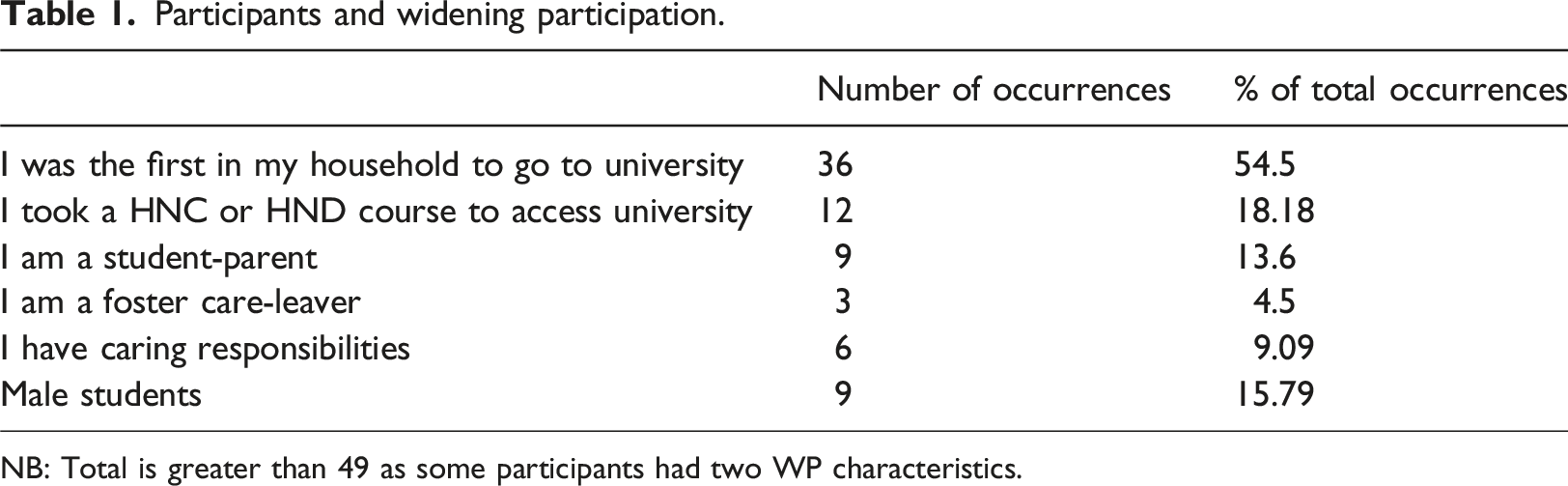
NB: Total is greater than 49 as some participants had two WP characteristics.
Since these data are part of a larger cohort study of 259 education students, we can compare these data to those for the overall degree cohort study. A higher percentage of the sample here (81.1%) identified as having at least one WP characteristic, compared to 67% of the overall cohort. Disabled students made up 9.2% of the cohort, in contrast with 13% of the sample here. Students with a Global Ethnic Majority identity accounted for 4% of this sample, compared with 4% of the overall degree cohort.
Ethics
Ethical approval was received from the University Ethics Committee and informed consent was received from all participants both orally and in writing. The consent procedure paid particular attention to the possibility of distress and the support available from the university, as well as their right to withdraw. All names have been anonymized in the data where they were mentioned.
Materials and procedure
Participants either took part in a focus group (N = 9) on Microsoft Teams or completed an online survey (N = 57) on the JISC survey platform asking about their own understandings and experiences of inclusion at the university. Focus groups were conducted by Research Assistants unfamiliar to the students.
Participants were first provided an information sheet and consent form.
Demographic information
In both cases, data collection started with an online form with general demographic questions regarding age, gender identity, the WP characteristics, and ethnicity.
Definitions of inclusion
Following this was a question on participants’ own definition of inclusion ‘How would you define inclusion in educational settings?’
Exploring inclusion and belonging
This was followed by a series of focus group or survey questions regarding belonging and inclusion at [Queen Margaret University]. Survey participants were asked three questions relating to relationships with other students, their relationships with lecturers, and their lived experiences of inclusion within university, namely, ‘Is the Division of education at [named] university inclusive?’, ‘Do you feel included in the university classroom?’, and ‘Do you feel close to other education students at [Queen Margaret University]?’ These questions prompted a ‘yes’, ‘no’, or ‘somewhat’ response, followed by space for elaboration for their given answer, ‘Please tell me about why you said that’.
In contrast, focus group participants were asked the same three questions, without the closed response options and encouraged to explore their answer, with prompts from the focus group schedule. All participants were also asked, ‘What helps/would help you to feel (more) included in the university classroom?’ and ‘Can you describe the nature of your interactions with people on your programme of study, and with your lecturers?’ as open-ended questions. A copy of the full questionnaire and schedule is available on the OSF [https://osf.io/k7uf2/].
Upon completion of the survey or focus group, participants were debriefed and signposted to the support services available to them should they wish to talk further about their belonging or inclusion. They were also given their £20 Love2Shop voucher for participation in a focus group or entry into a £50 Love2Shop voucher prize draw for the survey.
Analysis plan
Following transcription and anonymization of audio data, and extraction from the survey database, the first area that was examined was participants’ definitions of inclusion using qualitative content analysis (Elo and Kyngäs, 2008). Next, quantitative analyses were applied to the closed-ended questions asked of the survey participants to look at the frequency of each response and differences between WP and non-WP students. Then, reflexive thematic analysis (Braun and Clarke, 2021) was applied to examine the ways in which students saw (non-) inclusion and belonging in the university setting. Each analysis is described in more detail below.
Results
Definitions of inclusion
Categories and codes: Definitions of inclusion in educational settings.
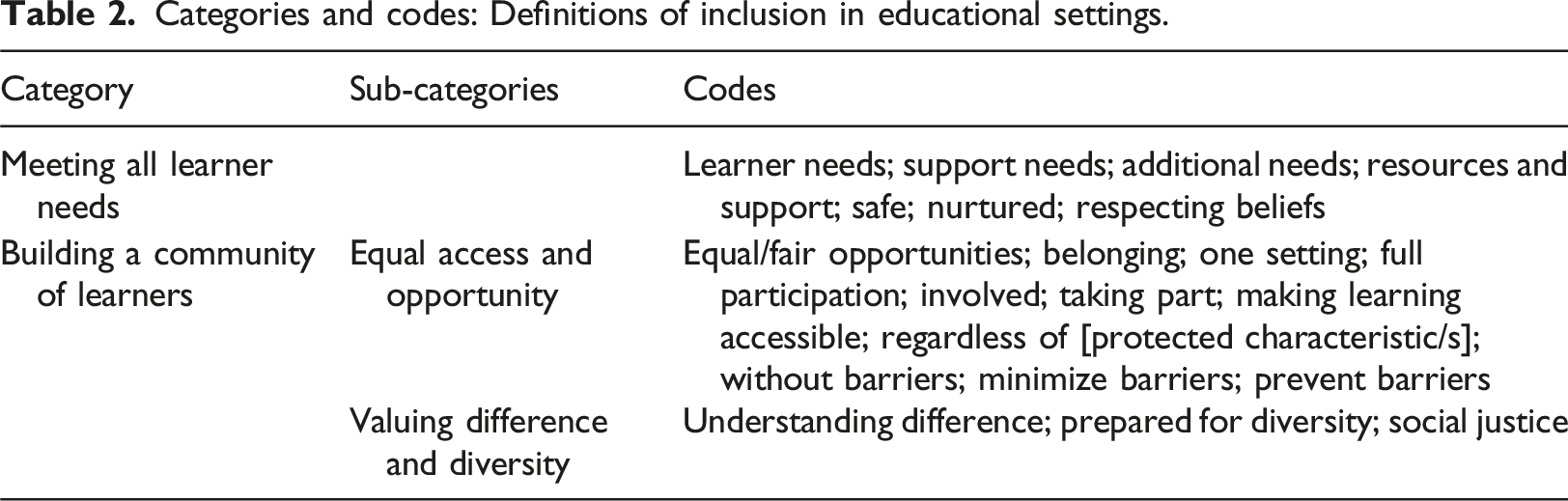
Category: Meeting the needs of all learners. This category captured 12 participants’ definitions, three of whom defined inclusion simply as: meeting the needs of all learners.
The onus on these definitions was on individual adjustments, considering their needs to enable them to meet their potential (Survey, WP student)
Also under this category was a focus not on disabled students but on all learners, thinking about everyone in the setting even if they don’t have any specific needs or requirements. (Survey, non-WP student)
In this way, the narrative in these definitions was about meeting everyone’s individual needs.
Category: Equality of access and opportunity for all. This category was closest to Göransson and Nilholm (2014)’s concept of a community of learners and captured the most (29) definitions. It saw equality as a goal of inclusion. For example, an environment where everyone’s voices are valued and heard and opinions are challenged and discussed in a safe space where everyone is able to access all aspects of school both social and academic. (Focus Group, WP student)
or everyone is able to access the curriculum in a form that is suited to them. It does not have to be the same as others but as long as it works for them. (Focus Group, WP student)
Similarly, being treated equally regardless of disability/ability, gender, ethnicity, age (Survey, non-WP student)
The focus among these definitions was on equality, regardless of identity, and a sense that everyone was able to access the same educational experiences. Many definitions additionally mentioned specific minoritized groups within these definitions, for example; Everyone having the same opportunities regardless of background, upbringing, living situation, financial situation (Survey, non-WP student)
The overall sense here was around the aim of inclusion, as equality. A further 6 participants spoke about barriers to education. The following extract mentions barriers to inclusion, … There are many barriers to inclusion, for example, Funding, resources. Inclusion means how society adapt to include an individual, rather than the individual changing to meet the social expectations. (Focus Group, WP student)
Barriers such as funding and resources further emphasizes the role of the social environment on maintaining an inclusive classroom. Further examples included, Ensuring a physical, social and learning environment that minimises/prevents barriers to active participation (Survey, WP student)
and All children in all classrooms receiving socially just education with barriers to learning being removed. This would also include real opportunities for children who had traditionally been excluded. (Survey, non-WP student)
The emphasis among definitions falling under this category was around the work of educational professionals to create structural change, rather than on individual adjustments for certain learners.
Category: Valuing the diversity and difference of learners. This category captured the voices of 6 students who highlighted the value of difference to a classroom, for example, respecting and valuing the needs and identities of students through the participation and access to learning and teaching. (Survey, WP student)
Similarly, participants talked about preparing for diversity and valuing difference, being prepared for diversities regardless of diagnosis or not and understanding that every child is different in their own right (Survey, WP student) involving and uplifting all voices within education regardless of their background (Survey, non-WP student)
and when differences are not a deterrent, but instead add something to the educational setting (Focus Group, WP student)
These extracts demonstrate a view that supports the inclusion of different groups of students in the classroom and focus on the benefits of those different characteristics to the wider educational experience.
Is the division of education inclusive?
Overall, the majority of survey participants found the Division of education per se at the institution to be somewhat inclusive (56.1%), and the remainder of participants (42.1%) reported that education is inclusive. No participant said that the Division is not inclusive. There was no difference in the perceptions of WP versus non-WP students in answer to these questions, χ2 (1) = 1.22, p = .269. This information is represented in Figure 1. Responses to ‘Is the education Division inclusive?’ among survey participants as a function of WP or non-WP identity.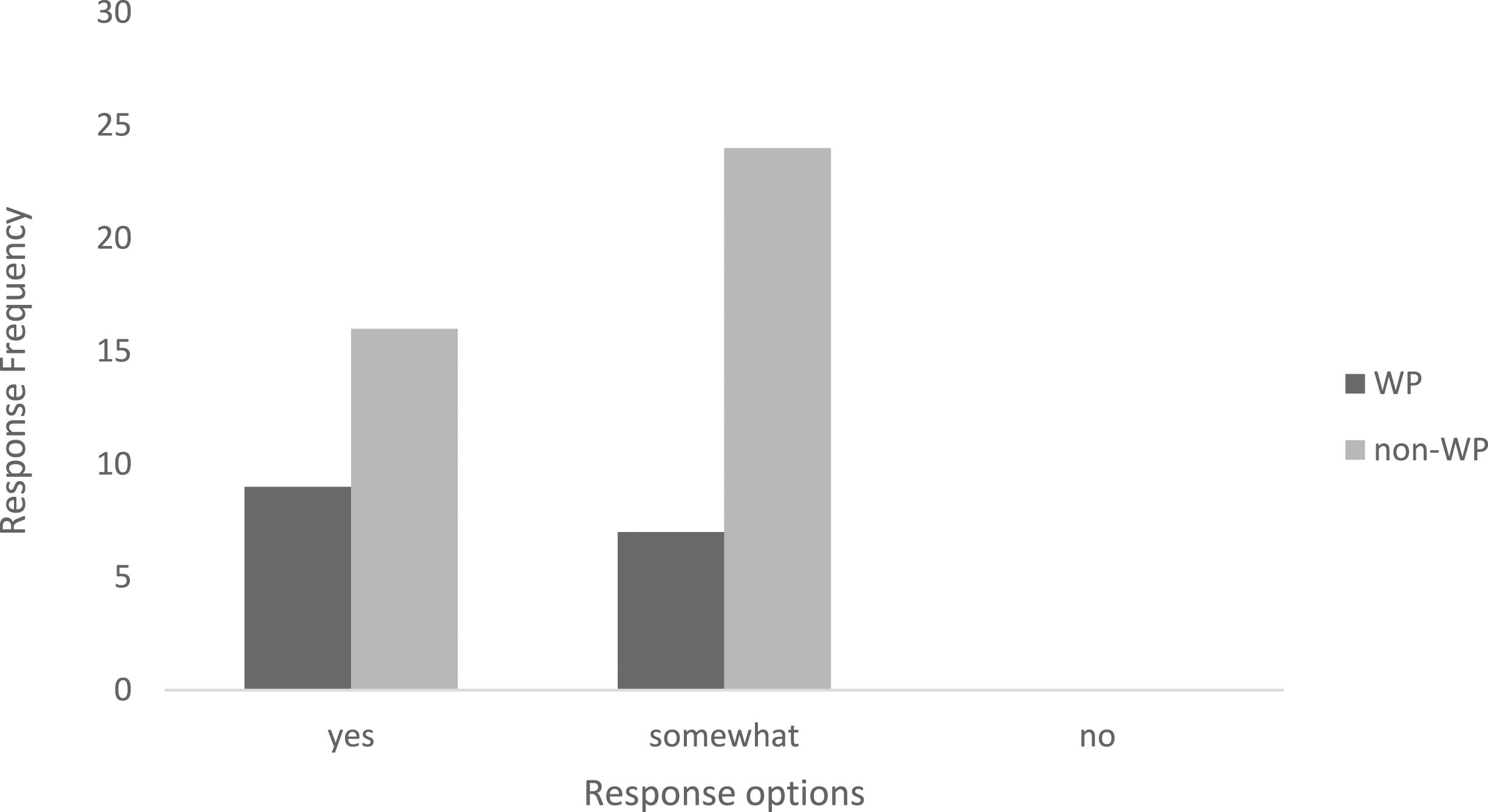
Inclusion in the university classroom
With regards to feeling included in the university classroom, 71.9% of survey participants stated that they do feel included, 22.8% said that they feel included in some ways, and 5.3% stated that they do not feel included. This is displayed in Figure 2. Responses to ‘Do you feel included in the university classroom?’ as a function of WP or non-WP identity, among survey participants.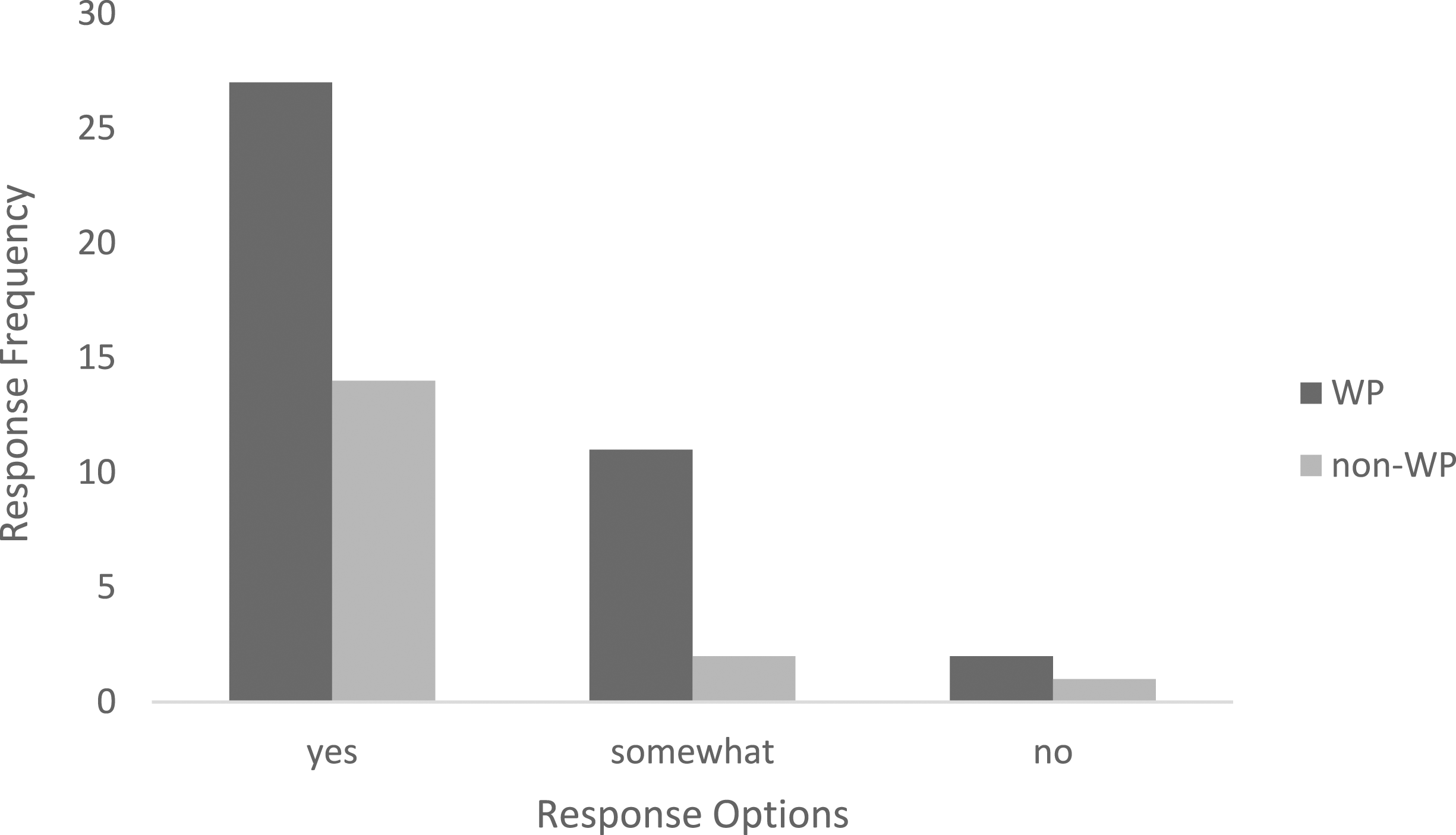
Again, there were no differences between WP and non-WP students’ perceptions, χ2 (2) = 1.68, p = .432.
Closeness to other students
We examined the relationship between feelings of closeness with other students within their cohort at the university. Survey participants reported mixed feelings regarding perceptions of closeness, with 45.6% feeling they had formed close relationships, 42.1% sometimes feeling close, 8.8% not feeling close, and 3.5% somewhat. This information is represented in Figure 3. Responses to ‘Do you feel close to other education students at this university?’ as a function of WP or non-WP identity, among survey participants.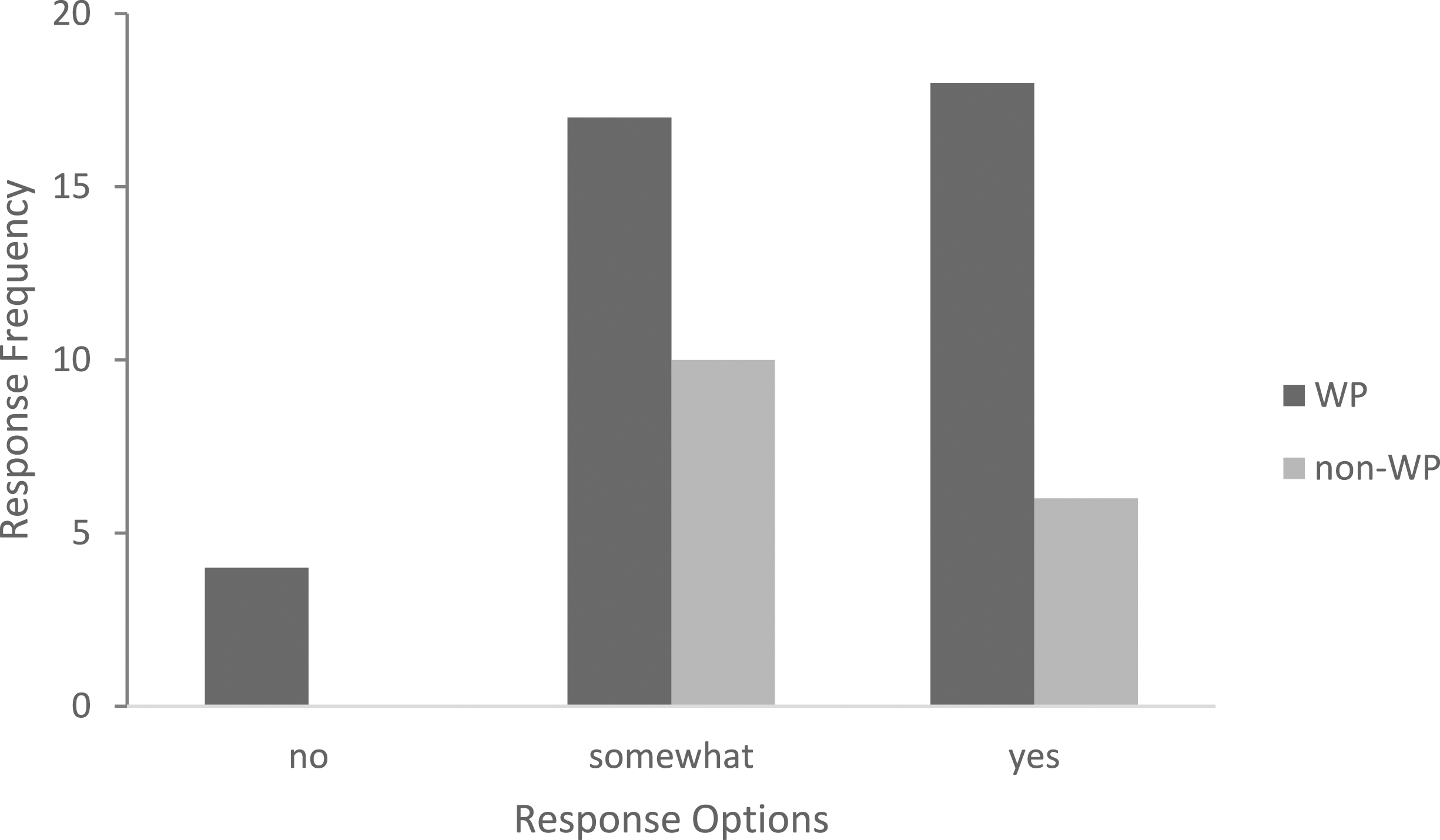
There were no differences between WP and non-WP students in this regard, χ2 (2) = 2.66, p = .264.
Reasoning around inclusion: Reflexive thematic analysis
Reflexive thematic analysis (e.g. Braun and Clarke, 2021) was used to identify key themes in the data relating to all participants’ perceptions of whether the Division of education and the university classroom were inclusive, and their relationship to other students and university staff. This part of the analysis was informed by a Social Constructionist perspective (Kitzinger and Powell, 1995), with a focus on semantic meanings. The data were horizontally analysed, to examine the ways in which students were constructing inclusion in the Division. Responses from survey and focus groups and from widening and non-WP students were coded concurrently. They were randomly allocated to members of the research team to be read, re-read and initial familiarization notes added (stage 1). The codes were then systematically organized to identify key features within the data (stage 2). Codes were then rearranged, clustered, and organized into themes through discussion and refinement within the research team (stages, 3, 4, and 5). Throughout this process, the research team met on a regular basis to discuss coding and analysis. Acting as critical friends, we were able to discuss coding decisions and reflect upon our own positionality and assumptions.
Themes and codes: Reasoning around inclusion.
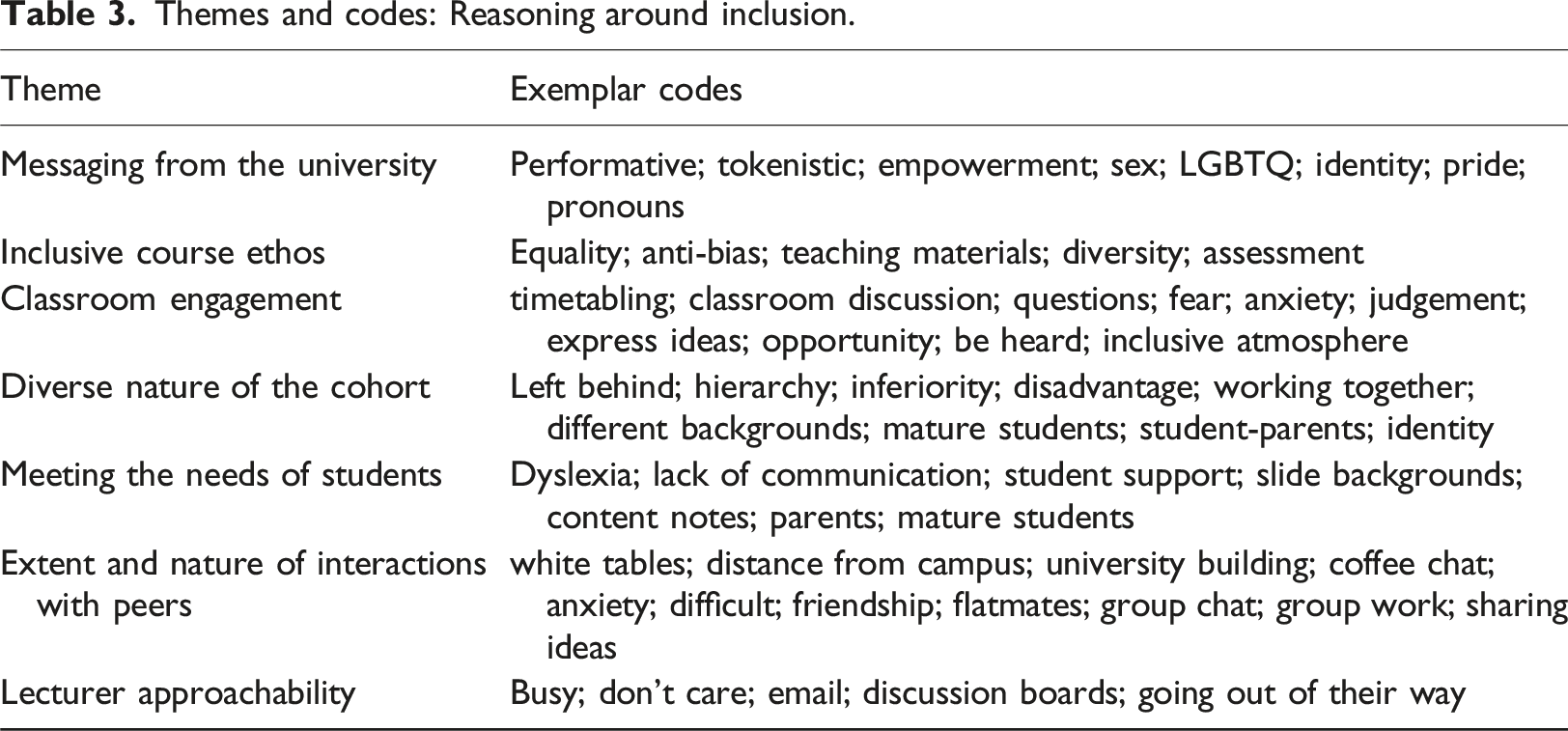
Theme: Inclusive Messaging from the University. Students in the focus group talked about the university’s messaging and actions concerning inclusion. Positive actions, such as using pronouns in staff email, are seen as steps towards inclusivity, sometimes if you get an e-mail from someone, at the end by their name, they’ll have their pronouns in as well, which I think is very helpful for people that need to feel included in that sense. (Focus Group, WP student)
The importance of work done by Queen Margaret University in empowering women and promoting LGBT + inclusion within the University was also noted. I think Queen Margaret University are good at promoting inclusion. I’m just trying to think of, you know, examples of...the LGBTQ+, you know, they’re really good in that aspect... and in regards to empowering women as well… especially with like [redacted] and things as well. …it was, you know, very empowering to be a woman while I was there listening to all her stories, and what she’s done …. (Focus Group, WP student)
Another survey responding student reflected on her intersectional identity, as someone who is both LGBTQ+ and a PoC [a person of colour], I feel very included and comfortable. (Survey, WP student)
However, some students saw the messaging around inclusion as more tokenistic and performative, for example: I say this because the university building has ableist statements within the staircases and sometimes the practice of being inclusive feels quite performative by only placing pride flags up during pride month and then hearing nothing else during the rest of the year. (Survey, WP student)
In summary, efforts that were made by some staff towards inclusivity around sexual orientation, sex, and gender identity were recognized, but there was a critical awareness among several respondents concerning the ‘performativity’ of these efforts when they had not been embedded into the university but were ‘one-offs’ or time limited.
Theme: Inclusive Course Ethos. Students expressed positivity towards the inclusive aspects of their teacher education courses, it’s inclusive in a lot of its material in its approach to education (Survey, WP student)
and there is an emphasis on inclusion and diversity on my course in the course materials (Survey, WP student)
They appreciated the inclusive approach to education and the diversity of teaching materials provided in their courses.
Theme: Classroom Engagement. Another prevalent theme centred around classroom engagement and discussion. Some students highlighted the opportunities to express their ideas and experiences, emphasizing the value of being heard during these discussions. there’s often opportunities for me to express ideas and these are listened to. The structure of seminars enables us to talk with one another and share ideas (Survey, WP student)
and we are all encouraged to share our thoughts, opinions, experiences as well as feel able to ask questions to support our learning (Survey, WP student)
Conversely, students who felt uncomfortable participating in discussions reported anxiety about potential judgement from peers, I feel heard and seen by friends and lecturers, but I can’t deny the fact that speaking in the classroom can come with a lot of anxiety for judgement from other peers (Survey, WP student)
Theme: Diverse Nature of the Cohort. The diversity of the university and student cohorts was another theme. Having a wide variety of students from different backgrounds was seen as indicative of the university’s inclusive nature, I know multiple people who have come from school, college or other backgrounds. It is nice to see a wide variety of students within our course and across the university (Focus Group, WP student)
Alongside this, focus group participants discussed their perceptions of having different levels of knowledge among students in the classroom, As an Ed Studies student going into some modules such as the more psychology, sociology modules. I feel like almost at a disadvantage… we’re on a psychology module this term, and although it’s really good, as (P2) is saying, we are with students who have all of that understanding, a greater understanding of psychology than we do, and we’re being assessed at the same level. (Focus Group, WP student)
Theme: Meeting the Needs of Students. Support needs also played a significant role in students’ feelings of inclusion. Some students expressed difficulties in accessing support services when needed. Even when students communicated their support needs to staff, they sometimes felt that their needs were not adequately addressed, With a considerable number of mature students, parents and those with caring responsibilities on the course, it has not always been easy to be a student on this course… (Focus Group, WP student)
Some pointed out that inclusive practice by lecturers was not always evident, which could have an impact on students with additional support needs: I am dyslexic and have asked lecturers to not put PowerPoints on a white background and this was ignored. (Survey, WP student)
Finally, the study highlighted the importance of providing accessible resources to disabled students. Students knew that lecturers were aware of what is needed: They are very aware of what they need to do to facilitate for people such as subtitles on videos shown and in terms of movement breaks throughout class (especially lectures). Also they tell us about the help we can receive during assessment time. (Survey, WP student)
Theme: Extent and Nature of Interactions with Peers. Participants mentioned engaging with other students outside of university, such as chatting in lectures and seminars, eating lunch together, and meeting up outside of campus, I chat to my coursemates in lectures and seminars, I eat lunch with some of them that I’m closer to, I see some of them that I’m closer with outside of university time (Survey, WP student)
and Yes, I have friends in classes, one of my flatmates is on my course, [I] regularly meet with people from the course for coffee. (Survey, WP student)
Conversely, some participants described their peer relationships as degree-based. Participants engaging solely on an educational basis, [I] chat in seminars and at lunch, have a Whatsapp group for some work support from peers (Survey, WP student)
and [I] chat in lectures/seminars, often meet up to do work or just have general chats about uni/placement outside of uni (Survey, non-WP student)
On the other hand, some students were less able to interact with peers outside the classroom; my course is a small group of people with not many a similar age to me. I tend to only chat in seminars if we are doing group work (Focus Group, WP student)
and I feel extremely anxious going to lectures and seminars as I feel everyone has formed a friendship group and are not willing to interact with new people. (Survey, non-WP student)
Overall, forming friendships, engaging beyond academic settings, and fostering a supportive class environment were reported alongside feelings of closeness. On the other hand, degree-based relationships and, limited interactions were reported by participants who also noted feeling less close to members of the cohort.
Theme: Lecturer Approachability. Positive relationships with lecturers were evident when participants who felt comfortable emailing staff and engaging in conversations with them at the university. I feel comfortable to email staff on the course and chat to them in university. They are approachable and willing to support (Focus Group, WP student)
Similarly, focus group participants saw some staff members advocating more actively for students, ‘on the plus side I’ve already got a sense that lecturers are not only available to be approached more, but they welcome it. And I think that that’s the big selling point, I guess’ (Focus Group, WP student)
Participants in both response modes also reported on feeling heard through the use of content notes [aka trigger warnings] in the classroom and being sensitive to students’ reactions to difficult topics. the lecturers have always been extremely cautious of the topic that they’re raising, giving fair warning to anyone that wanted to maybe step out or, just being aware of what subjects would be discussed (Focus Group, WP student)
However, some participants across both response modes reported that certain lecturers were perceived as unapproachable or unwilling to engage with students. some lecturers are more approachable than others. We have been strictly told by some NOT to email until we have posted on the discussion board, checked with others, etc., but the discussion boards are not always monitored. Other lecturing staff are happier to be contacted and this is extremely helpful. (Focus Group, WP student)
Participants reported contacting lecturers mainly when they needed support or encountered problems in their courses. Participants appreciated lecturers who were attentive and approachable when seeking support, Yes over my time at [university] my lecturers have been brilliant. Always responding to emails or discussion boards. (Survey, WP student)
Participants also valued having multiple methods of contacting lecturers, leading to more positive relationships. I occasionally email my lecturers and thank them after class, occasionally discussing the learning content when they come over to our table during class discussion (Survey, WP student)
Overall, the data highlighted the importance of lecturer approachability in shaping students’ reasoning around inclusion at our university.
Discussion
This study used a student-centred choice of focus group or open-ended survey to explore education Studies students’ sense of inclusion, their experiences of university, and to explore any differences between WP and non-WP students, in a sample that represented the diversity of the cohort. There were no systematic differences between WP students and non-WP students in their perceptions of the inclusivity of their university experiences. Qualitative responses revealed that most definitions of inclusion were themed around equality. However, a more nuanced examination of students’ perceptions of inclusion revealed that there were different spheres to ‘inclusion’ in university settings, ranging from messaging from university staff, through to the content of the curriculum, to anxiety at speaking up in class and the sense of closeness that students felt towards their peers.
Defining inclusion
Qualitative content analysis revealed that most students’ definitions could be accounted for under a category of ‘equality of access and opportunity’. This is similar to a category of definition found by Márquez and Melero-Aguilar (2022) in their research with university staff. However, unlike these researchers, Göransson and Nilholm (2014) or Colin et al. (2019) no student referred solely to disability or disabled students in their definition (and only did so in a longer list of minoritized people in society). Rather, students said explicitly that inclusion was about meeting the needs of all learners.
Reasoning around inclusivity
The majority of survey responding students found the Division and the university classroom ‘somewhat inclusive’ highlighting the potential for improvement in terms of the university’s own efforts towards inclusivity. In explaining this response, students recognized the emphasis on inclusion and diversity in their curriculum of study. Yet, concerns about non-inclusive practices by some lecturers, and the role of classroom discussions as indices of inclusion were common, suggesting that perceptions of inclusion are influenced by the extent to which students feel heard and valued in seminar discussions. Additionally, whilst LGBT+ -identifying and PoC students reported feeling included, it was reported that placements don’t meet the needs of student-parents, showing that not all needs are met. Some students feel unable to engage in class discussions and give this as a reason for the university classroom not being inclusive. Anxiety and fear of judgement by peers often deter engagement. Students who feel distant from peers or believe their peers are or may be critical of their perspectives cited this as a reason for them lacking a sense of inclusion within the Division.
Implications
This research has notable implications for university teaching, policy, and future theory and research. Firstly, findings underline something of the discipline-specific nature of (non-) inclusion in HE in line with Stentiford and Kourtsouris (2022). That is, courses in education are accredited by the professional body, and require hours in school that are not inclusive of the needs of student-parents, as our participants highlighted. The challenge here then is to consider whether we want education degrees to be accessible to everyone and if so, for all bodies responsible for them to build greater flexibility into the regulations.
Secondly, extensive research underscores the role of strong student relationships in academic attainment (Hoferichter et al., 2022) and in fostering a sense of belonging (e.g. Fernandez et al., 2023). This underlines the significant role of academic staff in cultivating a safe space for open dialogue. Students who view discussions as supportive and stimulating are more likely to report heightened affinity with peers. Our results highlight a need for staff to provide structured opportunities for students to engage with one another both in the classroom, and more socially, in a non-threatening way. Similarly, staff need to take time at the start of courses to construct a ‘safe space’ for students to feel able to share their ideas, experiences, and to be vulnerable. Given that other research shows that a sense of inclusion directly correlates with engagement in class (Shoura and Ahmad, 2020), it is crucial to theorize about and evaluate ways in which universities can enhance inclusivity for their students.
Some respondents highlight limited awareness of available support services, emphasizing the need for greater visibility and signposting of such resources to promote inclusion and subsequently increase course engagement. Additionally, approaching university staff with support-related concerns seems challenging for some students. Supportive relationships with staff members are linked to feelings of inclusion here, echoing the literature (Shoura and Ahmad, 2020). However, our participants highlight inconsistency in staff approachability. Moreover, students who perceive staff members as approachable for various university-related concerns, tend to reason more positively around their inclusion. In this regard then, research underlines the importance of positive staff-student relationships, and we reflect this here. The next step for future work is to build into policy the concrete ways in which university staff can effectively communicate their support (and signpost further support) of students.
Limitations and future directions
Although the present study provides useful information regarding Scottish education students’ views around inclusion, certain limitations must be considered when interpreting the results. Firstly, self-report measures were used, which are subject to bias as participants may filter their answers to more socially acceptable versions. Alternative measures could include observations of university classes to determine the level of peer interaction, or content analysis of seminar plans to determine the extent of any ‘assumed knowledge’ and level of cultural capital needed for engagement. Further, this study shows no discernible differences in responses to closed-ended questions between WP and non-WP students. From this, we may not conclude that there are no differences, only that we have not statistically determined them. As such, further research should ask more nuanced questions to determine the nature of any differences between WP and non-WP students. Similarly, it is important to remember that non-inclusion is not synonymous with ‘exclusion’ and that experiences of exclusion per se were not interrogated here, nor was ‘exclusion’ a word used in any student’s open-ended response. As such, future research may usefully examine the distinct experiences that students associate with a narrative of passive ‘non-inclusion’ over ‘active exclusion’ from university spaces.
Conclusion
The present findings convey a general sense of inclusion on the part of our WP education students. The prevailing definition of inclusion revolves around meeting the academic needs of all students. This way of seeing inclusion is corroborated by the reflexive thematic analysis, revealing widespread recognition (a) of the importance of university staff’s explicit year-long affirmation of the inclusion of different student identities, and (b) that students are empowered to engage in class discussion. Nonetheless, the data also reflect a mixed view of inclusion, with reports of weak student-student and student-staff relationships and lesser feelings of inclusion. The ways in which students who lack a sense of inclusion at university may be supported is now a ripe avenue for future research and policy.
Footnotes
Declaration of conflicting interests
The author(s) declared no potential conflicts of interest with respect to the research, authorship, and/or publication of this article.
Funding
The author(s) disclosed receipt of the following financial support for the research, authorship, and/or publication of this article: This work was supported by the Internal funding from WISER.
