



Abstract
This study investigates the role of social factors in the access to and equity in higher education (HE) for students with a low socioeconomic status (SES) in Indonesia, from multiple stakeholder perspectives. Semi-structured interviews were conducted with the students, lecturers, and support staff at a large Indonesian university. Focus group discussions were organised to validate the interview results. Family and mentoring programmes appear to play a major role in accessing HE, while lecturers and peers play a significant role in equity. This study highlights the importance of mentoring programmes that guide students to continue their study at the university level. The result provides insights into programmes at the university itself that should focus on developing social skills. This study illustrates the necessity of social support factors, including family, peers, mentor programs, teachers, and lecturers, in supporting access to and equity in HE.
Introduction
The United Nations Sustainable Development Goal ‘Quality Education’ states that, by 2030, everyone should have equal access to affordable and quality education, including at the university level; however, most nations are struggling to facilitate equal access to higher education (HE) (Atherton et al., 2016). Globally, only 9.5% of students from low-income backgrounds enrol in HE, while as many as 75.6% of students from high-income backgrounds are enrolled (UNESCO, 2020). Moreover, many studies claim that realising equity for all students at the universities themselves remains an international issue (Martin, 2016).
Research has shown that students with a low socioeconomic status (SES) encounter a variety of cognitive and physiological barriers to learning (Johnstonbaugh, 2018); low-SES students experience psychological disadvantages stemming from material disadvantages, including feelings of failure, inferiority and isolation (Calarco, 2014; Davidson, Kitzinger and Hunt, 2006). Many low-SES students become disengaged, display unproductive behaviours and underperform academically (Goss & Sonnemann, 2017). While financial aid has been found to promote access to HE, the connection to student success once they are in college is less conclusive, suggesting that there may be much more than just financial need at play when it comes to student success (Zerquera and Smith, 2015). Students with high-SES backgrounds arguably need less support than low-SES students, prompting institutions to take these differences into account when distributing teaching and learning resources and support to promote equity in HE (Maringe and Sing, 2014).
Prior studies of access and equity in HE have therefore mainly focussed on access, discussing this subject from a student perspective and focussing on financial support (Wanti et al., 2022). The present study examines both access and equity in HE, involving students, lecturers and university support staff to gain a broader perspective, and investigates the role of social factors in the access to, and equity in, HE, especially for low-SES students.
Access is defined as the phase in which a student is able to register for the programme and pay the initial fee (Walker, 2019). Equity addresses the fact that it might not be fair to provide all students with the same resources and support for learning (Maringe and Sing 2014) because students from disadvantaged backgrounds, especially low-SES students, need more guidance and support before and after they are accepted by the university. A literature review by Wanti et al. (2022) revealed that social factors are crucial for both HE access and equity, which we explore further in the present study. Our investigation of access is especially focussed on the social factors influencing students before they are accepted by the university, while our equity focus explores the role of social factors after students have been accepted and during their learning process at the university.
Context of the study
In many countries, national policies and university-level programmes have been established to improve access to and equity in HE, especially for low-SES students. These policies and programmes typically aim to ensure a certain proportion of low-SES students in HE institutions; for example, in 2010, the Australian government introduced the Higher Education Participation and Partnerships Program (HEPPP), which provides funding to universities to undertake activities and implement strategies that improve access to undergraduate courses for people from low-SES backgrounds and improve their retention and completion rates (Molla, 2021). Universities can use the HEPPP fund to tailor their programmes to address the low-SES student population (Molla, 2021).
In the United States of America, the Path Ambassadors to High Success (PATHS) scholarship programme was aimed at promoting the academic success of low-SES students at university (Camp et al., 2021). PATHS provides a successful model for recruiting, retaining and supporting academic and career pathways for diverse low-income undergraduates, boasting a high retention rate (91.7%), strong academic success (e.g. average grade point average (GPA) is 3.4 from 1 to 4 scale), high graduation rates, and strong employment outcomes (Camp and Thiry, 2021).
In Indonesia, the country in which the present study is carried out, the government launched the national scholarship programme Bidikmisi in 2010 to support students from low-SES backgrounds. This aid provides tuition assistance for high school graduates with good academic abilities but economic limitations with the aim of helping students to access universities. The number of recipients of Bidikmisi assistance has increased over time, from 199,408 students in 2014 to 339,348 students in 2017 (Lydiasari, 2018). Bidikmisi recipients showed excellent academic achievements in HE, with 82.83% obtaining a cumulative GPA of 3 or above on a 1–4 scale (Lydiasari, 2018). The mechanisms for selecting and guiding programme participants, as well as for monitoring, evaluating and reporting on the programme implementation, were reported to work quite well (Aliyyah et al., 2020). Based on these findings, the Bidikmisi programme appears to be successful.
Previous studies on the Bidikmisi programme mainly focussed on student outcomes or achievements related to GPA (Hendrayana, 2014; Inah and Khairunnisa, 2019; Yurnaliza and Andayono, 2019) or the selection and admission process (Haryanti et al., 2016; Dahri et al., 2017; Suniantara and Suwardika, 2018). These studies showed that Bidikmisi students have relatively high university achievement and learning motivation levels; however, these studies do not provide insights into how this programme works after admission and beyond financial support. To better understand this, further research must explore the processes involved, especially the role of social factors in promoting access and equity for Bidikmisi students.
Theoretical framework
This study uses social capital theory and the Social Ecological Model to highlight the role of social factors in the access to, and equity in, HE. Social capital is defined as ‘the aggregate of the actual and potential resources, which are linked to possession of a durable network’ (Bourdieu, 1986: p. 248). Social capital can facilitate or hamper development at the micro, meso and macro levels (Cummings et al., 2019). Essentially, at the micro level, bonding capital is found in family connections, bridging within horizontal networks of similar actors (peers), and linking to actors outside the horizontal network, which provides access to resources (vertical ties) (Cummings et al., 2019).
The Social Ecological Model indicates that there are various interrelated multilevel factors that can impact access and equity in HE. This study adopts a multifaceted perspective that was previously used to understand access to health services, including at the intrapersonal, interpersonal, institutional, community and policy levels (Ma et al., 2017) Figure 1. The social ecological model. Source: Center for disease control and prevention (CDC). (The Social-Ecological Model: A Framework for Prevention |Violence Prevention|Injury Center|CDC). Retrieved 16 July 2022).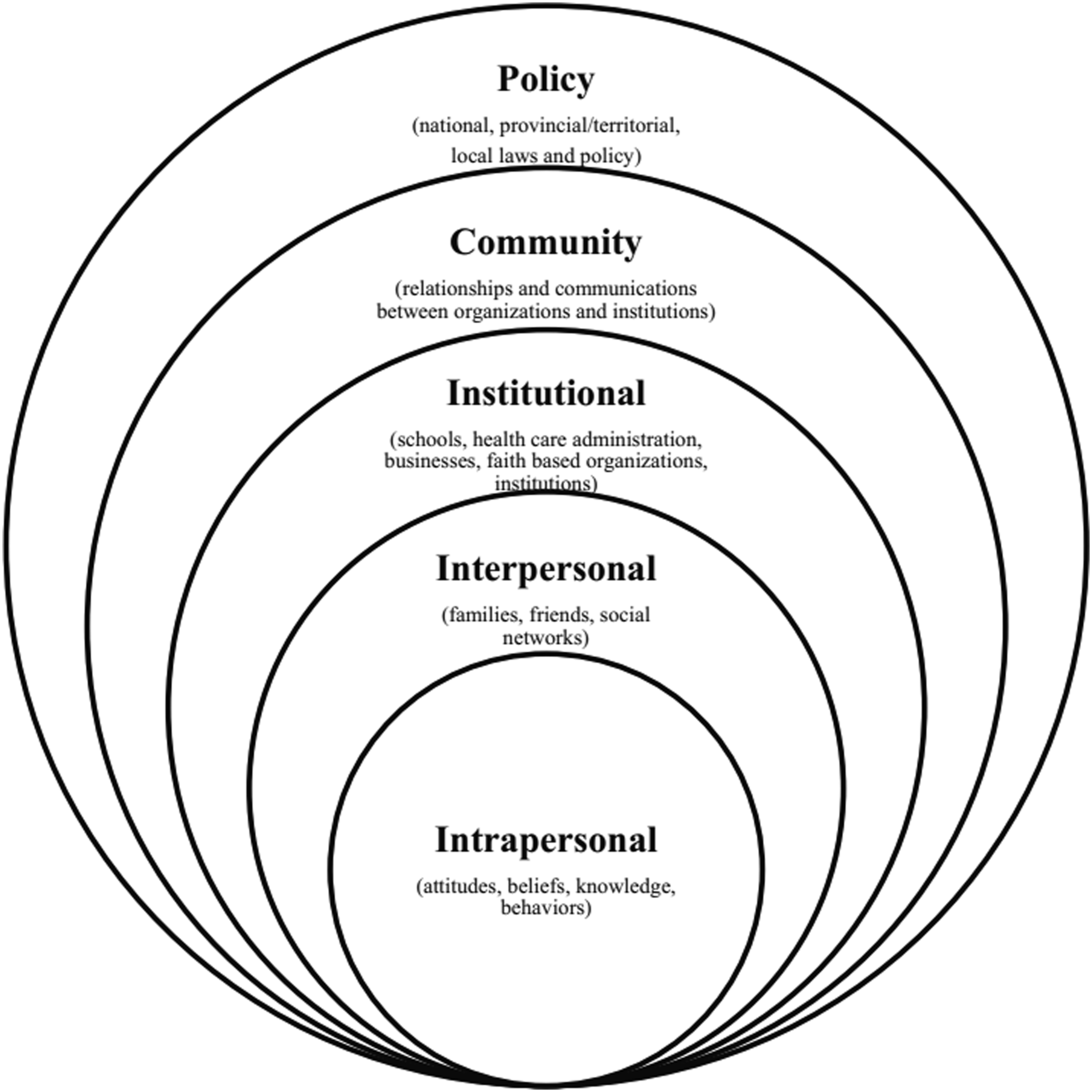
In the present study, the intrapersonal level concerned the low-SES students themselves. The interpersonal level represents their interaction with family, peers and teachers. Institutional factors were their pre-university education, such as primary school and secondary school, while community relates to the current environment (family, teacher, peer) around the students. The policies level includes policies of the central government, local governments and policies at the university level. A complete picture of how all of these factors affect access and equity to HE is presented in our previous research (Wanti et al., 2022).
For students from low-SES backgrounds, social factors, including family, ethnic and religious affiliations, friends and faculty, play an important role in academic achievement (Mishra, 2020). It therefore seems logical that these factors also affect access to HE because achievement in secondary education partly determines access to HE.
The role of family support is present in the form of advice or guidance, motivation, high education-related values, or expectations of students’ academic success and persistence (Boveda, 2017; Gofen, 2009; Guillory and Wolverton, 2008; O'Shea, 2016; Roksa and Kinsley, 2018; Storlie et al., 2014; Strom and Savage, 2014). Social support from family and friends has a substantial impact on the emotional, social and academic performance of university students (Awang et al., 2014).
A lack of social support can lead to mental health problems, including depressive symptoms among university students (Bukhari and Afzal, 2017; Safree and Dzulkifli, 2010), and has a negative impact on student quality of life (Dafaalla et al., 2016). The impact of academic stress, defined as frustrations, conflicts, pressures, changes and self-imposition on psychological well-being, can be influenced by the level of perceived social support from friends (Glozah, 2013). Social support factors also have a major impact on access and equity in HE, as we reviewed previously (Wanti et al., 2022), including factors such as teachers (or lecturers), mentoring programmes, family support (including extended family) and peers. These various actors can provide motivation and academic guidance to students.
Regarding access, the first major support factor are the teachers in secondary (i.e. pre-university) education, who provide motivation, guidance and information regarding the continuation of education in HE, which is very important for low-SES students (Tuomi et al., 2015). In addition, other educational support staff can also greatly improve access to HE, particularly the high school counsellors and other staff who help students navigate the process of enrolling in university (Negrón-Gonzales, 2017).
In terms of equity at the university, the role of lecturers is crucial. The transition to university may be particularly difficult for students from disadvantaged backgrounds (Briggs et al., 2012). Student perceptions concerning the level of lecturer support were suggested by Richardson et al. (2007) to be precursors to course satisfaction, with students expecting their lecturers to be sympathetic, reassuring, helpful and friendly (Lowe and Cook, 2003).
The second major support factor is the use of a mentoring programme. Previous studies of access and equity in HE have emphasised the importance of mentoring programmes, both when the students were first accepted and during the transition period from high school to HE, as well as during the learning process at the university itself (Kuperminc et al., 2020; Coles, 2011). Mentoring programmes aim to provide inspiration, motivation and information about opportunities and the future.
In Australia, the HEPPP-funded projects included a mentoring programme addressing the needs of students from low-SES backgrounds. This programme was used to provide support to students from under-represented groups once they enrolled at universities. Typically, student mentors were strategically matched up with student mentees to provide support, encouragement and inspiration. Some mentoring programmes involved regular face-to-face contact, while others took place entirely online. In each case, mentors were provided with training and support from either the equity or learning support office in the participants’ universities. The mentoring programme was well received and valued by mentees, school administrators and academics alike (Thomas, 2014). Students (from disadvantaged backgrounds) felt they could continue their studies in HE because of the support of the mentors, who gave them confidence to aspire to and achieve HE and beyond, as well as providing them with a greater insight into the practical considerations for university entry and study (Lynch et al., 2015).
The third factor is family support. Family capital is defined as the systems in families that can aid and support individuals to achieve certain ends (Whiteford, 2017). Students had more success being accepted into a university (i.e. access) when they had the support of their family, providing courage, hope and confidence (Whiteford, 2017). In addition, family (including extended family) may provide financial support, which is a critical factor enabling students to enter and remain at university (Wilson-Strydom and Okkolin, 2016).
The fourth factor is peer support, which plays a significant role in learning at the university and may influence academic outcomes (Mishra, 2020). During peer learning, more advanced students may provide support in, for example, clarifying and establishing goals and monitoring the learning process (Panadero et al., 2019). Many students also find emotional support to be important during their studies (Boud, 2014), but may also need informational support, which involves asking for advice from peers regarding study-related matters or coping with stressful situations (Räisänen et al., 2021). A study of the perspectives of high-achieving, low-income students regarding the factors that contribute to their academic success showed that all participants attributed their academic success to positive peer relationships, especially peer friendships, and the assistance gained through these relationships (Williams et al., 2017). These resilient students were part of school-oriented peer social networks that encouraged academic effort and achievement, and provided ongoing academic and social support (Williams et al., 2017).
Most studies on access and equity in HE have focussed solely on the student perspective or collected student perception data related to the role of social factors (Jury et al., 2017; McKay and Devlin, 2016; Li and Carroll, 2017). In addition to this student perspective, the present study adds two more perspectives, namely those of the lecturers and support staff in the university. These three types of stakeholders are important because, in the university context, they are the main groups of actors involved in the implementation of scholarships for low-SES students, for example, the Bidikmisi programme.
Research questions
The main research question of this study is as follows: What roles do social factors play in access and equity for low-SES (Bidikmisi) students in the Indonesian university context? To answer this question, the following sub-questions were investigated: 1. What do students, lecturers and support staff perceive to be the most prominent or relevant social factors for access to university and equity once there, and how does each factor work (what is the underlying mechanism)? 2. What differences and similarities in the reported experiences with these factors can be found between students, lecturers and support staff?
Method
In this study, a qualitative research method was used in the form of a case study in one large university in Indonesia. Data were collected by interviewing the participants (students, lecturers and staff). The interview results were validated for each group of participants in subsequent focus group discussions (FGDs).
Participants
First, permission to collect data was requested and obtained from the Vice-Chancellor of Academics, the Dean, and Head of the Food Technology department at the particular university, as well as the middle-level staff involved in the administration of the Bidikmisi programme. This department was chosen due to the relatively high competition for students to get into the Bidikmisi programme; thus, it was likely that access and equity were relevant issues in this department.
Students
On average, 60 students were enrolled in this department each year, of whom 20 students receive the Bidikmisi scholarship. We sent interview invitations via WhatsApp to two class groups consisting of first-year students (18 Bidikmisi students) and fourth-year students (20 Bidikmisi students). The students who agreed to be interviewed stated their interest via personal chat on WhatsApp. Of the 38 students who receive the Bidikmisi scholarship in these two year groups, 26 (68%; 11 first-year and 15 fourth-year students) agreed to participate in this study.
We surveyed first-year students to explore their perspectives about their experiences when starting to study at the university; in other words, first-year students represent the access to university experiences. In addition, we included fourth-year students to investigate their experiences with access to university and learning at this institution. Equity in this study emphasises students from low-SES backgrounds.
Lecturers
Interview invitations were also sent to the lecturers via WhatsApp. Of the 50 lecturers in the study programme, invitations were sent to 16 people recommended by the Head of the department based on their teaching experience or seniority. These 16 lecturers (including two counsellors) all agreed to participate.
Support staff
Support staff members were selected for inclusion in this study based on recommendations from the Vice-Chancellor of Academics based on their job and its relevancy to the research topic. Support staff included people from the admissions office, academic office, university staff that managed Bidikmisi recipients, PPKU (general competency improvement programme, a mandatory programme for first-year students) staff, deans and vice-deans. In total, 11 support staff members appointed by the Vice-Chancellor of Academics (with different occupational backgrounds) participated in the study.
Interviews
Data were collected via semi-structured interviews to explore the participants’ thoughts about the topic. The interview scheme was designed based on our prior review study (Wanti et al., 2022) about access and equity in HE. Several steps were followed to build the questions for the interviews: (i) creating an overview of the determining factors of access and equity in HE from our first study; (ii) changing these factors into questions to obtain clear statements from the respondents on whether they agree or disagree with the factors; for example, ‘do you agree that family plays a role in access to HE?’. We also added a follow-up question, for example, ‘why do you agree (or disagree) that family plays a role in access to HE? Could you give an example based on your experience?’; (iii) piloting interview questions with potential respondents (three lecturers and four students, not included in the remainder of the study); (iv) improving the communication style of the interviewer based on feedback from the pilot interviews, for example, using a more informal approach to start the interview with the respondents; (v) finalising the interview scheme.
Procedure
Before the interview, the first researcher briefly explained the purpose of the study to the respondent. After that, the researcher explained the interview process, then gave the informed consent form to the respondent to be signed. After informed consent was obtained, the researcher began to ask the interview questions and the answers were recorded in audio format. The interviewer asked about all the factors determining access and equity in HE, and whether the respondent agreed or disagreed that the factors played a role. The interviewer also asked for the respondents’ experience with the factor to illustrate how it played a role in their situation/tasks. After the interview, the voice recording was transcribed in Microsoft Word.
Data analysis
To understand which social factors affected access and equity in HE, several data analysis steps were performed. First, all the collected responses were classified as belonging to either social factors or other factors. Based on the previous review study (Wanti et al., 2022), social factors were distinguished in the role of teachers (or lecturers), mentoring programmes, family and peers. If a particular social factor was mentioned by the respondent, a score of ‘1’ was given; if not, it received a score of ‘0’. Next, percentage scores were calculated for each factor for each subgroup (students, lecturers and support staff). The overall differences and similarities in the reported presence of factors between students, lecturers and support staff were determined.
To understand how these factors worked, the answers were read carefully and the mechanisms behind the factors were distilled. For example, if a student was asked why they agreed that lecturers played a role in HE, the answer might be that the lecturer acted as a role model, as a guest lecturer in another country, had an international research collaboration, or acted as a consultant in a big food company, which inspired the student. These explanations were then categorised (see Results section for corresponding examples).
Validity and reliability
A second reviewer (research assistant) checked the coding for each respondent. To validate the answers from the respondents, representative participants were invited for FGDs. Four FGDs were conducted in total, respectively, comprising five first-year students, seven fourth-year students, 35 lecturers and seven support staff. The FGDs confirmed the results of the interviews.
Results
This section is divided into the following parts: a discussion of the percentages of respondents who agreed with the main categories of social support factors (research question 1), and explanations of how the social factors worked, according to the respondents (research question 2).
Percentages of respondents who agreed that each of these main categories of social support were factors for access and equity in HE, as grouped by respondent type.
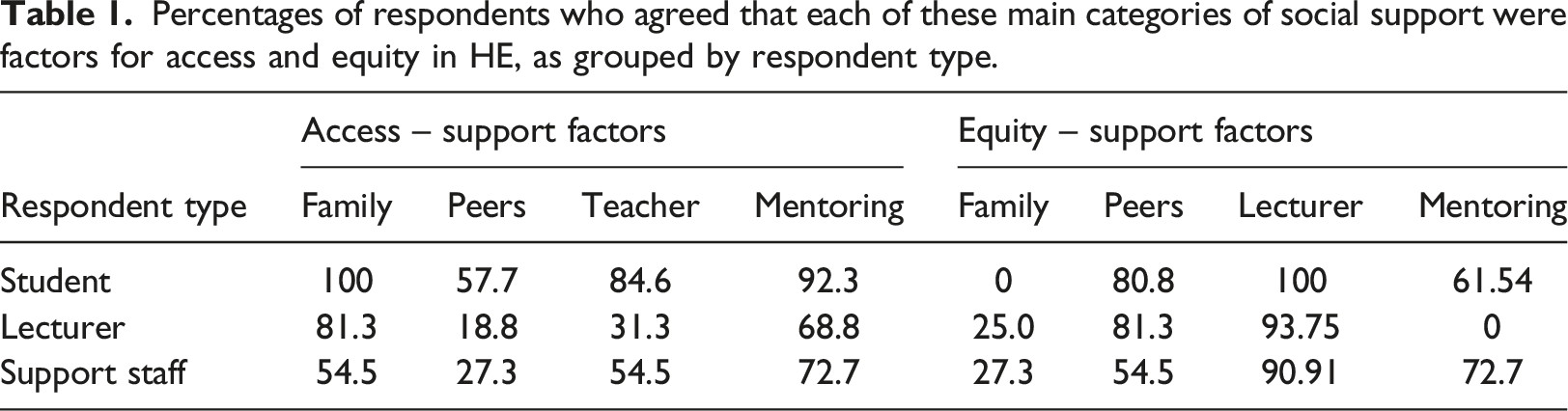
Table 1 provides an overview of the percentages of respondents who stated that each of the main categories of social support factors, in their experience, determined access and equity in HE. The family was the support factor considered most influential to access to HE by students and lecturers, while support staff considered mentoring to be the most important. Lecturers and support staff agreed that peers had less impact on access to HE, but 57.7% of students stated that peers played an important role. Teachers (including counsellors) were placed second (84.6%) after family (100%) by students, while 54.5% of the support staff agreed that teachers had an important role in access to HE. Almost all students (92.3%) agreed that mentoring played an important role in access to HE, while only 68.8% of lecturers agreed with this.
For equity, almost all respondents stated that lecturers were important. Peers were the second most accepted equity-promoting factor by students and lecturers. Only a small proportion of the lecturers (25%) and support staff (27.3%) stated that family influences equity, while no student said that family has a role in their learning process once they were at university. Most of the students (61.5%) and support staff (72.7%) agreed that mentoring programmes have an influence on HE, while none of the lecturers mentioned it.
Social factors affecting access
Family
Most respondents considered family (parents and older siblings) to be an important influence on access to HE. The respondents stated that the role of the family was to provide motivation, information and freedom to choose the field of study and the university. Lecturers stated that, even though they come from low-SES backgrounds, student motivation by parents was considered crucial for encouraging the student to continue their studies at university. In addition, other family members (such as aunties, uncles or cousins) can also play vital roles in providing information about courses, universities and scholarships.
Mentoring
Most participants agree that mentoring programmes influence access to HE. Here, a mentoring programme refers to guidance on choosing a course and a university, as well as practicing answering university tests. The following quote illustrates the role of a mentoring programme provided in high school: ‘Every Friday afternoon, just this year, (we have) UTBK* (ujian tulis berbasis komputer or ‘computer-based writing exam’). The programme introduced us to UTBK from the beginning, from semester one, and we even practiced the UTBK. Besides that, the school also holds seminars from top universities, such as Universitas Indonesia. Sometimes they invite guest lecturers from Japan (for example), and every week there is a different lecturer’ (student voice 091).
Teacher (counsellor)
Here, the roles of teacher and counsellor are combined because most counsellors in Indonesian high schools also act as teachers (with the title ‘guru bimbingan konseling’ or ‘guidance and counselling teacher’). Most respondents stated that the role of teachers was to motivate students to continue their studies at university. In schools lacking a mentoring programme, some teachers volunteered to provide guidance on studying at university and on preparation for university entrance examinations.
Peers
Only a small proportion of the lecturers and support staff mentioned that peers influenced access to HE. By contrast, almost 60% of students mentioned that peers influenced access to HE. The interview results showed that peers act as motivators and provide information about the study programmes in HE, as mentioned by the students below: ‘My friend didn’t leave me when I failed; my friend told me that it’s not my fault and I’m not stupid. The point is, they gave me thousands of words of motivation, so I could try again’ (student voice 065). ‘When I was in high school, I was confused about which course to take at university. Finally, I chose this major based on my friend’s recommendation, because this course is the best in this university’ (student voice 075).
Social factors for equity
Lecturer
Almost all respondents mentioned that lecturers support equity in HE in the following roles: (i) Lecturer teaching style.
Lecturers who have an attractive and applicative teaching style are easier to understand, as mentioned by the student below:
‘In my opinion, the most important role in the learning process is the lecturer’s teaching style, because the more attractive the teaching style is, the easier it is to absorb knowledge and not be bored in learning… It’s exciting when the lecturers can give a description of the application [of the subject matter] in everyday life’ (student voice 050).
From the lecturer’s perspective, their role is not just teaching but also becoming a facilitator of student learning. (ii) Lecturer as a supervisor.
The role of supervisor appears when students have spent time with their lecturer on a more personal level, for example during laboratory or thesis work. As mentioned by a student, ‘Thesis supervisors have an important role because they guide us to the goals we want; it feels like a close relationship, like our parents’ (student voice 032).
From the lecturer’s perspective, their role as a supervisor is crucial because it influences whether students finish their thesis on time and graduate. (iii) Lecturer as a role model.
Some lecturers in this department also work as senior managers at food companies or food research centres. Because of this, the students admire them as role models. (iv) Lecturer as an information source.
Most lecturers in this department have specific expertise. Even though extensive related materials are available on the internet, students like to learn from their lecturers directly. (v) Lecturer as a counsellor.
In this university, lecturers also act as counsellors. Each department has two counsellors tasked with supporting students in dealing with academic (course, exams, thesis) and non-academic (family, financial, relationship) problems. All students stated that the role of the counsellor was not significant during the learning process in HE because they preferred to talk to their friends rather than a counsellor. From the lecturer and staff perspectives, the counsellor influences the learning process of the students.
‘If there is a problem, we will help. If later there is a student affairs commission, a counsellor will be present because many non-academic cases have an impact on academics; for example, problems with parents, family or health can affect student learning and achievement’ (staff voice 080).
Peers
Peers play several roles, such as motivators, reminders to learn, inspiration and a study partner with whom other students can prepare for exams and work together (on reports or lab work). Peers can play a crucial role as part of the inner circle during the student’s learning process, as mentioned by the student below: ‘There are four people in my group. We meet intensively when it comes to exams, and we always study and discuss the lesson’ (student voice 032).
Mentoring programmes
Mentoring programmes focussed on equity in HE are quite different from those for access to HE; mentoring programmes targeting access provide guidance to continue one’s education at university, while mentoring programmes provide equity support for student learning at university, especially for courses that are difficult to pass. Students state that mentoring programmes can encourage them to study together, improve their academic achievement and enhance bonding between them.
The staff mentioned two types of mentoring programmes that have a positive influence on student learning:
PPKU programme (general competency improvement programme)
PPKU is a mandatory university programme for first-year students. The purpose of PPKU is that all students have the same ability in basic subjects. PPKU provides course clinics designed to address student problems with difficult topics, which are guided by senior students with excellent grades.
Senior students
The role of senior students, especially seniors from the same hometown/region, is crucial. This hometown background creates a very strong bond between students and promotes university socialisation.
Family
The students all stated that family factors played no significant role in their learning at university, while only a small proportion of lecturers and support staff thought family influenced this process due to the monitoring role of the parents.
Discussion
This study aimed to present comprehensive insights into the role of social support factors on access and equity for low-SES (Bidikmisi) students in the Indonesian university context. Whereas many studies have explored the impact of financial aspects on access and equity, our study aims to unravel the role and relevance of social support factors. Moreover, we discuss the differences and similarities between the perceptions and experiences of three different stakeholder groups (students, lecturers and support staff) regarding the social factors.
This study reveals the most important social support factors for both access and equity are family, teachers (or lecturers), peers and mentoring programmes. Regardless of actor, most support provides students with driven support and guidance. Driven support refers to the motivation and encouragement that build confidence in the student, which is important for both access and equity in HE. Examples include the motivation to continue one’s studies to university (for access) and confidence regarding one’s academic performance (for equity).
The importance of mentoring programmes in both access and equity in HE was also shown by Mishra (2020), who stated that information and knowledge regarding study materials, preparing for exams and dealing with academic challenges play an important role in determining success Figure 2. The role of social support (f)actors on access and equity in higher education.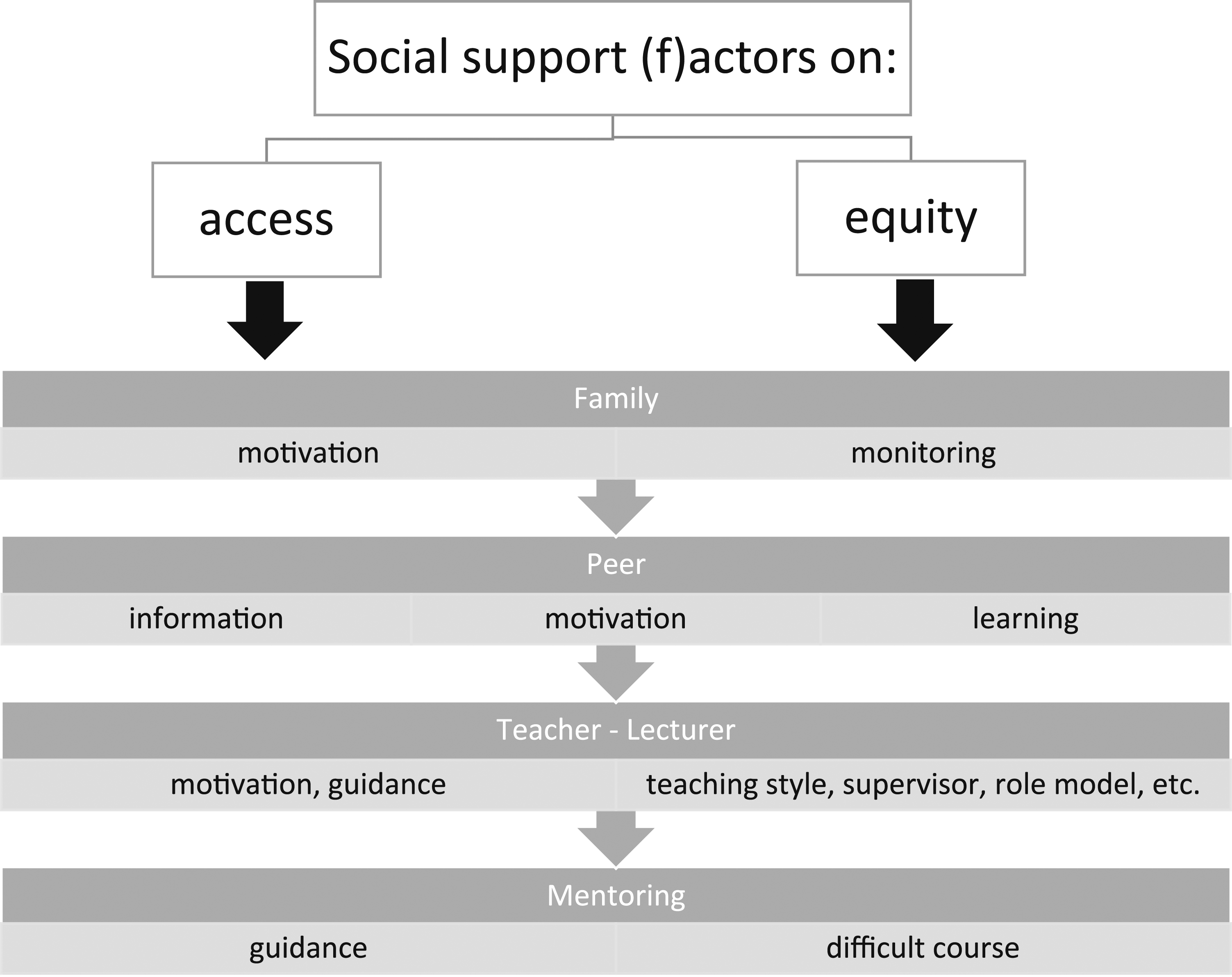
Family and mentoring are crucial for access to HE
Our data show that family and mentoring play crucial roles in supporting low-SES students in accessing HE. This study illustrates the importance of receiving motivation from parents, who encourage the student to continue their education at university and allow them the freedom to choose their course and institution. The role of other family members who have attended university is also considered a crucial element. The freedom to choose their own HE path is important for supporting access to HE because students who choose their course based on their parents’ recommendation tend to fail (or even drop out) in the first or second year. For students, choosing a field of study is a decision that not only weighs heavily on their hearts and minds, but also one that may have a significant impact on their success at university and in future life (Montag et al., 2012).
Mentoring is the next most important social factor influencing access to HE. Mentoring provided through high school programmes or individually (offered voluntarily to students considered capable of continuing their study at university) plays an important role for students, providing motivation, the opportunity to practice answering university tests, and guidance (to choose a course and university). In Indonesia, not all high schools have a mentoring programme for the university entrance exam. Students who are not from low-SES families may receive paid mentoring via private institutions; however, if there is no freely available mentoring programme through the high school or volunteers, low-SES students will be less likely to study at university, which is a weakness of the current situation.
Lecturers and peers are crucial for equity in HE
Equity refers to how social factors influence student learning at university. Concerning the lecturers, we found that lecturers’ teaching style and lecturers’ role as a supervisor were the most prominent social support factors promoting equity for students with low-SES backgrounds.
First, the lecturer teaching style (attractive and applicative) was the factor that most influenced student learning, according to the students themselves. The more attractive the teaching style of the lecturer and the more applicable the learning material, the easier it is for students to understand the lessons and the more enthusiastic they are to learn the subject. Based on the interviews with students from low-SES backgrounds, they preferred lecturers with applicative and practice-based teaching because this helped them to understand the lessons more than material presented solely in lectures and classroom discussions. In a food packaging course, for example, students reported having a better understanding of lecturers who bring food wrappers or snacks directly into the classroom and use these items as learning materials. The experience to learn directly from certain materials in the classroom is a valuable experience for students from low-SES backgrounds; therefore, lecturers’ teaching styles are considered influential factors for the learning process of students (from low-SES backgrounds).
All these aspects of teaching style affect student motivation and progress in the university. In addition, the lecturers confirmed that if they provide practical lessons, they perceive that student enthusiasm for learning tends to be higher. Lecturer teaching styles may affect the learning process of students in general, not just that of students from low-SES backgrounds. The support staff agreed that lecturers play an important part in student learning, but mainly because the lecturers act as role models and share their expertise; teaching style was not considered as important by staff.
Differences in student academic achievement are related to an individual’s social class (Barone, 2006). Students from a high social class have family-derived advantages in gaining educational credentials (Broer et al., 2019); for example, students from a high-SES background may benefit more from classroom discussions because they are already more accustomed to discussing social issues at home, and vice versa (Campbell, 2008). In other words, students from a high-SES background have more benefits from plenary discussions than students from a low-SES background.
Second, lecturers’ role as academic and thesis supervisors builds strong relationships that influence student academic achievements. According to all participants, these relationships are important for supporting students, especially those from low-SES backgrounds. This finding supports previous research showing that techniques to engage students in their learning have centred on fostering substantial and significant relationships between students and their teachers (Goggin et al., 2016; Hargreaves 2004). The role of social support, including lecturers’ roles, is defined as ‘social interactions or relationships that provide individuals with actual assistance or with a feeling of attachment to a person or a group that is perceived as caring or loving’ (Hobfoll and Stokes, 1988), and is significant for HE success. This resembles the observation by the staff that lecturers can be seen as role models.
Peers were the second source of support for equity in HE after lecturers. Peer support refers to motivating each other, learning together (including learning difficult material, thesis discussions and lab work) and enjoying social activities, all of which are essential for the learning process at university. During social activities, students can build long-lasting friendships that affect the learning process; for example, friends might help with questionnaire distribution (for thesis work) or volunteer to try a student’s food product (thesis experiment). For minority groups (in this case, low-SES students), Burt (1998) also stressed the importance of small mutually supportive student networks, which make these individuals feel more comfortable.
Other research supports these findings. Peer support and networks also determine student integration and acceptance in HE institutions, which subsequently affects their retention and success (Gallop and Bastien, 2016; Nagasawa and Wong, 1999). Hossler, Schmidt, and Vesper (1999) highlight the importance of peer support in improving the understanding of course materials and clarifying difficult concepts (Gallop and Bastien, 2016).
Striking point: mentoring in equity
This study divided mentoring into programmes targeting access or equity. For access, mentoring means providing guidance about continuing one’s education at university. For equity, mentoring refers to guidance that supports students in their learning (e.g. learning difficult material, completing thesis or lab work, and exam preparation). Previous studies of access and equity in HE have emphasised the importance of the role of mentoring programmes, both during the transition period from high school to HE institutions, and after students from low-SES backgrounds were accepted and throughout their university education (Kuperminc et al., 2020; Coles, 2011).
Surprisingly, most students in this study agree that mentoring plays a role in access but not in equity. Mentoring programmes were provided for all students by the university, but Bidikmisi students tended not to join because they wanted to study by themselves, which made them feel more comfortable and focussed. None of the lecturers agreed that mentoring would affect student learning because they found that Bidikmisi students are typically independent learners with high academic achievements. By contrast, staff considered mentoring important and agreed that mentoring programmes help students to pass difficult courses, although they also confirmed that Bidikmisi students did not typically join such programmes. This finding supports the previous research finding that Bidikmisi students have relatively high academic achievements and learning motivation levels (Hendrayana, 2014; Inah and Khairunnisa, 2019; Yurnaliza and Andayono, 2019). The difference of opinion between the staff, lecturers and students in this study is striking however, and highlights the added value of including these three stakeholder groups in one study.
The social factors found to have an important impact on access and equity in HE include the role of family, lecturers and peers. These factors might be relevant for students in general; however, we would like to emphasise that only students from a low-SES background were included as respondents in this study (only low-SES students can participate in the Bidikmisi programme). The other respondents, such as lecturers and staff, also focussed on students from low-SES backgrounds; therefore, the results of this study specifically apply to students from low-SES backgrounds. The results of this study support previous research by Coleman (1988), which showed that social capital can be created by family, school and community. In addition, the relationships between the family and the community may explain the educational achievements of students, where they are higher than what might be expected with respect to their SES alone (Mikiewicz et al., 2011). Differences in educational success can be attributed to different levels of existing social capital, which is produced in the networks and connections of the families that the school serves (Rogošić and Baranović 2016); for example, social capital supports educational success in the form of an appropriate school climate and the values that motivate students to achieve higher goals (Acar, 2011).
Limitations and suggestions for future research
This study only collected data at the university level from students, lecturers and support staff. A future study could also include the high school level, involving relevant stakeholder groups such as parents, high school teachers, students and support staff. In addition, this study was conducted at one university in one country. We suggest that future research should include more universities in other countries with the same or similar funding aid characteristics.
We conducted interviews and FGDs; however, a mixed-method study could combine quantitative (survey or questionnaire) and qualitative (interview) data to obtain an even more comprehensive perspective in the future.
This study explores the role of social factors from the student, lecturer and support staff perspectives. For future research, it would be interesting to examine correlations between the factors and provide an in-depth analysis of each social factor that contributes to access and equity in HE.
Finally, this study investigated students who succeeded in being accepted into, and continued to study at, the university. We therefore also suggest that future studies should focus on students who do not go on to HE and what (social) factors play a significant role in their choice to leave education.
Recommendations
For HE, the implication of this research lies in the mentoring programme and the involvement of peers in the learning process. We recommend that lecturers pay attention to making their teaching style applicable and attractive.
Based on this study, we recommend the development of mentoring programmes that not only aim to help students facing difficulties in learning, but also provide guidance on how to engage with other students, how to collaborate in teamwork and how to build networks; in other words, how to integrate into university life (Gallop and Bastien, 2016). Previous research that examined the perspectives of low-income students stated that peer social capital, teachers who care, family and community assets, and multiple streams of motivation contribute to academic success (Williams et al., 2017). For under-represented students, high levels of social support from network members can have a complementary effect and compensate for a lack of information-related social capital, eventually contributing to their success (Mishra, 2020).
Mentoring typically involves one or more active support functions: psycho-social-emotional support (i.e. counselling, guidance and encouragement), instrumental support (i.e. skill development through assistance in challenging tasks and opportunities for advancement) or co-authoring experiences (i.e. collaborative presentations or publications of research) (Eby et al., 2013; Hernandez et al., 2017; Paglis et al., 2006). In the present study, the answers from students regarding mentoring programmes at the university were generally consistent with the answers from lecturers, but this was not the case with the support staff. We recommend that support staff pay more attention to the role of social support and improve the mentoring programme to provide more of an active support function, as discussed above. We recommend a mentoring programme that also focusses on improving social skills and building a social network.
For principals and teachers at the high school level, we recommend that school programmes focus on preparing students to enter university. High schools that have a university socialisation and mentoring programme are considered more capable of preparing students for entering HE life. Students (especially low-SES students) in high schools without such a mentoring programme (or volunteer teachers) have less of an opportunity to continue their education at university. This means we recommend that high schools offer specific step-by-step guidance for continuing one’s studies at university, not only for students from low-SES backgrounds but for students in general.
At the national level, we recommend that attention is paid to Bidikmisi recipients throughout their university life; for example, by creating a policy that students need to report about both academic and social life. Non-academic life refers to social activities, as previously discussed. This would give a greater insight into the social support factors most influential to these low-SES students.
This study concludes that the main social support actors, such as family (and extended family), teachers, lecturers, peers and mentoring programmes, present diverse support for students from low-SES backgrounds, promoting access and equity in university. This conclusion is consistent with the work of Schulz et al. (2017), who showed that social networks provide access to various forms of social capital, such as information, social support, values and aspirations, along with economic resources, all of which help students to achieve academic success.
Footnotes
Declaration of Conflicting Interests
The author(s) declared no potential conflicts of interest with respect to the research, authorship, and/or publication of this article.
Funding
The author(s) disclosed receipt of the following financial support for the research, authorship, and/or publication of this article: This work was supported by Indonesian Endowment Fund for Education, Ministry of Finance, Indonesia (No. 201801220812212).
