



Abstract
This literature review study aims to provide an overview of influencing factors of access to and equity in higher education. In this way, the research offers insight into specific factors that support or hinder access and equity, respectively. Forty factors from thirty-three peer-reviewed articles, mostly from three continents: Europe, Australia, and America, published between 2014 and 2018, were selected for further analysis. The articles were analyzed into four organizational levels: government, university, pre-university education, and student. Most findings on this topic discuss government policies and financial support. In addition to financial support, the significance of this paper discusses social support influence (by peers, by family, by teachers, by university officers, and via programs) to improve access and equity in higher education. Social support emerged as crucial for both access and equity. This study alerts researchers, teachers, administrators at the university level, and policy-makers at the national level to focus more on social relations between peers, students, and lecturers, support by the managerial level, and establishing programs that provide basic academic skills to disadvantaged groups.
Introduction
Higher education (HE) has important implications for nations’ economic, political, and social-cultural development, sustainability, and global competitiveness (Eggins, 2010). HE benefits a country in general and a university graduate individually. Therefore, access and equity in HE is essential both individually and on a larger scale.
This relevance is stressed by the Sustainable Development Goal “Quality Education” (SDG 4), as this goal includes a target (4.3) that, by 2030, equal access for all to affordable and quality technical, vocational, and tertiary education, including university, needs to be realized. These goals are an international agreement of the United Nations and that all members, amongst them Indonesia, commits itself to reach the targets by 2030 to eventually work on a more sustainable world. In most nations, social class is the single most reliable predictor of the likelihood that individuals will participate in HE at some stage in their lives. This is particularly true in developing countries, where poorer students have little chance of gaining entry into HE. Still, it is also true in the most developed countries, where the people from low-SES backgrounds who reach HE are less likely to find places in the most prestigious institutions and fields of study (James, 2007).
There are several reasons to review access and equity in HE research. First, most of the research on this topic to date has mainly focused on two areas: policy and quantitative data (Jia and Ericson, 2017; Leach, 2013). Second, previous research about this topic has been scattered among countries, based on disadvantaged student criteria and policy or programs that the government had to support disadvantaged students. So far, we have found no studies covering both access and equity in HE simultaneously, while we consider that the concepts are interrelated and worth being studied together.
This review aims to (a) provide the most up-to-date information about the influencing factors of access and equity in HE and (b) identify the most critical factors influencing access and equity. It is crucial that this research addresses the limitations as mentioned above relating to previous research to obtain a more comprehensive view on what stimulates (or hinders) both access and equity at the same time.
Access to higher education
Access is defined as a phase wherein a student can register for the program and pay the initial fee (Walker, 2019). Walker assumed that access is more than an individual need, shaped by objective conditions (economic conditions, government policy, and structures of gender and race) and subjective biographies (such as hard work at school or encouragement to succeed from a family member). For example, in India, the most significant contributors to whether or not students receive HE institutions are social groups (caste) and poverty, followed by location, with a very small contribution by gender (Borooah, 2017). Based on Walker’s opinion above, then we define access as all factors that relate to students before they get accepted into the university.
There is significant problem inaccessibility to HE, which is primarily determined by gender, rurality, and ethnic or linguistic status (World Bank, 2014). Students least likely to gain access to HE in Indonesia are those of low SES (World Bank, 2014). The status also intersects with geographical location, ethnic and linguistic status, and gender to produce even higher levels of educational exclusion. Exclusion refers to exclusion from the system (the issue of access to HE) and from learning (the issue of quality, the institution itself, and the knowledge gained). In other words, students' educational experiences and future life chances differ greatly based on the intersections of many forms of exclusion—and these lead to severe inequities in access to and success in HE.
The problems as mentioned earlier are in sharp contrast with the SDG 4, which advocate equal access by gender to all forms of HE and to eliminate disparities and ensure equal access to all levels of education and vocational training for the vulnerable, including persons with disabilities, indigenous people, and children in vulnerable situations. The OECD (2018) has reported increased access to tertiary institutions over the past 10 years. Unfortunately, most of the increase occurred only in developed countries. The OECD also provided data on the percentage of the population that received tertiary education per country. In most of the developed countries, more than 60% of the population has received HE institutions, as is visible in, for example, Switzerland (69%), New Zealand (67%), and the Netherlands (64%). In developing countries such as Indonesia, India, and South Africa (the bottom three), less than 20% of the population has received HE institutions.
Equity in higher education
Previous studies related to equity education lead to economic and statistical terms. However, the issue of inequity in education has been examined from different angles, including inputs, processes, outputs, and outcomes, as well as in various contexts (e.g., education systems, providers, and learners) (Alcott et al., 2018). Based on this definition, we refer to equity in this study as all factors related to retention and successful completion of studies at the university level.
It is important to address equity in terms of student diversity. Thatcher (1999) stated that the diversity of a team or group does not always accelerate good outcomes, but in fact often causes dissatisfaction and to some degree produces negative outcomes. Moreover, Dan and Mino (2016) added that difficulties such as misunderstanding, communication, or cultural gaps undoubtedly exist within (student) diversity interaction. To avoid or limit the problems that occur due to student diversity, it is considered necessary to see what factors play a role when students from various backgrounds do their learning activities at the university.
From the lecturer’s perspective, they need to deal with the learning process that involves students from different backgrounds. The lecturer might minimize students’ learning difficulties by identifying conceptual difficulties and providing links between theory and practical applications and lecture and tutorial/laboratory sessions and assessments. The lecturer might address problems of students’ learning by ensuring clear explanations, course goals, creating linkages between learning sessions and assessments, and encouraging students at risk to consult the instructor as soon as they encounter learning (Alauddin et al., 2016).
Ainscow (2016) considers equity to be concerned with inclusion and fairness. According to him, it is a concept that can be used to guide the process of strengthening the capacity of an education system to reach out to all learners in the community. This means that it must be seen as an overall principle that guides all educational policies and practices, starting from the belief that education is a fundamental human right and the foundation for a more just society.
Most previous studies on access and equity involved policies (and practices) and support for all students in general and disadvantaged student groups in particular. Earlier studies regarding equity often focused on certain programs for underprivileged groups, specific disadvantaged groups, and their struggle to get access to university (e.g., Astin and Oseguera, 2004; Devlin, 2009; Harper et al., 2009; Morley, 2010). However, this study tries to get a more comprehensive understanding of what to get access to and have learning success in HE.
Determining factors of access to higher education
One of the first studies about access to HE was conducted in 1963 by the Robbins Committee on Higher Education in the United Kingdom (Menon, 1998). The committee considered family background, economic and employment prospects associated with different educational levels, and institutional variables relating to the provision of primary and secondary education as the most critical factors influencing entry to HE. Since then, many studies have described determinants of access to HE.
Research on access to HE has increased, but the research that discusses post-access treatment (e.g., equity) still seems limited. This study systematically reviews research related to factors affecting access and equity in HE. This paper reflects the latest research about access and equity, looking at supporting and inhibiting factors. This study aims to provide insight into both access and equity factors, while most present studies only discuss HE access. The findings can help institutes and policy-makers further shape their practices and other researchers to identify factors that consistently (or adversely) affect concepts and conduct further studies (Table 2).
Research questions
Many studies have shown the importance of access and equity in HE, and there are many studies related to either one of the topics. Nevertheless, a systematic overview of the factors contributing to access and equity in HE has not yet been published. Therefore, based on a systematic review, this research will answer the following research questions: which factors influence access to HE? and which factors influence equity in HE?
Method
A systematic literature review was used to discover the structure and patterns in existing research and identify gaps filled by future research (Staples and Niazi, 2007). Systematic reviews search a wide range of literature to build as “complete” a picture as possible with the available resources and reduce the possibility of individual error or subjectivity (Moher et al., 2009). The literature search and analysis will be described more in detail in the following sections.
Literature search
Keywords
Besides “access,” “equity,” and “higher education,” the keywords used in the literature search included several synonyms relevant to the topics. Synonyms were identified by searching between 10 to 20 relevant articles. A large body of research used the terms “participation” and “enrolment” instead of “access.” Similarly, the terms “diversity” and “inclusion” have often been used for “equity.” It was found that the terms “higher education,” “university,” and “tertiary education” have been used interchangeably.
This broader set of keywords was used to ensure that all research articles related to access and equity in HE were included, even if the authors used different terms. We added OR in a keyword search for the main keywords. We also added NOT in a keyword search for irrelevant keywords. Specific details about the keywords can be found in Appendix.
Results were obtained from Scopus (579 results) and Web of Science (478 results). We also limited the search criteria by using a time frame (5 years: 2014–2018), language (English), and publication type (peer-reviewed journal articles). The 5-year search period was chosen to ensure that the most current information related to this topic was found. In total, 1057 articles were found and were screened for relevance based on five steps (Figure 1). Screening process.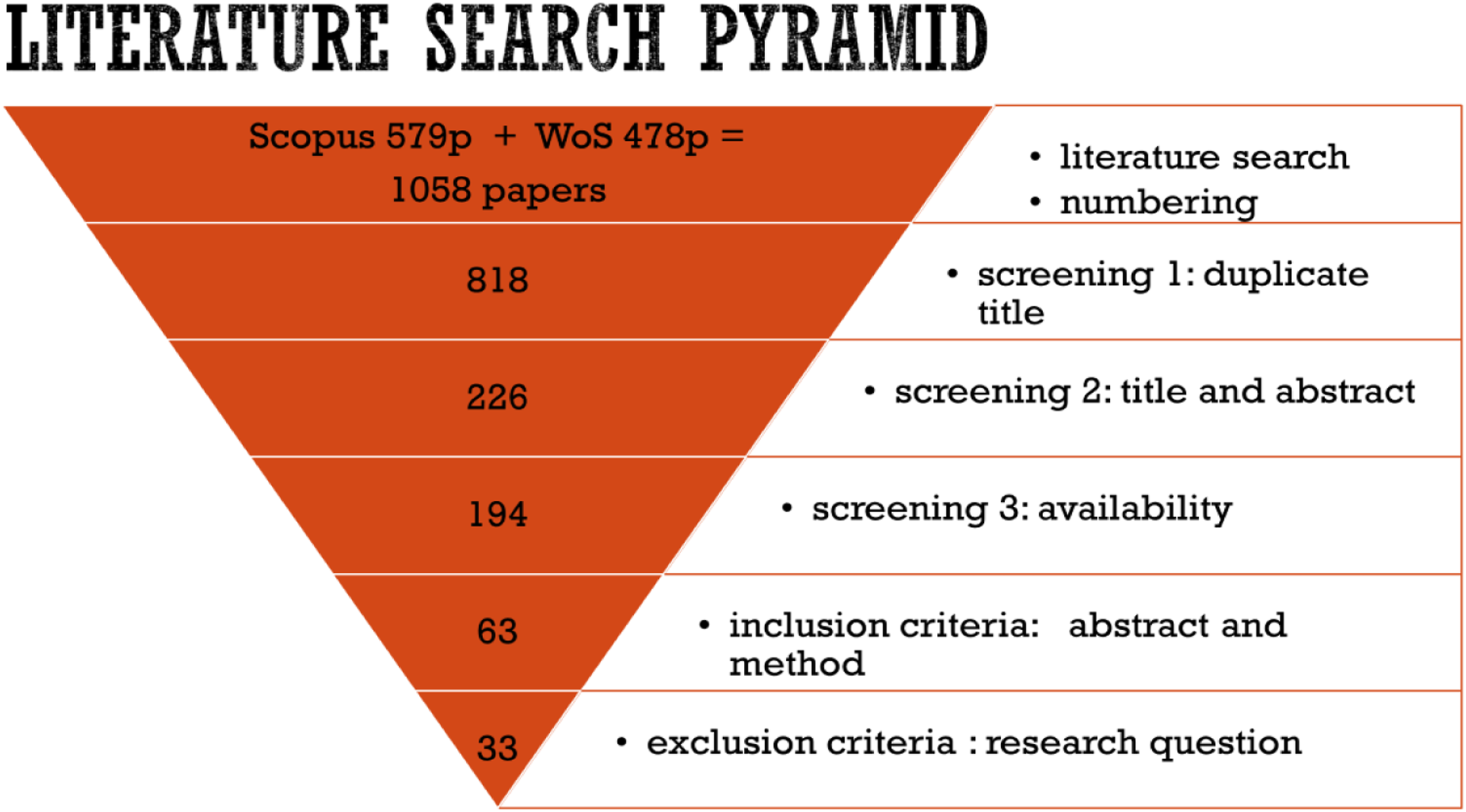
Screening 1: Duplicate titles
Duplicate titles from Scopus (579) and Web of Science (478) were first removed; the resulting number of articles was 818.
Screening 2: Screening titles
The titles were screened for their relevance to the research questions. This step obtained a brief description of each of the published studies. From the remaining 818 articles, 592 (almost 70%) were removed. The many irrelevant articles identified with this step mainly were related to politics and technology. The remaining number of articles was 226 at this stage.
Screening 3: Availability of the articles
The university library website and Google Scholar were used to obtain the full articles. If the article could not be found with these sources, a request form was sent to the university library, and the national library of the Netherlands was used as well. In total, 194 articles out of the 226 could be obtained.
Screening 4: Screening abstract
Using the abstracts, articles were screened for including empirical data. Another 131 papers were excluded because they were not based on empirical research; 63 papers remained after this step.
Screening 5: Full paper
Quantitative data description of the reviewed papers.
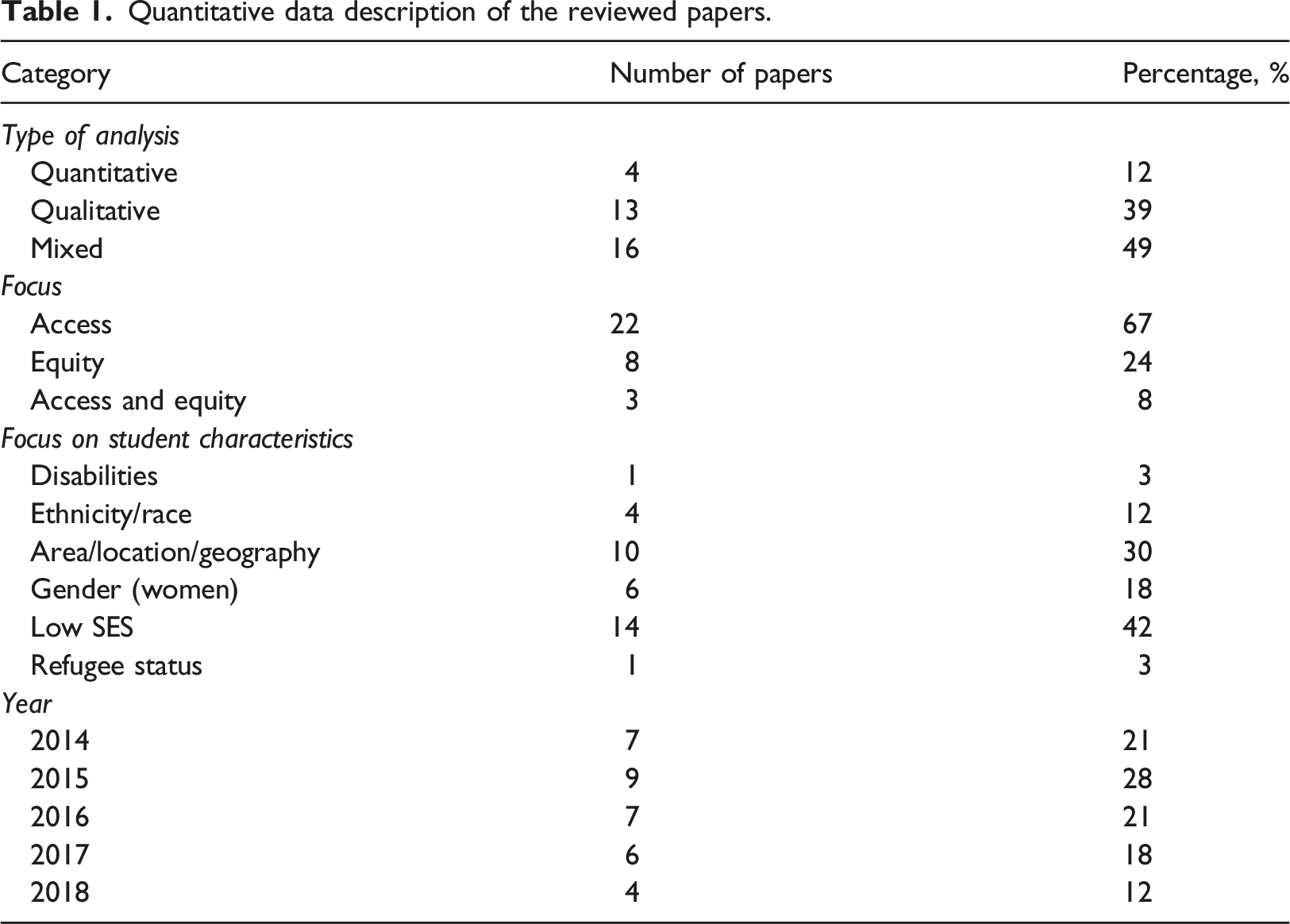
Table 1 provide information on the criteria for each of the articles used in this review. These criteria include the type of analysis (quantitative and qualitative), focus (access, equity, and access & equity), characteristics of subgroups of students studied including disabilities, ethnicity, region or location, gender, SES (social-economic status), and refugee status. A complete description of the number of articles and the percentage of articles from on each criteria can be seen on appendix.
Analysis of literature
Analysis followed the method described by Aveyard (2010), in which the first step comprised an inventory of the characteristics of the studies. Second, each article was read carefully and subjected to in-depth exploration. Third, findings were analyzed beyond the individual studies.
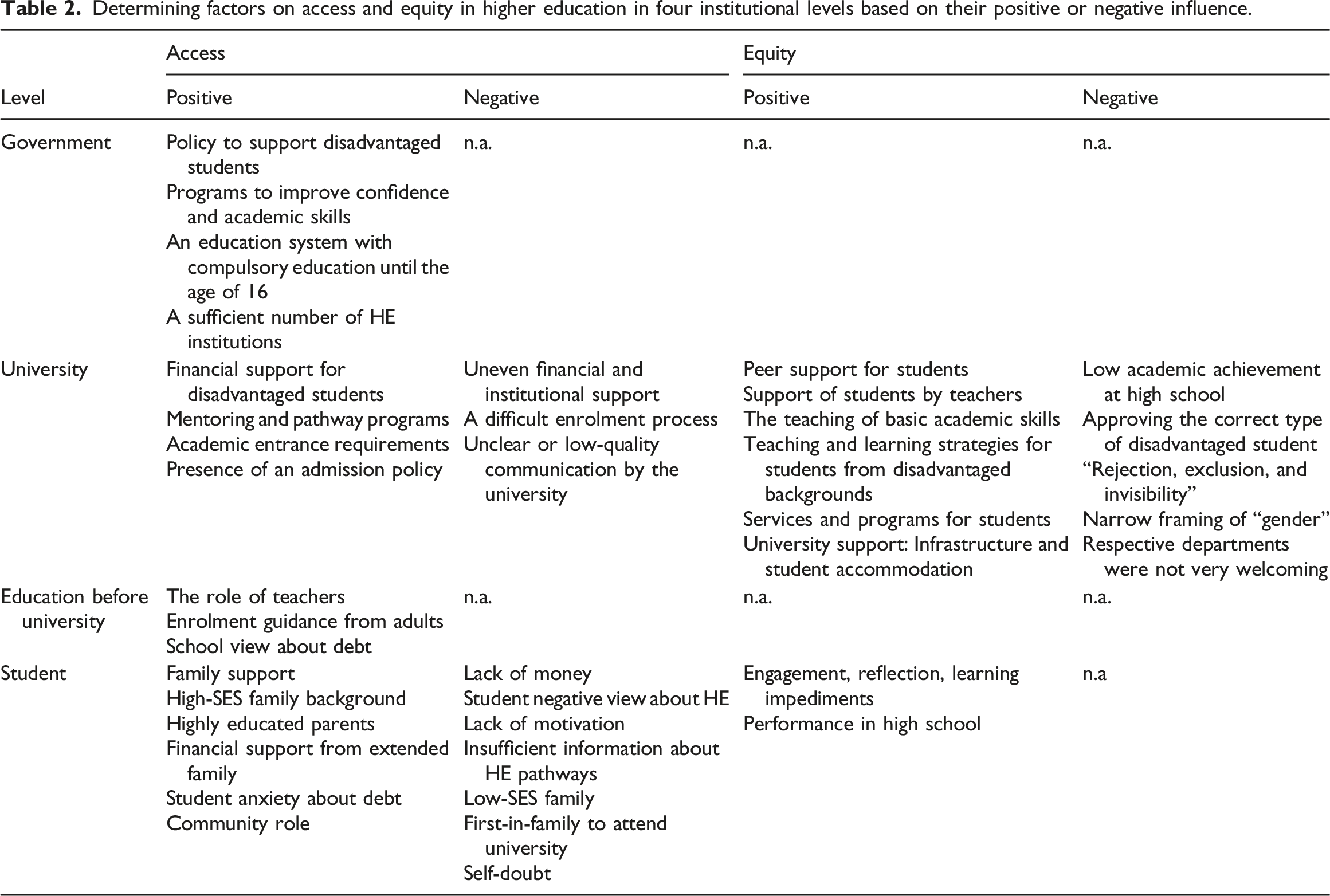
Determining factors on access and equity in higher education in four institutional levels based on their positive or negative influence.
The origin of each paper might influence the study results by, for example, creating a bias or limiting the scope of the results. Out of the 33 papers, most were from Europe (9), Australia (9), and America (9) (see Figure 2). Therefore, it might be correct to assume that the results of this review were mainly influenced by policies, programs, or conditions in these three regions. This could limit the applicability of the review outcomes to under-represented nations. Articles by continent.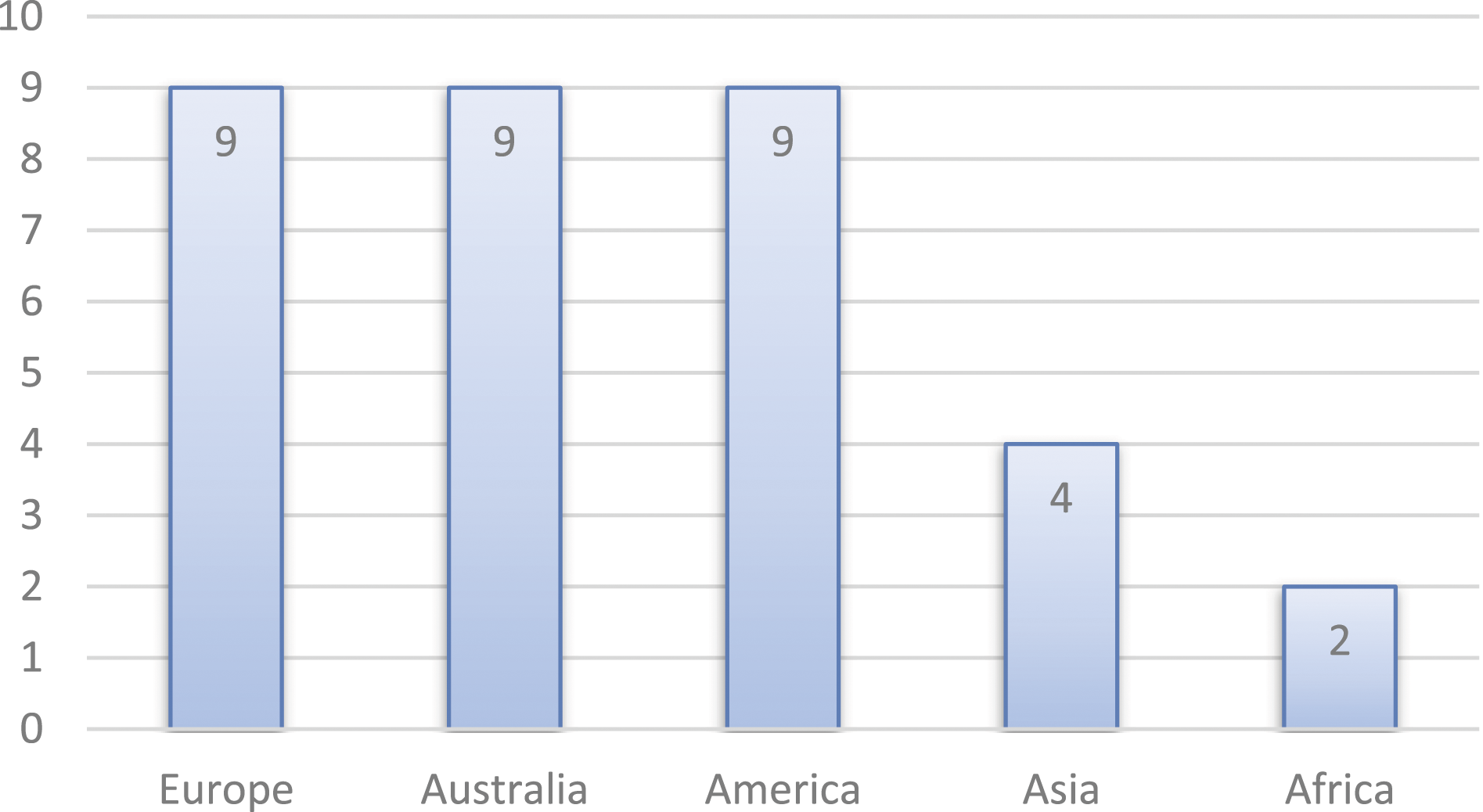
Results
This section is divided into the following parts: an overview of determining factors on access and equity in HE (summarized in Table 2); a more in-depth discussion of factors influencing access to HE; and factors that affect equity in HE.
The results in this review are divided over four different levels: government, university, pre-university (e.g., secondary) education, and student. Only (positive) factors for access and no factors for equity were found at the government level. So, this means that all initiatives in the field of access at the governmental level up until now have positive consequences. The same holds for pre-university education. At the university level, there are factors reported for both access and equity. At the level of “education before university,” there are only (positive) factors related to access. At the student level, positive and negative factors appeared for both access and equity.
Determining factors on access and equity in higher education in four institutional levels based on their positive or negative influence
Factors influencing access to higher education based on the organizational level
As one can read in Table 2, many positive and negative factors for access and equity at different levels could be identified. This section describes the other factors and provides some background about their role in access and equity. We start with the factors for access at the national level.
National level
Positive
Four factors were reported in studies that affected access at a national level: policies to support disadvantaged groups; programs to improve confidence and academic skills; an education system with compulsory education until the age of 16 years; and the number of HE institutions.
A policy to increase the enrolment of minorities students in the USA in 1995 had successfully improved the number of qualified aboriginal student applications (Teplitsky and Uswak, 2014). The present literature review found several successful programs that improved access to universities. These included the Twenty-First Century Scholars Program (Zerquera and Smith, 2015) in the USA and the Affirmative Action Program (Alon and Malamud, 2014) in Israel. For example, through the Affirmative Action Program, which implemented admission quotas based on the SES of students, participation of public school graduates in universities increased by 51% within the first year of the program.
Student qualification is the main driver for university participation. The education system in the UK requires students to attend compulsory education until 18 years of age, which has the benefit that a larger potential group of students has sufficient qualifications to enter university (Jerrim and Vignoles, 2015). The rapid expansion of HE worldwide has resulted in increasing student access to HE.
One study stated that the increase in the number of HE institutes in Turkey also somewhat helped increase access to HE, at least quantitatively (Gök, 2016). No factors were identified that negatively affected access at the national level.
University level
Positive
The review suggested four positive factors at the university level: financial support, mentoring and pathway programs, academic requirements, and university policy. Two of the four factors seemed to have a more substantial impact: providing financial support from the university and the availability of mentoring programs.
Students from a low economic status background often need financial support from their university to support their studies. For example, in the USA, students from a low economic status background preferred universities that had financial assistance over universities that offered student loans (Monks, 2018).
Mentoring programs also have a crucial effect on improving access to HE. In Australia, one participant stated that she could continue to study in HE because of the support of the mentors in the refugee mentoring program, who gave her the confidence to aspire and achieve HE. Another participant reported that the program level in her plans for the future had increased because of the program. She appeared to have greater insight into some practical considerations for university entry and study (Lynch et al., 2015). Pathway programs are closely connected to mentoring programs. In Australia, programs provided an alternative entry option for disadvantaged students who would otherwise not access university education, including a mix of “academic skills” and “discipline-focused subjects” (Thomas, 2014).
Academic requirement, referring to entrance test scores provided by the university, also plays an essential part in access to HE. This review found that test scores were one of the most critical information for determining students’ academic merit. One study in Australia stated that high university access rates among students could be attributed to their superior test scores in education before HE (Jerrim and Vignoles, 2015).
Admission policies provided by universities affected access to HE. In Portugal, for example, one study (Dias, 2015) indicated that a new (admission) policy provided greater flexibility in admissions and access to HE, widened the recruitment pool, and made it possible to reverse the decline in student numbers observed during recent years. That same study showed that, in 2007–2008, approximately 14% of students enrolled in HE were using this access route.
Negative
Three negative factors at the university level deal one way or the other with administrative processes: uneven financial and institutional support, a complicated enrolment process, and unclear or low-quality communication by the university.
Several studies pointed towards minimal financial and institutional support by universities, citing a lack of funding at the campus level (Zerquera and Smith, 2015). Second, in some studies, the process of navigating enrolment appeared to be marked by difficulty, misinformation, unhelpful personnel, and unclear processes (Negrón-Gonzales, 2017). This could be due to complicated registration bureaucracy systems and a lack of information about the registration process from the side of the university. Third, administrators felt that challenges in reaching scholars created a barrier to assisting. They described communication from the institute towards students as being difficult, varied, and repetitive (Zerquera and Smith, 2015).
Education before university
Positive
Factors that were of positive influence in the education before university merely focuses on persons who contributed significantly to the navigation and encouragement of the future student. The role of teachers, enrolment guidance from adults, and school view about debt were essential factors for access in the pre-university period.
First, the teacher’s role at secondary and primary schools seemed to play a vital part in motivating students to continue their studies into HE (Tuomi et al., 2015). Second, the guidance for students by adults in entering universities. Adults such as high school counselors, non-profit staff, and high school teachers who helped students navigate the process of enrolling in university played a significant role in improving access to HE (Negrón-Gonzales, 2017).
One study in the UK stated the differing ways in which schools (teacher and staff) responded to the issue of debt are essential (Evans and Donnelly, 2018). On the one hand, the discourse of “debt as normative” apparent in one school, and promoted by at least one teacher, could have benefited many young people at this school who were fearful of debt by not amplifying a notion in their minds that debt is a deterrent to university study. In other schools, debt, and finance that could heighten any fears young people already have were emphasized. How schools deal with debt issues could affect young people’s attitudes towards HE (Evans and Donnelly, 2018).
Student level
Positive
Six positive factors in the literature influenced access to HE at the student level: family support; high-SES family background; highly educated parents; financial support from extended family; student anxiety about debt; and community role.
One study stated that students had more success in entering university because of the support of their family, who gave them the confidence to aspire and achieve HE (Whiteford, 2017). The analysis of socio-economic indicators showed that the origin of a student’s family had a strong influence on access to HE (Dias, 2015). Those with highly educated parents were significantly more likely to enter university than students from middle- and low-income groups (Jerrim and Vignoles, 2015).
One study from South Africa stated that financial support from extended family is the most critical factor enabling the students to construct an educational pathway to university (Wilson-Strydom and Okkolin, 2016). Next, students’ anxiety about debt was relevant. The majority of students in one study stated that they did not worry about the prospect of debt. It meant that they did not conceive debt as a barrier to entering HE life (Evans and Donnelly, 2018).
In one study, students stated that “proving” that they (students) were different from their communities was particularly important (Wilson-Strydom and Okkolin, 2016). For them, they were coming from a poor neighborhood that did not always value education as enabling, as it served as a motivator for them (and sometimes their families) to be different, while for others, community connections, role models, and support were enablers during schooling as well as enablers in aspirations for HE (Wilson-Strydom and Okkolin, 2016).
Negative
Several negative factors were found that affected access at the student level: lack of money; student negative view about HE; lack of motivation; insufficient information about HE pathways; low-SES family; first-in-family to attend university; and self-doubt.
Besides supporting access to HE, financial factors can also be an obstacle in determining the path to HE. Young people, especially those residing in low-SES districts, reported lacking money, particularly when upfront fees were required (Kearney and Glen, 2017).
Students’ negative views about HE as not being a realistic option were also mentioned as one of the negative factors. Students had self-censored the idea of university education, quite apart from the practical difficulty of the limited number of HE institutes and opportunities available in the community in which they lived and worked (Teplitsky and Uswak, 2014). Therefore, changing these negative student views on HE is crucial to promoting access to HE. In this respect, teachers in secondary education fulfill a crucial role in order to convince students of their qualities and potential.
Specific majors such as Science, Technology, Engineering, and Mathematics (STEM), many students' lack of motivation to do STEM courses were concerned. In one of the reviewed studies, seven participants spoke of their lack of motivation to undertake a STEM major as a “fancy degree” (David, 2016). Furthermore, the same study stated that insufficient information about STEM pathways made it clear that early marketing of STEM courses was essential.
Students with low-SES family backgrounds have less chance of continuing their HE studies. One study in Australia found that disadvantaged students were more likely to leave school as soon as possible and less likely to be in full-time post-secondary study. This is because they relied on their families or their resources to fund their study upfront as required (Kearney and Glen, 2017).
Students from a first-in-family (FIF) group were less likely than those from a non-FIF group to be advised by other family members and many friends to continue with HE. This is because of the family or friends’ lack of understanding about accessing HE (Kearney and Glen, 2017).
Students who have doubts about their decision also influence the opportunity to continue their studies to HE. In one study, self-doubt was expressed by three participants who mentioned that they did not feel that they were not smart enough to undertake a STEM major (Christie et al., 2017).
Factors influencing equity in higher education
University level
Positive
Positive factors for equity at the university level can be summarized as either additional programs or supportive peers and teachers. The same factors were peer support for students, support of students by teachers, the teaching of basic academic skills, teaching and learning strategies for students from disadvantaged backgrounds, services and programs for students, learning support programs for students, mentoring programs for students, and university support including infrastructure and student accommodation.
One study in Turkey found that all students stated that they were highly appreciative of the course experience and highlighted peer support as a critical factor in their academic progress (Elliott, 2018). One study from Tanzania showed that the essential features in the university for disadvantaged students were the encouragement and support of teachers trained to meet the needs of all their students (Tuomi et al., 2015).
Teaching basic academic skills such as reading, writing, or speaking to students was fundamental to success. The students stated that once teachers explained skills and gave strategies on how to write a research essay, students felt able to produce an essay and knew what to do the next time around (Alauddin et al., 2016).
Universities may need to consider teaching and learning strategies for students from disadvantaged backgrounds. For example, students from low-SES backgrounds could be supported through group work with mixed groups in terms of SES. Moreover, specific additional tailor-made educational activities could be organized to address their specific needs. Thomas (2014) stated that there is a need to recognize that students from low-SES backgrounds are different from students from middle- and high-SES backgrounds. Thomas explained that many universities had internationalized their curriculum to acknowledge the different understandings of the world that those international students bring. In his view, it was not just a language issue but also a cultural issue that must be understood to teach international students well. Furthermore, he explained that many universities had not yet worked out how to translate the learning about teaching international students to students from low-SES backgrounds. He also explained how universities viewed students from low-SES backgrounds as different would shape the strategies developed to respond to the challenges they imagined these students faced.
Services and programs for students were sometimes offered; these include summer orientations, mathematics and writing laboratories, tutoring (the informal conversations—just talking), supplementary instruction (finding academic, emotional, social, and cultural support), and learning communities (Charleston et al., 2014). Several of these programs had positive effects on equity in HE. For example, the Central Learning Support Program in Australia was offered to all participating universities, either face-to-face or online (Thomas, 2014). This program provided simple trouble-shooting websites for new students, and others offered extensive support and/or programs to help students develop academic or study skills. In addition, mentoring programs were referred to in several studies, either to raise the aspirations of students in schools or to provide support for students from under-represented groups once they enrolled at universities (Thomas, 2014).
University support in the present review refers to infrastructure and student accommodation. One study from Tanzania confirmed by students (from lower-income families) that a campus with an accessible infrastructure and proper equipment is essential for their learning success (Gök, 2016). Finding accessible student accommodation proved to be the next challenge. In an example from the Czech Republic, in one university, the only accessible room in all the institution’s residences was made available to one of the disadvantaged students, but only after some effort. This accommodation was costly and non-affordable; however, the costs were halved due to the director of residences (Biewer et al., 2015).
Negative
Five negative factors influenced equity in HE: low academic achievement at high school; approving the “right type” of the disadvantaged student; “rejection, exclusion and invisibility”; narrow framing of “gender”; and respective departments were not very welcoming.
Student academic achievement at high school contributes to their performance at university. One study that collected data from 22 universities in the UK reported that prior attainment (high school) is a crucial correlate of success at university (Wyness, 2016). Further, Wyness stated that students who are likely to perform worst at university are disadvantaged students with weak prior attainment.
The struggle to be accepted in the university environment will be more challenging for disadvantaged students. In South Africa, for disadvantaged students, especially black students, approving the “right type” refers to the power networks within the university field. It depends on who you have close ties with within your department and the institution (Booi et al., 2017). The same study stated that their familiarity carefully identifies the “right type” of candidates with the university’s existing ‘way of doing things and whether their embodied dispositions reflect the dominant white middle-class institutional cultures'. However, the “approved” candidates who embody the dominant dispositions are also made to feel excluded, rejected, and invisible when they attempt to interrupt the dominant institutional culture of the university.
Chairpersons’ conception of gender equality was found, in one study (Wyness, 2016), to be derived from their understanding of gender as a concept. To these chairpersons, “gender” was taken as a synonym of “women” and “gender inequality” as the disadvantages female students face. These responses reflected a narrow framing of “gender,” as “gender” is not “women.” All participants in one study from the USA expressed how the computer science culture in their respective departments was not very welcoming to women, and even less so to African American women (Pitman, 2016).
Student level
Positive
Four factors influenced equity at the student level: engagement; reflection; learning impediments; and high school performance.
One study in Australia (Alauddin et al., 2016) used three dimensions—engagement, reflection, and learning impediments—as determinant factors in student study practices in HE. Engagement, which refers to the formal teaching and learning process. University entry score positively affected engagement, and students aged 20–25 years were more engaged than those younger than 20 years.
The reflection focused on students’ inclination towards reflection on probable causes that might have made a difference in their academic performance or learning outcomes. Upper undergraduates demonstrated a lower propensity towards reflection than lower undergraduates.
Learning impediments in terms of language difficulty and the theoretical or conceptual underpinning of application to study. Disadvantaged students from a non-English-speaking background faced higher learning impediments than students from an English-speaking background.
High school performance was shown to significantly influence key dimensions of students’ study habits well into their university years. One study stated that the performance at grade level 12 had significant influences on crucial dimensions of students’ study habits well into their university years (Alauddin et al., 2016).
Discussion
This review aimed to provide a more comprehensive overview of the factors influencing either access or equity in HE. In general, more factors were reported by studies affecting access rather than equity. In analyzing and structuring these factors, this study complemented a study by Jensen (2011) that analyzed access to HE in terms of student retention. He identified factors under three levels: individual, institutional, and social/external. This study divided the factors into four levels: government, university; education before university; and individual. Based on 40 factors in this review, the most factors are at the university level (18 factors), student level (15 factors), national level (four factors), and the fewest factors are at the education before university level (three factors).
We need to highlight that the results presented in this study are (not only) from European America and Australian countries (82%). So this article presents universal findings from western countries. Moreover, there are other papers which are less in number (18%) from Africa and Asia countries. Several reasons may be that western (developed) countries may have pre-existing policies and programs than developing countries to increase access to higher education. Developed countries generally have a fairly strong capital both in terms of funding and infrastructure.
The results of this study that presents structured factors (from government, university, pre-university, individual level) are in line with the concept of Bourdieu who provides a conceptual framework that stands to contribute important insights into the mechanisms underlying educational inequality.
Bourdieu (1997) delineates three fundamental forms of capital: economic capital, which is readily convertible; social capital, which is comprised of “social obligations” or “connections”; and cultural capital or “cultural competences,” which can be embodied (internalized and intangible), objectified (cultural products), and institutionalized (officially accredited). Bourdieu (1997) sees the forms of capital as mutually constitutive in that economic capital affords the time and resources for investment in the development of children’s cultural capital, which is associated with future educational and occupational success and, in turn, contributes to the accumulation of economic capital.
Habitus is the learned set of preferences or dispositions by which a person orients to the social world. It is a system of durable, transposable, cognitive “schemata or structures of perception, conception and action” (Bourdieu, 2002: 27). Habitus is rooted in family upbringing (socialization within the family) and conditioned by one’s position in the social structure. Bourdieu termed it “socialized subjectivity” or subjectivity conditioned by structural circumstances. Habitus shapes the parameters of people’s sense of agency and possibility; it entails perceptual schemes of which ends and means are reasonable given that individual’s particular position in a stratified society.
It is striking that many of the factors seem to be related to the role of social support (by peers, by family, by teachers, by university officers, and via programs). Social support emerged as crucial for both access and equity. Most of the previous research, especially large-scale quantitative studies on access and equity, did not emphasize this factor in their findings. This review found the social support factor at three levels: the pre-university education level; the university level; and the student level. At each level, peers, teachers (including tutors and counselors), and family support (including external family members) played a significant role in giving students motivation, encouragement, guidance, and financial support.
Our conclusions are related to the outcomes of the “What works” project, involving 22 higher education institutes in the UK, which aimed to facilitate an effective transition to higher education. “What works” identified the importance of student engagement and belonging. Student engagement enables belonging through supportive peer relations and meaningful interactions with staff, thus developing knowledge, confidence, and identity of students as successful HE learners and providing an HE experience relevant to students’ interests and future goals (Thomas, 2013).
According to Tinto (1987), a successful transition from one educational level to the next depends on whether students manage to connect to the new educational environment. This conclusion corresponds with reasons provided by students themselves for their drop-out. Tinto’s integration model describes the transition from secondary to higher education. In his opinion, students’ behavior after this transition mainly depends on whether students manage to adapt to the new environment. In this respect, he makes a distinction between “academic integration” and “social integration.” The importance of both factors and especially social integration is found in our study as well. The key to effective retention of students is in a strong commitment to quality education and the building of a strong sense of inclusive educational and social community and cultural capital on campus (Tinto, 1987).
It was striking that only a few studies on equity emerged in our review. There might be several reasons why there seemed to be more attention for access than equity. First, there may be more policy interest for access than equity so far (Jia and Ericson, 2017; Leach, 2013): the priority may have been getting disadvantaged student groups from pre-university education into the university. This could explain the emphasis on factors for access at the government and the pre-university education level. Later, the focus switched to how different groups are treated in the university itself, leading to more attention for equity factors at the university and the student level.
Thomas (2014) stated that despite the initiatives to improve access to HE, it is less clear how the teaching and learning challenges and opportunities created by increased numbers of students from disadvantaged backgrounds are being managed. Furthermore, he stated that if these challenges are not addressed effectively, the benefits produced by the initiatives mentioned above may be lost if university teaching alienates students from disadvantaged backgrounds. To overcome this, perhaps the university should consider using a Universal Design for Learning (UDL) that prioritizes the needs of all potential users from the start. The UDL approach to instruction includes three principles: (a) multiple means of engagement, (b) multiple means of representation, and (c) multiple means of action and expression; UDL is designed to meet the unique needs of all learners through challenging instruction that is both flexible and varied (Hitchcock et al., 2002; Rose et al., 2010; Rose and Strangman, 2007). In addition, the lecturer also needs to consider Inclusive Practice as a teaching approach is also needed to recognize the differences between students and use this to ensure that all students can access educational content and participate fully in their learning.
Moreover, much research on access and equity in HE might be more practical, contextual, or local and related to evaluating education policies or programs at the national or institutional levels (Childs and Stromquist, 2015; Thomas, 2014; Wyness 2016). Part of the research is likely to be reported in the gray literature (e.g., national reports, policy documents), which was not part of this review but might have delivered additional factors influencing access and equity at the different levels. In addition, research on access often focused at all levels distinguished in our review (as shown by the findings mentioned above). In contrast, equity research seemed to focus on the primary process (and less at the policy level): it was often conducted at either the university level or individual level or a combination of both levels.
Limitation and further research
As said, there were limited studies in this review that discussed both access and equity at the same time (8%), while in contrast, 67% of the sources focused on access. Therefore, it is hard to make specific links between or draw conclusions across both topics. That 8% (three articles) that did include both reflected on the findings discussed in this article (Booi et al., 2017; Thomas, 2014; Tuomi et al., 2015). Hence, future studies should focus on access to HE and equity and ideally include both topics, for example, by following students from the entrance to the university up to and including their graduation.
Several characteristics or variables may refer to students from disadvantaged backgrounds. Most of the articles reviewed in this study referred to one specific group of students. Therefore, it may be exciting and relevant to follow a disadvantaged group during their trajectory of entering and going through the HE process, so the complete journey from secondary school until the university can be captured. In addition, it might be relevant to include both quantitative and qualitative data in such a study, as many of the studies in the review typically used only one type of data, leading to a less complete picture of the processes in equity and access.
The focus of our research has been on factors that have been proven to support or hinder access and equity, respectively. Factors that had a neutral impact were not taken into account explicitly. We suggest having research that focuses on factors that have a neutral impact on future research.
Articles that we discussed in this study encompassed the period between 2014 until 2018. After 2018, several important events occurred that potentially affected access and equity to higher education in different countries, such as the covid-19 pandemic and Brexit. Therefore, for the future we suggest to conduct a review on this topic, including the period post 2018.
The results of this study are limited to results from three continents, namely, Europe, America, and Australia. Therefore, we suggest having a study that compares more deeply the differences between countries in the continent.
In general, most factors (66.7%) relate to access than equity. Financial factors still seem to be the main obstacle to continuing their studies in higher education, this factor appears at several levels in the access part. Two factors that appear in both access and equity are academic achievement and the role of teaching staff (including teachers, lecturers, and mentors). It seems that if a student has good academic performance in pre-university education, they are more likely to do well in university as well. For the role of teaching staff, because this research related to access was carried out with some background of the disadvantaged student, the role of teaching staff becomes very crucial in both access and equity. Students need the help of these teaching staff both to continue their studies in university and to successfully study in university.
Recommendation
Based on the fact that social support seemed to be an overarching factor across levels in our study and both equity and access, it is recommended that national policy and institutional policy focus more on improving the opportunity for student learning success at the university. Mentoring programs could follow these policies. Knowing that social support is significant, it is wise to create a support system that includes several actors, such as students, teachers, managerial level, and university administrative staff.
Implication
The implication of the location (origin of the article) is that developed countries, in general, already have policies and programs to increase access to higher education. This may be because developed countries have sufficient capital to support policies and programs to increase access to higher education.
Footnotes
Declaration of conflicting interests
The author(s) declared no potential conflicts of interest with respect to the research, authorship, and/or publication of this article.
Funding
The author(s) disclosed receipt of the following financial support for the research, authorship, and/or publication of this article: This work was supported by the Indonesian Endowment Fund for Education, the Ministry of Finance, Indonesia (201801220812212).
