



Abstract
Higher education provision is a critical enabler of local, regional, and national social and economic development. Benefits of participation are well understood, but less is known about the relationship between the geographic location of students (relative to higher education institutions), their study choices, and subsequent outcomes. This scoping review explored existing evidence about the impact of geographical location (place) on course choices, completion rates, and achievement. Findings suggest that greater distance of students from institutions negatively impacts achievement and program/course completions. Distance to study institutions may also influence study choices, including level and field of study. Higher education providers must consider how best to spread resources regionally and better enable access for those from regional, remote, and/or rural backgrounds. Policymakers should consider location as a key factor in improving access and addressing inequalities in higher education.
Introduction
Access to higher education 1 is a fundamental human right. Article 26 of the Universal Declaration on Human Rights affirms the right to higher education by stating that ‘Higher education shall be equally accessible to all on the basis of merit’ (United Nations, 1963). This right exists despite geographic location and/or socioeconomic circumstances (United Nations, 1963). However, in many cases countries show an imbalanced distribution of higher education opportunities. Typically, there is a concentration of university and public sector provision in cities and in particular areas of the country, creating a skewed distribution of study and learning opportunities. This has profound impacts for communities and individuals, given the role of higher education in regional economic, health and community development, and that in modern economies some form of higher education is required for most entry-level positions (Ali and Jalan, 2018; Crawford et al., 2016; Kivinen and Nurmi, 2003). Geographic location clearly matters in terms of access to educational services and opportunities, however, the degree to which the location of students plays a determining factor in student enrolment decisions or outcomes is less clear.
Educational access and regional sustainability
Over the past quarter century, the relationship between higher education and sustainable regional development has become increasingly clear (Benneworth and Fitjar, 2019; Blume et al., 2017; Pereira et al., 2021). Accordingly, the ‘where’ (i.e. the geographic location from which education is delivered) is important to regional stakeholders who promote local educational accessibility. A common problem is that financial economies of scale drive a tendency for higher education to be delivered in major cities and more densely populated regional centres (Benneworth and Fitjar, 2019; Hillman and Weichman, 2016; Klasik et al., 2018b; Park et al., 2021). A further issue is that contradictions and tensions often exist between higher education institutions funding allocations and performance expectations versus the priorities of regionally based community stakeholders. Higher education institutions face many delocalisation pressures such as the pressure to internationalise and engage academics in global research collaborations, and to drive nationally focused technological innovation. Often, institutions have no obligation to engage in regional areas and indeed their mandate to ensure high levels of graduate employment outcomes can be risked by engagement in regions with low levels of labour market opportunity (Benneworth and Fitjar, 2019; Blume et al., 2017; Koenig et al., 2017). Despite these limiting factors, literature points to a growing recognition surrounding the role of higher education institutions in economic growth and innovation and enhancing the sustainability of regions (Blume et al., 2017; Koenig et al., 2017; Roesler and Broekel, 2017), although scant attention has been paid to the geographic dimensions by which this best occurs (Brenner and Pflitsch, 2017; Garcia-Alvarez-Coque et al., 2021).
Access and opportunities for higher education
Despite higher education being a fundamental human right, not all individuals have equal access and opportunities to pursue it. Governments worldwide grapple with educational equity and/or how best to improve participation and employment-related outcomes for people in small towns and rural and/or disadvantaged communities lacking provision (Hillman and Weichman, 2016; Kivinen and Nurmi, 2003; Klasik et al., 2018a) with various strategies adopted by various governments. For example, the flagship ‘Levelling up’ policy of the current Conservative government aims to reduce the socioeconomic imbalances between various areas of the United Kingdom (HM Treasury, 2021). In the United States, the 2021 Infrastructure Investment and Jobs Act is described as investing in communities previously ‘left behind’, with significant funding provided for roads, broadband, and other infrastructure in small and rural communities (The White House, 2021, 06 November). Given that higher education access is widely recognised as vital to unlocking the full human potential of individuals and to ensuring the overall economic prosperity and sustainability of local communities and regions (Molokova, 2021; OECD, 2007; Park et al., 2021; Polat, 2017), such efforts require concerted efforts from various stakeholders including the entities responsible for higher education provision (Morris and Jacobi, 2022).
Higher education institutions are differentially located, and access is not universal, creating significant issues of equity of access and participation. Alston and Kent (2009); Corbett and Roberts (2017); Fleming and Grace (2014); Gibson et al. (2022) and James (2001) examined the experiences of young people who were living in the rural and regional areas of Australia (Alston and Kent, 2009; Corbett and Roberts, 2017; Fleming and Grace, 2014; James, 2001). The authors collectively argue that education needs to be adaptable and flexible to accommodate the diverse needs of rural, regional, or remote learners, in addition to being grounded in the unique contexts of local communities. These and other researchers highlight the ways in which mobility, rurality, and marginality intersect with education and impact the lives of young people (Alston and Kent, 2009; Corbett and Roberts, 2017; Farrugia, 2016, 2019; Fleming and Grace, 2014; Gibson et al., 2022). UNESCO researchers (Sabzalieva et al., 2022) have emphasized that differential access to higher education for rural students is a social justice issue, and that policies and initiatives are needed to address the structural barriers that these students face (Sabzalieva et al., 2022). Rural students have been found to face a range of other challenges, including financial pressures, social and geographic isolations, and limited access to educational resources in comparison to their urban peers (Hossain et al., 2012; Sullivan et al., 2018; Trahar et al., 2020).
With fewer higher education options and opportunities for students in small regional towns and remote communities, residents of these areas face often stark choices, including whether to relocate to a major centre; study via online delivery (a choice often hampered by variable access to adequate internet services); or non-engage with higher education entirely (Henderson, 2020; Park et al., 2021). Remotely located students may struggle with the financial and other issues associated with long commute times or, alternatively, the family dislocation and broader social disconnection resulting from moving to pursue higher education (Kobus et al., 2015; Tigre et al., 2017). Furthermore, studies in a range of national contexts suggest that students relocating to pursue study are subsequently less likely to return to home regions (Bjerke and Mellander, 2017; Buttner R et al., 2017; Sowl et al., 2022) a ‘brain drain’ effect that further embeds existing regional disparities.
The centrality of geographic location in higher education
In this way, geographical location becomes central to broader questions of participation, educational equity, and equal opportunity in higher education. Governments and policymakers worldwide are increasingly focused on addressing regional imbalances and ensuring equitable access. Preserving and increasing higher education access for relatively remote students is important as these students are much more likely to remain and working locally, with associated positive impacts on their communities' economic and social wellbeing and sustainability (Henderson, 2020; Molokova, 2021; OECD, 2007). In addition to the question of regional economic sustainability, addressing disparities in educational access and outcome among geographically distant or rural students is key to a fair, just, and healthy society (Hillman and Weichman, 2016; Klasik et al., 2018b; Kobus et al., 2015). Given the little that is known about the impact of students’ geographic location relative to their place of study on their study choices and subsequent outcomes (Park et al., 2021), this scoping review seeks to address the question: What is the impact of geographic location of students in higher education on their program choices, course completion rates, and academic achievement?
Materials and methods
Scoping review
Given the limited extent of evidence available, a scoping review was chosen as the method by which to undertake an initial exploration of the review question. Scoping reviews are exploratory studies used to locate the extent of literature in a field; clarify definitions and key concepts; identify knowledge gaps and areas for future research; and as a precursor to more focused literature reviews (Munn et al., 2018).
Inclusion criteria
Summary of the inclusion and exclusion criteria.
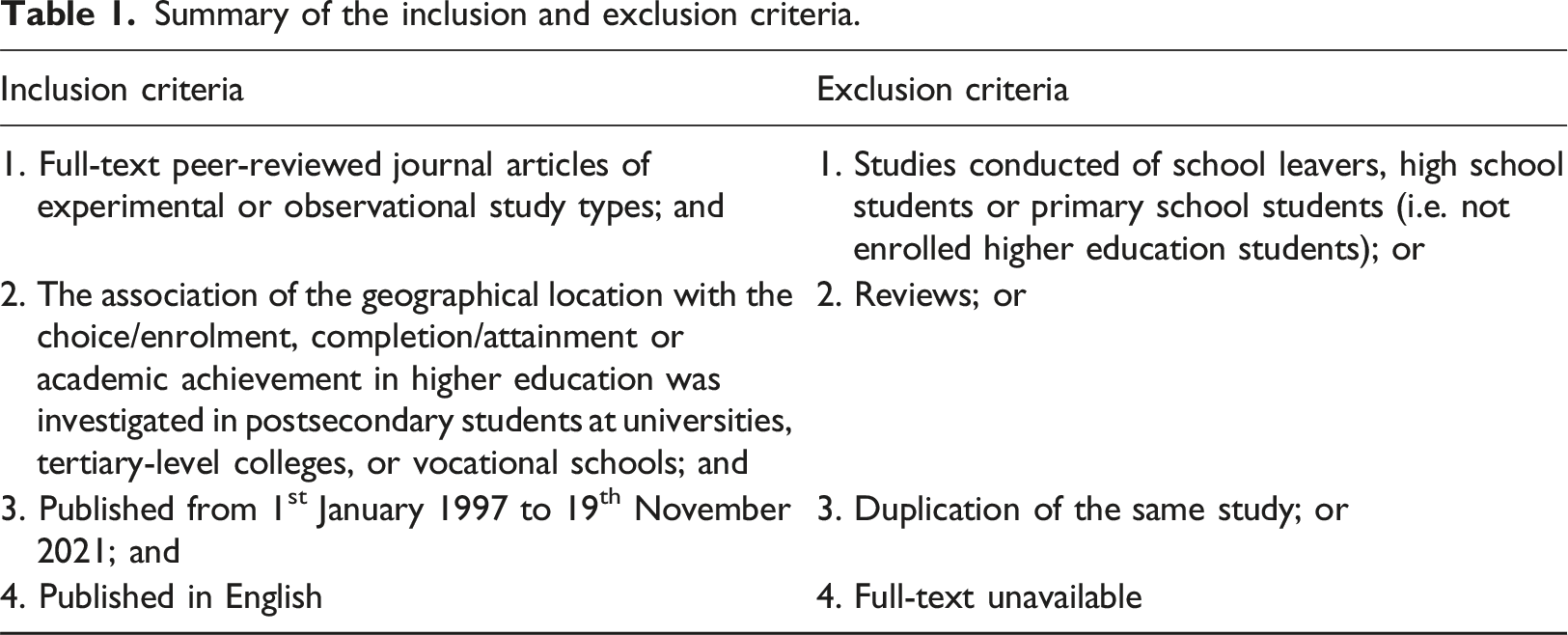
It is important to note that this review was focused only on the impact of geographic location on enrolled higher education students. Studies measuring the impact of geographic location on the likelihood of tertiary enrolment itself, with study populations wider than already-enrolled higher education students (such as school leavers), were excluded. While such studies are certainly of interest to broader questions of educational access and locally based provision, they did not meet predefined eligibility criteria for this review, and their inclusion would widen the review area of focus to a degree that would limit the meaningful answers able to be obtained.
Intervention/comparison: The dependent variable of interest was geographical location. The measures of geographical location included the rural/urban location of participants, commuting distance and/or time from the residence of participants to higher education institutions.
Outcomes: The outcomes and their measures were (1) program and study choices, including choice of field/higher education institutions; (2) course completion and degree attainment from higher education, course persistence and enrolment drop-off; and (3) academic achievement in higher education, such as grade point average (GPA).
Type of included studies: The scoping review included original research in which the association of students’ geographical location with their program/study choices, completion/attainment rates, and academic achievement in higher education was empirically investigated.
Search strategy
Full-text peer-reviewed journal articles published in English in the 25-year period between 1st January 1997 and 19th November 2021 were searched on ERIC, PsycINFO, MEDLINE, CINAHL, Scopus, and Web of Science Core Collection databases. These databases were selected for being well-known for the literature in this field. The search strategy is shown in Supplementary Table S1. The strategy was developed in consultation with a librarian with extensive literature review expertise.
Study selection process
Two of the reviewers (A-RY and DB) screened the preliminary search results for titles and abstracts using the inclusion and exclusion criteria (Table 1) with discrepancies being resolved by the senior reviewer (DB). Two reviewers (A-RY and DB) then independently screened the full-text of articles and excluded irrelevant articles, with disagreements being resolved by a third reviewer (PB or SB). The references of included studies and more sources were checked for any studies not otherwise included. The COVIDENCE platform was used to record included/excluded studies (Covidence systematic review software). The platform and processes used for systematic reviews were used on the basis that it is important that scoping reviews are undertaken in an equally rigorous manner to systematic reviews (Munn et al., 2018).
Data extraction
The following data were extracted where available: first author, year of publication, study design, source of data, aim of study, participant eligibility, recruitment, sample size, descriptive features, the measure of outcomes defined above, regression coefficients or odds ratios for the predictors of interest, and other included predictors in multivariable regression. Data was extracted from the included articles by one reviewer (A-RY), and then checked and finalised by a second reviewer (SB). The COVIDENCE platform was used to record extracted data from the included studies for assessment of study quality and evidence synthesis (Covidence systematic review software).
Quality assessment
This review used Joanna Briggs Institute (JBI) critical appraisal tools ‘JBI Checklist for Cohort Studies’ and ‘JBI Checklist for Analytical Cross Sectional Studies’ (Joanna Briggs Institute, 2020a, 2020b), which provided a structured approach to assess the quality of the included studies. By using these tools, researchers can evaluate the design, conduct, and reporting of studies, which helps to identify strengths, weaknesses, and potential biases. The appraisal tools include domains that assess the validity and reliability of exposure and outcome measurements, identification and management of confounding factors, and appropriate statistical analysis as listed in the following:
The JBI Checklist for Cohort Studies includes eleven domains: (1) Were the two groups similar and recruited from the same population? (2) Were the exposures measured similarly to assign people to both exposed and unexposed groups? (3) Was the exposure measured in a valid and reliable way? (4) Were confounding factors identified? (5) Were strategies to deal with confounding factors stated? (6) Were the groups/participants free of the outcome at the start of the study (or at the moment of exposure)? (7) Were the outcomes measured in a valid and reliable way? (8) Was the follow-up time reported and sufficient to be long enough for outcomes to occur? (9) Was follow-up complete, and if not, were the reasons to loss to follow-up described and explored? (10) Were strategies to address incomplete follow-up utilised? and (11) Was appropriate statistical analysis used? (Joanna Briggs Institute, 2020b).
The JBI Checklist for Analytical Cross-Sectional Studies includes eight domains: (1) Were the criteria for inclusion in the sample clearly defined? (2) Were the study subjects and the setting described in detail? (3) Was the exposure measured in a valid and reliable way? (4) Were objective, standard criteria used for measurement of the condition? (5) Were confounding factors identified? (6) Were strategies to deal with confounding factors stated? (7) Were the outcomes measured in a valid and reliable way? and (8) Was appropriate statistical analysis used? (Joanna Briggs Institute, 2020a).
The use of these tools helps to assess whether studies are conducted and reported according to rigorous standards, which enhances the credibility and usefulness of the research findings. It allowed one reviewer (A-RY) to systematically assess the quality for individual included studies, and a second reviewer (DB) to check and finalise the quality assessment. The use of the COVIDENCE platform also enabled easy recording and tracking of the study quality assessment outcomes (Covidence systematic review software).
Data synthesis
Results were reported based on the Preferred Reporting Items for Systematic Reviews and Meta-Analyses (PRISMA) guidance (Page et al., 2021). A narrative synthesis was reported with the features of categorised studies included with respect to the outcome that each individual study investigated.
Results
Detailed results from the six databases are included in the supplementary table (Supplementary Table S1). Eleven studies were identified for inclusion in the review. The PRISMA Flow Chart (Figure 1) outlines the process of assessment and inclusion. Of the included works, five were cohort studies and six were cross sectional studies. The studies were conducted in nine countries: Australia, China, Croatia, Italy, Ireland, Israel, Italy, Portugal, and the United States. Table 2 outlines the eleven identified studies and key features of each study. PRIMSA flow chart outlining the process of assessment and inclusion. Features of the included studies.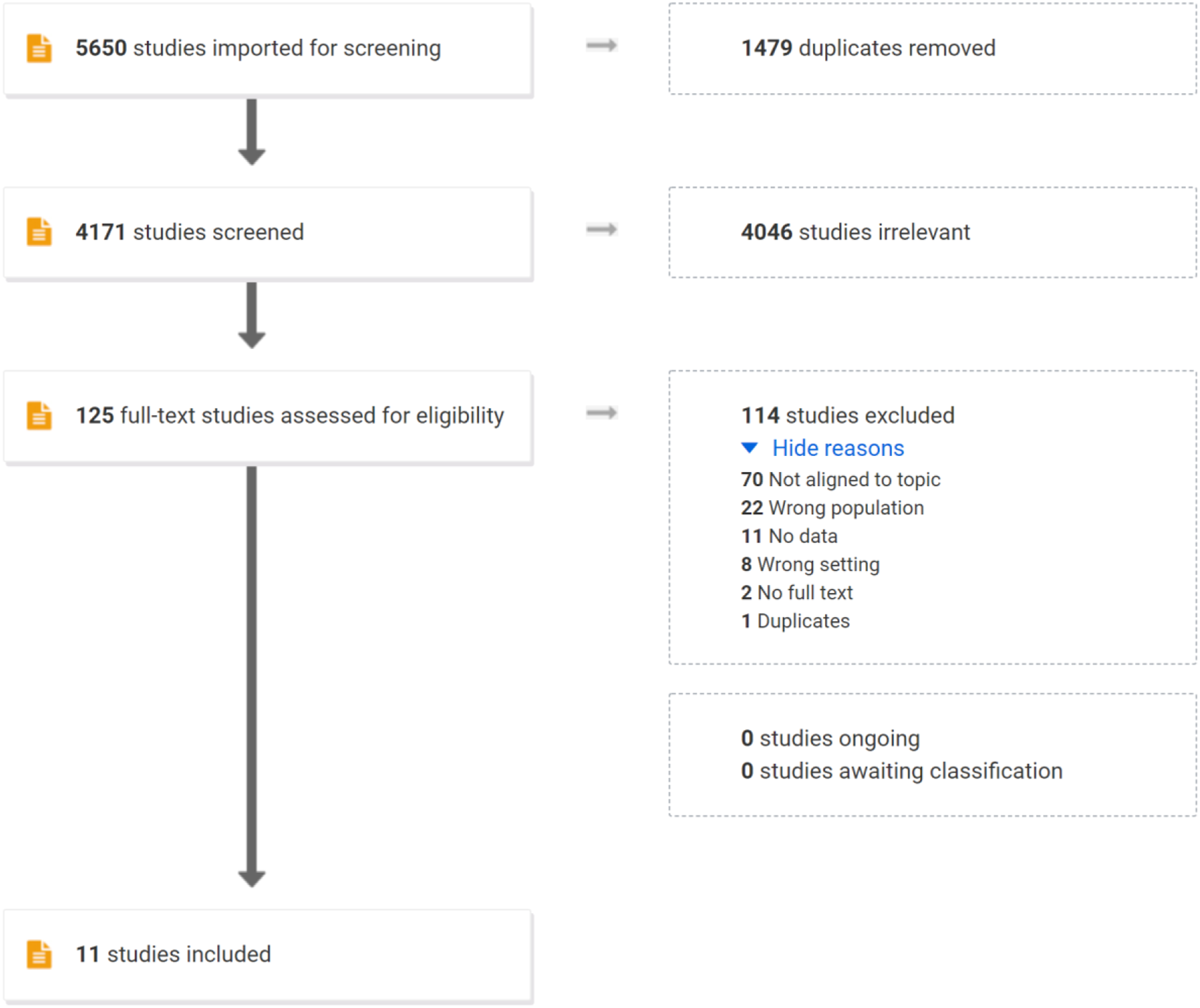
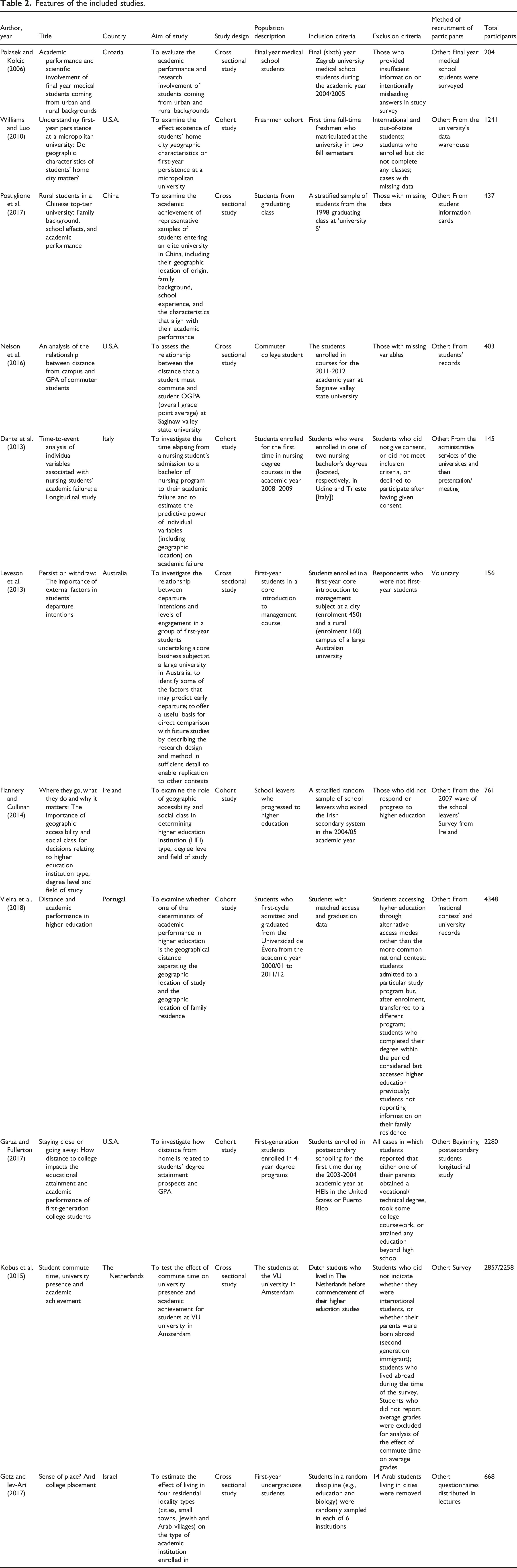
As presented in Table 2, it proved impossible to calculate pooled effects estimates in the data as each country or region reported data using different data collection tools, and studies used different range of populations and varying starting years. The measurement of choice as an outcome could not be agreed upon as this could be a choice of degree or choice of university. For example, rural or urban location definitions differed; commuting distance and/or time differed depending on the start location for travel.
The quality of evidence as reported in the articles was generally low: potential confounders were not controlled, and results were often described through a univariate analysis (see Figure 2). Also, some exposure measurements were not conducted in a valid and reliable way making the results somewhat unclear. Quality assessment outcomes of the included studies.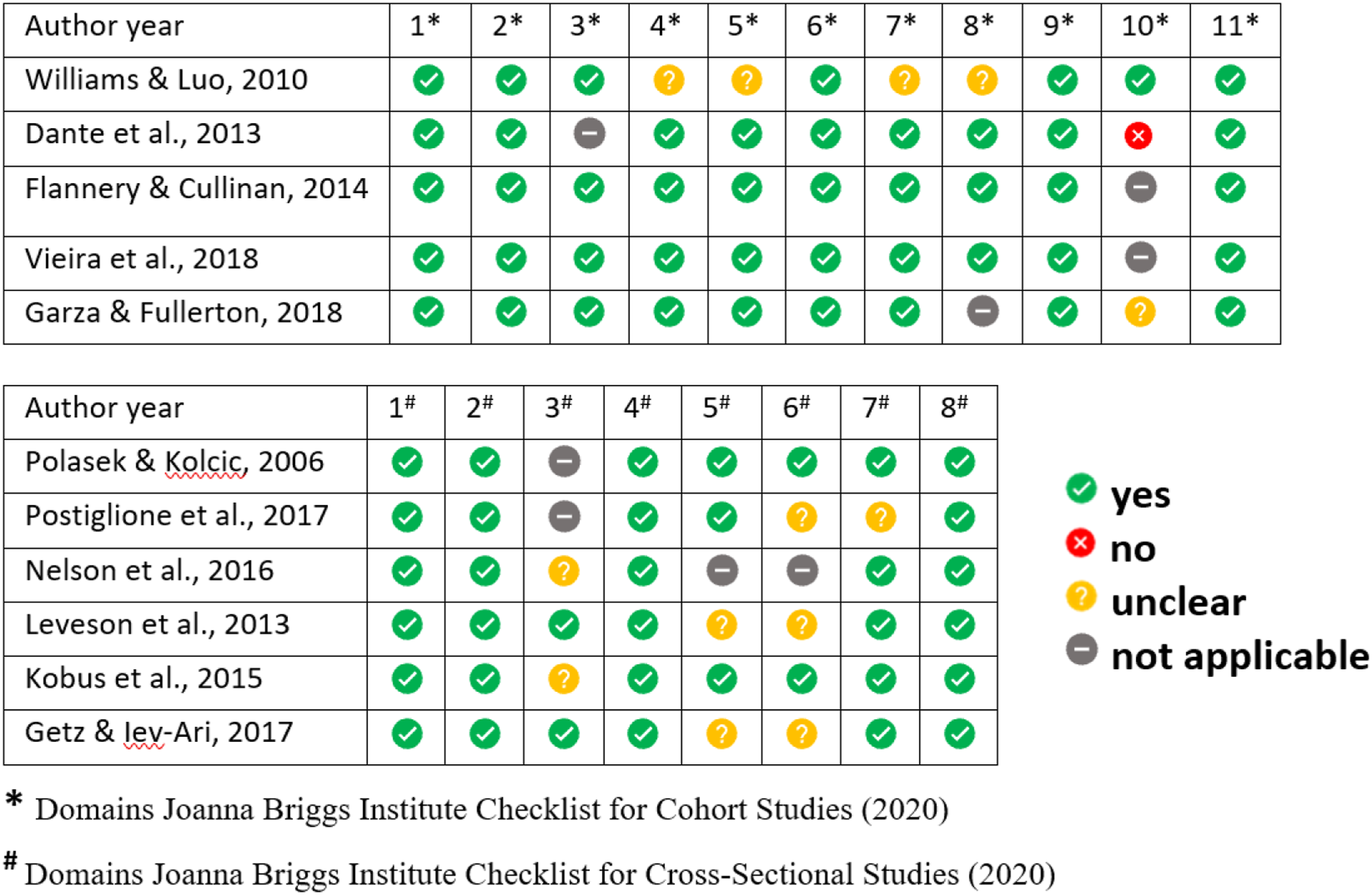
Findings
Overall, findings within the eleven included studies highlight that the longer the distance students must travel to their location of study, generally the poorer their academic achievement and program/course completions. The location of students also seems to have some bearing on their particular study choices, including degree level and field of study. However, this scoping review indicates that the choice to attend higher education is not overly affected by distance, possibly because in most contexts in which the studies are cited, government policy and funding are created to support the student to go to universities, tertiary-level colleges, or vocational schools. These are arranged into three categories and elaborated below.
Firstly, the outcome of choice of degree level; choice of higher education institution; and the choice of courses was focused on geographical location and minimum distance to university (Supplementary Table S2). In an Irish study, the average marginal effect of distance to nearest university or nearest non-university higher education institution impact on choice of higher education and choice of degree type (i.e. an honours degree) was found to be negative though insignificant. However, further modelling suggested that while the likelihood was similar for those living up to 160 km from a university, there are statistically significant effects at larger distances – an individual living 180 km from a university was 17% less likely to choose a university compared to an otherwise similar individual living 20 km away, and 31% less likely at 240 km (Flannery and Cullinan, 2014). Exploring the influence of minimum distance to a university or to a non-university higher education institution on chosen fields of study, the authors find some evidence that access does have an influence. For example, those living closer to a university were significantly more likely to be enrolled in an arts/humanities course and less likely to be enrolled in a science course, while those living further from a university were more likely to be enrolled in ‘other’ course categories, which includes subjects such as childcare, administration, construction and catering typically offered in non-university higher education institutions.
Similarly, a study conducted in Israel found that living in cities, towns, rural Jewish localities and Arab villages had some significant effect on the choice of higher education institution, though only general in nature: little differences in the likelihood of attending various institution types was seen between the three Jewish types of residential localities, but the likelihood of those from Arab villages studying at an elite university was less. This influence was particularly prominent among those with high previous academic achievement (Getz & lev-Ari, 2017).
In a U.S. study of student cohorts from a micropolitan (i.e. in an area of between 10,000–50,000 people) university, the urbanicity of students’ home city did not influence first-year persistence (i.e. remaining in college), but proximity of under 50 miles from students’ home city to campus was significantly positively associated with persistence through the first-year (Williams and Luo, 2010). A university-based Australian study similarly found that first-year students commuting over 16 h per week had dramatically increased odds of expressing an intent to leave the university (OR 20.40, p = 0.05) (Leveson et al., 2013).
Secondly, the studies of student location impact on degree completion were summarised (Supplementary Table S3), with 2435 participants included in two published studies (Dante et al., 2013; Garza and Fullerton, 2017), in which the dependant variable measurements differ considerably and cannot be usefully subjected to meta-analysis. Both studies showed a significant impact of distance on degree attainment, but the effects were opposing. The study by Garza and Fullerton (2017) showed that with each standard deviation increase in the natural log of distance in miles between permanent residence and higher education institution, the odds of first-generation students obtaining a bachelor’s degree increased 52% (Garza and Fullerton, 2017). The study by Dante et al. (2013) revealed that students who commuted over 30 min from residence to university were more likely to have experienced failure in their courses (HR 1.898, 95% CI 1.015–3.547) (Dante et al., 2013).
Thirdly, the outcome of academic grades was reviewed (Supplementary Table S4). High-urban, mid-urban and rural/remote inhabitants displayed significant differences in mean GPA in one study (Polasek and Kolcic, 2006) but in other studies the level of urbanisation of students’ geographic location of origin showed insignificant effects (Kobus et al., 2015; Postiglione et al., 2017). Distance effects were also conflicting across the studies: decreased graduation grades or GPA were observed with increased distance in two studies (Nelson et al., 2016; Vieira et al., 2018), but not in the study by (Garza and Fullerton, 2017). Notably, when mean public transport time was used as an instrumental variable, commute time was found to significantly affect average grades in a study based at a Dutch university (Kobus et al., 2015).
Discussion
Geography is an underexplored attribute in understanding student experiences and success, as shown in the limited number of located studies. While much of the empirical literature on spatial differences in higher education has focused on the decision to apply and enrol in higher education (Cullinan et al., 2013; Frenette, 2004; Hillman and Weichman, 2016; James, 2001; Marks et al., 2003; Turley, 2009) this review extends this spatial perspective to already-enrolled students, exploring how location plays a role in higher education experiences and outcomes.
Regarding study choices, whether in regard to institution type, course level or field of study, the distance from institutions and the rural/urban setting from which students come (Flannery and Cullinan, 2014) (though seemingly mediated here by ethnicity) does seem to have measurable impacts, and – interpreting choice widely to include study persistence – increased distance from campus/commuting times do have a negative impact on the likelihood of remaining in study (Getz & lev-Ari, 2017; Williams and Luo, 2010). If geographic location is a factor in student decision-making, it must be considered by higher education institutions and policy makers, since such choices can impact individual, regional, and national labour market (and wider) outcomes. Distance from institutions especially seems to be a barrier/prohibitive factor. Not addressing this by geographically expanding educational delivery with strategies such as satellite campuses or travelling tutors, and/or through targeted support of students who are geographically isolated from higher education institutions, risks further disadvantaging these students and, we would argue, the regions in which they reside. Such findings certainly raise important equity considerations: if distance to study helps or hinders students’ study choices including in persistence at college, there are obvious impacts in terms of opportunity, social mobility, and development in remote and rural regions.
Completion is defined here by the completion of a degree and/or the successful completion of markers as defined in the studies (i.e. first-year completion) within a program of learning. Intuitively, the likelihood of a student doing so may be influenced by the distance to their geographic location of study. Greater distances increase the travel costs (financial and temporal) associated with face-to-face learning and access to campus-based supports and resources, and longer travel times limit the time available for study as well as to engage in paid employment to support study (Flannery and Cullinan, 2014; Hillman, 2016). Only two studies (Dante et al., 2013) explored how completion rates were influenced by geography. Of those, only one (Dante et al., 2013; Garza and Fullerton, 2017) agreed with the assumption that completion rates are influenced by distance, while the other (Garza and Fullerton, 2017) found that for first-generation students attending college, greater distances sees increases in the likelihood of graduating. More research is clearly needed, given the opposing findings in respect to the impact of distance on course completion, and the clear importance of this question to both policymakers and higher education institutions alike.
Academic achievement, measured in the literature via GPA (Dante et al., 2013; Garza and Fullerton, 2017; Kobus et al., 2015; Polasek and Kolcic, 2006; Vieira et al., 2018), academic year failure rates (Garza and Fullerton, 2017), and graduation grades (Postiglione et al., 2017) certainly seems to be influenced for students by distances from their geographic location of residence to HEI. More specifically, increases in travel time for students results in reduced levels of academic achievement (Garza and Fullerton, 2017; Kobus et al., 2015; Nelson et al., 2016; Vieira et al., 2018). When comparing the rural and urban backgrounds geographic location does not appear to have a significant impact on GPA sustained through study years (Kobus et al., 2015; Postiglione et al., 2017), though one study did suggest differences (Garza and Fullerton, 2017). Geographic location generally matches findings for choice and completion rates where the distance effects are clearer than those for urban versus rural locales. This would seem to suggest that any influence of space or geographic location on higher education outcomes is more driven by the practical impacts of residential location vis-à-vis HEI, than any shared geographically-based characteristics or locality based ‘habitus’ (Bourdieu and Nice, 1977). It is also worth noting that any discussion of rural/urban regions or areas is complicated by contextual factors – rurality, for example, is defined differently in different countries (Leveson et al., 2013; Williams and Luo, 2010).
Reviewed studies assessed location in combination with many other independent variables including, especially, previous academic achievement (Dante et al., 2013; Flannery and Cullinan, 2014; Getz & lev-Ari, 2017; Leveson et al., 2013; Postiglione et al., 2017; Vieira et al., 2018) which as one might expect had a significant effect independent of location on the likelihood of achievement in higher education (Nelson et al., 2016; Postiglione et al., 2017; Vieira et al., 2018). Another especially important factor was socioeconomic status, which seems to impact choice of institution and course level, including in ways that interact with spatial factors (Flannery and Cullinan, 2014). These factors do not exist in isolation from each other. Those in remote areas and regions may be doubly disadvantaged: more likely to experience low socio-economic status as well as geographic barriers to educational opportunities and upward mobility.
Overall, the findings of this review highlight that: • Rurality does not appear to adversely impact the desire to engage in higher education, but has some bearing on choice including level and field of study • The longer the distance students are required to travel, generally the poorer their academic achievement and program/course completion rates • Findings challenge higher education providers and policy makers to factor geographic location in addressing current inequities and improve higher education access in regional locations
Taken as a whole, the literature suggests a clear impact of geography or location on the experiences of enrolled higher education students. Turley (2009) argues that higher education policy makers and providers ‘should stop treating the college-choice process as though it were independent of location and start situating this process within the geographic context in which it occurs’. The literature reviewed here suggests that it is essential to extend this spatial perspective beyond mere higher education institution choice to the higher education outcomes of enrolled students. While their enrolment or engagement in these settings demonstrates an intention to succeed, geographic location matters for students and for those in remote and rural areas is a barrier to success. As Tinto (2010) observes, student (and, we would add, community and regional) success ‘does not arise by chance. It is the result of an intentional, structured, and proactive set of strategies’ at an individual, community, and regional level. Given the challenges for people residing in isolated areas, targeted responses should be considered for learners residing in regions where access to HE is most constrained.
Limitations
The results of the research included in the review came from nine different countries. Each country has differing policies and procedures for measuring student participation, attainment, and success. Differing policy settings are also applied for funding purposes. Also, of the three pieces of research undertaken in the same country (USA) each study differed significantly, in line with differing state policy, procedures, and outcomes being measured. This makes drawing conclusions about choice, completion, and level of achievement difficult. As well as these differences, it appears that studies have a different definition of what is a rural setting, what is a regional setting and what is an urban setting depending on the national context. Finally, the lack of a universal model to measure student success and completion from a rural background or geographical location means that results are unable to be pooled, and therefore generalisations are unable to be achieved. While the evidence focuses on year 1 students, it would be valuable to follow-up with entire student cohort/s in the future to assess all year groups.
Conclusion
Education expands regional and local talent pools for business, social services, and community development, and is an essential ingredient in reducing socioeconomic disadvantage and building sustainable regions. This review has explored the question of the impact of geographical location (place) on choice, completion, and academic achievement in higher education, the outcome leading to the view that equitable access to higher education should be a major policy consideration for higher education and local development planners in their efforts to enhance regional economic health wellbeing. There is no doubt that the geographic location where student learning occurs is guided by their residential arrangement and the accessibility of higher education opportunities. While a rural or remote background may have an impact on choice of higher education institutions for students, it may not necessarily impact upon the completion of an education program or academic achievement. The commuting distance and time spent commuting however, did affect completion and achievement of a program in the higher education sector. This suggests that locally based education resources are a key requirement to the success of students enrolling in a program of study with a higher education provider to successfully complete their course of study. The imperative of geographically accessible higher education services presents a challenge for higher education providers to consider how best to locate resources regionally and to best enable access. Policymakers should consider geographic location (the place of learning) as a central in effectively improving educational access and reversing embedded inequalities. Ultimately, inadequate attention to matters of geographical location or ‘place’ of learning during higher education strategic planning processes contributes to the formation of educational deserts and reduces espoused commitment to equity and inclusion as nothing more than a mirage (Hillman, 2016, 2019; Hillman and Weichman, 2016).
Further research
Future research should use a standardised tool and methodology for measuring academic success among participants. National differences have meant that measures vary and make it difficult to accurately conclude the relationship of geographic location to study outcomes at higher education institutions. Given the adverse impact of commute times on course completion rates and academic achievement, a further question for higher education policymakers is where students learn best – at home or away, for example, in their communities of origin or in campus halls of residence.
Supplemental Material
Geographic location of students and course choice, completion, and achievement in higher education: A scoping review
Supplemental Material for Geographic location of students and course choice, completion, and achievement in higher education: A scoping review by Sharon Brownie, Ann-Rong Yan, Patrick Broman, Leith Comer, and Denise Blanchard in Equity in Education and Society
Footnotes
Acknowledgements
The authors acknowledge the support and contributions of Murray Turner, Liaison Librarian of Health, and Arts & Design, University of Canberra and JiaRong Yap, Research Fellow, Te Pūkenga: Waikato Institute of Technology.
Declaration of conflicting interests
The author(s) declared no potential conflicts of interest with respect to the research, authorship, and/or publication of this article.
Funding
The author(s) disclosed receipt of the following financial support for the research, authorship, and/or publication of this article: This project is supported by Faculty of Health Teaching Innovation Generating Education Research (TIGER) Grant scheme funding from the University of Canberra.

Supplemental Material
Supplemental material for this article is available online.
Note
References
Supplementary Material
Please find the following supplemental material available below.
For Open Access articles published under a Creative Commons License, all supplemental material carries the same license as the article it is associated with.
For non-Open Access articles published, all supplemental material carries a non-exclusive license, and permission requests for re-use of supplemental material or any part of supplemental material shall be sent directly to the copyright owner as specified in the copyright notice associated with the article.
