




Abstract
These 20 questions are meant for DM/DNB/Post SS-Fellow residents/associate consultants.
Answers
The Ashman phenomenon can be observed in any supraventricular arrhythmia and is defined as abnormal ventricular conduction resulting from a shift in QRS cycle duration. It is commonly characterized as a broad QRS complex that comes after a brief R-R interval that was preceded by a lengthy R-R interval.
Lodoco (colchicine) is an alkaloid suggested to minimize the risk of major adverse cardiovascular events (MACE) like myocardial infarction (MI), stroke, coronary revascularization, and cardiovascular mortality in proven atherosclerotic disease.
Jadhav KP. Is colchicine the new “Aspirin”? Ind J Clin Cardiol. 2024;0(0). doi:10.1177/26324636231219373
There are thirteen verified HCM genes that are often linked to autosomal dominant inheritance. These genes include non-sarcomere-encoding and sarcomere-encoding. Non-sarcomere encoding genes are PLN, CSRP3, ACTN2, and JPH2. Similarly, sarcomere-encoding genes are ACTC1, MYL2, MYL3, MYH7, MYBPC3, TNNC1, TNNT2, TNNI3, and TPM1. “Minor” genes are those that have been identified as accounting for less than 5% of HCM cases. MYH7 and MYBPC3 are “major” genes and contributes over 70% of identified genetic variants in hypertrophic cardiomyopathy. Recently, a biallelic variant gene that is, TRIM63 is recessive gene affecting HCM.
Extracorporeal flow mechanism includes a device which needs to be introduced percutaneously and is used predominantly as a bridge for transplant or for transient management of left ventricular systolic failure.
Pulmonary artery hypertension is defined as mPAP >20 mm Hg at rest, and pre-capillary PH in Group 1 PAH as both pulmonary vascular resistance (PVR) <2 Wood units (WU) and pulmonary artery wedge pressure (PAWP) <15 mm Hg [ESC/ERS 2022].
Humbert M, Kovacs G, Hoeper MM, et al. 2022 ESC/ERS Guidelines for the diagnosis and treatment of pulmonary hypertension. Eur Heart J. 2022;43:3618–3731.
doi: 10.1093/eurheartj/ehac237
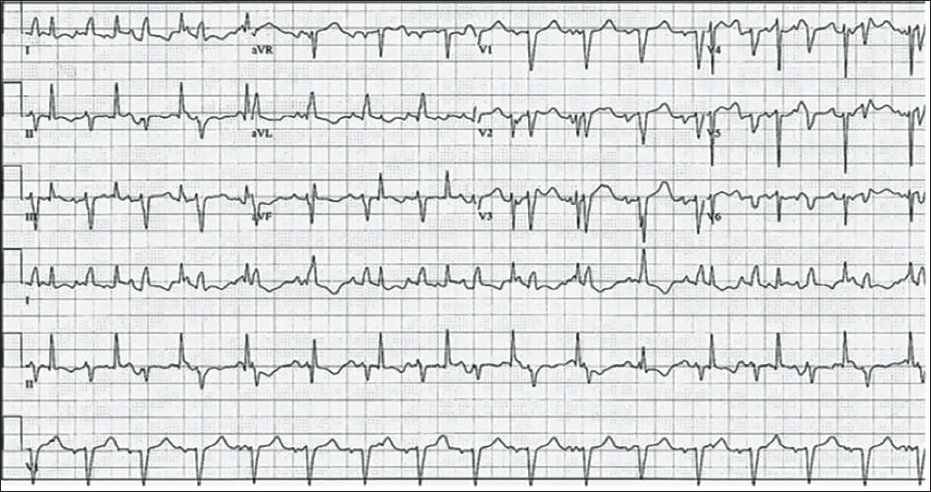
6. C. Dual sinus nodes
The native sinoatrial node was one of the parts of the right atrium that remained after the patient’s heart was removed (SA node). An SA node was inserted along with a new heart. Two P waves with sinus shape that occur at different rates are the final product. It is interesting to note that only the transplanted SA nodal activity can conduct to the ventricles because the native SA node cannot depolarize the transplanted atrium and cannot conduct to the transplanted ventricles due to an electrical barrier created by the surgical anastomotic location.
Heart failure is defined as a spectrum of symptoms and signs of HF caused by structural/functional cardiac abnormalities and has at least one of the following:
Elevated natriuretic peptides; or Objective evidence of cardiogenic pulmonary or systemic congestion.
An HF event, including hospitalization, is defined by the criteria outlined by the 2014 ACC/AHA Key Data Elements and Definitions for Cardiovascular Endpoint Events in Clinical Trials.
HFrEF: Clinical diagnosis of HF and LVEF ≤40%.
HFmrEF: Clinical diagnosis of HF and LVEF 41%–49%.
HF with improved EF: Previous LVEF ≤40% and a follow-up measurement >40%.
HFpEF: Clinical diagnosis of HF and LVEF ≥50% not attributable to an underlying cause such as a hypertrophic cardiomyopathy, valvular disease, infiltrative cardiomyopathy, pericardial disease, or hyperdynamic heart failure.
HFpEF mimics: Clinical diagnosis of HF and LVEF ≥50% with a primary noncardiac cause (like renal or hepatic disease) or an underlying cardiac cause (hypertrophic cardiomyopathy, valvular disease, infiltrative cardiomyopathy, pericardial disease, or hyperdynamic heart failure).
H2FPEF estimates probability of underlying heart failure in patients with preserved ejection fraction on echo. This stands for H stands for “Heavy” that is, BMI > 30 kg/m2 has 2 points; another H stands for “Hypertension” that is, 2 or more antihypertensive medicines has 1 point; F stands for atrial fibrillation which can be paroxysmal or persistent has 3 points; P stands for pulmonary hypertension with pressures > 35 mm Hg has 1 point; E stands for “Elder” that is, age > 60 years has 1 point; F stands for “filling pressure” Doppler E/e’ > 9 has 1 point. The total score ranges from 0 to 9.
Nebivolol has β1-selectivity and nitric oxide-mediated vasodilatory effects. Carvedilol has effects on insulin resistance and exhibits antioxidant effects.
Drug: Nebivolol β1/β2-SELECTIVITY: +++ Sympathetic activity: 0 Lipophilicity: Moderate Membrane stabilizing activity: 0 Secondary effects: Endothelium dependent nitric oxide-mediated vasodilation
Use of adenosine in irregular wide complex tachycardia may precipitate ventricular fibrillation.
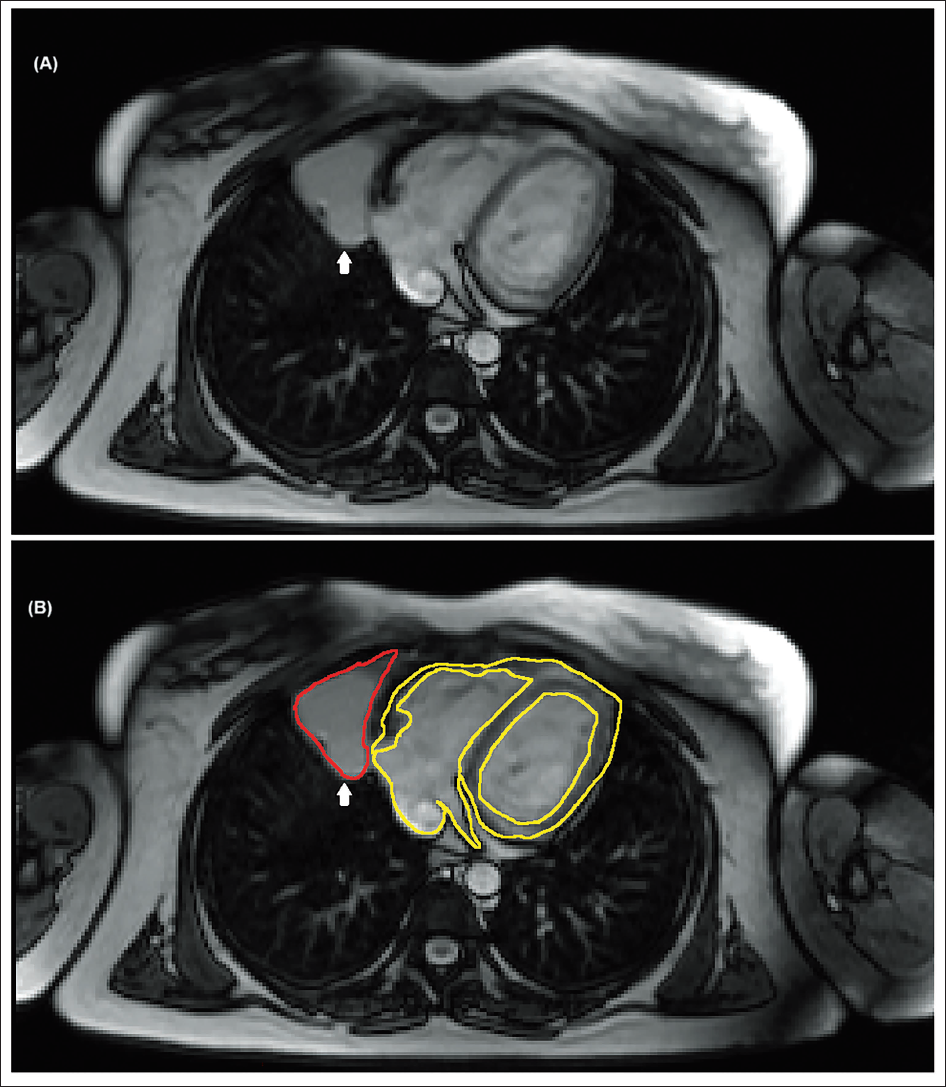
The cystic lesion adjacent to the heart is called a pericardial cyst. Its incidence is one in 100,000 population. It is detected incidentally in the 3rd and 4th decade of life. Majority of the patients are asymptomatic (50%−70%). In 70% of cases, the cyst is found in the right cardiophrenic angle, 22% in the left, and 8% in the posterior or anterosuperior part of the mediastinum. The gold standard test for this cyst is CT or MRI imaging. The differential diagnosis for cystic lesions in the anterior mediastinum includes thymic cyst, lymphangioma, and bronchogenic cyst.
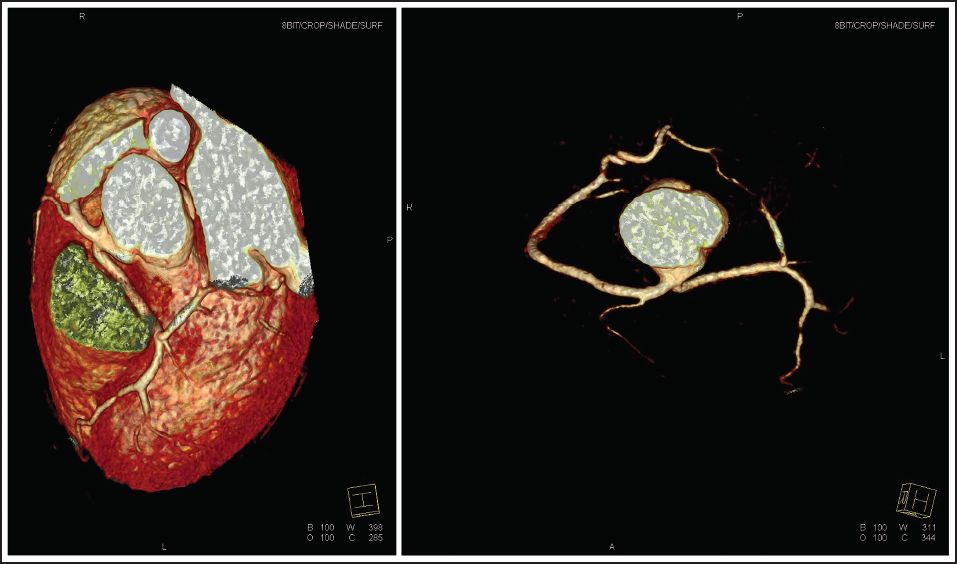
Single origin coronary artery where RCA, LAD, and LCx arise from same origin.
Rotational atherectomy has been associated with unique problems, including burr entrapment and vascular perforation, side branch occlusion, slow flow/no flow, which are directly linked to cardiac tamponade, urgent surgery, and mortality.
Epsilon wave is defined as a small positive deflection concealed at the end of the QRS complex, which is best noticed from V1 to V4. This is characteristically seen in ARVD, posterior wave MI, sarcoidosis, RV MI, and infiltrative disease.
Congenital (autosomal recessive) long QT syndrome (LQTS)
LQTS is associated with bilateral, severe sensorineural hearing loss. Two genetic mutations affecting potassium channels in cardiomyocyte. Due to high risk of sudden cardiac death ICD implantation is usually required.
More than 40% of children with KD tested positive for respiratory viruses when admitted to the hospital. Therefore, the diagnosis of KD should not be ruled out based on the existence of respiratory symptoms at the time of presentation or a positive respiratory viral PCR. In addition to infections, KD should be taken into consideration because of its overlap with several chemical hypersensitivity responses and rheumatologic illnesses, such as juvenile idiopathic arthritis and systemic lupus erythematosus.
Vericiguat activates the cGMP pathway by stimulating soluble guanylate cyclase. This is independent of the nitric oxide release/activation mechanism. It stabilizes nitric oxide binding to the binding site, thus sensitizing soluble guanylate cyclase to nitric oxide. In other words, vericiguat restores the cyclic guanosine monophosphate sensitivity to low nitric oxide conditions and oxidative stress.
FFR is defined as the ratio of myocardial blood flow in the coronary artery in the presence of epicardial stenosis compared with the flow in the same vessel in the theoretical absence of stenosis. FFR involves using a wire that has a pressure sensor at the tip of the wire which is used to measure the pressure in post-stenotic atherosclerotic artery and pre-stenotic pressure. The measurements of post-stenotic pressure are taken under the hyperemic condition. The ratio of post-stenotic and pre-stenotic pressures constitutes FFR.
Many nonhyperemic pressure ratios (NHPRs) other than iFR have been developed. These novel indices measure the ratio of Pd to Pa but differ on the phase of the cardiac cycle where measurement takes place. Like IFR is Pd/Pa ratio measured in diastolic wave free period. RFR is lowest filtered Pd/Pa ratio during entire cycle. DFR is during period between Pa < mean Pa and down sloping Pa (over 5 beats).
Quantitative flow ratio (QFR) is a novel method enabling efficient computation of FFR from three-dimensional quantitative coronary angiography (3D QCA) and thrombolysis in myocardial infarction (TIMI) frame counting.
All these drugs can be either can be given in CKD stage III a/b.
The dicrotic notch demarcates the end of systole and the beginning of diastole in these arteries.
