




Abstract
Introduction:
The COVID-19 pandemic triggered unprecedented nationwide regulations aimed primarily at slowing the spread of the virus. The objective of this study was to describe the effect of these regulations on the number and natures of trauma presentations to oral and maxillofacial department of level I trauma center in the city of Lucknow, Uttar Pradesh.
Methods:
A retrospective cohort study of the triage register at Trauma Centre of King George Medical University, Lucknow was conducted, comparing all trauma presentations from March 23, 2020 to July 31, 2020 with those from the preceding 5 months. The number of patients, mechanism of trauma, and severity of illness was recorded and compared.
Results:
A reduction in the number of trauma cases was recorded for the particular period. The statistical analysis was done with SPSS software (version 1.1). The incidence of maxillofacial trauma was more in males than females. During the study period, data shows that road traffic accidents (91.68%) was the most common cause of trauma followed by fall from height (4.06%) and physical assault (2.34%), respectively. The most common injury was soft tissue lacerations (38.07%), followed by hard tissue injury (LeFort: 20.6%, zygomaticomaxillary complex fractures: 9.44%, parasymphysis: 8.02%), respectively.
Conclusion:
This study shows that the burden of trauma presenting to the emergency department was decreased during lockdown period by the regulations implemented in response to the COVID-19 pandemic.
Keywords
Introduction
On March 11, 2020, the World Health Organization declared the outbreak of the SARS-CoV-2 (COVID-19) virus a global pandemic. On March 22, 2020, Indian government implemented a series of measures aimed at limiting the spread of the COVID-19 pandemic. These measures included restricting nonessential travel, prohibiting the sale of alcohol, closure of workplaces for nonessential services, and restricting social gatherings. All nonurgent elective surgeries in government-run hospitals were postponed for the foreseeable future.
These unique circumstances provided an opportunity to study the effect of these conditions on the burden of trauma presentations to a level I trauma center, an area described as having a high trauma burden, particularly with regard to motor vehicle accidents, pedestrians injured by motor vehicles, and interpersonal violence.
The aim of this unicenter retrospective study is to gain an understanding of the impact that a nationwide lockdown has had on the rates, mechanisms, and types of injuries in maxillofacial region together with their management at a regional trauma service. These findings will serve as a record of this particular aspect of the pandemic, but they may also inform strategies for injury prevention in the area.
Materials and Methods
Retrospective data was collected from patient records from the oral and maxillofacial surgery unit at Trauma Centre of King George Medical University, Lucknow. Some restrictions on lockdown were officially lifted at the end of July. So, the time period for the study was taken from 4 months before lockdown and 4 months after till the end of July to evaluate the time period.
Demographic data were collected along with nature of injury, mechanism of injury, and the treatment provided. Any patients with incomplete data for analysis were excluded from the study. Injury type was categorized into bone fracture, soft tissue injury, and multiply injured patients. Mechanism of the injury was subcategorized into fall (including slip, trip), road traffic accidents, interpersonal assaults, and any other cause. The statistical analysis was done with software SPSS (version 1.1). The comparison made between groups was done with multiple regression analysis with data available from the daily trauma entry register of oral and maxillofacial unit of level I trauma center in Lucknow. Approval from the ethical committee of the study institution was not required since patients were not included in the study.
Results
During the study period, data shows that road traffic accidents (RTA) (91.68%) was the most common cause of trauma followed by fall from height (4.06%) and physical assault (2.34%), respectively. The most common injury was soft tissue lacerations (38.07%), followed by hard tissue injury (LeFort: 20.6%, zygomaticomaxillary complex fractures: 9.44%, parasymphysis: 8.02%), respectively.
Discussion
The COVID-19 pandemic has suprised human lives to an extent that there was unforeseen casualities and scarce in resources, espescially manpower, bed availability, medicines, PPE kits, operation theatre availability and other basic supplies not in a over a period of 100 years. Based on data from National Health Profile 2019, there were more than 7 lakhs beds in government setup in India. Bed availability amounts to 0.55 per 1,000 population, whereas for elderly age groups it stands at 5.16 per 1,000 population which are the groups of severe disease and death in COVID-19. 1 According to a report, 80% to 85% population are affected in India and are asymptomatic. Several countries in the world have imposed a nationwide lockdown owing to pandemic unlike few other countries like Sweden, UK initially followed the concept of “Herd Immunity” but were heavily criticized for avoidable mortality involved.
For countries like India with such population rate, nationwide lockdown is necessary to bring down the rate of spread and dent the curve. In India, nationwide lockdown was imposed on March 21, 2020 and in some states it was relieved at the end of month of July. Physical distancing on a large scale and movement restrictions lead to flattening of India’s economy and travel restrictions to such magnitude resulted in decrease in RTA and environmental pollution.
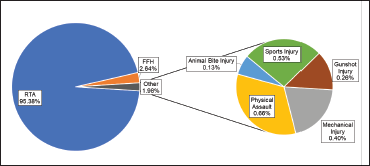
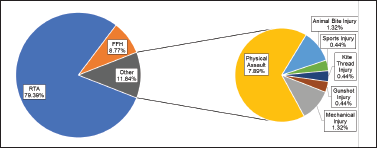
Maxillofacial trauma may occur either isolated or in combination with other fractures in the body. RTA is the most common cause of maxillomandibular fractures with incidence rate of 20% to 90%. Our study has shown a drastic fall in incidence of RTA to about 16% when compared to trauma records 4 months prior to lockdown period and the overall incidence in trauma cases irrespective of etiology was decreased by 53.2% when comparing to pre-COVID era (Figures 1 and 2). Vishal et al 2 in his study reported a 73% decrease in number cases during the COVID period. In a French multicenter study, de Boutray et al 3 reported a 64.4% decrease in overall cases of trauma during the lockdown period. On a contrary, Surendra et al 4 reported a 19% increase in overall cases in a tertiary center in Sri Lanka.
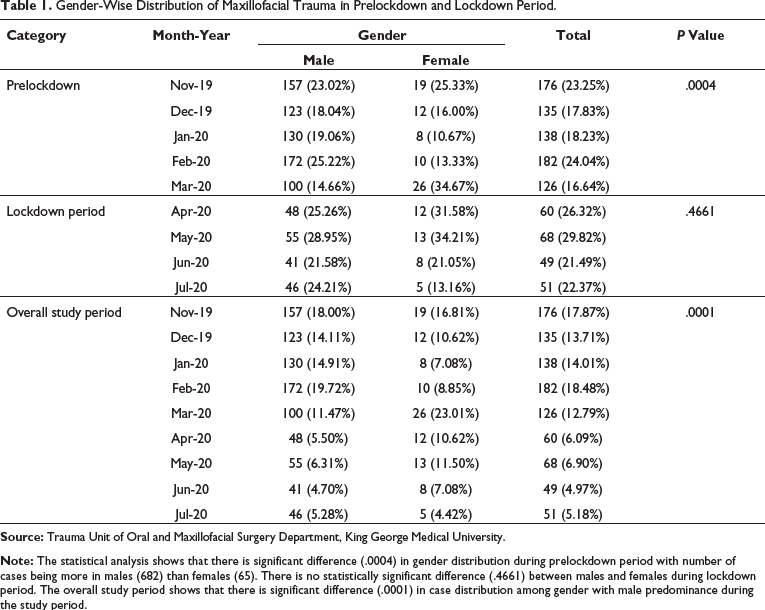
The overall male:female ratio during pre-COVID is 9.1:1 when compared to lockdown period which is 5:1 respectively (Tables 1 and 2), with mean decrease in number of cases in men to 7.5% and increase in women to around 7.5% during lockdown period. No significant difference found in gender was reported by Vishal et al. 2 Male:Female ratio in a French study by Boutray et al 3 stands at 3.6:1.
Gender-Wise Distribution of Maxillofacial Trauma in Prelockdown and Lockdown Period.
Disribution of Maxillofacial Trauma in Demographic Characteristics During Prelockdown and Lockdown Period.
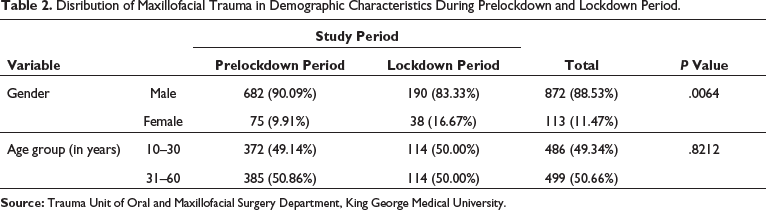
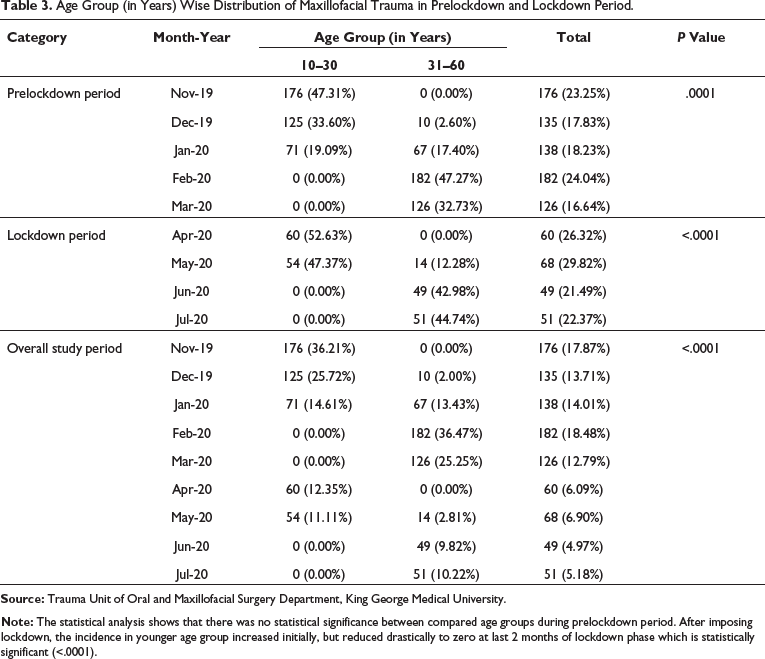
There was no significant change in mean age group during both periods whereas the study by Vishal et al 2 shows average mean increase in age of 4.78 years, respectively. Different studies in India show that maxillofacial trauma due to RTA is more common among young age groups when compared to elderly. In this study, the overall statistics shows that a total of 486 (49.34%) cases were reported in age groups 10 to 30 years when compared to 486 (49.34%) cases of maxillofacial trauma (Table 3). This might be attributed to decrease in RTA among young age groups due to lockdown when compared to older age groups who frequently leave their homes to fulfil the demands of the family.
Age Group (in Years) Wise Distribution of Maxillofacial Trauma in Prelockdown and Lockdown Period.
Establishment of new smoother and wider 4-lane national highway elsewhere in the country leads to drastic increase in RTA accounting for about 25% to 85% of cases which were confirmed by various studies.2, 4 In our study, the incidence of RTA during control period is 95.38% respectively which was decreased by 16% during the lockdown phase. Similar statistics were reported throughout the world. Morris et al 5 reported 16% reduction in incidence at emergency department from 55% to 39% during a lockdown in South Africa. There is slight decrease in cases by 2% pertaining to subcategory—lacerations during control and study period owing to patients decreased desire to report to emergency department. But the study by Yeung et al 6 reported substantial increase in lacerations during lockdown period.
There is increase in number of cases in self-fall from 2.64% to 8.77% respectively during study periods which stands at second-most common cause of maxillofacial trauma during lockdown phase (Figure 3). We have hypothesized that the most cases especially children and also adults spend their leisure time on house roofs while playing games such flying kites, ball games, and so on. On a contrary, study by Vishal et al 2 showed a decline in number of cases attributing to restricted outdoor activities and work-related accidents. Boutray et al, 3 in his multicenter study showed that overall incidence of leisure time trauma during lockdown is 4.7% which was reduced by 15% when comparing to various literatures during regular period. 3 A British study by Yeung et al 6 at King Hospital, London showed decrease in incidence of self- fall referrals during lockdown period which might be attributed to their improved infrastructure of the buildings. In our study, we had 1 case of self-fall which was due to suicidal tendency during lockdown period. It was hypothesized that it might be due to increased mental stress due to heightened social anxiety and decreased access to psychiatric care during the pandemic.
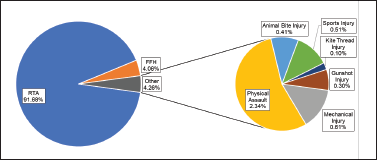
Interpersonal violence was reported to be the third-most common cause of maxillofacial injury which was increased by around 7.5% during lockdown period. This shows how isolation and paralysis of normal life imposed negative impact toward mental health among individuals. The data collection and history also shows that interpersonal violence has increased within the family. A postscript published in British Medical Journal reported 1,493% increase in abusive head trauma during COVID-19 pandemic when compared over the previous 3 years. 7
While decoding maxillofacial trauma according to various etiologies, trauma resulting in soft tissue lacerations was most common during the study periods (Figures 4, 5 and 6). There was 8% reduction in number of cases of zygoma fractures during pandemic which was hypothesized that there was reduced need for the patient to report to the trauma centre as there is decreased necessity for correction of cosmetic deformity during pandemic than the functional occlusion unlike in Lefort and mandibular fractures. Other theories were restricted semielective General anaesthesia theatres, under reporting of cases due to tumbling SARS-COVID-19 infection at our institution.
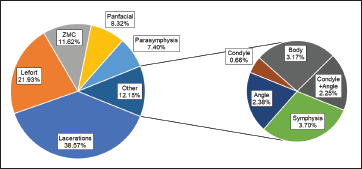
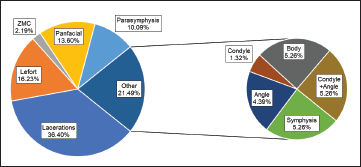
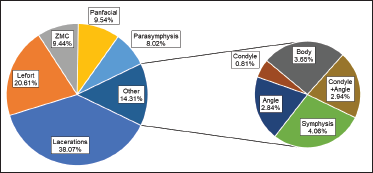
LeFort and panfacial trauma stands next to soft tissue lacerations among injury type during study period. Theory was drawn that during lockdown period patients sustain low-impact trauma when compared to high-impact trauma which leads to increased incidence in soft tissue trauma.
Conclusion
Trauma burden at the emergency unit was drastically reduced during the pandemic owing to reduced automobile movements and strict lockdown implemented by the government. The incidence in soft tissue lacerations remained in peak during study periods while there is decreased incidence in bony injury during lockdown period. There was a significant increase in physical assault during pandemic and also within the family. There was also decreased incidence in zygomaticomaxillary complex fractures which might be due to under-reporting of cases or due to reduced disturbances in function where people sought to think about leaving their home due to fear instilled in the hearts by the pandemic. Thus in overall, this pandemic teaches us to be prepared for the next hit and gives an idea about incidence and prevalence of maxillofacial trauma which will give us knowledge about managing the same during a pandemic in the upcoming years.
Footnotes
Declaration of Conflicting Interests
The authors declared no potential conflicts of interest with respect to the research, authorship, and/or publication of this article.
Funding
The authors received no financial support for the research, authorship, and/or publication of this article.
