



Abstract
Background
Geriatric care involves providing comprehensive support and healthcare services to older adults aged 65 years and above. Nurses serve as a cornerstone in the delivery of effective geriatric care. However, existing primary studies in Ethiopia present inconsistent and fragmented findings, and there is no comprehensive nationwide data on this topic.
Objective
This systematic review and meta-analysis was conducted to assess the pooled prevalence of knowledge about geriatric care and its associated factors among nurses in Ethiopia.
Methods
Relevant studies were systematically searched in PubMed, Web of Science, ScienceDirect, African Journals Online, and Google Scholar up to April 2025. Data were extracted using Microsoft Excel and analyzed with STATA version 17. Publication bias was assessed using funnel plots and Egger's test. Heterogeneity across studies was evaluated using the I² statistic, and pooled estimates were calculated. Subgroup analyses by region were conducted, and pooled odds ratios were determined for factors associated with nurses’ knowledge of geriatric care.
Result
The pooled prevalence of good knowledge towards geriatric care among nurses in Ethiopia was 41.0% (95% confidence interval (CI): 33.48–48.53). Living with older adults (odds ratio (OR)= 2.19; 95% CI: 1.47–2.91; I² = 87.22%, p < 0.001), receiving training on geriatric care (OR = 3.18; 95% CI: 1.65–5.19; I² = 98.73%), having relevant work experience (OR = 2.43; 95% CI: 1.36–3.50; I² = 90.11%, p < 0.001), and attaining a higher educational status (OR = 2.59; 95% CI: 1.76–5.51; I² = 90.11%, p < 0.001) were significantly associated with knowledge of geriatric care among nurses.
Conclusion
The pooled prevalence of nurses’ knowledge of geriatric care in Ethiopia was low. Targeted interventions focusing on educational advancement, structured training, work experience, and exposure to older adults are essential to improve knowledge and strengthen geriatric care delivery.
Introduction
Geriatric care is a multidimensional field that extends beyond medical treatment to include physical, emotional, spiritual, and social support (Rubenstein & Stuck, 2012). It encompasses a wide range of services such as skilled nursing care, assisted living, long-term care, and home-based support (Martin & BSN, 2019). According to the World Population Aging report, individuals aged 65 years and above are classified as geriatric (International, 2013). Aging itself is not a disease but a natural stage of life characterized by progressive biological changes that gradually reduce the body's ability to adapt and survive (Leong et al., 2018). The rapid global increase in the older adult population, often accompanied by multiple chronic conditions, highlights the urgent need for a healthcare system that can effectively address their complex and diverse needs (Khan, Addo & Findlay, 2024).
Review of the Literature
Aging is a universal and inevitable process that marks a natural stage in the human life cycle. Old age represents a significant phase of life and is often defined in relation to the life expectancy of a specific population or region (Lemoine, 2020). Therefore, understanding the conditions and needs of the elderly becomes essential (Ünal & Özdemir, 2019). According to the World Population Aging report, individuals aged 65 years and older are classified as geriatric (International, 2013). Globally, and particularly in Africa, older adults face complex health challenges related to aging and are frequent users of healthcare services (Maharaj, 2020). Approximately 75% of older adults live with at least one chronic disease, and around 77.5% are hospitalized for medical treatment (Kotecho et al., 2021). Common health conditions among this population include eye problems, hypertension, diabetes mellitus, heart disease, arthritis, and hearing loss (Argaw et al., 2019).
Low- and middle-income countries in Asia, the Middle East, and particularly sub-Saharan Africa often lack specialized personnel and adequately equipped facilities necessary to deliver comprehensive geriatric care (Gyasi & Phillips, 2020). Effective geriatric care requires nurses to possess specific knowledge and skills tailored to the complex needs of older adults (Huizenga et al., 2016; Kabátová et al., 2016). Older individuals are at increased risk of illness, disability, and social or financial hardship. As the aging population grows, so does the demand for healthcare services, residential aged care, and broader support systems (Group, 2017; Prince et al., 2015; Wan Ahmad et al., 2015). An effective geriatric care strategy is essential to ensure appropriate services for older adults and to reduce their risk of morbidity and mortality. However, a shortage of specialized healthcare professionals continues to exacerbate existing health inequities (Dode & Teso, 2025; Rowe et al., 2016; Saka et al., 2019). Nurses often exhibit low to moderate knowledge of the physical, psychological, and social dimensions of aging, as well as core principles of geriatric nursing care (Ajam, 2021; Ewunetu et al., 2025). In Ethiopia, less than 45% of nurses are found to have sufficient knowledge of geriatric care (Muhsin et al., 2020b). Studies from Slovakia, Bangladesh, and Uganda have shown that inadequate knowledge of geriatric care is significantly associated with factors such as educational level, clinical experience, and training (Kabátová et al., 2016; Mahmud et al., 2020). Similarly, a study conducted in the Netherlands reported that only 37% of nurses demonstrated adequate knowledge in geriatric cares (Derks et al., 2021). In Ghana, the lowest mean knowledge score toward geriatric care was reported at 78.61% (Amoateng et al., 2024). Geriatric care is a specialized field that, like other medical specialties, requires targeted training and expertise. However, findings from primary studies indicate that nurses in Ethiopia often have limited knowledge of geriatric care. Despite this, there is a lack of comprehensive national-level data on nurses’ knowledge and the factors influencing it. Therefore, this systematic review and meta-analysis aims to estimate the pooled prevalence of knowledge and its associated factors regarding geriatric care among nurses in Ethiopia.
Methods
Protocol and Registration
This systematic review and meta-analysis was conducted to assess nurses’ knowledge and its associated factors regarding geriatric care in Ethiopia. The Preferred Reporting Items for Systematic Reviews and Meta-Analyses (PRISMA) guidelines were followed to ensure transparency and methodological rigor, and the findings are presented using a PRISMA flow diagram (Vrabel, 2015) (Supplementary 1). The review protocol was prospectively registered with the International Prospective Register of Systematic Reviews (PROSPERO) under the registration number CRD420251071891.
Eligibility Criteria
The eligibility of articles was independently assessed by two investigators with consensus reached on the inclusion and exclusion criteria. This review included studies conducted in Ethiopia among nurses working in healthcare settings. All quantitative observational studies, published and unpublished studies written in English between 2018 and April 2025 that examined nurses’ knowledge toward geriatric care were included. Studies were excluded if they were qualitative in nature, conducted outside of Ethiopia, published in a non-English language or did not provide full-text access.
Source of Information
In this review, data were extracted to assess nurses’ knowledge of geriatric care and the associated factors in Ethiopia. Both published and unpublished articles were considered, with sources including peer-reviewed journals and university repositories. All relevant studies conducted up to April 2025 were retrieved and imported into EndNote version 8. Duplicate records were removed, and titles, abstracts, and full texts were systematically screened to determine eligibility for inclusion.
Search Strategy
A comprehensive search was conducted across both published and unpublished sources to identify studies reporting on nurses’ knowledge and its associated factors regarding geriatric care in Ethiopia. The electronic databases searched included PubMed, Web of Science, ScienceDirect, African Journals Online, and Google Scholar for additional gray literature and systematic reviews. Boolean operators AND and OR were used to refine the search strategy. The following keywords and their combinations were applied: (“Prevalence” OR “Proportion”) AND “knowledge” AND (“geriatrics” OR “elderly”) AND “care” AND (“nurse” OR “nursing staff”) AND (“associated factors” OR “determinants” OR “predictors”) AND “Ethiopia” (supplementary 3).
Data Extraction and Quality Assessment
Data extraction was conducted independently by three investigators, and the included studies were exported into Microsoft Excel for analysis. The extracted data included the authors’ last names, year of publication, study region, study design, data collection methods, measurement tools, prevalence of outcomes, effect sizes of associated factors, and corresponding confidence intervals (CIs). Any disagreements between the investigators were resolved through discussion with a fourth investigator. To assess the methodological quality of the included studies, the Newcastle-Ottawa Scale (NOS) was employed (Moskalewicz & Oremus, 2020).
Outcome Measurement
The primary objective of this systematic review and meta-analysis was to assess nurses’ knowledge of geriatric care in Ethiopia. The secondary objective was to identify factors associated with this knowledge. Odds ratios (ORs) with 95% CIs were calculated to determine these associations. According to the United Nations, older adults are defined as individuals aged 65 years and above (Ayisi et al., 2003; Nations, 2015). Nurses’ knowledge was classified into two categories: good knowledge and poor knowledge (Dikken et al., 2017).
Data Synthesis and Analysis
The extracted data were imported from Excel into STATA version 17 to calculate the pooled prevalence of nurses’ knowledge regarding geriatric care in Ethiopia. For factors associated with nurses’ knowledge, ORs with 95% CIs were computed as measures of effect size. To assess potential publication bias and small-study effects, both funnel plots and Egger's test were employed. Funnel plots provided a visual inspection of asymmetry in study results, while Egger's test assessed the statistical significance of publication bias. Sensitivity analyses were also conducted to evaluate the robustness of the findings by accounting for possible publication bias and other sources of heterogeneity. Heterogeneity across studies was quantified using the I² statistic (Al-Azri et al.). A random-effects model was applied in the meta-analysis to account for variability between studies (Abate et al.). The pooled prevalence and associated factors were presented using forest plots with corresponding 95% CIs. Subgroup analyses were conducted, where data permitted, to explore variations by region. The pooled prevalence results were visually displayed in forest plot format along with their 95% CIs.
Results
Study Selection
A total of 252 articles were initially identified through database searches. After removing 171 duplicates and 26 articles irrelevant title and abstracts 55 studies remained for further screening. Of these, 35 were excluded because they were conducted outside Ethiopia, lacked full-text access, and did not report the outcome of interest. Ultimately, seven studies met the eligibility criteria and were included in the final systematic review and meta-analysis (Figure 1).
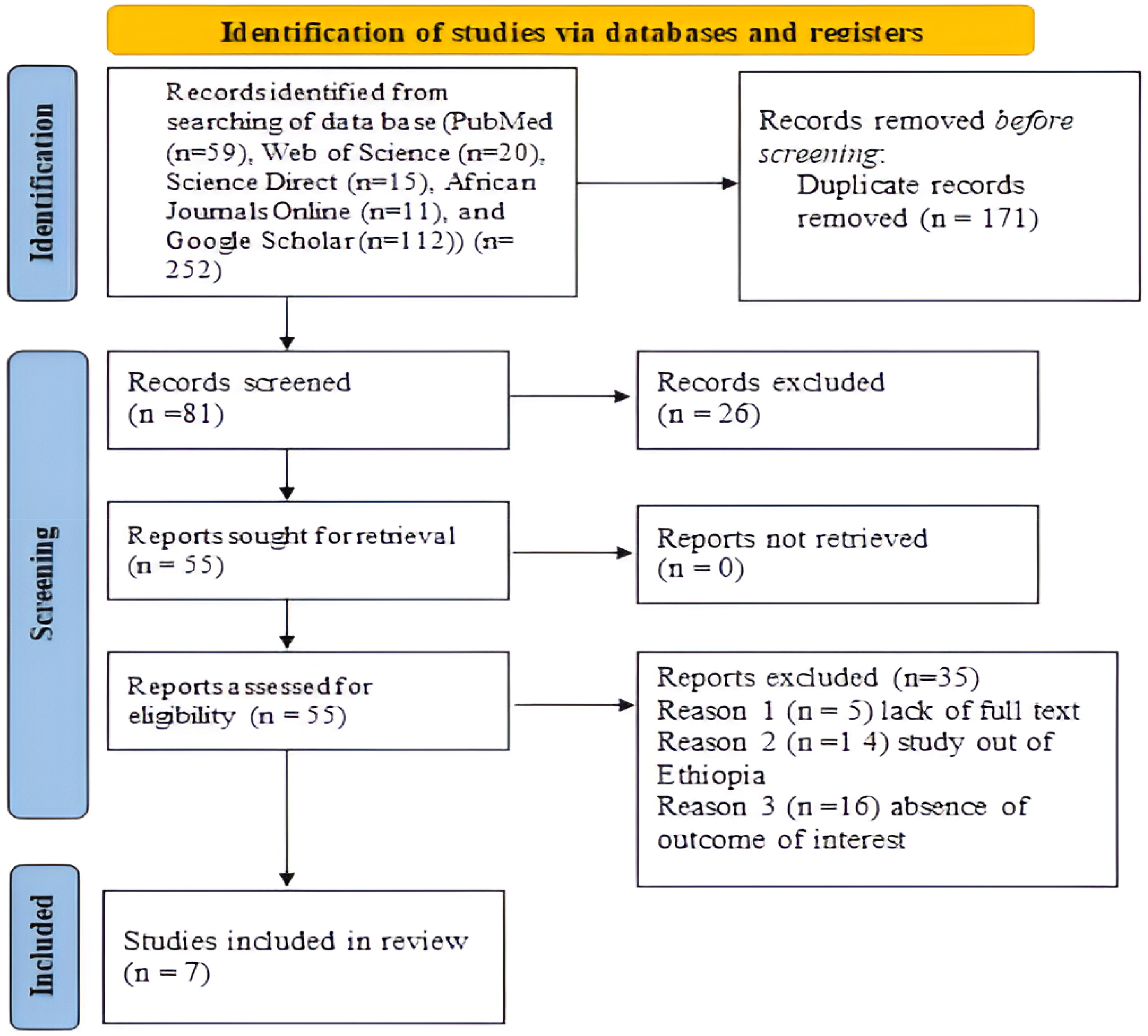
PRISMA 2020 flow diagram for the selected studies for systematic review and meta-analysis. PRISMA=Preferred Reporting Items for Systematic Reviews and Meta-Analyses.
Characteristics of Included Studies
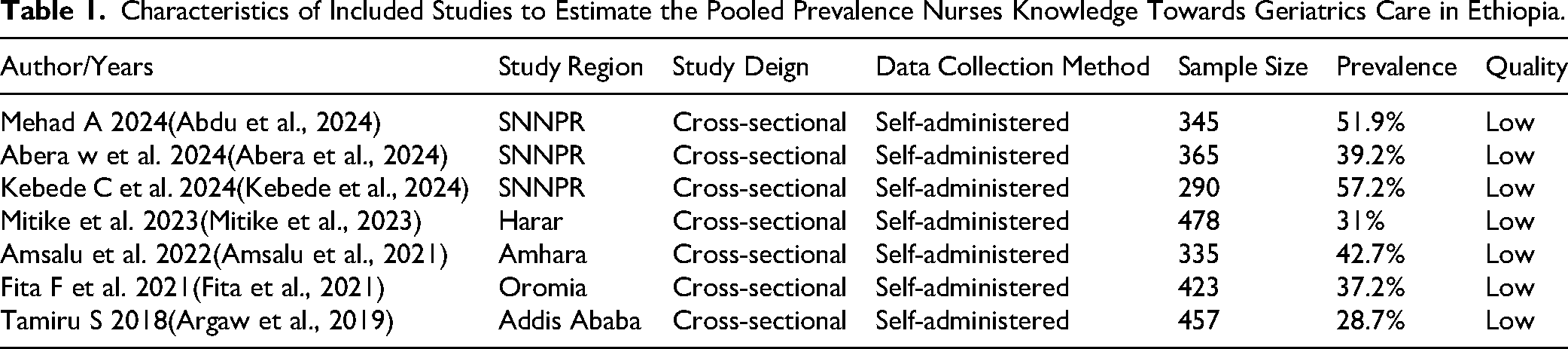
A total of seven studies were included to determine the pooled prevalence of knowledge and its associated factors among nurses regarding geriatric care in Ethiopia. All included studies employed a cross-sectional design, with a combined sample size of 2,693 participants. Three of the studies were conducted in the Southern Nations, Nationalities, and Peoples’ Region (SNNPR) (Abdu et al., 2024; Abera et al., 2024; Kebede et al., 2024), ones in Addis Ababa (Argaw et al., 2019), one in the Amhara region (Amsalu et al., 2021), one in the Oromia region (Fita, Mekonnen, Endalew & Azagew, 2021), and one in Harar (Mitike et al., 2023) (Table 1).
Characteristics of Included Studies to Estimate the Pooled Prevalence Nurses Knowledge Towards Geriatrics Care in Ethiopia.
Risk of Bias of Included Studies
The quality of the included studies was assessed using the NOS adapted for cross-sectional study designs (Stang, 2010)
Pooled Prevalence of Nurses’ Knowledge Towards Geriatric Care
The pooled prevalence of nurses’ knowledge toward geriatric care in Ethiopia was 41.0% (95% CI: 33.48–48.53), with significant heterogeneity observed across studies (I² = 94.16%, p < 0.001) (Figure 2).
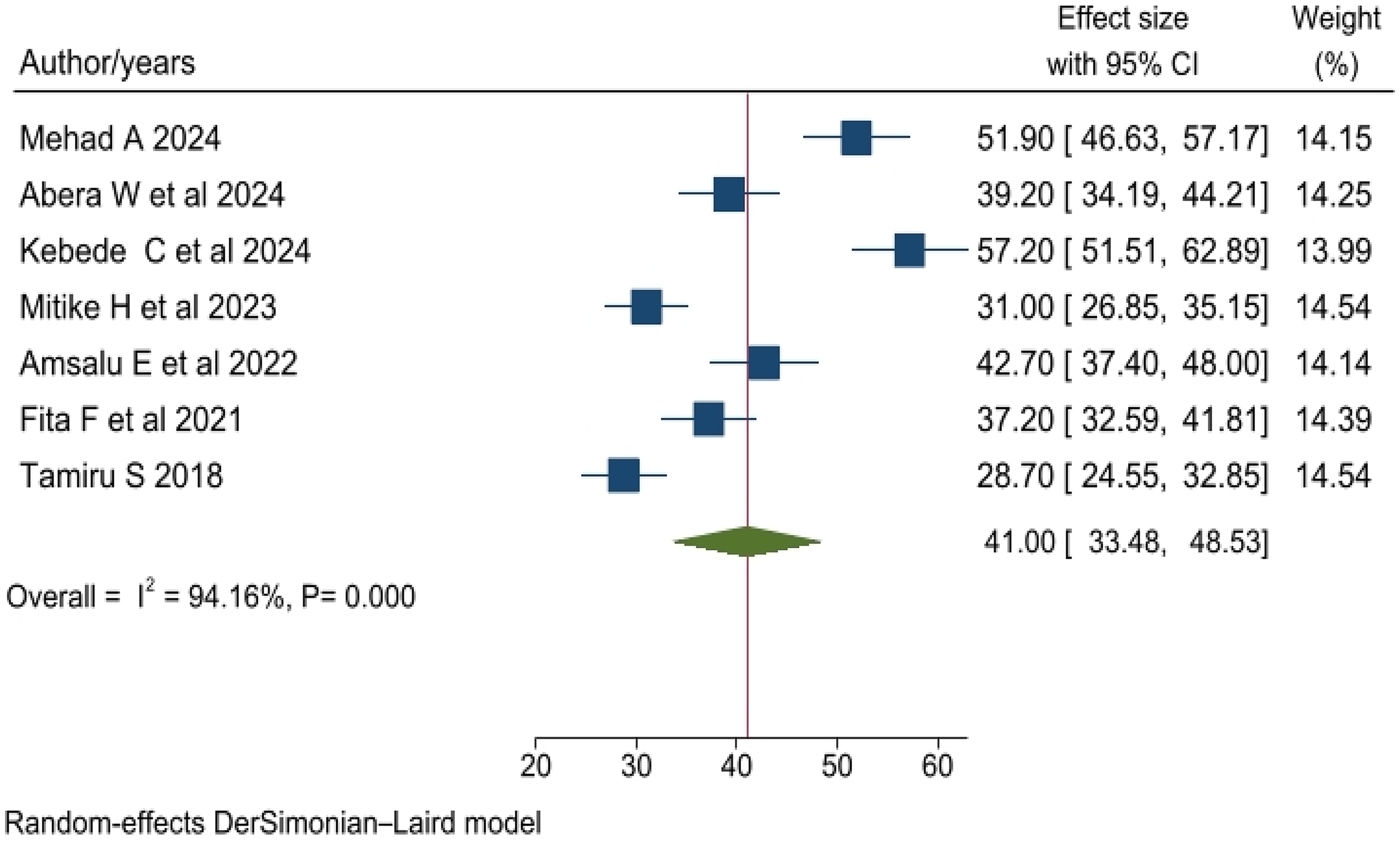
Forest plot showing the pooled prevalence of good knowledge among nurses towards geriatric care in Ethiopia.
Investigations of Heterogeneity
Subgroup and Sensitivity analysis
During the estimation of the pooled prevalence of knowledge regarding geriatric care among nurses, significant heterogeneity was detected across the studies. To explore this variability, a subgroup analysis was performed based on regions. The analysis revealed that the highest pooled prevalence of knowledge was observed in the Southern Nations, Nationalities, and Peoples’ Region (SNNPR) at 49.37% (95% CI: 38.78–59.96), while the lowest was reported in Addis Ababa at 28.70% (95% CI: 24.55–32.85) (Table 2). Additionally, the sensitivity analysis confirmed that no single study had a significant influence (Figure 3).
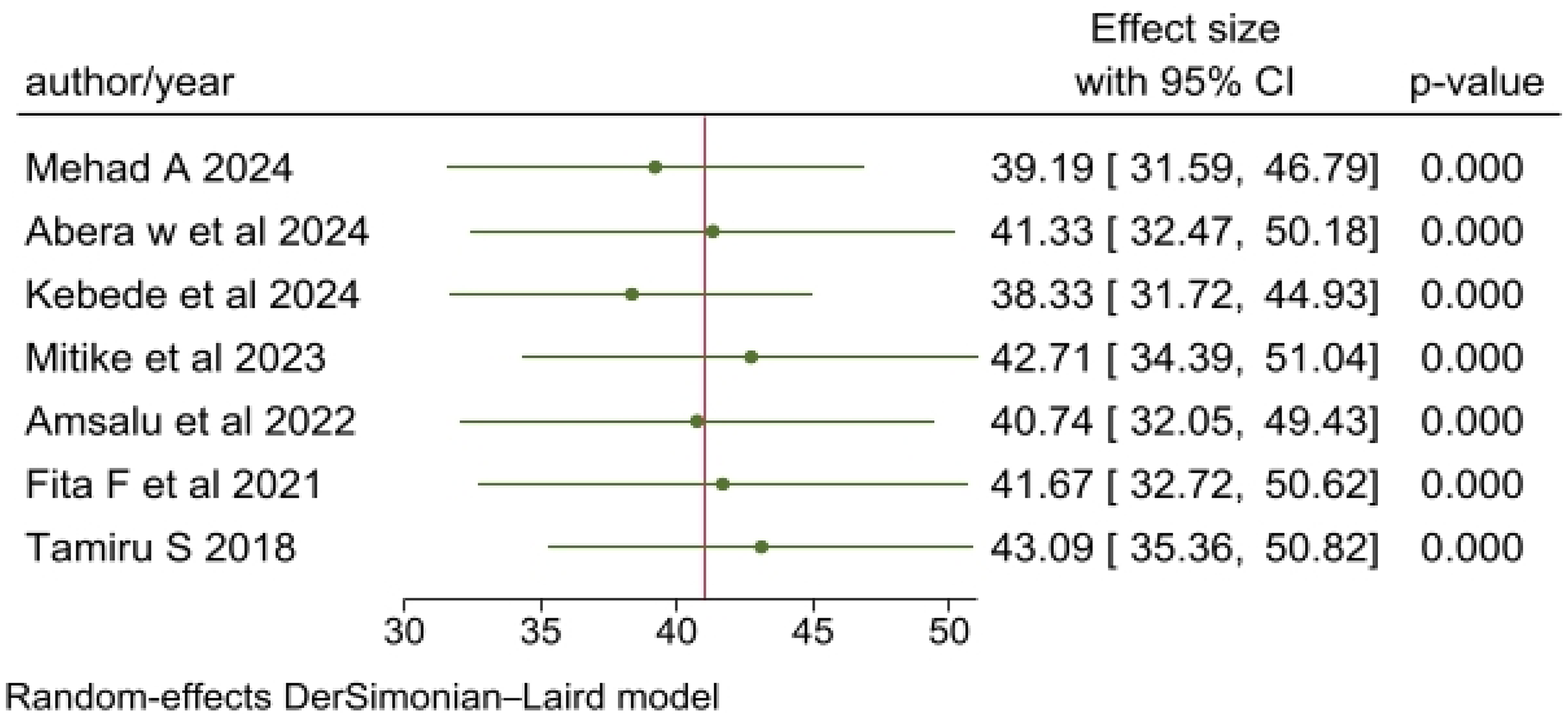
Sensitivity analysis of the pooled prevalence of nurses’ knowledge towards geriatric care in Ethiopia.
Subgroup Analysis of Nurses’ Knowledge Toward Geriatric Care in Ethiopia.
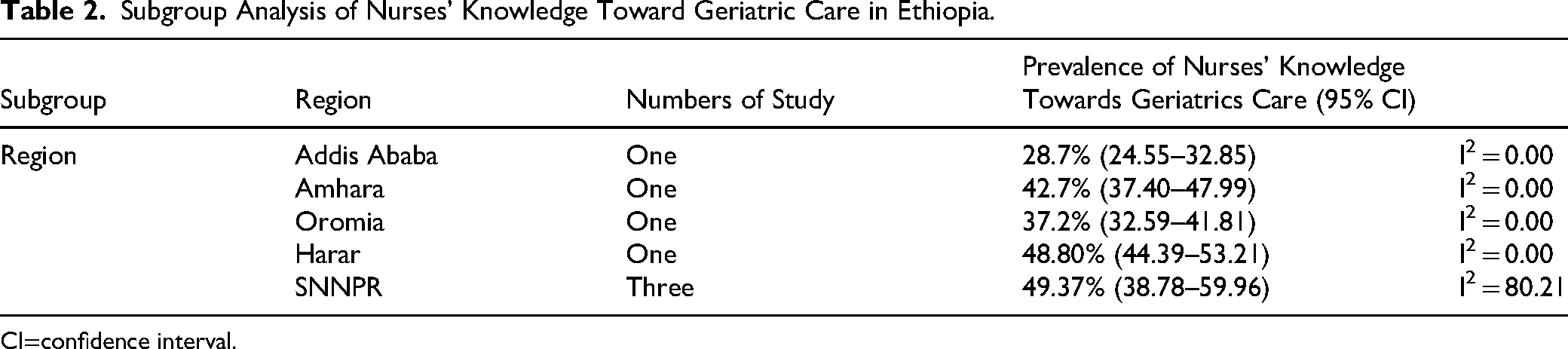
CI=confidence interval.
Publication Bias
To assess publication bias, both graphical and statistical methods were used. A funnel plot was visually inspected for asymmetry, and Egger's test was conducted for a quantitative assessment. The funnel plot suggested an asymmetrical distribution, indicating potential publication bias, which was confirmed by Egger's test showing a p-value less than 0.001. Therefore, a trim-and-fill analysis was performed to adjust for this bias (Figure 4).
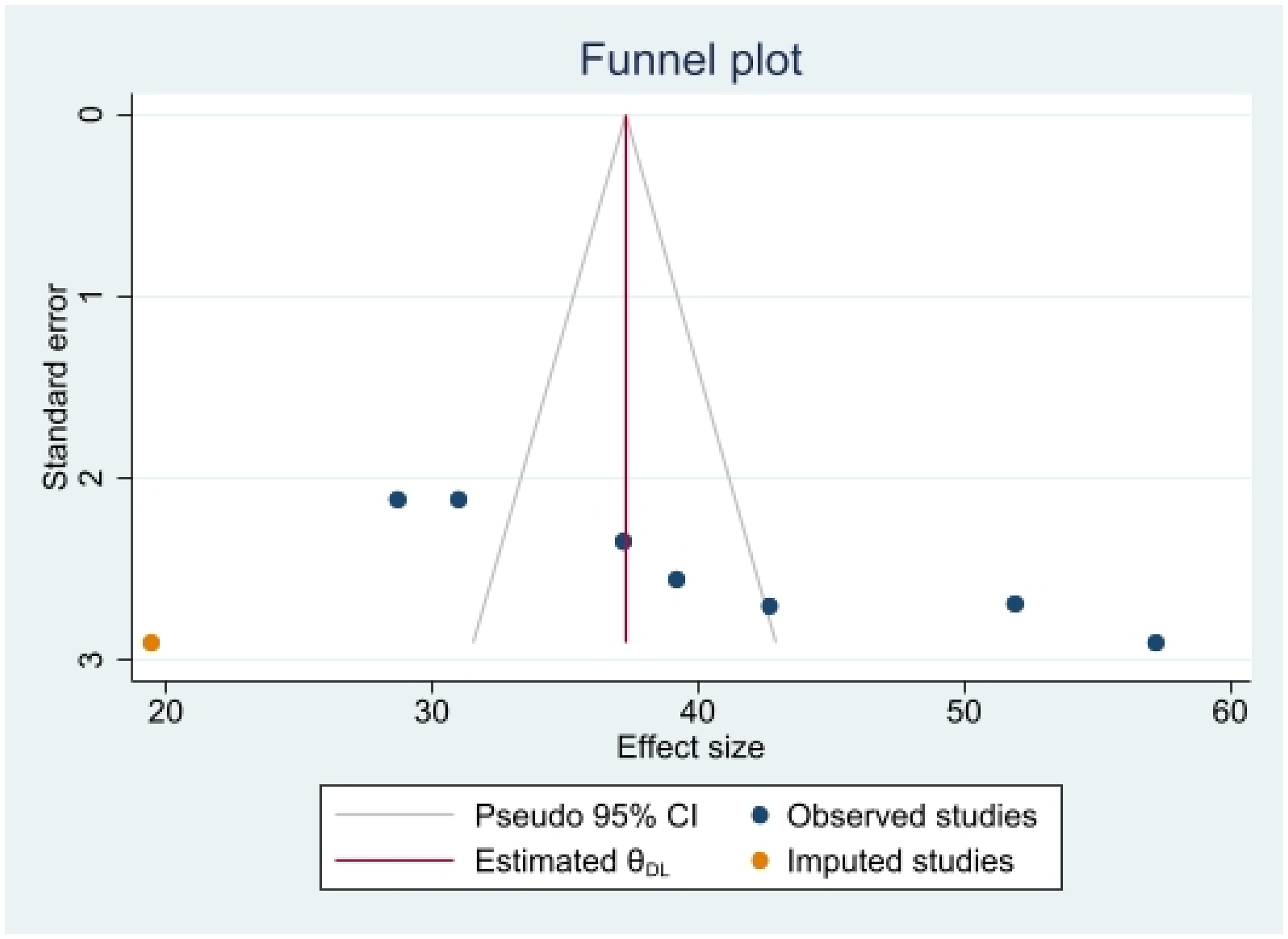
Funnel plot with trim and fill for publication bias analysis among the included studies.
Factors Associated with Knowledge of Nurses Towards Geriatrics Care
This study investigated factors associated with nurses’ knowledge of geriatric care in Ethiopia. Four variables living with elders, training, work experience, and educational status were found to be significantly associated with nurses’ knowledge toward geriatric care. Among these, four studies reported a significant association between living with an older adult and nurses’ knowledge of geriatric care. Nurses who live with older adults were 2.19 times more likely to have good knowledge of geriatric care compared to those who do not (OR = 2.19; 95% CI: 1.47–2.91; I² = 87.22%, p < 0.001) (Abdu et al., 2024; Abera et al., 2024; Amsalu et al., 2021; Fita et al., 2021). From this systematic review and meta-analysis, three studies reported a significant association between training and nurses’ knowledge of geriatric care. Nurses who had received training were 3.18 times more likely to have good knowledge of geriatric care compared to those without training (OR = 3.18; 95% CI: 1.65–5.19; I² = 98.73%) (Abdu et al., 2024; Kebede et al., 2024; Mitike et al., 2023). Additionally, five studies in this review reported a significant association between work experience and nurses’ knowledge of geriatric care. Nurses with more than 6 years of work experience were 2.43 times more likely to have good knowledge of geriatric care compared to those with less than 5 years of experience (OR = 2.43; 95% CI: 1.36–3.50; I² = 90.11%; p < 0.001) (Abdu et al., 2024; Abera et al., 2024) (Kebede et al., 2024). Finally, four studies in this review reported a significant association between educational level and nurses’ knowledge of geriatric care. Nurses whose educational level was a bachelor's degree or higher were 2.59 times more likely to have good knowledge of geriatric care compared to those with a diploma (OR = 2.59; 95% CI: 1.67–4.23; I² not reported, p < 0.001) (Amsalu et al., 2021; Fita et al., 2021; Kebede et al., 2024; Mitike et al., 2023)
Discussion
This systematic review and meta-analysis focused on nurses’ knowledge of geriatric care and its associated factors in Ethiopia. The pooled prevalence of good knowledge among nurses regarding geriatric care was 41%, which is lower than the prevalence reported in studies conducted in Bangladesh (Kabátová et al., 2016), Switzerland (Tacchini-Jacquier & Morin, 2016), Nigeria (Oyetunde, Ojo & Ojewale, 2013), Saud Arabia (Oyetunde et al., 2013), and Ghana (Salia et al., 2022). But higher than the prevalence reported in Zanzibar (Muhsin et al., 2020b). These differences may be attributed to variations in healthcare infrastructure, educational settings, curriculum implementation, and methods of delivering nursing education and training. The finding highlights a considerable knowledge gap among nurses in Ethiopia regarding geriatric care. Despite nurses’ frequent and prolonged interactions with older patients, this gap may compromise the quality of care, increase healthcare costs, and reveal deficiencies in current training programs and evidence-based practice curricula. The results underscore the urgent need for government bodies and relevant stakeholders to strengthen initiatives aimed at improving nurses’ knowledge and competencies in geriatric care. Establishing specialized geriatric wards and integrating structured geriatric training into nursing education and practice are essential steps toward ensuring high-quality, age-appropriate healthcare services for older adults.
This review found that living with older adults was significantly associated with nurses’ knowledge of geriatric care. Nurses who live with older adults were more likely to have good knowledge of geriatric care. This finding is consistent with a study conducted in Zanzibar (Muhsin et al., 2020a). This association may be explained by continuous exposure to the needs, behaviors, and age-related challenges of older adults, which can enhance empathy and attentiveness beyond what is acquired through formal training (Park & Cho, 2010).
On the other hand, educational status was significantly associated with nurses’ knowledge of geriatric care. Nurses with a Bachelor's degree and above were more likely to have good knowledge compared to those holding a diploma. This finding is consistent with studies conducted in Slovakia (Kabátová et al., 2016), China (Shen et al., 2024),Nigeria (Adegun, 2020), Egypt (Awad & Hewi, 2020), and Nepal (Roohi Moghaddam et al., 2019). The association may be explained by the broader and more comprehensive training offered at higher education levels, which includes advanced theoretical knowledge, critical thinking, research experience, and specialized clinical exposure, all of which enhance the ability to address the complex health needs of older adults. These results underscore the importance of strengthening nurses’ education to promote evidence-based practice, improve nursing curricula, and establish geriatric nursing departments, which are currently lacking in Ethiopia.
Additionally, this review found that getting training was significantly associated with their knowledge of geriatric care. Nurses who received training were more likely to demonstrate good knowledge of geriatric care. This find is consistent with a study conducted in China (Zeng et al., 2019). This implies that providing targeted training programs is crucial for improving nurses’ knowledge of geriatric care in Ethiopia. Strengthening in-service training and continuing education initiatives can enhance nurses’ competencies and promote evidence-based practice. This may be explained by the effectiveness of training in improving both knowledge and clinical practice, thereby better preparing nurses to care for the growing population of older patients (Sarmiento et al., 2021). Finally, nurses with 6 or more years of work experience were more likely to possess good knowledge of geriatric care, which is consistent with findings from a study conducted in Korea (Kang et al., 2011). This may be explained by the fact that longer work experience provides greater opportunities for clinical practice, increased exposure to the needs of older adults, and the development of clinical judgment, communication skills, and a deeper understanding of age-related health problems (Haron et al., 2013).
Implications of the Study
This systematic review and meta-analysis has important implications for nursing care provision and geriatric health services in Ethiopia. The findings can inform policymakers, strengthen evidence-based practice, and enhance nurses’ knowledge and competencies in geriatric care. Health institutions can use the evidence to design and implement strategies such as expanding geriatric wards and providing structured training through both formal education and in-service programs. Moreover, this review contributes to the global body of knowledge on nurses’ geriatric care and the associated factors, while highlighting critical gaps that need to be addressed by the Ministry of Health, Ministry of Education, and nursing schools. Specifically, it underscores the need to revise and update nursing curricula and textbooks to include comprehensive geriatric content, establish geriatric nursing as a specialty, and create certification systems in this field. In addition, it points to research gaps, emphasizing the importance of further studies, particularly qualitative research, to explore underlying factors in greater depth. Overall, the findings can guide educational reforms and policy initiatives aimed at building a well-prepared nursing workforce to meet the growing needs of older adults in Ethiopia
Strengths and Limitations of the Studies
This systematic review and meta-analysis provides a comprehensive synthesis of the available evidence on nurses’ knowledge of geriatric care and its associated factors in Ethiopia, offering a more reliable and nationally representative estimate than individual primary studies. A systematic and transparent search strategy was employed across multiple databases, and the methodological quality of included studies was critically appraised using standardized tools, thereby enhancing the validity of the findings. However, the representativeness of the results may be limited, as studies from all regions of the country were not available and could not be included in the analysis. This limitation may have affected the accuracy of the pooled prevalence and the generalizability of the identified associated factors.
Conclusions
This systematic review and meta-analysis revealed that nurses’ knowledge of geriatric care in Ethiopia is generally low. Factors such as living with older adults, work experience, educational attainment, and participation in geriatric care training were significantly associated with knowledge levels and contributed to the observed variations in the pooled prevalence.
Recommendation
Ministry of Health
The Ministry of Health should integrate geriatric care into the national nursing curriculum and continuing professional development programs. In addition, it should develop nationwide guidelines, establish a nursing specialty in geriatric care, and implement a certification system in geriatric nursing education, all of which are currently lacking in Ethiopia.
Regional Health Bureaus
Regional Health Bureaus should provide regular in-service training and workshops on geriatric care. In addition, they should monitor and evaluate the implementation of geriatric care programs and work towards expanding geriatric care centers across regions.
Hospitals and Healthcare Institutions
Hospitals should offer on-the-job training for nurses, regularly assess the quality of elderly care, and establish dedicated geriatric units to improve service delivery for the aging population
Supplemental Material
sj-docx-1-son-10.1177_23779608251399960 - Supplemental material for Nurses’ Knowledge and Associated Factors Towards Geriatric Care in Ethiopia: A Systematic Review and Meta-Analysis
Supplemental material, sj-docx-1-son-10.1177_23779608251399960 for Nurses’ Knowledge and Associated Factors Towards Geriatric Care in Ethiopia: A Systematic Review and Meta-Analysis by Mengistu Ewunetu, Yirgalem Abere, Gebre Kassaw Yirga, Yeshiambaw Eshetie, Yohaness Tesfahune Kassie, Moges Wubeneh Abate, Abraham Tsedalu Amare, Adane Birhanu Nigat and Bekalu Mekonen Belay in SAGE Open Nursing
Supplemental Material
sj-docx-2-son-10.1177_23779608251399960 - Supplemental material for Nurses’ Knowledge and Associated Factors Towards Geriatric Care in Ethiopia: A Systematic Review and Meta-Analysis
Supplemental material, sj-docx-2-son-10.1177_23779608251399960 for Nurses’ Knowledge and Associated Factors Towards Geriatric Care in Ethiopia: A Systematic Review and Meta-Analysis by Mengistu Ewunetu, Yirgalem Abere, Gebre Kassaw Yirga, Yeshiambaw Eshetie, Yohaness Tesfahune Kassie, Moges Wubeneh Abate, Abraham Tsedalu Amare, Adane Birhanu Nigat and Bekalu Mekonen Belay in SAGE Open Nursing
Footnotes
Acknowledgments
We would like to thanks all the authors of the primary study

Authors’ Contributions
ME conceptualized the study; ME, YA, and BMB contributed during data extraction and analysis; ME, YE, and GKY wrote result interpretation; ME, and YE Prepared the first draft; ME, KSH, ATA, MW, and YTK contributed during the conceptualization and interpretation of results and substantial revision; ME, YA, BMB, GKY, YTK, and MW revised and finalized the final draft manuscript. All the authors read and approved the final version of the manuscript.
Funding
The authors received no financial support for the research, authorship, and/or publication of this article.
Declaration of Conflicting Interests
The authors declared no potential conflicts of interest with respect to the research, authorship, and/or publication of this article.
Availability of Data and Materials
All relevant data are within the Manuscript and its Supporting Information files.
Supplemental Material
Supplemental material for this article is available online.
References
Supplementary Material
Please find the following supplemental material available below.
For Open Access articles published under a Creative Commons License, all supplemental material carries the same license as the article it is associated with.
For non-Open Access articles published, all supplemental material carries a non-exclusive license, and permission requests for re-use of supplemental material or any part of supplemental material shall be sent directly to the copyright owner as specified in the copyright notice associated with the article.
