




Abstract
Introduction
Elderly individuals are the segment of the population that needs special care. The quality of care provided for elderly individuals is highly determined by the knowledge of nurses in elderly care. Hence, there are limited studies conducted to determine the level of knowledge of nurses regarding elderly care. Therefore, this study aimed to assess determinant factors of nurses’ knowledge of elderly care.
Methods
A facility-based cross-sectional study design was employed from April 1 to 10, 2021, among 345 nurses. Respondents were selected by a simple random sampling technique. The data were collected through a self-administered structured questionnaire. The collected data were entered and analyzed by using Statistical Package for Social Science software version 25.0. A multivariable binary logistic regression was used to identify factors significantly associated with the knowledge of nurses about elderly care.
Result
The response rate of this study was 98.3%. More than half of the respondents were female (51.6%) and 38.3% were single in marital status. Being knowledgeable among nurses about elderly care was 51.9%. Ever living with the elderly (adjusted odd ratio [AOR]: 3.62; 95% CI: 1.661, 7.89) and taking geriatric care training (AOR: 5.209, 95% CI: 2.771, 9.79) were positively associated with the knowledge of nurses toward elderly care while work experience <5 years (AOR: 0.305; 95% CI: 0.134, 0,696), and work experience 5–10 years (AOR: 0.359; 95% CI: 0.15, 0.864) were negatively associated with the knowledge of nurses toward elderly care.
Conclusion
The knowledge of nurses about elderly care was moderate. Ever lived with the elderly, work experience, and taking geriatric care training contributed to nurses’ knowledge about elderly care. Therefore, hospital administrators and the Ministry of Health should facilitate training, design, and implement standard guidelines on nursing practice for elderly care.
Introduction
In different parts of the world, the term “elderly age” has different meanings. While most wealthy nations define “older persons” as those who are 65 years of age or older, the United Nations (UN) considers elderly people to be anyone who is 60 years of age or older. The official retirement age of Ethiopia is in line with the UN definition, which the country has agreed to (Belay & Teshome, 2014). The aging process can be divided into three stages: young old (∼65–74), middle old (ages 75–84), and old (above 85; (William & Ron, 2022).
Because of the low fertility rate in most parts of the world, the global elderly population continues to expand rapidly. In 2012, while the global population was about 7 billion, there were 562 million people (8.0%) aged 65 years and older (United Nations, 2015). Three years later, in 2015, this figure increased by 55 million to account for 8.5% of the global population (He et al., 2016; United Nations, 2015). According to 2020 reports, there were ∼727 million people (9.3% of the global population) aged 65 years or older worldwide. The number of people aged 65 years or older is predicted to more than double, and it is predicted to be 5 billion in 2050 (United Nations Department of Economic and Social Affairs, 2020). In 1990, there were 23 million people in sub-Saharan Africa over the age of 60. This number doubled (46 million) in 2015. This number is expected to more than triple to 161 million by 2050 (United Nations, Department of Economic and Social Affairs, 2016). There were 20.1 million people aged above 60 years in 2020 in eastern Africa and are estimated to be 69.4 million in 2050 (Mussie et al., 2022). In Ethiopia, 5.748 million people were above the age of 60 years in 2020 and it is predicted to be 1.97 million in 2050 (Bekele & Lakew, 2014; He et al., 2020).
These people are a high-risk group for a variety of health issues, and most of the time they have multiple problems and visit health facilities more frequently. These circumstances prompt them to seek long-term care (Zeleke et al., 2018). Elderly care entails meeting the unique needs and requirements of seniors. The special needs and requirements. The social and personal needs of those who require assistance with daily activities and healthcare are the focus of the special needs and requirements of the elderly. These include those who have a progressive and chronic illness that limits their ability, those who have cognitive, psychological, and physical special needs, and those who manage and fulfill changing requirements connected to aging, illness, or a medical disorder within the home environment (Care 24, 2022; Kim & Antonopoulos, 2011).
The seventieth session of the United Nations General Assembly on Sustainable Development Goals pledged that every human being, regardless of age, can reach their full potential in dignity and equality (UN, 2015).
According to international law, older people have the right to the best possible health without discrimination or stigma, as well as access to adequate and effective healthcare facilities, goods, and services. However, people frequently become acquainted with stigma, discrimination, and violations of their rights at various levels as a result of their age (World Health Organization, 2015).
Elderly people bear a double burden of two or more noncommunicable diseases and degenerative diseases, such as heart disease, cancer, stroke, and diabetes. Older people are also more likely to become disabled (World Health Organization, 2011, 2015).
The increase in the elderly population has a strong and significant negative impact on global economic growth due to a decrease in the workforce as a result of older people leaving formal work and changing family roles (Aksoy et al., 2015; World Health Organization, 2011). Population aging has a negative impact on healthcare costs in both developed and developing countries. In developed countries with widespread access to acute care services, increased use of medical services leads to higher per capita health care costs. Heart disease, stroke, and cancer have been the most significant contributors to the overall disease burden and healthcare costs among the elderly (World Health Organization, 2011). Ethiopia's economic loss from this subset of diseases was estimated to be between $20 million and $30 million. If preventive measures are not implemented, this loss will nearly double across the majority of the country (Abegunde et al., 2007).
Nurses are front-line health professionals who provide care to the elderly in a variety of settings, including preventive, curative, and rehabilitation care (Allender & Klein, 1987; World Health Organization, 2018). Nurses’ knowledge of older people's care improves patient outcomes, family satisfaction, and caregivers’ ability to provide appropriate care (Schulz & Eden, 2016). Nurses’ knowledge has a significant impact on the quality of healthcare services for the elderly (Alamri & Xiao, 2017; Salia et al., 2022).
Even though nurses’ knowledge of elderly care has an impact on healthcare delivery and quality, it is necessary to assess nurses’ knowledge of elderly care and its associated factors. In the study area, specifically, there was a dearth of evidence regarding nurses’ knowledge of elderly care in Ethiopia. As a result, the purpose of this study is to assess nurses’ knowledge of elderly care and related factors at selected governmental hospitals in southwest Ethiopia.
Literature Review
A study of nurses to assess their knowledge of elderly care found 49% and 17% in Israel and Zanzibar, respectively (Muhsin et al., 2020; Topaz & Doron, 2013). Another cross-sectional study conducted in Bangladesh among nurses working in tertiary hospitals revealed that 32.8% were knowledgeable regarding the care of elderly individuals (Online et al., 2020).
A cross-sectional survey of nursing students in India found that the average level of knowledge among the students was 76.4% regarding the care of the elderly (Olayiwola et al., 2017). Furthermore, a study of nursing students in Nigeria found that 60% of them knew how to care for the elderly (Kaur et al., 2014).
In Ethiopia, a facility-based cross-sectional study to investigate the effect of professional experience on knowledge of geriatric care among nurses working in adult care units in Bahr Dar revealed that only 42.7% were knowledgeable about the care of the elderly (Zeleke et al., 2018). In addition to this, a cross-sectional study conducted in Addis Ababa among nurses revealed that the knowledge of nurses was 28.7% regarding the care of the elderly (Amsalu et al., 2021).
Factors Associated With the Knowledge of Nurses About Elderly Care
A multicenter cross-sectional study conducted in the Netherlands found that nurses with experience are more likely to have good knowledge than those with no experience (Derks et al., 2021). In addition, a cross-sectional study conducted in Addis Ababa and Bahr Dar found that years of experience were significantly associated with nurses’ knowledge of elderly care (Amsalu et al., 2021; Zeleke et al., 2018).
Living with the elderly was also found to be significantly associated with nurses’ knowledge of elderly care. A cross-sectional study conducted in Zanzibar revealed that nurses who were living with the elderly were more likely to have good knowledge as compared to nurses who did not live with elderly individuals (Muhsin et al., 2020).
Methods and Materials
Study Area
The study was carried out at three government hospitals in South West Ethiopia People Regional State, Southwest Ethiopia: Mizan-Tepi University Teaching Hospital (MTUTH), Tepi General Hospital, and Gebretsadik Shawo General Hospital. These hospitals are the region's only general hospitals, offering research, training, and healthcare services to individuals of all ages, including the elderly. The healthcare services include inpatient, outpatient, emergency, maternal and child health, chronic follow-up, and obstetrics and gynecologic services. There are a total of 413 nurses in the three hospitals: 196, 86, and 131 nurses in MTUTH, Tepi General Hospital, and Gebretsadik Shawo Hospital, respectively.
Study Design and Period
A facility-based cross-sectional study design was conducted from April 1 to 10, 2021.
Source and Study Population
All nurses working in the three hospitals (MTUTH, Tepi General Hospital, and Gebretsadik Shawo Hospital) were the source population, while those who were working in the three hospitals and found during the data collection period were the study population.
Inclusion and Exclusion Criteria
All nurses who were working in the three hospitals were included in the study. Nurses with work experience of fewer than six months and nurses who were not available during the data collection period (on maternity leave, paternal leave, annual break, and long-term training) were excluded.
Study Variables
Knowledge of elderly care was the outcome variable of this study, while sociodemographic characteristics (gender, age, marital status, educational level, work experience, having ever lived with the elderly, working ward, etc.) were the independent variables.
Operational Definitions and Definition of Terms
A nurse is a person who has completed a program of basic, generalized nursing education and is authorized by the appropriate regulatory authority to practice nursing in his or her country (International Council of Nurses [ICN], 1987). Ever lived with the elder shows whether the nurse lived with or is living with the aged individuals in their lifetime. The working ward stands for a specific place where the nurse is working within the hospital.
Those nurses who score a Knowledge About Older Patients Quiz (KOP-Q) score of>23 are considered to have good knowledge, while those nurses who score a KOP-Q score of <23 are considered to have poor knowledge (Dikken, 2017; Zeleke et al., 2018).
Sample Size Determination and Sampling Technique
This study's sample size was calculated using a single population proportion formula by considering a 95% confidence level, a critical value Zα/2 of 1.96, a margin of error d of 5%, and the proportion of good knowledge of 28.7% (Zeleke et al., 2018). The sample size was 314. By adding a 10% nonresponse rate, the final sample size became 345. The calculated sample size was proportionally distributed for each hospital; 164, 72, and 109 for MTUTH, Tepi General Hospital, and Gebretsadik Shawo Hospital, respectively. We used a simple random sampling technique to select study participants. Firstly, we gathered a list of all the nurses to avoid omissions. Next, each nurse was assigned a code based on their position on the list. Finally, we randomly selected study participants using a lottery method.
Data Collection Instruments and Procedures
A structured self-administered questionnaire was used to collect the data regarding nurses’ knowledge and its associated factors toward elderly care. The questions regarding sociodemographic characteristics were adopted after reviewing different kinds of literature (Amsalu et al., 2021; Derks et al., 2021; Fita et al., 2021; Zeleke et al., 2018). Knowledge of nurses about elderly care was assessed by using the KOP-Q questionnaire (Dikken, 2017). The tool, the KOP-Q questionnaire, was developed and validated in the Netherlands by Jeroen Dikken. The tool contains 30 dichotomous true/false items measuring knowledge about nurses’ care of elderly patients, with each correct answer assigned one point and an incorrect answer assigned zero points. The sum of the correct answers was used to determine the knowledge of each participant in the study. The KOP-Q demonstrated good readability, adequate face validity, a very good scale content validity index/average (0.91), and good item characteristics (psychometric validity) for knowledge items. The items demonstrated excellent reliability (Cronbach's alpha = .94) (Mitike et al., 2023).
Data Quality Assurance
Errors and incompleteness of the filled questionnaires were checked daily. Six BSc nurses were recruited as data collectors, and three MSc adult health nurse professionals were recruited as supervisors. The two-day training was given to data collectors and supervisors. The tool was pretested on 5% of the calculated sample size at Bachuma Primary Hospital.
Data Processing and Analysis
The filled-out questionnaires were coded and entered into Statistical Package for Social Science (SPSS) version 25.0. Then, the data were cleaned and analyzed. The fulfillment of the assumption for binary logistic regression was checked by the Hosmer-Lemeshow Test. A multivariable logistic regression analysis was used to check the association between independent variables and the knowledge of nurses regarding elderly care. Variables having a p-value of .05 or less in the multivariable binary logistic regression analysis were considered statistically significant determinant factors. In the end, the result of this study was presented in texts, tables, and graphs.
Result
Out of the calculated sample size of 345, 339 nurses participated in this study, which yields a response rate of 98.3%. Among them, 164 (48.4%) were male and 175 (51.6%) were female. About 42%, 142 (41.9%) of the participants fall in the age category of ≤29 years. More than one-third, 110 (38.3%) of the participants, were single in marital status, followed by married 116 (34.2%). More than one-third, 125 (36.9%), of the participants had an experience of 5.1 to 9.9 years. More than half, 174 (51.3%) of the participants were degree holders in their education, and among them, 91 (52.2%) were knowledgeable about the care of the elderly. Nearly one-third, 88 (26%), worked in the medical ward, followed by nurses working in the surgical ward, 67 (19.8%), and nurses who lived with elderly individuals accounted for 177 (52.2%); among them, 117 (66.1%) were knowledgeable about the care of the elderly (Table 1).
Sociodemographic Status of Nurses Working in Southwest Ethiopia, 2021 (n = 339).
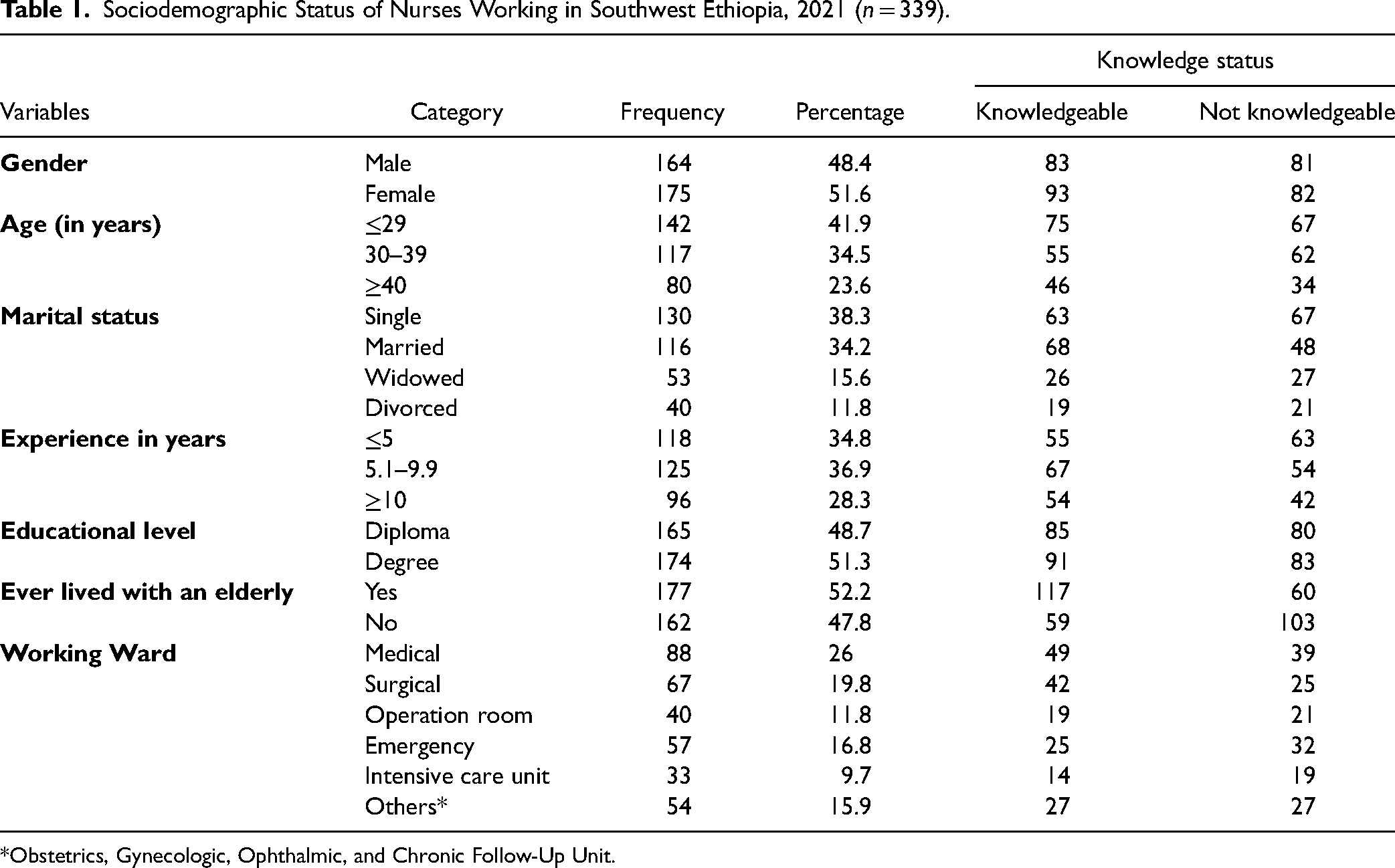
Obstetrics, Gynecologic, Ophthalmic, and Chronic Follow-Up Unit.
Knowledge Status of Study Participants Regarding Elderly Care
This study revealed that more than half, 176 (51.9%, 95% CI: 47%, 57%), were knowledgeable about elderly care (Figure 1).
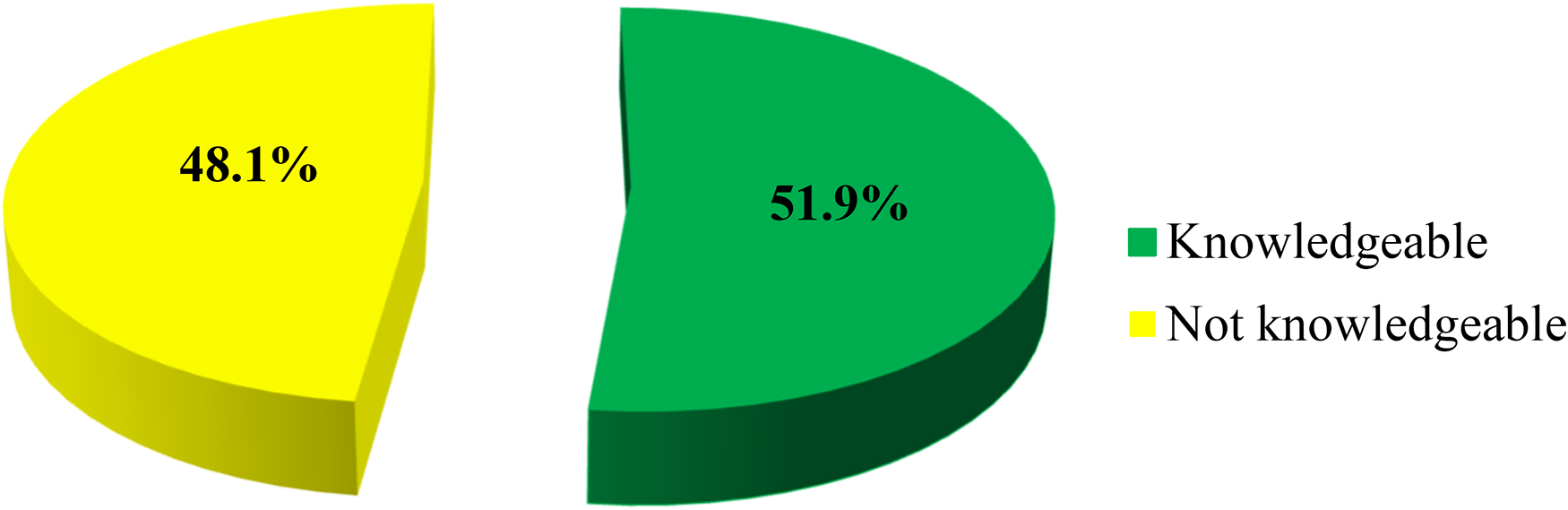
Knowledge Level of Nurses Towards Elderly Care, Southwest Ethiopia, 2021 (n = 339).
Factors Related to Elderly Care among Nurses
Factors Description
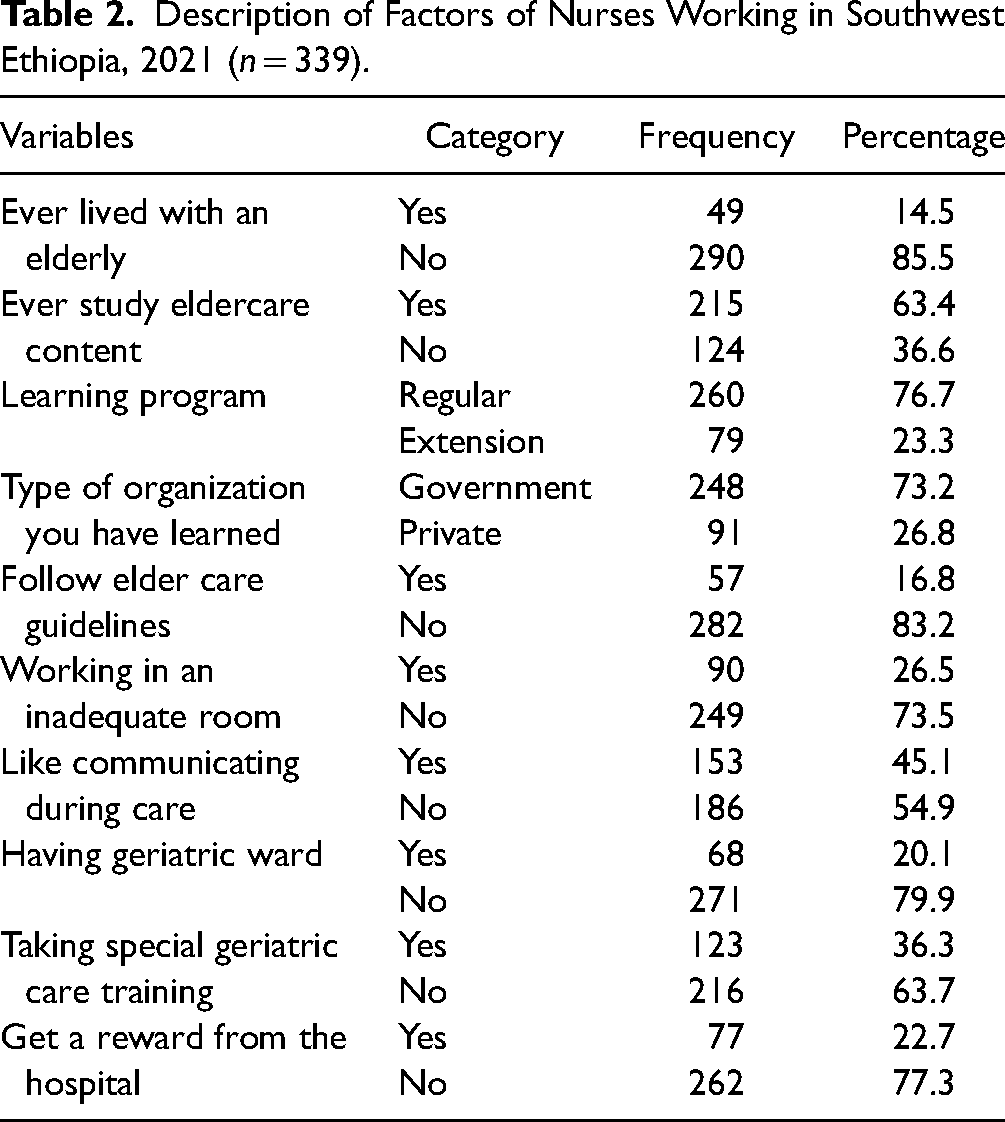
This study signifies, that more than three-fourths of nurses never lived with the elderly, 290 (85.5%). Nearly two-thirds of the participants, 215 (63.4%), were studying elderly care content. More than three-fourths, 260 (76.7%), attend their education in a regular program, and nearly three-fourths, 248 (73.2%), follow their education in governmental institutions. More than three-fourths, 282 (83.2%) participants do not follow the elderly care guidelines. More than half, 186 (54.9%), of the respondents did not like to communicate during the care of elders. More than two-thirds, 216 (63.7%) of the participants did not take any special geriatric care training (Table 2).
Description of Factors of Nurses Working in Southwest Ethiopia, 2021 (n = 339).
Factors Associated With the Knowledge of Nurses About Elderly Care
In this study, those who ever lived with the elderly were 3.6 times more likely to have good knowledge than those who did not live with the elderly (adjusted odd ratio [AOR] 3.62; 95% CI: 1.661, 7.89). Those who were taking geriatric care training had five times the odds of having good knowledge than those who did not take geriatric care training (AOR: 5.2; 95% CI: 2.771, 9.79). The nurses who had experience of ≤5 years were 70% less likely to have good knowledge as compared with those nurses who had experience of >10 years (AOR: 0.305; 95% CI: 0.134, 0.696). Those nurses whose experience was 5 to 10 years were 65% less likely to have good knowledge as compared to those nurses with experience >10 years (AOR: 0.35; 95% CI: 0.15, 0.864; Table 3).
Factors Associated With the Knowledge of Nurses Toward Elderly Care, Southwest Ethiopia, 2021 (n = 339).
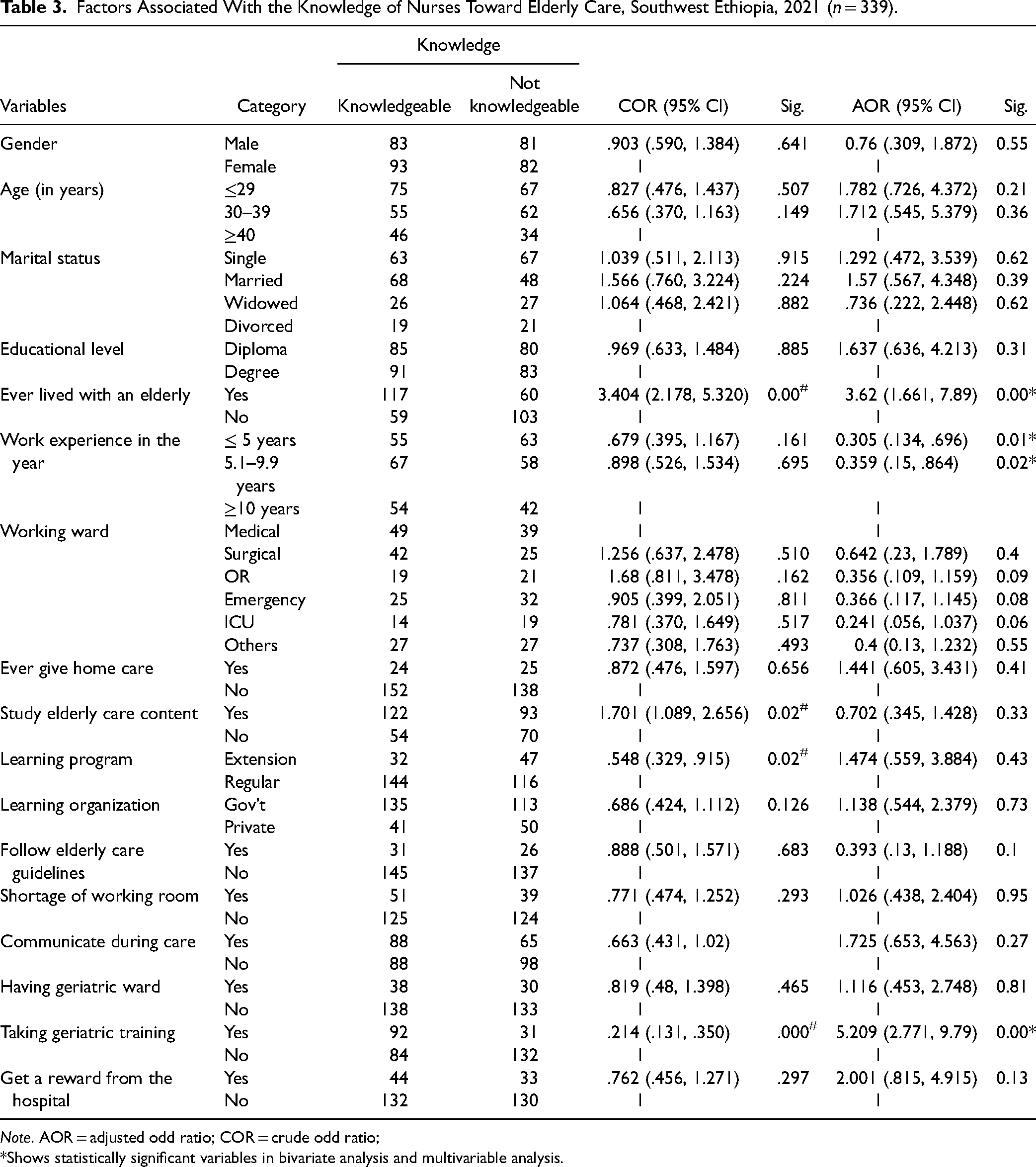
Note. AOR = adjusted odd ratio; COR = crude odd ratio;
Shows statistically significant variables in bivariate analysis and multivariable analysis.
Discussion
This study attempted to provide scientific data on the knowledge of nurses regarding elderly care in southwest Ethiopia.
The findings of this study revealed that the knowledge of nurses about elderly care was 51.9% (95% CI: 47, 57), which is in line with a cross-sectional study conducted in Israel that showed that the knowledge of nurses about the care of the elderly was 49% (Topaz & Doron, 2013). The result of this study is higher than a cross-sectional study conducted among nurses in Zanzibar and Bangladesh, which was 17% and 32.8%, respectively (Muhsin et al., 2020; Online et al., 2020). In addition to this, the result of this study is also higher than a study conducted in Addis Ababa and Bahr Dar City, which found that the knowledge of nurses about elderly care was 28.7% and 42.7%, respectively (Amsalu et al., 2021; Zeleke et al., 2018). The discrepancy might be due to variations in sociocultural status (Amsalu et al., 2021), the study settings’ differences (Heise et al., 2012; Liu et al., 2015), the difference in the time of the study (Zeleke et al., 2018), and variations in sample size.
On the contrary, the result of this study is lower than the cross-sectional study conducted among nursing students in Nigeria and India, which was 60% and 76.4%, respectively (Kaur et al., 2014; Olayiwola et al., 2017). The discrepancy may be due to differences in the study setting, sociocultural differences, and variations in the study population. The study conducted in Nigeria and India was among nursing students; this may be due to students getting updated information from their instructors.
This study found that those nurses who were living with the elderly had three times the odds of being knowledgeable as compared to those nurses who did not live with the elderly (AOR: 3.62; 95% CI: 1.661, 7.89), which is in line with a cross-sectional study conducted in Zanzibar on nursing students that revealed that having elderly individuals at home was significantly associated with good knowledge of elderly care (Muhsin et al., 2020). In addition, the result is consistent with a study conducted in Bahr Dar City to explore the effect of professional experience on knowledge of geriatric care among nurses, which revealed that living with older adults was positively associated with the knowledge of nurses (Amsalu et al., 2021). This significant association might be explained as those nurses who were living with the elderly get a chance to give care to the elderly in their home because, in our local area, caring for elderly individuals in the home is the duty of the younger ones in the family. This may help them develop good knowledge about the care of elderly individuals.
This study revealed that those nurses with a year of experience <5 years are 70% less likely to be knowledgeable (AOR: 0.305; 95% CI: .134,.696), and those nurses with experience of 5–10 years are 65% less likely to be knowledgeable (AOR: 0.359; 95% CI: .15, .864) as compared to those nurses with experience >10 years. This finding is in line with studies conducted in Addis Ababa, Bahr Dar, and the Netherlands (Amsalu et al., 2021; Derks et al., 2021; Zeleke et al., 2018). All of them showed that a year of experience is positively associated with being knowledgeable about elderly care. This association may be explained as more experience exposes the nurse to accessing information through training, daily observation, and practice in their workplace, giving them a good opportunity to be knowledgeable regarding the care of the elderly.
In this study, those nurses who take training related to geriatric care are five times more likely to be knowledgeable about elderly care (AOR: 5.2; 95% CI: 2.771, 9.79). This might be due to training helping to capacitate and develop individuals in different aspects of their work in terms of knowledge as well as skill modification for the participants that finally benefits the profession. Nurses who take training will access basic knowledge regarding elderly care if they take training that focuses on the elderly.
Strengths and Limitations
This study is possibly the first conducted in the study area on this neglected group of the population. This study has some limitations. Firstly, it is a cross-sectional study, and it is unable to draw cause-and-effect relations. Secondly, since it is a self-administered questionnaire, participants may report by anticipating the needs of the researcher. Thirdly, this self-report also leads to individualized responses to maintain socially acceptable norms. Therefore, future studies should be conducted on the practice of nurses in elderly care.
Implication for Practice
Good knowledge of nurses will have a positive impact on the quality of care. Furthermore, it decreases readmission rates and lengthens hospital stays, which improves patient and family satisfaction.
Conclusion and Recommendations
This study found that only half of the nurses were knowledgeable about elderly care. In addition to this, the result of this study also revealed that living with the elderly, taking geriatric care training, and work experience are significantly associated with the knowledge of nurses toward elderly care. Therefore, hospital administrators and the Federal Ministry of Health should focus on continuous professional development by conducting special geriatric care training and developing and implementing standard guidelines on nursing practice toward elderly care.
Footnotes
Acknowledgments
We have great gratitude to our data collectors, supervisors, and study participants for their valuable contribution to this study.
Author Contributions
MA: Conceptualization, formal analysis, methodology, software, writing an original draft, reviewing, and editing. TD: Methodology, software, and data curation. MY: Data curation, formal analysis, methodology, software, writing an original draft, reviewing, and editing. All authors read and approve the final manuscript.
Data Availability
The datasets used and analyzed in this study are available from the corresponding author upon reasonable request.
Declaration of Conflicting Interests
The authors declared no potential conflicts of interest with respect to the research, authorship, and/or publication of this article.
Ethical Considerations
Ethical clearance was taken from the College of Medicine and Health Sciences Research Standing Committee. Permission was taken from the administrators of the hospitals to conduct this study. The objective and purpose of the study were explained to the participants. The participants were informed about the confidentiality, benefits, and harm that they faced during the participation, and the right to discontinue the participation at any time is assured. Finally, written informed consent was taken from the participants.
Funding
The authors received no financial support for the research, authorship, and/or publication of this article.
