




Abstract
Introduction
Nursing students experience significant academic and clinical stress due to challenging coursework, assessments, and educational demands, as well as the pressures associated with gaining practical healthcare experience. These challenges can lead to anxiety, fear of making errors, and concerns about patient well-being, ultimately impacting students’ mental health and their preparation for a nursing career.
Objective
assesses the predictors of academic and clinical stress among nursing students.
Method
A cross-sectional study design was used with a convenience sample of 113 nursing students. The study team conducted the study at the Faculty of Applied Medical Science, Nursing Department at Prince Sattam bin Abdulaziz University. The researchers used three instruments for data collection and asked all nurse students to complete the online questionnaires, which utilized perceived clinical settings and academic stress.
Results
The mean age of the studied nursing students was 21.2 years old. The study observed students had moderate perceived stress levels furthermore, the total levels of the academic stress domain's mean and standard deviation in students were 90.5 ± 32. Also, a significant relationship between perceived stress and clinical setting hours per week in nursing students, and hospital clinical setting type in nursing students. There was a correlation between academic stress and the ages of students. Students’ academic stress was statistically significantly correlated with their educational level.
Conclusion
Academic and clinical stress significantly impacts nursing students; the most common reasons that increase stress are fear of making mistakes and harming the patient.
Recommendation
Accordingly, the study advocates for developing educational strategies and a structured course curriculum before student nurses are sent to clinical areas to enhance their capabilities and reduce academic and clinical stress.
Introduction
Nursing is stressful since it is associated with complex job demands and needs, and high expectations and excessive responsibility have been determined as the main stressors (Babapour et al., 2022). Nursing students experience increased stress levels related to the increasing number of theoretical and clinical requirements they must fulfill as they progress through their programs of study. The theory and nursing concepts are taught in the classroom, allowing students to acquire the necessary information for patient care. Students “learn by doing” and put their classroom knowledge into practice in a clinical setting. Students acquire necessary psychomotor skills through exposure to the work environment (Durgun Ozan et al., 2020). Growing responsibilities and evolving duties accompany developments in the nursing profession, yet maintaining the sustainability of the nursing workforce and defining the scope of practice provide challenges (Admi et al., 2018). Because of this, many nursing students could experience much stress while training (Kivimäki et al., 2023). Stress is typical among nursing students (Smyth et al., 2023).
The causes of stress among nursing students include “lack of professional knowledge and skills, patient care, assignments and workload, the field of practice, a nurse educator and nursing, and staff peers and daily life (Ahmed & Mohammed, 2019).” Other prominent sources of clinical stress for students during clinical education encompass uncertainty, inadequate professional skills, knowledge apprehension of committing errors or causing harm to patients, exposure to social issues, and performance anxiety stemming from academic and clinical staff expectations (Smyth et al., 2023).
Review of Literature
Stress is considered a part of human life. According to Sabu (2017), stress alters an individual's psychological or physiological states due to a combination of stimuli. It becomes more intense as a nonspecific reaction to an external or internal environmental threat and changes (Cheon & You, 2022). University students frequently encounter excessive stress, especially those majoring in health-related professions. Stress is common in our daily lives and has become a part of nurses’ lives (Dziurka et al., 2022).
Clinical nurse practice is the more significant part of education among students, considering that 3 times as much time is typically spent in the clinical setting as in the classroom (Chan et al., 2009). Although clinical training is an indispensable part of nursing education, it can be a stressful experience for students (Al-Gamal et al., 2018). Nursing students may face numerous difficulties in complex and dynamic clinical environments, such as ensuring a positive contact relationship with instructors and clinical staff, using medical equipment, and managing sudden changes in the emotions of patients’ relatives. Such clinical experiences may be stressful for students (Mahfouz & Alsahli, 2016).
Clinical education provides nursing students with the opportunity to apply their classroom knowledge while enhancing their professional skills and expertise (Aedh et al., 2015). According to recent studies, nursing students’ problem-solving ability, critical thinking skills, and feelings of belonging and professional identity are positively impacted by pleasant clinical experiences (Sendir & Acaroglu, 2008). On the other hand, clinical rotations can affect students’ perceptions of their professional value and self-worth, which aligns with the original premise regarding the importance of clinical rotations in nursing education (Dancot et al., 2023).
Stress levels rise because of the exposure of nursing students to various cultural contexts during their training in hospitals and the increased workload. To successfully create a clinical training environment for nursing education, educators and nursing students must assess the impact of clinical training stress and establish appropriate coping methods (Toqan et al., 2023). Also, the difficulties between the desired learning outcomes in clinical practice and the actual sickness frequently may lead to stress, which impairs learning and lowers student performance. Nursing students spend over 50% of their time in clinical settings (Ayed, 2022).
The inevitable and challenging levels of stress encountered throughout clinical training can be managed by implementing effective coping strategies, ultimately leading to enhanced academic performance for students (Phillips et al., 2020).
An in-depth analysis that investigates the phenomenon of stress among nursing students requires a severe stage of recognizing the clinical stressors of student nurses and planning to perform the necessary tasks to decrease them (Cant et al., 2021).
Therefore, the current study aimed to assess academic and clinical stress predictors among nursing students.
Research Questions
To accomplish the previous aim of the study, the following questions were formulated:
Q1: What are the students’ feelings about their first clinical experience? Q2: What is the academic and clinical stress level experienced by nursing students? Q3: What are the academic and clinical stress predictors among nursing students?
Method
Design
A cross-sectional descriptive study design was employed to determine academic and clinical stress predictors among nursing students from January 2023 to June 2023.
Sample
A convenience sample was utilized, and information was obtained from readily available undergraduate students enrolled in the nursing department at all academic levels. Based on information from previous literature, to calculate the sample size with a precision/absolute error of 5% and Type 1 error of 5%, the sample size is calculated according to the following formula (Admi et al., 2018).


Inclusion and Exclusion Criteria
Included students: (a) Student registration for the nursing department at study time and (b) Saudi nationality. Students were excluded: (a) students who were not registered for practical academic courses and (b) internship students.
Instruments
1-
Scores within the range of 0–13 would be categorized as indicative of low stress levels. Stress levels within the range of 14–26 would be categorized as moderate. Perceived stress levels in the range of 27–40 would be categorized as high.
The scoring system assigns a numerical value to each response category. The initial reaction, labeled as “no stress (NS),” is given a score of 0. “Slight stress (SS)” is given a score of 1. “Moderate stress (NS)” is given a score of 2. “High stress (HS)” is assigned a score of 3. Lastly, “extreme stress (ES)” is rated 4.
The questionnaire proposed a classification system consisting of five categories: (a) personal inadequacy, which encompasses questions 01 to 08; (b) fear of failure, which includes questions 09 to 16; (c) interpersonal difficulties with teachers, covering questions 17 to 24; (d) teacher–pupil relationship/teaching method, encompassing questions 25 to 32; and (5) inadequate study facilities, which includes questions 33 to 40.
Validity and Reliability
Before utilizing the tools in the study, three expert professors from the nursing faculty of Cairo University and Prince Sattam bin Abdulaziz University reviewed the tools’ content validity, clarity, appropriateness, and relevance. The Cronbach's alpha value (internal consistency) of the Perceived Stress Scale was 0.896, and the Academic Stress Scale was 0.901.
Data Collection
Upon receiving the approval letter, the researchers prepared the online Google forum link with the questionnaire for the student. It sent through WhatsApp, email, and telegram invites to students’ groups, which explained the study's aim, importance, and benefits to seek cooperation. The online agreement was taken from participants before going on to the survey questions. The data collection process occurred after the student spent time at least 1 month in their clinical setting, from January 2023 to June 2023.
Ethical Considerations
The researcher obtained ethical approval from a Committee of Research Ethics at a governmental university, the study was approved by the Prince Sattam bin Abdulaziz University Health Committee of Research Ethics (Approval No. 009/2023) then, the researchers invited the students to engage in this study voluntarily. All students were informed that participation in the study was voluntary; each participant had the right to accept participation or refuse it.
Data Analysis
All statistical analyses were performed using SPSS for Windows version 20.0 (SPSS, Chicago, IL). Data were normally distributed and were expressed in mean ± standard deviation (SD). Categorical data were expressed in numbers and percentages. A one-way analysis of variance test was used to compare more than two variables with continuous data. The chi-square test (or Fisher's exact test, when applicable) was used to compare variables with categorical data. The reliability (internal consistency) test for the questionnaires used in the study was calculated. Statistical significance was set at p < .05.
Results
Sample Characteristics
The sociodemographic characteristics of the students were listed. A total of 113 nursing students participated in the study. Table 1 shows that 72.6% of the student nurses ranged between 20–22 years; the nursing students’ mean age and SD was 21.2 ± 1.2. 30.1% of the students were enrolled in the second academic level, and 48.7% had academic performance (A+). 49.6% of the nursing students spent six credit hours per week in the clinical area, and 85.8% were in the clinical laboratory.
Distribution of the Demographic Characteristics of Nurse's Students.

Research Question Results
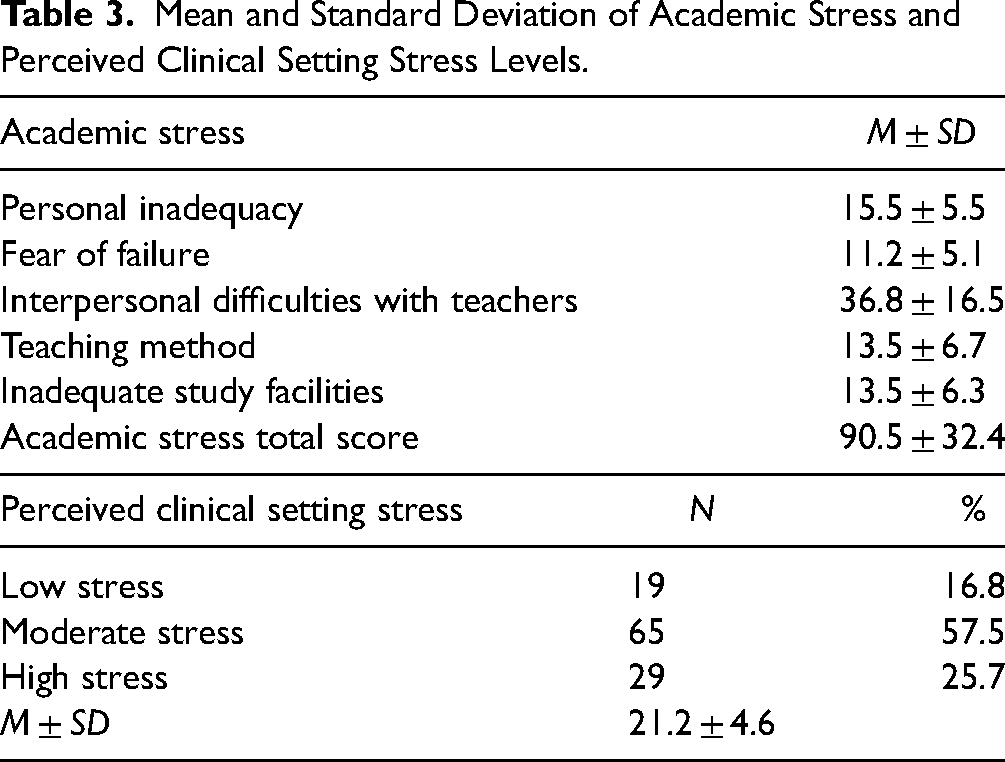
Figure 1 shows that 53.1%, 52.2%, and 51.3% of nurses’ students reported being excited, sad, and entranced on their first clinical experience. Table 2 shows that 72.6% and 61.1% of nursing students feared making a mistake and harming the patient, respectively, as the reason that increases their stress levels. Table 3 shows that the mean and SD of 36.8 ± 16.5 of nursing students were in the academic stress domain of interpersonal difficulties with teachers. The total levels of the academic stress domain's mean and SD in students were 90.5 ± 32.457.5%, demonstrating that 57.5% and 25.7% of nurses’ students had moderate and high stress levels, respectively. Table 4 shows no significant relationship between having perceived stress and students’ characters, age, working beside education, residency, academic level, and performance. A highly significant relationship was found between perceived stress and clinical setting hours per week and hospital clinical setting type in nursing students in nursing students (<.001). Table 5 reveals a notable correlation between academic stress and the age of students (F = 7.269, p < .001). Students’ academic stress was statistically significantly correlated with their academic level (F = 3.261, p = .024). A significant correlation was seen between academic stress and the number of clinical settings attended per week by nurses’ students (F = 4.194, p = .018). A statistically significant association was observed between academic stress and the various types of clinical settings among students (T = 4.287, p < .001).
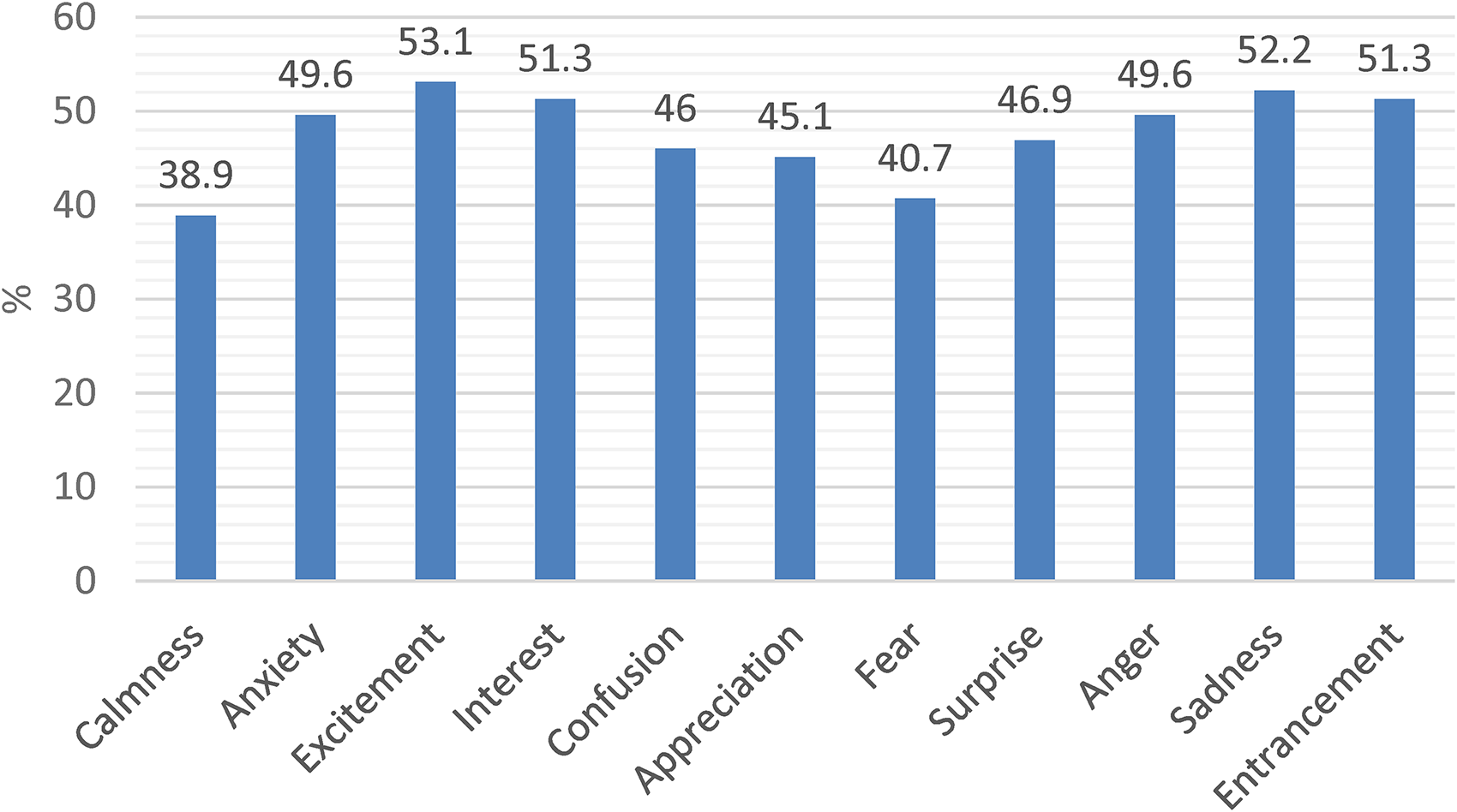
Nursing students’ reported feelings about their first clinical experience (n = 113).
Distribution of Nursing Students Regarding Reasons That Increase Stress in the Clinical Setting (n = 113).

Mean and Standard Deviation of Academic Stress and Perceived Clinical Setting Stress Levels.
Association Between the Demographic Characteristics of Students and Perceived Clinical Stress.

Association Between the Demographic Characteristics of Students and Mean, Standard Deviation of Academic Stress Scale.

Discussion
The current study assessed academic and clinical stress predictors among nursing students. According to the research questions, the current study findings provide valuable insights into nursing students’ demographic features and academic performance, as well as their stress levels and contributing factors. The findings showed the need to address nursing students’ needs and problems to ensure their academic achievement and well-being.
Based on the investigation's findings, most nursing students were aged 20 to 22, with a mean age of 21.2 ± 1.2 years. This finding is similar to the results of a study conducted in Brazil, which revealed that nursing students are primarily young, with a significant number falling within the 20–24 age (Backes et al., 2015). This result indicates that this age range is typical for undergraduate nursing students, as most students enroll immediately after high school or after completing a few years of college. As regards, academic level and performance, the students were enrolled in the second academic level, and 48.7% had academic performance (A+) conflicted with (Ahmed et al. 2023) almost half were recruited from the fourth.
Q1: Answering Research Question 1
The present data portrayed that the most prevalent fear among nursing students was the fear of making mistakes, followed by the fear of harming the patient. Similarly, the previous results of another study conducted in Northern Tanzania by (Gemuhay et al., 2019) reported that more than one-half of nursing students had anxiety associated with fear of making mistakes and lack of competency. From The researcher's point of view, the findings of this study underscored several critical fears, that nursing students articulated with the fact that nursing students are acutely aware of the responsibilities they will have as future healthcare providers. The weight of this accountability can lead to increased fear of making errors.
The current study findings revealed that more than half of the nursing students expressed excitement, sadness, and entrancement on their first clinical experiences. In a similar line, Ali and El-Sherbini (2018) examined the initial expectations of students as they began their first clinical placement with feelings of self-doubt and lack of prior knowledge, and willingness to acquire new skills. Additionally, a study by Natan et al. (2018) stated that nursing students usually experience a mix of anxiety, excitement, and fear on their first day in clinical settings. From the researcher's perspective, the first experience of clinical practice may be a significant transition for nursing students, as they must execute skills they have only previously practiced in simulated environments. This transition can result in students experiencing feelings of stress, and instability, and attempting to bridge the distance between theory and practice.
Q2: Answering of Research Question 2
The present study results revealed that more than half of nurses’ students had moderate levels of stress, and one-quarter of them had a high level of stress. These results were based on the study done by Graves et al. (2021), who reported that nursing students perceived a moderate level of stress during the initial period of clinical practice. Another study by Christal et al. (2020) found a majority of the students stated moderate stress levels. Another study in Saudi Arabia (Al-Daghri, 2014) indicated that perceived stress has remained constant in both student genders with high levels.
The results of academic stress in the present study portrayed that, the total levels of academic stress domain mean ± SD were 36.8 ± 16.5 in the academic stress domain of interpersonal difficulties with teachers, and total levels of academic stress domain's mean and SD in students were 90.5 ± 32. It was conflicted with Gallardo et al. (2020) who reported that time management is a key element of student academic stress. However, Kapali et al. (2019) supported this, revealing that half of the study participants had moderate academic stress.
Q3: Answering of Research Question 3
The current study revealed, no significant relationship between having perceived stress and students’ characters, age, working with education, residency, academic level, and performance. A similar result (Alsulami et al. 2018) was conducted in two universities in Saudi Arabia. A highly significant relationship between perceived stress and clinical setting hours per week in nursing students and hospital clinical setting type in nursing students. Similarly, a study was conducted by El-Ashry et al. (2022) to investigate the correlation between stress levels among nursing students and the clinical learning environment. They discovered that higher levels of perceived stress were associated with increased hours spent in clinical settings. This finding can be justified as the number of clinical hours per week may serve as a significant predictor of stress for various reasons: An increase in stress is commonly associated with an extension of working hours, resulting in a greater allocation of duties, obligations, and expectations imposed upon an individual.
The current research findings revealed a correlation between academic stress and the number of clinical settings attended per week by nurses’ students. These results are congruent with a study done by Gurbinder et al. (2021), who reported the degree of academic stress experienced by nursing students was predicated upon their clinical exposure. This result suggests that nursing students experience elevated stress levels due to increased exposure to clinical settings. Similarly, in a study by Ching et al. (2020), the stress of students arose from aligning student expectations with the demands of clinical placement.
Additionally, the present study findings revealed a statistically significant association between academic stress and various clinical settings among nursing students. This implies that the milieu in which they train may influence students’ stress levels. The present study's findings regarding clinical settings are supported by the study's substantial correlation between the stress levels perceived by students and the number of clinical hours attended.
The research results revealed that a remarkable correlation was seen between academic stress and the age of students. Moreover, students’ academic stress was statistically significantly correlated with their academic level. The current study findings agree with El-Ashry et al. (2022), who found that academic stress among nursing students was significantly correlated with their age and academic level.
Strength and Limitation
This study represents the stressors in clinical training of student nursing, however, the study's limitations are the constraint is that it was limited to the nursing students at this specific nursing institution, limited time of study and sample, also, results cannot be extrapolated to students enrolled in other undergraduate programs, such as those in physiotherapy or radiography. Students studying nursing would learn more about stress if this study were to be repeated with future longitudinal studies with a bigger, randomized sample.
Implications for Practice
The study recommends developing and implementing stress management programs for nursing students. These programs offer techniques and coping processes to address stresses such as the apprehension of causing harm to patients, dealing with patients of diverse genders, and the fear of committing errors. Additionally, provide support groups and counseling services tailored to the unique pressures experienced by nursing students in clinical settings. Furthermore, consider providing more flexible clinical schedules, considering the number of clinical hours per week and the type of clinical setting. This flexibility can help students better manage their academic workload alongside clinical responsibilities, potentially reducing academic stress. Further research is needed to continuously monitor and assess stress levels among nursing students through conducting surveys or interviews periodically to identify evolving stressors and adjust support programs accordingly. Further longitudinal research is needed to track the effectiveness of interventions and changes in stress levels among male and female nursing students over time.
Conclusion
In the current study, nursing students exhibited perceived clinical and academic stress levels. Furthermore, nursing students had emotions of sadness, excitement, and entrancement in the first clinical practice experience. Academic and clinical stress in nursing students were influenced by clinical sitting hours per week, and the nature of clinical experiences. Addressing these predictors through targeted interventions could help in reducing stress levels among nursing students. So educators can take responsibility for teaching students about new methods of academic stress-minimizing strategies.
Footnotes
Acknowledgment
The authors acknowledge the nursing students for their participation in the existing of this study. Additionally, the authors thank Prince Sattam Bin Abdulaziz University for the providing of necessary computational facilities.
Authors' contribution
Nermen Abdelftah Mohamed: formulating the research idea and designing the study, preparing the theoretical framework and reviewing related literature, writing the introduction and main parts of the research; Elturabi Elsayed Elkhider Ehrahim: collect data and conduct experiments, and contribute to data analysis and interpretation of results; Amany Lotfy Ahmed: participate in writing results and coordination, and review drafts and provide modifications and feedback; Ahmed Mohamed Wahba: analyze data and interpret results; Samah Osman Ali: coordinate with the rest of the authors and review drafts and amendments, and contribute to discussion and interact with reviewers and editors.
Declaration of Conflicting Interests
The authors declared no potential conflicts of interest with respect to the research, authorship, and/or publication of this article.
Ethical Committee Approval
This study was approved by the Mercy Health Research Ethics Committee (Approval No. SCBR-009-2023) on September 2023.
Funding
The authors disclosed receipt of the following financial support for the research, authorship, and/or publication of this article: This study is supported via funding from Prince Sattam Bin Abdulaziz University project number (PSAU/2023/R/1444).
