




Abstract
Introduction
High-fidelity simulation and Objective Structured Clinical Examinations (OSCEs) are essential tools in nursing education, designed to enhance clinical and non-technical competencies. However, these high-pressure activities can induce significant stress, potentially impacting students’ performance and well-being.
Methods
The study involved 53 third-year nursing students from a single university. Data collection included demographic, psychological, and academic variables, measured through validated tools such as the Perceived Stress Scale and Zung Self-Rating Depression Scale. Physiological and academic performance data from OSCEs were also analysed. Statistical analyses included correlation tests, multiple regression, and ANOVA to identify relationships and group differences.
Results
Results indicated significant physiological stress activation during simulations and OSCEs. However, stress did not adversely affect overall academic performance, suggesting that resilience and coping strategies mitigated the impact of acute stress. Students with better sleep quality and higher levels of physical activity reported lower stress levels, better academic grades, and greater adaptability to complex situations. These findings emphasize the role of healthy habits in moderating the effects of stress in high-demand academic contexts.
Conclusion
This study highlights the need to integrate stress management strategies, such as mindfulness and breathing techniques, into nursing curricula. Promoting sleep hygiene and regular physical activity can enhance students’ resilience and preparedness for professional challenges. Future research should include longitudinal and multicentric studies to explore these relationships further and assess the long-term effectiveness of interventions.
Introduction
Nursing education requires not only the acquisition of theoretical knowledge, but also the development of practical and emotional skills essential for patient care. In this context, high-fidelity simulation has emerged as an important pedagogical tool in nursing education, providing a safe environment that replicates real clinical situations and allows students to acquire and consolidate critical competencies for their future professional practice (Lopreiato et al., 2016). This approach allows students to develop both technical and non-technical skills, such as communication, decision-making and stress management (Guerrero et al., 2023). In addition, simulation provides a space for critical reflection and self-assessment, essential components of deep learning (Ha & Lim, 2023). The Objective Structured Clinical Examination (OSCE) is a key method in nursing education. This standardized assessment comprehensively evaluates students’ clinical skills, interpersonal skills and critical thinking and provides an objective framework for performance assessment (Ha & Lim, 2023). However, participation in OSCEs and simulation scenarios can be a significant source of stress for students, potentially affecting their academic performance and emotional well-being (Beltrán-Velasco et al., 2021). Various autonomic monitoring studies have shown that these assessments trigger hyperactivation of the sympathetic nervous system, as evidenced by increased heart rate and other physiological markers of stress (Beltrán-Velasco et al., 2019; Sánchez-Conde et al., 2022). Although this sympathetic activation is a natural response to stress, it can impair cognitive performance and decision-making in demanding situations such as clinical assessments (Ramírez-Adrados et al., 2020). Therefore, the implementation of stress management strategies in nursing education programs is essential to mitigate the negative effects of acute stress and optimize students’ academic performance in these challenging environments (Beltrán-Velasco et al., 2021).
Review of Literature
The physical and emotional well-being of nursing students is also a critical factor in their academic and professional success. Studies have reported a high prevalence of problems related to sleep, physical activity and nutrition in this population, which may exacerbate stress levels and negatively affect mental health (Cancela Carral & Ayán Pérez, 2011; Moreno et al., 2025; Salvi et al., 2020). A notable specific problem is the disruption of the sleep-wake cycle, characterized by reduced sleep quality and regularity, often manifested as delayed sleep phase syndrome. This condition has a significant impact not only on the general well-being of students, but also on their academic performance and ability to learn (Ruiz-Zaldibar et al., 2022). Furthermore, a lack of physical activity among nursing students is a common problem that is associated with higher stress levels and poorer sleep quality (Blake et al., 2017; FitzGerald, 2015). In contrast, regular physical activity has been shown to have positive effects on improving sleep quality and emotional regulation, promoting a more balanced mental state and increased ability to concentrate (Banno et al., 2018; Kredlow et al., 2015).
Emotions also play a critical role in learning and performance in clinical simulation. Emotional activation can influence decision-making and reflective learning, highlighting the need to address these responses in simulated environments (Jiménez-Picón et al., 2021; Madsgaard et al., 2022). Interventions based on emotional intelligence and mindfulness have also been identified as effective strategies for promoting well-being and enhancing students’ emotional competencies (Alconero-Camarero et al., 2018; Kaur Khaira et al., 2023). It is therefore essential that educational programs include comprehensive strategies that address not only stress management, but also the promotion of healthy lifestyle habits, emotional support and resilience, thereby fostering a more holistic and sustainable learning environment (Amsrud et al., 2019; Cara Rodríguez, 2021)
While previous research has independently examined the effects of academic stress, lifestyle factors and physiological responses in nursing students, few studies have integrated these dimensions into a unified framework. Most existing studies have focused either on self-reported stress levels during OSCEs or on the influence of lifestyle factors on academic performance in isolation. In contrast, this study offers a novel, multidimensional approach by simultaneously analyzing objective physiological indicators of stress (e.g., heart rate variability), lifestyle habits (sleep, physical activity and diet) and performance outcomes during both high-fidelity simulation and OSCE contexts. This comprehensive design allows for a more ecologically valid understanding of how these interrelated factors influence the academic and emotional functioning of nursing students in high-stakes educational settings. In addition, by identifying modifiable behavioral and psychological variables, this study provides a practical basis for the development of targeted interventions to support student well-being and resilience.
The present study aims to analyze the impact of high-fidelity simulation and Objective Structured Clinical Examinations (OSCEs) on stress levels, academic performance and well-being of nursing students. To this end, the specific aims are: (a) to assess how simulation environments and OSCEs affect students’ physiological stress activation, (b) to explore the relationship between acute stress induced by these activities and performance in technical and non-technical skills, (c) to identify the most common changes in sleep, physical activity and dietary habits in this population and their impact on learning, and (d) to propose intervention strategies for stress management and promotion of healthy habits in nursing education.
The initial hypotheses were: (a) participation in high-fidelity simulations and OSCEs would significantly increase physiological stress levels and negatively affect students’ academic and emotional performance; (b) the implementation of stress management strategies, such as mindfulness or breathing techniques, would reduce sympathetic activation during these activities and improve academic performance and emotional well-being; and (c) students with disturbed sleep patterns, inadequate physical activity or poor diet would have higher stress levels and poorer academic performance than their peers with healthy habits.
Methods
Design
The present study employed a cross-sectional quantitative design to investigate the impact of the Objective Structured Clinical Examination (OSCE) on stress, academic performance, and well-being among nursing students. The data were collected through the administration of a structured questionnaire and subsequently analyzed using statistical methods to identify significant patterns and relationships.
Despite the temporal proximity of data collection to the OSCE, the design of the study remains cross-sectional. Stress-related variables were assessed on a single occasion, prior to the examination, with no repetition of measures. Consequently, the study does not adhere to a pre-post intervention structure, precluding the drawing of causal inferences.
This study was reported in accordance with the STROBE guidelines for cross-sectional research to ensure methodological transparency and completeness.
In order to address the study objectives regarding stress, academic performance and well-being, a comprehensive questionnaire was administered to assess a wide range of variables. The instrument was self-administered online using Google Forms in June 2023, approximately one week prior to the OSCE, and completed approximately 48 h prior to the assessment. It included 43 variables in the following domains:
Demographic variables: age and gender. Anthropometric data: height, weight, and body mass index (BMI). Employment status: type of current employment. Sleep habits: sleep duration and perceived sleep quality. Technology use: daily hours spent using mobile devices and social media. Academic performance and perceptions: cumulative academic grade, expected OSCE score, perceived preparation and difficulty of the OSCE, and self-reported stress related to the OSCE. Psychological assessment instruments:
Zung Self-Rating Depression Scale (ZUNG, 1965) Perceived Stress Scale – Short Form (PSS-4) (Vallejo et al., 2018) Big Five Personality Inventory – Short Version (Rammstedt & John, 2007) Acceptance and Action Questionnaire (AAQ-II) (Wolgast, 2014) UCLA Loneliness Scale (Russell, 1996) State-Trait Anxiety Inventory (STAI) (Spielberger et al., 1971) Physical activity: average daily step count and self-reported physical activity level. OSCE outcomes: evaluated performance in technical-practical skills (HTP), communication, prevention (PPS), ethical-legal aspects, treatment planning and management, problem identification, use of scientific evidence, adaptability in complex situations, discharge planning, and care planning.
All psychological instruments used were validated and demonstrated acceptable reliability in student populations.
Research Questions
The study aimed to address the following research questions:
What is the relationship between OSCE performance and stress levels in nursing students? How do demographic, psychological, and behavioral factors influence academic performance in OSCE? What role do sleep habits, physical activity, and psychological well-being play in student outcomes during the OSCE?
Sample
The study included a sample of 53 third-year nursing students from Universidad Europea de Madrid. The participants comprised 47 women (88.7%) and 6 men (11.3%), with a mean age of 25.55 ± 5.7 years, an average height of 164.38 ± 7.97 cm, a mean weight of 60.92 ± 13.54 kg, and a mean BMI of 22.37 ± 3.67. All students had prior homogeneous clinical experience, ensuring comparable competency levels at the study's outset.
The sample size (n = 53) was determined by voluntary participation. All third-year nursing students at the university (N = 114) were invited to complete a validated questionnaire, which was distributed via a secure online link. A total of 53 students responded and completed both the questionnaire and the OSCE, giving a participation rate of approximately 46.5%. The final sample included those who agreed to participate and met the inclusion criteria. As this was an exploratory cross-sectional study, no formal sample size calculation was carried out. However, the sample was considered adequate to detect patterns and associations in the variables studied.
Inclusion criteria:
Enrollment in the third year of the nursing degree program. Voluntary participation and signed informed consent.
Exclusion criteria:
Students not enrolled in the third year of the nursing program. Failure to complete the questionnaire or the OSCE.
Institutional Review Board Approval and Informed Consent
This study was approved by the Ethical Research Committee of Universidad Europea de Madrid CIPI/22.228 university, in compliance with the Biomedical Research Act 14/2007 and the General Data Protection Regulation (EU Regulation 2016/679).
Prior to participation, all students were provided with detailed information about the study objectives, procedures and data confidentiality measures. Participants were informed of their right to withdraw at any time without consequence. Written informed consent was obtained from all participants to ensure their voluntary and informed participation.
Statistical Analysis
Data were analyzed using IBM SPSS Statistics, version 26. Descriptive statistics were used to summarize the demographic, anthropometric, and psychological characteristics of the sample. Normality tests (e.g., Shapiro-Wilk) were conducted to determine the appropriate statistical methods.
The following analyses were performed:
Correlation Analysis: Pearson and Spearman correlations to explore relationships between physiological, psychological, and academic variables. Regression Analysis: Multiple linear regression to identify predictors of academic performance and perceived stress, controlling for confounding variables. Group Comparisons:
ANOVA and Kruskal-Wallis tests to compare differences in sleep quality, physical activity, and stress indicators. Post-hoc analyses with Bonferroni correction for pairwise comparisons. Categorical Variables: Chi-square tests of independence to assess relationships between nominal variables (e.g., employment status and sleep patterns). Effect Sizes: Cohen's d, eta-squared, or Cramer's V to quantify the magnitude of significant findings.
All statistical tests were two-tailed, with a significance level set at p < .05. Confidence intervals (95%) were reported for key findings to enhance interpretability. Missing data were handled through pairwise deletion to maximize the sample size without introducing bias.
Results
The results of the anthropometric analysis (Table 1) did not reveal significant differences between the lower and higher sleep quality groups across the evaluated variables, such as age, height, weight, body mass index (BMI), or the proportion of female participants.
Anthropometric Data.

Note. BMI = body mass index.
Regarding sleep patterns, lifestyle, and physical activity (Table 2), significant differences were found in sleep quality, with higher scores observed in the group with better sleep quality. This group also demonstrated higher levels of weekly aerobic physical activity. However, no significant differences were observed in average sleep duration, daily step counts, resistance-based physical activity, or time spent using electronic devices and social media.
Comparison of Sleep Patterns, Lifestyle, and Physical Activity Between Groups Based on Sleep Quality.

Regarding academic performance and competencies evaluated during the OSCE (Table 3), the results indicated better overall grades in the group with higher sleep quality, as well as greater perceived preparation for the OSCE and better adaptability to complex situations. However, no significant differences were observed in final OSCE scores, technical-practical skills, or specific competencies such as communication, prevention, and care planning.
Academic Performance and OSCE Competencies by Sleep Quality Groups.
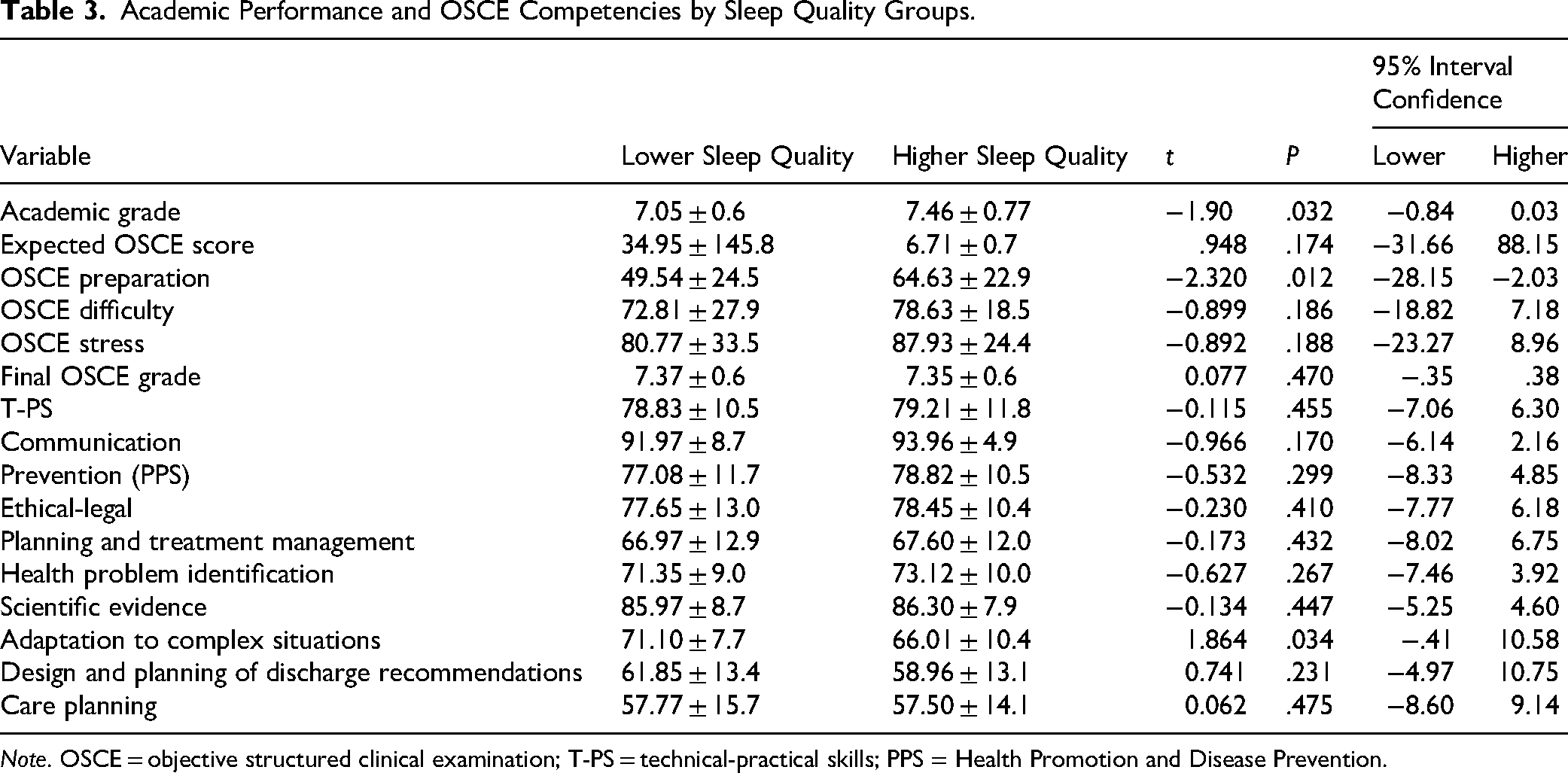
Note. OSCE = objective structured clinical examination; T-PS = technical-practical skills; PPS = Health Promotion and Disease Prevention.
Finally, the psychological parameters evaluated (Table 4) showed no significant differences between the groups, with similar results observed for depression, perceived stress, and anxiety scales.
Psychological Parameters by Sleep Quality Groups.

Note. Zung = Zung Self-Rating Depression Scale; PSS4= Perceived Stress Scale; AAQII = Acceptance and Action Questionnaire; UCLA = UCLA Loneliness Scale; Big Five = Big Five Personality Traits; STAI = State-Trait Anxiety Inventory.
Discussion
The primary aim of this study was to analyze the impact of high-fidelity simulation and objective structured clinical examinations on stress levels, academic performance and well-being of nursing students. The results largely supported the original hypotheses. Participation in high-fidelity simulation and OSCEs significantly increased physiological stress levels, as evidenced by increased sympathetic activation. However, the results showed that this stress did not adversely affect overall academic performance, possibly due to the use of effective coping mechanisms by students. This finding may also reflect the professional and educational profile of nursing students, who are routinely exposed to real or simulated clinical environments from early stages of their training. Such repeated exposure to emotionally challenging situations may contribute to the development of psychological resilience, adaptive emotion regulation, and familiarity with high-pressure contexts. Indeed, prior simulation experiences and clinical placements have been shown to act as protective factors by normalizing stress responses, thereby reducing their detrimental impact on cognitive performance during assessments such as the OSCE. This finding is consistent with the extant literature which suggests that students in health professions gradually develop internal resources and behavioral strategies to manage acute stress more effectively (Amsrud et al., 2019; Ignacio et al., 2016)
The present study did not find significant differences in sleep quality between the sexes. However, it is important to note the higher representation of women in nursing studies, which is consistent with existing literature (Huang, 2024). Previous research suggests that women may be more susceptible to sleep-related problems due to hormonal factors and additional burdens (Cancela Carral & Ayán Pérez, 2011; Moreno et al., 2025; Salvi et al., 2020). In the academic environment, stress affects both genders equally (Beltrán-Velasco et al., 2021). However, disruptions in the sleep-wake cycle are common among nursing students, often due to academic stress and assessments such as the OSCE (Ha & Lim, 2023). These disruptions affect not only academic performance but also physical health and weight regulation (Beltrán-Velasco et al., 2021). No significant differences in BMI were observed between the groups. However, participants with poorer sleep quality had higher BMIs, consistent with research linking sleep deprivation to metabolic disorders and weight gain (Salvi et al., 2020). As sleep deprivation can disrupt hormonal regulation of appetite, leading to increased calorie intake (Ruiz-Zaldibar et al., 2022), these findings highlight the need to incorporate effective stress management strategies into exercise programs.
No significant differences in Perceived Stress Scale (PSS-4) scores were found between the sleep-quality groups. This suggests that adjustment to academic stress may have moderated the expected relationship between stress and sleep quality (Ha & Lim, 2023). However, previous studies suggest that this relationship may depend on factors such as academic workload or preparation for practical assessments such as the OSCE (Beltrán-Velasco et al., 2021; Salvi et al., 2020). No significant changes were observed in depression levels according to the Zung Self-Rating Depression Scale. However, students with poorer sleep quality and higher perceived stress scored higher on this scale. This finding is consistent with studies linking academic stress and sleep problems to depressive symptoms (Beltrán-Velasco et al., 2021; Sánchez-Conde et al., 2022). In addition, the Zung Self-Rating Depression Scale may not fully capture acute emotional fluctuations caused by academic stress (Zung, 1965).
In terms of perceived preparation for the OSCE, significant differences were observed. These results suggest that feeling better prepared can reduce the impact of stress (Jiménez-Picón et al., 2021). When students feel confident in their abilities and level of preparation, their self-confidence increases (Jiménez-Picón et al., 2021). This can act as a barrier to the stress of clinical assessment (Sánchez-Conde & Clemente-Suárez, 2021). In addition, self-confidence contributes to better emotional regulation in high-pressure situations, helping to reduce anxiety during demanding academic assessments, where a sense of competence can mitigate the effects of stress (Jiménez-Picón et al., 2021). Students with better sleep quality achieved significantly higher average academic grades than those with poorer sleep quality. This finding is consistent with previous studies linking adequate sleep to improved academic performance, highlighting its influence on cognitive processes such as memory and concentration, which are essential for learning (Ruiz-Zaldibar et al., 2022). In addition, good sleep quality may facilitate emotional regulation, allowing for greater effectiveness in coping with academic stress. Although perceived difficulty and stress levels were high, no significant differences were found between the groups (Beltrán-Velasco et al., 2021). This is consistent with studies identifying OSCE as a major source of stress (Beltrán-Velasco et al., 2021). In this context, the analysis revealed that the ability to adapt to complex situations showed significant differences, highlighting its importance for performance on these assessments (Amsrud et al., 2019). The literature supports that adaptability to stressful situations, such as high demand clinical assessments, is critical for academic success (Amsrud et al., 2019). Students with greater adaptability tend to respond to stress more efficiently and with better emotional control, enabling them to better manage the cognitive load and stress associated with complex situations (Amsrud et al., 2019). In the context of competency assessments such as the OSCE, this adaptability not only improves academic performance, but also facilitates decision-making in simulated clinical scenarios (Madsgaard et al., 2022). This suggests that effective adaptability may be a key predictor of performance in practical assessments for nursing students (Madsgaard et al., 2022). Overall, these findings highlight the importance of considering contextual and individual factors when assessing the interaction between stress, sleep quality and academic performance in nursing students, particularly in high-pressure situations such as the OSCE (Jiménez-Picón et al., 2021; Sánchez-Conde & Clemente-Suárez, 2021).
The results indicate that students who reported better sleep quality and higher levels of physical activity felt more prepared for their academic activities. In this regard, previous research highlights that good sleep quality is essential for academic performance, as adequate rest improves concentration and memory - fundamental aspects of learning (Ruiz-Zaldibar et al., 2022). In addition, regular physical activity not only reduces stress levels but also promotes a positive mood, which can increase perceptions of competence and academic readiness (Blake et al., 2017). Therefore, both quality sleep and physical activity play a key role in the academic preparation of nursing students (Kaur Khaira et al., 2023).
In this study, significant differences in aerobic physical activity were observed between the sleep-quality groups; students with better sleep quality engaged in more aerobic exercise per week. However, there were no significant differences between the groups in the frequency of physical activity in the past seven days or in resistance-based physical activity. The higher amount of aerobic activity in the better sleep quality group may be related to the beneficial effects of this type of exercise on sleep. Previous studies have suggested that aerobic exercise can improve sleep quality by reducing sleep onset latency, increasing deep sleep duration and decreasing sympathetic activation, thereby promoting more restorative sleep and reducing anxiety (Banno et al., 2018; Kredlow et al., 2015). In contrast, the present research showed that resistance-based physical activity and weekly exercise frequency did not significantly improve sleep. This could be explained by the lower impact of these types of activities on sleep regulation compared to aerobic exercise (Cancela Carral & Ayán Pérez, 2011; Moreno et al., 2025). Furthermore, the results regarding the frequency of weekly physical activity suggest that the number of days of exercise may not be as influential on sleep quality as the type of physical activity performed. This is consistent with studies highlighting the importance of exercise intensity and type in achieving benefits for nighttime rest (Ruiz-Zaldibar et al., 2022).
For example, physical activity and restorative sleep work synergistically: while adequate sleep consolidates memory and restores cognitive abilities, physical activity helps to reduce stress and create optimal conditions for rest (Banno et al., 2018; Kredlow et al., 2015). These improvements are particularly beneficial in high-pressure academic contexts, where adequate sleep and physical activity contribute to greater emotional stability and resilience to stress (Banno et al., 2018; Kredlow et al., 2015). However, the results did not reveal significant differences in final grades between groups, suggesting that the stress associated with the OSCE did not significantly affect overall performance. It is likely that effective coping strategies, together with resilience strengthened by habits such as aerobic exercise and restorative sleep, mitigated the effects of acute stress in these students (Ignacio et al., 2016; Manzoor & Ahmed, 2023). Physical activity and sleep quality not only facilitate cognitive recovery, but also allow for more regulated emotional responses, which may help students face challenging assessments without compromising their academic performance (Ignacio et al., 2016; Manzoor & Ahmed, 2023). In this sense, no significant differences were observed in the use of electronic devices or social media between the sleep quality groups. This could be due to a possible compensatory effect of physical activity and other healthy habits practised by nursing students to maintain adequate rest (Beltrán-Velasco et al., 2021). Physical activity appears to partially mitigate the negative effects of screen time on sleep quality by promoting deeper sleep and reducing stress (Banno et al., 2018; Kredlow et al., 2015). Furthermore, it is possible that students have developed adaptive strategies that allow them to manage screen time without compromising sleep quality, a key factor for performance in high-demand academic environments (Ruiz-Zaldibar et al., 2022). In this regard, these findings suggest that it is the combination of good sleep quality and physical activity, rather than screen time alone, that promotes emotional stability and academic performance in nursing students, particularly during demanding assessments such as the OSCE. (Jiménez-Picón et al., 2021).
Strengths and Limitations
This study has several limitations that should be taken into account when interpreting the results. First, the sample size was relatively small and limited to nursing students from a single university in Spain. This institutional homogeneity may limit the generalizability of the findings, as academic programs, clinical training models and educational support systems may vary significantly between institutions and regions. In addition, the sample was predominantly composed of female students (88.7%), which, although reflecting the gender distribution in nursing, limits the ability to explore potential gender differences in stress perception, coping strategies and academic performance. These demographic and institutional characteristics may influence lifestyle behaviors, psychological responses and academic outcomes in ways that cannot be generalized to other student populations.
Future research should aim to include larger and more diverse samples, including participants from different academic institutions and with a better gender balance. This would allow for more robust comparative analyses and improve the external validity of the findings by accounting for socio-cultural, institutional and gender variables that may modulate the relationships under investigation.
Secondly, although this study used validated tools to assess stress, psychological well-being and academic performance, the inclusion of additional physiological markers—such as cortisol levels or heart rate variability—could provide a more comprehensive and objective assessment of stress responses during high-stakes assessments such as OSCEs.
In addition, the cross-sectional design limits the ability to establish causal relationships between the variables studied. Longitudinal research could provide a deeper understanding of the long-term effects of acute academic stress, as well as the sustainability of different coping mechanisms and lifestyle interventions over time.
Finally, the lack of experimental interventions limits the ability to directly evaluate the effectiveness of proposed strategies, such as mindfulness practices or structured physical activity. However, recent studies support the inclusion of these approaches in nursing education. For example, an 8-week mindfulness-based intervention significantly reduced perceived stress and improved mindfulness levels in university nursing students (Liu et al., 2020). Similarly, a 12-week mindfulness program based on the MBSR protocol improved stress coping strategies such as positive appraisal and planning in Peruvian nursing students (Pardo Carballido & González Cabanach, 2019). In addition, reflective mindfulness-based interventions have been shown to improve self-awareness and emotional regulation, promoting adaptive responses in clinical contexts (Salem et al., 2025).
In response to the stressors that have been identified in recent cohorts, a coping support program was implemented in 2024 for second-year nursing students at the university. This voluntary initiative comprises weekly support groups, each comprising approximately 12 students, overseen by a mental health nurse specializing in group facilitation. The program encompasses approximately 10 sessions and addresses issues primarily related to clinical placements, which students frequently identify as significant sources of stress. It has been demonstrated that students have provided a highly positive response to the experience. In light of the program's notable success, it was decided to continue it in 2025 with the same two groups. Furthermore, the initiative has been expanded to encompass two additional groups for third-year students.
Future studies should design and test pilot intervention programs within nursing curricula and assess their longitudinal impact on stress reduction, academic performance and overall well-being in both academic and clinical contexts.
Implications for Practice
This study highlights several implications for both future research and practical applications in nursing education. The cross-sectional design used in this study limits the ability to establish causality, indicating the need for future longitudinal research to examine the long-term effects of stress and coping strategies on academic performance and well-being. In addition, experimental studies should assess the immediate effects of specific interventions—such as mindfulness, physical activity and sleep programs—on reducing stress and improving academic outcomes. Pilot interventions in different academic and clinical settings would help to determine the adaptability and effectiveness of these strategies in different nursing education contexts.
From a practical perspective, the findings highlight the importance of systematically integrating stress management and healthy lifestyle education into the nursing curriculum. These interventions should not remain abstract recommendations, but should take the form of structured, evidence-based programs embedded in student education. For example, short weekly mindfulness sessions (10–15 min) can be incorporated at the beginning of simulation labs or clinical skills sessions to improve emotional regulation and focus. Mindful breathing techniques could be taught as part of stress preparation modules prior to OSCEs. Similarly, sleep hygiene education—delivered through targeted workshops or integrated into existing health promotion courses—can provide students with practical strategies for improving sleep quality, such as reducing screen time before bed, maintaining a consistent sleep schedule, and understanding the effects of caffeine and shift work.
In addition, institutions should promote structured physical activity programs, such as short guided exercise sessions or incorporating exercise breaks into long academic schedules, to improve sleep, mood and cognitive performance. Faculty development initiatives can also play a role by training educators to recognize signs of stress and create psychologically safe learning environments. Simulations and assessments should be designed with psychological support mechanisms, such as pre-briefing and debriefing sessions, that explicitly address emotional responses and build self-efficacy. By implementing these strategies in a deliberate and sustained manner, nursing education programs can foster a more resilient, emotionally balanced and academically prepared student population, better equipped to meet the demands of clinical education and professional practice.
Conclusions
The findings of this study highlight the importance of addressing academic stress in nursing students, particularly in high-stress settings such as high-fidelity simulations and OSCE-type assessments. These activities were found to produce elevated levels of physiological stress, which, although natural in assessment contexts, can impair performance in both technical and non-technical skills if not managed effectively. However, factors such as good sleep quality and regular aerobic physical activity were found to be crucial in mitigating these negative effects and improving both perceived performance and students’ ability to adapt to complex situations. This research also highlights that, despite the high levels of reported stress, no significant differences in final grades were observed between students with higher and lower sleep quality. This suggests that students’ resilience and coping strategies may have played a key role in moderating the impact of stress. In addition, perceptions of readiness for assessment were significantly higher among students with better sleep habits, highlighting the importance of promoting healthy lifestyles as part of nursing education programs. In practice, these findings highlight the need to include specific interventions in nursing curricula that promote both emotional regulation and physical well-being. Strategies such as mindfulness, conscious breathing and the promotion of healthy sleep and physical activity habits should be systematically integrated to ensure a more balanced and sustainable learning environment. In addition, it would be prudent to design simulations and clinical assessments with an eye to their emotional impact, to include psychological support and to build students’ confidence.
Footnotes
Acknowledgments
We sincerely thank the third-year nursing students from Universidad Europea de Madrid who voluntarily participated in this study, contributing their time and effort to its successful completion. Your collaboration was invaluable in advancing this research.
We also extend our gratitude to the Ethical Research Committee of Universidad Europea de Madrid for their guidance and approval, ensuring that this study adhered to the highest ethical standards. A heartfelt thanks to my colleagues at work for always being available, encouraging me, and supporting my growth as a researcher. Your motivation and unwavering belief in my abilities have been fundamental throughout this journey. Finally, we acknowledge the support of the academic and administrative staff at the Faculty of Medicine, Health, and Sports, Universidad Europea de Madrid, for facilitating access to the necessary resources and providing logistical assistance throughout the study.
ORCID iDs

Ethical Approval
This study was conducted in accordance with the Biomedical Research Law 14/2007 and the General Data Protection Regulation (EU Regulation 2016/679). It was approved by the Ethical Research Committee of Universidad Europea de Madrid CIPI 22/228.
Informed Consent Statement
Prior to participating in the study, all students were informed about the objectives and procedures of the research. Participants were assured that their data would remain anonymous and confidential, and that they could withdraw from the study at any time without consequences. Written informed consent was obtained from all participants before the administration of the questionnaire and subsequent analysis.
Author Contributions
Beatriz García-Fernández contributed to manuscript drafting, data analysis, discussion of findings, preparation for publication. Pilar González-Sanz contributed to data collection, manuscript review, and literature review. Elena M. Saiz-Navarro contributed to data collection, manuscript review, and literature review. Pedro Belinchón-deMiguel contributed to communication, submission, author coordination, revisions management, study design, and manuscript review. Vicente Javier Clemente-Suárez contributed to project supervision, study design, manuscript review, and academic leadership.
Funding
The author(s) received no financial support for the research, authorship, and/or publication of this article.
Declaration of Conflicting Interests
The authors declared no potential conflicts of interest with respect to the research, authorship, and/or publication of this article.
Data Availability Statement
The data supporting the findings of this study are available upon reasonable request from the corresponding author. To protect participant confidentiality, the dataset has been anonymized, and access will only be granted in compliance with ethical and legal regulations.
Other Identifying Information
No additional identifying information related to the authors, their institutions, funders, or approval committees is included that might compromise the anonymity of this manuscript during peer review.