




Abstract
The recycling of waste tires is of paramount importance for environmental protection and for economic reasons. The number of scrapped tires in the United States has reached 550 million per year and is still rising. Even higher numbers are estimated in the European Union, reaching 1 billion tires per year. Disused tires create waste with a highly negative environmental impact. Tire disposal mainly involves highly polluting treatments (e.g. combustion processes to produce fuel oil), with only a small percentage of waste (3% to 15%) destined for less-invasive treatments such as powdering. In this article we will look at previous studies in which different amounts of waste tire powder are combined with cement concrete mixtures to provide a final product with mechanical properties suitable for engineering applications. Previous work has shown that a good compressive strength can be achieved through replacing 30% of powdered tire with crushed sand. First, as the percentage of aggregation between crumb rubber and crushed sand increases, compressive strength decreases. Second, aggregation replacement of crumb rubber and crushed sand shows a reduction in density at around 10%. Third, the modulus of elasticity depends on the percentages added: the more rubber added to concrete, the less elastic the product will be. In addition, a less tough concrete means higher strength. However, adding rubber to concrete increases the toughness.1
Introduction
In general, concrete is a mixture of cement, aggregate, and water. Aggregate is commonly considered an inert filler that accounts for the volume and weight of concrete. Aggregate strength, gradation, absorption, moisture content, specific gravity, shape, and texture are all properties that affect the physical and mechanical characteristics contributing to the strength and durability of concrete. Considering work published in the last 10 years, it has been demonstrated that it is possible to replace the amount of sand and small stones in the aggregate with rubber (ground or powdered). In mechanical recycling, we find three materials: metal, textile, and rubber. Un-refrigerated mechanical grinding works by shredding tires and breaking them into chips, which are then passed through granulators that break the chips into small pieces. The remaining steel and fibers are removed magnetically (steel) or through shaking windscreens and wind shifters (fibers). The powdered rubber then goes through a second-phase granulator to preserve fine rubber particles and is passed through high-speed rotary mills. In cryogenic grinding, rubber tires are ground at a very low temperature using liquid nitrogen or commercial refrigerants.
Although rubber/crete has advantages and disadvantages, using rubber in concrete is better for the environment and helps with the problem of the reuse of tires. Rubber/crete invalidates some technological performance related directly to the percentages of aggregation when replacing material (such as decreased workability, mechanical strength, flexural strength and carbonation resistance).
Based on previous studies on this subject, a gradual decrease in compressive strength occurs as the percentage of crumb rubber increases. 2 The reasons for the decrease in compressive and flexural strength of the rubberized concrete are: (a) additional particles of rubber tires are stuck in the aged and surrounding cement material; (b) absence of the right bond between rubber powder and cement during the aggregation process; and (c) low unique gravity of rubber and absence of its bonding with different concrete elements. 2 The strength of the rubberized concrete is also affected by the percentage of replacement used during the aggregation between crumb rubber and cement. However, rubber/crete improves other technological characteristics, such as energy absorption. Rubber/crete can effectively increase the ductility and prevent brittle failures (decreasing density), improving impact energy, impact load, toughness, ductility, freeze/thaw resistance, thermal insulation, sound insulation, and making cement much more eco-compatible and light (reuse of rubber and minor aggregate). Rubber has much lower specific gravity than aggregates, so the replacement of aggregates with rubber consequently reduces the overall specific gravity. In this study, we follow the behavior of certain principal mechanical characteristics related to the significant percentages of rubber used and examine the best results related to compressive strength and other tests.
Benefits of recycled rubber
Applications for recycled rubber
The mechanical treatment processes for recycling rubber are shredding (Figure 1(a)), granulating (Figure 1 (b)) and crumbing (Figure1 (c)). Each process has a specific usability, from fuel and civil engineering to second-hand products and asphalt ground aggregation processes:
Tire-derived fuel – Cement industry – Paper/pulp industry – Utility boilers – Industrial boiler
Ground rubber applications – Rubber-modified asphalt – Molded and extruded products – New tire manufacturing – Athletic and recreational application – Horticultural application – Animal bedding
Cut, punched, and stamped rubber products
Civil engineering applications – Landfill construction and operation – Septic system drain fields – Backfill for water and bridge abutments – Sub-grade insulation for roads
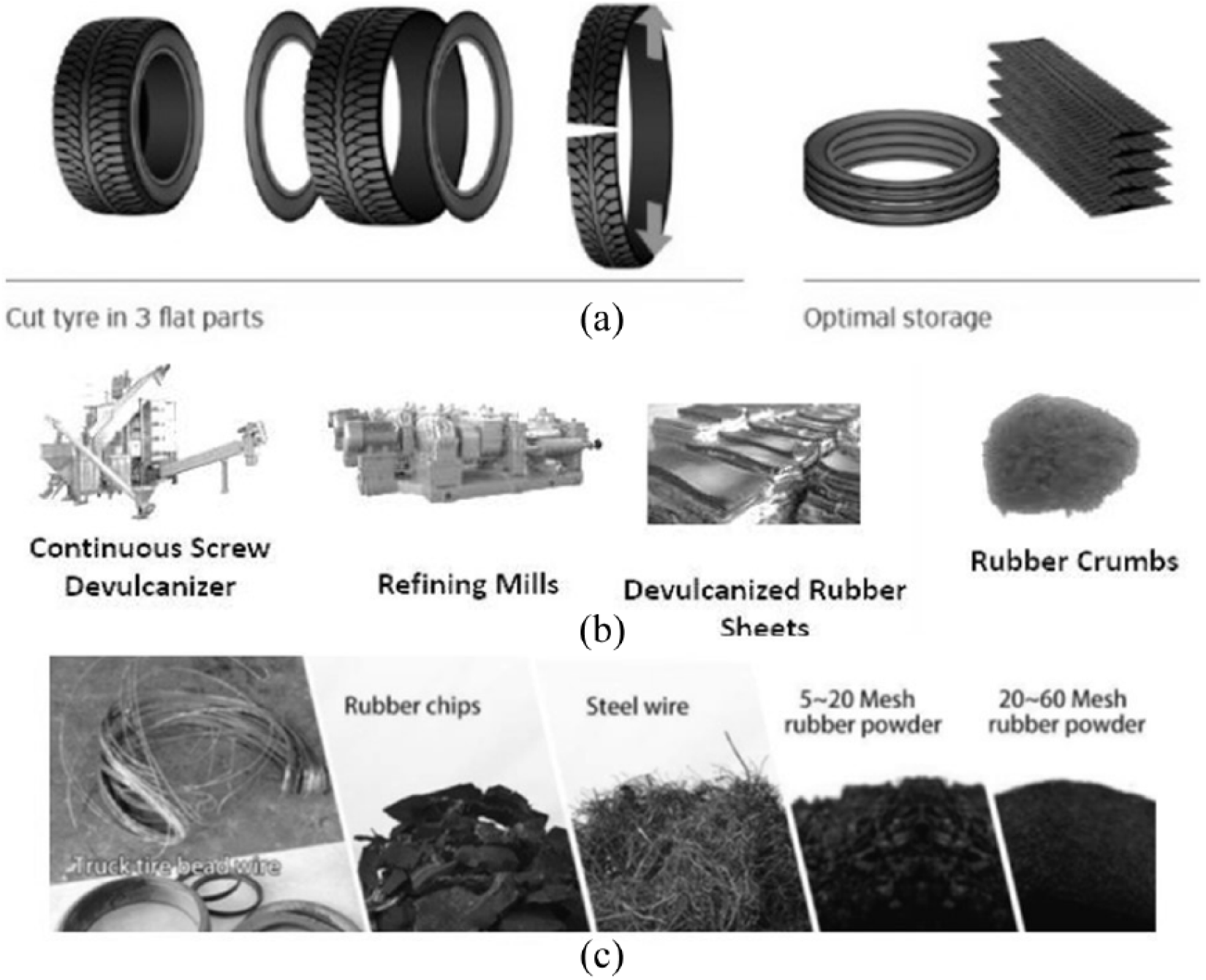
Crumb rubber-powder manufacturing
Tires have four ways to be recycled: whole; cut; chipped or shredded; and crumb.
State-of-the-art rubber/crete mechanical properties
In the last 20 years, environmental sustainability has been linked to production in the construction sector. The Kyoto Protocol (1997) and the Paris Climate Conference (2015) set limit levels for pollutant emissions (CO2 and other greenhouse gases) to help prevent the excessive increase in global temperature. 5 One of the main sectors responsible for unwanted emissions is the concrete industry. 6 According to Coppola et al. 6 the global average annual production of cement is 2.8 billion tons, which they expect to increase to 4 billion tons over the next 10 years. The production process for common Portland cements is highly wasteful in terms of energy (heat treatments require temperatures above 1400°C), 7 which corresponds to CO2 emissions approximately 0.90 ton/ton of clinker. 6 There are many potential strategies to stimulate sustainability: using alternative raw materials (alkali-activated binders, 7 Calcium Sulfoaluminate cement[CSA]; which has been used for decades as a binder in concrete for bridges, airport and roads, 8 geopolymers 5 ), changing the concrete composition, 7 or adding industrial waste materials. 5 This last strategy represents a green solution that allows a reduction in the use of natural resources and, at the same time, reinforces the cement conglomerate. 7
Below we list some studies on the use of tire-recycled rubber as a component in concrete production.
Schimizze et al. observed and recommend the use of tires in concrete. 12 Khatib and Bayomy observed a reduction in compressive strength after the addition of rubber to the concrete mix. 13 Thong-On’s research report studied the behavior of mechanical properties of rubberized concrete. 14 Eldin and Fedoff observed rubber’s direct effect on concrete’s compressive and flexible strength. 15 Lee and Moon investigated adding crumb rubber to latex concrete. 16 Goulias and Ali discovered that using rubber particles improved the engineering properties of concrete. 17 A research study by Khatib and Bayomy 18 and Schimizze et al. 19 suggested rubber should be 17–20% of the total aggregation between crumb rubber and crushed sand. Most of this previous work suggested rubber concrete would suffer a reduction in its compressive and flexural strength with a slight increase in the aggregation. However, if a small portion of aggregate is replaced, the loss in compressive strength was negligible. Khatib and Bayomy 20 have studied and mechanically tested possible alternatives of unconventional mixtures of Portland Cement Concrete and tire rubber. The results have shown that rubber mixtures can be realized only with a certain percentage of polymer (about 50%), which if exceeded leads to problems in the workability of the mixture. 21
Material properties
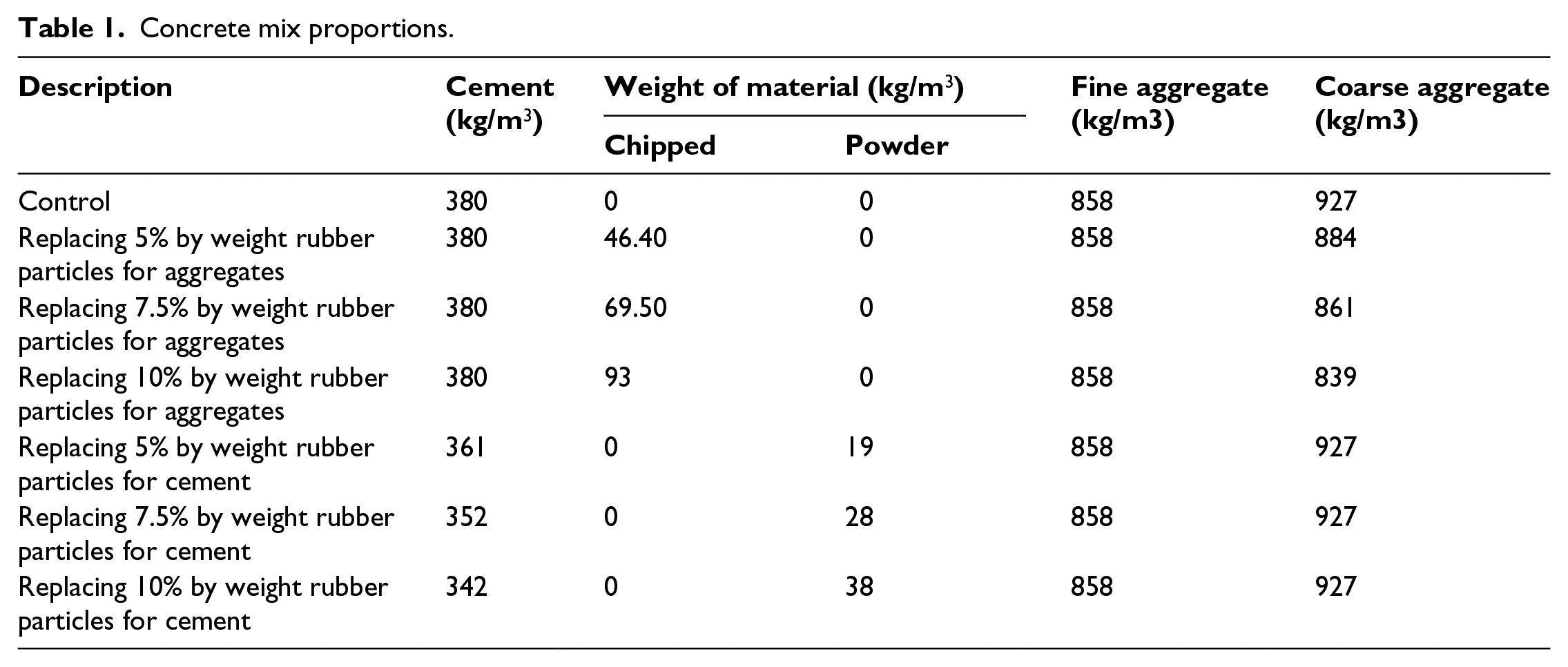
According to previous research projects, ordinary Portland cement grade 43 (IS): 8112-1989 has a specific gravity of 3.15. In addition, three broad categories of discarded tire rubber have been considered: chipped, crumb, and ground rubber. To form the powder mix, three sizes of crumb rubber are used in different percentages (25% for 2–4 mm crumb, 35% 0.8–2 mm and 40% for rubber powder). In addition, M60 grade concrete was designed (as per IS:10262-2010) to form a suitable mixture for rubber tires in concrete. 22 The ratio of cement, fine aggregate, and coarse aggregate is 1:1.48:2.67 by weight. 22 Crumb rubber replaces natural sand by weight up to 20% at a multiple of 2.5x. The relative density of chipped rubber was 1.3. Ground rubber particles between 45 μm and 1.2 mm in diameter are used and mostly pass 600 μm. The relative density (specific gravity) of ground tire powder was 0.8. The preparation of the first mixture of 5%, 7.5%, and 10% by weight of coarse aggregates was replaced by chipped tire rubber. 22 Mixture proportion specifications are detailed in Table 1. 22
Concrete mix proportions.
Manufacturing process
Najim and Hall summarized the mixing procedures of several authors and proposed four important steps: (a) mix all components for 1–5 minutes before adding water; (b) add water and mix for another 3–5 minutes; (c) dry mix of aggregates and dust for 30 seconds and subsequent addition of a third of the superplasticizer required, and then mix for an additional 90 seconds; and (d) add the remaining amount of superplasticizer with an additional mix for another 210 seconds. 24
Mechanical properties
Compressive strength
Figure 2 shows the variations in compressive strength obtained according to the percentage of crumb rubber at 7, 28, and 90 days. 22 As the percentage of crumb rubber increases in the aggregation, the compressive strength gradually decreases. The compressive stress of reinforced concrete with the maximum amount of rubber (20%) decreases by 50% compared to ordinary concrete without rubber. At 7, 28, and 90 days, the compressive strength values of non-rubberized concrete vary between 65 and 75 MPa, whereas for concrete with 20% rubber, the compressive strength is between 27 and 30 MPa. Replacements of 7.5% and 10% of powder rubber reduced the overall strength by 10–23% and partially reduced the compressive strength. Compressive strength reduction is due to the poor adhesion between the rubber particles and the cement. These defects represent sources of mechanical weakness that give rise to cracks when the material is subjected to compressive stress. Most of the research on these experiments shows that 5% crumb rubber in cement does not show any negative impact or reduction in concrete strength.
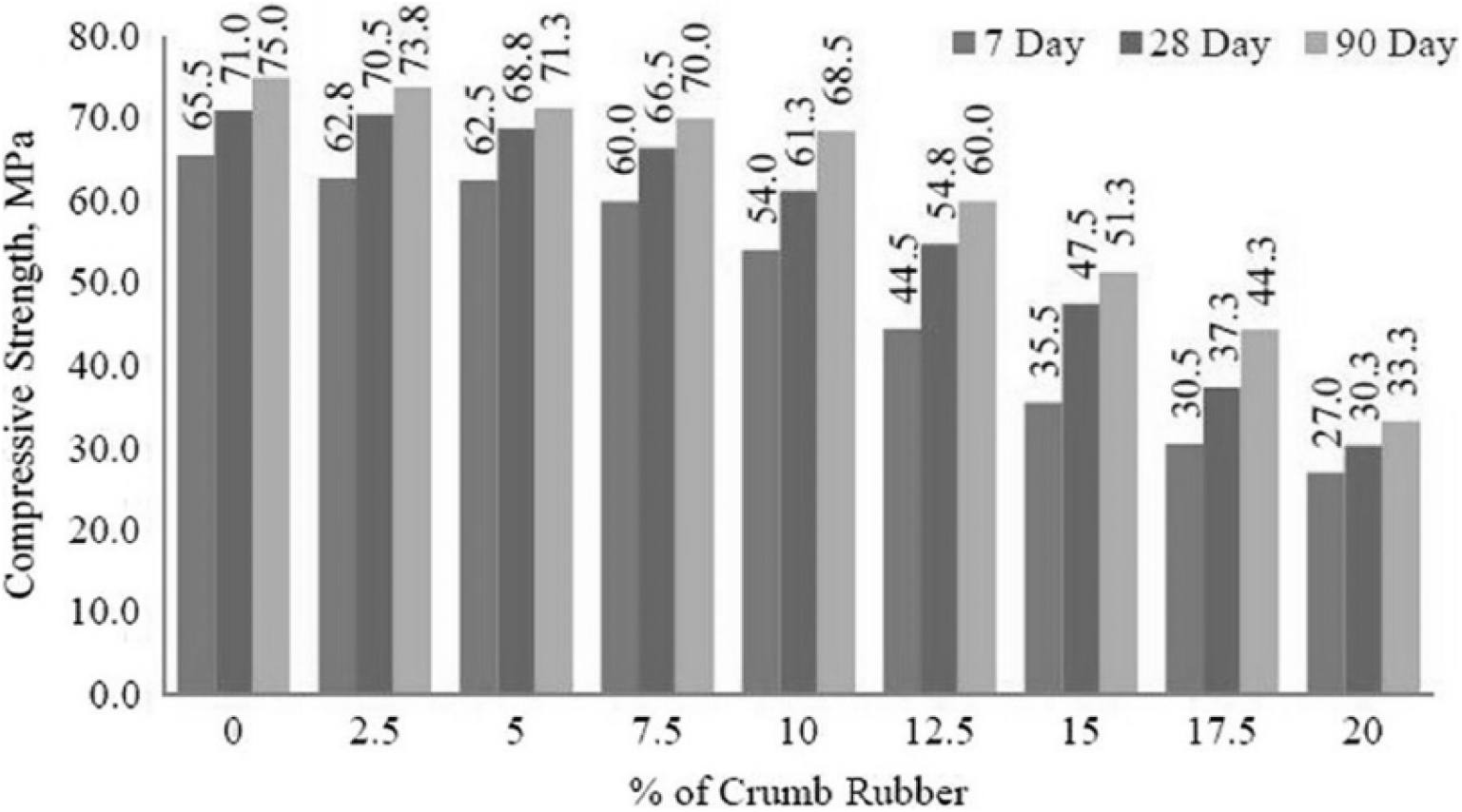
Compressive strength versus % of crumb rubber. 22
Flexural strength
Figure 3, shows the effect of two types of rubber reinforcements (shipped rubber and ground rubber) on flexural strength proprieties of concrete. Moreover, Figure 4 shows that in the 7, 28, and 90-day flexural strength of the rubber/crete mixture gradually decreases as the percentage weight of rubber increases. This trend is confirmed for two types of rubber reinforcement: chipped and ground rubber.
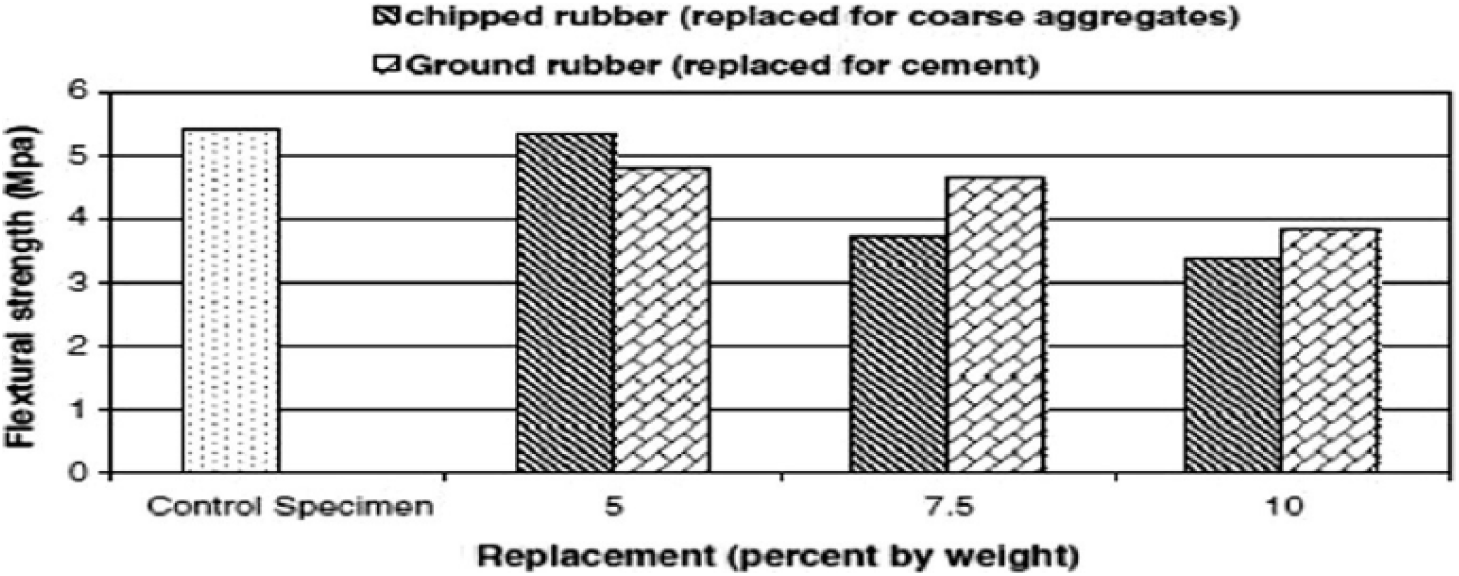
Flexural strength test for varying % of crumb rubber. 22
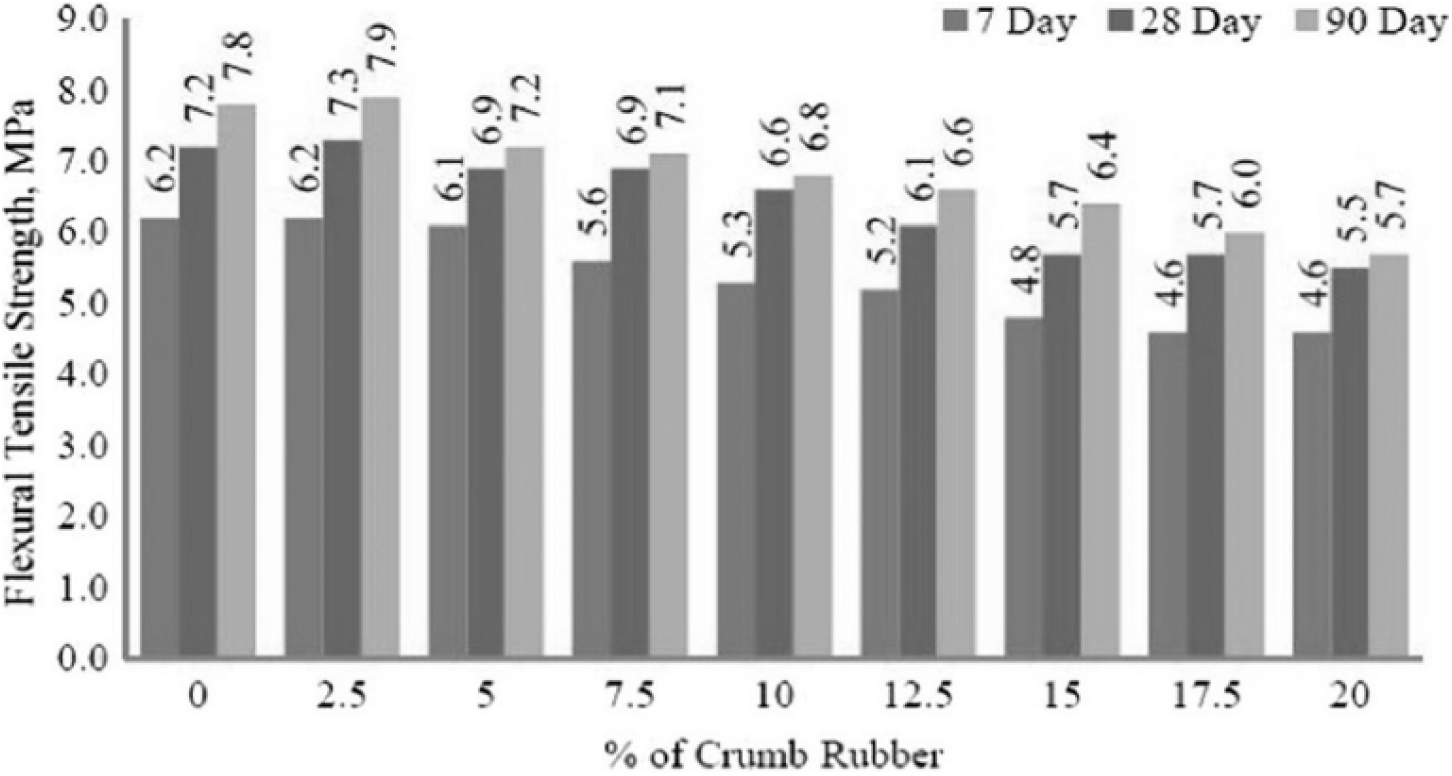
Flexural tensile strength for varying curing periods of 7, 28, and 90 days versus % of crumb rubber. 22
The minimum value on the listed days was 6.2 MPa at 0% crumb rubber whereas the minimum value with a crumb rubber of 20% reached 5.5 MPa. Researchers observed that after breaking concrete samples, chipped rubber could be removed from the mixture easily due to its weak bonding with cement during the aggregation process. This is the main factor for the gradual reduction in flexural and compressive strength.
Modulus of elasticity
Figure 5 shows the results and effects of material replacement depending on the percentages used. As shown in the figure, the modulus of elasticity decreases by increasing the percentage of rubber in the aggregate. The diagram also shows that, on the same composition, the type of rubber reinforcement (i.e. chipped or ground rubber) does not significantly affect the elastic properties of the material.
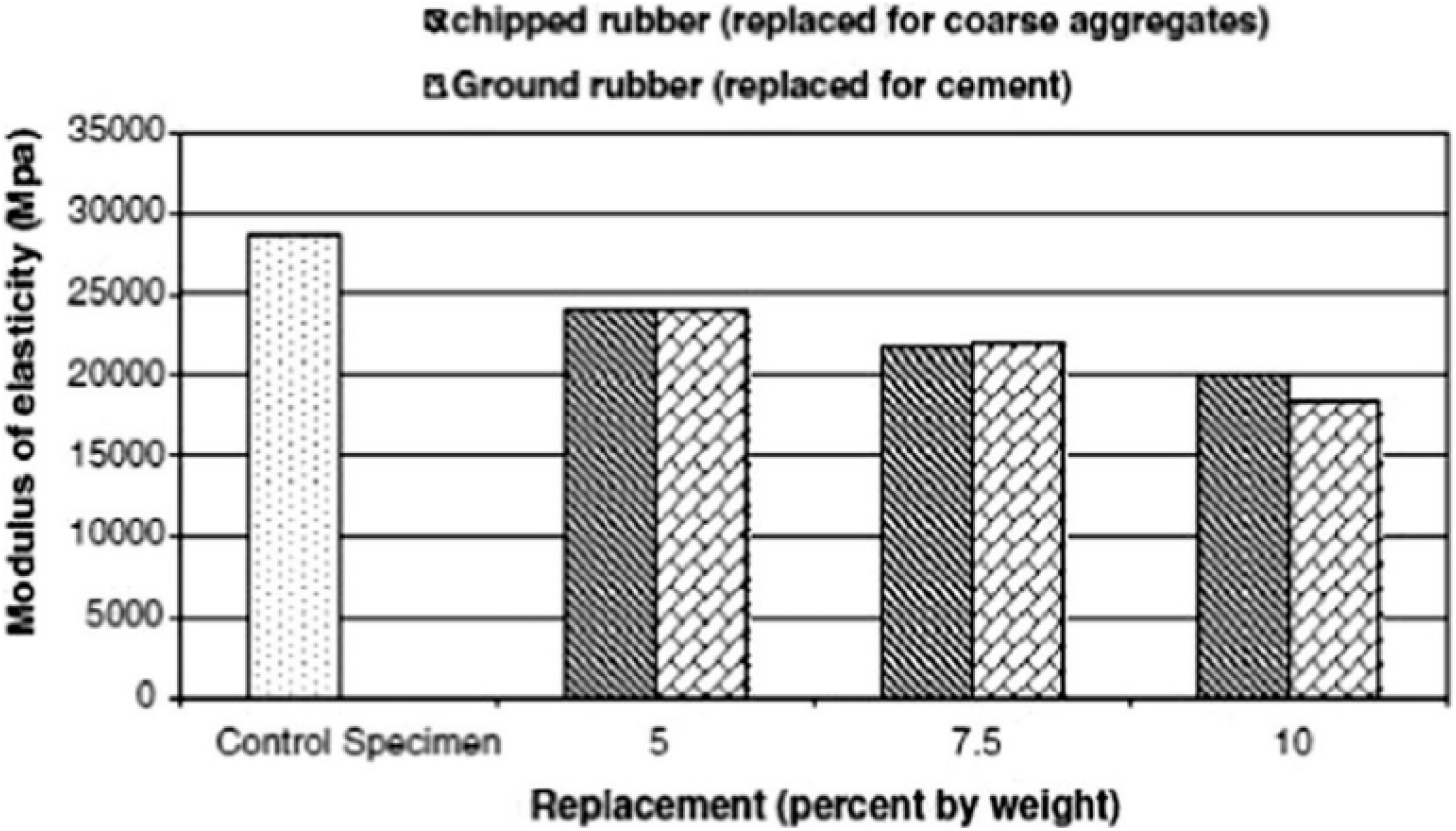
Modulus of elasticity for varying crumb rubber %. 22
Tensile strength
Figure 6 shows the tensile strength of the concrete samples. As shown, the tensile strength of the concrete samples gradually reduces regardless of the ratio of rubber used. Comparing 0% rubber and 7.5% rubber replacement, the reduction goes from 3 MPa to 1.8 MPa in the first rubber material and 2.3 MPa in the second material, which is lower than the control specimen. Generally, researchers discovered the tensile strength in concrete containing rubber was higher than the control mixture. As rubber tires are tough and soft, they can play a role in preventing cracks in concrete samples. However, in Figure 6 we see the opposite: when applying stress, isolation at the surface forms cracks between the aggregated material, the rubber, and cement paste.
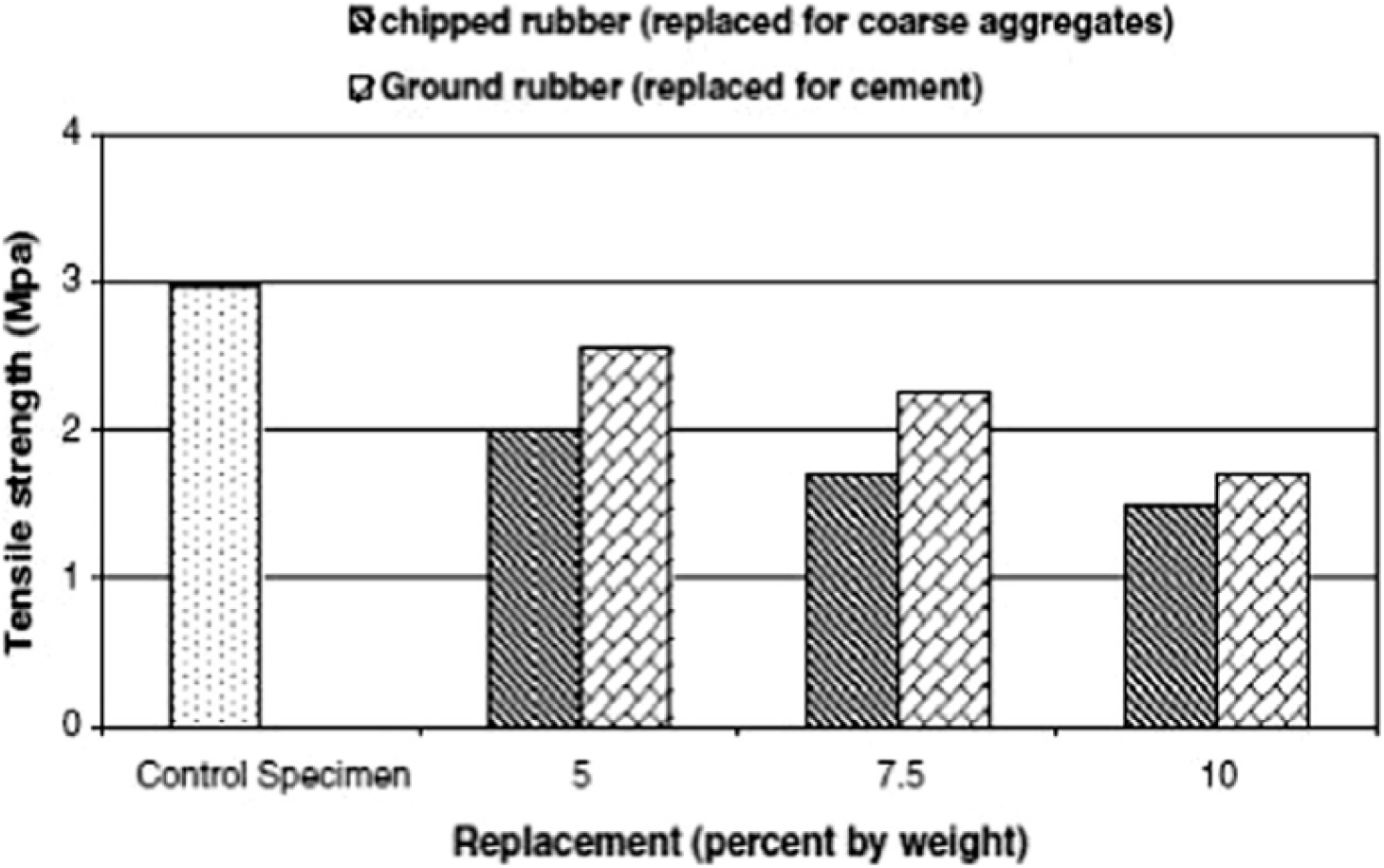
Tensile strength for varying crumb rubber %. 22
Durability studies
Previous research shows that rubberized concrete is useful in harsh environments as it is durable and highly resistant to acids. Moreover, as the size of rubber particle increases, the durability in resisting water absorption decreases. Li et al. 23 observed that fiber tires, being tough yet soft, can play an important role in preventing cracks in concrete samples.
Conclusion
The goal of this review is to analyze the use of rubber powder from tire recycling in applications with concrete. The polymer reinforcement was added to the ceramic-cement mixture in the appropriate proportions, as a substitute for some of the mineral constituents used in traditional concrete.
We considered substituting 15% of sand or 7–8% of the weight for coarse ground rubber to obtain a product with appropriate mechanical properties and workability for some applications.
At the Chemical and Material department of the University of Rome Sapienza, we are working on a particular bio-sustainable pre-built, multi-frame brick. By looking at the composition of the building material and the geometry of the brick, it is possible to optimize both the physical-mechanical properties (lightweight, mechanical resistance, thermo-acoustic insulation) and aesthetic-architectural properties.
Footnotes
Declaration of Conflicting Interests
The author(s) declared no potential conflicts of interest with respect to the research, authorship, and/or publication of this article.
Funding
The author(s) received no financial support for the research, authorship, and/or publication of this article.


