




Abstract
STEM learning aims to prepare students with hands-on and problem-based learning. However, teacher-centered instruction has been the predominant course delivery technique in STEM education regardless face-to-face or online learning context. Using both quantitative and qualitative research methods, this study explores the expectations of effective online courses based on Moore’s three types of interactions among Chinese STEM college students taking synchronous teacher-centered lecture-based online courses. A total of 175 undergraduate STEM students were recruited at one Chinese university. Results indicate that these students expect their instructors to integrate activities to motivate interactions with their instructor, peers, and the learning content. Students’ perceptions of the advantages and challenges of taking synchronous lecture-based courses are also discussed. It is expected that the findings would enlighten professionals of higher education in China to adjust teacher-centered instruction and to adequately prepare and train online instructors to foster an active online learning environment in STEM fields.
Keywords
Introduction
STEM learning aims to train the knowledge and develop students’ skills simultaneously (Duran et al., 2016; Mulyani, 2019) It prepares students with skills in using scientific approaches, applying and developing technology, as well as analyzing and solving problems (Heryuriani, 2020; Okundaye et al., 2022). In short, “STEM is a combination of science (knowledge), engineering (skills to design a work of innovation/product), and mathematics (logically and systematically composing) that can be used to answer everyday problems through the use of technological advances (technology)” (Widiastuti et al., 2021, p. 9). Although the purpose of STEM learning is to equip students with practical skills and creative thinking, the predominant STEM course delivery lies in teacher-centered instruction (Pimentel & McNeill, 2013). In other words, despite previous research (Dolan et al., 2016) indicating that reforms—shifting from teacher-centered to student-centered approaches—should be implemented in college STEM instruction, teacher-centered instruction remains prevalent in STEM courses.
Studies show that teacher-centered instruction lacks social interaction because the instructors do most of the talking and students do not have opportunities to develop or explore their ideas in a teacher-centered classroom (Ismail et al., 2022). Kranzfelder et al. (2020) indicated that when applying this instruction, the instructors mostly use authoritative discourse to teach the learning content, and they mostly asked their students to recall facts or basic concepts instead of asking students to build knowledge collaboratively. However, social interaction is an essential factor that influences student’s engagement and learning outcomes (Lu & Churchill, 2014). Thus, there is a need to seek best practices to address the challenges of delivering STEM instruction (Chen et al., 2015).
Today, online learning is widely used in universities around the world. Yet, instructors lack pedagogical skills, which negatively impacts the quality of online courses (Hodges et al., 2020). Meanwhile, many STEM students, including those in Chinese universities, may not be adequately prepared for this shift (Beruin, 2022). Prior to the COVID-19 pandemic, face-to-face teaching was the predominant format in Chinese universities, with online learning only serving as a supplement to on-site instruction (Lin & Dai, 2022; Lin & Sun, 2022). However, with an increasing number of STEM courses transitioning to online and/or hybrid formats during and after the pandemic, it becomes crucial to employ strategies that encourage active student participation in online learning. Therefore, this study aims to investigate the expectations of Chinese STEM college students regarding effective online courses, with the objective of identifying best practices and motivating instructors to create an engaging and interactive online learning environment. Research questions of this study include: 1. What are Chinese STEM students’ expectations of effective online courses? 2. What are advantages of taking synchronous online lecture-based courses? 3. What are challenges of taking synchronous online lecture-based courses?
Literature review
Teacher-centered instruction in STEM courses
Teacher-centered instruction, also called lectures-based pedagogy, is defined as lecture-based teaching for which students are “passive recipients of knowledge” (Weimer, 2013, p. 64). The teacher-centered instruction is considered a predominant pedagogical approach in STEM instruction. However, the traditional live lecture—the mainstay of university STEM courses—would lead to passive learning (Sandrone et al., 2021). This passive approach to STEM learning is usually rooted in the lecture format, with students listening to experts who deliver their knowledge. Students usually feel less engaged and connected with the instructor and their peers when participating in online lectures with 69% of online learning students agreeing with the statement “I feel that being able to interact with the lecturer in person in a classroom setting is a better learning experience than the online format” (Vaccani et al., 2016).
Although teacher-centered instruction could promote rote learning (Hammer, 1994) and may positively affect students’ academic achievement (Kang & Keinonen, 2018), it could not motivate understanding of the collaborative, interdisciplinary nature of scientific inquiry (Handelsman et al., 2007). On the contrary, studies (Marbach-Ad & Hunt Rietschel, 2016) noted that student-centered instruction would engage students in learning, and this approach could motivate and empower students by providing them with some control over their own learning. The student-centered instruction also encourages collaboration and fosters a learning community. Students may be stimulated to reflect on what and how they learn. Finally, this approach could promote knowledge application, conceptual understanding, and critical thinking (AAAS, 2011).
However, a majority of faculty members still rely on lecture-based pedagogy (Ebert-May et al., 2011). It is possible that the instructors’ own personal experiences with lectures as undergraduates encourage them to keep this learning style (Baldwin, 2009). They believe that the transmission of knowledge to students through lectures is the best way to teach (Wieman et al., 2010). Additionally, they perceive that lecture preparation is more time-effective than preparing student-centered activities (Dancy & Henderson, 2010). Student resistance to active learning (Bourrie et al., 2014) may be another factor preventing instructors from applying active learning in courses. For those who intend to transition to student-centered teaching, the initial difficulties are often encountered, requiring several iterations to perfect a new teaching style, which would be time-consuming and may cost a lot of effort. Moreover, student-centered teaching usually encourages instructors to cover fewer topics in greater depth to promote meaningful learning (Weimer, 2013). However, many instructors are uncomfortable with such a loss of content coverage (Fink, 2013). Along with this line, student-centered instruction requires changing the instructor’s role from an expert who delivers knowledge to a teacher-facilitator, granting some degree of control over the learning process to students. While many instructors are not comfortable with the unpredictability and vulnerability that comes with relinquishing control in the classroom (Weimer, 2013). The above reasons thus contribute to the continuing use of teacher-centered instruction in STEM courses.
Yet, researchers indicated that students’ performance in student-centered STEM courses is higher than that in teacher-centered education. For instance, Rathore and Colleagues (2022) compared 362 medical and dental students’ course performance in a teacher-centered course and a student-centered course. Results of their study revealed that in the teacher-centered class, 20% of the class scored above 80 marks, 78% of the class scored between 60 and 80, and 2% scored less than 60 marks. While in the student-centered class, 100% of students score more than 80 marks, and among them, 60% marked 90 and above. Widiastuti et al. (2021) used Google classroom-assisted STEM learning in a high school math classroom with 28 students, and they found that this student-centered learning would greatly improve students’ mathematical creative thinking skills. Thus, they stated that the approach of STEM-aided Google classroom could transform teacher-centered learning into student-centered learning, and students could follow the learning well in a student-centered course. Finally, they concluded that teacher-centered education may not be the ideal technique for stimulating students’ math creative thinking skills, and that, as a result, efforts should be made to transfer learning from teacher-centered instruction to student-centered instruction in STEM courses. Lee and Boo (2022) examined the influence of the different instructional styles (teacher-centered vs. student-centered) on students’ interests and discovered that student-centered instruction could positively affect students’ learning interests. Student-centered learning could additionally increase student-instructor and student-student interactions through one-on-one, group-based, and whole-class discussions (Stains et al., 2018). Classroom interactions during active engagement instruction can furthermore promote student learning and develop a deeper understanding of science (Kuhn et al., 2017). As a consequence, efforts should be made to improve teaching quality to facilitate the transformation of university teaching and learning from teacher-centered to student-centered (Walter et al., 2016).
Motivating student engagement in STEM courses
To motivate student-centered instruction, it is significant to use active learning strategies to engage students to participate and think critically about their learning (Bonwell & Eison, 1991). Active learning is defined as “anything course-related that all students in a class session are called upon to do other than simply watching, listening and taking notes” (Felder & Brent, 2009, p. 2), which could increase students’ performance compared to lectures (Freeman et al., 2014). Motivating active learning as well enhances student learning outcomes, increases student retention, and decreases student failure rates (Gavassa et al., 2019). It may also increase student performance and success rates in STEM learning (Aji & Khan, 2015). Freeman et al. (2014) observed that, in comparison to traditional lectures, active learning would result in greater exam scores and decreased failure rates. Additionally, this strategy may reduce inequities and close achievement gaps for disadvantaged students in STEM disciplines, thereby promoting fairness and inclusivity in higher education (Theobald et al., 2020). Therefore, it is necessary to incorporate active learning strategies such as peer instruction with clicker questions or small-group work (Freeman et al., 2014) into STEM courses to engage students instead of only lecture-based courses.
Previous studies have additionally researched college students’ expectations of their STEM courses. For instance, Messineo et al. (2007) investigated student expectations across 14 sections of college math and humanities courses, and they found that students prefer group works especially in large-enrollment courses. Similarly, Brown et al. (2017) investigated college students’ expectations toward their course in two sections of a large-enrollment biology course. Results showed that students expect more instructional practices such as completing activities and working in small groups instead of just listening to lectures. By exploring students’ expectations of course activities based on their demographic characteristics among 1500 undergraduate students across 10 STEM disciplines, Meaders et al. (2019) supported that students usually expect more active learning in STEM courses. Therefore, it is important for instructors to incorporate strategies with traditional lecture instruction appropriately to engage their students.
STEM students’ expectations of effective online courses
Effective online courses are typically characterized by the incorporation of both teacher-centered and student-centered methods (Murphy et al., 2021). In an ideal scenario, such courses provide clear and well-structured information delivered by the instructor (teacher-centered), while simultaneously promoting active student engagement, interaction, and critical thinking (student-centered). The development of such courses would enhance student learning outcomes, satisfaction, and retention (Bernard et al., 2014). An effective online course not only guides students through the learning process but also facilitates their active connection with course materials and fellow students through conversations, problem-solving exercises, and collaborative projects (Zepke & Leach, 2010).
Therefore, the instructor plays an important role in the effectiveness of online course delivery, specifically how they design and deliver the course. Kara and Can (2019) investigated the expectations of graduate students for good online courses. Students frequently desire their online professors to explain concepts clearly, be accessible, provide support, and demonstrate kindness and expertise, according to the findings. Similarly, Trammell and Colleagues (2016) found that students typically had high expectations for their lecturers’ accessibility, knowledge, enthusiasm, and friendliness. In addition, many students consider timely instructor response and engagement important in online courses.
Regarding STEM students’ attitudes toward online learning, Beruin (2022) found that STEM students are not completely prepared for a shift to online learning. Beruin interviewed 15 Grade 12 students and identified several disadvantages of online learning, including: (1) online learning marred with unfavorable sentiments, (2) online learning plagued by technical barriers, (3) online learning accentuated the use of online tools, (4) online learning provided aberrational learning experiences, (5) online learning hampered by the learning environment, (6) online learning adversely affected students’ well-being, (7) online learning reaffirmed the importance of social interactions, (8) online learning exhibited unsatisfactory perceptions to teaching, and 9) online learning exhibited dissatisfaction towards institutional support. Similarly, students’ online learning readiness may affect their online self-regulated learning (Lin & Dai, 2022). Results from 262 undergraduate students showed that their online learning readiness would positively influence their use of self-regulated learning strategies. Specifically, students with higher levels of communication, technical, and social competencies usually better manage their study time and self-evaluate their online learning. Students who are more capable of engaging in meaningful interactions with their instructors and classmates are more likely to self-assess their online learning. As a result, it is important to well prepare students for online learning.
Additionally, applying appropriate design elements (e.g., integrated active learning activities, interactive engagement strategies, and robust assessment design) into online STEM courses would impact students’ perceptions of learning and course satisfaction (Chen et al., 2018). By surveying 537 college students from 15 online STEM courses, Chen and Colleagues (2018) summarized several most frequently used design elements in online STEM courses, including completing major projects, reading, utilizing websites, taking quizzes/exams, and examining slideshows (noted as top five required activities), using special software or applications relevant to the course, solving a real-world problem, and analyzing scenarios or case studies (noted as top three active learning activities), and reading course news or announcements (noted as top two interaction activities). They furthermore concluded that STEM students prefer active learning activities (e.g., software, real-world problems, case studies), which could lead to better understanding when the instructor relates the course content to real-life situations. Generally, STEM students pay close attention to course news/announcements and instructor emails, showing that they anticipate communicating with their professors. STEM students also seek peer interaction as they prefer peer mentoring for online learning, such as discussion boards and group projects. They look for frequent short practice tests and quizzes, as well as immediate feedback and explanations. They additionally expect the instructor to be clear on due dates and grading methods, update grades frequently, and provide samples that are tied to the assignments and exams in online courses. In short, their study implied that interactions should be encouraged between students with their instructors and peers. Chen et al. (2018) finally suggested that a STEM program should invest resources to create online videos and provide face-to-face opportunities for students to meet their online instructors, TAs, and tutors, along with face-to-face lab activities.
Engaging students is significant to develop an active learning environment. Student engagement is a major factor related to their online learning performance and retention in STEM fields (Watkins & Mazur, 2013). Previous studies indicated that STEM students may be struggling with staying motivated and engaged after the transition to online learning (Perets et al., 2020; Petillion & McNeil, 2020). Many STEM students may suffer from a diminished sense of belonging due to a lack of social interaction (Trujillo & Tanner, 2014). A sense of belonging relates to an individual’s need to belong to a group (Baumeister & Leary, 2017). This feeling could further influence student motivation, achievement, and overall well-being (Freeman et al., 2007). Therefore, active learning pedagogical principles and strategies should be integrated into STEM courses, so that to motivate students to engage with the learning content rather than passively listen to online lectures, as well as enhance interactions with the instructors and peers. For example, Hegeman (2015) noted that student success would increase in online STEM courses if their engagement with the learning content and with the instructor increases through activities such as instructor-generated videos and guided note-taking sheets. Tibi (2018) discovered that increasing peer engagement through discussion boards would help students succeed in STEM online courses. Other strategies to enhance student engagement in online STEM courses include peer mentoring, peer instruction, and small group problem-solving sessions (Sithole et al., 2017).
The current study
In the context of traditional teacher-centered pedagogical approaches in Chinese higher education, Chinese students, influenced by their Confucian heritage, usually hold deep respect for the authority of teachers and highly value the information imparted by their instructors (Jin & Cortazzi, 1998). Moreover, Chinese instructors are accustomed to employing teacher-centered methods, such as lecturing, as they believe this approach effectively facilitates the delivery of content in STEM subjects, given their complexity and the extensive amount of information involved (Hu, 2002). However, active learning in Chinese STEM higher education gained prominence in the early 2000s as educators and policymakers recognized the importance of fostering critical thinking, creativity, and problem-solving skills among college students to compete on a global scale (Pang & Plucker, 2012; Zhou, 2016). Consequently, Chinese universities have undertaken a transition from traditional teacher-centered methods to student-oriented learning strategies in STEM courses, focusing on active engagement and the application of knowledge (Liu & Cheng, 2005; Zhou, 2016). For instance, Liao et al. (2021) proposed a student-centered STEM learning model that integrates real projects, cooperative learning activities, and innovation cultivation to enhance Chinese engineering students' understanding of artificial intelligence technology and foster their enthusiasm for learning. Similarly, Sun and Liu (2021) implemented a student-centered approach, incorporating hands-on projects, in-class quizzes, and one-to-one Q&A sessions in theoretical mechanical lessons at a Chinese university. Both studies highlighted the effectiveness of student-centered approaches in promoting positive learning outcomes among Chinese STEM students. Therefore, this shift towards active learning in STEM education has played a crucial role in advancing China’s progress in STEM education.
Given the widespread adoption of online learning in higher education, it is important to comprehend Chinese students’ expectations of effective online courses to enhance their online learning experiences. This understanding holds utmost significance because online learning has been widely embraced today. Some studies indicated that Chinese students have responded positively to the flexibility and accessibility offered by online learning (Li & Akins, 2005). Furthermore, they anticipate explicit instruction, timely feedback, and opportunities for interaction with both instructors and peers within the online environment (Sun & Chen, 2016). Yet, there is general a dearth of knowledge regarding Chinese STEM students’ expectations of effective online courses, which would return facilitate educators to seek strategies to engage these students in online learning context.
Interaction and engagement are closely linked and are often used interchangeably (Martin & Bolliger, 2018). Student engagement is cultivated through interaction (Anderson, 2003), highlighting the significance of fostering interaction in the context of online learning. Studies furthermore indicated that enhancing students’ interactions would boost their course engagement, thus creating an active learning environment (Lin & Sun, 2022). Thus, to add to the current literature and explore the measurement of engagement, our study explores the expectations of effective online courses based on Moore’s three types of interactions (1989, 1993) among Chinese STEM students taking synchronous lecture-based STEM online courses.
This framework consists of student-content interaction, student-instructor interaction, and student-student interaction. Student-content interaction refers to students engaging with the learning resources, which facilitates students’ understanding of the subject matter (Moore, 1989). This interaction with the learning content using different approaches (e.g., text, audio or video, discussion board) stimulates students’ thinking, connecting, and reflecting, serving as a critical segment for online learning (Sher, 2009). Student-instructor interaction refers to the communication between students and their instructors (Moore & Kearsley, 2011). This online interaction engages students and keeps their learning interest and motivation (Martin & Bolliger, 2018; Moore & Kearsley, 2011). Student-student interaction means “the exchange of information and ideas among students about the course in the presence or absence of the instructor” (Sher, 2009, p. 104). This interaction consists of discourse, including students’ collaboration and knowledge sharing, which would improve their learning experiences, engagement, and motivation (Moore, 1989; Moore & Kearsley, 2011).
The instrument that was used in this study was developed by Martin and Bolliger (2018), which consists of a comprehensive set of survey questions designed to assess various dimensions of student engagement, specifically student-content interaction, student-instructor interaction, and student-student interaction based on Moore’s interaction framework. We also researched STEM students’ beliefs toward the advantages and challenges of taking synchronous lecture-based courses. The purpose of this study is to understand these students’ expectations regarding the instructional strategies to well prepare and train the instructors to engage students in STEM online courses.
Methods
Participants
An invitation email containing a link to an anonymous survey was issued to a total of 175 undergraduate students at the College of Engineering at a southeastern research institution in China— “a societal context where teachers have the cultural ideology of being masters of knowledge” (Du et al., 2020, p. 942). Chinese instructors are often reluctant and find it difficult to change their beliefs from teacher-centered to student-centered instruction (Li & Chen, 2018; Wang & Du, 2016). Therefore, lecture-based instruction is the predominant teaching method, especially in STEM courses in both face-to-face and online formats. Participants were recruited from three undergraduate synchronous online engineering courses in the Fall of 2022 (automation engineering, electrical engineering, and automation electronic information engineering). Each course has an enrollment of nearly 60 students. A total of 117 students (usable rates equal 67%) completed the survey, including 18 (15.4%) female students and 92 (78.6%) male students. A majority of students were in their second year (69.2%), while other were either freshmen (12.8%) or juniors (12.8%). Most of the students (56.4%) preferred hybrid course format (online and face-to-face), while 20.5% of them expected taking course on-site and 17.9% of the participants enjoyed taking online courses.
Instrument
A survey developed by Martin and Bolliger (2018) based on Moore’s three types of interaction (1993) was used in the present study to measure students’ perspectives toward engagement strategies of enhancing learner-learner, learner-instructor, and learner-content in these online courses. This instrument consists of 29 items ranging from 1 (very unimportant) to 5 (very important). A total of 10 items were developed to examine students’ perceptions of learner-learner interaction strategies, such as “Students work collaboratively using online communication tools to complete case studies, projects, reports, etc.” Another 10 items aim to measure students’ views toward student-instructor interaction strategies, including “The instructor refers to students by name in discussion forums.” Lastly, 9 items evaluate students’ perspectives regarding the strategies to enhance learner-content interaction, such as “Students interact with content in more than one format (e.g., text, video, audio, interactive games, or simulations).” The Cronbach’s alpha for learner-learner, learner-instructor, and learner-content in this study is 0.97, 0.95, and 0.97, respectively, indicating the reliability of the survey. Finally, By the end of the survey, the participants answered two open-ended questions regarding the advantages and challenges of taking synchronous lecture-based online courses.
Data analysis
This quantitative study attempted to acquire an overview understanding of Chinese STEM students’ expectations of taking online courses. Data were analyzed via SPSS, and descriptive statistics were used to examine students’ overall insights of an effective online course, focusing on the three types of interactions. One-way ANOVA was then conducted to explore whether there were differences of interactions among students. Next, the open-ended questions were analyzed via content analysis to explore students’ attitudes toward the advantages and challenges of taking synchronous lecture-based courses, delving into the existing challenges and seek ways to facilitate effective online learning. Codes were organized, and themes were produced using Clarke and Braun’s (2013) thematic analysis. The researchers had read and re-read the transcriptions to familiarize the collected data to employ initial assessment and evaluation with regard to the relevance of the responses. A chunk of codes was then generated, thus initial coding was employed. Researchers then compared and revised their codes to reach an agreement on the results. The quantitative stage set the groundwork for broad understanding of Chinese STEM students’ perspectives of effective online courses, while the qualitative phase for the open-ended questions provides a nuanced view of their perspectives of current online courses, aiming to indicate strategies for motivating effective online learning. Together, these stages allowed for a comprehensive analysis of effective online STEM courses.
Results
STEM students’ expectations of effective online courses
Descriptive of learner-learner.
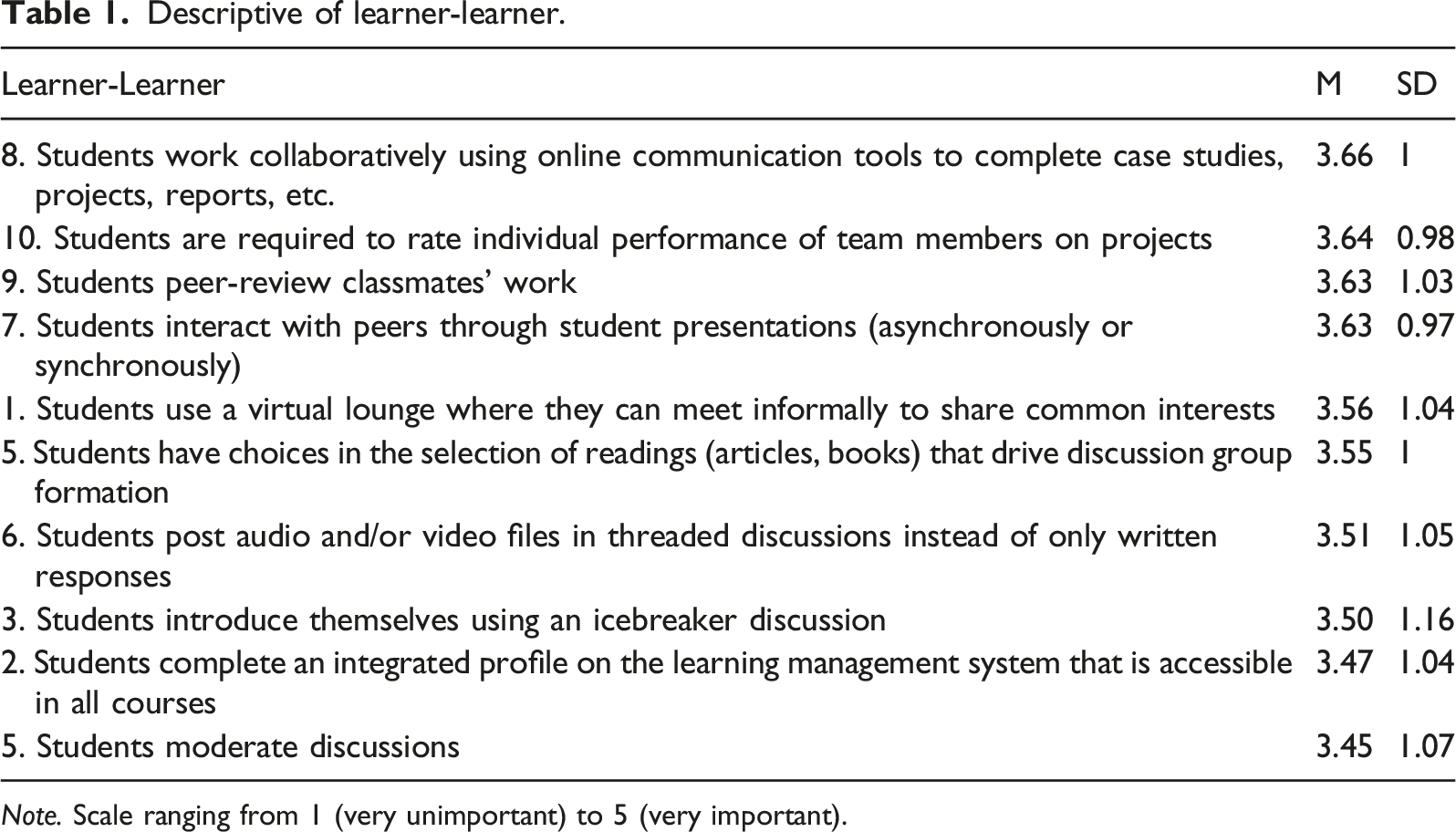
Note. Scale ranging from 1 (very unimportant) to 5 (very important).
Descriptive of learner-instructor.
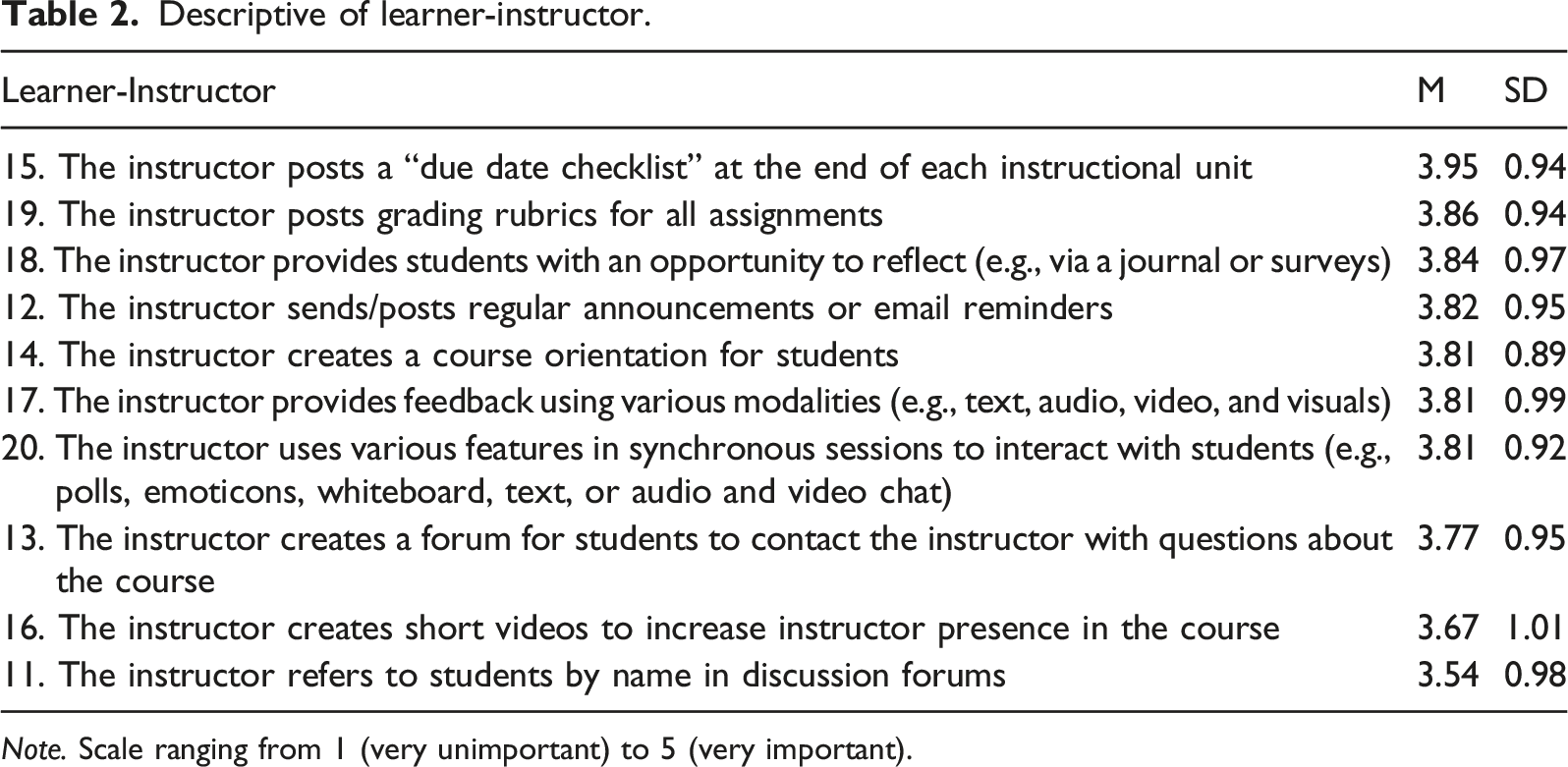
Note. Scale ranging from 1 (very unimportant) to 5 (very important).
Descriptive of learner-content.
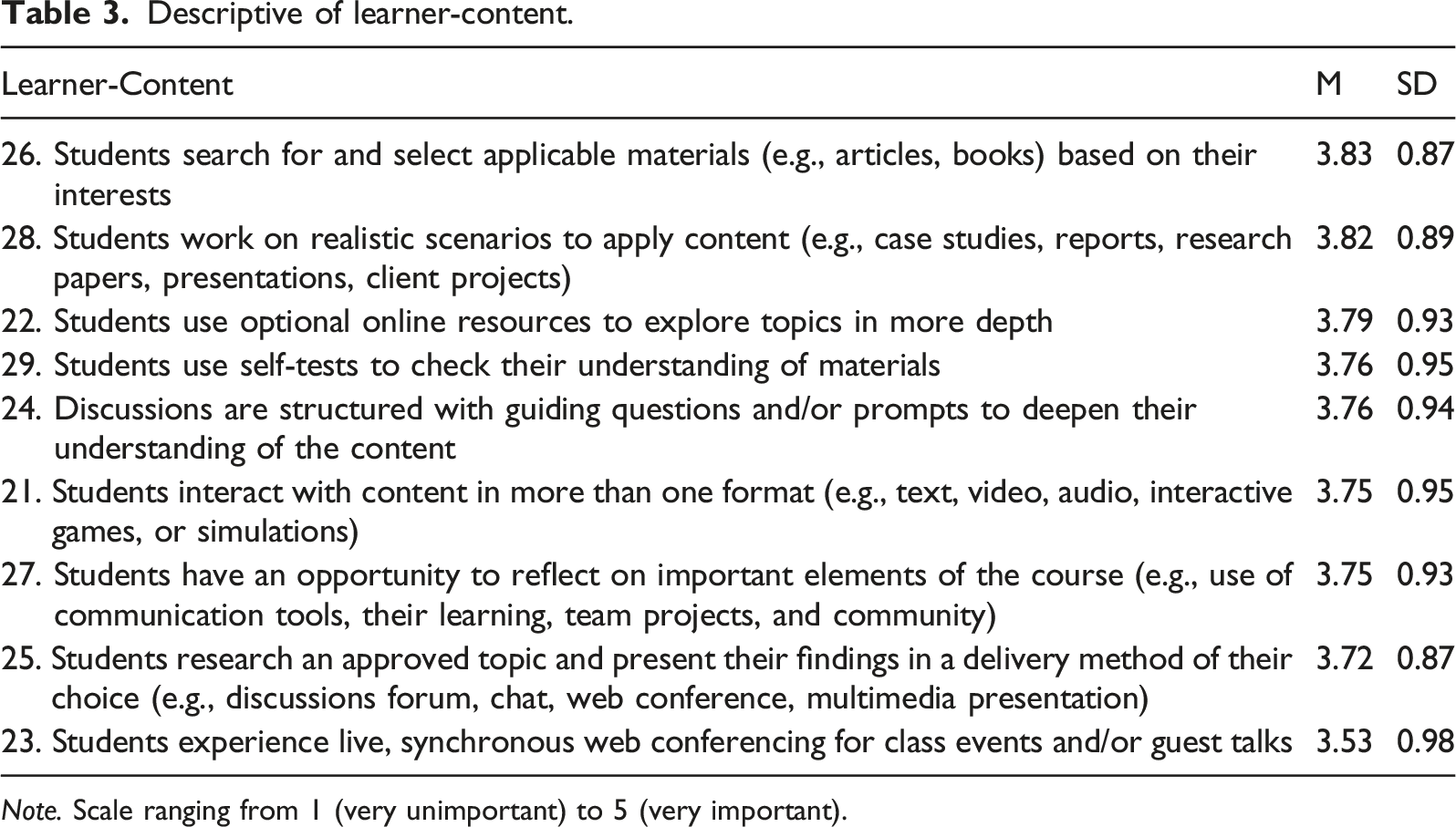
Note. Scale ranging from 1 (very unimportant) to 5 (very important).
Similarly, students believed that initiatives to improve learner-instructor relationships were significant in general. Except for item 11 and item 16, all other items were reported by more than 60% of students as important or very important. Specifically, nearly 70% of students considered item 15 (67.8%) important and very important.
In terms of learner-content interaction, students believed strategies to enhance learner-content were important overall, with nearly 50% of students agreed item 23 (46.2%) important or very important and about 60% of them considered the rest strategies important or very important.
Additionally, a series of one-way ANOVA analyses were conducted to examine the effects of factors such as gender, grade, and preferred online course format on three dependent variables: learner-learner interaction, learner-instructor interaction, and learner-content interaction. Due to the unequal sample sizes across the grade groups (e.g., freshmen: n = 15, sophomores: n = 81, juniors: n = 15), Welch’s ANOVA was employed as it is robust to the assumption of unequal variances and sample sizes. The analyses of variance revealed that the effects of gender and preferred online course format on the three dependent variables were not significant. However, there was a significant difference in learner-learner interaction between the grade groups with a medium effect size (F(2, 108) = 3.605, p = .031, η2 = .063). Post hoc analysis revealed that freshmen (M = 3.03, SD = .88) perceived learner-learner strategies as less important for online courses compared to sophomores (M = 3.67, SD = .90).
Advantages of taking synchronous online lecture-based courses
Summary of codes and themes.
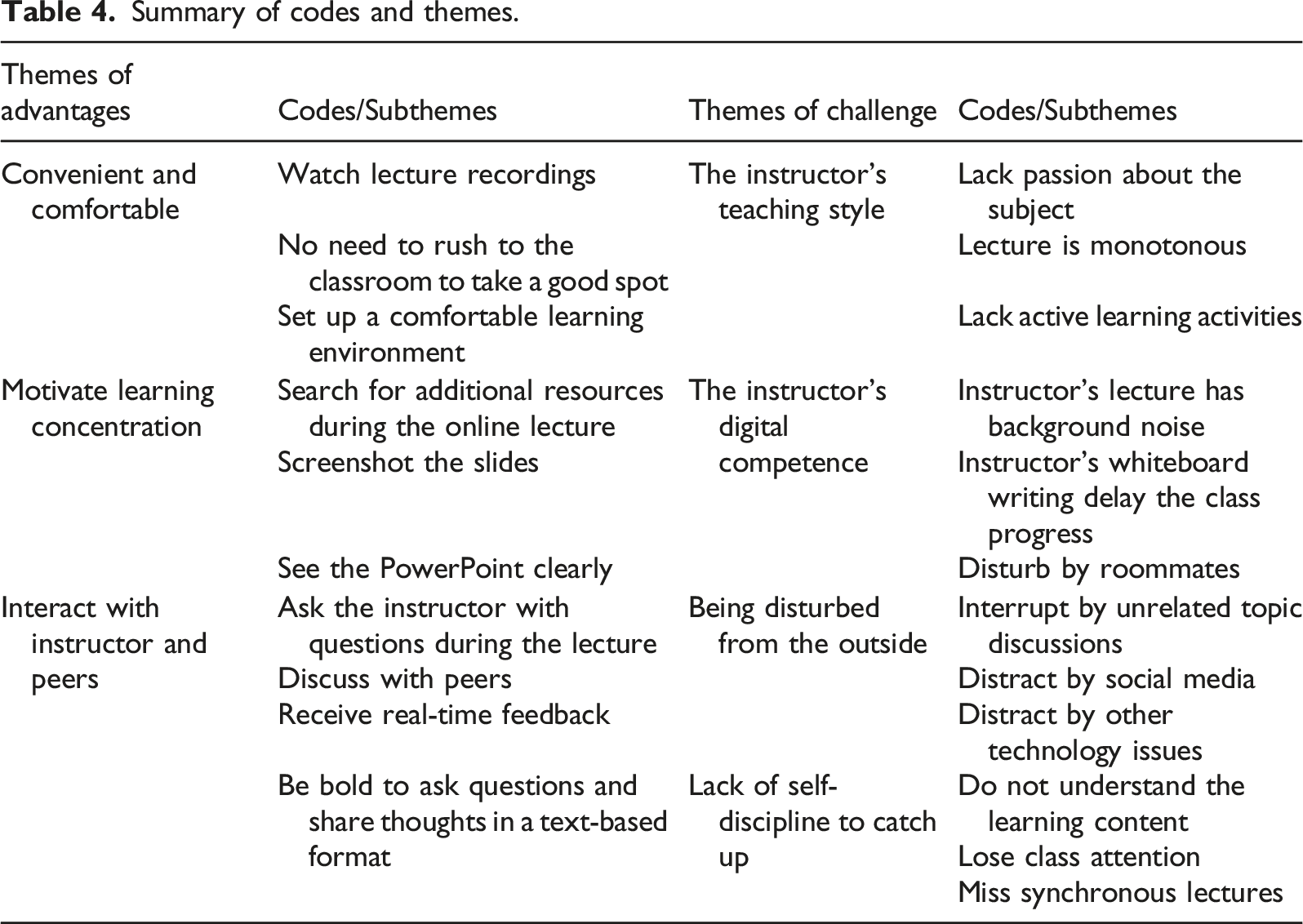
Challenges of taking synchronous online lecture-based courses
When asking “What are challenges of taking synchronous online lecture-based courses?” Three themes were generated: the instructor’s teaching style, the instructor’s digital competence, being disturbed from the outside, and lack of self-discipline to catch up. First of all, students reported that the instructor was “not passionate about the subject” which may reduce their learning motivation. One student noted that “the lecture is boring because the instructor reads the PowerPoint monotonously.” They expected their instructor to “make the class interesting by asking more questions or doing some interactive activities.” Additionally, several students mentioned that the instructor was “sometimes slow on his whiteboard writing”, which may furthermore “delay the class learning progress.” Meanwhile, some noted that there was background noise when the instructor gave the lecture that would influence their concentration on learning. Additionally, students were also distracted by other noise on their end. For example, some students said they were sometimes disturbed by their roommates because “they are playing computer games” or being interrupted by “the noise from the construction outside of my dorm.” Moreover. Some of them said that they were distracted by their online classmates who “do not mute themselves and are talking unrelated topics.” Others reported that they felt tired and may progressively lose concentration once they stared at the screen for a long time, as one said, “I feel mental fatigue after concentrating on learning for a long time, and my eyes are uncomfortable because I watch the screen too long.” Social media is another distraction. Many students expressed that they “could not help checking messages and social platforms during the online lectures”, which may greatly impact their learning motivation and concentration. Some complained about technical issues, such as the “unstable internet speed impacts the real-time interaction with the instructor and classmates.” Lastly, students admitted that they usually lack self-discipline to catch up when taking online courses. One student said, “I feel bored and do not want to take online classes anymore because no one supervises my learning.” Similarly, others mentioned that the “lack of face-to-face communication with the instructor reduces my learning motivation.” Some students additionally highlighted that they sometimes “do not understand the learning content during the lecture,” “lose attention for a while,” or “miss synchronous lectures due to schedule conflict,” then they found it “hard to catch up with the progress” (See Table 4).
Discussions
The survey findings reveal that Chinese STEM students believe all engagement strategies are important for effective online courses. Specifically, for learner-learner interaction, students expect to have more opportunities to interact with their peers online, such as sharing common interests in informal settings, communicating with their classmates during peer presentations, and working in groups to complete case studies, projects, or reports. These findings echo previous conclusions that STEM students prefer active learning (Meader et al., 2019), such as case studies and group works other than only attending teacher-led lectures (Brown et al., 2017; Messineo et al., 2007). Meanwhile, mirrors Chen et al.’s (2018) statements that STEM students prefer peer-mentoring for learning, our study approves that STEM students consider peer evaluation important, and they expect to have activities including reviewing peer’s work and assessing teammates’ performance for collaboration projects. Furthermore, sophomores place greater importance on enhancing learner-learner interaction in online courses compared to freshmen. This discrepancy may be attributed to sophomores having already established connections with their classmates, leading them to seek a stronger sense of classroom belonging. However, further research is necessary to explore this assumption.
For learner-instructor interaction, students anticipate opportunities to communicate with their instructors in online courses. This finding lends support to the conclusions drawn by Chen et al. (2018), which stated that students majoring in STEM fields typically monitor closely news and announcements related to their courses as well as emails sent by their instructors, and these students believe that instructors should communicate with students more frequently by sending emails and making regular announcements. In support of previous statements that timely feedback and interactions with the instructor are important in online learning environments (Trammell & Aldrich, 2016), the findings of our study highlight the significance of offering feedback in a variety of formats (such as text, audio, and video), which has the potential to boost student engagement in online courses. The results of our study also suggest that instructors should incorporate a variety of activities into their lessons, such as polls, whiteboards, text, audio, and video chats. In addition, students believe that a Q&A forum is required so that they can ask questions and interact with their instructors. Moreover, they expect the instructors to support their learning by applying different techniques, such as posting course orientations and providing students with opportunities to reflect on their learning. Mirrors previous statements that students often expect their online instructors to explain concepts and knowledge clearly and to be clear on due dates and grading methods (Chen et al., 2018; Kara & Can, 2019), our study shows that a clear instruction of the course requirement is crucial, and Chinese STEM students agree that the instructors should post grading rubrics as well as due date checklist for all assignments.
In terms of learner-content interaction, Chinese STEM students look forward to having more approaches to learning. For instance, in addition to participating in synchronous live lectures, they expect to learn the course through the additional in-class activities, such as interactive games or simulations. Providing optional online resources for students to develop deep learning would also enhance their course engagement. In addition, students anticipate that their instructors to incorporate activities such as discussion boards, student presentations, and case studies to stimulate their active learning in online environments. These findings support previous conclusions that design elements (e.g., quizzes, projects, discussion boards, case studies, and group projects) are key to developing effective STEM online courses (Chen et al., 2018). Lastly, students also believe it is significant to customize their learning, including self-searching and choosing applicable materials, as well as self-evaluating their own learning progress.
Our findings echo with previous conclusions that it is important to integrate various forms of interaction to engage student in learning (Bernard et al., 2009; Eom et al., 2006; Kuo et al., 2013; Martin & Bolliger, 2018; Wagner, 1994). Specifically, meaningful interaction between students and course materials is essential for fostering active learning and generating interest in the subject matter. Interactions among students play a crucial role in cultivating social presence and building a sense of community. Additionally, student-instructor interaction is significant for providing direction, feedback, and support to learners. These interactions are indispensable in creating a diverse and engaging online learning environment for STEM students. Considering the theoretical implications of Moore’s three types of interactions, effective online learning requires careful consideration of how to integrate these interactions into course design and delivery.
When discussing the advantages and challenges of attending synchronous lecture-based online courses, STEM students believe that this type of courses allows them to easily access learning resources. In fact, this result demonstrates that the characteristic of online learning makes it convenient for students to take classes wherever they are, in keeping with Lin & Gao’s (2020) statement that learners in synchronous online courses typically do so in a friendly atmosphere. They could easily read the slides clearly and then watch the lecture recordings using laptops, PCs, iPads, or even phones. Additionally, the online learning feature allows them to search for additional resources while attending the lectures, so that to facilitate their learning. Moreover, findings note that the synchronous online courses could create an interactive learning environment where students could ask questions to the instructor and discuss with their peers in real-time, indicating that this course format at some level motivates a sense of community and encourage students’ feeling of belonging to a group (Baumeister & Leary, 2017), therefore, enhancing the course engagement. Additionally, because students usually use the text-based format when interacting with their instructors and classmates, this way of communication motivates them to share their thoughts even among those who are reluctant to speak in front of a large group.
However, students may find the teacher-centered synchronous online lectures tedious and uninspiring, particularly when the instructors are unenthusiastic in the course materials. This finding indicates that the traditional live lecture may lead to passive learning (Sandrone et al., 2021) and students may lose learning interests. Students also concern the course progress due to the instructors’ limited digital competence. In addition, they may be distracted by outside noise, including those made by their peers, roommates, or construction, reflecting one common distraction (i.e., noise) for students taking synchronous online courses (Lin & Gao, 2020). Students are also easily interrupted by social media as they intend to check messages or social platforms when attending live lectures. Our study also shows that students sometimes feel tired and may lose concentration if they stare at the screen for a long time, supporting another main challenge when learning synchronous online courses mentioned by previous study (Lin & Gao, 2020). Finally, students may lack self-discipline for online learning and find it challenging to catch up with the course if they do not comprehend the learning content, miss the synchronous sessions, or have no one to supervise their learning.
Overall, our findings reveal that developing an active learning environment is significant for STEM online courses, and there is a need for the instructors to adjust teacher-centered instruction. Specifically, in addition to providing synchronous lecture recordings, the instructors should apply activities such as discussion boards, short quizzes, and case studies in online courses, so that to encourage students’ interactions with the course materials, thus motivating their deep learning. The instructors should also encourage student engagement by providing opportunities for peer learning and mentorship, such as assigning student presentations, group or team projects, and group or group work. In addition, the instructors could provide peer-reviewed or peer-evaluated assignments to promote interaction amongst students. Additionally, these tactics would promote peer monitoring to encourage students’ self-discipline for online learning. The learning environment is essential for online success. Therefore, the instructors should advise students that they must find a quiet place to attend live lectures. Thus, they would not be distracted by noise. Furthermore, it is essential to enhance the relationship between the instructors and students. During synchronous online courses, the instructors should conduct interactive activities such as calling on students to answer questions, reviewing their learning progress, as well as providing clear assignment instructions and rubrics. The instructors should also provide a Q&A session for students to post questions after class. They should additionally respond promptly to students’ concerns and meet with them online (e.g., online office hours). Moreover, when delivering synchronous online courses, the instructor must pay special attention to their own behaviors. For example, they should be excited about the topic and avoid constantly reading the slides. They should meanwhile incorporate activities to encourage active learning, making the online course enjoyable and engaging. Engaging students in learning would also prevent them from checking messages and social platforms. Finally, technology is an important issue that must be resolved. The instructors might consider attending workshops to improve their knowledge and skills of using technological tools. In addition to providing faculty members with training, institutions should enhance their equipment to facilitate online teaching and learning, hence creating better online learning environments.
Conclusions
This study has several limitations. First, the participants were recruited from the College of Engineering at a single Chinese institution. To draw more comprehensive conclusions, it is a need to include students from other STEM fields (e.g., math, biology) and from different countries, as well as recruiting a more diverse range of students with different backgrounds, such as female students and students from various grade levels. Second, students’ prior online learning experience or online learning readiness would shape their judgments of effective online courses (Lin et al., 2022). As a result, future studies should include these factors to investigate their expectations toward effective online courses, such as examining the variations in expectations between those who are prepared for online learning and those who are not. Moreover, this study recruited participants from courses that were applied with teacher-centered instruction. However, students’ evaluations of effective online courses may differ if they have participated in courses that contain active learning activities. As a result, future work should involve students who have taken student-centered online courses to assess their perceptions of this form of online learning. Finally, we acknowledge the limitations of the scope of our current study, particularly in relation to the depth of our descriptive analysis. Follow-up studies will be conducted to explore the correlation between Chinese STEM students’ learning performance and the three types of interactions, delving deeper into whether higher interactions lead to higher scores, and which type of interaction has the most significant impact on these students’ online learning performance.
In sum, this study explores the expectations of effective online courses among Chinese STEM college students taking synchronous lecture-based courses. Results show that these students look for opportunities to interact with their instructors, peers, and learning content. Specifically, instead of taking teacher-led lectures, they expect more active learning activities in online courses, including case studies, discussion boards, team projects, student presentations, and peer-reviewed assignments. In addition, to integrate activities to motivate students’ active learning, the instructors’ passion for the subject and their digital competence are crucial when giving live lectures. STEM students also expect more interactions with their instructors in and out of the online course. Another essential contribution of this study is that it reveals the significance of finding a good environment for attending synchronous online lectures, as well as the importance of motivating students’ self-discipline for online learning. It is expected that this study would enlighten Chinese higher education professionals to seek and apply strategies to engage STEM students, enhance their online learning experiences, and develop an active online learning environment.
Footnotes
Declaration of conflicting interests
The author(s) declared no potential conflicts of interest with respect to the research, authorship, and/or publication of this article.
Funding
The author(s) received no financial support for the research, authorship, and/or publication of this article.
