



Abstract
We present here the development of a low-cost, accurate, and precise fluid dispensing system. It can be used with peristaltic or any other pump to improve the flow characteristics. The dispensing system has a range of 1 to 100 µL with accuracy of ~99.5% and standard deviation at ~150 nL over the entire range. The system developed does not depend on the accuracy or precision of the driving pump; therefore, any positive displacement pump can be used to get similar accuracy and precision, which gives an opportunity to reduce the cost of the system. The dispensing system does not require periodic calibration and can also be miniaturized for microfluidic application. Although primarily designed for aqueous liquid, it can be extended for different nonconductive liquids as well with modifications. The unit is further used for near real-time measurement of lactate from microdialysate. The individual components can easily be made disposable or sterilized for use in biomedical applications.
Introduction
Automated liquid handling is an important part for any life science laboratories. Many aspects of the experiments carried out in these laboratories, such as sample preparation, dilution, 1 transfer, 2 dispense, and wash, require some form of automated liquid handling products and instruments. Some of these liquid handling systems are highly automated3–5 for achieving high efficiency, accuracy, and precision 6 and are required for applications such as the development of new drugs 7 for pharmaceutical companies, analysis of DNA sequences 8 to monitor gene activity, immunoassay, 9 lab-on-chip applications, 10 cell sorting, 11 and others. Accurate and precise liquid dispense is a mission critical for these experiments and is achieved in many different methods. Broadly, they can be classified as contact and noncontact dispensing methods. The contact dispensing method is popular in nano-microliter volume because of its simple and reliable method of touching the wall of the container for dispensing the liquid. However, there is a possibility of contamination of the dispense tip, and thorough washing is required to reduce contamination. The noncontact method eliminates the contamination issue but adds complexity to the process, requiring some techniques to eject the liquid forcefully from the tip to overcome surface tension issues. The most popular techniques are solenoid, 12 piezoelectric, 13 acoustic, 14 and pneumatic systems. While these techniques yield very good accuracy and high precision, they tend to make the system complicated and expensive. We report in this article the development of a low-cost and easy to implement contact dispensing technique that can be used with peristaltic or any form of positive displacement pumps in the 1- to 100-µL range, although higher volume should be possible. Furthermore, the wetted parts can easily be sterilized, making it useful for biomedical applications. As an example, this dispensing system is successfully integrated with an automated microdialysis diagnostic instrument 15 to reduce the dead volume 16 inside the long tubing between the microdialysis probe and the instrument. Continuous monitoring of metabolic biomarkers from the microdialysate sample is successfully demonstrated.
Materials and Methods
Materials
Ismatec Reglo ICC 4-channel peristaltic pump is from Cole Parmer (Vernon Hills, IL). Two other peristaltic pumps are from APT Instruments (SP100VO; Omaha, NE) and Dolomite Microfluidics (part no. 3200243; Charlestown, MA). Reglo pumps have cassettes that can be easily detached to replace the tubings, whereas tubings for other pumps cannot be replaced easily. Pumps are run for 1 h at fixed rpms to stabilize the flow with new tubing. Mass balance (SE2) is from Sartorius (Bohemia, NY). This ultra-micro balance has a resolution of up to 0.0001 mg (or 0.1 nL of water).
For the application of the fluid delivery system, lactate assay in a microdialysis-based system 11 is demonstrated. The details for lactate detection are explained elsewhere.15,17 CMA 12 microdialysis probe (100-kDa cutoff, 4-mm length) is from Harvard Apparatus (Holliston, MA). Ringer’s solution and artificial cerebrospinal fluid (ACSF) are from Harvard Apparatus or formulated in-house using reagent grade chemicals from Sigma (St. Louis, MO) and Fisher Scientific (Hampton, NH). Ringer’s salt solution powder (M525) is from Himedia Laboratories (Kennnett Square, PA).
Design and Fabrication of Low-Cost Current Sensor
The new fluidic dispensing system is based on the triggering by the current measurement unit once a certain volume of fluid is collected. A modular current sensor is designed and fabricated in-house. The circuit diagram and the prototype piece (1 × 1 inch; can be made smaller) are shown in Figure 1 . Two electrodes are connected to the current sensor for continuous current monitoring. A specific volume of fluid is defined by the positioning of the electrodes in various designs of the fluidic containers. The measured current is analyzed and calibrated for a particular fluid. This system will work only for conductive liquid and is well suited for any aqueous solution. As shown in Figure 1 , a trans-impedance amplifier is used to convert the electrode current to voltage, which can be measured by any data acquisition board. Op-amp (OPA380) is used with a feedback resistor (Rf). To reduce the electronic noise, a capacitor is added to create a first-order low-pass filter, which has a 3-db cutoff frequency at about 1/(2*Pi*R1*C1) Hz. For liquid detection, the cutoff frequency is selected around 1 to 10 Hz. A low-pass filter is used for potential input, and it also helps to stabilize the input of the trans-impedance amplifier. A resistor at the output is used for current damping and impedance matching purposes in case of driving a high-capacitor load or the use of the coaxial cable. The unit is tested with de-ionized water (DI) water and other buffers. The voltage registered at the open-circuit condition is ~0.5 V at a setting voltage of 0.5 V, whereas on contact with liquid, the current jumps to 1 to 5 V depending on resistivity of the liquid and inner diameter of the chamber (discussed later). The sudden increase in current (beyond a threshold value) upon contact with liquid is used as a trigger function for subsequent operation and is quite robust and reliable for multiple actuations. The electrode material used is a platinum rod (0.5 mm diameter from Alfa Aeser, Haverhill, MA), which is immune to corrosion. Any salt deposit on the electrode can be easily cleaned by flushing the chamber with DI water at the end of experiment. For the initial system characterization experiments, DI water and Ringer’s solution are used. Flow sensors (LG16-480) are from Sensirion (Westlake Village, CA), and the solenoid valve (P/N 038T2S12-32-4) is from Biochem Fluidics (Boonton, NJ). The multifunction data acquisition board (USB6008) and interface for I 2 C communication (USB8451) are from National Instruments (Austin, TX). The overall system is controlled with LabVIEW running on a Windows-based computer.
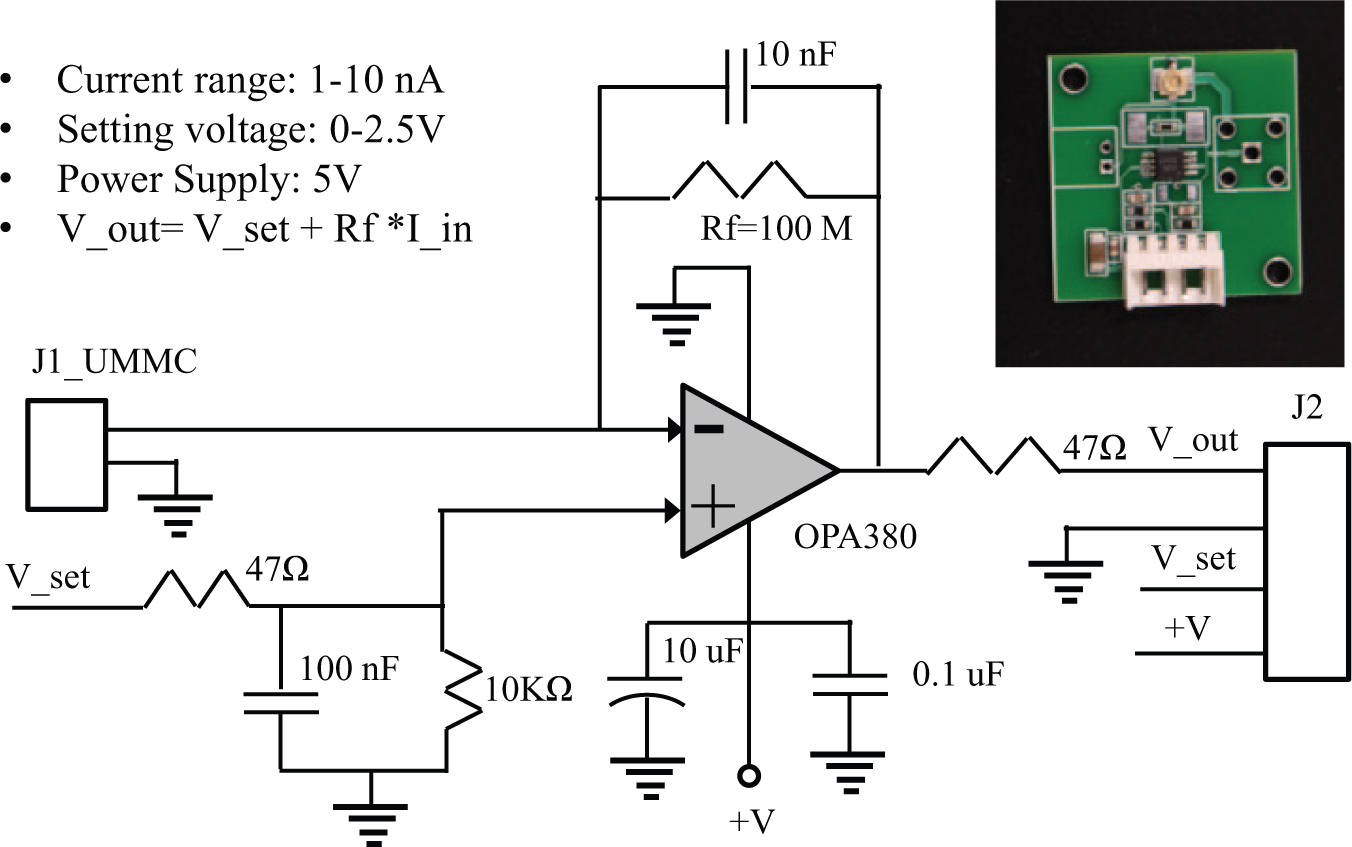
Circuit diagram for a simple current sensor (0- to 10-nA range). Inset shows the sensor board.
Development of the Prototype
A conventional dispense system using a peristaltic pump suffers from the issue of gradual deterioration of tubing elasticity over time. This leads to inaccurate and progressively lower dispense of fluid. Moreover, these tubings also suffer from an initial setting period, whereby the pump needs to be run continuously for first few hours to stabilize flow whenever the old tubing is replaced with a new one. Still, peristaltic pumps are one of the most popular pumps for fluidic dispense application because of several advantages, such as a sterile fluidic path, simple design, and generally robust system. The error in accurate metering of liquid due to tubing can be largely solved by a simple level-sensing method, as illustrated in Figure 2A . The proposed method uses a modular level-sensing unit with a pair of electrodes embedded inside the unit and a pinch valve in front of the unit. In its current form, the reservoir containing the liquid is located at a higher level compared with the level-sensing unit, allowing the liquid flow due to gravity. An alternate method would be to pressurize the reservoir slightly so that a positive flow is obtained. The electrodes within the level-sensing unit have a certain air gap between them and are essentially an open circuit when fluid is not present. There is a pinch valve in front of the level-sensing unit that starts and stops the flow from the reservoir to the level-sensing unit. As the valve opens, the fluid will gradually flow into the intermediate reservoir module containing the electrodes ( Fig. 2B ) until a current spike is detected once the fluid shorts both electrodes. The peristaltic pump at the back prevents the flow out, when the pump is stopped. The precise gap between the electrode and the outlet defines the dispense volume. As the liquid touches both the electrodes, a current in the nA range is registered and it triggers the inlet valve to close. Once the valve is closed, the peristaltic pump pulls the fluid away from the intermediate reservoir and dispenses it to the well or application as desired. The main advantage of this system is that the volume of fluid delivered is not dependent on the tubing of the peristaltic pump or number of turns of the roller (peristaltic pump) required for dispensing the fluid. The peristaltic pump runs for a long enough time, just to ensure all the fluid is carried out from the intermediate reservoir to the intended application.
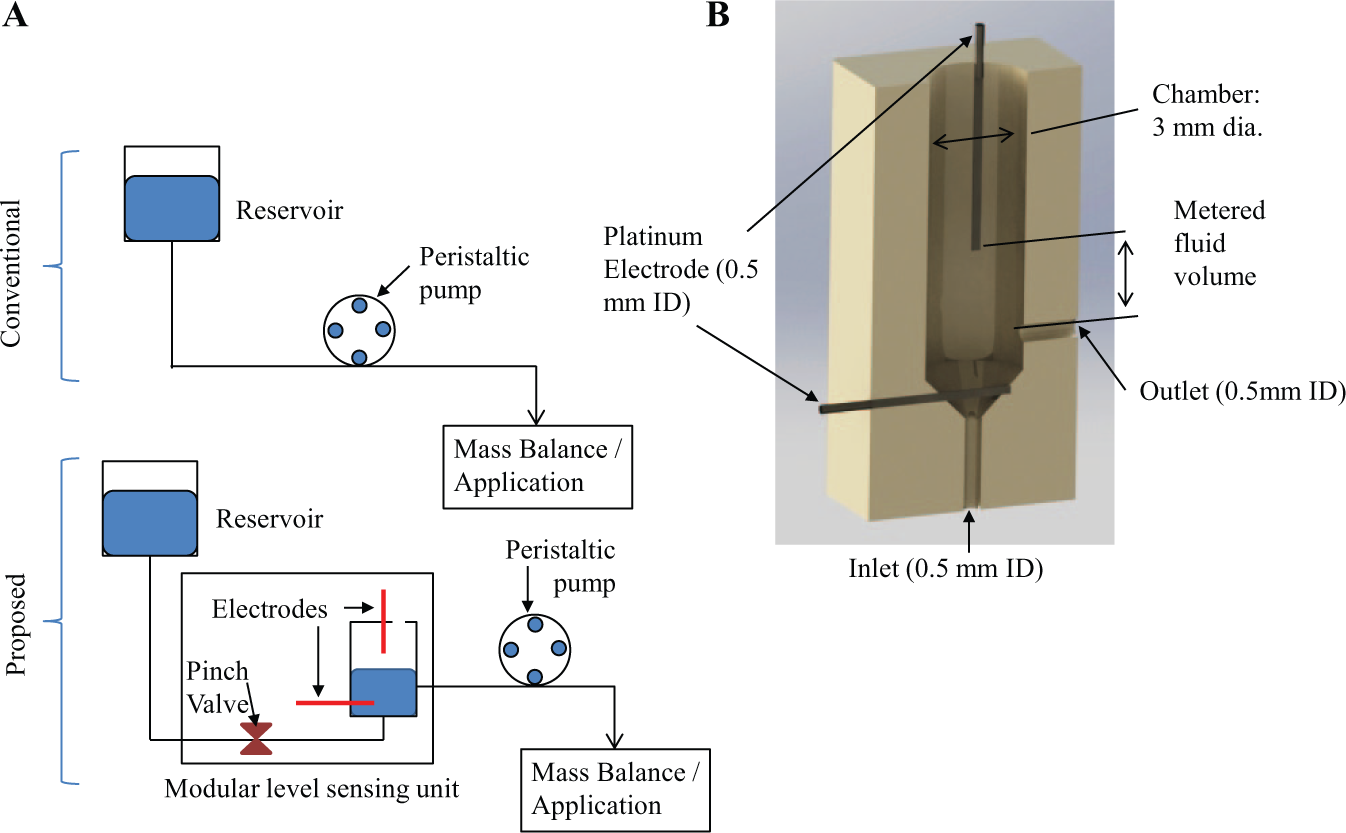
(
Automated Lactate Assay with New Dispensing System
This simple and accurate dispense system is further integrated with the newly developed prototype from SFC Fluidics (Fayetteville, AR) for analysis of metabolic markers from microdialysate. 15 The target is to reduce the overall assay time, as well as reduce the cost and potential for further scaling down the system. Figure 3 shows the integration of the new dispensing system. The details about how the microdialysis-based system works have been reported before. 11 Briefly, as the fluid (Ringer’s solution) is flowed through the microdialysis probe (inserted inside the brain or in vitro application), it collects different metabolic biomarkers (lactate, glucose, glutamate, pyruvate, and others) from the surrounding medium/environment by a process of diffusion through the porous membrane. These biomarkers can be detected using simple enzymatic reactions. Here we have tested the system (introduction of level sensors before the peristaltic pump) only with lactate for proof of concept. Two different reagents (substrate and enzyme) are mixed with the microdialysate to produce a color, the intensity of which is correlated with concentration. The reagent mixing and optical detection (absorption) are carried out in a 384-well plate. The continuous monitoring of lactate level is performed with the change of lactate concentration in the external reservoir.
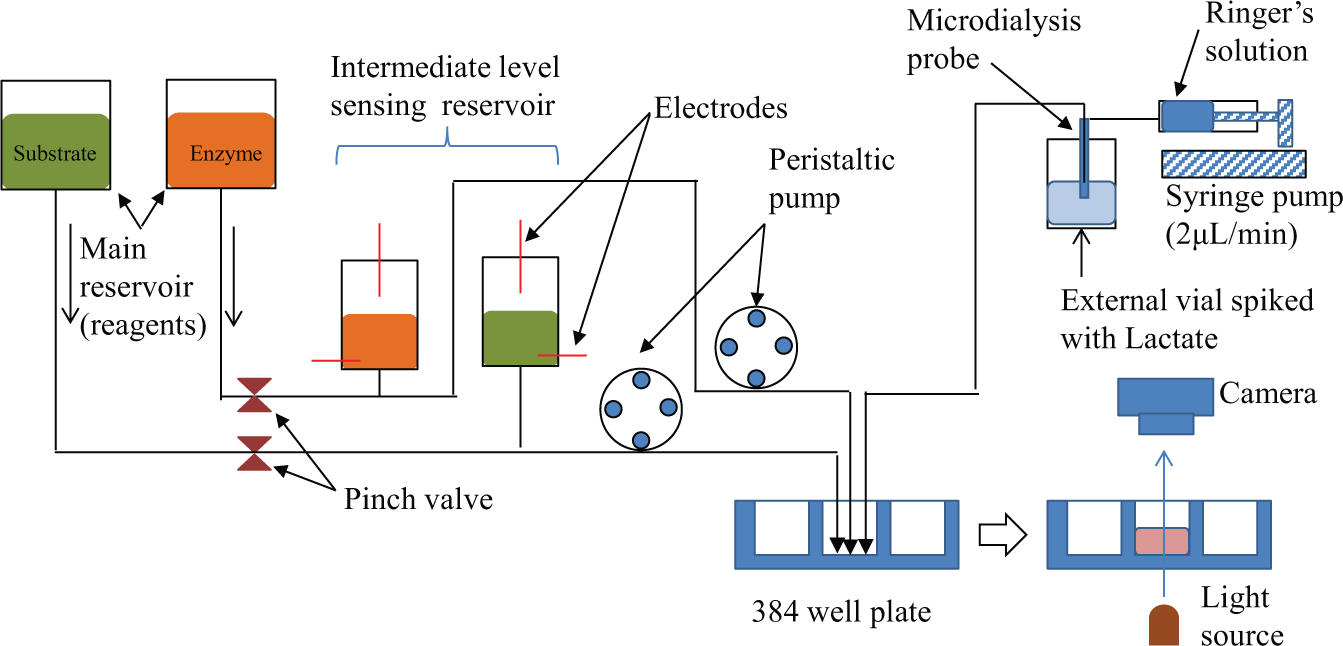
Schematic of experiment for detection of lactate from microdialysate using metered dispensing of reagents.
Results and Discussion
Performance of the Dispensing System
The fluid dispensing system shown in Figure 2B has been tested extensively for accuracy and reliability. By adjusting the depth of the top electrode, the volume to be delivered can be finely tuned. For a specific volume setting, collected liquid is dispensed to the mass balance continuously at a specified time interval. Figure 4A shows one typical experimental data collected with a LabVIEW program. Multiple dispenses are shown as steps in the mass balance readings, and each dispense could be easily calculated. The current sensor worked each time, as shown in sudden rise of current from baseline (corresponds to 0.5 V) when the fluid touches the upper electrode. Figure 4A (inset) shows one such dispense. The initial current measured across the electrodes is below 1 V, and it jumps to 4 V as soon as the liquid reaches the upper electrode. A signal is sent immediately to stop the flow by closing the inlet valve. The solution is pulled out of the collection chamber later and delivered to the mass balance. The accuracy of this dispense is solely dependent on the position of the electrode and is intrinsic to the system that does not change over time (hence highly accurate). The precision, however, will be dependent on the inlet flow rate and how fast the valve is closed upon triggering.
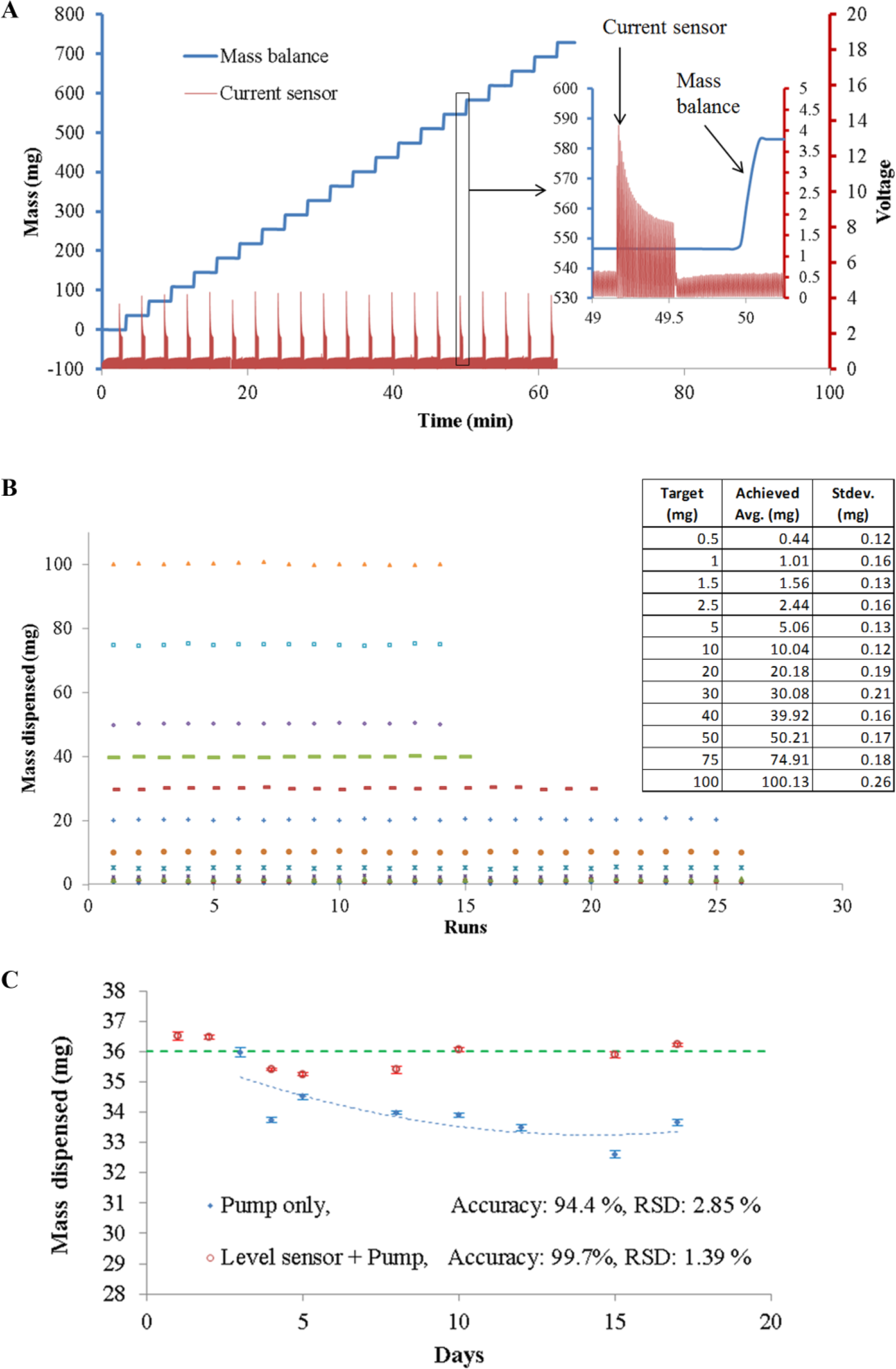
(
The valve used for this application is a pinch valve, which stops the flow by applying force (by a plunger) on elastomeric tubing such that the flow path is completely closed. Assuming the plunger pinches off roughly 1 mm (tubing ID 0.25 mm), a volume of ~50 nL will be displaced, and it can flow in either direction (toward the main reservoir or toward the level-sensing module) and adds to the variability of the system. The LabVIEW program is run at 10 Hz, and with an inlet flow of ~20 µL/min, the precision of this dispensing system is estimated to be ~100 nL (0.1 mg).
This system was originally designed to work with only one volume, and this is usually the case for any dedicated system. However, a z-axis adjustment mechanism for the upper electrode can be added to increase the flexibility of setting different volumes (at increased cost and complexity). A dispense module with such an adjustable electrode design is assembled to assess the performance of the dispensing system at different volumes. Figure 4B shows the dispense of volumes varying from 0.5 to 100 µL of fluid (DI water) with very high precision and accuracy. As can be seen from the inset data, the standard deviation remained almost the same (~150 nL) for the entire range of fluid dispense. This high precision is mainly due to the fact that the only source of variability is in the valve, and it remains constant for any volume of fluid.
To check the day-to-day variations of the system, the dispensing module is further tested (36 mg targeted mass dispensed 20 times each day, chosen arbitrarily) for multiple days and compared with the peristaltic pump–only case ( Fig. 2A comparison). Both the units are run on alternate days for a total of 17 days. Figure 4C shows the result. The level sensor unit showed high accuracy (99.7%, average 35.9 mg against a target of 36 mg), precision (standard deviation: intraday, 0.15 mg; interday, 0.5 mg), and stability, whereas the pump alone showed an accuracy of 94.4% (standard deviation: intraday, 0.19 mg; interday, 0.97 mg) with gradually reducing dispensed volume. The gradual reduction in dispensed volume of fluid from the pump-only case is a known problem of deterioration of tubing elasticity with time, which can only be solved by replacement of tubing. However, with the new dispensing module designs, the dispensing performance does not rely on the pump, thus solving this problem.
Cost Reduction with a New System
In theory, since the new dispensing system does not rely on the pump, it could be possible to use any pump to achieve similar performance, thus lowering the cost. The new system is evaluated with different commercially available pumps. Three different pumps are chosen based on their cost, accuracy, and size. Figure 5A shows an Ismatec Reglo multichannel pump, an APT peristaltic pump, and a dolomite peristaltic pump. While the Ismatec pump is the most expensive and accurate, its size and price make it difficult to adapt in a small and portable system. APT and Dolomite pumps can still be used in miniaturized system with low cost and size, but the accuracy and precision vary widely and are not suitable for microfluidic application. However, with our level sensor system, variability of all the pumps is reduced drastically. Figure 5B shows the standard deviation of the dispensed volume of 36.5 mg with and without the level sensor (all pumps). All the pumps showed variability of less than 0.5 mg with the integrated level sensor module. Reglo pumps showed an impressive 0.11 mg in terms of variability, while dolomite and APT pump variability also reduced by ~5×. In fact, both these inexpensive pumps are on par with the expensive Reglo pump, when used with the level sensor module. The variation in flow should not get affected by the pump used. However, in this case, it seemed to get affected mainly due to the fact that for both dolomite and APT pumps, the inner diameter for the tubing (0.8 mm ID for APT and 1.5 mm for dolomite pump) is significantly higher than that of the Reglo pump (0.25 mm ID). Higher inner diameter of tubing caused the fluid to break up in small droplets toward the end of the fluid plug, and these droplets often stuck to the inner wall and did not get transferred to the mass balance. This phenomenon contributes additional variation on top of the level-sensing variation.
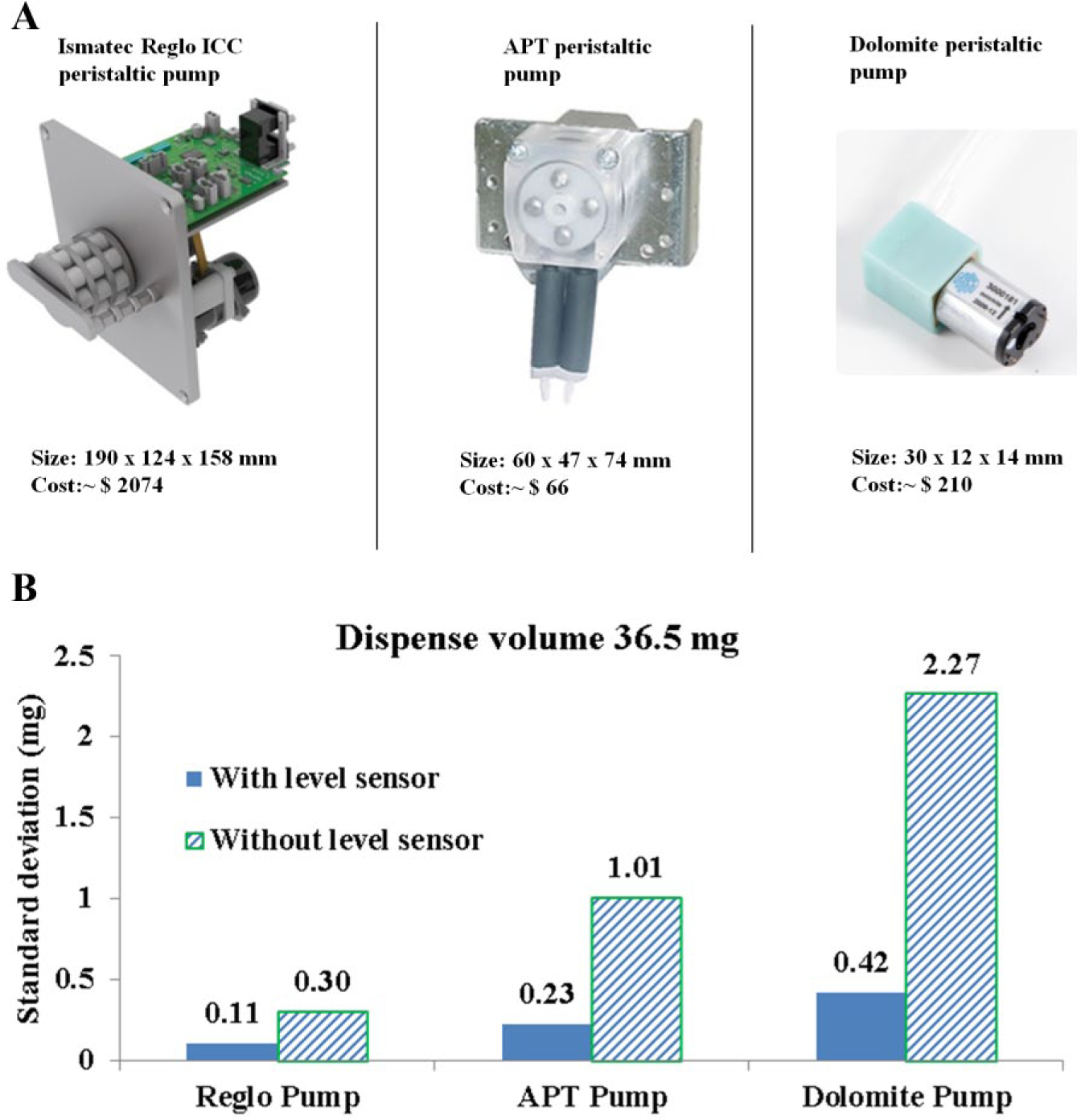
(
The total cost of fabrication and assembly of such a module will be around $110 with off-the-shelf components. The solenoid valve is the most expensive part (~$60), followed by a control board (~$20), reservoir (~$10), platinum wire ($8), and miscellaneous items such as wiring and harnesses (~$10). A high-volume manufacturing can reduce the cost of the integrated module quite a bit, although we have not done any formal estimation yet. Combined with a low-cost pump, a single unit can be ~$150 (again with off-the-shelf components) and can easily compare with performance characteristics of more sophisticated systems (syringe pump, ~$1000; automatic pipetting modules, ~$4000; and even Reglo 4-channel peristaltic pump, ~$2000). The above system can also offer substantial space savings with proper integration of subcomponents.
Directionless Dispensing System
The internal diameter of the intermediate vertically oriented reservoir tested is 2.2 mm ( Fig. 2B ), which leads to ~3.8 mg/mm of the height of the hollow cylinder. As the fluid fills up the chamber, the meniscus on top of the fluid undergoes a different curvature depending on the flow rate and surface tension of the liquid. The variability in this curvature causes error in the actual volume of the fluid inside the chamber. A convex curvature will trigger the valve to close earlier than fluid with a concave curvature. This error is larger when the internal diameter is larger. Any trapped bubble in the fluidic line usually breaks up in the large internal diameter chamber, making it a more stable measurement system. So choice of this diameter is a balance between stable operation and low variation.
However, if the issues of bubbles are taken care of before the fluid is flowed in this system (such as degassed solution), further reduction of internal diameter is possible. Figure 6A shows the setup at a 0.75-mm internal diameter. At this small cross section, the level sensor is independent of orientation and can be kept any direction, making it suitable for many microfluidic applications. Figure 6B shows the different volume of fluid sampled and dispensed over multiple runs with this directionless design. The metered volume is solely dependent on the length of the channel ( Fig. 6A ). Different dispensing volumes could be obtained by varying the channel length. As expected, with less effect from the meniscus by reducing the diameter of the chamber, the standard deviation could be further improved.
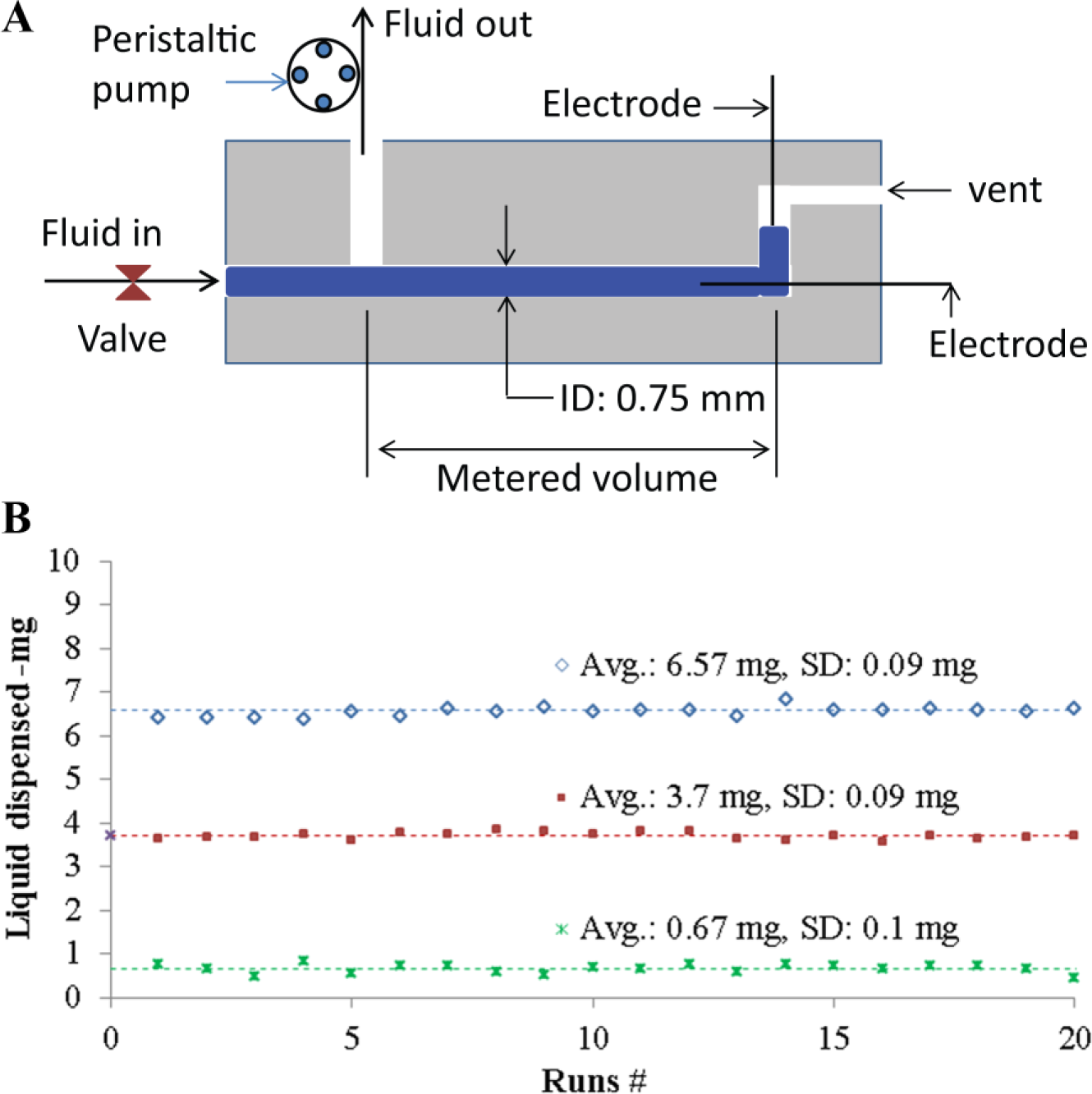
(
Continuous Lactate Measurement with the New System
To demonstrate the real application of this new dispensing system, it has been used to replace the pump-alone dispensing currently used with SFC Fluidics’ developed prototype for analysis of metabolic markers from microdialysate. 15 The main purpose is to reduce the cost of components, increase the long-term dispensing reliability, and reduce the overall size of the prototype with the new dispensing mechanism. The experimental setup is shown in Figure 3 . For this in vitro application, a 100-kDa microdialysis probe is dipped in an external vial, containing Ringer’s solution with a known concentration of lactate and other contaminants (ascorbate, glucose, glutamate, pyruvate, urea, etc.). The dialysate is sampled continuously and measured once the level sensor is triggered. All the reagents are delivered with the new dispensing system. Lactate is spiked in the external vial after the second test. The time course of measured lactate is shown in Figure 7 . Initially, the concentration of lactate is zero (for obtaining a baseline signal), and later it is increased to 0.5 mmol/L. As seen from the plot, the concentration stabilizes after a concentration increase with an overshoot. This overshoot might be from the microdialysis probe itself before achieving a balanced condition on the probe. The collection efficiency of the microdialysis probe is ~20% at 2 µL/min, which is the reason for the low concentration of lactate detected.
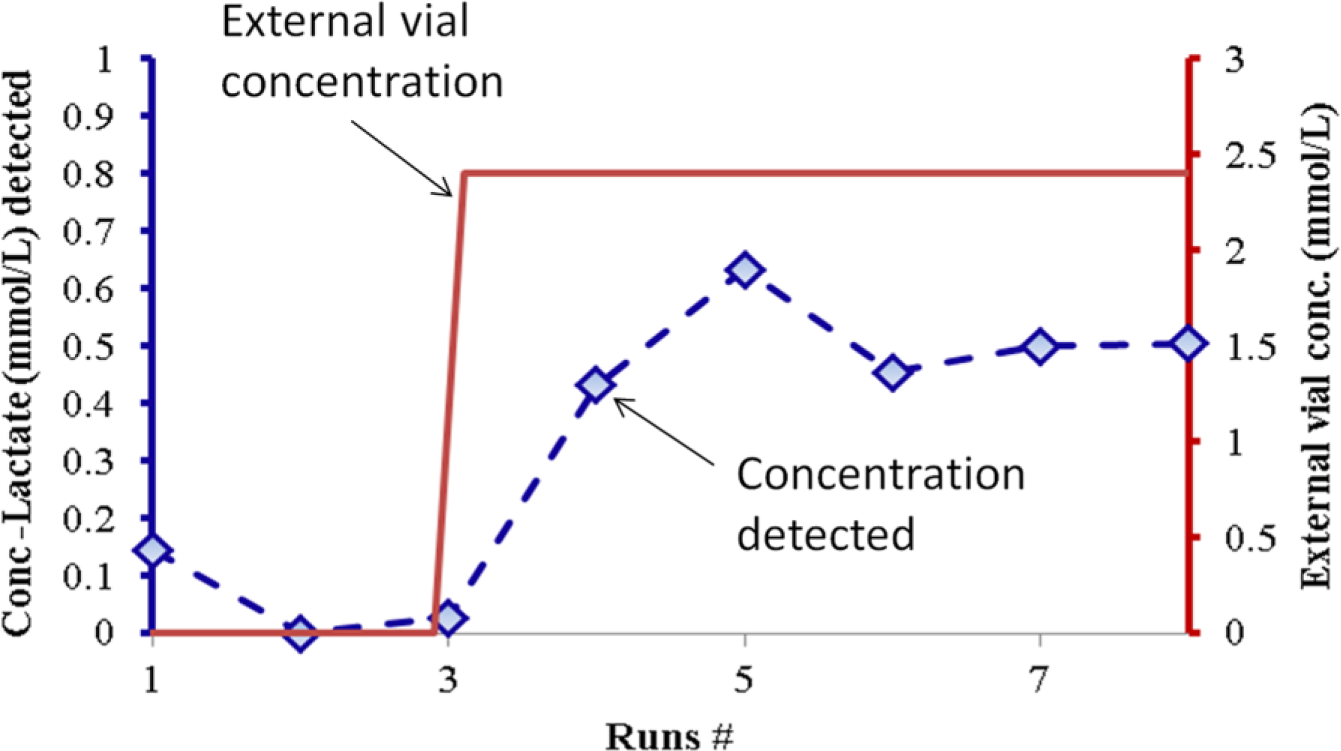
Detection of lactate with a microdialysis probe due to step change of concentration in the external vial.
Commercially available contact dispensing technique offers a variety of accessories and sophisticated control both on the pump side as well as on the delivery end (sensors on the tip for feedback control on its motion and contact with walls or bottom of wells) to get a high level of accuracy and precision, and consequently, it drives up the overall cost of the system and complicates the integration. Our system is mainly developed to provide a cost-effective solution that will provide similar performance compared with the expensive systems. This system can also be used as a temporary holding reservoir for continuous inline systems, where upstream and downstream flow rates and processing speeds are dissimilar. For the actual application of lactate detection from microdialysis, the inlet flow from the microdialysis probe is only at 1 to 2 µL/min, whereas the downstream analysis requires anywhere from 5 to 20 µL (volume of sample required for analysis differs for different metabolites, as well as sensitivity of detection). The intermediate reservoir is used as a holding chamber until the sample volume collected is enough for downstream application. This unit can also be used to transfer a discrete volume of fluid (plug), which can reduce the issue of dead volume in the inline measurement system. Another advantage of the system is the simplicity of the detection method (two-electrode system) and little to no requirement of calibration over long-term operation. Gradual failure of the peristaltic pump over time and subsequent calibration were a major problem we faced in our metabolite detection, reducing the confidence in the detection limit of the continuous inline system. We could solve that problem using this intermediate level-sensing module. The calibration issues with syringe pumps are less, but they suffer from contamination issues. Our intermediate reservoir can be easily replaced to reduce the contamination issue, and since the reservoir is made of molded plastic, the cost of replacement will be minimal. The system is also quite resilient to the air bubbles issue commonly faced in a fluid delivery system. As the fluid travels from a small cross-section tubing to a much higher cross-section reservoir, any air bubbles in the line lose contact with the surface and float to the top and eventually collapse, thereby reducing the presence of bubbles in the final dispense of liquid. All the above features are unique to this kind of level-sensing dispense method.
In conclusion, we have reported development of a simple dispensing system that can be used for accurate sampling of fluid at a range of 0.5 to 100 mg with a variation of ~0.15 mg across the whole range. This system, when used before a peristaltic pump, can eliminate the issue of lowering dispense volume over time due to the loss of elasticity of tubing. There is no need for periodic calibration when used with these pumps. Similarly, different configuration of system can be used to reduce dependency on gravity-driven flow. A directionless design with a smaller chamber size could further bring down the variations of dispensing volume. Although this system is primarily designed for aqueous conductive liquid, it can be extended to nonconductive liquid also with substantial design modification. A conductive diaphragm placed in between nonconductive liquid and an upper electrode can expand due to change in volume and trigger the connection. Overall, all these modifications can be done easily and in a very inexpensive way, thereby reducing involvement of costly pumps and tubing problems and achieving similar or even better accuracy and precision. These components can be easily sterilized or replaced (can be molded) to avoid any contamination issues. This system is further validated by using it in our microdialysis analyzer for in vitro detection of lactate from microdialysate.
Footnotes
Declaration of Conflicting Interests
The authors declared no potential conflicts of interest with respect to the research, authorship, and/or publication of this article.
Funding
The authors disclosed receipt of the following financial support for the research, authorship, and/or publication of this article: Research reported in this publication is supported by the National Institute of Neurological Disorders and Stroke (NINDS) of the National Institutes of Health under award number R44NS076167. The content is solely the responsibility of the authors and does not necessarily represent the official views of the National Institutes of Health.