




Abstract
Study Design
Observational Cohort study.
Objectives
We aim to document the abandon and irregular compliance rate towards brace treatment during the COVID-19 pandemic and its impact on AIS progression.
Methods
We reviewed a database of AIS patients recruited between March and September 2020. We included AIS patients under brace treatment according to SRS criteria. The patients were divided in 2 cohorts: those with self-reported Good-Compliance (GC) to treatment and those who had a Bad-Compliance (BC). Data analysis included biometric and radiographic data at first visit and last follow-up and percentage of progression. Unpaired student-t tests and Chi2 were used for comparison.
Results
152 patients met inclusion criteria. 89 patients (age:12.1y.o.±1.4) reported good adherence to treatment, while 63 patients (age:12.7y.o.±1.8) were not compliant. Within the BC group, 18 patients reported irregular brace wear, while 45 had completely abandoned treatment (abandon rate of 29%). The GC cohort started treatment with a mean main thoracic (MT) curve of 26° and finished with 27°. The mean difference between measurements was +.65°±7.5; mean progression rate was -
Conclusion
The abandon rate of brace treatment in AIS significantly increased during the first wave of COVID-19 pandemic. Patients who voluntarily discontinued treatment had significant increases in curve progression and surgical indication rates.
Level of evidence
III
Introduction
On December 2019, the first case of Coronavirus disease 2019 (COVID-19) was reported in Wuhan, China. On March 2020, the World Health Organization (WHO) characterized the COVID-19, caused by the novel severe acute respiratory syndrome coronavirus2 (SARS-CoV-2) as a pandemic. 1 SARS-CoV-2 can be transmitted between humans via airborne droplets and aerosols. 2 Due to its high transmissibility, individual confinement was introduced as the first population measure in most countries. Forced isolation from peers due to social distancing, shelter at home laws, school and university closures and loss of routine and social connection have been described as the most prolonged global crisis since World War II 3 and has had and special impact in children and adolescents.
In our daily clinical work, we have empirically noticed that during the first COVID-19 wave impacting the Québec province (Canada), an increased number of patients had decided by themselves to stop brace treatment during the isolation period. Average abandon rate of brace treatment for Adolescent Idiopathic Scoliosis (AIS) has been reported to be around 18%4-6 and, as it is widely known, there is a significant positive association between hours of brace wear and rate of success in the treatment of AIS.7-9
We hypothesized that the COVID-19 pandemic associated to loss of routine, social distancing, teleworking and school closures has impacted negatively on patient adherence to brace treatment in AIS. The aim of this study is to evaluate the abandon rate of brace treatment for AIS during the first COVID-19 wave and to assess its impact on scoliosis curve progression.
Material and Methods
With the approval of our Institutional Review Board, an observational study on a prospectively collected database was conducted including all AIS patients treated with brace in our department, that consulted through teleworking or in a face-to-face visit between March and September 2020 (first COVID-19 wave). Inclusion criteria were patients with AIS under brace treatment according to SRS criteria: 10 patients skeletally immature (Risser 0-2) with primary curve angles between 25°-40°, and, if female, either premenarchal or less than 1-year postmenarchal. For those patients recruited in each cohort with Cobb angle measurements between 20° and 25°, a significant progression (>5°) has been notice within a 6-month period.
Demographic data included age, gender, Risser stage and type of brace. All patients were required to have complete radiographic measurement at the first visit and at last follow-up. Spinal morphology analysis was done using a low-dose or micro-dose digital radiography system (EOSTM, EOS imaging, Paris, France). Cobb angles at first visit and last follow-up and percentage of progression were analyzed. The progression percentage was calculated using the equation proposed by Cheung et al:
11
% Correction =
The patients were divided in 2 cohorts: those with a self-reported good adherence to treatment (good compliance cohort, GC) and those who reported a bad compliance (BC). Within the BC group, a sub analysis was carried out between those who presented an irregular adherence and those patients who have completely and voluntarily abandoned treatment during follow-up. Compliance to treatment was established via interviews at each clinical examination. Responses of patients were ratified by their parents.
Statistical analysis was performed using the SPSS version 26 (IBM Corp, 2012), enabling to compute mean, standard deviation, paired and unpaired Student-t tests and Chi2 test with a statistical significance established at p < .05.
Results
Demographic Data, Good & Bad Compliance.
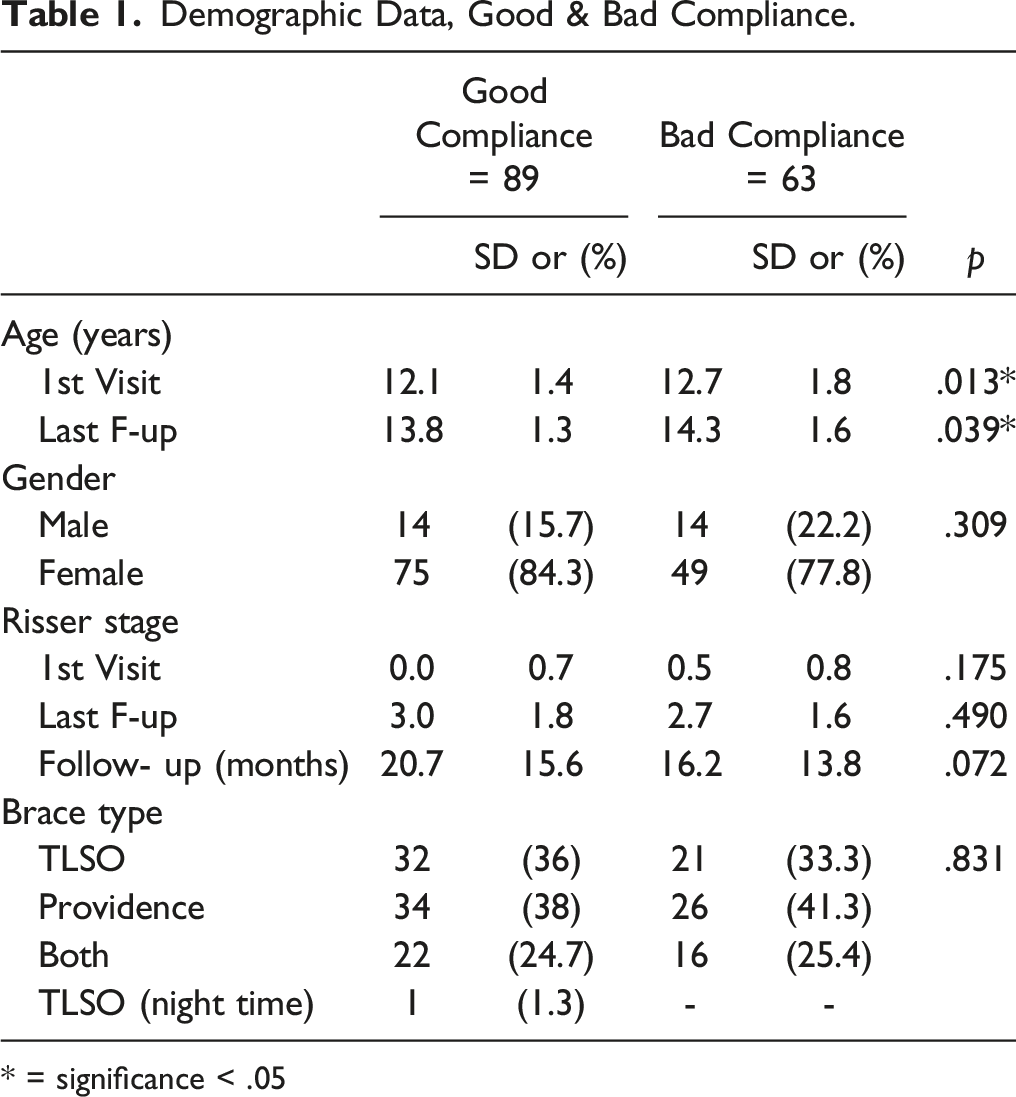
* = significance < .05
Demographic Data, Irregular Users and Abandon Group.
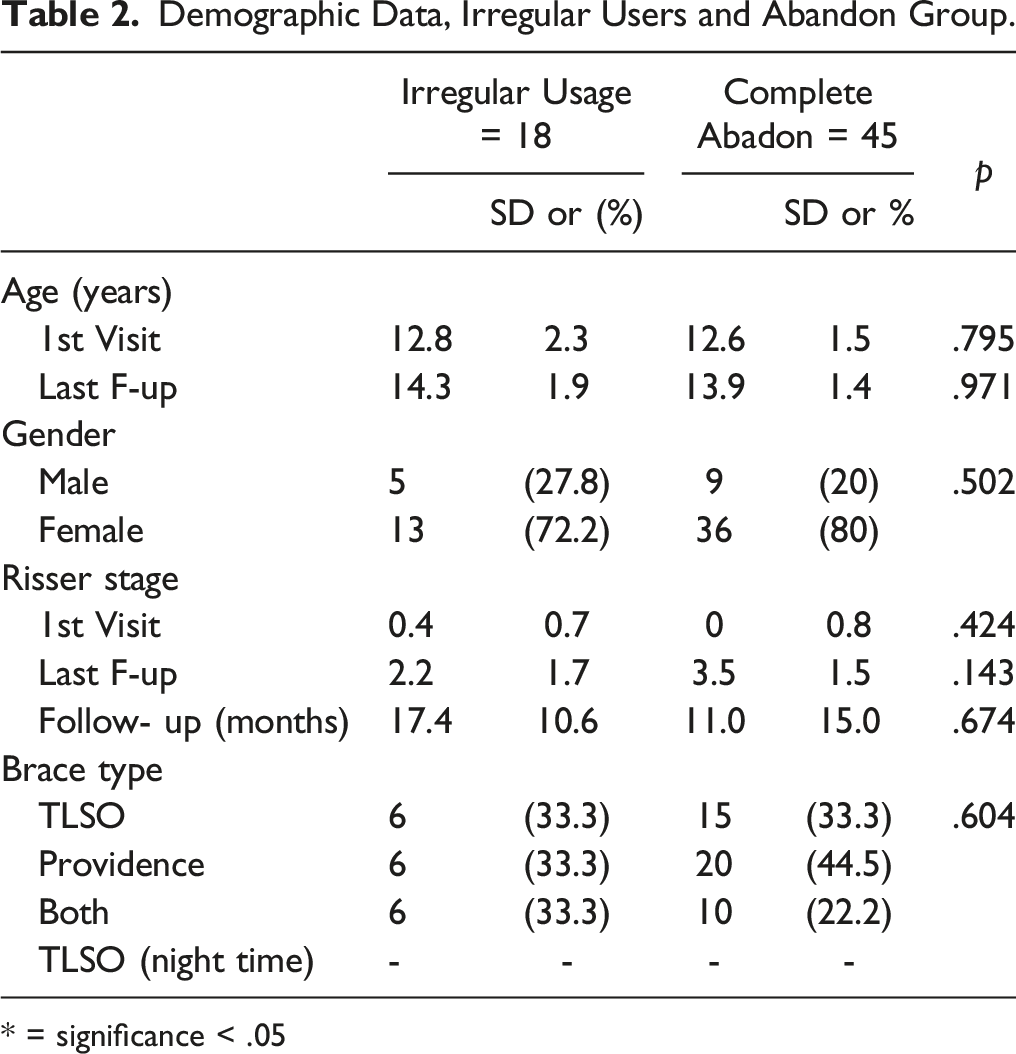
* = significance < .05
Good compliance to treatment was present in 58.5% of our study cohort. The abandon rate during the first wave of COVID-19 was calculated as 29.6% (45 of 152 patients), and 11.8% where classified as irregular users during this time period.
Radiographic Deformity Measurements, Good & Bad Compliance.
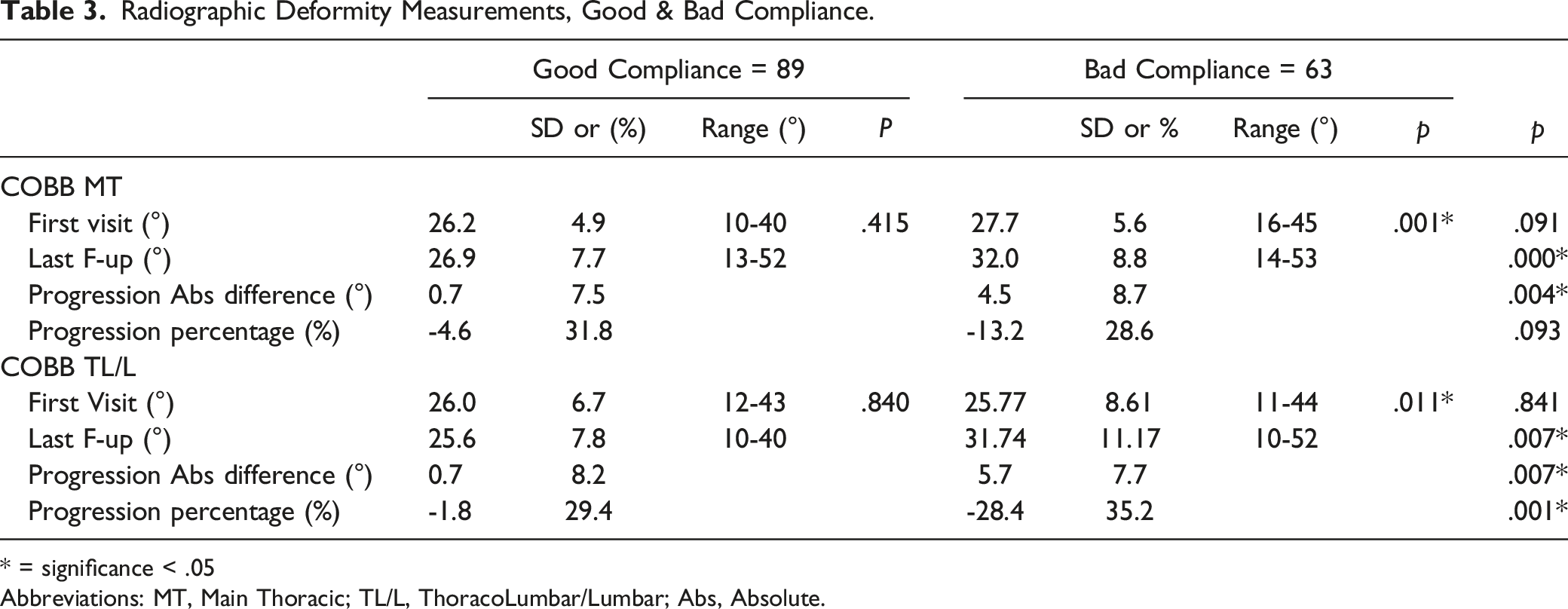
* = significance < .05
Abbreviations: MT, Main Thoracic; TL/L, ThoracoLumbar/Lumbar; Abs, Absolute.
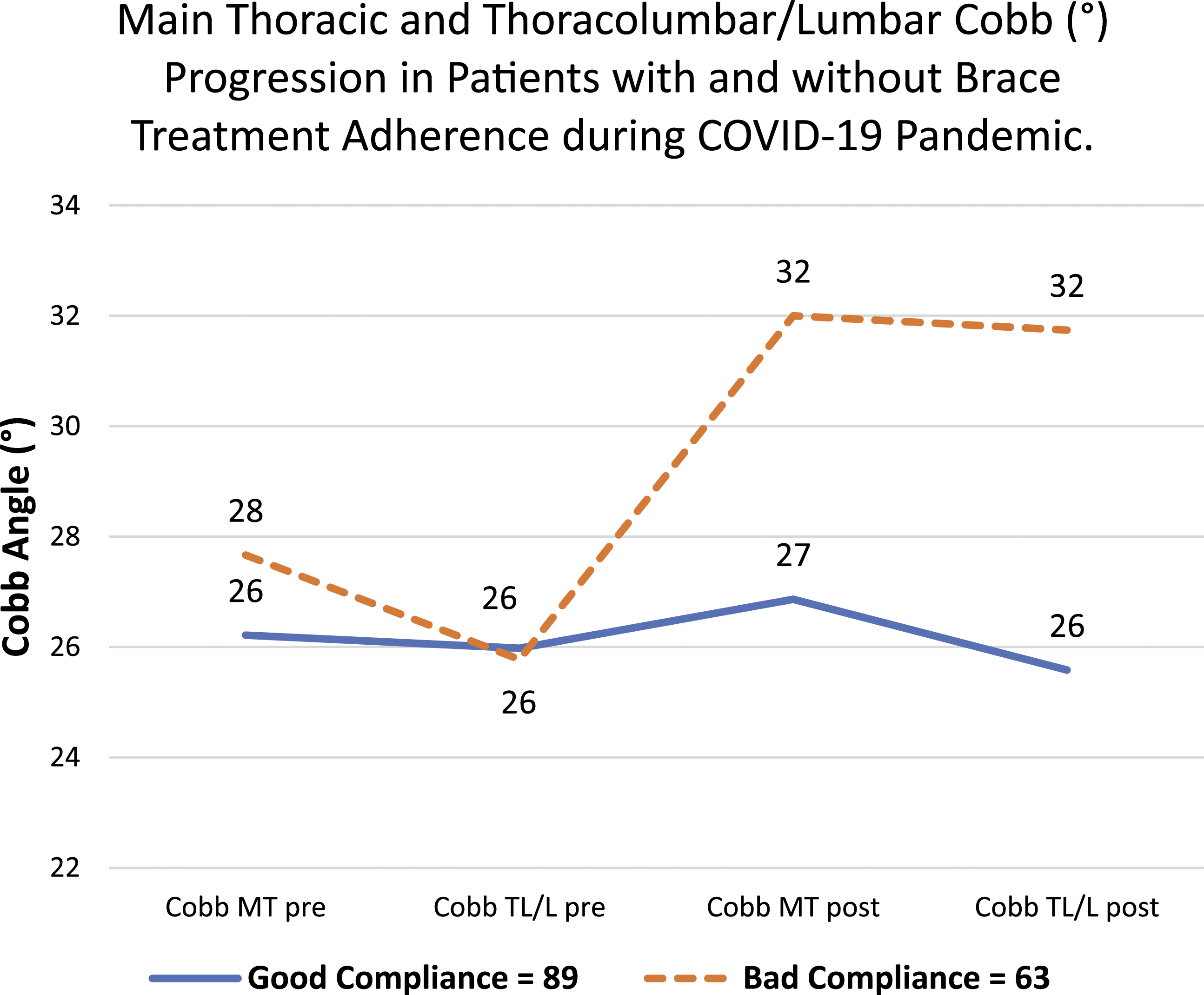
Graphic representation of MT and TL/L curve progression in patients with Adolescent Idiopathic Scoliosis that had a good adherence to brace treatment during the first wave of COVID-19 pandemic and those who with bad compliance.
Radiographic Deformity Measurements, Irregular Users and Abandon Group.
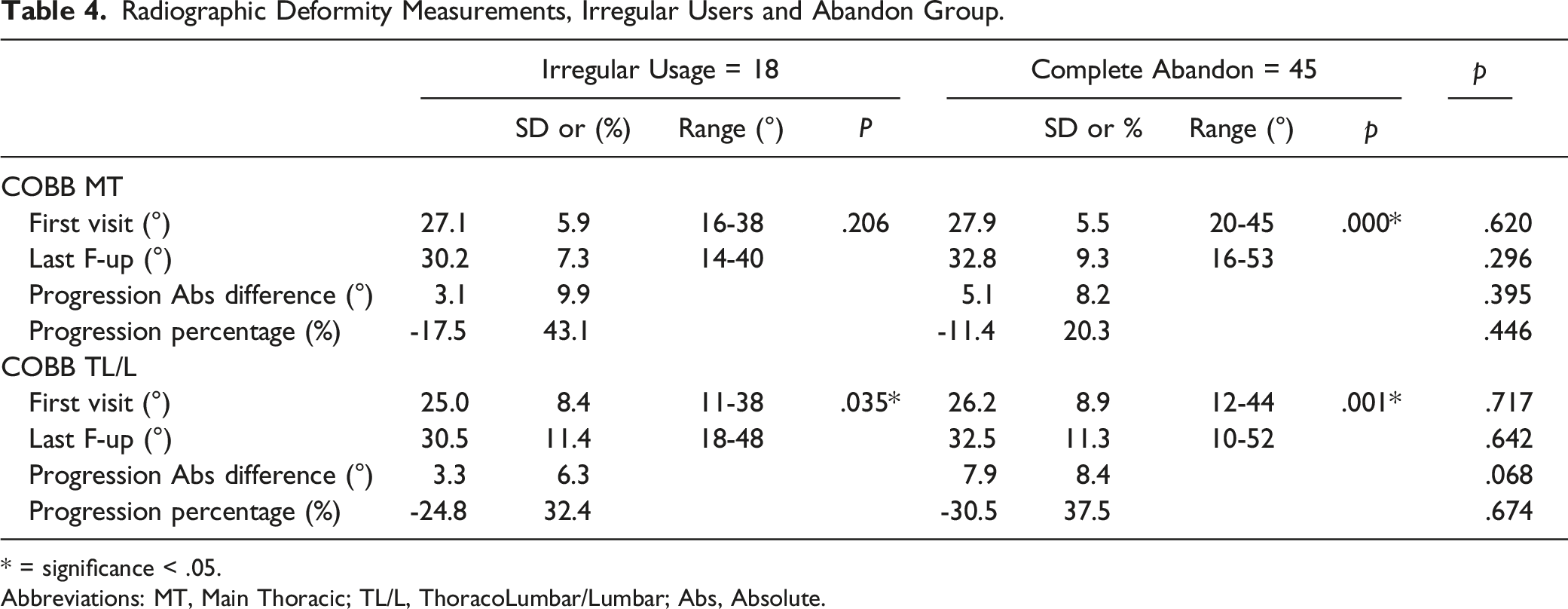
* = significance < .05.
Abbreviations: MT, Main Thoracic; TL/L, ThoracoLumbar/Lumbar; Abs, Absolute.
Six (6) patients from the BC cohort (9.5%) were offered for surgery because of curve progression beyond 50°, while no patient adherent to brace treatment exceeded that number. Five (5) of the 6 operated patients corresponded to the abandon group and 1 to the cohort with irregular adherence.
Discussion
COVID19 pandemic has changed our lives dramatically. This unprecedented in size and duration and still ongoing global biothreat has created a worldwide social, economic and health crisis impacting on the normal life of everyone, especially adolescents. 12 We report that during the first COVID-19 wave, the bad compliance rate to brace treatment in subjects with AIS was 41.4% and the abandon rate significantly increased (29,6%) compared to previously reported rates in the literature, 18%.4-6 Even more, in our center, we previously reported an irregular compliance rate (<10h/day of brace wear) of 31%, and an abandon rate of 4.1%; 5 of 120 patients recruited for a prospectively randomized trial for brace treatment abandoned the treatment and the protocol. 13 We consider that this low abandon rate was due to the fact that these patients were included in a serious protocol of follow-up appointments and patients and families were more contained and adhered more strictly to the treatment. Nevertheless, it is clear that the present results show an inversion of previous data with a complete abandon rate near to 30% and patients reporting irregular adherence to brace treatment in 11.8%.
Compliance with brace treatment is clue for its success, as well as the number of daily hours of wear. Katz et al 9 concluded in 2010 that the total number of hours of brace wear correlated directly with the lack of curve progression. They reported that curves did not progress in 82% of patients who wore the brace more than 12 hours a day, compared with only 31% of those who wore the brace fewer than 7 hours per day (P = .0005). Similarly, in a multicenter prospectively randomized trial, Weinstein et al 8 stated that success rate of brace treatment in patients that wore the brace for an average of at least 12.9 hours per day was 90% to 93%, whereas those who wore the brace from 0 to 6 hours a day had a treatment success rate of 41%, similar to that in the observation group (48%). As it was expected, our results concord with this fact, as patients with irregular adherence and those who voluntarily stopped brace wear during the first COVID-19 wave, had a significant progression of their curve’s measurements, to the point that 9.5% (6/63) of them were offered surgery due to curve progression exceeding 50°.
Longitudinal studies are needed to uncover the intrinsic factors contributing to adolescents abandoning prescribed treatment for scoliosis during the pandemic. After excluding usual reasons for bad compliance to AIS brace treatment, such as the inability to attend for treatment, the unavailability of services to provide the brace, patients and family’s particular illness, etc., we came around the following theories. First of all, the adolescence period is a challenging time, the body undergoes many pubertal changes and adolescents are subjected to many developmental tasks and increasing demands for autonomy. COVID-19 pandemic has imposed itself as another situation to adapt to, and if we add the adaptation to brace wear, we put adolescent patients against the rope when trying to find psychological adaptive resources to cope with all those changes, constraints and stresses. In addition, during confinement the opportunities for ‘’recharging batteries’’ and “refueling” are limited (e.g. sports, friends, outings, hobbies, etc.) due to lockdown and isolation. It has been reported that during COVID-19 pandemic, children and adolescent exposed to chronic stress conditions, such as forced isolation from peers due to social distancing and shelter at home laws, worries about the health and financial status of their relatives, school and university closures and loss of routine and social connection appear susceptible to developing mental health symptoms, anxiety and depression due to ongoing stressors, and may be, leading to bad decision making in this context. 14 Regarding this, 85.8% of adolescent asked in a survey after lockdown affirmed having a general feeling of tiredness and lacked motivation (P = .023); 15 and lack of motivation has been shown in a Chinese study to have a negative correlation in health-related behaviors, including prevention of COVID-19 infection, following a healthy diet and appropriate exercise; 16 as an extension, we could include adherence to brace treatment. So, the adolescent patient immersed in a COVID-19 pandemic world, who begins or continues with brace treatment for scoliosis is already at the end of his/her resources to cope with all that stress and is in a vulnerable situation. Uncontrollable stressful events, such as the COVID-19 pandemic, are known to illicit feelings of anxiety, depression and hopelessness.17,18 In addition, the efforts needed to wear the brace everyday may seem futile in a pandemic world where everybody is fighting for their life. In an effort to alleviate themselves from those uncomfortable feelings, teenagers can oppose and refuse brace treatment or quite simply "not wear it", to limit the general experience of helplessness and regain some perceived control over their experience.
At the systemic level, adolescents find less support from peers and friends due to less contact during isolation and self-distancing. 19 Social support from peers and family is a known protective factor from stressful events and promotes better adaptation. 20 During the pandemic, parents were more occupied (teleworking, worries, etc.) and therefore may be less available to help their teenagers to adapt. More precisely, parents may have a difficult time to impose limits and frameworks related to brace wear, in order to limit negative interactions during confinement or because they may have perceived the adolescent is already in a stressful and vulnerable state.
We strongly suspect that the lockdown during the first wave of the COVID-19 pandemic would be the source of distress that caused patients to be unmotivated to wear their brace. Patients did not have the same cues, due to virtual schools or home office implementation, and less support from peers, friends and more occupied parents seems to have accentuated that lack of motivation. All of these, added to the lack of face-to-face medical control appointments and teleworking, lack of social benchmarks, schedules and frameworks (school, activities, sports, assignments, etc.) may provide an excellent recipe for brace treatment failure and abandon, because adolescents need clear framework and relevant boundaries.
To sum up, we report an increased rate of bad compliance to brace treatment in AIS patients, including patients with irregular adherence and, more important, patients who have completely abandon brace wear during the 1st wave of COVID-19 that presented a significant progression in scoliosis curves and surgical indication rates. No single specific reason that could explain our results has been documented. On the contrary, we consider them as particular outcomes from multiple factors impacting all together on adolescents’ lives and their families. We are not aware of any other study that has noted this event, and given the probability of future COVID‐19 waves and potentially future pandemics, it is critical for policy makers to ensure that clear guidelines, effective communication channels and proactive protocols are prepared now to help alleviate the consequences of the pandemic crisis, so as to prevent these kinds of events to happen again.
Conclusion
The abandon rate of brace treatment in AIS significantly increased during the first wave of COVID-19 pandemic. Patients who voluntarily discontinued treatment had significantly increased curve progression and surgical indication rates.
Footnotes
Author Contributions
Author SP has received royalties from EOS imaging, he is Co-founder of the company Spinologics Inc., he received consultancy fees from K2M, Medtronic and DePuy Synthes Spine, he received grants from DePuy Synthes Spine, Canadian Institutes of Health Research, Pediatric Orthopaedic Society of North America, Scoliosis Research Society, Medtronic, EOS imaging, Canadian Foundation for Innovation, Setting Scoliosis Straight Foundation, Natural Sciences and Engineering Council of Canada, Fonds de recherche Québec - Santé, grants and Orthopaedic Research and Education Foundation, he received fellowship support from DePuy Synthes and Medtronic, he is the holder of the Academic Chair in Pediatric Spinal Deformities of CHU Ste-Justine, he is member of speaker bureau of Orthopaediatrics. Author JMMT is Co-founder of the company Spinologics Inc. Author HL has received a grant from Canadian Institutes of Health Research and is Co-founder of the company Spinologics Inc.
Declaration of Conflicting Interests
The author(s) declared no potential conflicts of interest with respect to the research, authorship, and/or publication of this article.
Funding
The author(s) disclosed receipt of the following financial support for the research, authorship, and/or publication of this article: This work was supported by the Bourse en Jumelage de fonds du CHU Sainte-Justine.
