




Abstract
Prolonged sitting time has been reported among university workers which can have adverse health effects. The aim of this study was to examine the sitting time, physical activity, and psychological well-being reported by older university office workers. An online self-reported survey was distributed to all office workers 55 years and older at one university in Australia. Sixty-six office workers were recruited. They reported an average sitting time of 7.5 hours per day on weekdays. In all, 72.7% of the sample reported both moderate and high physical activity levels. A high percentage of the office workers reported depression (25.8%) and anxiety (12.1%). Lower education levels were significantly related to higher perceived stress and more depressive symptomatology (p = .03 and .02, respectively). Significant associations were found between stress, depression, and anxiety (p < .001) among this group of workers.
Office workers represent a population experiencing a high number of sitting hours at work and low-level physical activity (PA; Evans et al., 2012). Working Australians (age = 40.5 ± 10.6 years) from government workplaces reported an average sitting time of 9.4 hours per day on weekdays, with longer sitting time reported by professionals and administrative workers compared with technical and blue-collar workers (Miller & Brown, 2004). For example, a recent study by Cooper and Barton (2016) revealed that almost half of their surveyed adult university employees reported insufficient PA based on the recommended activity guidelines. Physical inactivity is a modifiable risk factor for a range of chronic diseases and conditions diseases, including cardiovascular disease and obesity, and prolonged sitting is an independent risk factor for low back pain, neck pain, and premature mortality (Larouere, Urda, & Lynn, 2016; Matthews et al., 2012).
Physical inactivity can influence the psychological well-being of office workers. For most office workers, long working hours and job strain are likely to be contributors to physical inactivity and high levels of stress, depression, and anxiety (Gong et al., 2014). PA has been suggested as an effective means to improve health, stress tolerance, pain management, depression, and anxiety levels in office workers (Sjögren, 2006). In addition, physical inactivity and prolonged sitting time lead to adverse outcomes in office workers such as musculoskeletal disorders (Daneshmandi, Choobineh, Ghaem, & Karimi, 2017), obesity (Choi et al., 2010), and diabetes (Wilmot et al., 2012). One study found that environmental strategies (e.g., sit-stand workstations) might be an effective strategy to reduce sitting time and improve health outcomes of middle-aged office workers (Tobin, Leavy, & Jancey, 2016). To reduce office workers’ sitting time, Lang, McNeil, Tremblay, and Saunders (2015) conducted a randomized trial to determine the effectiveness of promoting “stand more and sit less” at the beginning, middle, and end of 1-hour oral presentation sessions. Study results suggested that encouraging audience members to stand more and sit less can effectively decrease their sedentary behavior. Evans et al. (2012) also indicated that the installation of health-promoting software on office workers’ computers could also serve as an active reminder to take a break and go for a quick walk to reduce their sedentary behavior. Other potential practical ways of substituting sitting with nonsedentary tasks have been suggested, including policies targeting reduction of sedentary time, standing meetings, and counseling or education to reduce sedentary behavior (Manini et al., 2015; Murtagh et al., 2017).
Prolonged sitting time, physical inactivity, and psychological well-being issues in the workplace are of concern to management (Puig-Ribera et al., 2015). Occupational health nurses play a vital role in improving workplace health and safety through education, by investigating problems which impact on health and safety in the workplace, as well as providing advice on work health issues (Rogers & Ostendorf, 2001). With an aging population, one in four people is older than 55 years in Australia, and over the next decade, this will increase to approximately one in three (Australian Human Rights Commission, 2014). As our demographic continues to shift, this gives rise to an aging workforce. To date, no study has specifically investigated PA and psychological well-being in older office workers. It is helpful for occupational health nurses to understand the level of engagement in PA and state of psychological well-being among the older office workers to deliver optimal health care in an aging workplace. The purpose of this study was to explore PA participation and levels of stress, depression, anxiety, and pain among older office workers (≥55 years of age). Specifically, associations between PA, demographic characteristics, and levels of stress, depression, anxiety, and pain were examined.
Method
Ethical approval for this study was gained from the University Human Research Ethics Committee (GU-HREC Approval Number 2016/448). The study was an online survey of office workers (administrative and academic staff) aged 55 years and older, working at one university in South East Queensland, Australia. Potential participants were recruited using posters, personalized invitation cards, and an email request from the University Deputy Vice Chancellor (Administration) informing office workers of current research projects they may be interested in joining.
Data Collection
Data collection took place from July 1, 2016, to August 30, 2016. The project survey included participants’ demographic characteristics (i.e., age, gender, education level, employment status, and marital status), a self-reported PA evaluation, and an assessment of stress, depression, anxiety, and pain.
The International Physical Activity Questionnaire Short Form (IPAQ-SF; Craig et al., 2003) was used to assess participants’ PA which included a categorical and a continuous IPAQ-SF score. The continuous IPAQ-SF score is expressed as the metabolic equivalent task (MET-minutes per week) of energy expenditure. The categorical score classified participants into three intensity PA levels (i.e., low, moderate, and high). Participants’ sitting time (hours per day) was also recorded on the IPAQ-SF. Reliability for the IPAQ-SF was previously tested among older adults, indicating intraclass correlation coefficients of .80 (Tran, Lee, Au, Nguyen, & Hoang, 2013).
The 10-item Perceived Stress Scale (PSS-10; Cohen, Kamarck, & Mermelstein, 1983) was used to assess stress symptoms. A score of 13 or less is considered to reflect low stress, with moderate stress scores ranging from 14 to 26, and high perceived stress scores ranging from 27 to 40. PSS-10 has established reliability and validity for people aged 17 to 60 years (Cronbach’s α = .89; Roberti, 2006).
The 10-item version of the Center for Epidemiological Studies Depression Scale (CES-D10; Radloff, 1977) was used to assess depressive symptoms. The CES-D10 investigates the frequency of participants’ feelings or behaviors during the last 7 days. A score of 10 or greater is considered indicative of depression. Higher scores also indicate the presence of more depressive symptomatology. The CES-D 10 items have been found to have high internal consistency in older adults (α = .92; Irwin, Artin, & Oxman, 1999).
The Geriatric Anxiety Inventory (GAI; Pachana et al., 2007) was used to assess anxiety symptoms. The scale consists of 20 items whereby participants are asked to choose whether they agree or disagree based on their feelings over the past 7 days. Pachana et al. (2007) reported that the GAI demonstrated high reliability and validity among older people aged from 60 to 90 years (Cronbach’s α = .91), and in a clinical sample with a mean age of 78.8 years (Cronbach’s α = .93). A person with a score of nine or greater is considered anxious, with higher scores indicating greater anxiety.
Pain was assessed using the Visual Analogue Scale (VAS; Crichton, 2001), a 100-mm horizontal line with a score range from zero to 10, with a higher score indicating increased feelings of pain. Participants were asked to mark their current pain level on the 100-mm horizontal line. The VAS, when previously used in older adults (average age = 58.5 years), demonstrated high reliability and concurrent validity (r > .8, p < .01; Phan et al., 2012). Prior to this question, participants were asked to choose the body areas where they experience pain during the last 7 days. They were encouraged to write down any additional areas in which they experienced pain that were not included in the prepared questionnaire.
Data Analysis
Analyses were conducted using the Statistical Package for Social Science (SPSS) version 23.0. Descriptive statistics were calculated using frequencies (i.e., percentages) for categorical variables and mean and standard deviations for continuous variables. Bivariate analyses (i.e., one-way ANOVA, chi-square, and Pearson’s correlations) were computed to determine the associations between PA, demographic characteristics, and levels of stress, depression, anxiety, and pain.
Results
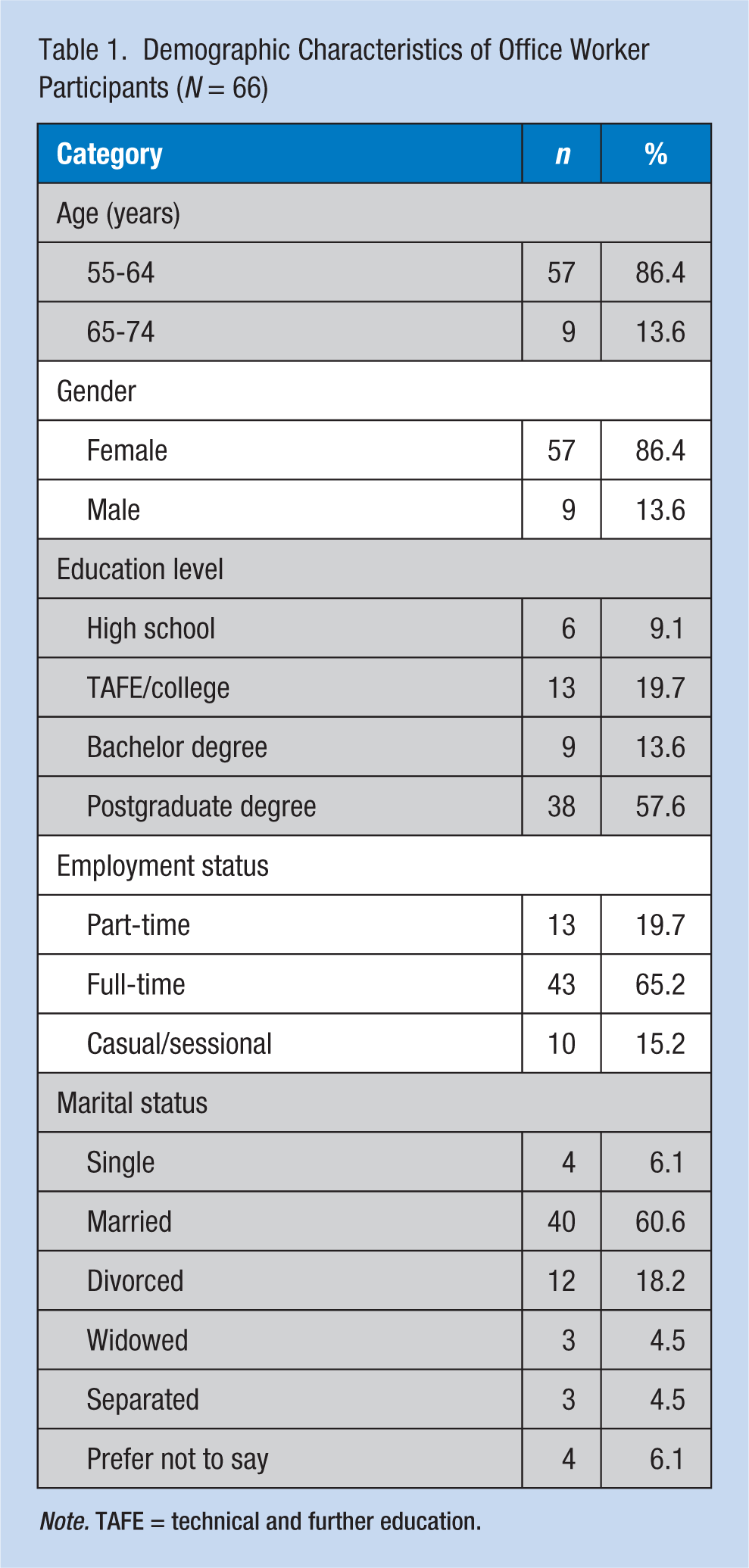
At the time of study, all 2,050 administrative and academic staff aged 55 years and older were invited to complete the online survey. Sixty-six staff completed the survey, reflecting a participation rate of 3.2% (Table 1). Most respondents were females (86.4%). More than half (57.6%) of the older office workers had a postgraduate education, worked full-time (65.2%), and were married (60.6%). Participants had mostly undertaken moderate (53.0%) to high (19.7%) PA levels during the past week 27.3% of participants engaged in low intensity PA (data not shown).
Demographic Characteristics of Office Worker Participants (N = 66)
Note. TAFE = technical and further education.
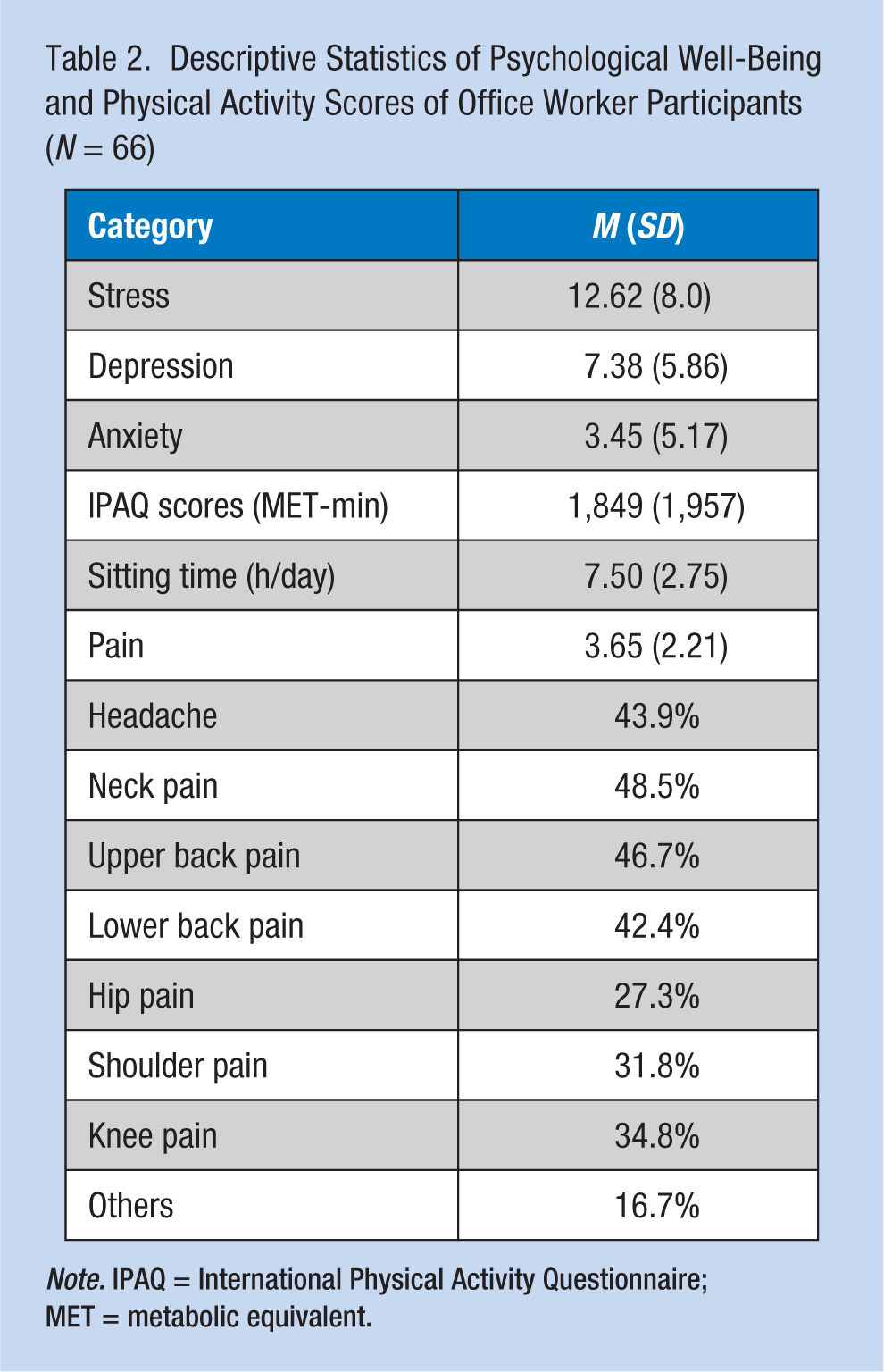
The average sitting time of participants was 7.5 hours per day (SD = 2.75; range = 3-15; Table 2). Most participants reported a low stress level (56.1%; n = 37), with only 7.6% (n = 5) of participants reporting that they were suffering from high levels of stress symptoms. Depression and anxiety were detected in 25.8% and 12.1% of the participants, respectively. Of those 25.8% who reported depression, 64.7% of them reported moderate to high levels of PA, and 35.3% of them reported low PA. Neck pain, headache, and low back pain were the most common pain areas for the participants, with other reported pain areas in the hands, feet, elbows, or pelvis.
Descriptive Statistics of Psychological Well-Being and Physical Activity Scores of Office Worker Participants (N = 66)
Note. IPAQ = International Physical Activity Questionnaire; MET = metabolic equivalent.
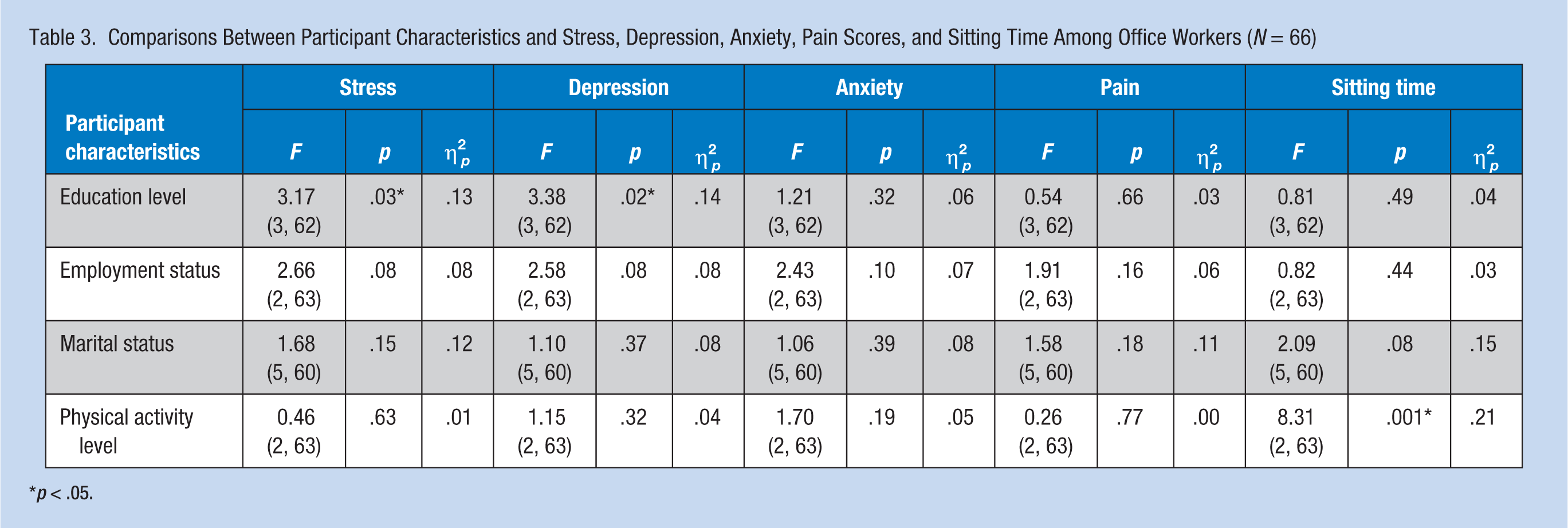
No significant differences were found between employment status, marital status, and psychological well-being variables (Table 3). However, there were statistically significant differences between education level and severity of stress, F(3, 62) = 3.17, p = .03,
Comparisons Between Participant Characteristics and Stress, Depression, Anxiety, Pain Scores, and Sitting Time Among Office Workers (N = 66)
p < .05.
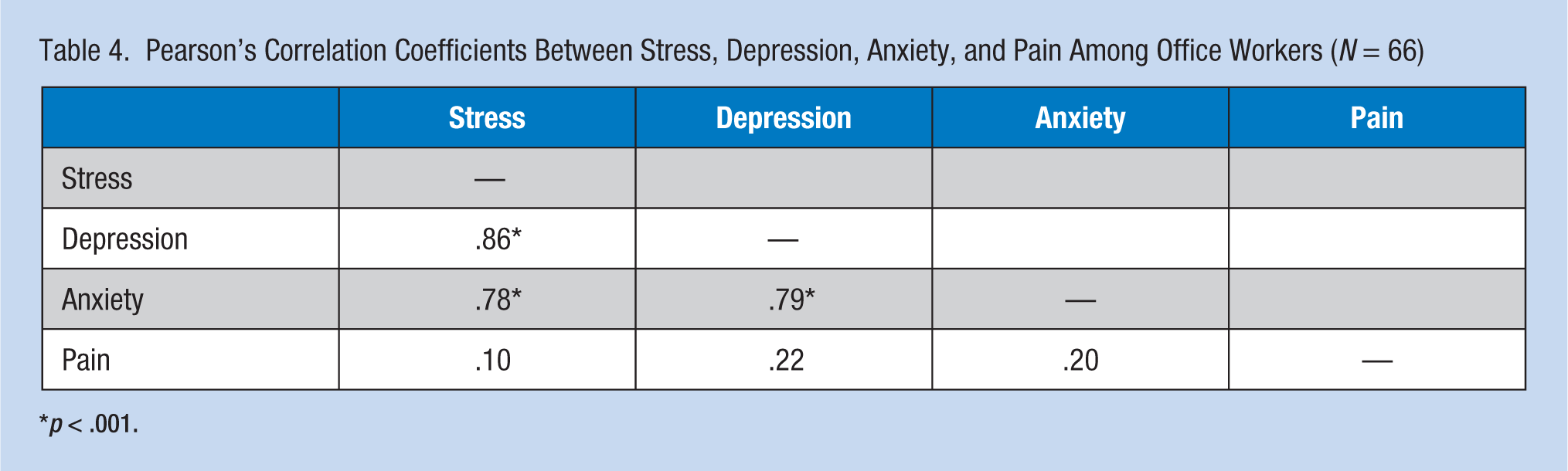
Pearson’s correlations indicated that stress scores were significantly related to scores of depression (p < .0001, r = .86) and anxiety (p < .0001, r = .78), indicating that higher stress levels correlated with more depressive symptomatology and greater anxiety (Table 4). Similarly, there was a significant association between depression and anxiety (p < .001, r = .79). Unexpectedly, no observed significant relationships were found between PA and stress, depression, anxiety, or pain.
Pearson’s Correlation Coefficients Between Stress, Depression, Anxiety, and Pain Among Office Workers (N = 66)
p < .001.
Discussion
This study examined levels of PA and psychological well-being of older office workers and this is the first known study to investigate these areas in older university office workers in Australia. The results of this study are consistent with results from previous studies, indicating that many older office workers report lengthy periods of sitting during workdays (average 7.5 hours per day). Bennie et al. (2015) noted that desk-based Australian staff older than 60 years of age reported an average sitting time of 8.3 hours per day. The majority of older office workers in this study reported both moderate and high PA levels. Bennie et al. (2015) also demonstrated that there were significant differences between sitting time and age, education time, and occupation. Cooper and Barton (2016), however, reported that university employees older than 18 years of age had significant differences between levels of PA and employment status, which is not consistent with this study’s results. According to this study, no significant influences of age, education level, and employment status on sitting time and PA levels were detected, which is likely due to the relatively narrow age range (57 of 66 participants are between 55 and 65 years old) and the small sample size.
Previous studies have explored workplace factors affecting sitting time. For instance, Tobin et al. (2016) found that an activity-based work office environment could effectively reduce self-reported sitting time. Similarly, low-cost strategies (e.g., standing meetings, in-person communication) are feasible ways to reduce sitting time (Hadgraft et al., 2016). This study also strengthens the notion of workplace PA interventions to reduce sitting time. Based on this study, occupational health nurses could consider worksite programs aimed at increasing PA to reduce the effects of sedentary behavior in older office workers.
A high percentage of the office workers reported depression and anxiety. The finding that 25.8% of older office workers reported depression and 12.1% reported anxiety symptoms is of concern: Previous data indicate that between 10% and 15% of older people experience depression and about 10% experience anxiety according to the Black Dog Institute Annual Report (Black Dog Institute, 2012). McTernan, Dollard, and LaMontagne (2013) reported that the annual work-related cost of depression was Aus$8 billion per annum in Australia. A recent retrospective observational study using pooled data from the United States found that depression caused a significantly higher health care utilization and total health care costs (Gangan & Yang, 2018). A report by Drabble (2010) found that when others label older workers as old, they begin to define themselves as old. As a result, they feel a loss of power in the workplace and this can result in an increase in anxiety. Other possible explanations for depression and anxiety reported in the older workforce may be due to a sense of job insecurity, job strain, and low job satisfaction (Clays et al., 2007; Griffin, Greiner, Stansfeld, & Marmot, 2007; Meltzer et al., 2010). Occupational health nurses need to explore potential strategies that can support older office workers experiencing depression and anxiety.
This study shows that the most common types of physical pain for older office workers are neck pain (48.5%), headache (43.9%), and low back pain (42.4%). Indeed, previous research suggests a high prevalence of neck pain and low back pain among young and middle-aged office workers (Hush, Michaleff, Maher, & Refshauge, 2009). However, this study additionally detected a high proportion of headache among the older office workers. One reason for this observation may be the difference in the sample age, as headache is more likely to coexist with neck and shoulder pain in older adults than in younger adults (Huber, Lisinski, & Polowczyk, 2013).
Stress was found to be positively associated with depression and anxiety, which is consistent with previous studies. Siegrist, Lunau, Wahrendorf, and Dragano (2012) found that psychological stress of workers might be a relevant risk factor for depression among older employees across countries and continents. Furthermore, job stress was correlated with anxiety symptoms among professionals in a study conducted by Fan, Blumenthal, Watkins, and Sherwood (2015). In addition, this current study found that anxiety had a significant relationship with depression of older office workers. Similar results were found in an earlier study by Issever, Ozdilli, Altunkaynak, Onen, and Disci (2008) that indicated significantly positive associations between depression and anxiety in older office workers. Furthermore, previous studies found an association between neck-shoulder symptoms and psychosocial stress factors in female office employees aged between 18 and 60 years (Levoska & Keinänen-Kiukaanniemi, 1994). According to this study, no significant associations between pain and other psychological variables could be detected, which may be due to the older age range and smaller sample size.
Education level was found to have a significant influence on levels of stress and depression, reporting that participants with a bachelor or postgraduate degree had lower perceived stress and less depressive symptomatology than those with a high school certificate. Gardner and Oswald (2002) reported that high levels of education contributed to lower levels of mental stress later in life, as educated people have more choices in organizing their life. Similarly, this study suggests that education level is a major factor affecting psychological well-being.
A prospective study indicated that health care workers reporting either light or moderate PA reported lower levels of perceived stress than participants reporting a sedentary lifestyle (Jonsdottir, Rödjer, Hadzibajramovic, Börjesson, & Ahlborg, 2010). Ryan, Stebbings, and Onambele (2015) also demonstrated that light PA successfully improves quality of life, especially among older populations compared with young adults. These studies demonstrate a negative association between PA participation and psychological well-being (e.g., stress, depression), which is not consistent with this study. According to this study, no relationship was found between PA and levels of stress, depression, anxiety, and pain. This may be attributed to the small sample size (N = 66). In particular, the lack of consistent findings may be due to differences in the measurement of psychological well-being or to the different characteristics of the study population.
Previous literature has indicated the importance of involvement of occupational health nurses in workplace health and safety (Kubo et al., 2017; Mellor, St John, & McVeigh, 2006). The results of this current study highlight the prolonged sitting time and depression and anxiety experienced by older office workers. Findings from this online survey inform occupational health nurses’ understanding of the issues of prolonged sitting, depression, and anxiety in older office workers. Occupational health nurses are well positioned to use their knowledge and skills to improve the health and well-being of this population (Graeve, McGovern, Nachreiner, & Ayers, 2014).
Strengths and Limitations
The strength of this study is the exploration of both PA and psychological well-being, focusing on older university office workers. However, this study has several limitations. First, participants’ age was recorded as categories rather than actual age. The majority of participants were between 55 and 64 years, with the remaining nine between 65 and 74 years. This limited our ability to examine the association between a range of ages and PA, levels of stress, depression, anxiety, and pain. Second, the eligible participants in the study represented a low 3.2% response rate within office workers older than 55 years of age. The low response rate and small sample size limits the representativeness of the study outcomes. Third, self-reported data of PA, levels of stress, depression, anxiety, and pain might not be accurate due to participants’ bias. It is recommended that future studies should be conducted in more than one university and with a larger sample.
Conclusion
In conclusion, this study confirms that stress, depression, and anxiety are positively and significantly related in older university office workers. Those reported to have lower PA levels had longer sitting time. There is a need to better translate the findings of this work into future intervention programs, and strengthen the evidence for occupational health nurse–designed exercise interventions to reduce sitting time in older university office workers. A larger study is needed to validate the results and further explore the association between PA participation and psychological well-being in older office workers.
Implications for Practice
Occupational health nurses play a vital role in managing office workers’ well-being and performance in university settings. Further research should develop exercise interventions to reduce sitting time in older office workers working at universities. These findings can be used to plan educational interventions for older office workers, especially in improving psychological well-being. The study suggests that strategies are needed to reduce levels of stress, depression, and anxiety in the workplace.
Applying Research to Practice
Prolonged sitting, depression, anxiety, and education play a significant role in the health of older university office workers. Consideration should be given to these factors when designing future research and exercise programs aimed at this population. Older office workers may be overlooked in the larger context of at-risk occupations. These findings highlight the need for physical activity programs among these workers whose jobs involve long periods of sedentary work.
Footnotes
Conflict of Interest
The author(s) declared no potential conflicts of interest with respect to the research, authorship, and/or publication of this article.
Funding
The author(s) received no financial support for the research, authorship, and/or publication of this article.

Author Biographies
Meiling Qi is a current PhD candidate in the School of Nursing and Midwifery at Griffith University. Her research examines the effect of Tai Chi and Tai Chi combined with resistance training on health, particularly in older sedentary office workers.
Wendy Moyle is a professor in the School of Nursing and Midwifery and program director of Optimising Health Outcomes in the Menzies Health Institute Queensland at Griffith University. Her research focuses on evidence for best practice in gerontology and in particular dementia care.
Cindy Jones is a lecturer in the School of Nursing and Midwifery and a researcher in the Menzies Health Institute Queensland at Griffith University. She has expertise in biostatistics and her research is focused on relationships and expressions of sexuality in aged care, and intervention research to improve quality of and evidence for dementia care.
Benjamin Weeks is a senior lecturer and physiotherapist in the School of Allied Health Sciences and a researcher in the Menzies Health Institute Queensland at Griffith University. His research interests lie in elucidating novel and practical methods to prevent musculoskeletal disease, physical activity assessment, and clinical assessment tools.