




Abstract
The purpose of this study was to describe caffeine use among a group of habitual caffeine users, truck drivers, and to explore the associations between caffeine use and critical safety events by age in the naturalistic work setting. A secondary analysis of existing data from the Naturalistic Truck Driving Study was conducted. Analyses focused on the association between sleep and caffeine consumption by duty status, comparisons of sleep and caffeine use by age, and the associations between caffeine use and safety-critical events (SCEs). Findings indicated differences in caffeine use by duty status. However, no difference in sleep time by duty status, or between sleep time and caffeine use was found regardless of when the caffeine was consumed during the 5 hours prior to sleep. Sleep time did not vary significantly by age, although increasing age was associated with decreased caffeine use. Overall, a 6% reduction in the rate of SCEs per eight ounces of caffeinated beverage consumed was found. This study makes a unique scientific contribution because it uses real-time observations of truckers in the naturalistic work setting. It also does not involve caffeine withdrawal but rather an investigation of the effects of the naturalistic consumption of caffeine on sleep and driving performance. Findings suggest that caffeine use among habitual users offers a protective effect for safety-critical driving events. Occupational health nurses may use this information to counsel workers in the use of caffeine to enhance driving safety.
Keywords
Caffeine consumption is known to affect perceived sleepiness, driving performance, and sleep time. Although caffeine has been shown to decrease sleepiness and improve driving performance, its use is also associated with sleep disruption (Brice & Smith, 2001; De Valck & Cluydts, 2001; Drake, Roehrs, Turner, Scofield, & Roth, 2003; Hindmarch et al., 2000; Mets, Baas, van Boven, Olivier, & Verster, 2012; Mets et al., 2011; Patat et al., 2000; Paterson, Wilson, Nutt, Hutson, & Ivarsson, 2007; Reyner & Horne, 2002; Roehrs & Roth, 2008). Whether caffeine use enhances performance and decreases sleepiness in habitual caffeine users is less clear. Truck drivers may be at risk for sleep disruption because of the erratic, unpredictable, or “just-in-time” (Keeling, 2011) nature of their work; they may rely on caffeinated products to combat sleepiness; and they may further fragment their sleep (Couper, Pemberton, Jarvis, Hughes, & Logan, 2002; Ouellet, 2010). The purpose of this study was to (a) describe caffeine use among a group of truck drivers in both the on- and off-duty condition and (b) explore the associations between caffeine use and critical safety events among truck drivers, who are habitual caffeine users, by age in the naturalistic work setting.
Background
Caffeine is a xanthine, thought to be the world’s most widely used stimulant. It is absorbed quickly in the gastrointestinal tract and is metabolized primarily in the liver by the cytochrome P450 oxidase enzyme (1A2 isozyme). It reaches a peak plasma level within 15 minutes to 45 minutes after ingestion and has a half-life of between 2 hours and 6 hours in healthy adults (Arnaud, 1987). Adenosine receptors located in the brain are directly involved in mediating sleepiness and sleep onset. It is the effect of caffeine on adenosine receptors that is most influential on sleep. Caffeine acts as an adenosine antagonist, and therefore promotes wakefulness (Huang, Urade, & Hayaishi, 2011; Landolt, 2008; Salín-Pascual, 2004). Use of caffeine has been found to reduce sleepiness and sleep-related impairments, and increase alertness via dose-response (Kamimori et al., 2000; Lieberman, Tharion, Shukitt-Hale, Speckman, & Tulley, 2002); that is, total sleep time and sleep efficiency decrease, and sleep architecture is altered with caffeine use (Carrier et al., 2006; LaJambe, Kamimori, Belenky, & Balkin, 2005; Paterson et al., 2007; Shilo et al., 2002). The antagonist effect of caffeine on the binding of brain adenosine and benzodiazepine receptors also accelerates brain activity, and triggers changes in neurotransmitters (i.e., serotonin, dopamine, acetylcholine, and noradrenaline) that positively influence mood and performance (Ruxton, 2008). Moderate caffeine dosing (i.e., 200-300 mg or 2-4 mg/kg) enhances performance, cognition, vigilance, reaction time, alertness or arousal, power and endurance, as well as fatigue tolerance. Daily caffeine doses ranging from 38 to 400 mg have been associated with improvement in performance measures (Ruxton, 2008). Sustained-release, single doses of caffeine also have been shown to improve psychomotor and cognitive measures as well as subjective sleepiness in a total sleep-deprivation condition for up to 24 hours (Patat et al., 2000). A Cochrane Review of 13 randomized controlled trials evaluating the effect of caffeine on injury, error, or cognition in workers experiencing jet lag or shift work found that caffeine positively affected cognitive performance and decreased the number of errors among these groups of workers (Ker, Edwards, Felix, Blackhall, & Roberts, 2010).
Driving and Caffeine Use
In both real-time and simulator studies of the effects of caffeine use on driving performance and sleepiness, caffeine use consistently had positive effects in both sleep-deprived and non-sleep-deprived participants (De Valck & Cluydts, 2001; Mets et al., 2011; Reyner & Horne, 2002; Sagaspe et al., 2007). Fewer lane departures and movement, lower speed, and less steering variability were associated with consumption of caffeine in both slow-release and rapid-release forms (e.g., functional energy drinks; Mets et al., 2011; Reyner & Horne, 2002). Improvements were also noted in participant reports of subjective sleepiness after caffeine use (De Valck & Cluydts, 2001; Mets et al., 2011; Reyner & Horne, 2002). Effects on both driving performance and subjective sleepiness were sustained for up to 6 hours post caffeine consumption in studies involving driving simulations (De Valck & Cluydts, 2001; Mets et al., 2011).
Aging and Caffeinated Beverage Use
Although caffeinated beverage use continues with aging, it declines in an inversely proportionate manner after peak use in middle age (Johnson-Kozlow, Kritz-Silverstein, Barrett-Connor, & Morton, 2002; Ritchie et al., 2007; Van Gelder et al., 2006). Preference by gender for type of caffeinated beverage (e.g., tea vs. coffee) among older adults has been suggested but is not consistent (Corley et al., 2010; Ritchie et al., 2007). Across all age groups, men consume more caffeinated beverages than women.
Benefits to Habitual Caffeine Users
Findings about the effects of caffeine on habitual caffeine users are inconclusive. Some authors have suggested that improved performance and less sleepiness is merely the result of caffeine withdrawal reversal in participants who are habitual caffeine users (Heatherley, 2011; Rogers et al., 2005). However, habitual use of caffeine (i.e., up to seven cups of coffee or 600 mg daily) was not associated with less sleep time in a group of workers who were not sleep deprived, and only minimally less recovery sleep for participants after total sleep deprivation (LaJambe et al., 2005; Sanchez-Ortuno et al., 2005).
Method
This study incorporated a secondary analysis of 2007 data originally gathered for the Naturalistic Truck Driving Study (NTDS) conducted by the Virginia Tech Transportation Institute (VTTI; n = 100; Blanco et al., 2008). This non-experimental study used real-time data collection during naturalistic driving conditions to explore factors related to commercial truck crashes. The three major focus areas of the study were as follows:
Work and rest factors related to driver fatigue and critical safety events,
Critical safety event causation and light vehicle–commercial truck interactions, and
Functional countermeasures to mitigate critical safety events.
Participants (n = 100) were recruited from four trucking companies including both line haul (i.e., out and back) and long haul (i.e., approximately 1 week duration) operations. For the duration of the 4-week protocol, participants completed a series of paper and pencil questionnaires and logs, and drove fully instrumented trucks that monitored and collected vehicle performance and critical safety event data as well as driver data. For the purposes of this study, 97 participants were retained for data analysis.
Data Sharing, Data Transfer, and Human Participants Protection
A data sharing agreement was completed by the University of Alabama at Birmingham (UAB) and VTTI. An exemption was granted by the UAB Institutional Review Board (IRB) for analysis of the de-identified pre-existing dataset. Data files were electronically transferred from VTTI to the UAB principal investigator. The dataset was accessed at UAB using fully encrypted and password-protected computers located in secure areas of the UAB School of Nursing and the Department of Surgery.
Instrumentation and Variable Definitions
The NTDS research team employed a number of on-board vehicle monitoring systems to measure driver and vehicle performance as well as paper and pencil driver logs and other instruments such as wrist actigraphy and psychomotor vigilance tests. A full description of the original instrumentation, procedures, and findings are included in the study’s final report (Blanco et al., 2008). Table 1 lists the primary outcomes of interest in the secondary analysis and the instrumentation used to capture the data.
Concepts and Instrumentation Used to Collect NTDS Data
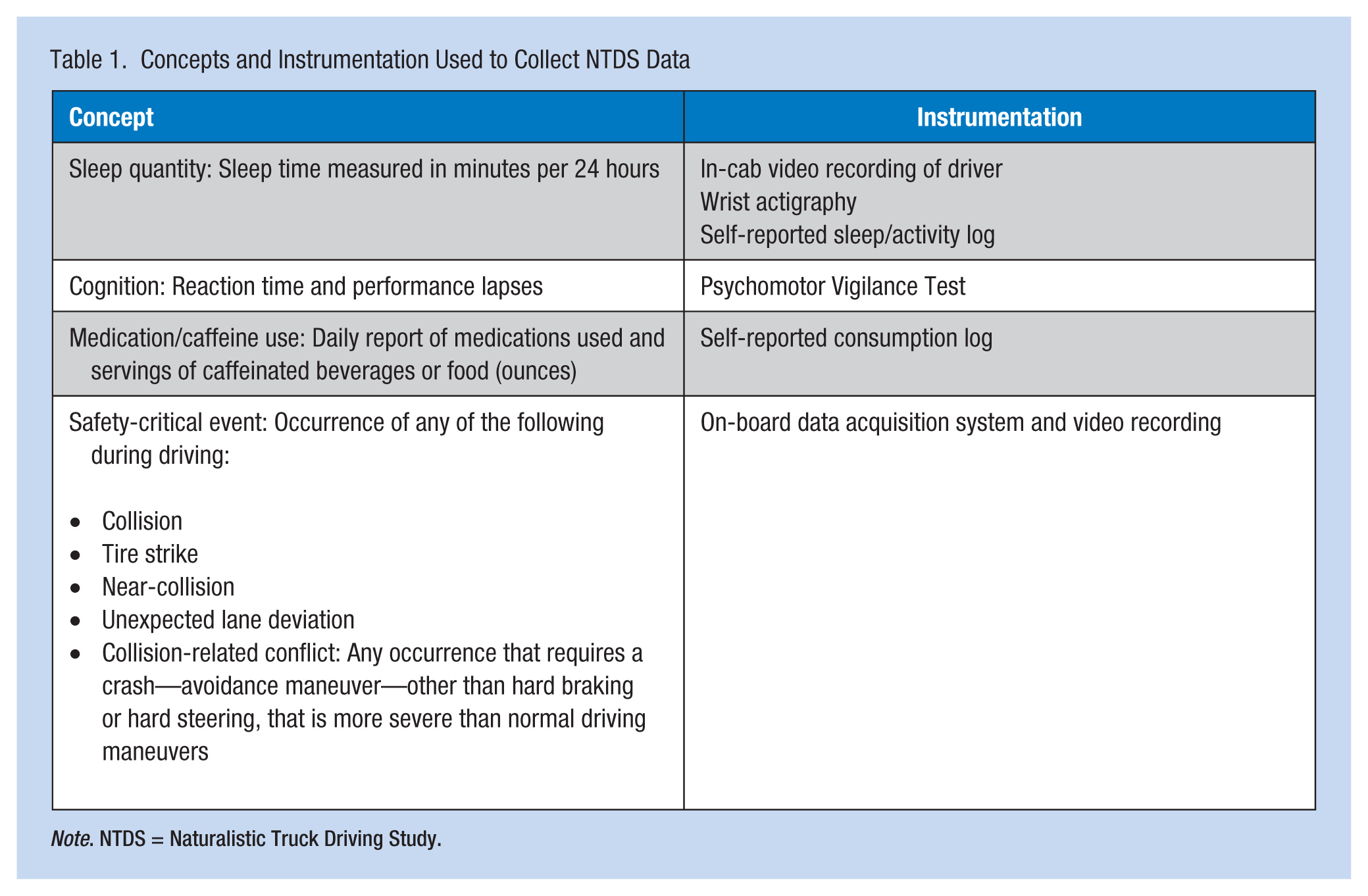
Note. NTDS = Naturalistic Truck Driving Study.
For each participant, sample demographic (e.g., age, race) and job-related (e.g., years of commercial driving experience) data were gathered. In addition, each participant kept a log book of their time both on- and off-duty. For the purposes of the study, on-duty status was defined as time spent in the work environment: the sleeper berth of the truck, the cab of the truck, or any location associated with work tasks. Off-duty status was defined as time spent outside the work environment or at home. For each duty status, participants noted when they consumed a caffeinated beverage or food, noting the beverage or food amount in ounces. Using this information, ounces of caffeinated food or beverage during both on- and off-duty were calculated per day. For the purposes of the present study, the investigators only focused on caffeinated beverage use because reports of caffeinated food were scant for this sample.
Duration of sleep per day was calculated using actigraph data. Data from the log book were used to determine whether sleep occurred when drivers were off- or on-duty. Because actigraph sleep data were provided on a per-day basis, sleep data were used only for those days in which participants were either on- or off-duty for the entire day. Safety-critical events (SCEs) were determined by trained personnel watching the video feed while participants were driving. Whenever participants experienced collisions or near-collisions, tire strikes, unexpected lane deviations, or collision-related conflicts, the date, time, and type of SCE was noted by personnel so events could be synced with participants’ log books.
Statistical Analysis
Due to the longitudinal nature of the data, repeated-measures regression analyses were used to account for within-person covariance across multiple observations of data for each study participant. A repeated-measures ANOVA (RM-ANOVA) was used to estimate the association between daily sleep and caffeine consumption for on- versus off-duty status. RM-ANOVA was also used for comparisons between sleep and caffeine use. Sensitivity analysis was conducted by creating models for caffeine consumed from 1, 2, 3, 4, or 5 hours before the onset of reported sleep. RM-ANOVA was again used to compare daily sleep and caffeine consumption by age.
A Generalized Estimating Equation (GEE) Poisson regression model was used to calculate rate ratios (RRs) and 95% confidence intervals (CIs) to document the association between caffeine use and SCEs. Models used the number of logged driving hours as an offset to account for varying daily driving exposure, adjusted for the number of years of driving experience. Separate models were developed for all participants stratified by age.
Results
Participants were mostly male (95%) and Caucasian (81%) with a mean age of 44.5 years. The average duration of driving experience was 9.1 years, with half the drivers having no more than 5 years’ experience. During the study protocol, the mean number of miles driven by each participant was just over 7,000 (Table 2).
Demographic and Job Characteristics of 97 Commercial Truck Drivers
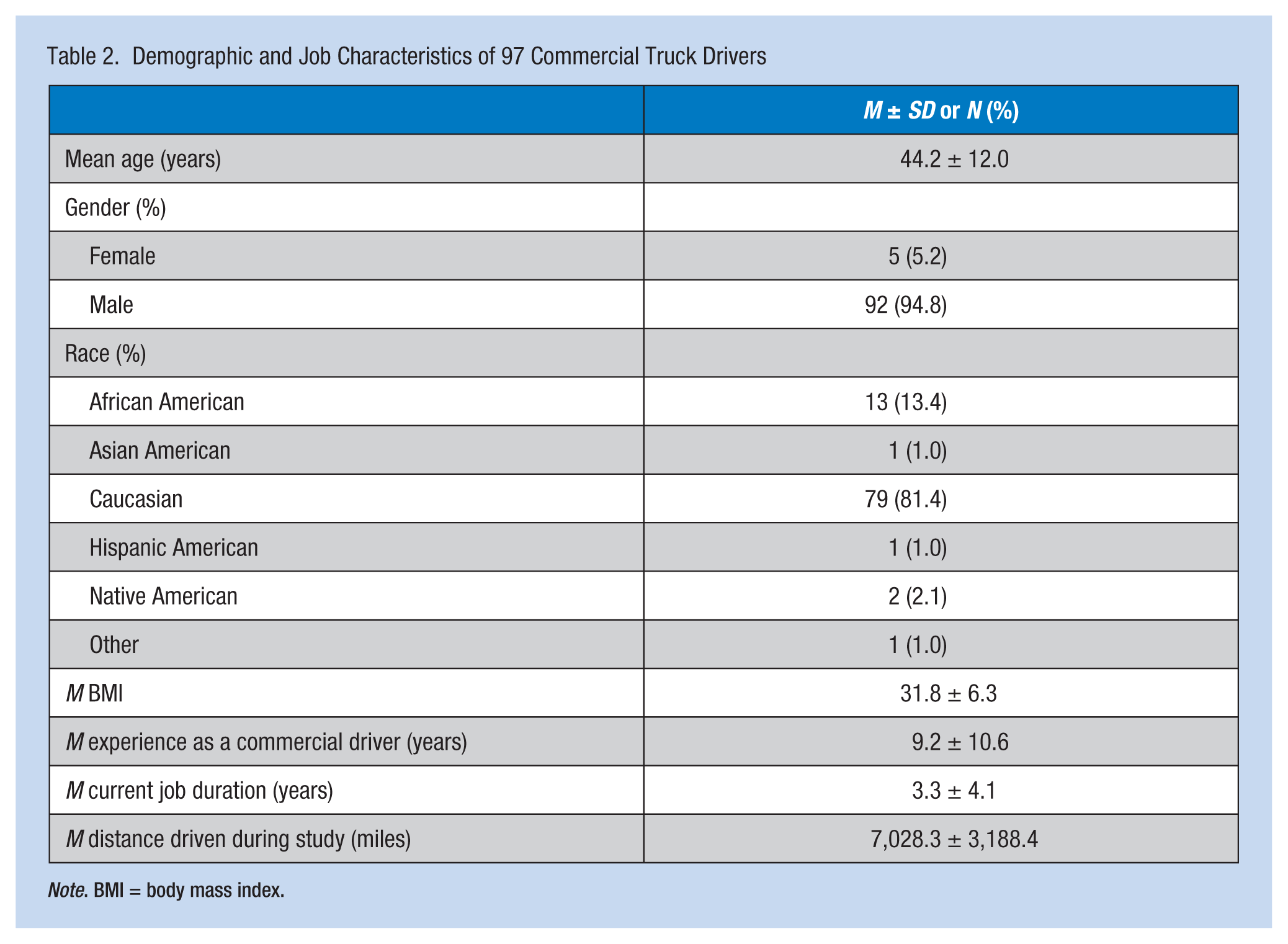
Note. BMI = body mass index.
Sleep Time, Age, and Caffeine Consumption
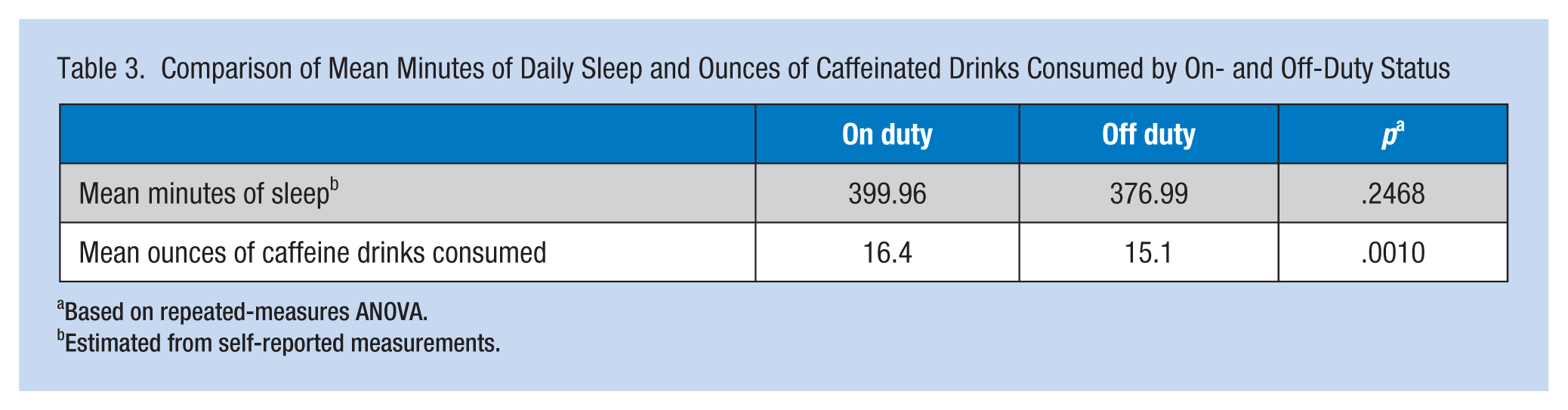
For the most part, participants (n = 97) were habitual caffeine users whether in on- or off-duty settings. However, a statistically significant difference in caffeine consumption was found; participants reported a nearly 1.5 oz. mean increase in caffeinated drink consumption when on duty compared with off duty (M = 16.4 vs. 15.1, p = .0010; Table 3).
Comparison of Mean Minutes of Daily Sleep and Ounces of Caffeinated Drinks Consumed by On- and Off-Duty Status
Based on repeated-measures ANOVA.
Estimated from self-reported measurements.
No statistically significant difference was found between on- and off-duty status and sleep time (p = .2468), although participants experienced longer sleep times during on-duty status compared with off-duty status (M = 399.96 minutes vs. 376.99 minutes, respectively; Table 3). Although overall reported caffeine use was, on average, one ounce higher when participants were on duty (p = .0010), no association between sleep and caffeine use by on- and off-duty status was found regardless of when the caffeine was consumed within 5 hours prior to sleep (Table 4).
Association Between Caffeine Drinks Consumed and Sleep a by On- and Off-Duty Status
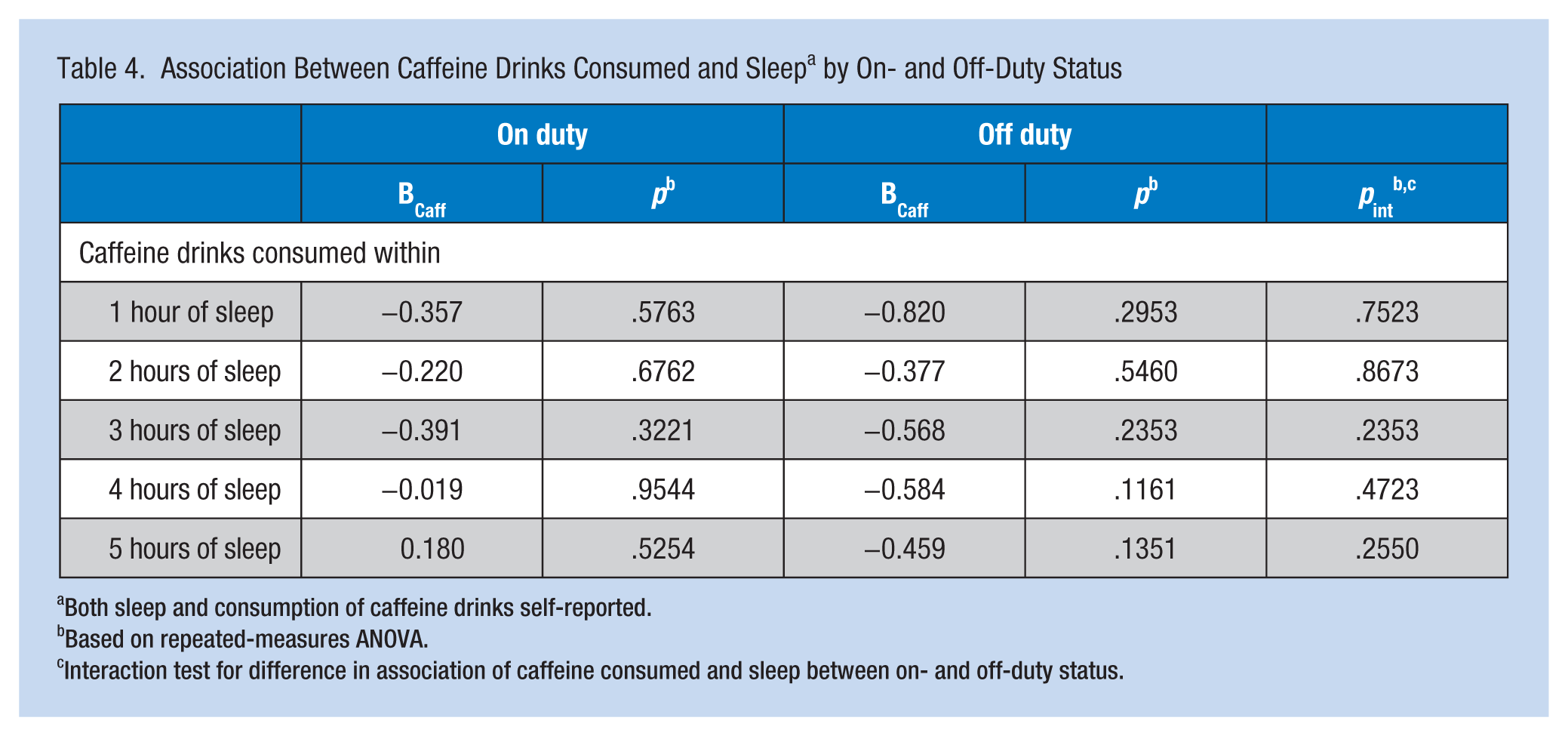
Both sleep and consumption of caffeine drinks self-reported.
Based on repeated-measures ANOVA.
Interaction test for difference in association of caffeine consumed and sleep between on- and off-duty status.
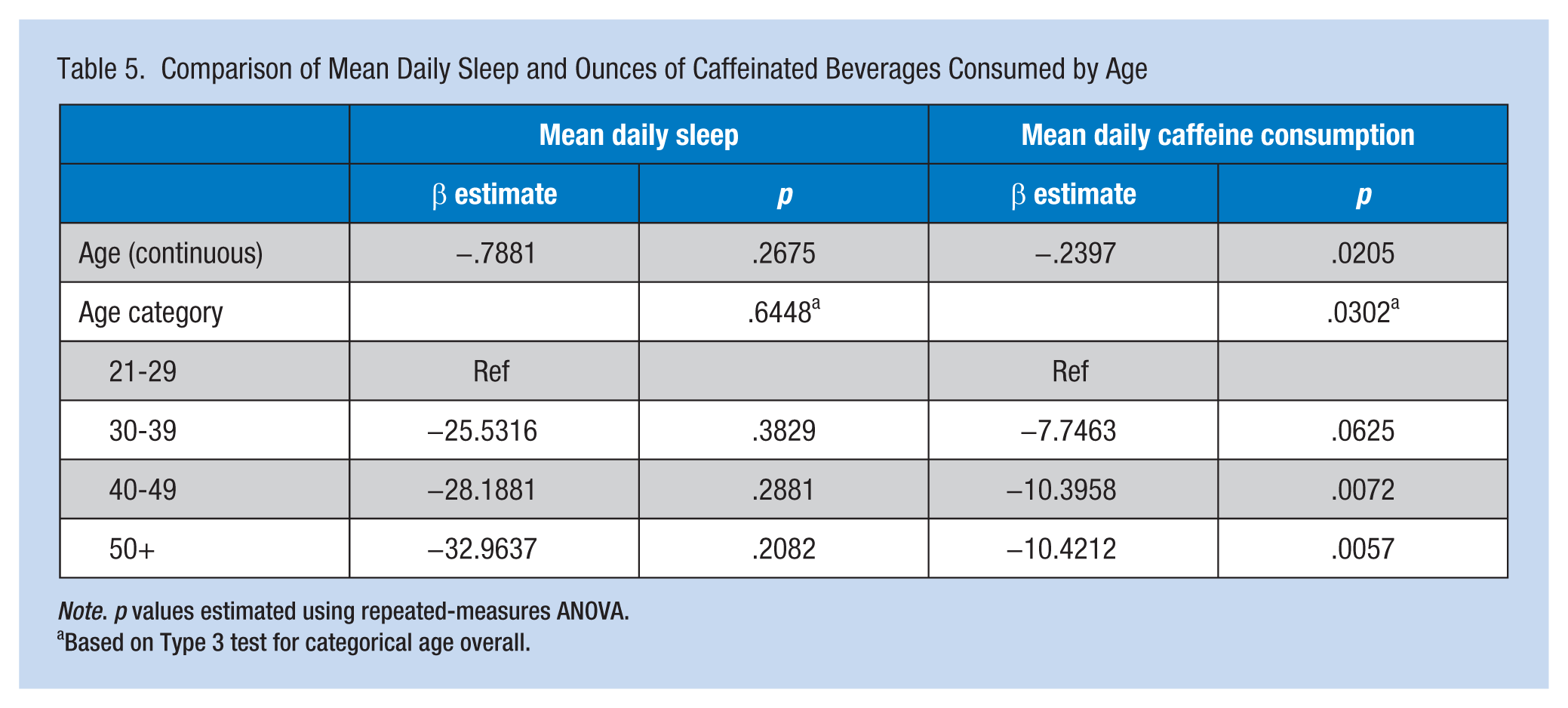
Sleep time and caffeine use were compared by age (Table 5). There was no statistical difference in mean daily sleep duration by age when age was considered either a continuous (p = .2675) or categorical variable (p = .6448). Increasing age was associated with less caffeinated beverage consumption (p = .0302), with those between 21 and 29 years of age drinking, on average, 10 ounces more caffeinated beverage than those aged 40 to 49 (p = .0072) or 50+ (p = .0057).
Comparison of Mean Daily Sleep and Ounces of Caffeinated Beverages Consumed by Age
Note. p values estimated using repeated-measures ANOVA.
Based on Type 3 test for categorical age overall.
SCEs
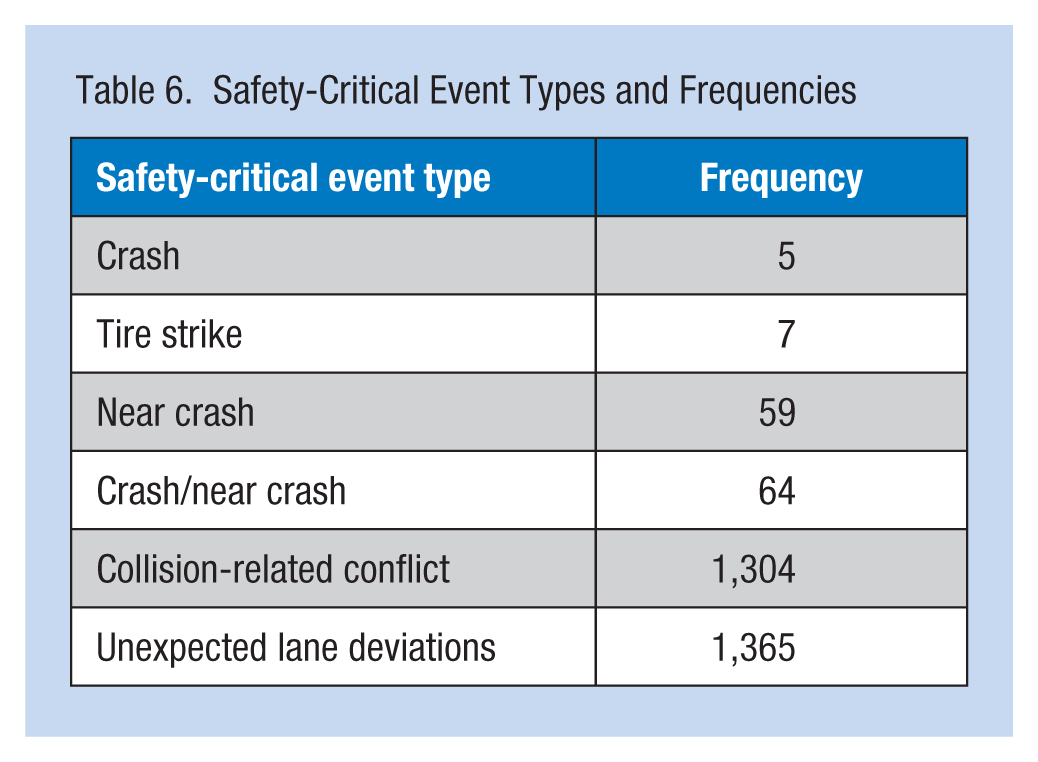
The numbers and types of SCEs noted are found in Table 6. The numbers of crashes and tire strikes were very small, five and seven, respectively. Near crashes and crash/near crashes ranged from 59 to 64, respectively. The greatest number of critical safety events included collision-related conflicts and unintentional lane deviations, 1,304 and 1,365, respectively.
Safety-Critical Event Types and Frequencies
Caffeinated Beverage Consumption and SCEs
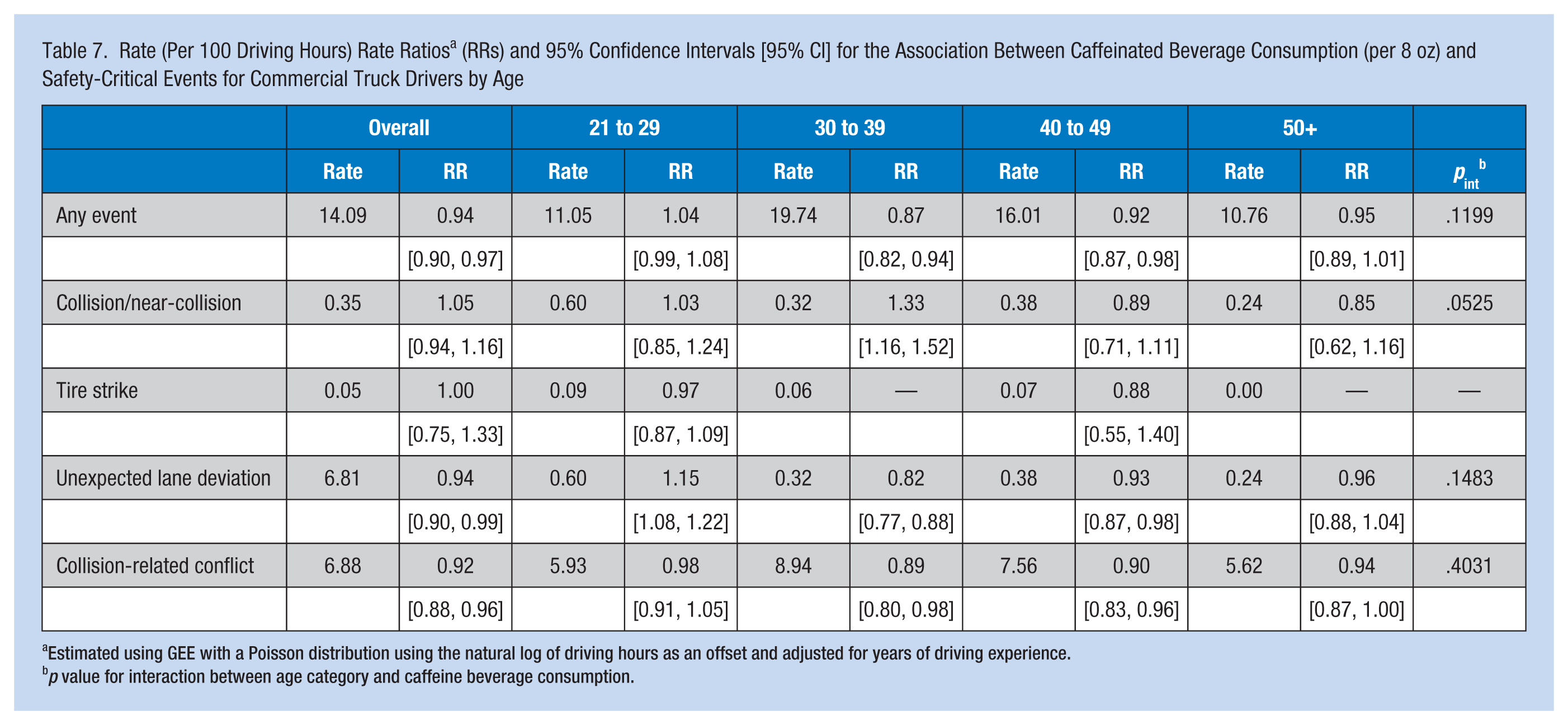
Among all ages, a 6% reduction in the rate of SCEs per eight ounces of caffeinated beverage consumed, adjusted for correlated outcome data, was found (Table 7). Although this association did not vary by age, the strongest association was observed for those aged 30 to 39 (RR = 0.89, 95% CI [0.83, 0.95]) and 40 to 49 (RR = 0.92, 95% CI [0.87, 0.98]). No statistical association was observed for those aged 21 to 29 (RR = 1.03, 95% CI [0.99, 1.07]) or 50 and older (RR = 0.95, 95% CI [0.89, 1.01]).
Rate (Per 100 Driving Hours) Rate Ratios a (RRs) and 95% Confidence Intervals [95% CI] for the Association Between Caffeinated Beverage Consumption (per 8 oz) and Safety-Critical Events for Commercial Truck Drivers by Age
Estimated using GEE with a Poisson distribution using the natural log of driving hours as an offset and adjusted for years of driving experience.
p value for interaction between age category and caffeine beverage consumption.
No statistical association was observed between overall collision/near-collision event rate and caffeinated beverage consumption by age group, but a statistically significant 26% increase in the collision/near-collision event rate was observed by caffeinated beverage consumption for individuals aged 30 to 39 (RR = 1.26, 95% CI [1.14, 1.40]).
Although the rate of unexpected lane deviations decreased 6% per eight ounces of caffeinated beverage consumed overall (RR = 0.94, 95% CI [0.90, 0.99]) and for those aged 30 to 39 (RR = 0.84, 95% CI [0.78, 0.90]) and 40 to 49 (RR = 0.90, 95% CI [0.83, 0.96]), the rate increased for those aged 21 to 29 (RR = 1.15, 95% CI [1.08, 1.22]). However, this difference by age group was not statistically significant (p = .1484).
Consuming eight ounces of caffeinated beverages was associated with a decrease in the rate of collision-related conflict events both overall (RR = 0.92, 95% CI [0.88, 0.96]) and for all age groups; the only statistically significant associations were found for those aged 30 to 39 (RR = 0.89, 95% CI [0.81, 0.98]) and 40 to 49 (RR = 0.90, 95% CI [0.83,0.96]). The association did not statistically vary by age (p = .4283).
Discussion
This study is notable among other studies of caffeine, sleep, and driving safety because it used real-time observations of working (driving) truckers in the naturalistic setting. It also does not focus on caffeine withdrawal but rather was an investigation of the effects of naturalistic consumption of caffeine on driving performance. Although some authors have suggested that performance improvement or less sleepiness is merely the result of caffeine withdrawal reversal in participants who are habitual caffeine users, others posit the direct effects of caffeine on performance, behavior, and mood (Heatherley, 2011; Hewlett & Smith, 2007; Rogers et al., 2005; Snel & Lorist, 2011). Findings from this study indicate that among these habitual caffeine users, critical driving safety events decreased via dose-response with caffeinated beverage use. Therefore, these findings suggest that caffeine use among habitual users positively affects driving performance.
Among the most common concerns about caffeine use are associated changes in sleep time and architecture (Carrier et al., 2006; Drake, Jefferson, Roehrs, & Roth, 2006; Drake et al., 2003; LaJambe et al., 2005; Paterson, Nutt, Ivarsson, Hutson, & Wilson, 2009; Paterson et al., 2007; Shilo et al., 2002). Overall, caffeine use did not affect sleep time, and in spite of the statistically significant difference in caffeine consumption by on-versus off-duty status, participant sleep time was not significantly affected under either of the two conditions. Therefore, findings from this study support the previous work of Sanchez-Ortuno et al. (2005); for habitual caffeine users, caffeinated beverage consumption did not negatively affect sleep time. However, it is notable that for both the on- and off-duty conditions, participants experienced less sleep time than the time historically considered adequate for safe driving performance (Banks & Dinges, 2007).
Caffeinated beverage use was associated with a protective effect for SCEs across all age groups. However, it was surprising that the protective effect of caffeine was not sustained across all types of SCEs. For example, it is unclear why a 26% increase in collision or near-collision was observed among participants aged 30 to 39, and why participants aged 21 to 29 experienced a 15% increase in unexpected lane deviations. It is possible that participants in those age groups were engaging in secondary tasks that may have been distracting, or in other risky behaviors such as speeding or tailgating. Another explanation may simply be the inexperience of drivers in that particular age group. Data analyzed to meet the original aims of the study indicated that internal distraction was the primary reason for near-crashes, crash-relevant conflicts, and lane deviations 14.8%, 47.9%, and 72.6% of the time, respectively. This association was not explored by age group however (Blanco et al., 2008).
Limitations
The results of the present study should be viewed in light of study limitations. First, this study was a secondary analysis of existing data so the original study design was not formulated for the specific aims of evaluating caffeine use, age, and driving performance. Therefore, the original design might have influenced the type and quality of data available for secondary analysis. Another potential limitation was the short length of monitoring (i.e., up to 30 days). In this study sample, the researchers did not have enough collisions, near-collisions, and tire strikes to conduct meaningful analyses of the associations between age, caffeine use, and these events. Therefore, caution should be exercised in interpreting study results. A longer monitoring period would have potentially captured more safety-critical driving events, resulting in greater statistical power for the GEE Poisson models. Also, caffeine consumption was self-reported. Therefore, it is possible that participants could have experienced recall bias when they were completing the original logs that documented caffeine use. The researchers do suspect recall to be differential between analysis groups (e.g., on- or off-duty status, age group). Therefore, they expect bias, if present, would underestimate the true effect. Finally, it was not possible to determine all the variables originally proposed that could reflect sleep fragmentation, including sleep latency, wake after sleep onset (WASO), and sleep efficiency. As a result, although the researchers accurately measured sleep time, they were not able to determine the effects of caffeine consumption on sleep quality, which was operationalized by measures of sleep fragmentation as they had originally planned.
Implications for Practice and Future Research
In spite of the stated limitations, this study is among the first of its kind to explore the associations among commercial drivers’ age, caffeine consumption, and SCE in the naturalistic setting. The study is strengthened by the analysis of associations related to natural caffeine use rather than caffeine dosing after a period of withdrawal. Therefore, this study is not subject to the argument that performance improvements related to caffeine dosing after a period of withdrawal merely reflect reversal of the withdrawal state (Heatherley, 2011; Rogers et al., 2005).
Findings from this study suggest that caffeine use among habitual users protects against safety-critical driving events. Therefore, caffeine is an appropriate tool for commercial drivers who are habitual caffeine users. Future studies with a larger sample of commercial drivers should include a biomarker for caffeine use, such as salivary caffeine levels, to determine more precise caffeine doses and their associated effects on safety-critical driving events. Along with precise caffeine dosing, evaluation of timing of the caffeine dose consumed relative to sleep time and circadian phase could minimize deleterious effects of caffeine on sleep time and architecture. Also, future studies should examine why the association between caffeine use and SCEs varied by age, accounting for currently unmeasured confounders such as driver distraction.
The effects of caffeine on sleep time and sleep fragmentation have been reported to be significant. Future naturalistic studies of caffeine use and sleep among commercial drivers should include validated measures of sleep architecture to determine whether this previous finding holds true for commercial drivers who are habitual caffeine users. Portable, wireless electroencephalography (EEG) might be a non-invasive non-restrictive method for collecting these data and would not disrupt the work of the commercial driver participants.
Applying Research to Practice
The benefit of caffeine use on driving safety in habitual caffeine users has been unclear. Truck drivers have an increased risk for sleep deprivation and sleep-related motor vehicle crashes. In this group of truck drivers, caffeinated beverage use decreased with aging. However, across all age groups, a 6% reduction in the rate of safety critical events was noted for every eight ounces of caffeinated beverage consumed. This study suggests that caffeine use among habitual users offers some protection against safety-critical driving events without negative effects on sleep. Occupational health nurses may consider counseling the worker in a safety-sensitive job who is a habitual caffeine user to consider caffeine use as a measure to promote alertness.
Footnotes
Conflict of Interest
The author(s) declared no potential conflicts of interest with respect to the research, authorship, and/or publication of this article.
Funding
The author(s) disclosed receipt of the following financial support for the research, authorship, and/or publication of this article: This study was supported by University of Alabama at Birmingham School of Nursing, Dean’s Scholar Award.
Author Biographies
Karen Heaton is an associate professor and coordinator of the PhD Program at the University of Alabama at Birmingham (UAB) School of Nursing. She serves as associate editor for continuing education for Workplace Health & Safety.
Russell Griffin is an assistant professor in the Department of Epidemiology at UAB. His research is in injury epidemiology with a focus on prevention and treatment of traumatic injuries.