



Abstract
Background: Although the increased occupational exposures among career firefighters are well documented, there are gaps in research related to exposures among volunteer firefighters. This study was completed in a state where the majority of firefighters are volunteers. We aimed to examine if differences existed in career versus volunteer firefighters’ behaviors related to the retirement, cleaning, and storage of turnout gear which may increase occupational exposures. Methods: A cross-sectional survey was administered to a convenience sample of 300 firefighters during a training event for both volunteer and career firefighters from one fire district in Kentucky. We measured factors that may affect behaviors related to retirement, cleaning, and storage of turnout gear, such as age of turnout gear at retirement, frequency of cleaning, and location of storage. Results: Two hundred and seventy-five firefighters out of 300 invited participants completed the survey, for a response rate of 92%. The majority of the participants were compliant with National Fire Protection Association Standards with most reporting cleaning their gear as needed, storing gear at the fire station, and retiring gear within 10 years of the manufactured date. Most of the participants (88%) were concerned about job-related exposures and felt susceptible to diseases like cancer and respiratory illness. The structural issues of cost and accessibility were identified as the primary barriers to the proper retirement and cleaning of turnout gear, especially among volunteer firefighters. Conclusions/Application to Practice: Most participants retired, cleaned, and stored turnout as recommended. The majority of participants were concerned with job-related exposures. The structural issues of cost and accessibility were identified as the primary barriers to the proper retirement and cleaning of turnout gear, especially among volunteer firefighters. By identifying differences, tailored trainings could be aimed at volunteer firefighters to help reduce their exposures.
Keywords
Background
The National Fire Protection Association (NFPA) reports that there were approximately 1,429,800 firefighters in the United States in 2017. Of these U.S. firefighters, 30% were career firefighters, while 70% were volunteer (Evarts & Stein, 2019). Firefighters are exposed to a variety of known carcinogens, including asbestos, diesel particulates, polycyclic aromatic hydrocarbons (PAHs), volatile organic compounds (VOCs), and hydrogen cyanide (HCN) (Daniels et al., 2015; Daniels et al., 2014; Hwang, Taylor, MacCann, Golla, & Gilbert, 2019; LeMasters et al., 2006; National Institute of Occupational Safety and Health, 2016; Youakim, 2006). Exposure to these substances has been linked to increased risk for developing mesothelioma, lung cancer, multiple myeloma, non-Hodgkin lymphoma, prostate, brain, kidney, and testicular cancers (Daniels et al., 2015; Daniels et al., 2014; Hwang, Taylor, MacCann, Golla, & Gilbert, 2019; LeMasters et al., 2006; National Institute of Occupational Safety and Health, 2016; Youakim, 2006).
Aside from the inhalation of these toxic substances, improper storage and decontamination procedures that do not follow the NFPA Standard (NFPA, 2014) and result in the accumulation of these substances on firefighter turnout gear. Specific gear includes the helmet, hood, coat, pants, and boots that may receive accumulations of toxic substances in work environments, including modes of transportation to and from response events. These substances can then be transferred to the skin of the firefighter. In addition, studies indicate that these substances, particularly VOCs and HCN, often off-gas from turnout gear (Fent et al., 2017), creating a toxic environment surrounding the place in which the turnout gear is stored. A recent survey and field observations indicate that volunteer firefighters regularly store turnout gear in their personal vehicles (Hwang, Taylor, MacCann, Norris, & Golla, 2019).
For these reasons, the NFPA developed a standard guide for the care and maintenance of firefighter turnout gear. The NFPA 1851 (NFPA, 2014) outlines the standards for selection, inspection, cleaning and decontamination, repair, storage, and retirement of firefighter turnout gear. In regard to storage of gear, the standard indicates that turnout gear shall not be stored while wet or dirty, in direct sunlight, with sharp objects or tools, in temperatures below −25 degrees Fahrenheit or above 180 degrees Fahrenheit, or in airtight containers unless they are new and unissued. In addition, soiled turnout gear must not be stored in living quarters or within personal vehicles. If gear must be transported or stored within these locations, they should be placed in a protective case or bag (NFPA, 2014).
The goals of this study were to (a) examine the various behaviors related to the cleaning, storage, and retirement of turnout gear; (b) identify potential differences in career and volunteer firefighters’ knowledge, perceptions, concerns, and behaviors related to cleaning, storage, and retirement of turnout gear; (c) assess perceived susceptibility to occupational-related chronic disease and severity of occupational-related chronic disease related to cleaning, storage, and retirement of turnout gear; and (d) assess barriers, benefits, and self-efficacy related to cleaning, storage, and retirement of turnout gear. The theoretical framework of health belief model (HBM) was examined to see if any of the constructs are predictive of variances in compliance related to proper retirement, cleaning, and storage of turnout.
Method
This study was completed in one firefighter training district whose membership included a rural fire association comprised of eight counties in Kentucky where the majority of firefighters were volunteers. The study was conducted during a semi-annual fire school training course. This study was part of a larger assessment examining firefighter practices and occupational exposures (Hwang, Taylor, Macy, MacCann, & Golla, in press). The research was designed to address the gaps in the literature related to volunteer firefighters’ occupational exposures compared to career firefighter. This cross-sectional survey was distributed to attendees of the fire school and included both career and volunteer firefighters. Participant roles included leadership, instructors, chiefs, and firefighters.
Data Collection
A 73-item survey developed for this study aimed to measure demographic characteristics; work-related activities; knowledge of current standards for retirement, cleaning, and storage of turnout gear; and proper utilization of turnout gear. The assessment also included seven open-ended items to allow further exploration of the above areas. The instrument was developed and pilot tested with three focus groups each with eight to 10 participants compiled of both career and volunteer firefighters from one fire district in Kentucky to establish content validity.
Participant sex, age, employment status (e.g., full time vs. part time), firefighter type (career vs. volunteer), work shift (8-hour, 12-hour, 24-hour, or on-call), number of years on job, and number of years with the current fire department were measured. Additional measures included the average number of fire-related (fire suppression) and non-fire-related activities per week (emergency medical service [EMS] events, vehicle accidents, tree removal, rescue, etc.) over the last year; concerns over job-related exposures; knowledge of standards for turnout gear cleaning, storage, and retirement; behaviors related to cleaning, storage, and retirement of turnout gear; and attitudes and perceptions related to cleaning, storage, and retirement of turnout gear. The survey also included items to measure constructs of the HBM which were perceived susceptibility and perceived severity related to the development of occupational-related chronic disease related to the proper cleaning, storage, and replacement of turnout gear, as well as the perceived barriers, perceived benefits, and self-efficacy related to the proper cleaning, storage, and replacement of turnout gear (National Cancer Institute, 2005). Most participants took 12 to 15 minutes to complete the survey.
Upon approval from Western Kentucky University’s Institutional Review Board (IRB 17-294), the mixed methods assessment including both open- and close-ended items was distributed to a convenience sample of approximately 300 firefighters at the fire school. Prior to participation, all firefighters were informed of the nature of the study, that their participation was voluntary and that they could stop at any time without consequence. A waiver of documentation of informed consent was included with the pen and paper survey and consent was implied with survey participation.
Outcome variables
There were three outcome variables examined in this study: (a) proper retirement of turnout gear, (b) proper storage of turnout gear, and (c) proper cleaning of turnout gear. The first variable, proper retirement of turnout gear, was computed from one question that asked participants “how often do you replace your turnout gear?” This outcome variable was coded as binary, with answers 10 years or less coded as “1” indicating proper replacement of turnout gear and answers >10 years coded as “0” indicating improper replacement of turnout gear. The second variable, proper storage of turnout gear, was computed from one question of “where do you store your turnout gear?” The item was coded as binary with “locker in/at the fire department” indicating proper storage of turnout gear and answers “in fire truck, in private vehicle and at home” indicating improper storage of turnout gear. National Fire Protection Association states that turnout gear should not be stored or transported in compartments or trunks with other sharp tools or objects unless in a protective bag. Ensembles and ensemble pieces should not be stored in living spaces or in the passenger compartment of a personal vehicle (NFPA, 2014). The third variable, proper cleaning of turnout gear, was computed from one question of “how often do you clean your gear?” The item assessing frequency of cleaning was coded as binary with “after a fire, after each use and following standard operating procedure (SOP)” indicating proper cleaning frequency and “when visibly dirty” indicating improper frequency. National Fire Protection Association states ensemble and ensemble elements should be evaluated by the wearer for application of appropriate cleaning level after each use (NFPA, 2014).
Covariates
Additional variables included demographic variables (i.e., gender, age, firefighter role), perceived knowledge of standards related to turnout gear, and constructs of the HBM (perceived susceptibility, perceived severity, perceived benefits, perceived barriers, and self-efficacy). Sex was coded as male/female, years of age was a continuous variable ranging from 18 to 73 years, and firefighter role was defined as career or volunteer. Knowledge regarding NFPA standards for turnout gear was measured by asking, “Based on current standards, how often should you replace your turnout gear?” which was collapsed to: (At least once per year, at least once per 5 years, and you don’t have to replace gear if you keep it well maintained indicating improper knowledge of NFPA standards and at least once per 10 years indicating proper knowledge of NFPA Standard).
Perceived susceptibility measured the participants’ perception of developing an occupational-related chronic disease in the future (National Cancer Institute, 2005). The scale was developed into a composite variable computed from four (4) items measured by a 4-point Likert-type scale ranging from strongly disagree to strongly agree with scores ranging from 4 to 16 with higher scores indicating a higher perceived susceptibility of illness due to job-related exposures. These items asked about (a) their perceived risk of respiratory illness related to duties as a firefighter, (b) identifying with coworkers diagnosed with job-related illness, (c) perceived reduction of risk with proper cleaning of turnout gear, and (d) the reduced perception of exposure if recommended retirement guidelines are followed. The perceived susceptibility scale was modified for use in this study from existing literature (Champion, 1984) and pilot tested for face and content validity prior to utilization. Cronbach’s alpha for Perceived Susceptibility Scale in this study population was .6, indicating the scale reliability.
Perceived severity measured the participants’ perception of the severity or impact that occupational-related chronic disease could have on their lives in the future (National Cancer Institute, 2005). The scale was a composite variable computed from three (3) items measured by a 4-point Likert-type scale ranging from strongly disagree to strongly agree and had a range of 3 to 12 with higher scores indicative of a higher perceived severity of illness related to job exposures. The questions measured the perceived severity of developing a respiratory illness, concern about the health impact of job-related exposures, and the perception of the impact of job-related illness on work and daily activities. The perceived severity scale was modified for use in this study from existing literature (Champion, 1984) and pilot tested for face and content validity prior to utilization. Cronbach’s alpha for Perceived Severity Scale among the study population was .7.
Perceived benefits measured the participants’ perception of benefits related to the proper replacement, storage, and cleaning of turnout gear. The scale was a composite variable computed from two (2) items measured by a 4-point Likert-type scale ranging from strongly disagree to strongly agree. Scores ranged from 2 to 8 with higher scores indicating a higher number of perceived benefits. The items asked about the benefits of proper retirement and storage of turnout related to reduced occupational exposures and reduction of exposure among family members when gear is stored properly. The perceived benefit scale was modified for use in this study from existing literature (Champion, 1984) and pilot tested for face and content validity prior to utilization. Cronbach’s alpha for the study population for Perceived Benefits Scale was .6.
Perceived barriers measured the participants’ perception of barriers that would inhibit them from properly replacing, storing, and cleaning turnout gear. The scale was a composite variable computed from four (4) items measured by a 4-point Likert-type scale ranging from strongly disagree to strongly agree with scores ranging from 4 to 16. Higher scores demonstrated a greater number of perceived barriers to recommended storage, cleaning, and replacement of turnout gear. Survey items assessed barriers related to cost of cleaning turnout gear, lack of organizational support for cleaning gear, cost of buying new turnout gear when recommended, and knowledge related to the proper cleaning of turnout gear. The perceived barrier scale was modified for use in this study from existing literature and pilot tested for face and content validity prior to utilization (Champion, 1984). Cronbach’s alpha for the study population on the Perceived Susceptibility Scale was .6.
Self-efficacy measured the participants’ confidence in their abilities to replace, clean, and store turnout gear properly. The scale was a composite variable computed from two (2) items measured by a 4-point Likert-type scale ranging from strongly disagree to strongly agree. Scores ranged from 2 to 8, with higher scores indicating a greater confidence in one’s ability to meet recommended standards. The items asked about perceived confidence in ability to properly clean turnout gear and ability to store gear as recommended. The perceived self-efficacy scale was modified for use in this study from existing literature (Champion, 1984) and pilot tested for face and content validity prior to utilization.
Data Analysis
Data were analyzed using Qualtrics software, Version 23.0. Counts and frequencies for demographic characteristics of participant sex, age, status as career or volunteer firefighter, number of years as a firefighter, and number of years with their current fire department were calculated, as well as number of fire-related and non-fire-related activities per week.
Descriptive statistics were used to assess behaviors associated with and knowledge of NFPA standards for retirement, cleaning, and storage of turnout gear. Qualitative data collected from open-ended survey items related to concern over job exposures were grouped by common theme to provide additional insights about occupational exposures. Scales were developed to measure the constructs of the HBM (Perceived Susceptibility, Perceived Severity, Perceived Barriers, Perceived Benefits, and Self-Efficacy).
Independent sample t-tests were used to determine if there were differences in construct scales based on firefighter status (career vs. volunteer). Binary logistic regression analysis of the HBM constructs of perceived susceptibility, perceived severity, benefits, barriers, and self-efficacy, as well as the variables sex, age, years as firefighter, and firefighter type with outcome variables of proper retirement, cleaning, and storage of turnout gear, was conducted. The analysis aimed to identify if differences in variance between groups on compliance with standards related to retirement, cleaning, and storage of turnout gear could be explained by the predictor variables.
Results
Two hundred and seventy-five firefighters of the 300 invitees (92%) completed the survey, though not all participants answered each question. Those missing responses were removed from the analysis. Therefore, total responses per question varied. The majority of participants (85%) were male, with a reported age range from 18 to 73 years, and an average age of 33 years. The average number of years served as a firefighter was 9.5 years with a range of less than 1 year to 54 years. Ninety-one percent of the respondents were volunteer firefighters.
Regarding work-related activity, the majority of participants (78%) reported 0 to 2 fire-related activities per week. In addition, 69% reported taking part in 0 to 5 non-fire-related activities per week, with 20% reporting taking part in 6 to 10 non-fire-related activities (see Table 1) per week.
Characteristics of Study Firefighters
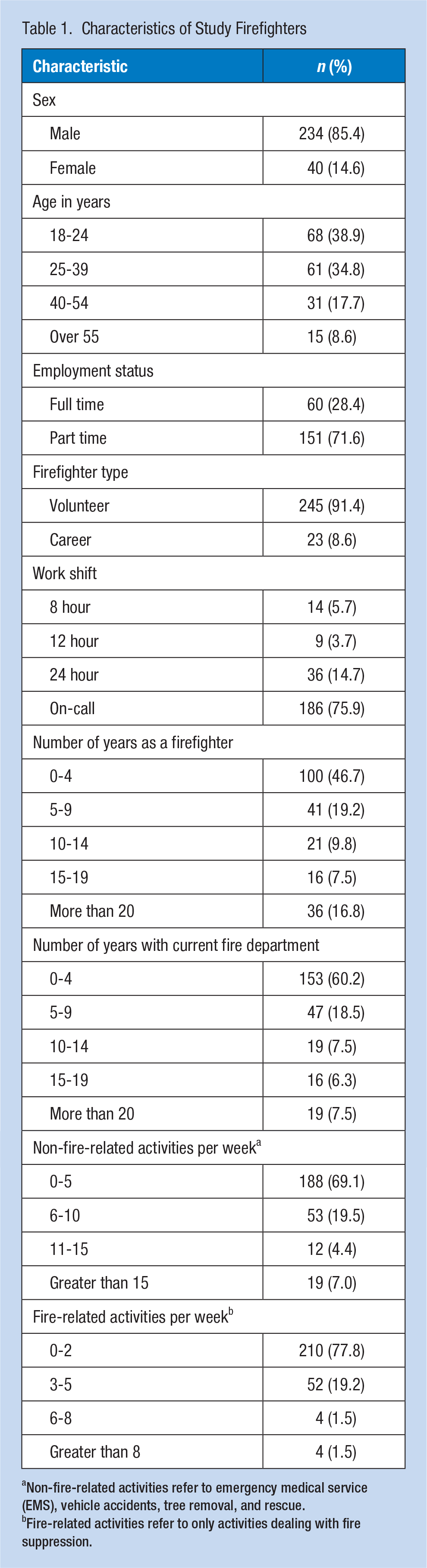
Non-fire-related activities refer to emergency medical service (EMS), vehicle accidents, tree removal, and rescue.
Fire-related activities refer to only activities dealing with fire suppression.
Job-Related Exposures
The majority indicated that they had concerns over job-related exposures (n = 230; 88%). Of the concerns mentioned, exposure to carcinogens, increased risk of cancer, and increased risk of respiratory issues were the most frequently reported. One firefighter described his concern by saying, Yes, I do not want cancer, but with only having one set of turnout gear it’s very likely. We have to sometimes wear dirty or wet turnout gear to other calls endangering other firefighters, EMS, and being exposed to carcinogens in our gear. With only one set of gear it’s endangering more than just the people in my department. (Anonymous participant)
Another was concerns based on experiences of fellow firefighters. The participant captured his or her concerns with the following statement: I’m always concerned due to nature of the job and always changing factors. Also I’ve had friends pass from fire related cancers. Haven’t been able to convince them to cover and enforce regular physicals for full time or part time firefighters. (Anonymous participant)
Cleaning of Turnout Gear
When asked when the participants choose to clean turnout gear, most (46%) reported cleaning as needed, while 19% indicated that gear is cleaned after each use. While determining when to clean gear, 38% reported after fire, and 37% when it is visibly dirty as indicators for cleaning. National Fire Protection Association states that ensemble and ensemble elements should be evaluated by the wearer for application of appropriate cleaning level after each use (NFPA, 2014). Almost three fourths of participants reported never having gear professionally cleaned. Over half reported cleaning in a top-load or front load washer and 23% cleaned with an extractor, another 8% reported cleaning gear by hand. The majority of participants (72%) reported that reminders from the fire department would be a positive motivator to having gear cleaned.
There was no significant difference between career and volunteer firefighters based on when they clean their turnout gear (χ2 = 0.044, p = .834). In addition, there was no significant differences between career and volunteer firefighter based on how often they have their turnout gear professionally cleaned (χ2 = 0.024, p = .878). When comparing knowledge related to NFPA standards for cleaning of turnout gear, there was no significant difference in career and volunteer firefighters (χ2 = 3.030, p = .082).
Storage of Turnout Gear
Over half of all participants reported storing turnout gear in a locker at the fire department. An additional 28% reported storing in a private vehicle, and 2% reported storing gear at home. Of the 252 participants, 117 (46%) reported that they “see no problem with storing turnout gear in a personal vehicle.” Over half (56%) of participants did not store turnout gear in any container, while 31% use a zippered bag for gear storage. National Fire Protection Association states that turnout gear should not be stored or transported in compartments or trunks with other sharp tools or objects unless in a protective bag. Ensembles and ensemble pieces should not be stored in living spaces or in the passenger compartment of a personal vehicle (NFPA, 2014).
There were no significant differences between career and volunteer firefighters based on where they store turnout gear (χ2 = 0.050, p = .822). However, chi-square analysis showed a significant difference between career and volunteer firefighters on perception of safety of storing gear in a personal vehicle (χ2 = 12.137, p < .001). Eighteen career firefighters (82%) did not perceive storing turnout gear in a personal vehicle “was a problem” compared to 99 (43%) of volunteer firefighters.
Retirement of Turnout Gear
Most of the participants (78%) were issued one set of turnout gear, with 15% reporting no turnout gear issued. Approximately 74% reported replacing gear less than every 10 years, while 26% reported waiting 10 years or more to replace gear. National Fire Protection Association states that turnout gear should be retired within 10 years of the manufactured date (NFPA, 2014).
There was a significant difference between career and volunteer firefighters based on replacement of turnout gear with 28% of volunteers reportedly replacing gear after more than 10 years compared to none of the career firefighters (χ2 = 8.065, p < .05). When comparing knowledge related to NFPA standards for retirement of turnout gear, there was no significant difference in career and volunteer firefighters (χ2 = 0.132, p = .716; Table 2).
Behaviors and Knowledge Related to the Proper Retirement, Storage, and Cleaning of Turnout Gear
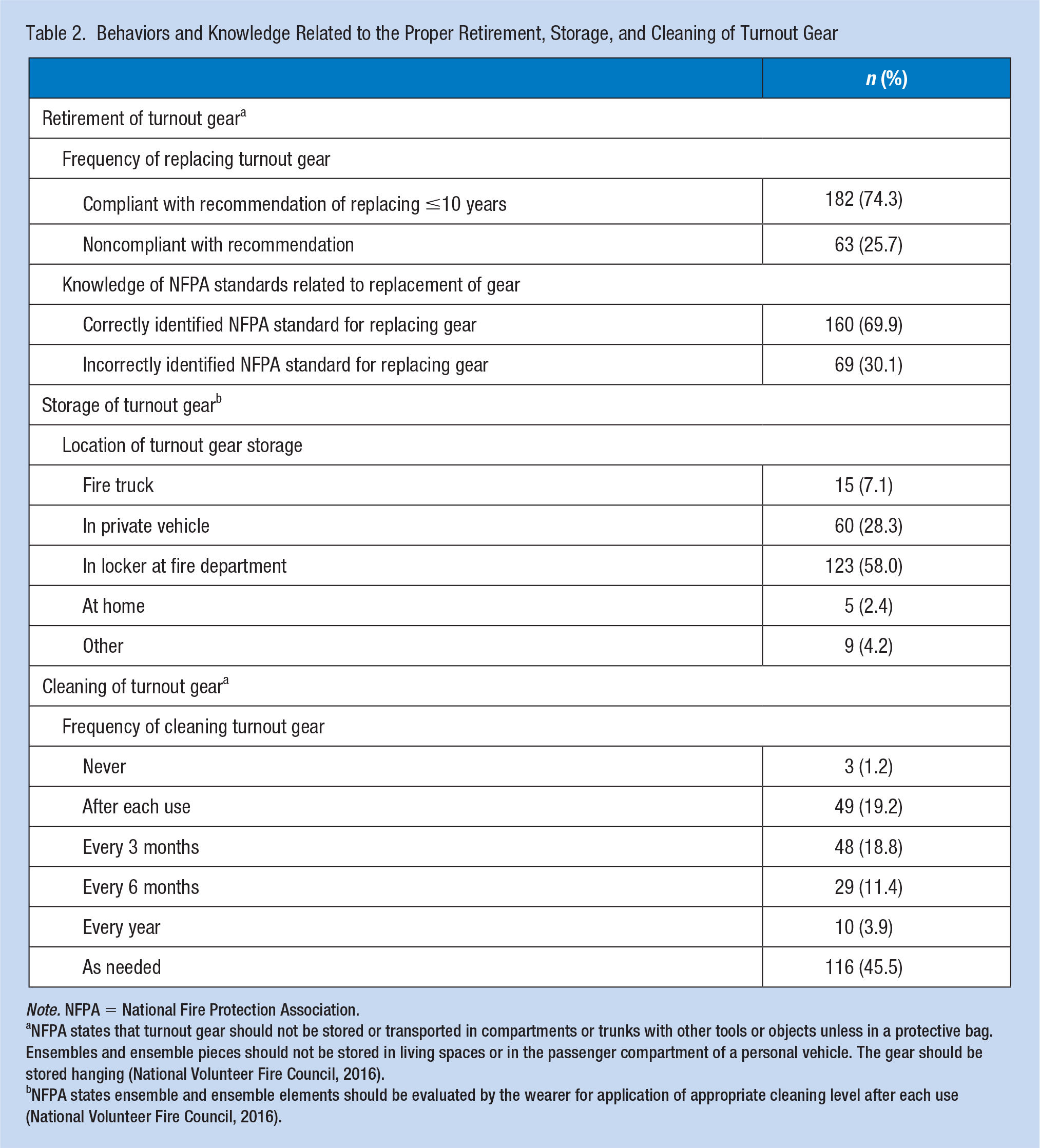
Note. NFPA = National Fire Protection Association.
NFPA states that turnout gear should not be stored or transported in compartments or trunks with other tools or objects unless in a protective bag. Ensembles and ensemble pieces should not be stored in living spaces or in the passenger compartment of a personal vehicle. The gear should be stored hanging (National Volunteer Fire Council, 2016).
NFPA states ensemble and ensemble elements should be evaluated by the wearer for application of appropriate cleaning level after each use (National Volunteer Fire Council, 2016).
HBM Constructs
Perceived susceptibility to occupational-related chronic disease
Scores for the perceived susceptibility scale ranged from 4 to 16. Almost 80% of participants recorded a score of 12 or more indicating a moderate to high level of perceived susceptibility to occupational-related chronic disease. Of the participating firefighters, 238 (87%) agreed or strongly agreed that their job placed them at greater risk for respiratory illness. Over 75% (n = 211) agreed or strongly agreed that hearing of a coworker with respiratory problems makes them realize they are at risk. Most (n = 203; 74%) agreed or strongly agreed that cleaning gear properly would reduce their risk of respiratory problems, while 86% (n = 220) felt that changing gear when recommended would reduce exposures that could make them sick. Independent samples t-test showed no significant differences in the mean scores for career versus volunteer firefighters based on perceived susceptibility scores (t = 0.014, p = .987).
Perceived severity of occupational-related chronic disease
Scores for the perceived severity scale ranged from 3 to 12. Approximately 80% of participants recorded a score of 10 or more indicating a high level of perceived severity. Over 95% (n = 243) agreed or strongly agreed that having a respiratory illness could severely impact their lives. Of the participating firefighters, 243 (96%) agreed or strongly agreed that respiratory illness could prevent them from working. The majority (n = 224; 88%) agreed or strongly agreed that they were concerned about how job-related exposures could impact their health. Independent sample t-test indicated a significant difference in the mean scores for career versus volunteer firefighters based on the perceived severity scores (t = 2.502, p < .05). Career firefighters had a significantly higher mean score compared to volunteers.
Perceived benefits
Scores for the perceived benefits scale ranged from 2 to 8. Almost 75% of participants recorded a score of 7 or more indicating a high level of perceived benefits. The majority of participants (n = 232; 97%) agreed or strongly agreed that storing gear properly reduced their family’s exposure to potentially harmful chemicals. Over 91% (n = 232) agreed or strongly agreed that following standards related to the retirement of turnout gear could prevent them from unnecessary exposures to carcinogens. Independent sample t-test results showed no significant difference in the mean scores for career versus volunteer firefighters based on the perceived benefits scores (t = 1.071, p = .393).
Perceived barriers
Scores for the perceived barriers scale ranged from 4 to 16. Approximately 70% of participants recorded a score of 10 or more indicating a moderate to high level of perceived barriers. Of the participating firefighters, 154 (62%) agreed or strongly agreed that cost was a barrier to cleaning their gear regularly. Over 70% (n = 186) agreed or strongly agreed they would be more likely to have their gear cleaned if the fire department cleaned it for them. Most (n = 197; 77%) agreed or strongly agreed it is too expensive to replace turnout gear when recommended. Only 30% felt that knowledge of how to clean gear properly was a barrier. Independent sample t-test showed a significant difference in the mean scores for career versus volunteer firefighters based on the perceived barriers scores (t = 3.318, p < .005). In addition, chi-square analysis showed a significant difference between career and volunteer firefighters when identifying cost as a barrier with volunteer firefighters being more likely than career to agree or strongly agree that cost prevented them from replacing gear as recommended (χ2 = 3.318, p < .01).
Perceived self-efficacy
Scores for the perceived self-efficacy scale ranged from 2 to 8. Over 90% of participants recorded a score of 5 or higher indicating a moderate to high level of perceived self-efficacy toward the proper cleaning and storage of turnout gear. Of the participating firefighters, 228 (90%) agreed or strongly agreed they were confident they could clean their turnout gear properly. Over 68% (n = 174) agreed or strongly agreed they were able to store gear as recommended. Independent sample t-test showed no significant difference in the mean scores for career versus volunteer firefighters based on the perceived self-efficacy scores (t = 1.043, p = .242; Table 3).
Comparison of Means of HBM Constructs Between Career and Volunteer Firefightersa
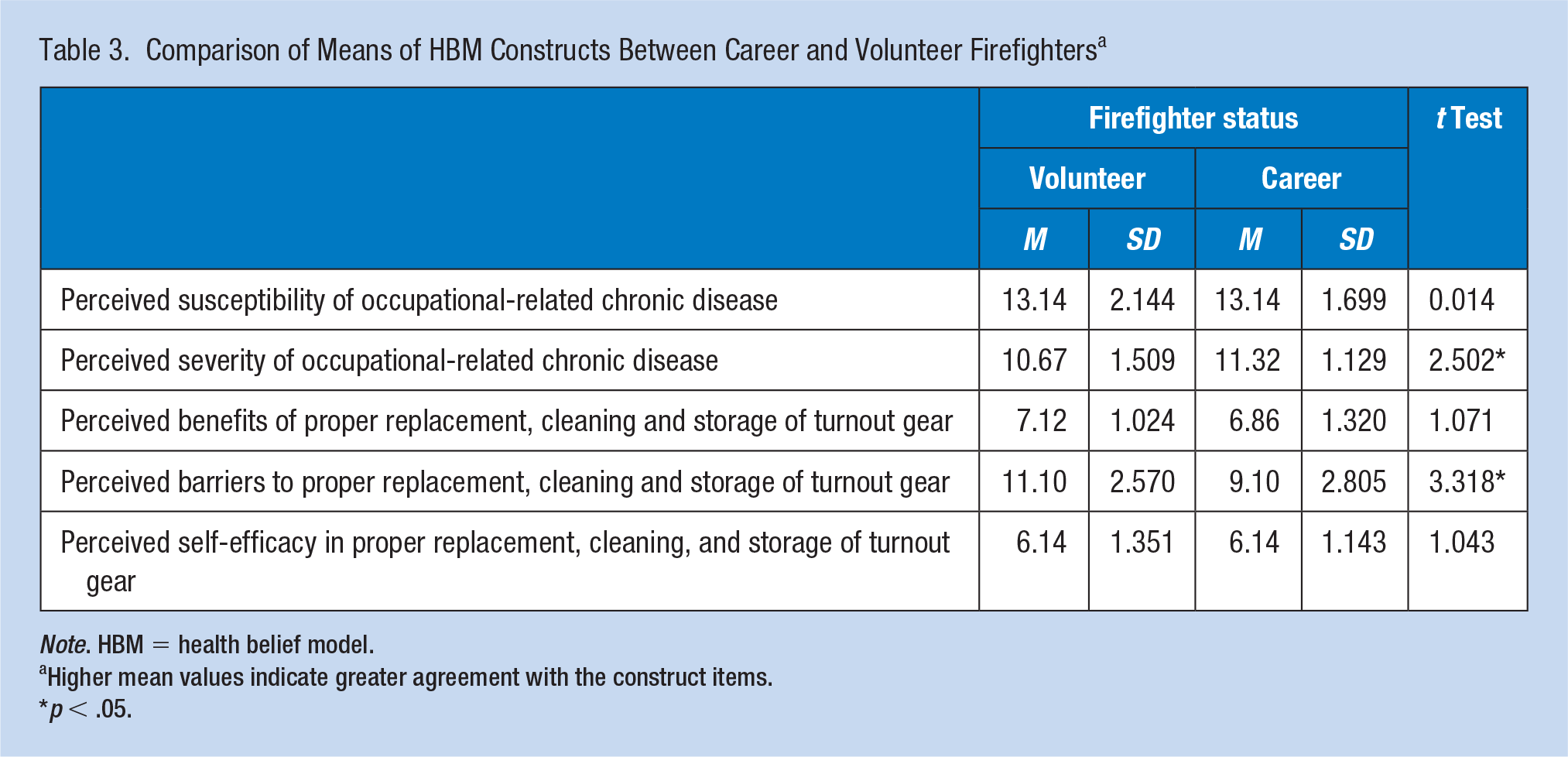
Note. HBM = health belief model.
Higher mean values indicate greater agreement with the construct items.
p < .05.
Regression of HBM constructs
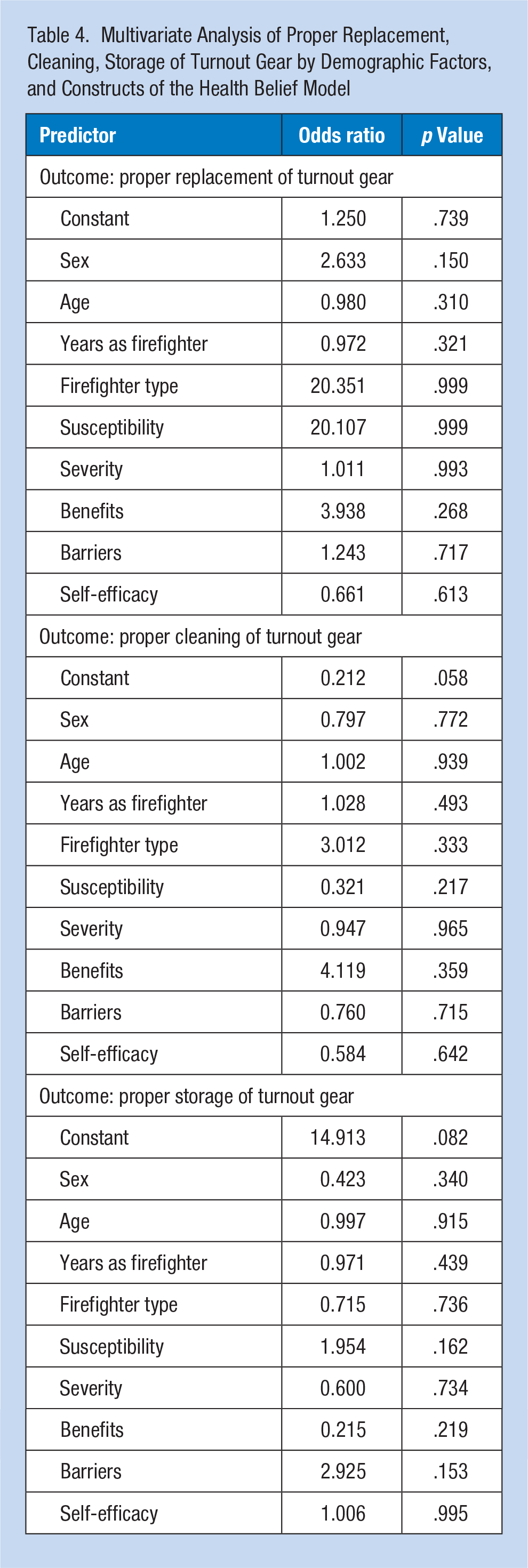
The logistic regression analysis showed none of the HBM constructs were significantly predictive of compliance related to retirement, cleaning, and storage of turnout gear (Table 4).
Multivariate Analysis of Proper Replacement, Cleaning, Storage of Turnout Gear by Demographic Factors, and Constructs of the Health Belief Model
Conclusion
In this study, the primary job-related concern was exposure to carcinogens and the development of cancer. Among those who listed a concern, 58% indicated concern over exposure to chemicals that could cause cancer. Qualitative information showed participants were concerned about exposures due to having only one set of gear. Without an extra set of gear, participants felt limited in their capabilities to clean gear and still have access to equipment if needed for a call. Additional information indicated firefighters were concerned because they knew of other firefighters who were diagnosed with cancer from their departments or social circles. Information gleaned from the questions also indicated firefighters are aware of the increased risk of exposures. These findings were consistent with both career and volunteer firefighters.
The majority of participants reported never having their gear professionally cleaned. Over half also reported cleaning in a top or front load washer. The NFPA 1851 9.1 states that heavily soiled turnout gear should be cleaned in an extractor and should not be cleaned in an appliance used for cleaning personal laundry due to cross-contamination concerns (NFPA, 2014). Cross contamination from soiled turnout gear may be transferred to other clothing items increasing exposures for firefighters and potentially their families (Hwang et al., in press).
While half of all participants reported storing turnout gear in a locker at the fire department, more than a quarter indicated storing gear in a personal vehicle and a small percentage stored gear at home. In addition, almost half reported they saw no issue with storing gear in a personal vehicle. Among this group, career firefighters were more likely to perceive the practice of storing gear in a personal vehicle as safe. Further research needs to be conducted to explore this perception, especially since NFPA 1851, Standard 9.1 states that turnout gear should not be stored in personal living quarters or in the passenger compartment of a personal vehicle (NFPA, 2014).
The majority of participants reported only one set of turnout gear. One quarter of participants indicated replacing gear at intervals greater than 10 years. Standard 10.1.2 states that “elements shall be retired no more than 10 years from the date the ensembles or ensembles elements were manufactured” (NFPA, 2014). Volunteers were more likely than career firefighters to report using turnout gear older than 10 years. However, there was no significant difference on knowledge related to Standard 10.1.2 related to proper retirement of turnout gear between career and volunteer firefighters (NFPA, 2014). This could indicate that barriers to retiring older sets of turnout gear is not a result of lack of knowledge about the standard but is likely related to structural factors like cost and accessibility as volunteer fire departments often have a lower operating budget compared to career fire departments.
Results of data analysis of the health belief constructs showed the majority of respondents indicated a moderate to high level of perceived susceptibility indicating that they felt their job put them at higher risk of disease like respiratory illness and cancer. Over 80% also scored high on the perceived severity scale indicating they felt these diseases could significantly impact their lives. Therefore, the overall perceived threat of the group was high. These findings are consistent with other findings assessing perceived health concerns among firefighters (Jahnke, Poston, Jitnarin, & Haddock, 2012). The perceived benefits of cleaning, storing, and retiring turnout gear properly were high indicating that participants felt following suggested protocols would reduce exposure to themselves and their families. However, perceived barriers to the proper cleaning, storage, and retirement of turnout gear were also high. Again, cost was a main factor as the majority indicated that lack of funding was a major contributor to cleaning and retiring gear when recommended. When comparing career and volunteer firefighters, cost was statistically significant with more volunteers indicating that cost prevented them from having more than one set of gear and from retiring turnout gear when indicated. This highlights the need for financial assistance to volunteer fire departments to supply additional sets of turnout gear. The magnitude of the structural barriers of cost and accessibility seems to outweigh the perceived benefits that were reported; therefore, despite participants’ perception that proper cleaning and retirement of turnout gear protects them and their families from additional exposures, the inability to afford multiple sets of turnout gear limits their opportunities to clean gear when recommended and replace gear that should be taken out of service.
Potential limitations of the study were threats to external validity and potential recall bias. External validity may have been threatened by use of a convenience sample because there may be differences in firefighters in this fire district compared to other districts. The sample size of career firefighters is also small, due to the rural location. More research with larger sample sizes is needed to adequately compare behaviors and knowledge between career and volunteer firefighters. Participants were also asked to recall events and activities that occurred within the past 12 months, which could lead to recall bias as they may not be able to accurately recall behaviors related to the retirement, cleaning, and storage of gear.
Implications for Occupational Health Practice
Research has shown that firefighters have occupational exposures to substances linked with increased risk of developing certain types of cancer and respiratory illness (Daniels et al., 2015; Daniels et al., 2014; Hwang et al., in press; LeMasters et al., 2006; National Institute of Occupational Safety and Health, 2016; Youakim, 2006). Most research conducted on occupational exposures related to firefighters have been conducted in large metropolitan areas with career firefighters. This research provides information related to behaviors that may increase exposures among a population of primarily volunteer firefighters from rural areas. This information can be utilized by practitioners to inform them of behaviors that may increase exposures for the development of educational materials, program planning, and policy development that may remove some of the barriers to proper retirement, cleaning, and storage of turnout gear, especially among rural, volunteer firefighters.
Applying Research to Practice
The findings of this study showed the majority of participating firefighters were concerned about job-related exposures and reported moderate to high levels of perceived susceptibility to occupational-related disease. Half of the participants also saw no problems with storing gear in personal vehicles. Occupational health practitioners, especially in rural areas with larger populations of volunteer firefighters, should educate career and volunteer firefighters about the importance of proper storage of turnout gear potentially reducing exposures to firefighters and their families. In addition, as cost and accessibility to multiple sets of turnout gear were perceived to impede proper retirement and cleaning of gear among rural, volunteer firefighters, there is also an opportunity for occupational health professionals to advocate for proper funding to departments to help alleviate these barriers and therefore potentially reduce occupational exposures.
Footnotes
Conflict of Interest
The author(s) declared no potential conflicts of interest with respect to the research, authorship, and/or publication of this article.
Funding
The author(s) disclosed receipt of the following financial support for the research, authorship, and/or publication of this article: This project was supported by Western Kentucky University (WKU) College of Health and Human Services’ Quick Turnaround Grant (QTAG).

Author Biographies
Gretchen B. Macy, EdD, MPH, is an associate professor in the Department of Public Health at Western Kentucky University and core faculty in the Center for Environmental and Workplace Health. Her academic interests include the integration of workplace health promotion and occupational safety, health behavior change, and program evaluation.
Jooyeon Hwang, PhD, is an assistant professor in occupational and environmental health at the University of Oklahoma Health Sciences Center. Her research has focused on evaluation of the relationship between occupational and environmental exposure to specific contaminants and adverse health effects in several different cohort populations including miners, farmers, and firefighters.
Ritchie Taylor, PhD, is the Director of Environmental and Occupational Health Science programs and the Center for Environmental and Workplace Health at Western Kentucky University. Dr. Taylor’s research interests include workplace safety and health in rural communities, occupational safety and health participatory research, and development of strategies to reduce exposures to environmental stressors.
Vijay Golla, PhD, MPH, MBBS, is a professor in the Department of Science and Mathematics, and Vice Provost for Research and Graduate Studies at Texas A&M University-San Antonio. He specializes in environmental and occupational health, industrial hygiene, and environmental and occupational epidemiology. He has been conducting research studies involving exposure assessment of particulate matter among firefighters, organic dust exposures among equine farm workers, and research involving worksite health promotion and Total Worker Health among industrial manufacturing employees.
Charles Cann is an environmental control supervisor with the Kentucky Department of Environmental Protection, and directs the Air Quality Division’s Field Office in Owensboro, Kentucky. His work and research focuses on air quality and protection of human health from environmental exposures.
Brittney Gates, MHA, is a former graduate assistant in the Department of Public Health at Western Kentucky University. She currently serves as the medical staff services manager at Mercy Health.