




Abstract
This study investigated the predictive role of teachers’ perceptions of a fear culture in their schools on their sources of work motivation. A correlational research model focusing on latent variables and their relationships was used to analyze the data. Data were collected from 336 teachers working at different levels in private schools using the Schools of Fear Culture Scale (SFCS) and the Sources of Teacher Work Motivation Scale (STWMS). After the data collection process, normality tests showed that the data were normally distributed, allowing the use of parametric analyses. After modifications within the framework of Structural Equation Modeling (SEM), the final model was found to exhibit a good fit. The findings revealed that teachers’ perceptions of a fear culture negatively affect their sources of work motivation. This result indicates that the presence of a fear culture in schools significantly weakens teachers’ work motivation.
Plain Language Summary
This study offers a comprehensive examination of a structural issue affecting the work motivation of teachers in private educational institutions in Türkiye: the phenomenon of a “culture of fear.” Drawing on quantitative data, the research reveals that the level of fear perceived by teachers within the school environment has a direct and significant impact on their professional motivation. By emphasizing the critical importance of a trust-based and supportive school climate, the study presents strategic recommendations for educational administrators, policymakers, and private school stakeholders. It serves as a valuable resource for anyone seeking to understand and enhance teacher motivation in today’s educational landscape.
Keywords
Introduction
The education system plays a critical role in the development and progress of a country. Teachers, who are the cornerstone of this system, have a direct impact on students’ academic success and personal development. As in many parts of the world, teachers working in private schools in Turkey constitute an important part of the education system. With each passing day, the need for private schools has increased with both economic and educational changes. Yılmaz and Altınkurt (2011, p.636) describe this as the commercialization of education. In this commercialized area, expectations from teachers are also higher. According to the data of the Ministry of National Education of the Republic of Turkey (MOE, 2024), the rate of public schools in Turkey is 80.3% and the rate of private schools is 19.7%. Uygun (2003, p.110) states that private schools in Turkey gained official status with the Reform Edict (1856), which was a democratization movement during the Ottoman Empire period. The Turkish Education Association, which would become TED College in the years following the first private school initiatives of the Republic of Turkey, was founded in 1928 (TED, 2024).This pioneering institution heralded a public-private separation in the Turkish education system, and the private school sector experienced steady growth over the following decades. Today, 15 million 850 thousand students continue their education in public schools; 1 million 632 thousand students continue their education in private schools. In addition, 993 thousand teachers work in public schools and 175 thousand teachers work in private schools. Private educational institutions are preferred by parents and students for reasons such as the selection of teachers according to objective criteria, the physical conditions of the schools, the quality of education, their security, the social environment, adequate nutrition opportunities, etc.
The reasons for preferring private educational institutions in Turkey and the opportunities provided in these institutions are remarkable. However, the difficulties that teachers working in private schools face in terms of job motivation gain a different dimension in the background of these preferences. According to data from the Organisation for Economic Cooperation and Development (OECD, 2021), teachers leave the profession at disproportionately high rates due to issues such as burnout, stress, and inadequate compensation. As in all business areas, the work environment is very important in every aspect in the teaching profession. Because motivation in the work environment directly affects the desire, effort and determination of the individual towards his/her work. Motivation can be expressed as the sum of the internal and external driving forces that individuals show to achieve a certain goal. Graham and Weiner (2012) express motivation as a situation that initiates, directs and energizes human behavior. Positive motivation increases efficiency and creativity. However, it has been confirmed by meta-analysis studies that a negative organizational climate and a culture of fear systematically weaken these driving forces (Granziera et al., 2022, p. 1). According to Maslow’s Hierarchy of Needs (1943), an individual whose basic needs are met can focus on the self-actualization stage and work more efficiently (Maslow, 1943). Furthermore, it is observed that there are many factors that will reduce the work motivation of private school teachers in Turkey. It is evident that private school teachers work under different and often more challenging conditions than their colleagues working in public schools. Work motivation, which Zhang and Ye (2024, p.13242) refer to as “teacher enthusiasm,” is a combination of the school environment, organizational culture, personal interests and beliefs, and the authors state that very few studies have been done on this subject. When the literature is examined, it is seen that there are a limited number of studies on teachers’ work motivation such as: Kunter et al. (2011); S. Liu and Onwuegbuzie (2014); Neves de Jesus and Lens (2005); Wahab et al. (2013); Griffin (2010); Sakui and Cowie (2012); Li et al. (2024). According to Burić and Moè (2020, p. 2), enthusiasm for work will increase job satisfaction and also improve creativity. Because motivation and work create a cycle that mutually affects each other. Moreover, as in many developing countries, teachers working in private schools in Turkey face problems such as boss and manager pressure, low salaries, lack of job security, intense working hours and inadequate social rights. In a study investigating the destructive effects of school administrators on teachers in Türkiye, they stated: “They state that the controlling behaviors of school administrators create anxiety and discontent among teachers. According to the authors, these controlling behaviors permeate every aspect of the educational experience, from hindering academic creativity to inhibiting teacher autonomy.” (Şenol & Taş, 2025, p. 430). These problems negatively affect teachers’ professional satisfaction and motivation and also reduce the quality of education.
Working Conditions and Professional Well-being
Private school teachers operate within a professional landscape characterized by a constellation of interconnected challenges that significantly impact their economic stability, professional well-being, and career development. A primary and fundamental issue they face is the problem of low salaries and inadequate economic conditions. In their article discussing the problems of private school teachers, Ergen and Çokkeser (2022, p. 114) identified problems such as wages not being determined fairly, low wages being paid, and salaries not being paid on time. Many private schools pay their teachers lower salaries than teachers working in public schools, and this causes teachers to have financial difficulties.
Compounding these financial strains is a pervasive sense of professional precariousness, stemming from the lack of job security and social rights. Job security in private schools is much weaker than in public schools. Private school teachers usually work on one-year contracts, and this becomes a stressful factor in schools during the contract renewal period each year (Ağırbay, 2018, p.1). Teachers are in constant uncertainty about whether their contracts will be renewed or not. In addition, it is observed that basic rights such as health insurance, annual leave, and maternity leave are not sufficiently provided in some private schools. Lack of job security makes it difficult for teachers to plan for the future, reinforces feelings of worthlessness, and creates professional dissatisfaction.Teachers working in private schools are often exposed to long working hours and overtime. In his master’s thesis on defining teachers’ professional problems, Başturan (2018, p.64) determined that long working hours are one of the most important problems affecting teachers’ work motivation. Teachers are expected to participate in school activities outside of class hours, give extra lessons on weekends, carry out projects and deal with students one-on-one. This situation increases teachers’ workload and leads to burnout syndrome over time.
Beyond the anxiety of job insecurity, the physical and temporal demands of the profession present another layer of difficulty, primarily through long working hours and overtime. This demanding workload is frequently intensified by significant performance pressure. School administrations expect constant high performance from teachers in order to increase student success and increase the prestige of the school. Bingölbalı (2018, p. 67) states that this performance pressure comes not only from school administrators but also from parents and students. This situation causes teachers to work under constant pressure and their workload to increase.
While teachers are expected to consistently perform at a high level, the opportunities provided for their professional development remain notably limited. Most private schools do not provide their teachers with sufficient training opportunities, especially due to intense working conditions. The training provided is usually provided on teachers’ days off. Çimen and Karadağ (2020, pp. 526–530) stated in their study on the working conditions of teachers working in private schools that the participating teachers do jobs outside their job descriptions and work both at school and outside of school without the concept of working hours. According to the statements of the participants in the same study, it was observed that teachers exhibited a profile that showed sacrifice, got tired, was blamed, and still had to work in the teacher-parent-school administration relationships in private educational institutions. In a different study, Özkeskin and Yıldız (2024, p. 772) also emphasize that professional development is adapted to the specific context of each school and is often used as a tool to increase profitability. It is also stated that the lack of investment in professional development in private institutions and the inadequacy of formal opportunities seriously restrict the professional renewal of teachers.
According to Jugović et al. (2012, pp. 271–275), the subject of teacher motivation has become a rapidly growing research area in recent years. The study stated that the desire to work with children is an important source of motivation for teachers and emphasized the importance of intrinsic motivation in the teaching profession. S. Liu and Onwuegbuzie (2014, p.76) explained the distinction between intrinsic and extrinsic motivation in the teaching profession with the difference between developed and developing countries. According to the researchers, while in developed countries such as Australia and the United States, teacher job motivation is attributed to intrinsic/personal reasons, in developing countries external factors are more important. Because in developing countries, problems such as difficult working conditions and inadequate salaries affect job motivation more. However, in the same study, it was revealed that “teachers are not satisfied with student discipline problems, lack of autonomy and insufficient respect from society, status and recognition” (S. Liu & Onwuegbuzie, 2014, p. 76). This view is also supported by a recent comparative study, which shows that teacher motivation in developing countries is more dependent on external sources such as organizational justice, working conditions and administrative support (Durksen et al., 2017, p. 53).
Significance of the Study: The Relationship Between Teachers’ Culture of Fear and Their Work Motivation
The significance of this study stems from its ability to fill a significant gap in the literature on teacher motivation and school climate. Existing research on teacher motivation typically focuses on general organizational factors (Burić & Moè, 2020; S. Liu & Onwuegbuzie, 2014) but has not adequately examined the systematic impact of a “culture of fear,” a destructive phenomenon particularly in private educational institutions that directly depletes motivational resources. Private schools, due to market dynamics and performance pressures, harbor conditions that can foster fear, such as job insecurity, authoritarian leadership, and peer competition. This study holistically explores the destructive impact of a culture of fear on motivation by considering it as a multidimensional construct (fear of managers, colleagues, and legal action). As Granziera et al. (2022) emphasized, negative organizational climates systematically undermine the psychological resources individuals use to maintain their jobs. Therefore, this research not only describes a relationship but also offers a theoretical explanation for how a culture of fear creates chronic job demands and depletes teachers’ motivational resources. Another important contribution of the research is that its findings provide concrete implications for education policy and school management. Because teacher motivation is directly linked to student achievement and school effectiveness (Madigan & Kim, 2021), understanding the factors that undermine motivation is crucial. This study provides private school administrators and policymakers with empirical evidence that improving teaching quality requires not only financial incentives but also building a school climate built on trust, psychological safety, and autonomy. For example, the strong negative impact of principal fear on motivation clearly demonstrates the need to adopt transformational leadership styles instead of authoritarian practices. Similarly, the impact of colleague fear highlights the importance of developing in-school mechanisms that encourage collaboration and reinforce solidarity. Ultimately, this research serves as a critical guide for laying the foundation for fear-free school ecosystems where teachers can be more productive and happy, and students can receive a higher-quality education.
In this study, factors affecting the work motivation of teachers working in private educational institutions in Turkey were determined with the Scale of Fear Culture in Schools (SFCS) and the Scale of Teachers’ Work Motivation Sources (STWMS); the structural equation model (SEM) established in line with the findings and research hypotheses was reached (Figure 1).
Hypothesis: Teachers’ perceptions of the culture of fear in the schools they work in have a significant predictive variable role on their work motivation sources.
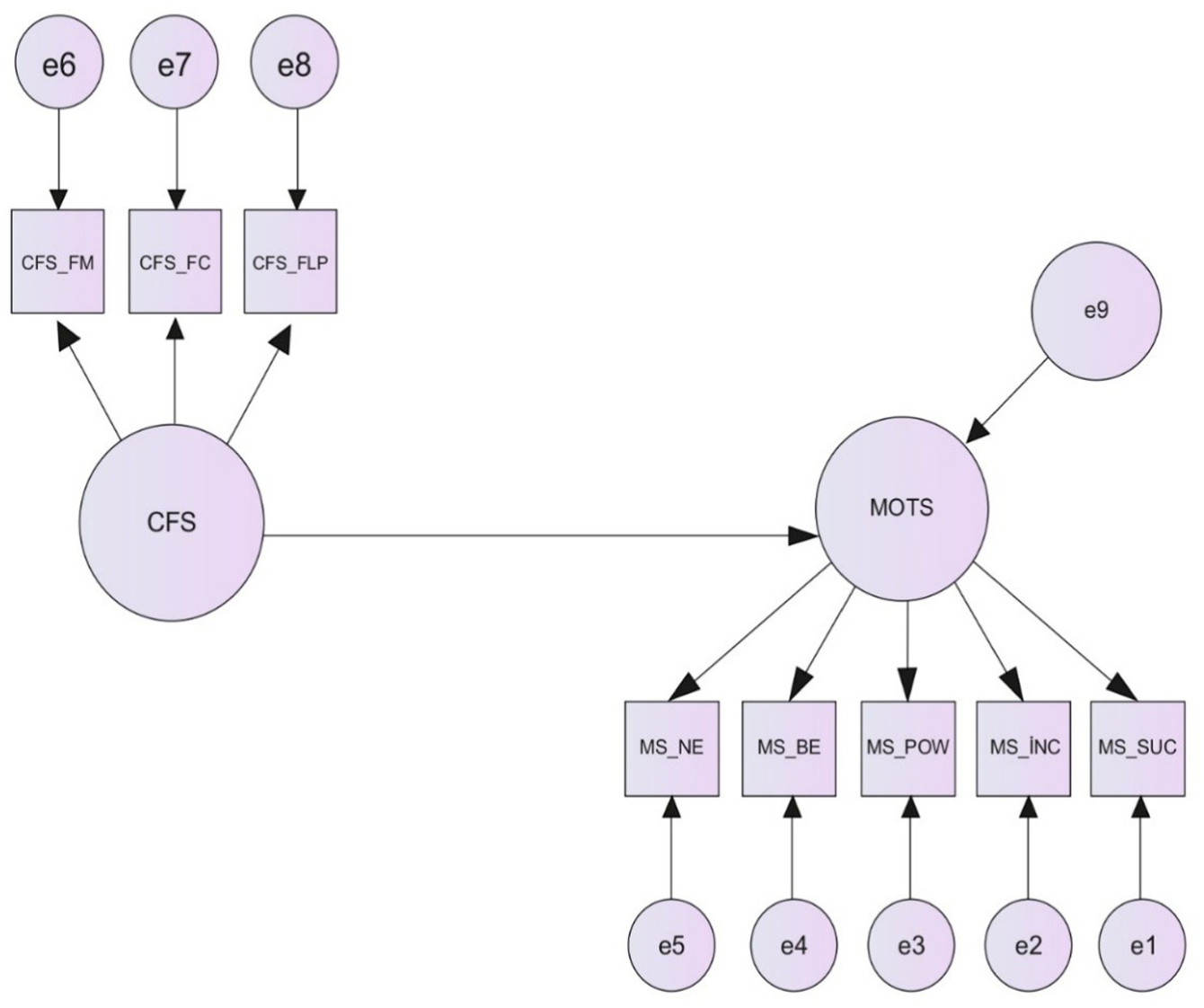
Research hypothetical theoretical model.
Method
Research Model
This research, which was conducted to examine the predictive role of teachers’ perceptions of the culture of fear in the schools they work in on their work motivation sources, was designed in accordance with the quantitative research design and the relational research model. The relational research model is a research model used to obtain information about the relationship patterns between various variables. In studies conducted based on the relational model, the main purpose is to obtain clues about the effect of a certain group of variables (independent variables) on another group of variables (dependent variables). Instead of determining cause-effect relationships, relational studies attempt to reveal the existence and strength of relationships between variables. In this respect, studies conducted based on the relational research model are quite functional in terms of revealing the relationships between variables and supporting the making of healthy predictions for the future (Fraenkel et al., 2012).
Study Group
The study group consisted of 336 teachers from 11 different branches working in 45 different schools and from four different levels (preschool, primary school, middle school, high school) who participated in the study voluntarily. Of these teachers in the study group, 261 were female (% = 77.7) and 72 were male (% = 21.4). Three teachers in the study group (% = 0.9) did not state their gender. Furthermore, the ages of the teachers in the study group ranged from 20 to 67, and their average age was calculated as 39.76 (SD = 8.769). When determining the research group in which would be conducted, the difficulties inherent in collecting data with teachers were taken into consideration, thus the study group was determined using convenience sampling, especially in terms of time and economy. At this point, the fact that one of the random sampling methods was not preferred is considered as a limitation of the study.
Data Collection Tools
In our study, a scale battery consisting of three different measurement tools, namely the Personal Information Form, the Culture of Fear in Schools Scale, and the Teachers’ Work Motivation Sources Scale, was used as a data collection tool. Detailed information about each measurement tool used in the study is presented below, respectively.
Personal Information Form
The Personal Information Form (PIF) used to obtain information about the demographic characteristics of the teachers participating in the study was developed by the researchers within the scope of this research. The PIF includes questions about age, gender, teachers’ experience in private educational institutions (in years), educational status, branch and level of education.
The Scale of Fear Culture in Schools
The School Fear Culture Scale (SFCS) used to measure the perceptions of the teachers participating in the study regarding the culture of fear in the schools they work was developed by Çelik and Kahraman (2019). SFCS is a 5-point Likert-type scale consisting of 21 items. With SFCS, teachers’ perceptions of the culture of fear are measured as a three-dimensional structure conceptualized as “fear of administrators,”“fear of colleagues” and “fear of legal process.” It is stated that this structure, which was put forward within the scope of the development study of the scale, explains 64.662% of the variance related to the culture of fear. In addition, the results of the confirmatory factor analysis conducted within the scope of the development study also reveal that this structure is valid (χ2/SD = 2.231; GFI = .882; AGFI = 0.854; CFI = .952 and RMSEA = 0.068). The reliability of SFCS was examined by calculating the Cronbach Alpha reliability coefficient in the context of reliability based on internal consistency within the scope of the development study and the α coefficient, which reveals the reliability of the scale based on internal consistency, was calculated as α = .92 for the whole scale. When all these are evaluated together, it can be said that SFCS is valid and reliable in measuring teachers’ perceptions of the culture of fear in the schools where they work. Since SFCS was reused in a different study group than the one in which it was developed, its reliability was re-examined in the context of internal consistency reliability within the scope of this study and the reliability results of SFCS in this study are presented in Tables 1 and 2.
Correlations Between Variables and Internal Consistency Coefficients.

p < .05.
Descriptive Statistics on Variables.

Note. FM = Fear of Manager; FC = Fear of Colleague; FLP = Fear of Legal Process; SFCS_TOP = Culture of Fear Total Score; SM_NE = Source of Motivation-Need; SM_BE = Source of Motivation-Belief; SM_POW = Source of Motivation-Power; SM_İNC = Source of Motivation-Incentive; SM_SUC = Source of Motivation-Success; SM_TOP = Source of Motivation-Total Score.
The Scale of Teachers’ Work Motivation Sources
The Teachers’ Work Motivation Sources Scale (STWMS) used to measure the work motivation sources of the teachers participating in the study was developed by Tabak et al. (2019). STWMS is a 5-point Likert-type scale consisting of 33 items. With STWMS, teachers’ work motivation sources are measured as a five-dimensional structure conceptualized as “need,”“belief,”“power,”“encouragement” and “success.” It is stated that this structure, which was revealed within the scope of the scale development study, explains 66.21% of the variance regarding work motivation sources. Furthermore, the results of the confirmatory factor analysis conducted within the scope of the development study also reveal that this structure is valid (χ2/SD = 2.90; GFI = .83; AGFI = 0.80; CFI = .98 and RMSEA = 0.068). The reliability of the STWMS was examined by calculating the Cronbach Alpha reliability coefficient in the context of reliability based on internal consistency within the scope of the development study, and the α coefficient revealing the reliability of the scale based on internal consistency was calculated as α = .96 for the entire scale. When all these are evaluated together, it can be said that the STWMS is valid and reliable in measuring teachers’ work motivation sources. Since the STWMS was re-used in a different group than the study group it was developed for in this study, its reliability was re-examined in the context of internal consistency reliability within the scope of this study, and the reliability results of the STWMS are presented in Tables 1 and 2.
Data Collection
The process of collecting research data was started by first obtaining the necessary legal permissions. In this context, scale usage permissions were first obtained from the researchers who developed the measurement tools used in the research. Then, in order to guarantee the ethical compliance of the research, an ethics committee approval was requested, and it was received. After the ethical compliance of the research was also guaranteed, the data collection process of the research was started.
In the research, data were collected in a digital environment, in a survey format and through Google Forms. The question form link prepared on the relevant platform was delivered to the teachers through various communication channels and the teachers filled out the measurement tools through this link. The prepared question form link included not only the measurement tools but also an information note about the main goal, hypotheses and process of the research. Participants were also informed about the importance of their sincere and honest answers in the research process. Within the scope of the research, no personal identifying information such as the names and surnames, birth dates, ID numbers or contact information of the participants were collected or recorded, apart from the answers given to the questions forming the scale battery. This aimed to prevent the researchers from identifying a specific participant and thus preventing data security from being compromised. Furthermore, the research was conducted with teachers who volunteered to participate in the research after obtaining consent from the participants stating that they participated in the research voluntarily. At the end of all these processes, data was collected from 413 teachers and the data collection process of the research was concluded.
Ethical Considerations and Societal Benefit
This study, conducted under Protocol No. E-77082166-604.01-1046738 with the approval of the Ethics Committee, carries a minimal risk of physical or psychological harm to participants. The survey questions aimed to measure general perceptions of current working conditions; personal or traumatic experiences were not inquired about. Participants were clearly informed of the purpose of the research, that data would be processed anonymously, and that they could withdraw from participation at any time. Only participants who provided informed consent at the beginning of the online survey were included in the study. The societal benefits of the research—namely, revealing factors negatively affecting teacher motivation in private schools and providing information to education policies and school administrations—significantly outweigh the minimal risk to participants. All data was collected anonymously, and no personally identifiable information was recorded. In general, it can be said that scientific research, and this study in particular, makes a positive contribution to the development of scientific capacity and the quality of human resources for teachers working in education systems. This can naturally facilitate the provision of quality services to both educational actors and those benefiting from educational services.
Data Analysis
After the data collection process of the study was completed, the data analysis phase was started. In the analysis of the data, firstly, the missing and/or erroneous values in the data set were examined. In line with the suggestions of Tabachnick and Fidell (2012), the acceptable non-response item rate was accepted as a maximum of 5% in the evaluation of missing data and the scale batteries belonging to the participants with non-response items above this rate were excluded from the data set of the study. Therefore, a total of 40 scale batteries containing more than 5% non-response items were removed from the data set. Then, the stage of examining the normality of the distribution of the data set was started. In the process of examining the normality of the distribution, both univariate and multivariate normality assumptions were examined. Univariate extreme values in the data set of the study were evaluated by histogram graphs, box plots and calculated z scores created using the IBM SPSS program. Multivariate normal distribution was examined by calculating the Mahalobonis distance coefficients, which reveal the extreme values deviating from multivariate normality. As a result of these examinations regarding the normal distribution properties of the data set, the scale battery of 37 teachers, which was determined to be an extreme value, was excluded from the data set of the study. After all these, as can be seen from the kurtosis and skewness coefficients regarding the research variables in the rest of Tables 1 and 2, it was decided that the data set of the study had normal distribution properties, this data set was accepted as the final data set of the study, and the analyses conducted to test the research hypotheses were conducted on this final data set consisting of 336 teachers.
In the analysis of the research data, firstly, descriptive statistics were performed regarding the research variables. Then, the relationship patterns between the research variables were examined with Pearson Product Moment Correlation Analysis. Finally, in line with the basic hypothesis of the study, the predictive role of teachers’ perceptions of the culture of fear in the schools they work in on their work motivation sources was tested using the structural equation modeling (SEM) data analysis technique. In the evaluation of the goodness of fit of the structural equation modeling established within the scope of the research, χ2, SD, χ2/SD, GFI, AGFI, CFI, SRMR and RMSEA values were taken as basis. In carrying out all these analyses mentioned, IBM SPSS 20 and IBM AMOS Graphics programs were used and p < .05 minimum significance level was taken as basis.
Findings
In this section, the findings obtained in line with the hypotheses of the research are presented under three headings. In this context, first, descriptive statistics related to the research variables and then the correlation analysis results performed to test the relationships between the research variables are given. Then, the findings related to the testing of the structural equation model established within the scope of the research are presented. Finally, the total, direct and indirect effects obtained through the structural equation model tested within the scope of the research are reported.
Descriptive Statistics and Findings Regarding the Relationships Between Variables
When Tables 1 and 2 are examined, first of all, it is striking that there are negative and significant relationships between the perceptions of teachers, which act as the independent (predictor) variable in the research, regarding the culture of fear in the schools they work in, and the total score and all sub-dimension scores of the sources of motivation for work, which act as the dependent (predicted) variable. In addition, when the kurtosis and skewness coefficients presented in Tables 1 and 2 are examined based on the propositions of George and Mallery (2010) on the point of normal distribution, it is seen that the distributions of the scores of the variables in the data set have a normal distribution feature. After determining that the research data have normal distribution features and that there are significant relationships between the research variables, the structural equation model established in line with the research hypotheses was tested.
Findings Regarding the Testing of the Structural Equation Model Established Within the Scope of the Research The structural equation model established in line with the research hypotheses and shown in Figure 2 was first tested without any modification (Model 1). The analysis results revealed that the tested structural equation model did not provide sufficient fit, especially in terms of some criteria (χ2/SD = 8.50; AGFI = .793; RMSEA = .150). Possible modification suggestions regarding the structural equation model established upon this were examined. In this examination, the modifications suggested between the error terms e1-e2 and e4-e5 attracted attention. In line with these suggestions, firstly, a modification was applied by drawing a two-way covariance path between the error terms represented by codes e1 and e2 regarding the “success” sub-dimension and “incentive” sub-dimension of teachers’ motivation sources (Model 2). The goodness of fit index values before and after this modification are given in Tables 1 and 2.
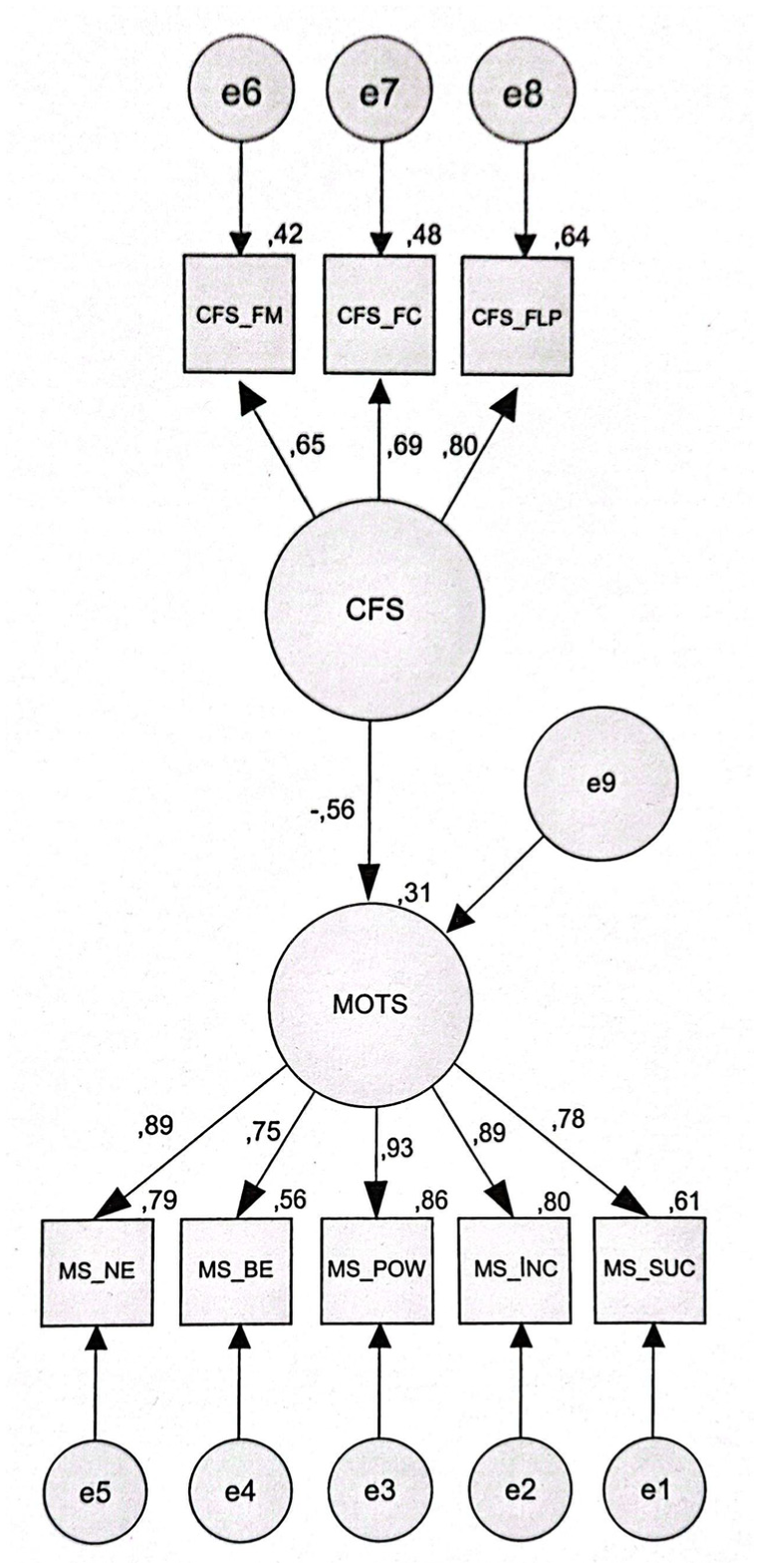
Structural equation model tested within the scope of the research (without modification).
Despite this modification, since the tested structural equation model did not provide the required goodness of fit indices (χ2/SD = 4.59; RMSEA = .104), another modification suggestion was implemented and a two-way covariance path was drawn between the error terms represented by codes e4 and e5 regarding the “belief” sub-dimension and “need” sub-dimension of teachers’ motivation sources and one more modification was applied (Model 3). As a result of these modifications, it was observed that the tested structural equation model provided the required goodness of fit indices and finally the model with two modifications was confirmed as the final model of the research (χ2/SD = 2.15; GFI = .975; AGFI = .946; CFI = .989 and RMSEA = .059 [LO = .032, HI = .085]). In addition to these goodness of fit indices, when the AIC and ECVI values in Tables 1 and 2 are examined, it is seen that these values decrease significantly with the modifications. This situation shows that the modifications contribute positively to the goodness of fit of the models.
As can be seen from the goodness of fit indices in Table 3, when the significance of the paths included in the structural equation modeling tested and verified within the scope of the research is examined, it is seen that all paths in the model are significant. Moreover, in the final model of the research in Figure 3, it was concluded that teachers’ perceptions of the culture of fear in the schools they work negatively predicted their work motivation sources, and that these perceptions of teachers’ perceptions of the culture of fear in the schools they work explained 30% of the total change in their work motivation sources (R2 = .30).
Goodness of Fit Indices of the Structural Equation Model Established within the Scope of the Research.

Note. Model 1: Model without modification; Model 2: Model with one modification; Model 3: Model with Two Modifications (Final Model).
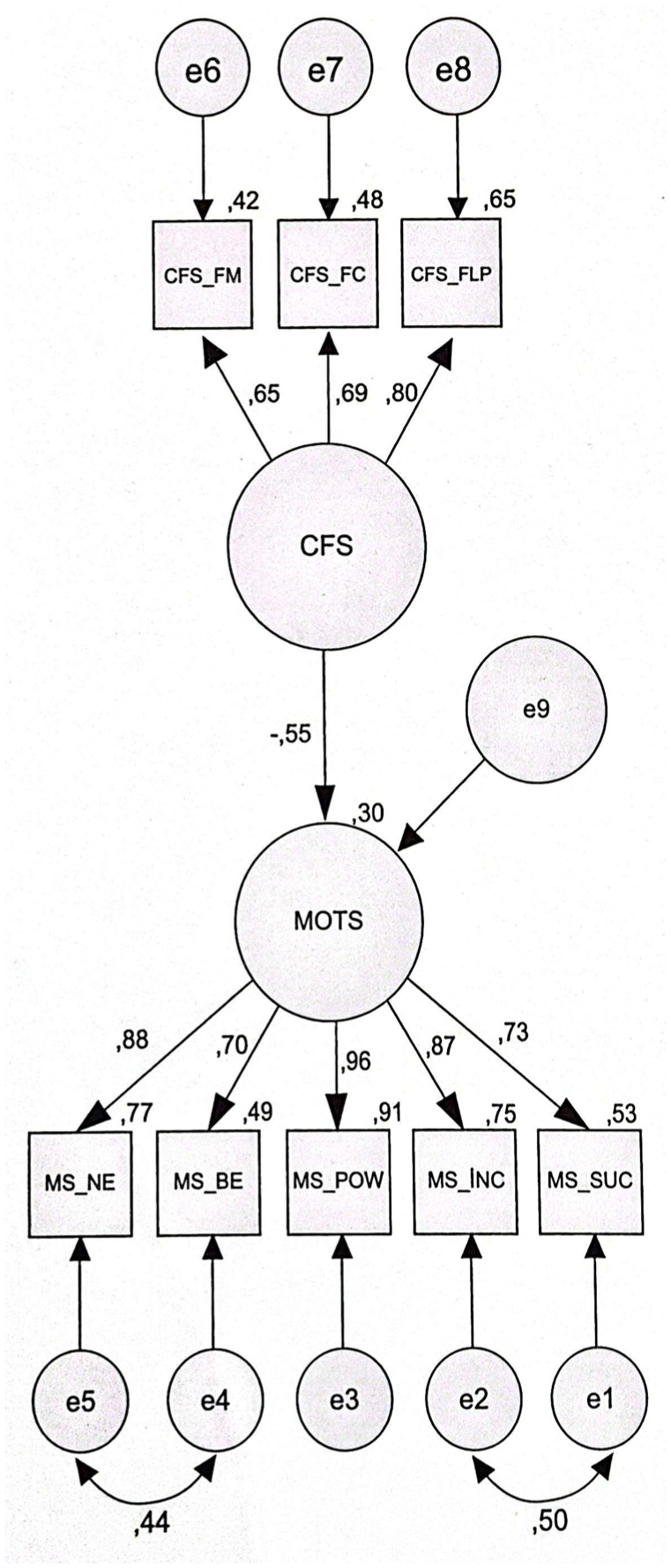
Structural equation model tested in the scope of the research (final form).
First of all, the structural equation model tested within the scope of the research was verified and it was determined that teachers’ perceptions of the culture of fear in the schools they work significantly predicted their work motivation sources. Then, in the final model of the research, the direct effect of perceptions of the culture of fear in schools, which has the role of independent variable, on the implicit variable of teachers’ motivation sources, which has the role of dependent variable, and indirect effect on the observed variables representing this variable were examined. The standardized total, direct and indirect effects are presented in Table 3.
Results Regarding Total, Direct and Indirect Effects
When Table 4 is examined, it is seen that the direct effect of the teachers’ perceptions of the culture of fear in schools, which has the role of an independent variable in the final model of the research, on the latent variable of teachers’ motivation sources, which is the dependent variable, is significant (d = −.548). Similarly, it is seen that the indirect effects of the teachers’ perceptions of the culture of fear in schools, which has the role of an independent variable in the final model of the research, on the observed variables representing the latent variable of teachers’ motivation sources, which is the dependent variable of the research, are also significant. At this point, based on the effect coefficients in Table 3, it can be said that the indirect effect of the teachers’ perceptions of the culture of fear in schools on the observed variables of motivation source-need sub-dimension (i = −.482), motivation source-belief sub-dimension (i = −.385), motivation source-power sub-dimension (i = −.524), motivation source-incentive sub-dimension (i = −.475) and motivation source-success sub-dimension (i = −.401) is also significant. In summary, when all these findings obtained as a result of testing the structural equation model established in line with the research hypotheses are evaluated together, it is seen that based on these findings, teachers’ perceptions of the culture of fear in schools are affected by both the latent variable of motivation sources and the components of this variable that represent this variable:
motivation source-need sub-dimension,
motivation source-belief sub-dimension,
motivation source-power sub-dimension,
motivation source-incentive sub-dimension,
motivation source-success sub-dimension
Standardized Total, Direct and Indirect Effects.
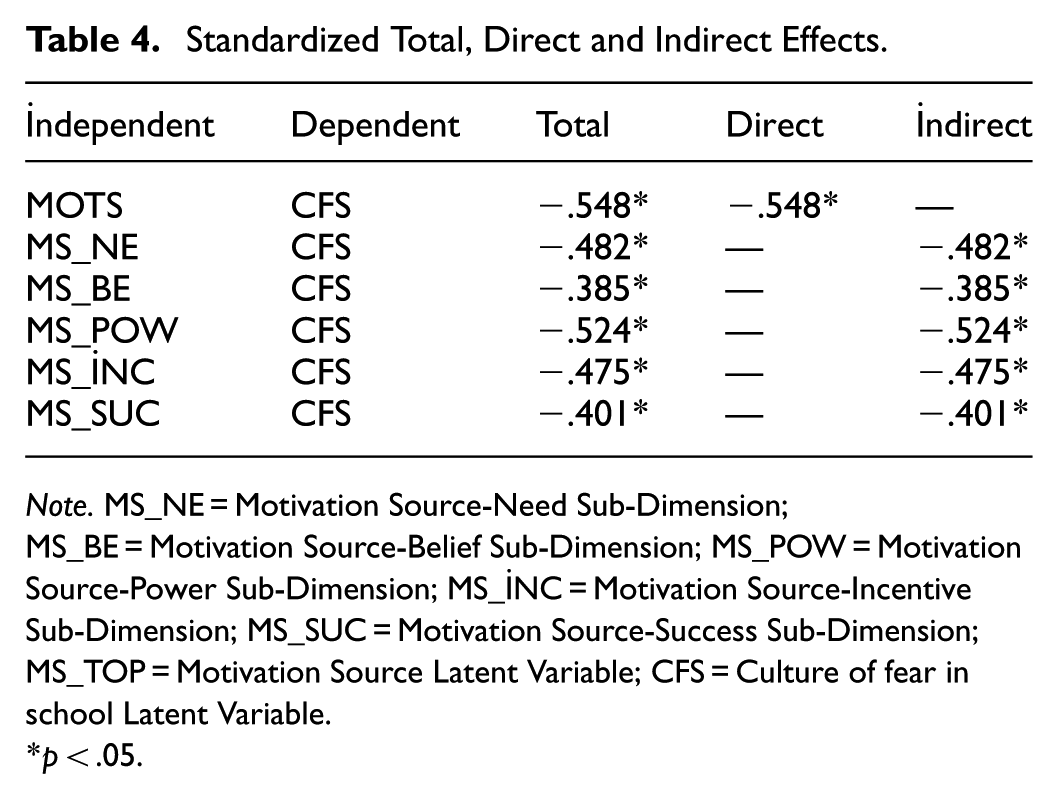
Note. MS_NE = Motivation Source-Need Sub-Dimension; MS_BE = Motivation Source-Belief Sub-Dimension; MS_POW = Motivation Source-Power Sub-Dimension; MS_İNC = Motivation Source-Incentive Sub-Dimension; MS_SUC = Motivation Source-Success Sub-Dimension; MS_TOP = Motivation Source Latent Variable; CFS = Culture of fear in school Latent Variable.
p < .05.
Discussion
The culture, rules, and atmosphere of a school collectively define its climate. In schools, school climate is an important factor that increases peacefulness and success as well as causing a culture of fear and affects teacher motivation. The most effective people in the formation of this climate are school administrators. Welsh (2000) defines school climate as “unwritten beliefs, values and attitudes that become the style of interaction between students, teachers and administrators” (2000, p.89). Anderson (1998) states that this climate forms the basis of a school’s educational mission. Sherman et al. (1997, p.135), on the other hand, concluded in their studies examining school climate that how schools are managed is directly related to the level of behavioral disorders in schools. They concluded that the motivation of teachers and students decreases especially when school administrations lack communication and do not solve problems. As a result of the data obtained in this study, it was seen that there is a significant and negative relationship between the perception of a culture of fear and work motivation sources. In other words, it has been determined that as the culture of fear perceived by teachers in their schools increases, their work motivation decreases. A culture of fear not only harms work motivation but also changes the school climate negatively. This result provides important data that should be carefully considered in terms of both educational institutions and educational administrators. The fear-based work environment revealed by our research aligns with the concept of negative school climate, which is defined in the literature as “one of the strongest predictors of burnout.” Similarly, Madigan and Kim (2021) report that burnout is transmitted from teachers to their students and negatively affects the entire school climate. In a different study, Doğan and Koçak (2014, p.192), who investigated the work motivation of teachers, state that teachers are the most prioritized element in carrying out education and training, achieving the goals of education, ensuring student motivation, and ensuring coordination and coordination between administrators, parents, and students, which are other important elements in education. In the same study, it was concluded that as the social communication skills of school administrators increase, teacher motivation increases. The findings of this study demonstrate the decisive role of a culture of fear in schools on teacher motivation, while simultaneously paralleling many studies in the existing literature and offering unique contributions to the field. The empirical findings can be discussed in depth under four main headings:
The Predictive Role of Perception of a Culture of Fear on Work Motivation
The finding, which constituted the main hypothesis of this study and was confirmed, showed that teachers’ perceptions of the culture of fear in their schools were a significant predictor of their sources of work motivation. This result can be consistently explained within the context of the Job Demands-Resources Model (Hakanen et al., 2021). Accordingly, a culture of fear (whether originating from administrators, colleagues, or legal processes) functions as a job demand, depleting teachers’ limited psychological resources (self-efficacy, commitment, and energy). This situation, which requires emotional labor and constant vigilance leads to chronic job stress and weakens motivational resources (needs, beliefs, achievement motivation, etc.) (Xu et al., 2023). The Structural Equation Model (SEM) analysis revealed that factors such as fear of administrators, fear of colleagues, and fear of legal processes had a statistically significant negative impact on both intrinsic and extrinsic motivation of teachers. A climate of fear, particularly originating from administrators, can reduce teachers’ love for their jobs, their professional commitment, and thus their job satisfaction. As Skaalvik and Skaalvik (2018) similarly found, unsupportive and controlling behaviors by school administrators increase teachers’ emotional burnout and reduce their commitment to their jobs. Consequently, this situation directly threatens the motivation and continuity (Sabancı, 1999, p. 366) of people, the most crucial element of organizations (Kurt, 2005, p. 286). This situation leads to professional dissatisfaction and even problems that can lead to intentions to leave (C. Liu et al., 2007, p. 220), ultimately negatively impacting educational processes.
Fear Culture Significantly Predicts Overall Motivation Sources
This research has shown that a culture of fear significantly predicts general motivational resources. This finding suggests that a climate of fear comprehensively undermines both the internal and external drivers of the teaching profession. This finding aligns with recent studies examining teacher well-being and motivation from a holistic perspective. Madigan and Kim (2021) emphasized that a negative school climate is one of the strongest predictors of burnout and affects all dimensions of a teacher’s professional identity. Collie (2022) argues that school climate is a fundamental context that determines whether teachers’ intrinsic (autonomy, competence) and extrinsic (recognition, career security) needs are met. The study’s findings also support the idea that a culture of fear has a meta-variable character, poisoning this context and inhibiting all sources of motivation.
The STWMS used in the study examined teachers’ work motivation in the sub-dimensions of need, belief, power, incentive, and achievement. The analysis results for these dimensions showed that the perception of a culture of fear negatively impacts each source of motivation. This suggests that teachers need a positive environment to fulfill their sense of accomplishment at school and to exert more effort in their professions. A similar conclusion was reached in a study by Sokal et al. (2020, p. 72). In their study examining teachers’ feelings of change and burnout during the COVID-19 pandemic, the authors noted that teacher well-being includes establishing social connections with colleagues and students. Hernandez and Seem (2004, p. 260) considered school climate as a concept derived from Gysbers et al. (1992) in terms of student-school relationships. This climate affects all components of the school, especially teachers. On the other hand, intrinsic motivational sources such as “need” and “belief” appear to be negatively affected by a culture of fear, undermining teachers’ self-efficacy and professional commitment. This situation points to a deeper problem beyond restricting professional development opportunities. Contextual factors such as an unsafe school environment, student families, and school reforms (Yli-Pietilä et al., 2023, p. 279) hinder teachers’ professional learning and autonomy, depleting their intrinsic motivation resources.
How Components of a Culture of Fear Predict Overall Motivation
Study revealed that each of the different components of a culture of fear (fear of administrators, fear of colleagues, and fear of legal proceedings) significantly predicted teachers’ overall motivational resources. This finding confirms the multidimensional nature of a culture of fear and demonstrates that the ultimate effect of fear from different sources converges towards a decrease in overall motivation. Consistent with the literature, each type of fear weakens motivational resources through a different mechanism. According to Yin and Xu (2023), fear of administrators undermines teachers’ sense of autonomy and pedagogical creativity, while fear of colleagues undermines protective factors such as collaboration and social support, leading to loneliness. Fear of legal proceedings, on the other hand, threatens a fundamental psychological need by creating a persistent sense of job insecurity, particularly in performance-oriented work environments (Yli-Pietilä et al., 2023). The negative impact of fear of administrators and colleagues on motivation is particularly pronounced. Yin and Xu (2023, p. 1526) emphasize that this situation leads to constant emotional labor and chronic job stress in teachers, depleting their motivational resources. In private educational institutions, in particular, fear of administrators appears to have a stronger negative impact on extrinsic motivational resources by inhibiting teachers’ independence and initiative. Fear of colleagues, in turn, increases tension in social relationships, reduces professional collaboration and solidarity, and thereby weakens motivation. All these findings demonstrate that the negative climate created by school administrators’ inadequate communication and motivational skills (Aksoy, 2005, p. 175; Güneş, 2007, p. 13) also seriously erodes the driving force of intrinsic motivation, as emphasized by Borg (2015) in his study in Türkiye.
Components of a Culture of Fear Separately Predict Components of Motivational Sources
One of the most subtle findings of the study is that the components of a culture of fear also significantly predict the sub-dimensions of motivational sources (need, belief, power, incentive, and achievement). This allows us to understand which type of fear is more detrimental to which specific aspect of motivation. For example, our findings indicate that extrinsic motivators such as “success” and “incentive” are particularly strongly affected by a culture of fear. This can be explained within the framework of Ryan and Deci’s (2017) Self-Determination Theory: Extrinsic motivators (reward, recognition, promotion) are effective when basic psychological needs (autonomy, competence, and relatedness) are met. A climate of fear, however, undermines all of these needs, thus rendering extrinsic incentives meaningless. Conversely, the negative impact on intrinsic motivators such as “belief” and “need” points to a deeper problem. This is an attack on the teacher’s professional identity and the meaning of their work. As Kelchtermans (2017) emphasizes, an unsafe school climate undermines teachers’“professional dignity” and erodes their intrinsic commitment to their work. This finding demonstrates that the impact of a culture of fear is not merely “unhappy,” but “actively hurtful.”
Conclusion
When the four key findings are evaluated together, it is revealed that the culture of fear in schools creates a multifaceted, systematic, and profound detriment to teacher motivation. The final model of the study shows that the culture of fear significantly predicts 30% of the variance in teachers’ motivational sources (R2 = .30). Furthermore, negatively significant correlations were found between the culture of fear and all sub-dimensions of motivation (p< .05). These results clearly demonstrate that fear is not only an individual stressor but also a structural problem that reshapes organizational culture and blocks healthy sources of motivation.
It is vital that intervention strategies go beyond individual support mechanisms and aim to transform the organizational climate. In this context, the following recommendations can be offered:
Developing Leadership and Communication Strategies
Training school administrators in transformational leadership skills that foster trust and psychological safety is a critical priority. Adopting transparent communication protocols and increasing participation in decision-making processes will lay the foundation for a climate in which teachers feel valued and safe.
Institutionalizing Collaboration and Social Support
To strengthen collaboration and solidarity among colleagues, structured in-school collaborative programs and activities that strengthen social ties should be organized. This can prevent teachers from perceiving each other as threats and foster a culture of collective success.
Policy and Structural Reforms
Transparent contract renewal and performance evaluation criteria should be established to reduce teachers' job security concerns and fear of legal proceedings. Policy changes based on psychological safety will provide a structural framework to break this negative cycle.
Directions for Future Research
Qualitative and mixed-method academic studies that approach this phenomenon from different contexts and perspectives are recommended to develop strategies to minimize the negative effects of a culture of fear.
Consequently, low teacher motivation will undoubtedly directly impact classroom performance, student-teacher interactions, and ultimately educational outcomes. Creating a safe school environment where teachers feel supported, valued and motivated is an indispensable condition not only for their professional satisfaction but also for improving the quality of educational processes and contributing to student success.
Footnotes
Acknowledgements
I would like to express my gratitude to my colleagues in private schools who supported me throughout the data collection phase of the study.

Ethical Considerations
This study was conducted with the approval of the Gazi University Rectorate Ethics Committee Unit; Document Date: September 24, 2024; Number: E-77082166-604.01-1046738.
Consent to Participate
Participation in the study was entirely voluntary. Prior to participation, detailed information about the purpose, procedures, potential risks and benefits of the research, as well as the voluntary nature of participation and the right to withdraw at any time without consequence, was provided both verbally and in writing.
Author Contributions
Author M.E. conducted the research and wrote the article; analyzed the data, drafted and revised the manuscript, and evaluated the results.
Funding
The author has described the following financial support request for the research, authorship, and/or publication of this article: Scientific and Technological Research Council of Türkiye.
Declaration of Conflicting Interests
The author declared no potential conflicts of interest with respect to the research, authorship, and/or publication of this article.
Data Availability Statement
Data supporting the findings of this study are available upon request from the corresponding author.