



Abstract
Smart manufacturing and green manufacturing are key drivers of sustainability in the circular economy, promoting manufacturers to adopt intelligentization, green innovation, and servitization strategies. However, their combined effects on sustainability remain unexplored. This study proposes a data-information-knowledge-wisdom-practice (DIKWP) framework to clarify the combined effects. By analyzing 904 questionnaires from China’s manufacturing sector, this study explores how these strategies collectively enhance manufacturing sustainability. Partial least squares structural equation modeling (PLS-SEM) reveals that intelligentization’s indirect impacts on sustainability, through the mediating effects of green innovation and servitization, are more significant than its direct impact. The findings also illustrate the chain mediating effect of green innovation and servitization between intelligentization and sustainability, consistent with the cyclical loop from data to practice within the DIKWP framework. A case study of Wensli’s artificial intelligence generated content (“AIGC+”) practice further illustrates the practical application of the DIKWP framework. This study integrates the practice perspective and knowledge management into the DIKWP framework, promoting practical application to enhance manufacturing sustainability. Empirical evidence from the PLS-SEM analysis, and the real-world case study, provide actionable insights for advancing sustainability practices in the circular economy.
Keywords
Introduction
The manufacturing sector, a cornerstone of global economies, faces growing pressure to balance economic growth with environmental and social sustainability. As one of the largest contributors to resource consumption and environmental degradation, manufacturing demands transformative strategies to address these challenges. While smart manufacturing and green manufacturing have emerged as key drivers of sustainability, their synergistic integration through intelligentization, green innovation, and servitization remains underexplored in the circular economy.
Existing research documents the individual impacts of intelligentization (Kristoffersen et al., 2020), green innovation (J. Yang et al., 2024), and servitization (Paiola et al., 2021) on sustainability. Among the key drivers of sustainability, intelligentization plays a foundational role. In this study, intelligentization is defined as the advanced stage of digital transformation, marked by the widespread adoption of artificial intelligence technologies and intelligent decision-making systems (J. Y. Wang et al., 2025). This concept is distinct from traditional digitalization, and represents a core element of Industry 4.0 through its emphasis on autonomous and adaptive processes (Tantawi et al., 2025). Powered by digital technologies, intelligentization enhances sustainability (Kristoffersen et al., 2020), and provides the technical foundation for green innovation and servitization (Doni et al., 2019; Hui et al., 2024). Green innovation reduces environmental impacts through eco-friendly technologies and practices (J. Yang et al., 2024). Servitization fosters technology-driven business model innovation, by transforming traditional manufacturing into service-oriented models, and promoting resource circularity and sustainability (Paiola et al., 2021). However, how these elements collectively enhance sustainability in the circular economy, and how they can be practically implemented, requires further empirical investigation.
Most prior studies focus on linear progressions and lack mechanisms that link intelligentization, green innovation, and servitization with actionable practice in a closed-loop system. This gap underscores the importance of adopting a circular economy framework, which emphasizes closed-loop processes, resource reuse, and sustainable business models as the foundation for manufacturing sustainability. The link between sustainability and the circular economy has been increasingly recognized (Bjørnbet et al., 2021; Geissdoerfer et al., 2017). The circular economy emphasizes closed-loop systems and sustainable business models, aligning with sustainability goals (Khan et al., 2021).
In the context of the circular economy, integrating data, information, knowledge, and wisdom is pivotal for advancing sustainable manufacturing. However, traditional frameworks like the data-information-knowledge-wisdom (DIKW) hierarchy (Rowley, 2007), adopt a linear perspective and lack practical mechanisms for implementation within closed-loop systems. To address the gap, this study extends the traditional DIKW hierarchy by exploring the data-information-knowledge-wisdom-practice (DIKWP) framework. Drawing from practice-based view (PBV) literature, the DIKWP framework underscores the transformative role of contextual actions in knowledge creation (Gherardi, 2019; Schatzki, 1997). It incorporates social learning dynamics and collaborative environments to foster sustainable practices (Nonaka & Konno, 1998; Wenger, 1999), while emphasizing reflective and ethical decision-making processes (Reckwitz, 2002). It creates a circular loop that transitions data into actionable practices, promoting practical applications to enhance manufacturing sustainability. Through establishing a cyclical interplay between data, information, knowledge, wisdom, and practice, the DIKWP framework reflects the resource cycles of the circular economy, providing a comprehensive approach to implementing sustainability.
Based on the proposed DIKWP framework, this study investigates the following questions:
What are the direct and indirect effects of intelligentization, green innovation, and servitization on sustainability within the circular economy?
How do green innovation and servitization mediate the relationship between intelligentization and sustainability?
How does the DIKWP framework integrate knowledge management and actionable practices to enhance sustainability?
What are the practical implications of applying the DIKWP framework in real-world manufacturing practice?
To answer these questions, this study employs a mixed-methods approach. Partial least squares structural equation modeling (PLS-SEM) analyzes 904 manufacturing samples from China to validate the DIKWP framework. Additionally, a real-world case study of artificial intelligence generated content (“AIGC+”) practice in Wensli based on practice theory (Kolb, 1984; Nonaka & Konno, 1998) is investigated to trace DIKWP cycles and explore the framework’s practical applicability.
This study makes three key contributions:
It advances the DIKWP framework by bridging the gap between the theoretical DIKW model and practical implementation in closed-loop systems through the integration of PBV with DIKW. Unlike the linear DIKW hierarchy, the DIKWP framework utilizes a circular feedback loop, aligning with circular economy principles and providing a new lens for sustainability research.
It offers empirical evidence that intelligentization’s indirect impacts on sustainability, mediated by green innovation and servitization, are more significant than its direct effects. It also illustrates the chain mediating effect of green innovation and servitization between intelligentization and sustainability, reflecting the synergistic integration emphasized in the DIKWP framework.
It demonstrates the practical applicability of the DIKWP framework through empirical analysis and a real-world case study of Wensli. The framework provides manufacturers with a structured approach to transform data into sustainable practices, offering actionable insights for sustainable manufacturing in the circular economy.
The study is organized as follows. Section From DIKW to DIKWP: A Circular Economy Framework proposes the DIKWP framework. Section Hypotheses Development develops the research hypotheses. Section Methodology and Data describes the methodology and data. Section Hypotheses Testing and Case Study details the hypotheses testing and Wensli’s case study. Section Discussion, Conclusion, and Implications presents the discussion, conclusion, and implications, and Section Limitations and Future Work discusses the limitations and future research directions.
From DIKW to DIKWP: A Circular Economy Framework
The DIKWP framework extends the traditional DIKW model by incorporating practical applications. While DIKW outlines how technologies transform data into information, knowledge, and wisdom through knowledge management (Ardolino et al., 2018), it is lack of practical implementation guidance. The DIKWP framework bridges this gap by integrating practical applications to address manufacturing sustainability challenges. It creates a circular loop that connects data-driven insights with actionable strategies through intelligentization, green innovation, and servitization. These strategies collectively enhance sustainability practices. The DIKWP framework aligns with the circular economy principles, as illustrated in Figure 1.
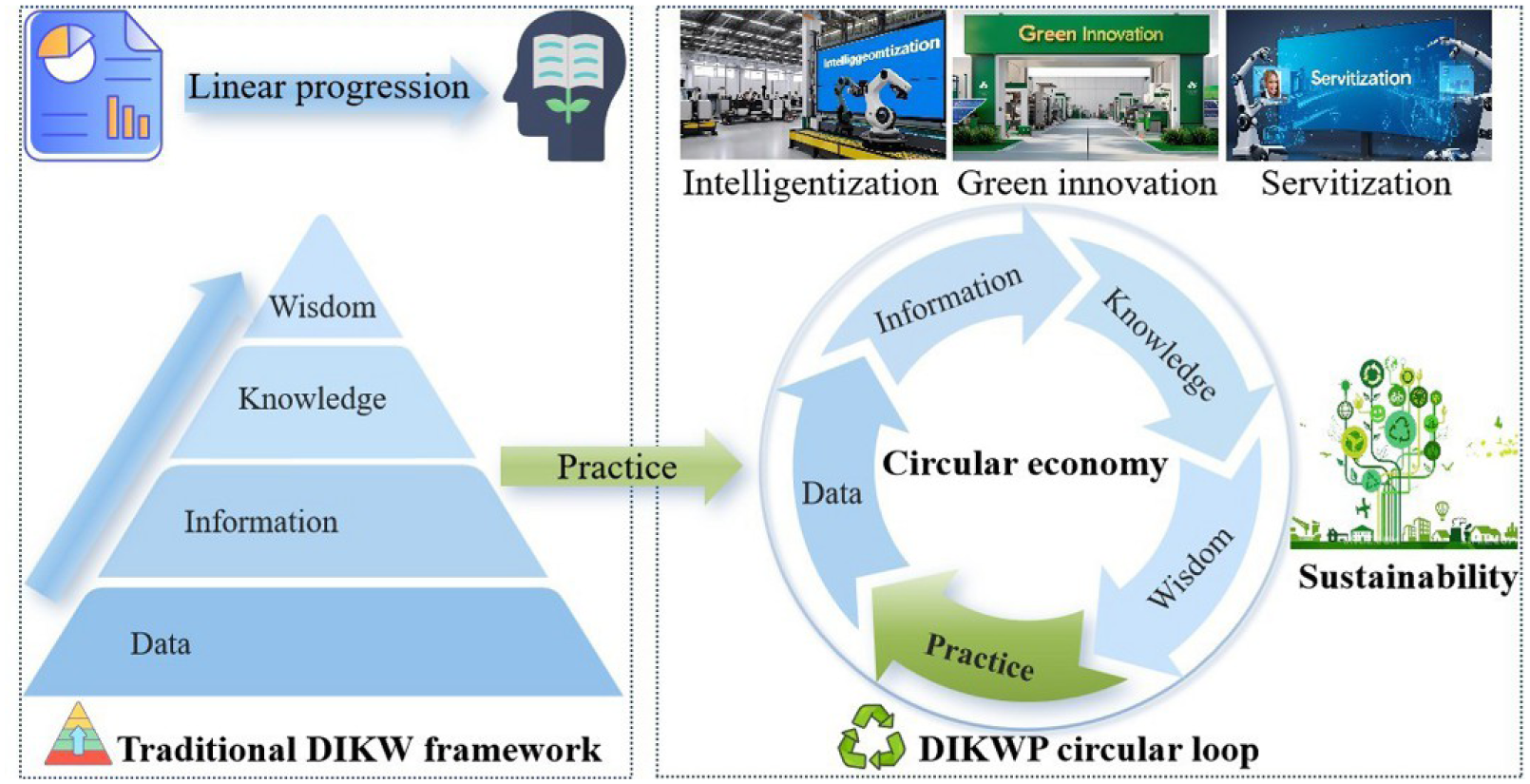
From DIKW to DIKWP.
Evolution From DIKW to DIKWP
The DIKWP framework represents a significant advancement in knowledge management theory. The traditional DIKW model established a linear progression from data to wisdom (Rowley, 2007). While some researchers have proposed DIKW’s variations, such as Liew’s (2013) DIKIW model, existing research focuses on linear progression among data, information, knowledge, wisdom, and other components in the model. The DIKWP framework extends the DIKW model by integrating practice into a circular structure. This evolution addresses the limitations of linear knowledge progression identified by Frické (2019), by incorporating circular feedback mechanisms essential for manufacturing sustainability. It links theoretical knowledge management and sustainability practice in the circular economy.
Comparative Theoretical Foundations
The DIKWP framework extends the traditional DIKW hierarchy by integrating practice as the actionable component that closes the circular loop. Within this structure, wisdom is defined as the capacity for ethical, contextual, and reflective judgment applied to decision-making, while practice refers to the dynamic process through which data, information, knowledge, and wisdom are enacted, tested, and applied in real-world settings.
This conceptualization aligns with established practice-oriented theories. Kolb’s experiential learning theory (Kolb, 1984), extended by Morris (2020), emphasized contextual experience, critical reflection, and pragmatic experimentation, aligning with DIKWP’s iterative progression from knowing to doing. Nonaka’s Socialization, Externalization, Combination, and Internalization (SECI, Nonaka & Konno, 1998) model highlighted knowledge conversion through four processes, paralleling with DIKWP’s circular flow. Wenger’s (1999) communities of practice and Schatzki’s (1997) practice theory illustrated how shared, structured activities co-construct knowledge and embed wisdom in action. These are further complemented by Reckwitz (2002), who frames practices as a nexus of body, mind, and knowledge, and by Gherardi (2019), who underscores creative practices as drivers of knowledge production in action.
In summary, practice acts as the dynamic stage within DIKWP where data, information, knowledge, and wisdom are applied and validated in reality. This continuous cycle completes the DIKWP loop.
Practical Implementation of DIKWP
By introducing the practice dimension, the DIKWP framework bridges the gap between theoretical DIKW elements and actionable sustainability practices. Empirical research emphasizes the value of sustainability practices in manufacturing. Song et al. (2022) highlighted how the integration of green and cleaner production practices significantly enhances sustainability. Smart manufacturing provides additional practical applications, including remanufacturing (W. Y. Zhang et al., 2023), human-robot collaboration (Baratta et al., 2023), and intelligent manufacturing (Shen & Zhang, 2023). These applications provide real-world evidence of the successful conversion of DIKW into tangible practices. In our previous work (W. Y. Zhang et al., 2023), an intelligent optimization algorithm was developed to process various data and information related to scenario-based robust remanufacturing scheduling problem, enhancing remanufacturing practices. The DIKWP offers an extended theoretical foundation for analyzing the combined effect of intelligentization, green innovation, and servitization in pursuing sustainability.
Intelligentization establishes the technical foundation. Intelligentization methods, such as machine learning, facilitate knowledge generation through data and information processing (Nishant et al., 2020). Zhao et al. (2022) applied data processing and information collection capabilities to evaluate intelligentization level. In smart manufacturing, data is collected via industrial internet of things (IIoT) devices and analyzed to extract meaningful information for decision-making wisdom (Qi et al., 2023). Therefore, intelligentization promotes DIKW flow and circular resource utilization (Kristoffersen et al., 2020), directly contributing to sustainability goals in the circular economy.
Green innovation is linked with targeted sustainability insights. Within the DIKWP framework, green innovation primarily activates the conversion from knowledge to wisdom by integrating ecological monitoring data and sustainability principles to generate eco-design insights (J. Y. Wang et al., 2025). It further supports the application of wisdom to practice through the implementation of green manufacturing processes and organizational capabilities, achieving actionable sustainable outcomes (Yao et al., 2014). Green innovation employs efficient data and information processing to identify opportunities for sustainable development (X. L. Hao et al., 2023), and also promotes DIKW flow by transforming technological capabilities into sustainable practices. Additionally, effective knowledge management, including acquisition, dissemination, and practical application, is crucial in advancing sustainability through green innovation (Abbas & Sağsan, 2019; Shahzad et al., 2020). Jewapatarakul and Ueasangkomsate (2024) also emphasized that knowledge acquired from consumers and competitors is vital for driving green innovation. Thus, green innovation facilitates a targeted flow within the DIKWP framework, transforming knowledge into wisdom and subsequently into sustainable practices through eco-friendly technological advancements. This process forms a feedback loop by using practical outcomes to refine knowledge and data collection strategies.
Servitization enables circular value creation. In the DIKWP framework, servitization primarily facilitates the DIKW flow into actionable service practice. Specifically, efficient data processing and information extraction enable the construction of knowledge graphs, which enhance servitization in smart manufacturing (Ren et al., 2023). Digital servitization further promotes the creation of wisdom through knowledge integration (Pizzichini et al., 2023), while green servitization applies this “service wisdom” to practice for sustainable value creation (Kohtamäki et al., 2019). Servitization supports DIKWP’s circular loop by enabling feedback from practice back to data collection, such as customer usage data from service interactions, which informs further innovation and optimization of sustainable practices (Abou-Foul et al., 2023). Therefore, servitization facilitates the transformation of DIKW components into practice within the DIKWP framework, enhancing sustainability by converting data, information, and knowledge into actionable service practices.
The DIKWP framework provides the foundation of how intelligentization, green innovation, and servitization strategies collectively enhance sustainability in the circular economy.
Circular Loop of DIKWP
The circular feedback mechanism distinguishes DIKWP from traditional DIKW framework. This loop enables continuous improvement by converting practice outcomes into new data inputs. Manufacturing processes continuously generate rich data that feeds back into the circular loop. The data-driven loop aligns with circular economy principles by promoting continuous learning and adaptation.
Empirical evidence underscores the importance of the data-driven circular loop. For example, studies have shown how cloud computing and internet of things (IoT) improve sustainability through effective data utilization (Ardolino et al., 2018; Yin et al., 2022). These applications enable systematic analysis of practice-generated data to extract information, knowledge, and wisdom, deducting actionable practices (Blöcher & Alt, 2021). The feedback loop creates a cyclical improvement pattern. Each iteration strengthens the connection between data-driven insights and practical implementation.
A key strength of the DIKWP framework is its focus on practical implementation. Through the synergistic interaction of intelligentization, green innovation, and servitization, organizations can effectively convert abstract DIKW elements into implementable sustainability practices. This study demonstrates how the DIKWP feedback loop integrates intelligentization, green innovation, and servitization into a unified framework. The framework facilitates continuous learning from practice-generated data, enabling progressive refinement of sustainability practices. It guides future improvements and supports long-term sustainability, aligning with circular economy principles.
Hypotheses Development
The DIKWP framework offers an analytical structure to examine how intelligentization is positively associated with sustainability through direct and indirect pathways through the conceptual model and hypotheses developed in Figure 2. It is suggested that intelligentization is directly associated with sustainability (H1). The mediating effect of green innovation (H2) and servitization (H3) is proposed in the association between intelligentization and sustainability. Additionally, intelligentization is linked with sustainability through a chain mediating effect of green innovation and servitization (H4).

Conceptual model and hypotheses.
Direct Effect of Intelligentization on Sustainability
Intelligentization, driven by big data and smart automation, demonstrates complex impacts on sustainability. Intelligentization may support or hinder sustainability goals (Vinuesa et al., 2020), and its effects are mixed across environmental and societal dimensions. On the environmental side, intelligentization contributes positively through reduced carbon footprints and enhanced environmental governance (Nishant et al., 2020). Recent studies further confirm its role in transitioning toward sustainable and lower-carbon systems (J. Li et al., 2023). Additionally, intelligentization capacities can reconcile the traditional conflict between financial and environmental goals, and drive circular business practices (Sjödin et al., 2023).
However, the societal dimension presents significant concerns, including employment displacement, market disruptions, and cybersecurity risks (Nishant et al., 2020). Intelligentization can enhance worker health and work safety (Saunila et al., 2019), but bring challenges in employee adaptation and technological acceptance. These concerns necessitate comprehensive analysis of intelligentization’s broader impacts on sustainability, through environmental and societal dimensions.
Despite these challenges, intelligentization demonstrates promising applications in smart manufacturing. B. C. Wang et al. (2021) discussed how intelligentization technologies advance sustainability practices. However, there is limited empirical evidence on how to strategically maximize intelligentization’s benefits for sustainability, leading to the hypothesis:
Mediating Effect of Green Innovation Between Intelligentization and Sustainability
Intelligentization emerges as a crucial enabler of green innovation through data transformation and information utilization, driving sustainability. While the distinct effects of intelligentization and green innovation on sustainability are acknowledged, their combined effects require further investigation.
Intelligentization acts as a catalyst for green innovation through advanced analytical capabilities and digital infrastructure (Tian et al., 2022). Intelligentization offers a technological foundation for enhancing green innovation performance through technology promotion and cost reduction effects (H. C. Yang et al., 2022). Policy framework and practical guidance for implementing intelligentization technology further accelerate green manufacturing (Yin et al., 2022). While intelligentization enhances the efficiency of green innovation (Pu, 2025), green innovation further advances sustainability under environmental regulation and market turbulence pressures (Qiu et al., 2020). This suggests a potential mediating mechanism linking intelligentization, green innovation, and sustainability.
Empirical evidence supports the mediating relationship. Shen and Zhang (2023) demonstrated that green technological innovation positively mediated the impact of intelligent manufacturing on environmental pollution. Therefore, green innovation may amplify the positive effect of intelligentization on sustainability, leading to the hypothesis:
Mediating Effect of Servitization Between Intelligentization and Sustainability
Intelligentization enhances servitization by enabling service-oriented business models. For example, intelligentization technologies such as big data analytics provide real-time customer insights, improving demand forecasting accuracy (Enyoghasi & Badurdeen, 2021). Advanced digital services powered by intelligentization help manufacturers reduce energy consumption and carbon emissions, enhancing sustainability (Milad et al., 2024). Similarly, AI-driven conversational agents like ChatGPT, significantly improve customer interaction quality and feedback collection efficiency. These technological capabilities create new opportunities for sustainable service innovation, aligning with sustainability goals.
However, integrating intelligentization into servitization poses challenges. Digital servitization requires aligning technological capabilities with business applications to enhance circularity and sustainability (Sjödin et al., 2023). Recent research highlights the role of knowledge management in strengthening the link between intelligentization and servitization for sustainability (Polas et al., 2023). Knowledge extraction from manufacturing production data can provide industrial intelligence to enhance digital servitization (Ren et al., 2023). This extraction process captures customer insights and transforms them into actionable servitization efforts, promoting long-term sustainability.
From a knowledge management perspective, the mediating mechanism of how servitization transforms intelligentization into sustainability practices remains unclear, leading to the hypothesis:
Chain Mediating Effect of Green Innovation and Servitization on Intelligentization and Sustainability
Intelligentization is associated with servitization and green innovation, reducing carbon emissions through smart management services and data analytics (Abou-Foul et al., 2023). Green innovation and servitization share a common orientation toward sustainability (Paiola et al., 2021). Empirical evidence shows that intelligentization, such as AI and robotics, enhances green innovation and positively impacts servitization (Blöcher & Alt, 2021). Green innovation further strengthens servitization’s contribution to sustainability by providing eco-friendly services (Z. C. Yang et al., 2023). Huang and Lau (2024) provided additional insights by demonstrating that intelligentization, significantly enhances the quality of green innovation, which subsequently reinforces sustainability-focused servitization.
The DIKWP framework provides theoretical support for analyzing how intelligentization, green innovation, and servitization collectively enhance sustainability. Intelligentization, such as reinforcement agents, has strong information processing and learning mechanisms (Oliff et al., 2020), to improve green innovation and servitization capabilities. These mechanisms enable organizations to adapt to changing demands and operational challenges, creating a practical foundation for sustainability. As Lyu et al. (2022) proposed, intelligentization could enhance employees’ green creativity, translate green innovation knowledge into green services, and advance sustainability.
Current research usually treats intelligentization, green innovation, and servitization as independent pathways to sustainability. However, their interconnected effects and the chain mediating effect of these factors, remain unclear, leading to the hypothesis:
Methodology and Data
Model
This study employs PLS-SEM due to its robust predictive ability and suitability in analyzing complex theoretical frameworks. It is well-suited for analyzing the DIKWP framework, because it involves multiple correlations among observable variables (Hair et al., 2019). SPSS 26 is applied for statistical analysis, while SmartPLS 4.1 is employed to validate the model’s conceptual structure and test the hypotheses. A case study of Wensli illustrates the practical application of intelligentization, green innovation, and servitization in driving manufacturing sustainability.
Construct Measurements
Given the manufacturing sector’s traditional focus on profit, this study shifts attention from economic to environmental and social sustainability (Broccardo et al., 2023; J. S. Zhang et al., 2022), which are essential for a holistic understanding of sustainability. This study adopts a narrow definition of sustainability (focused on environmental and social dimensions). Since sustainable initiatives require economic viability to endure, economic performance indicators (e.g., cost efficiency, productivity gains) are conceptualized as enabling mechanisms rather than outcome measures.
Sustainability (SUS) is evaluated through environmental (Benzidia et al., 2021; M. Y. Wang et al., 2021), and social dimensions (X. W. Li et al., 2020). Intelligentization (INT) is measured following Abou-Foul et al. (2023), green innovation (GRI) is measured following M. Y. Wang et al. (2021), and servitization (SER) is measured following Abou-Foul et al. (2020) and Z. R. Hao et al. (2021).
A 7-point Likert scale, ranging from 1 (strongly disagree) to 7 (strongly agree), is used to capture distinct responses (Willits et al., 2016).
Data
Data was efficiently collected through “Questionnaire Star” (www.wjx.cn), a leading online platform in China for questionnaire survey, using paid services to enhance the process. The questionnaire was validated by scholars and industry practitioners and pretested to ensure reliability. English-based scales were translated into Chinese using a rigorous bidirectional process.
The study focuses on intelligentization, with effective samples selected based on the question of “Whether smart manufacturing is implemented.” This study targets high-intelligentization industries, such as automobile manufacturing. Control variables include industrial type, firm age, and size (Abou-Foul et al., 2020; Davies et al., 2023). The final dataset consists of 904 valid responses from manufacturing employees, exceeding the recommended 10:1 ratio of reactions to independent variables (Kock & Hadaya, 2018).
Figure 3 presents the sample characteristics of 904 firms from various manufacturing sectors. Most firms in the samples are small-sized, with 29.32% having 20 to 50 employees. Regarding firm age, 33.52% of the firms were founded 20 to 30 years ago, representing the largest proportion. The industrial type distribution shows that information, communication & technology manufacturing accounts for the highest percentage at 28.98% with 262 firms. Additionally, INT indicators vary across industries, with pharmacy manufacturing showing the highest INT mean (5.3483) with the lowest standard deviation (1.4446), indicating consistent adoption of intelligentization practices. These characteristics highlight the diversity and representativeness of the samples, ensuring robust analysis and generalizability of the findings.
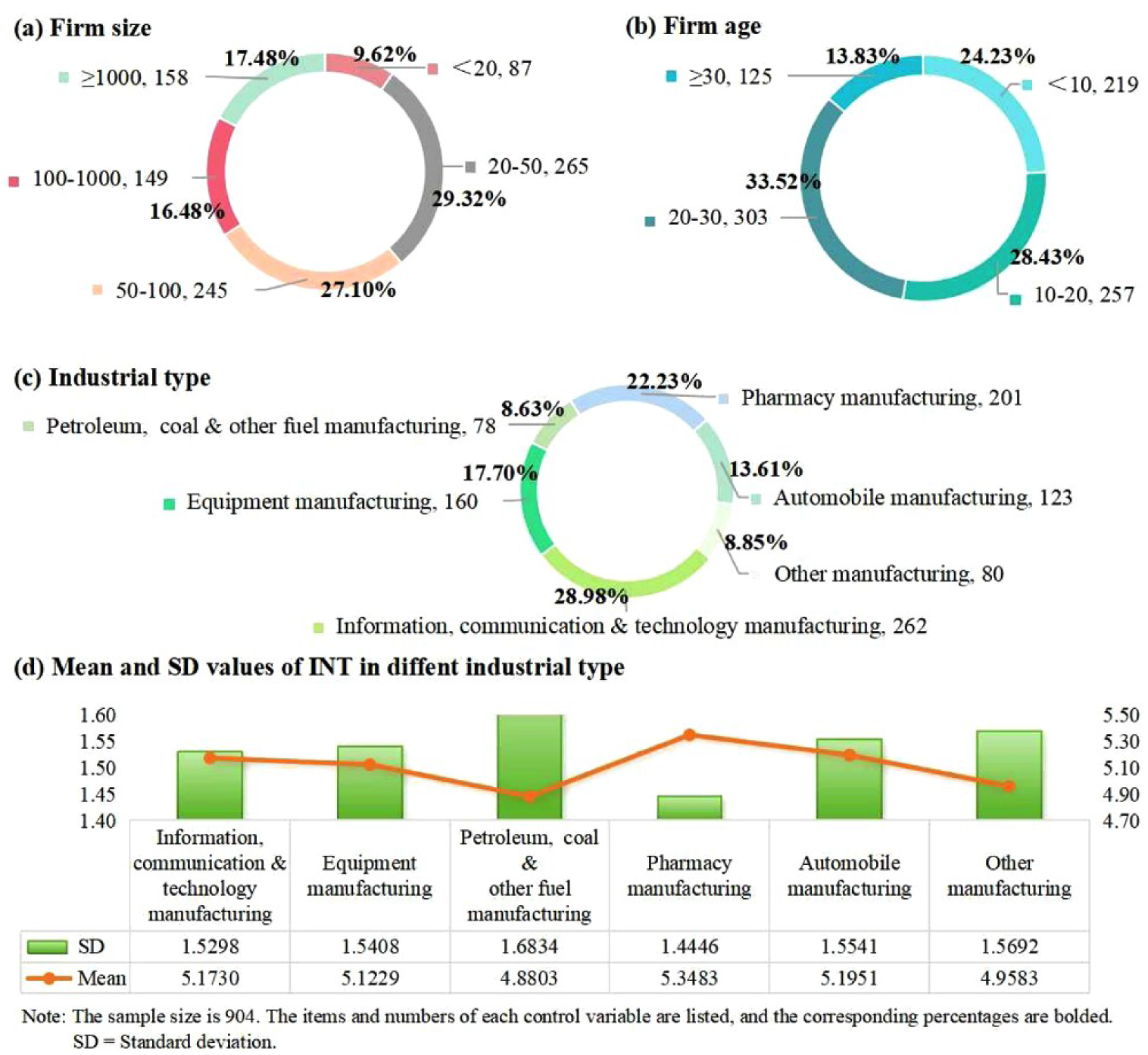
Characteristics of samples.
Model Measurements
Common Method Variance (CMV)
This study addresses the CMV problem, common in single-source data. To address collinearity, items with high variance inflation factors (VIF) are removed from the original 7 items per variable in the questionnaire (Kock & Lynn, 2012). As shown in Figure 4, items with a VIF below 3.3000 (Kock, 2015) are retained. The VIF values range from 2.8031 to 3.2127, ensuring the model is free from CMV concerns.

Measurement, validity, and reliability.
Reliability and Validity
The standardized root mean square residual (SRMR) value of the model is 0.0452, well below the 0.0800 threshold (Henseler et al., 2016), and meets the standards for the PLS-SEM analysis.
Figure 4 confirms the reliability and validity. Cronbach’s α values exceed 0.9012, surpassing the 0.7000 benchmark (Garver & Mentzer, 1999). The factor loadings (FL) for all items range from 0.8150 to 0.9190, exceeding the recommended threshold of 0.7080 (Hair et al., 2019), indicating strong convergent validity. Composite reliability (CR) values, ranging from 0.9014 to 0.9297, are within the acceptable range of 0.7000 to 0.9500 (Hair et al., 2019). Additionally, the average variance extracted (AVE) values, ranging from 0.7024 to 0.8416, surpass the 0.5000 benchmark (Hair et al., 2019). These metrics confirm the robustness of the study’s measurement model.
Discriminant Validity
Discriminant validity is confirmed using the Heterotrait-monotrait (HTMT, Henseler et al., 2015) and Fornell-Larcker criterion (Fornell & Larcker, 1981), which require that the HTMT values should be below the strict threshold value of 0.8500. As shown in Figure 5a, the highest HTMT value is that between intelligentization and sustainability, that is, 0.8340, indicating acceptable discriminant validity.

Result of HTMT and Fornell-Larcker criterion.
The Fornell-Larcker criterion is also acceptable, as the square root of the AVE for each construct exceeds its correlations with other constructs (Fornell & Larcker, 1981). Figure 5b shows the diagonal elements in the Fornell-Larcker matrix, are the highest values in their respective columns. Both the HTMT and Fornell-Larcker criterion analyses confirm acceptable discriminant validity.
Hypotheses Testing and Case Study
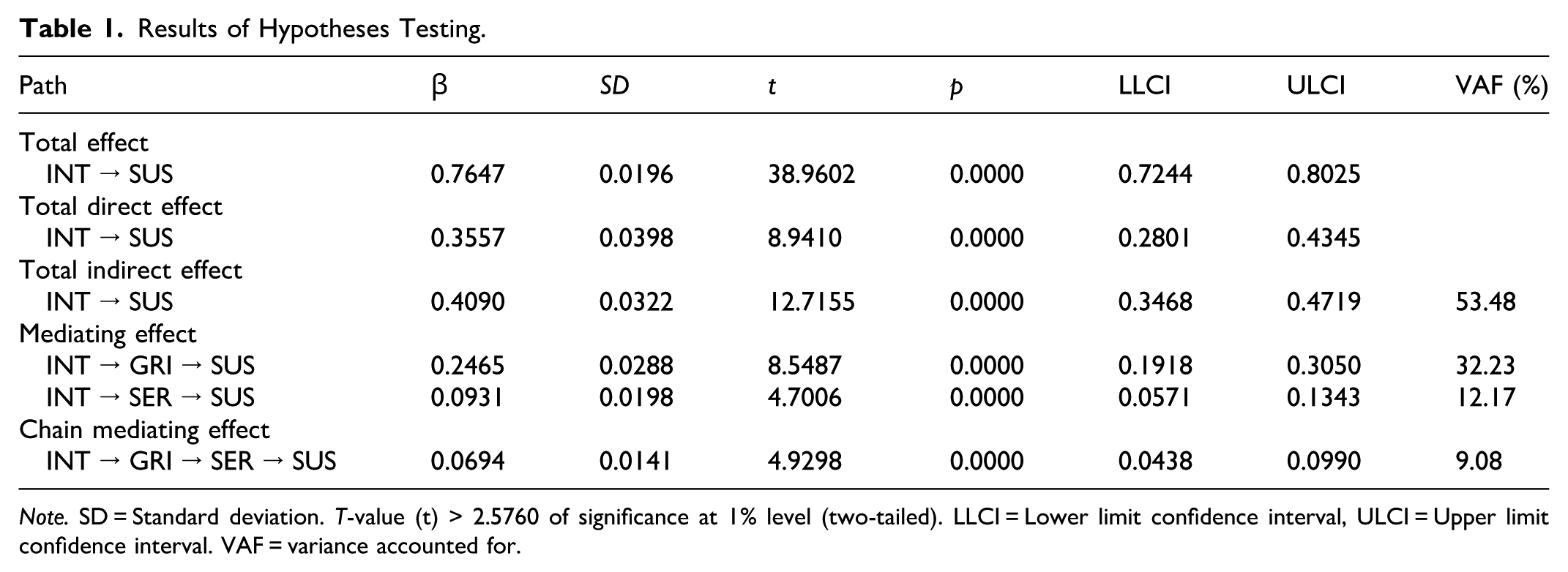
After confirming the validity and reliability of the measures, PLS-SEM is used to test the hypotheses. Statistical significance is assessed using t-values, with a threshold of 2.5760 for the 1% significance level (Forza & Filippini, 1998), p-values are considered. Furthermore, the bootstrap analysis is conducted with 5,000 iterations to ensure robust estimation of indirect effects and confidence intervals. It constructs 95% confidence intervals, confirming significance when zero is excluded (Hayes, 2018), as detailed in Table 1.
Results of Hypotheses Testing.
Note. SD = Standard deviation. T-value (t) > 2.5760 of significance at 1% level (two-tailed). LLCI = Lower limit confidence interval, ULCI = Upper limit confidence interval. VAF = variance accounted for.
Hypotheses Testing
Table 1 presents a comprehensive analysis of the direct and indirect effects of intelligentization, green innovation, and servitization on sustainability. Given the cross-sectional nature of our data, we can identify associations but cannot establish causal direction. As shown in Figure 6, the R2 values indicate substantial explanatory power for SUS (0.7277, approaching the 0.7500 threshold), moderate for SER (0.5758), and acceptable for GRI (0.4556), following Hair et al. (2019). The f2 effect sizes (Cohen, 1988) further show a large effect of INT on GRI (0.8370), medium effects for GRI → SER (0.2431), INT → SUS (0.2110), INT → SER (0.1990), and GRI → SUS (0.2145), and a small effect of SER on SUS (0.0870). Control variable effects are incorporated into the model to account for potential confounding factors.
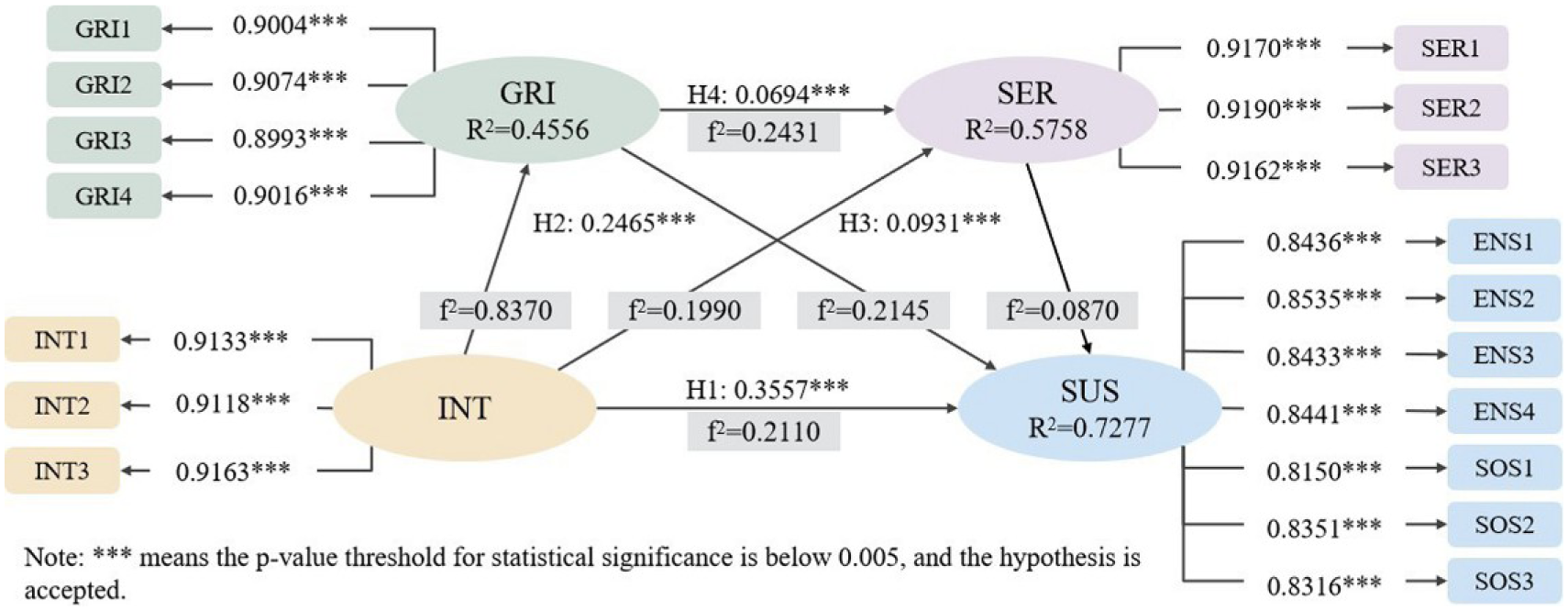
Result of PLS-SEM.
The results show that intelligentization has a significant direct impact on sustainability (β = 0.3557, t = 8.9410, p = 0.0000, LLCI: ULCI = [0.2801, 0.4345]), supporting H1. This finding aligns with previous research suggesting that intelligentization enhances operational efficiency and resource management, directly contributing to sustainability (Abou-Foul et al., 2023). The total indirect effects are also significant (β = 0.4090, t = 12.7155, p = 0.0000, LLCI: ULCI = [0.3468, 0.4719]), occurring through mediating and chain mediating pathways, as detailed in Table 1.
Figure 6 shows three distinct mediating pathways of the model. Green innovation is the primary mediator between intelligentization and sustainability (β = 0.2465, t = 8.5487, p = 0.0000, LLCI: ULCI = [0.1918, 0.3050]). According to the variance accounted for (VAF, Nitzl et al., 2016), green innovation accounts for 32.23% of intelligentization’s total effect on sustainability, supporting H2. This substantial mediating effect underscores the critical role of green innovation to obtain sustainable competitive advantages (M. Y. Wang et al., 2021). Servitization also mediates the relationship between intelligentization and sustainability (β = 0.0931, t = 4.7006, p = 0.0000, LLCI: ULCI = [0.0571, 0.1343]), by Milad et al. (2024). However, its contribution is comparatively smaller, explaining only 12.17% of intelligentization’s total effect on sustainability, supporting H3.
The chain mediating effect through green innovation and servitization (β = 0.0694, t = 4.9298, p = 0.0000, LLCI: ULCI = [0.0438, 0.0990]), is significant but modest, contributing 9.08% of intelligentization’s total effect on sustainability, providing exploratory support for H4. While this pathway enhances sustainability, its contribution is limited compared to individual mediating effects. The modest effect results from multiple factors. These include partial overlaps between the effects of green innovation and servitization, direct associations between intelligentization and sustainability that bypass the mediating chain, and reduced precision in measuring complex, multi-step mediating effects. Additionally, organizational differences in service readiness, such as varying resources or capabilities, may impede the transition from green innovation to servitization, further diminishing the chain effect. In this pathway, green innovation creates codified knowledge and eco-efficient options. Servitization then delivers these as configurable services for low-waste fulfillment. Alternative sequences, such as servitization triggering green innovation via demand sensing, are possible. This study prioritizes green innovation as the initial link based on empirical and case evidence. This nuanced finding highlights the complex interplay between different mediators in achieving sustainability, as discussed by Lyu et al. (2022).
The empirical evidence suggests that intelligentization significantly enhances sustainability through direct and indirect pathways. The total indirect effect of intelligentization is stronger than the direct effect, highlighting its multifaceted role in sustainability practices. It indicates that intelligentization is associated with sustainability through technological advancement and process optimization. Green innovation emerges as the primary mediator, suggesting that intelligentization primarily enhances sustainability by fostering innovative environmental solutions (Yin et al., 2022). While servitization and the chain mediating pathways also make contributions, their effects are more supportive. Servitization helps translate intelligentization capabilities into sustainability outcomes by integrating service-oriented solutions, and enhancing green technological innovation (M. Y. Wang et al., 2021). This aligns with the DIKWP framework, which emphasizes the interconnectedness of intelligentization, green innovation, and servitization in driving sustainability.
Case Study of Wensli: Applying DIKWP Framework in Manufacturing
A practical case study in textile manufacturing is analyzed to demonstrate the application of the DIKWP framework in enhancing sustainability through intelligentization, green innovation, and servitization. Hangzhou Wensli Group Co. Ltd., a leading silk manufacturer and listed company in China, has implemented an “AIGC+” model in design and production practices to enhance sustainability. Wensli demonstrates how data can be transformed into actionable sustainability practices, aligning with the circular economy principles outlined in the DIKWP framework. Data is sourced from Wensli’s official website (www.wensli.com), and the Shenzhen Stock Exchange website (www.szse.cn), where its annual reports (Wensli, 2023–2024) and related disclosures are available. Since Wensli is a resource-rich market leader, the case study focuses on illustrating the DIKWP mechanisms rather than providing definitive validation.
Application of “AIGC+” Model
The adoption of “AIGC+” model in Wensli emphasizes the role of intelligentization in the DIKWP framework. The data is collected from various sources, including customer management system (CMS), social media platforms, and market trend analyses. The “AIGC+” model applies machine learning algorithms to train the input data, and establishes a pattern database automatically. The database offers over 500,000 flower patterns, integrating an AI image algorithm matrix composed of 300 algorithms. By building standard workflows and automatic design processes, Wensli’s “AIGC+” intelligentization minimizes resource wastage and reduces labor costs for sustainability, consistent with H1. The “AIGC+” model is illustrated in Figure 7.
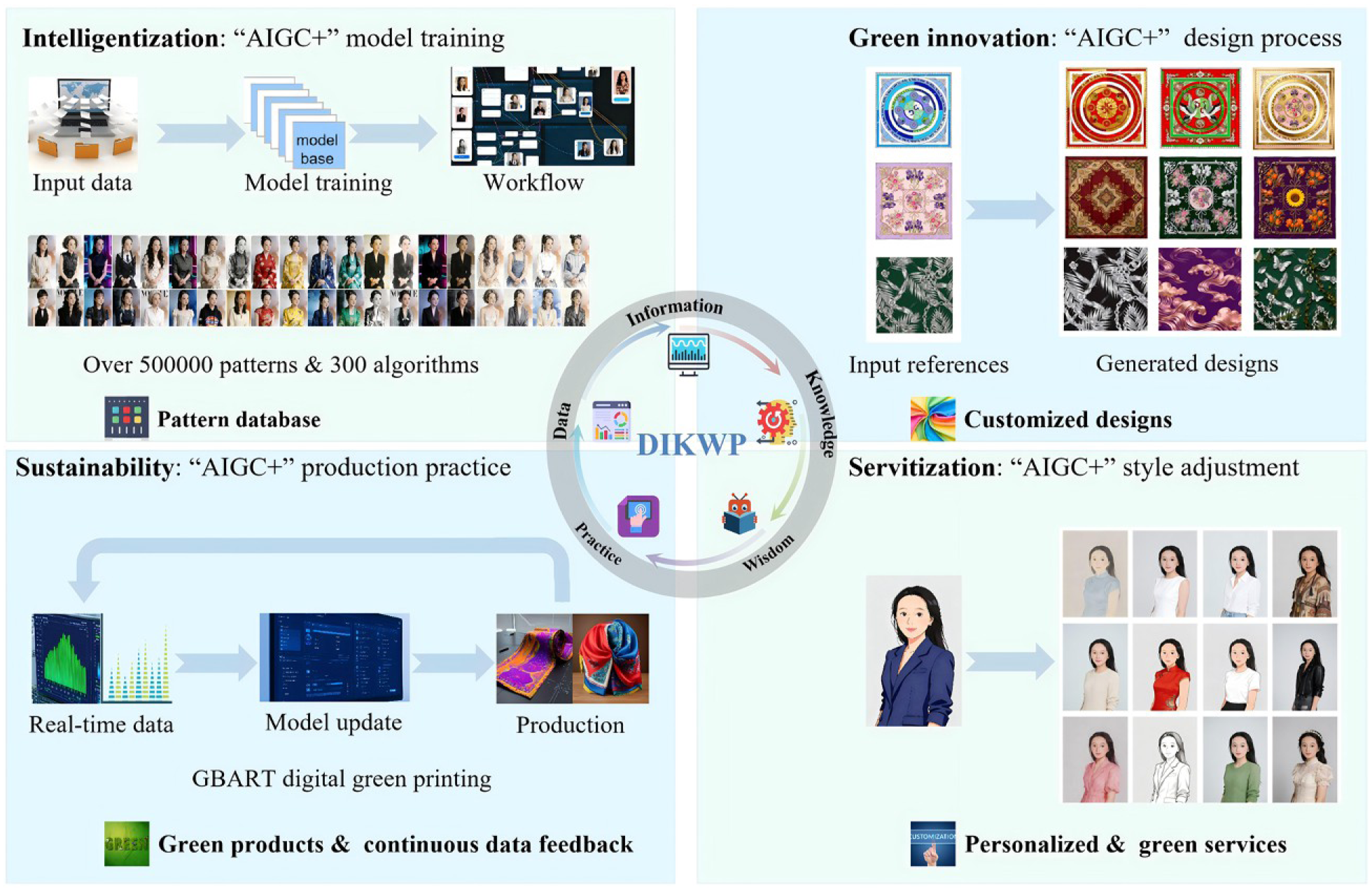
“AIGC+” model in Wensli.
“AIGC+” green innovation integrates artistic creativity, market trends, and consumers’ needs in the design process. By analyzing the data from various sources, the “AIGC+” design process improves design efficiency at a low cost. Based on the input reference graphs, the “AIGC+” model can understand customers’ demands quickly, and generate valuable information, knowledge, and wisdom for new fashion designs. The smooth DIKW flow makes the design process practices more eco-friendly and smarter. The green innovation process also involves the transformation of technological capabilities into sustainable practices, generating various design patterns, and promoting customized designs. Consequently, potential problems can be identified in the early design stage, avoiding resource waste in the production phase (Wu et al., 2024). The “AIGC+” intelligentization process improves design efficiency and enhances sustainability, consistent with H2.
“AIGC+” servitization shifts from a product-based logic to a service-dominant paradigm. The “AIGC+” model allows customers to input their preferences, which are analyzed by AI algorithms to generate customized patterns. This approach reduces the need for physical prototypes, minimizing waste and aligning with the circular economy’s emphasis on reducing resource consumption. Wensli’s servitization strategy enhances customer engagement by providing real-time style adjustments. This not only provides personalized green services, but also ensures that production processes are aligned with market demands, reducing overproduction and waste. The “AIGC+” servitization creates a sustainable business model, enhances recycling services, and emphasizes long-term value. The integration of servitization into Wensli’s operations demonstrates how it mediates the relationship between “AIGC+” intelligentization and sustainability, consistent with H3.
The DIKWP framework’s circular feedback mechanism is central to sustainability practices in Wensli. The “AIGC+” practice continuously generates new practice data from its production processes, which is fed back into the “AIGC+” model, and improves the DIKWP flow. This data-driven loop enables Wensli to refine its designs, optimize production parameters, and improve resource efficiency. Furthermore, Wensli employs green bio-based advanced research technology (GBART), a kind of digital green printing technology, to realize waterless dyeing and printing, resulting in green production with reduced emissions. GBART generates real-time process data on color yield, fabric behavior, and energy consumption. This data is fed back into the “AIGC+” model to update pattern-to-parameter mappings and production constraints. These updated parameters enable the service system to optimize feasible lead times, suggest low-waste alternatives, and offer on-demand configuration to customers during online interactions. This low-carbon practice also improves response speed in servitization and enhances sustainability. This process aligns with the DIKWP framework, where data from GBART evolves into actionable information and knowledge, ultimately guiding sustainable practices. Wensli’s 2023 to 2024 annual reports document servitization expansion driven by “AIGC+” integration at its Digital Innovation Center. The reports indicate higher conversion in personalized customization and sustained year-over-year growth in quick-response orders. These operational outcomes are illustrative of the “AIGC+” servitization pathway that translates intelligentization into sustainability gains.
The outcomes of practices in Wensli generate new data, which is fed back into the “AIGC+” model, forming a circular DIKWP loop.
Performance of “AIGC+” Model
The “AIGC+” intelligentization efforts in Wensli provide the technical foundation for green innovation, which in turn enables the development of eco-friendly technologies such as GBART. These technologies support Wensli’s servitization strategy by enabling the production of customized, sustainable products. The interplay between intelligentization, green innovation, and servitization creates a synergistic effect that enhances Wensli’s overall sustainability performance. Table 2 details the performance of the “AIGC+” model.
Performance of “AIGC+” Model.

Source. The data stems from Wensli’s annual reports (Wensli, 2024).
The case study demonstrates how the DIKWP framework can be applied to enhance sustainability in manufacturing practice. In Wensli’s operations, the DIKWP framework supports a circular economy by continuously converting data into higher forms of value, ensuring sustainable and adaptable manufacturing practices. It also provides empirical evidence for the hypotheses.
Discussion, Conclusion, and Implications
This study confirms the effectiveness of the DIKWP framework in the circular economy, validated through PLS-SEM and a case study in Wensli. The findings show that intelligentization is positively associated with sustainability (H1), with green innovation serving as a key mediator (H2). The mediating effects of servitization (H3), and the combined chain mediating effect of green innovation and servitization (H4) are also confirmed. However, the cross-sectional design restricts the ability to draw causal conclusions. This study provides evidence consistent with a comprehensive model in which intelligentization relates to sustainability through direct and indirect pathways.
Discussion
This study empirically examines the relationships among intelligentization, green innovation, servitization, and sustainability within the circular economy. Unlike prior research focusing on linear DIKW models (Frické, 2019; Rowley, 2007), this study explores the cyclical nature of the DIKWP framework, extending its application in manufacturing sustainability. Intelligentization facilitates the DIKW flow, supporting sustainability practices by enhancing data-to-wisdom transformation. Green innovation emerges as a stronger mediator than servitization in linking intelligentization to sustainability, due to its dual focus on environmental impact and economic viability. The indirect effects of intelligentization through these mediators outweigh direct effects, underscoring the value of synergistic integration in closed-loop systems. However, the chain mediating effect of green innovation and servitization is relatively weak, indicating that effective knowledge management and human-robot collaboration are critical to maximizing sustainability outcomes by enhancing integration and efficiency.
The Wensli’s case study provides practical evidence of translating codified process knowledge into eco-efficient options and configurable services via the DIKWP cycle. This research extends DIKW theory and contributes to manufacturing sustainability practice through PLS-SEM and case analysis.
Conclusion
This study integrates the DIKWP framework with the circular economy, revealing a new paradigm for manufacturing sustainability practices. It underscores the cyclical transition from data to practice, highlighting the significance of continuous loops in sustainability initiatives.
As displayed in Table 1, the indirect impact of intelligentization on sustainability is stronger than its direct impact. Intelligentization is not only positively associated with sustainability (H1), but also relates to green innovation (H2) through technology spillover effects (A. L. Zhang et al., 2024). Liu et al. (2023) demonstrated that intelligentization in digital transformation relates to “source reduction” and “end-cleaning” green innovation, both critical to sustainability.
The mediating effect of green innovation between intelligentization and sustainability (H2) is more significant than servitization (H3). It can be attributed to its ability to directly address environmental concerns while simultaneously promoting economic viability. Holzner and Wagner (2022) also highlighted that the eco-friendly impacts of green innovation are essential for advancing the transition toward sustainability. In contrast, servitization’s mediating effect in links with intelligentization and sustainability, though significant, may be less pronounced (H3). This could be due to the indirect nature of servitization, focusing more on the short-term service demand, rather than the long-term environmental and social sustainability.
The chain mediating effect of green innovation and servitization on the relationship between intelligentization and sustainability is relatively weak (H4). Tariq et al. (2019) indicated that firms with high green innovation capabilities improve environmental sustainability, and fulfill customers’ servitization needs in sustainability practices, partly consistent with H4.
In conclusion, this study addresses a gap in manufacturing sustainability research by offering a cyclical, data-to-practice perspective on integrating smart and green manufacturing within the circular economy, supported by empirical and case insights.
Managerial Implications
This study provides managerial implications for manufacturing firms aiming to enhance sustainability.
For small and medium-sized enterprises (SMEs), the DIKWP framework offers a replicable approach to addressing resource constraints by utilizing practice-generated data for decision-making and automation. These data-driven approaches fuel low-carbon practices, significantly reducing waste and pollution to enhance sustainability (Sharma et al., 2022). By adopting intelligentization, SMEs can minimize labor and expertise demands, automate data-driven decision-making, and enhance their capacity for green innovation and servitization. Wensli’s experience is consistent with the view that eco-friendly technologies and servitization are feasible with limited resources, aligning with market and sustainability goals.
For large firms, intelligentization is particularly crucial as they often manage complex, multi-layered processes and have the resources to integrate advanced AI systems effectively. They should invest in continuous learning, workforce development, and cross-functional collaboration to maximize the benefits of green innovation and servitization. Additionally, these firms should participate in government procurement projects for green and intelligent products to secure orders and drive technological innovation by meeting required standards. Long-term planning, including lifecycle assessment tools, can embed sustainability metrics across operations and supply chains.
Implementing the DIKWP framework presents challenges such as digital infrastructure gaps, skill shortages, and resistance to change. Firms can leverage cloud-based solutions to bridge infrastructure gaps and invest in tailored training programs to overcome skill shortages. For SMEs, a phased implementation strategy is advisable, starting with data collection and basic automation to build capacity gradually. In contrast, large firms with abundant resources, can pursue parallel smart and green initiatives, fostering cross-functional collaboration to drive green innovation and servitization at scale. Additionally, both types of firms must consider boundary conditions like industry sector, regulatory environment, and technology maturity to ensure effective outcomes.
Practical Implications
Policy-makers should invest in intelligentization by encouraging innovation and providing financial incentives for sustainability practices. Hou et al. (2024) suggested that increasing tax incentives and funding for emission reduction can help accelerate industrial digital-intelligent transformation and reduce carbon emissions. Cao and Yu (2024) have also highlighted that government innovation subsidies play a crucial role in fostering green innovation, and advancing sustainable practices. Moreover, forward-looking government procurement policies can set green standards and prioritize eco-innovative products to drive supply chain innovation. Public data-sharing platforms, secured by blockchain and standardized for cross-industry compatibility, can facilitate the opening of more DIKWP loops, assisting manufacturers in improving their sustainability practices through data mining. Additionally, educational programs focusing on AI optimization, green technology, and service design are also essential to build workforce capabilities for manufacturing transformation.
The manufacturing industry should keep pace with technological advancements in intelligentization and green innovation. Servitization, which supports consumers’ expectations, will be a key direction for manufacturing transformation. Encouraging collaboration among manufacturers, suppliers, and customers can lead to shared knowledge and collective practice toward sustainability. In addition, long-term planning that considers the entire lifecycle of products and services is essential for embedding sustainability into all manufacturing processes. Promoting information sharing and cooperation across sectors will foster a more circular economy for manufacturing sustainability.
Limitations and Future Work
This study extends the DIKWP framework by linking intelligentization, green innovation, and servitization to sustainability. However, limitations in design, sampling, measurement, case analysis, and theoretical development persist.
First, the cross-sectional design affects causal inference. The observed relationships may be subject to reverse causality (e.g., sustainability prompts further intelligentization investment) or influenced by omitted variables. The dynamic nature of the DIKWP circular loop requires longitudinal verification. Reliance on self-reported measures may introduce common method bias. Additionally, due to design constraints, sensitivity analyses, robustness checks, and model comparisons were not performed. Future research should adopt longitudinal designs, multi-source data, objective metrics, and additional analytical tests to enhance causal interpretation and validate findings.
Second, external validity is limited by the focus on high-intelligentization industries in China, which restricts generalizability. Institutional context differences (e.g., environmental regulations, market conditions) are not discussed. Sustainability measurement treats economic factors as enablers rather than outcomes, limiting a holistic assessment of sustainability performance. Future research should include cross-country and cross-industry samples, explore moderators like regulations and capacities, and assess economic indicators for comprehensive evaluation.
Third, the single textile case of Wensli limits analytic generalization. The circular DIKWP loop remains conceptual, untested empirically as a dynamic process. Hypotheses on moderators are absent, leaving multi-group analyses of heterogeneity by industry, firm size, and digital maturity unexplored. Though industry type is a control variable, the mediating effects’ heterogeneity across industries remains unexamined due to sample size limit. Future research should include multiple industries, employ multi-case designs, test the feedback loop with panel data, assess moderators, and conduct model comparisons to enhance generalizability.
Footnotes

Ethical Considerations
The authors state that this research complies with ethical standards.
Consent to Participate
Informed consent was obtained online. Before submitting the questionnaire, participants were required to confirm the informed consent form to ensure that they fully understood the information provided in this study.
Funding
The authors disclosed receipt of the following financial support for the research, authorship, and/or publication of this article: This work has been supported by Zhejiang Province “Jianbing” Key R&D Project of China (No.2025C01010), Zhejiang Province Key Science and Technology Leading Talent Plan Project of China (No.2023R5213), Hangzhou City Key Research Program Project of China (No.2024SZD1A18), and Zhejiang Provincial Philosophy and Social Sciences Planning Project (No.26NDJC130YB).
Declaration of Conflicting Interests
The authors declared no potential conflicts of interest with respect to the research, authorship, and/or publication of this article.