




Abstract
At present, the circular economy is emerging as a strategy for sustainable development. What is important in promoting the circular economy is to assess its current level and take measures for assessment. This paper discusses some methodological issues in comparing and assessing the efforts for the circular economy at the international level. To this end, the authors explain the theoretical premise related to the assessment of efforts for the circular economy, establish an indicator system for assessing the efforts for the circular economy, and suggest a method for comprehensively assessing the efforts for the circular economy by country. The conclusions are that (a) the comparative evaluation of activities related to the circular economy by country requires a unified standard or category that can cover these activities, including all factors that meet sustainable development; the outcome, process, and guarantee of the circular economy, and this can be the circular economy effort and (b) the circular economy effort of a given country must synthetically be assessed by using the indicators capable of showing all aspects. These conclusions may contribute to establishing a new theoretical foundation that can include various aspects of the circular economy activities and to setting a practical and methodological foundation for evaluating each country’s various activities related to the circular economy at the international level and can serve as a policy basis for identifying the weak and strong aspects of circular economy activities at the domestic or international level and establishing technological and economic measures to strengthen the weak aspects.
Keywords
Introduction
The circular economy (CE) is recognized as an excellent alternative for the reduction of resource crises, reduction of environmental pollution, and more sustainable economic development due to population growth. In general, the CE can be defined as an economic model aimed at minimizing waste, preserving value for a long time, reducing virgin resources, and efficient use of resources through closed loops of products, product parts, and materials within the scope of environmental protection and socio-economic benefits (Babbitt et al., 2018; Hofmann, 2019; Murray et al., 2017). From this, the CE has become a great concern globally, and each country or each region has established and implemented its strategies and codes of conduct to implement the CE by region or country. In this regard, different definitions, indicators, and goals related to the CE have been raised by different international organizations, countries, and regions and they are implementing the CE practices in different ways.
Attempts to measure the CE were initially conducted at the corporate level. Typical examples of such tools and means include; Circulytics, Life Cycle Assessment (LCA), and Material Flow Analysis (MFA) (Ellen Macarthur Foundation, 2020); Compass and Score (U.S. Chamber of Commerce Foundation, 2020). These tools have significance in enabling measuring a company’s entire circularity. Still, some institutions are developing indicators to measure circular economy for businesses. For example, the report “Circular Economy Indicators for Businesses” by Institut National de l’Economie Circulaire and Entreprises pour l’Environnement (2019) suggests the indicators mainly focused on information related to waste, products, and product use and the company-level material circularity framework developed by the Energy Research Institute (TERI) in India includes the indicators related to the circular supply chain, product life extension, product as a service, asset sharing and use of sharing platforms, and recovery and recycling (TERI, 2018).
In addition, many developing and developed countries around the world set and utilize various indicators in terms of production, consumption, and social and environmental aspects to evaluate and cope with the progress of the CE according to their situation (e.g., the EU, China, the US, German, Japan, Sweden, Swiss, India, some countries of Africa and Latin America). To give the recommendations related to the measurement of the CE, the World Business Council for Sustainable Development (WBCSD, 2018) has proposed an analysis framework on circular metrics for a business, NGOs & Academia, and governments and since 2018, the Circle Economy has published the Global Circularity Gap Report for measuring the state of circularity of governments and businesses for a global circular economy (Circle Economy, 2022).
There have been attempts to measure the level of CE in several aspects. Typically, after analyzing 137 papers and articles published in the last 20 years and investigating the indicators measuring the CE, De Pascale et al. (2021) classify them based on three spatial dimensions, that is, micro, meso, and micro level, and based on the core CE principles (Reduce, Reuse, Recycle). Such previous studies related to the measurement of a CE can be said to be meaningful in that these make it possible to evaluate the level of the CE in individual aspects. What is of interest in this study is what was focused on measuring and comparing the level of the CE at the country level, that is, at the macro level, and what indicators were set (see Table 1).
Indicators for Measuring the CE at the Macro-Level.

Source. Compiled by authors from De Pascale et al. (2021).
As mentioned earlier and shown in Table 1, indicators or indicator systems for measuring the CE at the macro level have been proposed by various institutions, countries, and authors. Of course, these indicators can be said to be meaningful as a means to assess the level of the CE according to the situation of a given country in the domestic scope at a certain point in time. The implementation of the CE goes through a different process under the influence of the socio-economic conditions, natural geographic conditions, and customs of a given country. In this context, each country establishes an indicator system according to its situation, uses it to evaluate the level of its own country’s CE, and takes measures to further promote the CE.
However, there is a limitation in that these indicators reflect some aspects of the CE. In other words, it can be said that indicators were designed with an emphasis on the efficiency of the CE, circularity, or material flow. In addition, it is our view that it is difficult to comprehensively compare and evaluate the implementation process of each country’s CE at the international level only with these indicators. This is because evaluating the implementation process of each country’s CE with only favorable indicators makes it difficult to guarantee preparedness in international comparison and to reflect the reality that some aspects (e.g., CE results and processes) are weak, but others (e.g., CE education, legal environment, financial security, etc.) are strong in countries. This shows that fewer methodologies have been studied to comprehensively compare and evaluate the level of CE at the international level.
From this background, this study is motivated by the following problems; a) how can a comprehensive and acceptable means be prepared to compare and assess the country-specific CE at the international level, such as the global competitiveness index? b) what are there in the indicators that can comprehensively reflect all actions related to the country’s CE? From this motive, this paper categorizes various activities related to the CE into the circular economy efforts (CEE) so that the situation of the country-specific CE can be compared and evaluated at the international level and discusses its components. From the purpose of the study, the paper discusses the research problem by dividing it into the theoretical and methodological directions for the statistical assessment of the CEE. The second section is to clarify the theoretical problems for a comprehensive assessment of the CEE. In this section, the authors discuss the expression of the CEE from the essence of CE. In addition, the setting direction and the system of indicators for assessing the CEE are described according to these expression types. The third section deals with problems related to methods for a comprehensive assessment of the CEE. This section explains the calculation of individual indicators that characterize the CEE and methods to evaluate them based on conditional data. The fourth section addresses the results and discussions, and the last section discusses the conclusion.
This study may contribute to establishing a new theoretical foundation that can include various aspects of the CE activities and to setting a practical and methodological foundation for evaluating each country’s various activities related to the CE at the international level by conceptualizing a CEE that can include all activities related to CE and determining its components. Also, this study can serve as a theoretical basis for establishing a unified concept or standard that can cover all activities related to CE at the international level, such as the Global Competitiveness Index. Furthermore, this study can serve as a policy basis for identifying the weak and strong aspects of CE activities at the domestic or international level and establishing technological and economic measures to strengthen the weak aspects.
The Theoretical Premise for Assessing the CEE
Previous Discussions of the Concept and Definition of the CE
To assess the CEE, it is important to understand the forms of expression of CEE. What is important for this is to recognize how the concept of the CE occurred and how its current definition is being made. It is because the CEE is correlated to the concept and definition of the CE.
In general, it is seen that the concept of a CE originated from environmental economics, which deals with issues related to waste, air, water, and soil quality, conservation of natural capital and biodiversity, and promotion of sustainability. To solve these environmental and economic problems, several scholars have founded the concept of a modern CE. Boulding (1966) said that the Earth could become a spacecraft with limited resources and be reproduced or recirculated continuously and Mäler (1974) explained the relationship between economic growth, environmental quality, consumption, and welfare. Tietenberg (1984) correlated economics to environmental issues and Stahel (1986) raised questions about the sustainability of the current linear economic model under scarce resources and increasing waste, and Pearce and Turner (1990) described the interactions between economics and the environment, discussing the environmental services, pollution and depletion of natural resources. On the other hand, some scholars developed CE-related concepts. Lyle (1994) proposed the concept of regenerative design and McDonough and Braungart (2002) developed the concept of “Cradle to Cradle.” The concepts, initiatives, and joint actions related to a CE conducted by the Ellen MacArthur Foundation (EMF) are globally appreciated by participants of the World Economic Forum session in 2014 (World Economic Forum, 2014). In addition, other authors contributed to the creation of the concept of modern CE (Frosch, 1992; Lovins et al., 2014; Richards et al., 1994).
With the creation of the concept of a CE, various attempts have been made by institutions and scholars to define the CE. What is important in considering the definitions of the CE is what researchers centered on and defined it. This consideration is a prerequisite for defining the coverage of the CEE.
Among these, representative definitions by institutions can be outlined as follows; the EU defines the CE as “a production and consumption model which involves reusing, repairing, refurbishing and recycling existing materials and products to keep materials within the economy wherever possible” (EU parliamentary research service, n.d); the U.S. Chamber of Commerce Foundation—“a model that focuses on careful management of material flows through product design, reverse logistics, business model innovation, and cross-sector collaboration” (U.S. Chamber of Commerce Foundation, 2015); the Ellen MacArthur Foundation—“an industrial system that isrestorative or regenerative by intention and design” (Ellen MacArthur Foundation, 2013); the Finnish Innovation Fund Sitra—the one “is based on monitoring, minimizing and eliminating waste flows by circulating, rather than just consuming, materials” (Sitra, 2015); the WRAP (Waste and Resources Action Program)—“an alternative to a traditional linear economy (make, use, dispose) in which we keep resources in use for as long as possible, extract the maximum value from them whilst in use, then recover and regenerate products and materials at the end of each service life.”
The CE has been defined from the perspectives of scientists and professionals. The typical definitions are as follows; the Finnish researchers define the CE as “an economy constructed from societal production-consumption systems that maximizes the service produced from the linear nature-society-nature material and energy throughput flow” (Korhonen et al., 2018; van Buren et al., 2016 say that the CE is “aimd for reducing the consumption of raw materials, designing products in a manner that they can easily be taken apart and reused after use (eco-design), prolonging the lifespan of products through maintenance and repair, and the use of recyclables in products and recovering raw materials from waste flows”; the UK researchers and scientists define the CE as “an economic model wherein planning, resourcing, procurement, production and reprocessing are designed and managed, as both process and output, to maximize ecosystem functioning and human well-being” (Murray et al., 2017); other scientists employing in manufacturing and industrial design define the CE as “a regenerative system in which resource input and waste, emission, and energy leakage are minimized by slowing, closing, and narrowing material and energy loops through long-lasting design, maintenance, repair, reuse, remanufacturing, refurbishing, and recycling” (Geissdoerfer et al., 2017). The abovementioned concepts and definitions can be said that the CE, which is distinguished from the linear economy, focuses mainly on the progress of the CE (i.e., reduce, reuse, recycle) as an alternative to sustainable development from theoretical and practical viewpoints. In other words, it can be said that these do not explain all the components related to the CEE.
From this, it is reasonable to base on a study that outlines various definitions. Kirchherr et al. (2017) viewed the definitions from published articles and defined the CE as “an economic system that replaces the ‘end-of-life’ concept with reducing, alternatively reusing, recycling and recovering materials in production/distribution and consumption processes at the micro-level (products, companies, consumers), meso-level (eco-industrial parks) and macro-level (city, region, nation and beyond), intending to accomplish sustainable development, thus simultaneously creating environmental quality, economic prosperity and social equity, to the benefit of current and future generations.” Therefore, the ultimate goal of a CE is the overall closure of the “take, make, and disposal” cycle inherent to a linear economy. Achieving these ambitious goals requires long-term major changes in the current business method. From this, circular input, sharing platform, product as a service (PaaS), product use extension, and resource recovery have been proposed as the circular business models to achieve circularity across production, distribution, and consumption areas (Lacy et al., 2020, p. 19–20). Among these models, three more focus on production (circular input, product use extension, and resource recovery), while the other two models (sharing platform and product as a service)—relationship between consumption and consumers. The models deal with the entire value chain of circularity. Therefore, the authors will discuss the forms of expression, that is, components of the CEE based on the above-mentioned.
Expressions of the CEE
Based on the abovementioned, the forms of expressions of the CEE can be outlined as follows.
First, the CEE can be expressed in terms of its efficiency. This is a form of expression related to the outcome of the implementation of CE. It is related to the situation that the CE has occurred as an alternative to sustainable development. The efficiency of the CE should be understood in terms of economy, environment, and society. This is because sustainability is discussed in economic and environmental and social aspects. Several documents claiming to promote the CE emphasize the socioeconomic and environmental benefits of the CE. McKinsey (2015) estimates that in Europe, the CE in the construction, food, and mobility sectors could create annual benefits of up to EUR 1.8 trillion by 2030. In addition, according to Ellen MacArthur Foundation (2018), it is estimated that the CE in China’s built environment, mobility, nutrition, textiles, and electronics sectors could lower the cost of access to goods and services by around CNY 70 trillion (USD 10 trillion) by 2040. This shows that the level of the CEE can be expressed in terms of CE outcome, that is, efficiency. Of course, regarding the efficiency of CE, the phenomenon of “Green-circular premium” or “CE rebound” can be considered. “Green-circular premium” occurs when the consumer accepts a higher price for a circular product as renewable resources and/or reuse/recycle/recovery/bio-based materials are used (Appolloni et al., 2022). Therefore, this phenomenon has a positive effect on the efficiency of CE. On the other hand, the CE rebound negatively affects the efficiency of CE. The CE activities can increase overall production, which can partially or fully offset their benefits. Because there is a strong parallel in this respect to energy efficiency rebound, they have termed this effect “circular economy rebound.” The energy rebound effect describes the phenomenon where increased efficiency makes consumption of some good (e.g., energy or transportation) relatively cheaper and, as a result, people consume more of it. This increased use decreases the environmental benefit of the efficiency increase, and can even lead to “backfire,” where the increase in use is proportionally larger than the efficiency increase, leading to higher net impacts (Zink & Geyer, 2017). Therefore, it is important to accurately calculate the factors mentioned above in determining the efficiency of CE.
Second, the CEE can be expressed by using circular inputs. This is a form of expression related to the first process of the CE process. The use of circular input is the basis for all other CE processes. Circular inputs focus on the “components” that enter the product in the design, procurement, and manufacturing stages. Examples of circular input include ones that are renewable, recyclable, or highly recyclable, and they can be used in production processes to partially or entirely remove waste and contamination. In general, circular inputs or circular supplies are divided into the following three groups; (1) renewable resources; (2) renewable bio-based materials; (3) renewable artificial materials. In this respect, the CE can be said to be a concept that includes green growth and a green economy. Currently, various eco-friendly designs and technologies are being developed and the use rate of renewable resources including renewable energy is increasing around the world for circular inputs. According to the International Renewable Energy Agency (IRENA, 2019), the worldwide installed solar generating capacity had already reached nearly 480 GW by the end of 2018. Eco-friendly technologies and designs such as energy harvesting, bio-based materials, the Cradle to Cradle Certified™ Product Program, and the like are further advancing. According to Wang et al. (2016), energy harvesting is “the technique for using the specialized materials or equipment to capture, store, and supply energy that would otherwise be lost as heat, light, sound, vibration, or movement.” In addition, the use of bio-based materials is increasing as substitutes for less-sustainable resources. For example, the Japanese automobile company Mazda has switched to bio-based plastics instead of traditional plastics for its car interiors (Mazda, 2020). According to GRID-Arendal (2013), global plastic production could greatly be replaced with bio-based materials as well as materials and chemicals derived from renewable biological resources over the next 20 years. McDonough and Braungart introduced the Cradle to Cradle (C2C) concept within a circular economy paradigm, developed the Cradle to Cradle™ concept, and introduced its certification process in 2002 (Wautelet, 2018). This shows that circular feedback or circular input becomes the first process in achieving overall circularity, and thus becomes an important aspect of the CE process.
Third, the CEE can be expressed in activities that extend the use of products. This reduces the wasted life cycle and capacity, reduces resource consumption, and relatively reduces waste by extending the service life of the product. In addition, it allows companies to create additional revenue sources while preserving the value of products through various life extension activities, including repairs and renewal. In other words, it is possible to realize the demand for circularity to maximize value, minimize waste, and keep in the cycle as long as possible. In general, a product’s use can be extended through design considerations, repairing, reconditioning, refurbishing, upgrading, and reselling on secondary markets. These CE processes are becoming common in various industries and companies worldwide. For example, the clothing retail company H&M is shifting the design criteria for clothing to focus more on quality, longevity, and the resale of used items (Reuters, 2019), and the French energy management company Schneider Electric extends the use of its goods by replacement service for components at the customer site. It is said that this results in the prevention of carbon dioxide emissions and a reduction in water and energy intensity (Zaccaro, 2018). This shows that the product use extension process conforms to the principle of CE in minimizing waste and maximizing product value preservation, and thus becomes an important aspect of CEE.
Fourth, the CEE can be expressed in the circular use of product utility. This is a review of the implementation process of the CE in a wider range, namely, the consumption area itself. In general, these economic activities have been viewed as sharing economy activities in the past. In other words, these economic activities have included business activities such as the servitization of a product and sharing platforms. In this regard, an opinion may be raised as to whether the boundary between the CE and the sharing economy should be distinguished. However, in sharing economy activities, activities such as repair and reconditioning inherent to the CE are carried out, and importantly, the mission of CE aimed at minimizing waste and preserving resources by increasing the utilization rate of assets is accomplished. From this, it became difficult to distinguish between the CE and the sharing economy, and in the process of transition to the CE, business models unique to the sharing economy were accepted. In this regard, opinions were raised that considered these sharing economy activities as part of the CE. Stahel (2006) stated that this concept “outlines the strategies needed to face tomorrow’s challenges by using science and knowledge to improve product performance, create jobs, and increase wealth and welfare” and later, relates the CE to the performance economy (Stahel, 2008). Circular utilization of product utility is currently being realized through circular business models such as product as a service (PaaS) and sharing platforms.
In the PaaS model, the customers lease the product on a short-term basis or need basis and thus, this model is of significance not only in saving cost and time but also in reducing resource consumption and improving net utilization of resources. For example, Philips has introduced the “Pay per Lux” model, which provides the exact amount of light for workspaces and rooms that employees need when using for specific tasks (Philips Lighting, 2020) and ORIX offers an equipment leasing service, in which the technology obsolescence risk is managed by a company and the end-of-life waste management is taken care by the company at the end of the lease period (ORIX, 2020). At present, many companies introduce the PaaS model (also see Hum, 2018; Ohr, 2018; Rent The Runway, 2020). On the other hand, the utilization rates of products and assets are improving through shared ownership, access, and usage. A sharing platform has been popularized across various industries and countries. Marriott, one of the world’s largest hotel chains, launched Homes & Villas for premium home-share rental service, while the established rent-a-car companies, including Avis and Enterprise, currently offer “car-sharing” (Enterprise Car Club, 2022; Touryala, 2019). Cohealo serves as a platform to share and maximize the efficient use of medical equipment (Cohealo, 2022) and the eRENT provides a platform for sharing construction equipment and machinery management (eRENT, 2022). This means that the cyclical use of product utility conforms to the principle of CE and thus reflects one aspect of the CEE.
Fifth, the CEE can be expressed in the treatment of waste and recovery, recycling, and reuse of materials, parts, or products. This is a form of expression related to the implementation process of the CE in a narrow sense. Unlike the linear economy, the CE is based on the closed-loop principle, and concepts such as cradle to cradle, waste to wealth, and waste to energy are all based on this, and the core principles of the CE (Reduce, Reuse, and Recycle) are also focused here. This circularity has a positive impact on the economy, society, and environment by reducing dependence on natural resources and reducing waste. Currently, due to the development of industries and the growth of the population around the world, resource consumption and waste emission are rapidly increasing in production and consumption areas.
In the context of waste minimization, regulatory standards on wastes and emissions were established more strictly with more investment requirements on the “end of pipe” treatment. In response, the industry system started exploring and prioritizing waste minimization and waste minimization became an attractive proposition to the industry. Also, Laws on the prohibition of waste have been adopted and actions that are being used for production by converting waste into new resources are increasing. In the European Parliament (2019), a commitment to banning some single-use plastic items by 2021 and a collection rate for plastic bottles of 90% by 2029 has been announced. India decided that it would phase out disposable packaging by 2022, while some countries including China, Indonesia, Malaysia, Thailand, and Vietnam have stopped the import of plastic waste (Woodring & Hyde, 2019). Many companies have been trying for increasing the usage of recycled materials, zero waste, or commitments to 100% reusable and recyclable packaging. According to Karidis (2018), Enerkem, a Montreal start-up, plans the project to gasify 300,000 t of waste annually and to produce more than 200,000 tons of methanol using them. Nike has achieved some material innovations in generating the inputs for new footwear, apparel, and surfaces in sports facilities (Nike Grind, 2019). This means that activities such as disposal of waste, recovery, recycling, and reuse of materials, parts, and products are thoroughly based on the principle of CE aimed at minimizing waste and preserving resources.
Sixth, the CEE can be expressed from the perspective of the socio-economic environment that can promote the CE. This is related to the possibility of guaranteeing a CE. Socio-economic conditions must be established for the transition or promotion to a CE system. Such socio-economic conditions may include legal and regulatory environment, education, scientific research, and infrastructure. D’Adamo et al. (2022) demonstrate that social change and regulatory policies act as important factors to promote resource circulation of waste through expert surveys in Europe for the purpose of evaluating the relationship between waste management policy and CE goals. Also, Ayati et al. (2022) distinguish the various barriers that affect companies’ adoption of a CE through the literature review, and reveal that the barriers that have the greatest impact are economic and financial, government and regulation, society and culture.
Currently, many countries and regions are preparing a legal framework for the national action plan to promote the CE nationwide (e.g., China, European Union, Japan, etc.), various regulatory measures (e.g., producer responsibility extension system, carbon tax, environmental tax, etc.) are taken at the business or company level, and although it is not a specific legal measure, many countries have established a roadmap or code of conduct and are promoting the transition to a CE system (e.g., Switzerland, Sweden, Finland, Netherlands, India, etc.). In addition, to increase the interest in the CE, great attention is being paid to education and training for the CE at the national and corporate levels. Breakthrough technology is needed to secure the CE. Therefore, scientific and research efforts for the CE are important collateral to promote the transition to the CE. Also, to promote the CE, it is necessary to spend money on education, scientific research, and infrastructure creation at the national and corporate levels. In other words, investment in technology processes or substructures for circulating the materials, and collecting and separating the waste for the CE is required. The components of the CEE and their relationship can be summarized in the following figure (see Figure 1).

Relationship between components of the CEE.
The above explanation of the expression forms of the CEE is the theoretical basis for establishing an indicator system that can evaluate the level of CEE according to region or country.
Methodological Premise for Assessing the CEE
Indicators System for Assessing the CEE
Indicators characterizing the CEE can be set in the following directions.
First, the indicators assessing the CEE can be set as indicators characterizing the efficiency of the CE. These indicators can be said to be indicators that characterize the outcome of the implementation of the CE. Indicators characterizing the efficiency of the CE can be set by dividing them into economic, environmental, and social aspects according to the purpose of the study. In terms of economy, indicators characterizing the efficiency of the CE can be set as the contribution rate of the CE to GDP, resource productivity, and added value created in the CE sector and the like. In terms of environment, indicators characterizing the efficiency of CE can be set in terms of reducing greenhouse gas emissions, reducing the amount of waste generated, preserving resources (decrease of dependency on natural resources), and conserving biodiversity (i.e., saving water resources due to recycling of wastewater and saving the land resources due to reducing the landfills) thanks to the implementation of the CE. In terms of society, indicators characterizing the efficiency of the CE can be set in terms of the number of new jobs created by the implementation of the CE and the creation of new personal income due to the CE.
Second, the indicators assessing the CEE can be set in terms of the use of renewable energy and eco-friendly products. The CE is closely related to environmental protection and resource conservation, and therefore requires energy and material innovation. From this, many countries, including the European Union, have set green public procurement as an important item for the transition to a CE. The indicators related to the use of renewable energy can be set, such as renewable energy consumption and renewable energy consumption per GDP, and indicators related to eco-friendly products can be set as indicators such as production or ratio of eco-friendly certified products or Cradle to Cradle Certified™ Product.
Third, as the indicators assessing the CEE, it can be set in terms of recovery of the waste, recycling, and reuse of materials, parts, and products. These are established in terms of the process of CE based on the closed-loop principle of CE different from the linear economy. These can be concretized by dividing them into production and consumption areas. Circular use in the production area is the recycling of industrial waste, which can be set again by dividing it into the recovery of solid waste, dangerous waste, industrial waste, and use of its effective part. Alternatively, it can be set up by dividing it into specific scraps such as resin, wood packaging waste, electro and electric waste, biological waste, construction and demolition waste, etc., and can be classified by recycling or recovery. In addition, it can be set by dividing it into the use of recycled materials as secondary materials in the production area and can be set as the recycled content of the materials contained in the product. Circular use in consumption areas can be set up by dividing it into comprehensive use of urban living waste and urban sewage. Such cases mainly refer to the recycling and reuse of parts or materials in waste. Circular use may be expressed as reuse or circular utilization rate of the product. This means that the product produced does not end up as disposable consumption, but rather extends its use and life, or maximizes value preservation, reducing waste volume, increasing the utility of a product, and allowing many people to enjoy the use of the product together. In this context, indicators characterizing the reuse or recycling of a product can be embodied in indicators such as the number of items or volume of used products, their utilization rate, the number of enterprises realizing the PaaS model, the size of sharing platforms, and their utilization rate and the like.
Fourth, as the indicators assessing the CEE, it can be set in terms of the possibility of a guarantee for the implementation of the CE. As the CE is a new form of economy, it is possible when various socio-economic conditions necessary for it are met. These socio-economic conditions can be characterized in terms of education, R&D, investment, and law for a CE. As the indicators related to education, indicators such as expenditure necessary for the CE education and training and the number of people covered by the CE education and training program can be set. Indicators related to R&D can set indicators such as the number of designs of recyclable products (or reusable, reassemble) and eco-friendly products, the number of patents, the CE-related R&D expenditure, new technologies, and inventions related to CE, etc. As an indicator related to investment, investment expenditures necessary for the collection, recovery, processing, and recycling of waste or for the creation of information and technological infrastructure can be set. To promote the CE, it is necessary to have a legal system related to the CE. In this regard, as an indicator of whether a region or country is willing to transition to a CE, it is related to the question of whether laws and regulations that legally guarantee the CE exist. Therefore, as the indicators assessing the CEE, the indicators characterizing the degree of enforcement and presence of laws and regulations related to the CE can be set. There may be regulations and rules (e.g., producer responsibility extension system, carbon tax, etc.) under the CE Promotion Act and various CE processes, and related indicators should be established. The indicators abovementioned make it possible to compare and assess the CEE in various aspects according to the assessment aim, and to take measures to promote it further. The above can be presented in the following table (see Table 2).
System of Statistical Indicators for the Assessment of the CEE.

Source. Own elaboration.
Method for Assessing the CEE
In this subsection, the authors set a few indicators reflecting the individual aspect of the CEE based on Table 2, and suggest a method for assessing the CEE. To compare and evaluate the CEE by country, it is necessary to evaluate individual indicators that reflect the CEE and to comprehensively evaluate those individual indicators by generalizing them. To this end, it is important to convert primary data regarding the set indicators into the values that are possible to compare for each country and to set the coefficients of weight in consideration of the importance of the indicators and evaluate them comprehensively. The analytic hierarchy process (AHP) suggested by Saaty (2008) can be applied to set the weight of indicators. In this subsection, the procedure suggested by Rim et al. (2020) is used to apply the weighted average method.
The procedure applied for the evaluation of CEE can be described in the Figure 2.
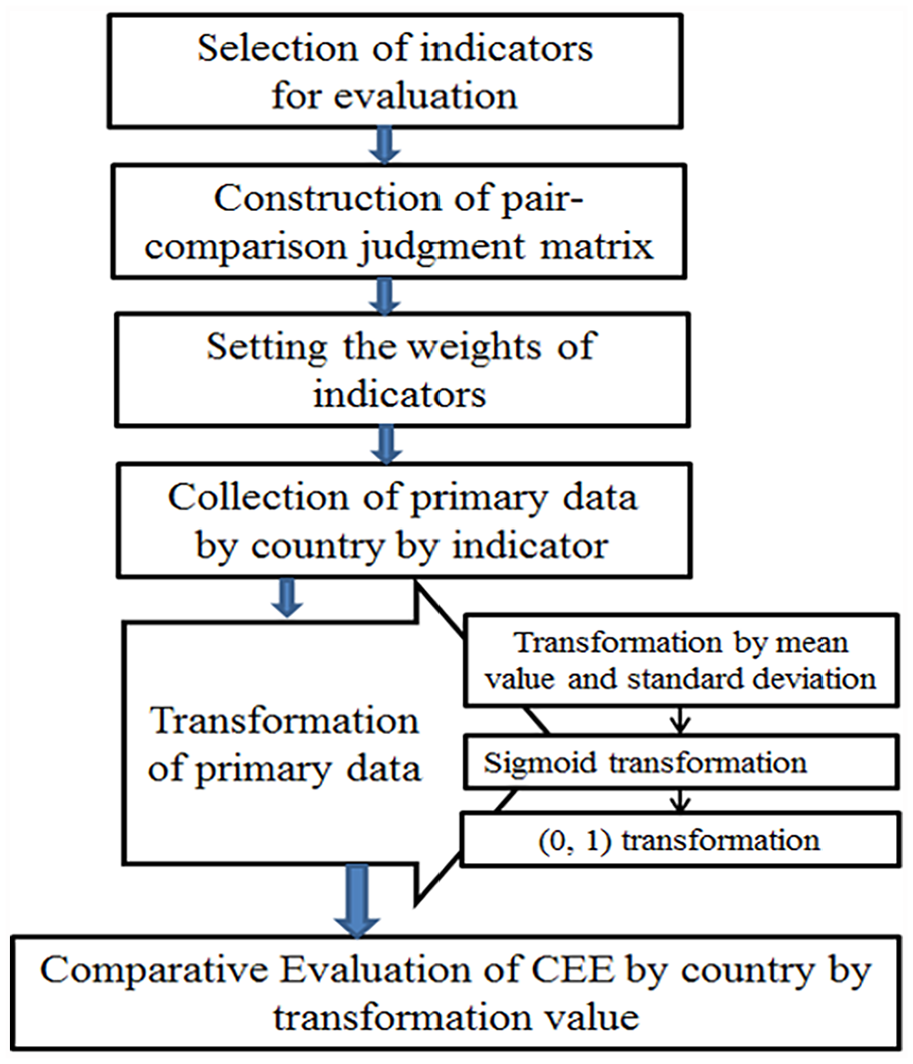
The procedure applied for the evaluation of CEE.
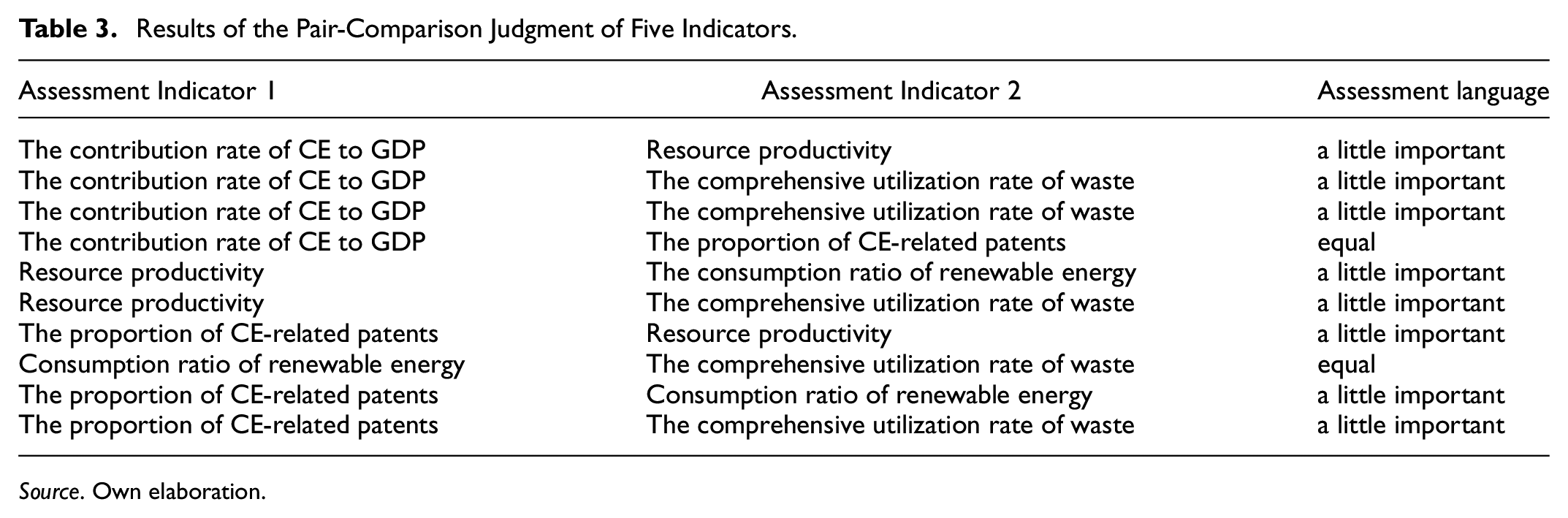
To apply this method, first of all, it is required to create a pair-comparison judgment matrix for individual indicators that reflect the CEE. In this paper, to simplify the explanation and calculation of the method is designed to set five indicators that representatively reflect the CEE by aspect. As such indicators, indicators such as the contribution rate of CE to GDP, resource productivity, consumption ratio of renewable energy, the comprehensive utilization rate of waste, and the proportion of CE-related patents are set. Next, to ensure the accuracy of the CEE evaluation, 18 scale methods are applied to the pair-comparison judgment matrix, and then a scale method in which the value of the pair-comparison judgment matrix is minimized is selected and the pair-comparison judgment matrix is determined. As there are linear and nonlinear judgments in pair-comparison judgments, nonlinear judgments are used in this paper. The results of the pair-comparison judgment for the five CEE evaluation indicators set earlier are assumed as follows (see Table 3).
Results of the Pair-Comparison Judgment of Five Indicators.
Source. Own elaboration.
Next, by using the assessment language, numerical values of different criteria corresponding to the results of subjective pair-comparison judgment are created. The results are obtained by making 1 to 9 scale standards corresponding to the assessment language (see Table 4).
Pair-Comparison Judgment Matrix.

Source. Own elaboration.
In addition, the following formulas can be used to examine the accuracy of the pair-comparison judgment matrix (Rim et al., 2020).


where
Next, a pair-comparison judgment matrix is created according to the lowest value of the values calculated by the above formulas, which requires evaluating the accuracy of the pair-comparison judgment matrix by applying the numerical values of possible scales to the evaluation language (see Table 5).
The Result Obtained by Assessing the Accuracy of the Pair-Comparison Judgment Matrix.

Source. Permitted by An et al. (2020).
From Table 5, it can be seen that the smallest scale of accuracy value is 9/9 to 9/1, so for the five indicators, a pair-comparison judgment matrix is calculated by matching the evaluation language with a scale of 9/9 to 9/1 (see Table 6).
Pair-Comparison Judgment Matrix Obtained by the Correspondence of 9/9 to 9/1 Standard to the Assessment Language.

Source. Own elaboration.
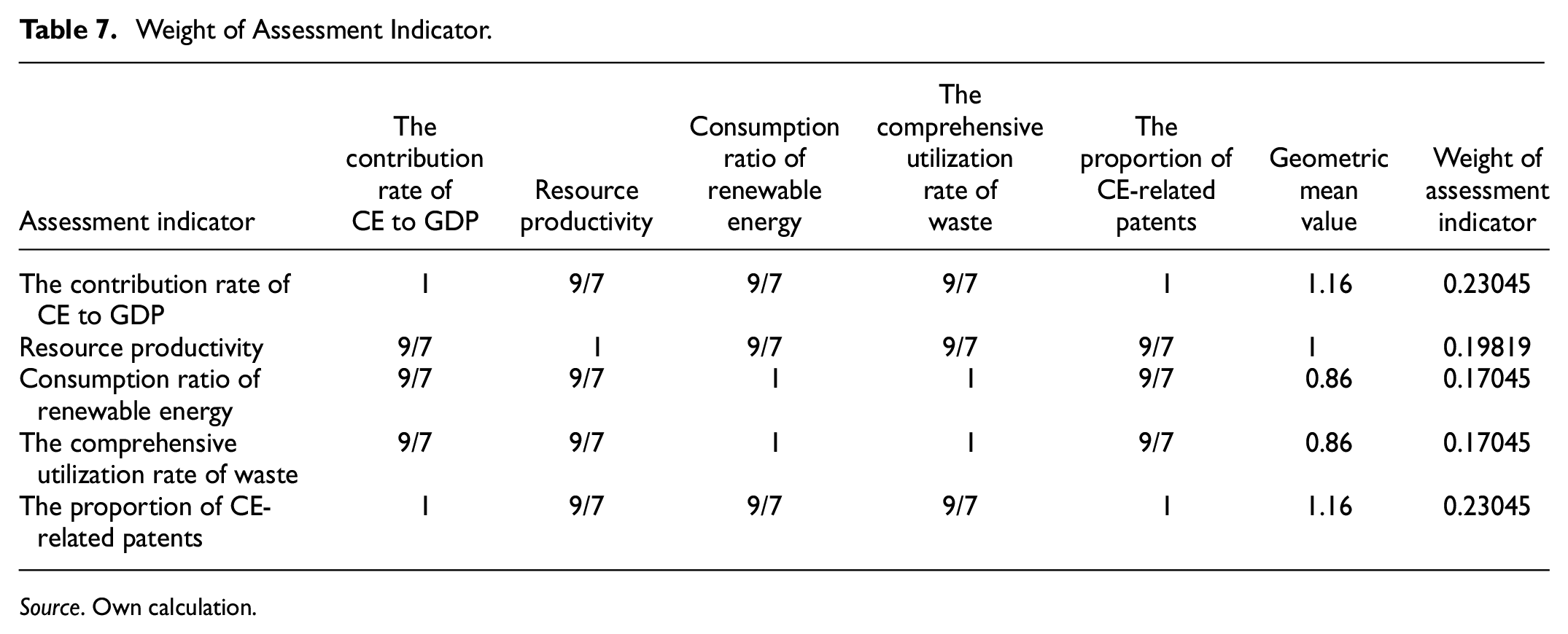
And the eigenvector corresponding to the maximum eigenvalue of the pair-comparison judgment matrix is calculated and standardized, and the results are set as the weight for each indicator (see Table 7).
Weight of Assessment Indicator.
Source. Own calculation.
Next, it is necessary to standardize the primary data collected for the set indicators to be comparable with each other. The general way of transforming statistical data is the one which is to transform the given data into a value between 0 and 1. For transformation, transformation by mean value and standard deviation, sigmoid transformation, and (0, 1) transformation are sequentially conducted.
Transformation by mean value and standard deviation can be made possible by using the following formula.

Where
Sigmoid transformation can be conducted using the following formula.

(0, 1) transformation is made as follows.

The data obtained are the standardized data that can be used for comprehensive assessment and comparison of the CEE. Since the weight of the indicators has been set earlier, the standardized data of the indicators can be weighed to compare and evaluate the CEE in each country.

where
Suppose that the authors have the data concerning the contribution rate of CE to GDP, the resource productivity, the consumption ratio of renewable energy, the comprehensive utilization rate of waste, and the proportion of CE-related patents which are collected in 10 countries (see Table 8).
Data on Five Indicators.

Source. Own elaboration.
Note. The countries and data in the table are conditioned on the basis of data published by international organizations because some indicators are inaccessible.
According to the data from Table 8, the transformation has been made using the mean value and standard deviation as in formula (1). As a result, the contribution rate of CE to GDP of the first country is,

If transformation by mean value and the standard deviation is made for each country in the same way, the results will be as follows (see Table 9).
Transformation by Mean Value and Standard Deviation.

Source. Own calculation.
Based on formula (2) and values from Table 9, the contribution rate of CE to GDP of the first country calculated by sigmoid transformation is,
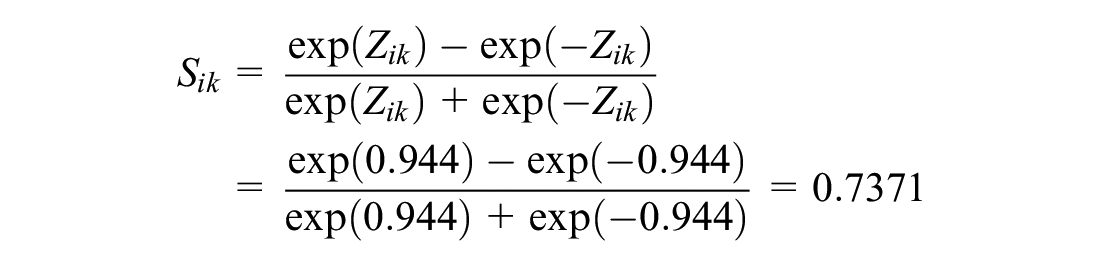
If sigmoid transformation is conducted for each indicator of each country, in the same way, the results will be as follows (see Table 10).
Sigmoid Transformation Data.

Source. Own calculation.
For sigmoid transformation data, (0, 1) transformation is conducted using formula (3) and the result is as follows.
The contribution rate of CE to GDP of the first country is,

If (0, 1) transformation is conducted for each indicator and each country, in the same way, the results will be as follows (see Table 11).
(0, 1) Transformation Data.
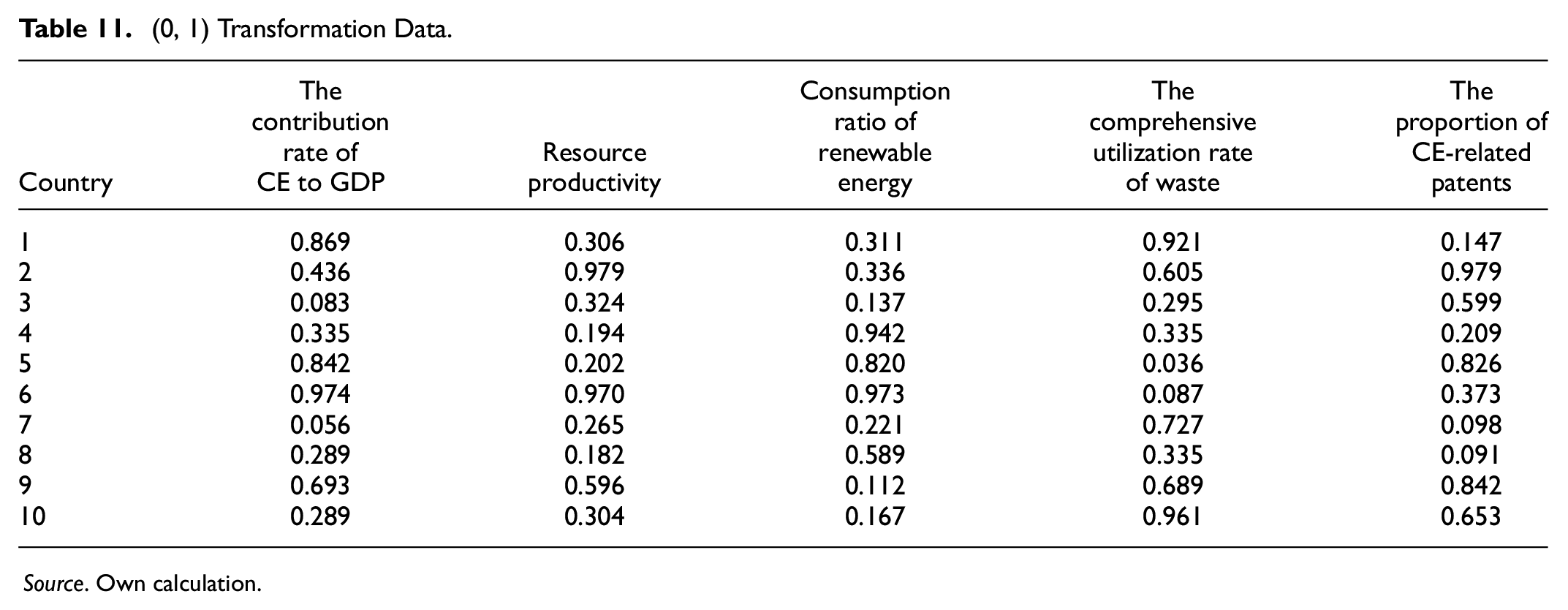
Source. Own calculation.
If one assesses the CEE of the first country based on the given data, using formula (4), the result will be,

In this way, one can assess and compare the CEE of all the countries, and the results are presented in Table 12.
Assessment of the CEE of Each Country.

Source. Own calculation.
The data presented in Table 12 showing the general assessment of the CEE according to the country can contribute to taking measures to promote the CE further.
Results and Discussion
To promote the CE, it is necessary to understand its current level and put forward the work for its promotion purposefully. To this end, it is needed to set the indicators system for comprehensively assessing the CEE and make an accurate assessment of its reality.
From the investigation of previous studies, this study was motivated by the following arguments; (a) how can the CEE be expressed? (b) how can the system of indicators for assessing and comparing the CEE according to the country be established?, and (c) how can the CEE be assessed? Therefore, this paper is aimed to clarify the forms of expression of the CEE, set a system of indicators for its assessment, and on this basis, suggest the methodology for assessing the CEE comprehensively.
For the study, first, we have investigated previous studies in two ways; (a) the indicators and methods related to the measurement of a CE and (b) the theoretical consideration of the emergence and definition of a CE. As a result of the investigation, we recognized that there was no unified concept that could include activities related to the CE at the international level and that research on its components was not organized. Accordingly, there were few studies on unified standards and methodologies that could compare and evaluate activities related to the circular economy by country at the international level. Although many indicators have been developed for the measurement of a CE, it can be said that some indicators were designed with an emphasis on the efficiency of the CE or circularity on the one hand and others—on material flow on the other hand (see Table 1). In addition, indicators developed by some organizations such as Ellen MacArthur Foundation, Eurostat, UN Environment Program, and the like have limitations that reflect the level of a CE at the corporate level or some of the CEE. From the results of the investigation, we found that to comprehensively assess the CEE, the forms of expression of the CEE must be clarified from a new perspective, and the system of indicators for comparing and assessing the country-specific CEE—set based on supplement of new ones and inclusion of some old ones in line with expressions of the CEE.
Next, we have clarified the forms of expression of the CEE, set the system of indicators, and suggested the method for synthetically assessing the CEE. For this, we investigated some of the major definitions of the CE suggested by various authors and organizations and the CE business models being practiced, introduced, or suggested by various countries, corporates, and kinds of literature. As a result, we found that these definitions, models, and practices reflect individual aspects such as the outcome or process of the CE, and little mention of the factors such as the guarantee of CE. This resulted in less research on methodologies that could compare and evaluate the status of each country at the international level, such as the competitiveness index and the knowledge economy index, being conducted in the field of the CE. We categorized the CEE to make up for the shortcomings of previous studies and to establish a unified standard or methodology for comparing and evaluating the CE activities, including aspects such as CE activities, such as results, processes, and guarantees of the CE. From this viewpoint, we have clarified the forms of expression of the CEE in six aspects; in terms of (a) the efficiency of a CE, (b) the circular inputs, (c) the activities that extend the use of a product, (d) the circular use of product utility, (e) the treatment of waste, recovery, recycling, and reuse of materials, parts or products, and (f) the perspective of the socio-economic environment that can promote the CE. Based on those expressions of the CEE, we suggested the directions for setting the system of indicators and presented the indicators system in Table 2. The direction for setting the indicators are as follows; first, the indicator assessing the CEE can be set as an indicator characterizing the efficiency of the CE, second, statistical indicators—to reflect the use of renewable energy and eco-friendly products, third, statistical indicators—to reflect the recovery of the waste, recycling and reuse of materials, parts and products, fourth, statistical indicators—to reflect the possibility of guarantee for the implementation of the CE. Also, we have suggested a method for assessing the CEE and made the calculation based on formulas and conditional data. This paper has set five indicators reflecting the CEE and made a pair-comparison judgment regarding them. Based on formulas, we have transformed the primary data for 10 countries concerning five indicators, and on this basis, calculated the values to assess the ranking of CEE according to country. The results of the calculations are displayed in Tables 8 to 12.
As a final result, country 6 is shown to be at the highest level of CEE, and country 7 is the lowest level (see Table 12). This shows that the CEE is determined by a synthetic assessment of indicators, not a single one. In other words, although any country is the highest among others for any indicator, it is impossible to say that the mentioned country is the one with the highest level of CEE, except for the case with the highest values for all indicators.
Conclusion
From the results and discussions, we can conclude as follows.
First, the comparative evaluation of activities related to the CE by country requires a unified standard or category that can cover these activities, including all factors that meet sustainable development; the outcome, process, and guarantee of the CE, and this can be the CEE. It follows that at present, the CE is emerging as a strategy for sustainable development and it is aimed at minimizing waste, preserving value for a long time, reducing virgin resources, and efficient use of resources through closed loops of products, product parts, and materials within the scope of environmental protection and socio-economic benefits. This interpretation allows individual aspects related to the CE definitions, business models, and practices discussed in the previous studies, models, as well as factors that affect the promotion of the CE. Only when the CEE is clarified in view of reflecting the outcome, process, and guarantee of a CE, can it say that the CE-related potentialities of a given country can be captured correctly.
Second, the CEE of a given country must synthetically be assessed by using indicators capable of showing all aspects. It follows from the limitations of individual indicators mentioned in the past in assessing the CEE at the micro, meso, and macro-level. Therefore, the CEE ought to be assessed in line with expressions of the CEE, to reflect all efforts for the transition and promotion of a given country toward the CE. Using this indicator system, policy-makers can discover the weaker aspects of their own countries compared with other countries with regard to the implementation of CE-related policies, thus taking economic and technological measures to overcome the weak aspects, and international organizations can assess and compare the situation of a CE according to countries.
This study has some limitations. Its limitation is about the availability or accessibility of individual indicators. Among indicators for assessing the CEE, some are available or accessible, but others are not. For example, data regarding CE-related patent, CE-relation education, investment in CE-related infrastructure, and the like according to countries are not well known. This may make it impossible to compare and assess the country-specific CEE at the international level. From the above limitation, further research is needed to be conducted in the development of typical and substitutable indicators available for assessment and accessible to databases.
Footnotes
Acknowledgements
We would like to thank the Chief of Center for North and South Korea Studies, Professor. Doctor. Cankui Piao at Yanbian University for insightful comments and materials related to Circular economy, and also thank the journal editor and anonymous reviewers for their guidance and constructive suggestions.
Declaration of Conflicting Interests
The author(s) declared no potential conflicts of interest with respect to the research, authorship, and/or publication of this article.
Funding
The author(s) disclosed receipt of the following financial support for the research, authorship, and/or publication of this article: This research was funded by Social Science Project of Jilin Provincial Department of Education, China (JJKH20191181SK).
