




Abstract
While the “Comprehensive Demonstration Policy for E-commerce in Rural Areas” has been widely acknowledged for stimulating rural economic vitality, its implications for carbon emissions remain underexplored and lack sufficient empirical evidence. Leveraging this policy as a quasi-natural experiment, this article employs a multi-period Difference-in-Differences strategy on a panel dataset of 2,132 Chinese counties to assess the carbon emission impacts of rural e-commerce expansion. Notably, the results show that: (1) The advancement of rural e-commerce has a significant carbon emission reduction effect. (2) Rural e-commerce has significantly narrowed the income gap between urban and rural areas, effectively promoted industrial structure optimization, and enhanced the level of digital infrastructure to facilitate carbon emission reduction. (3) The carbon reduction effect of rural e-commerce is particularly significant in areas with high industrial development level and high disposable income of rural residents. This article has broader implications for the digital-green transition paradigm, while offering actionable insights and evidence-based strategies to help developing economies to foster integrated rural development and environmental stewardship.
Keywords
Introduction
Rural e-commerce, as a vital integration of digital economy and rural revitalization strategies, serves as a powerful driver for improving agricultural producers’ income (Peng et al., 2021), raising the prices of agricultural products (Liu et al., 2021), promoting the development of rural industries (Tang & Zhu, 2020) and rebalancing resource allocation across urban and rural areas (Guan et al., 2024; Liu & Zhou, 2023; Yin & Choi, 2022). However, the environmental implications of its rapid expansion have yet to be comprehensively examined. On one hand, rural e-commerce can contribute to carbon reduction by streamlining logistics and reducing travel-related emissions (Xie et al., 2023). Conversely, it may also be a source of escalated emissions due to stimulated consumption and the associated increase in energy use for packaging and transportation (Tang & Yang, 2023). The study of carbon emissions, being fundamental to global climate mitigation and sustainable development (Zheng & Li, 2022), requires more extensive examination regarding its connection with rural e-commerce growth. A comprehensive investigation into the mechanisms through which rural e-commerce influences carbon emissions facilitate the establishment of synergistic pathways between digital enablement and low-carbon transition.
This article employs county-level data from China to examine the impact of the “Comprehensive Demonstration County Program for E-commerce in Rural Areas” on carbon emissions. This research focus is motivated by three primary considerations. Firstly, China’s position as the world’s largest e-commerce market and a major carbon emitter makes it a highly representative sample. Statistical evidence shows that China maintained its position as the global leader in online retail sales for the twelfth consecutive year in 2024, with a notable 7.2% growth in e-commerce transactions. Secondly, the significant variations in economic development, resource endowment, and industrial structure across Chinese county-level units provide an excellent foundation for a quasi-natural experiment, thereby allowing for a robust identification of the policy’s net causal effect. Finally, as a major developing country with a pronounced dual economic structure, China’s experience offers invaluable policy insights. Studying its case provides a nuanced understanding of the development effects and environmental consequences of rural e-commerce, yielding critical lessons for other nations navigating similar development paths.
The marginal contribution of this paper is mainly reflected in three aspects. First, utilizing a multi-period difference-in-differences model, we evaluate the impact of rural e-commerce development on carbon emission reduction under China’s e-commerce rural demonstration policy. Secondly, a framework is established to analyze the mechanisms by which rural e-commerce affects carbon emission reduction. Drawing on the equality hypothesis, industrial structure theory, and technological enablement theory, it operates by delineating transmission pathways across social, economic, and technological dimensions. It facilitates carbon emission reduction by narrowing the urban-rural divide, propelling the economic transition from energy-intensive industries to low-carbon services, and advancing the construction of digital infrastructure. Finally, a grouped regression approach was adopted to examine regional heterogeneity through the lenses of industrial development (the added value of the secondary industry), digital infrastructure (internet penetration rate), and rural disposable income (disposable income of rural residents). The results underpin the formulation of differentiated, evidence-based low-carbon development policies for rural e-commerce.
Section “Literature Review and Hypothesis” articulates the literature review and research hypotheses. Section “Methodology” is the research design. Section “Results” reports the empirical results and statistical findings. Section “Discussion” provides an in-depth discussion of the research findings. Final section is the conclusion and revelation.
Literature Review and Hypothesis
Literature Review
Extensive literature on rural e-commerce has documented its multifaceted positive effects, including addressing issues related to agriculture, rural areas, and farmers (Cai et al., 2025; Chen & Li, 2025), promoting common prosperity in urban and rural areas (Guan et al., 2024; Y. Liu & Zhou, 2023; Luo, Zhou & Zhang, 2025), and facilitating green development (L. Wang & Sun, 2025). Consequently, rural e-commerce is established as a pivotal instrument for rural revitalization, with its multifaceted positive effects having been extensively validated. The body of literature on carbon emissions can be broadly categorized into two main strands. One strand focuses on corporate-level carbon performance (Li, Lei & Wang, 2024; Pan et al., 2022). The other engages in a macro-level conversation, examining regional influencing factors and establishing the digital economy (Li & Wang, 2022; Yu et al., 2022), green finance (Ran & Zhang, 2023; Xiong et al., 2025), and emissions trading schemes (Guo et al., 2022) as critical forces. In recent years, scholarly efforts have increasingly sought to bridge the gap between these two distinct fields of inquiry. Some studies have initially explored the positive impact of e-commerce on carbon reduction (Di & Zhi, 2023; Wang, Li, et al., 2023). Furthermore, the research focus has shifted to increasingly direct examinations of the link between rural e-commerce and carbon mitigation. For instance, Du et al. (2023) used data from Chinese county-level regions to demonstrate that rural e-commerce can promote carbon reduction by reducing fertilizer usage, altering planting structures, and enhancing transportation efficiency. Li, Lv, et al. (2024) advanced a theoretical framework positing that rural e-commerce curbs carbon emissions through three interconnected channels: economic scale expansion, industrial servitization, and the digital transformation of traditional industries. While these contributions have paved the way for further analysis, critical gaps in the literature remain to be addressed. Although the socioeconomic impacts of rural e-commerce are well-documented, little attention has been paid to its role in carbon reduction and the causal mechanisms are not well understood. Furthermore, existing research predominantly relies on provincial or city-level data, which offers limited sample granularity. To address these gaps, this paper employs more granular county-level data to precisely identify the carbon emission reduction effects of rural e-commerce. Through rigorous variable matching, we aim to enhance the reliability of our empirical findings and systematically unveil its underlying mechanisms.
Rural E-commerce and Carbon Emission
Rural e-commerce, functioning as a pivotal element of the digital economy (Qian et al., 2025), has manifested substantial potential in mitigating carbon emissions through three distinct mechanisms. First of all, the integration of digitally-enabled order coordination, intelligent warehouse scheduling, and logistics system optimization significantly enhances the allocation of logistics resources. (Arnold et al., 2018). This digital transformation simultaneously reduces industrial energy consumption and effectively mitigates the elevated carbon emissions characteristic of traditional logistics systems (Xie et al., 2023). Secondly, agricultural e-commerce platforms leverage the visual presentation of products’ ecological benefits to not only increase consumers’ willingness to pay a premium for eco-conscious goods but also spur the adoption of sustainable farming technologies and green agricultural practices through price incentives (H. Qiu et al., 2024; Wang et al., 2024). The green transformation of agriculture reduces fertilizer and non-point source pollution (Ji, Xu, & Zhang, 2023), and promotes carbon reduction in agriculture (Ji, Hou, et al., 2023). Finally, by facilitating e-commerce market access, the government reduces time costs for agricultural businesses and enhances its governance efficacy (Wang, Peng, et al., 2023), thereby enabling the effective implementation of environmental regulations.
Rural E-commerce, Urban-Rural Income Gap, and Carbon Emissions
China’s rural regions have historically been constrained by both inadequate infrastructure and information asymmetry, resulting in substantial efficiency losses for agricultural producers. The deployment of rural e-commerce initiatives has successfully narrowed the urban-rural digital gap (Peng et al., 2021). These digital platforms have substantially lowered information procurement costs in agricultural markets (Wang et al., 2021) while markedly enhancing farmers’ operational revenues (Leng, 2022) through direct producer-to-consumer sales channels (Poulton et al., 2010). Concurrently, rural e-commerce advancement stimulates industrial development and entrepreneurial activities in rural areas (Chen & Long, 2024; Tang & Zhu, 2020). By providing training on internet usage and e-commerce skills, the income of farmers can be increased (Peng et al., 2021). The equality hypothesis holds that environmental outcomes are influenced by wealth, income, and market dynamics, and reducing economic disparities can lead to improved environmental quality (Coondoo & Dinda, 2008). Studies have also revealed that China’s wealth gap has a nonlinear correlation with environmental pollution, and reducing the wealth disparity could mitigate pollution under current development conditions (L. Qiu et al., 2021; Wang & Zhang, 2021). From one perspective, narrowing income gap contributes to more efficient population mobility and factor allocation patterns, thereby mitigating excessive regional carbon emission growth during urbanization through optimized scale effects (Wu et al., 2023). From another perspective, narrowing the income gap can lower the share of high-pollution energy sources in household consumption. Given these energy sources’ elevated carbon emission factors, such income equalization would substantially decrease residential carbon emissions by improving energy mix composition.
Rural E-commerce, Industrial Structure, and Carbon Emissions
The establishment of rural e-commerce platforms has facilitated the transformation of the industrial structure (Hong & Su, 2024). On one hand, rural e-commerce acts as a catalyst for employment in modern services like customer service and operations management. This shift promotes a structural transition toward a greater share for the service sector, thereby aiding the expansion of low-carbon industries in the overall economy (Cao et al., 2021). On the other hand, e-commerce platforms integrate with low-carbon industries like rural tourism, while also driving the digital transformation of traditional sectors such as finance and tourism (Zhang et al., 2022). This integration has fundamentally reshaped the service industry’s conventional development pattern (M. Liu et al., 2021; Liu, Liu, et al., 2025). There is a broad consensus that industrial structure upgrading is a well-established pathway to carbon emission reduction (Dong et al., 2020; Liu, Wu, & Huang, 2025; Zhang et al., 2014). Industrial structure upgrading promotes carbon emission reduction directly, as well as indirectly by serving as a key driver for technological innovation (Zhu, 2022).
Rural E-commerce, Digital Infrastructure, and Carbon Emissions
The rise of rural e-commerce has restructured the rural commercial ecosystem while also catalyzing new infrastructure demands through technological empowerment. As a powerful market force, rural e-commerce requires advanced digital capabilities, thereby creating a concrete need for large-scale digital infrastructure. The clear commercial demand arising from high-volume e-commerce and logistics grounds infrastructure investment in solid economics and lowers the perceived risk for county-level development. Enhanced digital infrastructure reduces regional carbon emissions by optimizing transport and resource use, a mechanism increasingly supported by evidence (Deng & Zhong, 2024; Ding et al., 2024).
Methodology
Data Source
The investigation draws upon panel data from 2,132 county-level administrative units in China between 2005 and 2021. The list of rural e-commerce demonstration counties was obtained from the website of the Ministry of Commerce of the People’s Republic of China. The county-level carbon emission data was derived from the Emissions Database for Global Atmospheric Research (EDGAR) through a spatial downscaling process that integrated multi-source geospatial data, including night-time light luminosity and population distribution. EDGAR, jointly developed by the European Commission’s Joint Research Center and the Netherlands Environmental Assessment Agency, represents one of the world’s most extensively utilized emission databases, offering comprehensive greenhouse gas and air pollutant emission data spanning from 1970 to present. The China County Statistical Yearbook provided annual data for rural and urban residents’ disposable income and control variables at the district and county levels.
Empirical Model
Regression Model
The establishment timelines of rural e-commerce demonstration counties vary across regions. Therefore, based on the practice of Beck et al. (2010), we develop a multi-phase DID model to evaluate the carbon emission effects of rural e-commerce development. The specific model is constructed as follows.

i stands for county, represents time,
Mechanism Test Model
Drawing on Formula 1, the mechanism test model is shown.


Parallel Trend Test
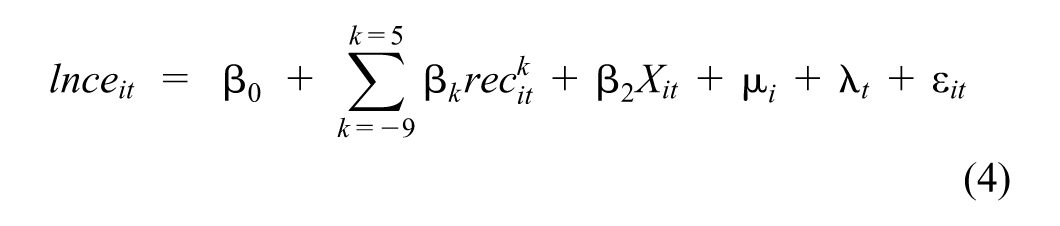
The multi-period Difference-in-Differences (DID) model critically relies on the parallel trends assumption, which requires the treatment and control groups to have followed similar trends prior to the policy intervention. Since counties adopted the policy at different times, we need to create distinct time indicators for each county’s pilot phase. To test the parallel trend hypothesis, we specify the following empirical model:
Variable Definition
Explained Variable
The dependent variable is the natural logarithm of county-level carbon emissions (lnce). Following Li et al. (2024), we employ the natural logarithm of aggregate county
Core Explanatory Variable
The primary independent variable is the development of rural e-commerce (rec). Consistent with Du et al. (2023), counties adopting the e-commerce demonstration policy receive a value of 1 for the treatment variable, while non-adopting counties are coded as 0.
Mechanism Variable
The mechanism variables are urban-rural income gap (ig), industrial structure optimization (stru), and digital infrastructure (dig). Following the methodological approaches of Wang and Sun (2025), we measure urban-rural income gap as the ratio of urban disposable income per capita to rural net income per capita. Consistent with Liang et al. (2023), we use the ratio of output value of tertiary industry and secondary industry to measure the optimization level of industrial structure.
Control Variable
Based on the availability of data, this paper selects economic scale, population size, industrial structure, agricultural development level, government fiscal capacity, digital infrastructure, and human capital as control variables (Li, 2024; Li, Lei, & Wang, 2024; Li, Lv, et al., 2025; Wang et al., 2015). (1) Economic development level (lngdp) is measured by the logarithmic value of a county’s GDP. More developed economies tend to produce higher carbon emissions. (2) Population size (lnpop), represented by the logarithm of the total population in the county. Densely populated areas often have higher carbon emissions. (3) Industrial structure level (stru), reflected by the ratio of the added value of the tertiary industry to that of the secondary industry. Industrial activities are the main source of carbon emissions. (4) Agricultural development level (agr) is measured by the primary industry’s share of GDP. Agricultural production, involving the use of fertilizers, pesticides, and machinery, is a significant source of carbon emissions. (5) Government fiscal capacity (lngov), represented by the logarithm of the general public budget expenditure of the county-level government. (6) Digital infrastructure (lndig) is proxied by the length of optical cable lines. Its enhancement can boost economic efficiency and facilitate structural optimization, thereby contributing to carbon emission reduction at the county level. To address the extensive missing data caused by county-level statistical limitations, “fixed-line telephone subscribers” were employed as a proxy variable. (7) The level of basic education (lnedu) is measured by the logarithm of the number of primary and secondary school students.
Descriptive Statistics
As shown in Table 1, after removing missing values and winsorizing control variables at the 1% level, our final sample consists of 32,018 observations.
Descriptive Statistics.

Results
Baseline Regression Result
The regression analysis in Table 2 confirms a significant link between rural e-commerce development and county-level carbon emissions, thereby validating our core research hypothesis. Column (1) presents the regression results without control variables, reporting a significantly negative coefficient for rural e-commerce development at the 1% level. The initial findings suggest that, when other variables are held constant, introducing comprehensive e-commerce demonstration policies in rural regions leads to decreased county-level carbon emissions. This implies that promoting rural e-commerce could serve as a viable strategy for meeting emission reduction goals. Additionally, column (2) presents the complete model estimates incorporating control variables. The coefficient value of rural e-commerce development is definitely significant and remains at the 1% level. The persistent statistical significance of the coefficient suggests that rural e-commerce’s emission reduction impact remains robust.
Results of Baseline Regression.

Notes. The figures in parentheses are t-statistics and the values.
and *** indicates significance at the 10% and 1% levels, respectively.
Robustness Test
Parallel Trend Test
The research timeframe spans 2005 to 2021, with 2014 marking the initiation of the first rural e-commerce pilot program. The nine-phase period prior to implementation was designated as phase-9, and its dummy variables were omitted from regression models to prevent multicollinearity. As illustrated in Figure 1, the parallel trend test coefficients across the 15 periods are presented. The vertical bars indicate the 95% confidence intervals. The regression coefficients before policy implementation are statistically insignificant and close to zero, suggesting no significant difference in carbon emissions between rural e-commerce pilot and non-pilot regions prior to the intervention. This confirms that the parallel trend assumption holds.
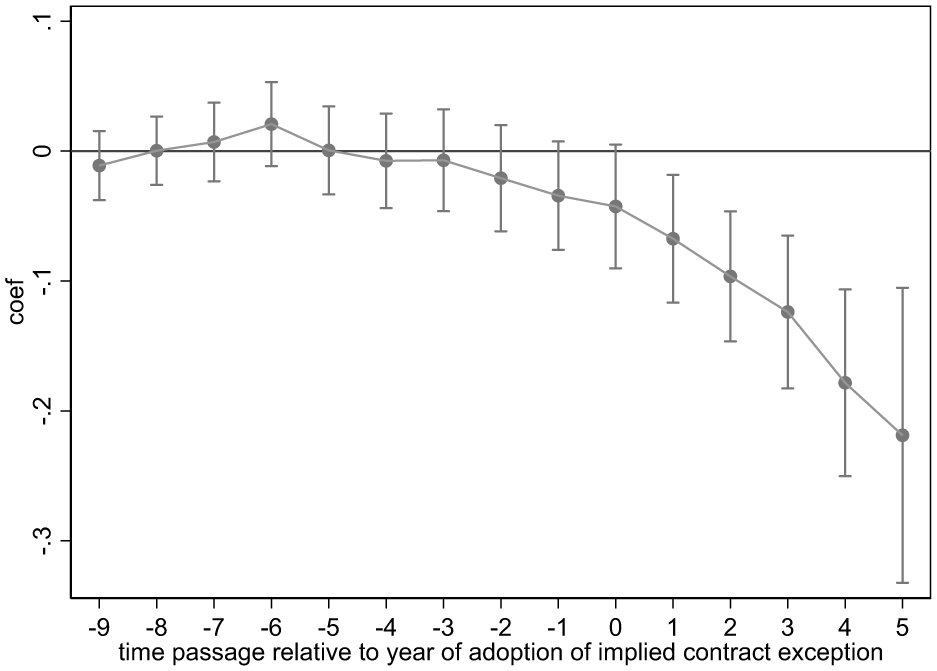
Parallel trend test.
Placebo Test
A placebo test was implemented in this research through random sampling of the experimental group. The analysis began by constructing 500 simulated experiments, where for each replication a random subset of 1,293 counties was selected to serve as a pseudo-treatment group, with all other counties comprising the control group. Secondly, an arbitrary implementation period was assigned to each counterfactual treatment group. Finally, the pseudo-sample is used to regression the benchmark model. Figure 2 presents the kernel density distribution and p-value distribution of the simulated policy estimates. The randomly generated coefficients exhibited a clustering pattern around zero, with corresponding p-values predominantly exceeding .1.

Placebo test.
PSM-DID
To mitigate potential sample selection bias between treatment and control groups, we implemented robustness checks using the PSM-DID approach. Our methodology incorporates both panel data transformation techniques and multi-period matching procedures for propensity score estimation. Table 3 presents the PSM-DID regression outcomes, with column (1) displaying cross-sectional matching results and column (2) showing annual matching estimates. Both specifications demonstrate statistically significant negative coefficients for “rec,” aligning with our baseline findings and confirming result robustness.
PSM-DID Regression Results.
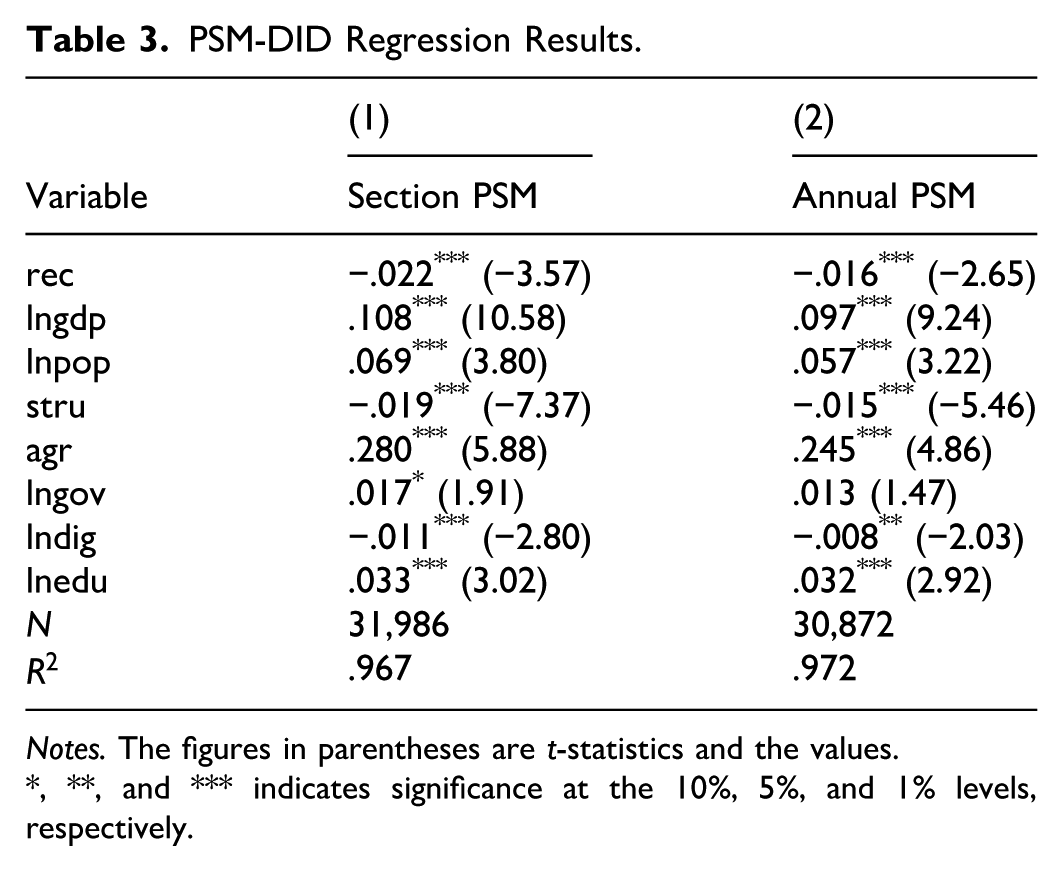
Notes. The figures in parentheses are t-statistics and the values.
, **, and *** indicates significance at the 10%, 5%, and 1% levels, respectively.
Other Robustness Tests
First, we account for potential confounding effects from concurrent environmental policies. Notably, between 2017 and 2019, the former Ministry of Environmental Protection of China implemented four rounds of ecological civilization demonstration projects across cities and counties. Our baseline regression explicitly controls for these ecological civilization demonstration counties to isolate the specific impact of e-commerce policies. Column (1) in Table 4 demonstrates that the negative association between rural e-commerce demonstration counties and carbon emissions remains statistically significant after controlling for ecological civilization demonstration counties, suggesting robust policy effects independent of other environmental initiatives. Secondly, we narrowed our analysis window from the original 2005–2021 period to 2010–2021. The results presented in column (2) continue to show a statistically significant negative relationship between rural e-commerce development and county-level carbon emissions, confirming the stability of our core findings. Thirdly, we employ carbon emission intensity as an alternative dependent variable, defined as carbon emissions per unit of economic output. This metric more accurately captures emission efficiency. As column (3) demonstrates, the coefficient maintains its statistically significant negative association, corroborating our primary results. Finally, the data of counties in China from 2005 to 2021 are replaced with data of prefecture-level cities in China from 2014 to 2019, and the number of “Taobao villages” in each prefecture-level city is taken as the measurement index of rural e-commerce. As shown in column (4), the inhibitory effect of rural e-commerce growth on carbon emissions is statistically significant, confirming the robustness of the baseline regression.
Results of Other Robustness Tests.

Notes. The figures in parentheses are t-statistics and the values.
, **, and *** indicates significance at the 10%, 5%, and 1% levels, respectively.
Endogeneity Test
This article adopts the interaction between fixed-line telephone availability and relief amplitude as an instrumental variable for rural e-commerce development, following the identification strategy of Nunn and Qian (2014). On one hand, the instrument meets the relevance condition. A region’s digital communications infrastructure fundamentally shapes its internet coverage and accessibility, and relief amplitude exogenously constrains the rollout of rural internet. On the other hand, the instrument satisfies the exclusion restriction. As a purely natural attribute, relief amplitude influences rural e-commerce only through its effect on infrastructure deployment and technology access, rather than through any direct channel, thereby addressing the endogeneity issue. The second-stage results in column (2) of Table 5 shows that the coefficient on rural e-commerce development is consistent in sign with our baseline estimates. Concurrently, the first-stage results in column (1) confirms a statistically significant relationship between the instrumental variable and the endogenous regressor, having passed both the under identification and weak instrument tests. Collectively, these findings support the robustness of our IV analysis against endogeneity concerns.
Results of Endogeneity Test—Instrumental Variable Estimation.
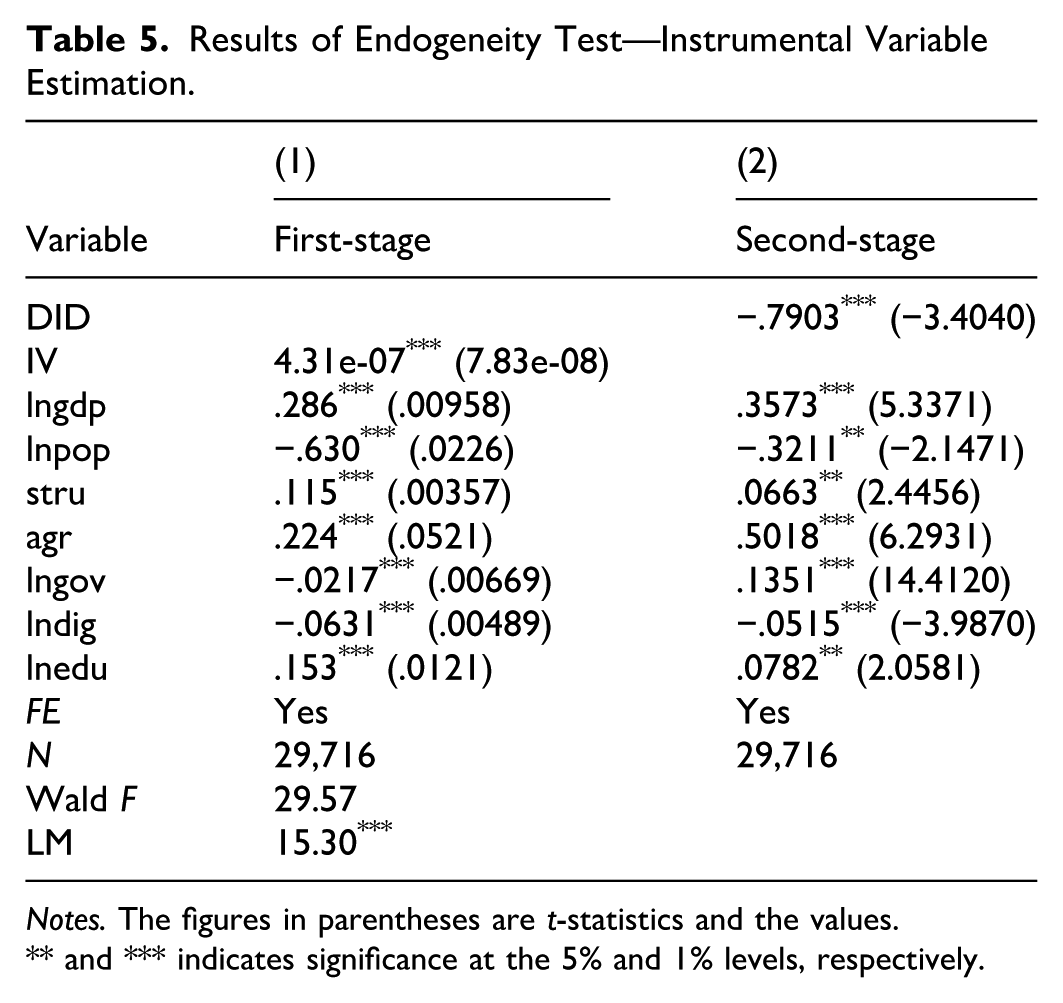
Notes. The figures in parentheses are t-statistics and the values.
and *** indicates significance at the 5% and 1% levels, respectively.
Mechanism Test
Urban-Rural Income Gap
Column (1) of Table 6 shows that rural e-commerce exhibits a statistically significant negative effect on carbon emissions. As evidenced in Column (2), rural e-commerce development exerts a statistically significant negative influence on the urban-rural income gap. This finding suggests that the e-commerce demonstration county policy helps bridge the digital divide between urban and rural areas, stimulates rural industrial growth and agricultural entrepreneurship, elevates farmers’ income levels, and consequently mitigates income inequality while reducing the urban-rural development gap. As shown in Column (3), the positive coefficient of urban-rural income gap on emissions indicates that more equitable income distribution facilitates carbon reduction. Meanwhile, the persistent negative effect of rural e-commerce confirms that urban-rural income gap plays a part of the intermediary effect. The narrowing of urban-rural income disparities facilitates more balanced population mobility and factor allocation between regions. As rural incomes rise, urbanization progresses in a more orderly manner, preventing the inefficiencies associated with excessive urban concentration. This process subsequently reduces energy consumption and carbon emissions typically generated in overcrowded urban centers (Wu et al., 2023). Furthermore, the narrowing urban-rural income gap prompted rural residents to adopt low-carbon energy sources, thereby driving a significant reduction in daily carbon emissions.
Mechanism Test—Urban-Rural Income Gap.

Notes. The figures in parentheses are t-statistics and the values.
, **, and *** indicates significance at the 10%, 5%, and 1% levels, respectively.
Industrial Structure
Column (1) of Table 7 shows that the impact coefficient of rural e-commerce on carbon emissions is significantly negative at the 1% level. Column (2) of Table 7 shows that the impact of rural e-commerce development on industrial structure upgrading is significantly positive at the 1% level, indicating that the development of rural e-commerce has promoted the upgrading of the industrial structure. Column (3) of Table 7 shows that the impact coefficient of the industrial structure on carbon emissions is significantly negative at the 1% level, indicating that the upgrading adjustment of the industrial structure has further reduced the carbon emission intensity of the county. The coefficient of rural e-commerce is still significantly negative, indicating that the upgrading of the industrial structure has played a partial mediating effect. On one hand, the shift from a secondary industry dominated by manufacturing to a tertiary sector focused on services reduces the economy’s carbon intensity, as the latter is inherently less carbon-intensive. On the other hand, modern services drive the green transformation of traditional industries through technology and innovation, unlocking further emission reductions across industrial chains.
Mechanism Test—Industrial Structure.
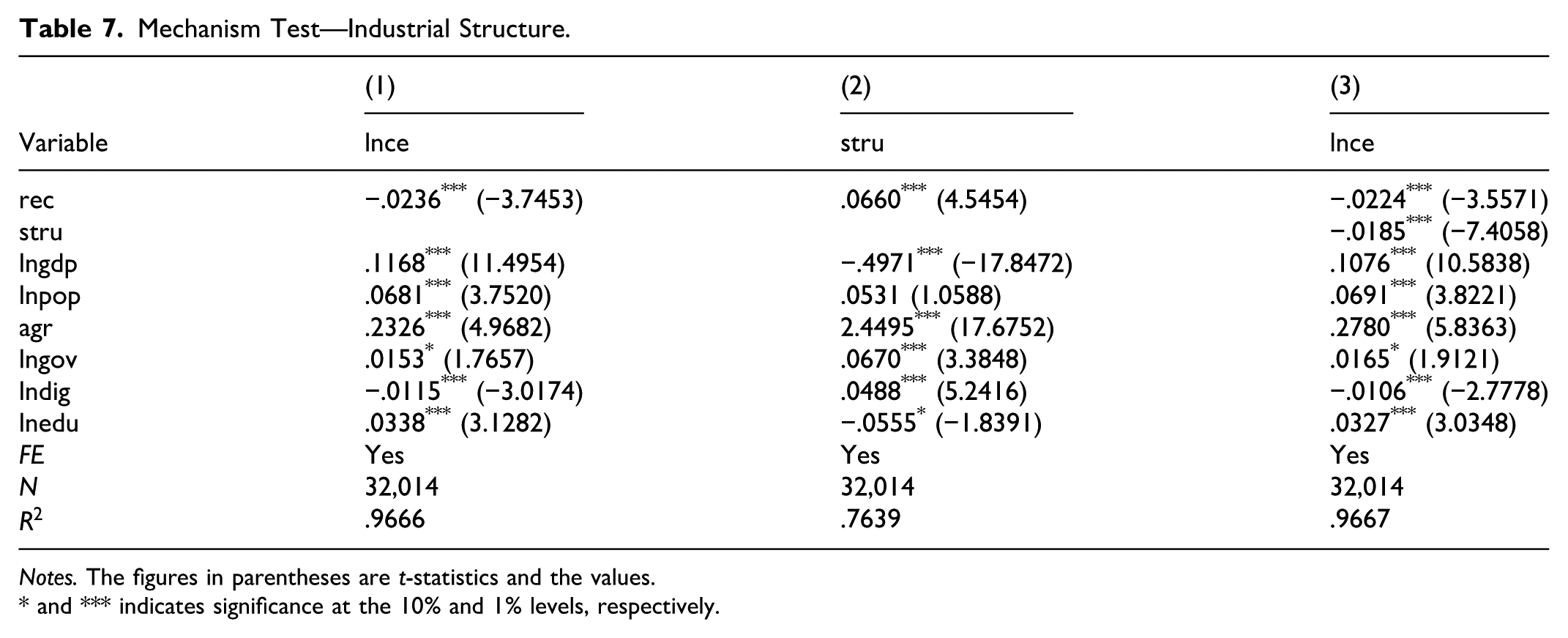
Notes. The figures in parentheses are t-statistics and the values.
and *** indicates significance at the 10% and 1% levels, respectively.
Digital Infrastructure
Column (1) of Table 8 shows that the impact coefficient of rural e-commerce on carbon emissions is significantly negative at the 1% level. Column (2) of Table 8 shows that the impact of rural e-commerce development on the construction of digital technology facilities is significantly positive at the 1% level, indicating that the development of rural e-commerce has promoted the construction of digital infrastructure. Column (3) of Table 8 shows that the impact coefficient of digital infrastructure on carbon emissions is significantly negative at the 1% level, indicating that digital infrastructure further reduces the carbon emission intensity of the county. The coefficient of rural e-commerce is still significantly negative, indicating that digital infrastructure construction has played a partial mediating effect. Digital infrastructure not only achieves precise regulation and efficiency optimization in sectors like energy through technologies such as AI, but also reduces carbon emissions at the source by promoting alternative models like remote work. This dual effect significantly lowers both the energy intensity of economic output and the carbon footprint from transportation and physical resource consumption. Furthermore, digital infrastructure facilitates full lifecycle management of products and enables efficient resource recycling. This fosters a shift towards a low-carbon economic model, resulting in systematic emission reductions.
Mechanism Test—Digital Infrastructure.

Notes. The figures in parentheses are t-statistics and the values.
, **, and *** indicates significance at the 10%, 5%, and 1% levels, respectively.
Discussion
Industrial Development Level
We divided the county-level data into two groups based on the average secondary industry value-added: regions with limited industrial infrastructure and those with more established industrial bases. Column (1) of Table 9 shows that rural e-commerce demonstrates a statistically significant negative impact on carbon emissions in highly industrialized counties. Column (2) of Table 9 indicates that its emission reduction effect in less industrialized counties lacks statistical significance. First, regions with advanced industrialization benefit from strong economic agglomeration. Their mature industrial ecosystems make rural e-commerce a critical lever for digitally transforming and upgrading traditional high-emission sectors. In addition, industrialized counties benefit from superior infrastructure and a concentrated market, which enhance logistics efficiency and reduce carbon emissions. Finally, businesses in well-industrialized counties demonstrate greater propensity to utilize e-commerce platforms for environmentally-conscious procurement, thereby facilitating the development of sustainable supply chain networks. However, the carbon reduction impact of rural e-commerce proves less substantial in counties with underdeveloped industrial bases. On the one hand, these regions typically feature agricultural-dominated economies complemented by modest service sectors, resulting in minimal industrial emissions and consequently reduced opportunities for meaningful emission cuts through e-commerce expansion. On the other hand, low-industrialization counties suffer from insufficient transport infrastructure and higher emissions per logistics unit, which negates e-commerce’s potential efficiency gains.
Heterogeneity Analysis—Level of Industrial Development.
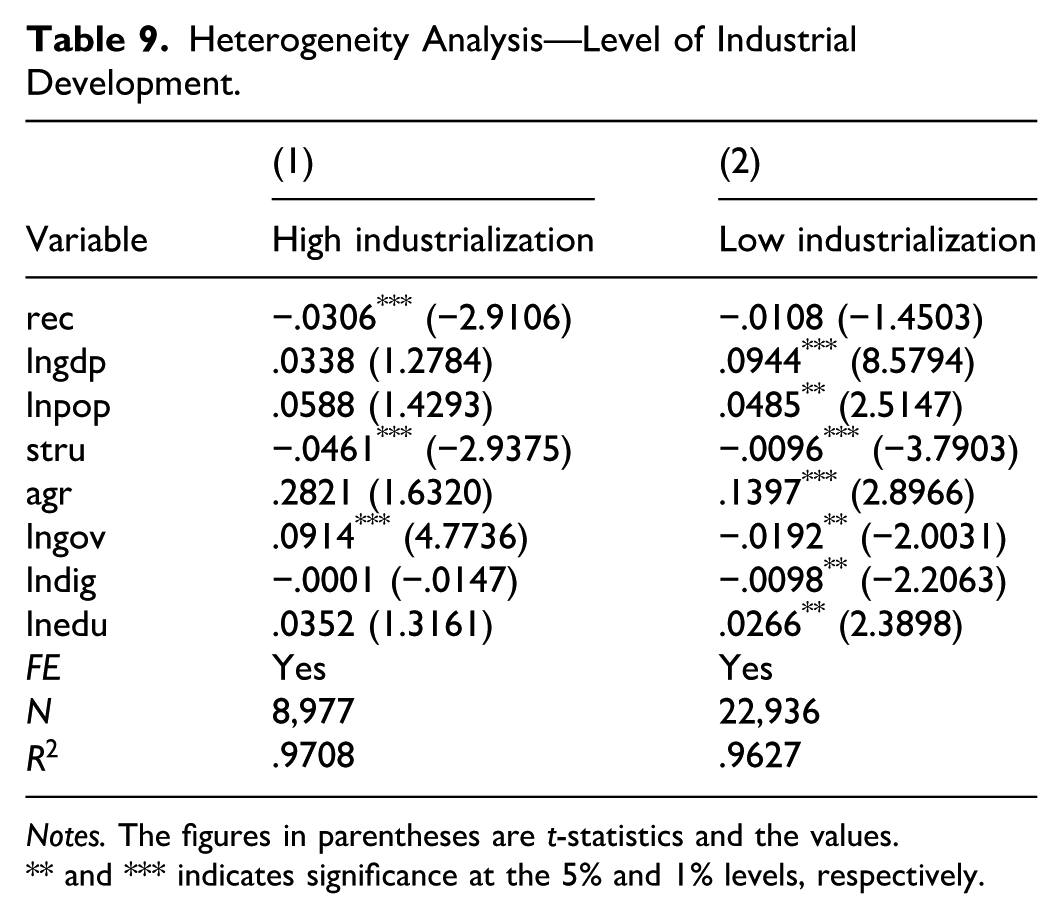
Notes. The figures in parentheses are t-statistics and the values.
and *** indicates significance at the 5% and 1% levels, respectively.
Digital Infrastructure Level
This study employs the proportion of Internet users relative to the total population as an indicator of China’s Internet penetration level. Using the median Internet penetration rate as the threshold, the county-level sample was categorized into groups with either underdeveloped or advanced digital infrastructure. The results presented in columns (1) and (2) of Table 10 reveal that the rural e-commerce demonstration policy effectively reduces carbon emissions regardless of regional differences in Internet penetration rates, consisting with the results of Ding et al. (2024). In regions with underdeveloped digital infrastructure, the carbon intensity of conventional economic systems is positively correlated with the marginal emission reduction effects achieved through digital technology adoption. From the standpoint of farmer engagement, regions with inadequate digital infrastructure experience more pronounced carbon lock-in effects within conventional agricultural supply chains. The multi-tiered distribution system further exacerbates product wastage during circulation. However, rural e-commerce adoption can streamline supply chains, minimize logistical redundancies, and generate substantial marginal efficiency gains. In terms of enterprise participation, even basic digital transformation can greatly enhance inventory turnover, with the potential being greatest precisely where initial efficiency is lowest. Comparative analysis revealed that regions with established broadband infrastructure demonstrated more limited decarbonization impacts from digital adoption. The observed phenomenon can be attributed to two primary factors. Firstly, these regions have already undergone preliminary digital transformation in their economic systems, resulting in relatively optimized energy efficiency. Secondly, their e-commerce advancement primarily focuses on maximizing the utility of established digital facilities, representing incremental optimization rather than fundamental transformation.
Heterogeneity Analysis—Digital Infrastructure Level.

Notes. The figures in parentheses are t-statistics and the values.
, **, and *** indicates significance at the 10%, 5%, and 1% levels, respectively.
Per Capita Disposable Income of Rural Residents
Column (1) of Table 11 indicates that rural e-commerce significantly suppresses carbon emissions in counties with higher rural per capita disposable income, whereas column (2) of Table 11 reveals that this emission-reducing effect is statistically insignificant in lower-income rural counties. The policy implementation proves particularly effective in curbing carbon emissions in these higher-income rural areas. Firstly, initial analysis reveals that in more affluent counties, agricultural producers demonstrate heightened ecological consciousness and greater propensity for environmentally sustainable expenditures. Their online purchasing patterns exhibit a distinct preference for climate-friendly farm produce, consequently diminishing reliance on traditional food supply chains and refrigerated logistics. Secondly, affluent counties typically possess more sustainable logistics and packaging systems, which substantially lower the carbon emission per e-commerce order. In addition, these localities generally feature advanced crop provenance tracking technologies and rigorous quality assurance protocols, amplifying online trading’s ecological advantages by minimizing informational disparities. The carbon mitigation impact of rural e-commerce expansion in economically disadvantaged counties showed statistically insignificant results, revealing several limiting factors. First, despite the growth of e-commerce boosting online retail sales in low-income regions, high-carbon products still account for a significant share of consumption. Second, due to underdeveloped logistics systems in low-income counties, companies are often compelled to depend on carbon-intensive traditional transport methods. Third, carbon footprint tracking is implemented for merely a limited portion of farm product e-commerce in poorer counties, with insufficient incentives to reduce emissions.
Heterogeneity Analysis—Per Capita Disposable Income of Rural Residents.

Notes. The figures in parentheses are t-statistics and the values.
, **, and *** indicates significance at the 10%, 5%, and 1% levels, respectively.
Conclusion and Implications
Conclusion
Under China’s dual carbon targets, investigating the emission effects of rural e-commerce development constitutes not merely a digital green growth imperative but also a fundamental scientific challenge in harmonizing rural regeneration with decarbonization strategies. This investigation analyzes China’s county administrative units from 2005 to 2021 by treating the e-commerce rural demonstration policy as an exogenous shock, employing a difference-in-differences framework to quantify the emission effects of e-commerce in rural regions. Rural e-commerce expansion exerts a statistically significant suppressing effect on county-level carbon emissions, with findings remaining robust across multiple validation methods including parallel trend analysis, placebo tests, PSM-DID and instrumental variable estimation. Rural e-commerce mainly achieves carbon emission reduction through the following three paths. Firstly, it promotes the flow of urban and rural resources and the optimization of resource allocation, which helps to narrow the income gap between urban and rural areas. Secondly, it drives the optimization of the industrial structure by increasing the proportion of the tertiary industry. Finally, it directly promotes the improvement and popularization of digital infrastructure. This carbon reduction impact displays substantial regional variation, with particularly pronounced effects observed in regions characterized by industrial-oriented economic structures, inadequate digital connectivity, and comparatively affluent rural populations.
Implications
This article offers valuable theoretical insights into the relationship between rural e-commerce and the low-carbon economic transition. Primarily, we provide additional empirical validation for the relationship between the digital economy and low-carbon transition. Taking “Comprehensive demonstration Policy of e-commerce into rural areas” as a quasi-natural experiment, we employ a multi-period difference-in-differences approach to empirically examine the suppressive impact of rural e-commerce on regional carbon emissions. This finding empirically supports extending the “digital dividend” theory to the environmental domain. Secondly, the paper extends the analytical framework for examining the emission impact pathways of rural e-commerce. We construct an intermediary mechanism that includes the income gap between urban and rural areas, the optimization of the industrial structure and the digital infrastructure, which provides methodological innovation for studying digital environmental economics. Thirdly, the regional disparities further validate the significance of adjusting policies based on local conditions. Focusing on industrial progress, digital infrastructure, and rural income disparities, this article carried out group-wise regression and used mechanism tests to explain heterogeneity. The observed regional disparities in the study advance our knowledge of the interplay between the digital gap and environmental policy efficacy.
The findings of this article offer practical insights for leveraging rural e-commerce to achieve carbon reduction goals. Firstly, the coverage of the rural e-commerce pilot initiative should be progressively extended to include more counties. This expansion must be accompanied by efforts to enhance e-commerce skills training for grassroots policymakers, thereby boosting their digital management and service capabilities. Furthermore, the key to consolidating these efforts is to promote data sharing and collaboration between the government and e-commerce companies, which will foster a systematic and standardized modern rural e-commerce system. Secondly, local governments should accelerate the upgrading of rural e-commerce by developing integrated logistics and distribution systems, coupled with infrastructure enhancements such as expanding broadband coverage. Establishing a regular training mechanism for logistics professionals will enhance distribution efficiency and quality, paving the way for the modernization of the rural logistics system.
Deficiency and Prospect
While this article focuses on Chinese county-level data, it is important to note that our analysis is constrained by data availability, limiting the carbon emission measurements exclusively to carbon dioxide. A comprehensive carbon assessment framework should incorporate a wider spectrum of greenhouse gases, such as methane and nitrous oxide, alongside other key pollutants. Future studies could explore additional dimensions. On the one hand, enhancing county-level carbon assessments by measuring a wider range of emissions. On the other hand, applying methodologies such as Data Envelopment Analysis or Stochastic Frontier Analysis to assess regional emission efficiency and its determinants.
Footnotes

Ethical Considerations
This article does not contain any studies with human participants performed by any of the authors.
Consent to Participate
This article does not contain any studies from all individual participants.
Author Contributions
Conceptualization: Shi Yin. Methodology, Software: Shi Yin and Huiyuan Yu. Validation: Shi Yin and Huiyuan Yu. Writing—original draft preparation: Huiyuan Yu and Mingxuan Zhang. Writing—review and editing: Shi Yin. All authors agreed to the manuscript.
Funding
The authors disclosed receipt of the following financial support for the research, authorship, and/or publication of this article: This research was funded by the Key Talents of Hebei Yanzhao Golden Platform Gathering Program grant number (HJYB202527).
Declaration of Conflicting Interests
The authors declared no potential conflicts of interest with respect to the research, authorship, and/or publication of this article.
Data Availability Statement
The data presented in this study are available on request from the corresponding author.*