




Abstract
The UN 2030 Agenda includes respect for the environment and green issues as a matter of extreme significance. The Vision 2030 and the National Transformation Plan (NTP) of Saudi Arabia have essential objectives to help the nation achieve environmental sustainability, enabling the country to transition to a “circular economy (CE)” model to maximize sustainability and resource efficiency. In this context, this research establishes a more comprehensive model containing more pertinent factors than existing literature. This research verifies the moderating role of knowledge of circular economy and enterprise size in the relationship between five critical success factors and the adoption of circular economy in Saudi enterprises. A total of 91 enterprises based in Saudi Arabia participated in the survey. The findings showed sufficient evidence that organizational, economic, technological, environmental, and social factors significantly impact CE adoption. Policymakers can use the study results to guide the development of rules and policies that support CE practices. Moreover, educational institutions can incorporate the study’s findings into their curricula to train future professionals and entrepreneurs on the critical factors involved in CE adoption. Businesses can use the research to guide their strategic planning and make decisions about investments, partnerships, and sustainable practices.
Introduction
Sustainability is a combination of the three pillars of economic, social, and environmental considerations that direct the actions of many stakeholders (Aktin & Gergin, 2016; Dey, Malesios, De, Chowdhury, & Abdelaziz, 2020). Furthermore, Rodríguez-Espíndola et al. (2022) assert that adopting innovation focused on sustainability is aided by the circular economy (CE), which also boosts social, environmental, and economic performance. A sustainable CE involves developing and marketing long-lasting products that can be repurposed, repaired, and refurbished (Chirea & Datta, 2022). Businesses may achieve economic development by implementing CE principles, lowering the costs of procuring raw materials, improving resource use efficiency, and enhancing their reputation (Vitolla et al., 2023).
The concept of the CE originated in the early 1900s with the groundbreaking research of British economist Kenneth Boulding, who suggested an ecosystem-like economic system that used resources in a circular and renewable manner as opposed to a linear and finite one (Sasso et al., 2024). Over time, various scholars developed the concept. Ecologist Walter Stahel popularized the idea in the 1970s by using the term “CE” to preserve and increase the value of goods and materials throughout their usable lives. The Ellen MacArthur Foundation and other groups improved and broadened the idea of CE in the ensuing years, and it is now widely acknowledged as a crucial component of sustainability and the green economy.
Saudi Arabia is a developing nation, as defined by the International Monetary Fund (IMF) and has experienced rapid economic development. Since the launch of Vision 2030 in 2016, Saudi Arabia’s small and medium enterprises (SMEs) number increased by 166%, from 429,026 in 2016 to 1,141,733 in 2022 (Arabian Business, 2023). Saudi Arabia must adopt a CE framework focusing on resource sustainability, waste reduction, and value enhancement. To do this, businesses and governmental entities must design waste from their goods and services and utilize as little resources as they may be reduced, reused, recycled, or recovered. Consumers also play an important role in consuming less, but differently, favoring durable goods and renting instead of buying (EIU, 2021). Currently, there is no specific legislation or national CE policy in Saudi Arabia (EIU, 2021). However, several environmental and sustainability measures that have been established recently could help the transition to circularity, in particular, Vision 2030 and the National Environment Strategy. Saudi Arabia has introduced various initiatives toward sustainable development goal (SDGs) projects (Rizos, 2021). Some of these initiatives are to set up a Saudi recycling company, recycle food waste, and establish new organizations (i.e., the Saudi Investment Recycling Company [SIRC] and the National Waste Management Center [NWMC]). EIU (2021) identifies five barriers to circularity in Saudi Arabia: the current linear system, incentives and pricing, business environment, lack of public awareness, and lack of data.
Existing literature has identified several gaps concerning CE that should be addressed. First, compared to industrialized economies, the adoption of CE by SMEs in developing economies is still developing (Dey, Malesios, De, Budhwar, et al., 2020; Katz-Gerro & López Sintas, 2019; Rodríguez-Espíndola et al., 2022). Concerns about developing and emerging markets are included in only 5% of the studies on circular economies (Kirchherr & van Santen, 2019). In this context, more studies on SMEs to encourage their participation in the CE are vital. Second, despite the increasing trend toward sustainable solutions, few SMEs have prioritized sustainable business practices (Bassi & Dias, 2019). Research has failed to establish a connection between CE and sustainability-oriented innovation while considering external variables that impact adopting sustainable processes and technologies inside SMEs in developing countries (Rodríguez-Espíndola et al., 2022). Finally, Arruda et al. (2021) call for researchers to assess the transition toward an economic circularity. Similarly, research on the relationships between the critical success factors (CSFs) for CE and sustainability development goals is suggested to extend the analysis and consider quantitative research methodologies (Benz, 2022). Moreover, Almulhim and Abubakar (2021) call for further investigation of the organizational and socioeconomic aspects that can help Saudi Arabia’s CE plan to be implemented successfully. Lahane et al. (2021) recommend that researchers concentrate on the different facilitators, CSF, drivers, and impediments of CE for a specific type of industry or organization.
In contrast to previous research, this study establishes a more thorough model that considers more pertinent variables. Five factors (i.e., organizational, economic, technological, environmental, and social) and their critical factors are empirically examined. These dimensions are supported by many recent studies (e.g., Erdiaw-Kwasie et al., 2023; Khan et al., 2020; Sucozhañay et al., 2022; Tura et al., 2019). A systematic literature review of 587 research articles by Lahane et al. (2021) concluded that empirical qualitative research is more prevalent in CE research. They suggested advanced data analysis techniques, such as confirmatory factor analysis, correlation analysis, and regression analysis, which should be explored in future CE research. Awan and Sroufe (2022) call for upcoming quantitative studies that assess and quantify the significance of the factors influencing the development of CE business models. A systematic review by Gennari (2023) concluded that due to earlier studies’ incomplete approaches to CE transition, the frameworks provided by the literature have a gap. Rodríguez-Espíndola et al. (2022) state that more research in other emerging economies is required before the results can be applied to many circumstances. Owing to the dearth of empirical studies examining CSFs for adopting CE in developing economies, this study focuses on Saudi Arabia. Few studies have examined micro-level enablers and barriers to CE in Saudi Arabia. We used various perspectives and theories (i.e., resource-based view, stakeholder theory, diffusion of innovation theory, dynamic capability theory, natural resource-based view, institutional theory, resource dependence theory, and knowledge-based view) to develop the conceptual model.
This study provides a descriptive quantitative analysis that considers the CE transformation that the organizations under study are going through and, in doing so, makes important contributions. First, this study makes a major contribution to the lack of academic research on the connection between these concepts and represents a significant advance in our knowledge of how firms might employ CE to move society closer to sustainability. Evidently, some gaps offer useful techniques for assessing CE use in various contexts. We close this gap by examining how CSFs influence CE adoption. Second, assess the moderating role of CE knowledge, enterprises’ size, and age on the relationship between the CSFs and the adoption of CE. Finally, investigate the enablers and barriers of enterprises in Saudi Arabia. According to the observed gaps in the literature, the following research questions (RQs) have been developed for this study:
The rest of this research is organized as follows: Literature review provides a theoretical background and hypothesis development. Methodolgy section presents the research method and sampling technique. Findings and discussion are presented and discussed in line with the empirical results followed by theoretical and practical implications. Finally, we conclude by suggesting a conclusion, some limitations, and future directions.
Literature Review
CE Adoption
The ReSOLVE Framework is well-known paradigm that describes six steps to attain circularity: Regenerate, Share, Optimize, Loop, Virtualize, and Exchange. This paradigm is commended for its industry-neutrality and practical approach. It may not solve sector-specific issues like the high costs of remanufacturing in the automobile industry or the technical hurdles of recycling composite materials in construction, therefore its broad applicability could also be a drawback (Ghisellini et al., 2016).
A more detailed approach to circularity is provided by the 9R Framework (Reduce, Reuse, Recycle, Recover, Rethink, Remanufacture, Refurbish, Repair, and Repurpose), which focuses on certain resource efficiency tactics. Businesses looking for feasible ways to put CE principles into practice may find this approach especially helpful. The sheer volume of plans, however, may overwhelm stakeholders and result in fragmented initiatives rather than systemic change, therefore its strength in detail could also be a weakness (Lieder & Rashid, 2016).
Finally, McDonough and Braungart (2002) established the Cradle-to-Cradle (C2C) Model, which stresses the design of goods with end-of-life recovery in mind, guaranteeing that materials may be safely returned to technological or biological cycles. Although this strategy is creative and progressive, it has drawn criticism for its high initial expenditures and dependence on cutting-edge technologies, which may make it impractical for small and medium-sized businesses (SMEs) or areas with limited resources (Korhonen et al., 2018).
The efficiency of carbon emission trading strategies in fostering green total factor productivity (GTFP) is investigated by Hui and Choi (2024). According to their findings, although these policies can encourage cleaner industrial practices, their effectiveness relies on supplementary measures like regulatory assistance and technical innovation. To attain sustainable results, this study emphasizes the significance of combining environmental regulations with more comprehensive economic plans. This is a crucial factor for Saudi Arabia as it tries to strike a balance between its oil-dependent economy and its Vision 2030 sustainability objectives.
Likewise, Park et al. (2024) investigate the connection between GTFP and green trade practices in OECD nations. Their study emphasizes how cultural innovation promotes ethical business practices and lowers greenhouse gas emissions. This study offers a framework for bringing trade policies into line with the principles of the circular economy for Saudi Arabia, which is expanding its international commerce. It highlights the necessity of institutional and cultural changes to support green trade initiatives.
Another crucial area of study is how information and communication technology (ICT) supports circular economy principles. Nguyen and Choi (2025) examine how ICT affects export performance in ASEAN-5 nations, showing that digitization improves trade competitiveness and efficiency. Their results imply that by maximizing resource utilization and enabling smarter supply chains, ICT adoption can aid in the shift to a circular economy.
The effect of digitalization on trade in products and services among G20 nations is further examined by Yin and Choi (2025). According to their research, digitalization encourages the interchange of sustainable goods and services in addition to increasing trade volumes. This is in line with Saudi Arabia’s initiatives to encourage sustainable trading practices and diversify its economy. The results highlight how crucial innovation and digital infrastructure are to facilitate the shift to a circular economy.
In the literature, enablers and barriers to CE have been observed and examined. However, studies on the micro-level implementation of CE are required to provide managers with insights into tackling implementation challenges and factors that drive the move of businesses to CE (Agyemang et al., 2019). Table 1 lists the most common enablers of and barriers to CE. Table 2 presents three techniques of reduction, reuse, and recycling that are directly related to CE capabilities.
List of Enablers/Barriers to Circular Economy.

CE Principles and Practices.

CSFs for the CE
An organization needs a CSF to accomplish its mission (Khan et al., 2020). Rodríguez-Espíndola et al. (2022) underline the significance of examining the elements that influence CE adoption in the context of SME. Stakeholder pressure must be considered during the transition to CE because supply chain actors, the government, and consumers all impact CE adoption. However, few studies have been conducted on these relationships (Chiappetta Jabbour et al., 2020). Almulhim and Abubakar (2021) demand more investigation into the organizational and socioeconomic aspects that can help a CE strategy be successfully implemented. To support future scientific research and their classification, to promote practical applications, and to motivate policymakers in their CE agenda, a comprehensive, methodical, and current identification and classification of the major drivers and CSFs is needed in the literature (Aloini et al., 2020). Table 3 summarizes the key measurements for the CSFs for the CE.
Critical Success Factors for the Circular Economy.

Organizational Factors
To thrive with sustainability and CE, businesses must also overcome internal organizational challenges (Nujen et al., 2023). Indeed, most of the published articles did not concentrate on the soft side of CE or on what was happening inside organizations during the transition to CE (Bertassini et al., 2021). Instead, most of the attention has been paid to comprehending consumer behavior, technical advancement, and governmental regulations (Bertassini et al., 2021).
Numerous studies emphasize how important human resource management, innovation, and an entrepreneurial mindset are to facilitating the adoption of CE. According to Castro-Lopez et al. (2024), innovation plays a significant role in the CE transition, especially when it is bolstered by an entrepreneurial mindset and efficient HRM procedures. According to their findings, companies with a strong innovative culture are more able to adopt CE practices and get beyond knowledge-related obstacles. This is consistent with the larger body of research on CE, which highlights the necessity of lifelong learning and flexibility in response to shifting economic and environmental circumstances.
The resource-based view (RBV) is useful for explaining the relationship between organizational factors and CE adoption. According to RBV, A company’s competitive advantage and performance are largely determined by its assets and competencies (Barney, 1991). It describes how internal resources may help a company generate unique, uncommon, challenging-to-imitate, and important capabilities that can result in competitive advantage and long-term business success (Wernerfelt, 1984). Factors such as organizational values, people, company culture, vision, top management commitment, and participation can facilitate transition to a CE. These factors may help the firm innovate and develop new circular business models, build strategic partnerships with suppliers and customers, invest in R&D to create new circular products and services, and reduce waste. Moreover, dynamic capability theory (DCT) emphasizes that a company’s internal resources, competencies, leadership, processes, and organizational routines will all play a role in its ability to successfully integrate new practices and strategies (Chowdhury et al., 2022). The following hypothesis was developed considering these arguments:
Economic Factors
Trianni and Cagno (2012) consider the lack of capital one of the most prominent obstacles to SMEs adopting a CE. Khan et al. (2020) state that financial sustainability is the most critical success factor. To switch from a linear to a circular production/business model, the business will need to invest a substantial amount of time and money in projects like production planning, inventory control, distribution planning, and reverse logistics network maintenance (Masi et al., 2018; Rizos et al., 2016). Stakeholder theory is useful for explaining the relationship between economic factors and CE adoption. The theory holds that businesses must consider the demands and interests of all stakeholders, including shareholders, staff members, clients, suppliers, and the public (Freeman, 1984). This emphasizes how crucial it is to add value to society, the environment, and the organizations. The following hypothesis was developed considering these arguments:
Technological Factors
A company’s capacity to innovate and demand new technologies and sustainable manufacturing to be incorporated into business-as-usual operations, as well as skilled specialists who can manage them determines the firm’s ability to migrate from linear to circular business models (Binek & Al-Muhannadi, 2020; Stratan, 2017). Mobile, the Internet of Things, and data analytics technologies can be leveraged to enhance the environment for CE innovations, such as developing effective waste management strategies, new markets for remanufactured goods, or product modification (Agyemang et al., 2019). The following hypothesis was developed considering these arguments:
Environmental Factors
The natural resource-based view (NRBV), a development of the well-known resource-based view (RBV), highlights how a business’s resources and capabilities are determined by its environment and natural resources (Hart, 1995). As a result, we can use the NRBV framework to clarify how environmental considerations and the implementation of CE practices are related. Organizations’ long-term survival depends on the sustainable use of environmental resources, according to this theory, which views the environment as a crucial resource for enterprises (Hart, 1995). Additionally, it emphasizes the significance of eco-efficiency, a term that includes resource optimization, waste minimization, and the mitigation of negative environmental impacts. Proactive steps, environmental laws and regulations, and the overall business environment can make the shift to a CE much easier. The following hypothesis was developed considering these arguments:
Social Factors
Institutional theory is useful for explaining the relationship between social factors and CE adoption. This theory holds that the norms, beliefs, and expectations of an organization’s institutional environment—including stakeholders like customer pressure, governmental regulations, and ecosystems—impact the organization (Meyer & Rowan, 1977; Scott, 2001). Customer, regulatory, and social constraints and environmental consciousness can facilitate the shift to a CE. The following hypothesis was developed considering these arguments:
Studies often ignore intra-organizational factors such as organizational learning and knowledge in favor of concentrating on technical and external factors that impact CE (Nujen et al., 2023). In developing nations, a major barrier to CE at the company level is lack of knowledge (Ferronato et al., 2019; Zhang et al., 2019). Erdiaw-Kwasie et al. (2023) found that organizational factors provide a framework for the adoption of CE practices, while CE knowledge strengthens this connection. As a result, if there is high CE knowledge compared to low CE knowledge, the relationship between organizational variables and CE adoption is stronger.
Barriers relating to knowledge, culture, and structure frequently impede the use of CE principles. According to Alotaibi et al. (2024), the construction industry faces several obstacles, such as a lack of technological know-how, insufficient regulatory frameworks, and opposition to change. These obstacles are made worse by the construction industry’s fragmented structure, which can hinder cooperation due to knowledge gaps amongst players. To overcome these obstacles, the study advocates a comprehensive approach, highlighting the necessity of integrated knowledge systems that close the gap between researchers, industry practitioners, and policymakers.
According to Dixit and Dutta (2024), the availability of top-notch knowledge and experience serves as the foundation for the major facilitators of stakeholder involvement, regulatory support, and technological innovation. To make sure that stakeholders are prepared to apply CE practices successfully, the authors emphasize the significance of knowledge-sharing platforms and capacity-building programs.
The knowledge-based view (KBV) suggests that knowledge is a critical resource for organizations. According to the KBV, businesses are social entities that employ and preserve internal knowledge, skills, and talents that are essential to their survival, development, and success (Latif et al., 2021). The KBV supports the idea that when information is managed well, it develops distinctive talents that lead to better performance (Leal-Rodríguez et al., 2013). Table 4 summarizes the key measurements for CE knowledge. The following hypothesis was developed considering these arguments:
Measurements of CE Knowledge.

A company’s age and size are crucial factors influencing its environmental policies, strategies, and performance. Ghosh et al. (2022) demonstrate that, due to access to more money, time, and skilled labor than younger, smaller, and less profitable companies, a company’s size, age, and profitability substantially impact its environmental practices. Institutional theory can help describe how company age affects how businesses are in their institutional environment and how adaptable they are to shifting norms and practices. Younger businesses could be more adaptable and receptive to new ideas, whereas older businesses can be more firmly rooted in their current routines and less ready to change. However, the relationship between CE and company age is not always linear. There is still disagreement over whether the variable of business age should be regarded as a driver of CE strategies in SMEs (Montanaro, 2022). Despite this, the link between firm age and the adoption of CE activities is complicated and may rely on various factors (e.g., culture, industry, and company size). In general, younger organizations may be more likely to embrace CE practices. The following hypothesis was developed based on these arguments.
Empirical findings show that business size positively impacts the level of CE disclosures (Vitolla et al., 2023). A significant barrier to SMEs implementing CE is the high risk associated with their size, the fact that many lack the financial support to survive, and the lack of risk management procedures (Binek & Al-Muhannadi, 2020; Caldera et al., 2019). From the perspective of scale economics and small market share, it may be challenging for small businesses to justify their investments in sustainable practices (Montanaro, 2022).
Resource dependence theory suggests that organizations depend on resources from their external environment, including suppliers, customers, and other stakeholders (Pfeffer & Salancik, 1978). The company’s size may influence the availability and accessibility of the resources needed to adopt circular economic practices. Larger companies may have more resources to invest in CE initiatives such as research and development, technology adoption, and stakeholder engagement. Based on these arguments, the following hypothesis was developed.
Several internal and external critical factors have been investigated as important antecedents to adopting CE practices. Figure 1 illustrates the proposed research model.
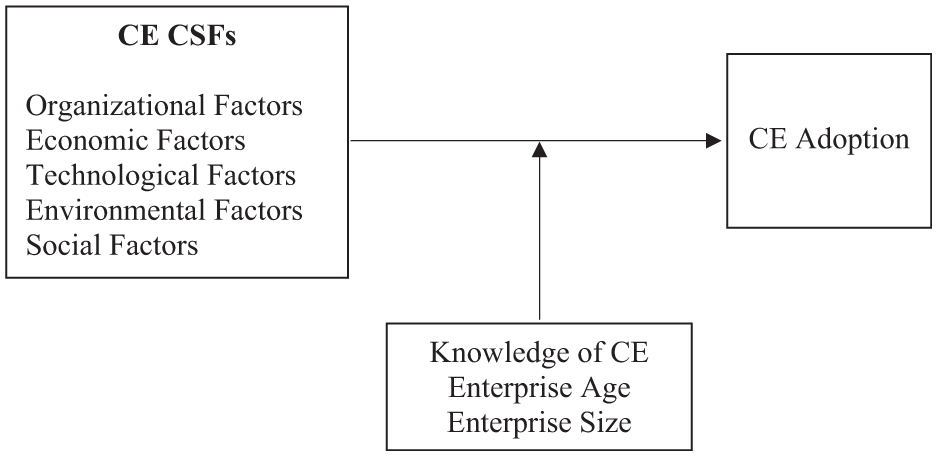
Research model.
Methodology
This study uses a deductive research approach and is quantitative in nature. Survey questionnaires were distributed to Saudi enterprises’ owners/managers/employees across multiple sectors. The measurement tool was based on specific items from the literature that were previously validated (see Tables 2 to 4). All items are scored on a 5-point Likert scale, which is simple to build, facilitates data collection and analysis, and is thus appropriate for surveys. Descriptive and inferential analyses were used to analyze the data. The measurements were created, and the research hypotheses were tested using partial least squares structural equation modeling (PLS-SEM) using Smart PLS 4. In business, management, and social science research, PLS-SEM is a developing data analysis method used to handle small sample sizes and non-normal data better (J. Hair et al., 2014). This method works better when the research incorporates complex model structures and tries to test current theories (Fernandes, 2012; Ringle et al., 2020).
PLS-SEM is perfect for investigating the connections between adoption of the CE and critical success criteria because it places a high priority on prediction and variance explanation. Its usage is further justified by its capacity to maximize explained variance (R2), account for both reflective and formative components, and estimate moderation and mediation effects. Furthermore, PLS-SEM is resilient to non-normal data distributions since it uses bootstrapping for significance testing. With these benefits, PLS-SEM offers a methodological approach that is adaptable, dependable, and predictive, which is in line with the goals of the study.
The study posed no physical, psychological, or social harm, as it involved only voluntary completion of an anonymous questionnaire on organizational practices. In contrast, the findings offer significant societal value by advancing understanding of CE adoption in Saudi enterprises, supporting sustainable business transformation aligned with Vision 2030. Participants also benefit indirectly through heightened awareness of sustainability practices and insights that may improve their organizations’ operational efficiency and environmental responsibility. A sample of 91 Saudi businesses spanning a range of industries and company sizes provided data for this study. The purpose of the sample selection was to obtain a wide view of the implementation of the CE at various organizational scales and seven sectors. This distribution improves the findings’ generalizability by ensuring that insights are applicable to companies of various sizes. A minimum sample size of 10 times the maximum number of arrows pointing at a construct (in this case, eight arrows pointing to CE adoption) in a reflective model is required for PLS-SEM (J. F. Hair et al., 2017). This study collected data from a sample of 91 Saudi enterprises, which was greater than the value determined by the 10-times rule.
Given the small sample size, bootstrapping, a non-parametric resampling approach, was used in this work to improve the reliability of statistical estimations. By producing more robust confidence intervals, this method works well with complex models, including moderation and mediation studies, and non-normal data distributions. To achieve reliable hypothesis testing, 5,000 bootstrap resamples were employed, with bias-corrected and accelerated (BCa) confidence intervals.
The statistical significance of associations was confirmed by examining the bootstrapped confidence intervals to see if they excluded zero. By lowering the possibility of overestimating or underestimating effects, this technique also improved the accuracy and stability of coefficient estimations. To confirm the interaction terms and make sure that the results held up with repeated resampling, bootstrapping was also used for moderating effects. By employing this method, the study increases the robustness of the findings and reduces potential biases related to small sample numbers.
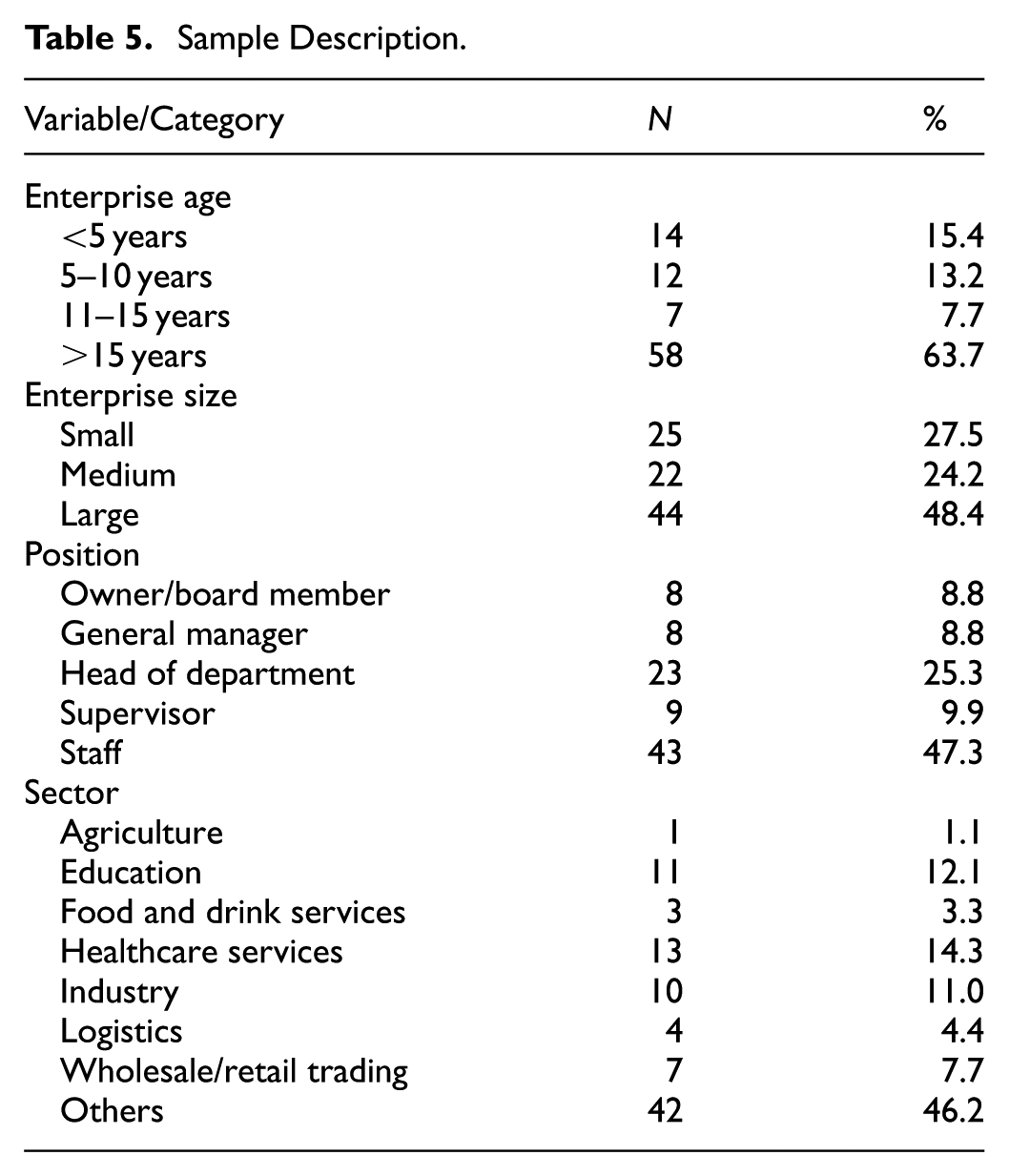
Most respondents (63.7%) have been in business for over 15 years (Table 5). The distribution of enterprise size is relatively even, with 27.5% of respondents classified as small, 24.2% as medium, and 48.4% as large. The most common position held by respondents is Staff (47.3%), followed by Head of Department (25.3%), General Manager (8.8%), Owner/Board Member (8.8%), and Supervisor (9.9%). The healthcare services represent (14.3%), Education (12.1%), Industry (11.0%), Wholesale/retail trading (7.7%), Food and drink services (3.3%), Logistics (4.4%), and Agriculture (1.1%).
Sample Description.
Findings and Discussion
Table 6 shows that the level of CE adoption is high (mean = 3.8695; SD = 0.95141). The overall CSFs are high (mean = 3.9370, SD = 0.72720). The knowledge level was found to be high (mean = 3.7839, SD = 0.85110). The results showed that the Technological factors were the highest in rank (mean = 4.0952, SD = 0.68184) while social factors were the lowest in rank (mean = 3.7106, SD = 0.90296).
Descriptive Statistics.

Note. SD = standard deviation.
Assessment of Measurement Model
To reduce possible distortions brought on by self-reported data and guarantee the validity of the findings, common method bias (CMB) was investigated. Exploratory factor analysis (EFA) was used to discover CMB using Harman’s single-factor test. No single component explained more than 50% of the variance, suggesting that common method variance (CMV) was not a significant concern. Further evidence that multicollinearity and CMV were not significant problems was provided by the evaluation of variance inflation factors (VIFs) in PLS-SEM, all of which had values below the suggested cutoff of 3.3. Together, these methods offer compelling proof that CMB is unlikely to skew the study’s conclusions.
A quadratic component was incorporated into the model to test for potential nonlinear effects and determine whether there was a nonlinear pattern in the interactions between the main constructs. According to the findings, the quadratic effect was statistically negligible, indicating that the connection in the examined data is still linear. This result suggests that impacts on the dependent variable do not decrease or accelerate as levels of the independent variable rise. As a result, the initial linear model is still the best specification for describing relationships in this research.
To address possible endogeneity issues, the Gaussian Copula technique was incorporated into the model. This technique is particularly useful for detecting endogeneity in PLS-SEM when dealing with non-normally distributed variables. The Gaussian Copula term proved statistically insignificant, indicating that endogeneity is not a significant issue in this investigation. By verifying that the correlations between the constructs are unlikely to be distorted by simultaneity, missing variables, or measurement errors, this result enhances the validity and robustness of the model’s results.
Convergent validity was checked using the outer loading of indicators and the extraction of average variance (AVE). Heterotrait-Monotrait (HTMT) is used to assess discriminant validity. Cronbach alpha and composite reliability are reported to assess the internal consistency of the measurement model. Explanatory power (R2), effect size (f2), predictive accuracy (Q2), and predictive power were examined to validate the structural model. Bootstrapping was used to test the significance of the hypotheses.
The findings in Table 7 confirm that all the indicators have loading >0.707, indicating that they correlate with their underlying constructs. Alpha Cronbach coefficients are greater than .700, suggesting that the scale has internal consistency. In addition, CR values are above .700, which indicates that all the constructs are reliable. Adding to that, AVE values(>0.500) showed that convergent validity was achieved and that each construct accounts for more than 50% of the variance in its indicators. Overall, the findings confirm that the scale has good psychometric properties.
Correlations Between Latent Constructs.
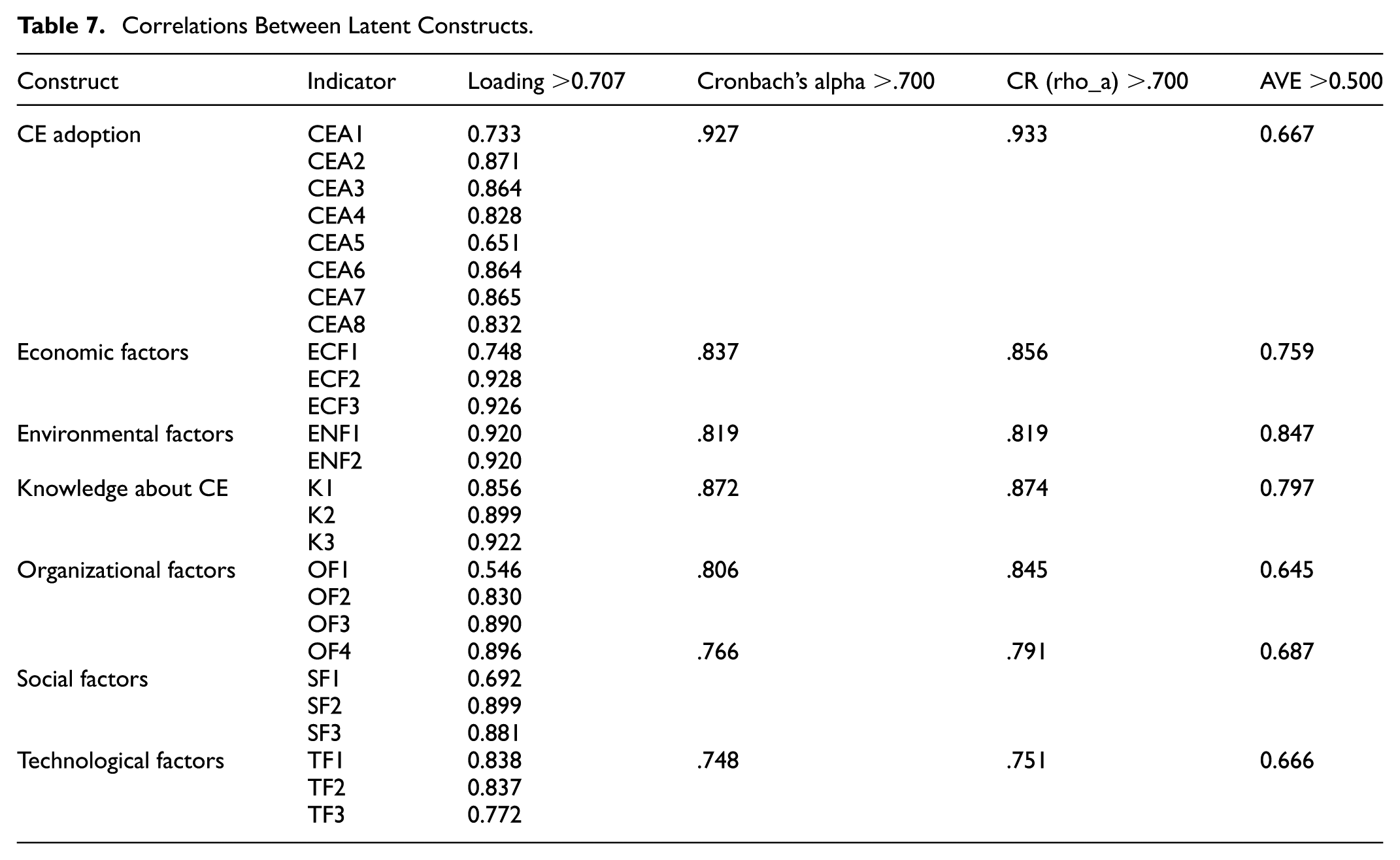
Table 8 provides the Heterotrait-Monotrait (HTMT) matrix. As noticed, all the HTMT values are below 0.900, which is the recommended threshold for discriminant validity of conceptually related constructs. Therefore, it is noticed that constructs are discriminant from each other.
Discriminant Valdity.

Assessment of Structural Model
The R2 value (.687) indicates that the model has strong explanatory power and that IVs account for 68.7% of the variance in the DV (Table 9). This means that 31.3% of the variance remains unexplained. The effect size measure showed that CE CSFs have a strong effect size (0.442), while knowledge about CE has a weak effect size (f = 0.041). In addition, the model has a predictive relevance in and out of the sample (Q2 > 0). The cross-validated predictive ability test (CVPAT) values are smaller than 0 and significant, indicating that the PLS model has strong predictive power compared to the linear model. This indicates that the model can predict CE adoption for new firms with reasonable accuracy (Figure 2).
Assessment of Structural Model.


Standardized path coefficient.
The findings in Table 10 showed sufficient evidence that CE CSFs have a significant impact on CE adoption (Beta = .648, p < .001). The total effect was calculated to examine the effect of the individual factors on CE adoption. The findings showed that Economic Factors (B = 0.176, p < .005), Environmental Factors (B = 0.110, p < .005), Organizational Factors (B = 0.190, p < .005), Social Factors (B = 0.137, p < .005), and Technological Factors (B = 0.129, p < .05) have significant impact on CE adoption. Therefore, the first five hypotheses were supported.
Structural Model Results.

Hypothesis 6 suggests that enterprises’ knowledge of CE moderates the relationship between the CE CSFs and CE adoption, such that a higher degree of CE knowledge strengthens the positive relationship between the CE CSFs and CE adoption. Surprisingly, knowledge about CE showed a negative moderating effect on the relationship between overall success factors and CE adoption (Beta = −.113, p < .05). This could be explained that enterprises with more knowledge about CE are more aware of challenges and risks of CE adoption which leads them to be hesitant to adopt CE practices even if they have the success factors of CE. The risk perception theory supports the claim that greater knowledge can result in heightened risk perception (Slovic, 1987). According to this theory, even when adopting innovative practice, people or organizations may become more cautious if they are more aware of the risks involved. Moreover, according to prospect theory (1979), decision-makers give greater weight to possible losses than to rewards, which can account for why companies with greater CE expertise may be hesitant because of perceived risks (Kahneman & Tversky’s, 1979). Knowledge’s ability to promote CE adoption depends heavily on the context (Alsaggaf, 2024). In the food industry, where logistical and cultural considerations may impact the adoption of CE practices, Almulhim (2024) highlights the necessity of context-specific approaches (Figure 3).

Knowledge about CE as a moderator variable.
Hypothesis 7 suggests that enterprises’ age moderates the CE CSFs and CE adoption relationship. Compared to older enterprises, a younger enterprise strengthens the positive relationship between the CE CSFs and CE adoption. The results reveal that no statistical evidence was found that enterprise age has a moderating role in the relationship between CE CSFs and CE Adoption (B = 0.021, p > .05). Several reasons can explain this result. First, most respondents have been in business for more than 15 years, indicating that the study has not had a wide age distribution. Second, the relationship may be influenced by a wide range of variables beyond just enterprise age (e.g., industry type, market conditions, and management practices). Finally, a large sample size might be needed to deduct statistically significant differences.
Hypothesis 8 suggests that enterprises’ size moderates the relationship between the CE CSFs and CE adoption such that a larger enterprise strengthens the positive relationship between the CE CSFs and CE adoption compared with a small-sized enterprise. The results support this hypothesis, that is the size of the firm was found to have a positive moderating effect on the relationship between CE CSFs and CE adoption (B = 0.266, p < .05). SMEs typically have lower engagement levels (Johnson & Schaltegger, 2016). SMEs frequently prioritize financial success over environmental and social performance (Dey, Malesios, De, Budhwar, et al., 2020). A systematic literature review by Binek and Al-Muhannadi (2020) concludes that SMEs frequently lack awareness of the benefits of CE and place a high priority on their core operations. However, studies conducted by the European Commission have demonstrated how EU SMEs are becoming more conscious of the advantages provided by advancements in resource and energy-saving measures (Montanaro, 2022). SMEs operate with little resources and are under extreme pressure to survive in the market, which makes them generally risk-averse (Games & Rendi, 2019). Hence, SMEs are encouraged to invest in sustainable initiatives by demonstrating the possible benefits in various dimensions (Katz-Gerro & López Sintas, 2019; Figure 4).
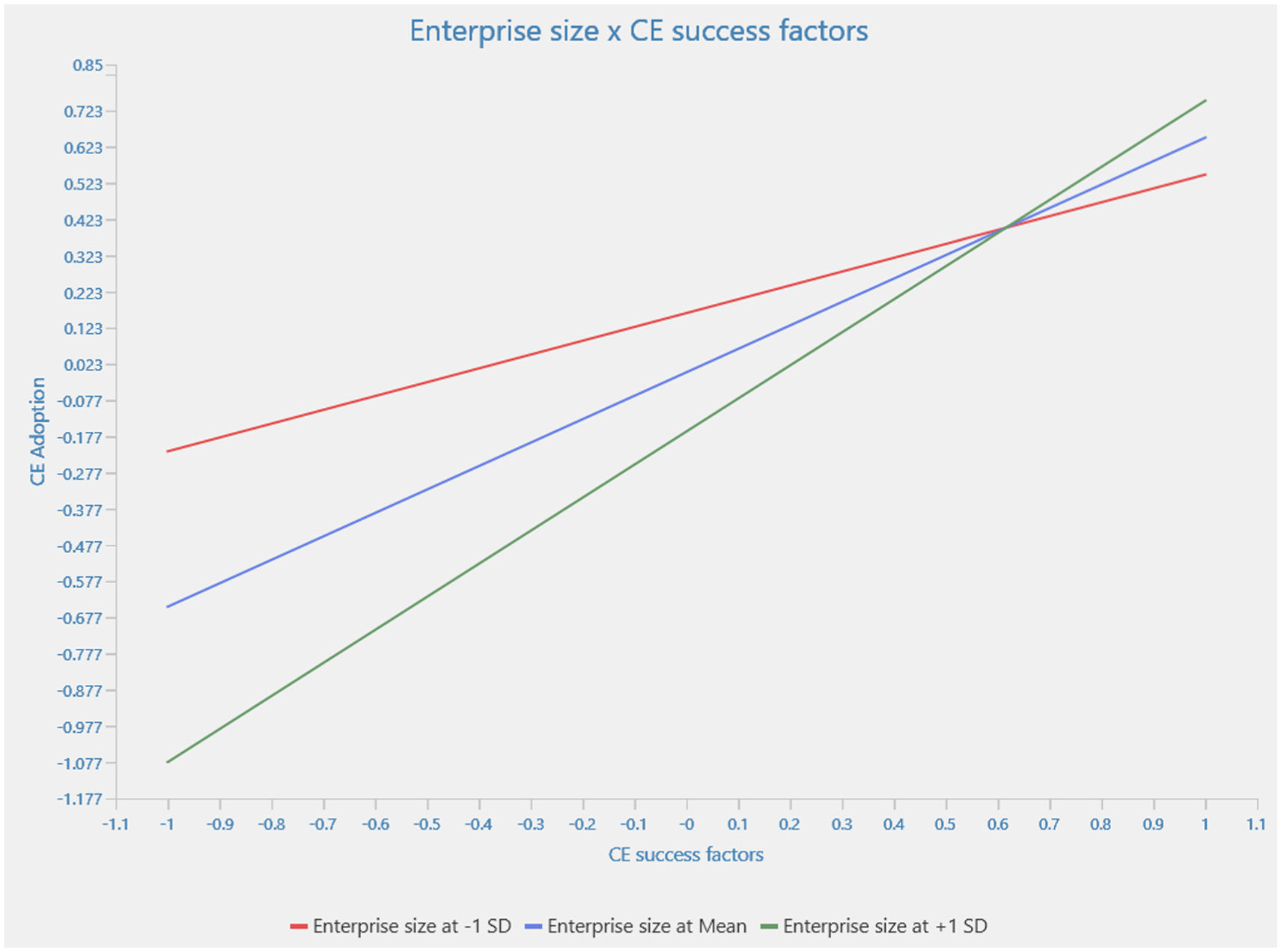
Size of the enterprise a moderator variable.
The study also identified the enabling factors that aid Saudi enterprises in implementing CE principles and the barriers that stand in the way Saudi enterprises benefit from CE. Table 11 shows that the top three factors that help CE adoption in Saudi Arabia are technology and technical skills (87.9%), government support (85.7%), management support, and commitment (85.7%). The high ranking of technology and technical skills suggests that a well-equipped workforce with the knowledge and capabilities to implement CE practices is crucial. Innovative techniques and technologies are regularly used in CE activities to recycle, reuse, and remanufacture products. Having the required technological know-how to successfully complete these endeavors is essential. Government support also plays a crucial role in fostering the CE. Governmental support in Saudi Arabia can be grants, financial incentives, or supportive laws meant to promote sustainable practices.
Enablers and Barriers Factors for CE Adoption.

On the other hand, the top three barriers that could hinder CE adoption in Saudi Arabia are the current (traditional) economic model (30.8%), market demand (16.5%), and preferential tax policies (15.4%). In a country like Saudi Arabia, which has historically relied on a linear, resource-intensive economic mode driven by oil and petrochemical industries, transitioning to a CE can be met with resistance. It may require a fundamental shift in economic thinking, business models, and investments to align with circular principles. In addition, increasing market demand for circular products may require awareness campaigns, education, and marketing efforts. It might also entail collaboration between government, industry, and advocacy groups to create demand that rewards CE adoption.
Theoretical and Practical Implications
By emphasizing the significance of organizational, economic, technological, environmental, and social factors in Saudi Arabia, this study contributes to the theoretical understanding of adopting the CE. This could add to the body of knowledge already available about frameworks and models for CE adoption. Additionally, this can aid in developing and adapting CE theories to fit local or national conditions. This study emphasizes that CE adoption is complicated and involves many different factors. In a practical sense, Saudi policymakers can use the study’s findings to guide the creation of laws and policies that support CE practices. Additionally, educational institutions can use the study’s findings to inform their curricula and educate upcoming entrepreneurs and professionals about the crucial aspects of adopting CE.
Businesses can use this research to inform their strategic planning and decide on investments, alliances, and sustainable business practices. Businesses can also strengthen their sustainability initiatives by investigating technology solutions that adhere to CE guidelines, like waste reduction and recycling systems. Businesses can support sustainability projects and public awareness campaigns to conform to society’s standards and preferences.
In the agricultural sector, water conservation, organic waste recycling, and precision farming are examples of techniques that can improve efficiency and sustainability. In the education sector, long-term sustainability awareness is promoted by incorporating CE concepts into curricula, campus operations, and industrial partnerships. In food and drink services, reducing food waste, developing closed-loop supply chains, and embracing sustainable packaging can all enhance the environmental effect. In the healthcare sector, using eco-friendly products, recycling medical waste, and increasing energy efficiency can all contribute to sustainability. Moreover, prioritizing remanufacturing, material recovery, and the use of renewable energy sources in the industrial sector encourages cost reductions and resource efficiency. Implementing eco-friendly transportation, reverse logistics, and AI-driven supply chain optimization lowers operating costs and the environmental effect of the logistics industry. A move toward circular consumption in wholesale and retail trading is supported by promoting product-as-a-service models, sustainable sourcing, and customer involvement.
Conclusion, Limitations, and Future Directions
This study establishes a more comprehensive model containing more pertinent factors than the existing literature. The study verified the moderating role of knowledge of CE and enterprise size in the relationship between five CSFs and the adoption of CE in Saudi enterprises. The findings showed sufficient evidence that organizational, economic, technological, environmental, and social factors significantly impact CE adoption. The findings and practical implications of this study should help Saudi Arabia to achieve its key goals to assist the country in achieving environmental sustainability are included in both Vision 2030 and the National Transformation Plan (NTP), which will also enable the country to transition to CE model to maximize sustainability and resource efficiency.
The study has some limitations that should be recognized. The study’s subjective measures, gathered from a questionnaire, may have been biased toward social desirability. Moreover, the sample size for this study was relatively small. A greater sample size in future studies could make it easier for researchers to generalize the findings. Moreover, this study is a cross-sectional study, and the results show how various CSFs affect the adoption of CE in Saudi Arabia, with three variables serving as moderators. To identify any changes in CE adoption and their impact on business sustainability, it may be worthwhile for future research to conduct a longitudinal study in which the relationships between CSFs, CE adoption, and business sustainability are examined over time.
Future studies may use the model in other emerging and developed nations to improve external validity. Several mediator variables, such as business practices, stakeholder engagement, and resource efficiency, can be investigated. Future research in the CE has several potential topics in Saudi Arabia. Saudi Arabia is one of the top producers of petrochemicals in the world; therefore, future research can investigate innovative ways to reuse and recycle petrochemical waste and byproducts. Moreover, the rapid growth of e-commerce in Saudi Arabia presents a unique opportunity to integrate CE principles into online retail practices. E-commerce platforms have the potential to play a significant role in promoting sustainable consumption, reducing waste, and facilitating circular business models.
The shift to CE offers unique opportunities and challenges for economies that rely heavily on oil, like those in the Gulf area. By supporting emerging sectors in recycling, renewable energy, and sustainable manufacturing, CE supports initiatives that reduce reliance on fossil fuel income. Based on this argument, future research directions are proposed. How can oil-based economies include CE without risking economic stability? What are the best transition strategies, which industries are most impacted by the adoption of CE in oil countries. What are the long-term growth paths of economies that successfully incorporate CE principles while managing resource-based revenues?
Footnotes

Ethical Considerations
The study design limits the risk of harm to the study participants. The study advances sustainable practices in Saudi enterprises, supports Vision 2030 goals, and enhances participants’ awareness of circular economy adoption. Participation was entirely voluntary, and participants could withdraw at any time without consequence. The online questionnaire used to collect data was anonymous, and no sensitive personal identifiers were collected; all data were anonymized before analysis. This study was conducted in accordance with the guidelines of Section 8.05 of the APA Ethical Principles of Psychologists and Code of Conduct (2023), institutional guidelines, and the Declaration of Helsinki. The study protocol was reviewed and approved by the Research Ethics Committee (REC) at the University of Ha’il, Saudi Arabia.
Consent to Participate
All participants agreed to participate in the survey before data collection. Participants received detailed information outlining the purpose of the study, the researchers’ contact information, what their participation involved, potential risks and benefits, data confidentiality practices, and their right to withdraw at any time. Participants were allowed to ask questions before agreeing to take part.
Author Contributions
All authors contributed equally to this work.
Funding
The authors disclosed receipt of the following financial support for the research, authorship, and/or publication of this article: This research has been funded by the Deputy for Research & Innovation, Ministry of Education, through the Initiative of Institutional Funding at the University of Ha’il, Saudi Arabia, through the project IFP 22 175.
Declaration of Conflicting Interests
The authors declared no potential conflicts of interest with respect to the research, authorship, and/or publication of this article.
Data Availability Statement
The data is available on request.