




Abstract
This study aims to construct dynamic knowledge maps and uncover the thematic evolution of research on fashion design for sustainable development (FDSD), using bibliometric analysis and topic modeling to identify knowledge structures and emerging trends. As global sustainability goals exert increasing pressure on the fashion industry, FDSD has emerged as a critical field in both academic and practical domains. Mapping its intellectual development is essential to support informed scholarly inquiry and guide sustainable innovation. Based on 879 peer-reviewed articles retrieved from the Web of Science Core Collection (2004–2024), we employed a mixed-methods approach. CiteSpace was used to visualize collaborative structures across authors, institutions, and countries, as well as keyword co-occurrence patterns. Latent Dirichlet Allocation (LDA) modeling was applied to extract latent topics and trace their temporal shifts. The results show a notable rise in publications since 2020, with major contributions from Federico Caniato and Tsan-Ming Choi, and leading institutions including Hong Kong Polytechnic University and Politecnico di Milano. High-frequency keywords such as “sustainability,”“circular economy,” and “corporate social responsibility” reveal evolving research priorities. LDA analysis illustrates a thematic shift from eco-materials and life-cycle analysis to ethical consumption, supply chain transparency, and circular business models. This study provides a comprehensive overview of the FDSD research landscape. The findings offer valuable insights for scholars refining theoretical frameworks, educators aligning curricula with emerging themes, and industry practitioners and policymakers integrating sustainability into fashion design and governance.
Plain Language Summary
This study explores how fashion design can support sustainability by analyzing research trends in the field. Using advanced techniques like bibliometric analysis and machine learning (Latent Dirichlet Allocation), we studied 879 research papers from the Web of Science database. The findings reveal that interest in sustainable fashion design has grown significantly in recent years. Key researchers in this area include Federico Caniato, Choi, and Tsan-Ming, with major contributions from institutions such as Hong Kong Polytechnic University and Polytechnic University of Milan. Countries like South Korea, France, and Canada are also leading efforts in this field. The research highlights key topics like sustainability, ethical fashion, and corporate social responsibility, while future trends point toward the circular economy and sustainable business models. This study helps to identify key areas for innovation and collaboration in making the fashion industry more environmentally and socially responsible.
Keywords
Introduction
Fashion design is an interdisciplinary field that merges esthetics, creativity, and functionality to create clothing and accessories that reflect cultural, social, and individual identities (McCartney & Tynan, 2021). Sustainable development refers to a model that meets current needs without compromising the ability of future generations to meet their needs. It requires a focus on coordinated economic, social, and environmental development, ensuring the long-term utilization of resources and the well-being of humanity (I. S. Khan et al., 2021). Achieving sustainable development requires joint efforts in policy formulation, technological innovation, public awareness, and corporate responsibility (I. S. Khan et al., 2021).
As a global consensus, sustainable development is increasingly important in various industries (Pu et al., 2022). With increasing awareness of environmental and social issues, integrating sustainable development principles into fashion design has become a critical area of research and practice (Claxton & Kent, 2020). The urgency to address the adverse impacts of the fashion industry, such as resource depletion, environmental degradation, and unethical labor practices, has catalyzed a significant shift toward sustainability (Centobelli et al., 2022).
In recent years, fashion design has gradually focused on sustainable development and has produced many achievements (Garcia-Saravia Ortiz-de-Montellano et al., 2023). Fashion design for sustainable development means that designers and brands focus on esthetics, functionality, and environmental and social responsibility (Yuan et al., 2025). Table 1 introduces numerous crucial reports that have underscored the importance of sustainability in fashion design.
Promoting Fashion Design for Sustainable Development: Key Reports.

These reports collectively emphasize the importance of achieving sustainability in fashion design, urging the industry to make positive environmental and social responsibility changes.
The bibliometric analysis combined with machine learning Latent Dirichlet Allocation (LDA) Theme modeling is a cutting-edge method for observing the research status of a field. This study uses bibliometric analysis to construct and analyze knowledge maps of FDSD data sourced from the Web of Science (WOS) and further analyze the development process and trends using machine learning LDA Theme modeling. Specifically, this study seeks to:
(1) Describe the collaborative networks among authors, institutions, and countries, and create a knowledge map to visualize these relationships.
(2) Explore the key terms and research trends in the FDSD domain. Through clustering analysis, co-occurrence analysis, burst detection analysis, and the development of the LDA Theme model, this study will generate a keyword map that delineates the developmental trajectory of FDSD research.
Although prior research has examined sustainability in fashion from various angles—including material innovation, ethical production, and circular economy models—few studies have systematically mapped the evolution of scholarly knowledge in this domain. Specifically, the integration of bibliometric analysis with machine learning-based thematic modeling remains limited. Furthermore, there is a lack of longitudinal studies that trace the thematic shifts and intellectual structures across time, institutions, and countries. This study addresses these gaps by constructing comprehensive knowledge maps and employing LDA topic modeling to identify key themes, contributors, and emerging trends in the sustainable fashion design literature from 2004 to 2024. In doing so, it offers a new methodological and conceptual lens to understand the development trajectory of this critical research field.
Following the introduction, the second section defines the relevant concepts and analyzes the current state of research. The third section explains the research methods for bibliometric analysis and the construction of the machine learning LDA model. The fourth section presents the results in two parts: first, a descriptive bibliometric analysis that includes publication trends, author and institutional collaboration, and keyword clustering; second, an LDA-based thematic modeling to identify topic structures and their evolution. The fifth section discusses key findings and implications, and the sixth provides the conclusion.
Literature Review
Sustainable development seeks to meet the needs of the present without compromising the ability of future generations to meet their own needs (Henderson & Loreau, 2023). The Sustainable Development Goals (SDGs) address global challenges such as poverty, inequality, climate change, environmental degradation, peace, and justice. Sustainable development in the fashion industry emphasizes reducing environmental impact, promoting social equity, and fostering economic growth by integrating eco-friendly practices across the entire supply chain (Leal Filho et al., 2025).
Fashion design is crucial in pursuing these SDGs, mainly focusing on responsible consumption and production, climate action, and sustainable economic growth (Garcia-Saravia Ortiz-de-Montellano et al., 2023). The industry seeks to align its practices with these goals through innovative design solutions, sustainable material sourcing, and efficient production techniques, contributing significantly to a more sustainable future (Garcia-Saravia Ortiz-de-Montellano et al., 2023). The fashion industry, notorious for its environmental impact, continues to operate largely inefficiently, producing massive waste, exploiting workers, and making substantial profits increasingly difficult (Ermini et al., 2024). Despite growing consumer awareness and demand for sustainable practices, the industry has yet to alter its operations significantly (Hojnik et al., 2023). Design professionals have a critical influence on sourcing materials and the production process, suggesting a significant need for a shift in educational curricula to integrate sustainability into fashion design (Xu et al., 2024).
Recent knowledge mapping and systematic reviews have reflected an increase in scholarly attention to the intersection of fashion design and sustainability. Kettley (2021) highlights the significant influence of the US and UK in academic fashion design research and identifies sustainable fashion, wearable technology, transgender fashion, and medical fashion as emergent themes since 2010. These trends demonstrate the breadth and complexity inherent in fashion design research. Torres de Oliveira et al. (2023) further explored the role of Industry 4.0—defined by digital and biological convergence—in reshaping the fashion sector through advanced technologies such as 3D design and intelligent fabrics. Ji et al. (2024) examined how artificial intelligence is driving a paradigm shift from experience-based to data-driven strategies, offering new possibilities for efficiency and innovation. The field of “Fashion AI” remains rich yet methodologically complex, requiring integration across text, image, and numerical data types (Konina, 2023). As noted by Hossain et al. (2024), the promise of AI in enhancing sustainability in the textile sector is substantial, warranting deeper inquiry.
In parallel, consumer markets are also evolving. Shahid et al. (2023) investigated the rise of Halal fashion in response to the expanding global Muslim population, noting its alignment with religious values and market expansion. In addition, Putri and Irfany identified research hotspots in “eco-fashion” such as circular economy models, raw material transitions, green energy challenges, and labeling effects—each reflecting the gradual mainstreaming of sustainable priorities into design and production processes.
The convergence of digital innovation, ethical concern, and market transformation has reinforced the strategic repositioning of the fashion industry. S. A. R. Khan et al. (2023) examined how sustainable content frameworks in fast fashion brands—like fair trade sourcing and eco-education—promote more responsible supply chains (Niinimäki et al., 2020). Lintukangas et al. (2023) emphasized the role of product sustainability and supply-chain design in shaping consumer behavior, underlining design’s capacity to influence end-user choices and systemic outcomes.
Nonetheless, the transition toward sustainability remains fraught with challenges. Sohail et al. (2024) highlighted internal barriers such as knowledge gaps and esthetic compromises, while external pressures—ranging from insufficient demand to implementation costs—continue to limit adoption. Hegab et al. (2023) noted the importance of coordinated strategies involving regulation, education, and incentives to overcome these barriers. Recognizing this need, D’Itria et al. (2024) advocated for sustainable business model archetypes that incorporate systemic shifts in value chains, user interaction, and design innovation to support sustainability transitions in fashion.
Overall, the literature suggests that sustainable fashion design is entering a phase of integrative transformation, propelled by advances in digital technology, the rise of ethically conscious consumer segments, and the strategic reconfiguration of design practices. These insights provide a critical foundation for exploring the evolving landscape of fashion design for sustainable development.
Research Method
Bibliometric analysis is a widely recognized method for assessing the structure and trends of academic research. In this study, we employed CiteSpace due to its strengths in visualizing co-authorship networks, institutional collaborations, and keyword co-occurrence patterns. CiteSpace also enables the identification of emerging topics and citation bursts, making it suitable for constructing comprehensive knowledge maps in the field of sustainable fashion design. To enhance the semantic understanding of research topics and their temporal evolution, we further integrated (LDA) topic modeling. LDA complements bibliometric mapping by uncovering latent thematic structures that are not immediately visible through traditional co-word or cluster analysis. This methodological combination allows us to analyze both the structural and conceptual development of the field from 2004 to 2024.
To ensure methodological transparency and reproducibility, this study adopted a structured workflow for bibliometric analysis and thematic modeling, comprising five main stages. First, search terms were systematically constructed based on key concepts such as “fashion design,”“sustainable development,”“eco-fashion,” and “circular economy.” Second, data were retrieved from the Web of Science Core Collection using the “Topic” field (TS), ensuring comprehensive coverage of titles, abstracts, and keywords. Third, the inclusion criteria were applied, retaining only peer-reviewed journal articles published in English between 2004 and 2024. Fourth, data preprocessing was conducted to remove duplicates and incomplete records, resulting in 879 valid documents. Finally, analytical procedures were executed: bibliometric visualization was performed using CiteSpace to identify co-authorship networks, keyword co-occurrence, and citation bursts, while Latent Dirichlet Allocation (LDA) was used to extract thematic structures from the corpus, enabling the detection of hidden topics and their temporal evolution.
Therefore, the study analyzed 1,043 important articles from a Web of Science based on Citespace. The study searched papers related to fashion design and sustainability on the Web of Science using the “top” retrieval mode. The retrieval formula is: (TS = (Fashion Design)) AND TS = (Sustainable Development) (TS = (Sustainable Fashion)) AND TS = (Design Practices) (TS = (Fashion Industry)) AND TS = (Sustainability) (TS = (Green Fashion))AND TS = (Design Innovation) (TS = (Eco – friendly Fashion)) AND TS = (Development) ((TS = (Fashion Design))AND TS = (Environmental impact)) AN DTS = (Sustainability) (TS = (Sustainable Materials)) AND TS = (Fashion Design) (TS = (Circular Fashion)) AND TS = (Design Strategies)
We acknowledge that the current search string may not fully capture all semantically related studies, especially those using variant expressions such as “sustainable fashion” or “eco-friendly textiles.” In future research, the use of broader wildcard terms (e.g., “sustainab”) could help expand coverage and mitigate potential omissions.
In Citespace, we obtained 879 valid documents after removing duplicates, ensuring all literature is academic papers in English and related to the research Theme. Then, based on these data, the research included analyses of annual publications, author collaboration through knowledge graphs, organizational collaboration through knowledge graphs, keyword co-occurrence, keyword prominence, and keyword clustering., keyword co-occurrence analysis, keyword prominence analysis, and keyword clustering.
Furthermore, the research involved a comprehensive approach to textual analysis through machine learning, specifically using the LDA for Theme modeling. Initially, we meticulously preprocessed 879 valid documents (whole manuscript) data to facilitate practical analysis. This preprocessing included the removal of hyperlinks and non-Chinese characters using regular expressions, followed by tokenization and part-of-speech tagging, which focused exclusively on nouns to highlight substantive content. Additionally, a filtration process removed stop words to ensure the clarity and relevance of data fed into the LDA model.
Following the initial data preparation, the study involved constructing a document-term matrix for each stage of the data. This matrix served as the foundation for building the LDA models. A range of Theme models was systematically generated, from 1 to 15 Themes. Each model was evaluated based on two critical statistical measures: coherence and perplexity. These metrics were crucial in assessing the quality of the Themes extracted; coherence measured the semantic similarity within Themes, while perplexity evaluated the model’s predictive performance. We visualized the results through curves to help determine the optimal number of Themes for subsequent analysis.
With the optimal number of Themes determined, the study thoroughly examined the identified Themes. We extracted and analyzed each theme’s core terms to discern the thematic focus prevalent in the corpus. This step was instrumental in understanding the underlying themes across the documents. To enhance the interpretability of these results, the researchers employed pyLDAvis, an interactive tool for Theme visualization. This tool provided a dynamic interface to explore the relationships and the distribution of Themes within the data, showcasing the model’s ability to capture the multidimensional nature of the Themes.
The evolutionary trajectory of the Themes through different stages of the research corpus was another focal point of the analysis. The study transformed Theme keywords into vector space by training a Word2Vec model on the entire dataset, enabling the computation of cosine similarities between Themes across consecutive stages. This vector-based analysis facilitated a nuanced understanding of how specific themes developed or diverged over time, providing insights into the dynamic nature of the research field.
Finally, the study visualized the progression and transformation of Themes using a Sankey diagram, which effectively mapped the flow and connections between Themes from one stage to the next. This visualization highlighted the continuity and change in thematic focus and provided a clear and structured representation of the Theme evolution across different phases of the research. By employing this comprehensive methodological framework, the study offered a robust analysis of the thematic structure within the corpus, contributing valuable insights into the field’s development.
Result
The results are presented in two major parts. The first part (Sections 4.1–4.7) provides descriptive insights based on bibliometric visualization. The second part (Section 4.8) focuses on LDA-based thematic modeling to uncover hidden topic structures and trace their temporal evolution.
Trend of Literature Publication
Figure 1 shows the change in research findings on fashion design and sustainability on a Web of Science from 2014 to 2023. The data shows a clear growth trend, increasing from one paper in 2004 to 172 in 2023. Due to data collection up to April 2024, we presented only 92 papers, indicating increasing scholarly attention to this study. The significant growth trend in the field from 2021 to 2022 reflects a significant increase in research interest and activity. The spread of sustainability ideas may have influenced this growth. The change in the data also indicates a shift of hot spots and focus within the research field. The slow annual growth from 2004 to 2013 reflects the initial exploratory research in fashion design and sustainable development. The number of publications in 2014 and 2021 increased yearly, reflecting the maturity of research Themes and methods in recent years. Since 2022, the research results in this field have increased significantly, and more researchers have started considering and adopting mature research Themes and methods.

Fashion design and sustainable development document trend analysis (2004–2024).
Authors Collaboration Knowledge Map
Table 2 and Figure 2 show the author’s collaboration network under the fashion design and sustainability theme. The author collaborative knowledge atlas is a tool to demonstrate collaboration between authors that can reveal the strength of partnerships, core and edge authors, research teams and collaboration models (Luo et al., 2022). Figure 2 indicates that Caniato, Federico, Choi, and Tsan-Ming occupy the central position on the map, and they have been recorded for many years, suggesting that they are core members of the research field or opinion leaders within the field.
Statistics on the Published Research Results of Fashion Design and Sustainable Development on the Web of Science from 2004 to 2024.


Author collaborative network analysis in the field of fashion design and sustainability, 2004 to 2024.
Figure 2 portrays several intensive collaborative teams, indicating strong research teams and partnerships within the fashion design and sustainability research field. Table 2 lists the top 20 representative authors, selected according to the number of publications, which uncovers essential authors such as Henninger, Claudia E.; Bardecki, Michal; and Niu, Baozhuang, have significantly shaped the discourse with multiple publications over several years. The concentration of research outputs has notably risen since 2015, reflecting a growing recognition of sustainability issues in the fashion industry. In recent years, particularly in 2020 and 2021, publications have seen a peak, underscoring the urgency and relevance of sustainable practices in fashion amidst global environmental challenges.
The collaborative network analysis illustrates a complex web of research interactions, indicating robust and dynamic partnerships. Henninger and Bardecki act as key influencers and connectors, facilitating the exchange of knowledge and ideas. Emerging collaborations, especially among recent contributors like D’itria, Erminia and Mcneill, Lisa S., highlight a trend toward interdisciplinary and cross-institutional research efforts.
Through the knowledge map, the results of these authors are not rich, with almost only 2 or 3, and it is not easy to form an alliance of research authors and a strong author leadership relationship in this field. We were able to identify critical investigators, assess the quality and intensity of research collaborations, and predict possible future research directions and opportunities for collaboration.
The Institutional Collaborative Knowledge Maps
The institutional cooperative knowledge map can demonstrate the cooperation relationship between different institutions, reveal the cooperative network structure in the research field, and identify key research centers (Jiang et al., 2024). In this study, the knowledge graph reveals the mode of cooperation in fashion design and sustainability research, identifying the key research institutions in the field.
Figure 3 provides the distribution of institutions for research on fashion design for sustainable development. Table 3 ranks the mainstream research institutions according to the number of publications, selecting the top 10 to reveal significant global engagement. Leading institutions such as Hong Kong Polytechnic University and Polytechnic University of Milan top the list with 28 publications each, highlighting their pivotal roles in advancing the field. Other notable contributors include the University of Manchester and Aalto University, with 13 publications demonstrating substantial research activity and sustained interest in sustainable fashion design across various academic hubs worldwide.
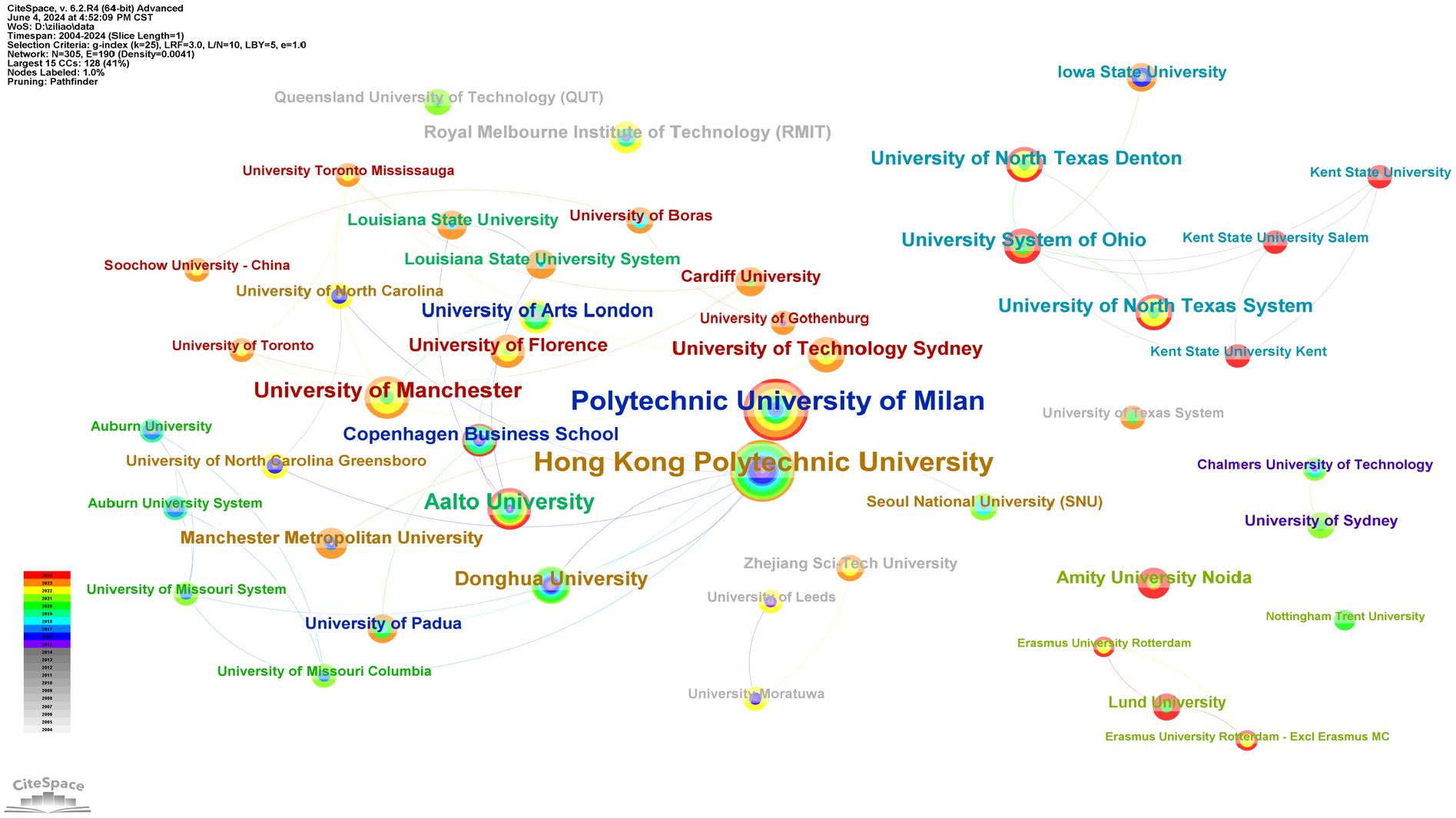
Institutional cooperation network analysis in the field of fashion design and sustainable development, 2004 to 2024.
List of Significant Publications in the Field of Garment Design and Sustainability Research from 2004 to 2024.

Figure 3, depicting the institutional cooperation network, underscores the highly interconnected nature of research in sustainable fashion design. Central nodes like Hong Kong Polytechnic University and Polytechnic University of Milan facilitate extensive collaboration, acting as crucial influencers within the network. Collaborative clusters suggest focused partnerships among institutions with shared research interests. At the same time, the emergence of new contributors, such as the University of Technology Sydney, reflects expanding research networks and growing academic recognition of sustainability issues in fashion. This interconnected network underscores the importance of collaborative efforts, enabling institutions to leverage diverse expertise and resources, ultimately fostering more comprehensive and impactful research outcomes in sustainable fashion design.
Figure 3 illustrates the partnerships between different institutions, reflecting the situation of knowledge dissemination and research collaboration. These connections can indicate the intensity and frequency of research collaboration and whether researchers form alliances or joint research teams. The geographical distribution and temporal change of the publishing institutions show the geography and development trend of the research in this field. For example, Aalto University publications were reflected in different years, indicating that these institutions have continued activity in the research area. Through such analysis, we can better understand the roles and contributions of different research institutions in garment design and Sustainability research and how they mutually influence and drive the field.
Country’s Co-occurrence Knowledge Graph
Country knowledge co-occurrence maps visualize transnational collaboration and knowledge exchange networks, thereby revealing the intensity and scope of international academic efforts within a specific research domain (Jiang et al., 2024). Table 4 highlights the pivotal role of involved nations in advancing sustainable practices within the fashion industry.
Major Publishing Countries in the Field of Apparel Design and Sustainability Research in 2004 to 2024.

Table 4 and Figure 4 provide an in-depth overview of global contributions to sustainable fashion design research from 2004 to 2024. Table 3 enumerates the number of publications per country. The United States emerges as the leading contributor, with 124 publications recorded in 2008, underscoring its pivotal role in driving and shaping the discourse surrounding sustainable practices within the fashion industry. Similarly, the People’s Republic of China and the United Kingdom, with 106 publications in 2013 and 2007, respectively, reflect a burgeoning interest and investment in sustainable fashion design, indicative of broader economic and cultural shifts toward sustainability in these nations. Notably, Italy’s contribution of 98 publications in 2012 and Germany’s 58 publications in 2013 highlight Europe’s staunch commitment to sustainable fashion. This approach aligns with the continent’s broader environmental ethos and actively supports regulatory frameworks for sustainable development. Contributions from Australia (56 in 2014), Spain (43 in 2012), India (41 in 2014), Brazil (40 in 2014), and Sweden (38 in 2007) further underscore a diverse and global engagement with sustainability issues, reflecting widespread recognition of the fashion industry’s impact on sustainable development.

National co-present map in the field of fashion design and sustainable development, 2004 to 2024.
Table 4 also reveals significant contributions from countries such as South Korea, France, Canada, Finland, Denmark, the Netherlands, Portugal, Malaysia, Romania, and Taiwan,China, each demonstrating its involvement in the global sustainable fashion dialog. While these contributions vary in magnitude, collectively, they depict a rich tapestry of international efforts and knowledge exchange to advance sustainable fashion design principles.
By interpreting the data in Table 4 and Figure 4, it becomes evident that the global landscape of sustainable fashion design research is both vibrant and multifaceted. This landscape showcases a collaborative global movement toward sustainable development, revealing how countries at different stages of development and with varying cultural backgrounds are united in promoting sustainable fashion. As reflected in the increasing body of research outputs, this collective academic endeavor symbolizes a global dedication to addressing the fashion industry’s environmental, ethical, and economic challenges, steering it toward a more sustainable and equitable future.
Keyword Co-occurrence Knowledge Graph
Keyword co-occurrence analysis is crucial to reveal the relationship between themes and concepts within the research field (Jiang et al., 2024). Table 5 provides the keywords whose publication frequency is greater than or equal to 64 and their frequency, centrality and year of occurrence. At the same time, Figure 5 shows the visual knowledge map of these keywords in the research literature.
Analysis of High-Frequency Keywords and Their Centrality of Fashion Design and Sustainable Development Research in Web of Science, 2004 to 2024.


Keyword co-occurrence knowledge graph, 2004 to 2024.
Table 5 presents a detailed analysis of high-frequency keywords and their centrality related to fashion design and sustainable development research from 2004 to 2024, as the Web of Science indexed. The keyword “sustainability” appears most frequently, with 127 counts in 2013, indicating a high level of centrality (0.05), which suggests its crucial role and widespread discussion in the literature. “Circular economy” and “sustainable fashion” also feature prominently, reflecting growing academic interest in more sustainable economic models and practices within the fashion industry. Keywords such as “management” and “consumption” show significant recurrence and centrality, underscoring sustainability’s operational and consumer-focused aspects. Furthermore, “corporate social responsibility” and “fast fashion” indicate a dual focus on ethical practices and the critical examination of rapid production models.
Figure 5 illustrates the co-occurrence of keywords within the scholarly literature on fashion design and sustainable development. This keyword network map delineates the interconnected nature of these concepts, indicating that the academic community places significant emphasis on their relationships. Central to the network are terms like “sustainability,”“fashion,” and “management,” highlighting the overarching themes in the field. The links between “sustainable design” and “environmental management” underscore the integration of ecological practices into the design process. Similarly, the connection between “corporate social responsibility” (CSR) and “ethical fashion” reflects a growing academic focus on the ethical dimensions of fashion production and consumption. The prominence of “supply chain management” and “life cycle assessment” indicates rigorous efforts to understand and improve every stage of clothing production, from raw materials to disposal. These interrelations suggest a holistic approach to researching sustainable fashion, focusing on environmental impacts and social and ethical considerations. The results from such analyses are crucial for developing more sustainable business models and guiding the industry toward environmentally and socially responsible practices. The keyword analysis provides an insightful overview of the evolving discourse in sustainable fashion and management research, highlighting the dynamic interplay between sustainability concepts and fashion industry practices.
Keyword Cluster Map Analysis
Keyword cluster analysis classifies the keywords in the literature to form different Theme clusters to reveal the hot Themes and research directions in the research field. Keyword clustering analysis in bibliometry is beneficial for identifying blank areas of existing research, discovering possible new directions for future research, and potentially driving collaborative research across disciplines (Jiang et al., 2024).
Table 6 shows the clustering of keywords in fashion design and sustainable development research, which contains each cluster’s serial number, name and corresponding keywords. These clusters reveal different themes and foci in the research field and show how these Themes relate at the keyword level.
Cluster 0 includes keywords such as “sustainable fashion” and “ethnic fashion” and Emphasizes how to deal with the problem between sustainable development and the morality of clothing design in the context of sustainable development. This clustering may focus on how to find a balance between sustainability and morality from a sustainability perspective.
Cluster 1 combines “circular economy” and “business models” as the core focuses on the circular economy, especially the business models, And discusses the relationship between economic calculability and business model.
Cluster 2 contains “life cycle assessment,”“textile sustainability,” and other keywords. It reflects the research and discussion of the life cycle assessment of clothing and textile sustainability in the fashion design industry in the context of sustainable development.
Cluster 3: The existing “circular economy,”“social sustainability,” and “ circular fashion” Reflecting a growing interest in the intersection between fashion, sustainability and shared consumption.
Cluster 4: Focusing on “corporate social responsibility” and “ fashion industry” " reflecting the transformation trend of the fashion industry, enterprises are increasingly paying attention to social responsibility and regard it as a pivotal strategy to enhance brand value, promote innovation and promote sustainable development.
Cluster 5 covers “fashion design” and “environmental design,” among others. It reflects the critical changes in fashion design, and designers have begun to pay more attention to environmental protection. They are committed to the integration of sustainable development principles into design practice.
Cluster 6 focuses on “fashion, brands, luxury structural equation modeling, qualitative life cycle analysis,” which shows that qualitative research methods play an increasingly important role in the fashion industry research. Researchers may use qualitative research to gain insight into the complex issues of fashion brands, consumer behavior, product life cycle, and industry trends.
Cluster 7 pays attention to “textile recycling, circular economy,” and “clothing design,” suggesting that researchers are focusing on integrating the concept of circular economy into clothing design and improving consumer recognition of sustainable clothing.
Cluster 8 focuses on “alkenes, alkynes, and metathesis, suggesting increasing interest in using complex decomposition reactions to synthesize organic compounds.” Moreover, the research explores the use of this approach to develop new synthetic methods and apply it to utilizing renewable resources and exploiting environmentally friendly chemistry.
Cluster 9, including “local sourcing, quick response system, carbon footprint tax,” shows that people are paying more attention to environmental issues and sustainable development and are beginning to explore various measures to reduce carbon emissions, including carbon footprint tax, local procurement and rapid response systems.
Keyword Cluster Analysis in the Field of Fashion Design and Sustainable Development: Web of Science Data Perspective, 2004 to 2024.

The clusters reflect the diversity and richness of the research field and the focus and interest of the researchers on different Themes. These clusters can help researchers identify blank areas of existing research, discover possible new directions for future research, and potentially drive collaborative research across disciplines.
Figure 6 is the keyword cluster map, which reveals the intercorrelation and hotspots of various research Themes in fashion design and sustainable development. The map shows the relationship between the various keyword clusters through colors and connecting lines. Each cluster represents a research Theme or field, while the keywords represent the subdivided research direction or focus. Figure 6 provides a macro perspective on the academic dialog and knowledge structure within the fashion design and sustainability field. By analyzing this map, researchers can identify research trends, critical concepts, and their interactions to guide future research directions.

Keyword cluster network map in the field of clothing design and sustainable development, 2004 to 2024.
Burst Analysis of Keyword
Table 7 provides the top 25 keywords for the citation surge (citation bursts) in the Field of apparel design and Sustainability between 2010 and 2024. A citation spike is a sudden and significant increase in the number of citations to a keyword at a specific time. Such widespread attention usually indicates significant interest in a Theme or concept within the field. The spike intensity (Strength) indicates the intensity of the keyword spike. The larger the value is, the more significant the citation increase of the Keyword in the relevant time.
Analysis of the Present Strength of Keywords in Fashion Design and Sustainable Development Study, 2004 to 2024.


In an academic exploration of keyword burst analysis within the realm of fashion design and sustainable development, it is evident that certain terms have markedly come to the fore over specific periods, illustrating shifts in research focus and thematic priorities. For instance, the keyword “sustainable design” experienced a notable emergence from 2010 until 2016, with a burst strength of 2.24. This period marks the conception’s transition to widespread acknowledgment and study focus, reflecting an augmented interest in eco-friendly design principles and the inclination to implement these principles into practical operations.
Similarly, the term “social responsibility” first surfaced in 2012, achieving a burst strength of 5.37, indicating its emergence as a profoundly significant Theme of study from 2012 to 2020. This high burst strength during this period mirrors the growing global attentiveness to how businesses can actively fulfill their social responsibilities, significantly propelled by sustainable development objectives. Furthermore, the initial appearance of the keyword “system” was recorded in 2014, with a burst strength of 2.42 that continued until 2019. The burst underscores the escalating recognition of systemic thinking methodologies in addressing challenges in sustainable design and supply chain management. On another note, the keyword “apparel” initially showed up in 2009 but did not peak until the period between 2014 and 2018, when it reached a burst strength of 2.35. The data indicates a significant rise in academic attention within this field during these years, likely in connection with fast and sustainable fashion trends.
The “clothing industry” saw its emergence in 2014 with a burst strength of 2.2, persisting till 2017. This trend reflects the gradual concentration on the clothing industry’s development challenges under globalization and supply chain management pressures. Moreover, the keyword “supply chain” exhibited a short-lived peak in interest in 2014 with a burst strength of 2.1, indicating a specific focus on supply chain issues during this time frame before waning the following year.
The analysis shows that research interests have evolved from theoretical conceptual discussions to a focus on practical implementation and technological applications such as the circular economy, intelligent manufacturing, and wearable technology. This evolution showcases both the academic and industrial sectors’ emphasis on and need for sustainable development practices and exploring new research directions in the digital era.
Keyword burst analysis further allows for speculation on the factors driving these shifts in research interests, such as the rise of the global CSR movement and the impact of digital transformation and social media on consumer behavior. Simultaneously, the decline in enthusiasm for specific research Themes can stem from the maturation of research fields or a shift in hotspots. In summary, keyword burst analysis has been pivotal in uncovering research development trends and changes in focal points within fashion design and sustainable development. Future studies focusing on the circular economy, sustainable business models, consumer behavior, and technology applications will remain focal areas within this domain. These findings provide scholars with avenues to understand disciplinary evolution and guide practitioners toward sustainable development strategies.
LDA Theme Analysis
Phase 1 Theme Analysis (Up to 2015)
Figure 7 illustrates the perplexity analysis of the LDA model as a function of the number of Themes. The x-axis represents the number of Themes, ranging from 1 to 15, while the y-axis represents the perplexity score. Figure 7 shows a clear downward trend in perplexity values as the number of Themes increases, indicating improved model performance with an increasing number of Themes. Initially, the perplexity decreases steeply, suggesting significant gains in model accuracy with adding new Themes. As the number of Themes continues to rise, the decrease in perplexity slows, indicating diminishing returns in model improvement. This analysis helps determine the optimal number of Themes for the LDA model, balancing model complexity and interpretability.

LDA-perplexity analysis (up to 2015).
Although the perplexity score continues to decrease as the number of topics increases, the rate of improvement significantly diminishes after the eighth topic. While perplexity alone does not determine interpretability, we found that the eight-topic solution provides a reasonable balance between model complexity and semantic coherence, based on preliminary theme inspection and interpretability during manual validation. Although coherence was not directly visualized in this section, we later confirmed coherence stability across eight themes (see Section 4.8.2). Therefore, the selection of eight topics was supported by both statistical trends and content-level interpretability.
Table 8 provides a thematic analysis from the first stage of LDA that meticulously categorizes the multifaceted aspects of sustainable fashion into eight distinct Themes. Each theme is characterized by high-frequency terms that outline specific focus areas within the sustainable fashion industry, ranging from production and consumer behavior to corporate responsibility and energy efficiency. These Themes highlight the broad scope of sustainability initiatives in the fashion sector and illustrate the industry’s commitment to integrating ecological stewardship at various levels of operations and design.
LDA Theme Analysis of First Stage in Sustainable Fashion Across Eight Themes.

The first four Themes—Circular Economy in Fashion, Sustainable Supply Chain Management, Consumer Behavior and Sustainability, and Eco-Friendly Design and Innovation—address foundational aspects of sustainability in the fashion industry. These Themes explore how sustainable practices are embedded in the lifecycle of fashion products, from resource-efficient production methods to adopting circular economy principles emphasizing recycling and reuse. Moreover, they delve into how consumer preferences and behaviors influence sustainable practices and the innovation of eco-friendly designs. The remaining four Themes—Corporate Responsibility in Fashion, Environmental Impact of Fashion Production, Sustainable Business Models for Apparel, and **Energy Efficiency in Fashion Operations—focus on the operational and strategic responses of the fashion industry to environmental challenges. These Themes examine how businesses adopt sustainable models that comply with environmental regulations and proactively enhance their operations’ ecological footprint. These Themes provide a comprehensive overview of how sustainability is systematically integrated into the fashion industry, driving a shift toward more responsible and sustainable fashion practices.
While perplexity helped narrow down candidate topic numbers based on predictive performance, we recognize that model interpretability also requires evaluation of semantic coherence. Therefore, in the next section (4.8.2), we further assessed model coherence to validate topic structure quality.
Phase 2 Theme Analysis (2015–2020)
To enhance the reliability and interpretability of the topic model, we incorporated coherence evaluation alongside perplexity. While perplexity provided a statistical basis for selecting the number of topics, coherence served as a complementary measure to assess the semantic consistency within topics. This dual-metric strategy ensured a more robust and well-justified topic modeling outcome. Figure 8 displays the coherence scores of the LDA model across various Theme numbers. The x-axis represents the number of Themes, ranging from 1 to 15, while the y-axis shows the coherence scores, a measure of the semantic consistency of the Themes. The graph reveals fluctuations in coherence scores with the increasing number of Themes, indicating varying levels of Theme interpretability.

LDA-coherence analysis (2015–2020).
The coherence score is relatively low for 1 and 2 Themes, but there is a significant increase in three Themes, suggesting better Theme coherence. After reaching a peak at four Themes, the coherence score declines slightly and stabilizes with minor fluctuations. Notably, coherence scores rise again at 13 Themes, peaking at 14 before slightly decreasing at 15. This analysis helps identify the optimal number of Themes that maximize semantic coherence, providing insights into the data set’s most interpretable and meaningful Theme structures.
Figure 9 illustrates the perplexity analysis of the LDA model as a function of the number of Themes. The x-axis represents the number of Themes, ranging from 1 to 15, while the y-axis denotes the perplexity scores, which measure the model’s predictive performance. A lower perplexity score indicates a better generalization capability of the model. Figure 9 shows a clear downward trend in perplexity values as Themes increase. Initially, the perplexity decreases sharply from 1 to 4 Themes, indicating significant improvements in model performance. As the number of Themes continues to rise from 5 to 15, the decrease in perplexity becomes more gradual, suggesting diminishing returns in model improvement. This analysis is crucial for determining the optimal number of Themes that balance model complexity and performance, effectively extracting meaningful Themes from the data set.
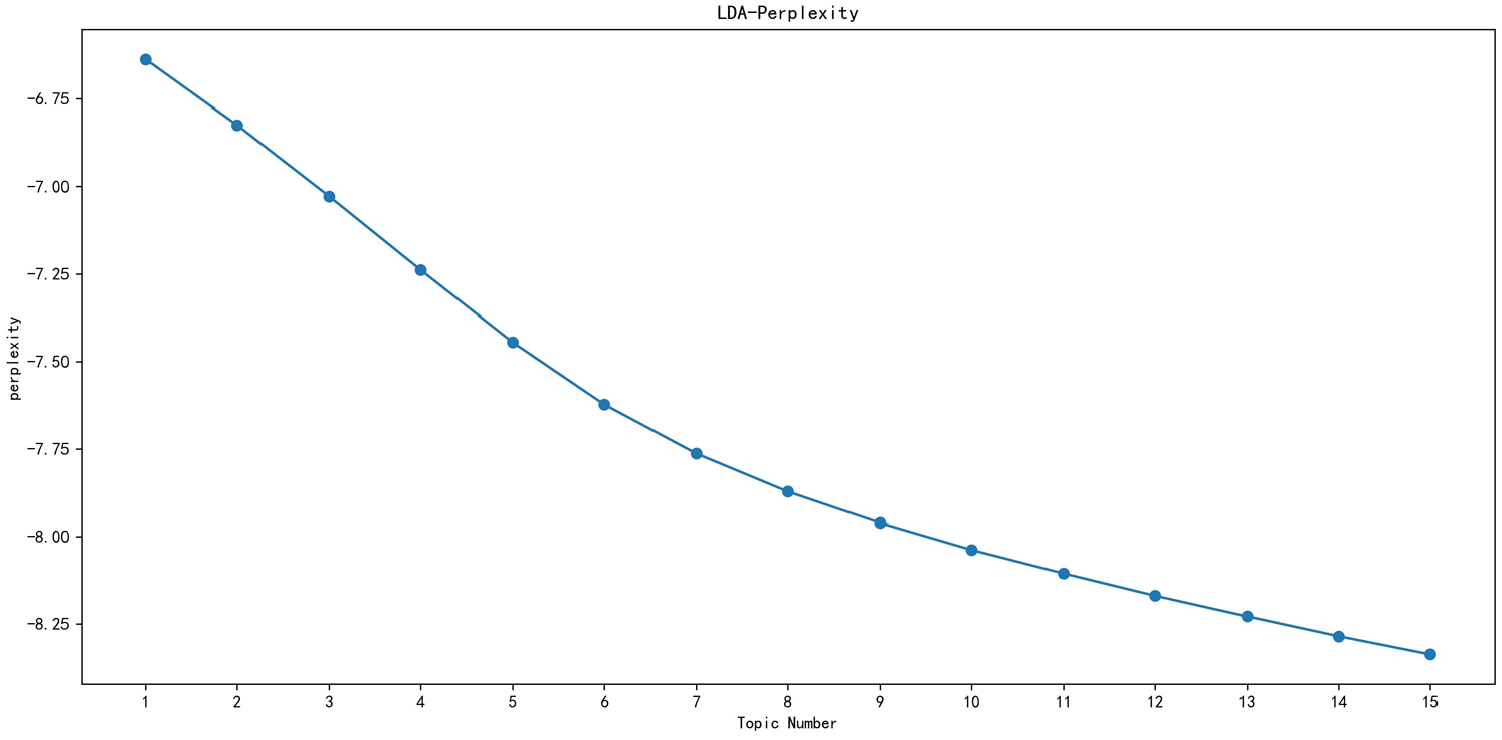
LDA-perplexity analysis (2015–2020).
Table 9 delineates the second stage of thematic research into sustainable fashion, focusing on four distinct but interrelated areas of sustainability. This advanced analytical approach captures the essence and evolving trends within the fashion industry’s move toward sustainability, emphasizing both theoretical frameworks and practical applications. Each theme, uniquely defined by ten high-frequency terms, provides an in-depth exploration of different dimensions of sustainability within the fashion industry, focusing on areas ranging from innovative design practices to broader economic and social implications.
LDA Theme Analysis of Second Stage in Sustainable Fashion Across Four Themes.

Sustainable Innovation in Apparel Design explores how ecological considerations are integrated into the fabric of fashion design and production, emphasizing enduring designs and eco-friendly practices. This theme highlights the administrative and documentation efforts that support sustainable practices within the industry. Economic Implications of Sustainable Fashion shifts the focus to how sustainability impacts economic aspects of the fashion industry, analyzing the operational methods and scrutiny involved in maintaining an eco-conservative approach. Social Responsibility and Ethical Practices delves into the ethical dimensions of fashion, emphasizing the role of corporate responsibility in promoting environmental health and sustainable merchandise. Lastly, the Framework for Sustainable Inventory Management examines the logistical and strategic frameworks necessary for managing sustainable inventories, stressing the importance of renewable resources and efficient market practices. Together, these Themes provide a comprehensive view of the multifaceted approach to sustainability in the fashion industry, from design innovation to social responsibility and economic viability.
2020-LDA Theme Term Analysis
Figure 10 illustrates the coherence scores of the LDA model across various theme numbers. The x-axis represents the number of themes, ranging from 1 to 15, while the y-axis displays the coherence scores, which measure the semantic consistency of the themes. A higher coherence score indicates better theme interpretability. Figure 10 shows fluctuations in coherence scores as the number of themes increases. Initially, there is a rise in coherence scores, peaking at four themes, which suggests that the model’s themes are most coherent. After reaching the peak, the coherence score significantly drops at five themes, showing varying coherence levels across different theme numbers. The coherence score reaches its lowest point at eight themes and then fluctuates without any consistent trend. This analysis is crucial for determining the number of themes that yield the highest semantic coherence, thereby providing the dataset’s most interpretable and meaningful theme structures.

LDA-coherence analysis (2020–2025).
Table 10 presents an in-depth analysis of the third stage of LDA, systematically categorizing the sustainable fashion industry into four sophisticated themes. This analysis highlights the significant specialized aspects of sustainability across different dimensions of the fashion industry. Each theme is defined by a unique array of high-frequency terms that shed light on specific practices, methodologies, and impacts of sustainability efforts within the industry. These terms reflect the operational and conceptual elements of sustainability and underscore the industry’s ongoing efforts to address global environmental and social issues through innovative practices.
LDA Theme Analysis of Third Stage in Sustainable Fashion Across Four Themes.

Global Sustainability Practices in Fashion encapsulate the industry-wide adoption of eco-friendly and ecological stewardship practices that resonate across global markets. It emphasizes the examination of sustainability efforts from the production of merchandise to its styling and labeling, illustrating a commitment to integrating sustainable practices throughout all aspects of the fashion sector. Transparency and Traceability in Supply Chains discusses the importance of maintaining transparency and ensuring traceability within the supply chains, highlighting how sustainable practices can be documented and evolved to enhance accountability. Cultural and Social Impact of Sustainable Fashion delves into how sustainable fashion influences cultural norms and addresses social responsibilities, emphasizing the ecological considerations and cultural adaptations in fashion. Finally, Innovation in Sustainable Materials and Processes focuses on the technological and innovative strides in developing sustainable materials and processes, reflecting the industry’s response to environmental conservation needs. These themes illustrate a comprehensive and multifaceted approach to sustainability in fashion, aligning ecological goals with cultural, social, and economic dimensions.
Theme Term Similarity and Evolution Analysis
Similarity Analysis Between Phase 1 and Phase 2
Table 11 presents a thematic correlation matrix, highlighting the relationships between different themes within the domain of sustainable fashion research. The matrix includes four main themes: “Sustainable Innovation in Apparel Design,”“Economic Implications of Sustainable Fashion,”“Social Responsibility and Ethical Practices,” and “Framework for Sustainable Inventory Management.” Each of these themes is correlated with sub-themes such as “Circular Economy in Fashion,”“Sustainable Supply Chain Management,”“Consumer Behavior and Sustainability,”“Eco-Friendly Design and Innovation,”“Corporate Responsibility in Fashion,”“Environmental Impact of Fashion Production,”“Sustainable Business Models for Apparel,” and “Energy Efficiency in Fashion Operations.”
Thematic Correlation Matrix for Sustainable Fashion Research.

The values in the matrix range from 0.845857973 to 0.938161319, indicating varying degrees of correlation between the main themes and sub-themes. Notably, “Consumer Behavior and Sustainability” shows high correlation values across all main themes, particularly with “Framework for Sustainable Inventory Management” (0.938161319), suggesting a solid interconnection in this area. Similarly, “Circular Economy in Fashion” and “Eco-Friendly Design and Innovation” also exhibit high correlation values, reflecting their significant impact on multiple aspects of sustainable fashion research.
Table 11 provides valuable insights into the intricate relationships among different aspects of sustainable fashion, emphasizing the integrated approach required to address sustainability challenges in the fashion industry.
Similarity Analysis Between Phase 2 and Phase 3
Table 12 presents a correlation matrix detailing the relationships between various themes within the context of sustainable fashion research. “Global Sustainability Practices in Fashion,”“Transparency and Traceability in Supply Chains,”“Cultural and Social Impact of Sustainable Fashion,” and “Innovation in Sustainable Materials and Processes.” These themes are correlated with four additional themes: “Sustainable Innovation in Apparel Design,”“Economic Implications of Sustainable Fashion,”“Social Responsibility and Ethical Practices,” and “Framework for Sustainable Inventory Management.”
Correlation Matrix of Sustainable Fashion Themes.

The correlation values in the matrix range from 0.677094368 to 0.891565085, indicating varying degrees of association between the themes. Notably, the highest correlation (0.891565085) is observed between “Transparency and Traceability in Supply Chains” and “Framework for Sustainable Inventory Management,” suggesting a strong link between these aspects. Similarly, “Framework for Sustainable Inventory Management” also shows high correlations with “Innovation in Sustainable Materials and Processes” (0.884295323) and “Cultural and Social Impact of Sustainable Fashion” (0.835062564), reflecting the integrated nature of inventory management with broader sustainability practices.
Table 12 provides a comprehensive overview of how different facets of sustainable fashion are interconnected, highlighting key areas where themes strongly influence one another. Such insights are crucial for developing a holistic understanding of fashion industry sustainability and identifying areas that require integrated research and practice.
Figure 11 illustrates how various research themes interconnect and contribute to broader categories of sustainable fashion practices. The first stage of literature (−2015) including Circular Economy in Fashion, Consumer Behavior and Sustainability, Sustainable Supply Chain Management, Eco-Friendly Design and Innovation, Corporate Responsibility in Fashion, Environmental Impact of Fashion Production, Sustainable Business Models for Apparel, and Energy Efficiency in Fashion Operations. These primary themes are linked to more specific areas of focus in stage 2 (2015–2020), such as Economic Implications of Sustainable Fashion, Social Responsibility and Ethical Practices, Sustainable Innovation in Apparel Design, and Framework for Sustainable Inventory Management. Moreover, the newest trend focuses on Innovation in Sustainable Materials and Processes, Transparency and Traceability in Supply Chains, Global Sustainability Practices in Fashion and the Cultural and Social Impact of Sustainable Fashion.

Thematic framework of sustainable fashion research.
The evolving research trends in sustainable fashion (Figure 11) offer profound insights into the dynamic nature of this field and its growing complexity. Initially focusing on foundational concepts such as Circular Economy in Fashion and Eco-Friendly Design, the research progressively embraced deeper and more nuanced aspects such as Social Responsibility and Ethical Practices, highlighting a shift toward integrating ethical considerations into business models. This progression from broad thematic concerns to more specialized areas in later stages—like Transparency and Traceability in Supply Chains—underscores a maturing research landscape that mirrors increasing societal and environmental awareness. The future of sustainable fashion will likely continue to converge around technological innovations and ethical practices, increasingly incorporating global cultural and social dimensions. The shifts reflect an adaptation to changing global standards and consumer expectations and signal a more holistic understanding of sustainability that transcends traditional environmental concerns to encompass a broader socio-economic impact, thereby fostering a more inclusive and responsible fashion industry.
Discussion and Conclusion
This study constructed numerous knowledge maps, reflecting the knowledge structure, research trends, academic cooperation networks, and the interrelationships between themes or concepts within the specific research field.
From the perspective of the publication trend, this research shows an apparent upward trend of fashion design for sustainable development, increasing from one publication in 2004 to 172 in 2023. Scholars are increasingly paying attention to this field, and the research system is gradually improving. This increase was particularly significant between 2021 and 2022. The authors’ collaborative network analysis reveals that core authors, such as Caniato Federico and Choi Tsan-Ming, are very influential. In recent years, interdisciplinary and cross-institutional research cooperation has increased, and emerging authors, such as D’itria Erminia and Mcneill Lisa S., have introduced new knowledge and innovative ideas into sustainable fashion design. Despite some degree of cooperation, no stable and mature research group has yet been formed. Although core authors have significant influence, the overall author-cooperative relationship is still relatively scattered, making it difficult to form stable alliances. The national co-occurrence knowledge map analysis from 2004 to 2024 indicates that the United States, China, and the United Kingdom are significant contributors to the field, reflecting increasing global attention to fashion design for sustainable development. European countries such as Italy and Germany have shown a firm commitment, while countries like Australia, Spain, India, and Brazil have also actively participated, demonstrating the trend of global cooperation. Institutions like Hong Kong Polytechnic University and Politecnico di Milano are the leading publishing entities, each with 28 papers showing their importance. The University of Manchester and Aalto University are also actively involved, demonstrating the continued focus on sustainable fashion design research among major research institutions worldwide. The cooperative network diagram shows relatively close cooperation between core institutions and the addition of new members, promoting network expansion and reflecting the vital role of cooperation in the field’s development.
Keyword analysis indicates that “sustainability” is the most frequently appearing Keyword, signifying its central position in this field. Other essential keywords include “circular economy,”“sustainable fashion,”“management,” and “consumption,” reflecting the academic focus on sustainable economic models, industry practices, and consumer behavior. The keyword network diagram shows mutual correlations between these concepts, confirming the academic emphasis on these relationships. Keyword cluster analysis covers themes such as “sustainable fashion,”“moral fashion,”“circular economy,”“business model,”“clothing life cycle assessment,” and “textile sustainability,” reflecting the research field’s richness and diversity and indicating future research directions. The results reflect interest in applying the circular economy model in business, society, and fashion. Independent clusters like “organic synthetic chemistry” indicate that research in this area is still developing. Hence, we suggest unexplored research directions, such as applying the circular economy model in different fashion industries and the potential of organic synthetic chemistry in a sustainable fashion. From 2004 to 2024, there were significant surges in keywords like “sustainable design,”“social responsibility,” and “system” during specific periods, reflecting a shift from theoretical discussion to practical and technological applications, such as circular economy, smart manufacturing, and wearable technology, highlighting the importance of sustainable development practices in academia and industry.
In addition to mapping empirical trends, the findings offer theoretical contributions that enhance the understanding of sustainable fashion research. First, the persistence of themes such as circular economy, corporate social responsibility (CSR), and life cycle assessment across different LDA stages reinforces the robustness of these theoretical frameworks in explaining sustainability transitions within the fashion industry. These results support existing theories that emphasize the integration of environmental, social, and economic dimensions into design and production practices (e.g., Niinimäki et al., 2020). Second, the topic evolution reveals a thematic shift from traditional environmental assessment models to more socially embedded constructs such as ethical fashion, social media engagement, and consumer behavior—challenging the dominance of technocratic or production-centered models and suggesting the growing importance of behavioral and cultural frameworks in theorizing fashion sustainability. Third, this study contributes a novel theoretical insight by empirically illustrating how knowledge structures in sustainable fashion research evolve in three interconnected layers: institutional strategy (e.g., supply chain, CSR), design innovation (e.g., eco-materials, circular models), and consumer cognition (e.g., purchase intention, social values). This layered trajectory can inform a conceptual framework that integrates systemic, creative, and user-centered dimensions of sustainability, offering new avenues for theory-building in design studies, sustainability transitions, and innovation ecosystems.
Furthermore, LDA provided additional insights into the thematic structure and evolution within the field. The LDA model identified vital themes such as “sustainable innovation in apparel design, economic implications of sustainable fashion, social responsibility and ethical practices and framework for sustainable inventory management.” These themes demonstrated significant interconnectedness with core concepts such as the circular economy, consumer behavior, and the integration of emerging technologies like intelligent manufacturing and wearable technology. This Theme modeling analysis complemented the bibliometric findings and offered a deeper understanding of the thematic evolution and interrelationships within the research corpus.
In comparison with studies from Rojas-Sánchez et al. (2023), Dragović et al. (2024), and Yan et al. (2024), it is evident that we cover more comprehensive research subjects and utilize quantitative bibliometric analysis to show the research status more thoroughly. This study examines the overall research situation sustainably, revealing the evolutionary trends of research Themes and highlighting the impact of emerging technologies and industrial development.
Beyond theoretical advancements, the findings also yield important practical implications. For industry practitioners, the evolving themes such as sustainable supply chain management, innovation in eco-materials, and transparency in traceability offer actionable guidance for optimizing sourcing strategies, integrating circular design principles, and building consumer trust through ethical branding. Policymakers may benefit from the observed global collaboration trends, which underscore the importance of establishing transnational policy frameworks that align sustainability standards and incentivize green innovation. For design educators, the thematic emphasis on consumer behavior and sustainable design competencies highlights the urgent need to revise curricula by embedding ecological thinking, ethical reasoning, and digital design tools. These insights collectively support multi-stakeholder decision-making toward a more resilient and responsible fashion ecosystem.
The apparent rise in the research trend in fashion design and sustainable development has received increasing attention, reflecting the growing global attention to sustainable fashion. Although interdisciplinary and inter-institutional collaborations have become increasingly frequent, this field still lacks a stable and mature research community. In addition, although the United States, China and the United Kingdom are in a leading position, the study also reveals the need and trend for collaboration on a global scale. The leading position of Hong Kong Polytechnic University and Politecnico di Milano emphasizes the role of core institutions in promoting sustainable fashion research. At the same time, research hotspots focus on sustainability, circular economy, sustainable fashion, management and consumption, showing the diversification of research Themes and the integration of theory and practice. In addition, the integration of emerging technologies, such as intelligent manufacturing and wearable technology, has increased the innovation and practicality of this field. This series of insights emphasizes the need for future research to focus on interdisciplinary integration, global collaboration, and promoting the integration of technological innovation and sustainable fashion practices.
Conclusion
This study utilized bibliometric analysis to construct six knowledge maps, reflecting the knowledge structure, research trends, academic cooperation networks, and the interrelationships between themes or concepts within fashion design and sustainable development. From 2004 to 2023, a significant upward trend in research has been observed, indicating an increasing focus on sustainable fashion design. Caniato, Federico, Choi, Tsan-Ming, and emerging contributors like D’itria, Erminia, and Mcneill, Lisa S., have been identified as the core contributions. However, the author’s collaboration network appears fragmented, indicating the absence of a stable and mature research community. Globally, the United States, China, and the United Kingdom have emerged as leaders in this area of research, with Italy, Germany, Australia, Spain, and India also actively contributing. The Hong Kong Polytechnic University and the Politecnico di Milano are principal publishing institutions. Themes such as “sustainability,”“circular economy,”“sustainable fashion,”“management,” and “consumption” have been identified as the main foci of research. Future research directions include “sustainable fashion,”“moral fashion,”“circular economy,”“business models,”“clothing life cycle assessment,” and “textile sustainability.”
Nevertheless, this study is not without its limitations. It relies on available literature data, which might not entirely cover all relevant studies, presenting an issue with data completeness. Additionally, the specificity of the search terms used in this study may have resulted in the exclusion of relevant articles that employed alternative terminology. For example, while “sustainability” was included as a core search term, related expressions such as “sustainable fashion” or broader wildcard variants like “sustainab*” were not fully incorporated. This may have constrained the breadth of the retrieved dataset. Future studies could enhance retrieval robustness by employing more inclusive search strategies using wildcard terms to better capture semantic variations in the literature.
Moreover, the exclusive reliance on the Web of Science database may introduce selection bias and limit the comprehensiveness of the dataset, as relevant contributions indexed in other scholarly repositories such as Scopus, Google Scholar, or non-English regional databases may have been overlooked. This may particularly underrepresent emerging research from developing regions or interdisciplinary works published in peripheral journals. Additionally, the use of LDA for thematic modeling, while effective for identifying latent topics, presents inherent methodological limitations. LDA assumes a “bag-of-words” model and cannot fully capture the contextual or semantic nuances of terms, potentially oversimplifying complex academic discourse. The selection of the number of topics remains partially subjective despite statistical support from perplexity and coherence metrics, and the absence of expert validation or triangulation with other methods (e.g., BERTopic, HDP) may constrain interpretability. These factors may affect the generalizability and thematic depth of the findings. Future research could address these limitations by employing multi-database strategies, combining different modeling techniques, and involving domain experts in the validation process to enhance both analytical reliability and thematic insight.
The scope of retrieval may be limited, including only specific databases and publications and possibly overlooking other significant findings. Although the study covers various research Themes, it may not comprehensively delve into the details of certain specific Themes. Future research will focus on interdisciplinary integration and global collaboration to further advance the field. Future research could pursue several promising directions. First, scholars may explore the integration of multimodal data—such as images, social media content, and industry reports—into bibliometric and topic modeling workflows to enhance real-world contextual analysis. Second, the adoption of advanced NLP models (e.g., BERTopic, contextualized embeddings, or ChatGPT-powered topic extraction) can enrich semantic granularity beyond conventional LDA. Third, longitudinal and cross-cultural comparative analyses, supported by qualitative triangulation (e.g., expert validation, in-depth interviews), would provide deeper insight into how sustainability narratives evolve across regions and cultural settings. Exceptionally, incorporating emerging technologies like intelligent manufacturing and wearable technology will be a significant direction for future research. Moreover, establishing a stable and mature research community is also a critical aspect that future studies must address. Overall, despite certain limitations, this study provides valuable insights and directions for future research in the field of sustainable fashion design.
Footnotes
Acknowledgements
The authors would like to thank the editorial team and reviewers of Sage Open for their constructive feedback that helped improve the quality of this manuscript.

Ethical Consideration
This study does not involve any human participants, identifiable personal data, biological material, or experimental intervention. Therefore, ethics approval and informed consent were not required, in accordance with Section 8.05 of the APA Ethical Principles of Psychologists and Code of Conduct. The research solely utilizes bibliometric data retrieved from publicly accessible academic databases (Web of Science).
Consent to Participate
Not applicable. The study did not involve human subjects or personal information requiring informed consent.
Author Contributions
Xue Zhang contributed to the data collection, bibliometric analysis, and interpretation of results. Yu Zhang designed the research framework, led the thematic modeling (LDA), and was responsible for the overall manuscript writing and revision. All authors read and approved the final manuscript.
Funding
The author(s) received no financial support for the research, authorship, and/or publication of this article.
Declaration of Conflicting Interests
The author(s) declared no potential conflicts of interest with respect to the research, authorship, and/or publication of this article.
Data Availability Statement
All data used in this study were obtained from the Web of Science Core Collection. Processed datasets and visualizations are available from the corresponding author upon reasonable request.