




Abstract
The global trade landscape has been reshaped by complex production networks, leading to the international fragmentation of manufacturing, where countries specialize in different production stages and rely heavily on foreign inputs. This fragmentation makes economic shocks capable of rippling across regions. As a leading player in regional production networks, China has accelerated this process, particularly through trade with ASEAN countries. However, the US-China trade war has disrupted these networks, creating economic uncertainties. This study goes beyond country-level analysis to examine how the trade war and the relocation of Chinese FDI to ASEAN-4 affect vertical intra-industry trade (VIIT) between ASEAN-4 and the US, employing spatial econometric techniques to address a gap in the literature. The findings indicate that Chinese FDI significantly boosts VIIT, suggesting that relocating FDI to ASEAN-4 can help mitigate the trade war’s impact on China. Moreover, there is a positive and significant spatial VIIT, implying that trade expansion in one ASEAN-4 member country generates spillover effects across the region, underscoring the importance of resilient and diversified supply chains. However, the negative impacts of spatial FDI and GDP reveal ongoing competition within ASEAN-4, indicating that China and ASEAN-4 should carefully strategize to avoid adverse spillovers and promote deeper regional integration. Accordingly, ASEAN policymakers, particularly guiding initiatives like the ASEAN Economic Community Blueprint 2025, should revise strategies to ensure comprehensive integration among member countries rather than fostering competition, supporting mutual benefits from shared participation in regional supply chains.
Introduction
The international trade landscape has experienced profound transformations due to the increasing openness of global trade, with global production networks emerging as pivotal components in the world economy. These networks intricately connect trading partners through expansive global supply chains (Amador & Cabral, 2009, 2016; Nas et al., 2024). In this context, each trading partner in the trade network specializes in particular segments of the production process, leveraging their comparative advantages, which is particularly evident within the manufacturing sector. Recent studies by Nas et al. (2024) and Białowąs and Budzyńska (2022) underscore that the international fragmentation of production processes has become a defining characteristic of contemporary global economic trends.
In addition, there has been a notable shift in recent years towards increased dependency of national economies on external final demand and foreign intermediate inputs owing to the global production network (Hashiguchi et al., 2021). Literature on business cycle synchronization through production networks suggests that economic shocks experienced by firms or sectoral segments do not remain localized. Instead, these disruptions can propagate across the entire economy, influencing other sectors’ and regions’ output and stability (Acemoglu et al., 2012; Carvalho & Gabaix, 2013; Roson & Sartori, 2016). Moreover, the structure of global production networks plays a critical role in determining economic resilience, defined as a nation’s capacity to mitigate economic losses following adverse shocks (Hashiguchi et al., 2021).
At the macroeconomic level, alterations in economic agents’ behaviors due to changes in global trade dynamics can significantly affect the world supply and demand structure. These shifts are closely related to economic resilience, as countries must adapt to minimize negative impacts or capitalize on positive effects shocks (Hashiguchi et al., 2021). Economic resilience, in this context, can be understood as a country’s ability to absorb and recover from economic shocks, thereby reducing potential economic losses and enhancing overall stability.
Athukorala and Hill (2010) highlight China’s rise as the “global factory,” where the assembly of electrical and electronic goods is predominantly carried out using components imported from various countries. This international division of labor, known as production fragmentation, has facilitated China’s swift integration into regional production networks and given rise to vertical intra-industry trade. In this context, ASEAN member countries have increasingly contributed to the supply of parts and components for China’s rapidly expanding final assembly operations. By the 2010s, China had established itself as the fastest-growing exporter and a central node in East Asia’s international production networks. The ASEAN region, in turn, has significantly benefited from this fragmentation of production, as it has attracted substantial inflows of foreign direct investment (FDI) (Mitzie, 2012). Athukorala and Hill (2010) further demonstrate that China’s imports of components from ASEAN and other developing East Asian countries have surged in tandem with the rapid growth of Chinese manufacturing exports to markets beyond the region, particularly in Europe and the United States. As such, in 2020, China and ASEAN emerged as each other’s top trading partners for the first time, reflecting the growing importance of their economic interdependence (Xu et al., 2025).
However, China’s export volume to the United States has significantly exceeded its imports from the US To address the resulting trade deficit, the US government implemented a strategy to increase import duties, particularly targeting Chinese goods (Aba, 2021), and this led to the trade war between China and the US, imposing an economic shock on the world economy. According to Aba (2021), in May 2019, the US raised tariffs on Chinese imports valued at USD 200 billion from 10% to 25%. In retaliation, China imposed new tariffs on US goods worth USD 60 billion starting June 1, 2019, and also considered halting purchases of American agricultural products and Boeing aircraft.
The trade war has notably impacted ASEAN exports as both China and the US are strategic trading partners of the ASEAN member countries. In 2023, continuing the previous trend, China remained ASEAN’s largest trading partner, serving both as the top export destination (15.9% of ASEAN’s total exports) and the leading source of imports (23.9%). The United States was the second most important partner, accounting for 14.9% of ASEAN’s exports and 7.4% of its imports (ASEAN Secretariat, 2024). The impact is more on certain products, such as electronics and automotive raw materials (Boltho, 2020). This is because electrical machinery is the key commodities of ASEAN (ASEAN Secretariat, 2024). In fact, Cerutti et al. (2019) characterize the US-China trade war as a principal source of global economic uncertainty, while Bekkers and Schroeter (2020) note that it has led to a reorganization of supply value chains in East Asia.
Overall, the trade tariffs between these two leading global economies have disrupted both regional and global production networks. According to Hendrati et al. (2024), this trade war has prompted China to adjust its strategies in ASEAN member countries, the increase inflow of FDI from China to ASEAN member countries, its key trading partners, might be an effort to mitigate the negative effects of the trade war and preserve economic resiliency.
Hence, this study seeks to examine whether the outflow of FDI from China accelerates the VIIT between ASEAN-4 member countries (Indonesia, Malaysia, Singapore, and Thailand) and the United States, with particular attention to regional and global production fragmentation. It also investigates the extent to which the US–China trade war influences the dynamics of VIIT between ASEAN-4 and the United States. The focus on the ASEAN-4, rather than the entire ASEAN region, is primarily due to data limitations.
Besides, prior studies have demonstrated that the economic interactions between China and ASEAN member countries are interconnected processes that generate mutual benefits and foster collective growth. Empirical evidence confirms the presence of spillover effects between the two regions (Yong et al., 2019; Yu et al., 2025). Xu et al. (2025) highlight significant spatial spillover effects in the economic growth of China and ASEAN, indicating that expansion in one economy generates positive externalities for others in the region. Similarly, Yong et al. (2019) reveal positive spatial correlation among the ASEAN-5 (Indonesia, Malaysia, the Philippines, Singapore, and Thailand) in their trade with China, suggesting that economic linkages extend beyond bilateral exchanges to form broader regional patterns of trade.
Building on these insights, this research employs spatial econometric analysis to assess whether the reallocation of FDI from China to a particular ASEAN-4 member country complements or displaces VIIT involving other ASEAN-4 member countries and the United States.
The study will make two key contributions. First, this study aims to examine how the relocation of FDI due to the trade war affects vertical trade performance within the global supply chain between ASEAN-4 and the US. This addresses a clear gap in the literature, as prior studies have not explored this dimension of trade dynamics. Second, by employing spatial econometric techniques, this study goes beyond country-level analysis to capture the spillover effects, specifically, how the impact on one ASEAN-4 member country’s vertical trade performance with the US can influence other ASEAN-4 member countries. Together, these contributions advance understanding of production fragmentation and vertical trade, thereby enriching and extending the existing body of literature. In addition, the findings of this study will provide valuable insights into whether the US-China trade war enhances ASEAN-4’s VIIT with the United States, potentially mitigating trade-related issues through the relocation of FDI. Additionally, the results will clarify whether ASEAN-4 member countries function as collaborators or competitors in this context. This analysis will contribute to a deeper understanding of the effectiveness of ASEAN’s economic integration policies in promoting cohesion among its member states.
The remainder of the paper is organized as follows: The next section presents a literature review on intra-industry trade and trade war between US and China. Section “Materials and Methods” describes the methodology employed in this study, while section “Result and Discussion” analyses and interprets the empirical results. Section “Conclusion and Policy Implications”concludes the paper with policy implications.
Literature Review
Intra-industry trade (IIT), defined as the exchange of similar products within the same industry, has gained growing importance in the global economy. Unlike inter-industry trade, which is based on comparative advantage, IIT involves the simultaneous import and export of goods within the same product category (Doanh et al., 2021; Dutta, 2023; Mustafa, 2025; Vidya & Prabheesh, 2019). Its significance has increased due to factors such as product differentiation, economies of scale, and economic integration (Cieślik & Wincenciak, 2018; Egger et al., 2024; Shrestha et al., 2025; Yazdani & Pirpour, 2020). IIT is generally classified into two types: horizontal and vertical, each reflecting different conditions and implications for international trade.
Horizontal intra-industry trade (HIIT) refers to the exchange of similar goods that differ mainly in features, quality, or brand rather than function (Greenaway et al., 1995; Thorpe & Leitão, 2013). It usually occurs between countries with comparable economic development and consumer preferences. (Doanha & Yoon, 2018), such as in the trade of different automobile models or electronics. HIIT enhances consumer choice and competition within the same product category (Clark, 2010; Bagchi & Bhattacharyya, 2021).
VIIT, in contrast, involves goods with the same core function but significant differences in quality, technology, or production stage. It often occurs between countries at different development levels, for example, developing nations exporting components while importing advanced machinery. In industries like automotive, VIIT enables countries to specialize in different production stages, supporting global integration (Sergi & Pitoňáková, 2021; Surugiu & Surugiu, 2015; Türkcan & Ates, 2011).
Cheong and Yoo (2020) linked intra-industry trade to the global value chain (GVC), where countries specialise in production stages based on comparative advantages such as labor costs, technology, or raw materials. Through GVCs, nations engage in global markets without developing full domestic capabilities. This aligns with Nas et al. (2024), who found that BRICS+T participation in global production networks enhances short-term development, though the effect fades in the long run.
International trade economists link VIIT to country-specific factors such as FDI, GDP, infrastructure, and trade openness. Fukao et al. (2003) note that FDI fosters VIIT in East Asia by transferring technology and expertise, particularly in machinery and electronics. Ambroziak (2016) shows the automotive sector benefits from efficiency-seeking FDI in fragmented production, while Şentürk (2023) finds FDI inflows into Turkey significantly boosted VIIT in transportation.
In a similar vein, Chawla and Kumar (2023) discuss how FDI drives GVC development in India by creating cross-country production networks and fragmenting processes, which enhance VIIT through specialization. Similar results are reported by Burange et al. (2017) for India’s manufacturing sector. On the other hand, Chin et al. (2019) argue that higher GDP per capita reflects greater production capacity, boosting competitiveness and enabling VIIT. Countries leverage this by specializing in quality tiers within industries (Shahbaz et al., 2012; Yılmaz, 2022). Bustos and Yıldırım (2022) confirm this link, showing that higher GDP per capita in US economies correlates with greater capacity and product diversification.
Infrastructure covering transport, communication, energy, logistics, and R&D is vital for expanding VIIT and supporting sustainable growth. Montrone et al. (2022) show that countries with strong power capacity are better positioned to leverage advanced production and participate in VIIT. Fernandes et al. (2021) show that integration into international logistics networks is crucial for VIIT, as efficient logistics reduce trade barriers and costs, enabling firms to trade differentiated goods. Similarly, countries with strong logistics networks better manage storage, delivery, and distribution, enhancing VIIT participation (Alumur et al., 2018; Memedovic et al., 2008; Zhou et al., 2022). Recent literature highlights the significant role of trade openness in enhancing VIIT with policy measures needed to lower barriers. Vidya and Prabheesh (2019) find that imbalances in demand and human capital reduce IIT, while FDI and openness strengthen it. This is consistent with evidence from China–OECD trade relations (Lyu & Blandford, 2019; Miroudot & Ragoussis, 2009).
The US-China trade war, starting in 2018, marked a major disruption in global trade. The US imposed tariffs on Chinese imports over trade imbalances and intellectual property concerns, while China retaliated with tariffs on US goods. This escalation disrupted supply chains, hurt multinationals, and fueled market volatility. Although the Phase One Deal in 2020 eased some tensions, tariffs largely remained and key issues unresolved (Bekkers & Schroeter, 2020; Bown, 2021). Recent studies provide further insights into these impacts. Fajgelbaum and Khandelwal (2022) quantitatively demonstrate how tariffs and retaliatory measures reshaped trade flows and the broader economy, while Kwan (2020) highlights supply chain disruptions that forced firms to reconfigure sourcing strategies to mitigate tariff effects. Peters (2018) shows that the trade war hampered US-China collaboration in research, limiting technology transfer and innovation. Similarly, An et al. (2020) reveal that Africa’s energy and resource sectors faced challenges from tariffs, exposing vulnerabilities in economies reliant on exports. Taken together, these studies highlight the trade war’s diverse and far-reaching consequences, while underscoring how external shocks can hinder global value chain integration and weaken the vertical intra-industry trade that depends on fragmented international production networks.
For ASEAN, the US-China trade war triggered major economic adjustments, reshaping trade patterns and strategies. Hendrati et al. (2024) show that countries tied closely to China faced slower growth, while those with stronger US links benefited from trade diversion. This encouraged ASEAN to diversify trade by engaging partners such as the EU, Japan, and South Korea. Sectorally, Doarest and Wihardja (2024) note that manufacturing, especially semiconductors and green industries, faced disruptions from higher costs and logistics barriers. In response, firms relocated production within ASEAN, redistributing industrial activity and pushing governments to upgrade infrastructure and competitiveness to attract investment.
Strategically, the trade war has accelerated ASEAN’s push for deeper economic integration. Park et al. (2021) note that the conflict underscored the need to strengthen regional resilience and reduce reliance on external powers, driving momentum for the Regional Comprehensive Economic Partnership (RCEP) and other trade agreements (Ke, 2019). These responses reflect ASEAN’s move toward a more diversified and strategically integrated approach to trade and investment, which Zhang (2023) argues will be vital for sustaining growth amid global volatility.
Despite extensive studies on the trade war’s global and regional impacts, a research gap remains on its specific influence on VIIT between ASEAN and the United States. Existing literature has focused on economic disruptions and sectoral shifts (Doarest & Wihardja, 2024; Wang & Tao, 2024), but has often overlooked the role of FDI inflows from China into ASEAN. While prior work examined traditional trade flows and supply chain disruptions, limited attention has been given to how FDI affects the complexity and quality of VIIT (Charoenwong et al., 2022; Guo et al., 2024; Huang et al., 2023). Moreover, although Park et al. (2021) and Ke (2019) highlighted ASEAN’s strategic responses, there is little empirical evidence on whether these measures have effectively strengthened ASEAN’s resilience through VIIT. This gap is particularly relevant as ASEAN navigates its dual role as collaborator and competitor in the trade environment shaped by US-China tensions.
To address these gaps, this research examines the interplay between FDI inflows, VIIT, and the ongoing trade war, with a focus on ASEAN’s evolving trade dynamics with the United States. Drawing on the reviewed literature, which underscores the importance of FDI, GDP, infrastructure, trade openness, and external shocks such as the US-China trade war in shaping VIIT, this study employs Production Fragmentation Theory and the Eclectic Paradigm as the theoretical foundation for developing the research hypotheses.
Production Fragmentation Theory (Jones & Kierzkowski, 1990; Athukorala & Yamashita, 2009) explains how production is split into distinct stages across multiple countries. Countries specialize in particular tasks, adding unique value at each stage, which gives rise to vertical intra-industry trade. ASEAN’s integration into China-led supply chains exemplifies this, with ASEAN countries supplying intermediate components for China’s final assembly exports (Tong et al., 2020).
The Eclectic Paradigm, or OLI framework (Dunning, 2001), provides insights into why multinational corporations engage in FDI. It emphasises ownership advantages (O), location advantages (L), and internalisation advantages (I) as drivers of FDI. In the ASEAN context, efficiency-seeking FDI has been especially relevant, as Chinese firms relocate production to reduce costs and manage trade war risks (Fukao et al., 2003; Wadhwa & Reddy, 2011). Such FDI not only strengthens ASEAN’s VIIT but also creates potential spillover effects across member states.
Based on the reviewed literature, the following hypotheses are proposed:
Materials and Methods
Lin and Chang (2009) argue that countries at varying stages of development specialize in distinct segments within the same industry, utilizing different technologies and producing diverse products according to their comparative advantages. This process of specialization and segmentation highlights the importance of production fragmentation in understanding the complexities of trade in manufactured goods. Jones and Kierzkowski (1990) and Jones et al. (2005) further developed the theory, demonstrating that the fragmentation of vertically integrated production processes and international outsourcing can effectively address these complexities.
According to the production fragmentation theory, countries can focus on specific stages of the production process, thereby adding unique value at each stage (Hummels et al., 2001; Lemoine & Unal-Kesenci, 2002; Yi, 2003). This specialization promotes the emergence of vertical intra-industry trade, wherein countries exchange goods differentiated by their production stages rather than by their final use.
The literature categorizes FDI motivations within the OLI framework into four main types: strategic asset-seeking, market-seeking, efficiency-seeking, and resource-seeking investments. Market-seeking FDI is primarily driven by the size of the host country’s market, access to regional and global markets, and the structure of the domestic market. In contrast, resource-seeking FDI focuses on acquiring comparative advantages through access to labor and natural resources, such as inexpensive raw materials, advanced infrastructure, and technology in the host country.
Efficiency-seeking FDI is motivated by the potential for reduced production costs in the host country, which can enhance a firm's competitive edge. The benefits of efficiency-seeking FDI include economies of scale and scope, achieved through product and geographical concentration as well as process specialization (Wadhwa & Reddy, 2011). Notably, Fukao et al. (2003) highlight that a significant portion of vertical intra-industry trade (IIT) in East Asia is driven by efficiency-seeking FDI. This type of FDI aligns closely with the internalization motive of the Eclectic Paradigm Theory, emphasizing the role of internalization in optimizing production processes and achieving cost efficiencies as well as diversifying the risk.
This study utilizes the decomposition-type threshold method developed by Fontagné and Freudenberg (1997) to calculate VIIT indices between ASEAN member countries and the United States. The method determines the extent of trade overlap at the product level using the following formula:

where:
MAUBit represents the imports of product B by ASEAN country A from the US (country U) at period t.
If this condition is met, the trade is classified as intra-industry; otherwise, it is considered inter-industry.
VIIT pertains to trade in vertically differentiated products, characterized by a notable disparity between export and import unit values (Ito & Okubo, 2011). To identify VIIT, unit values for exports and imports of each intra-industry trade (IIT) product are computed by dividing the trade value by the trade quantity.
The following equation decomposes IIT products into horizontal and vertical intra-industry trade for each manufacturing sub-sector:

where:
UVXAUBit denotes the unit value of product B from manufacturing sub-sector i exported to the US (country U) by ASEAN country A at time t.
UVMAUBit denotes the unit value of product B from manufacturing sub-sector i imported from the US (country U) by an ASEAN country A at time t.
Using this decomposition, aggregate VIIT indices for bilateral VIIT between each ASEAN country and the US in each manufacturing sub-sector (SITC 5, 6, 7, 8) are calculated. The VIIT indices for the manufacturing sector in each year are derived by summing the trade values of VIIT products and dividing by the total IIT value for the manufacturing sector. The formula for computing the aggregate VIIT indices for each year is:

The computed VIIT will be served as the dependent variable in the empirical model. The data for this analysis is sourced from the UN Comtrade database, covering SITC codes 5 through 8 with four-digit codes. The definitions of SITC categories follow the UNCTAD classification: SITC5—Chemicals and related products, n.e.s.; SITC6—Manufactured goods; SITC7—Machinery and transport equipment; and SITC8—Miscellaneous manufactured articles.
This study employs spatial econometric analysis to examine the potential spillover effects of Chinese FDI inflows on vertical intra-industry trade (VIIT) between four ASEAN member countries—Malaysia, Singapore, Thailand, and Indonesia—and the United States during the US–China trade war. The analysis is based on annual data covering the period 2003 to 2022, subject to availability. Spatial econometric techniques are applied to account for interaction effects among ASEAN member countries through macroeconomic factors such as FDI and VIIT. While the spatial panel approach provides valuable insights into the association between FDI inflows and VIIT, we acknowledge that causal identification remains challenging. The FDI coefficient may partially capture reverse causality or common shocks such as US tariff measures or COVID-19. These limitations are mitigated through the inclusion of a trade war dummy and fixed effects, but future research could further strengthen causal inference by employing instrumental variables or natural experiments. Due to the lack of consistent data from 2018 to 2022, the number of explanatory variables is restricted. Following Elhorst (2003) and Yong et al. (2019), spatial econometrics is adopted as it effectively identifies and addresses potential sources of model misspecification, thereby improving the robustness of the analysis. The model specification is set as follows:

Here, ln refers to the natural logarithm. All variables are defined in Table 1.
Data Description.

Following Elhorst (2003), spatial panel data models can generally take three forms:
Spatial Error Model
The Spatial Error Model (SEM) assumes that cross-sectional dependence arises through the error terms:

where W is the spatial weight matrix describing the interaction between each country i and its neighbors, N denotes the total number of cross-sectional units, and ζ is the spatial autocorrelation coefficient. Substituting (2) into (1) yields:

In this specification, shocks originating in one country can propagate to others through the spatial dependence structure captured by W. The transformation
Spatial Lag Model
The Spatial Lag Model (SLM) accounts for the possibility that the dependent variable may be spatially correlated across countries. It can be expressed as:

In this setting, γ captures the spatial autoregressive effect, implying that a country’s vertical intra-industry trade may be influenced by that of its neighbors. In other words, changes in one country’s VIIT can transmit to others through the spatial interaction structure represented by W.
Spatial Durbin Model
The Spatial Durbin Model (SDM) extends the SLM by allowing both the dependent and independent variables to exert spatial influence. The model is written as:

Here, the spatially lagged dependent variable
X (FDI, GDP, INFRA, and TO) from neighboring countries. This formulation allows the SDM to encompass both direct domestic effects and indirect cross-country influences.
Table 1 reports the summary statistics for all variables used in the analysis, along with brief descriptions of all the variables used in the main analysis and their respective data sources. The descriptive statistics for the variables used in the analysis provide valuable insights into their distribution and variability. The mean value of VIIT is 0.66, with a standard deviation of 0.21, indicating moderate variability around the mean. The minimum and maximum values of VIIT are 0.2 and 0.95, respectively, suggesting that the VIIT levels across ASEAN-4 member countries vary but are relatively concentrated within a specific range. The FDI from China to ASEAN-4 member countries has a mean value of 10.45 and a standard deviation of 2.59, showing significant variability. The FDI ranges from 0 to 13.86, indicating that there are periods with no FDI inflows as well as periods with high inflows. The GDP of ASEAN-4 member countries, measured in log terms, has a mean of -1.05 and a standard deviation of 0.6, with values ranging from -2.3 to 0.28. This spread suggests diverse economic outputs among the countries in the sample. The infrastructure proxy (INFRA) has a mean of 0.44 and a high standard deviation of 1.36, with a range from -1.97 to 3.19. This wide range reflects substantial differences in infrastructure development across the ASEAN-4 member countries. Lastly, trade openness (TO) has a mean of 0.11 and a standard deviation of 0.71, with values ranging from -1.25 to 1.25. This indicates variability in the degree of trade openness among the countries, with some being more closed and others more open to trade. Overall, the descriptive statistics reveal significant heterogeneity in the key variables, highlighting the diverse economic and trade environments of the ASEAN-4 member countries in the sample.
Result and Discussion
Table 2 presents the main empirical results. Among the four models estimated—pooled OLS, spatial error, spatial lag, and spatial Durbin—the Spatial Durbin Model provides the best fit. Specifically, the SDM yields the highest R-squared and adjusted R-squared values, while also achieving the lowest Akaike Information Criterion (AIC), indicating superior explanatory power and model fit.
Estimated Results of ASEAN-China Foreign Direct Investment (FDI) and ASEAN-4 -US Vertical Intra-Industry Trade (VIIT).

Note. Variable definitions are provided in Table 1. Column (1) reports the pooled OLS estimation results for the baseline model (1), where the dependent variable is ASEAN–US Vertical Intra-Industry Trade (VIIT). Column (2) presents the spatial error model for Equation (3). Column (3) presents the spatial lag model for Equation (4), and Column (4) presents the spatial Durbin model for Equation (5). The key independent variable is ASEAN–China Foreign Direct Investment (FDI).
, **, and * denote significance at the 1%, 5%, and 10% levels, respectively. Values in parentheses are t-statistics.
To further validate the choice of model, preliminary spatial dependence diagnostics were conducted. As shown in Table 3, the standard Lagrange Multiplier (LM) tests provided mixed signals; however, the Robust LM tests for both spatial lag and spatial error dependence were strongly significant (p < .01). These results confirm the presence of spatial interactions in both forms, thereby justifying the use of the Spatial Durbin Model, which encompasses the spatial lag and spatial error models as special cases.
Spatial Dependence Diagnostics.

Note. Moran’s I tests the presence of global spatial autocorrelation in the residuals. LM Error tests for spatial error dependence; LM Lag tests for spatial lag dependence. Robust LM tests account for the possibility that both types of dependence coexist. The significance of both Robust LM tests suggests that the Spatial Durbin Model, which nests both lag and error specifications, is the most appropriate framework.
The analysis reveals that FDI from China to ASEAN-4-member countries is positively and significantly impacts VIIT between ASEAN-4 member countries and the US. Specifically, a 1% increase in FDI from China results in a 0.022% rise in VIIT. This finding suggests that increased Chinese direct investment in ASEAN-4 member countries enhances trade activities between these regions. These findings are aligned with Pan and Chong (2022), who demonstrated that FDI exerts a positive effect on trade among Belt and Road Initiative (BRI) countries. Similarly, the results are partially consistent with Anwar and Nguyen (2011), who reported that FDI has a positive impact on trade. Furthermore, the analysis suggests that China’s strategy of relocating production activities to ASEAN functions as an effective mechanism to mitigate the adverse consequences of the US–China trade war. This strategic adjustment is further supported by Hendrati et al. (2024), who contend that the reallocation of production stages from China to ASEAN generates mutual benefits for both regions, thereby reinforcing the positive outcomes associated with such investment-driven trade reconfigurations. Moreover, the observed positive relationship between FDI and VIIT supports the argument that the primary motivation underlying Chinese FDI in ASEAN is efficiency-seeking. This interpretation is consistent with Fukao et al. (2003), who demonstrated that a substantial share of VIIT in East Asia is driven by efficiency-seeking FDI. Furthermore, the findings align with Dunning’s internalization theory. Specifically, the internalization component of the OLI framework emphasizes the advantages of internalizing cross-border operations to exploit economies of scope and mitigate risks through diversification in foreign markets.
Additionally, GDP growth within ASEAN-4 member countries is a substantial driver of VIIT, with a 1% increase in GDP leading to a 0.34% increase in trade. This highlights the importance of economic output in strengthening trade relationships with the US, supporting the production fragmentation theory, and corroborating the results of Zhang and Li (2006) and Athukorala and Yamashita (2006). Economic size is indicative of the production capacity of exporters, as noted by Kandogan (2003).
Contrary to initial expectations, the dummy variable for the US-China trade war (2018–2022) does not exhibit a statistically significant direct impact on VIIT. Although the coefficient is positive, suggesting a potential positive effect, the lack of significance implies that the trade war’s influence on VIIT may not be substantial. This might be due to China, in addition to ASEAN, relocating production to other trading partners.
The spatial analysis indicates substantial spillover effects, where an increase in VIIT in one ASEAN-4 member country significantly boosts VIIT in neighboring countries. This is evidenced by a high coefficient of 0.868 for the spatial lag of VIIT. These results are consistent with Yong et al. (2019), who found that FDI promotes the expansion of VIIT between ASEAN and China, particularly in manufacturing industries. Collectively, the findings highlight the structural interconnectedness of ASEAN economies within global production networks, reflecting their embeddedness in international production fragmentation. Consequently, high levels of VIIT in one member country tend to generate positive spillover effects, enhancing VIIT in adjacent countries, and vice versa.
Conversely, the spatial lags of FDI and GDP exhibit negative and significant effects on VIIT. This suggests a competitive dynamic where increased investment and economic growth in one ASEAN-4 member country can potentially diminish VIIT in others. This competitive interaction emphasizes the complexity of regional dynamics and illustrates the need for careful consideration of how Chinese FDI influences vertical intra-industry trade within the ASEAN region to mitigate the adverse effect of US.
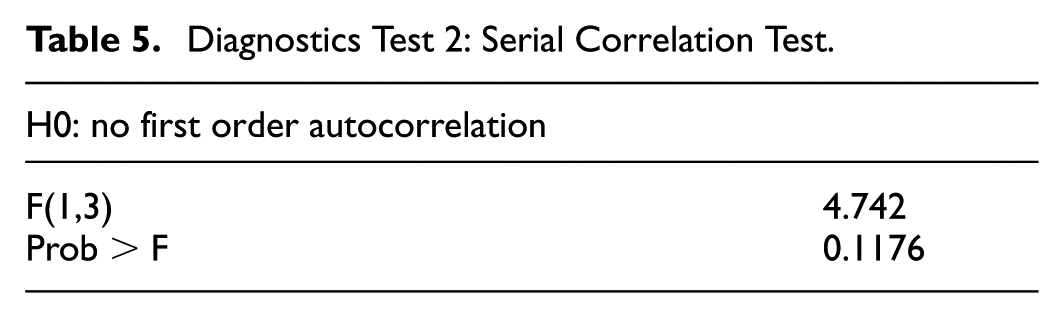
Several diagnostic tests were conducted, including assessments for multicollinearity and serial correlation. Table 4 reports the Variance Inflation Factor (VIF) values for the independent variables. While most variables fall below the conventional threshold of 10, the VIF for ln(TO) is 12.18, suggesting a potential multicollinearity concern. To address this, we interpret the results with caution and note that multicollinearity does not bias the coefficient estimates, but it may inflate standard errors and reduce statistical significance. Given that ln(TO) is a theoretically important control variable, it is retained in the model. Nevertheless, the robustness of the results was further examined by excluding ln(TO) in an alternative specification, and the results reported in Appendix Table A1 confirm that the main findings remain consistent.
Diagnostics Test 1: Multicollinearity.

Table 5 confirms the absence of first-order autocorrelation, as the p-value is not statistically significant. This suggests that the residuals are not correlated over time, thus validating the regression assumptions. Overall, these diagnostic test results affirm that the empirical model performs robustly with respect to multicollinearity and serial correlation, thereby enhancing the robustness and credibility of the findings.
Diagnostics Test 2: Serial Correlation Test.
To address the potential confounding effect of the COVID-19 pandemic, we re-estimated the models excluding the years 2020 to 2022. The results, reported in Appendix Table A2, remain broadly consistent with our baseline findings. The signs and magnitudes of the estimated coefficients are stable across specifications, with only a minor difference: the coefficient of FDI becomes statistically insignificant in the pooled OLS and spatial error models.
Conclusion and Policy Implications
The trade war between the United States and China, initiated in 2018, has profoundly disrupted the global production network. The economic shockwaves from this conflict have not only impacted the US and China but have also reverberated through all trading partners integrated into the global supply chain. The current economic landscape, characterized by production fragmentation and dominated by vertical intra-industry trade, has proven particularly susceptible to such disruptions.
Empirical evidence from this study indicates that FDI from China to ASEAN-4 member countries has a positive and significant effect on VIIT. While the trade war variable itself is statistically insignificant in the regression, the relocation of production from China to ASEAN-4 is likely to mitigate the negative impact on China, as Chinese FDI promotes efficiency-seeking investment and stimulates VIIT within the region. The results are further supported by spatial analysis, which demonstrates significant spillover effects, indicating that increases in VIIT in one ASEAN-4 country positively influence trade in neighboring countries. These findings are consistent with previous studies, such as Fukao et al. (2003) and Yong et al. (2019), who highlight the role of efficiency-seeking FDI in driving intra-industry trade in East Asia.
The evidence also aligns with Dunning’s internalization theory, which posits that firms internalize foreign operations to exploit economies of scope, diversify risks, and enhance production efficiency. In the ASEAN-4 context, Chinese FDI facilitates production fragmentation while simultaneously generating positive spillovers, underscoring the integrated nature of regional production networks. This highlights the critical importance of building resilient supply chains within ASEAN-4, as emphasized by Hashiguchi et al. (2021). A more robust and diversified regional supply chain would reduce the vulnerability of ASEAN to external economic shocks.
Based on these findings, policy recommendations can be more precisely targeted. ASEAN governments should enhance supply chain resilience by investing in cross-border infrastructure, logistics, and digital connectivity to facilitate smoother production relocation and maximize spillover benefits. Policymakers should also promote intra-ASEAN cooperation through harmonized trade regulations and investment incentives to ensure that the benefits of Chinese FDI are equitably distributed. Additionally, diversification strategies in production and export markets are crucial for reducing vulnerability to external shocks, including geopolitical tensions and trade conflicts. Institutional actors, such as the ASEAN Secretariat, should develop contingency frameworks to coordinate responses to supply chain disruptions and strengthen the region’s collective bargaining power. Furthermore, policies that support sustained economic growth, such as investing in technology, human capital, and infrastructure, will enhance domestic demand and buffer ASEAN economies against external shocks, further stabilizing VIIT.
However, the negative coefficients for spatial FDI and GDP indicate the presence of intra-regional competition, highlighting the need for both China and ASEAN member countries carefully assess market dynamics to prevent counterproductive spillover effects. This finding also suggests that ASEAN integration efforts, such as the ASEAN Economic Community Blueprint 2025, should focus on deeper coordination to balance competition and cooperation, ensuring that FDI contributes to collective regional gains.
Finally, this study has limitations. The analysis is based on a relatively short panel (2003–2022) due to data constraints, which restricts the number of explanatory variables and the ability to establish a fully verified causal chain. Future research should extend the dataset over a longer period and incorporate additional variables to more rigorously assess the mechanisms linking FDI, production relocation, and trade resilience.
Footnotes
Appendix
Robustness Check: Excluding COVID-19 Years (2020–2022).

| (1) | (2) | (3) | (4) | |
|---|---|---|---|---|
| Determinants | Pooled OLS | Spatial Error Model | Spatial Lag Model | Spatial Durbin Model |
| Intercept | 1.04 (7.36)*** | 1.03 (7.16)*** | 0.99 (6.84)*** | 0.76 (6.69)*** |
| ln(FDI) | −0.02 (−1.67) | −0.02 (−1.62) | −0.02 (−1.79)* | 0.02 (2.63)** |
| ln(GDP) | 0.17 (3.47)*** | 0.16 (3.17)*** | 0.17 (3.35)*** | 0.29 (6.35)*** |
| INFRA | −0.07 (−4.25)*** | −0.07 (−4.23)*** | −0.08 (−4.31)*** | −0.02 (−1.37) |
| WAR | 0.02 (0.43) | 0.03 (0.46) | 0.02 (0.38) | 0.03 (0.76) |
| W*ε | 0.22 (0.48) | |||
| W*ln(VIIT) | 0.12 (1.22) | 0.91 (6.91)*** | ||
| W*ln(FDI) | −0.09 (−7.87)*** | |||
| W*ln(GDP) | −0.24 (−4.26)*** | |||
| W*INFRA | −0.07 (-1.48) | |||
| R 2 | 0.59 | 0.59 | 0.60 | 0.82 |
| Adjusted R2 | 0.57 | 0.56 | 0.57 | 0.79 |
| AIC | −0.98 | −0.96 | −0.98 | −1.66 |
, **, and * denote significance at the 1%, 5%, and 10% levels, respectively. Values in parentheses are t-statistics.

Ethical Considerations
Ethical approval was not required as all data used in this study were obtained from publicly available sources.
Author Contributions
Mui Yin Chin was responsible for establishing the research issue and leading the discussion of the findings. Sheue Li Ong identified the appropriate methodology for the study and performed all relevant regression analyses. Lee Peng Foo conducted a comprehensive review of the existing literature and recommended policy implications based on the study’s results.
Funding
The authors disclosed receipt of the following financial support for the research, authorship, and/or publication of this article: This work was supported by from the Tunku Abdul Rahman University of Management and Technology Internal Research Grant [Grant No. 83512].
Declaration of Conflicting Interests
The authors declared no potential conflicts of interest with respect to the research, authorship, and/or publication of this article.
Data Availability Statement
The data underlying the results of this study can be accessed from the corresponding author upon reasonable request.