




Abstract
In an increasingly experience-driven tourism market, the need to understand how expectations and experiences interact to shape future behavior remains underexplored. Based on the theory of tourism experience quality and expectancy disconfirmation, this paper employs mediation and moderation analyses to examine the impact of tourists’ expectations, experiences and satisfaction on their intention to revisit. Data were collected via a questionnaire survey from 699 tourists. The findings indicate that tourists’ travel experiences influence their intention to revisit both directly and indirectly with satisfaction serving as a mediator. Tourists’ expectations moderate the relationship between travel experience and satisfaction. This research underscores the dominant role of tourism experience in shaping tourists’ behavioral intentions while highlighting the varying effects of expectations across different pathways. The study enhances the understanding of how key psychological factors jointly influence revisit intentions and offers practical implications for improving destination marketing and management.
Plain Language Summary
This study explores what makes tourists want to return to a destination. It looks at how their expectations before the trip, the actual experiences they have during the trip, and how satisfied they feel afterward all work together to influence their decision to come back. Researchers surveyed 699 tourists to understand these relationships. The results show that good travel experiences strongly encourage tourists to return. Tourists who have enjoyable or memorable trips are more likely to want to revisit that place. Satisfaction plays a key role in this—people who are happy with their experience are more likely to return. In this way, satisfaction acts like a bridge between the travel experience and the decision to come back. Interestingly, what tourists expect before the trip can change how their actual experience affects their satisfaction. For example, if the trip turns out better than expected, tourists feel even more satisfied. But if the trip does not meet their expectations, they may feel disappointed—even if the trip was objectively good. Overall, this research shows that while expectations matter, the actual experience is the most important factor in shaping whether someone will want to return to a place. The findings can help tourism businesses and destination managers focus on creating better visitor experiences and managing expectations through accurate marketing and communication.
Keywords
Introduction
Sustainable tourism has become a cornerstone of modern tourism development, emphasizing the balance between economic growth, environmental preservation, and the safeguarding of cultural heritage (Sigala, 2020). Destinations striving for long-term viability must minimize negative impacts while maximizing socio-economic benefits. A key aspect of this paradigm is the attraction and retention of visitors, with revisit intentions playing a critical role. Repeat visitors contribute more to a destination’s economy, engage more deeply with the local culture, and require fewer promotional resources, making revisit intentions a crucial metric for sustainability in tourism (Nguyen et al., 2025).
Despite its significance, the mechanisms behind tourists’ revisit intentions remain insufficiently explored (Rasoolimanesh et al., 2022). Existing studies often focus on isolated factors, such as service quality or destination image, without considering how these factors interact (Duan & Wu, 2024; Su & Huang, 2018). A comprehensive framework is needed to integrate these factors and better understand their collective impact on revisit behavior.
This study addresses these gaps by examining how tourist experiences, satisfaction, and expectations influence revisit intentions. Specifically, it explores whether satisfaction mediates the relationship between experience and revisit intention, and how expectations moderate this process. The study focuses on the context of Beijing, offering insights into its unique tourism landscape and contributing to both local and broader theoretical discussions on sustainable tourism.
Tourism expectation as an antecedent variable has a great influence on the transformation path from tourism experience to satisfaction (Chaoyi et al., 2025). According to empirical analyses, tourists’ antecedent expectation significantly moderates tourist experience, which in turn affects tourist satisfaction and ultimately acts on the intention to revisit. However, the existing literature is limited in describing the specific mechanisms of this process, and there is a lack of systematic guidance on how to effectively utilize the moderating effect of tourists’ expectations to enhance the quality of tourism experience and satisfaction, and thus promote tourists’ intention to revisit. Although many scholars have recognized the existence of mediating effects between tourist experience, satisfaction, and intention to revisit, most studies have focused on a single linear relationship (Wang & Li, 2023), and less on the key variable of tourists’ expectations to explore its impact on the transformation of tourists’ experiences to satisfaction in the moderating role. In conclusion, past studies have lacked a comprehensive and in-depth understanding of the multidimensional interactions between tourist experience, satisfaction, and revisit intention (Seow et al., 2024). Although the existing literature mentions the impact of tourists’ expectations on the perception of experience, there is a relative lack of research in specifically quantifying its moderating mechanism on the efficiency of the conversion from tourists’ experience to satisfaction (Bagheri et al., 2024). In terms of tourist satisfaction and revisit intention, it has been established in the literature that there is a positive correlation between tourists’ satisfaction and their revisit intention (Oliver, 1980) However, whether expectations have a moderating role in this process remains a relatively unexplored area, and thus there is room for further research on this topic.
The motivation for this research is twofold. First, as global tourism becomes increasingly competitive, destinations must identify strategies to differentiate themselves and foster loyalty among visitors. Understanding the drivers of revisitation is critical for developing policies and practices that align with the principles of sustainability. Second, this study seeks to fill the theoretical gaps in the literature by exploring the interconnected roles of expectations, experiences, and satisfaction. By situating this investigation within the context of Beijing, a culturally and historically significant destination, the research provides both localized insights and broader theoretical contributions.
Beijing, as one of the world’s premier tourist destinations, exemplifies the challenges and opportunities of sustainable tourism. However, the existing literature on revisitation often overlooks the sample design. Many studies fail to clarify sample size calculations and tend to rely on homogeneous samples, often focusing on specific age groups (Han et al., 2022).This limits the generalizability of their findings. This study addresses these shortcomings by employing a scientifically designed sample with balanced structure, ensuring the reliability and broader applicability of its conclusions.
Theoretical Background and Model Development
Tourism Experience Quality Theory
The theory of tourism experience quality emphasizes the assessment of tourists’ evaluations regarding the quality of their travel experiences and the impact of these evaluations on their satisfaction levels (Tian, 2019b). This framework is particularly relevant to the current study, as it provides a robust foundation for examining the links among travel experience, satisfaction, and revisit intention. Existing research has found that the measurement of tourism experience quality can be conducted through two methods: real-time measurement and retrospective evaluation (Tian, 2019a). While real-time approaches (e.g., self-reporting, observation, and psychophysiological testing) capture immediate reactions, retrospective evaluations are more suitable for assessing overall perceptions of past experiences. The study showed that the retrospective evaluation method used satisfaction or tourism quality scale and tourism experience scale are often used to establish the relationship between tourism experience and tourists’ intention to visit again (Bayih & Singh, 2020; Hung et al., 2021). This study focuses on the mechanisms through which tourism experience influences satisfaction and revisit intention, as well as the moderating role of expectancy disconfirmation. Because the interest lies in the overall experience and its effect on future behavioral intentions, retrospective evaluation is adopted, and tourism experience quality theory serves as the guiding framework. This framework provides a coherent basis for explaining the relationships among experience, satisfaction, and revisit intention, thereby supporting the empirical analyses in this research.
Expectancy Disconfirmation Theory
In 1980, Oliver R. L. introduced the Expectancy Disconfirmation Theory (EDT), which provides a significant theoretical framework for understanding consumer behavior. The theory posits that expectations act as a benchmark for evaluating actual experiences: when actual performance exceeds expectations, positive disconfirmation occurs; when it falls short, negative disconfirmation arises. These discrepancies shape consumer satisfaction, which in turn influences attitudes and future behavioral intentions (Oliver, 1980). The perception of tourism products is often influenced by various factors, including service quality, emotional responses, and destination image. Consequently, tourists’ overall experiences and satisfaction are shaped by the interplay of these factors. Research indicates a direct relationship between increased satisfaction and tourists’ intentions to revisit. Specifically, when tourists undergo positive travel experiences, their loyalty to the destination tends to increase, leading to a higher likelihood of returning. Furthermore, by quantifying the gap between tourists’ expectations and actual experiences, one can effectively assess the degree of expectancy disconfirmation, thereby analyzing how it impacts tourists’ satisfaction and loyalty. Therefore, applying expectancy disconfirmation theory to tourism research is feasible, and quantifying the differences between actual experiences and expected feelings can effectively evaluate the influence of expectancy disconfirmation (Kim et al., 2024; Tian, 2019b).This study will explore the moderating effects of the discrepancy between actual experiences and expected feelings on travel experiences, satisfaction, and the intention to revisit, based on the theory of expectancy disconfirmation. Moreover, previous research has applied EDT in consumer behavior but seldom explored its role in moderating tourism satisfaction and revisit intentions. This study will enhance the application of Expectancy Disconfirmation Theory within the tourism sector by empirically testing the moderating effects of tourists’ expectations on the relationship between their travel experiences and satisfaction. By revealing the significance of expectancy disconfirmation in tourism, this research will assist governments in optimizing services to enhance visitor satisfaction and loyalty.
Tourism Satisfaction and Tourism Experience
The study of travel experiences began in the mid-1960s, initially proposed by Boorstin, who defined it as a popular mode of consumption. By the 1980s, MacConnell developed the paradigm of “authenticity” in his work “The Tourist: A New Theory of the Leisure Class,” emphasizing that modern tourism places greater importance on experiences, particularly cultural experiences (Rasoolimanesh et al., 2022). Studies have shown that tourism experience is affected by personal characteristics, travel patterns, safety measures, tourism resources and other factors (Li et al., 2023). Based on this, this paper takes Beijing, the capital of China, as the research object, and believes that tourism experience is the feedback of tourists during the travel process, which will further affect tourists’ evaluation and behavior intention after travel.
The concept of tourist satisfaction has evolved from customer satisfaction, representing a quantification of tourists’ subjective perceptions and psychological experiences (Dai et al., 2023). Specifically, tourist satisfaction represents a nonlinear functional relationship between the expectations of tourists before their trip and their actual experiences afterward: when actual experiences exceed expectations, tourists feel satisfied; conversely, they feel dissatisfied when expectations are not met (Tian, 2019b). In the field of tourism research, the tourism experience is regarded as a key intermediary variable between tourism products and tourist satisfaction, playing a significant moderating role in shaping tourists’ overall perceptions and evaluations (Hosany et al., 2022). The tourism experience encompasses not only the series of activities and events that tourists encounter during their travels but also the emotional, cognitive, and behavioral interactions and exchanges between tourists and the destination. The quality of these interactions and exchanges, which defines the quality of the tourism experience, directly influences tourists’ evaluations of tourism products and services, ultimately shaping their level of satisfaction. Some previous studies have demonstrated a strong positive correlation between the quality of tourism experiences and visitor satisfaction. When tourists engage in enjoyable, memorable, and valuable experiences during their travels, they are likely to provide higher evaluations of tourism products and services, resulting in increased satisfaction (Liu et al., 2023; Rasoolimanesh et al., 2021). Conversely, if the quality of the tourism experience is poor, tourists may feel disappointed and dissatisfied with the products and services, leading to a decrease in satisfaction. The Tourism Experience Quality Theory and Expectancy Disconfirmation Theory both emphasize the central role of tourism experience in shaping tourist satisfaction. The quality of tourism experiences directly influences the satisfaction level of tourists, which in turn affects their intention to revisit a destination. Additionally, the expectancy disconfirmation moderates how these experiences impact satisfaction. Based on the aforementioned theoretical and empirical studies, this paper proposes the following hypothesis:
Revisit Intention
The intention to revisit refers to the behavior of tourists planning to return to destinations they have previously visited (Shang et al., 2021). Bigne’s research reveals the dual dimensions of revisit intention, encompassing both the willingness to return and the willingness to recommend (Bigné et al., 2001). Furthermore, Tosun posits that revisit intention is synonymous with loyalty to the destination (Tosun et al., 2015); when tourists are satisfied with the price, quality, and experiential value of a destination, they are more likely to engage in repeat consumption or recommend it to others. Building on this foundation, when tourists achieve a high level of travel experience, their willingness to recommend and revisit the destination becomes significantly stronger (Hu & Shen, 2021). In a study of tourists’ memories of wildlife park experiences, the study discovered that positive tourist experiences have a substantial impact on the intention to revisit (Lin, 2024). Therefore, positive travel experiences can enhance tourists’ sense of belonging, thereby fostering their desire to return. This paper proposes the following hypothesis:
In the field of tourism, the industry provides unique opportunities for travelers to create positive personal memories through various travel experiences, thereby facilitating the formation of these memories. The role of satisfaction in this process cannot be overlooked. Studies have pointed out a direct positive relationship between satisfaction and the intention to revisit, indicating that satisfied tourists are more likely to choose to return (Tian, 2019b). Furthermore, research has shown that higher levels of satisfaction are often closely associated with intense emotional experiences; positive travel experiences typically lead to greater satisfaction, which in turn enhances tourist loyalty and fosters the intention to revisit (Kim et al., 2024) This suggests that satisfaction is not only a product of the travel experience but also a crucial mediating factor in promoting the intention to return. Therefore, this paper proposes the following hypotheses:
The richness and quality of tourism experiences may vary depending on the degree of Expectancy disconfirmation. For instance, if tourists have high expectations for a cultural event but find the actual experience to be mediocre, this will lead to negative inconsistency, significantly diminishing satisfaction. Conversely, if their actual experience exceeds expectations, positive inconsistency will enhance satisfaction (Minh et al., 2023). Satisfaction is not solely based on a singular experience; it also involves the overall cognitive evaluation of the experience by the tourists. When tourists perceive their experience to be significantly better than expected, they may reassess and reinforce the positivity of that experience, thereby enhancing their perception of satisfaction (Kim et al., 2024). Expectancy disconfirmation moderates the intensity of satisfaction, elevating tourists’ cognitive recognition of positive experiences and the satisfaction derived from them, which may subsequently influence their behavioral intentions, including the intention to revisit. When tourists feel satisfied, they are more likely to consider returning to the same destination or engaging in similar activities. If expectancy disconfirmation leads to an increase in satisfaction, the willingness to revisit will also correspondingly increase. This process indicates that expectancy disconfirmation may play a moderating role in the relationship between tourism experience and satisfaction, as well as between satisfaction and the intention to revisit. Therefore, this paper proposes the following hypotheses:
In sum, our proposed conceptual research model is shown in Figure 1.

Conceptual research model diagram.
Research Method
Variable Measurement
The survey (see Appendix) form for this study was developed from established scales in tourism and consumer behavior research and adapted to the context of Beijing. Items covering tourism experience, satisfaction, revisit intention, and expectancy disconfirmation were taken from prior studies. All variables are rated using a 5-point Likert scale (e.g. 1 = “strongly disagree,” 5 = “strongly agree”).
Dependent Variable: Revisit Intention. In the tourism domain, revisit intention refers to the subjective likelihood of a traveler returning to a specific destination in the future. It is closely related to behavioral intention, which indicates a traveler’s plan or intention to engage in a specific behavior within a defined timeframe. Many scholars have utilized tourists’ revisit intention as a metric for measuring behavioral intention in tourism studies. For example, some scholars used repeat intention in their research (Tabaeeian et al., 2023), while some scholars evaluated behavioral intention by the return rate and recommendation rate of tourists (Chen et al., 2022; Zhao et al., 2022). Currently, there are two primary methods for measuring revisit intention: the first considers only the willingness to revisit, while the second takes into account both revisit intention and recommendation intention. This paper adopts the latter conceptualization, primarily referencing the measurement methods of scholars Prayag et al. (2017) and Lv et al. (2020), while contextualizing the items within the tourism setting of Beijing.
Independent Variable: Tourism Experience. Existing tourism experience scales include the Tourism Experience Satisfaction Scale, Destination Experience Scale, and Service Quality Scale, among others. This paper references the Tourism Experience Scale by Oh et al. (2007) and the Unforgettable Tourism Experience Scale by Kim et al. (2012), integrating Beijing’s rich cultural and natural conditions to conduct a comprehensive assessment across four dimensions: accommodation, shopping, cultural attractions, and transportation. As a popular tourist destination, factors such as accommodation, shopping, cultural attractions, and transportation are crucial to the visitor experience in Beijing. Firstly, regarding accommodation, Beijing offers a plethora of high-quality hotels and guesthouses, providing visitors with a wide range of options. By evaluating the comfort, hygiene, service quality, and surrounding facilities of accommodations, one can ascertain the living and emotional experiences of tourists during their stay. Secondly, in terms of shopping, Beijing’s commercial districts and specialty markets present a diverse shopping environment for visitors. Tourists can gauge their entertainment and aspirational experiences in shopping by assessing the cleanliness of the environment, product quality and variety, price fairness, and service attitude. Concerning cultural attractions, Beijing boasts a wealth of cultural heritage sites, such as the Forbidden City, the Great Wall, and the Summer Palace. By evaluating the interpretive services, tour routes, and visitor engagement at these cultural sites, one can determine tourists’ cultural experiences, ethnic ambiance experiences, and learning experiences. Finally, in terms of transportation, Beijing’s public transport system and taxi services offer convenient travel options for visitors. Assessing the convenience, safety, and comfort of transportation helps evaluate tourists’ natural experiences and overall survival experiences. In summary, this study will delve into the tourist experience through four key dimensions: accommodation, shopping, cultural attractions, and transportation. These dimensions encompass the most critical elements that tourists focus on during their travels, providing a comprehensive reflection of the quality of their travel experience. Additionally, the cultural, emotional, ethnic, existential, natural, educational, experiential, entertainment, and aspirational dimensions embedded within these aspects represent significant goals pursued by tourists throughout their journeys. By continuously optimizing and enhancing the performance in these areas, the quality of the tourism experience in Beijing can be further improved, thereby attracting more visitors.
Mediating Variable: Satisfaction. Tourist satisfaction is a holistic assessment and evaluation of various aspects such as the destination, products, and services experienced during the trip, serving as a psychological comparison between tourists’ pre-trip expectations and their actual experiences. Scholars typically employ two methods to measure tourist satisfaction: one assesses overall satisfaction (Mikulić, 2024), while the other measures specific factors individually (Tu et al., 2023). This paper is based on previous studies (Huang & Bu, 2022; S. Yang et al., 2024; Yin et al., 2023), which treats the travel experience as a precursor variable to tourist satisfaction and conducts a detailed measurement, followed by an assessment of the overall perception of tourist satisfaction. Regarding overall satisfaction, based on the understanding of satisfaction by Lai and Chen (2011), two indicators are utilized: overall satisfaction, satisfaction compared to expectations, and satisfaction relative to similar products.
Moderating Variable: Expectation Discrepancy. Expectation discrepancy refers to the difference between consumers’ actual experiences and their anticipated standards for product performance. When consumers’ actual experiences exceed their expectations, it results in a positive discrepancy, known as a positive inconsistency; conversely, if the actual experience falls short of expectations, it manifests as a negative discrepancy or negative inconsistency. Existing research indicates that quantifying the difference between actual experiences and expected feelings can effectively assess the impact of expectation discrepancy (Kim et al., 2024; Tian, 2019b). Therefore, this study measures expectation discrepancy by calculating the difference between actual experience and expected experience values.
In line with previous literature (Dai et al., 2023), this study considers key factors influencing tourist satisfaction and the intention to revisit, selecting the following variables as control variables: gender, age, occupation, education level, discretionary monthly income/amount, whether the individual is a resident of Beijing, composition of the travel group, and mode of travel. The definitions and measurement methods for these variables are presented in Table 1.
Variable Definition.

Data Collection
The subjects of this research were tourists visiting Beijing, and the first survey was conducted during the summer vacation period of July to August 2024.
The study design minimized risk to participants. The questionnaire collected only general tourism experiences and no personal or sensitive information. All responses were anonymous, used for academic purposes only, and stored securely. The research benefits outweigh its minimal risks. The study provides evidence to improve tourism services and experiences, offering value to society that justifies the small commitment from participants. Informed consent was obtained before participation. In the online survey, participants received a statement explaining the study’s purpose, anonymity, confidentiality, and voluntary nature. Proceeding with the survey implied consent. In the offline survey, the same statement was provided on the first page of the questionnaire, and verbal agreement was obtained before participants began.
Prior to data collection, the required sample size was estimated using G*Power 3.1. Based on existing literature, most effect sizes in tourism studies range from small to medium. Using a medium effect size (f2 = 0.10; Liu et al., 2023; S. Yang et al., 2024), a significance level of 0.05, and a power of 0.80, the minimum recommended sample size was 185.
Data collection was conducted in three rounds using a consistent combination of offline and online methods. The initial round took place from August 15 to 30, 2024. Offline questionnaires were distributed at culturally significant and high-traffic attractions in Beijing, specifically targeting tourists who had completed their visits and were resting near exits and rest areas to ensure they had sufficient time and experience. Concurrently, an online survey was administered via the “Wenjuanxing” platform. The questionnaire included a reverse-scored item (Question 26) to mitigate response bias, featuring statements such as “Next time, I will avoid deeply exploring Beijing,”“I will avoid traveling to Beijing in the future,” and “I will return to Beijing because of my experience this time.” All participants were required to complete the survey individually. After data cleaning, 299 valid responses were obtained.
Two subsequent rounds of data collection were carried out in September 2025 using the same questionnaire and procedures, yielding 200 valid responses each after cleaning. The first set of 200 responses was combined with the initial 299 to form a main dataset for analysis (N = 499). The second set of 200 responses was reserved exclusively for robustness testing.
Demographic data is shown in Table 2. In terms of demographic data, the gender ratio is relatively balanced, with males constituting 45.1% and females 54.9%. Among the respondents, 37.1% are aged 18 to 25, 34.5% are between 36 and 50 years, 14.4% fall within the 26 to 35 age range, 7.8% are under 18, and 6.2% are aged 51 and above. Regarding occupation, employees in enterprises and institutions represent 24.8%, students account for 18.0%, professional technical personnel make up 13.4%, freelancers constitute 14.2%, civil servants represent 10.0%, farmers account for 4.4%, retirees constitute 1.2%, and others account for 13.8%. In terms of educational attainment, 37.1% hold a bachelor’s degree, 22.2% have an associate degree, 23.4% possess a high school or vocational diploma, 9.6% have a master’s degree or higher, and 7.6% have completed junior high school or less. Regarding disposable monthly income, 26.3% earn between 1,001 and 3,000 yuan, 27.9% earn between 3,001 and 5,000 yuan, 23.8% earn between 5,001 and 10,000 yuan, 9.0% earn above 10,000 yuan, and 13.0% earn 1,000 yuan or below. Among the surveyed individuals, 62.3% are from outside Beijing, while 37.7% are local residents. In terms of travel groups, family outings account for 38.3%, trips with partners or friends make up 31.7%, solo travel constitutes 18.0%, business travel represents 2.4%, and other types of travel account for 9.6%. Regarding travel mode, 73.3% of respondents prefer independent travel, while 26.7% choose group tours.
Research Demographic Data.

Data Analysis Method
To test the research hypotheses, we employed IBM SPSS Statistics 27 as the primary statistical software, utilizing the PROCESS macro v4.2 (developed by Andrew F. Hayes) for the analysis of mediation and moderation effects. IBM SPSS Statistics is widely used in social science and behavioral research for its comprehensive data management, descriptive statistics, and inferential analysis capabilities (Rahman & Muktadir, 2021). The PROCESS macro v4.2, specifically designed for advanced mediation, moderation, and conditional process models, is a powerful tool for examining complex statistical relationships. It is particularly suitable for analyzing intricate causal paths and interactions under various conditions.
In this study, the PROCESS macro v4.2 was applied to investigate both mediation effects and moderation effects, ensuring the robustness and reliability of the analysis results. This tool has been extensively validated and applied across various behavioral science disciplines, making it a reliable choice for analyzing the complex relationships between variables.
Common Method Bias Test
To assess the potential issue of common method bias, Harman’s single-factor test was conducted. An exploratory factor analysis of all 50 items yielded six factors with eigenvalues greater than one. The first unrotated factor explained 27.320% of the total variance, which is below the conventional threshold of 40%. These results suggest that common method bias is not a major concern in this study.3.5 Reliability Analysis.
To evaluate the reliability and validity of the data, we start with a reliability analysis using Cronbach’s Alpha. In reliability analysis, a Cronbach’s Alpha coefficient generally reaching above .7 indicates high questionnaire reliability, allowing for further analysis. As shown in Table 3, the Cronbach’s Alpha coefficients for each dimension of this study’s questionnaire exceed .7, indicating overall high reliability.
Reliability Analysis.

Validity Analysis
Factor analysis is used to conduct validity analysis. Generally, a KMO value of 0.7 or higher is suitable for factor analysis. From Table 4, it can be seen that the KMO test result is 0.939 > 0.5, and Bartlett’s Test of Sphericity Sig is 0.000 < 0.05, indicating that the data are suitable for further analysis.
KMO and Bartlett’s Test.

Results
Descriptive Statistics
The descriptive statistical analysis results are shown in Table 5. The mean score of “experience” was 2.92 with a standard deviation of 0.73, ranging from 1.40 to 4.53, indicating a moderate level of travel experience among tourists in Beijing. “Expectation consistency” had a mean close to zero with a standard deviation of 0.30 and a range from −0.94 to 1.02, suggesting balanced expectations with both positive and negative deviations. “Satisfaction” showed a mean of 2.86 with a standard deviation of 0.90 and a range from 1.29 to 4.71, while “revisit intention” had a mean of 2.98 with a standard deviation of 0.91 and a range from 1.25 to 4.75. Overall, the results indicate moderate levels of experience, satisfaction, and revisit intention, with noticeable variation in expectation consistency.
Descriptive Statistics of Main Variables.

Mediation Effect
Stepwise regression was used to examine the mediation effects of experience, satisfaction, and intention. The regression results are displayed in Table 6. As shown in the first model, experience and satisfaction are positively correlated (t = 6.076, p < .001), supporting H1; from the second model, experience and intention are positively correlated (t = 12.913, p < .001), supporting H2; from the third model, both experience and satisfaction are positively related to intention (t = 11.488, p < .01; t = 4.593, p < .001), confirming the mediating role of satisfaction, thus supporting H3 and H4.
Stepwise Regression Analysis.

p < .001.
As indicated in Table 7, the confidence intervals for the main effect, mediation effect, and total effect do not include “0,” confirming the mediating role of satisfaction.
Main Effect, Mediation Effect, and Total Effect.

Moderating Effect
Using PROCESS Plugin Model 7 for interaction term testing, and the results are shown in Table 8 and Figure 2. The significance values of experience, expectation, and the interaction term between experience and expectation were all less than 0.05, indicating that expectation moderates the effect of experience on satisfaction. In addition, since the “β” values of experience and the interaction term between experience and expectation are both positive, expectation exerts a positive moderating effect on the relationship between experience and satisfaction.
Moderation Effects of Expectations.

p < .05. **p < .01. ***p < .001.
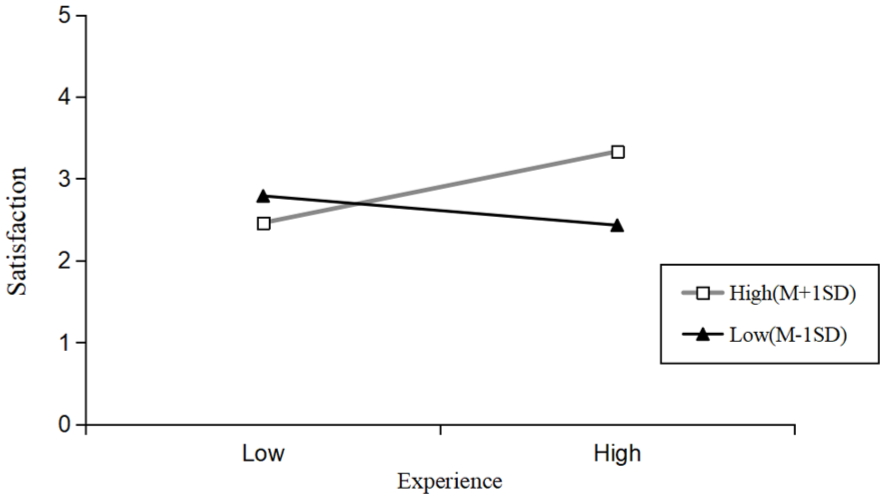
Regulatory role diagram of the moderation effect.
As shown in Table 9, the confidence intervals for the main effect, mediation effect, and total effect do not include “0,” and the effect value increases as the expectation value increases, confirming the positive moderating role of expectations. The slope under the high method is greater than that under the low method, further validating the positive moderating role of expectations.
Moderation Effect Testing.

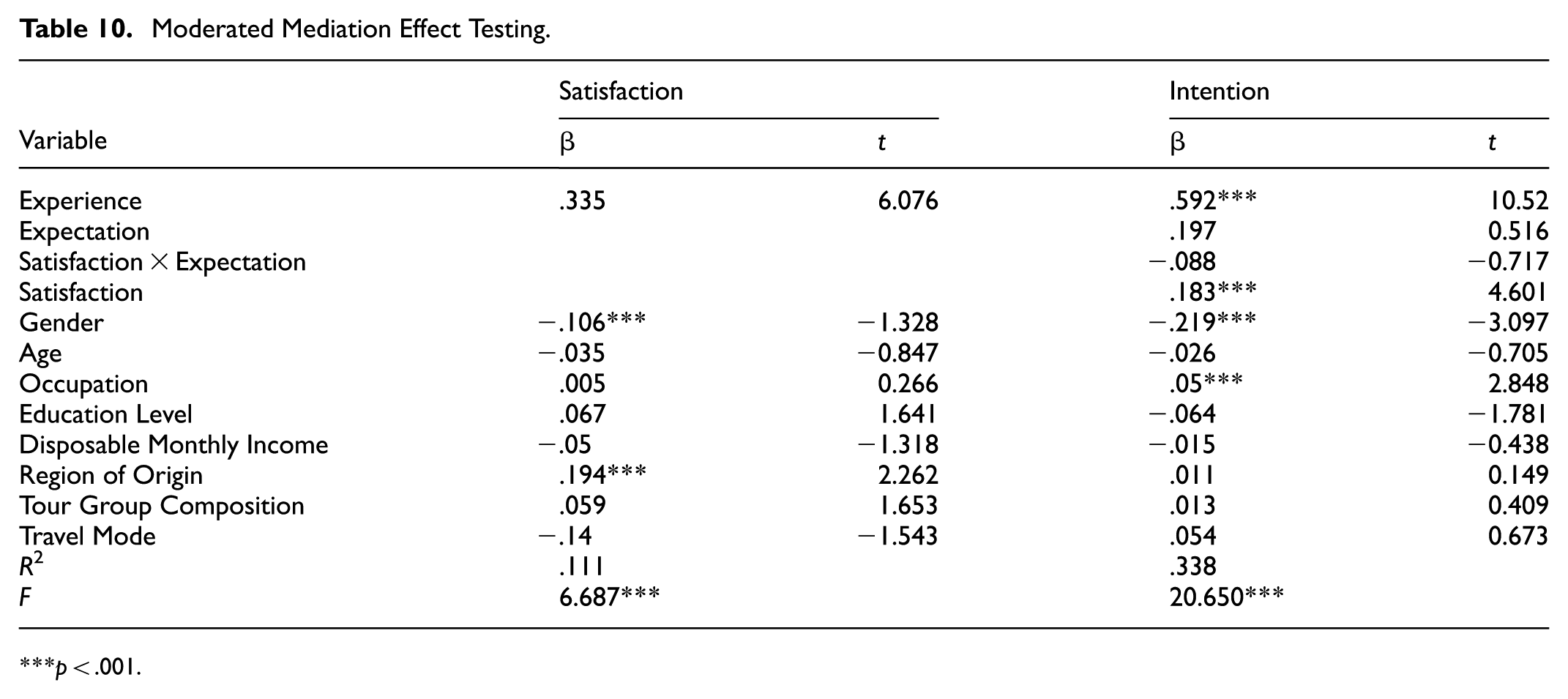
Using PROCESS Plugin Model 14 to test the moderated mediation effect, the results (Table 10) show that the significance value of the interaction term between satisfaction and expectation was greater than 0.05, indicating that expectation does not moderate the relationship between satisfaction and intention.
Moderated Mediation Effect Testing.
p < .001.
Robustness Test
To assess the robustness of the findings, we collected an additional 200 valid questionnaires in the same research setting and time period as the original survey. The measurement instruments, variable operationalization, and analytical procedures were kept identical to those applied in the main analysis.
Stepwise regression was employed to examine the mediation effects of experience, satisfaction, and intention using the robustness sample (N = 200), and the results are presented in Table 11. In the first model, experience positively predicted satisfaction (t = 2.423, p < .05), supporting H1. In the second model, experience positively predicted intention (t = 6.064, p < .001), supporting H2. In the third model, both experience and satisfaction positively predicted intention (t = 5.537, p < .001; t = 3.563, p < .001). This pattern confirms the mediating role of satisfaction, thereby supporting H3 and H4. These findings are consistent with the results from the main analysis (N = 499), confirming the robustness of the mediation effect.
Comparison of Mediation Effects Between Main Analysis and Robustness Test.

p < .05. ***p < .001.
Using PROCESS Model 7, the interaction effect of experience and expectation on satisfaction was tested in the robustness sample. The results indicate that experience, expectation, and their interaction term all had significant effects on satisfaction (p < .05), and the positive sign of the interaction term confirmed that expectation positively moderated the relationship between experience and satisfaction (Table 12). This finding is consistent with the main analysis, suggesting that the moderation effect is robust.
Comparison of Moderation Effects (Model 7) Between Main Analysis and Robustness Test.

p < .05. **p < .01. ***p < .001.
Using PROCESS Model 14, the interaction term between satisfaction and expectation was tested. The results show that the significance value of the interaction term was greater than 0.05, indicating that expectation does not moderate the relationship between satisfaction and intention (Table 13). This non-significant result is also consistent with the main analysis, further supporting the robustness of the findings.
Comparison of Moderation Effects (Model 14) Between Main Analysis and Robustness Test.

p < .01. ***p < .001.
The results of the robustness test show that the hypothesized mediation, moderation, and moderated mediation effects remain consistent with those obtained from the original sample of 499 respondents. These findings indicate that the core conclusions of this study are stable and not sensitive to sample differences, thereby enhancing the credibility and generalizability of the results.
Conclusions
Research Conclusions
This study first collected 499 valid responses from tourists visiting Beijing and used these data to develop and test a theoretical model linking tourism experience, satisfaction, and revisit intention, grounded in expectation consistency theory and a moderated mediation framework. To further verify the robustness of the model, an additional 200 valid responses were collected in a second survey. The same analytical procedures were applied to this new dataset, and the results consistently supported the validity and stability of the proposed model.
First, it is well-established that travel experience positively influences tourists’ revisit intentions (Rasoolimanesh et al., 2022; Seow et al., 2024); however, this study provides empirical verification of this relationship in the context of Beijing. Beyond confirming prior findings, the study examines the moderating role of tourists’ expectations in shaping the link between travel experience and satisfaction. It further investigates how expectations condition the broader mechanism connecting experience, satisfaction, and revisit intention, thereby offering deeper insights into the drivers of tourist loyalty in Beijing.
Second, the results of the study proved that a good tourism experience significantly enhances tourists’ willingness to revisit. It is reflected in the emotional satisfaction that tourists derive from each trip. In the tourism industry, the traveler experience has been widely recognized as a central factor in driving the desire of tourists to revisit. The tourism experience involves a variety of elements, including the physical environment, service quality, social interactions, cultural encounters, and emotional responses. Tourism experience is a complex process that integrates sensory, emotional, cognitive, and social interactions, and this multidimensional experience can significantly enhance the emotional bond between tourists and destinations. This finding of the present study not only validates previous research but also deepens the understanding of the relationship between tourists’ experience quality and their intention to revisit. This paper points out that when tourists experience a positive and profound experience during their journey, they not only develop a strong sense of contentment and high satisfaction but also tend to internalize this experience as a plan for future revisits. In this regard, the research in this paper provides new theoretical support for maximizing the value of the tourism experience.
Third, tourist satisfaction plays a crucial mediating role between tourist experience and revisit intention. Many studies have pointed out that tourists’ satisfaction is a key variable affecting their intention to revisit (Bi et al., 2024). However, the study in this paper specifically quantifies the significance of this mediating role and verifies the accelerating effect of satisfaction in the influence of tourist experience on the intention to revisit through a stepwise test. The study shows that when tourists have a positive experience in traveling, their satisfaction increases, which is not only a reflection of the actual experience of tourists but also reflects the deep satisfaction of tourists’ psychological needs. A good travel experience can enhance tourists’ overall impression of the destination through the interaction of emotion and cognition. When tourists’ satisfaction reaches a certain level, their loyalty to the destination increases significantly, and their expectations for future trips also rise. This feedback mechanism reflects a positive cyclical relationship: when tourists are more satisfied, their willingness to share on social media and their enthusiasm to recommend it to others will also increase, resulting in favorable word-of-mouth communication and further attracting more potential tourists. This finding not only provides important insights for the tourism industry but also offers a new direction for related marketing strategies, emphasizing the importance of enhancing tourist satisfaction.
Finally, in the chain of tourists’ experience, satisfaction and revisit intention, the moderating role of expectation cannot be ignored. The research of this paper found that high expectations can not only strengthen the positive effect of tourists’ experience, but also strengthen tourists’ intention to revisit by enhancing their satisfaction, and this paper found that a certain degree of expectations before traveling can stimulate tourists’ desire to explore, making their perception sharper and their emotional experience richer during traveling. According to the theory of Expectancy disconfirmation, the gap between tourists’ expectations and actual experiences will affect their satisfaction, and the research in this paper further validates this theory. Empirical data show that reasonable expectation setting can effectively enhance tourists’ emotional and cognitive satisfaction after the experience. The feedback mechanism of a high-expectation experience not only enhances tourists’ overall satisfaction. It also maximizes the consistency between tourists’ expectations and the actual tourism experience, thereby enhancing their future confidence in the decision to revisit. In contrast to previous studies (Manthiou et al., 2023), this paper’s study highlights that expectations are not only the basis of anticipatory feelings but also directly modulate the impact of tourists’ experience quality on satisfaction. This finding provides empirical support for the formulation of expectation management strategies, which can enable decision-makers to better create experiences for tourists that exceed their travel expectations, and in turn, enhance tourists’ willingness to revisit.
Theoretical Contributions
The main contributions of this study lie in two areas. First, it innovatively proposes a theoretical model centered on expectancy disconfirmation as a core moderating variable, revealing how differences between tourists’ expectations and actual experiences during cultural encounters influence their revisit intentions. This model enriches the application of expectancy disconfirmation theory in cultural tourism and provides new perspectives for understanding tourist behavior and psychological mechanisms, aiding tourism managers and practitioners in grasping tourist needs more accurately and optimizing cultural tourism products and services. Second, through empirical analysis, the study verified the mediating effect of satisfaction in the cultural tourism industry. Specifically, it was found that tourists’ travel experiences influence their revisit intentions indirectly through satisfaction. This finding underscores the importance of satisfaction in the cultural tourism industry, as it not only relates to tourists’ current experiences but also profoundly impacts their future behaviors and willingness to recommend. Thus, this study offers significant implications for practitioners in the cultural tourism industry, indicating that enhancing tourist satisfaction can effectively strengthen revisit intentions, promoting sustainable development and word-of-mouth promotion.
Managerial Implications
The managerial implications of this research are significant for tourism destinations, especially in competitive markets like Beijing. Given the impact of tourist expectations on satisfaction and revisit intention, tourism managers can develop more refined marketing strategies that focus on managing and aligning tourist expectations with the actual experiences offered.
In today’s tourism industry, offline experiences are no longer the sole focus due to the rise of streaming media promotions and the convenience of online review dissemination. As the cultural center, Beijing should seize the new trend of public opinion tourism and focus on precisely positioning tourist expectations, deepening tourism experiences, and optimizing satisfaction feedback mechanisms to build a complete tourism chain model of expectation-experience-satisfaction-revisit intention. Below are detailed recommendations.
Precisely Positioning Tourist Expectations and Enhancing Experience Quality
Tourist expectations play an important role in the impact of tourism experiences on satisfaction. To effectively meet tourists’ diverse needs, tourism managers need to adopt refined market research and data analysis strategies, scientifically segmenting tourist groups. Specifically, clustering analysis methods can be used to identify preferences and needs based on gender, age, and occupation. For example, female tourists may prefer cultural shopping experiences, male tourists may favor historical sites and outdoor adventures, young tourists may seek freedom in travel, middle-aged tourists prioritize comfort during travel, student groups focus on cost-effectiveness, and corporate employees value team-building venues. Based on these insights, managers can design customized tourism products such as culturally-rich shopping tours for women, integrated historical and adventure routes for men, tailored offerings for young and middle-aged tourists, and specific needs of students and corporate groups, achieving precise alignment between products and markets.
Deepening Tourism Experiences and Enhancing Tourist Satisfaction
Positive tourism experiences significantly enhance tourists’ revisit intentions. Beijing, with its rich cultural heritage and ecological resources, offers vast opportunities for innovation and upgrades in tourism products. Managers should delve into the cultural connotations and ecological values of these resources, designing and launching upgraded cultural routes that feature richer historical narratives and deeper cultural interpretations to enhance tourists’ cultural immersion. Interactive cultural experience activities are also effective ways to boost tourist participation. Managers can use virtual reality and augmented reality technologies to create immersive cultural scenes where tourists can deeply perceive the charm of culture through interaction. Moreover, optimizing guide services and tourism environmental management is crucial for enhancing tourist experiences. Managers should strive to improve the professionalism and personalization of guide services by training guides to enhance their cultural literacy and communication skills while introducing intelligent guidance systems to provide customized tour suggestions and route planning. In terms of tourism environmental management, adding special tourist buses and improving accessible public transportation facilities enhances tourists’ travel convenience and shows care and respect for special groups.
Optimizing Satisfaction Feedback Mechanisms and Promoting Revisit Intentions
Tourist satisfaction plays a critical mediating role between tourism experiences and revisits intentions. Tourism managers should establish a diversified data collection system, including online surveys, social media monitoring, and on-site feedback, ensuring comprehensive and timely data. Using data mining and sentiment analysis techniques, regularly analyze tourist satisfaction data to identify service strengths and weaknesses. Based on the analysis results, guide tourism enterprises in formulating and implementing targeted improvement measures. Additionally, integrating tourist satisfaction data into employee performance evaluation systems and establishing incentive mechanisms can encourage continuous service quality improvements, ensuring tourists receive high-quality tourism experiences, thereby enhancing tourist satisfaction and stimulating revisit intentions.
Limitations and Suggestions for Future Research
Despite its contributions, this study has limitations that should be addressed in future research. First, the sample used in this study was collected from tourists visiting Beijing during a specific period, which may not fully represent the broader tourist population. Future studies could expand the sample to include tourists from other destinations or longer time frames to improve the generalizability of the findings. Second, the current research focused on four key factors: experience, satisfaction, expectations, and revisit intention (Vasist & Krishnan, 2024), but future studies could incorporate additional variables, such as destination image, social influence, and tourist personality traits, to provide a more holistic understanding of revisit intentions. Lastly, future research could explore the longitudinal effects of expectations, experiences, and satisfaction. Understanding how these factors evolve over time, particularly among repeat visitors, could further refine the theoretical framework and offer practical insights into long-term destination loyalty. Future research should consider adopting more rigorous and diverse methods to overcome these limitations and improve the scientific rigor and practicality of the research.
Footnotes
Appendix

Ethical Considerations
The study was conducted in accordance with the core practices of Committee on Publication Ethics and approved by College of Economics and Management of Beijing University of Technology on July 10th, 2024.
Consent to Participate
Respondents gave written consent for review and signature before starting interviews.
Funding
The authors disclosed receipt of the following financial support for the research, authorship, and/or publication of this article: This research was supported by the National Natural Science Foundation of China [72274010].
Declaration of Conflicting Interests
The authors declared no potential conflicts of interest with respect to the research, authorship, and/or publication of this article.
Data Availability Statement
The data are available from the corresponding author on reasonable request.