



Abstract
The cultural tourism experience represents a vital component of a destination’s offering and is widely acknowledged as a key driver of destination growth. Although previous research has examined the effects of cultural tourism, empirical evidence linking tourists’ cultural experiences with their behavioral outcomes remains limited. Therefore, this study aimed to explore the relationship between multiple dimensions of the cultural tourist experience and tourist behaviors, including satisfaction, loyalty, and recommendations for revisit intention. Using Structural Equation Modeling and a sample of 1822 tourists visiting Montenegro, the results revealed a statistically significant relationship between certain dimensions of the cultural tourism experience and tourists' behavioral intentions toward Montenegro. Specifically, the findings indicate that emotional, social, and sensory dimensions of cultural experiences are strongly associated with positive tourist outcomes. In contrast, behavioral and cognitive dimensions show weaker associations with tourist satisfaction, loyalty, and future intentions. Furthermore, negative emotional experiences and experiences related to technology, education, and cultural entertainment did not exhibit significant positive associations with any of the analyzed outcomes. This study enriches cultural tourism research by enhancing the understanding of cultural tourism experiences and clarifying the effects of experiential dimensions on tourist behavior. It also provides a foundation for improving destination management policies.
Keywords
Introduction
The growth of tourist travel has driven significant qualitative changes in the nature of demand, making personalized experiences imperative for businesses operating within the ever-evolving tourism market (Genc & Gulertekin Genc, 2023). This creative transformation in modern consumer interests has strengthened the idea of intensifying the intangible aspects of offerings and fostering more interactive forms of tourist consumption, prompting changes in the mechanisms of tourist product creation and consumption (Amaro et al., 2025). Therefore, as the demand for originality becomes an increasingly pivotal catalyst for tourist movements, the desire for clearly articulated value in the provided offerings is becoming more pronounced. In this context, tourism operators are recognizing the importance of designing customized experiences that align with cultural frameworks and the individual preferences of modern visitors (Sie et al., 2021). This systemic approach exceeds traditional tourist products by integrating experiences that enrich the destination’s appeal and create lasting memories for visitors.
This pursuit of uniqueness has primarily influenced the landscape of cultural tourism, where heritage and intangible components have emerged as the dominant stimuli for tourist movement (Park et al., 2019). Moreover, these intangible aspects play a crucial role in shaping how travelers perceive and evaluate a tourist place, as they contribute to establishing a stronger connection between tourists and the destination (Yeh et al., 2012). Through participatory experiences, culture plays a vital role in forming the tourist experience, offering opportunities for education and personal development—both essential aspects of a fulfilling vacation (Quan & Wang, 2004). In this regard, cultural products become an indispensable part of a destination’s offering, as they not only celebrate the identity of the local community but also strengthen engagement with tradition and complete the overall visitor experience (Gnoth & Zins, 2013).
As a result, global trends emphasize the cultural aspect as a fundamental pillar in creating an authentic tourist experience (Çiftçi & Çizel, 2024; Ye et al., 2025). Therefore, it is not surprising that the tourism industry places strong emphasis on delivering superior cultural experiences to tourists. Looking beyond the traditional logistics framework, Seyfi et al. (2020) highlighted the relevance of experience in cultural tourism, emphasizing its role in forming visitors’ perceptions and attitudes within the industry. Such experiences, enriched with both affective and cognitive fulfillment, hold a significant place in consumer preferences and drive purchasing decisions as a primarily subjective phenomenon (Rajaobelina, 2018). In this context, tourists’ cultural experiences serve as vital catalysts for commercial progress and the effective positioning of destinations (Yeh et al., 2012). By prioritizing cultural experiences, destinations not only meet tourists' expectations, but also cultivate enduring relationships with them, ultimately improving their market position in the tourism industry (Stanovčić et al., 2021).
Although the synergy between culture and tourism is widely acknowledged in academic discourse, detailed insights into the concept of cultural experiences in tourism remain limited (Wei et al., 2020). Existing literature has primarily focused on cultural tourism and consumer experience, while overlooking the process of co-creating cultural experiences and their impact on tourist outcomes (Campos et al., 2025; Richards, 2018). Based on previous conceptualizations, the cultural experience is related to yet distinct from the overall destination experience, particularly regarding its influence on behavior (Stanovčić et al., 2021). Acknowledging that comprehensive understanding of these effects remains elusive, Magnini et al. (2011) advocated for further research into this phenomenon and its relationship with other factors.
The lack of research on tourists' cultural experiences and the limited available findings reveal a gap in the literature, highlighting the need for further empirical evidence to identify the determinants of cultural experiences in tourism that significantly influence tourist outcomes. Understanding the predictors that stimulate different tourist behaviors can inform the design of diverse experiences that generate unique cultural encounters, thereby satisfying specific tourist needs (Suhartanto et al., 2020).
This study addresses this gap by examining the interrelationship between tourists’ cultural experiences and their behaviors. Given the limited understanding of the components that contribute to a destination’s cultural experience and its outcomes (Chen & Rahman, 2018), this study seeks to provide a deeper understanding of the nature of cultural tourism experiences and the processes through which they are formed. It places particular emphasis on exploring cultural experiences from the perspective of tourism consumers and their effect on behavioral patterns, specifically whether these effects are positive. Accordingly, this article aims to bridge the knowledge gap by pursuing the following research objectives: 1) to ascertain the dimensionality of tourists’ cultural experience at destinations; 2) to examine the factors influencing cultural tourism experience on satisfaction, loyalty, revisit intention, and recommendation; 3) to determine which dimensions of cultural experience most significantly shape favorable tourist outcomes; and 4) to provide practical guidelines for designing cultural tourism products that align with the expectations and demands of postmodern tourists.
In contrast to previous studies that predominantly focused on developed economies (Morgan & Xu, 2009; Zeng, 2017), this study focused on transitional countries with unique cultural potential, such as Montenegro.
The remainder of this paper is organized as follows. The next section provides a review of previous research on this topic, and the subsequent section outlines the theoretical framework. We then describe the empirical methodology, present the study’s findings, and conclude with a discussion and implications.
Literature Review and Hypothesis
Relationship Between Cultural Tourist Experience and Satisfaction
The uniformity of tourism offerings highlights the need to create immersive experiences that foster deeper meaning and greater satisfaction for travelers (Shukla et al., 2024). This pursuit of emotionally intense, high-quality experiences has rendered conventional products less effective in meeting the interests of modern consumers, thereby driving a shift toward an experience-based economy (Juliana et al., 2024). Consequently, experiences that integrate hedonic, participatory, and cultural aspects in realized encounters emerge as powerful drivers of tourism flows and significant sources of destination satisfaction (Shin et al., 2025). This perspective, advocated by Mathis et al. (2016), highlights that the active participation of tourism service consumers not only increases their satisfaction but also elevates the perceived quality of the overall experience.
A review of earlier research consistently highlights the perceived experience in tourism as a significant predictor of tourist satisfaction at a destination (Sangpikul, 2018). Generally, overall satisfaction is considered a positive outcome resulting from tourists’ inherent responses after traveling (Brunner-Sperdin et al., 2012). For instance, Prayag et al. (2013) found a direct and positive impact of tourists' affective stimuli on their satisfaction with the consumed service and their behavioral intentions. The role of heightened emotions in generating personalized experiences in tourism, and their impact on tourist satisfaction, is further supported by Al-Msallam (2020), who argues that satisfaction is most effectively achieved when travelers’ skills and abilities are well-matched with their demands within a specific context. Gohary et al. (2020) identified a strong connection between memorable experiences and tourists’ overall satisfaction with their stay at a destination. They further explain that experiences leaving a lasting impression on tourists’ memories are generally interpreted as reflections of enjoyment and the fulfillment of individual expectations. Such superior experiences, often driven by positive emotions, are crucial to achieving total satisfaction as they encompass high levels of happiness, joy, and delight (Cheung et al., 2021). Building on this idea, some authors have proposed an innovative framework for understanding the relationship between tourist experience and satisfaction (Bueno et al., 2019) arguing that certain experiential dimensions may influence travelers’ satisfaction differently, ultimately shaping their overall perception (Song et al., 2015).
Relationship Between Cultural Tourist Experience and Loyalty
Loyalty is a critical outcome in the service sector, as it reflects a lasting relationship between service providers and their customers (Bilgihan et al., 2016). This connection is particularly significant in the tourism industry, since loyalty can lead to repeated visits, positive recommendations, and overall destination development (Lin & Kuo, 2016). Therefore, tourism researchers (Leung et al., 2023) have increasingly focused on exploring the determinants of loyalty and its effects. For instance, Bagheri et al. (2024) found a positive correlation between tourists’ overall experience and their loyal behaviors. Emphasizing that loyalty should not be viewed solely through the lens of repeat visits to the same destination, but also from the standpoint of personal marketing, where individuals actively share their positive experiences, Srivastava and Kaul (2016) demonstrated that tourist loyalty can be significantly enhanced through impactful and memorable experiences. This relationship has been empirically validated through structural equation modeling (SEM), confirming that experiential factors contribute to the formation of loyalty-driven behavioral intentions (Santos et al., 2019). Building on this perspective, Sie et al. (2021) underscored the role of personal preferences, highlighting that tourism managers should identify travelers' specific motivations to establish a value standard that exceeds expectations. By doing so, they can create a superior and fulfilling experience that fosters long-term loyalty and encourages the continued purchase of specific tourism products. This suggests that service providers can enhance satisfaction and evoke delight by offering meaningful experiences, ultimately leading to greater customer loyalty (Gautam, 2025).
Given the above, the phenomenon of destinations striving to attract loyal consumers and build a positive image based on their specific potential—whether cultural, entertainment, educational, or other alternative foundations—is becoming increasingly prevalent (Li et al., 2021). For instance, Córdoba has successfully positioned itself as a small destination with a rich cultural heritage, leveraging its identity as a vital resource for designing an unforgettable tourist experience that fosters long-term commitment (Jimber Del Río et al., 2020). Similarly, Popayan, Colombia, has developed an effective strategy for fostering tourist loyalty by emphasizing high-quality cultural events as an essential aspect of a unique experience (Gonzalez Santa Cruz et al., 2019). Specifically, these studies demonstrate that tourists' perceptions of cultural events and their assessments of a destination's authentic attributes play critical roles in shaping loyalty.
Relationship Between Cultural Tourist Experience and Recommendation Intention
Recommendations are crucial outcomes in the service context, particularly in tourism, where pleasant experiences often translate into a willingness to promote travel (Wang et al., 2017). These recommendations are shaped by multiple factors, including tourists’ responses, which are shaped through subjective experiences at destinations (Guleria et al., 2024). These inherent processes, whether related to entertainment or excitement, play a significant role in shaping behavior and strongly encourage tourists' tendency to recommend a destination (Chen et al., 2020). According to Cetin and Dincer (2014), experiences triggering hedonistic impulses serve as powerful catalysts for creating lasting memories, which eventually manifest as word-of-mouth promotion. Consequently, travel experience have become increasingly influential, as tourists with a positive perception—whether stemming from emotional fulfillment, meaningful social interactions, or overall satisfaction with the tourism product—are more inclined to share their positive impressions with family and friends (Cevdet Altunel & Erkurt, 2015). This, in turn, supports destination growth and enhances market recognition (Abubakar & Mavondo, 2014). In other words, when visitors enjoy a destination or service, their affinity for sharing positive impressions increases (Zhang et al., 2017). Thus, recommendations, often regarded key indicators of loyalty, are deeply rooted in the quality of the tourist experience. They emerge as a direct consequence of enjoyable experiences, acting as powerful outcomes that attract new visitors and contribute to the overall development of a destination (Hossain et al., 2024).
With this in mind, the relationship between tourist experience and recommendations becomes evident. However, although this relationship has been widely affirmed in tourism literature, evidence regarding the connection between tourists’ cultural experience and their intention to recommend remains limited (Stanovčić et al., 2021). Most existing research has primarily examined the broader link between tourists’ experiences in cultural settings and the resulting outcomes. For instance, studies have found that the experience of cultural tourists, as an antecedent of satisfaction, significantly boosts their intention to share positive impressions with others (Cevdet Altunel & Erkurt, 2015). Specifically, the findings indicate that satisfied travelers are more inclined to revisit the same cultural destination. This argument is further reinforced by empirical findings using a structural modeling approach, which reveals that memorable experiences are strong predictors of behavioral outcomes, particularly tourists' willingness to engage in positive word-to-mouth and their intention to participate in the same cultural activities again (Kim et al., 2010).
Relationship Between Cultural Tourist Experience and Revisit Intention
The relationship between tourist experience and revisit intention has received increasing attention in tourism literature, particularly as researchers recognize the significant role this relationship plays in the contemporary development of destinations (Barnes et al., 2016). According to Shahijan et al. (2018), pleasant tourist experiences are directly correlated with tourists’ intentions to revisit a destination. Similarly, Luo et al. (2021) note that tourist experiences, especially those involving hedonistic stimuli, serve as key determinants of tourist loyalty, including the intention to return. In this regard, loyal visitors are individuals who are fully satisfied with their travel experience and consistently return to their destination, thereby forming its core visitor base. When visitors achieve complete satisfaction and perceive their experience at a destination as positive, the likelihood of repeating the visit increases (Libre et al., 2022). This is further supported by Torabi et al. (2022), who empirically found that satisfaction derived from experiences deeply embedded in tourists’ memories is a vital predictor of their intentions to revisit a specific destination. In the same vein, Sharma and Malik (2024), using a SEM model, empirically confirmed the relationship between tourist experience and revisit intention, emphasizing the importance of tourists' active engagement in generating and delivering the value of innovative experiences in tourism. More precisely, the findings suggest that unexpected experiences act as a strong stimuli, generating tourist satisfaction and the desire to return.
Some authors (Paisri et al., 2022) have analyzed the relationship between tourist experiences and revisit intention in the context of cultural tourism, providing valuable insights into how various experiential dimensions influence the likelihood of tourists returning. For instance, using the experience economy model, Lee et al. (2020) found that visitors to theme parks who enjoy their experiences, including escapism, aesthetics, education, and entertainment, demonstrate a stronger inclination to return. This approach further suggests that each of these dimensions uniquely contributes to tourists' satisfaction and their intention to revisit, with the escapist component predominantly shaping the desire to improve the theme park experience. Similarly, Radder and Han (2015) argue that all dimensions of the museum experience, including educational entertainment, aesthetics, and escapism, significantly encourage tourists' intention to return; however, they highlight the educational-entertainment aspect as the strongest predictor of a loyal tourist attitude. Therefore, it is evident that experiences in cultural tourism play a pivotal role in achieving tourist satisfaction and serve as vital factors in fostering positive behavioral intentions, including tourists’ aspirations to revisit (Hung et al., 2016).
Research Hypothesis
Rasoolimanesh et al. (2022) presented satisfaction as a multidimensional construct that reflects the level of pleasant responses elicited during the consumption of a tourism product. They suggested that curating a unique tourism experience, especially in cultural contexts, is a powerful strategy for enhancing tourists’ overall perceptions and, consequently, their satisfaction with the destination. Similarly, Zhou et al. (2023) demonstrated that satisfaction naturally arises from tourists’ experiences, particularly when these experiences are shaped by affective responses during cultural encounters at a destination. When tourists’ cultural engagements are highly meaningful and interactive, they tend to assign specific values to their overall travel experiences (Prebensen & Xie, 2017).
Although the impact of tourist experience on satisfaction has been extensively studied in academic discourse, the specific relationship between tourists’ cultural experiences and satisfaction has received relatively little attention. Consequently, empirical evidence on how cultural experiences influence satisfaction remains limited. This gap highlights the need for further research to develop a more comprehensive understanding of the dynamics of cultural tourism and to provide deeper insights into how tourists' cultural experiences contribute to overall satisfaction. Based on the previous discussion, we propose the following hypothesis:
Even less-developed economies recognize the powerful role that cultural potential plays in attracting and retaining tourists by providing authentic and meaningful experiences (Chen & Gursoy, 2001). Earlier research, such as that of Chen and Rahman (2018), indicates that engagement—a key aspect of tourist experience—is a strong predictor of loyalty, emphasizing the essential role of cultural involvement in maintaining a lasting connection between tourists and destinations. Accordingly, priority should be given to the concept of the cultural impulse as a crucial factor in generating specific values in tourism and fostering continuous socioeconomic progress (Kahraman & Cifci, 2023). Highlighting the significance of the cultural component in achieving favorable outcomes, we propose the following hypothesis.
By highlighting perceived experience as a critical factor in predicting future behavior among cultural tourists, Suhartanto et al. (2020) suggested that a high-quality experience, aligned with visitors’ personal values and expectations, not only increases their enjoyment but also strengthens their loyalty to the destination. This loyalty is primarily reflected in their willingness to recommend a destination to others and acts as a key driver for attracting new tourists through word-of-mouth promotion (Cetin & Dincer, 2014). By emphasizing the role of cultural experiences in tourism, this study focuses on their significance in shaping tourists’ recommendations. Therefore, we propose the following hypotheses:
Emphasizing the importance of the cultural component in generating loyal visitors, Manthiou et al. (2016) found that delivering personalized experiences with high cultural value has become a critical factor for destinations. Therefore, by designing high-quality cultural offerings, destinations can create impactful experiences that stimulate emotional arousal through deep engagement, evoke lasting connections with visitors, and ultimately foster a desire to return (Ali et al., 2018; Gohary et al., 2020). Based on the significance of the cultural component in shaping tourists’ overall experience and their behavioral outcomes, particularly their intention to return, it is essential to focus specifically on investigating this relationship (Figure 1). Therefore, we propose the following hypothesis:
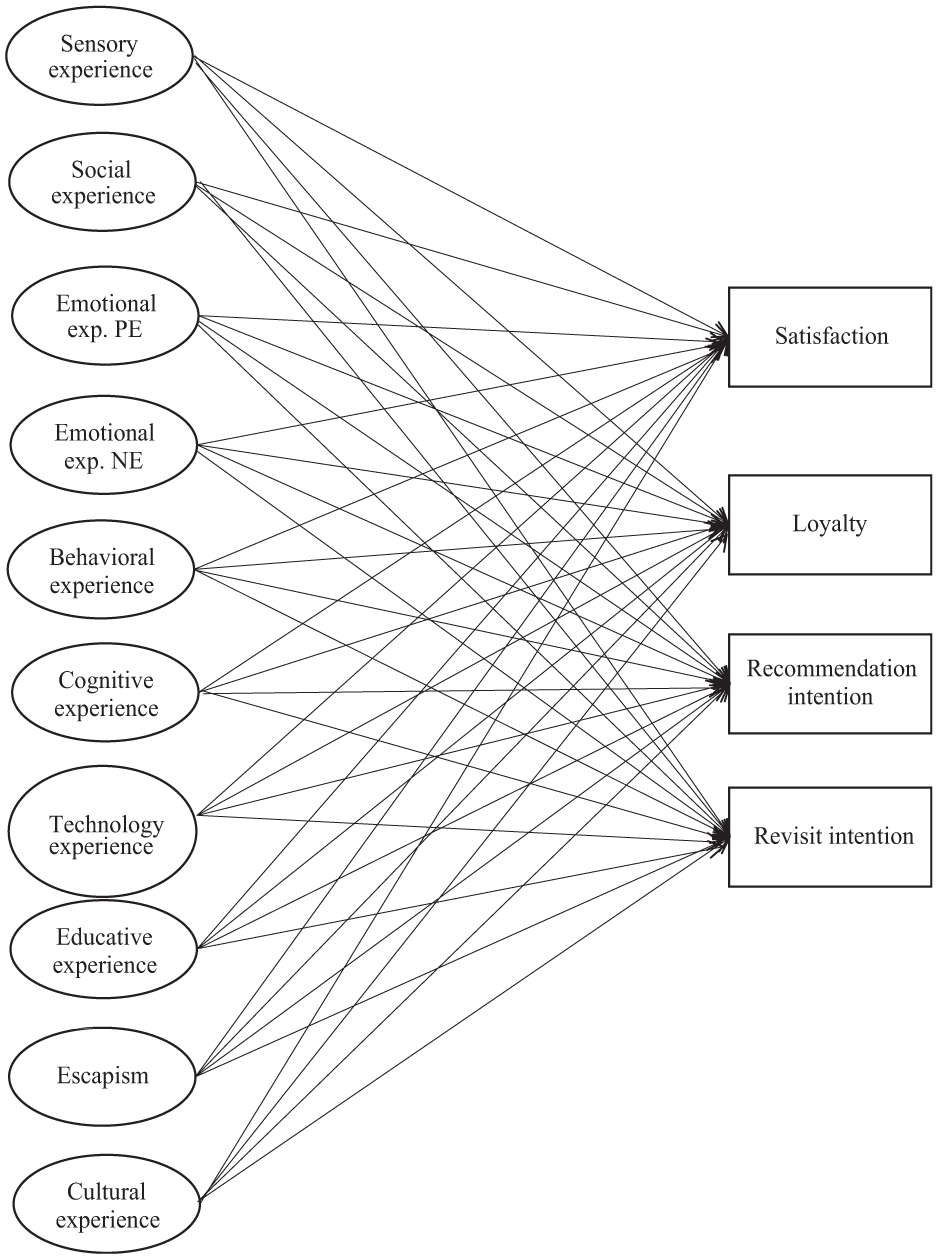
Structural equation model of associations between cultural and experiential factors and tourist behavioral outcomes. Source. Authors' elaboration based on available data.
Theoretical Framework
Tourist experiences are inherently subjective and, as such, are influenced by personal characteristics, cultural encounters, and the quality of services provided at the destination (Chen, 2025; Inmor et al., 2025). Cohen (1979) pioneered a phenomenological understanding of the tourist experience by positioning authenticity as a central concept, emphasizing that tourist engagement is instrumental in shaping perceived authenticity and enhancing experiential quality at the destination. Consequently, these experiences are considered an integral component of tourism products and a core aspect of tourist interactions throughout a journey (Shrestha et al., 2025; Zhou et al., 2023).
Scientific efforts have focused on identifying the dimensions of tourist experiences and developing reliable measurement scales to capture their complexity. Schmitt (1999) identified five essential components of the tourism experience, emphasizing the roles of the senses, thinking, acting, emotions, and relationships. Building on this perspective, Pekovic and Rolland (2020) proposed an experiential model that integrates emotional, social, sensory, behavioral, and cognitive dimensions, while also recognizing the technological dimension as a significant factor in the service sector. By emphasizing the active role of customers in co-creating the overall experience, Pine and Gilmore (1999) introduced the concept of the experience economy in the service sector and proposed an innovative model encompassing aesthetic, entertainment, education, and escapist dimensions, thereby highlighting the holistic nature of interactions and the evolving patterns in experiential theory. This approach not only underscores the personalized nature of tourist encounters but also illuminates the distinctiveness of destination-based interactions.
Grounded in this conceptual foundation, tourists’ cultural experience, as an integral component of the overall tourist experience, is generally understood in two ways: first, as a transformative process through which tourists acquire new knowledge and conceptualize culturally relevant information during their stay (Zhao & Agyeiwaah, 2023); and second, as an innovative subjective phenomenon in which individuals imbue personal meaning into their experiences, shaped by the cultural lens through which they interpret the world around them (Wei et al., 2020). Accordingly, drawing upon established theoretical frameworks (Pekovic & Rolland, 2020; Pine & Gilmore, 1999), ten experiential dimensions—sensory, social, positive emotional, negative emotional, cognitive, behavioral, technological, educational, cultural entertainment, and escapism—are proposed as vital constructs of the cultural tourist experience. Building on the validated consumer experience model within the service landscape—which includes sensory, emotional, social, behavioral, cognitive, and technological dimensions (Pekovic & Rolland, 2020) and is commonly employed to portray intrinsic stimuli in tourism literature—the present model extends the existing framework by integrating three additional dimensions relevant to cultural tourism: educational, cultural entertainment, and escapism. These dimensions are embedded in the theoretical underpinnings of cultural tourism (Manhas & Singh, 2019) and are therefore incorporated into the proposed model, offering a more robust understanding of the cultural tourism experience and establishing a consistent theoretical basis. Each dimension was included based on its unique contribution to fostering tourist involvement and affective resonance, thereby justifying its integration into existing models.
All experiential dimensions were interpreted through the lens of cultural tourism, resulting in a more nuanced representation of tourists’ cultural experiences and a clearer, more analytical understanding of the factors that make cultural tourism an essential and valuable sector within the tourism industry. By integrating the aforementioned models, our approach not only promotes the multidimensional nature of cultural tourism experiences but also establishes a more systematic interpretation of the phenomenon—one that incorporates culturally specific elements while expanding the theoretical foundation of cultural tourism.
Research Methods
This study employed an anonymous questionnaire to examine tourists’ perceptions of cultural tourist experiences and the experiential factors that influence their behavior. Participant safety was ensured through non-invasive methods, strict anonymity, and secure handling of confidential data. All study materials were reviewed for ethical sensitivity. Furthermore, this study offered participants with the opportunity to contribute to socially relevant research and to reflect on their personal views, thereby promoting a sense of inclusion and value. Participants gave written informed consent after being fully informed of the study and their rights, including the option to withdraw at any time. Participation in the study was entirely voluntary.
Research Context
The survey was conducted in Montenegro at locations offering cultural tourism experiences. Montenegro is a prominent cultural destination with a rich history shaped by various civilizations. It has actively pursued the integration of cultural heritage and tourism by introducing innovative practices. Local communities frequently organize cultural events that showcase Montenegro’s heritage, thereby reinforcing its attractiveness and cultural appeal. Numerous towns across the country incorporate cultural elements into their tourism offerings to create memorable and impactful experiences. For instance, in the Bay of Kotor, numerous festivals celebrate the maritime traditions of ancient towns, particularly in Kotor, which is famed for its Boka Navy—an element of intangible heritage recognized by UNESCO. Similarly, Cetinje, the former royal capital, is celebrated for its historical ambience, where tourists can participate in workshops on handmade filigree jewelry. This growing alignment ensures that cultural offerings are no longer viewed as isolated historical assets but as integral components of the tourism experience, adding uniqueness and specific value to Montenegro’s tourism products. Montenegro was chosen for the analysis because of its unique cultural heritage, diverse cultural programs, and significant potential for developing cultural tourism. As a destination reflecting the identity of European heritage sites, it holds a significant position in the global cultural tourism market. Moreover, Montenegro's transitional economy, combined with its distinctive cultural assets, offers a unique opportunity to analyze how a developing country can achieve high-quality cultural products while delivering an authentic cultural experience for tourists.
This study examined the coastal region of Montenegro, focusing on the subregions of Boka Kotorska, Budva, Bar, and Ulcinj, all of which are rich in cultural heritage resources. The surveyed sites included the urban cores of Kotor, Budva, and Bar, the fortification system in Herceg Novi, the Maritime Heritage Museum in Tivat, and the ancient town of Ulcinj, renowned for its pronounced multiculturalism. In central Montenegro, key locations comprised the archaeological site of Duklja, Ostrog Monastery in Nikšić, and Biljarda, along with the museum complexes in Cetinje. The northern region was represented by heritage sites such as the necropolis of medieval tombstones (stećci) in Pljevlja, and the traditional architecture and cultural landscape of Žabljak. The survey was conducted in person between June 2021 and October 2024, ensuring a diverse range of respondents. A total of 2000 questionnaires were distributed, 1851 were returned, and 1822 were valid, resulting in an effective response rate of 91.10%.
Data
The survey included 1,822 respondents, and their sociodemographic characteristics are presented in Table 1. The majority of participants were female (60.8%). Regarding marital status, married respondents comprised the largest group (46.5%). Company employment was the most common occupation (24.6%). The most frequent monthly household income category was €5,000 or above (48%), whereas incomes below €2,500 accounted for 15.3% of the sample. Concerning geographical origin, the largest share of respondents were from the countries of the former USSR (25.9%) and former SFRY (20.9%), followed by Asia (19.1%) and the EU (12.3%). The fewest participants were from Africa (0.5%) and Australia (0.8%).
Sociodemographic Characteristics of Respondents.

Variables
Satisfaction
Tourist satisfaction is perceived as an individual assessment reflecting the level of pleasant feelings experienced during the consumption of an authentic product (Genc & Gulertekin Genc, 2023). It was measured using a single-item scale ranging from 1 (“not satisfied at all”) to 10 (“completely satisfied”), adapted from Alegre and Garau (2010).
Loyalty
Loyalty is conceptualized as the tourists’ long-term commitment to a destination (Hasan et al., 2019). Consistent with the literature, respondents were asked to rate their loyalty to the destination on a single-item scale ranging from 1 (“not at all”) to 10 (“completely yes”), adapted from Jimber Del Río et al. (2020).
Recommendation Intention
In accordance with previous research (Bughin et al., 2010), the dependent variable, termed “recommendation,” is defined as tourists’ verbal behavior aimed at encouraging others to visit a destination that matches their personal preferences. This variable was measured using a single-item scale ranging from 1 (“not at all”) to and 10 (“completely yes”), adapted from Lee et al. (2011).
Revisit Intention
In tourism, revisit intention refers to the likelihood that travelers will return to a destination after their first visit (Libre et al., 2022). It was measured using a single-item scale ranging from 1 (“not at all”) to 10 (“completely yes”), adapted from Chi and Qu (2008).
To examine the role of cultural experiences in shaping tourist behavior, we measured ten experiential dimensions: sensory, social, positive emotional, negative emotional, behavioral, cognitive, technological (Pekovic & Rolland, 2020), educational, escapism, and cultural entertainment (Mehmetoglu & Engen, 2011). Each dimension was assessed using a multi-item scale rated on a 10-point Likert scale ranging from 1 (“strongly disagree”) to 10 (“strongly agree”). The sensory experience scale includes items related to temperature, color, cleanliness, lighting, element harmony, smell (Pekovic & Rolland, 2020), sensory appeal, and sensory stimulation (Rather, 2020). The Social Experience Scale assesses information, warmth, competence, respect, attentiveness, trust, perceived reliability, and promptness (Pekovic & Rolland, 2020). Positive emotional experiences capture states such as happiness, harmony, serenity, fulfillment, content, nice feelings, enthusiasm, and calmness (Pekovic & Rolland, 2020), whereas negative emotional experiences include frustration, anger, and irritation (Kim et al., 2022). In line with research emphasizing the distinct role of negative emotions in service evaluation (Tronvoll, 2011; Zhang et al., 2024), these two emotional dimensions were analyzed separately. The Behavioral Experience Scale focuses on passive orientation, physical engagement, activity (Li et al., 2021), tourist participation, expression of demands, suggestions for improvement (Pekovic & Rolland, 2020), energy, and vitality (Bustamante & Rubio, 2017). Cognitive experience involves intriguing thinking, curiosity, attention, interest, memory (Rather, 2020) and price-quality perceptions (Pekovic & Rolland, 2020). The technological experience dimension refers to aspects such as information availability, information updates, data privacy and security, personalization, time-saving, ease of use, reliability and accuracy, information sharing, and visual appeal (Pekovic & Rolland, 2020). The educational experience scale captures new knowledge, perceived learning, learning experience, curiosity about learning, high educational experience, learning about the destination, skill development, and lack of educational progress (Oh et al., 2007). Escapism is reflected in feelings of revitalization, unique experiences, different experiences, feelings of freedom, refreshment (Luo et al., 2021), different roles, escape from reality, detachment from routine, time-space transcendence, and imaginative immersion (Oh et al., 2007). Finally, cultural entertainment experience assesses enjoyment, fun, relaxation, amusement from observing others, engaging in interactions, and exiting experiences (Quadri-Felitti & Fiore, 2013; Radder & Han, 2015).
Although the dimensions were initially conceptualized as distinct aspects of the tourist experience, exploratory factor analyses (EFA) using principal component extraction with promax rotation confirmed that each scale was unidimensional, with factor loadings ranging from .34 to .98. The Kaiser-Meyer-Olkin (KMO) values ranged from 0.87 to 0.93, and all Bartlett’s tests of sphericity were statistically significant (p < .001), indicating that the data were adequate for factor analysis. One-factor solutions were retained for each scale except for the emotional experiences scale, for which two separate factors—positive and negative—were extracted. The correlation between the two emotional components was negligible (r = −.03), supporting their empirical distinctiveness. To assess internal consistency, we calculated Cronbach’s alpha and McDonald’s omega coefficients for each dimension. All values exceeded the recommended threshold of 0.70, ranging from 0.95 to 0.98, which indicates excellent reliability. We also computed the Average Variance Extracted (AVE) for each construct to examine convergent validity. AVE values ranged from .75 to .89, confirming that each construct explained the majority of variance in its indicators. Furthermore, we assessed discriminant validity using the Heterotrait-Monotrait Ratio of Correlations (HTMT). All HTMT values ranged from 0.32 to 0.71, well below the conservative threshold of 0.85 (Henseler et al., 2015).
Questionnaire Design
To thoroughly examine the relationship between cultural tourism experiences and tourist behavioral outcomes, a comprehensive questionnaire comprising 28 questions was developed and translated into three languages: English, Russian, and German. It incorporated measurement scales for each construct used in this study, with validated scales from previous research adapted to suit the specific context of this study.
The first section of the questionnaire collected sociodemographic information from respondents, including gender, age, marital status, education, occupation, monthly income, place of origin, travel purposes, and travel details.
The second section assessed tourists’ perceptions of cultural experience, including ten factors that serve as formative determinants of the construct of tourists’ cultural experiences. Sensory tourist experience was measured using items adopted from Pekovic and Rolland (2020) and Rather (2020), with each statement reflecting an aspect of sensory engagement: “The temperature was appropriate and enhanced my enjoyment of the cultural content”; “The colors within the cultural-entertainment offer are pleasant”; “Cleanliness within the cultural-entertainment offer is at a high level”; “The lighting within the cultural-entertainment offer left a strong impression on my senses”; “The cultural-entertainment offer integrates all elements into a harmonious whole”; “The cultural-entertainment offer is sensorially engaging”; “The cultural-entertainment lacks sensory appeal for me”; “During the visit to cultural-entertainment content, the smell was unpleasant.”
Social tourism experience was assessed using items adopted from Pekovic and Rolland (2020): “Employees provide accurate information”; “Employees are warm”; “Employees are competent”; “Employees show respect toward me”; “Employed are interested in my needs”; “Employees behavior instills confidence in me”; “Employees provide reliable service”; “Employees provide prompt services.”
Emotional tourist experience was measured as the sum of items adopted from Pekovic and Rolland (2020) and Kim et al. (2022): “The cultural-entertainment offer evoked a feeling of happiness in me”; “The cultural-entertainment offer made me feel frustrated”; “The cultural-entertainment offer provoked feelings of anger in me”; “The cultural-entertainment offer caused me to feel irritated”; “The cultural-entertainment offer created a sense of harmony within me”; “During the visit to the cultural- entertainment content, I felt a sense of serenity”; “I felt fulfilled during my visit to the cultural-entertainment content”; “I felt content during my visit to the cultural-entertainment programs”; “The experience content evoked nice feelings in me”; “I was enthusiastic during my visit to the cultural-entertainment content”; “The programs within the cultural-entertainment offer have a calming effect on me.”
Behavioral tourist experience was measured as the sum of the items adopted from Bustamante and Rubio (2017), Li et al. (2021), and Pekovic and Rolland (2020): “I actively participated in the cultural-entertainment activities”; “The cultural-entertainment offer is not actively oriented”; “During my visit to cultural-entertainment content, I engaged in physical activities”; “The visit to cultural-entertainment activities was a physically active one”; “While participating in cultural-entertainment content, I gladly expressed my requests to the staff”; “During my visit to cultural- entertainment sites, I made suggestions to the staff for improving services”; “The cultural-entertainment activities energized me”; “The cultural-entertainment enhanced my vitality.”
Cognitive tourist experience was assessed using items adopted from Pekovic and Rolland (2020) and Rather (2020): “The cultural-entertainment offer intrigued me”; “The cultural-entertainment offer encouraged my creative thinking”; “The cultural-entertainment offer awakened my curiosity”; “Visiting cultural-entertainment content makes me think about it and captures my attention”; “Visiting cultural-entertainment content stimulates my interest to learn more about it”; “The quality of the cultural-entertainment offer is easy to evaluate”; “The prices of services within the cultural-entertainment offer are optimal”; “The quality of cultural-entertainment offer is superior”; “I think back a lot to my visits to cultural-entertainment content.”
Technological tourist experience was measured as the sum of items adopted from Pekovic and Rolland (2020): “The availability of technological support in cultural-entertainment offerings is optimal”; “Information on cultural-entertainment offerings is regularly updated through technological means”; “Technological support in cultural-entertainment offerings ensures a high level of data privacy and security”; “Technological support in cultural-entertainment offerings provides personalized information”; “Using technological support in cultural-entertainment offerings helps me save time”; “Technological support in cultural-entertainment offerings is user-friendly”; “Technological support in cultural-entertainment offerings works reliably and accurately”; “Technological support within cultural-entertainment offerings allows for easy information sharing”; “Technological support in cultural-entertainment offerings is visually appealing.”
Educational tourist experience was assessed as the sum of the items adopted from Oh et al. (2007): "The entire experience contributed to the acquisition of new knowledge"; "I learned a lot through the experience"; "The whole experience was a meaningful learning experience"; "The experience fueled my curiosity to learn new things"; "The overall experience was highly educational for me"; "I learned a lot about the destination"; "The overall experience helped me develop new skills"; "The overall experience wasn't educational for me and did not enhance my existing knowledge.”
Escapism was evaluated using items adopted from Luo et al. (2021) and Oh et al. (2007): "I felt revitalized"; "This was a once-in-a-lifetime experience"; "This experience was different from everyday life"; "I enjoyed the feeling of freedom"; "I felt refreshed compared to my everyday life"; "During my stay at the destination, I experienced a different role"; "I completely escaped from reality"; "I completely forgot about my daily routine"; "I felt like I was living in another time or place"; "The experience made me feel as if I were someone else.”
Cultural-entertainment tourist experience was assessed through items adopted from Quadri-Felitti and Fiore (2013) and Radder and Han (2015). "I managed to have a good time"; "I managed to have fun"; "I managed to relax"; "Watching the interactions of other participants in the cultural-entertainment programs was fun"; "I enjoyed watching the activities of other participants in the cultural-entertainment programs"; "The overall experience was exciting.”
The third section included questions aimed at assessing tourists’ behavioral patterns, namely satisfaction, loyalty, recommendation intention, and revisit intention.
Satisfaction was measured using items adopted from Song et al. (2015): "I am satisfied with my participation in cultural-entertainment activities"; "I have a good feeling about cultural-entertainment offerings"; "My expectations are exceeded"; "Rate your satisfaction with the cultural-entertainment offerings at the destination.”
Loyalty was measured using items adopted from Chen and Rahman (2018): “How loyal are you to the destination you visited?”
Recommendation intention was measured using items adopted from Wang et al. (2017): "I would recommend this destination to my friends and family"; "I would like to share positive impressions of this destination"; "I would encourage my friends and family to visit this destination"; "When asked about a cultural destination, I will recommend Montenegro.”
Revisit intention was measured using items adopted from Ragb et al. (2020): "I will visit this destination again"; "If given the opportunity, I would like to return to this place"; "I do not plan to visit this destination again in the next few years"; "The outcome of the cultural-entertainment offer created a desire in me to return.”
Empirical Results
To examine the predictive role of cultural experiences in explaining the four indicators of tourist behavior, we conducted SEM. SEM analyses were performed using Mplus version 8.1 (Muthen & Muthen, 2017). With the growing influence of economics in recent decades, SEM has become increasingly important as a multivariate analytical technique (Chin et al., 2003). As many SEM practitioners have noted (Lei & Wu, 2007), SEM encompasses a set of statistical methods and algorithms that are particularly suitable for testing complex relationships between latent constructs. In this study, we employed a covariance-based SEM (CB-SEM), the default approach in Mplus, to test the hypothesized model. Parameter estimates were obtained using the maximum likelihood estimator with robust standard errors (MLR), which are resilient to deviations from normality and violations of independence among observations. The following fit indicators were used to evaluate the model: (1) Yuan-Bentler scaled chi-square (YBχ2), (2) Root Mean Square Error of Approximation (RMSEA), (3) Comparative Fit Index (CFI), (4) Tucker-Lewis Index (TLI), and (5) Standardized Root Mean Square Residual (SRMR). A non-significant YBχ2 value would indicate a good model fit (Barrett, 2007); however, achieving this is rare in large samples. RMSEA values of 0.06 or lower, CFI and TLI above 0.95, and SRMR values below 0.08 are considered indicative of good fit. RMSEA values between 0.06 and 0.08, and CFI and TLI values between 0.90 and 0.95 are considered acceptable (Hu & Bentler, 1999). The SEM results are presented in accordance with the defined hypotheses.
Prior to model estimation, we assessed potential multicollinearity among the predictors by calculating the Variance Inflation Factor (VIF) and tolerance values. VIF values ranged from 1.02 to 2.83, and tolerance values from 0.35 to 0.98, indicating the absence of serious multicollinearity issues. The model demonstrated an acceptable fit (YBχ2 = 816.92, p < .001; CFI = 0.942; TLI = 0.946; RMSEA = 0.062, 90% CI [0.057, 0.071], SRMR = 0.059). Among all experiential dimensions, positive emotional experience exhibited the strongest associations with the outcome variables, showing the strongest relationship with return intention (β = .409) and recommendation intention (β = .357), followed by moderate associations with loyalty (β = .226) and satisfaction (β = .201). Social experience was significantly associated with revisit intention (β = .215) and recommendation intention (β = .185), while sensory experience showed small but consistent positive associations across all four outcomes, with β values ranging between .066 and .103. Behavioral experience was also positively linked to recommendation intention (β = .183), loyalty (β = .128), and return intention (β = .088). Cognitive experience and escapism were significantly associated only with revisit intention (β = .162 and β = .147, respectively). Negative emotional, technological, educational, and cultural entertainment experiences were not significantly associated with any of the examined outcomes (Table 2).
The Predictive Role of Cultural Experience in Explaining Tourist Behavior.
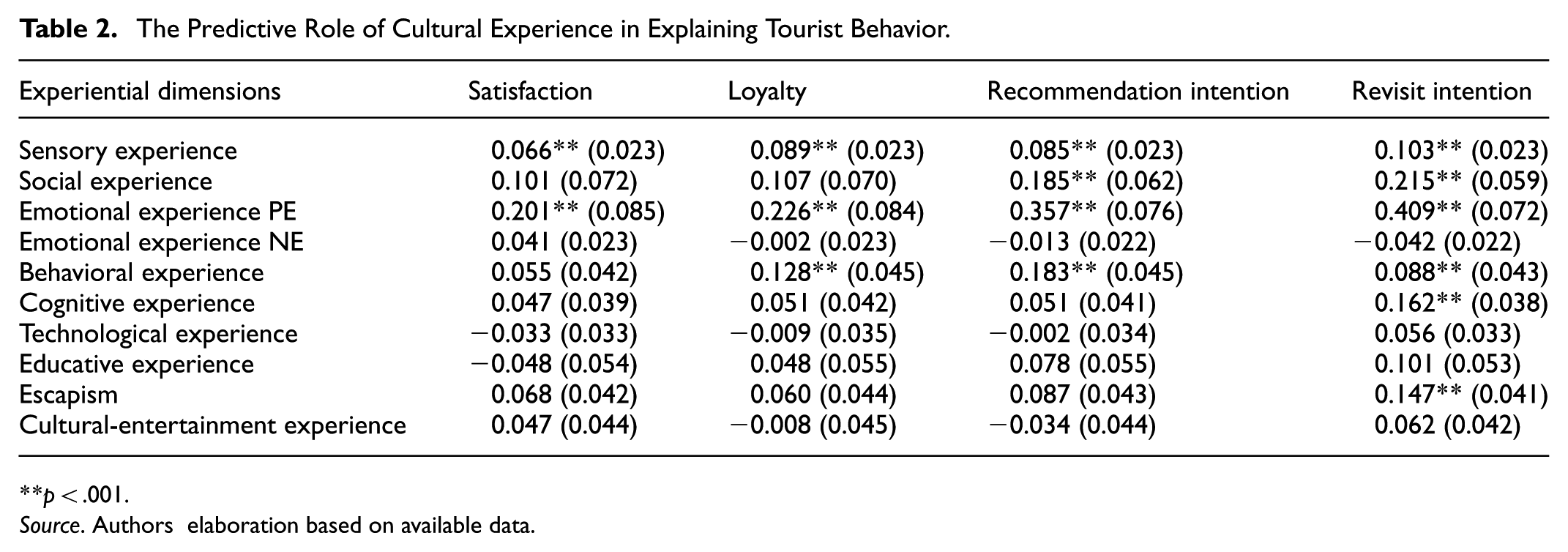
p < .001.
Source. Authors elaboration based on available data.
These findings indicate that the emotional, social, and sensory components of cultural experience are most strongly associated with positive tourist outcomes, whereas other aspects, such as technology or education, show weaker associations with tourist satisfaction, loyalty, and future intentions.
Discussion
Our results confirm the first hypothesis, revealing that the relationship between cultural tourism experience and satisfaction is positive and statistically significant. The findings suggest that the emotional and sensory dimensions of experience are the strongest predictors of tourist satisfaction with a destination. This aligns with Alegre and Garau (2010), who asserted that complete tourist satisfaction is achieved through the activation of emotional impulses that fulfill both spiritual and psychophysiological needs. This view is further supported by Rasoolimanesh et al. (2022), who argued that travelers are more likely to experience higher levels of satisfaction through strong affective engagement in cultural activities that evoke enjoyable sensory experiences. Therefore, we suggest that specific tourist emotions, such as harmony, happiness, serenity, positive emotions, pleasure, emotional intensity, calmness, and identification, along with physical environment characteristics, including visual content, cleanliness, element alignment, noise, sensory attractiveness, sensory stimulation, and colors, are of pivotal importance in developing tourist satisfaction at cultural destinations. Further analysis clarified the relationship between cultural tourism experiences and loyalty, revealing a significant and positive association, which supported the second hypothesis. In addition to emotional and sensory experiences, the behavioral dimension of experience exhibits a relatively stronger association with loyalty. This finding aligns with Paulose and Shakeel (2022), who highlight the importance of hedonistic and physical experiences in generating long-term tourist commitment to a destination. Their results indicate that highly participatory experiences not only directly influence loyalty but also serve as a key conduit linking the richness of the tourist experience to the intention of developing a loyal relationship with the destination. This assertion aligns with Shen’s (2016) assumption that cultural responses to experienced achievements serve as critical catalysts in attracting tourists over the long-term. Furthermore, our results reveal a significant positive relationship between cultural tourism experience and recommendation behavior, thereby confirming the third hypothesis. In addition to the aforementioned emotional, sensory, and behavioral experiences, social experiences also appear to be strongly associated with recommendation intentions. This finding is supported by Cetin and Dincer (2014), who suggest that social connections, as key determinants of tourists’ cultural experiences within a given contextual environment, can enhance the overall experience and increase tourists’ willingness to recommend destinations. Therefore, by offering interactive and personalized cultural experiences that become deeply ingrained in tourists’ memories, tourism service providers foster visitor attachment through positive word-of-mouth communication (Gautam, 2025). Finally, this study suggests a positive and statistically significant relationship between cultural tourism experience and tourists' intention to revisit a destination, supporting the fourth hypothesis. This finding is further corroborated by Libre et al. (2022), who emphasized that visitors who develop positive impressions of a cultural site tend to perceive their experiences more favorably. They further explained that a positive evaluation, in turn, leads to greater satisfaction and strengthens tourists’ desire to revisit the same site. Zhang et al. (2018) concluded that generating and disseminating meaningful cultural experiences in tourism can serve as an effective strategy for retaining visitors and enhancing a destination’s competitive advantage.
It has been observed that tourist behavior largely depends on escapist, social, emotional, sensory, cognitive and behavioral cultural experiences; in this context, the sense of escape, opportunities for social interaction, positive feelings, sensory stimulation, and cognitive and physical impulses experienced at the destination become key to enhancing favorable outcomes, including satisfaction, loyalty, recommendation, and intention to return. However, emotional experience dominated other experiential dimensions in predicting all behavioral intentions. This finding aligns with that of Yang et al. (2023), who indicated that the depth of tourists' emotional engagement with cultural and entertainment programs significantly influences the impact of their experiences. When cultural tourism consumers actively engage with cultural content, their experiences become more meaningful, affectively resonant, and personally influential. Kim et al. (2017) emphasize that behavioral intentions are closely linked to cultural tourists' participation in co-creating experiences. Specifically, the higher the level of tourists’ affective engagement in cultural experiences, the more likely they are to perceive these experiences as satisfying and demonstrate loyalty to the destination. Therefore, tourist engagement in cultural entertainment activities plays a defining role in shaping valuable cultural experiences that resonate deeply with tourists and generate positive outcomes (Chen & Rahman, 2018). However, these results contrast with Chandra (2014), who reported a weak influence of emotional experiences on consumer behavior in the service sector. With this in mind, our findings can be interpreted within the framework of cultural tourist experience. In this vibrant landscape, where tourists are deeply engaged on multiple levels and form profound emotional connections with the destination, the factors shaping the emotional aspect of cultural tourism experiences assume greater significance, thereby enhancing favorable behavioral outcomes.
These results significantly enrich the existing literature by providing empirical evidence on the effects of tourists’ cultural experiences on their behavioral intentions. In other words, this study found that perceived cultural experiences are positively associated with tourists’ future behavior at a destination. Specifically, when visitors perceive their cultural experiences—including sensory, social, positive emotional, cognitive, behavioral, and escapism—as pleasant, the likelihood of higher satisfaction and loyalty, expressed through recommendations and repeat visits, increases. Consequently, aligning the perceived quality of a cultural product with the cultural experience in tourism becomes a critical requirement for creating satisfied visitors and fostering their commitment, thereby serving as an important factor in the overall prosperity of the destination.
Conclusions
Cultural experiences are gaining increasing significance as an innovative concept designed to attract new visitor groups and enrich the overall travel experience (Wei et al., 2020). Accordingly, this phenomenon has become increasingly prevalent in contemporary tourism literature, where it is interpreted as a vital construct for designing tourism products and enhancing competitiveness (Xu et al., 2022). Although the role of cultural tourism experiences in fostering the prosperity of a destination is widely acknowledged, insights into how cultural tourist experiences influence tourist behavior remain limited (Stanovčić et al., 2021). To better understand these associations, it is essential to analyze the multidimensional nature of cultural experience and assess how their components relate to key tourist outcomes (Seyfi et al., 2020), thereby offering guidelines for improving tourism offerings. In this context, this study aimed to examine the relationship between the components of tourists’ cultural experiences and their behavior, as assessed through satisfaction, loyalty, recommendations, and intention to return.
Our results demonstrate that tourists’ cultural experiences are positively associated with behavioral intentions, including satisfaction, loyalty, willingness to recommend, and returning to the destination. Specifically, six experiential dimensions (sensory, social, positive emotional, behavioral, cognitive, and escapism) exhibited significant positive associations with these outcomes. In contrast, the negative emotional, technological, educational, and cultural entertainment dimensions were not significantly associated with any of the behavioral indicators examined. The strong association between emotional and sensory responses and tourist outcomes highlights the predominant role of affective stimuli in shaping intentions. From a psychological perspective, such experiences are more likely to be embedded in long-term memory, enhancing perceived value and attachment to the destination, which, in turn, fosters satisfaction and loyalty, particularly return intentions and positive word-of-mouth. The moderate associations of social and behavioral dimensions with recommendation and revisit aspirations highlight the interpersonal and participatory nature of cultural experiences, which resonate more strongly with referral and revisit behaviors than with internally oriented outcomes, such as satisfaction or loyalty. Cognitive and escapist factors were associated solely with revisit intentions, suggesting that mental engagement or detachment from routines may encourage revisits through introspection or revitalization. Taken together, these results indicate that experiential dimensions influence tourist behavior through distinct psychological pathways; specifically, emotional and sensory engagement drives connection and identification, behavioral and social experiences operate through self-development and a sense of belonging, while cognitive and escapist experiences exhibit a more nuanced link, stimulating reflective or rejuvenating processes. The absence of significant associations for technological, educational, cultural entertainment, and negative emotional dimensions suggests that these factors lack sufficient psychological salience to influence post-visit behavior in this context.
Accordingly, our findings contribute significantly to this emerging field of research. By identifying the key dimensions of tourists’ cultural experiences through a multidimensional framework, this study highlights the need for further research on the holistic nature of cultural tourism. In addition, it develops and validates specific metrics for assessing cultural experiences within the tourism landscape. Unlike previous studies that adopted a unified approach, this study analyzed the distinct factors that determine travelers’ cultural experiences. Capturing these factors is a crucial step in designing extraordinary experiences in the context of cultural tourism, thereby highlighting the significance of this contribution. Beyond the scope of previous research, our study provides a more robust insight into the structure of cultural tourist experiences. Future research can utilize this measurement scale to explore the antecedents and consequences of cultural experiences in tourism.
Furthermore, this study demonstrates the relevance of cultural experiences in shaping tourist outcomes. Specifically, it offers empirical evidence of the association between cultural experiences and tourist behavior. This is particularly significant because no prior study in the academic discourse on tourism has directly examined this relationship. Existing literature has predominantly focused on the general significance of tourist experiences rather than on the specific determinants that explain the link between experience and consumer behavior within the context of cultural tourism. Drawing upon a solid theoretical foundation, ten constructs—sensory, social, positive emotional, negative emotional, behavioral, cognitive, technological, educational, cultural entertainment, and escapist experiences—were identified as essential elements of cultural tourist experiences. The findings indicate that tourists' cultural experiences are positively associated with their behaviors, including satisfaction, loyalty, willingness to recommend, and intention to revisit. This constitutes a key implication of the study and aligns with the findings of Sangpikul (2018), who proposed that experiences in tourism are critical in shaping favorable outcomes, particularly satisfaction with and loyalty toward the destination. These findings further expand the theoretical framework of cultural tourism by highlighting the central role of emotional, social, physical, cognitive, and behavioral factors in driving tourist behavior. This, in turn, opens space for reconceptualizing and improving cultural tourism products in line with the dimensions that stimulate tourist satisfaction and positive behavioral patterns.
Finally, the study revealed that, in the context of cultural tourism, positive emotional experiences exhibit the strongest association with tourist satisfaction and loyalty, followed by moderate associations with recommendations and intentions to revisit. This finding affirms the importance of positive emotions as the most significant dimension of cultural tourist experiences in generating favorable tourist outcomes. Although the associations with loyalty and satisfaction were somewhat weaker than those with recommendation and return intentions, they remained the most dominant among all experiential dimensions. This finding aligns with that of Gautam (2025), who asserts that tourists' emotional responses are the primary drivers of positive behavioral outcomes. As explained by Almeida-Santana and Moreno-Gil (2018), satisfied travelers who experience highly affective and hedonistic moments develop a deeper connection with a destination’s traditions, culture, and hospitality, which strongly motivates them to return and recommend it to others. This argument is further supported by Prayag et al. (2013), who contended that emotional arousal evokes long-term commitment through retention and word-of-mouth promotion.
Implications for Research, Practice and Society
The findings of this study lay a foundation for advancing the theoretical framework in the field of cultural tourism by empirically validating the multidimensional configuration of tourists' cultural experiences and revealing their impact on outcomes such as satisfaction, loyalty, revisit intentions, and recommendations. A particular contribution of this study lies in the identification of six pivotal experiential dimensions—positive emotional, social, sensory, behavioral, cognitive, and escapist—that positively influence tourists’ behavioral patterns. Conversely, the finding that the technological, educational, and cultural entertainment dimensions do not exhibit a statistically significant impact on tourist behavior suggests a need to reconsider the existing approaches to experiential tourism within a cultural landscape.
This research can serve as a premise for tourism policymakers to develop strategies for cultural programs at the destination level. First, tourism service providers should identify the aspects of the offer that contribute the most to an enjoyable cultural experience for tourists and to positive outcomes at the destination. Such insights can help tourism stakeholders enhance the long-term appeal of a destination’s cultural products. Accordingly, it is essential for tourism service providers to understand tourists’ perceptions of cultural experiences to define quality standards for cultural programs. In fact, their ability to create high-quality services that generate impactful cultural experiences can strengthen a destination’s competitiveness and promote favorable tourist outcomes. In this sense, our findings can assist tourism development stakeholders in designing strategic activities that encourage positive tourist behavior while emphasizing the relevance of specific experiential components in the cultural context. This study provides detailed insights for tourism operators to invest in the emotional, sensory, social, behavioral, cognitive, and escapist elements of the tourist experience, as these are instrumental in shaping an authentic cultural experience that fosters positive behavioral outcomes and, in turn, strengthens a destination’s positioning.
Furthermore, a detailed analysis of the results revealed that emotional experiences had the strongest effect on tourist outcomes, including satisfaction, loyalty, recommendation, and return intentions. This finding suggests that positive emotional stimuli in tourism are more effective than sensory, social, cognitive, behavioral, and escapist stimuli. This can be explained by the observation that tourists tend to develop a deeper connection with a destination and its cultural values when they are emotionally exhilarated, rather than merely physically, socially, mentally, or spiritually engaged. In light of this, this article calls for tourism operators to consider the relevance of affective stimuli in enhancing pleasant feelings, as a vital aspect of the emotional experience in tourism. Such stimuli can play a crucial role in shaping the overall cultural tourist experience.
Ultimately, tourism service providers should focus on enriching tourists' cultural impressions by creating interactive activities and immersive environments that encourage cultural engagement and foster full integration of tourists with the cultural background and values of their destinations.
From an economic perspective, enhancing the quality of cultural experiences can encourage longer visitor stays and increased consumption, thereby stimulating income multiplication and supporting the sustainability of local communities. By fostering experiential tourism and investing in participatory cultural encounters that deeply resonate with tourists, Montenegro can improve its position in a vibrant tourism market and extend its tourist season. From a social standpoint, creating authentic cultural experiences helps preserve cultural identity by affirming traditional values and promoting intercultural exchange. Such cultural contact encourages shared values between tourists and residents, thereby promoting the preservation of tourism traditions and long-term prosperity.
Limitations and Future Research
Although our results reveal the relevance of cultural tourist experience to tourist behavior, we believe that future studies should address certain limitations of this research. Given the reliance of self-report measures and a cross-sectional design, the possibility of common-method bias cannot be excluded. Future research should consider employing a longitudinal design with at least two measurement points to better account for method-related variance. Additionally, future research could examine how tourists' demographic characteristics, including their cultural background and the local context from which they come, influence their perception of the cultural experience and its relationship with behavior at the destination. Additionally, since this study demonstrated a positive effect of six experiential components while showing no statistically significant impact for the four components of the tourist experience, future research could explore why certain experiential components do not positively influence tourist behavior. Further analyses could investigate the effects of the cultural tourist experience on tourist outcomes such as purchase intention, spending behavior, length of stay, place attachment, and similar measures.
One important limitation of this study is its context-specific nature. The data were collected exclusively within the Montenegrin tourism setting, which may limit the generalizability of the findings to other cultural or geographic contexts. While the results offer valuable insights into tourist behavior within this particular environment, caution is advised when applying these conclusions to different destinations with distinct cultural, social, or economic characteristics. Future studies should replicate this study in diverse settings to validate the robustness and broader applicability of the findings. Studies should include multiple economies to formulate broadly applicable conclusions that support a systematic approach to developing cultural tourism. Another limitation of this study is the absence of control variables, such as demographic or contextual factors, which could account for individual differences in tourist behavior. Without controlling for these potential confounders, alternative explanations for the observed associations cannot be ruled out. Future studies should incorporate such variables to provide a more nuanced understanding of the relationship between cultural experiences and tourist outcomes.
Supplemental Material
sj-docx-1-sgo-10.1177_21582440251397318 – Supplemental material for Effects of Cultural Tourism Experience on Tourist Behavior: Insights From Montenegro
Supplemental material, sj-docx-1-sgo-10.1177_21582440251397318 for Effects of Cultural Tourism Experience on Tourist Behavior: Insights From Montenegro by Mileva Manojlović, Tatjana Stanovčić and Đurđica Perović in SAGE Open
Footnotes

Ethical Considerations
This study involved human participants and was conducted in accordance with the APA Ethical Principles (Section 8.05) and SAGE guidelines. Owing to the minimal risk and the use of anonymous, noninvasive surveys, formal ethical approval was not required.
Consent to Participate
The participants provided written informed consent after being fully informed of the study and their rights, including the option to withdraw at any time. Participation was voluntary, and data were collected confidentially.
Funding
The authors received no financial support for the research, authorship, and/or publication of this article.
Declaration of Conflicting Interests
The authors declared no potential conflicts of interest with respect to the research, authorship, and/or publication of this article.
Data Availability Statement
Data supporting the findings of this study are available upon request from the corresponding author. The data are not publicly available because they contain information that could compromise the privacy of the research participants.
Supplemental Material
Supplemental material for this article is available online.
References
Supplementary Material
Please find the following supplemental material available below.
For Open Access articles published under a Creative Commons License, all supplemental material carries the same license as the article it is associated with.
For non-Open Access articles published, all supplemental material carries a non-exclusive license, and permission requests for re-use of supplemental material or any part of supplemental material shall be sent directly to the copyright owner as specified in the copyright notice associated with the article.
