




Abstract
This study explores English metaphors in the linguistic landscapes of Shanghai, China, focusing on four distinct research sites: Biyun, Gubei, Xin Tiandi, and the Bund. Through a mixed-methods approach, this research combines the qualitative framework, Metaphor Identification Procedure Vrije Universiteit (MIPVU), with quantitative analysis using the R software to examine 428 photographs. The study specifically investigates metaphor density and the prevalence of conceptual metaphors across official and private signage. The findings reveal that official signage in public spaces tends to avoid metaphorical expressions compared to private entities that exhibit a greater use of metaphors. Furthermore, while official sources predominantly employ WAR metaphors, private institutions show a typical preference for metaphors from the HUMAN BEING domain. These results contribute to the growing body of research on the cognitive theories of metaphor by demonstrating their practical application in urban linguistic landscapes. Additionally, the study provides a more profound understanding of how conceptual metaphors are used to convey embedded social and cultural meanings, highlighting the influence of context on metaphorical expression in public spaces.
Plain Language Summary
This study investigates the use of English metaphors on signs in Shanghai, China, focusing on four locations: Biyun and Gubei communities, Xin Tiandi area, and The Bund. It combines both qualitative and quantitative methods to analyze 428 photographs collected from various official and private signs. The primary aim of the research is to examine how often metaphors appear on signs and what types of metaphors are most commonly used by official institutions and private organizations. The findings show that public signage, typically seen in governmental or official contexts, tends to avoid using metaphors. In contrast, private businesses use metaphors much more frequently. Furthermore, the types of metaphors used by these two groups differ significantly. Official signs often rely on metaphors related to war, reflecting a more formal or authoritative style. On the other hand, private businesses prefer metaphors linked to human beings, suggesting a more personal and engaging approach to attract consumers. These results contribute to a broader understanding of how metaphors are used in everyday life, particularly in public spaces. They also shed light on the ways in which metaphors can convey deeper social and cultural meanings. Ultimately, the study offers insights into the practical application of metaphor theories in the real world.
Introduction
The field of linguistic landscape (hereafter LL), introduced by Landry and Bourhis (1997), has emerged as a promising interdisciplinary research domain, linking sociolinguistics, semiotics, and psycholinguistics. LL refers to the visibility and prominence of language on public and commercial signage within a defined territory or region. Examples include billboards, street signs, commercial signage, and place names. LL is considered “as old as writing” (Shohamy & Gorter, 2009, p. 4). Historical artifacts such as the Codex Hammurabi and the Rosetta Stone, which were publicly displayed in the ancient world, illustrate the early use of LL to promote literacy and social organization. Even though Landry and Bouris drew our attention to the language in public places as a major indicator of language attitude, the basic binary categorization was refined by Ben-Rafael et al. (2006), who claimed there are official (top-down) and private (bottom-up) signs in the LL. Official signs typically include government-issued texts such as street names, official notices, traffic signs, and public service announcements. Private signs are designated for signs shown in commercial and non-official places, such as names on stores, commercial institutions, and advertising. Some scholars employed the terms of official versus non-official (Backhaus, 2007) or public versus private (Gorter & Cenoz, 2008) signage to differentiate the two groups. The present study adopts the terminologies of official versus private signage, as they are straightforward illustrations of bodies for the sign in the LL.
With globalization, English-language public signs are highly visible in many non-English-speaking countries. However, English signs in non-Western countries encounter additional challenges due to misunderstandings and misinterpretations within diverse linguistic contexts, especially when dealing with metaphors (Amenador & Wang, 2022; Ko, 2012; Qiannan, 2012). Ko (2012) identified common issues in English-Chinese sign translations, such as distorted meanings, misleading information, or loss of meaning, particularly when metaphors are involved. He cited a sign from a swimming pool in Melbourne, Australia, that reads, No bombing in the swimming pool. This expression is intended to discourage children from jumping into the pool in a way that creates a large splash, though standard diving is allowed. Ko acknowledged the difficulty of finding an accurate and culturally appropriate Chinese translation for this metaphorical warning. Regardless of the chosen translation, the original intent is difficult to fully convey due to the metaphor’s vivid imagery. This issue is particularly pronounced in modern cities like Beijing and Shanghai, which are highly internationalized with a significant foreign resident population and a diverse linguistic environment on public signs.
Nevertheless, according to Conceptual Metaphor Theory (Lakoff & Johnson, 2003), metaphor is no longer regarded merely as a rhetorical device, rather, it is a fundamental cognitive mechanism through which humans perceive, structure, and categorize their experiences. The major claim was that metaphor not only affects communication but also shapes how people think, categorize, and represent experiences in the mind. Conceptual metaphors operate via a mapping process from a source domain, typically concrete and grounded in physical experience, to a target domain, which is often abstract and less directly accessible.
Thus, comprehending the sign “No bombing in the swimming pool” can be explained by the structural conceptual knowledge of DISRUPTIVE ACTION IS AN EXPLOSION (in accordance with standard practice in cognitive linguistics, concepts and conceptual metaphors are presented in capital letters), which is also grounded in embedded experience. The concept of EXPLOSION/WARFARE (source domain) is mapped onto the action of forceful DIVING (target domain), making the intended meaning clearer when one visually observes such behavior. The use of metaphorical expressions in LL is rooted in Conceptual Metaphor Theory, given that metaphor is a cognitive mechanism of human thought, rather than a figure of speech, as mentioned earlier. Such metaphors reflect how audiences conceptualized social norms and experiences through embodied cognition.
In LLs, few studies have incorporated the cognitive linguistic theory to examine the role of metaphor in public space communication. Thus, it is imperative to examine the representation of conceptual metaphors in LLs. By applying Lakoff and Johnson’s Conceptual Metaphor Theory, in conjunction with LL’s framework, the current article presents a comprehensive analysis of the conceptual metaphor employed in the official and private signage in LLs of Shanghai, one of the first-tier cities in China. Specifically, this research seeks to investigate the density and preferences of metaphors within two sectors, official and private groups, thereby contributing to a more nuanced understanding of how cognitive linguistics can be extended to the domain of LL studies. Through the analysis of conceptual metaphors, the study not only aims to interpret what the LL “say,” but also to uncover why they “say” it, that is, the underlying conceptual structures shaping public communication. Based on the above discussion, the research questions that guided the present study are: What is the density of metaphors shown in Shanghai’s LL? And how do official and private signage differ in their conceptual metaphor elaboration?
Why Shanghai
Since the implementation of the Reform and Opening-Up policy in 1978, China has undergone profound transformations across social, economic, and linguistic dimensions. Urbanization has been a major component of this development. Shanghai, one of China’s first-tier metropolises, stands out for its linguistic and cultural diversity, making it a strategic site for the study of public signs. Its significance lies in both historical and contemporary contexts. Historically, Shanghai has had extensive exposure to English, and today it remains a leading international city with a high concentration of foreign residents. Its engagement with Western culture progressed from initial astonishment to emulation, demonstrating the city’s remarkable capacity for cultural inclusivity and adaptability (Tang, 1993). This cosmopolitan foundation continues to characterize the city today. According to data from China’s Seventh Population Census (National Bureau of Statistics of China, 2021), Shanghai now hosts the largest number of foreign residents in the country. The city is home to approximately 750,000 foreign nationals, including 350,000 from the United States and 230,000 from Japan. These residents are concentrated primarily in the districts of Pudong, Minhang, and Changning. With this demographic, Shanghai has surpassed Hong Kong as the leading Chinese city in terms of foreign population, further reinforcing its global status and making it a particularly rich site for studying the English LL in a Chinese context.
Moreover, Shanghai, with its well-established regulations governing English in public signs, provides a linguistically supportive environment. As the use of both English and Chinese in public spaces becomes increasingly widespread and at times conflicting, the need for a clear language policy becomes essential to maintain a balanced and harmonious bilingual environment. The Regulation of the People’s Republic of China on the Standard Spoken and Written Language, which came into effect on January 1, 2001, represents the country’s first legal framework specifically addressing spoken and written language use. In alignment with this national regulation, Shanghai has introduced a series of planning and policy initiatives aimed at standardizing language usage in public spaces. In September 2014, Shanghai implemented its first provincial-level regulation concerning foreign language usage: The Regulations on the Use of Foreign Characters in Public Places. Article 8 stipulates that when both standardized Chinese characters and foreign characters are used, the Chinese characters must take precedence. This policy underscores Shanghai’s commitment to promoting Mandarin as the dominant language in public domains. However, Shanghai’s broader strategic vision to position itself as an international metropolis has also influenced its language planning. This vision is articulated in the 13th Five-Year Plan for the Reform and Development of Shangha’s Language and Writing (Shanghai Language Committee, 2016), which emphasizes internationalization, multilingualism, and inclusive openness as core principles of the city’s evolving linguistic environment. In numerous cases, billboards and signage are displayed in English only, not merely as auxiliary translations of Chinese text. In communities with a high concentration of foreigners, private signs are more likely to feature English alone, often ignoring relevant regulations and aligning with the character of international cities (Yu, 2023). The prevalence of English signage suggests that Shanghai offers not only a more authentic English-language environment but also a research-friendly setting for examining English metaphorical use in the public area.
Literature Review
As a promising research field, LL aims to focus on public signs and investigate various social roles from the angle of social and cultural realities (Shohamy, 2015). Previous studies have examined the connotative meaning embedded in the LL, including social policy (e.g., Ben-Rafael et al., 2006; Gorter et al., 2021; Sloboda, 2009), visual multilingualism (Scollon & Scollon, 2003; Shohamy, 2015), and multimodality (Kress & van Leeuwen, 2002; Pütz & Mundt, 2018). Nevertheless, as English has become a global language in the context of globalization, research has increasingly explored its dominance in LL and its cognitive representations of social and cultural symbolism. The widespread visibility of English across non-English-speaking countries not only attracts foreign tourists but also reflects deeper ideological structures that privilege English over local languages (Backhaus, 2007; Han & Wu, 2020). English is frequently associated with symbolic meaning, such as being posh, expensive, international, and aimed at the affluent and the young, specifically preferred by private signage (Blommaert, 2013). Such associations reveal how English functions as a cognitive symbol of prestige and modernity, shaping public perception and language attitudes. Moreover, English has been discursively constructed as a marker of modernity, progress, and globalization, both for individuals and states (Han & Shang, 2024). Thus, the presence of English in LL is not an aesthetic choice but a reflection of cognitive hierarchies and sociolinguistic inequalities embedded in global communication.
Rosendal and Amini Ngabonziza (2023) demonstrated that although Rwanda’s language policy claims equality among its four official languages, English continues to assert its dominance through superior status and high visibility in the LL. Their diachronic study, covering the period from 2005–2008 to 2018, reveals a steady intensification of English’s symbolic and sociopolitical power. Similarly, Pienimäki et al. (2024) examined the dynamic interaction between English and local languages in Finland through the concept of timespace, the incorporation of temporal and spatial dimensions in LL. Hub (2024) observed that English had become the predominant language on commercial signage in Banda Aceh, Indonesia, owing to its symbolic prestige, which exceeds that of native languages. He further suggested that future studies should investigate the representation of English on official signage to understand its institutional implications. These studies employed qualitative methodologies based on photographic documentation, collecting 81, 284, 158, and 861 samples, respectively. Collectively, these findings underscore that English derives its symbolic significance through code preference processes that reflect socio-cultural orientations.
Meanwhile, an emerging body of research has begun integrating cognitive mechanisms into LL studies. Conceptual Metaphor Theory expands the metaphor, primarily a figure of speech, into a cognitive mechanism (Lakoff & Johnson, 2003). Lakoff and Johnson categorized the conceptual metaphor into three kinds: structural, orientational and ontological metaphors. They illustrated ARGUMENT IS WAR as the prototypical example of a structural conceptual metaphor, as “Argument is partially structured, understood, performed, and talked about in terms of WAR” (p. 5). Orientational metaphors involve spatial orientation, such as UP-DOWN, IN-OUT, and CENTRAL-PERIPHERAL, for instance, HAPPY IS UP and SAD IS DOWN. The third conceptual metaphor, Ontological Metaphor, described as “entity and substance metaphors” (p. 26), helps individuals comprehend experiences in terms of objects and substances. In the example INFLATION IS ENTITY, inflation, though intangible and invisible, is conceptualized as a powerful economic phenomenon. To promote the recognition of metaphors, Lakoff et al. (1991) extensively cataloged source/target mappings, serving as a foundational source for categorizing conceptual metaphors in English. Furthermore, It is also critical to differentiate conceptual metaphors from metaphors or metaphorical expressions that are all linguistic representations or manifestations of the conceptual metaphor. Based on one’s conventional knowledge, a particular conceptual metaphor is manifested by the metaphorical expressions (Kövecses, 2010). For instance, this relationship is a dead-end street, and our marriage is on the rocks (Lakoff & Johnson, 2003, p. 45), are both metaphorical expressions based on the conceptual metaphor LOVE IS A JOURNEY. It maps the structure of a JOURNEY (source domain), which includes a starting point, direction, obstacles, and a destination, onto the concept of LOVE (target domain), providing a framework for understanding life events (Geeraerts, 2006; Kövecses, 2010).
The discursive richness in LLs is inseparable from metaphorical and other cognitive representations, as the LL constitutes a written manifestation of human culture and conceptual knowledge (Geeraerts, 2006; Lavrenova, 2019). The presence of numerous metaphors in LLs is well established (Barnes & Duncan, 2013). This abundance of figurative language offers a valuable resource for both linguistic analysis and language pedagogy. For example, Michalovich (2019) developed LL-based teaching tools to help high school students interpret commercial messages in public spaces through the lens of metaphor. Such pedagogical approaches illustrate how cognitive linguistic concepts, particularly metaphor and conceptual mapping, can enhance learners’ awareness of how meaning is constructed and conveyed in multimodal environments. Diao-Klaeger and Zongo (2019) investigated slogans appearing in the LL of Burkina Faso during the 2014 insurrection. These slogans, inscribed on signs and graffiti across Ouagadougou, the capital city, employed striking metaphors such as BLAISE IS A VIRUS, IT’S NOT CORN, and IT’S WALL (pp. 191–192). Their analysis of metaphorical mapping domains revealed that these linguistic expressions functioned as cognitive tools for articulating collective anger and resistance. In this sense, metaphors in LL are not merely decorative but serve as powerful vehicles of conceptual framing and social cognition.
Expanding the scope to Eastern Europe, Pitina (2019) examined the influence of English on the LL of modern Russian cities by integrating cognitive and cultural theoretical frameworks. The study argued that cognitive methods reveal how urban inhabitants perceive and conceptualize their environment, while cultural analysis foregrounds national and local specificities in the spatial “picture of the world” (p. 63). Drawing on over one thousand commercial names completely or partially based on English, the study identified creative ways of code-mixing, including compounding, abbreviation, and blending. The data show the prevalence of Anglicized names, along with instances of puns, irony, a mixture of styles, and violations of standard English in commercial names, also reflect both global linguistic pressures and localized acts of semiotic creativity. This interplay underscores how cognitive processes interact with sociocultural dynamics in shaping urban linguistic environments. Mundt (2022) adopted a cognitive framework in the study of English textual and pictorial metaphors in the LL of Yaoundé, Cameroon. The study revealed that both private and official signs encode culturally embedded conceptual structures, demonstrating how LLs serve as cognitive maps that mirror shared cultural models and embodied experiences. Finally, Donahue et al. (2024) conducted a visual discourse analysis of signage in New York City’s Interior Privately Owned Public Spaces (IPOPS), showing how private governance shapes perceptions of “publicness.” Their findings highlight that signage operates as a subtle yet potent cognitive mechanism that structures spatial behavior and redefines collective access. The study thus contributes to a more critical understanding of how linguistic and visual symbols in LL not only reflect but also construct social cognition and power relations in urban spaces.
More recently, Chinese researchers have recognized the significant research value of English within LL. Yu et al. (2019), focusing on the Gubei community in Shanghai, examined multilingual LLs and their implications for language planning, particularly through the lens of ethnolinguistic vitality and code preference. Although Chinese remains dominant in official signage due to regulatory mandates, private signage demonstrates greater ethnolinguistic diversity, highlighting the tension between institutional regulation and localized linguistic practices. Zhao (2022) approached LL from a spatial-temporal perspective, emphasizing that language functions as a powerful medium for shaping urban space. Focusing on the Xin Tiandi, a prominent district in Shanghai, he employed semiotic resources from the LL theoretical framework to analyze the area’s chronotropic identity, demonstrating how linguistic elements construct a dynamic, cosmopolitan image that bridges Eastern and Western cultural representations. Han and Shang (2024) further explored the role of English in shaping Shanghai’s international identity. They found that 51.6% of the collected signs (N = 532) included English, indicating the language’s high visibility even in official contexts. Their findings suggest that English is not merely optional but instrumental in framing public communication in international cities.
Across studies of metropolitan spaces (Li et al., 2024; Yu, 2023), rural areas (Sheng & Buchanan, 2022), airports (Li & Yang, 2022), hospitals (Wu et al., 2025), and scenic sites (Li, 2024), Chinese scholarship has emphasized English’s dual informative and symbolic functions (Fu & Liu, 2023) presented by official and private signs, with research topics often focusing on language power (Yu, 2023), cultural identity (Yin, 2025), translation (Yuan, 2019), and tourism development (Chang et al., 2023).
These studies predominantly employ qualitative methods, such as photographic documentation, sometimes supplemented by questionnaires. However, a critical limitation is their descriptive focus: the research often prioritizes sorting, counting, and categorizing over interpreting their underlying meanings. Consequently, the cognitive mechanisms and social factors that shape language choice and metaphorical expression remain largely unexplored. Despite the growing recognition of English metaphors in LLs across different countries, systematic examination of meaning-making in the Chinese LL from a cognitive perspective remains scarce. Previous research has also overlooked the cognitive dynamics underlying the distinctive use of official versus private signs. While Bell (1997) did not explicitly consider cognitive mechanisms, he argued that metaphorical code-switching is a stylistic strategy intended to evoke specific notions or abstract concepts associated with particular languages in particular contexts. Unlike situational code-switching, which is largely context-driven, metaphorical code-switching actively shapes the communicative environment. Thus, metaphorical representation in LL should not be neglected.
To address these gaps, the present study applies Conceptual Metaphor Theory to analyze metaphors shown in the LL of Shanghai. Situated at the joint of language, cognition, and urban space, this study enhances our knowledge about how metaphors, as a conceptual tool, are approached in the public sphere.
Method
To investigate the current realities, this study was guided by Lakoff and Johnson’s Conceptual Metaphor Theory in the framework of LL. In addition, the current study employs a mixed-methods approach, integrating both qualitative and quantitative research methodologies.
Research Sites
This study focuses on four districts in Shanghai: Gubei and Biyun communities, Xin Tiandi area, and the Bund. The data in the current research are English signs, so the priority in selecting research sites is the guarantee of an abundant source of English. These four sites are recorded as having high visibility of English signs and a high concentration of foreign residents (Li et al., 2024; Yu, 2023). The first two sites are high-quality international communities, home to more than 28,000 foreigners (National Bureau of Statistics of China, 2021). Positioned centrally in Shanghai, Xin Tiandi area is a renowned urban tourist destination celebrated for its historical and cultural significance. Transformed from traditional Shikumen architecture into a vibrant leisure and pedestrian street, it integrates dining, commerce, entertainment, and cultural experiences (Zhao, 2022). The Bund holds historical significance as the starting point of old Shanghai’s Concession Area. Designated as a British Concession in 1844, it evolved into the country’s financial hub and a prominent cultural relic. Today, it remains a popular destination for both local and international visitors (Han & Shang, 2024).
Research Procedure
The research was conducted in three stages:
Stage One: Fieldwork and Data Collection. The first stage involved documenting the linguistic features present in the four research sites. Fieldwork was carried out through photographic documentation at each site, which comprised repeated visits to each site. The whole fieldwork was completed by the first author, who lived in Shanghai for 1 month from 14th Sep 2024 to 15th Oct 2024. There is also a criterion in collecting signs, that is, only collect the English sign shown to the public, but the interior space is excluded (Landry & Bourhis, 1997).
A total of 428 photographs were collected: 132 from Biyun, 120 from the Xin Tiandi, 103 from The Bund, and 73 from Gubei, which is illustrated in Figure 1. Following Ben-Rafael et al. (2006)’s classification, the collected signage was categorized into two main types: official and private. The official signs are issued by public authorities and government bodies, representing the top-down forces of institutional language policy, such as street names, road traffic signs, warnings, notices in public parks, and signs on public buildings like banks, schools, and hospitals. The private signs were collected from shop signs, advertisements, and billboards for commercial products, as they represent the bottom-up linguistic choices of the community and the free market. This categorization provided a framework for further analysis, as signs from different institutional sources may fulfill distinct communicative purposes and metaphorical functions. Among the 428 pictures, there are 156 photos issued by official institutions, and 272 photos from private organizations.
Stage Two: Metaphor Identification. The collected texts were analyzed for metaphorical expressions using the Metaphor Identification Procedure Vrije Universiteit (hereafter MIPVU) developed by Steen et al. (2010). The procedure provides systematic and scientific manual identification methods to define if a text contains a linguistic metaphor through six steps. A metaphor is determined if there is an incongruence of a lexical unit between its basic and contextual meaning. This protocol has been well employed to conduct metaphor identification research (e.g., Gil, 2023; Muelas-Gil, 2023; Reimann & Scheffler, 2005). To ensure accuracy and reliability, the identification procedure is supported by an online corpus and two dictionaries, as the lexical items were cross-checked by authoritative sources, including WordNet, the Collins English Dictionary, and the Merriam-Webster Dictionary, to determine the incongruence. In addition, the metaphor identification procedure was independently conducted by two analysts. Inter-rater agreement was evaluated using Cohen’s Kappa coefficient, providing a statistical measure of coding consistency.
Stage Three: Data Processing and Analysis. In the final stage, the identified metaphors were analyzed concerning their categorizations and conceptual metaphors. The source-target domain in the conceptual metaphor is determined against the Master Metaphor List (Lakoff et al., 1991), containing hand-crafted metaphorical mappings between concepts. The collection serves as a foundational criterion for categorizing conceptual metaphors in English. To facilitate visualization and interpretation of the data, the R software was used for quantitative analysis and graphical representation.
Overall, this methodological framework enables a systematic investigation into metaphor use in Shanghai’s English LL. By combining linguistic, cognitive, and visual data, the study offers a nuanced perspective on how public signage contributes to meaning-making and reflects broader sociocultural dynamics.

The collected sign distribution in four research sites in Shanghai.
Inter-Rater Reliability
To assess the consistency and reliability of metaphor identification, an inter-rater reliability test was conducted in Step Two. A total of 428 tokens of signs were collected from four research sites. Two raters independently evaluated all potential metaphorical expressions in the collected texts in signs, adhering strictly to the guidelines of the MIPVU. The first rater holds a PhD in cognitive linguistics, while the second rater is a co-author of this study.
Cohen’s Kappa coefficient was used to measure inter-rater agreement in the identification of metaphorical units. The analysis yielded a high level of agreement, with Kappa values ranging from 0.81 to 0.99, indicating substantial to almost perfect agreement (Landis & Koch, 1977). Additionally, the p-value for the agreement between the two raters was 0.000, suggesting that the observed consistency was statistically significant. Discrepancies between the raters were resolved through discussion and by consulting WordNet and two dictionaries until a full consensus was reached. This consensus in the early stages of analysis provided a reliable foundation for subsequent qualitative and quantitative exploration.
Results
Based on fieldwork recording, a total of 428 linguistic signs were found to investigate the density of metaphorical expression among all sign collections, as shown in Figure 2. Metaphors were determined in 66 signs, 20 of which belonged to the official group and 46 to the private group. These metaphors are further divided into groups based on conceptual metaphors that govern them. The preference of conceptual metaphors among public and private entities is clearly demonstrated with the aid of the R software tool. In addition to using fewer metaphorical expressions, the official grouping favors structural metaphors like WAR and JOURNEY in order to increase public awareness and advocate for collective actions. However, the private group places a lot of emphasis on ontological metaphors, HUMAN BEING metaphors, and creative expressions. For example, they compare life to painting to convey their intimacy and individuality. Comparison helps us understand the ideological relevance of metaphor, which is a significant cognitive mechanism that public communicators utilize in the real world.

Metaphor densities in two groups.
Metaphor Density
The findings indicate that the LL of Shanghai demonstrates a notable concentration of metaphorical expressions when compared with the metaphor density benchmarks established by Steen et al. (2010), which identified average metaphor densities across four discourse registers: conversation (6.8%), news (15.3%), fiction (10.8%), and academic discourse (17.5%).
As shown in Figure 2, the metaphorical density observed in this study’s LL data falls within this range. Specifically, the metaphor density in signs from official institutions was 12.8%, while signs from private institutions reached a higher density of 16.9%. Of the 156 photographs taken from official institutions, 20 contained metaphorical expressions. In contrast, 46 out of 272 private signs included metaphorical expressions. These results reveal a discernible difference in metaphor usage between official and private signage. Private signs tend to employ metaphors more frequently, possibly due to their more persuasive, creative, and marketing-driven communicative goals. In contrast, official signage is typically more regulatory and formal, leading to a relatively lower density of metaphorical language. This distinction highlights the differing functional roles and stylistic choices across institutional types within Shanghai’s LL and sets the stage for deeper cognitive analysis of metaphor types and functions in subsequent sections.
This result addresses the first research objective, which is to identify the linguistic metaphors present in the LL of Shanghai. The findings also establish a foundation for the subsequent analysis of conceptual metaphors. Given that metaphor densities between official and private signage are relatively comparable, the analysis now shifts to explore the varieties of conceptual metaphors employed and the preferences for metaphor usage across these two contexts.
Conceptual Metaphors
Official Group
Since metaphors are surface realizations of underlying conceptual metaphors, it is essential to categorize them according to their source and target domains, as defined in Conceptual Metaphor Theory (Lakoff & Johnson, 2003). Within the 20 metaphor-related signs identified in official signage, 10 distinct conceptual metaphors were observed, each involving different source/target domain mappings.
Figure 3 presents the distribution and classification of these conceptual metaphors in the official group. The identified source domains include common conceptual fields such as JOURNEY, WAR, CONTAINER, BUILDING, and others, which are metaphorically mapped onto abstract target domains like SOCIAL EVENT and REGULATION. These metaphors are typically employed to convey values such as order, progress, civic duty, or public safety, goals aligned with the communicative functions of governmental and institutional discourse. This variety of metaphors demonstrates how public authorities in Shanghai utilize metaphors as a cognitive tool to frame abstract policies and social norms in more accessible and persuasive ways. The analysis of metaphor types and their distribution also reveals institutional tendencies in metaphor selection, supporting the broader aim of understanding how meaning is constructed cognitively in the public sphere through metaphor.
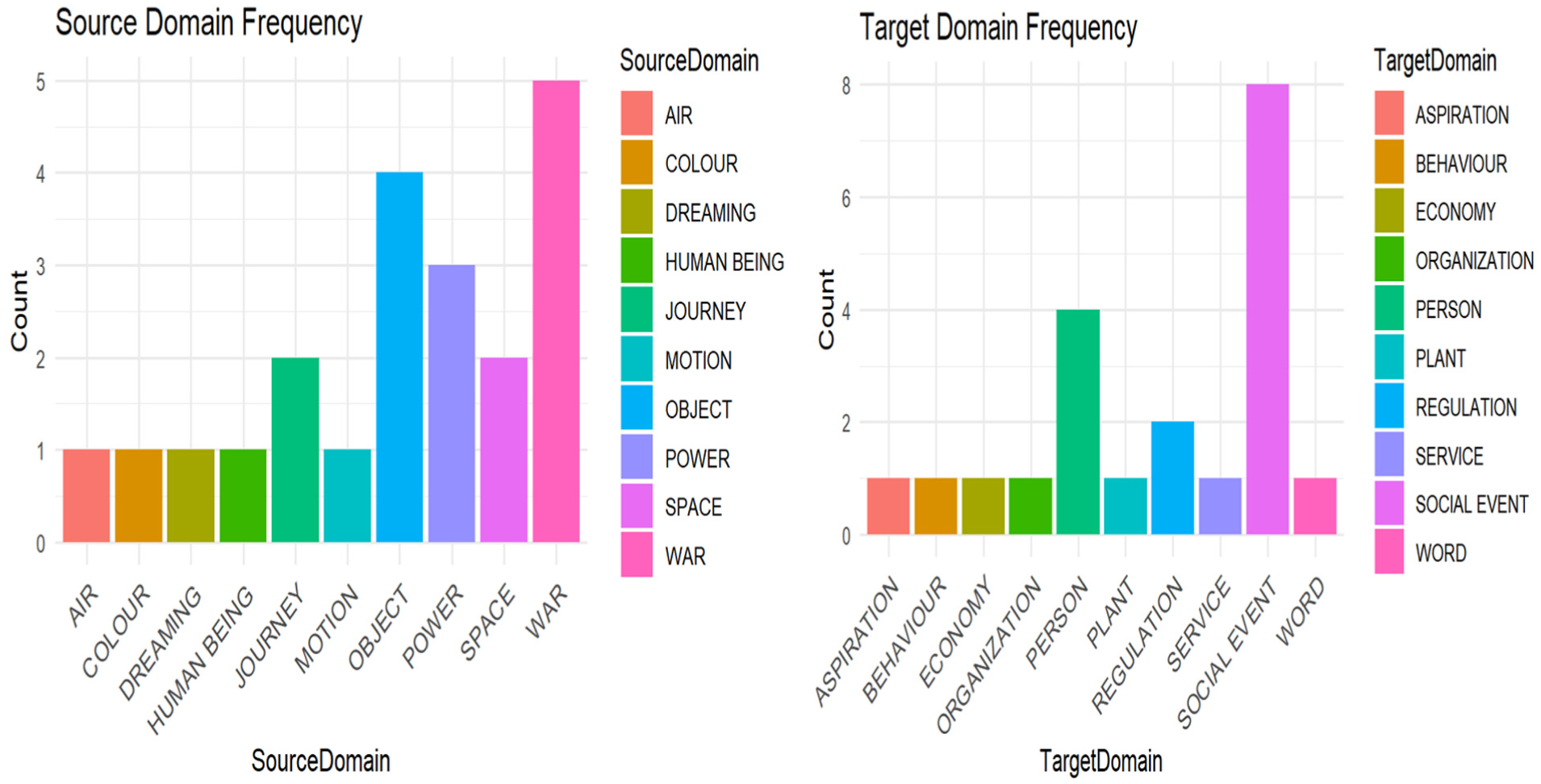
Source domains and target domains in the official group.
The analysis reveals that the top three source domains used in official signage are WAR, OBJECT, and POWER, while the most common target domains are SOCIAL EVENT, PERSON, and REGULATION. Given the diversity of source/target mappings observed, the dataset was further refined to highlight the most frequently occurring conceptual metaphors. To facilitate clearer visualization and interpretation of these patterns, heat maps were generated, allowing for the identification of dominant conceptual mappings and their distribution across the dataset.
Figure 4 presents a heat map generated using the R programming environment. In the visualization, lighter colors indicate higher frequencies of conceptual metaphor occurrences. The X-axis represents source domains, while the Y-axis corresponds to target domains. Based on this analysis, the three most frequently used conceptual metaphors identified in official signage are A SOCIAL EVENT IS WAR, A PERSON IS AN OBJECT, and A SOCIAL EVENT IS A JOURNEY.

Heat map of the frequency of conceptual metaphors in the official group.
A Social Event Is War
In the LL of Shanghai, metaphors based on the WAR source domain are especially prominent in official discourse. These metaphors conceptualize social challenges as battles requiring collective action, discipline, and alertness. For example, a public sign collected from the Biyun Community (see Figure 5) reads: Please Wear a Mask and Keep a Safe Distance of More Than One Meter.
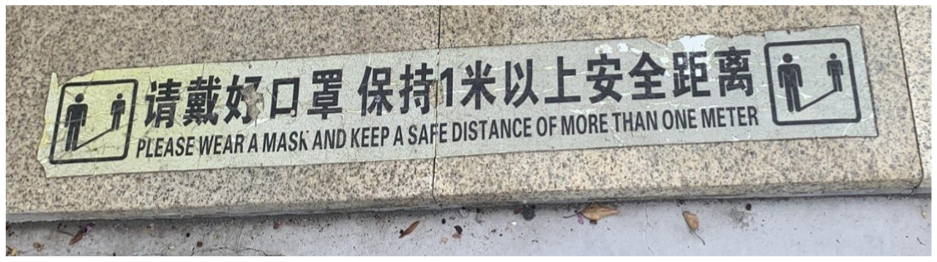
The sign from the public fitness areas in Biyun community.
At first glance, this may appear as a neutral health directive. However, when contextualized historically, it reflects a wartime metaphor employed during the COVID-19 pandemic (2020–2023). While public anxiety may have decreased in the post-pandemic era, individuals who experienced those years immediately recognize this discourse as part of a broader communicative strategy during national crisis management. Public signs often carry embedded historical and cultural meanings, functioning not only as directives but also as reminders of shared societal experiences.
China’s pandemic response was characterized by comprehensive and strict control measures, justified by the country’s large population and population density. In 2021, for instance, mass nucleic acid testing was conducted nationwide. Signs such as the one above were prominently displayed in residential areas, instructing community members to queue at designated testing locations while maintaining physical distancing. The use of WAR metaphors (e.g., combat the virus, frontline workers, protective measures) frames the pandemic as a battle and positions citizens as soldiers, reinforcing notions of collective duty and discipline, which evolve from physical interaction with the surroundings (Johnson, 2013). Moreover, there is a great amount of literature that identified the WAR metaphor in the epidemic incident, such as Lahlou and Rahim (2022), Panzeri et al. (2021), and Musu (2020).
This metaphor serves a dual cognitive and communicative function, and it simplifies a complex public health situation and motivates compliance through emotionally resonant framing.
The phrase safe distance does not suggest that individuals will suffer physical harm if they fail to remain within a designated area. Instead, it metaphorically conveys the invisible threat of viral infection, framing physical space as a protective barrier. The term safe, which conventionally denotes being free from danger or harm, is extended metaphorically to describe the interpersonal distance necessary to avoid contracting COVID-19. This figurative use reflects a broader conceptual metaphor: DISEASE IS WAR, wherein spatial and behavioral precautions are linguistically framed as forms of defense or combat.
Another example of the WAR metaphor in official signage appears in Figure 6, a billboard located in the Biyun Community, which reads Pudong New Area Strives to Become a Model of National Civilized City. Here, the use of the verb strive evokes a sense of “ongoing effort, struggle, or campaign”, drawing implicitly on the WAR metaphor to portray urban development as a battle for moral, social, or cultural achievement. The underlying conceptual metaphor, A SOCIAL COMPETITION IS WAR, frames civil development not as a gradual process but as a strategic and determined fight toward national recognition.

The sign from a road in the Biyun community.
The verb strive originates from the WAR domain and shares semantic proximity with other conflict-related verbs such as win, lose, fight, and combat. According to the Collins English Dictionary (2014), the basic (literal) meaning of strive is “to be in conflict, struggle, or fight” (sense 2), which denotes a physical confrontation. In contrast, its contextual meaning is “to make great efforts to achieve something” (sense 1), referring to abstract pursuits such as personal goals, social progress, or institutional development. This shift from physical to abstract domains exemplifies conceptual metaphor mapping, specifically, A SOCIAL EVENT IS WAR. In this mapping, the physical experience of fighting or struggling (source domain) is projected onto the abstract domain of goal pursuit or competition (target domain). It evokes the metaphorical framing of the social event of competition, situating civic progress as a contest requiring energy, discipline, and resistance against obstacles.
Similarly, the call for collective effort in pursuing national and social goals is frequently articulated through metaphorical language in official signs. Figure 7, taken from a public area in the Biyun Community, features the slogan Road to Environmental Protection, Road to Harmonious Civilization. This phrase reflects two key conceptual metaphors: A SOCIAL EVENT IS WAR and A SOCIAL EVENT IS A JOURNEY.

The sign from a park in the Biyun community.
First, the conceptual metaphor A SOCIAL EVENT IS WAR is evident in the framing of environmental protection. In this conceptualization, the “enemy” is environmental degradation or those contributing to it, protection refers to defending against this threat, and “victory” is achieved through the successful preservation of the environment. The metaphor aligns with typical WAR-related elements such as threat, defense, and triumph, thereby casting environmental initiatives as part of a collective struggle that demands discipline, coordination, and action.
Second, the conceptual metaphor A SOCIAL EVENT IS A JOURNEY is activated by the term road, which is not used literally, but metaphorically to represent a structured course of action, policy trajectory, or social campaign. In this framework, the abstract goals of environmental protection and harmonious civilization are conceptualized as destinations, while the process of achieving them is understood as walking a path. This metaphor is particularly pervasive in official discourse, reinforcing the idea that social transformation occurs gradually, through deliberate and sustained efforts.
The JOURNEY metaphor serves several cognitive functions: it frames social ideals in familiar spatial and temporal terms, provides a sense of direction and purpose, and evokes a processual model of change, one that is guided (goal-oriented), unfolding (step-by-step), and affirmative (imbued with optimism and values). In this way, metaphors help make abstract societal ideals, such as environmental sustainability and civil harmony, more comprehensible and acceptable to the public.
Both harmonious civilization and environmental protection are central tenets of contemporary Chinese socio-political discourse. Their metaphorical framing as a war and a journey not only reflects the country’s collective will and strategic planning but also promotes a vision of progress grounded in shared responsibility, long-term commitment, and national development. The source domain of JOURNEY is thus systematically mapped onto the target domain of SOCIAL EVENT, exemplifying how metaphor serves as a cognitive tool for public communication and ideological framing.
In general, the conceptual metaphor of A SOCIAL EVENT IS WAR can be manifested in Figure 8.
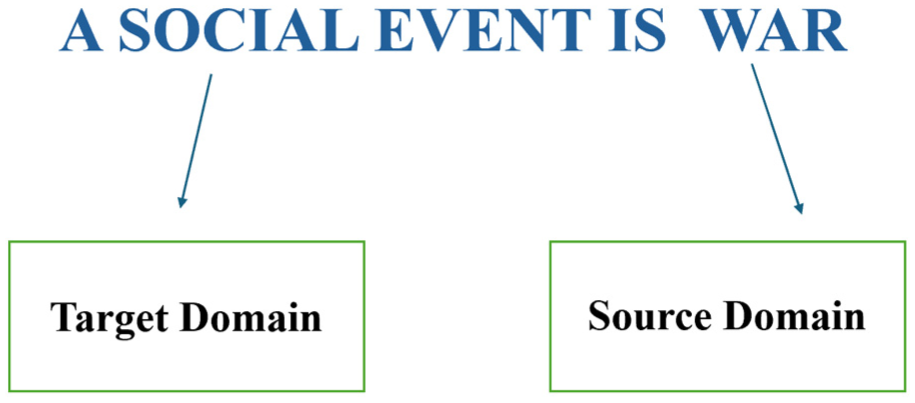
The representation of the conceptual metaphor A SOCIAL EVENT IS WAR.
A Person Is an Object
Official signage not only conveys regulatory information but also reflects a city’s image, particularly its values of tolerance, inclusivity, and social etiquette, thereby contributing to the construction of a positive civic identity. The accessibility for individuals with impairments is frequently mentioned explicitly in official signs, especially in government-owned establishments like banks. They frequently use more euphemistic language to show their caring and inclusiveness. Such signage, on the other hand, is rarely seen in privately owned facilities, such as shopping centers and supermarkets, indicating a disparity in diversity and representation across various contexts.
Figure 9, photographed outside a government-owned bank, contains the English text wheelchair accessible. In this context, the wheelchair, though merely an assistive device, stands in for the person with a disability. A wheelchair does not have a will or ability to walk through the entrance, but the person who uses it can access the building. The object of a wheelchair is mapped onto a disabled person. Though the target domain of a person is concrete, the conceptual meaning embedded in this phrase requires encyclopedia knowledge to make sense of it, thus highlighting the pervasive use of an OBJECT for a PERSON in public signage.
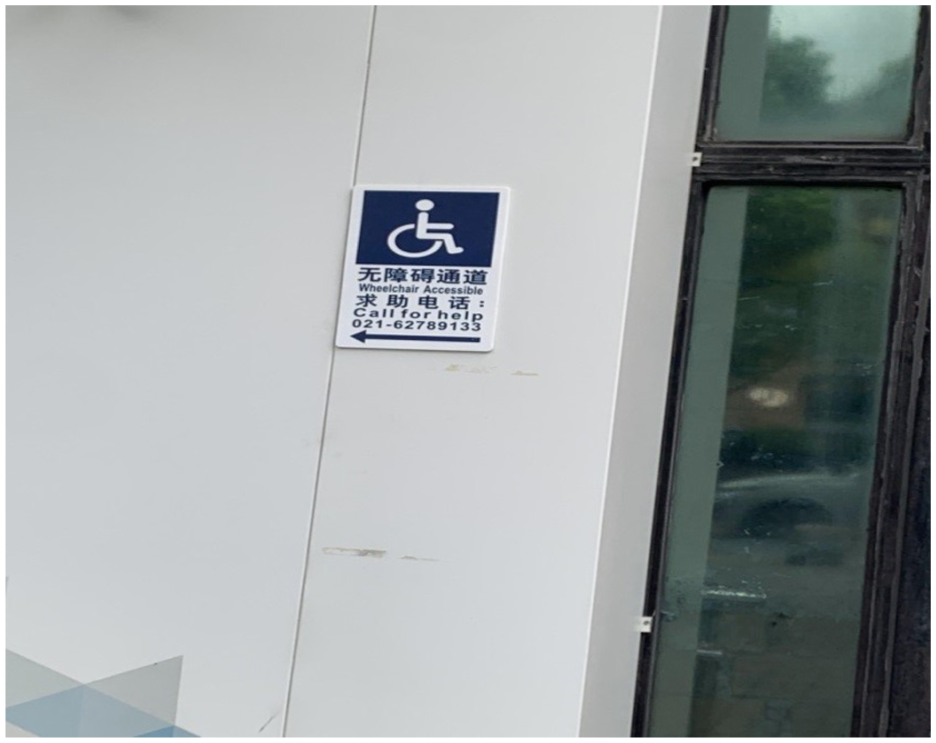
The wheelchair sign on the outside of a bank in the Gubei Community.
Furthermore, this is also a metonymic expression (Steen et al., 2010) that exemplifies the commodification of physical aids as representations of individual identity. This conceptual structure is based on metonymic thinking, which is a form of cognitive mechanism as well. It can be outlined through the mapping of domains, even if they belong to the same conceptual domain rather than distinct ones (Forceville, 2009). The phenomenon has been discussed (Lakoff & Johnson, 2003; Steen et al., 2010) in cognitive linguistics, where instrumental objects are cognitively mapped onto human agents. In this case, the wheelchair, a tool, is substituted for the person who uses it as a whole.
Nevertheless, this conceptual phrase is established between two distinct domains, PERSON and OBJECT. It is important to note that the word disability is not directly used in the image, reflecting a cultural tendency toward euphemism. Physical inconveniences are often referred to as disabilities. The use of a facility wheelchair to represent disability demonstrates courtesy and politeness, aiming to show respect to audiences. The conceptual mapping used here is WHEELCHAIR FOR DISABILITY or A PERSON IS AN OBJECT.
A Social Event Is a Journey
The example of the JOURNEY metaphor has already been given in Figure 7. Here’s an example from a state-owned bank. Figure 10 presents a sign collected from the outside wall of an official bank, which reads Centennial Voyage.

The sign from outside of a bank in The Bund.
There are two words in the phrase. Centennial refers to the celebration of a 100th anniversary or the completion of a period of 100 years. The 100-year history of an enterprise signifies a time-honored brand, which in China represents responsibility, reliability, and the ability to safeguard people’s money properly. Voyage, on the other hand, refers to the act of traveling by water to a distant place. Unlike ordinary travel, sailing is often more challenging and rewarding. Throughout human history, the call of the unknown has driven explorers to embark on bold voyages to uncharted waters. Motivated by excitement for discoveries and the hope of acquiring new knowledge and wealth, these intrepid explorers courageously ventured into the unknown. The conceptual metaphor is illustrated in Figure 11.

The representation of the conceptual metaphor a social event is a journey.
Private Group
The result in the private group is visualized in Figure 12, which lists the variety of source/target domains in conceptual metaphors used by commercial shops and institutions.

Source domains and target domains in a private group.
There are up to 16 source domains, whose top three are HUMAN BEING, TASTING, and PAINTING/MOTION (sharing the same number of occurrences). The top three target domains are MENTAL STATUS, ORGANIZATION, and SERVICE/SOCIAL EVENT/LIFE (sharing the same number of occurrences) within the 14 varieties.
At the same time, with the help of a heat map generated by R, the collocation is straightforward in Figure 13. The commonly used conceptual metaphors are AN ORGANIZATION IS A HUMAN BEING, MENTAL STATUS IS TASTING, and A SOCIAL EVENT IS A JOURNEY

Heat map of the frequency of conceptual metaphors in a private group.
An Organization Is a Human Being
Among all metaphorical expressions found in the private group, personification ranks highest. A large number of signs were identified that compare human beings with organizations or services, reflecting the widespread use of personification in public signage. A human being, as a living entity, is a complex organism composed of various organs and systems that work together to perform specific functions essential for sustaining life. However, the significance of the human body extends well beyond its biological functions. As Wieczorkiewicz (2000) succinctly observes, the body enables a person to occupy both time and space, thereby facilitating existence in the material world.
Additionally, the body is unique in that it is the only object a person can experience both “from the outside,” in the same way one perceives other people and objects, and “from the inside,” as when one feels internal sensations such as the accelerated beating of one’s own heart, an observation grounded in a philosophical perspective. This dual perception aligns with principles in cognitive linguistics, where human beings, as living entities, function as embodied experiencers who engage with and conceptualize the world. General biological characteristics of living organisms, such as breathing, eating, sleeping, and possessing energy, are frequently projected onto non-human entities through metaphors. For instance, a sign found in a grassland reads, The grass is smiling at you. Please detour (see Figure 14). Here, the grass is personified, endowed with the human ability to smile, reinforcing the metaphor GRASSLAND IS A HUMAN BEING. This type of ontological concept reflects an embodied mode of understanding that relies on human features as a cognitive reference point for interpreting non-human entities.

The sign in the interior area of a shopping center near the Gubei Community.
The grassland is portrayed as a human being who can express emotions, such as a smile. The personification of the grassland is based on the source domain of HUMAN BEING to the target domain of OBJECT in the form of the grassland. The metaphorical use can evoke the audience’s consciousness of the preservation of the grassland.
An example, presented in Figure 15, is the large-scale shopping center named Innovation Mix, abbreviated as IM. In the dining area, to promote the variety of restaurants, a sign reads, I’M HUNGRY. Here, the concrete building is anthropomorphized as a living object capable of feeling hunger. This playful portrayal of the building as “alive” conveys humor and offers consumers a sense of connection, evoking a biological response to the building itself.
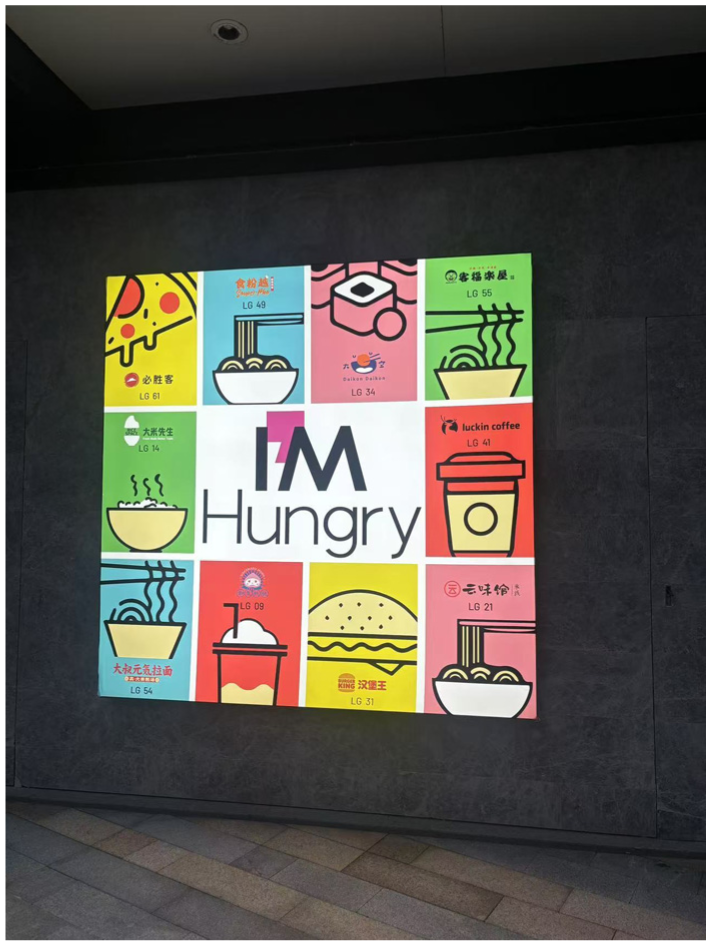
The sign from the dining facilities’ advertisement in a Shopping Center of Gubei community.
The sign shown in Figure 16 reads We are coming. We refer to a clothing brand newly introduced by the mall. This brand is anthropomorphized, like a person saying, “We are coming,” which gives the message a playful and endearing tone.

The sign from a shopping Center in the Xin Tiandi area.
The conceptual metaphor underlying those linguistic metaphors can be illustrated in Figure 17.

The representation of the conceptual metaphor of an organization is a human being.
A Mental State Is Tasting
In the LL, restaurants, coffee shops, and bars display creative signs on their windows or doors, striving to evoke the sensory experience of food and trigger the desire to make a purchase. Some metaphorical expressions are rooted in the food and taste perception domain. Perception serves as the primary foundation for human cognition of the world (Peng, 2019). Taste, one of the five human senses, plays a significant role in the cognitive process. It not only enables one to perceive and experience the world but also serves as a medium through which understanding the world is expressed (Wang, 2010). From a cognitive perspective, taste, along with its associated organ, forms the foundation for interacting with physical objects. This interaction then maps understanding onto mental activities based on similarities.
For instance, in Figure 18, the sign outside a British restaurant reads “a taste of everyday life,” metaphorically linking everyday experiences with the sensory domain of taste.

The sign from a British restaurant in the Xin Tiandi area.
The incongruence of domain mappings is particularly evident in this expression. The taste domain associated with natural food is mapped onto the domain of life experience. There are two levels of conceptualization in the phrase A taste of everyday life. At the first level, the object of tasting is literal food, such as bread, fish, steak, and other dishes. At the second level, the British-themed environment of the restaurant creates a specific physical and cultural atmosphere that elicits a pleasant sensory experience. Diners are not only consuming authentic British cuisine but also engaging with an imagined experience of British daily life. In this sense, what is being “tasted” extends beyond food to include a lifestyle or cultural routine, thereby eliciting psychological satisfaction.
This metaphorical comparison operates across the domains of FOOD TASTING (source domain) and MENTAL STATE (target domain). By employing the taste metaphor, the language becomes more vivid and concrete, allowing abstract experiences to be understood through embodied sensory terms. The sign emphasizes that customers will find satisfaction not only in the natural flavors of the food but also in the emotional gratification it brings. The metaphorical mapping thus creates a connection between natural tastes and emotional states.
The taste domain includes not only the natural flavor of food but also the action of tasting. Figure 19 was taken from a luxury coffee shop in the Xin Tiandi area, which differs from common fast-service coffee bars. On the window of this upscale establishment, the text reads For You to Savour the Indulgence.

The sign from a coffee shop in the Xin Tiandi area.
The phrase can be analyzed using two lexical units: savour and indulgence. First, savour, as a verb, means “to eat or drink slowly to taste the full flavor of something,” allowing the quality of a substance to be perceived through the senses of taste and smell. Additionally, according to Collins English Dictionary (2014), savour is no longer limited to “the act of eating or drinking” but can also refer to “a state of enjoyment,” such as delight in, appreciate, or relish. In this context, the enthusiastic emotion is conceptualized as food, something that can be tasted or consumed.
This establishes a connection between the TASTING domain and the MENTAL STATE domain, as shown in Figure 20.

The representation of the conceptual metaphor of a mental state is tasting.
A Social Event Is a Journey
JOURNEY metaphor enjoys frequent use in both official and private groups. In the classic conceptual metaphor, LIFE IS A JOURNEY, by imagining two significant points in a person’s life, birth and death, one can draw a parallel between life and a journey, as both have a beginning and an end. The various stages of life mirror the different segments of a journey, connecting the entirety of a person’s life to the concept of travel. In private signs, the JOURNEY metaphor was found to be mapped onto various social events, such as entrepreneurial development or shopping process, where individuals or groups move toward specific goals or outcomes.
Figure 21 was taken from the window of a coffee shop and reads, In 1971, Starbucks opened in Seattle’s Pike Place Market and began a journey that has taken our coffee around the world. The text introduces the origin and development of this coffee shop, using the metaphor of a JOURNEY. This metaphor draws on the conceptualization of a journey, which implies a starting point and a dynamic process with ups and downs. However, the metaphor of a journey is not limited to land travel.

The sign from the outside window of a coffee shop in the Xin Tiandi Area.
The sign in Figure 22 was taken from an art exhibition, which reads This is not merely an exhibition, but also a journey of life. The visit to the art exhibition is mapped on the journey. From the linguistic expression, exhibition is bridged with journey, which is a straightforward comparison between two domains.

The sign from The Bund.
This conceptual metaphor is further illustrated in Figure 23.
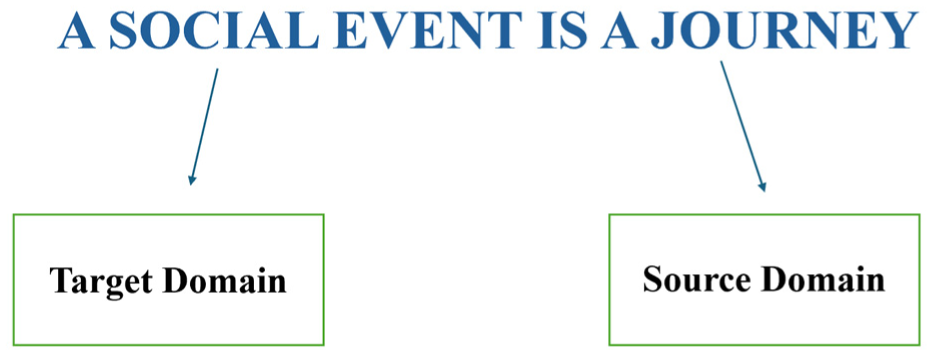
The representation of the conceptual metaphor a social event is a journey.
Life Is a Painting
In the collected sample of private signs, a variety of creative and innovative metaphorical expressions are observed. Unlike official signs, which are designed by governmental institutions, private signs are produced by commercial entities such as shopping centers, travel agencies, bars, and hair salons. The primary function of the linguistic landscape created by governmental bodies is to regulate behavior and provide informational guidance. In contrast, the objective of the private linguistic environment is to distinguish these entities from competitors, offer consumer choices, and promote consumption. Many of the linguistic metaphors found in private signage are novel and require a broader application of conceptual and contextual knowledge for their identification and interpretation.
In Figure 24, the sign collected from a cosmetics store features the phrase COLOR YOUR REALITY. This phrase suggests that cosmetic products, with their diverse range of colors, have the potential to make life more vibrant and engaging. Metaphorically, the use of makeup is framed as a transformative act, one that can alter perception and create a world beyond ordinary experience, symbolized here by a world of pink. Such metaphorical expressions are intended to influence consumers’ psychosocial processes by reshaping their understanding of self-presentation and reality through product use.

The window of a cosmetic make-up store in the Xin Tiandi area.
The lexical unit of color can be analyzed by a straightforward approach to find incongruence in its basic and contextual meanings. The basic meaning of color is to “use something such as dyes or paints to change its color” (Collins English Dictionary, 2014), and its contextual meaning is to influence ( Merriam-Webster, 2004 ). In Color your Reality, the basic meaning is “concrete and concerns a bodily experience in using pigments or dyes to change the color in the grounding,” while the contextual meaning is abstract and concerns “a psychological attitude toward life.” The incongruence is constructed by changing the color in the canvas to influence the life status or psychological movement. In the context of the basic meaning, the use of pigment allows individuals to apply color to objects, an act closely related to the activity of painting. In ancient times, people learned to use dyes and pigments to record events and issues on rock surfaces, transforming gray and black rocks into colorful canvases. Before painting became an art form, it served as a significant means for humans to document their lives, communicate with others, and express their perceptions of the world.
The expression in Figure 25 conveys that the paintings are intended for the viewer, emphasizing the personal significance of art in one’s life. Here, COLOR functions metaphorically, symbolizing the services or experiences offered by the art exhibition. In this context, color transcends its literal meaning and acquires a deeper symbolic significance, consistent with the characteristics of metaphor. This creates an intentional incongruity between color and artworks.

The sign from a gallery in the Gubei community.
Perception is a fundamental human ability that allows interaction with the world, encompassing various sensory experiences, such as those of vision and touch. The perception of colors in the physical world gives rise to a range of metaphors grounded in the conceptual metaphor LIFE IS A PAINTING. Color is associated with metaphorical meaning and emotion based on the sensory organ, which has been broadly discussed before, such as blue for sadness, red for anger, and yellow for brightness (e.g., Fetterman et al., 2012; Jonauskaite et al., 2020; Trim, 2007). Numerous metaphorical expressions describe one’s life as black and white, gray, dark, or devoid of color, while others characterize it as colorful and vibrant. People use color to conceptualize and describe the structure of their lives, creating a rich set of metaphors that vividly convey life experiences. The conceptual metaphor, LIFE IS A PAINTING, is illustrated in Figure 26.

Conceptual metaphor of life is a painting.
Discussion
After analyzing the data to identify and categorize the metaphors in the LL of four research sites in Shanghai, China, a total of 428 pictures were identified, encompassing both official and private signs. The first research question focused on investigating the density of metaphors in public spaces, employing the MIPVU in a bottom-up approach. The findings indicate that, similar to other genres such as conversation, news, fiction, and science (Kövecses, 2018; Steen et al., 2010; Lahlou & Rahim, 2016), metaphors prevail in the context of LLs, assisting viewers in conceptualizing one concept through the lens of another.
To address the second research question, which sought to compare the preference for conceptual metaphors across official and private signs, this study was guided by the source-target domain mapping framework (Lakoff et al., 1991) and visualized the results using R. The analysis reveals that official and private signage not only differ in terms of code choice (Backhaus, 2007; Han & Shang, 2004) but also exhibit significant differences in conceptual elaboration. These differences are closely tied to both social factors and cognitive mechanisms, which are further explained below.
Metaphors in official signs serve as discourse embodiments of power, not merely as symbolic indicators, but as representations of social control and shaping by the state, government, or authoritative entities. Through continuous processes of socialization and normalization, these metaphors are gradually constructed within the authority of official discourse. As an inescapable component of daily life, signs in the LL convey specific ideologies and values to the public through verbal symbols (Ben-Rafael et al., 2006). They shape individuals’ identification with authority and, in turn, influence collective social behavior and the maintenance of social order. Authorities adopt language in official discourse to reinforce their power, as seen in metaphors like WAR and JOURNEY. These metaphors invoke a sense of alertness and obedience among residents. Meanwhile, private signage also reflects the real exercise of linguistic power in citizens’ lives (Su, 2017), often using more modest language, as illustrated by the HUMAN BEING metaphor. Language should not be confined to its surface-level meaning but must be understood in relation to the social phenomena it reflects. This perspective is effectively elaborated by Lefebvre’s (1991) triadic conception of LL space. The perceived space is the material space where social participants are actively involved in mundane reality, reflecting the “production and reproduction, and the particular locations and spatial characteristics of each social formation” (p. 33). The lived space pertains to the space where inhabitants and users engage in their daily routines, while the conceived space is the space managed by decision-makers such as scientists, politicians, and planners, who navigate and structure social reality. In those spaces, the metaphor becomes an indicator to reveal social powers.
In addition to the dichotomous classification of LL, Landry and Bourhis (1997) also defined two primary functions of LLs: informative and symbolic. The contrasting use of metaphors in the two groups highlights these distinct functions. The primary function of official signs is guidance and management, providing clear and standardized traffic information and behavioral norms in public spaces through a unified design. The metaphors in these signs serve to ensure clarity, consistency, and control, enabling the public to understand and follow instructions quickly and accurately, thereby maintaining social order and public safety. Moreover, the role of metaphors in official street signs extends beyond mere guidance but subtly shapes the public’s perception of authority. In contrast, private street signs are primarily aimed at marketing and survival. The metaphors conveyed by commercial brands, advertising agencies, and businesses through private street signs focus on drawing attention, creating emotional resonance, and establishing a distinctive brand identity with potential consumers. The metaphorical use of private signage goes beyond conveying commercial information. It often enhances brand appeal and fosters market competition through visual artistry, creative expression, and emotional connection, such as the PAINTING metaphor. Therefore, metaphors in both groups serve not only an informative function but also a symbolic one, contributing to the construction of authority identity in the case of official signs, or the establishment of brand culture in the case of private signage.
Moreover, construal, as a cognitive mechanism, plays a decisive role in understanding metaphors. It can be interpreted as the process of reasoning and understanding a more abstract domain through a more concrete or physical domain, based on one’s encyclopedic or general knowledge (Kövecses, 2010). In metaphor interpretation, it is essential to read beyond the words themselves, with construal playing a key role in yielding relevance (Forceville, 2024). The current study highlights the critical role of construal in exploring meaning within LL, where public spaces, with visible inscriptions created through deliberate human intervention, reflect a socio-cultural process of interpretation (Kallen, 2010).
The construal of metaphors varies, and the results indicate that official signage predominantly favors structural metaphors, such as WAR, while private signage exhibits a higher frequency of ontological metaphors, particularly the HUMAN BEING metaphor. In structural metaphors, the source domain provides a rich knowledge structure for the target domain. The cognitive construal of these metaphors enables viewers to understand target domains through an overall gestalt, allowing for a more cohesive and structured interpretation. In contrast, ontological metaphors offer less structure for the target concept. Personification is conceived as a form of ontological metaphor (Kövecses, 2010). Ontological metaphors play a crucial role in transforming abstract, vague concepts into more structured and comprehensible forms. They enable us to conceptualize abstract or intangible ideas by personifying them, even when these concepts lack a clear, physical form (Lakoff & Johnson, 2003). Through this process, ontological metaphors help us understand and describe complex, abstract ideas in more tangible and familiar terms. However, their cognitive utility is often limited to providing a basic, crude framework for understanding. These metaphors typically result in generalized and somewhat imprecise representations of abstract concepts, which serve as a foundation for further structural development. Since ontological metaphors generally rely on highly general categories, such as objects, substances, and containers, our understanding of the target concepts at this stage remains relatively limited. In contrast, structural metaphors are more effective in offering a detailed and coherent structure that facilitates deeper insight into abstract domains. They provide a more sophisticated means of organizing and understanding abstract concepts, building upon the foundational framework laid by ontological metaphors. Thus, ontological metaphors provide a basic, foundational understanding of abstract concepts, which are later refined and elaborated upon by structural metaphors. While ontological metaphors lay the groundwork for conceptual clarity, structural metaphors enable more nuanced and complex interpretations by offering a detailed cognitive framework (Johnson, 2013; Kövecses, 2010, 2020). This distinction deepens our understanding of the differing preferences between official and private signs, suggesting that private signs tend to rely on simpler, more general metaphors to attract a broader audience, while official signs use more complex and detailed conceptualizations to capture the public’s attention.
Conclusion
In summary, this paper examines the representation of metaphors in the LL of Shanghai, China, an area that has yet to receive significant attention. Grounded in the conceptual framework of Conceptual Metaphor Theory, the study presents a novel approach for investigating communication in public spaces. It enhances our understanding of how metaphors are employed by both official and private signs. The study demonstrates that the prestige and power of social actors are constructed and perceived through specific cognitive mechanisms from a metaphorical perspective. Thus, it asserts that metaphors are not merely linguistic phenomena, but also spatial and social practices. Furthermore, the construal of different types of metaphors contributes to the existing literature and offers valuable insights for urban planning and management. The findings suggest that city planners could enhance urban culture by incorporating more diverse and dynamic metaphorical expressions. At the same time, it is important to reflect on whether official discourse is overly rigid and whether adopting more people-friendly metaphors could improve communication and accessibility.
This study has certain limitations, including its exclusive focus on verbal forms and the limited data calculation approach. Expanding the analysis to include non-verbal forms, such as pictorial metaphors, could offer deeper insights into the cognitive mechanisms at play in the LL. Additionally, future research could incorporate interviews and questionnaires to explore the conceptualization process of metaphors in the LL from the perspective of the audience.
Supplemental Material
sj-xlsx-1-sgo-10.1177_21582440251408702 – Supplemental material for A Comparative Cognitive Linguistic Investigation of Linguistic Landscapes in Shanghai, China
Supplemental material, sj-xlsx-1-sgo-10.1177_21582440251408702 for A Comparative Cognitive Linguistic Investigation of Linguistic Landscapes in Shanghai, China by Jun Zhou, Hicham Lahlou and Yasir Azam in SAGE Open
Footnotes
Author Contributions
Jun Zhou: conceptual framework, data documentation, data processing, data analysis, writing the manuscript, revision, and responding to the reviewers. Hicham Lahlou: supervising, and data processing and verification. Yasir Azam: proofreading the revision.
Funding
The authors disclosed receipt of the following financial support for the research, authorship, and/or publication of this article: This work is supported by Anhui Provincial Philosophy and Social Sciences Office under Grant Number: AHSKQ2022D183.
Declaration of Conflicting Interests
The authors declared no potential conflicts of interest with respect to the research, authorship, and/or publication of this article.
Data Availability Statement
The data that support the findings of the study are available in Figshare at https://figshare.com/s/98326b14d8983aec92ca,  .
.
Supplemental Material
Supplemental material for this article is available online.
References
Supplementary Material
Please find the following supplemental material available below.
For Open Access articles published under a Creative Commons License, all supplemental material carries the same license as the article it is associated with.
For non-Open Access articles published, all supplemental material carries a non-exclusive license, and permission requests for re-use of supplemental material or any part of supplemental material shall be sent directly to the copyright owner as specified in the copyright notice associated with the article.
