




Abstract
Strengthening the foundation of basic research is crucial for building a technologically advanced nation and enhancing the technological innovation capacity of enterprises. Using data from Chinese A-share listed companies from 2010 to 2019, this study investigates the impact of basic research on corporate innovation and explores the underlying mechanisms. We find an inverted U-shaped relationship between basic research and corporate innovation, with the optimal intensity of basic research being 14.74%. In 17 provinces in China, it has been found that basic research has a positive effect. The integration of basic and applied research is conducive to promoting innovation in enterprises, with an optimal balance between the two being crucial. The mechanism tests reveal that basic research influences enterprise innovation through signal transmission, agglomeration, and talent effects. Further analysis indicates that higher local government efficiency is associated with more effective promotion of enterprise innovation through basic research. Moreover, basic research plays an “incubation” role, significantly enhancing the innovation capacity of private and small-scale enterprises.
Introduction
Over the past four decades, since the economic reforms and opening-up policies, China’s understanding and strategic orientation toward technological innovation have evolved. Initially focused on a model of “importing, digesting, absorbing, and reinnovating,” which undervalued basic research, the country has shifted toward emphasizing independent innovation driven by basic research. Since 2010, this shift has been particularly evident. However, despite this change in perspective, the share of basic research funding as a percentage of total R&D expenditures in China has long hovered around 5%. From 1995 to 2018, the intensity of investment in basic research remained below 6%, only reaching 6.03% in 2019 and further increasing further to 6.16% in 2020 (Figure 1). Although progress has been made, this figure is still significantly lower than the 15% to 20% share seen in developed countries. In recent years, the proportion of invention patents in China has not exceeded 20% from 1995 to 2020, and there has even been a declining trend (Figure 1). The distribution of patents in China also shows a relatively low proportion of invention patents and an excessively high proportion of utility model patents (Figure 2). This clearly indicates that, despite significant progress in China’s basic research in recent years, a substantial gap remains compared to the international frontier, and the country continues to face pressing and formidable challenges. In the process of strengthening basic research, addressing major national practical needs, reinforcing forward-looking planning, and ensuring stable and sustained investment have all become key priorities in China’s relevant policies for basic research. Consequently, several critical questions arise: Has China’s basic research facilitated enterprise innovation? Furthermore, how does basic research influence innovation within Chinese enterprises? Additionally, given that strengthening basic research is a major national strategic initiative, local governments across China have increased investments in both policy and funding for basic research. Is this response strategy aligned with China’s current national conditions? Clearly, within the complex current context, these are critical practical issues that the academic community must explore in depth.

Distribution of the number of patents granted and the intensity of basic research.

Distribution of the three types of patents granted.
The relationship between basic research and economic growth has been one of the key topics in economic literature over the past three decades. Studies directly exploring the link between basic research and innovation are relatively scarce. The existing literature primarily focuses on three areas: the impact of basic research on economic growth, the relationship between basic and applied research, and the connection between basic research and productivity. Regarding the growth effect of basic research, endogenous growth theory posits that basic research fosters technological progress and increasing returns to scale, thereby playing a pivotal role in economic growth. This has been widely confirmed in subsequent studies (Prettner & Werner, 2016). The mechanisms through which basic research exerts its impact can be summarized in six aspects: increasing the stock of useful knowledge, training skilled personnel, creating new scientific tools and methods, forming networks and promoting social interactions, enhancing problem-solving abilities in science and technology, and fostering new enterprises (Akcigit et al., 2021). Basic research not only has significant lag effects but also increases short-term costs through its impact on taxation and labor allocation. Therefore, there should be a U-shaped non-linear relationship between basic research and economic growth (Cao et al., 2023). In the vertical innovation model of intermediate goods proposed by Cabanes et al. (2024), R&D activities are divided into basic research and applied research, which raises the discussion of the relationship between these two types of research. Basic research provides the knowledge foundation for the emergence and growth of new industries, playing a crucial role in their continuous development by generating breakthrough theories that expand the frontier of knowledge (Ufuk et al., 2013). Applied research, on the other hand, generates secondary knowledge based on the new knowledge frontier, converting the outcomes of basic research into the technological blueprints, intermediate goods, or commercializable products required for the final product (Cozzi & Galli, 2009; Nguyen et al., 2023). There exists a bidirectional spillover effect between basic and applied research, which ultimately contributes to the innovation process of the final product (Gersbach et al., 2018). Examining the technology catch-up experiences of developing economies, some scholars have pointed out that an overemphasis on applied research in R&D investment strategies may suppress industry productivity. Only when applied research is also at the forefront of knowledge can strengthening basic research mitigate the negative effects of applied research on total factor productivity growth (Gersbach et al., 2018). Regarding the relationship between basic research and productivity, most literature suggests that basic research is key to generating “creative destruction,” which can enhance productivity by accelerating the rate of new technology adoption and the obsolescence of old technologies (Krieger et al., 2021). However, the contribution of basic research to productivity can be influenced by factors such as the knowledge stock and absorptive capacity (Leten et al., 2022). Additionally, if basic research is mismatched with a country’s factor endowments, its impact on productivity may be uncertain.
Through the literature review, it is evident that mainstream literature rarely focuses on basic research issues in developing countries, possibly due to the traditional assumption of innovation-driven economic catch-up in developed economies (Pegels & Altenburg, 2020). Moreover, it often employs the basic framework of endogenous growth theory to discuss the impact of basic research on economic growth at the macroeconomic level, with little emphasis on the relationship between basic research and firm-level innovation. When the international division of labor and cooperation system does not operate according to market principles, the diffusion of technology between developed and latecomer economies faces significant constraints. This forces firms in latecomer economies to increasingly rely on domestic basic research for innovation. Thus, a subsequent question arises: Can basic research in latecomer economies effectively promote enterprise innovation, and how? While a small body of literature theoretically suggests that basic research contributes to firms’ access to new knowledge and technological opportunities (Krieger et al., 2021; Wang et al., 2022), it also helps deepen the understanding of natural phenomena, grasp the core principles of industrial technologies, and thus lead to new products and processes (Toole, 2012). Some studies highlight the effects of tax incentives, cooperative platforms, and industrial policy support (Chung, 2025; Kuo & Smith, 2018). However, the returns from investments in basic research across various areas are ultimately reflected in the innovation performance of firms within a country or region. Evidence shows that basic research is primarily funded by the government (Prettner & Werner, 2016) and requires appropriate factor endowments and long-term accumulation of knowledge capital. During its diffusion process, which involves several complex stages before being transformed into innovative outputs by firms, it is influenced by a variety of factors (Czarnitzki & Thorwarth, 2012; Heijman et al., 2016). Clearly, while basic research offers significant social returns, it lacks a direct innovation feedback mechanism. Without the supporting condition of firm innovation capacity, the economic and social benefits of basic research can never be fully realized. Under China’s current system, the central government’s emphasis on strengthening basic research, building national strategic technological capabilities, and promoting high-quality innovation development has quickly garnered active responses and initiatives from local governments. For instance, in 2020, Shenzhen became the first city in China to legislate to ensure that the municipal government’s investment in basic and applied basic research should not be less than 30% of the city’s total funding for scientific and technological research and development. It also established the Municipal Natural Science Foundation to fund basic and applied research and nurture scientific talent. In October 2021, Shanghai launched the country’s first “Special Zone for Basic Research” and set a target for 2025, with a goal of having basic research funding account for approximately 12% of total R&D expenditure. Overall, the government’s active support of basic research is of significant importance for improving the national innovation system. However, given the intrinsic characteristics and development patterns of basic research, it remains an urgent challenge for developing countries to consider how to better coordinate investments from various local governments in strengthening basic research. From a broader development perspective, it is crucial to rapidly establish a mechanism for the collaborative optimization of basic and applied research, build a policy system for continuous reinforcement of basic research, and clarify the mechanisms and constraints through which basic research enhances corporate innovation capabilities.
The key contributions of this paper are threefold: (1) It constructs a theoretical framework to understand the relationship between basic research and corporate innovation, further exploring the mechanisms by which basic research impacts corporate innovation. This framework offers a theoretical basis for examining and evaluating the innovation effects of basic research in China from a micro-enterprise perspective, addressing the current literature’s focus on macroeconomic analyses. (2) It empirically confirms the inverted U-shaped relationship between provincial-level basic research and corporate innovation in China and quantifies the innovation outcomes of basic research investments in various provinces. This provides methodological support and direct empirical evidence for a comprehensive understanding and assessment of the real-world effects of China’s policies to strengthen basic research in the new era. (3) It identifies that the impact of basic research on corporate innovation varies significantly based on government efficiency, enterprise ownership, and size differences. This highlights the critical roles of government efficiency, infrastructure, and enterprise types in local innovation ecosystems. These factors influence the nature of the relationship between basic research and corporate innovation performance, offering a diversified research perspective for understanding China’s policy framework to enhance basic research.
Theoretical Foundations and Assumptions
Basic Mechanisms
Although basic research exhibits clear characteristics of a public good, which requires substantial investment and a long period to generate returns, mainstream economic literature has long recognized it as a crucial driver of technological progress. Its contribution to business and industry development is positive and far exceeds that of applied research and experimental development. One key manifestation is that a significant proportion of new products in certain industries are developed based on the latest findings from basic research (Toole, 2012). Specifically, basic research has contributed to corporate innovation in three key ways: (1) Basic research enhances the components of a firm’s innovation ecosystem, serving as both a source and a key driver of high-level innovation. For both nations and regions, basic research institutions (such as universities or research institutes) are critical parts of the innovation ecosystem. Well-developed basic research institutions, which are equipped with strong laboratories, skilled personnel, and other infrastructure, can provide complementary support to meet the innovation needs of firms, thereby enriching and improving the ecosystem necessary for corporate innovation. In summary, basic research not only provides new ideas and approaches for new R&D projects within firms but also offers more efficient problem-solving methods for the completion of existing R&D projects (Cohen et al., 2002). This ultimately enhances corporate innovation capabilities and performance. (2) New knowledge generated by basic research can stimulate firms to undertake more applied and basic research. As innovation activities become more technically complex, the externalization of corporate innovation has become a new development trend. In this context, while firms may not directly invest in basic research on a large scale, they increasingly rely on external knowledge generated by basic research departments. Relevant studies indicate that the use of external knowledge does not substitute for a firm’s own knowledge creation. Rather, the more knowledge firms utilize from basic research departments, the more likely they are to increase R&D investments to strengthen their internal knowledge innovation efforts. This enables them to more effectively acquire and utilize external knowledge in product development and production processes (Toole, 2012). Thereby, they enhance their absorptive capacity and applied research capabilities, leading to a sustained improvement in their innovation capacity and performance. (3) The knowledge spillover effects of basic research enhance the efficiency of corporate innovation. On the one hand, basic research, as a source of explicit information, can broaden firms’ knowledge channels, effectively stimulate new thinking patterns, and expand the frontiers of knowledge. It also complements firms’ applied research (Aghion & Howitt, 1996). On the other hand, the results of basic research serve as positive signals of innovation for firms, leading more firms to engage in parallel research that follows the developments of basic research. Additionally, the development of basic research reduces the costs of knowledge search and basic experimentation for firms (Arts & Fleming, 2018; Cassiman et al., 2018). This, in turn, narrows the search scope and reduces the time required for firms to explore innovation opportunities, thus improving the efficiency of their innovation decision-making processes. Government departments in regions hosting basic research institutions also have greater opportunities to engage with and understand the cutting-edge trends in technological innovation, thereby creating incentives for policy innovation. In turn, they can provide direction and resource support for corporate innovation, guided by national innovation policies. This not only offers new technological opportunities for firms but may even lead to the development of new technologies by breaking the original technological paths.
In a late-developing economy such as China, although most theoretical frameworks derived from developed country contexts are generally applicable, the relationship between basic research and enterprise innovation needs to be adapted to the country’s factor endowments, historical conditions, and stage of development, taking into account national differences. This raises a number of issues that require in-depth analysis. Theoretically, corporate innovation activities are essentially a systematic project in which basic and applied research are synergistic (Gersbach et al., 2018). They require long-term and sustained investment in basic research to ensure a continuous supply of cutting-edge knowledge and original innovative ideas, alongside corresponding investment in applied research. This synergy generates innovative at the firm level by enabling the application, transformation and commercialization of basic research findings. However, a significant imbalance between basic and applied research efforts may undermine firm-level innovation, even if investment in one area is intensified (Czarnitzki & Thorwarth, 2012). In China, for example, enterprise innovation strategies over the past four decades have largely followed a catch-up model characterized by heavy reliance on imported technology, with indigenous basic research remaining underprioritized. Consequently, at least two distinct forms of mismatches between basic and applied research have emerged. (1) Basic research is neither free inquiry nor significantly goal-oriented, creating a mismatch between basic research resources and the pursuit of basic research goals. The basic research sector, mainly consisting of universities and research institutions, is generally less sensitive to market demand and less aware of commercialization than companies (Beesley, 2003). (2) A firm-related applied research orientation leads to a resources mismatch between applied and basic research. The positive impact of basic research on firm innovation depends on a country’s or region’s factor endowment, and it is the latter that distinguishes late-developing countries from developed countries. Given some characteristics of basic research, its output needs to be translated through the appropriate level of applied research links before it can be absorbed and utilized by firms. For firms to effectively use the new knowledge generated by basic research (Czarnitzki & Thorwarth, 2012), they must have sufficient knowledge accumulation and good absorptive capacity. In such a path-dependent scenario, innovation using new external knowledge generated by the indigenous basic research sector may face higher costs. New knowledge or new results produced by indigenous basic research may interrupt a firm’s original technological innovation processes and pathways, or even exceed the firm’s absorptive capacity. This not only raises firms’ innovation costs but also increases innovation risk. Thus, in the absence of synergistic upgrades in applied research and firms’ absorptive capacity, excessive investment in basic research may distort innovation resource allocation, overburden firms’ knowledge-absorption and integration capabilities (Gersbach & Sorger, 2009), and ultimately inhibit innovation performance. In summary, we can combine the mechanisms of the facilitating and inhibiting effects of basic research and propose hypothesis H1.
Analysis of Mechanisms
The innovation ecosystem is defined as a complex network structure, with enterprises as the central players and universities, research institutions, and intermediary service agencies including the government serving as important components. Within this ecosystem, universities and research institutions, acting as the basic research departments, are key suppliers of technology, information, and talent. Moreover, the knowledge generated by these basic research departments can produce significant spillover effects through interactions and exchanges among the various innovation entities. Universities and research institutions can directly benefit enterprises by providing technical support and research results, while also promoting technological advancement through collaboration, exporting new knowledge, new ideas, and innovative talents, thus contributing to the overall technological progress of society. Therefore, drawing on innovation-ecosystem theory, this paper analyzes the mechanism through which basic research impacts firm innovation across three dimensions: signal transmission, firm agglomeration, and talent cultivation. The mechanism analysis is illustrated in Figure 3.
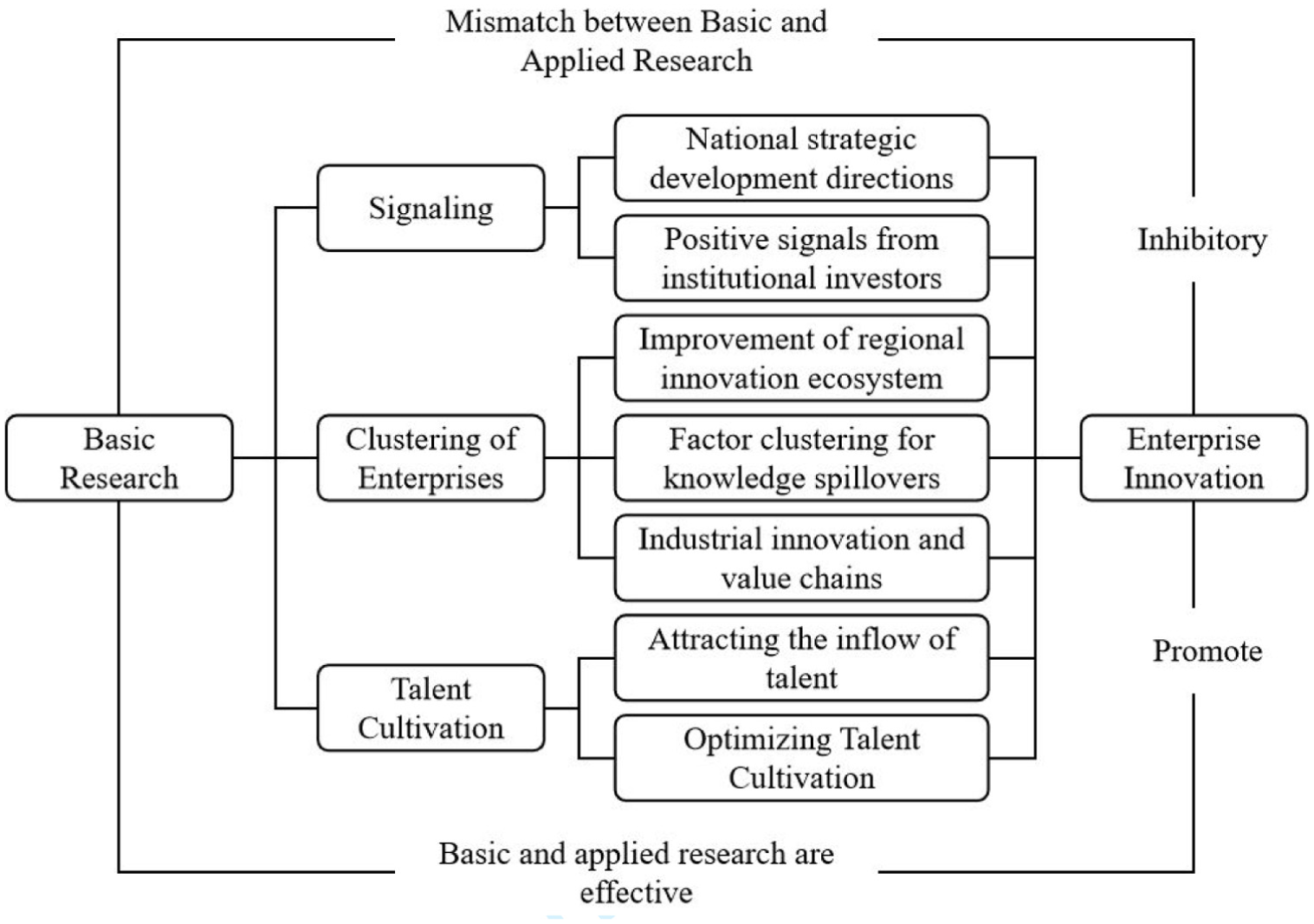
Mechanism analysis diagram.
The signaling effect is a key mechanism through which basic research fosters firm innovation, operating in two main ways: (1) Investments or outputs in basic research serve as credible signals that help firms overcome information asymmetry and reduce uncertainty when identifying technological innovation opportunities. By indicating the future technological trajectory, basic research enables firms to access foundational knowledge from academia at no marginal cost, thereby narrowing their knowledge search scope and reducing search costs. Current technological innovation is increasingly dependent on basic science, as scientific research is increasingly driven by practical problems and societal needs. This shift from the “Bohr quadrant” to the “Pasteur quadrant” renders the signaling effect of basic research stronger and more reliable. In particular, basic research in China, which is largely focused on serving national strategies, covers much information that is useful and valuable to the market and is increasingly important in leading innovation in industry. Such a signal can effectively reduce the degree of information asymmetry between enterprises and the external scientific frontier, allowing enterprises to more efficiently access and use the frontier knowledge generated by basic research to carry out innovation activities and better form a mechanism for cooperation between industry, academia, and research, which will not only reduce the R&D costs and innovation risks of enterprises but also significantly enhance their innovation efficiency.
Basic research is instrumental in enabling companies to convey positive signals to external investors. Typically, companies struggle to finance innovation activities using their own resources and must seek external funding. The inherent uncertainty of such activities fosters information asymmetry between firms and external investors, complicating the latter’s ability to discern a company’s true innovation capabilities. To mitigate the risks of adverse selection and moral hazard, external investors incur high costs in vetting firms, which can significantly dampen their enthusiasm for investing in corporate innovation. Consequently, inadequate financing constrains the efficiency of innovation within firms. Therefore, if the level of investment in basic research continues to escalate, two key outcomes are anticipated: firstly, the likelihood of cooperation between companies and academic or research institutions increases, bolstering the firms’ capacity to assimilate foundational knowledge and transfer results (Cassiman et al., 2018). This “halo effect” can project a strong signal to external investors that the company possesses a competitive edge in innovation, thereby diminishing information asymmetry (Meuleman & Maeseneire, 2012) and enhancing the likelihood of securing financing. Secondly, basic research is often heavily influenced by policy, and companies that engage with such research institutions are typically those that align with government policies, making them more likely to garner focused attention and support from the government, as well as “government signaling” from government departments. These companies are generally more inclined to innovate and to utilize their capital more effectively upon receiving venture capital, which in turn mitigates moral hazard issues and fosters a favorable risk assessment by external investors, bolstering their willingness and confidence to invest in the company. Given these two arguments, we propose hypothesis H2a.
Another important mechanism by which basic research influences innovation in firms is the “agglomeration effect.” This effect is reflected in three main aspects: (1) Empirically, basic research institutions such as universities, research institutes, and the education sector are an important part of the national innovation system and the regional innovation ecosystem. Although primarily financed by the state treasury, the main research activities of these institutions are geographically embedded, providing an important physical basis and preconditions for a diverse regional innovation ecosystem. (2) The development of basic research accelerates the diffusion of knowledge and promotes knowledge spillovers and sectoral specialization by attracting a large number of enterprises to form geospatial clusters in specific regions. This stimulates knowledge spillovers, social interaction networks, and institutional innovation within these clusters, provides the knowledge platform and geographic enablement for enterprises to achieve breakthroughs in innovation. As a result, regions with a high level of basic research tend to prioritize innovation more highly and can provide a better platform for the future development of enterprises. These regions are more likely to trigger a spatial clustering of enterprises, leading to the clustering of multiple innovation factors. This effectively reduces transaction costs within the innovation ecosystem through the close connection of innovation factors, and enhances the level of innovation of enterprises. (3) The significant spillover effects of basic research can stimulate the expansion of industrial and innovation value chains in the region. The “agglomeration effect” brought about by basic research can further amplify its externalities, facilitating the flow of innovation factors and knowledge dissemination, and promoting the efficient flow and intensive use of innovation resources. These quality firms attracted to the basic research sector can trigger competition between firms in an R&D race. This not only induces more efficient intra-cluster learning mechanisms through “learning by doing” and “learning by learning” but also forces inefficient or non-innovative firms out of the market (Melitz & Ottaviano, 2008). The result is that the concentration of highly efficient firms enhances the efficiency of resource allocation within the region, promotes high-quality development of firms (Hsieh & Klenow, 2009), and ultimately increases the level of capacity and the probability of success of innovation within the region. Accordingly, this paper proposes hypothesis H2b.
The third pathway by which basic research influences corporate innovation is the talent nurturing mechanism. Whether in basic research or in enterprise innovation, talents are the key factor of production, especially high-level professional talent. As important carriers of knowledge, professional talents can master scarce and critical knowledge, and play a significant role in inter-regional knowledge spillovers, particularly tacit knowledge spillovers, thereby promoting enterprise innovation. In terms of talent cultivation, basic research not only attracts an influx of talent through its own development but also has a spillover effect on companies in terms of talent cultivation. (1) The level of development of the basic research sector has a decisive influence on the availability of high-quality professionals. Specialized scientific and technological talents prefer to work in a quality research platform. Therefore, regions with intensive basic research enable universities and research institutes to establish strong scientific reputations and implement competitive recruitment schemes that sustainably attract top-tier innovative talent. The inflow of talent not only promotes the flow of knowledge factors across regions and sectors and aids the spread of knowledge between different groups (Almeida & Kogut, 1999), but also enhances the level of agglomeration of other factors of production, which helps to increase the level of matching of frontier knowledge and technology with complementary resources, positively impacting corporate innovation. The probability of success in technological innovation often benefits from peer interaction, generating network externalities. That is, productivity and innovation efficiency may more than double when the size of expertise in an innovation network doubles. Thus, the knowledge spillover and agglomeration of production factors are further amplified as talent moves (Yu et al., 2024). (2) The development of basic research may give more people the opportunity to participate in basic research and facilitate the mobility of people who would otherwise work in the basic research sector to the corporate sector, creating a talent nurturing spillover effect that greatly contributes to the creation and diffusion of scientific knowledge. The spillover effect of talent cultivation can effectively enrich the professionals’ knowledge base, help enterprises acquire key knowledge and technologies for innovation through knowledge spillover, overcome technical difficulties and knowledge barriers, and lay the groundwork for the application, improvement, and innovation of various technologies. This is reflected in at least two ways: firstly, the intra-industry spillover of talent through job changes or research collaborations. This mobile group of professionals has a higher level of knowledge and technological creativity, which can be efficiently aligned with the technological needs of enterprises, helping them to grasp cutting-edge technologies and development trends and promoting innovation. Secondly, the inter-industry spillover of basic research talent allows specialist scientific and technical talent to trigger additional innovative activities in other related industries. People working in basic research may have a complex knowledge structure that allows them to access a wider range of knowledge from other industries, which in turn makes it possible to innovate based on the integration of multiple knowledge areas. In the long run, the inflow of talent, intra-industry and inter-industry mobility ultimately contribute to the level of innovation of firms within multiple industries. In view of this, this paper proposes hypothesis H2c.
Research Design
Sample and Data
This paper focuses on the study using data from a sample of Chinese A-share listed companies from 2010 to 2019. Considering that not all listed companies in Shanghai and Shenzhen are innovative enterprises, this paper selected 3,016 manufacturing enterprises as the initial sample, based on the classification by the Securities Regulatory Commission in 2012, to mitigate industry-specific confounds on the research findings. After eliminating the annual samples with missing financial data, we finally obtained a research sample of 2,287 manufacturing enterprises after screening.
The data for this paper are sourced from: basic information and financial data of listed companies obtained from the CSMAR and WIND databases, certain enterprise patent data collected from the website of the State Intellectual Property Office, with the assistance of Python; basic research data derived from the China Science and Technology Statistical Yearbook; and regional-level date extracted from the provincial statistical yearbooks, as well as the website of the National Bureau of Statistics.
Model Construction
Building on the approach used in existing literature (Jin et al., 2019), this paper selects basic research at the urban level as the core explanatory variable and enterprises innovation within the city as the dependent variable. On the one hand, studying the distribution of basic research across Chinese cities, which varies significantly, can effectively address the current imbalance in innovation foundations. On the other hand, long-standing competitive dynamics between Chinese cities have often resulted in a “race to the bottom,” with localities promoting basic research in a manner that may be constrained by “drawing boundaries.” However, the strong knowledge spillovers induced by basic research could generate spillover effects at the urban level, leading to an uncertain impact on enterprise innovation. To test the nonlinear effect of basic research on enterprise innovation, this paper introduces a quadratic term of basic research in the model. The model is specified as follows:

Where



Equation 2 is used to test the effect of basic research on firm innovation, Equation 3 is used to test the effect of basic research on mediating variables, and Equation 4 adds mediating variables to model Equation 2 to examine whether the mediating mechanism holds (Wan, 2024). This paper focuses on coefficient
Variable Design
(1) Explained variables. This study employs innovation output as the dependent variable and defines patent output based on the year of authorization rather than the application year. The rationale behind this choice is that patent applications may not accurately reflect the true state of innovation within firms. Invalid patents may exist, and patent application activities are often subject to policy interference, which can lead to a potential “illusion of innovation” (Yang et al., 2022). Previous studies have indicated that the total number of patents granted includes invention patents, utility model patents, and design patents. Among these, utility model patents and invention patents generally contain higher technological content and more accurately reflect the essence of innovation. Therefore, this study adopts the approach of Li et al. (2019) and uses the number of granted utility model patents and invention patents as indicators for measuring the quality of corporate innovation. Given the large number of zeros in the original data for patent grants, to reduce skewness in the data, this study uses the sum of the number of granted utility model patents in year t and 1 (taking the logarithm) as one of the indicators of corporate innovation, denoted as Y1. Similarly, the sum of the number of granted invention patents in year t and 1 (taking the logarithm) is used as another indicator of corporate innovation, denoted as Y2.
(2) Explanatory variables. This study uses the stock of basic research internal expenditures as a proportion of the total stock of provincial R&D internal expenditures to measure the basic research variable. Existing research on measuring basic research typically employs two approaches: one is the stock of basic research inputs, and the other is the intensity of these inputs. Compared to the total expenditure measure, the intensity of basic research inputs not only incorporates information about regional basic research but also includes important details about the overall scale of regional R&D expenditures, reflecting the region’s emphasis on basic research to some extent. Furthermore, both basic research inputs and R&D expenditures exhibit long-term cycles, impacting not only current innovation but also significantly influencing future enterprise innovation. Therefore, in alignment with the approach of Song et al. (2019), this study adopts the intensity of basic research inputs as a relative measure.
Specifically, the cumulative level of basic research is calculated in this paper as follows:
(3) Mediating variables. The mediating variables in this study primarily include signaling (VC), firm agglomeration (ACE), and talent cultivation (AIP). This paper uses whether a firm receives venture capital during the study period as a proxy variable for the signaling effect of basic research. The rationale for this approach is twofold: on the one hand, basic research provides firms the opportunity to “ride on the coattails” of research, enabling them to broaden their horizons, understand the development trends at the forefront of technology, and demonstrate their innovation advantages to attract more innovation resources. On the other hand, venture capital firms are highly selective when choosing investment targets, placing great importance on key indicators such as a firm’s sustained innovation capacity. If a firm successfully attracts venture capital, it can be inferred that basic research, as an external source of knowledge, plays a strong signaling role. Therefore, following the approach of Yu et al. (2022), we determine whether a firm has received venture capital by checking if a venture capital institution is listed among the top ten shareholders of the firm. To test the signaling mechanism, we use a dummy variable (VC). If the firm receives venture capital in the current period, VC is assigned a value of 1; otherwise, it is assigned a value of 0.
To verify the agglomeration effect of basic research on firm innovation, this paper follows the approach of Chen et al. (2017) and constructs the regional firm agglomeration (ACE) variable. Using Chinese provinces as the spatial scale, we measure the degree of spatial agglomeration of firms using the locational entropy indicator:
To verify the talent cultivation effect of basic research on firm innovation, this study adopts the research framework of Shen et al. (2025) and constructs the talent cultivation (AIP) variable to measure the mobility level of innovation-oriented professionals. We utilize the attractiveness of regional basic research staff as our attractiveness variable and employ a gravity model to measure the personnel incubation (AIP) variable. The specific algorithm is as follows:
(4) Control variables. To control for the influence of a firm’s own characteristics, as well as the industry and region in which it operates on its innovation, this study follows the approach of Wan, Cao, and He (2025) and Wan, Yu, and Chang (2025) by selecting control variables at the firm level, industry level, and provincial level. Firm-level control variables are selected to control for the impact of firm size (Size), liquid assets (La), capital intensity (Fa), and profitability (Roa) on firm innovation. These are measured by total assets (log), current assets (log), the proportion of fixed assets to total assets, and the proportion of total profit to total assets. Industry-level controls account for the impact of market competition (Com) on firm innovation. This paper calculates the Herfindahl Index (HHI) based on four-digit industry codes and uses the 1 Herfindahl Index (HHI) to obtain a positive indicator of the degree of market competition. The regional level controls for the level of applied basic research (ABR), economic development (Economic), level of human capital (Hc), industrial structure (Gdp3), fiscal expenditure (Fs), and openness (Open) using applied basic research (log), GDP per capita (log), university students per 10,000 population, tertiary sector as a share of GDP, fiscal expenditure as a share of GDP, and total exports and imports as a share of GDP (Leten et al., 2022; Wan & Yu, 2025). The descriptive statistics of the main variables are shown in Table 1.
Descriptive Statistics for Key Variables.
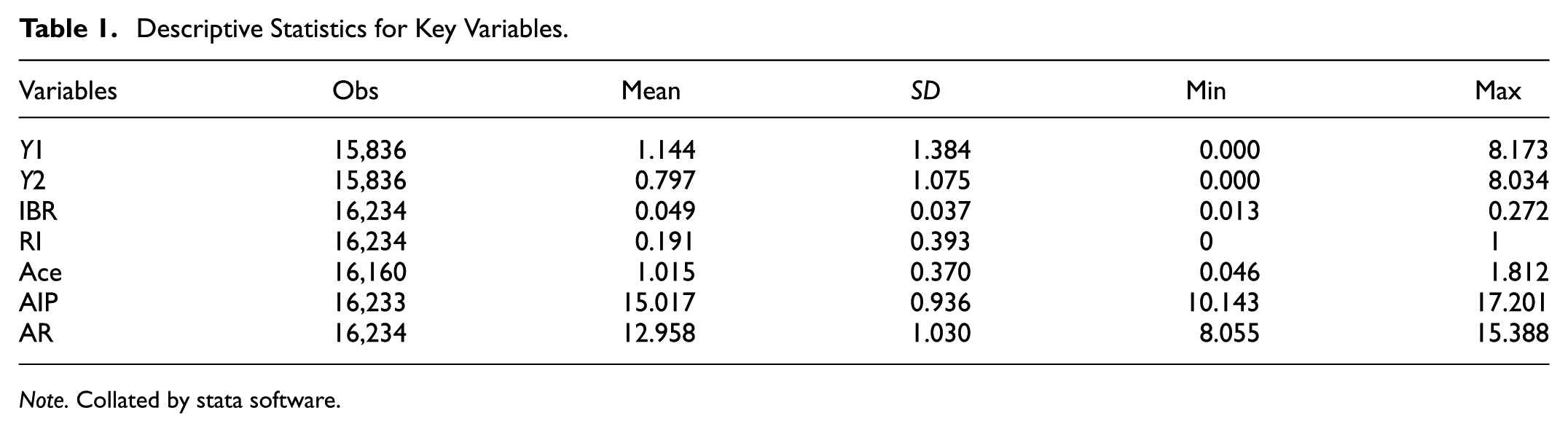
Note. Collated by stata software.
Empirical Analysis
Base Regression Results
Table 2 examines the relationship between basic research and firm innovation. Columns (1) and (2) present the results without control variables, while columns (3) and (4) include firm-level, industry-level, and provincial-level control variables. The regression results indicate that both basic research and its squared term are significant at the 1% level. The coefficient on the basic research variable is significantly positive, indicating that the level of investment in basic research contributes positively to corporate innovation. The squared term coefficient for basic research is significantly negative, indicating a significant inverted U-shaped relationship between basic research and firm innovation. In other words, sustained excessive investment in basic research creates a negative disincentive for corporate innovation. At this point, hypothesis H1 passes the empirical test. Clearly, our findings differ from those of Prettner and Werner (2016), who conclude using R&D-driven economic growth theory that there is a U-shaped relationship between basic research and long-term economic growth. The reasons for this discrepancy may stem from two aspects. First, Prettner and Werner (2016) primarily relied on classic facts from OECD developed countries, whereas our study used data from China’s development experience. Second, while innovation is regarded as a key driver of economic growth, corporate innovation, as a micro-market behavior, fundamentally differs from long-term national economic growth. However, China’s current investment in basic research has effectively promoted corporate innovation. The most likely explanation is that there was a significant “historical backlog” in the field of basic research, which had been overly focused on applied research, resulting in a pronounced increasing “marginal effect.” As the scale and overall level of basic research investment continue to rise, if applied research does not upgrade in a timely manner to approach the knowledge frontier, it could become a “bottleneck” that stifles basic research. In this regard, we are largely in agreement with Gersbach et al. (2018).
Base Regression Results.

Note. Control variable coefficients are not reported due to space constraints. Values in parentheses are robust standard errors; ***, **, and * indicate significant at the 1%, 5%, and 10% levels, respectively. Control variables, time and individuals were controlled for. Same as tables below.
Analysis of Regional Differences
It has been demonstrated that both insufficient and excessive basic research can be detrimental to business innovation. So, in the Chinese context, the impact of basic research on firm innovation varies according to the level of economic development and the resource endowment of the region. Specifically, in which regions does basic research act as a catalyst, and in which regions does it act as a disincentive? To answer these questions, this paper further examines the variability of the impact of basic research on firm innovation across regions. The following model is established for this purpose.

Where
Regional Differences.

Mechanism Testing
Signaling effects. The results of the test for signaling effects are reported in Table 4. Column (1) of Table 4 indicates that the coefficient on the underlying research variable is significantly positive when the explanatory variable is the venture capital variable (VC). Columns (2) and (3) reveal a significantly positive coefficient for the base study (IBR), which is notably lower compared to the base regression results presented in Table 2. This discrepancy suggests that the mediating variable (VC) in the mechanism test model 2 to model 4 has a significantly positive effect. The combined information of these coefficients implies that the mediating mechanism by which basic research influences corporate innovation has passed the empirical test. In essence, basic research exerts a positive signaling effect in the process of corporate innovation process, positively contributing to the acquisition of external resources and ultimately enhancing the firm’s innovation performance. Consequently, this paper confirms Hypothesis H2a. Realistically, the higher the level of basic research investment within a region, the greater the likelihood that companies in the region will engage in industry-academia-research cooperation, which is also more likely to convey positive signals to external investors.
Testing for Signaling Effects.
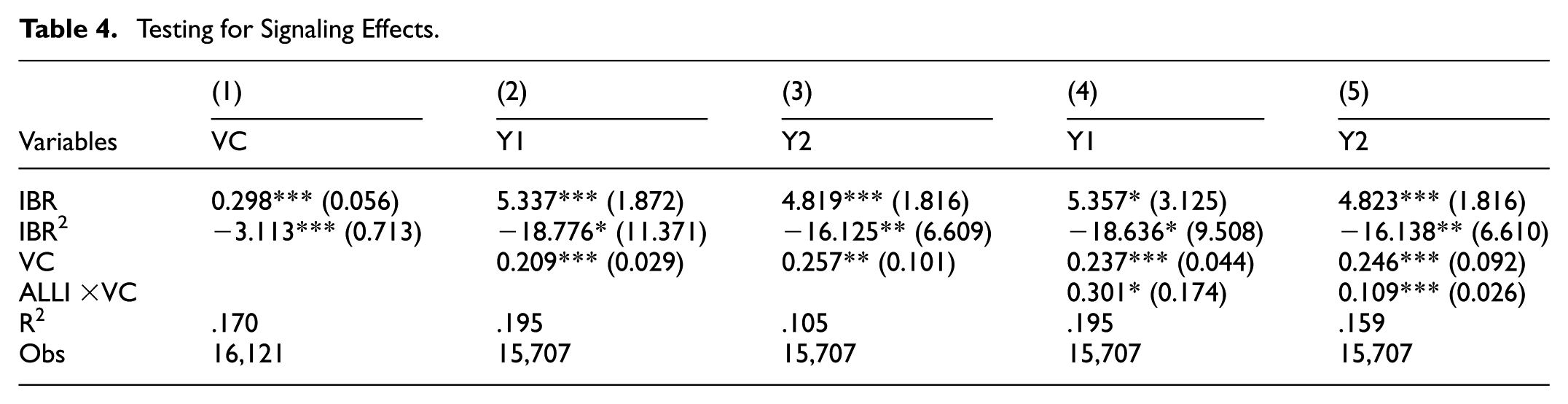
Furthermore, the signaling effect of basic research is most directly targeted at firms that have established industry-university-research collaborations with the basic research sector. To measure this cooperation, we constructed an enterprise industry-university-research (ALLI) variable using joint patent applications. On this basis, we further validated the signaling mechanism of basic research by creating an interaction term (ALLI×VC) between the industry-academia-research variable and the basic research variable. The regression results are presented in columns (4) and (5) of Table 4. The results indicate that the coefficients of the interaction terms (ALLI×VC) are all significantly positive (B = 0.301, p < .1; B = 0.109, p < .001). This more intuitively suggests that the higher the level of industry-academia-research collaboration between firms and the basic research sector, the stronger the signaling effect and the more pronounced the promotion of basic research to firm innovation. Additionally, the signaling effect of basic research, as evidenced by the quadratic term coefficient of the basic research variable (IBR) and its changes, also helps to mitigate the negative effects that may arise when investment in basic research continues to increase. This provides further empirical evidence that the hypothesis H2a of this paper is supported.
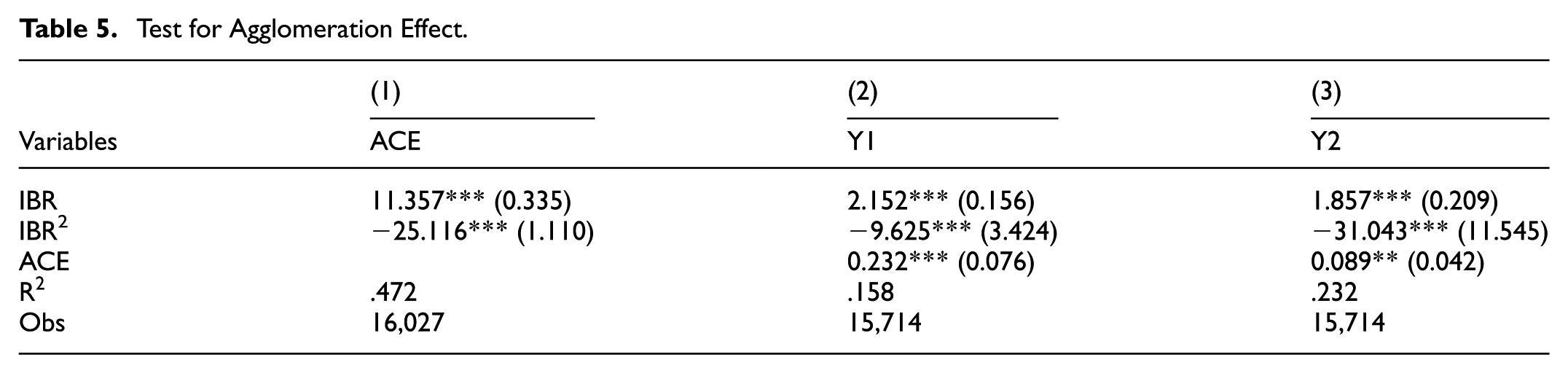
Enterprise clustering effect. The results of the tests for the firm agglomeration effect are detailed in Table 5. In column (1) of Table 5, the coefficient on the underlying research variable (IBR) is significantly positive when the explanatory variable is the firm agglomeration variable (ACE). Columns (2) and (3) support this finding, showing a positive coefficient for the firm agglomeration variable (ACE) in models 2, 3, and 4, all of which pass the significance test. Concurrently, the coefficient for basic research (IBR) is significantly positive and notably lower compared to the coefficient in Table 2. Therefore, the mediating mechanism by which basic research promotes enterprise innovation by triggering the agglomeration effect of enterprises is validated. In other words, increased investment in basic research can induce the clustering of firms within a region, leading to the concentration of various innovation factors. Through this clustering effect, the innovation level of firms is enhanced. In view of this, hypothesis H2b is proved.
Test for Agglomeration Effect.
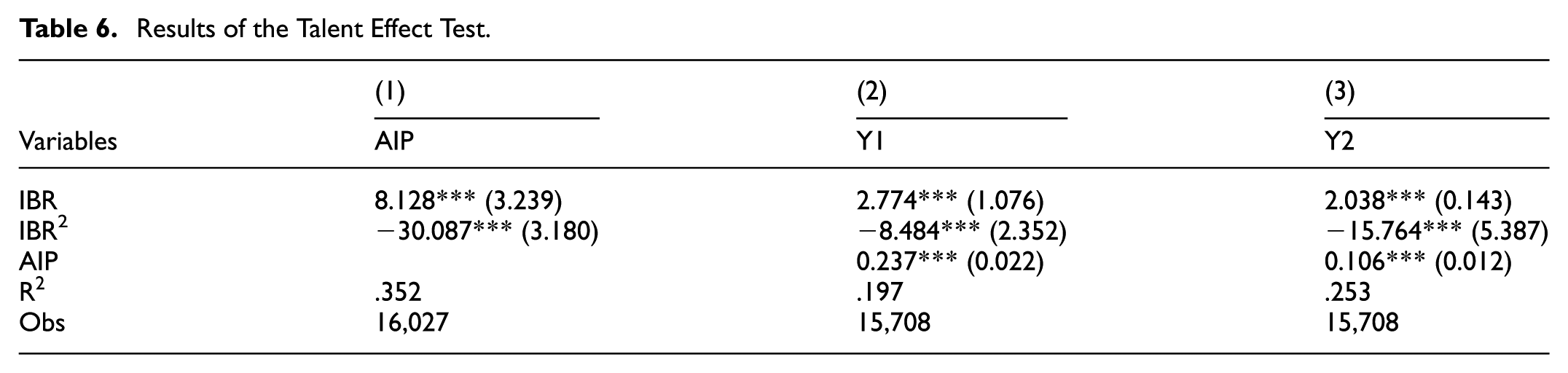
Talent cultivation effect. The results of the test for the talent development effect are detailed in Table 6. Column (1) demonstrates that the coefficient on the basic research variable is significantly positive when the explanatory variable is the talent development variable (AIP). Concurrently, the coefficient on the talent development variable (AIP) in columns (2) and (3) is also significantly positive. This supports the finding that the mediation effect of the talent development variable (AIP) in Models 2 to 4 passes the significance test. The coefficient of basic research (IBR) in columns (2) and (3) is significantly positive and significantly lower compared to the coefficient of the basic regression results, indicating that basic research can promote corporate innovation through the talent nurturing mechanism. Hypothesis H2c is confirmed. Obviously, strengthening basic research can act as a “magnetic pole” for research institutions and universities to attract talents and stimulate the clustering and spillover effects of talent cultivation. This not only facilitates the flow of knowledge factors across regions and departments, effectively enriching the knowledge composition of innovative talents in enterprises, but also optimizes the allocation structure of other production factors and professional talents. It provides an important resource base for enterprises to enhance their innovation capacity and improve their innovation performance. The coefficient on the quadratic term of the basic research variable (IBR) in Table 6 and its change relative to the base regression results also suggest that the talent nurturing effect of basic research plays an important mediating role in dampening the possible negative effects of basic research. This further provides empirical evidence that Hypothesis H2c is supported.
Results of the Talent Effect Test.
Robustness Tests
To ensure the robustness of the findings, the paper re-tests the model using the stock of underlying research as a proxy variable. The regression results are reported in columns (1) and (2) of Table 7. At the same time, to address possible bias in the calculation of capital input accumulation in basic research, especially considering the high level of capital investment in China, the paper also reevaluates the model using current-year basic research as an alternative proxy variable. The corresponding regression results are reported in column (3) and column (4) of Table 7. It is observed that the primary term coefficient for basic research is significantly positive, while the secondary term coefficient is significantly negative. This suggests an inverted U-shaped relationship between basic research and firm innovation. These findings indicate that the conclusions of this paper are robust.
Robustness Tests.

Given that firms’ innovation activities are influenced by prior period characteristics, this paper accounts for this lagged effect by including their first-order lagged terms of the explanatory variables. Furthermore, to mitigate issues of omitted variables and reverse causality, the paper employs dynamic panel models that incorporate these first-order lagged terms. These models are estimated using the System Generalized Method of Moments (DGMM). The regression results, reported in columns (5) and (6) of Table 8, again validate the inverted U-shaped relationship between basic research and firm innovation, thereby confirming the robustness of the paper’s conclusions.
Regression of Instrumental Variables.
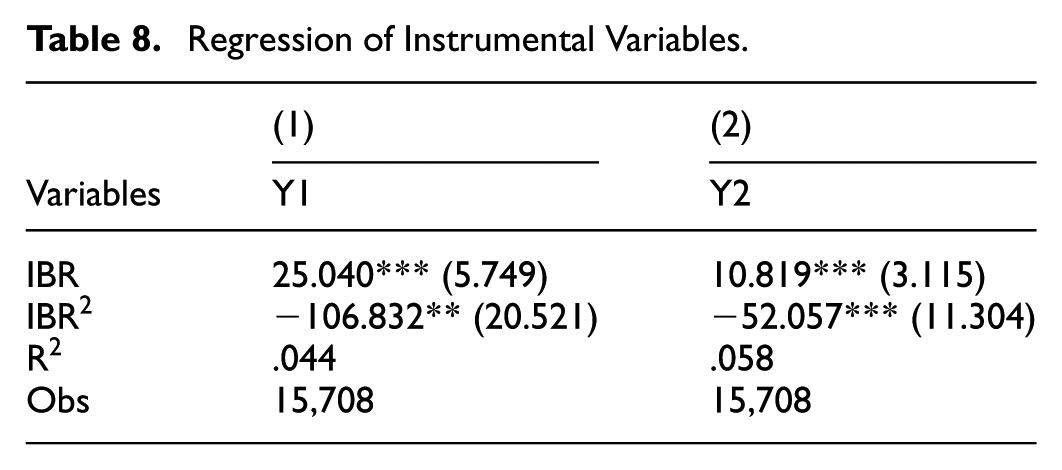
Given that basic research is not strictly exogenous and that firm innovation may be influenced by uncontrolled variables, this paper uses the share of expenditure on primary and secondary education in total fiscal expenditure as an instrumental variable to address issues of omitted variables and reverse causality. On the one hand, this share reflects the long-term orientation of local governments and contributes to building capacity for basic research, thus satisfying the relevance condition for instrumental variables. On the other hand, it is primarily influenced by regional economic, political, and social factors, and it is evident that firm innovation does not directly affect the share of education expenditure, thereby satisfying the exclusion restriction. As reported in columns (1) and (2) of Table 8, the inverted U-shaped relationship between basic research and firm innovation remains significant, confirming the robustness of our conclusions.’
Heterogeneity Test
A Test of Heterogeneity in Government Efficiency
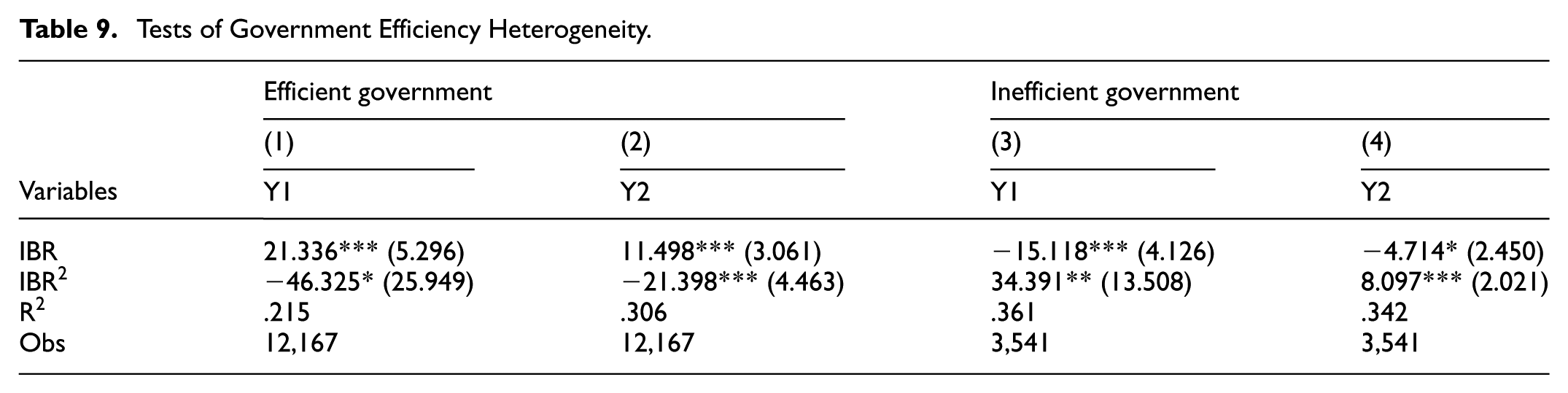
Numerous studies indicate that basic research is predominantly funded by the government funding (Prettner & Werner, 2016) and government’s leading role in advancing basic research is therefore critical. This phenomenon is prevalent in both developed and developing economies. The managerial capacity of government departments is likely to determine how effectively basic research translates into firm-level innovation. To capture heterogeneity in government efficiency, we use the 2016 China Local Government Management Efficiency Index jointly released by the Institute of Government Management, Beijing Normal University, and Management Watch. We then conducted subgroup tests based on the government-efficiency index; the results are presented in Table 9. The results in Table 9 indicate that, in high-efficiency regions, basic-research investment significantly fosters corporate innovation and exhibits an “inverted U-shaped” relationship with it. In contrast, in low-efficiency regions, additional basic-research spending initially suppresses innovation; only after a sustained period of continuous investment does it begin to exert a positive effect. This is because a “proactive government” plays a pivotal role in fostering knowledge exchange between basic-research institutions and businesses. By expanding basic-research funding, the government generates positive knowledge spillovers that grant firms access to cutting-edge technological information and lay the groundwork for follow-on innovation. In low-efficiency regions, the economy remains dominated by traditional manufacturing industries, and high-tech industries are underdeveloped. Consequently, market demand for basic research remains weak, reducing government incentives to allocate resources to it (Kou et al., 2023). However, if low-efficiency regions sustain long-term investment in basic research, knowledge will gradually accumulate and eventually stimulate firm innovation. Thus, government efficiency critically mediates the link between basic-research investment and firm innovation.
Tests of Government Efficiency Heterogeneity.
A Test of Heterogeneity in Firm Ownership and Size
To examine the varying impacts of basic research on firm innovation, this paper examines the heterogeneous impact of basic research on firm innovation in terms of both firm ownership type and firm size. Initially, the paper divides enterprises into state-owned and private enterprises according to the nature of their ownership, and the regression results are reported in Table 10. It can be observed that basic research has a significant positive impact on innovation in private enterprises, whereas it has no notable effect on innovation in state-owned enterprises. This divergence may stem from the differences in resource endowments and innovation preferences between private and state-owned firms. Private enterprises typically have limited opportunities to learn advanced technologies from abroad. Increased regional investment in basic research undoubtedly provides private enterprises with better platforms and more complementary research resources. Moreover, private enterprises are less influenced by political and social factors, and their relocation costs are relatively low. Therefore, an increase in regional basic research investment is more likely to induce agglomeration effects in private enterprises. This, in turn, amplifies the innovation effects of basic research through the reorganization of innovative factors.
Tests of Firm Heterogeneity.

Secondly, this paper classifies firms based on the median of total assets. Firms with assets above the median are designated as large firms, while those with assets below the median are designated as small firms (Andries & Thorwarth, 2014). The regression results are also reported in Table 10. The findings reveal that an increase in basic research significantly promotes innovation in small firms, while the impact on large firms is not statistically significant. Large enterprises, due to their substantial resources, tend to focus more on acquiring advanced knowledge and technology from abroad, relying primarily on internal resource accumulation for innovation. The strengthening of regional basic research has a limited short-term impact on altering the strategic choices of large firms, thus reducing the innovation effect of basic research within large firms. In contrast, small firms have more flexible strategic choices and are more likely to cluster in regions with a higher level of basic research investment. This not only helps to alleviate their issues of insufficient innovation resources and limited knowledge reserves but also effectively enriches their knowledge base, enabling them to overcome technological challenges and knowledge barriers. Therefore, the intensification of basic research offers small firms greater opportunities for “leapfrogging” innovation.
Discussion
Compared to existing literature, this study offers the following contributions. Firstly, unlike Yu et al. (2024), which discusses the effects of basic research at the macro level, this study incorporates basic research and micro-level firm innovation into a unified analytical framework. It examines the effects and underlying logic of basic research on innovation, providing a micro-firm perspective on the relationship between basic research and technological innovation. This approach partially addresses the current literature’s focus on provincial-level analyses. Secondly, the study identifies an inverted U-shaped relationship between basic research and firm innovation at the provincial level in China. It also calculates the innovation outcomes of basic research investments in each province, revealing that the current issue with innovation quality in China lies in the mismatch between basic and applied research. This finding offers empirical evidence for a comprehensive understanding and assessment of the enabling characteristics of basic research innovation in developing countries. Thirdly, this paper explores the intrinsic logic behind the innovation effects of basic research from multiple perspectives, including signaling effects, agglomeration effects, and talent cultivation effects. This approach partially fills the gap in existing literature, which predominantly emphasizes the “knowledge spillover” and “technology-driven” mechanisms of basic research (Akcigit et al., 2021; Lee, 2018). Unlike previous studies that link the effectiveness of basic research to economic development and population size (Gersbach et al., 2018; Toole, 2012), this paper investigates the differential impact of basic research on innovation from both government and firm perspectives. It finds that government efficiency and firm ownership and scale characteristics are crucial factors influencing the innovation effects of basic research. This conclusion contributes valuable insights to the literature on firm-level innovation (Shao et al., 2020; Zhuo & Chen, 2023).
Conclusions and Recommendations
As China embarks on a new stage of development, corporate innovation and basic research play a pivotal role in the construction of a modern economic system. This paper constructs a theoretical framework on how basic research affects corporate innovation. It argues for a non-linear correlation mechanism between basic research and corporate innovation as well as an adaptation mechanism between basic and applied research. Additionally, it conducts an empirical test using panel data of listed companies from 2010 to 2019 to measure the optimal basic research intensity. The study’s findings reveal several key points: (1) There is an inverted U-shaped relationship between basic research and corporate innovation. In the current Chinese context, a moderate increase in basic research investment can effectively stimulate firms to improve their innovation level, while excessive investment in basic research will create a mismatch of resources and inhibit firm innovation. The optimal research intensity for foundational research investment is found to be 14.74%, while the current intensity of basic research in China is 6.16%, which is far from the optimal level. (2) Foundational research not only influences firm innovation through direct mechanisms such as enhancing the innovation ecosystem, knowledge spillover, and stimulating firm innovation investment, but also through mediating mechanisms such as signaling effect, firm agglomeration effect, and talent nurturing effect. (3) Investment in basic and applied research needs to be appropriately matched in the promotion of enterprise innovation, and performance in this regard varies across China’s regions, with basic research having a positive effect on enterprise innovation in 17 provinces, a negative effect in five provinces, and no significant role in the remainder. (4) The impact of foundational research on enterprise innovation exhibits heterogeneity. Specifically, the more efficient the government and the better the transport infrastructure, the more significant the promotion effect of basic research on enterprise innovation. For private and small-scale enterprises, the impact of regional basic research on enterprise innovation performance is stronger.
The policy implications of this paper are as follows: (1) Local governments should shift the traditional concept of “emphasizing applied research over basic research” and effectively increase the level of investment in basic research. The current level of basic research in China is far below the optimal threshold, and a sustained increase in basic research would significantly improve the innovation ecosystem of firms and promote innovation.
(2) Efforts should be made to optimize the structure of R&D and focus on the dynamic matching of basic and applied research. The findings of this paper show that the allocation structure of R&D resources is very important, and that applied research and basic research jointly determine the performance of corporate innovation. It is important to note that a reasonable R&D structure is not static and unchanging but is closely related to the stage of economic development and changes dynamically with the level of economic development. Thus, the previous R&D structure, which favored applied research, played an important role in China’s rapid economic growth. However, as China’s stage of economic development changes, strengthening investment in basic research is the main way to correct the problem of “excessive applied research bias.”
(3) The strengthening of basic research should be tailored to local conditions, with appropriate policy objectives chosen in close relation to regional resource endowments and levels of economic development. For the current Chinese provinces, it is not appropriate to adopt a “one-size-fits-all” policy arrangement for strengthening basic research. Instead, policy objectives should be selected based on regional historical conditions, the absorptive capacity of enterprises, and the experience of industry-university-research cooperation.
(4) A reasonable and effective policy support system is essential to stimulate the mechanism of basic research for enterprise innovation. For China’s economy in transition, the government needs to take multiple measures to overcome the difficulties of institutional reform, focus on policy guidance, and design reasonable and effective policy tools. This will improve the effectiveness of government policies in correcting the “market failure” of basic research and enhance the level of matching and interaction between the supply of innovation factors and innovation.
Limitations and Future Research Directions
Although this study constructs a regional-enterprise level dataset and explores the impact of basic research on corporate innovation and its underlying mechanisms, it does not incorporate key case studies for detailed analysis. Future research could employ methods such as surveys and in-depth interviews to conduct a more thorough investigation of representative firms, thereby providing empirical evidence on how basic research influences corporate innovation strategies. Secondly, due to limitations in data availability and the development stage of basic research in China, this study does not explore how the alignment between basic and applied research affects corporate innovation at different stages. Future research could manually collect and organize more detailed basic research data to better capture how corporate innovation evolves across various stages. Thirdly, this study examines the heterogeneous effects of basic research on corporate innovation from the perspectives of government efficiency, corporate ownership, and size characteristics. Future research could expand the analysis by incorporating additional dimensions, such as innovation resource endowments, characteristics of key government officials, and the personal experiences of top executives.
Footnotes

Ethical Considerations
This article does not contain any studies with human or animal participants.
Consent to Participate
There are no human participants in this article and informed consent is not required.
Author Contributions
Kai Wan: Writing—original draft, Data collection, Model building, Data analysis, Writing—Reviewing. Xiaolin Yu: Writing—Reviewing, Language
Funding
The authors disclosed receipt of the following financial support for the research, authorship, and/or publication of this article: The Special Research Topic of Zhejiang Province’s Social Science Planning, “Research and Interpretation of the Spirit of the 20th CPC Central Committee’s Third Plenary Session and the 15th Zhejiang Provincial Party Committee’s Fifth Plenary Session”: The Logical Mechanism and Targeted Path of Digital Infrastructure Driving “Safe Carbon Reduction” in Carbon-Intensive Industries.
Declaration of Conflicting Interests
The authors declared no potential conflicts of interest with respect to the research, authorship, and/or publication of this article.
Data Availability Statement
Available from the corresponding author upon request.