



Abstract
Amid the ongoing technological revolution, digitalization has been expected to drive radical innovation. However, existing literature fails to distinguish the differential effects of digitalization on exploratory versus exploitative innovation, overlooking a crucial aspect of its practical evaluation. This study aims to fill this gap by examining the distinct impact of digitalization on these two types of innovation within transitional economies, using China as a case study. We propose a theoretical framework in which managerial preferences act as a mediating mechanism, suggesting that digitalization creates a biased incentive structure that favors exploitative innovation, leading to a phenomenon we term exploratory innovation crowd-out (EIC). To test the causal relationship and underlying mechanisms, we analyze data from 4,001 publicly listed Chinese companies over the period from 2011 to 2021. The results indicate that digitalization significantly drives EIC by fostering managerial preferences for imitation and iteration rather than radical innovation. Furthermore, this influence is more pronounced in industries characterized by higher competition and regions with a greater degree of marketization. This study systematically assesses the phenomenon of EIC in the context of digitalization, providing both theoretical insights and practical guidance for enterprises and policymakers. Our findings suggest that, in the digital era, institutional factors—such as industry entry barriers imposed by administrative orders and the phased approach to market opening in transitional economies—can mitigate EIC, thus promoting the sustainable development of industries and regions.
Plain language summary
This study investigates the impact of digital technology on different types of innovation in transitional economies, with China serving as a case due to its status as the largest transitional economy and its significant embrace of digitalization. While previous research has examined the relationship between digitalization and innovation, it has not sufficiently differentiated between two critical forms of innovation: exploratory innovation (the generation of novel ideas) and exploitative innovation (the refinement and improvement of existing ideas). Our research addresses this gap by exploring how company managers’ preferences influence innovation patterns in response to digital technology. We propose a theoretical framework suggesting that digitalization tends to shift managerial focus towards enhancing existing processes and products rather than generating entirely new ideas, a phenomenon we term “exploratory innovation crowd-out” (EIC). Employing data from 4,001 publicly listed Chinese companies between 2011 and 2021, our findings confirm that digitalization indeed encourages a preference for safer, iterative innovation over radical, exploratory efforts. This effect is moderated by industry characteristics and regional differences within China, shaped by the country’s ongoing economic reforms and openness to global markets. Our study contributes to the literature by clarifying how digital technology can simultaneously enable and constrain innovation in firms experiencing rapid structural transformation, such as those in China. These insights offer valuable guidance for policymakers and business leaders in designing effective digitalization and innovation strategies for transitional economies.
Keywords
Introduction
At the pivotal juncture between the fifth and sixth waves of technological revolution, many traditionally core industries are confronted with the dilemma of market saturation and diminishing returns (Jia & Li, 2021; Perez, 2003). This necessitates the development of entirely new products and markets to overcome the limitations of existing ones. Furthermore, with the provision of government-oriented guidance, the overall level of digitalization has been continuously increasing over the past decade (Q. A. Chen et al., 2024), with the objective of facilitating the transition from the innovation of 0 to that of 1. However, there is currently no clear consensus on whether digitalization will foster groundbreaking innovation. In particular, in transitional economies such as China, which are characterized by gradual, market-oriented reforms (C. Zhang, 2023), emerging digital infrastructures, and shifting regulatory environments, the vast potential for innovation that digitalization offers may be constrained by policies that lack a clear understanding of the complex relationship between digitalization and innovation. These economies face unique challenges, including fragmented digital ecosystems, evolving intellectual property frameworks, and varying levels of market liberalization, all of which shape the innovation landscape in ways distinct from fully developed economies. Thus, this study focus on how digitalization affects enterprises’ innovation, especially the groundbreaking innovation.
In accordance with the definition proposed by March (1991), exploratory innovation is conceptualized as a disruptive and groundbreaking innovation. In comparison to exploitative innovation, it often manifests as a radical departure from existing technological trajectories, rather than marginal improvement to them (Roberts & Dinger, 2018). Hence, the two types of innovation involve different knowledge bases and organizational patterns, leading to resource competition within the enterprises (H. Qin et al., 2023). Nevertheless, there has been a paucity of attempts to address the two types of innovation in the context of digitalization. Based on the communicative nature of digitalization, recent research mainly focuses on its stimulating effect on overall innovation, but they overlook specific types of different innovation. Firstly, digitalization enhances the timeliness and transparency of communication between enterprises and financial entities (Zhong et al., 2023), thus alleviating the resource constraints of enterprises’ innovation (Zeng et al., 2021). Secondly, digitalization facilitates an increase in both the frequency and depth of communication between enterprises and external innovation entities. This creates the potential for deeper collaboration and the transfer of tacit knowledge, which can facilitate innovation (Nambisan et al., 2019). Finally, digitalization changes internal communication within enterprises, enabling them to restructure the organization smoothly for innovation (Qi & Xiao, 2020; Vial, 2019). It is notable that none of the prevailing explanations delve into the dichotomy of innovation. It has prevented theoretical research from providing strategies for digitalization aimed at exploratory innovation, and it also fails to explain the potentially distinct developmental trend of two types of innovation under digitalization.
From an organizational behavior perspective, corporate innovation is inextricably linked to managerial decision-making processes and may manifest a distinctive innovation orientation because of managerial preference. Recent studies suggest that the protection of one’s own compensation status and the catering to investors can lead to managerial myopia (Hsu et al., 2024; Miller et al., 2022), which in turn results in short-term innovation strategies within companies (Seo et al., 2020). Conversely, when managers’ positions are more secure, or when investors are more tolerant of failures, there is a greater tendency toward radical and long-term innovation (Ho et al., 2024). Consequently, an investigation into managerial preference may provide insights into the varying effects of digitalization on two types of innovation.
The study aims to examine the differentiated impact of digitalization on exploratory and exploitative innovation, as well as the mechanism by which managerial preference plays a role. In light of the aforementioned, the study employs a panel data set comprising 4,001 listed companies in China over the past decade. This data set is utilized to assess the dual innovation levels of the sample companies and to analyze the evolution of the two types of innovation in conjunction with the advancement of digitalization. After that, by taking the difference in the levels of two types of innovation, the study measures the degree of biased development in innovation, defining it as “exploratory innovation crowd-out”(EIC). Subsequently, the study examines the causal relationship between digitalization and EIC, whereby the term “crowd-out” denotes that the emphasis on exploitative innovation, intensified by digitalization, constrains the investment of effort and resources dedicated to exploratory innovation. Ultimately, this research delves into the mechanism of managerial preferences, assessing how digitalization shapes these preferences and consequently influences innovation strategies. Furthermore, it addresses the endogeneity and heterogeneity that arise from the interplay between managerial preferences and digitalization, particularly within the transitional economy context of China.
This paper contributes to the existing knowledge from both theoretical and practical perspectives. Theoretically, it examines the tension between ambidextrous innovations in the context of digitalization. The study posits that digitalization enhances the transparency of internal information and the accessibility of external information, inducing managers’ preferences for “imitation” and “iteration” in innovation decisions under bounded rationality, ultimately leading to EIC. Employing “asymmetric information” and “bounded rationality” as theoretical foundations, we transcends previous discussions focused on the relationship between digitalization and the overall volume of corporate innovation. This reveals the evolution of corporate ambidextrous innovations under digitalization.
In practice, firstly, this paper reveals the mechanism by which managerial preferences play a role between corporate digitalization and EIC. It posits that the bounded rationality of managers, amplified by digitalization, is the key factor causing ambidextrous innovation to deviate from optimal choice. This provides practical implications for enterprises to avoid EIC risks through management transformation. Secondly, using Chinese sample featuring gradual reform and opening-up, this paper explores the heterogeneous impact of corporate digitalization on EIC across industries and regions. This offers policy insights for other developing countries to scientifically conduct macroeconomic regulation, fully leverage the role of the government, and guide digitalization to ideally promote development of ambidextrous innovation.
Literature Review
A Clear Observation of Exploratory and Exploitative Innovation at Firms Level
As evidenced by current research, the accurate measurement of exploratory and exploitative innovation hinges on the acknowledgment of their intrinsic differences. The exploratory innovation scale is designed to measure the extent to which firms deviate from existing knowledge and solutions in pursuit of radical innovation. In contrast, the exploitative innovation scale assesses the extent to which firms engage in continuous improvement and pursue innovative activities that advance existing knowledge and solutions (Duodu & Rowlinson, 2020). In terms of measurement approach, there are two primary categories: subjective and objective. On the subjective front, following the scales developed by Jansen et al. (2006), scholars have generated pools of indicators to tap the domain of each innovation system. The questionnaire tailored for top management is subsequently designed, whose feedback yields subjective assessment of each type of innovation (Su & Yang, 2018).
However, the high costs of surveys limit the research scale of questionnaire-based measurements, which could be partially resolved by objective approaches. The objective measurement of corporate innovation is enabled using patents as a proxy. This approach allows for the assessment of two types of innovation based on the analysis of enterprises’ patent citation information and classification codes. Specifically, some studies regard patent citation as a proxy for the knowledge stock of innovation. Within a specified time frame, citations that have never been cited are regarded as an indicator of exploratory innovation, whereas the frequency of recurring citations serves as a measure of exploitative innovation (Chang et al., 2019; Zang, 2018). Other research focuses on patent classification codes to represent the knowledge stock of innovation. A patent’s classification code is deemed to represent exploratory innovation if it appears for the first time within the specified time window. Otherwise, it is classified as exploitative innovation (Z. Zhang & Luo, 2020).
In order to gain a more accurate understanding of the two types of innovation, it is essential to consider their competition in the context of corporate resource allocation. The distinct knowledge stocks required for each type of innovation result in corporate cultures and organizational structures that differ accordingly (Vedel & Kokshagina, 2021). This inevitably leads to trade-offs between exploratory and exploitative innovation under resource constraints (G. Ren et al., 2024). Specifically, a resource bias toward exploitative innovation may be continuously reinforced by the short-term improvement it brings, leading firms into a “success trap” at the expense of long-term performance in lack of exploratory innovation (Leonard-Barton, 1992; Moradi et al., 2021). It is therefore evident that an assessment of exploratory and exploitative innovation in isolation will inevitably result in an incomplete observation, which in turn will lead to the overlooking of long-term risks. This study employs the concept of “Exploratory Innovation Crowd-out (EIC)” to examine the evolving relationship between the two types of innovation. This approach enables a more nuanced understanding of the long-term impact of digitalization on corporate innovation.
Same-Group Effect and Crowding-Out Effect of Digitalization
In the field of economics, the decisions, actions, and performance of individuals or firms are often influenced by the behaviors of their peers or competitors due to similarities between them. In the context of digitalization, peer effects manifest as firms, when faced with increased uncertainty and greater transparency, tend to imitate the successful strategies of their competitors. This leads to a convergence of innovation strategies among firms, particularly focusing on those strategies that appear to have achieved success. In this context, peer effects hinder firms from pursuing radical exploratory innovation, as they are more inclined to mimic practices that have proven effective in the competitive environment. The crowding-out effect refers to the reduction or weakening of the available resources for one activity or behavior due to the increase in another activity, often resulting from limited resources. The immediate returns brought about by digitalization have caused firms to focus primarily on incremental improvements, thereby crowding out the resources and attention needed for exploratory innovation. Digitalization, by providing efficient, data-driven insights into market demand, exacerbates this effect, prompting firms to iterate on existing products and processes rather than risk pursuing disruptive changes.
Peer effects in innovation can be described as the tendency of firms to imitate the actions or strategies of successful competitors. Scholars have long recognized that a firm’s innovation strategy is often influenced by competitive pressures and social learning processes, with firms looking to their peers for guidance on navigating complex and uncertain markets. Imitation is a core component of peer effects and is often viewed as a strategic response to competitive pressure or environmental uncertainty. Nelson and Winter (1982) argued that firms frequently rely on routines and imitate successful models to reduce the cognitive load required for innovation. In the digital context, peer effects have been intensified due to increased information transparency and easier access to data (Arias-Pérez et al., 2021). Another important dimension of peer effects is the role of legitimacy pressure. Zimmerman and Zeitz (2002) suggested that, under the pressure to maintain legitimacy and secure investment, managers may increasingly adopt innovations that are regarded as “safe” or widely accepted within the industry. This is particularly significant in the digital era, where the transparency of internal processes and the enhanced ability to benchmark against competitors make the importance of legitimacy more pronounced (X. Guo et al., 2023). In this sense, peer effects not only influence the adoption of innovation but also guide firms to align their strategies with those of successful industry participants in order to enhance their own credibility.
The crowding-out effect in innovation is often discussed in the context of resource allocation, government intervention, and corporate decision-making. Barro (1990) defined the crowding-out effect as the reduction in private investment caused by increased government spending, which raises interest rates. March (1991) extended this logic to the topic of corporate innovation, highlighting the dual nature of innovation: radical, high-risk exploratory innovation and incremental, low-risk exploitative innovation, which often leads to trade-offs in resource allocation. Digitalization enables firms to track competitors’ innovations in real time, thus intensifying market competition. When firms observe the successful incremental innovations of their competitors, they may increasingly allocate resources to exploitative innovation, fearing that focusing on more exploratory innovation will lead to a competitive disadvantage. Managerial preferences also play a crucial role in the crowding-out effect. Faced with competition and risk, managers tend to prioritize short-term, exploitative innovations to meet immediate market demands, often at the expense of long-term, exploratory innovation (W. Ridge et al., 2014). Digitalization further exacerbates this managerial bias toward exploitative innovation, as it often rewards incremental changes with immediate improvements in efficiency or market share, making it difficult for firms to justify the risks associated with pursuing exploratory innovations (Zimmerman & Zeitz, 2002).
Linking Between Corporate Innovation From the Perspective of Managerial Preference
“Asymmetric information” and “bounded rationality” constitute the theoretical foundations of the framework presented in this paper. Asymmetric information encapsulates the core characteristics of digitalization. Specifically, digitalization alters the processes of information generation, reception, and circulation, thereby reducing the degree of information asymmetry among entities and consequently changing their behaviors. In the context of this study, digitalization diminishes the information asymmetry between enterprises and their external environment, enhancing the accessibility of external information (i.e., market demand fluctuations and competitor actions) and the transparency of internal information (i.e., such as the retention of historical experience and records of managerial behavior). The reduction in the level of information asymmetry induces managers’ specific preferences for ambidextrous innovation, which is the root cause of EIC.
Bounded rationality reveals the essential reason for managers’ preference for exploitative innovation. In service of maximizing corporate profits and sustainable development, a fully rational manager would make timely and scientific ambidextrous innovation decisions without favoring either exploitative or exploratory innovation. However, managers in reality are often “boundedly rational,” meaning they may develop “rigidity” and “inertia” due to past successes or failures, thus leading to exploitative innovation by preference for iteration. Additionally, due to the risks and uncertainties of decision-making, they may lose “autonomy” and “independence,” thereby leading to exploitative innovation characterized by preference for imitation. This process is intensified by the reduction of information asymmetry, leading to the empirical result that digitalization enhances EIC.
As depicted in Figure 1, this paper constructs a theoretical framework where digitalization triggers exploratory innovation crowd-out (EIC). On the one hand, digitalization can incite managerial preference for imitation. By emulating competitors to quickly achieve returns, it suppresses the willingness to engage in exploratory innovation independently. On the other hand, digitalization reinforces managerial preference for iteration. Continuous gains from marginal product improvements encroach upon the resource allocation for exploratory innovation. Given the extensive literature on managerial preferences and corporate innovation strategies (Sariol & Abebe, 2017; Wu et al., 2019; Yang, 2024; Yu et al., 2024), this study mainly focuses on theoretical relations between digitalization and managerial preferences.
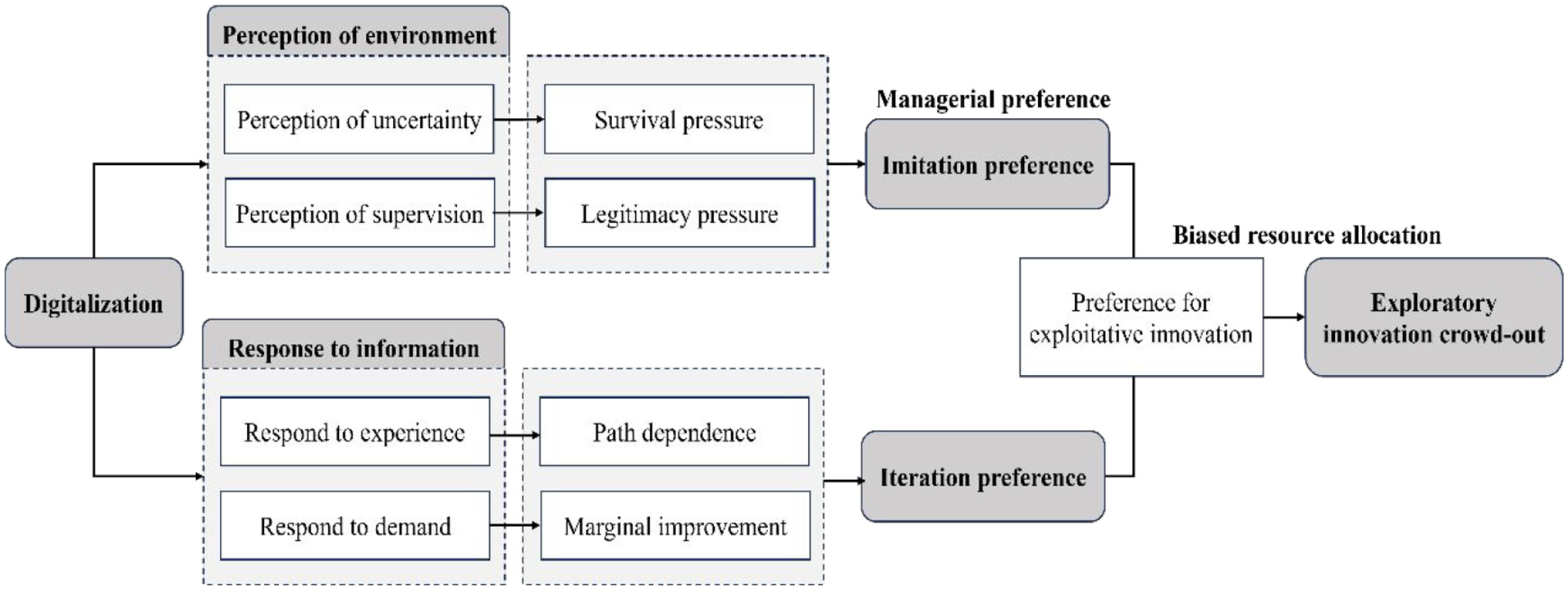
Theoretical framework of how digitalization drives EIC.
Does Digitalization Incite Managerial Preference for Imitation?
The amplification of survival pressure under conditions of uncertainty will result in a managerial preference for imitation because of the digitalization process. In summary, the term “survival pressure” can be defined as the aspiration of managers to maintain stable returns in the context of uncertainty. In such circumstances, imitation represents a viable option for achieving the desired outcome at a lower cost. In the context of digitalization, the deployment of sophisticated digital technologies for data collection and analysis markedly increases the frequency, scope and depth with which enterprises perceive their external environment, thereby intensifying their sense of uncertainty. Given that uncertainty can lead to revenue erosion to some extent (J. V. Chen et al., 2024; Jo & Lee, 2024), it is reasonable to infer that heightened perception of uncertainty will lead to conservative managerial preference, including imitating competitors with relatively stable profits.
Additionally, by enhancing legitimacy pressure under the transparency of internal information, digitalization will lead to managerial preference for imitation in another way. In essence, the legitimacy pressure compels managers to substantiate their managerial proficiency, where strategies akin to those of comparable firms can effectively project an affirmative indication of their capabilities. In the context of digitization, the accessibility and transparency of internal information facilitate the supervision of managerial behavior by investors and creditors. Their focus on meeting business expectations and benchmarking against comparable companies heightens the requirement of legitimacy (Cao et al., 2023; Zhao et al., 2024). In such instances, managers tend to imitate product and service strategies of peer companies with strong performance (Giachetti & Li Pira, 2022; Nikolaeva, 2014). This demonstrates their capacity for analogous market assessment, or at the very least, their proactive efforts to situate their firms at the industry’s vanguard.
Does Digitalization Reinforce Managerial Preference for Iteration?
Managerial preference for iteration can be partially attributed to reinforced historical experiences under digitalization. Generally, historical experience influences corporate decision-making through success and failure experiences (Rhee & Kim, 2015), where products with good performance receive biased allocation and business with past failures are limited. Under digitalization, the codification of past experience is systematically encapsulated within data structures, thereby constituting a pivotal repository for informing corporate decisions. Consequently, the influence of historical performance on current decisions is intensified, thereby perpetuating a cycle of strategic reinforcement in areas where success has been demonstrated (Wang et al., 2022).
On the other hand, managerial preference for iteration may also be influenced by digitalization, which enables efficient response to changes in market demand. In most cases, managers develop their strategies through two principal channels: demand creation and demand response. Demand creation represents a proactive approach to market shaping, characterized by radical exploration. In contrast, demand response entails a more adaptive and incremental strategy, focusing on market changes and customer feedback. In the context of digitalization, detailed and up-to-date customer insights from big data make the market demand more accessible (Dwivedi et al., 2021). In such instances, relative to the pursuit of demand creation, incremental adjustments in response to demand alterations can yield comparable benefits at a reduced cost. Thus, digitalization induces a biased incentive for demand response with iteration in products and technology.
Endogeneity and Heterogeneity Issues
Considering managerial preference as the core mechanism, the theoretical framework contains an apparent issue of endogeneity. In fact, digitalization may itself be a result of managerial preferences, rather than a precursor that incites them. From an enterprise perspective, digitalization is aligned with the development trends of the digital economy, which is consistent with managers’ demand for legitimacy. Therefore, managers with an imitation preference are more likely to make strategic choices for digitalization. In that case, digitalization is not a precursor to EIC, but still exhibits a significantly positive correlation with it. In addition, the process of digitalization itself also necessitates a considerable input of resources. For enterprises with EIC, due to their superior short-term performance and more abundant working capital, they are objectively more conducive to the rapid enhancement of digitalization. In that case, EIC triggered by managerial preferences may be an influencing factor of digitalization, and thus statistically shows a significant positive correlation with it.
The defining feature of transition economies is the gradual nature of reforms initiated and directed by the government (C. Chen et al., 2024; Gao et al., 2024; J. Zhu et al., 2022). The focus of marketization reforms varies at different stages, resulting in significant differences in the entry barriers across industries, which is reflected in the heterogeneity of competition levels (Q. Guo et al., 2018). Based on that, this study posits that the imitation preference is not uniform across varying competition levels. Consequently, EIC resulting from digitalization may manifest as a heterogeneous phenomenon across different industries. Specifically, high levels of competition intensify the risks associated with the market and the old product, which in turn increases the challenges faced by businesses in surviving and attracts greater scrutiny from investors. Accordingly, this biases managers toward imitation. It can thus be argued that the impact of digitalization on EIC should be more pronounced in highly competitive industries.
Furthermore, transition economies are characterized by their gradual approach to opening-up. In the case of China, the eastern regions were the first to open up, followed by the central and then the western areas (T. Chen et al., 2021; Y. Ren et al., 2024). This has objectively led to a heterogeneity in the levels of marketization across different regions. This study further posits that disparate levels of marketization may engender disparate levels of iteration, thereby rendering EIC induced by digitalization a heterogeneous phenomenon across the regions. Specifically, a high level of marketization with a larger consumer base results in significant profits for market-oriented iteration. Moreover, from the perspective of marketization level, the diverse and evolving nature of its demands presents a significant opportunity for iteration in response to changing market demands. Given the disparity in marketization level across different regions, the role of digitalization in enhancing EIC may be more pronounced in the eastern region than in the central and western regions.
Methodology
Data and Variables
Data Sources
To discern the influence of corporate digitalization on Exploratory Innovation Crowd-out (EIC), this study focuses on Chinese A-share listed companies. Their digitalization level has significantly increased over the past decade, which is highly representative in transition economies. After excluding samples with missing main variables, this study constructs a panel data spanning from 2011 to 2021, where a total of 32,195 observations from 4,001 companies are obtained. The original data utilized for innovation assessment are extracted from the patent classification module of the Chinese Innovation Research Database (CIRD). The level of corporate digitalization is directly sourced from Enterprise Digital Transformation Index, a database collaboratively developed by the China Stock Market & Accounting Research (CSMAR) and East China Normal University. Control variables at the corporate level are obtained exclusively from the CSMAR data platform, whereas control variables at the regional level are derived from Easy Professional Superior (EPS) data platform.
Measurement of the Variables
In this study, the dependent variable is EIC, which is operationalized by the difference between exploitative and exploratory innovation levels. The relationship between the variables is captured by Equation 1:

Where
To gage these innovation levels, we employ the classification codes of corporate-granted invention patents for a number of reasons. Firstly, the lenient requirements for citation information in the Chinese patent system may introduce a degree of bias in the measurement of innovation based on patent citations. Secondly, in comparison to the strategic factors in patent applications—for instance, to obtain government subsidies or attract investor attention—there is a stronger reflection of genuine innovation activities in granted patents that have undergone rigorous examination. Based on our justification of patent data selection, we discuss how to measure dual innovation. A 5-year time frame is defined, and the initial four digits of the classification number are used to represent a patent’s knowledge stock. A patent is classified as exploratory if its knowledge stock did not appear in applications from periods t-5 to t-1. For instance, consider a patent classified as “H04B3/02” in period t, with “H04B” as its knowledge stock. If no “H04B” patents existed in the company’s application history from t-5 to t-1, this patent is classified as exploratory innovation; otherwise, it is exploitative (Lee & Sohn, 2019; Zhang & Luo, 2020).
The independent variable in this study is digitalization, which is represented by the symbol Dig. We employ the Digital Transformation Index from the CSMAR data platform to assess the extent of Dig within companies (Han et al., 2023; J. Liu et al., 2023). This index is a comprehensive metric, calculated by assigning weights to a range of sub-indicators, including strategic investment, technological enablement, organizational enablement, environmental enablement, digital achievements, and the application of digital technologies.
To measure managerial preference for imitation and iteration, this study employs knowledge similarity (denoted as KS) and knowledge concentration (denoted as KC) as proxy variables. It is proposed that managerial preferences influence a firm’s knowledge-seeking behavior. Imitation preference is hypothesized to result in firms seeking knowledge from industry leaders, thereby enhancing knowledge similarity. In contrast, iteration preference is posited to drive firms to search for similar knowledge within their areas of expertise, increasing knowledge concentration. Inspired by Makri et al. (2010), where knowledge similarity is required to evaluate between companies of merger and acquisition, Equation 2 calculates it as follows:

Where
The term “knowledge concentration” is used to describe the consolidation of knowledge domains within a single organizational entity. In contrast to the knowledge stock, which is identified by the first four digits of the patent classification, the knowledge domain is recognized by the first three digits and encompasses multiple related knowledge stocks within a broader field. Inspired by Walrave et al. (2024), the calculation is performed according to the following formula:

Where
To measure competition level of industries, we calculate the Herfindahl–Hirschman Index (denoted as HHI) of each industry annually (Haveman et al., 2017), using the market shares based on the owner’s equity of all listed companies. This index serves as an inverse indicator of competition: A higher Index suggests lower competition levels.
We controlled for other variables that may affect managerial preference and EIC. At the firms level, we controlled the size of enterprise (size), leverage (lev), return on assets (roa), assets turnover (ato), revenue growth rate (growth), and Tobin’s Q (tobin), which are commonly used on the research of corporate behavior. At the regional level, we controlled per capita GDP (pgdp) and the ratio of tertiary to secondary industry output value (roi), thus addressing the influence of regional economic development and industrial composition on corporate innovation. Table 1 summarizes the variables and descriptive statistics. To reduce the impact of outliers, this paper applies 1% and 99% tail reduction to all continuous variables at the enterprises level.
Variables and Descriptive Statistics.

Method
Curve Fitting for the Relationship Between Digitalization and Two Types of Innovation
To visually reflect the distinct trends of exploratory and exploitative innovations alongside the advancement of digitalization, this study conducts curve fitting for each type of innovation in relation to digitalization based on observed data points, and compares them within the same coordinate system. The curves relative position indicates the quantitative gap between the two innovation levels, while the slope reflects the differential pace of their development.
Causal Identification Between Digitalizaiton and EIC
To test whether digitalization has triggered EIC, this study construct Equation 4 as follows. It should be noted that, to enhance the accuracy and robustness of the estimation results, heteroscedasticity-robust standard errors are controlled for in the regression here and the same applies in subsequent sections:

Where


Additionally, considering the potential time lag between digitalization and EIC, the study also examined the regression results with lagged independent and control variables based on the benchmark model.
Testing for Managerial Preference as the Mehcanism
Within our theoretical framework, we posit that digitalization intensifies managerial preference toward imitation and iteration, thereby favoring exploitative innovation over exploratory innovation. In the discussion of variable measurement, we further designate knowledge similarity as the indicator of imitation preference, and knowledge concentration as the indicator of iteration preference. Accordingly, Equations 7 and 8 are constructed to test the mechanism:


Where knowledge similarity and concentration are treated as dependent variables to determine whether digitalization induces specific managerial preference, which ultimately contributes to EIC.
Addressing Edogeneity With Instrument Variables
To address endogeneity issues in causal identification, this study employs an instrumental variable approach for digitalization in a two-stage least squares regression based on Equation 4. The instrumental variables must satisfy the criteria of relevance and exclusivity. Relevance ensures the instrumental variable is correlated with the independent variable, while exclusivity implies that the instrumental variable affects the dependent variable solely through the independent variable. In this paper, the straight-line distance to Hangzhou from the company’s city (
It should be noted that, although the “relevance” and “exogeneity” criteria are met, the instrumental variables in this paper may not fully satisfy the “exclusivity” requirement. In other words, apart from digitalization, the instrumental variables may influence the ambidextrous innovation through other channels. Specifically, this paper selects relief degree of land surface (
Analyzing Heterogeneity Through Interaction Terms and Segmented Regression
In economies undergoing transition, such as China, it is hypothesized that enterprises across a range of industries and geographical regions may adopt different EIC strategies in response to digitalization. This is since managerial preferences are influenced by the level of competition and marketization in each particular context. To test the heterogeneity across industries, we take industries’ competition level (inversely denoted as HHI) as the moderating variable, and construct Equation 9 as follows:

Where
To examine regional heterogeneity, we conduct group-wise regression based on Equation 1, categorizing firms by their geographic regions. Given the gradual nature of China’s opening-up policy, regional marketization levels exhibit a stepwise characteristic, with the eastern regions being more advanced than those in the west. Therefore, this study divides the sample firms into three groups: eastern, central, and western regions. By comparing the differentiated features of core causality across these three groups, we provide indirect evidence for the induced managerial preferences in China.
Results and Discussion
The Distinct Trend of Innovation With Curve Fitting Plot
The graphical representation of the curve fits for the association between digitalization and exploratory and exploitative innovations, as illustrated in Figure 2, was generated using sample data. The results demonstrate that exploitative innovations consistently outnumber exploratory ones. Furthermore, the rate of increase in exploitative innovations is markedly faster with rising levels of digitalization, thereby exacerbating the disparity between the two. The graph provides a visual representation of the distinctive characteristics of the two types of innovations under digitalization, preliminarily confirming an intensifying trend of EIC.

Distinct trend of exploratory and exploitative innovation.
Based on the curve fitting plot of the ambidextrous innovation level of Chinese listed companies, this paper expands the empirical evidence for the discussion of the internal relationship of ambidextrous innovation. Since March (1991) first proposed the concept of “organizational learning ambidexterity,” exploratory and exploitative innovations have been considered to be in a competitive relationship. Due to their fundamental differences in organizational methods, management models, and innovation mindsets, under the constraint of limited corporate resources, an increase in one often leads to a decrease in the other (Bernal et al., 2019). Furthermore, Tushman and O’Reilly (1996) further argue that ambidextrous innovations are not entirely opposed, but may have complementary relationships. Specifically, exploratory innovation serves as the foundation for exploitative innovation, significantly expanding the behavioral space and market prospects for exploitative innovation. In turn, exploitative innovation, through the rapid realization of short-term performance and the effect of learning by doing, consolidates the resource and capability foundation for exploratory innovation (He et al., 2022; Zimmermann et al., 2020).
In this study, on the one hand, exploitative innovation exhibits a pronounced biased growth trend, confirming the “competitive effect.” On the other hand, despite significant differences in growth rates, both types of innovation show an upward trend, which to some extent reflects the “complementary effect.” This result suggests that the “competitive” and “complementary” relationships of ambidextrous innovation may coexist in the context of corporate digitalization. Accordingly, EIC describes the biased growth of exploitative innovation when the competitive relationship is predominant.
The Impact of Digitalization on EIC
Table 2 presents a series of empirical test results that examine the causal relationship between digitalization and EIC. In particular, columns (1) to (3) present the regression outcomes of digitalization on EIC, exploratory innovation, and exploitative innovation, respectively. The regression results with independent and control variables lagged by one period are displayed in columns (4) to (6). Regardless of whether time lags are considered, the results consistently demonstrate a significant positive effect of digitalization on EIC at the 1% level. Moreover, the regression results for the two types of innovation demonstrate that digitalization has a positive effect on the level of exploitative innovation, while its impact on exploratory innovation is not statistically significant. This indicates that the promotional effect of digitalization on EIC is achieved through a biased incentive on exploitative innovation, thereby reinforcing the robustness of the core causality presented in this paper.
The impact of digitalization on EIC

Note. Standard errors in parentheses.
p < 0.01.
It should be noted that existing research do not fully align with those of this study. For instance, Liang and Li (2024) found that digitalization significantly positively affects both exploratory and exploitative innovation. In contrast, in our study, while digitalization has a positive impact on exploratory innovation, this effect is not statistically significant. The discrepancy may stem from differences in research scope and time span. Their study, focusing on 156 firms in digital core industries from 2015 to 2021, differs from ours, which encompasses 4,001 listed companies across various industries from 2010 to 2021. Thus, a more comprehensive corporate sample and an extended time span enhance the generalizability and representativeness of our conclusions.
Additionally, J. Qin et al. (2024) explored the development patterns of ambidextrous innovation in technology-based small and medium-sized enterprises under the influence of digitalization. In their study, the difference between the two types of innovation was similarly used as an indicator to observe the trend of ambidextrous innovation development. They found that, with the continuous improvement of the level of digitalization, the imbalance of corporate ambidextrous innovation showed an “inverted U-shaped” trend of first increasing and then decreasing. Considering that the degree of digital transformation of enterprises is still generally low at this stage (Chirumalla et al., 2025), the test of EIC in Table 2 coincides with the upward trend of the imbalance level of ambidexterity on the left side of the inverted U-shaped curve. This reflects the general pattern of the evolution of corporate ambidextrous innovation in the early stages of digitalization. Compared with their emphasis on “imbalance,” we further define “imbalance” as “biased growth of exploitative innovation,” thereby deepening the practical connotation of the research.
Robustness Tests
Altering the Measurement of the Dependent Variable
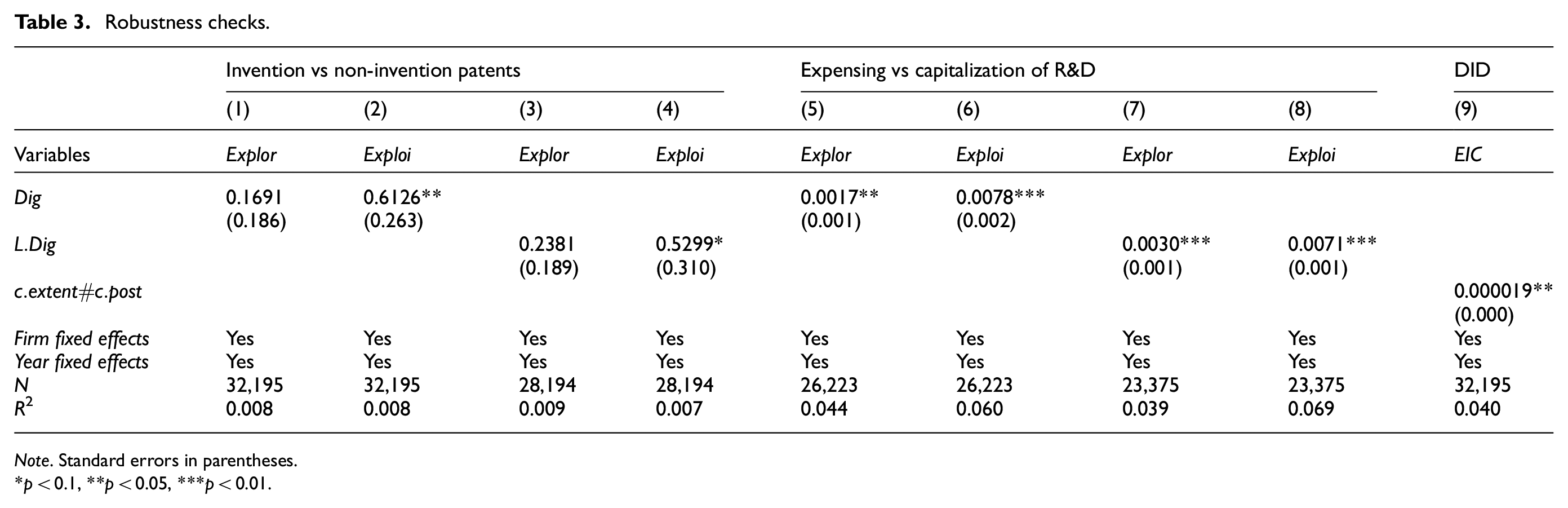
In the baseline regression section, this paper distinguishes between exploratory and exploitative innovation of enterprises based on the characteristics of patent classification numbers, and then examines the positive impact of digitalization on EIC. However, we note that some studies use the number of invention patents as a measure of exploratory innovation and the number of non-invention patents as a measure of exploitative innovation (Luo et al., 2022). Compared with non-invention patents, invention patents often involve new technologies and products, representing a breakthrough and exploration of new technologies by enterprises. Thus, using them as a proxy for exploratory innovation is reasonable. Therefore, this paper conducts regressions on the number of invention patents, the number of non-invention patents, and the level of enterprise digitalization. If digitalization indeed leads to EIC, then the number of non-invention patents should significantly increase with the improvement of the digitalization, while the number of invention patents should not show significant changes.
Notably, beyond patent-based metrics, an alternative stream of literature operationalizes ambidextrous innovation through R&D expenditure allocation (Bi et al., 2017; Y. K. Li & Liu, 2023). According to China’s Accounting Standards for Business Enterprises No.6—Intangible Assets, corporate R&D investments are bifurcated into expensed R&D (recorded as research-phase expenditures) and (2) capitalized R&D (classified as development-phase expenditures). The distinction proves theoretically pertinent, as research-phase activities inherently entail higher uncertainty and risk exposure compared to development-phase projects targeting incremental improvements. Accordingly, we proxy exploratory innovation using expensed R&D expenditures and exploitative innovation through capitalized R&D expenditures. To control for scale differences across firms and mitigate dimensional heterogeneity between metrics, we normalize both types of R&D investments by dividing them by total revenue, then apply z-score standardization to the resulting ratios. Regressions with levels of digitalization are then conducted respectively, expecting for a more significant coefficient in capitalized R&D expenditures (exploitative innovation).
The results are shown in columns (1) to (8) of Table 3. Using the number of invention patents and non-invention patents as indicators of ambidextrous innovation levels, columns (1) to (2) and columns (5) to (6) sequentially display the regression results of digitalization on exploratory and exploitative innovation, while columns (3) to (4) and columns (7) to (8) present the results with all explanatory variables lagged by one period. It can be observed that enterprise digitalization consistently exerts a significantly positive impact on exploitative innovation. In contrast, exploratory innovation either has a smaller coefficient or lacks statistical significance. This indicates that even with the alternative measurement of ambidextrous innovation, digitalization still demonstrates a biased promotion effect on exploitative innovation, leading to EIC, and thus the core conclusion of this paper is relatively robust.
Robustness checks.
Note. Standard errors in parentheses.
p < 0.1, **p < 0.05, ***p < 0.01.
Causal Identification Through Difference-in-Difference
In 2015, the State Council of China issued the “Guiding Opinions on Actively Promoting the ‘Internet Plus’ Action,” which explicitly proposed to promote the penetration and integration of new-generation digital technologies in the socio-economic sphere. This constitutes a quasi-natural experiment for observing the impact of digitalization. Accordingly, this paper attempts to use difference-in-difference (DID) to identify the causal relationship between digitalization and EIC.
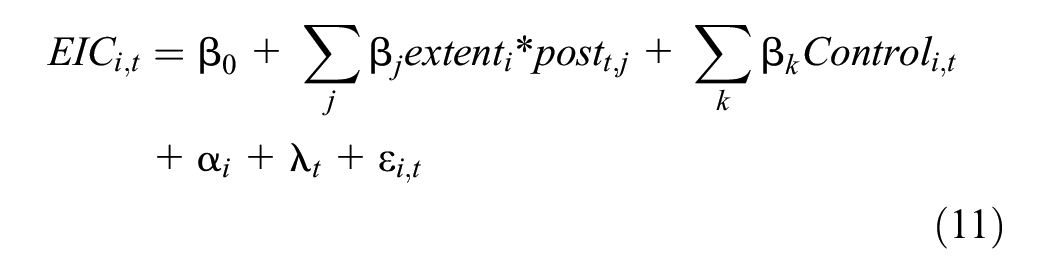
It should be noted that since the policy document targets all market entities, there is no clear control or treatment group. However, the distribution of digital technology in China exhibits a distinct regional imbalance, with enterprises closer to the origin of digital technology being more strongly affected by policy shocks. F. Guo et al. (2017) have demonstrated that Hangzhou is the most important origin digital technology in China, thus the distance from Hangzhou can negatively reflect the degree of policy impact to some extent. Therefore, drawing on the research of S. X. Chen (2017), we construct a continuous difference-in-differences model to assess the causal relationship between digitalization and corporate EIC, with the model specified as follows:

In the model,
The validity of the difference-in-difference results hinges on the parallel trend assumption for affected individuals prior to the policy shock. In other words, there should be no significant time trend differences in the EIC of sample enterprises before the implementation of the “Internet Plus” policy. To this end, we sequentially construct interaction terms between the degree of policy impact on enterprises and dummy variables for specific years, and observe the changes in the estimated coefficients of these interaction terms before and after the policy shock. Setting the year following the policy shock as the base period, the model is as follows:
The results are shown in Figure 3. The vertical dashed lines represent the 95% confidence intervals. The results indicate that the interaction terms with Pre3, Pre2, Pre1, current, and Post2 are not significant, while the interaction terms with Post3, Post4, and Post5 are significantly positive. This suggests that before the policy implementation, there were no significant time trend differences in EIC among enterprises at different distances from Hangzhou, satisfying the parallel trend assumption. Moreover, the interaction terms become significantly positive starting from the third period after policy implementation, indicating that although the policy impact is somewhat lagged, the positive effect of digitalization on EIC is robust in the long term.

Parallel test for difference-in-difference.
Managerial Preference as the Mechanism
Table 4 presents the regression results from the mechanism test, in which knowledge similarity (KS) is employed as a proxy for managers’ imitation preference, and knowledge concentration (KC) is utilized as a proxy for their iteration preference. The regression outcomes presented in columns (1) to (2) show the impact of digitalizaiton on managerial preferences, while columns (3) to (4) shows the result with the independent and control variables lagged by one period. It is important to note that, in light of the evident theoretical relationship between managerial preference and EIC, the mechanism identification is limited to examining the influence of digitalization on managerial preference. Irrespective of the presence of time lags, digitalization consistently exerts a significant positive effect on knowledge similarity and concentration. This finding implies a positive influence of digitalization on managerial preferences for imitation and iteration, thereby reinforcing the robustness of the theoretical framework presented in this paper.
The impact of digitalization on managerial preference.

Note. Standard errors in parentheses.
P < 0.1, **P < 0.05, ***P < 0.01.
Besides managerial preferences, some studies have also explored other factors that may lead to the biased development of ambidextrous innovation in enterprises, generally following two patterns: “constraint-selection” and “shock-response.” The former places greater emphasis on the impact of enterprises’ internal characteristics on innovation behavior. For example, Cao et al. (2009) argue that the degree of internal resource constraints in enterprises directly affects their ambidextrous innovation choices. Based on a questionnaire survey of 200 Chinese high-tech companies, they found that the stronger the internal resource constraints of an enterprise, the more prominent the performance brought by focusing on a specific type of innovation. Similarly, Su et al. (2011) explored the preference of ambidextrous innovation under different organizational structures. They believe that a mechanistic organizational structure is difficult to integrate and coordinate the two. In contrast, an organic organizational structure can reduce competition and conflicts between the two types of innovation, and maximize the complementary and synergistic effects.
Unlike the “constraint-selection” approach that focuses on internal factors, the “shock-response” perspective starts from external environments such as customers and competitors, arguing that the imbalanced development of ambidextrous innovation is a behavioral choice induced by external factors. For instance, Christensen and Bower (1996) clearly indicated that an over-reliance on customer feedback may confine corporate innovation within existing technological paths and knowledge systems, neglecting or delaying responses to strategically significant technological changes. Chuang et al. (2015) also posited that when companies overly focus on customer needs, they may tend to provide incremental rather than more disruptive exploratory innovations. This is because customer orientation often prompts companies to meet existing demands in the short term, while exploratory innovation typically entails greater risks and may transcend existing customer expectations. Overall, whether it is a selection under internal constraints or a reaction to external shocks, the biased development of corporate ambidextrous innovation will ultimately be manifested through decision preferences for exploitative or exploratory innovation. Considering the pivotal role of managers in corporate innovation decisions, it make sense to some extent to consider managerial preferences as the core mechanism in this study. For it resonates with previous research of the antecedents of corporate ambidextrous innovation from other perspectives.
While managerial preferences undeniably shape corporate innovation strategies, it is crucial to recognize that innovation inherently operates within the objective laws of research and development (R&D) activities, particularly those dictated by organizational knowledge bases (Grillitsch et al., 2017; Mubarak et al., 2025). In lens of digitalization, this perspective aligns with the knowledge-based view, which posits that digitalization facilitates innovation by enhancing inter-firm knowledge flows and absorption capacities (Hossain & Lassen, 2017; X. Li et al., 2022). In that case, capabilities derived from digitalization could prove both exploratory and exploitative innovation, as the breadth and depth of accessible knowledge directly influence the feasibility of breakthrough inventions or incremental improvements.
The fundamental distinction between managerial preference theory and the knowledge-based perspective lies in their ontological assumptions about innovation. The former frames innovation as a strategic choice driven by decision-makers’ risk appetites, cognitive biases, and perceived competitive pressures. Here, executives act as central architects who prioritize exploration or exploitation based on subjective assessments of market dynamics and organizational capabilities. In contrast, the knowledge-based paradigm treats innovation as an emergent property of knowledge creation processes, where outcomes are largely predetermined by existing knowledge stocks and the firm’s ability to integrate external expertise. This dichotomy elucidates two fundamental attributes of innovation (i.e., deliberate strategic act & organic process), while highlighting their respective critical determinants: leadership decision-making patterns in the former case, and knowledge architecture configurations in the latter. However, this study focuses on developing countries. Considering the imperfections of the innovation ecosystem in these countries (Bodas Freitas et al., 2013; Egbetokun et al., 201722), there are few inter-firm collaboration networks and huge absorptive capacity gaps. Thus the effect of digitalization in empowering knowledge flow will be very limited. Therefore, it is reasonable for this study to focus on the mechanism of managerial preferences.
Endogeneity Analysis
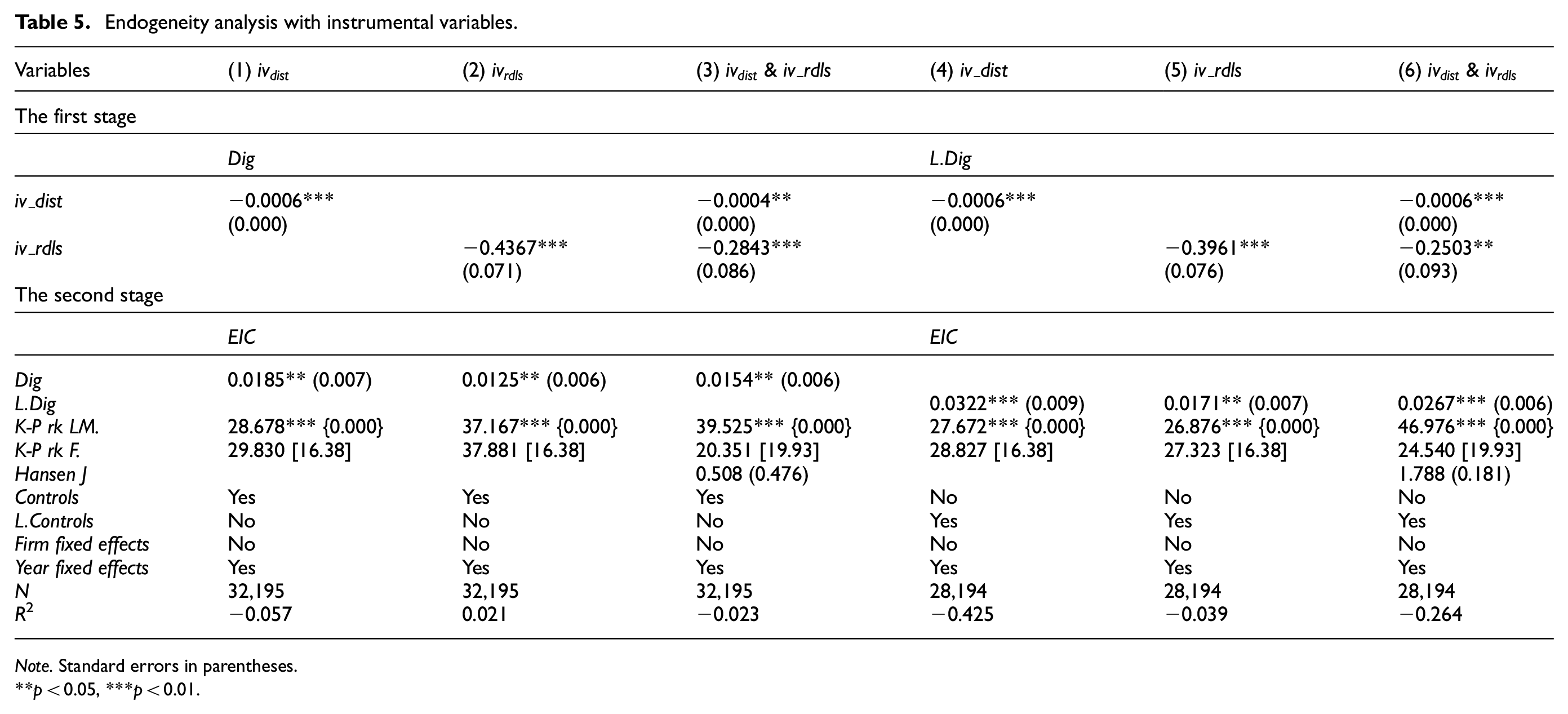
Table 5 presents the two-stage least squares (2SLS) regression results addressing potential endogeneity. Columns (1) and (2) respectively employ
Endogeneity analysis with instrumental variables.
Note. Standard errors in parentheses.
p < 0.05, ***p < 0.01.
The instrument validity lies in dual evidence. Firstly, both
It should be noted that although the use of instrumental variables can solve the endogeneity problem, the presence of weak instruments may pose challenges to the identification and estimation of endogenous variables. Their relatively low correlation with the endogenous regressors often fails to provide sufficient information, leading to significant deviations in the estimation results. To mitigate these risks and ensure the validity of the instruments, the Kleibergen-Paap Wald rk F statistic serves as a useful diagnostic tool for assessing whether the instruments possess adequate explanatory power. This, in turn, helps to safeguard the robustness and reliability of the 2SLS estimates. Empirical evidence from Kleibergen and Paap (2006) and Stock et al. (2002) suggests that when the F statistic exceeds 10 and the p-value is below .05, the instruments can be considered sufficiently strong. As for the second stage estimation, The Kleibergen Paap rk Wald F statistics of two instrumental variables are both greater than the critical value of 16.38 at the 10% significance level, which indicates that neither variable is a weak instrumental variable.
Heterogeneity Analysis Across Industries and Regions
Heterogeneity Across Industries
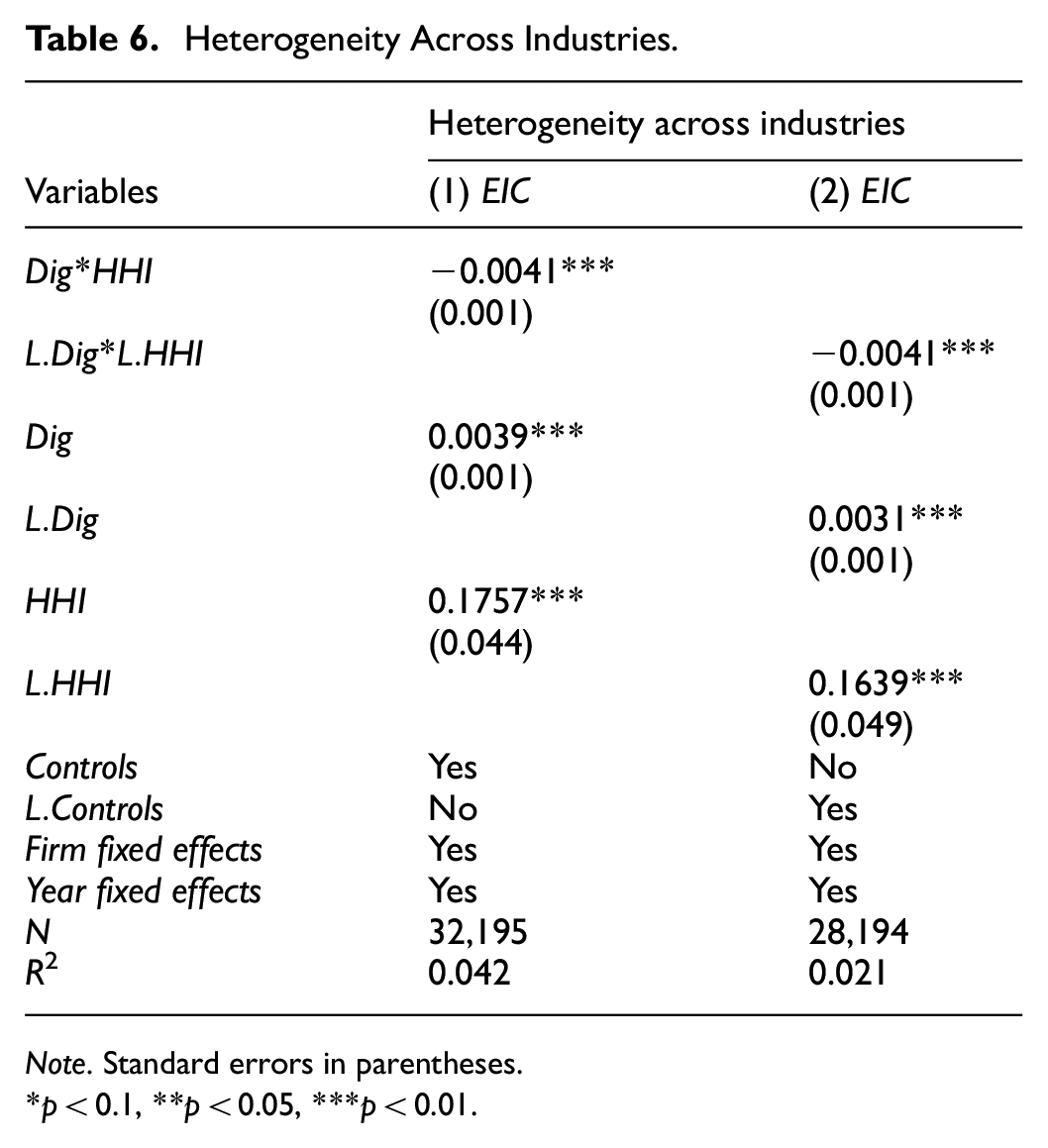
Table 6 presents the regression results with industry competition level (HHI) as a moderating variable. It can be observed that the coefficient of the interaction term is significantly negative at the 1% level. As HHI is an inverse indicator of industry competition level, this result indicates that the higher the level of industry competition, the more pronounced the strengthening effect of digitalization on EIC. Therefore, the core causality moderated by industry heterogeneity provides indirect validation of the role played by managerial preferences. Moreover, this result suggests that in a transitional economy, the industry heterogeneity resulting from gradual reforms will influence the innovation performance of corporate digitalization.
Heterogeneity Across Industries.
Note. Standard errors in parentheses.
p < 0.1, **p < 0.05, ***p < 0.01.
Heterogeneity Across Regions
Table 7 presents the regression estimates based on regional groupings. It is observed that the estimates for the eastern region are significantly positive at the 1% level, while the significance for the central region is weaker, and the western region shows no statistical significance. This indicates that geographic disparities in levels of marketizaiton has an impact on the extent to which digitalization amplifies the effect of EIC, thereby indirectly verifying the role of managerial preferences. Moreover, the findings suggest that in a transitional economy, regional disparities resulting from a gradual opening up can influence the innovation performance of corporate digitalization (H. Zhu et al., 2024).
Heterogeneity Across Regions.

Note. Standard errors in parentheses.
p < 0.1, ***p < 0.01.
It is worth noting that the heterogeneity analysis around industries and regions expands the theoretical discussion on the relationship between government and market in the context of developing countries. Previous studies argue that enhancing marketization levels and reducing government intervention are essential for the sustainable development of developing countries. For instance, Ma and Li (2025) found that higher industry competition levels are associated with stronger corporate innovation performance. Yi et al. (2017) discovered that regions with higher marketization degrees offer more favorable market environments for corporate innovation, leading to better innovation performance. In contrast, our study finds that in the digital era, the command-driven industry entry barriers and steps of opening up in developing countries can, to some extent, offset the crowding out of exploratory innovation under managerial preferences, thereby facilitating the sustainable development of industries and regions. Therefore, the policy in the digital era that emphasizes the combination of an active government and an effective market in developing countries has certain rationality.
Conclusion
Given the advent of a new phase of technological transformation, it is crucial to understand the impact of digitalization on various forms of innovation, with the goal of leveraging digital technologies to foster sustained corporate growth. This study examines a sample of 4,001 Chinese A-share listed companies, empirically assessing the differential effects of digitalization on exploratory and exploitative innovation. Furthermore, based on managerial preferences, we offer a theoretical framework to explain the relative trends of these two types of innovation under the influence of digitalization.
Firstly, this paper contributes to the empirical literature on the relationship between exploration and exploitation in innovation, using the dual innovation levels of Chinese listed companies as a basis. March (1991) first introduced the dichotomy between exploration and exploitation in innovation, framing them as inherently competitive over time. Due to fundamental differences in organizational structures, management models, and innovation mindsets, limited organizational resources often create a trade-off, where an increase in one type of innovation typically results in a decrease in the other. Our study refines existing theory by exploring the role of digitalization in transitional economies, specifically its crowding-out effect. The introduction of digitalization creates an incentive structure that favors exploitative innovation, thereby reducing the resources available for exploratory innovation, leading to EIC. The robustness of these findings is confirmed through separate regressions for each innovation type, as well as by lagging both the independent variable and control variables by one period.
Secondly, existing research on the biased development of corporate innovation predominantly revolves around two models: “constrained-choice” and “shock-response” (Cao et al., 2009; Su et al., 2011). Whether through internal constraints or external environmental shocks, the biased development of innovation is ultimately driven by the decision-making preferences of corporate management. Therefore, this study centers managerial preferences as the core mechanism. Our findings show that digitalization promotes managerial preferences for imitation and iteration, which, in turn, enhances EIC. Specifically, the advent of digitalization has reinforced managers’ preference for imitation, leading them to increasingly follow the examples set by industry leaders. This is reflected in the growing similarity of knowledge within firms, which accelerates the development of exploitative innovation and amplifies EIC. Additionally, digitalization strengthens managers’ preference for iteration, intensifying iterative behavior within business units that hold competitive advantages, as evidenced by a rise in knowledge concentration. This trend further prioritizes exploitative innovation, thus amplifying EIC.
Moreover, this study conducts a heterogeneity analysis based on industry and regional characteristics, extending the theoretical discourse on the relationship between government and market forces in transitional economies. Previous research suggests that increased marketization (Ma & Li, 2025), enhanced competition (Banbury & Mitchell, 1995; Yi et al., 2017), and reduced government intervention (Patanakul & Pinto, 2014) are key factors in boosting corporate innovation capabilities. In our study, the impact of digitalization on corporate innovation is expected to exhibit regional and industrial heterogeneity due to the ongoing reforms and opening up in China. Specifically, the effect of digitalization on EIC is more pronounced in highly competitive industries and in eastern regions, where varying levels of marketization lead to divergent managerial preferences. We therefore recommend that, in the digital age, transitional economies such as China could mitigate the crowding-out effect on exploratory innovation driven by managerial preferences by implementing industry access thresholds and strategic opening-up policies dictated by administrative orders. These measures would promote the sustainable development of both industries and regions.
The policy implications of this study are as follows. To foster exploratory innovation while advancing digitalization, it is essential to implement strategies that prevent excessive managerial bias toward imitation and iteration. From a management perspective, cultivating an entrepreneurial spirit characterized by pioneering and leadership qualities can strengthen the incentives for exploratory innovation. From a demand-side perspective, it is crucial to establish a market environment that is open to technological diversity and tolerant of the potential failure of new innovations. This would help mitigate the risks associated with exploratory innovation. From a financial standpoint, it is important to develop a culture of long-term, patient capital to counteract the short-term biases often present in managerial decision-making related to innovation. In transitional economies such as China, policy interventions must take into account the heterogeneity of industries and regions. In sectors and regions with lower levels of competition and marketization, the role of digitalization in enhancing EIC is less significant. Therefore, it is possible to achieve the dual goal of maximizing the short-term economic benefits of exploitative innovation while mitigating the long-term risks of EIC by carefully selecting the timing and intensity of policy interventions.
Several limitations must be acknowledged when interpreting the results, which also present avenues for future research. Firstly, we assumed an ideal scenario where both types of innovation would increase proportionally. However, investments in exploratory innovation are more likely to be constrained by diminishing marginal returns (X. Zhang et al., 2023). As a result, the original estimation method may overstate the causal relationship by underestimating the diminishing returns of exploratory innovation. Secondly, exploratory innovation often involves high-risk concepts that may not materialize into patentable technologies, making patent-based measures of exploratory innovation incomplete (Kaplan & Vakili, 2015). Thirdly, there exists an inherent tension between the preferences for imitation and iteration. Imitation depends on the actions of rival firms, while iteration is grounded in historical experience and market insights. Prioritizing one of these strategies often entails neglecting the other. Future research should further investigate which of these mechanisms predominates in the innovation process. Fourthly, in the future, comparative studies between transition countries and developed countries can be further carried out. This will help explore how the dynamics of digitalization and innovation differ under different market development stages and digital infrastructure conditions.
Footnotes

Funding
The author(s) disclosed receipt of the following financial support for the research, authorship, and/or publication of this article: This work was supported by the National Natural Science Foundation of China (NSFC) under Grant 72372009; and National Natural Science Foundation of China (NSFC) under Grant 71973010.
Declaration of Conflicting Interests
The author(s) declared no potential conflicts of interest with respect to the research, authorship, and/or publication of this article.
Data Availability Statement
Data sharing not applicable to this article as no datasets were generated or analyzed during the current study. Data can be made on request by contact correspondence.