



Abstract
Cooperatives face a growing need to assess not only their economic and financial performance, but also their performance in the environmental, social and governance (ESG) dimensions, contributing to a more sustainable society and adding value to cooperatives and their members. However, the academic literature dedicated to these aspects specifically in the context of cooperatives remains limited. To close this gap, this paper presents a systematic review of the literature on ESG approaches in different branches of cooperativism, highlighting research gaps and areas for future development. For the systematic review, the steps suggested by the ProKnow-C protocol were followed, and the Parsifal and VosViewer online platforms were used to manage bibliometric references. Studies published between 2013 and 2023 were compiled, resulting in 37 selected papers. The analysis included indicators, methods and a reflection on the promotion of ESG-related issues in the cooperative context. As a core result, an integrative framework is presented, indicating relevant aspects presented in the articles that were analyzed. The results of this study not only provide reflections for researchers and academics, but also guidance for managers and leaders of cooperatives seeking to improve their ESG practices.
Introduction
The environmental, social, and governance (ESG) agenda has become increasingly important to organizations. The theme is associated with the integration of sustainable practices, especially those related to growing environmental concerns, social responsibility and transparency in management. Effective ESG implementation, together with the correct disclosure of its practices, contributes to a more sustainable society and adds value to companies, strengthening their reputation and attracting conscious consumers and investors (Noeth, 2024; Zhang et al., 2024).
These issues are also important in the cooperative context, which has its own particular characteristics and where there is a close relationship between ESG concerns and the principles and values of cooperativism. Unlike capital companies that seek to maximize their financial outcomes, cooperatives fundamentally focus on meeting the needs (financial or otherwise) of their members, in addition to demonstrating in practice a real concern for the communities in which they are located. Thus, cooperatives do not operate exclusively to generate economic and financial results, but also consider social and environmental issues, where the focus is always on the cooperative members (Do, 2022). Improving the situation of their members also aids the development of local communities, echoing the actions of cooperatives in both dimensions: the economic-financial and economic-social (James & Sykuta, 2005; Lerman & Parliament, 1991; Soboh et al., 2009; Valentinov & Iliopoulos, 2013).
ESG is considered a fundamental theme in the context of cooperatives, above all due to the need for broader analyses, going beyond the interests of financial and operational assessment and considering other dimensions aligned with cooperative principles, such as efficiency and social performance and the relationship between cooperatives and their members (Grashuis, 2023). This is reflected in the growing concern shown by academia, conducting research related to the topic. The present study provides a systematic review of the literature on ESG approaches in cooperatives, identifying practices and possible indicators reported in academic studies. This work contributes to academic research on the disclosure of ESG actions by cooperatives, providing cooperative managers and strategists with relevant information regarding actions that can be taken to advance their agenda.
Theoretical Framework
Cooperatives emerged in response to the economic liberalism model, especially with a view to addressing the social aspects of communities and people. According to Figueiredo and Franco (2018), cooperative principles are prominent drivers of quality, community development and well-being, focusing on efforts to achieve better living conditions for people and the environment in general. Cooperatives have become an increasingly important phenomenon in contemporary economies (Sabatini et al., 2014).
The cooperative model can be understood as being “of members,”“by members,” and “for members.” First, cooperatives are “of members,” meaning that they are established by people with a common interest who have voluntarily agreed to work collectively and contribute equally with capital and other forms of involvement. Second, cooperatives are “by members”, meaning that the organization and its activities are managed democratically. Third, cooperatives are “for members,” meaning that they are established to serve the interests of their members. (Ishak et al., 2020).
According to Lorenzo et al. (2018), at the core of the cooperative model lies a drive for sustainability at both the economic and social level. The authors explained that, unlike companies that are purely profit-oriented, cooperatives prioritize meeting the needs of their main stakeholder groups, maintaining a delicate balance between the generation and use of material, financial and human resources.
ESG
ESG guidelines are concerned with dimensions that impact the decisions of organizations and their management. The environmental dimension has to do with awareness of climate change, population growth, and the effects of human actions on the environment (Noeth, 2024). The social dimension includes corporate responsibility and social responsibility, and all issues related to people, communities, and society in general, such as human rights, gender equality, personal safety, and relationships with the environment (Yakar Pritchard & Çalıyurt, 2021). The governance dimension has to do with a company’s leadership, particularly the organization’s control and mechanisms that influence it, addressing issues such as benefits, pay, bribery and corruption, shareholder rights, business ethics, structure, processes, and management (Jamaluddin et al., 2023).
Progress in the global economy and society requires the implementation of environmental, social and governance principles, known as ESG. In response to the growing challenges of environmental, social and financial sustainability, organizations have presented plans intended to establish a comprehensive framework for the sustainable development of human society. Li et al. (2021) presented the main factors related to each ESG dimension, as shown in Table 1.
ESG Framework.
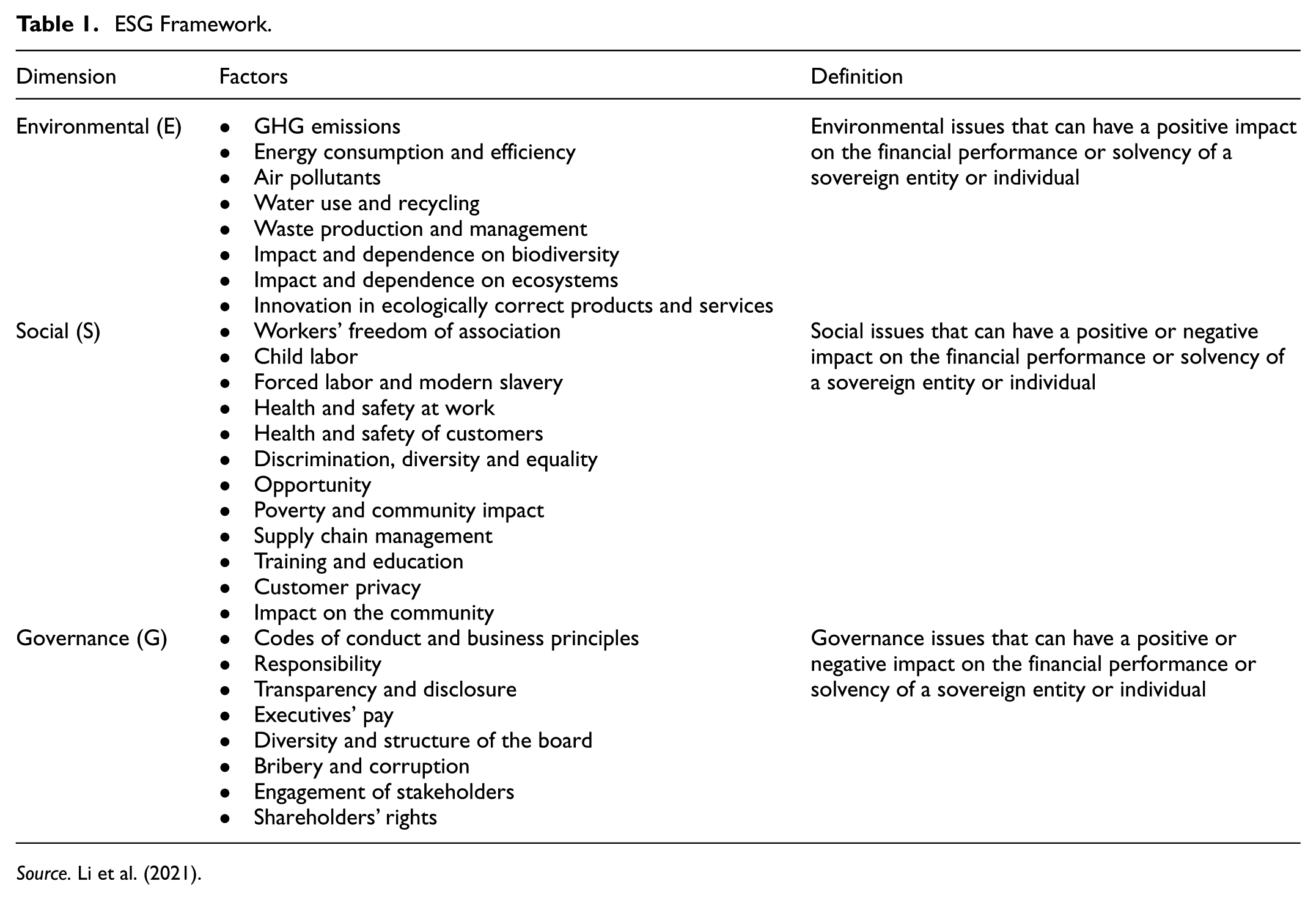
Source. Li et al. (2021).
Organizations such as the Global Reporting Initiative (GRI), which is based on its sustainability reporting model, and the Brazilian Association of Technical Norms (ABNT), which adheres to the 2030 Agenda Guidelines, also incorporate ESG elements aligned with the work of Li et al. (2021).
ESG in Cooperatives
The concept of ESG constitutes an ethical and moral commitment to society that serves cooperative organizations as a way of gauging social responsibility, defined by an active contribution to social, economic and environmental improvement based on legal and institutional principles. These principles are intrinsic to cooperative guidelines, and cooperative responsibility goes beyond compliance with environmental and labor laws. It is not limited to donating surpluses or carrying out isolated actions for the common good, nor is it about achieving social benefits while violating compliance rules. From a macro perspective, cooperative responsibility is understood as a process that is built on participatory decision making, assessing the impact of economic efficiency on reducing social inequalities and environmental protection. These interests are incorporated into the organization’s processes and results, requiring participation, social equity and sustainability (Guerra et al., 2019).
According to Menicucci and Paolucci (2023), it is essential for cooperatives to be well informed on issues related to ESG to integrate corporate strategies into their business model so that, in the long term, members can promote a healthy business culture and approve the governance system focused on environmentally, socially and economically responsible practices. The participation of cooperatives in innovation and economic, social, and environmental development processes provides information beyond the limits of the cooperative company, involving the community as a whole and various stakeholders. Cooperatives therefore have great potential to promote sustainable business (Purtik et al., 2016).
Environmental (E)
The environment has always been a core issue in academic studies (Li et al., 2021). The concept of “sustainability” is said to be that which meets the needs of the present without compromising the capacity of future generations (Ji et al., 2018). Society increasingly values sustainable technologies, processes and products that either have zero impact on our ecosystem or operate within the limits of their capacity. The application of these values is transforming the landscapes and institutional logics that govern business activities in society (Vivoda & Kemp, 2019).
Veber et al. (2016) addressed the growing need for organizations to rethink their practices due to the unregulated, uncontrolled and harmful consumption of environmental resources. The authors highlighted the importance of understanding and implementing changes in management models to incorporate sustainability principles into cooperative organizations.
Alves et al. (2019) claimed that in environmental terms cooperatives have already demonstrated competence in developing initiatives for the sustainable management of natural resources. As an example, they noted that in developing countries such as India and African nations, cooperatives have promoted actions to provide access to drinking water. In the United Kingdom, the United States and India, cooperatives help to achieve sustainable energy goals, promoting access and aiding energy efficiency and lower emissions.
Social (S)
Unlike other business models, cooperative organizations have a particular capacity to promote the development of trusting relationships (Sabatini et al., 2014). The role of cooperatives in social development is significant, highlighting a fundamental commitment to the community. This commitment is not limited to the economic aspect, but also includes social responsibility, seeking to contribute to a series of broader social goals, such as access to quality education, health, professional development, and the promotion of peace, justice, and democracy. These organizations make a social impact by focusing on promoting self-sufficiency and the human development of their members. Cooperatives help to reduce inequalities and strengthen community cohesion (Launio & Soleto, 2021).
Campopiano and Bassani (2021) and Kassim et al. (2022) addressed the importance of the commitment of the people involved in contributing to the benefit of the cooperative organization in the community where it operates, resulting in greater social good and the constant strengthening of social innovation. To these authors, the approach to social innovation goes beyond the monetary level, also encompassing social and environmental well-being.
The most comprehensive analyses of the social aspects of cooperative performance include indicators such as the quality and quantity of benefits and services, high member sufficiency, and quality of the stakeholder network (Amersdorffer et al., 2015). According to Aris et al. (2018), the values and principles that underpin the underlying philosophy of cooperatives also play a role in the global movement of these organizations, providing a solid foundation for conducting economically viable and socially successful businesses.
To assess the social issues addressed by cooperatives, social reports are used as a support tool in compliance with cooperative values and principles. Based on this information, cooperatives can promote sustainable development, strengthen their relationships with members and stakeholders, and demonstrate their role in building a fairer and more equitable relationship (Luque et al., 2019). To Messabia et al. (2023), effective management of human, financial, and social resources means improvements in services, ensuring the feasibility of these cooperatives and transparency for their members. It is noteworthy that the social report can be replicated for all branches of cooperativism. Guerra et al. (2019) stated, for example, that in agricultural cooperatives, the social report also denotes awareness of environmental care for the protection and conservation of areas used in agricultural activity.
Governance (G)
The aim of good governance practices is to align the interests of the organization, preserve its values, facilitate access to resources and prolong its lifespan. Its implementation is intended to minimize costs arising from the agency problem and directly impacts decision-making processes and responsibility at the managerial and supervisory levels. In cooperatives, governance promotes the modernization of the management model, increasing efficiency in internal processes and expanding their actions (Martins & Salgado, 2023).
Raising awareness of good governance practices in cooperatives is linked to understanding the roles and functions of each position and ensuring that members fully understand their rights. It is crucial for members to be familiar with the regulations and actively participate in cooperative activities, especially meetings. Furthermore, governance impacts both financial and social performance (Kumkit et al., 2023).
Effective governance includes democracy, formalisation, member selection policies, and specialisation. The implementation of corporate governance in cooperatives must begin at the strategic level and spread to other levels, such as tactical, managerial, and operational. This dissemination of good practices is intended to achieve efficiency in the organization’s general processes, adopting a more fluid and continuous model for its operations, leading to greater agility and flexibility Parte superior do formulário (Martins & Salgado, 2023).
Materials and Methods
In this study, a systematic literature review was conducted. The Knowledge Development Process–Constructivist (ProKnow-C) protocol was used, which is a process with a methodological framework for research to elucidate the precepts that guide it (Rodrigues et al., 2020). This protocol was developed in 2008 by the Multicriteria Decision Support Methodology Laboratory (LabMCDA) of the Department of Production and Systems Engineering at the Federal University of Santa Catarina, Brazil. ProKnow-C consists of five stages: (a) selection of a portfolio of articles related to the research topic; (b) bibliometric analysis of the set of articles; (c) Literature Map; (d) systemic analysis; and (e) definition of the research question and object. The stages are presented in Figure 1.

ProKnow-C stages.
The bibliographic portfolio (BP) is the set of references that a researcher considers relevant to the research theme. The portfolio is selected in three sub-stages:
(i) Selection of the raw article database—initially it is necessary to define the research axes, which in this work were cooperatives and ESG. After selecting the database, it is necessary to choose which scientific repositories will be searched, and which keywords will be used for this purpose, search the databases and evaluate the adherence of the keywords and other possible filters. The Web of Science and Scopus scientific repositories were chosen for this purpose due to their wide range of peer-reviewed journals and broad acceptance in the academic community. The keywords and logical connectors used in the searches were: (Co-op or Cooperativ* or Co-operative) and (ESG or Social or Environment* or Governance or Performance or Sustainability or Management or Impact or Responsibility or Risk or Green or Reputation or Competitive-advantage or Compliance). The asterisk (*) was used to cover the possible variations of the connectors. The axes and keywords are presented in Figure 2.

Axes of research and keywords.
The search of the scientific databases was conducted based on the topic of the articles, including the title, abstract and keywords. Additional filters were applied for selection in the field of business, covering terms such as business, administration, accounting and management. A 10-year time frame was used, considering the years 2014 to 2023. Only articles in English were considered. As a result, a raw article bank with 5,363 publications was obtained. The online platform Parsifal was used as a tool to aid the management of the articles that comprised the bibliographic portfolio.
(ii) Initial filtering—The initial filtering of the raw article database involves the exclusion of duplicate articles, determining the suitability of articles by reading the title and scientific recognition by reading the abstract. The process also depends on the availability of full articles and reading them in full. Scientific recognition can be judged by the Journal Citation Reports (JCR). The Table 2 shows the inclusion and exclusion criteria.
Inclusion and Exclusion Criteria.
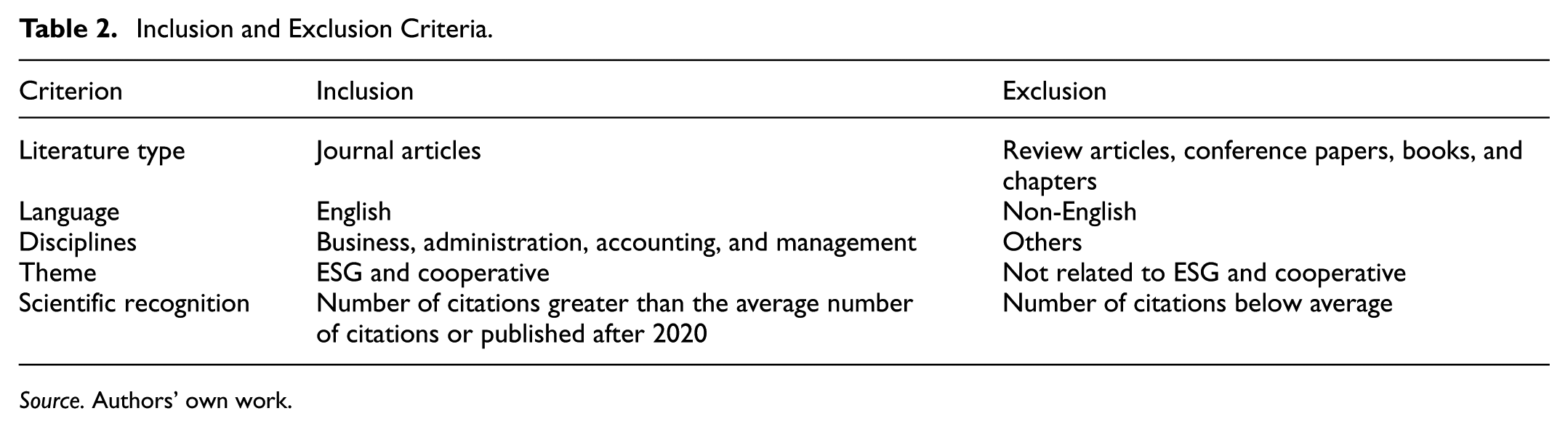
Source. Authors’ own work.
In the initial filtering, 460 duplicate articles and 4,463 articles that did not address the topic in question were removed from the raw portfolio after the titles were read. This was because the term “cooperative” is also related to collaboration, cooperation in other types of business and other themes, and not cooperatives as a form of organization.
Of the remaining 440 articles, the abstracts were read, and 296 articles that did not address the topic were identified. The bibliographic portfolio resulting from the initial filtering contained 144 articles.
The scientific recognition of the articles was analyzed by the number of citations identified on Google Scholar. The total sum of citations of the 144 articles selected in the initial filtering resulted in 2,865 citations. The average number of citations (2,865/144 = 19 citations per article) was defined as the cutoff point for selecting the articles considered to be most representative. Thus, the following groups were defined: (i) articles published between 2021 and 2023 were not evaluated in terms of scientific recognition due to the short time since publication; (ii) articles between 2012 and 2020 with over 19 citations were selected for the BP.
(iii) Assessment of the representativeness of the BP—this stage involves analyzing the bibliographic references cited in the articles selected for the portfolio. By organizing the list, it is possible to calculate the degree of representativeness (in percentages) of each article in relation to the total number of references. The references cited in the articles in the portfolio that are most representative can also be included in the BP.
At the end of the BP selection stages, 105 articles were selected for full reading. Of these, only 37 addressed the research theme. The steps for the final BP selection are presented in Figure 3.

Selection of the bibliographic portfolio.
Following the selection of the BP, bibliometric analysis was performed, which consists of evaluating the articles to quantify the information, examine the characteristics, and categorize the articles. Bibliometric analysis can be basic or advanced (Thiel et al., 2017). In a basic analysis, the main characteristics of the works in the set are examined to identify the most relevant elements. In an advanced analysis, using the variables established by the theory related to the topic under study, the aim is to understand how the topic is addressed in the articles. In this study, an advanced analysis was conducted, allowing the development of the literature map and systemic analysis. To enhance the robustness of the research, all three authors reviewed the research protocol and agreed on the papers included in the systematic literature review.
The literature map presents the topic of interest in a synthetic and visual way and was generated through content analyses of the articles in the portfolio and the researchers’ interpretation of the paths and focuses used to address the topic throughout its evolution in the scientific literature. In the systemic analysis, gaps in the literature are identified in theoretical and methodological terms, enabling inferences on research opportunities regarding ESG and cooperativism.
Based on the literature review, Vosviewer was used to analyze data from the articles for the cooccurrence of keywords and authors, seeking to bring greater transparency to the topics in the research.
Results and Discussion
The articles that made up the final BP are listed in Table 3, ordered according to their impact factor as measured by the Journal Citation Report (JCR) index of the Web of Science. In addition to the articles’ references, their approaches in terms of the ESG dimensions are included.
Articles from the Bibliographic Portfolio.

Source. Authors’ own work.
It was found that, of the 37 articles presented, the journal containing the most (7) was the Journal of Cleaner Production, an important periodical in the field of sustainability. Another relevant journal in the field of cooperativism, the Journal of Co-operative Organization and Management, contained five articles.
Regarding the evolution of the number of publications over time, Figure 4 shows that only in the last 2 years of the period in question did the theme see an increase in the number of publications in the field of cooperativism.

Evolution of the number of publications over time.
Figure 5 shows the number of articles per branch of cooperativism, following the clustering recommended by the International Cooperative Alliance (ICA).
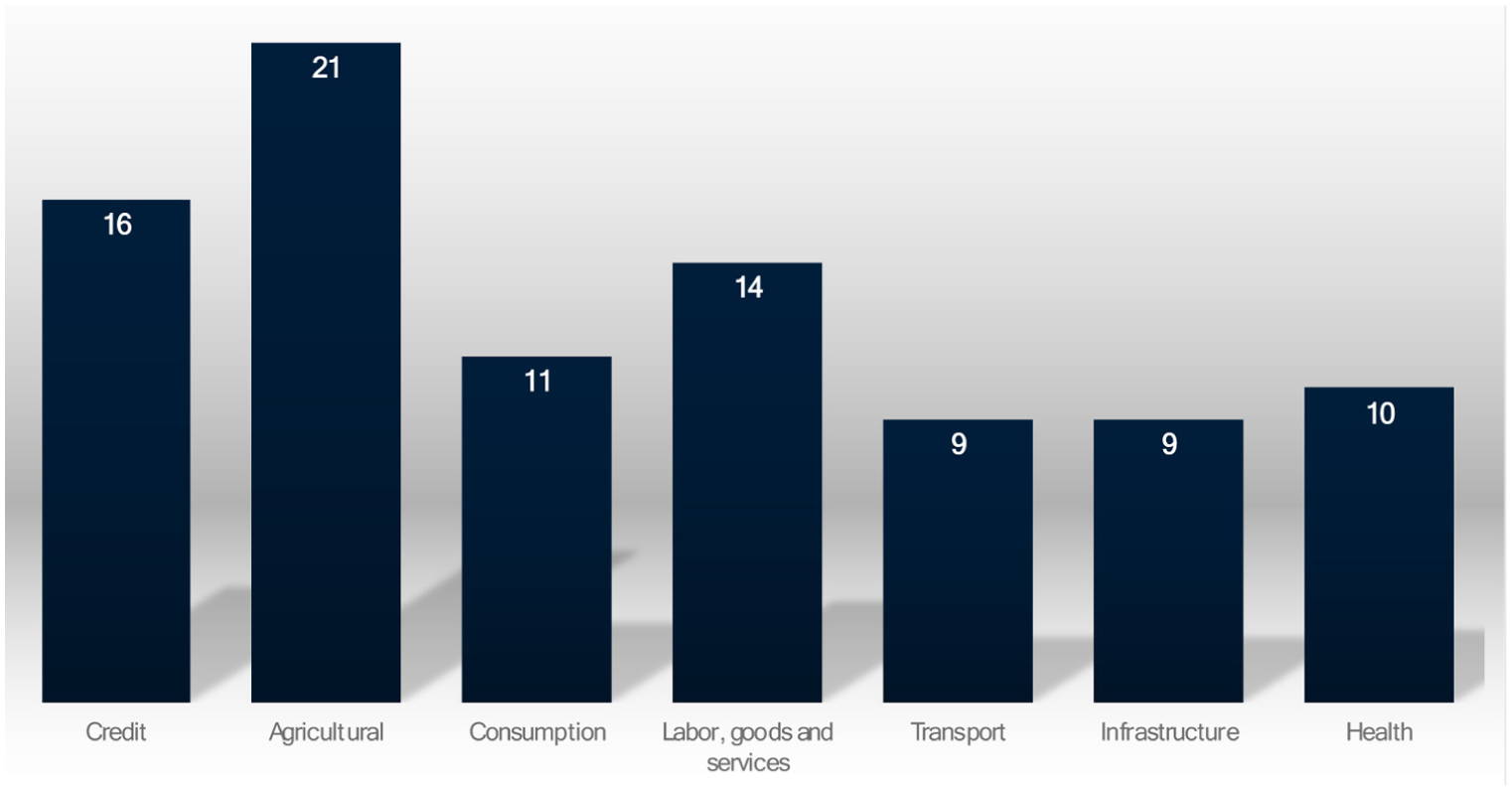
Citations in the articles regarding the branches of cooperativism.
Among the branches covered, there is a balance in the search for ESG practices and development. The “agricultural,”“credit,” and “labor, goods, and services” branches stand out with the highest volume of publications. It should be highlighted that the sum of articles exceeds the number of articles in the BP, which is 37 because some articles address more than one branch. Figure 6 shows the number of articles that address each ESG dimension, either focusing on one dimension or more than one.

List of themes addressed in the articles.
The theme of Governance was the one that was addressed most on its own, with a total of 16 articles. Seven articles focused on the triple intersection of environmental (E), governance (G), and social (S), simultaneously addressing all the aspects of ESG.
Figure 7 illustrates the map of the keywords most frequently used and represented in the articles under consideration, comprising a total of 235 keywords. The larger word circles are directly related to ESG and cooperatives and are divided into clusters of different colors. The map shows several connections between these clusters, thus creating a connection between cooperation, management, performance, strategic planning, governance and decision making, people, trade and supply chain, innovation, and sustainability.

Map of the keywords in the bibliographic portfolio.
Figure 8 presents the co-citation analysis, indicating the number of times the references used in the papers are cited together, which are represented by the larger circles. To improve the analysis, only authors with at least 3 citations were considered, resulting in 52 authors. Regarding the diverse links, the authors with the most occurrences in the BP citations are Birchall, J. (with 9 citations); Cook, M. L. (with 9 citations); Cornforth, C. (with 8 citations); Novkovic, S.; Jensen, M.C.; Eisenhardt, K. M.; each with 7 citations.

References co-citation map.
Figure 9 contains the analysis of the articles by country of origin. Brazil stands out as the country with the most articles that address ESG in cooperatives.

Countries of origin of the studies.
The literature map is presented in an integrative framework format in Figure 10, with attributes, theories and approaches of performance and efficiency to demonstrate the ESG results.
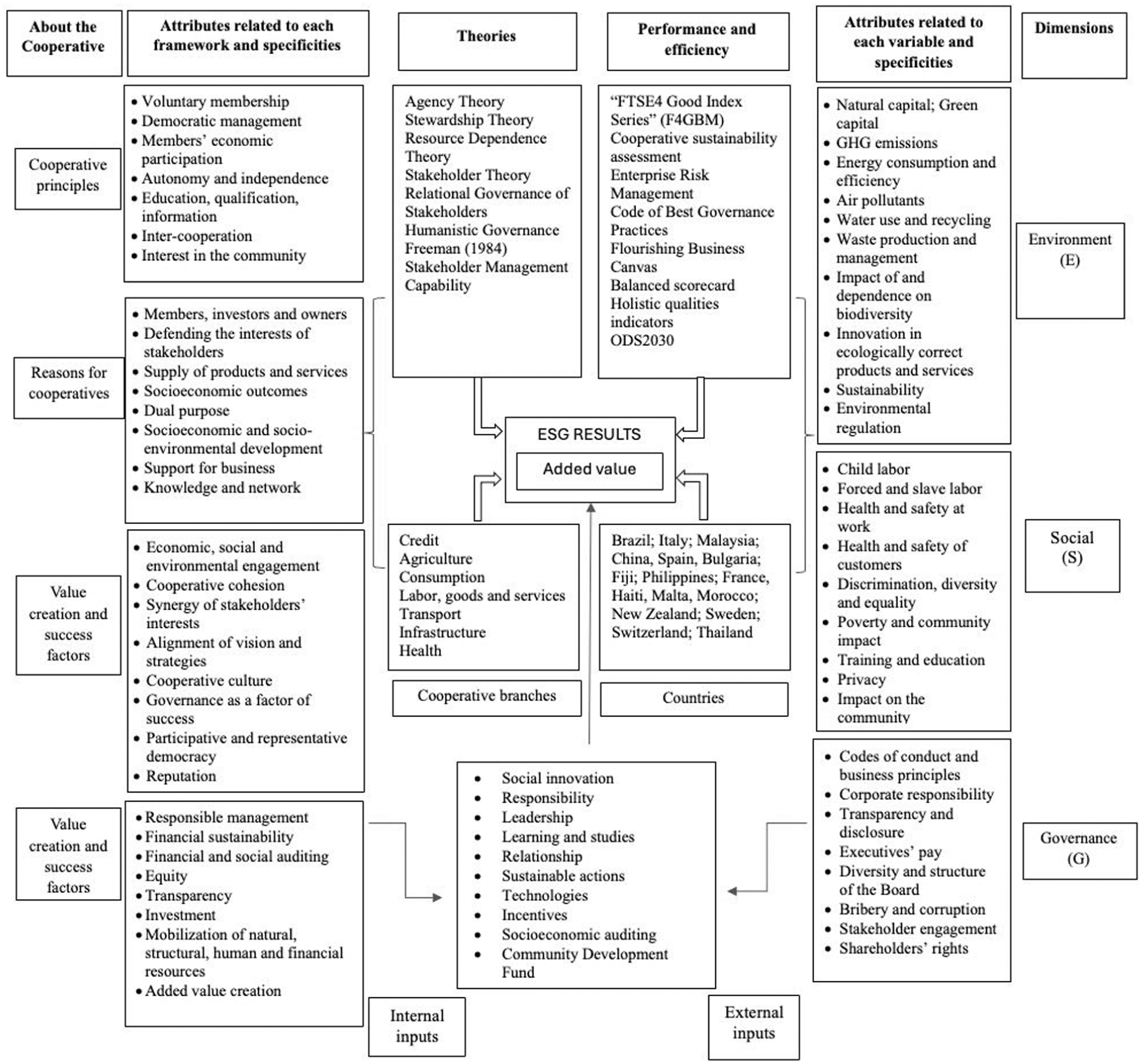
Literature map.
Findings
According to Giglio et al. (2020), it is possible to observe a trend towards expanding the concept of specific sustainability to 360° corporate sustainability, leading to the understanding that economic, environmental and social concerns are interconnected and interdependent, assuming that organizations seek these issues simultaneously. Furthermore, cooperatives must monitor and evaluate their operations in a sustainable manner.
Different approaches have been used in studies to evaluate the performance and effect of ESG actions. According to Li et al. (2021), research on ESG has different characteristics in terms of theoretical basis, which can be attributed to it being a more recent term in the literature, as the phenomenon had been widely referred to previously as the “triple bottom line” (Ji et al., 2018). These authors claim that the emphasis on the need to balance profitability with social and environmental responsibility can be aligned with dynamic capability theory, emerging as an element to drive organizational sustainability through ESG practices, recognizing the ability of organizations to adapt and innovate in response to environmental, social and economic changes. SAAC and ERM stand out as the themes that focus most on cooperatives, as explained below.
According to Marcis et al. (2019), the comprehensive indicators used to measure sustainable performance are highly complex. The authors presented the Sustainability Assessment for Agriculture Cooperatives (SAAC) model to help structure strategies and draft the ESG report. This model comprises 78 indicators divided into specific categories: financial, environmental management, HR policies and corporate governance and cooperatives. These categories contain subcategories that provide specific details on indicators important for conducting a final performance assessment. The SAAC has proved to be viable and complies with performance measurement systems, although they are not totally in alignment with the strategies and policies of cooperatives, their general business and their specific operations (Campos-Climent et al., 2012).
Caldarelli et al. (2016) emphasized the importance of managing risks associated with ESG actions through the implementation of an Enterprise Risk Management (ERM) system, which is an integrated approach to corporate risk management. ERM is a process that involves the entire organization, integrating the business strategy and highlighting the synergy achieved by the organizational culture. Cooperation between departments, open communication and willingness to take risks can be integrated to ensure effective governance. The authors claimed that ERM functions as a holistic support system, which can help cooperative organizations during each stage of their activities, identifying possible tensions and avoiding poorer performance, consequently improving ESG indicators.
Environmental Dimension Analysis
Kassim et al. (2022) claimed that sustainability is a global movement and that cooperatives play an important role in the collective management of natural resources, helping to achieve this goal while facilitating access to products and services. This accessibility can help reduce operational risks and promote the conservation of natural capital (Ghauri et al., 2022). Cooperatives are important for the sustainable development and survival of the communities in which they operate and have the potential to provide environmental benefits through efficiency in their supply chains, transferring knowledge and skills to reduce environmental uncertainties (Ghauri et al., 2022).
The importance of sustainability is becoming increasingly evident due to the scarcity of natural resources. Veber et al. (2016) suggested specific solutions such as installing ecological totems in strategic locations, creating a sustainability committee, implementing educational actions, green practices, and social responsibility indicators. Environmental management is essential because it seeks to conserve these scarce and finite resources to benefit future generations. All of these components coexist in a cooperative administration, which is responsible for maintaining and controlling these actions.
Social Dimension (S) Analysis
Regarding the discussion of the S (social) aspect of ESG, Menicucci and Paolucci (2023) noted that the theme is related to the ability to build trust, respecting the rights of human beings, protecting public health and promoting a business ethic, while creating products and services with added value. These aspects not only strengthen relationships with customers, but also contribute to the sustainable growth of cooperatives. The authors proposed a classification with four categories of indicators on social concerns in cooperatives: (i) workforce; (ii) human rights; (iii) community; and (iv) product responsibility. The first category encompasses information related to training and development policies, health and safety at work, equal opportunities, diversity, flexible working hours, employee turnover rate and wage disparities. The second category suggests indicators on human rights, freedom of association and the abolition of child labor. The third category, community, suggests indicators on measures to combat money laundering and bribery, while promoting fair competition, business ethics and community involvement. Finally, the product responsibility category addresses indicators on customer satisfaction, quality management systems, and data privacy policies.
The social scope is expressive and comprehensive. Sahmi et al. (2022), for example, claimed that the evaluation of social performance depends on a series of factors, such as better access for cooperative members to roads and public transportation to facilitate their movement and, consequently, their productivity. They also recommended that cooperative members should be given the necessary training to acquire and/or develop their managerial skills, as well as training in accounting, management, financial analysis, marketing, and communication techniques.
An important aspect of cooperatives is their capacity to promote social values integrated with economic development, thereby playing a key role in strengthening resilience and contributing to the stability and sustainability of their businesses (Sabatini et al., 2014). The sustainability of a cooperative goes beyond a simple economic understanding, with a dual ideology prevailing. In this regard, it is understood that economic sustainability comprises financial health, commercial economic performance, potential financial benefits and negotiation opportunities. In contrast, social sustainability involves internal aspects of cooperatives, requiring an assessment of existing human resources, the external population affected by cooperative actions, improvements in the community and macro-social performance. This social development occurs when processes, systems, structures and formal and informal relationships actively support the ability of current and future generations to create healthy and habitable communities, characterized by equity, diversity, connectivity and democracy, thus enabling good quality of life.
Governance Dimension (G) Analysis
Governance is the theme with the most connections between keywords in the articles of the BP, confirming the previous analysis in Table 3. There is a representative interface between the clusters defined by governance and cooperation, with emphasis on aspects such as innovation, strategy, management, sustainability, and environmental management. Corroborating this variety of interfaces, Giglio et al. (2020) presented a governance model for cooperatives known as relational governance. This model considers the construction of mechanisms by the network actors themselves and can be used to understand the structure and dynamics of cooperatives. The authors stated that strong evidence of this relational model is observed in cohesive cooperatives with low levels of conflict. On the other hand, less developed and organized cooperatives show weak evidence of relational governance. When rules are developed internally, the network becomes flexible in its roles and functions, adapting to circumstances. Decision-making and production processes occur with few conflicts and high capacity to achieve results, driven by sustainable awareness. These characteristics enable effective management of tensions in sustainability initiatives.
Michaud and Audebraund (2022) presented another governance model for cooperatives known as the humanistic model. In this model, members seek to ensure that actions are in keeping with the cooperative’s mission, working with trust and transparency. The authors also presented other theories that can be studied to gain an understanding of governance, namely: Agency Theory, Stewardship Theory, Resource Dependence Theory and Stakeholder Theory.
Governance is established to ensure the viability of cooperatives, requiring transparency, an adequate governance structure, codes of conduct and risk management. In addition, relationships with suppliers and alliances are valuable for cooperatives to be competitive, highlighting the importance of maintaining good business relationships. Leaders must adopt transparent, dynamic, communicative and inclusive governance standards. Compliance with cooperative principles and regulations is essential to maintain the reputation of cooperatives and must be monitored by ethically related managers.
Conclusion
The purpose of this study was to conduct a systematic literature review of academic articles on ESG approaches in cooperatives to identify possible indicators, methods, and techniques for analyzing ESG efficiency and performance in cooperatives to provide theoretical support for managers and researchers in the field.
Cooperatives drive progress in communities and nations by adopting a business model focused on collective needs. In keeping with cooperative principles and values, they adapt to ensure relevance and sustainability. By addressing issues ranging from the environment to quality of life, employment, and health, they are recognized as sustainable companies that can integrate ESG practices to strengthen their values. Their commitment to corporate responsibility, combined with participatory management, establishes an ethical and socially responsible business model. Faced with challenges and opportunities, cooperatives recognize the growing importance of these new practices and are therefore constantly developing.
The concept of sustainability is part of the cooperative’s identity. Analysis of its indicators reveals that, although surplus is not the primary concern of cooperatives, economic sustainability is crucial for meeting the needs of stakeholders. Social elements emphasize the management of social resources, including skills, institutions and relationships, aligned with the cooperative identity and always aiming to satisfy members’ needs. Therefore, social responsibility encompasses the local community, employees and stakeholders, prioritizing equal opportunities, training, health and safety at work.
All these considerations together constitute ESG performance, through which it is possible to identify critical issues for the cooperative business model and develop targeted and specific actions to better achieve the dual objectives of cooperatives. As implications, the results of this study not only offer insights for researchers and academics but also provide guidance for managers and leaders of cooperatives aiming to improve their ESG practices.
This article has limitations due to the two databases selected for the study, and the variety of uses of the word “cooperative,” which is not always related to the type of organization studied here. The process of identifying suitable articles for the research was decisive in order to select relevant articles to address the topic in question.
Future studies can be suggested. For instance, the use of further papers databases to broaden the research. It is also possible to expand the analysis through different theoretical lenses, given that cooperatives have characteristics that differ from those of traditional organizations, which could produce different results regarding the inclusion of ESG. Besides this, further suggestions are: to analyze how to include aspects of ESG in cooperatives, how to evaluate the influences of ESG on these organizations employing an integrated form of the three aspects, to discuss the executive’s background and its impact on cooperatives’ ESG, to compare similarities and differences of publications and cooperative models from different regions worldwide, and to analyze new trending topics such as artificial intelligence.
Footnotes

Funding
The authors disclosed receipt of the following financial support for the research, authorship, and/or publication of this article: This work was supported by the Brazilian National Council for Scientific and Technological Development (CNPq)—Call CNPq/SESCOOP No 11/2022.
Declaration of Conflicting Interests
The authors declared no potential conflicts of interest with respect to the research, authorship, and/or publication of this article.
Data Availability Statement
The data that support the findings of this study are available from the authors upon request.