




Abstract
Despite the proliferation of systematic literature review studies on cooperative organization, a similar review of cooperative governance and performance literature has yet to be conducted. To close this gap, this paper presents a systematic literature review on the relationship between cooperative governance (CG) and cooperative performance using the PRISMA approach. Major search engines were used in the compilation of studies published between 2009 and 2021. A review of the 30 selected papers indicate there are four categories of CG used in relation to cooperative performance: board characteristics, policy compliance, management, leadership and strategies, and the board’s social or human capital. The results also suggest mixed and inconclusive findings on the CG–cooperative performance relationship. The current study seeks to contribute to the existing literature by highlighting patterns and gaps of past studies on the CG–cooperative performance relationship, thereby providing insights for future research.
Keywords
Introduction
A cooperative is a self-governing association of people who have come together voluntarily to meet their common social, economic, and cultural needs and aspirations via a collectively owned and democratically controlled enterprise. Cooperatives contribute to long-term economic growth and offer high-quality employment for 280 million people worldwide, or 10% of the world’s workforce (International Cooperative Alliance, 2022). Cooperatives are superior forms of organizations with noble missions and goals, striving to improve social economic condition for the members. This type of organization is considered important all over the world. Agricultural cooperatives, for example, are major players in European farming, accounting for 40% to 60% of agricultural trade and are key actors in articulating rural realities (Ajates, 2020). In Sweden, approximately 50% of all multifamily buildings are owned and managed in cooperative forms also known as “housing cooperatives” (Anund Vogel et al., 2016).
Cooperatives are, by nature, a form of sustainable and participatory business that has demonstrated remarkable resilience in the face of COVID-19-related economic and financial crises. During the 1.5 years of the COVID-19 pandemic, housing cooperatives, for example, demonstrated their ability to promote the well-being of vulnerable individuals and, more broadly, the communities in which they operate (Zapata, 2021). Furthermore, according to the United Nations (2021), agricultural cooperatives enable small producers to share risks, gain market access, and make investments in their activities. Solidarity and social networking are the driving forces behind the initiatives promoted by consumer cooperatives in Italy, which denoted their profits to local community cooperatives after experiencing an increase in revenue during the pandemic months (Billiet et al., 2021).
Good governance is at the heart of any successful cooperative. Following the formal definition of corporate governance (OECD, 2015, p. 9), cooperative governance (CG) is defined broadly as a system (structure and processes) for managing and controlling a cooperative organization, as well as establishing obligations among various people involved in the organization, such as the board, members, employees, and administration, as well as the procedures and rules for decision-making in this organization. The Co-operative Commission of Malaysia (SKM) defines CG as “… the relationship between members as business owners, management who operate the business and the board leading the management on behalf of the members with the aim of achieving the goals of the cooperatives” (GP27, n.d.: Cooperative Governance Guidelines). Although cooperatives are different from investor-owned firms in terms of social mission, property rights (interests not related to capital invested), and decision-making structure (based on people rather than capital), both entities are similar in terms of commercial activity, market competition, distribution of surplus to members/shareholders, organizational structure and processes (Michaud & Audebrand, 2022, p. 3).
Given that cooperatives are member-owned, their governance structures and mechanisms may differ from those of other types of investor-owned organizations (Mathuva et al., 2017). It is the clear and precise existence of the internal organizational mechanisms that direct and control the governance systems, which, in the case of cooperatives, are the board of directors, members’ assembly, management, and supervisory board. Good CG can increase the trust of the cooperative’s various stakeholders, thereby increasing its long-term value. CG has been one of the biggest challenges faced by cooperative organizations (Chaves et al., 2008). The lack of adequate governance structures can lead to two instances: (1) it can cause major problems in the strategic decision-making process, which tends to impede the overall performance of the organization and (2) it can cause dysfunctional disputes among the multiple governing bodies, which may influence the overall performance of the organization and the efficiency of its services; and ultimately, in extreme cases, lead to the cooperative’s dissolution (Villavicencio & Solares, 2019). Consistent with the establishment objective of cooperatives, “cooperative performance” is defined as covering three aspects, namely, economic, social, and sustainability (financial and non-financial) performance (Co-operatives UK, 2013). Therefore, it is critical to understand the relationship between CG and cooperative performance.
Some researchers have conducted a systematic literature review (SLR) or review of the literature on cooperative organizations. Recently, Camargo Benavides and Ehrenhard (2021) investigated future research avenues that can be derived from current cooperative enterprise research topics in the organizational literature. Buang and Abu Samah (2020) explored the factors that have affected the effectiveness of the cooperative board, while Luo et al. (2020)conducted an SLR and bibliometric analysis on agricultural cooperatives in the West. Their findings revealed six major themes of discussion on Western cooperatives, namely, the CG structures, comparisons between cooperatives and investor-owned firms, cooperative social and environmental performance, women’s cooperatives, trust and commitment in cooperatives, and cooperative financing problems. McKillop et al. (2020) conducted a review of financial cooperatives’ behavioral and structural characteristics, as well as their performance and contributions to the real economy. Soeiro and Dias (2019)reviewed previous research on renewable energy cooperatives, which encourage community-based renewable energy initiatives, as well as their motivations, main characteristics, and performance across several European countries. Grashuis and Su (2019) evaluated 56 papers on farmer cooperative performance, finance, ownership and governance, and member attitudes. Höhler and Kühl (2018) examined the dimensions of member heterogeneity in agricultural cooperatives and their impacts on organizational performance. Other researchers reviewed 67 articles on the definition of mutual insurance in previous articles (Talonen, 2016). Thus far, existing SLR has focused on cooperatives issues structured into separate themes, while no review has analyzed previous studies on the governance–performance relationship in cooperatives.
Due to the lack of existing SLR on the CG–cooperative performance relationship (Buang & Abu Samah, 2020, 2021; Camargo Benavides & Ehrenhard, 2021; Luo et al., 2020; Soeiro & Dias, 2019; Talonen, 2016), the present study is motivated to fill the aforementioned literature gap by providing a comprehensive and systematic review on this issue. The current study advances to the next level by examining the CG themes used and analyzing the relationship between CG and cooperative performance found in the literature. A good understanding of the current CG themes used in the literature and CG–cooperative performance relationship could help future researchers identify (1) the boundary of knowledge and (2) new issues unique in cooperatives for investigation. The ultimate outcome of this process is to help cooperatives form more effective CG.
The data collected through systematic reviews and meta-analyses (PRISMA) were analyzed using descriptive and content analyses to gain in-depth insights into the type of CG used and the relationship between CG and cooperative performance. The specific research questions are as follows:
What are the themes used and patterns of studies linking CG and cooperative performance?
What are the gaps and areas that need to be addressed in the future?
A systematic review employs a systematic and logical approach to evaluating formulated questions to identify, select, and critically analyze the related literature included in the review process. Existing literature, according to Higgins et al. (2011), can be analyzed and summarized using statistical methods. Researchers use a systematic review to not only justify the comprehensiveness of their research but also to find gaps and make valid suggestions for future work.
The current study adds to the existing body of knowledge in several aspects. First, the current study provides a more systematic overview of CG and performance relationships than individual studies. Understanding what has already been researched in terms of CG and cooperative performance is an important step toward moving the concept forward. To the best of our knowledge, no study on CG and cooperative performance links has been systematically reviewed so far. Second, the current study highlights the trends or patterns in research on the various types of CG (board characteristics, policy compliance, management/leadership strategies, and the board’s social/human capital), as well as the results and locations of studies on cooperative performance.
The remainder of the paper is organized as follows. Section 2 explains the methodology adopted in this study. Section 3 presents the findings of descriptive analysis, while Section 4 discusses the findings of content analysis. Section 5 summarizes the discussion while emphasizing future research directions. Finally, Section 6 concludes the paper.
The Method Adopted to Conduct the SLR
This section describes the methodology adopted in conducting SLR in the field of CG. The procedures for conducting a systematic review, including the retrieval and analysis of literature, are described. It is based on the preferred reporting items for systematic reviews and meta-analyses (PRISMA) statements. The PRISMA procedure includes two steps: (1) the literature retrieval process, which includes the identification, screening, and eligibility for review and (2) the data abstraction and analysis.
PRISMA
Throughout the SLR, PRISMA was used in the area of cooperation (Bores-García et al., 2021) to guide the data collection process. According to Sierra-Correa and Cantera Kintz (2015), among the benefits of the PRISMA Statement are (i) the use of clearly defined research questions, (ii) the classification of literature using inclusion and exclusion criteria, and (iii) the ability to conduct large database literature searches within a specific time frame. As a result, the PRISMA statement enables a thorough search of literature related to CG and cooperative performance.
Resources
The PRISMA statement was applied to two main databases, Scopus and Web of Sciences (WoS). Both databases provide comprehensive literature search tools. Scopus is the only database that combines a comprehensive, excellent collection of abstract and citation databases with enriched data and connected scholarly literature from various disciplines. It is the world’s largest abstract and citation database of peer-reviewed literature; contains records of conference proceedings, books, and scientific journals, including over 21,000 peer-reviewed journals from 5,000 publishers globally; and more than 60 million records. In addition, Scopus includes smart tools for visualizing, analyzing, and tracking research, thus enhancing the efficiency and effectiveness of research workflows (Scopus, 2021). The WoS database, on the other hand, is the world’s most trusted publisher-independent global citation database and one of the most widely used research engines worldwide. The WoS database developed by Clarivate Analytics contains more than 1.9 billion cited references from over 171 million records (Clarivate, 2021). It is one of the world’s best research engines and is frequently used as a research tool for academic libraries (Li et al., 2018). In addition, two supplementary databases were used: Science Direct and Taylor & Francis.
Eligibility and Exclusion Criteria
The PRISMA statement summarizes the inclusion and exclusion criteria. As shown in Table 1, only manuscripts meeting certain criteria were accepted for the review process, that is, (i) only journal articles as they contain complete reports and mature research (González-Albo & Bordons, 2011), (ii) only English manuscripts are accepted for easy data search and analysis, and (iii) only manuscripts relating to CG and cooperative performance.
Inclusion and Exclusion Criteria.

Systematic Review Process
The integrative systematic review included manuscripts using qualitative, quantitative, and mixed methods. The integrative systematic review is the best technique to use in this review because it enables a thorough manuscript overview with multiple research approaches (Jackson et al., 2019). The integrative systematic review was conducted in January 2022, primarily using two databases, Scopus and WoS. In addition, two supplementary databases (Science Direct and Taylor & Francis) were used to obtain a more comprehensive review based on all possible quality literature. The integrative systematic review is divided into four stages. First, the appropriate keywords related to CG and cooperative performance were identified using previous research and expert opinion. The databases’ comprehensive features facilitated the prioritization and customization of specific words over the rest within search sections, such as abstract, keywords, and title. Table 2 displays the search strings for each of the four databases.
The Search Strings Used in the Systematic Literature Review.
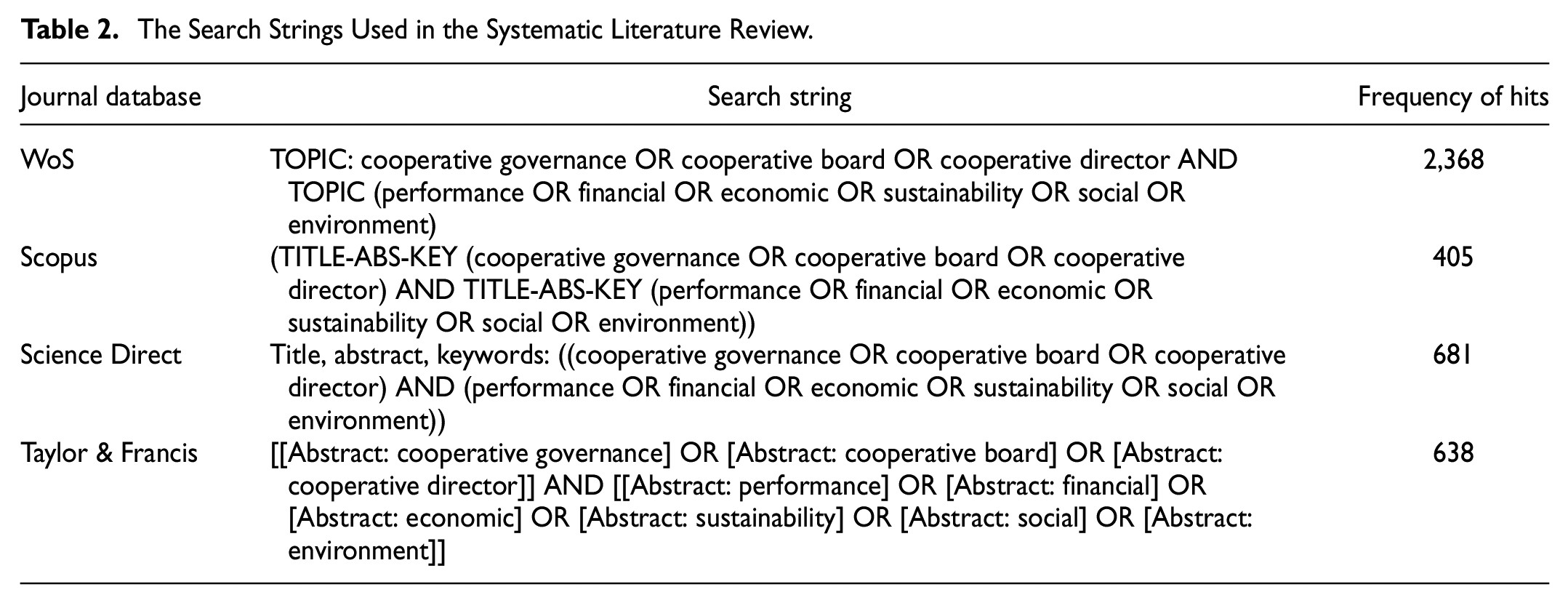
The search strings of all four databases (WoS, Scopus, Science Direct, and Taylor & Francis) with 4,092 manuscripts were retrieved. Then, the 756 duplicated manuscripts were excluded from the identification process. Following that, another 1,125 manuscripts were discarded during the screening stage, while 2,181 manuscripts were rejected during the eligibility stage. Finally, only 30 papers were retained in the final analysis to address the research questions. The contents of the papers focused specifically on CG and cooperative performance. As the development of a review protocol is vital for rigorous systematic review, Figure 1 presents the PRISMA flow diagram used in this study.

The flow of information through the different phases of a systematic review.
Data Abstraction and Analysis
A total of 30 papers were chosen for data abstraction and interpretation. Descriptive analysis was performed to provide an overview of the 30 papers, while content analysis was conducted to provide answers to the research questions. The number of analyzed papers is considered sufficient because of the following reasons: (1) the topic is highly specific, (2) we only identified influential papers, and (3) it is manageable. The number of observations in an SLR varies. For instance, Buang and Abu Samah (2021) analyzed 12 papers, Camargo Benavides and Ehrenhard (2021) analyzed 101 papers, Grashuis and Su (2019) evaluated 56 papers, and Luo et al. (2020) analyzed 257 papers. Before the full paper analysis in the current review, the abstracts of the selected papers were examined. The raw data regarding the research questions were extracted, and the final results were documented. The entire process was meticulously documented.
Descriptive Analysis
The 30 selected papers were published between 2009 and 2021, as shown in Figure 2. The majority of these papers (seven papers) were published in 2020, followed by 2018 (five papers), 2017 and 2019 (four papers each), and 2009, 2013, and 2021 (two papers each). All the remaining years only had one paper each. Although the PRISMA method’s timeline limit of a screening stage included papers from 2000, there were no known related papers on CG and cooperative performance that were published between 2000 and 2008. As shown in Figure 2, the number of the selected papers fluctuated and remained consistent year after year, but in 2017 and beyond, the numbers increased. This indicated an increase in research interest in the subject and the rising importance of CG in addressing cooperative performance issues.
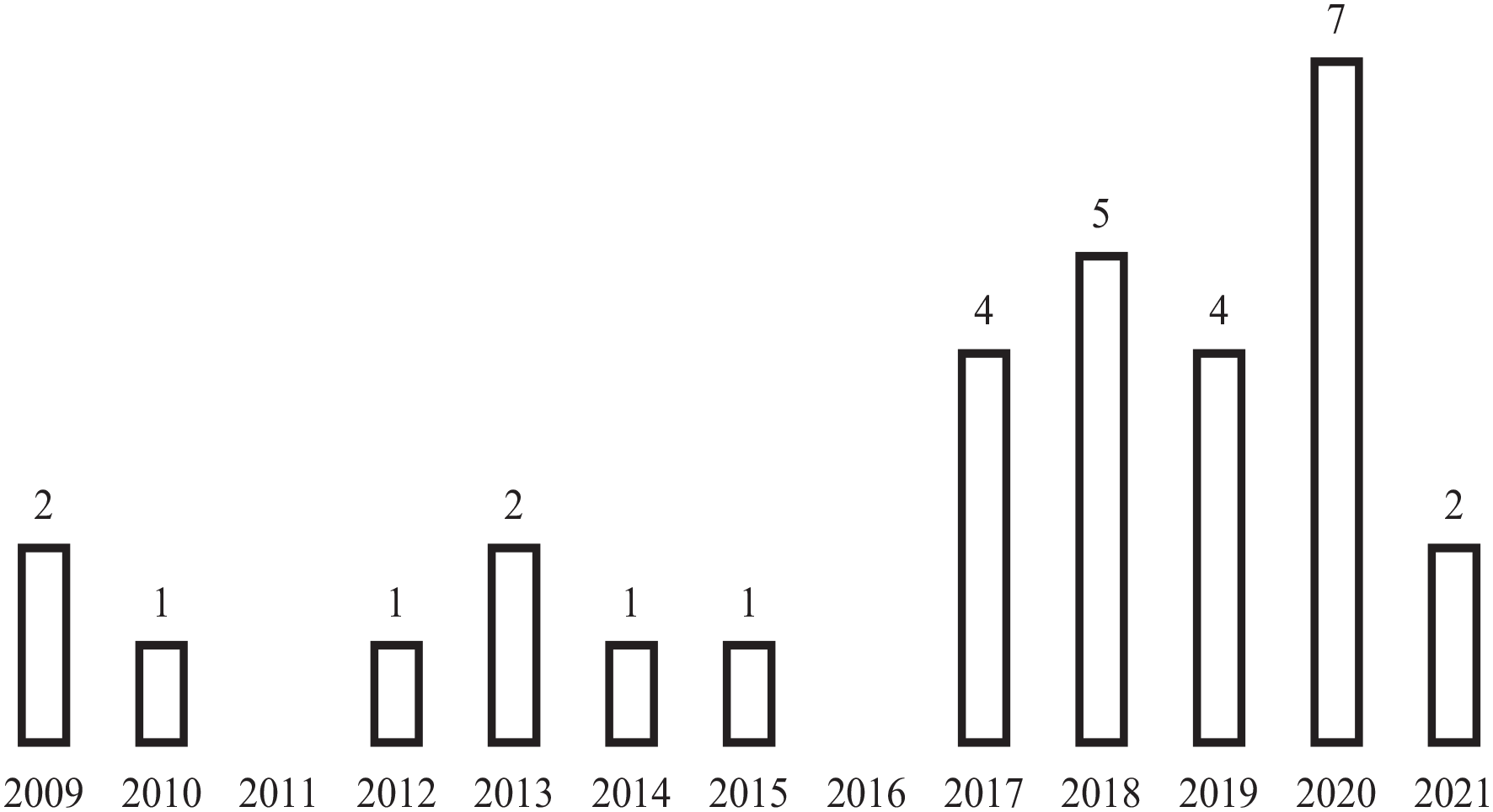
Paper publication over time.
The distribution of 30 selected papers across 24 journals highlights the fact that a wide range of journals addressed the topic of CG and cooperative performance, as presented in Figure 3. Specifically, one journal (Journal of Co-Operative Organization and Management) published three papers on the topic, four journals (Agrekon, Agribusiness, Agricultural Finance Review, and Small Business Economics) each published two papers, and the remaining 19 journals each published one paper.
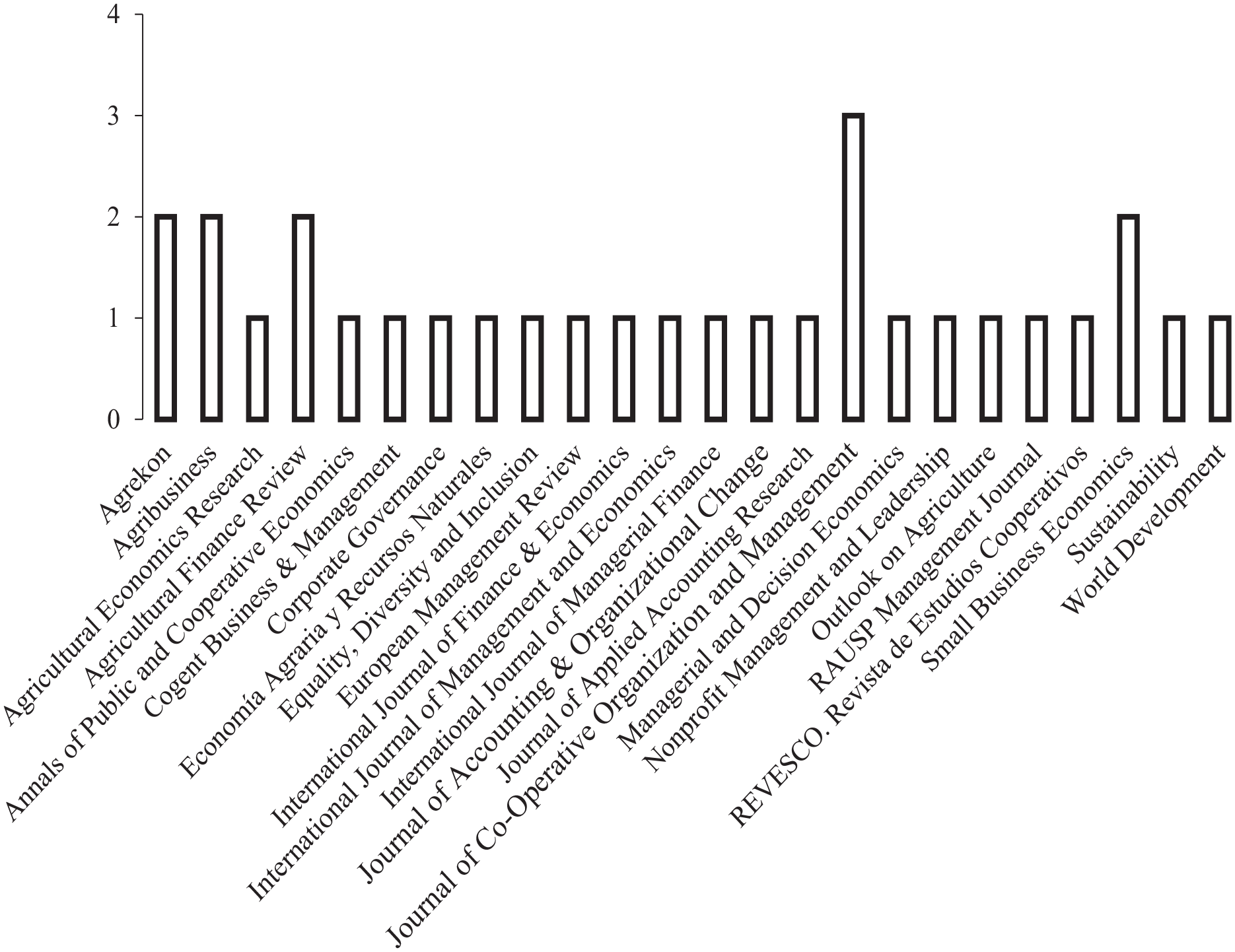
Publication of papers across multiple journals.
As depicted in Figure 4, the 30 selected papers were distributed across 17 countries, including the United States, Portugal, Italy, China, the Netherlands, New Zealand, Senegal, Japan, India, Sweden, Spain, Saudi Arabia, South Africa, Brazil, Kenya, Uganda, and Ethiopia. The top five countries in terms of the number of papers published were the United States, Portugal, Spain, China, and Brazil. Each region or continent was only represented by very few studies in selected countries. It also appeared that there was a lack of studies in Eastern European and Southeast Asian countries. Thus, opportunities still exist in terms of exploring the uniqueness of issues surrounding CG mechanism implementation, which is shaped by the members’ culturally divergent perceptions and actions.

Geographical distribution of selected papers per country.
According to Table 3, one journal (Small Business Economics) had two papers in the top five journals with the highest impact factor of 8.164 for the year 2020, while the remaining four journals published one paper each. Small Business Economics by Springer publishes novel, theoretical, analytical, and quantitative research on all aspects of entrepreneurship and small business, with a focus on the economic and societal importance of research results for practitioners, academics, and policymakers. This journal is commonly cited in the field of entrepreneurial process and new venture creation, as well as related disciplines, such as family firms, innovative start-ups, self-employment, entrepreneurial finance, and small and medium-sized enterprises, thus explaining the disparity with other journals, as shown in Table 3.
The Top Five Journals With the Highest Impact Factors (2020) and the Number of Papers Published.

As shown in Figure 5, the majority of the studies (approximately 19, 63.33%) used secondary data for data collection, followed by those that used surveys (approximately 5, 16.67%), a mixed-methods approach (approximately 4, 13.13%) such as surveys and secondary data, and interviews (3, 6.67%). The use of experimental design was not observed.

Selected papers based on the methodology used.
Table 4 provides a brief description of the five papers with the most citations. The five papers with the most citations cover a wide range of CG elements concerning cooperative performance, including the cooperative board model, type of board directors, female-dominated board, female cooperative manager, and different types of chief executive directors (CEOs) in the cooperative.
List of Most Cited Papers (Papers With at Least 30 Citations Until March 2022).

Content Analysis
The 30 papers eligible for this study were evaluated in terms of (i) cooperative performance, (ii) CG and performance, and (iii) CG distribution across countries.
Cooperative Performance
An examination of 30 selected papers found that CG had a significant relationship or impact on seven aspects of cooperative performance: overall cooperative performance, financial performance (e.g., ROE, ROA, loan recovery rate, and operating expenses to sales), operational performance (e.g., cost reduction), economic performance (e.g., productivity), social performance (e.g., social orientation in lending, social responsibility, high service quality, and member welfare), environment (e.g., environmental conservation), and others (e.g., internal process, customer-focused, and learning and growth). More than half of the papers evaluated cooperative performance in terms of financial performance (66.67%), operation performance (16.67%), economic and social performance (10%), and overall, environmental, and other types of cooperative performance (3.33%), as shown in Table 5. The findings revealed that financial performance was an important subject for cooperative industries and that this performance served as an important tool in assessing cooperative activity and growth. Financial performance evaluation also played a critical role in many cooperative interest groups, including the chairperson, board of directors, managers, and cooperative members.
Cooperative Performance Categories Used in All 30 Selected Papers.

Note. “•” indicates the cooperative performance used in the selected papers.
CG and Cooperative Performance
Analysis of these papers revealed that the CG used in relation to cooperative performance can be classified into four broad categories, namely, (i) board characteristics, (ii) policy/principle compliance, (iii) management/leadership strategies, and (iv) social/human capital. About 53.33% of the selected papers focused on board composition, 30% on board size and board background, 20% on management/leadership strategy, 13.33% on principle/policy, 10% on social/human capital and board compensation, and 3.33% on board model.
Board Characteristics
An interesting analysis of the overall governance model was made by Bijman et al. (2013), who argued that cooperatives with a traditional model outperformed the corporation model and the management model in some aspects of performance. Teixeira et al. (2021) supported the notion regarding the superiority of the traditional cooperative model compared with others. Furthermore, Grashuis (2020) concluded that agency costs are related to the non-traditional model of CG. These studies suggest that the traditional model of cooperatives is still relevant. Consistent with this view, the member CEO has a stronger incentive, is more efficient (Liang & Hendrikse, 2013), and incurs less agency costs (Grashuis, 2020) than the outside CEO. This result underscores the importance of the cooperative concept appreciation to the core and the appointment of a competent cooperative member as the CEO of a cooperative.
The relationship between cooperative board characteristics and performance has been investigated mainly in cooperatives in the fields of agriculture (e.g., Gunderson et al., 2009; J. Rebelo et al., 2011) and financial/insurance (e.g., Ghosh, 2018; Yamori et al., 2017). However, a lack of investigations on this issue in other sectors, as depicted in Table 6, limits generalization on the strength of relationships, due to some specific characteristics of the sectors. Furthermore, insights into sector-specific board monitoring mechanisms may also be limited in other sectors.
Cooperative Governance Used and Types of the Cooperative.

Note. “*” indicates the cooperative governance used in the selected papers; “•” indicates the type of cooperative in the selected papers. AT = agency theory; CT = coalition theory; CTL = congruity theory for leadership; HRT = human resource theory; RDT = resource dependence theory; GAT = gender affinity theory; LT = legitimacy theory; IT = institutional theory.
In terms of board characteristics, the most popular characteristics investigated included board composition (Hakelius, 2018; J. F. Rebelo et al., 2016; Reddy & Locke, 2014; Yamori et al., 2017), board size (Franken & Cook, 2019; Ghosh & Ansari, 2018; Grashuis, 2020; Hakelius, 2018; Hemrit, 2020), and gender (Esteban-Salvador et al., 2019; Ghosh, 2018; Ghosh & Ansari, 2018; Hernández-Nicolás et al., 2019; Périlleux & Szafarz, 2015, 2022; Teixeira et al., 2021; Yobe et al., 2020).
Other board characteristics investigated included the involvement of politicians on the boards of directors (Carretta et al., 2012), the cooperative board model (Bijman et al., 2013), board structure (Yamori et al., 2017), types of CEOs (Liang & Hendrikse, 2013), the role of professional managers (J. F. Rebelo et al., 2016), director education and independence (Grashuis, 2020; Hakelius, 2018), external director (Hakelius, 2018), board meeting (Hakelius, 2018), and CEO tenure (Franken & Cook, 2019).
Some studies have found a negative relationship between board size and asset utilization (Reddy & Locke, 2014), ROA (Franken & Cook, 2019; Reddy & Locke, 2014), ROE (Franken & Cook, 2019), overall performance (Franken & Cook, 2019), operating efficiency (Gunderson et al., 2009), operating expenses to earning assets ratio (Gunderson et al., 2009), and cost-efficiency (Yamori et al., 2017). Some studies suggest that board size may not be linked with ROA and ROE (Gunderson et al., 2009); profit efficiency (Yamori et al., 2017); net interest income, return on loans, cost of funds, and total operating cost (Ghosh & Ansari, 2018); extra-value index (Franken & Cook, 2019); and net premium written, expense ratio, and profit margin (Hemrit, 2020). However, Hakelius (2018) reports that board size has a positive effect on cooperative performance. Reddy and Locke (2014) have argued that the cooperative board’s eight members are less than ideal for cooperatives.
J. Rebelo et al. (2011) found that, in relation to CEO characteristics, the presence of both full-time directors and managers can improve cooperative performance. In contrast, financial performance seemed to be better in non-professionally managed cooperatives (J. F. Rebelo et al., 2016). In relation to the CEO, Hakelius (2018) has found that a high degree of agreement between the CEO and the board resulted in more benefits to cooperatives. Meanwhile, a CEO’s tenure had a significant positive impact only on ROE (Franken & Cook, 2019), consistent with an argument that familiarity and experience could improve decision-making. In contrast to resource dependence theory, management size has been associated positively with agency costs (Grashuis, 2020).
Other than that, Reddy and Locke (2014) suggest that greater board independence and greater board experience have the potential to reduce agency costs in cooperatives. This is supported by other studies, which observed the significant positive impacts of outside board members on efficiency (Yamori et al., 2017) and return (Franken & Cook, 2019) measures. However, Hakelius (2018) have found insignificant results on the external/outside directors and performance relationship, while Grashuis (2020) and Hemrit (2020) found an increase in agency costs related to more outside directors.
Gender diversity research has grown in response to the emergence of gender equality discussions and laws (Hernández-Nicolás et al., 2019), as well as the differences in leadership styles between men and women (Eagly & Johannesen-Schmidt, 2007). In terms of social performance, female-dominated boards have been found to have a higher social orientation than male-dominated boards (Périlleux & Szafarz, 2015). Cooperatives with a female chairperson on the board are more likely to have a higher number of employees, employee costs-to-operating-revenue ratio, liquidity ratio, and proportion of female employees, as well as a lower debt level (Esteban-Salvador et al., 2019; Hernández-Nicolás et al., 2019). In contrast to social performance, women-owned cooperative banks (Ghosh, 2018) and the proportion of women on the board have been found to have significant negative relationships with lending behavior (Ghosh & Ansari, 2018) and financial indicators, such as return on loans and cost of funds (Ghosh & Ansari, 2018; Yobe et al., 2020). In another setting, Périlleux and Szafarz (2022)have concluded that female CEOs and subordinates, along with female-dominated boards, outperformed male-dominated boards in terms of financial performance.
Other board characteristics include board compensation. Consistent with the alignment of interest, an increase in board compensation has been found to improve cooperative performance (Gunderson et al., 2009). A study also suggests that politicians who hold executive positions on the board of directors appear to have a negative impact on the cooperative bank performance (Carretta et al., 2012). These results do not conform to the argument from resource dependence theory, which states that more resources (people with ideas and political patronage) could improve cooperative performance.
The analysis above suggests that there is a concentration of studies on certain board characteristics, namely, board size, directors’ gender, and CEO characteristics. In comparison, not much work has been done on the outcomes of cooperative board compensation (only one study) and the roles and composition of nomination and remuneration committees in cooperatives. It also appears that there is a lack of study on the effectiveness of the internal audit and audit committees responsible for the internal control, transparency, and quality of the financial communication between the cooperatives and their members. Interestingly, some new variables have been found, including non-member ownership (investors) existing in cooperatives (Grashuis, 2020). In terms of board expertise, only Hakelius (2018) and D’Amato and Gallo (2019) have argued that well-educated directors benefit Swedish agricultural cooperatives. In other words, the lower educational levels of cooperative directors help explain cooperative banks’ lower risk-taking behaviors. Limited studies have also investigated board meeting frequency, which represents board activeness or board commitment. Hakelius (2018) suggests that the frequency of cooperative board meetings is not a significant determinant of performance.
Unlike other researchers, Mathuva et al. (2017) assessed CG using an index. An advantage of assessing CG using an index is that it considers the complementarity or substitution effect of certain governance mechanisms. They also examined the association between CG and credit union accountability, that is, social and environmental disclosure in Kenya (Mathuva et al., 2017). The CG index they proposed consisted of a mix of board characteristics and governance policy/principal elements, such as gender equality on the board, board members training, gender diversity on the supervisory committee, disclosure of insider loans, presence of an audit and social responsibility committees, and board size (Mathuva et al., 2017).
It appears that the coverage of the board characteristics is almost comprehensive, although there are variations in emphasis. However, there is still room for improvement in terms of looking for unique governance arrangements of cooperatives in different sectors or countries, such as the types or character of political influences in cooperatives, the role and activism of members, and the role of younger generations in governing cooperatives. Notably, there have been mixed results in studies that investigated the influence of board independence and board gender on cooperative performance; thus further studies are required.
Policy or Principle Compliance
It is believed that the implementation of good governance according to stipulated CG policy or principles is important in ensuring members’ accountability. It is primarily the responsibility of the board to ensure cooperative compliance with the policy or principles. Policies/principles are critical to cooperative performance as they provide systematic guidance to ensure the achievement of performance. Guzmán et al. (2020) examined the association between the principles of CG and worker cooperative performance. The CG principles they examined included education, economic participation by members, collaboration with other cooperatives, democratic member control, and concern for the community. Their findings reveal that cooperative principles have a positive impact on sales and employee growth.
Meanwhile, Kyazze et al. (2017) ed that there exists a relationship between CG (e.g., policy compliance and monitoring rights) and cooperative social performance. Following Teixeira et al. (2021), who argued that governance configuration is contextual, there is still an opportunity to extend these lines of thought by looking at the possibility of having different codes of CG, governance principles, or guidelines for small and medium- and micro-sized cooperatives, as their resources and agency costs vary compared with the large cooperatives.
Management, Leadership, and Strategy
It is natural to expect that cooperative management/leadership strategies are used to improve performance. Chibanda et al. (2009) studied the governance issues (board characteristics and management/leadership strategies) that influence the performance of smallholder cooperatives in South Africa. They found that CG issues are strongly associated with the lack of management and production skills training, low educational level, and poor marketing arrangements, resulting in low returns to investors or members. They also found that cooperative performance is dependent on good CG. Meanwhile, Gezahegn et al. (2020) suggest the significant negative effect on cooperative technical efficiency of several factors, including members’ participation, number of employees, chairman’s level of education, and education committee. They also found that community-initiated cooperatives (as opposed to government-initiated cooperatives and cooperatives that compensate board members have positive effects on cooperative technical efficiency. Interestingly, they found a U-shaped relationship between the chairman’s age and cooperative technical efficiency. Thus, a compensation and board configuration strategy may be adopted to ensure that cooperatives are technically efficient.
Ferreira et al. (2021) investigated the impact of a technical assistance program on employee loyalty among members of a Brazilian dairy cooperative. According to the results of logistic regression, they found that participation in CG’s technical assistance program increased dairy farmers’ loyalty. This indicates that technical assistance programs play an important role in maximizing cooperative members’ economic gains.
Apart from compensation, board configuration, and programs, specific management and leadership strategies have been investigated by prior literature. For example, Favalli et al. (2020) examined the impacts of CG (e.g., leadership strategy and management and supervision) on Brazilian credit unions. They found that cooperatives in groups with the highest levels of strategic leadership, representation and participation, and management and supervision performed the best, indicating a higher concentration of leverage ratio values.
Overall, however, there is a lack of studies that use organization or management theories in cooperatives. Thus, opportunities exist in terms of using organization or management theories to study the characteristics, strategy, and outcomes of cooperatives, as well as the typology or styles of leadership and management therein.
Social and Human Capital
One of the important elements of success is how an organization manages its social and human capital. Cooperatives are distinguished by the high involvement and interactions of members, including the chairperson, managers, leaders, and board of directors, in the decision-making processes and the distribution of benefits, which reflect cooperatives’ performance.
The relationships between social and human capital and performance have been examined mostly in the agricultural cooperative context. For instance, Liang et al. (2018) revealed that external social capital can increase cooperatives’ profit per member and that social capital has a greater impact when formal governance is strong in terms of income distribution. “External social capital” is defined as a chairperson’s social ties with others. Similarly, Liu and Li (2018) suggest that the human capital of a director-general influences all types of performance except for customer-focused performance. In contrast, the director-general’s social capital influences all four dimensions of cooperative performance.
Overall, it appears that very little is known about the role of social and human capital in generating outcomes in cooperatives. Thus, future research can explore more granular information about the types and nature of social and human capital in cooperatives. In general, apart from studying the board and CEO, only Reddy and Locke (2014) assessed the association between the types of cooperative ownership and cooperative agency costs. The type of ownership is an important part of the governance structure, which has the incentive to monitor the management.
Most of these studies adopted agency theory to guide their predictions. This pattern is expected due to the nature of the governance mechanisms in which principals are supposed to monitor agents. However, some authors have attempted to investigate this issue using different approaches. For instance, there are several specific demographic variables introduced only recently by Yobe et al. (2020) that can be categorized as compliance and board variables. However, these variables are either not supported by a strong theory or lack abstraction that may have implications for the theory. It appears from the analysis that not many new governance perspectives have been introduced by prior literature in cooperative contexts.
Interestingly, Teixeira et al. (2021) confirmed the significance of governance in the performance of cooperatives by looking at governance as a combination of mechanisms that can substitute for each other and affect the outcomes. They suggest configurations of mechanisms using fuzzy-set qualitative comparative analysis. Their analysis and results are appealing, mainly indicating that the democratic aspect of CG should be implemented in conjunction with other governance mechanisms to ensure their effectiveness. Consistent with Bijman et al. (2013), it has been found that the traditional governance structure is adopted by successful cooperatives. Thus, the exploration of the complementarity and substitutability issue remains relevant.
CG Studies Across Countries
The distribution of studies that have examined CG in relation to cooperative performance is shown in Figure 6. Notably, Ugandan researchers concentrated solely on “policy compliance.” Meanwhile, researchers from China focused on “management, leadership, and strategy” and “social and human capital” issues in relation to cooperative performance. Thus, there are opportunities to look at different issues in each country in accordance with the local context and specific cooperative features.

Global distribution and types of cooperative governance investigated.
Discussion and Future Research
Discussion
An examination of the 30 papers selected revealed that CG could be divided into four major categories in relation to cooperative performance: board characteristics; policy/principle compliance; management, leadership, and strategies; and social and human capital. Researchers from the majority of the countries studied (88.24%) paid the most attention to board characteristics. The examination of the selected papers also revealed that the majority of the previous researchers (53.33%) studied cooperative composition in relation to cooperative performance. This is followed by board size and board background (30%); management, leadership, and strategies (20%); policy/principle compliance (13.33%); social and human capital (10%); and board model (3.33%).
Academicians have differing viewpoints on whether and how CG affects cooperative performance. The relationship between board composition and cooperative performance in investor-owned firms using the agency theory and resource dependency perspectives is a contentious and hotly debated topic. These views have been adapted to the cooperative setting. A proper discussion on the appropriateness of a theoretical framework that takes into consideration specific CG arrangements in cooperatives is needed.
Recalling our presentation of the findings in Section 4.2, it seems that evidence of the impact of board size on cooperative performance has been inconclusive. The size of the board may indicate not only skill and capacity of monitoring, as well as the ability to provide access to more resources (Nicholson & Kiel, 2007), but may also serve a wide range of distinct objectives of members and deal with complex issues, thus leading to better performance (Francis et al., 2012). With a limited pool of individuals available to serve on the board, it will be difficult to achieve the appropriate balance of expertise, skills, and environmental ties with a smaller board.
However, there is an argument that large boards may provide insufficient time for each director to express their opinions, thus impeding communication and coordination and resulting in inaction, slow decision-making, and even responsibility diffusion (Dalton et al., 1999; Poteete & Ostrom, 2004). On the one hand, a large board has been associated with many behavioral issues, the majority of which stem from a reluctance to hold open and candid discussions about key executive decisions (Hemrit, 2020). Smaller boards, on the other hand, improve performance by allowing for more effective monitoring (Franken & Cook, 2019). At the same time, it can also be argued that cooperatives may benefit from having relatively large boards to perform democratic and representational functions. Meanwhile, according to agency theory, a smaller board size may result in lower financial performance due to communication and coordination difficulties (Jensen, 1993). All these explain the mixed results presented in the current paper.
Furthermore, agency theory posits that a larger number of outside directors may help reduce agency problems while improving cooperative performance. Resource dependency theory suggests that outside directors bring in their resources, such as expertise, ideas, and connections, which may be beneficial for cooperatives. However, not all of the results presented in this paper support this rationale; they appear to be mixed and far from conclusive. An alternative explanation indicates that outside directors may exhibit excessive restraint and caution, which may impair an organization’s performance (Lee et al., 2019). The result on board independence or outside board is a bit intriguing because, in some countries, board members are only elected among cooperative members, consistent with the democratic member control principle. In such a situation, cooperatives should not have an independent board member. In addition, because a member’s interest is not represented by the value of an investment, there is no member who can control a cooperative in the same way that major shareholders do. This fact reduces conflict between majority and minority shareholders. However, there could be a principal–principal conflict between members and non-member investors, or new members who can reduce the incentives to monitor the CEO. Other than that, the existence of members’ interests in cooperative business as suppliers or buyers could give rise to the formation of interest groups lobbying for their respective benefits. Thus, board independence may help reduce agency costs (Reddy & Locke, 2014).
As described in Section 4.2.1, several studies have linked women’s boards of directors or female-dominated boards to poor financial performance, while other research has found that the presence of women and/or gender diversity on boards has a positive effect on performance and other financial indicators. The reasons have been associated with feminine characteristics, namely, higher risk aversion and inspirational leadership style due to gender affinity and role modeling when they collaborate with other female CEOs and employees (Périlleux & Szafarz, 2022). Most of these works are adapted from the sociology of gender popularly used in corporate governance studies. However, not much innovation has been introduced in the CG setting. The mixed results thus require further investigations.
According to the findings, nearly 67% of previous researchers have assessed the relationship between CG and financial cooperative performance. Although their findings revealed that financial performance is indeed a critical subject for cooperative organizations, other performance measures, such as social and environmental indicators, are also thought to be important factors in measuring the growth and success of cooperatives. Cooperatives, for example, have long prioritized social and environmental performance (Luo et al., 2020). Agricultural cooperatives, according to Wynne-Jones (2017), have made significant contributions to social and environmental performance rather than economic performance. This is also aligned with cooperatives’ goal of improving members’ well-being, eliminating poverty, and providing an alternative method of distributing the country’s wealth among people (Mahazril’Aini et al., 2012). Furthermore, cooperatives play an important social role by improving the living conditions of their members, particularly those with low incomes and living in rural areas (Kumar et al., 2015). In addition, the welfare of members has been found to be the most important key performance indicator of palm oil smallholder cooperatives (Ishak et al., 2020). They also report that profit maximization is not the ultimate goal of cooperative management; what is important is that their member’s welfare needs are met. Their findings indicated that members’ welfare benefit expectations are relatively simple and could be met with an average level of cooperative income. However, this is not the case for most businesses that seek to maximize profits, stock market performance, and growth (Hamann et al., 2013).
To some extent, cooperatives have differences and similarities compared with non-profit organizations (NPOs). Similar to NPOs, the cooperative by-law describes, among others the purpose, membership, board, and meeting procedures. The annual general meeting among members is at the pinnacle of governance. Cooperatives are also similar to NPOs in that there is no concentration of power in cooperatives, and some small and micro cooperatives are run by an executive board. However, as there is no distribution of income to the donors or supporters in NPOs, and there are no residual claimants in such organizations, the incentive to monitor the management is lesser compared with the cooperatives (Fontes-Filho & Bronstein, 2016).
Future Research
The findings of the SLR lead to several recommendations for future research. The research should not only result in a new rationale on the link between governance to performance from the corporate sector from agency theory but may also define new governance mechanisms apart from theories that are unique to cooperatives. First, research on members’ activism as a kind of governance mechanism that is linked to members’ trust has gained scholarly attention in recent years (Mohd Saleh et al., 2022). It is also important to know the effects of different types of interests in cooperatives (membership and investment portions) on the incentives to monitor cooperative performance. In addition, studies on the interactions among CG mechanisms (except Teixeira et al., 2021) in this context are relatively scarce.
Second, very little attention has been paid to the effectiveness of committees under the board, such as the nomination and remuneration as well as the audit and sustainability committees within the cooperative setting, when most board members are appointed among the members. In addition, it should be interesting to know the effectiveness of the internal auditors who are appointed among members, especially when they are limited to certain quarters of the community, such as farmers’ or fishermen’s cooperatives.
Third, there has been little research so far on the social and human capital of CG in relation to cooperative performance, with only three studies published in 2018. Two studies were carried out in China and one in Sweden. Thus, further research on this topic is required. It is critical to investigate the connections of top managers or directors with other stakeholders in cooperatives and see how these social ties can improve cooperative performance. According to Nilsson et al. (2012), social capital is crucial in addressing cooperatives’ success because they involve social interactions with members and the community. Similarly, not much is understood about cooperative performance using management and organizational theories. Thus, further research in this direction is needed.
Fourth, as there is a concentration of studies in certain countries (and cultural settings), future studies on CG and cooperative performance can be conducted in other settings not covered in the prior literature. For example, studies in Australia or Oceania can be conducted more frequently, as only one study in our review has been conducted in New Zealand. In particular, cooperative and mutual enterprises contributed US$90 billion to Australia’s income, US$20 billion to Australia’s gross domestic product, and 180,000 full-time jobs in 2019, making it critical to understand and investigate Australian CG and performance. The findings could help other cooperative organizations all over the world. When the relationship between CG and performance is tested globally, common and peculiar issues can be identified, and a more holistic CG model can be developed.
Fifth, more research on a broader range of cooperative performance should be conducted, as previous studies have mainly focused on financial performance. Given that cooperatives have characteristics that differ from those of traditional business entities, the cooperative performance indicators may vary from those of traditional business entities that rely heavily on financial performance indicators rather than other non-financial performance indicators. As cooperatives have grown in importance as a means of improving cooperative members’ well-being, gaining a further understanding of their performance has also become increasingly imperative. Thus, future research should focus more on the relationship between CG and cooperative social performance. In addition, researchers may also use experimental design as it is considered suitable for testing causal relationships.
Finally, although electronic keyword searches are widely acknowledged as the best and most common method for conducting systematic analysis, supplementary search techniques are recommended for researchers to find and explore existing research papers (Horsley et al., 2011). Recommendations for the supplementary search techniques include (i) consulting an expert if researchers are unsure about the literature (Gøtzsche & Ioannidis, 2012); (ii) reference checking, which is the process of looking for additional papers in a reference list (Horsley et al., 2011); and (iii) citation searching, which is the process of identifying potential or additional papers by utilizing the citation network surrounding an original paper (Briscoe et al., 2020).
Conclusion
The purpose of this study is to conduct a systematic review of the existing literature on CG and cooperative performance. A systematic search of the existing literature using WoS, Scopus, Science Direct, and Taylor & Francis, yielded 30 relevant papers for analysis. Several insights were highlighted by the findings. Through the governance mechanism, a cooperative can establish who its members are, who has power, and how they should exercise that power within their organization. Therefore, good governance is essential to a cooperative’s success.
This SLR is guided by two central questions: What are the themes used in studies linking CG and cooperative performance? and What are the gaps and areas that need to be addressed in the future? Based on our findings, we conclude that the board characteristics; policy or principle compliance; management, leadership, and strategies; and social or human capital are the four major categories of CG used in relation to cooperative performance. In the analysis of the 30 selected papers, the relationship between CG and cooperative performance has been found to be mixed and inconclusive.
We also discussed in this paper how CG relates to cooperative performance. In particular, we found that good CG leads to the effective monitoring of a cooperative’s activities, which not only improves its financial performance but also its social and environmental performance. However, the relationship between various types of CG and cooperative performance remains unclear. It is hoped that the current SLR is able to depict the current state of knowledge on the CG–cooperative performance relationship in an unbiased way. Alternative views from other theories may be needed to help explain unique governance arrangements and people in different cooperative contexts. This implies that further empirical research in this area is needed.
We hope that our study contributes to enriching the empirical research on CG and cooperative performance. Already, this study contributes to the body of knowledge by presenting a systematic overview of the CG–cooperative performance relationship, which is still lacking. This study also analyzed the patterns found in research on various types of CG (i.e., board characteristics, policy compliance, management/leadership strategies, and the board’s social/human capital), the results, location of studies, and theories or explanations in relation to the role of CG in improving cooperative performance.
This study has several implications. First, researchers wishing to examine the relationship between CG and cooperative performance may take this review as a starting point in developing the idea. Essentially, this paper arranges and presents the state of the art of CG–cooperative performance relationship in an easy-to-understand format that can be used by future researchers. Second, this paper summarizes issues in the realm of CG that relate to the theories in the discussion section and suggests future directions for research. Finally, the summary of results could also benefit the cooperative industry regulators as they strive to understand issues related to CG, which could shed some light on their strategic planning for the sector.
Footnotes
Declaration of Conflicting Interests
The author(s) declared the following potential conflicts of interest with respect to the research, authorship, and/or publication of this article: The authors whose names are listed immediately below certify that they have NO affiliations with or involvement in any organization or entity with any financial interest (such as honoraria; educational grants; participation in speakers’ bureaus; membership, employment, consultancies, stock ownership, or other equity interest; and expert testimony or patent-licensing arrangements), or non-financial interest (such as personal or professional relationships, affiliations, knowledge or beliefs) in the subject matter or materials discussed in this manuscript.
Funding
The author(s) disclosed receipt of the following financial support for the research, authorship, and/or publication of this article: This work was supported by the Universiti Kebangsaan Malaysia and Suruhanjaya Koperasi Malaysia (grant number UKM-TR-001).
