




Abstract
This article reports on the process and findings on a systematic review of published articles related to deputy principals on the area of educational leadership and management (EDLM). In achieving this purpose, quantitative and bibliometric content analysis methods were employed which studied 61 articles published in 24 international EDLM and educational-based journals. This review effort had examined general patterns of knowledge production, as well as research topics, production volumes, and methods employed by researchers in their deputy principals’ studies. Findings indicates that researchers from the United States, United Kingdom and Hong Kong have numbers of highest publication of articles on DPs’ knowledge production. Almost half of the topical foci covered on deputy principals are much related to roles and responsibilities, leadership and their professional and leadership development programs. Based on their methodological approach, qualitative case study with interviews, documents analysis and observation are the frequently used when studying deputy principals’ leadership, roles, and responsibilities and their career aspirations. Recommendations are forwarded for knowledge production development related to deputy principals.
Introduction
The role of a deputy principal is considered essential to ensure that schools are achieving their objectives (Kwan, 2011; Sharp & Walter, 2012). As a second leadership position, they are responsible for instructional tasks (Glanz, 1994; Oleszewski et al., 2012), supporting and deputizing for principals (Beycioglu et al., 2012; Harvey, 1994a, 1994b) and enhancing teachers’ development (Kwan, 2009). In addition, DPs are also being informally prepared for principalship (Oleszewski et al., 2012). Thus, it is significant to mention that DPs are responsible for school effectiveness. However, there are concerns related to DPs’ roles when DPs’ they were labeled as a “jack of all trades” (Weller & Weller, 2002), unclear on their roles and responsibilities (Armstrong, 2009) and received lack of support (Khumalo et al., 2018). Further, researchers (Jansen & du Plessis, 2020; Khumalo et al., 2018) also noted on the need to fully explore their leadership journeys.
Although there have been much reviews related to the framework of educational leadership and management (EDLM) being conducted, literature related to the study of DP are still lacking and limited in numbers. In addition, analyses of previous literature on educational leadership and management (EDLM) have found that the development of knowledge related to DPs is deficient (Barnett et al., 2012; Oleszewski et al., 2012), receiving little attention (Bukoski et al., 2015; Oplatka & Tamir, 2009; Searby et al., 2017; Kwan & Li, 2016), underrepresented (Marshall & Hooley (2006), the least attractive (Hamm, 2017) and least studied (Jansen & du Plessis, 2020; Weller & Weller, 2002). In this sense, it is mentioned that articles and research on DPs are far more modest, slimmer than those concerning principals (Ribbins, 1997). To date, Harvey and Sheridan (1995) and Oleszewski et al. (2012) have suggested on the need for greater research into the roles of DPs.
Recently, however, there has been a significant growth in DP studies. Thus, there is a need to conduct systematic reviews of the literature aimed at codifying the EDLM area of expertise within diverse educational systems (Hallinger, 2018a; Hallinger & Kovacevic, 2021), hence this initial effort to codify a systematic review of research on DPs in the area of EDLM. The review, which employs bibliometric analysis, aims at describing key features of the DP knowledge base. Has been guided by six research questions:
What are the yearly numbers of publications related to DPs?
Which citations for publications on DPs are included?
What is the distribution of journals publishing articles on DPs?
What is the geographical distribution of published articles related to DPs?
What is the distribution of articles on DPs by topic, focus and approach?
What are the research approaches used by researchers in DP articles?
The rationale for conducting this review of the EDLM literature on DPs is grounded on the belief that DPs are essential middle school-leaders with roles that have contextual and institutional variations inherent in a school’s organization (Clarke & O’Donoghue, 2017; Hallinger, 2018a). The current EDLM literature is mainly focused on published articles that had examined the significant roles of principals. Thus, it is important to understand the current trends and variations in DP research to identify contextual or system-based similarities (Hallinger, 2018b).
Conceptual Framework
In understanding DP research, the conceptual framework was adopted from previous EDLM research such as Hallinger (2018b) and Klinic and Gumus (2020). According to EDLM researchers (Hallinger & Kovacevic, 2019; Lee & Mao, 2020), the systematic literature framework on EDLM provides a clear understanding of school leaders’ roles in determining their schools’ effectiveness. Thus, in this study, DPs have significant roles in supporting principals in securing students’ academic achievements, enhancing change and practicing instructional leadership, which later leads to effectiveness. In addition, the systematic review framework also emphasized evidence of DPs’ leadership roles and experience which have previously received little attention. Thus, the reasons for undertaking this review are based on three major considerations: First, the review will contribute to the importance of DP research based on international perspectives and/or a global knowledge base. Second, it aims at presenting the existing knowledge. Third, it will try to fill the knowledge gap on the prominence of DPs’ roles in schools.
Methodology
The methodology employs three procedures: the identification of the relevant sources, the search strategy, and the data analysis.
Identification of the Relevant Sources
The selection of sources followed the criteria suggested by Guarino et al. (2006): (a) relevance, (b) scholarship, (c) empiricism, and (d) quality. Thus, in determining relevance, the selection must be based on studies of DPs from various educational systems. In determining which articles are suitable, those published from 1980 to 2020 were chosen. The reason behind this decision is because there are few published articles on DPs; thus, we decided to have a 40-year period to increase the possible number of published articles on DPs. The starting year of 1980 was chosen because that year marked the recognition of the essential role of middle leaders, including DPs, in securing school effectiveness and improvement. Despite the plentiful literature pointing out the significant role of principals, it is recognized that principals are assisted by their DPs when making effective decisions, managing the school’s operational tasks, and undertaking instructional leadership, staff development, and student management (Arar, 2014; Kwan & Walker, 2008) that remarked on the significant role of the DP in school management and leadership.
The next constituent is the scholarship which was also previously highlighted by Lee and Mao (2020). The selected relevant sources provided empirical findings based on acceptable methodologies and must have been published in journals. Thus, book chapters, research reports, conference papers, dissertations, and other sources such as newspapers, blogs, and other similar sources were excluded. Third, the published articles were categorized as empirical research based on their quantitative, qualitative, or mixed-method methodological approach. The mixed methods research in this study is operationalized as a combination of quantitative and qualitative paradigms in order to provide in-depth explanations, complementary strengths, and interconnections with particular inquiry paradigms (Creswell & Plano Clark, 2011). Thus, the overall findings of this study will be comprehensive (Johnson & Christensen, 2014) since they comprise mixed-method designs incorporating parallel, concurrent, sequential, multiphase, or embedded methods. Consequently, published articles with non-empirical findings such as being conceptual/opinion-based, a literature review or containing suggestions were also excluded. Fourth, in determining the quality of the published articles, all selected published articles were read and checked to confirm the research contents (Lee & Mao, 2020). Therefore, articles that were chosen must meet the requirement of addressing a defined research gap and having a methodology with clear sampling procedures, findings, suggestions, and implications.
Notwithstanding the argument to consider doctoral theses and dissertations which also have some contributions toward the conceptual and theoretical knowledge of DPs, it is believed that the present trend on the outcomes of doctoral theses and dissertations are mostly converted into published empirical research articles (Lee & Mao, 2020). Therefore, we have decided to consider articles published in journals based on the following reasons: first, they have strong indications of a research gap and clear justifications and explanations of their methodologies—including the relevant sampling techniques, data collection phases, and instrumentation; second, Robinson and Lowe (2015) affirmed that the number of articles that are selected to conduct a review are generally less than the number of articles that are published as empirical articles. Nevertheless, we decided to select 61 articles despite this exceeding the accepted number of articles suggested by Robinson and Lowe (2015) as fitting the systematic selection criteria.
Search Strategy
In retrieving the relevant articles related to DPs, the PRISMA (Preferred Reporting Items for Systematic reviews and Meta-Analyses) approach introduced by Moher et al. (2009) was employed as a guideline to evaluate and select the relevant literature. PRISMA is considered an unorthodox approach in conducting systematic literature review but despite this, it has a systematic strategy in the searching process and approach for documents (Gumus et al., 2018). Based on the PRISMA framework, there are four major phases: identification, screening, eligibility, and, finally, the articles that were included.
The first phase is known as the identification phase. In this phase, the searching tasks started with relevant synonyms and word similarity entries for the primary key words. Search engines such as Google Scholar, Scopus, and Web of Science were employed using the Boolean search string without setting any limitation. Notably, Gusenbauer and Haddaway (2020) noted the importance of indexing searching databases such as Scopus and Web of Science (WOS) which maintained the quality of the published articles. Four major key words or entries were used during the string search; “deputy principals,”“assistant principals,”“deputy heads,” and “vice principals,” which all refer to DPs. Using the search string, 3,115 entries were obtained; the “deputy principals” had 263 entries, “assistant principals” had 1,044 entries, “deputy heads” had 559 entries, and “vice principals” had 1,249 entries, a total of 3,115 (refer Figure 1).

Study selection process (adapted from Moher et al., 2009).
In the screening phase, all data were checked to ensure their relevance to the objectives of this study. In this phase, it was determined that relevant articles must have been published between 1980 and 2020. Thus, articles published before 1980 were excluded. All entries and data were checked and sorted for a second time accorded to the study’s purpose. Thus, 2,979 non-relevant databases were eliminated based on database criteria, duplications and non-relevant data which did not match the study’s objectives. This left only 137 entries to proceed to the next phase.
The next process is the eligibility phase. In this phase, following Guarino et al. (2006), the articles were checked carefully to ensure their relevance to the study and 39 were removed, after which only 114 relevant articles remained. Three researchers were asked to scan and check on the relevance of the published articles. The outcomes of the scanning process yielded agreement on the relevance of 85% of the articles with the remaining 15% being eliminated. Next, another 39 articles which were non-empirical articles such as being conceptual-based, a literature review and making suggestions were also excluded. Thus, left 75 entries. Therefore, only 75 articles/entries that matched the study’s objective. At this point, it was also decided to choose articles published in the EDLM and educational-based journals. As a result, 14 of the 75 articles were excluded leaving only articles published by education-based journals. Thus, only 61 published articles were used in this systematic review initiative.
Data Analysis
In analyzing the data, descriptive statistics, graphs and charts were used to highlight articles published on DPs. Data were analyzed with the purpose of presenting the variability of publications related to DP research. In presenting the data, comparison was made based on previous systematic literature reviews such as Hallinger and Chen (2015), Gumus et al. (2018), and Lee and Mao (2020) to elucidate articles on DPs. All articles were later classified into five study purposes: publication volumes and trends, the journals that published DP articles, the geographical distribution, topical foci or areas of study, and the research approaches (research design, the data collection techniques, and level of statistical analysis).
Results
Publication Years and Citations
From the analysis of 61 selected articles on DPs, it is notable that published studies on DPs have grown since the 1980’s when only two articles on US assistant principals’ socialization, roles and experiences were published in the Education and Urban Society journal. Then, from 1986 to 1990, the number of published articles decreased to only one. However, from 1991 to 2000, there were nine articles published only to fall again to three between 2001 and 2005. However, between 2006 and 2010 the number of published articles on DPs from various countries, including Hong Kong, increased to 8 articles. Starting from the year 2011, there has been a tremendous growth in the number of articles with 38 articles being published (please refer to Figure 2 and 3).
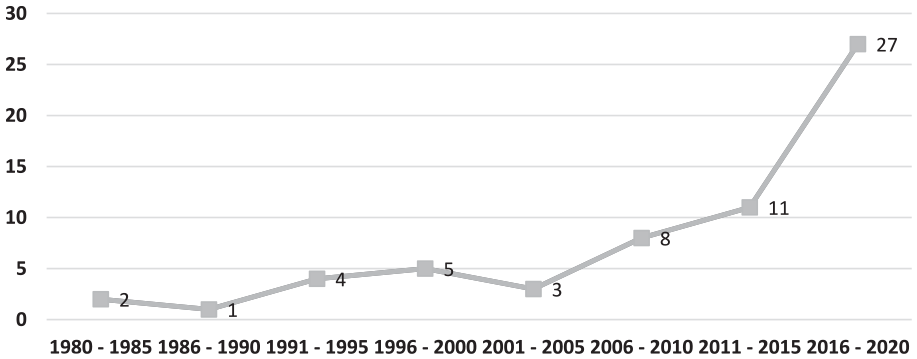
Volume numbers of published articles on DPs.

Volume of articles on DPs published by journals.
Journal Publications
Despite the increasing numbers of articles on principalship, those published on DPs remain limited. Some EDLM and educational-based journals have published articles on DP research which are indexed by Web of Science and Scopus from 1980 to 2020. Among the prominent journals that published DP research is the Journal of Educational Administration (JEA) with seven articles which has the largest number with seven published articles. It is followed by Educational Management Administration & Leadership (EMAL) and Management in Education (MIE) with six articles each. The International Journal of Mentoring and Coaching in Education (IJMCE) and The International Journal of Leadership in Education (IJLE) with five published articles each (refer Table 1 and Figure 4), and then trailed by Leadership and Policy in Schools published four articles followed by School Leadership & Management (SLM) and Education & Urban Society (EUS) which have contributed three articles each.
Comparing Years of Articles on DPs With Journals From 1980 to 2020.

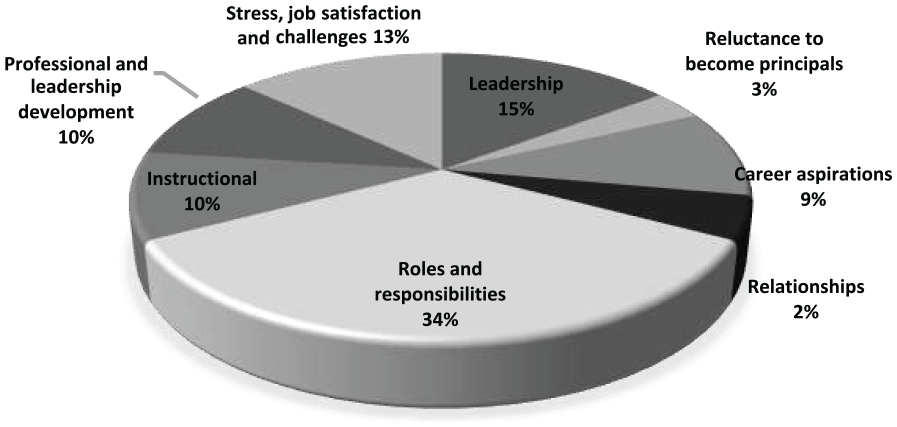
Volume of articles per topic.
Next, there are two articles published by The International Journal of Educational Management (IJEM) and the Journal of School Leadership (JSL) respectively. As for other journals, School Effectiveness and School Improvement, the Eurasian Journal of Educational Research (EJER), Irish Teacher Journal (ITJ), International Journal of Education and Social Sciences (IJESS), the NASSP Bulletin, School Organisation (SO), Education Practice and Theory (EPT), Urban Education (UE), the International Journal of Management in Education (IJMiE), the British Journal of Educational Research (BJER), the South African Journal of Education (SAJE), Education Administration Quarterly (EAQ), The Clearing House (CH), Issues in Educational Research, Contemporary Educational Leadership, the Journal of Professional Capital and Community (JPCC), and lastly, Problems of Education in the 21st Century have each published one article related to research on DPs since 2006.
In comparing the publication of articles in journals, it began with two initial articles with EUS between 1980 and 1985. Later, from 1986 to 1990, there was an article published in EMAL and followed by four articles published between 1991 to 1995 in School Organisation and MIE respectively. In 1996 to 2000, there were five articles published; three articles published in MIE, one from EMAL and SLM each. Nevertheless, there was a decline with only three articles published between 2001 and 2005; one article in MIE and another two articles in JEA. Starting from 2006 onwards, there was indeed a significant growth in DP articles until the year 2020. These findings indicated that prominent EDLM journals such as JEA, MIE, EMAL, IJLE, IJCME, LPS, SLM, and EUS remained as the significant platforms for DP researchers to publish and share findings on DPs’ leadership experiences, roles, professional development, and career progression. As anticipated, of the EDLM’s eight listed journals which are employed as the knowledge base for DP research, seven were Scopus indexed, and some were indexed by Emerging Web of Science. The seven listed journals have published at least five articles related to DP research. In comparison, EUS and EMAL indexed SSCI and ISI listed a significant number of published articles related to DP research.
Geographical Distribution
In reviewing DP articles based on geographical distribution, the process involved publications from various countries and educational systems. In Singapore, Hong Kong and Canada, DPs are formally known as “vice principals.” In US and Israeli schools, “assistant principal” is the official term whereas in Malaysia, DPs are officially known as “senior assistant.” Lastly, in the South Africa and other commonwealth countries, the leadership position is known as “deputy headteacher” while “deputy principal” is the official term in Australian schools. As for the UK context, articles related to deputy heads and assistant heads are accepted since both positions involve deputizing for the school’s headteacher.
Starting from 1980, the listed journals’ geographical distribution showed the US authors with the largest number of articles (17) followed in second by UK authors with 15 articles. Interestingly, Hong Kong authors ranked third with eight articles followed by Israel (four articles), South Africa (four articles), and Turkey with three published articles. In addition, Singapore and Australian authors have two articles respectively. Meanwhile, authors from Canada, Malaysia, New Zealand, Ireland, Germany, Norway, and Greece have only one article published (please refer to Table 1 and 2; Figure 3).
Comparing Yearly Distribution of DP Articles Based on Geographical Location From 1980 to 2020.

In terms of the volumes of articles published about DPs, both the US and UK authors had started their DP publications with three articles (1980–1989). However, between 1990 and 1999, there were nine articles published, eight from the UK, and one article from US. Within the years 2000 to 2009, 11 articles were published with Hong Kong authors having six, two from the UK and one from Turkey, the US, and Israel respectively. In terms of numbers of articles, 38 were published between 2011 and 2020. Based on the authors’ geographical grouping, authors that frequently published articles on DP research tend to be from English-speaking countries such as the United Kingdom, the United States of America, South Africa, New Zealand, and Australia. Nonetheless, Turkey has four articles and Hong Kong has six articles published which represent the Asian countries. One of the possible reasons to explain this shortfall is that publishing in prominent journals requires authors to have a high standard of English academic writing and proficiency (Aravena, 2020; Aravena & Hallinger, 2018; Kovačević & Hallinger, 2020). In fact, the issue of English language proficiency has been highlighted previously by Nguyen and Pham (2011) who noted the lack of articles from diverse geographical locations published in good and prominent journals. Thus, from comprehensive overview and a global perspective on DPs’ leadership, roles and responsibilities which are now growing in numbers, it enables significant cross-cultural comparisons to be made (Aravena, 2020).
The Foci of the Research Topics
In this section, all selected published DP articles were classified into themes based on their topical foci. From the classification process, eight major topical foci emerged: (a) professional and leadership development, (b) instructional tasks, (c) roles and responsibilities, (d) leadership, (e) reluctance to become a principal, (f) challenges, stress, and job satisfaction, (g) career aspirations, and, finally, (h) relationship with principals (refer to Table 3 and Figure 5).
Overview of Articles by Topical Foci.


Themes of published qualitative articles based on the areas of research.
Professional development: There are six articles that were grouped into leadership and professional development. Interestingly, studies began to be published in 2014. After review, most articles explored the principals’ roles in providing informal mentoring to enhance DPs’ knowledge and skills (Barnett et al., 2017; Hamm, 2017; Khumalo & Van der Vyver, 2020; Kwan & Li, 2016; Liang & Shaw, 2016; Lochmiller & Karnopp, 2016). In particular, Barnett et al. (2017) found that mentoring played a significant role in guiding the US assistant principals in making decisions, improving their professional identities and clarifying their values and beliefs. Kwan and Li’s (2016) study found that Hong Kong’s vice-principals acknowledged informal mentoring and enrolling on academic programs as ways to resolve their lack of preparation courses for principalship. In the context of Irish DPs, Grant (2014) found that experiences from working with principals are especially significant as a preparation to be future principals. From Hamm’s (2017) mixed methods study with Canadian vice-principals, mentoring was assumed to be an essential strategy in building DPs’ capacity to lead multi-ethnic-based schools. The findings on the studies related to DPs’ leadership and professional development were examined and were made to summarize the significant role of mentoring regardless of its approaches, whether formal or informal. From the listed studies, DPs’ principals were accredited as the individuals who are giving them their initial exposure, informal support and guidance to prepare them for promotion to principal.
Instructional: Six articles categorized within this instructional leadership theme were examined. There are articles on instructional leadership responsibilities (Celikten, 2001; Glanz, 1994; Gurley et al., 2015; Leaf & Ohdiambo, 2017; Shaked, 2020), and also an article that examined DPs’ readiness and knowledge as instructional leaders (Searby et al., 2016). In Turkish schools, Celikten (2001) summarized that DPs have clear job descriptions in instructional aspects. Besides having an essential and significant role as effective instructional leaders, DPs also faced some limitations and boundaries surrounding activities which they did not perform as an instructional leader in schools. Thus, these two studies tried to explore the DP’s challenges and limitations while performing their duties as instructional leaders. Specifically, Shaked’s (2020) study explored the limitations experienced by Israeli’s DPs when performing their instructional responsibilities. A study by Searby et al. (2016) also highlighted that DPs also have unclear feelings and felt least prepared; nevertheless, they received informal mentoring from principals to improve their readiness.
Roles and responsibilities: There are 22 articles related to DPs’ roles and responsibilities—the highest number. In general, two major themes emerged: (a) roles and (b) responsibilities. Based on DPs’ roles, most articles highlighted the relationship with principals to obtain a clear understanding of their roles (Hughes, 1999; Jansen & du Plessis, 2020) and other articles specified DPs’ support from principals and their initial preparations for facing challenges, conflict and ambiguity (Bukoski et al., 2015; Hausman et al., 2002; Kazim, 2013; Shore & Walshaw, 2018) which is considered pivotal in performing their roles and responsibilities as DP. There are also articles related to DPs’ opportunities and time to make decisions (Guihen, 2017; Hausman et al., 2002) and partnership (Bukoski et al., 2015) provided by their principals while assisting them in leading their schools. In examining DPs’ responsibilities, researchers focused on DPs’ leadership practices, roles, and initiatives for teachers’ growth (Chi-Kin Lee et al., 2009), responsibilities (Abrahamsen, 2018), invisible roles (Ribbins, 1997), and competencies that lead to job satisfaction (Kwan & Walker, 2008).
Leadership: In a study of Singapore’s vice-principals, Ho et al. (2020) explored DPs’ distributed leadership as a cross-boundary means of connecting schools with communities and as a mediator for middle managers and teachers. In South African schools, Blose (2019) explored DPs’ life experiences related to their personal identities and their leadership practices. Earlier, based on the context of US assistant principals, Petrides et al. (2014) explored DPs’ roles in practicing leadership and the challenges involved.
Stress, job satisfaction and challenges: While leading their schools, DPs also faced some challenges and stressful situations. There are eight articles within this category. There is an article that studied DPs’ experiences in feeling tension (Tahir et al., 2019) when they have to deal with stakeholders, especially parents and the school inspectorate. In addition, another article underlined the challenges faced by DPs while supporting their principals (Chagger & Bisschoff, 2015), solving messy management issues (Kerry, 2000), and DPs’ emotional display and suppression (Arar & Oplatka, 2018). Lastly, there are published articles examining DPs’ job satisfaction which later leads to their self-actualization (Kwan & Walker, 2008; Schermuly et al., 2011).
Reluctance to become a principal: By deputizing for their principals, DPs are suitable middle layer leaders who are supposed to replace the principal as a preparation for a future principalship. Nevertheless, there are deputies who are reluctant to become principals and gave reasons to remain within their deputyship position. In exploring this issue, there are two related articles on DPs’ disinclination to become a school principal. In Hong Kong, Kwan and Walker (2008) found that DPs who felt least satisfied had a low tendency to become a principal. In addition, Oplatka and Tamir’s (2009) study indicated that positive relationships and support received by DPs have a considerable influence on their decision to become school principals.
Relationship with principals: There are two articles that have examined DPs’ relationship with their principals: one from Wong (2009) and a study by Hughes (1999). From Wong’s (2009) article, a matrix-based framework on the relationship of vice-principals in Hong Kong with their principals was proposed. The framework encompassed three major components: status, roles, and management tasks in explaining relationship possibilities between DPs and their principals. The study by Hughes (1999) points out that communalities and shared preferences between principals and their deputies are the essential components in terms of a successful pairing while elements such as complementarity, tolerance, acceptance, and accommodation are important characteristics in minimizing their differences.
Career aspirations: Interestingly, there are six published articles on DPs’ career aspirations. In 2019, Guihen (2019) explored DPs’ career histories and their professional aspirations based on interviews with 12 women DPs from English schools. Earlier, Jayne (1995) examined UK schools’ deputies in terms of their career aspirations and training needs and concluded that exposures to experiential learning or “on the job learning” are required elements together with knowledge about ICT systems and financial management skills to prepare for their headship position. With Scottish’s DPs, Fowde and Lowden’s (2015) study summarized DPs’ career aspirations as complex with an interplay of features in their personal and professional experiences. Arar’s (2014) study suggests that DPs’ roles are arduous and complex given the vague and unclear understanding by the DPs studied. The study reported that most DPs did not aspire to become a principal.
Articles’ Research Approaches
In this section, the research approaches, including study design and data collection, for published DP articles are examined. Based on the 61 selected articles, 19 (31%) articles referred to the survey design with 7 (11%) articles using a mixed-method approach and 35 (57%) using a qualitative case study approach.
Survey: Published articles that employed a survey design are related to DPs’ problems (Khumalo et al., 2018), critical skills (Khumalo & Van der Vyver, 2020), instructional leadership (Gurley et al., 2015; Searby et al., 2016), job satisfaction (Kwan, 2011), time allocations, roles and activities (Hausman, Jr. et al., 2002), roles and responsibilities (Glanz, 1994; Harvey & Sheridan, 1995; Garrett, 1999), preparation for principalship (Kwan, 2009), stress factors (Tahir et al., 2019), work practices (Shipton & Male, 1998), career progression to headship (James & Whitting, 1998), career aspiration (Jayne, 1995), current and idealized leadership practices (Militello et al., 2015), core competencies, job satisfaction and aspirations to principalship (Kwan & Walker, 2008), responsibility, roles and career aspirations (Chi-Kin Lee et al., 2009), role ambiguity, role conflict, performance and burn out (Celikten, 2001), psychological empowerment, job satisfaction and burn out (Schermuly et al., 2011), and work lives (Hausman et al., 2002). In terms of sampling, articles employed samples of various sizes ranging from 35 to 589 DPs.
Statistical data analysis: following Hallinger and Chen (2015), the statistical analysis used Bridges’ (1982) classification level of statistical analysis. Accordingly, there are four levels of statistical analyses: Level one comprises descriptive statistics (mean score and standard deviation). Level two comprises differences and correlational tests (t-test and correlational tests). Level three includes statistical testing such as one-way analysis of variance (ANOVA) meanwhile level four consists of multivariate testing (multiple regression, structural equation modeling, factor analysis, multivariate analysis of variance). From 58 articles assessed, a total of 43% (10 articles) are using the level one statistics (mean scores and standard deviations) (Gurley et al., 2015; Goksoy, 2016; Garrett, 1999; Hamm, 2017; James & Whitting, 1998; Jayne, 1995; Khumalo & Van der Vyver, 2020; Shipton & Male, 1998; Tahir et al., 2019). Another 4% (one article) used level 2 with t-tests (Hausman et al., 2002) and correlation and another article used the ANOVA test (Searby et al., 2016). There are 48% (11 articles) that employed the multivariate statistical tests such as regressions and structural equations (Chi-Kin Lee et al., 2009; Houchens et al., 2018; Kazim, 2013, Kwan, 2009, 2011; Kwan & Walker, 2008, 2010; Schermuly et al., 2011; Sun & Shoho, 2017; Walker & Kwan, 2009). Additionally, Harvey and Sheridan’s study (1995) measured DPs’ perceptions of their responsibilities using the Rasch measurement model.
Mixed methods approach: There are only seven articles that employed the mixed methods research design which combined the qualitative and quantitative paradigms while conducting research on DPs. Indeed, most study designs cited used surveys and interviews and/or questionnaires followed by interview sessions as their instruments in the data collection phase. Nevertheless, most of the cited articles did not clearly state whether their mixed methods used sequential, embedded, concurrent, multiphase, or parallel designs. These articles studied DP stress issues (Tahir et al., 2019), career progression (James & Whitting, 1998), leadership roles in multi-ethnic schools (Hamm, 2017), mentoring (Liang & Shaw, 2016), and instructional leadership (Gurley et al., 2015).
Qualitative approach: There are 35 articles that used a qualitative paradigm which proved to be the most frequent method employed in DP studies. As such, there are a number of articles employing the case study design as their qualitative research approach. The frequent approach used for data collection were mostly interviews and document analysis. The number of DPs interviewed ranged from nine to 69. In Figure 5, the qualitative articles are classified based on the topics they explored: DPs’ roles (15 articles—43%) followed by professional development, career progression and career aspirations (6 articles—17%), DPs’ leadership (8 articles—23%), mentoring and coaching (2 articles—6%), and managing crises and low performing schools (4 articles—11%).
Figure 6 below illustrates 61 reviewed articles. Overall, there are 19 quantitative-based articles, 35 qualitative articles, and 7 mixed methods design articles. From the diagram, qualitative-based articles related to DPs showed a continuous and growing trend from 1980 until 2020. Quantitative articles started to emerge in the year 1986 and tremendously increased in 1991 to 1995. However, a fluctuating pattern remained until 2020. Lastly, the mixed methods design is considered the least popular design among DP researchers. Although it was initially used in the 1980s, the number of articles remains small; nevertheless, there is a growing trend starting from the year 2006 to 2020.
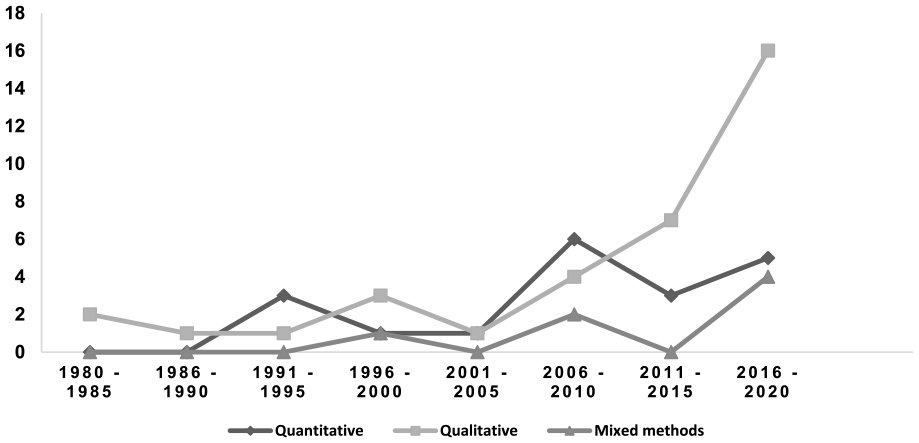
Volumes and years of DP articles based on research approaches.
Discussion
Interpretation of the Findings
From 1980 until 2020, data from the DP research literature have shown fluctuating trends. After 2010, there was significant growth with 26 articles published by 2020. In the initial phase (1980–1995), there were only six articles published on DPs’ socialization, roles, and experiences. Nevertheless, there was a decline between 1996 and 1999 with only two articles published. Similarly, there were two articles within the 5 years ranging from 2000 to 2005. However, from 2006 to 2014, data indicated a growth of DP articles when 10 being published. Starting from 2015 to 2020, articles on DPs have shown a tremendous upsurge with 36 being published. Although there is a growing number recently, it is still considered low and more articles on DPs are requested (Jansen & du Plessis, 2020; Khumalo et al., 2018). Nevertheless, despite the growth in the number of published articles on DPs, there is still a lack of research and published articles on DPs, as compared with studies on principalship, especially when we selected only articles from EDLM journals which have strong methodological approaches. Thus, it is assumed that articles published on DPs contributed to a small percentage of published articles on the EDLM knowledge base which insisted with more research related to DPs’ leadership, tasks, career progression, challenges and instructional tasks in constructing a substantial contribution to the global EDLM knowledge base.
In terms of journals, both JEA, EMAL, and MIE have shown the largest numbers of published DP articles with six and seven respectively. They are followed by the IJMCE, IJLE, and IJCME which five articles each. Next is the LPS which has four articles published followed by SLM and EUS which each have three articles published. Furthermore, IJEM and JSL have two published articles. Based on the titles of journals that published articles on DPs, findings indicated that the Scopus indexed journals and the Emerging Web of Sciences have contributed greatly to the EDLM global knowledge. Based on a comparison of Scopus indexed articles published on DPs with those indexed on the Social Science Citation Index (SSCI), findings indicated that Scopus indexed journals have contributed considerable numbers of published articles on DPs compared to articles published by journals indexed by SSCI or ISI.
Based on geographical distribution, as expected, the US and UK authors have high numbers of articles on DPs. The reason is that most of the EDLM and educational-based journals published articles in the English language. Unexpectedly, Hong Kong was ranked third which showed the growing interest among researchers from Asian countries. This is followed by authors from Turkey and South Africa with four articles each and Israel with three articles. Another two countries are Singapore and Australia which had two articles each. Based on the data, there is an emerging trend of DP research which is described by Hallinger (2018b) as “hidden literature” within the EDLM literature. Besides the major authors from the UK, US, and Hong Kong whose have published articles on DPs, the number of published articles on DPs is considered modest and there is a need for more studies that explore DPs’ leadership experiences. In explaining the reasons for this lack of studies, it is assumed that publishing in Scopus and Web of Science indexed journals requires a high standard of English language as the prime language of scholarly communication (Hallinger & Kovačević 2019). This issue was highlighted above as a challenge and reason why some authors published articles in their domestic journals which use their mother tongue (Aravena, 2020; Nguyen & Pham, 2011). According to Hallinger and Bryant (2016), there is a need and strong calls for researchers into DPs to publish articles from various educational systems thereby contributing to increasing the number and breadth of research publications on DPs.
Due to the lack of studies on DP leadership challenges, responsibilities, and roles from various educational systems, considerable effort is needed when comparing DP roles and responsibilities in diverse educational systems despite DPs being considered the most senior within the middle leader position who would occupy the vacant position of a principal (Morgan, 2018; Barnett et al., 2017; Williams, 2019). Nevertheless, to make comparisons, it is proposed that authors should collaborate with researchers from other educational systems in order to compare DPs’ tasks, responsibilities, and roles in many schooling systems. In fact, collaboration will lead to an increasing number of published articles in each country (Lumban Gaol, 2021).
Based on the foci of DP research, many authors (37 %) studied topics related to DPs’ roles and responsibilities. Next comes research on leadership practices with 16%. DP stress, job satisfaction, and challenges, which explored their stress experiences while assisting principals, came in third with 12%. Professional and leadership development ranked fourth with 11% which mainly focused on mentoring strategy to improve DPs’ knowledge and skills. Interestingly, there are also empirical findings on career aspirations related to DPs’ routines and preparations, training needs, and experiential learning experiences. Significantly, there is research on DPs’ inclinations to become principals due to their dissatisfaction. Nevertheless, studies noted that support and experiential learning when holding the DP position have a strong influence on their decisions to become principals (Oplatka & Tamir, 2009). Although this systematic literature review has listed 61 DP articles, more studies are welcomed focusing on DP research, especially within topics which are critically needed and yet remain understudied. Focusing on research topics such as DPs’ relationship with their principals and DPs’ career aspirations—which are two under-researched topics—would be a welcome development. At present, there are only two articles that have explored the relationship between principals and their DPs. In the study by Hughes (1999), pairing and sharing interests and characteristics between principals with DPs are essential components for the completion of given tasks and the creation of an effective partnership. As for a DP’s career aspirations, many studies exploring DPs’“on-the-job” or experiential learning as preparation to become aspiring principals would be welcome. In addition, DP’s knowledge about ICT systems and financial management skills to prepare for their headship position are also seen to be important elements of studies which explore DPs’ professional experiences.
From the bibliometric analysis, a total of 61 articles were classified into three major research paradigms: quantitative, qualitative, and mixed methods. From the overall numbers, 35 articles were using qualitative interviews, documents analyses, and observations as their data collection methods. Thus, the qualitative case study was designated as their major research design. As mentioned by Aravena (2020), the advantages of using a qualitative case study in exploring DP research is typically based on the idea that such studies can provide in-depth and comprehensive stories and narratives on deputy leadership experiences within the specific context of the study. In studying DPs’ leadership experiences in schools, researchers (Aravena, 2020; Snodgrass, 2018) believed that there is a need to investigate DP’s leadership experiences from a quantitative point of view to support the generalization of the findings. As for the quantitative design, most researchers used surveys as their research design in studying various topics such as critical skills (Khumalo & Van der Vyver, 2020), instructional leadership (Gurley et al., 2015; Searby et al., 2016), job satisfaction (Beycioglu et al., 2012; Kwan, 2011), time allocations, roles and activities (Hausman et al., 2002), preparation for principalship (Kwan, 2009), and work practices (Shipton & Male, 1998). In terms of quantitative statistical analyses, most studies have employed Bridges’ (1982) four category levels of multivariate statistical analysis such as G-effects, regression analyses, and structural models. In the mixed methods studies, most have combined surveys and interviews to obtain in-depth and comprehensive data on DPs’ experiences such as instructional leadership, stress issues, and leadership roles. The reason for using the mixed method approach which combines the quantitative and qualitative paradigms in studying DPs’ leadership experiences is focused on the ability of this approach to provide in-depth and comprehensive findings (Creswell & Creswell, 2018; Johnson & Christensen, 2014) related to DPs’ leadership experiences.
To summarize, EDLM researchers studying the DP knowledge base have shown an emerging trend which points to the need to diversify the corpus of studies which forms the global knowledge base on DPs. Over the past two decades, this has led to an increase in the volume of published research on DPs from diverse educational systems.
Limitations
It is important to acknowledge that the small number of articles and the review processes pose limitations to the study. First, this review is an effort to synthesize the few published articles on DPs. Thus, this initiative aims to provide data that can help future researchers to study DPs from various perspectives and knowledge bases. Second, this study relied on reviewing only 61 empirically-based research articles to understand the topics discussed above. In terms of selecting the articles, there are a few points raised by researchers related to including review-type articles, conference papers and research reviews which are also believed to contribute toward the total numbers of DP papers. Additionally, some new ideas and effective systems are suggested toward improvements to DP implementation. The study limitation of using only published articles with empirical characteristics (research gap, methodology, data analysis procedures, reports on findings, and implications) has resulted in the small number of 61 articles that have met the criteria. Therefore, future studies should include a greater variety of paper styles such as empirical-based research, review articles, and conference papers. Through this more flexible approach, more papers will be selected for study.
Third, this study only reviews 61 articles taken from EDLM and educational journals. Therefore, the findings of the study may be not being representative of all empirical-based articles. However, there are also relevant DP articles published within non-EDLM journals. Fourth, many articles that are reviewed were taken from EDLM and educational studies journals which only accept English language as their language for publications (Aravena, 2020; Kovačević & Hallinger, 2020). This introduces a limitation for non-English-speaking authors (Aravena & Hallinger, 2018; Hallinger & Hammad, 2017). Thus, it is suggested that future literature reviews should consider other articles in other languages such as Malay, French, Turkish, and Arabic in addressing this limitation. Therefore, other reviews which are based on other languages would be welcome (Hallinger, 2020).
Fifth, when presenting the findings and data of the review, descriptive statistics should be employed and presented using histograms and tables. At present, there are various software tools that are used by researchers producing systematic literature reviews, such as “VOS viewer” software (van Eck & Waltman, 2010), which are capable of presenting data in interesting and colorful graphic formats which can attract readers.
Conclusion
In summary, the diverse EDLM knowledge base on DPs required a comprehensive and in-depth review, especially given the previous lack of attention. Thus, this topographical/systematic literature review aims to identify the elements within DP research. It is hoped that this initial examination of the DP literature will lead to more studies being conducted to explore more professional and leadership journeys of DPs in order to provide a suitable and efficient framework for DPs’ professional and leadership development. This will later strengthen the knowledge base on DPs’ professional growth and competencies.
Footnotes
Declaration of Conflicting Interests
The author(s) declared no potential conflicts of interest with respect to the research, authorship, and/or publication of this article.
Funding
This study was supported by the Ministry of Higher Education Malaysia (MOHE) under the Fundamental Research Grant Scheme (FRGS) (Grant No. FRGS/1/2019/SSI09/UTM/02/17; UTM Reference No: PY/2019/01084; R.J.130000.7853.5F280).
