




Abstract
Higher education institutions play a vital role in advancing Sustainable Development Goals. Within these institutions, libraries serve not only as essential educational resources, but also as dynamic contributors to academic and personal development. Therefore, their potential to influence students’ sustainable environmental behavior (SEB) is considerable. However, current literature largely overlooks the role of libraries in fostering SEB among students, highlighting a significant gap in sustainability-oriented educational research. To address this gap, this study investigates the influence of academic libraries on students’ sustainable environmental attitudes (SEA) and SEB within Chinese higher education institutions. Utilizing data from 2,500 Chinese students collected through intercept approach, the study employed partial least squares structural equation Modeling for analysis. The results revealed that library space and green initiatives, library collaboration and practical engagement, and digital and smart library innovations had a significant positive impact on SEA. Conversely, library sustainability policies and governance have a negative impact on SEA. Interestingly, this negative relationship reversed to a positive one through the mediating role of library engagement and technology use. These findings suggest that sustainability policies and governance frameworks must be implemented in conjunction with active student engagement and the integration of user-friendly technological platforms to effectively promote environmental attitudes. Therefore, higher education libraries should prioritize participatory and technology-driven strategies that transform policy intentions into meaningful student experiences, ultimately fostering a stronger culture of sustainability on campus.
Keywords
Introduction
Climate change is responsible for deteriorating the balance of Earth’s environment through global temperatures, extreme weather events, and ecosystem degradation. Various social and ecological challenges have hindered the achievement of sustainable development worldwide (Haq et al., 2023). This has generated a new era of research focusing on ecological conditions, which emphasizes the importance of achieving environmental sustainability for the survival of living organisms (Chen et al., 2025). To this end, numerous scholars have opined that sustainable environmental behavior (SEB) can play a major role in ensuring environmental sustainability (Mastrángelo et al., 2019). SEB is an environmental outcome of social settings, and the eco-friendly social settings play a significant role in shaping green behavior of people (Trong Nguyen et al., 2023). Thus, the everyday life of people is very important in relation to their environmental sustainability. SEB can reduce the carbon footprint as a number of personal acts in everyday life can produce incredible ecological footprints (Christie et al., 2021). Therefore, SEB can play a significant role in ensuring environmental sustainability, and libraries can play a critical role in the change of students’ SEB. Libraries form part and parcel of the international attempts to counter climate change as well as promote the spirit of sustainable development. Libraries have a role of community hubs and information centers that bring together the community, social members of the researcher, and other ecological stakeholders. Libraries also share information on climate change, organize a project of environment nature, and liaise with advocacy groups. In addition, the ethos of libraries all over the world is an ability to offer relevant and useful resources and knowledge to customers. Libraries assist users and communities through an informational provision of basic resources to mitigate the damaging effects of climate change (Kornfeind, 2022).
Hence, libraries are recognized as a center of sustainability, and learning worldwide. The libraries framework that has gained widespread implementation is known as Climate Action Framework for Libraries (CAFL). It has been developed to guide the libraries to enhance climate literacy and to reduce the overall climate change efforts (Saini, 2025). This model explains why libraries contribute to the development of SEB by developing the abilities of informed and active communities to react to climate disasters. Environmental education is also an important role of libraries, which further advances behavioral changes and promotes communities to become sustainable (Devine & Appleton, 2023). The practical activities linked to a bigger vision expressed through the theoretical ground of environmental education in libraries implies the significance of resource conservation, the decrease in waste, and the enhancement of SEB. In addition, libraries have a social responsibility in their decisions and actions on the society and the environment (Fedorowicz-Kruszewska, 2020), which leads to the creation of green collections and implementation of environmentally friendly practices. The Triple Bottom Line (TBL) is another framework that is concerned with the social, economic, and environmental implications of libraries (Aldrich & Kropp, 2023). In this framework, libraries are environment oriented on their activities and services.
Libraries are also able to market SEB to students by urging them to be environmentally friendly and as stewards of the environment. Libraries are a source of knowledge and therefore can be used to promote sustainability among students and environmental awareness with the aim of creating SEB through incorporation of sustainability in its activities and operations. Naik (2024) adds that it can be informative to organize workshops, exhibitions, and seminars on the topic of sustainability and environmental challenges that emerge over time and equip students with tools that they will use in their roles as environmental stewards. Likewise, libraries were able to increase awareness and motivate students to become sustainable in their lives. In addition, the libraries can show the sustainability of the students through green practices including conservation of natural resources (Akbulut et al., 2017). By embracing the 3Rs principle, the libraries can motivate the students to embrace SEB in their lives (Ren, 2025).
Students can be educated by libraries by participating in workshops and a selective collection on the problems of the environment and sustainability. In addition, libraries have the potential to encourage students to engage and practice sustainability which will result in SEB by providing environmentally-friendly practices and digital collections (Payne et al., 2006). Libraries can also assist the students in increasing their sustainable practices and initiatives to conform with the host organizations and champion them to engage in sustainable activities. In doing so, students will be able to develop their SEB and become an effective environmental guardian that will result in a sustainable culture in the academic populace (Dogan & Gurpinar, 2023).
Therefore, this study aimed to analyze the different aspects and dynamics that contribute to sustainable environmental attitudes (SEA) and SEB. The main contribution of this study is that it provides crucial insights into students’ perceptions of the different library dynamics. Moreover, this study considers how library space and green initiatives, sustainable policies and governance, available digital and smart technologies, collaboration, and practical impact contribute to students’ SEA and SEB. This study examines how student engagement and technology use mediate the relationship between different library aspects. Similarly, students’ pro-environmental knowledge was incorporated as a moderator in the relationships between the different library aspects and SEA. Most studies in the literature only describe the role of libraries in a sustainable environment, and none of the prior studies have considered these factors in a single framework. This study generates important insights into how students perceive the different dynamics of libraries, and whether these dynamics contribute to their SEA and SEB. The outcomes of this study enables the stakeholders associated with libraries to make their libraries more environmentally oriented in their actions.
Hypotheses Development
The current study adopts the Stimulus-Organism-Response (S-O-R) model (Sultan et al., 2021) as a theoretical foundation to demonstrate how environmental cues in library spaces and services shape students’ SEA and SEB. Therefore, ‘library dimensions act as stimuli that affect the internal states of students’ attitudes, which further develop their behavior toward sustainability. In this context, all library-related dimensions, such as LSGI, LCPI, LSPG, and DSLI, act as stimuli (S). Organism (O) indicates the internal state of the students, that is, their attitude toward the environment, and Response (R) reflects their observable SEB. Moreover, this framework aligns with the theory of planned behavior (TPB) proposed by Ajzen (1991). This suggests that SEA (O) is formed by positive environmental stimuli (S), which foster student engagement in SEB (R). Therefore, the S-O-R framework and TPB describe how SEA and perceived control translate into SEB. Similarly, both provide a logical link between institutional sustainability initiatives, practices, and infrastructure, and students’ environmentally oriented attitudes and behaviors. Libraries are the center of knowledge, which is not only important to develop the environmental consciousness and support the sustainable practices. The size of the library allows a setting that motivates the students and builds SEB. Green libraries which have integrated environmental friendly measures like water conservation method, use of energy saving lights, and waste management has been found to increase the environmental awareness of the students. In Turkey, a study has demonstrated that students engaging in green libraries have higher chances of having high level of environmental awareness and portraying appreciation of environmental friendly practices (Dogan & Gurpinar, 2023). Also, in Bangladesh, a study acknowledged that the library having green initiatives and environmental oriented spaces are more probable to play a role in creating sustainable and healthier indoor and outdoor environments, which is in line with the intention of their students to practice sustainability (Tanzin & Atikuzzaman, 2025). Further, the inclusion of natural resources in the library, including biophilic architecture (green roofs or other natural organisms) boosts metal well-being. Green roofed libraries offer natural environment that directly influences attitude of students toward sustainability (S. R. Rahman et al., 2012). Furthermore, the incorporation of natural features in the library areas, like the perception of nature or the application of natural substances encourage mental recovery and the experience of being detached of stress in the users (Song et al., 2024). Amanina and Ilham (2024) also demonstrated that libraries with noise control and good indoor air quality foster sustainable behavior and user satisfaction. Rahmania (2024) also described how school libraries in Indonesia play a role in fostering SEB by providing an eco-friendly environment that encourages students to adopt environmentally oriented practices. Libraries’ space and green initiatives (LSGI) reflect the physical and environmental aspects. These library features serve as external environmental stimuli that shape students’ perceptions of the library’s commitment to sustainability. This demonstrates that when students realize that the library environment is visibly aligned with a sustainable environment, they internalize this as an institutional value to the environment, developing SEA consistent with TPB. LSGI acts as a stimulus that further affects students’ SEA and SEB positively. Therefore, it is hypothesized that LSGI can significantly affect students’ SEA. Thus, we propose the following hypothesis:
Libraries have long been recognized for their crucial role in enhancing community engagement and social development. The collaboration of libraries with local businesses and entrepreneurs provides students with real-world experience. Howard and Koenig (2024) described that the libraries can address the local needs through community engagement research partnerships, which positively affect the attitude and behavior of students by enhancing their learning experience. This type of partnership bridges the gap between theory and practice, and develops a sense of social responsibility among students. Through collaboration with organizations, libraries foster youth engagement, which develops new skills and creativity (Mehra et al., 2024), empowering youth with the skills and confidence necessary for future success. Collaborative projects also develop social responsibility among the students. For example, student participation in projects supporting local communities and addressing local issues generates a deeper understanding of community engagement (Strock, 2014). Libraries with other university departments also enable students to obtain real-world experiences, such as Singapore management university libraries that collaborated with the Business School to offer their students the opportunity to engage with real-world process improvement projects. This allows students to apply their knowledge in a practical setting (Ishak & Ong, 2016). Therefore, it is expected that collaboration between libraries and organizations, governments, and arranging outreach programs, along with internships for students, can influence their attitudes and behaviors by offering them practical experiences in society. This practical exposure develops a sense of social norms and moral obligations in students, which is the core aspect of TPB. This demonstrates that collective involvement and practices act as social stimuli that further reinforce students’ internal motivation to develop SEA and SEB. In this context, library’s collaboration and practical impact (LCPI) acts as a stimulus through perceived behavioral control, fostering SEA among students. Thus, the following hypothesis is proposed.
Library Sustainability Policies and Governance (LSPG) are also an important dimension of a library that can affect the SEA and SEB of students by incorporating and implementing sustainable development principles into its operations. When libraries’ policies and governance are more sustainable, their operations will exhibit environmentally oriented actions to their students, leading them toward sustainable attitudes and behaviors. When libraries incorporate sustainable development goals (SDGs) into their programs and services, this will assist their students in realizing the value of sustainability and its importance in their lives (Aldrich & Kropp, 2023). Tanzin and Atikuzzaman (2025) also found that when libraries promote sustainability, students are more likely to participate in eco-friendly activities. Similarly, policies that focus on respect and care for students are more effective in developing positive attitudes toward sustainable practices and library use (Ishak & Ong, 2016). Knowledge and attitude strongly develop behavior among students, and that effective sustainable policies in libraries can enhance awareness and foster the adoption of sustainable practices by promoting SEA and SEB. The integration of sustainability policies and governance in libraries can lead to sustainable attitudes and behaviors among students toward sustainability and climate justice. Thus, LSPG reflects how policies and administrative actions align with environmental values. This indicates the commitment and accountability of institutions, which generates the perception of structured support among students. According to the S-O-R model, this stimuli generates the psychological assurance that sustainability is highly valued and focused on by institutional authority. Similarly, TPB entails that LCPI may foster perceived behavioral control and strengthen students’ belief that sustainable environmental responsibility is an attainable behavior, developing SEA among students. Therefore, we propose the following hypothesis:
Digital and Smart Library Innovations (DSLI) provide an effective learning environment that enhances students’ learning experience, fosters the culture of responsible users of technology, and promotes sustainability. These innovations transform libraries into dynamic learning environments that enhance information accessibility and advocate for environmental consciousness. Smart technologies, such as energy-efficient equipment and digitalizing resources, enable libraries to reduce their carbon footprints (Yunus & Ismail, 2024) which directly exhibit a sustainable learning environment for students. Smart libraries generate positive technology use and empower their users, leading to positive and responsible behavior toward the environment (Khuntia et al., 2016). Bhanudas (2021) stated that smart libraries encourage the culture of the beneficial use of technologies that equip the user with the skills to use digital resources responsibly, which leads to high environmental awareness. Thus, DSLI leads to efficiency, curiosity, and awareness, which activate internal cognitive responses by emphasizing how smart libraries and digital innovation result in sustainable outcomes. According to TPB, DSLI promotes perceived usefulness and behavioral control, which fosters SEA and SEB among students. Therefore, DSLI can contribute to SEA by providing a secure and innovative learning environment. Thus, the following hypothesis is proposed:
All of these variables, such as LSGI, LSPG, LCPI, and DSLI, have a great impact on students’ attitudes and behavior. However, all these variables require the engagement of students and their use of the technology available at the library to transform the libraries’ role toward sustainable development. Therefore, the interplay between variables and library engagement and technology use (LETU) significantly influences students’ SEA and SEB. Students’ engagement and technology use are crucial factors that augment their interactive and personalized learning experiences (Adiyono et al., 2024). The design and space of a library that provides a flexible, functional, and technology-rich learning environment directly affects how students engage with library services (Meena, 2023), resulting in an affective individual and group learning environment. Therefore, when in space, the design of a library provides a comfortable learning environment that can generate high engagement among students, resulting in high awareness among students leading to SEA and SEB. This mediation of LETU between the variables occurs through various mechanisms leading to positive SEA and SEB among students. Hnatyuk et al. (2024) described that students’ active participation in various educational programs enhances their engagement in eco-friendly initiatives, and students who engage in green initiatives are more likely to have positive attitudes and behaviors toward sustainability(Al-Dmour, 2023). Moreover, the technology used in libraries develops a positive perception of environmental sustainability among students, which fosters their self-efficacy toward the environment (Alfirević et al., 2024). Rahmania (2024) signifies the role of supportive policies in developing sustainable behavior among students, and requires targeted interventions that result in high engagement and technology. Therefore, students’ engagement in green initiatives and interest in eco-friendly technologies strongly predict their environmentally oriented attitudes and behaviors (Hnatyuk et al., 2024). A well-designed library increases students’ engagement, which fosters a sense of responsibility toward environmental issues (Zheng et al., 2024). Cogut et al. (2019) signified that the engagement of user in libraries activities augment their awareness of environment and behavior. Moreover, engagement initiatives, such as student-led projects, develop a sense of responsibility toward environmental sustainability, leading to the adoption of sustainable practices (Hanken & Cribb, 2016). Libraries, through collaboration with organizations and communities, enable students to shape their practical experiences. Students’ engagement programs in libraries enhance their information, leading to effective collaboration with the organization, and community outreach can positively affect their attitudes and behaviors (Moreno & Jackson, 2020). Similarly, DSLI is also more effective when these innovations are highly engaged, and students use the technology available in the library. When students interact with library resources, space, technology, and infrastructure, they avail themselves of learning opportunities that further enhance their awareness, improve their motivation, and create a sense of agency toward sustainability. Therefore, LETU also acts as an organism function according to the S-O-R model, transforming external stimuli into responsible attitudes and behavior. LETU fosters students’ attitudes and behaviors by enhancing personalized and interactive learning experiences. Considering the role of LETU, the following hypothesis was proposed:
This study also incorporated the PEK of students as a moderator between LSGI, LSPG, LCPI, DSLI, and SEA. Students with pro-environmental knowledge are more likely to have a high impact of the LSDI, LCPI, LSPG, and DSLI on their attitudes toward the environment. Mago et al. (2025) described that PEK is crucial in fostering students’ attitudes toward the environment, as a high PEK generates a more positive attitude toward the environment (Bonhi et al., 2024). Therefore, students with high PEK observe library dynamics, activities, and policies, and when they perceive libraries positively in terms of sustainability, their PEK enhances the impact of variables on their attitudes toward sustainability. Thus, we propose the following hypothesis:
In environmental studies, attitude is a crucial element that directly influences personal behavior. According to TPB, attitude is highly predictive of personal behavior. Kaiser et al. (1999) also described attitude as powerful element of ecological behavior. Ma’ruf et al. (2016) integrated environmental attitudes as an important construct that fosters environmentally oriented behavior. Therefore, the following hypothesis was developed:
The hypotheses map is presented in Figure 1.

Hypotheses map.
Conceptual Framework
Based on hypothesis development, the conceptual framework integrates the direct and indirect impacts of LSGI, LCPI, LSPG, and DSLI, the mediating role of LETU, and the moderating role of PEK. According to the S-O-R model, LSGI, LCPI, LSPG, and DSLI are external stimuli that directly affect students’ internal organismic state, which is reflected in their SEA. This indicates how students interpret and react to external environmental cues, which directly reflects their attitudes toward sustainability. Moreover, based on TPB, SEA affects SEB, suggesting that positive environmental attitudes are likely to translate into students’ sustainable behavior. Therefore, this SEA-to-SEB pathway indicates the critical stimuli, organism, and response connection and is aligned with the TPB.
Moreover, all these variables were expected to indirectly affect SEA through mediators such as the LETU. This also shows that the organism phase, which actively engages students with the library, is more likely to translate intellectual sustainability into a positive attitude. According to TPB, high engagement improves perceived behavioral control, making students more confident in acting in accordance with their beliefs.
Additionally, this conceptual framework shows that PEK may moderate the impact of LSGI, LCPI, LSPG, and DSLI on SEA. Therefore, SEA is expected to affect students’ SEB. Higher PEK enables students to recognize, value, and act upon environmental cues, thereby strengthening their SEA. Therefore, this mechanism describes how external library stimuli foster SEA among students through high engagement, moderated by PEK, which leads to SEB.
Materials and Methods
Research Design
The current study employed a quantitative cross-sectional research design to analyze the effect of LSGI, LCPI, LSPG, and DSLI on SEA and SEB of students. This research design also integrated the LETU as a mediator and PEK as a moderator between LSGI, LCPI, LSPG, DSLI, and SEA to understand how these library-based initiatives and infrastructure influence the environmental and sustainable attitude of the students, which further affects their behavior toward a sustainable environment.
Population, Sampling and Data Collection
This study focused on a comprehensive academic library in China to evaluate students’ perceptions of library dynamics, services, and sustainability in its activities, models, and principles. China has great diversity in culture, architecture, climate, and social and economic growth between its North and South. Therefore, the libraries in Northeast China belong to the 985 and 211 series, directly under the Ministry of Education of China in Shenyang, Harbin, and Changchun. The capitals of the three provinces have large universities. To ensure diversity in the sample and obtain a healthy sample size for conducting the study analysis, we adopted an intercept and voluntary participatory sampling approach and ensured the homogeneity of the sample.
To obtain a certain number of respondents, all the students were invited to respond to the survey questionnaire after obtaining permission from the library administration for an on-site survey over a period of 4 months. For data collection, three teams were formed, with two members in each team in all three capital cities. The purpose of these activities was to avoid uncontrolled circumstances, such as sudden sickness and tiredness, during data collection among the members of the research team. The team visited university libraries every day and attempted to collect data directly from the students who visited the libraries. The teams visited on alternate days, and to avoid repetition in the survey, the team members requested the students not to fill the survey if they had already filled it. In this survey, the team was able to distribute the questionnaire to almost 25 to 30 students every day, and at the end of the day, they carefully evaluated the responses and eliminated the survey if the information was incomplete. With continuous data collection, the survey team obtained a complete 2,500 out of 2,900 surveys over a period of 4 months from all sites selected for the study. This resulted in a 86.20% response rate. This fulfills the necessary sample size requirement for a good analysis.
This study employed an intercept and voluntary participation sampling approach because randomization within each site was not directly possible. However, different cities and universities were included to mitigate potential location bias. Moreover, the students voluntarily participated in the survey and were geographically concentrated in Northeast China; therefore, the generalizability of the findings must be cautious. Therefore, the findings are primarily comparable in the context of higher education or in regions with similar socio-cultural, economic, and educational systems.
Based on the collected data, the majority of the students were female (56.83%) and undergraduates (65.83%). According to the visit time per week, most of the students (52.53%) visited the library to 3 to 5 times per week, while 31.66% of the sampled students visited the library 1 to 2 to times per week, and the remaining students visited the library six or more times per week. Similarly, 25.13% of students spent 1 h at the library, 49.47% students stayed for 2 to 3 hr per visit, 18.43% of students stayed at the library for 4 hr, and the remaining students worked at the library for 5 hr or more than 5 h.
Questionnaire Design
To avoid potential common method bias, we applied procedural psychological safeguards. To ensure the anonymity of participants, no question was included in the questionnaire that could reveal their personal identity. Similarly, participants were assured that their responses would be used only for analysis purposes and reported in aggregate. This enhanced their confidence and trust in responding to the questionnaire without any type of fear. Moreover, all dependent, independent, moderator, and mediator variables were placed into different sections with short neutral instructions between them, which lowered the chance of connecting the questions or purpose of the study by participants. The questionnaire was developed for different sections. The first section contained information about the demographic characteristics of the students, such as age, library visiting time, and hours spent at the library. The second part consisted of different Likert-based items to measure the construct of the study. All the items were developed by the research team and reviewed by librarians, library heads, and experts in environmental and social studies. This section includes items for the LSGI (three items), LCPI (four items), LSPG (three items), and DSLI (three items). The next part of the questionnaire contained four items of LETU, which describe the engagement of students and their technology use. The fourth section consisted of four items regarding the PEK of students. The last section contained two items for measuring SEA and five items for SEB. The survey instrument used five-point Likert scale like 1 for strongly disagree and 5 for strongly agree. Table 1 shows information about all study constructs.
Description of Constructs.

Econometric Techniques
The collected data were analyzed using SPSS and Smart PLS. A structural equation model (SEM) was used, which has the advantages of performing factor and path analysis together. SEM, a second-generation category, has various advantages: it facilitates the analysis of various latent variables (constructs). It uses various econometric techniques such as variance analysis, factor analysis, regression analysis, and path analysis (Byrne & Stewart, 2006). SEM, which captures the complex relationships among variables through latent variables, is widely recognized in social sciences (Kline, 2023). PLS-SEM includes two different types of models: measurement and structural. Before obtaining the path coefficients through the structural model, the measurement model was tested and its validity was confirmed. For this purpose, convergent and discriminant validity were assessed. After confirming the validity of the measurement model, a path analysis was performed with and without mediation. Direct and indirect path coefficients were estimated to examine the impact of the variables on students’ SEA and SEB. LETU was incorporated as a mediator, and PEK was used as a moderator among the variables.
Assessing Common Method Bias
Following the statistical procedure, we performed Harman’s single-factor test. By entering all items into an unrotated exploratory factor analysis, the findings revealed that the first factor accounted for 45.51% of the total variance, which is below the threshold level (=50%). This implies that no single factor dominated the dataset. This indicates that common method bias was not an issue in this study. Next, we ran the full collinearity VIF for all the constructs, and the findings showed that all VIF values ranged from 1.67 to 2.31 and did not surpass the threshold of 3.3. This also confirmed that there was no serious concern of collinearity or method bias in this study. Similarly, when the unmeasured latent method factor (ULMC) was incorporated into the confirmatory factor analysis, the findings indicated minor changes in the values of NFI (=0.005) and RMSEA (=0.003), and the negligible change in standardized FL (<0.05) further confirmed that common method bias was not an issue in this study.
Validity of Measurement Model
Before proceeding to path analysis, it was necessary to ensure the validity of each construct. Two types of validity of the measurement model were assessed. Convergent validity (CV) analyzes the extent to which various items are correlated to measure a specific construct. The CV of each construct must be ensured because it leads to reliable and consistent metric. Convergent validity was assessed using factor loadings (FL), Cronbach’s alpha, composite reliability (CR), and average variance extracted (AVE). The first widely accepted parameter is factor loading (FL). FL indicates the magnitude of the relationship between each item and its construct. Its value remained less than 1, and a high FL indicated a reliable and strong relationship between an item and its particular construct. An FL greater than 0.70 is a threshold level (Cheung & Rensvold, 2002; Su et al., 2023) for maintaining a specific item in a particular construct to ensure its validity. Moreover, items with FL less than 0.70 must be removed to ensure the CV (Ma et al., 2023). The next parameter to ensure CV is Cronbach’s alpha, which confirms the internal consistency of the items used to measure a construct. It shows the degree of correlation between items within a construct. The alternate approach used for measuring the internal consistency of each construct was composite reliability (CR), and its value of greater than 0.60 (T. Zhang et al., 2024) resulted in a high CV. To assess the variance level explained by a particular construct in the items, we used the average variance extracted (AVE). It describes the extent to which all items in a construct explain shared variance. An AVE greater than 0.50 indicates that the items explain the variance within a particular construct by more than 50% (Pan et al., 2024)
Before proceeding to the path analysis, it is necessary to confirm the independence of each construct, meaning that each construct must be independent of each other. To confirm the independence of each construct, we analyzed discriminant validity (DV) using two approaches. The first approach, the Fornell-Larcker criterion (FLC), compares the correlation value of a particular construct with all other constructs using the square root of the AVE. The second approach, the heterotrait-monotrait ratio (HTMT), requires the HTMT scores to be lower than 0.90 (Rouf & Akhtaruddin, 2018).
To estimate the significance of direct, indirect, and moderating effects, the current study employed bootstrapping and bias-corrected confidence intervals (CIs). Moreover, for robustness, ICCs across provinces were measured to account for potential clustering effects.
A bootstrapping procedure with 5,000 subsamples was conducted, and bias-corrected 95% CIs were applied to determine the statistical significance of all direct, indirect, and moderating effects. Therefore, the absence of zero in the bias-corrected 95% CIs confirmed the significance of the effects. Moreover, the Variance Accounted For (VAF) was calculated to determine the strength of the mediation. When the value of VAF falls in the range of 20% to 80%, it indicates partial mediation.
The moderating role of PEK between LSGI, LSPG, DSLI, and LCPI was assessed by applying the product indicator approach because all constructs consisted of multiple items. Before creating the interaction term, all the constructs were mean-centered to have robust outcomes. Moreover, a simple-slope analysis at ±1 standard deviation of PEK was applied to obtain visuals of the moderation pattern.
Results
Description of Constructs
Table 2 presents the means and standard deviations for each item used to measure the constructs. The first construct indicates the space for library and green initiatives, which demonstrates how the design and initiatives are perceived by library visitors. The first item was “environmentally friendly design of the library (LSGI1),” and the mean of LSGI1 (=3.826) indicated that the respondents showed a high level of agreement with low variation in their responses. LSG2 highlights the library’s initiatives, such as waste reduction and recycling, and its mean score of 3.735 highlights that the library’s visitors perceived the initiatives undertaking by libraries positively. The third item “promoting the use of eco-friendly practices like paperless policies etc. (LSGI3),” with a mean of 3.373 and a standard deviation of 1.028, highlights that the perception of respondents indicates great variation in their responses. This means that although the mean is low, many respondents may have different perceptions rather than neutrality.
Descriptive Analysis of Individual Items.

The second construct has four different items: (i) library collaboration with environmental organizations to promote sustainability (LCPI1), (ii) engagement in outreach programs to foster sustainable behavior among the public (LCP12), (iii) providing opportunities for supportive research internship or volunteer work for students (LCPI3), and (iv) collaboration with the government to raise awareness of a sustainable environment among the public (LCP14). Highest mean LCPI among the items, respondents showed a high level of agreement with library collaboration with other organizations to foster sustainability. LCPI4 also had a mean of 3.821 with a standard deviation of 0.791, which highlights that the respondents agreed with the LCPI4 with low variation in their responses. Considering a mean of LCPI3 equal to 3.802 indicated a positive perception of respondents regarding the offer of supportive research and volunteer internships. Engagement in outreach programs, such as campaigns or workshops, had a low mean among all items. However, respondents also showed a widely positive perception of LCPI2.
The next construct had three different items describing the library or library administration’s intentions toward sustainability. The first item was “following the clear policies on sustainability and environmental responsibility.” While LSPG3 describes how regularly the policies regarding sustainability and environmental responsibility is followed by the library. The mean of LSGP3 was equal to 3.483 indicating that the respondents have shown low level of agreement with this statement. Similarly, LSPG2-active support for green initiatives by libraries also obtained a low mean of 3.443, which indicates that the items had a weak perception among respondents. The third item, LSPG1-existance of policies regarding sustainable infrastructure and environment of library, also received a low level of agreement among the respondents, which indicates that there are a large number of respondents who do not have consensus on the statement.
The construct DSLI includes three different items: the use of smart technologies in libraries to enhance sustainability (DSLI1), library-promoting virtual learning platforms for environmental education (DSLI2), and the use of e-books and digital databases by visitors instead of printed material (DSLI3). The highest mean of DSLI3, 3.792, indicated that most respondents shared common perceptions regarding their use of e-books and digital databases instead of printed material. The remaining items, DSLI1 and DSLI2, received moderate levels of agreement from respondents.
The third construct describes how effectively the library engages its visitors and facilitates them using available technology. It consists of four Likert scale-based items: (i) use of library digital platforms for learning sustainability (LETU1), (ii) provision of innovative tools for environmental education (LETU2), (iii) attending events regarding sustainability hosted by the library regularly (LETU3), and (iv) using physical and digital library resources to research environmental topics. The respondents showed a moderate level of agreement with all statements, with a consistent level of variation, as the mean of all statements varied in the range of 3.558 to 3.568. This implies that the respondents were moderately engaged with the library and used the resources available in the technology to obtain information about sustainability.
The PEK has been measured based on PEK1 “understanding of environmental issues,” PEK2 “participation in programs focused on environment or sustainability,” PEK3 “remain update on current environment related news,” and PEK4 “able to identify the sustainable practices that promote environmental sustainability.” The mean scores of each item in the PEK indicated that the respondents were moderate for each item, signifying that they had only a moderate level of prior environmental knowledge.
The mean of SEA1 “believe in that protecting environment is individual responsibility” (EA1 = 3.969), SEA2 “feeling personal sense of obligation to practice eco-friendly practices in daily life” (SEA2 = 3.678), and actively seeking the ways to reduce the environmental impacts in my daily life (SEA3 = 3.483), describes that the respondents had strong SEA. The respondents’ SEB describes their behavior as to how regularly they practice or follow environmentally oriented practices to increase environmental sustainability. It includes reducing driving when possible (SEB 1); turning off spare lights, fans, and electronic equipment (SEB2); using reusable material (SEB 3); discussing environmental issues with peers (SEB 4); and participating in environmental activities in my area (SEB 5). The mean of each item indicates that the respondents were good in their behavior; however, they were slightly weak in discussing environmental issues with their peers.
Convergent Validity Test
Table 3 indicates that each item under a particular construct had an FL greater than 0.70, which highlights the reliable and strong relationship between an item and its construct. These findings confirms the CV of the constructs.
Factor Loadings.

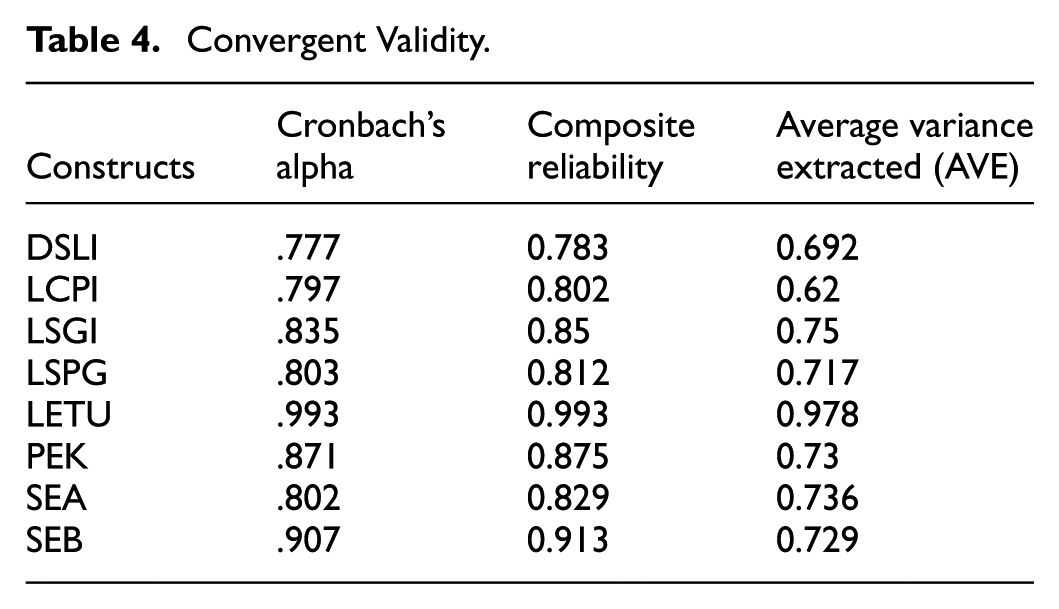
The Cronbach’s alpha value for each construct is greater than .70 in Table 4, demonstrating that the items strongly measure the shared underlying construct, which ensures the internal consistency of each construct (Pan et al., 2024). A CR value greater than 0.70 demonstrates that the measurement model is reasonably fit, and greater than 0.80 indicates that the measurement model is correctly specified and has strong validation. The results suggests that all constructs have CR values greater than 0.78. All constructs confirm that the AVE values are greater than 0.50. Based on the FL, Cronbach’s Alpha, CR and AVE, the measurement model had a high CV.
Convergent Validity.
Testing the Interdependence of Each Construct
Table 5 contains the square root value in the diagonal line, and the correlation score of each construct with all other constructs is substantially lower than the square root of AVE (M. K. Rahman et al., 2021), which confirms the DV. HTMT values lower than 0.90 confirm the existence of DV. Therefore, both approaches confirmed the DV and allowed its use for further analysis.
Discriminant Validity.

Goodness of Fit of Structural Model
The estimated values of χ2/df was less than 3.0, and all the other parameters like GFI = 0.937, CFI = 0.924, AGFI = 0.933, and NFI = 0.948 also exceeds threshold level equal to 0.90 justifying the goodness of fit of structural model. Moreover, the value of RMSEA was equal to 0.047 which is also lower than the 0.08. Therefore, all the parameters provided the robust evidences for goodness of fit of structural model.
Direct Path Analysis Without Mediation
R 2 indicates the predictive accuracy of the structural model, and its values in the range of .02 to .13 are considered poor, those in the range of .14 to .26 are considered moderate, and R2 values greater than .26 are deemed substantial (T. Zhang et al., 2024). The R2 scores for SEA and SEB are substantially greater than 0.26, which confirms the predictability capacity of the structural model. The f2 indicates the effect size that all variables have on students’ SEB. Cohen (1988) described f2 in range of 0.02 to 0.15 shows small effect size, a value between 0.15 and 0.35 shows medium effect size, and value of f2 greater than 0.35 indicates large effect size. The f2 values for all variables confirm the large effect size for all hypotheses, and only SEA has a medium effect size on SEB. Moreover, a Q2 value greater than zero also indicates the predictive relevance of both the SEA and SEB constructs. The finding of PLSpredict indicates that all PLS-based indicators of the SEB had lower RMSE values (=0.63) than the RMSE value of the linear model (LM; 0.72). Therefore, based on both the PLS predict and Q2 outcomes, it was ensured that PLS had strong predictive relevance.
Table 6 presents the path coefficients, without integrating the mediation effects of the variables. These findings indicate that the DSLI, LCPI, LSGI, and LSPG strongly affect SEA. DSLI, LCPI, and LSGI have a positive impact, while LSPG has a negative impact on SEA. This indicates that the rise in digitalization and smart innovation in libraries, collaboration of libraries, offering outreach program internships by library, adopting green initiatives like paperless policies and green space of libraries, promoting the use of natural resources efficiently, positively contribute to the development of environmentally oriented attitudes of students. The negative direct impact of LSGI may be due to the lack of full awareness of students about sustainable policies and government in the library, which has a slightly negative impact on their attitudes toward the environment. This may require full implementation of policies and governance that must be visible to students to develop positive environmental attitudes. SEA further had a significant positive effect on SEB at 1%. This implies that students’ environmental attitudes greatly influence the development of their sustainable behavior. Figure 2 presents the direct path analysis.
Path Analysis Without Mediation.

Note. R 2 (SEA) = .558; R2 (SEB) = .237; Q2 (SEA) = 0.297; Q2 (SEB) = 0.417; PLS-RMSE = 0.63; LM-RMSE = 0.72.

Path analysis without mediation.
Path Analysis With Mediation
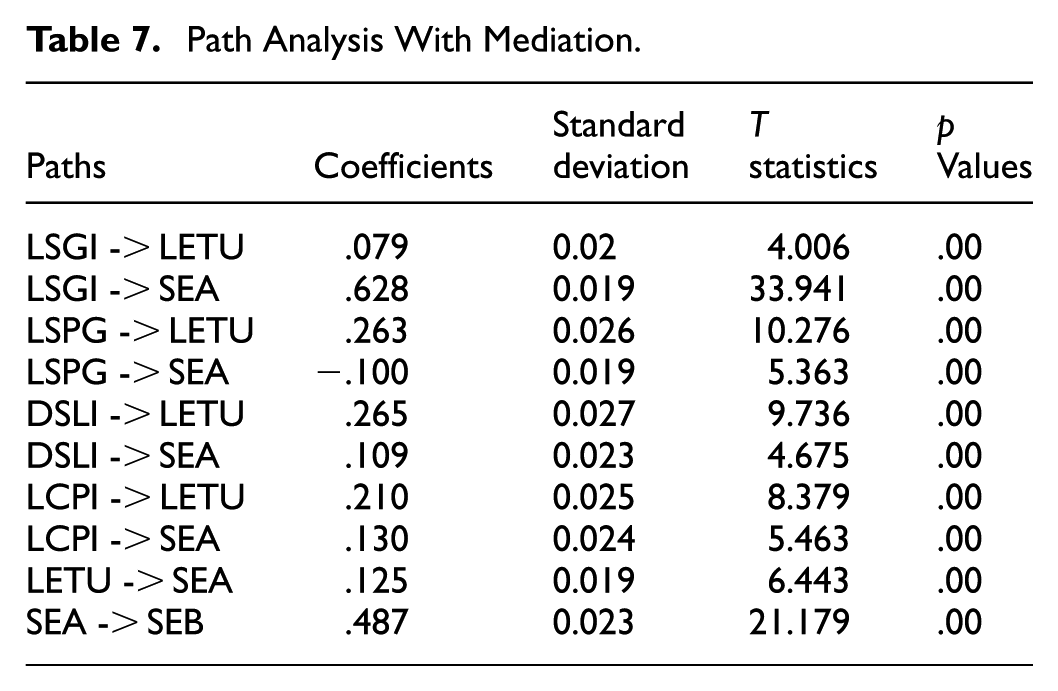
Table 7 presents the path analysis by integrating the mediators between variables. The findings indicate that the variables have a strong impact on SEA at the 1% level of significance, and that the negative impact of LSPG becomes more favorable in terms of a low negative coefficient (Figure 3).
Path Analysis With Mediation.

Path analysis with mediation analysis.
Analyzing the Indirect Path Analysis
Table 8 presents the indirect path analysis, which considers all possible mediators. The findings of bootstrapping and bias-corrected CIs confirmed that all the indirect effects were statistically significant. The first indirect path demonstrates the impact of LSGI on SEB through SEA, which indicates that LSGI significantly develops students’ SEB through SEA. Similarly, LSGI strongly influenced SEA through LETU at the 1% level. The entire path from LSGI to SEB through LETU and SEA was also significant at the 1% level, which strongly suggests that the impact of LSGI can be transmitted to SEB through LETU and SEA. The indirect paths of the DSLI and LCPI are also significant at the 1% level. Both variables strongly affected SEB through SEA, LETU, and SEA. The indirect path analysis regarding LSPG indicates a strong negative effect of LSPG on SEB; while incorporating the mediator LETU in the path, the negative effect of LSPG on SEA and SEB turns positive. This indicates that LSPG alone does not matter in developing the environmental attitude and behavior of students, and for obtaining a favorable impact of LSPG, it requires high engagement and technology use in the library.
Indirect Path Analysis.

Note. LL = lower limit; UL = upper limit.
Analyzing the Strength of Mediation Analysis
Table 9 presents the variance accounted for (VAF) to analyze the strength of the mediation holds. We used the VAF approach proposed by Hair et al. (2014), which is measured by (indirect effect/total effect) × 100. The VAF of LETU in the case of LSGI indicates that LETU accounts for 48% of the effect of LSGI on SEA, implying that LETU partially mediates the influence of LSGI on SEA. LETU also partially mediated the impact of LSPG on SEA by 48.08%. The findings indicate that the effect of DSLI on SEA is partially mediated by LETU, which accounts for 23.32% of DSLI influence on SEA. The Effect of LCPI on SEA was weakly mediated by LETU. The findings show that LETU is a strong mediator of the relationship between LSGI, LSPG, and DSLI and SEA. This implies that the engagement and technology used by students strongly transmit the impact of variables to SEA. This means that students’ engagement and technology use in the library only strongly affected their attitudes through DSLI, LSPG, LETU, and LCPI.
Variance Accounting for (VAF).

Analyzing the Moderating Impact of PEK Among the Relationship of Variables
Table 10 presents the moderating impact analysis of PEK on LSGI, LSPG, LCPI, and DSLI. The findings reveal a significant moderating effect of PEK on the relationship of variables, except DSLI. This implies that students with high pro-environmental knowledge can act as strong moderators of the influence of the LSGI, LSPG, and LCPI on SEA. The non-significant moderating role of PEK between DSLI and SEA implies that the PEK does not alter the impact of DSLI on SEA.
Moderating Impact of Pro-Environmental Knowledge.
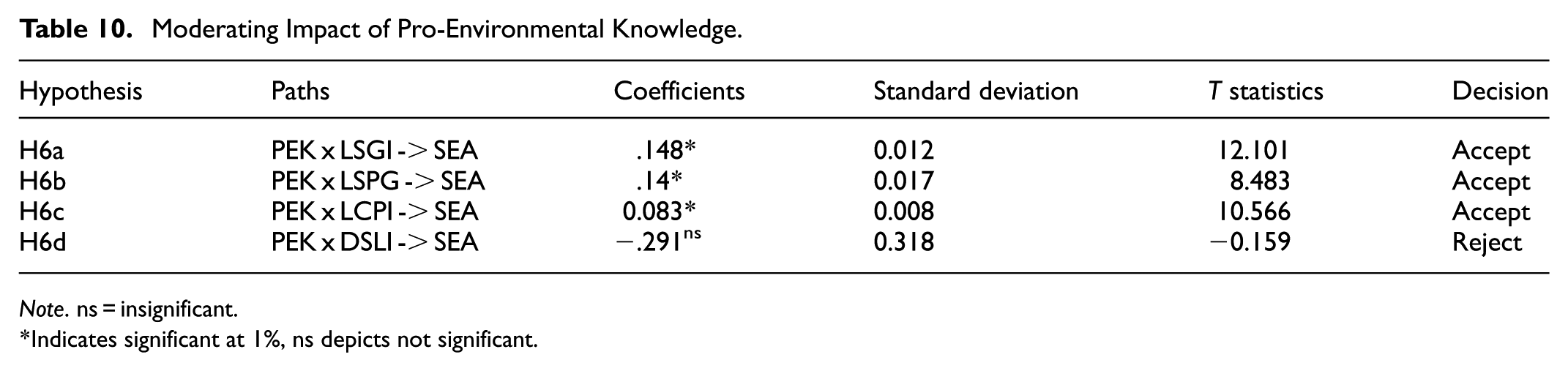
Note. ns = insignificant.
Indicates significant at 1%, ns depicts not significant.
Slope Analysis
Figure 4 presents the slope analysis of the moderating impact of LSGI and SEA. The upward slope at a high value of PEK (at +1SD) indicates that the positive effect of library space and its green initiatives on the environment-oriented attitude of students is stronger at high environmental knowledge levels. This implies that a high PEK increases the effect of LSGI on students’ SEA. The slope analysis of PEK’s moderating impact on LSPG indicates that the influence of LSPG on SEA is heavily dependent on students’ PEK. The downward slope of Pek at a low value (at −1 SD) and at the mean indicates that the exposure of students to sustainable policies and governance at their low level of PEK may cause confusion and make them indifferent in developing their SEA. Therefore, the upward slope of PEK at a high value (at +1 SD) indicates that a high PEK of students helps them understand the LSGI to develop a strong SEA that further develops SEB. The slope analysis of the moderating impact between the LCPI and SEA indicates interesting outcomes. All three conditional lines of moderator PEK at low, mean, and high values first increased, implying that high PEK influences the effect of the LCPI on SEA. However, after reaching the LCPI at a value of 1, all conditional lines converged to a single point, and it slightly depicted the change or movement, which may indicate that while PEK affects the relationship between LCPI and SEA, this influence becomes uniform across all PEK conditions.

Simple slope analysis.
Cluster and Robustness Check
The institutions of the sampled students belong to the 985 and 211 series, respectively. This may create an almost similar governance structure, educational environment, and library infrastructure, and may depict a high level of institutional homogeneity. This type of homogeneity substantially lowers the chance of clustering effects caused by locational or institutional heterogeneity. To verify this assumption, intraclass correlation coefficients (ICCs) were measured considering provincial grouping. The ICC for institutions in Shenyang was 0.021, for those in Harbin was 0.027, and for those in Changchun was 0.022. The overall ICC score was 0.023, which was substantially lower than the threshold level (=0.05). This implies that only 2.3% of the variance in response was attributed to the differences between provinces. Therefore, the findings show that the data do not have clustering effects and support the suitability of single-level analysis.
Moreover, cluster robust standard errors with provinces were estimated to ensure the robustness of the study findings. The findings regarding each province as a cluster unit remained stable (Table 11). This implies that the study findings were not sensitive to potential site differences. Therefore, these findings are statistically robust and can be generalized to provinces.
Findings Regarding Each Province as Cluster Unit.
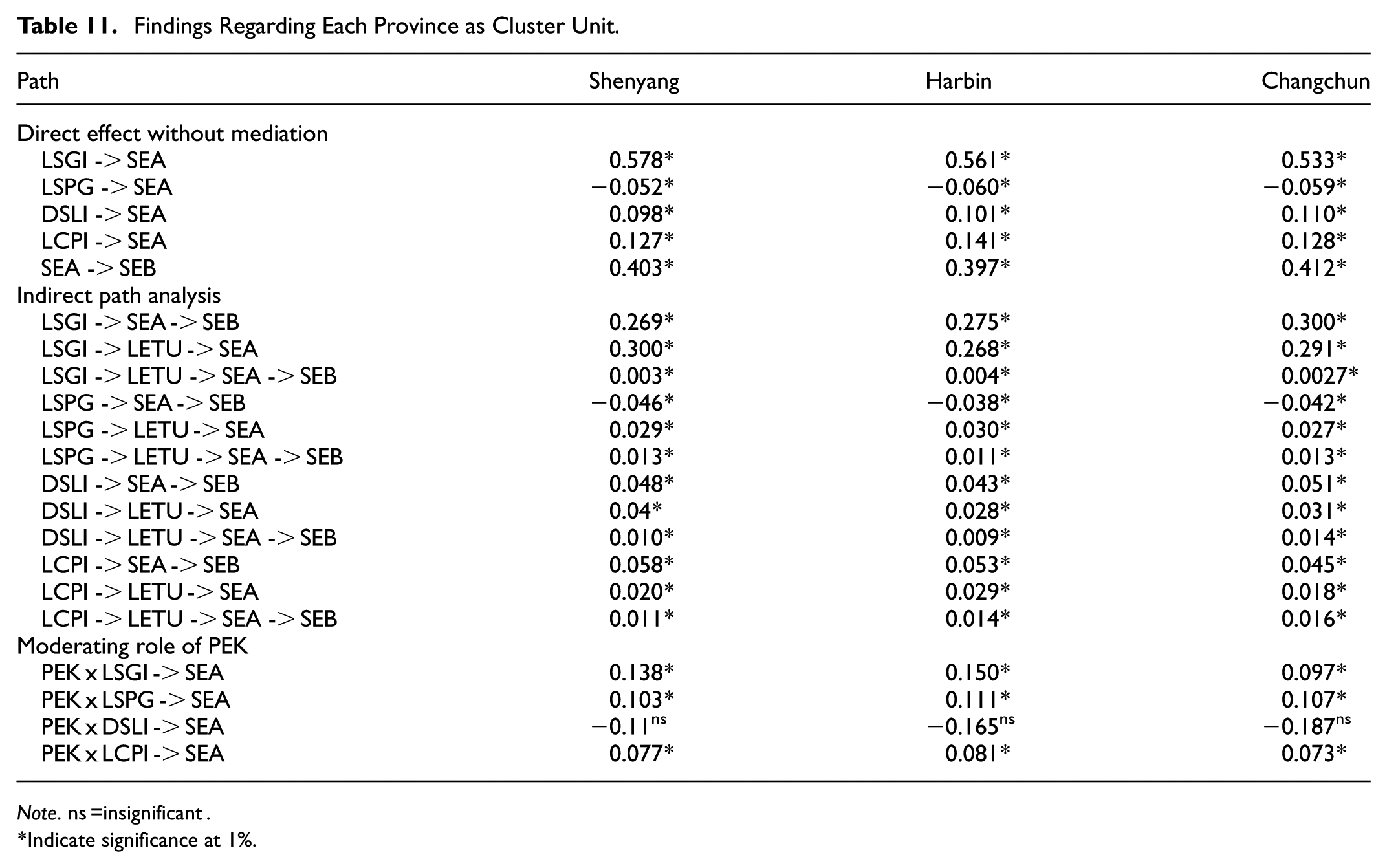
Note. ns =insignificant .
Indicate significance at 1%.
Discussion
Libraries play a crucial role in enhancing students’ knowledge during their visits. It can play multiple roles in developing the attitudes and behaviors of students, along with the provision of educational services. As library space, design, technologies, structure, and initiatives are directly observed by visitors, this promotes the interest of students in visiting the library while they feel comfortable. Moreover, libraries provide them with a dynamic educational environment along with repositories of books that actively play a crucial role in enhancing environmental consciousness among students. Therefore, this study analyzes the role of libraries’ different dynamics in developing students’ environmentally oriented attitudes and behaviors. The findings of PLS-SEM provide crucial insights into the direct and indirect effects of various variables on students’ environmentally oriented attitudes and behaviors. and moderation analysis.
The results showed the existence of a high direct and indirect effect of LSGI on SEA of students. This shows the degree of significance of space, design, and efforts inside a library in developing the attitudes of students. Libraries have begun to implement energy-saving technologies, and eco-friendly air conditioning units have tremendously reduced the reliance on the use of dirty sources of energy, which serve as the lead example to the users of sustainable practices (Febriyanti & Fitri, 2024). In addition to that, big windows and inner courtyards are good at ventilation and allow natural lights (Nasution & Handiningtyas, 2020; Q. Zeng & Wang, 2024). This creates a sense of comfort and facilitates a desirable environment to the students which improves their positive experience in the library. In addition, the environmental impact of library space is reduced due to the use of environmentally friendly materials, including recycled wood, locally produced materials, and low-VOC paints that provide a healthy environment to the students, which also leads to the sustainable attitude of students (Devarajan et al., 2024; Matloob, 2024). The perception and attitude of users toward libraries are greatly affected by their space and structure because the increased exposure to sustainable spaces and infrastructure contributes to the pro-environmental behavior of students (Bradecki et al., 2024; Dogan & Gurpinar, 2023). Hence, green space and endeavors of the library minimize the effects of the library on the environment and enables people to learn, derive knowledge and practice environmentally based activities. Devine and Appleton (2023) explained that green libraries that are taught through green practices and sustainable spaces are a valuable tool to improve the knowledge of environmental problems. In the same fashion, using green spaces and green practices by libraries offers an arrangement to students, which proves the viability and effectiveness of green living practices (Corrado, 2024; Putra, 2025). The results show the affirmative and influential effect of the LCPI on SEA. It emphasizes the necessity of library cooperation with other governmental and non-governmental agencies and presents a range of programs, including internships and outreach programs, in the establishment of environmental attitudes of students. The gap between actions and knowledge of students can be closed by collaborating with academic departments and organizations that provide services to communities.
This collaboration of libraries can provide an opportunity for students to participate in planting activities, environmentally oriented exhibitions, and arranging sustainability workshops that transform their understanding of real-life responsibilities toward the sustainability of the environment. Ajani, Tella, & Enakrire (2024) described that libraries play a noteworthy role in achieving environmental stewardship through collaborative partnership and community engagement programs. Moreover, Johnson et al. (2011) demonstrated that students are not active contributors, and student-library collaboration provides a platform that creates an opportunity for exploratory learning that directly contributes to their 21st-century skills. Moreover, library collaboration fosters students’ understanding by incorporating sustainability into educational programs and resources. This collective effort enhances environmental responsibilities, promotes the adoption of sustainable practices by students, and engages them in climate change initiatives (Naik, 2024). Library and community collaboration, like the Pioneer Valley Library Collaborative, engages a broader audience and develops community resilience (Blair et al., 2023). Das and Singha (2023) also described that the library enhances the awareness and understanding the students by collaborating with community and educational initiatives.
The findings revealed a negative and significant direct impact of LSPG on students’ SEA. This implies that the sustainable policies and government of libraries may not be fully perceived by students. Moreover, this negative impact of LSPG may stem from the lack of visibility of students or poor implementation. Q. Kang (2020) have described that the Chinese libraries have low level of awareness and commitments to sustainability issues leading to low efficiency of facilities and operations. Therefore, poor governance and policies may affect students’ attitudes toward the environment. The growing concern about climate change and emerging environmental issues greatly affects the leadership of libraries (Aslam, 2018), and this leadership needs to take initiatives to bring behavioral changes to staff and patron bodies by enhancing their awareness of environmental issues (Aulisio, 2013; Jones & Wong, 2016).
The impact of DSLI on students’ ET was significant and positive. This indicates that the use of digital technologies and smart innovation in libraries strongly contribute to the development of environmentally oriented attitudes among students. DSLI directly facilitates the students to observe and use the available digital and smart technologies which enhances their awareness leading to foster their attitude and behavior toward adopting and practicing the sustainable practices. Maina and Gichohi (2024) stated that digital libraries play a substantial role in reducing atmospheric footprint by promoting the use of e-materials over printing materials, leading to the preservation of natural resources. Innovation in library practices also promotes the role of libraries in sustainability (Putra, 2025). DSLI facilitates the students to obtain the knowledge of environmental issues, which develop their emotional connections to environmental identity. Moreover, it enables them to solve geographical problems (Hedberg et al., 2004). Yunus and Ismail (2024) also described the role of libraries’ digital and smart technologies in promoting the adoption of sustainable behavior by students through the adoption of energy-efficient practices and smart services.
The mediation analysis and indirect path analysis revealed that LETU is a strong mediator of the relationship between LSGI, LCPI, LSPG, and DSLI with students’ SEA and SEB. This indicates that the engagement of students and the use of technologies in the library by students is crucial to transforming the impact of LSGI, LCPI, LSGP, and DSLI into the sustainable attitude and behavior of students. Libraries are evolving over time and becoming more environmentally oriented (Yunus & Ismail, 2024) and the engagement of students with libraries enhances their learning outcomes, leading to high competency in resolving real problems (Hanken & Cribb, 2016). Moreover, the engagement of students with learning is strongly associated with sustainable behavior (Muñoz-García & Villena-Martínez, 2021), and libraries with sustainable spaces, technologies, policies, governance, and collaboration with organizations provide a more comfortable environment for students to learn.
The moderating analysis indicates that PEK is a strong moderator between students’ LSGI, LCPI, LSPG, and SEA. This implies that students with strong pro-environmental knowledge are more likely to act as moderators between variables. This means that PEK substantially enhances the influence of LSGI, LCPI, and LSPG on students’ attitudes toward the environment. Students with high PEK are more likely to benefit from library space, green initiatives, community outreach programs, and digital and smart technologies and pave their attitude toward being more environmentally oriented. Das and Singha (2023) describe the favorable role of green knowledge in enhancing the attitude of students by increasing awareness and engaging them with space, green initiatives, and collaboration leading to positive perception and active participation in environmental oriented practices within academic libraries. Various studies have explored the moderating role of PEK toward the development of attitude and behavior and adoption of sustainable practices (Farrukh et al., 2022; Hamzah & Tanwir, 2021; Khan et al., 2022; Tamar et al., 2021). Therefore, PEK is a good moderator that boosts the impact of variables on SEA.
The significant impact of DSLI on SEA toward SEB indicates its crucial role in developing an environmentally oriented attitude among students. However, PEK did not moderate this relationship, confirming that the DSLI affects SEA autonomously. As DSLI facilitates students by providing information regarding sustainability through an interaction interface, AI-driven personalization, and access to real-time data and visualization, it simplifies their concept about sustainable environment (X. Kang, 2022; Liu, 2024). Therefore, such user-friendly library designs allow students to engage with sustainability content with limited prior knowledge. This indicates that the DSLI contributes to the SEA by bridging the information gap and promoting environmental awareness uniformly without linking it to the PEK level among students (Collins & Halverson, 2010; Ramachandran, 2024; Sharma, 2025). Therefore, smart and digital innovation can serve as an active driver of developing a sustainable attitude among students without depending on their prior knowledge.
The analysis indicates that SEA positively develops students’ sustainable behavior (SEB). The findings confirmed the mediating role of external factors and students’ behavior. J. Zhang and Cao (2025) also described that sustainable development educational programs enhance the behavior by promoting the positive SEA among the university students. SEA positively contributes to pro-environmental behavior, leading to a high adoption of sustainable practices (L. Meng & Si, 2022). Our study is in line with Z. Zeng et al. (2023), who also demonstrate that high SEA leads to sustainable behavior among university students.
Conclusion
Libraries play a crucial role in providing educational services and present a place that can foster the sustainable attitude and behavior of students through sustainable space, design, initiatives, collaboration with communities and organizations, policies, governance, and smart technology. This study investigates how LSGI, LCPI, LSPG, and DSLI develop students’ environment-oriented attitudes and behaviors through LETU (mediator). The findings revealed that LSGI, LCPI, and DSLI significantly and positively affected students’ SEA, which further affected their SB, whereas LSPG negatively affected SEA. This confirms that all these variables served as important external library stimuli that shaped the students’ SEA, which further turned into their strong SEB. Based on the mediation analysis, LETU is a strong mediator that transforms the impact of variables into environmentally oriented attitudes and behaviors of students in higher educational institutions. This highlights that behavioral changes do not occur automatically but are driven by high engagement and active participation in sustainability-oriented activities with external environmental stimuli in the library. The findings also confirmed that PEK significantly moderated the impact of LSGI, LCPI, and LSPG, while it did not significantly moderate the impact of DSLI on students’ SEA and SEB. This describes the importance of students readiness in amplifying the relationship between the variables. Together, the findings of the study addressed the research questions by emphasizing the library’s dimensions, cognitive engagement, and prior informational awareness, which jointly develop sustainability-oriented attitudes and behaviors among students.
Policy and Managerial Implications
Based on the findings of this study, various policy implications have been proposed to foster the role of libraries in developing students’ SEA and SEB. The space and green initiatives undertaken by libraries must involve students to realize the benefits of sustainable practices. Moreover, libraries must hang wall posters in different places where sustainable materials have been used to disseminate information on possible sustainable materials that can be used for construction and design. The administration must encourage libraries’ outreach programs and collaboration with organizations and communities by involving volunteers from their students. For this, library administration must be facilitated with finance and possible necessities to maintain collaboration and outreach programs, such as internships and workshops. Libraries’ sustainable policies and governance must be clear, and their implementation must be ensured by the authority to develop a sustainable attitude through the positive perception of students. Digital and smart technologies must be enhanced, which not only attracts the attention of students to understand the benefits of sustainable practices but also enables them to enjoy an eco-friendly library environment. To obtain an effective impact of libraries on developing students’ attitudes and behaviors, their engagement must be increased; for this purpose, a weekly or monthly short educational program or conference on sustainability can be arranged in the library. Information about library dynamics and available technology must be shared with students. Students’ knowledge of the environment can be enhanced by incorporating courses on sustainability and the benefits of sustainable environments into the curriculum.
Theoretical Implications
This study prominently advances the S-O-R and TPB frameworks by indicating how libraries’ external stimuli translate into the environmental-oriented attitude and behavior of students through internal psychological mechanisms. This clearly extends behavioral reasoning to library aspects. This shows that students engagement and prior knowledge are crucial for bridging students beliefs to environmentally responsible actions.
Study Limitations and Future Research Directions
The current study focused only on three provinces in Northeast China. This may restrict the geographical generalizability of the study’s findings. Therefore, future researchers may extend this study by covering other regions of the country. Second, the research used a cross-sectional study design; therefore, causality among the variables could not be proven. Based on this, future researchers may consider a longitudinal or experimental approach to determine the causal relationship among variables. Third, self-report bias is another limitation of the research data used, as students may misreport their true perceptions, attitudes, or behaviors. Future research can address this limitation by employing multiple data sources, such as combining self-reported data with observational or secondary data to minimize subjectivity.
Supplemental Material
sj-xlsx-1-sgo-10.1177_21582440251406091 – Supplemental material for The Role of Academic Libraries in Promoting Environmental Sustainability in Higher Education Institutions
Supplemental material, sj-xlsx-1-sgo-10.1177_21582440251406091 for The Role of Academic Libraries in Promoting Environmental Sustainability in Higher Education Institutions by Jialu Ma and Naeem Shahzad in SAGE Open
Footnotes

Ethical Considerations
The study was conducted in accordance with the Declaration of Helsinki, and approved by the Institutional Review Board of Peking University, Beijing, China (2024-1567).
Consent to Participate
Informed verbal consent was obtained from all subjects involved in the study.
Funding
The authors received no financial support for the research, authorship, and/or publication of this article.
Declaration of Conflicting Interests
The authors declared no potential conflicts of interest with respect to the research, authorship, and/or publication of this article.
Data Availability Statement
The data is available as supplementary materials of this manuscript.
Supplemental Material
Supplemental material for this article is available online.
References
Supplementary Material
Please find the following supplemental material available below.
For Open Access articles published under a Creative Commons License, all supplemental material carries the same license as the article it is associated with.
For non-Open Access articles published, all supplemental material carries a non-exclusive license, and permission requests for re-use of supplemental material or any part of supplemental material shall be sent directly to the copyright owner as specified in the copyright notice associated with the article.
