




Abstract
This study aimed to examine the awareness and performance of pre-service teachers in Taiwan regarding the Sustainable Development Goals (SDGs). A mixed-methods research approach was employed, utilizing a questionnaire survey to obtain quantitative data on pre-service teachers’ perceived importance of and performance on SDGs. Qualitative data were supplemented through interviews with professors and pre-service teachers at a university that incorporated SDGs into its pre-service teacher education courses. The findings revealed that pre-service teachers perform best in “Quality Education” and “Gender Equality.” Men with STEM(Science, Technology, Engineering, Mathematics) fields demonstrated higher levels of awareness of sustainable development, and pre-service teachers majoring in STEM fields outperformed those in non-STEM fields in SDGs performance. Pre-service teachers identified “Good Health & Well-being,”“Life below Water,” and “Life on Land” as the indicators in most urgent need of improvement. Integrating the SDGs into teacher education programs can assist pre-service teachers in enhancing their awareness and performance regarding various SDG indicators.
Plain Language Summary
Introduction: The United Nations’ Sustainable Development Goals (SDGs) are among the most influential sustainability indicators today. Incorporation of the SDGs into pre-service teacher education is necessary for countries to promote education on sustainable development. Aim: to examine the development priorities for sustainable development in pre-service teacher education. Method: A questionnaire survey was used to obtain quantitative data on the perceived importance of and performance on the SDGs among pre-service teachers in Taiwan. The data were supplemented by qualitative data acquired from interviews with the professors and pre-service teachers of a college that incorporates the SDGs in its pre-service teacher education courses. Results: pre-service teachers perform best in “Quality Education” and “Gender Equality.” Men with STEM (Science, Technology, Engineering, Mathematics) fields demonstrated higher levels of awareness of sustainable development, and pre-service teachers majoring in STEM fields outperformed those in non-STEM fields in SDGs performance. Pre-service teachers identified “Good Health & Well-being,”“Life below Water,” and “Life on Land” as the indicators in most urgent need of improvement. Conclusion: Integrating the SDGs into teacher education programs can assist pre-service teachers in enhancing their awareness and performance regarding various SDG indicators.
Keywords
Introduction
Higher education institutions (HEIs) that provide pre-service teachers (PSTs) with training in the relevant qualifications are not only academic leaders but also serve as venues for a variety of teaching experiments and innovations. These HEIs cultivate their students to be young future leaders who will profoundly impact many societal decisions (Valderrama-Hernández et al., 2020; Žalėnienė & Pereira, 2021). In essence, the Sustainable Development Goals (SDGs) constitute a global value structure that guides academic research and business strategies in higher education. Furthermore, the pragmatic research spirit of HEIs can promote the practice and application of the SDGs. In particular, education (SDG4) is an independent SDG indicator that aims to inform people about the importance of education. In the future, PSTs will shoulder the responsibility of educating the next generation of citizens. However, to facilitate transmission, they must first possess the requisite SDG knowledge and abilities (Murillo-Pardo et al., 2022).
Practice-oriented SDGs combine socioeconomic and environmental indicators (Leal Filho et al., 2019). These SDGs are appropriate frameworks for implementing PST education courses, leading to the integration of cross-field curricula and the development of innovative thinking and systematic problem-solving. Therefore, the incorporation of the SDGs into PST education is a research topic currently receiving increasing attention. Some studies investigating the integration of the SDGs into PST education have demonstrated that this process is critical for PSTs (Álvarez-Garcia et al., 2019; Chisingui & Costa, 2020; Rico et al., 2021) because future teachers must have the SDG capabilities to provide their students with an education for sustainable development (ESD; Schina et al., 2020). PSTs must also be aware of the importance of the SDGs when relevant indicators are integrated into PST education courses so that they can present relevant SDG connotations and actions in their future teaching (Cebrián & Junyent, 2015; García-González et al., 2020; Nguyen et al., 2020).
Accordingly, PSTs represent the most important target group for promoting the SDGs within HEIs. PST education courses are based on feedback from teaching practices and simultaneously cultivate PSTs’ abilities to store knowledge for future application, which aligns well with the SDG concept of being practice-oriented. Hence, PSTs’ future professional development would benefit if the PST education system raised PSTs’ awareness of sustainable development as the starting point (Almazroa et al., 2024; Tuncer et al., 2009). The SDGs can be used as issue-centered guides when developing PST education curricula because the 17 indicators encompass issues that concern global societies today. Furthermore, these issues are interrelated, which can guide PSTs in integrating their knowledge and abilities. PSTs receive the necessary training to cultivate the next generation of global citizens (Nguyen et al., 2020; Schina et al., 2020). Thus, the SDGs can be used to enhance their professional competence and global citizenship literacy. Importantly, the SDGs emphasize the importance of high-quality education, which aligns with the current focal points of PST education in Taiwan. However, the current empirical research on the SDGs has revealed a general lack of awareness of these indicators among students in many countries (Aleixo et al., 2020). PSTs in Taiwan also exhibited a similar lack of awareness regarding the SDGs. Therefore, promoting student awareness of SDGs and encouraging SDG practices are critical issues in ESD. Integrating the higher education resources to promote citizens’ understanding and application of and participation in the SDGs will create positive global impacts. Correspondingly, this has become a popular research topic in recent years (Murillo-Pardo et al., 2022). Considering the critical importance of education in fostering students’ SDG awareness and abilities, schools and teachers must recognize the significance of the SDGs and include them in practical teaching actions. This illustrates the importance of incorporating the SDGs into PST education (Chisingui & Costa, 2020; García-González et al., 2020) and aligns with the direction that HEIs in Taiwan are actively engaged in PST education.
In summary, the United Nations’ SDGs are among the most influential sustainability indicators today. Countries worldwide have launched actions and conducted related research, particularly in the rapidly developing field of higher education. Incorporation of the SDGs into PST education is necessary not only for countries to promote education on sustainable development but also for the HEIs themselves (Albareda-Tiana et al., 2019; García-González et al., 2020; Rico et al., 2021).
Literature Review
SDGs and Higher Education
The United Nations Sustainable Development Solutions Network (SDSN) maintains that colleges play a vital role in achieving the SDGs. Given the enormous size of the tasks to be performed, colleges can act as leaders in accelerating action (Brugmann et al., 2019; Gilal et al., 2019). The SDGs have become increasingly important in higher education. In fact, HEIs have always considered educating students on SDG strategies part of their responsibilities. These strategies are often incorporated into the teaching practices in HEI classrooms and play a vital role in the development of ESD (Albareda-Tiana et al., 2018; Obrecht et al., 2022; Žalėnienė & Pereira, 2021). As HEIs can implement ESD effectively, they can help reach the outcome goals stipulated in the 2030 Agenda for Sustainable Development (Almazroa et al., 2024). A Canadian study confirmed that HEIs should systematically promote strategies for SDG knowledge and abilities, including providing multi-party support; integrating sustainability into research, public relations, and campus operations; having supportive college leadership and the formal participation of teachers and students; inviting advocates of sustainable development to participate; and including the formal participation of external stakeholders. The formal participation of students was identified as of utmost importance and a main driving force (Weiss et al., 2021).
HEIs can play a wider transformative role in achieving sustainable development; their most important task is to help their students understand the significance of the overall SDG framework and inculcate the knowledge and skills needed to realize sustainable living (Brugmann et al., 2019; Guerra & Smink, 2019; Shiel et al., 2020; Syed Azhar et al., 2022). HEIs must nurture graduates with SDG knowledge and abilities to achieve the SDGs and impact society. First, ESD must be established in higher education to form a feasible training program. HEIs play a crucial role in this process, and the effectiveness of their training will have a decisive impact by ensuring that graduates possess the necessary background SDG knowledge and engage in social participation (Findler et al., 2019; Usak et al., 2021; Žalėnienė & Pereira, 2021).
The connotations of ESD were further ingrained when UNESCO drafted the Decade of ESD (2005–2014) in 2003, which states that education plays a vital role in the sustainable development of human beings. A consensus on this point has gradually formed through major international conferences. Higher education has a considerable influence on society, the environment, and the economy—three aspects that echo the connotations of sustainable development; hence, it is expected to play a leading role in achieving the SDGs (Findler et al., 2019; Leal Filho et al., 2019). Accordingly, HEIs have an undeniable responsibility to enhance the knowledge and competence of PSTs regarding SDGs and establish relevant PST education courses. Consequently, to investigate the awareness and actions of PSTs concerning the SDGs and determine the connection between the SDGs and PST education courses, this study designed research tools based on the United Nations’ 17 SDGs. Goal 1 (No Poverty) emphasizes the eradication of poverty worldwide, highlighting its implementation through strategies such as resource mobilization and institutional protection. Goal 2 (Zero Hunger) focuses on eradicating hunger and understanding the issues related to food scarcity and security globally. Goal 3 (Good Health and Well-being) aims to ensure a healthy life and promote the well-being of all individuals. Goal 4 (Quality Education) asserts individuals’ right to education and fosters their future development. Goal 5 (Gender Equality) aims to achieve gender equality and eliminate gender stereotypes. Goal 6 (Clean Water and Sanitation) seeks to ensure quality of life and access to water resources for all individuals while promoting good hygiene practices. Goal 7 (Affordable and Clean Energy) aims to ensure that everyone has access to sustainable modern energy sources and can conserve energy effectively. Goal 8 (Decent Work and Economic Growth) promotes an employment environment that fosters sustainable, inclusive economic growth. Goal 9 (Industry, Innovation, and Infrastructure) emphasizes the importance of developing infrastructure, promoting sustainable development, and fostering innovation. Goal 10 (Reduced Inequality) seeks to reduce inequality within and between nations and advocates for equal rights for every individual. Goal 11 (Sustainable Cities and Communities) prioritizes the establishment of sustainable and safe urban areas while enhancing social security and quality of life. Goal 12 (Responsible Consumption and Production) emphasizes patterns of consumption and production that prioritize the reuse of resources. Goal 13 (Climate Action) focuses on climate change and its impacts while proposing corresponding strategies for energy usage. Goal 14 (Life below Water) aims to protect and sustainably utilize marine resources while preventing harm to marine ecosystems. Goal 15 (Life on Land) focuses on the sustainable use and conservation of terrestrial ecosystems to prevent damage to land-based ecosystems. Goal 16 (Peace, Justice, and Strong Institutions) promotes peaceful, inclusive societies with strong cultural and institutional frameworks and advances judicial justice. Goal 17 (Partnership for the Goals) revitalizes global partnerships for sustainable development and enhances international cooperation and mutual assistance (Halkos & Gkampoura, 2021; United Nations, 2015, 2020). Drawing inspiration from the objectives of the 17 SDGs, this study developed the “Questionnaire on the perceived importance of and performance on SDGs among PSTs” (see Appendix A1) in alignment with their underlying principles.
HEIs have gradually incorporated the concepts of SDGs and ESD into their curricula since the mid-1990s. Nevertheless, some areas still require attention and improvement, including curriculum reorientation and innovation, reduction of carbon footprints, development of integrated teaching and research, and methods of community participation. Colleges should not regard ESD as a supplement to their existing subject-based courses but instead tap into their vast resources to integrate ESD into different fields (e.g., research, school management, and community participation), thereby generating interactions (Collazo Expósito & Granados Sánchez, 2020). Enhancing ESD in HEIs is crucial for increasing university students’ awareness of the SDGs. Without acquiring the appropriate knowledge, it is challenging for them to make informed and environmentally responsible choices (Jones et al., 2024; Leiva-Brondo et al., 2022; Yuan et al., 2021; Zamora-Polo et al., 2019). SDGs should not merely be viewed as tools but also as references for higher education curricula, particularly in PST education, and fully incorporated into the PST curricula. Therefore, to understand whether university professors can impart SDG knowledge to PSTs through PST education courses, this study designed interview guidelines drawing on the 17 SDG objectives. This approach will help us understand how SDGs are integrated into the PST curriculum design and their impact on PSTs.
SDGs and Pre-service Teacher Education
HEIs bear the responsibility of nurturing the next generation of citizens with high SDG literacy. PSTs are the most important among the various groups to be nurtured as ESD is the most effective way to nurture citizens with SDG literacy. The role of ESD is to ensure that all citizens acquire the requisite theoretical and practical SDG knowledge through the education they receive from childhood. Teachers can only achieve this goal through hard work, motivation, and innovative ideas (Leal Filho et al., 2018). When implementing ESD, teachers’ perceptions of the SDGs are critical for developing the skills necessary to incorporate them into classroom practice. These perceptions also considerably affect teachers’ teaching methods and readiness for ESD (Bichi, 2017; Nguyen et al., 2020). More precisely, their perceptions of the SDGs determine the level of ESD implementation in their teaching (Anyolo et al., 2018; Cebrián & Junyent, 2015). The role of teachers in ESD is to integrate the connotations of the SDGs into their daily teaching tasks. Along with their responsibility for nurturing future generations to face the challenges of today’s unsatisfactory SDG situation, they also play a key role in shaping the future development of SDGs (García-González et al., 2017; Valderrama-Hernández et al., 2020). Therefore, PSTs are regarded as the most effective “change makers” and “catalysts” for solving SDG issues even before they formally become teachers (Shields, 2019).
However, research has shown that PSTs lack a sufficient understanding of the SDGs and are uncertain about the meanings of most of the SDG concepts. Consequently, strategies for incorporating the SDGs into ESD are limited (Anyolo et al., 2018; Guerra & Smink, 2019). This indicates a gap between the perceived importance of SDGs and the actual behavioral engagement of PSTs. Specifically, previous research has indicated a gap between the perceived importance of and performance on SDGs among university students (Ho et al., 2022) and with respect to corporate social responsibility (Mattera & Alba Ruiz-Morales, 2021). This underlines the importance of SDG knowledge and practical training for PSTs. SDG4 directly highlights the importance of education in the development of SDGs and can serve as the educational goal of both citizens and PSTs, considering that the teacher’s role is key to the success of the SDGs. Furthermore, this indicator highlights that SDG-related tasks can be completed with an adequate number of well-trained and qualified teachers (Almazroa et al., 2024; Bichi, 2017).
In addition to emphasizing the importance of education, SDG4 can also be used as the basis for other indicators. PSTs understanding the connotations of the SDGs and practice them in their teaching, will contribute greatly toward promoting the spirit of SDGs among students. Further promotion of ESD practices is possible when teachers’ SDG knowledge and abilities are enhanced. However, given that previous research has mostly focused on conceptual discussions regarding the importance of SDGs for university students, the perceptions of importance and performance have not been sufficiently investigated. No prior research has explored the developmental sequence of SDG indicators. Moreover, in the context of ESD, PSTs play a pivotal role in making their perceptions and performances worthy of attention.
Considering that the relevant findings are controversial (Álvarez-García et al., 2019; Gilal et al., 2019), whether gender affected PSTs’ views of the SDGs was investigated separately. Several studies have determined no significant difference in attitudes toward or perceptions of the SDGs by gender (Álvarez-García et al., 2019; Syed Azhar et al., 2022). However, other studies have reported that male PSTs possess more environmental knowledge than their female counterparts (Álvarez-García et al., 2019). In contrast, some studies have shown that female PSTs have more positive attitudes and behaviors toward environmental protections (Álvarez-García et al., 2019; Leiva-Brondo et al., 2022; Tuncer et al., 2009).
We also explored whether the PSTs’ SDG knowledge was related to their academic fields, namely, STEM(Science, Technology, Engineering, Mathematics) versus non-STEM. The essential characteristic of STEM education is its focus on integrating and solving real-world problems, which aligns with the core spirit of SDGs (Ling et al., 2019). Moreover, the STEM approach is a promising educational framework for sustainable development that enhances the quality of education. Some studies have even suggested that STEM students are particularly well-positioned to foster sustainability consciousness (Del Cerro Velázquez & Lozano Rivas, 2020). Research has shown that teachers or PSTs in STEM fields have better knowledge of and attitudes toward SDGs (Martín-Sánchez et al., 2022; Nguyen et al., 2020; Rico et al., 2021).
PST education has a strong influence on PSTs’ perceptions of the SDGs. Hence, strengthening PSTs’ knowledge of the SDGs in HEIs should be the focus of PST education courses. Prior studies have demonstrated the positive impact of integrating ESD into such courses in HEIs (Lo et al., 2021; Valderrama-Hernández et al., 2020). The effective design of PST education courses facilitates the development of SDG capabilities for future teachers and their students (Albareda-Tiana et al., 2019; Caniglia et al., 2018; Fekih Zguir et al., 2021). García-González et al. (2020) found that when PSTs gained SDG knowledge during their training process, they smoothly incorporated ESD into their teaching practice. Therefore, the PST education process must prepare PSTs to meet the challenges of aligning their teaching practice with the SDGs. This implies that strategies and a systematic framework for PST curricula must be adopted, and all aspects of curriculum design should be integrated with the SDGs. Plans must also be made to nurture excellent teachers capable of developing the next generation of citizens and professional teaching staff equipped to conduct civic education (Chisingui & Costa, 2020). Therefore, understanding how SDGs are integrated into PST education courses is a major concern for HEIs. This study focuses on PST education in Taiwan, with some research questions:
How do PSTs perceive the importance and performance of the 17 SDGs indicators? Is there a gap between their perceptions of importance and performance? What is the ranking of each indicator?
Are there differences in the perceived importance of and performance on the SDGs by gender?
Do PSTs majoring in STEM show a higher perceived importance of and performance on the SDGs than non-STEM PSTs?
What should be the priority for the development of the SDGs in PST education?
What is the correlation between PST education courses and the SDGs?
Research Methods
Procedures and Participants
Questionnaires were used to investigate the perceived importance of and performance on the SDGs among PSTs in Taiwan. Concurrently, the implementation of the SDGs in Taiwan’s PST education courses was analyzed. Within the framework of mixed-methods research (Steckler et al., 1992), quantitative and qualitative data were collected as the main and supplementary data, respectively. First, importance–performance analysis (IPA) was used to evaluate the perceived importance of and performance on the SDGs among PSTs. To further understand the results of this analysis, semi-structured interviews were conducted with two teaching professors practicing the SDGs in PST education courses in a college and two PSTs enrolled in these courses. The interviewees were asked to state their views on the impact of the SDGs on PSTs. After the interviews were compiled and analyzed, the aggregated results were compared with the results of the questionnaire analysis.
Participants selected for the questionnaire were PSTs studying in Taiwan’s HEIs in 2021. Online questionnaires were distributed on the community platforms and forums of various colleges, and 432 valid questionnaires were received. Among the respondents, 23.61% were men, and 76.39% were women. Participants from STEM and non-STEM academic fields accounted for 52.08% and 47.92% of the total sample, respectively. The case college where the interviews were conducted had been awarded the gold label in the STARS (Sustainability Tracking, Assessment & Rating System) appraisal of sustainability at colleges. During the appraisal, its teaching performance was rated as the most outstanding. Considering that the case college’s ESD has been affirmed and is systematic, it was considered a representative case for investigating the implementation of the SDGs in PST education courses.
Data Collection Tools
The “Questionnaire on the perceived importance of and performance on SDGs among PSTs” (see Appendix A1) was compiled by the research team to examine participants’ levels for perceived importance of and performance on SDGs. There were three questions for each SDG for a total of 51 questions, all of which were scored on a five-point Likert scale. To determine the representativeness and appropriateness of the questionnaire, ten experts in SDG practice and management were invited to test the validity of its content. The questionnaire items were designed based on five points to calculate the content validity index (CVI). All items were retained because their final CVI values were higher than the standard of .80 (Polit et al., 2007). In the pilot test, a sample of 255 PSTs was randomly selected, which is five times the number of the scale’s 51 items (Tinsley & Tinsley, 1987). Regarding the item analysis of the scale, the top 27% of respondents with high scores and the bottom 27% with low scores were identified as the high- and low-score groups, respectively. Independent-sample t-tests were conducted to calculate the mean differences between the high- and low-score groups for each item to determine the critical ratio (CR). Pearson’s correlations were employed to assess the relationship between each item and the total score, which served as an indicator of item discrimination. For the 51 items measuring perceived importance, the CR ranged from 5.50 to 19.00, whereas the correlations ranged from .40 to .80. For the 51 items measuring performance, the CR ranged from 4.27 to 16.69, whereas the correlations ranged from .40 to .75. These results indicated that all items demonstrated good discrimination ability and could be retained. The Cronbach’s α’s of the PSTs’ perceived importance of and performance on the SDGs were .97 and .96, respectively. Principal component analysis (PCA) was also performed. The explained variance of PSTs’ perceived importance of the SDGs was 81.07%, with factor loadings ranging from .58 to .92. The explained variance of their performance was 79.35%, with factor loadings ranging from .66 to .92. These results indicated that the questionnaire had good reliability and validity.
Analysis of Data
A paired-sample t-test was used to compare the differences between the perceived importance of and performance on the SDG indicators among the PSTs. Repeated-measured analysis of variance (ANOVA) was used to rank the various indicators of the two variables, whereas Pearson’s correlation analysis was employed to examine the correlations between the variables. The independent-sample t-test was used to test the differences in the perceived importance of and performance on the SDGs by participants’ gender and academic field (non-STEM vs. STEM). IPA was used to rank and prioritize the 17 SDG indicators by plotting the average scores for the perceived importance of and performance on each indicator on two-dimensional plane coordinates. Finally, the relative position of each indicator’s score was used to describe its current status and provide evidence for developing the final ranking (Figure 1).
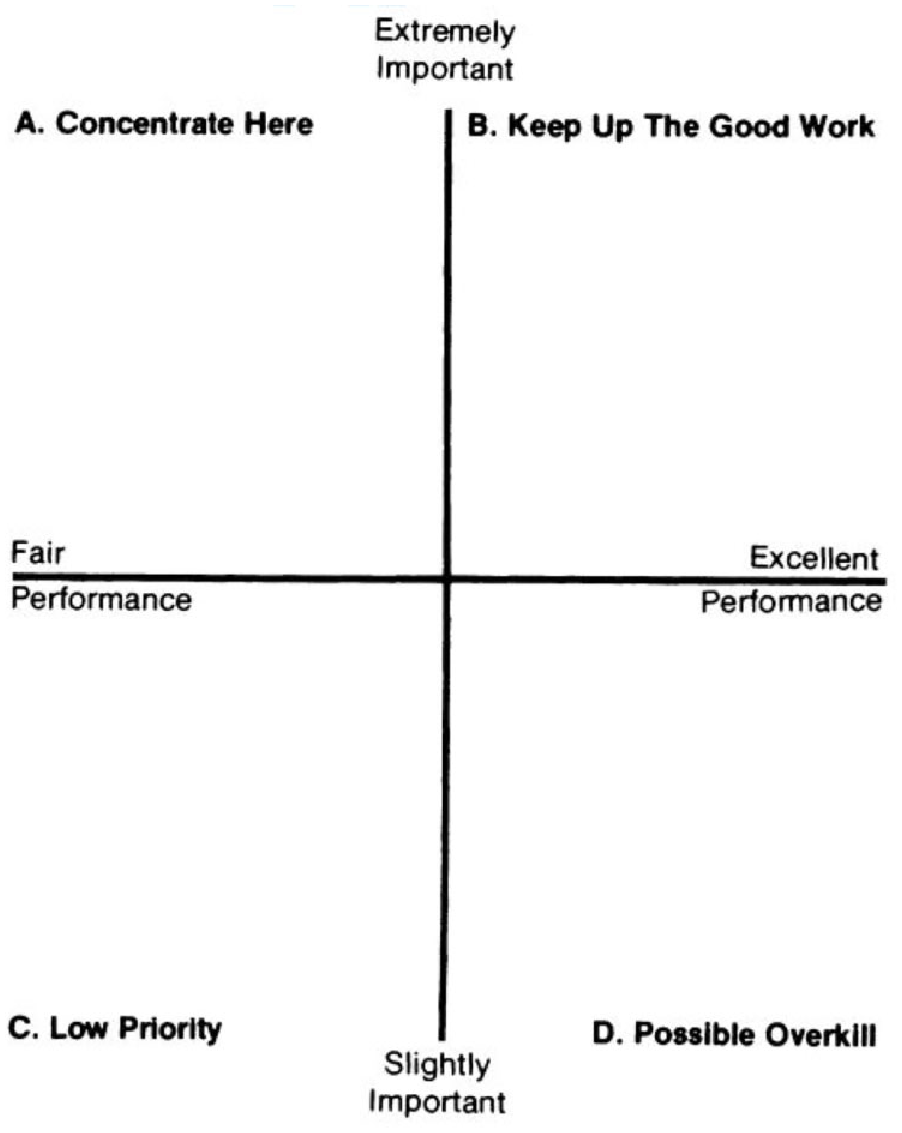
Importance–performance analysis.
The qualitative data collected from the interviews with four participants from the case college were sorted and compiled. The corresponding relationships with the SDGs were listed in detail, which served as the basis for a comprehensive analysis of the IPA results. The interviewees’ comments were also compared to check for commonalities. The findings were then used to understand the current trends for SDG development in the PST education curricula and to prepare an outline for further development of the curricula.
Results and Discussion
Differences and Ranking in the Perceived Importance of and Performance on the SDGs Among PSTs
The differences between the PSTs in terms of their perceived importance of and performance on the SDG indicators were analyzed, and the ranking of the related indicators was checked. Table 1 presents the results of this analysis.
Paired-Sample t-Test, Correlations, and Ranking Test Results for the Perceived Importance of and Performance on the SDGs.

Note. n = 432.
p < .001.
The PSTs scored higher on perceived importance than performance for the 17 SDGs. The difference reached a significance level of .05, revealing a gap between their perceived importance of and performance on the SDGs. Although their scores for the various indicators of performance were higher than the median value of 3 on the five-point scale, gaps in their scores for perceived importance persisted. These results indicate that although the PSTs generally understood the importance of the SDGs, their performance was lacking. The Pearson’s correlation coefficients for the various indicators of perceived importance of and performance on the SDGs ranged from .27 to .61, indicating moderate to high positive correlations. This means that the perceived importance of SDGs was conducive to their performance behaviors. Previous research has shown that university students generally exhibit low levels of awareness of the SDGs (Leiva-Brondo et al., 2022; Zamora-Polo et al., 2019), which contrasts with the higher perceived importance found among the PSTs in this study. However, the result of this study aligns with the findings of Ando et al. (2019), which can be attributed to the emphasis on SDGs in Taiwan’s PST education policies. PSTs might have been exposed to more SDG-related knowledge than general university students. In addition, considering the future professional demand for SDG expertise in their teaching careers, PSTs naturally have a higher inclination to value SDGs than the general university student population. Although Ando et al. (2019) only focused on students at Kyoto University in Japan, the increasing awareness of the SDGs among Japanese university students overall in recent years, influenced by school and government policies, has been confirmed in several studies (Frank et al., 2020; Leiva-Brondo et al., 2022). Therefore, it is evident that the level of importance that students place on the SDGs is closely related to the emphasis HEIs and governments place on them. Furthermore, past research has identified a gap between the perceived importance and actual performance of university students; students’ performance behaviors tend to be lower than their perceived importance (Ando et al., 2019; Ho et al., 2022), which is consistent with this study’s findings. This is likely due to the fact that the SDGs have only gained prominence in higher education in recent decades, and students have had limited exposure to them, which may hinder their ability to translate their perceived importance into concrete actions.
The ranking results for perceived importance indicated that SDG5 had the highest score, followed by SDG4 and SDG14. The lowest scores were obtained for SDG9 and SDG17. In terms of the ranking results for performance, SDG5 had the highest score, followed by SDG4, whereas SDG9 and SDG17 again had the lowest scores. Overall, SDG5 was the highest-scoring indicator in terms of both perceived importance and performance, with SDG4 ranking second. These findings are similar to those of previous studies (Ando et al., 2019; Leiva-Brondo et al., 2022; Yuan et al., 2021), which identified SDGs 5, 4, and 13 as the most easily understood. Interestingly, while SDG4 was perceived as the most important, SDG17 was considered the least important, which is consistent with the global report by Frank et al. (2020). This finding aligns with the widespread consensus in most countries regarding the importance of SDG4, which emphasizes the significance of education for nations. This emphasis is particularly pertinent in PST education. Other observed differences could be attributed to economic and social disparities among the target populations (Leiva-Brondo et al., 2022).
Differences in Perceived Importance of and Performance on the SDGs by Gender
Table 2 illustrates the differences in the perceived importance of and performance on the SDGs by gender. There were significant differences in perceived importance between the male and female respondents for SDG1, SDG2, SDG4, SDG8, SDG9, and SDG16. Specifically, similar to the findings of Álvarez-García et al. (2019), the male PSTs exhibited higher levels of perceived importance than their female counterparts, may be attributed to the higher frequency of exposure to SDG-related information among men compared to women. There were significant differences in performance levels by gender for SDG1, SDG3, SDG6, SDG9, and SDG16. Specifically, the female PSTs’ performance on SDG1, SDG3, and SDG6 was better, which is consistent with the results of some studies (Álvarez-García et al., 2019; Leiva-Brondo et al., 2022; Tuncer et al., 2009). Male PSTs performed better on SDG9 and SDG16 in this study, which suggests that women tend to be more compassionate and place a higher emphasis on personal health and hygiene. In contrast, men exhibit greater practicality in issues related to national development and judicial justice. However, Yuan et al. (2021) did not observe gender differences in this respect, potentially because their study sampled senior high school students, who differed from the samples used in the studies mentioned earlier.
Independent-Sample t-Test for the Perceived Importance of and Performance on the SDGs by Gender. (Male: n = 102; Female: n = 330).

p < .05. **p < .01. ***p < .001.
Differences in the Perceived Importance of and Performance on the SDGs by Academic Field
PSTs who specialized in education or the arts and humanities were classified as being from non-STEM academic fields, whereas those who specialized in science and mathematics were classified as belonging to STEM. Table 3 presents the differences in the perceived importance of and performance on the SDGs between PSTs from the two academic fields.
Independent-Sample t-Test for the Perceived Importance of and Performance on the SDGs by Academic Field (STEM vs. Non-STEM PSTs). (Non-STEM: n = 207; STEM: n = 225).

p < .05. **p < .01.
There were significant differences in the perceived importance between STEM and non-STEM PSTs for SDG1, SDG5, SDG9, and SDG17. More specifically, non-STEM PSTs scored higher than their STEM counterparts for SDG1 and SDG5, but the reverse was true for SDG9 and SDG17. There were also significant differences in performance between the two categories of PSTs for SDG3, SDG4, SDG9, SDG10, SDG12, and SDG17, with STEM PSTs having higher scores. Overall, STEM PSTs scored higher for the perceived importance of and performance on the SDGs, especially SDG9 and SDG17. This is consistent with the findings of other studies (Leiva-Brondo et al., 2022; Martín-Sánchez et al., 2022; Nguyen et al., 2020; Rico et al., 2021). STEM PSTs are more inclined to apply their expertise in infrastructure development and possess a greater advantage in terms of international mobility; therefore, they exhibited better-perceived importance and performance for these two indicators.
The Priority for the Development of SDGs in PST Education
Figure 2 shows the IPA results of the PSTs for the 17 SDG indicators. SDG4, SDG5, SDG8, SDG10, and SDG13 are located in the first quadrant, indicating high levels of perceived importance and performance. This demonstrates that their development in the field of PST education has matured. This finding is consistent with the results of previous studies that emphasized the high importance and implementation of SDG4 and SDG5 (Ando et al., 2019; Frank et al., 2020; Leiva-Brondo et al., 2022; Yuan et al., 2021). This result can be attributed to Taiwan’s long-standing emphasis on the quality of education. In addition, the fact that PSTs in Taiwan are destined for careers in the education sector naturally leads to a heightened focus on educational quality. Moreover, the gender balance among students pursuing PST education in Taiwan typically leans toward women, a trend reflected in this study’s sample. Taiwan’s increasing awareness of gender equality in recent years has been widely recognized, leading to a higher emphasis on and practice of gender equality among women than men. SDG1 and SDG6 are in the second quadrant, indicating overperformance. This indicates that while the perceived importance of these indicators is relatively low, the level of performance is high. Hence, they have been over-developed in the PST field.

IPA quadrants for the SDGs based on the PSTs’ responses.
SDG2, SDG7, SDG9, SDG11, SDG12, SDG16, and SDG17 are situated in the third quadrant, indicating they are prioritized second for improvement. Both the perceived importance of and level of performance on these indicators are relatively low, indicating that they have yet to be fully developed in the PST field. Although resources can be invested in these indicators, their fulfilment is less urgent than that of the indicators in the fourth quadrant. The greatest concern in IPA is the fourth quadrant—containing SDG3, SDG14, and SDG15—because although the PSTs perceived these indicators as extremely important, their level of performance is low. Thus, top priority should be given to improving these three indicators. This aligns with the findings of surveys conducted in some countries, indicating that the least well-implemented SDGs were SDG14 and SDG15 (Leiva-Brondo et al., 2022; Sachs et al., 2022). This can be attributed to the slow development of environmental policies in Taiwan and the general lack of societal emphasis on these indicators. Although Taiwan is an island nation, practical actions related to marine education are lacking, highlighting the urgent need for PSTs to strengthen their awareness of and performance on these indicators.
Correlation Between the PST Education Courses and SDGs
Past research has demonstrated that the integration of the SDGs into PST education is affected by school and government policies. Furthermore, the curriculum plays a crucial role in shaping PSTs’ awareness and actions related to the SDGs (Almazroa et al., 2024; Cebrián & Junyent, 2015; Collazo Expósito & Granados Sánchez, 2020; García-González et al., 2020; Nguyen et al., 2020; Tuncer et al., 2009). This study confirms these findings. Based on the IPA results, the two best indicators of sustainable development among the PSTs are SDG4 and SDG5. This was corroborated by the interviews conducted at the case college as the professors stated that it was no longer necessary to spend time explaining the concept of gender equality owing to Taiwan’s long-term education and increasing social attention to gender equality. Moreover, Taiwan’s social reforms in recent years have focused on eliminating authoritarianism, weakening the male-centric social perspective, and achieving the core concept of gender equality. Therefore, it is easier for professors to create a learning environment that is equal, open, and respectful during classroom teaching to facilitate mutual listening.
The professors similarly noted that SDG4 was indeed the most frequently introduced teaching content in PST education courses. During the interviews, the professors and PSTs often mentioned the spirit of SDG4, namely the importance of “education that is indiscriminate, fair, and high-quality, and which promotes the spirit of lifelong learning.” The pursuit of high-quality education and lifelong learning are inherently in line with the spirit of PST education courses, making this indicator the closest to the professors’ teaching purposes and expectations for PSTs. Both professors stated that the most important spirit lies in the emphasis on “teaching by example.”
Practical methods require that the knowledge being taught keeps pace with the times, with the course content and information being constantly updated. Concomitantly, teachers demonstrate patience while educating the PSTs, with professors setting an example to exert a subtle effect on them, thus guiding them to practice indiscriminate teaching and embrace the spirit of lifelong learning. Next is the cultivation of the spirit of scientific demonstration in PSTs, where they are taught to attach importance to seeking truth and facts. This spirit has been emphasized in PST education courses, and PSTs have been encouraged to apply their scientific literacy to observe phenomena, collect evidence, and shape their ideas and arguments. In practice, this way of thinking is integrated into their teaching ideas. The interviewed PSTs mentioned that their professors often guided them to hold skeptical attitudes, constantly pursue true knowledge, and achieve a vision of high-quality education and lifelong learning, which considerably affected their emphasis on and practice of SDG4.
The development of SDG1 and SDG6, which are located in the second quadrant, is already mature in Taiwan. For SDG1, this is mainly because kindness and compassion have always been the main features of Taiwan’s education and social atmosphere. In addition, channels for making donations to developing countries worldwide have become increasingly diverse in Taiwan. Many foundations and scholarships have helped poor and disadvantaged students, contributing to resource diversification and substantial efforts to alleviate poverty in Taiwan. The maturity of SDG6 is due to Taiwan’s early awareness of the uneven distribution of water resources caused by topographic and climatic factors. Accordingly, many actions have been undertaken for water resource management and conservation from early on. The syllabi of the country’s elementary and middle schools contain content on water resources, and courses in natural and social sciences are rich in learning content on water resources. Therefore, from childhood, all students become familiarized with the topic of water resources.
In the interviews, SDG7 and SDG11 were the most frequently mentioned of the seven indicators in the third quadrant. SDG7 concerns the theme of energy, which was rarely discussed in education and society during Taiwan’s early years of rapid economic development. However, considering the lack of rich natural resources, related issues have been incorporated into PST education courses in recent years to raise PSTs’ awareness. These issues include the present relationships, attitudes, and appropriate actions that human beings take toward energy, such as waste disposal and energy and water conservation, and other issues closely related to life.
Similarly, SDG11 was rarely discussed in Taiwan in the past. However, with rapid population growth, a lack of living space, sustained increases in housing prices, and damage to the natural environment, society has begun to pay attention to sustainable urban development and the need for environmental protections. This has led PST education courses to focus on ways to increase PSTs’ attention to these concepts. The two professors stated that they would choose issues of considerable concern in society to guide their PSTs to reflect on their views and actions. The interviewed PSTs also confirmed that these concepts were incorporated into the current teaching plans to encourage them to ponder their relationship with the community and better understand the place where they grew up.
SDG3, SDG14, and SDG15, all located in the fourth quadrant, were considered by the PSTs to be the indicators most needing improvement. SDG14 and SDG15 emphasize marine and terrestrial resources and ecological environment conservation. These results are consistent with the literature on sustainable development in Taiwan, which has primarily focused on environmental sustainability. As part of Taiwan’s recent educational reform, marine education has been listed as a critical priority and integrated into the syllabi of various fields of study, thereby attracting PSTs’ attention to these two indicators. Therefore, they believe that these two indicators must be strengthened first. The PSTs reported that these indicators, as core items of sustainable development, should be prioritized during the reform of PST education curricula. No related courses on marine education were provided in Taiwan’s past PST education process, leading to a general lack of teaching knowledge on this subject.
The importance of marine education in Taiwan has been reemphasized in related courses under the new curriculum reform introduced in 2019. However, it is still unknown how PSTs will teach this subject when they enter the education workplace. To address this issue, the Ministry of Education formulated an evaluation of marine literacy, urging PSTs to pay serious attention to marine education. However, related supplementary teaching materials remain limited. PSTs’ knowledge of marine education will be enriched if PST education courses are supplemented with the necessary materials.
Taiwan’s promulgation of the Environmental Education Act in 2010 focused citizens’ attention on maintaining the integrity and sustainability of the ecological system. However, many problems persist in the implementation of environmental education. At the policy level, there is a lack of cooperation among the authorities who oversee ecological and environmental education. The Environmental Protection Administration has jurisdiction over practically all issues related to environmental protection but rarely cooperates with the Ministry of Education. Moreover, the number of professional educators in this field is limited and insufficient to support PST education courses. Various restrictions have hindered the promotion of ecological education in Taiwan.
The COVID-19 pandemic prompted PSTs to focus on hygiene and health. However, there is no in-depth knowledge of general and public health provided in current PST education courses, making it difficult for them to pass on the latest information on health and epidemics within the education field. Kim and Kim (2021) found that countries whose populations cooperated well with their governments’ epidemic prevention policies had lower mortality rates during the COVID-19 pandemic. This indicates that innovations are needed in PST education courses to better meet PSTs’ needs.
Conclusions and Implications
Conclusions
The findings of this study revealed that the PSTs’ perceived importance of the SDGs was generally higher than their performance on the indicators. For both aspects, SDG4 and SDG5 were the highest-scoring indicators. In terms of gender, male PSTs generally scored higher than female PSTs in terms of perceived importance, indicating that the former understood the importance of the SDGs better and had a stronger awareness of sustainable development. Furthermore, PSTs majoring in STEM performed better than those from non-STEM fields. The subjects studied by STEM PSTs helped them understand and practice the SDGs, enabling them to score better than non-STEM PSTs in terms of their perceived importance of and performance on the SDGs, especially with regard to SDG9 and SDG17.
The IPA results revealed the PSTs’ priorities for sustainable development and resource limitations. Those in the fourth quadrant—SDG3, SDG14, and SDG15—are urgently in need of improvement, reflecting that despite PSTs’ concerns about these indicators, their performance on related actions was insufficient. SDG2, SDG7, SDG9, SDG11, SDG12, SDG16, and SDG17 are secondary areas in which resources can be invested for improvement. Similarly, the PSTs’ performance on these indicators was not ideal, and further improvement is necessary for many indicators. The indicators whose current advantages should be maintained include SDG4, SDG5, SDG8, SDG10, and SDG13. This is because they are either familiar with these issues or directly affected by them. Hence, PSTs not only paid substantial attention to these indicators but also performed these SDGs more often, leading to a high degree of implementation. The indicators in the second quadrant, namely SDG1 and SDG6, received relatively low perceived importance but over-investment of resources. Given that excessive resources have been invested in these two indicators, resources should be diverted to other indicators to improve the overall development of all SDG indicators in PST education.
A comparison of the IPA results and interview data revealed a correlation between the PSTs’ perceived importance of and performance on the SDGs. If ESD content in PST education courses were strengthened and the PSTs gained more opportunities to apply the knowledge learned, they would be better able to inculcate the spirit of sustainable development in the next generation after formally becoming teachers. If the SDG indicators were fully integrated into teaching, as mentioned by the professors and PSTs of the college studied, the PST education courses would be linked with various SDG indicators, which, in turn, would enhance the perceived importance of and performance on these indicators among PSTs. However, the results of the analysis of the questionnaire surveys and interviews indicated room for improvement. This further proves that current PST education courses should provide PSTs with additional consideration of and practice regarding the SDGs. This is especially the case for SDG3, SDG14, and SDG15, three indicators that urgently need improvement in terms of PSTs’ practical performance.
Implications
This study established that the PSTs’ performance on the SDGs was not at the same level as their perceived importance of the indicators. Accordingly, it is necessary to strengthen students’ independent and systematic thinking and abilities to implement and encourage them to practice sustainable development. If future teachers implement the SDGs in their lives and set an example, they could influence their students, thereby inspiring them to think about ways to practice sustainability and habitually make changes in their behavior toward sustainable development. We propose comprehensively conducting curriculum planning and systematically integrating the connotations of the SDGs into PST education courses and training sites through related issues and topics. This will ensure that PSTs systematically acquire knowledge of sustainability and that they are better able to respond to the increasing focus on teaching practices. Moreover, sustainability-related training can strengthen their related actions and increase the likelihood of them promoting the SDGs to students in the next generation. This echoes the proposal of Leal Filho (2020) that specific actions on SDGs should be adopted, including providing funds to support interdisciplinary research dedicated to SDG implementation and incorporating SDG issues into schools’ teaching plans.
The more HEIs participate in the implementation of SDG indicators, the more they can pass on the spirit of sustainable development to the next generation. When HEIs have limited resources, they cannot continue injecting new resources into sustainable development. Hence, emphasis should be placed on resource integration and inter-field integration for systematic implementation on campus to make the SDG indicators a part of the PSTs’ lives. PST education courses should not only include lectures to transmit knowledge but also integrate teaching based on multiple topics and include more opportunities for practical exercises. These approaches will become the basis for SDG development during PST education. The SDGs in PST education will be further enhanced when integrated SDG content is added.
Limitations and Future Research
This study has several limitations. First, self-reported questionnaire responses were collected from participating PSTs at a single time point, making it impossible to analyze their cognitive processes. Future research should gather longitudinal data in conjunction with PST courses to understand the changes in PSTs’ awareness during their education. Second, researchers are encouraged to use assessment or peer evaluation methods to assess PSTs’ cognition and behavior, which can provide more reliable data.
Footnotes
Appendix A1 Questionnaire
Declaration of Conflicting Interests
The author(s) declared no potential conflicts of interest with respect to the research, authorship, and/or publication of this article.
Funding
The author(s) received no financial support for the research, authorship, and/or publication of this article.

Data Availability Statement
The data that support the findings of this study are available from the corresponding author upon reasonable request.