




Abstract
Assessing research impact and the practical value of research output can be effectively accomplished by considering various Sustainable Development Goals (SDGs), as they may interpret and measure research impact in distinct ways. This paper aims to identify research grants that are aligned to SDGs, identify researchers’ perceptions of the research impact on SDGs and frame the research impact on SDGs. This paper is a qualitative study that involves content analysis on research grant documents, online responses and focus group discussion with university’s researchers. The study analyzed 1,495 research grants received by researchers at the Universiti Sains Malaysia (USM) and the views of 46 principal investigators through online responses and focus group discussions, The study found that research impact on SDGs could be modelled based on the sustainability dimensions of the 17 SDGs, leading to seven types of impact: economic impact, social impact, environmental impact, cultural impact, public policy impact, organizational impact, and educational impact. By referring to the Elsevier 2021 SDG keywords, we concluded that while the majority of research grants focus on one SDG, interrelated SDGs also exist in many SDGs, cutting across several research impacts. The perception of PIs towards research impact stems from their understanding of SDGs and the conventional research output of networking, patent and commercialization, publication and citation, and students. To achieve a better future, it is essential to have thorough and structured monitoring and evaluation of research grants. This ensures that their results and outputs consistently contribute to the accomplishment of the SDGs.
Plain language summary
Assessing the impact of research and its practical value can be achieved by considering Sustainable Development Goals (SDGs). This paper aims to identify research grants that align with SDGs, explore researchers’ perceptions of the impact of their research on SDGs, and frame the impact of research on SDGs. This qualitative study involved analyzing 1,495 research grants received by researchers from Universiti Sains Malaysia (USM). The study revealed that research impact on SDGs can be modeled based on the sustainability dimensions of the 17 SDGs, leading to seven types of impact: economic, social, environmental, cultural, public policy, organizational, and educational. It was also found that research grants focus on a single SDG, but interrelated SDGs also exist. The perception of principal investigators regarding research impact is influenced by their understanding of SDGs and conventional research output. To ensure that research grants consistently contribute to the achievement of SDGs, thorough monitoring and evaluation processes are essential.
Introduction
The 2030 Agenda for Sustainable Development introduced the Sustainable Development Goals (SDGs), a comprehensive set of international development objectives that encompass the social, economic, and environmental dimensions of sustainability, providing guidance for humanity to thrive in the long run (Griggs et al., 2013). The global SDGs framework presents a holistic approach to sustainability that addresses economic, social, cultural, and ecological aspects (Ilham et al., 2019; United Nations, 2018). These goals, as outlined by the United Nations (2015, p.14), encompass various aspects, such as poverty eradication, promoting health and well-being, achieving gender equality, ensuring access to clean water and energy, fostering sustainable economic growth, combating climate change, and fostering global partnerships for sustainable development. Figure 1 shows the 17 SDGs.

17 global goals.
SDGs, serving as the catalyst for achieving sustainable development, rely on the joint endeavors of diverse entities, encompassing individuals, corporations, governments, higher education institutions (HEIs), and civil society (United Nations, 2012, 2017). These collaborative efforts are integrated into national development plans (United Nations Development Group, 2017). HEIs are seen as important change agents for achieving the 17 objectives and integral development of future professionals to respond to sustainability challenges globally (Piza et al., 2018; Serafini et al., 2022). These are achievable through cooperation and shared responsibilities among individuals, public and private organizations, and governments. Numerous higher education institutions (HEIs) have adopted the principles of sustainability, encompassing environmental conservation, community well-being, economic advancement, and the promotion of social fairness (Paletta & Bonoli, 2019).
At the Rio+20 Conference on Sustainable Development, in collaboration with the Higher Education Sustainability Initiative (HESI), HEIs recognized their role in achieving a sustainable future through joint endeavors across a range of initiatives (Décamps et al., 2017; Leal Filho et al., 2023). HEIs play a pivotal role in advancing the SDGs through various means that include research, teaching and learning, community and industry engagement, and service commitment led by students, academics or campus communities who have interests and motivations for the realization of SDGs in their universities (Chaleta et al., 2021; Ilham et al., 2019). The SDG targets for university research focus on the development of innovative and interdisciplinary knowledge in the fields of engineering, science (physical and social), and the humanities (Abad-Segura & González-Zamar, 2021).
Given the increasing focus of numerous higher education institutions (HEIs) on research output, it becomes crucial to showcase the significance and worth of research outcomes to funding bodies and other involved parties (Hajdarpasic et al., 2015). For research to be impactful to humankind, it is important that it is multidisciplinary, cutting across various fields and areas and addressing not only local agendas but global societal challenges in general (Bhomik et al., 2018; Leal Filho et al., 2018). The contributions of HEIs should be evaluated based on their capacity to address regionally significant issues through cooperation, civic involvement, and dissemination (Corazza & Saluto, 2020). Results of the research should lead to innovative and practical processes and solutions and aid policy makers’ decision-making processes for the growth and development of an organization and institution (Bhomik et al., 2018) and solving practical real-life problems (Fayomi et al., 2018). Research should also involve co-creation and implementation of SDG solutions to societal challenges through collaborative partnerships with various stakeholders (Agusdinata, 2022).
Nevertheless, measuring research impact is often a complicated process, as different HEIs apply their own values and metrics (Brew et al., 2016; Santos & Horta, 2018). The differing expectations of different stakeholders, such as research funders, government bodies, communities, industries, and individual researchers, contribute to the complex determination and measurement of research impact (Chapman et al., 2020). However, researchers bear the responsibility of guaranteeing that their research holds meaningful practical implications (Greenhalgh et al., 2016). And has important implications for business, the economy, and society at large (Păunescu et al., 2022).
In essence, research impact can be assessed in two ways: instrumental impact, which refers to the tangible contributions and effects of scientific research on society, including economic, social, health, and policy-related dimensions, both directly and indirectly beyond academic advancements. Conceptual impact, on the other hand, pertains to the inherent value, influence, and transformative changes that research brings to various aspects of society beyond its academic realm (Australian Research Council, 2015; Edwards & Meagher, 2020; Sandes-Guimarães & Hourneaux Junior, 2020). Instrumental impact refers to the immediate influence of research on practical actions, encompassing policymaking and problem-solving processes among practitioners (Sandes-Guimarães & Hourneaux Junior, 2020). On the other hand, conceptual impact occurs when research shapes the knowledge, understanding, and attitudes of policymakers and practitioners, resulting in shifts in thinking about specific issues or decisions, or contributing to increased awareness (Peter et al., 2017; Nutley et al., 2007, as cited in Sandes-Guimarães & Hourneaux Junior, 2020).
The assessment of research impact and real-world value can be effectively accomplished through the utilization of SDGs (Chapman et al., 2020; Leal Filho et al., 2018). As such, research is best linked with three sustainability dimensions: economy, society, and environment. As SDGs are a collaborative effort of all stakeholders, research impact should also impact public policies in driving policies and decision-making. Other impacts that are micro in nature and focus on specific SDGs are organizational, education, and cultural impacts. Research conducted at higher education institutions (HEIs) can contribute to the realization of SDGs in multiple aspects. This includes addressing societal challenges, educating the next generations, promoting sustainable practices, enhancing the interconnectedness between policy, science, and society, and engaging in critical reflections on the SDGs (Körfgen et al., 2018).
Despite the complexity involved in measuring research impact within HEIs, there is still a significant research gap when it comes to developing standardized and universally applicable metrics and methodologies for assessing impact on sustainable development goals (SDGs). There is a lack of research specifically focused on how HEIs can systematically incorporate SDGs into research and measure the resulting impact that satisfies the diverse needs and expectations of stakeholders. Therefore, there is an urgent need for further empirical research aimed at developing comprehensive frameworks that are tailored to assessing the impact of research on SDGs within HEIs. This would provide guidance for researchers and institutions striving to maximize their contributions to sustainable development.
Based on this background, this paper tries to answer the following questions: (i) what research grants are aligned to SDGs?, (ii) what are researchers understanding of research impact on SDGs, and (iii) how can HEI frames research impact on sustainable development goals (SDGs).
Literature Review
SDGs Mapping
SDGs mapping has been widely done to assess research impacts to SDGs. Bhomik et al. (2018) suggests mapping on how a university’s research and research strengths align with the SDGs as one of the ways universities could contribute to SDGs through research. The process of mapping research to SDGs reveals the extent of universities’ engagement in the socio-economic and environmental transformation aimed at attaining the SDGs (Serafini et al., 2022).
Körfgen et al. (2019) conducted a mapping of SDGs on publications and project activities by utilizing a keyword catalog derived from Agenda 2030. The mapping found that some SDGs such as SDG4 are “mainstreamed” while other SDGs such as SDG3 represent the niche of individual universities. As part of framing the research direction around the SDGs, Dalhousie University track SDGs as keywords (Aiken & Moraweicki, 2020). The Dalhousie’s research administration software identified at least one SDG as relevant to the research project that was identified by researchers when submitting applications for funding. These keywords served as baseline measures of research project on SDGs. In 2020, it was reported that 39.5% of research funding applications are associated with at least one SDGs. Research mapping based on sets of keywords for SDGs also takes in the form of various indicators such as the entropy-based indicator developed by Cottafava et al. (2022) for the assessment of SDGs interdisciplinary areas and identification of research grants within the HEIs.
Research Impacts
Based on the earlier research impact definition by the Research Quality Framework (RQF) Development Advisory group, the Research Excellence Framework (REF) characterizes research impact as the influence, alteration, or advantage that extends beyond academia, leading to economic, societal, cultural, policy-related, healthcare, environmental, or quality of life improvements. (Penfield et al., 2014). Thus, the conventional research outputs, involving the generation and sharing of knowledge through publications, can be transformed into outcomes by creating novel products and services and yielding impacts or added value (Duryea et al., 2007) across a variety of dimensions.
Research provides opportunity for recruitment and training of highly skilled talent that include the next generation of experts, research assistants, doctoral candidate and post-doctoral researchers (Clifford & Zaman, 2016; Ovseiko et al., 2012). These high skilled talents were recruited from the funding attached to the research for the duration of the research grant and/or the duration of the study and training periods. Research funding also contributes to the creation of income that are used to fund various research work that include spin off companies, intellectual property rights and improved services such as health care services, biotechnology, and pharmaceutical industry (Clifford & Zaman, 2016; Ovseiko et al., 2012).
Translational research is also an opportunity to enhance economic growth and improved standard of living and social welfare through inventions and innovations in technology (Ovseiko et al., 2012; World Bank, 2014). Research on ecosystem services and urbanizations demonstrated improvement in economic SDGs (Xu et al., 2023) which has direct impact on local income and employment through migration (Harper, 2014).
Following Sandes-Guimarães and Hourneaux Junior (2020), research impact can be categorized as economic impact, social impact, impact on public policies, organizational impact, cultural impact, and educational impact (Figure 2). Economic impact includes research impacts on economic dimensions that enhance standard of living with regard to improvement in income, employment, and innovation to increase output and productivity. Social impact pertains to the influence or effect of research and knowledge generation on promoting positive changes in behavior that enhance well-being on anti-poverty, food security, health, well-being, gender equality, and life-long learning accessible to all. The assessment of the impact on public policies involves assessing how scientific knowledge informs and shapes the process of policymaking. Research can influence decision-making and bring about changes in specific sustainability-led policies, legislation, or projects. Organizational impact includes contribution of research to improve organizational performance through changes in practices, processes, and internal policies, such as promoting diversity and gender equity. Cultural impact involves preservation and conservation of arts, culture, and heritage. Educational impact focuses on research contributions to enhance education system and provide quality education to everyone to increase their quality of life. Figure 2 includes another impact that is environmental impact that refers to research impact to reduce harm to the environment that include energy efficiency, water usage and care, sustainable community, waste disposal and minimization of plastic usage, food sustainability, land and below-water sustainable management (Figure 2).

Aligning research impact on SDGs.
Research Impact and Interlinkages Among SDGs
A notable characteristic of SDGs is the interconnectedness among various goals, both within and across SDGs. This implies that achieving one goal may have the potential to contribute to the accomplishment of other goals (Bautista-Puig et al., 2021). Incidentally, a SDG project initiative must, first and foremost, maximize impacts by utilizing synergistic SDG interactions (Agusdinata, 2022).
Indeed, the interactions among SDGs can be likened to a network analysis, where each SDG is represented as a node, and the connections illustrate the relationships between two SDGs. These relationships may manifest as trade-offs (negative interactions) or synergies (positive co-benefits) (Le Blanc, 2015). Positive co-benefits of SDG linkages can include a location with abundance of sun provides a great potential for solar energy (SDG7), which in turn reduce the usage of fossil fuels leading to better health due to reduction of air pollution (SDG3), as well as employment opportunities (SDG8) for women that reduces gender inequality (SDG5), which in turn increases household income (SDG1).
Publications on SDG research have showcased interdisciplinary studies that span the realms of sustainable economic development, encompassing economic, social, and environmental dimensions (Abad-Segura & González-Zamar, 2021; Cottafava et al., 2022; Pakkan et al., 2023; Xu et al., 2023). By employing interdisciplinary and interlinkage analyses of SDGs, universities can foster more efficient solution-oriented research through a bottom-up approach, promote interdisciplinary collaboration, and align their competencies with the needs of the community (Cottafava et al., 2022).
The economic impact, as defined by SDG 8, entails the research influence on GDP growth and employment. Numerous research institutes are involved in predicting economic activity to offer guidance for economic policies (Bilek-Steindl & Url, 2022). This economic impact is related to research outcomes that contribute to the economic capital of an organization, country, region, or the global context (Bornmann, 2013), including aspects like job creation and return on investment (Gunn & Mintrom, 2017) that later could reduce poverty (SDG1) and strengthen collaboration among different stakeholders (SDG17). In SDG 9, economic impact includes innovation in intellectual property (e.g., patents), commercialization, and spin-off companies (Perkman et al., 2015; Yeo, 2018).
The research’s social impact centers on its outputs and outcomes that contribute to specific objectives, such as eradicating poverty (SDG 1), ensuring food security and ending hunger (SDG 2), promoting well-being and health (SDG 3), ensuring equitable and inclusive quality education (SDG 4), and empowering women and achieving gender equality (SDG 5). Furthermore, it is essential to recognize that achieving the goal of poverty eradication (SDG 1) is dependent on securing food and nutrition (SDG 2). Likewise, good health (SDG 3) is contingent on sufficient access to quality food (SDG 2), and gender equality and women’s empowerment (SDG 5) can be realized through sustainable and increased food production and nutrition (SDG 2) (Griggs et al., 2017).
SDG 13, along with related SDGs (6, 7, 12, 14, 15), addresses the environmental impact, which also intersects with other SDGs (1, 2, 3). Climate change, a global phenomenon highlighted by SDG 13, is widely acknowledged as a significant threat to global health and well-being, with adverse effects on food security and poverty levels (Verner et al., 2016). Consequently, research in this area becomes inherently multidisciplinary, encompassing various aspects such as climate variability and uncertainties, agriculture in a changing climate, climate change’s impact on marine ecosystems, effects on the coastal zone, ecosystems’ vulnerability and adaptation to global climate change, and cryosphere climate research, among others. Additionally, this research spans all dimensions of climate change, including energy and climate change, cities and climate change, climate change impacts on food security, assessment of resilient ecosystem services provided by socioecological systems, and climate services for sustainable development (Leal Filho et al., 2018).
Higher education institutions (HEIs) actively engage with policymaking and the implementation of sustainability measures. As a result, it is crucial to foster governmental support and establish robust partnerships to enhance HEIs’ role as significant contributors to sustainable development (Tilbury, 2012). Public policies cut across all SDGs, and the implementation of SDGs requires revision and monitoring by relevant government policymakers. Research can impact public policies if the research outcome could convince stakeholders of the applicability, sustainability, and benefits of the outcome to justify continuous support from stakeholders (Conaway, 2020; Escribano-Ferrer et al., 2017).
Organizational research impact resulted from outcomes that enhance organizational performance and operation due to improvements and innovation in the work environment. SDG 9, which centers on building resilient infrastructure, promoting inclusive and sustainable industrialization, and fostering innovation, serves as the core focus for organizational impact. Innovation has the potential to drive significant changes in an organization’s policies across various dimensions, thereby enhancing well-being (SDG 3), promoting gender equality (SDG 5), ensuring efficient water usage (SDG 6), optimizing energy consumption (SDG 7), creating sustainable cities (SDG 11), and promoting responsible resource management (SDG 12). By translating research outcomes into actionable measures, businesses can fully harness their innovation, responsiveness, and resources to contribute to the achievement of SDGs (Mansell et al., 2020).
As research is part of HEI activities, its output and outcomes should lead to improved teaching and learning experiences either in classrooms or beyond through lifelong learning experiences (SDG 4). Research plays a vital role in enhancing curriculum, pedagogical tools, instruments, processes, and technologies, leading to advancements in both teaching methods and the acquisition of new knowledge (Godin & Doré, 2005).
The primary focus of SDG 11 lies in creating inclusive cities that safeguard the world’s cultural and natural heritage, and the pursuit of universal access to public and green spaces necessitates research outcomes that enhance and promote the preservation and conservation of arts, culture, and heritage. This is achievable through the collaborative efforts of various stakeholders (SDG 16), such as municipal councils, civil society, heritage organizations and cultural society. Awareness of such efforts is developed and enhanced through education (SDG 4), either through formal education or lifelong learning. Such knowledge is referred to as creative capacity: the ability of stakeholders to conceptualize and present excellent programs to engage participants in cultural experiences (Carnwath & Brown, 2014).
Method
Focus
This study focuses on the research grants obtained by researchers at the Universiti Sains Malaysia (USM). USM is one of the four research universities in Malaysia, whose key performance index (KPI) is measured through quantifiable and measurable research output in terms of publication, research grants, number of students, academic recognition and community involvement. Although there is a strong emphasis on research output, it is equally important to showcase the significance and worth of this research output to stakeholders (Hajdarpasic et al., 2015). Being a university with a vision of transforming higher education for a sustainable future and a mission to empower future talents and enable the bottom billions to transform their socio-economic well-being through transdisciplinary research, USM is obliged to ensure that its research is positively impacting various stakeholders of government, students, academics, and community.
Participants
Participants of this study were USM’s principal investigators (PIs) who have secured and completed a research grant that was registered with the Research Creativity and Management Office (RCMO), Community and Industry Division (BJIM), and consultancy research registered with USAINS, a USM subsidiary company responsible for handling consultancy work for USM researchers, between 2015 and 2017.
Ethical Consideration
During the data collection process, participants’ names were not recorded, but only their demographic information was documented in the informed consent form.
Data Collection
The data collection for this paper was divided into two phases. Phase one involved gathering information of research grants registered with the RCMO, BJIM, and USAINS between 2015 and 2017. The list stops in 2017 as we want to analyze completed research in which PIs would be able to share their research output and impact. In the second phase, researchers from the list of grants were identified, and their consents to participate in the study were sought through email. Due to the COVID-19 pandemic, the interview sessions were conducted online. The PIs were provided with a series of questions via email, and their responses to the questions were recorded via Google Forms. The questions were the following:
What were your promised and achieved research outputs?
How do you define research impact?
How do you measure the sustainability of your research?
Do you consider your research sustainable? In what way?
The Google Forms responses were collected from May 2021 to November 2021. From the 150 emails sent out, a total of 40 participants responded and provided their responses via Google Forms. The sample size is adequate for a qualitative study as emphasized by Hennink and Kaiser (2021) and Corbin and Strauss (2014), as cited in Sim et al. (2018).
To further dissect more in-depth perceptions and understanding of research impacts, the PIs were also invited to a Focus Group Discussion (FGD). An online FGD session was held on November 1st, 2021. To ensure that the session could gather as much in-depth information as possible, it was kept small and attended by seven participants. The ensure that comparative analysis could be done with the responses gathered from the online forms, the same five questions asked in the online forms were asked in the FGD.
Two team members of the research project served as facilitators for the Focus Group Discussion (FGD). The FGD followed the prescribed protocol outlined as follows:
Step 1—The facilitators introduced themselves and explained the purpose of the session to the participants. Participants were requested to complete an online consent form, and during this process, one of the facilitators read out the ethical considerations, data privacy, and confidentiality issues to the participants. A rapporteur provided assistance to those who encountered difficulties in accessing the consent form. Once all participants had filled out the consent form, the facilitator proceeded to the next step.
Step 2—The facilitator informed the participants about the session’s format. They were informed that the session would be audio-recorded, and a rapporteur would take notes of the conversation using a Google slide. The link to the Google slide was shared with the participants, and the slide was projected on the screen for everyone to see.
Step 3—The discussion was divided into four topics that are (i) What were your promised and achieved research outputs?; (ii) How do you define research impact?; (iii) How do you measure the sustainability of your research?; and (iv) Do you consider your research sustainable? In what way?
Step 4—After the discussion concluded, both facilitators expressed gratitude to all participants for their time, ideas, and valuable contributions.
Data Analysis
Data analysis for this study is divided into two parts. Part one is content analysis on the lists of research grants and part two is content analysis on notes and transcriptions from FGD and online forms. With the overall aim to frame research impact on SDGs, the study design is based on a keyword search, utilizing an iteratively developed database of SDG terminology. A total of 1,495 research grants were analyzed for this purpose.
Mapping of SDGs
We referred to the Elsevier 2021 SDG mappings to determine the appropriate keywords for each SDG. The SDG mappings only include 16 SDGs. As SDG 17 refers to partnership for the goals, it is assumed that all research grants would have to be related to SDG 17 through funding of the research grant, execution of the research activities and implementation of research outcome. We then manually cross-referenced the research grant titles to those keywords using Microsoft Excel to find exact matches to the keywords. Titles in the Malay language were translated into English as the keywords were all in English. Titles without an exact match to the keywords were removed from the list and analyzed separately. Authors sat down to discuss and analyze the content of the research to fit into the SDG keywords. The PIs were personally contacted in situations where the authors did not understand the nature of the research from the title.
Content Analysis
A content analysis was performed on the input provided by participants to describe, interpret, and infer their perceptions and insights regarding research impact. After the FGD, research officer combined all notes from the session with the input from online forms. Series of discussion were done between research officer and lead researcher to clean the data and arrange them for meaningful interpretation. Any confusing input was cross-referenced with original content from online form or the audio recording.
Open Coding
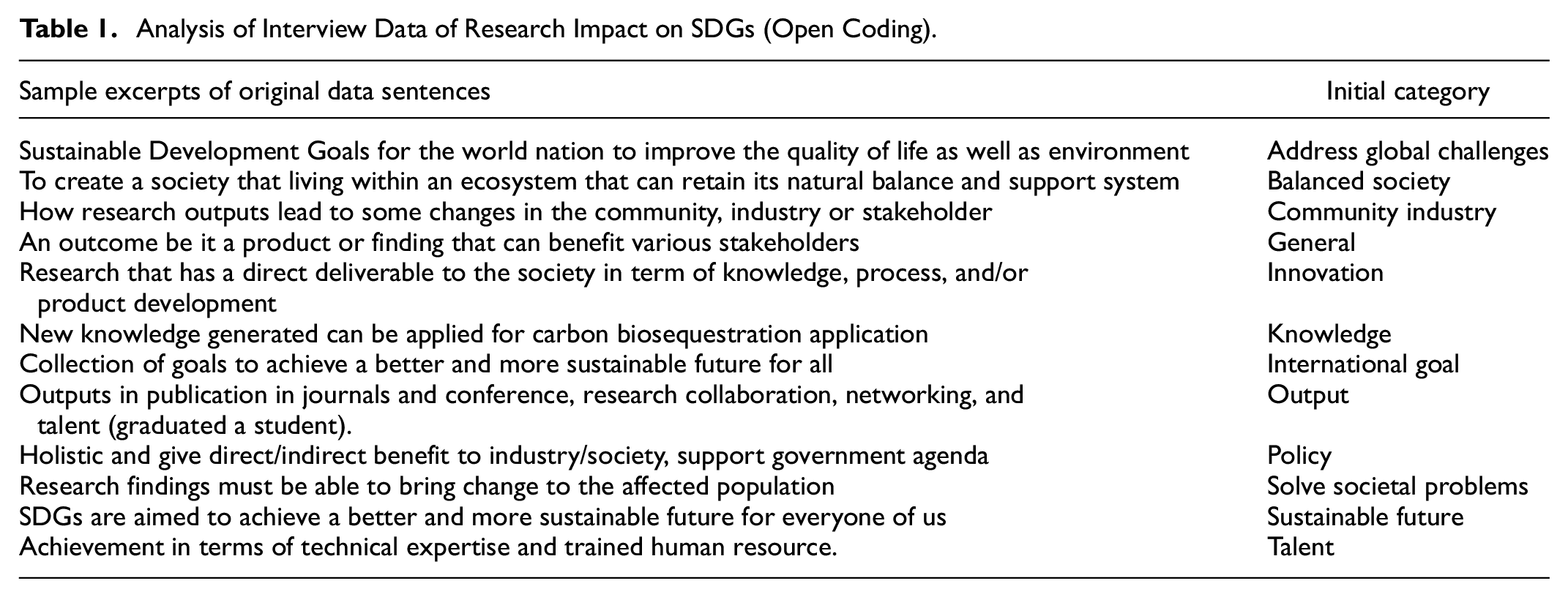
We employed NVivo 12 to conduct our thematic analysis, following Strauss and Corbin’s (1990) coding approach. The lead investigator initiated the analysis with open coding, also referred to as first-level coding, by using word text search in NVivo to identify the main research impact concepts frequently mentioned by researchers. The coding process aimed to reveal conceptual categories within the data, assign names to these categories, ascertain their dimensions and attributes, and ultimately contextualize and generalize the investigated scenario (Guo, 2022). The first-level coding led to 12 initial concept categories of research impact (Table 1).
Analysis of Interview Data of Research Impact on SDGs (Open Coding).
Axial Coding
Next, together with FGD facilitators and research officer, lead researcher performed axial coding to investigate the relationships between concepts and categories of the identified themes in the open coding process. The axial coding serves the purpose of delving deeper into the identified concept categories from the first-level coding, aiming to uncover and establish diverse connections among them.
Selective Coding
Finally, all authors, together with FGD facilitators, research officer, and other research team group of experts consisting of two team members from the School of Social Sciences, one member from the School of Education, one member from the Poison Centre and two members from the Centre for Global Sustainability Studies engaged in selective coding to validate the analysis and integrate them into research impact framework (Table 2). Following Malterud et al. (2016) data sufficiency was achieved by taking into account the study’s objective, participant sample, the quality of the dialogue and text from the Focus Group Discussions (FGD), and the data analysis approach, ensuring sufficient information was obtained. We reached saturation stage when similar context and themes emerged as we exhaust all the transcriptions.
Analysis of Interview Data of Research Impact on SDGs (Axial and Selective Coding).

Trustworthiness
Reliability and validity of the study follows trustworthiness framework by Lincoln and Guba (1986) that assess research credibility, dependability, transferability, and conformability. Various data triangulation techniques such as method, researcher, analysis, and data source triangulation were done to ensure credibility of data and analysis. Data was gathered from variety of researchers from various background and areas sourced from two main platforms that are online semi-structured survey and FGD. Three rounds of researcher triangulation were conducted during the coding and analysis stage, that also involved both inductive and deductive methods. To achieve dependability, authors ensure that the research process is properly documented. All raw data from research list, email list of researchers, responses from email, responses from online survey, FGD notes, and FGD transcriptions are organized and kept by main author and research officer for easy cross-reference of data and research process.
Impact Analysis to SDGs
Framing impact analysis follows the adapted framework from Sandes-Guimarães and Hourneaux Junior (2020) as shown Figure 2. Impacts are categorized into two general types of impact that are instrumental impact and conceptual impact. Instrumental impacts refer to direct research impact on actions, problem-solving, and decision making. Conceptual impacts refer to research impacts on knowledge, understanding and attitudes of individuals, community, or decision makers.
Research Findings
Profile of PIs and Research
The researchers involved in this study were recruited among principal researchers who have received research grants between 2015 and 2017. The researchers, recruited through purposive sampling method represents a good mixture of researchers. A total of 47 principal researchers participated in the study that include a balanced of male and female researchers and involve various schools of sciences and arts.
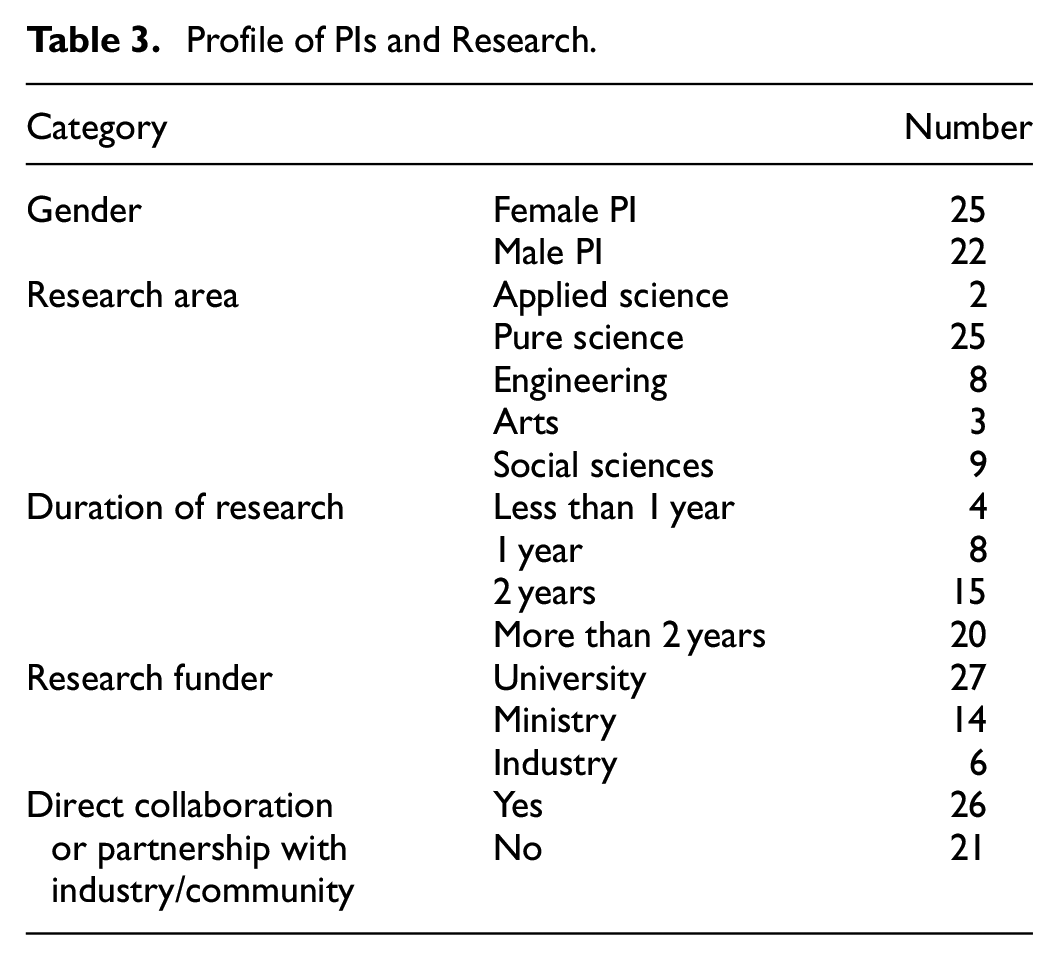
The profile of PIs and their research involved in this study is as shown in Table 3 below. There was a balance between female (53%) and male (47%) PI researchers in this study. Most researchers were from the pure science background (53%) considering USM is a science university. 19% of researchers were from social sciences, 17% from engineering and the balance of 6% and 4% were from arts and applied science, respectively. Majority of the research were conducted for more than 2 years (43%), 32% of the research was for 2 years, 17% for 1 year, and 9% was for less than 1 year. The university itself plays important role in providing research fund to its researchers with 57% of the research was funded by the university. 43% of the research received external funding from the ministry (30%) and industry (13%). To ensure we analyze data from researchers with various background, we included research that had direct collaboration and partnership with industry and community (55%) with research that was independent of any external collaboration and partnership (45%).
Profile of PIs and Research.
Mapping of Research Grants to SDGs
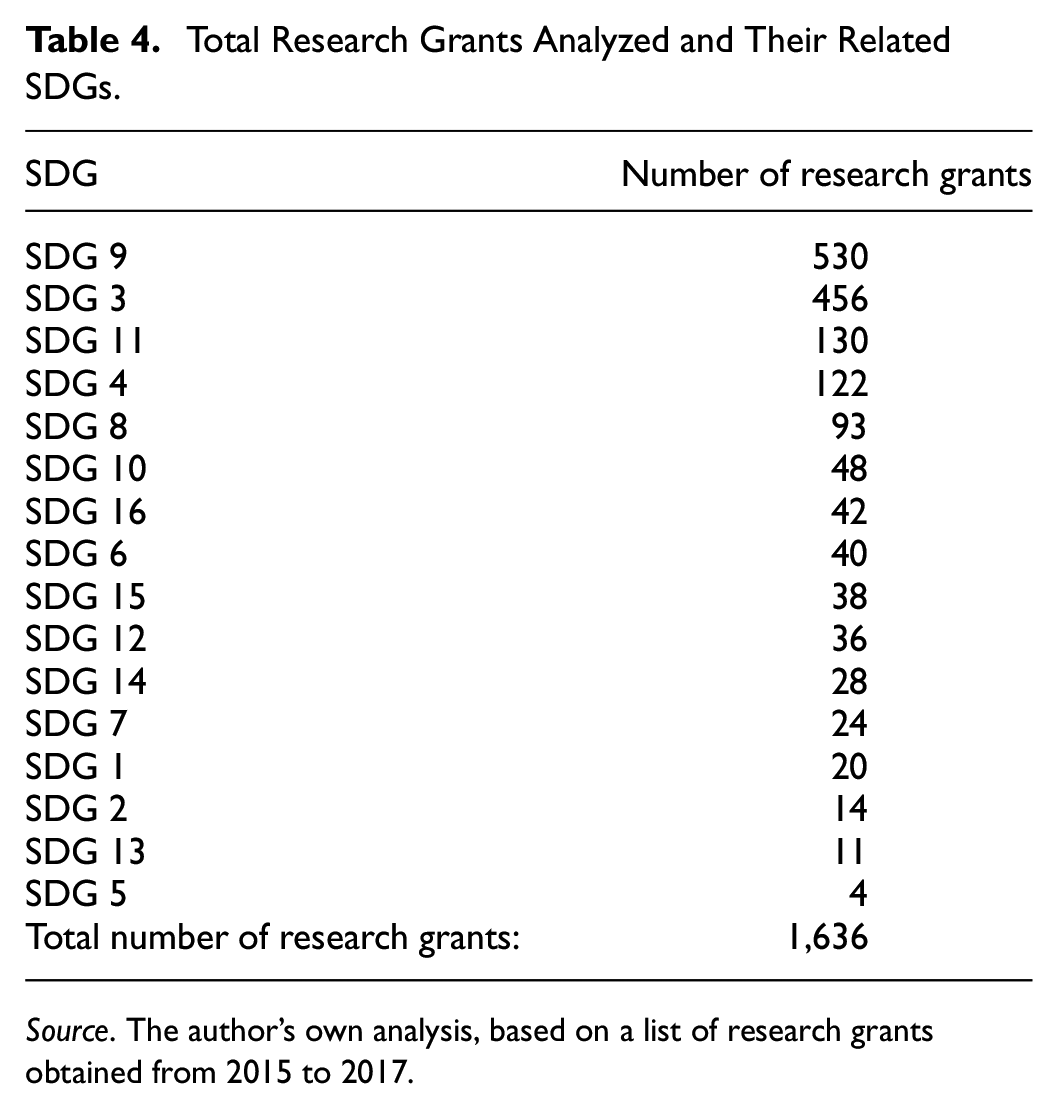
The keyword analysis aimed to identify research grants aligned with the Sustainable Development Goals (SDGs). It was concluded that SDGs 9, 3, 11, and 4 were the most researched SDGs among the PIs in USM between 2015 and 2017 (Table 4). The least researched SDG was SDG 5, with less than five research grants. The total number of research grants calculated for the SDGs was 1,636, with 141 of the research grants found to be interrelated with one or more SDGs. As can be deduced from Table 5, all SDGs are somehow interrelated with each other. The three most interrelated SDGs, with more than 100 research grants, were SDGs 9, 11, and 3. SDG 5 remains the SDG with the smallest number of interactions among all the analyzed research grants. The most interrelated SDG is SDG 8, which is interrelated with almost all of the other SDGs, indicating the importance of SDG 8 cross-cutting many issues and dimensions to enhance quality of life. The number in the table indicates the number of research grants matching the keywords for the mentioned SDGs. Numbers in the diagonal boxes in the table represent the number of research grants matching only one SDG keyword.
Total Research Grants Analyzed and Their Related SDGs.
Source. The author’s own analysis, based on a list of research grants obtained from 2015 to 2017.
Number of Research Grants and Interrelated SDGs.


Source. The author’s own analysis, based on a list of research grants obtained from 2015 to 2017.
Researchers’ Understandings of Research Impact on SDGs
Based on our findings, it is evident that researchers’ primary perceptions of the impact of research on SDGs are shaped by their understanding of the SDGs themselves. Although many participants indicated that they are aware of the 17 SDGs, how they understand them varies. The top 10 keywords of SDGs’ understandings are “future,”“sustainable,”“goals,”“better,”“development,”“global,”“life,”“environment,”“research,” and “peace.” Other keywords, among others, included “living,”“society,”“blueprint,”“challenges,”“climate,”“change,”“approach,”“community,”“humankind,”“inequality,” and “justice.” To provide a more meaningful interpretation of the generated keywords, analysis of SDG understanding is combined with the researchers’ perceptions of research impact on SDGs, which was performed using thematic analysis from the keywords. From the keywords, four major themes emerged: addressing global societal challenges and problems, research output relevant to relevant stakeholders such as community and society, future generation in terms of talent development and creation, and dissemination of new knowledge. The impacts are not standalone but rather connected and related to each other, as shown by the two-way arrows in Figure 3. These impacts are the result of the research outputs of networking, patent and commercialization, publication and citation, and students.

Understanding of research impact on SDGs.
Research Output
Impact on SDGs is regarded as intertwined with the main research outputs that are used to measure the researchers’ KPIs. The PIs who participated in this research have clear KPIs in terms of publications and numbers of graduate students. These were mentioned in the offer letter and PIs must agree to the KPIs before accepting the grant. As the PIs have already completed their research grants, this means that almost all the PIs have achieved their publication targets. Therefore, the main research outputs were regarded as part of the research impact.
The PIs acknowledged that impact is intertwined with the usual outputs of publication, students, and networking, as evident from some of their statements. For example, participant number 28 (P28) explained that “impact is what is expected from us researchers – publication, students, linkages (network) with industry and community,” and participant number 6 (P6) stated that “impact is also output measured as publication in journals and conference, research collaboration, networking and talent (graduated a student).” The PIs also agreed that the publication and networking with industry and community should be a continuous process and not a one-off activity that stops once the research grants have ended. Hence, the sustainability of research is important for research impact. One of the PIs agreed and mentioned that “Impact is researcher’s ability to proceed and continue in expanding research work and delivering (sharing) of knowledge (through publication or public talk) even when financial support on the research has ended” (P3).
General Positive Impact
Several researchers were unable to specify the type of impact of their research but acknowledged that the output and outcome of the research should lead to something positive and beneficial to the society and country.
The impact may be better established, not through quantitative measures but more qualitative evidence or the narratives it created. Some of the questions to ask include: How far has the discourse from the project created interest and action amongst academics and their partners? How has the promoted project expanded research in this area? What forms of partnership with community and industry has the project been able to establish? What social change has the project created or can potentially create? (P19)
From this statement, we could deduce that research impact includes networks formed with industry and community, expansion, the creation of new knowledge on the subject matter, and societal change that improves quality of life. Some other general views of research impacts on SDGs include the idea that “research findings must be able to bring change (positive change) to the affected population” (P14) and that “a project has an impact when it creates change to the community and society that are stakeholders of the project” (P19). Participants also felt that their “process and output of the research are genuine, relevant and useful to improve the quality of life of the targeted group of society” (P23), that “knowledge generated by research/project contributes to, benefits and influences community/society, culture and environment” (P7), and that “the output of the research contributes positively to the economy, environment, culture and society” (P30). A more comprehensive understanding of research impact was also described:
Research impact can be defined in many ways depending on the type of research. The impact can be in changing the understanding of certain concepts and pathogenesis of disease, improvement and change in government policy, change in the management of patients, improvement in quality of life, development of new drugs, modules and innovation that make a change in a patient’s life or a small community. (P5)
Solving Societal Challenges and Problems
Research engaged in at HEIs could help create a better world and a more equitable society through research grants that directly or indirectly impact the livelihood and well-being of society. This has been acknowledged by PIs who felt that “research findings must be able to bring change to the affected population” (P14) as “something that could solve an existing problem or create something that has value or tangible benefit to others” (P33). One participant (P11) also said “we want the public to know, especially the UNHCR, that USM is a university that provides an opportunity to the children of the (Rohingya) refugees in Penang.”
Relevant to Community or Industry
Partnerships that exist between researchers and industries or communities through industrial funding or community engagement activities provide an opportunity for industries and communities to benefit from the research outcomes. This was emphasized by PIs who believed that “researchers could achieve all objectives of the research, and the output and outcome research findings could be practically adopted and beneficial to the community or common people” (P38) and that there was “impact to the community in terms of improving the community’s income, enhancing their knowledge on know-how and survivorship, and improving researchers’ networking with the community and other stakeholders through various programmes and activities” (P31).
Talent Development
Training of future leaders is not only attainable through teaching and learning processes but through research via the recruitment of student assistants, graduate assistants, research assistants, and postdoctoral fellows: “Research accomplishment should go beyond knowledge attainment through publication in addition to the producing technical expertise and well-trained human resource” (P26).
Innovation in Process or Technology
Research can benefit the industry by providing up-to-date technology and innovative processes for solving current challenges of the industry and community as well as the adoption of strategies, standard procedures and methods by organizations and policymakers. This was acknowledged by some of the PIs. One PI stated that “research should be “holistic,” giving both direct and indirect benefits to industry and society, and support government agendas” (P35) while another explained that the findings of their project “can be used as a guideline for safe and clean processing for all sugarcane juice vendors and industries in Malaysia and other countries” (R21).
Creation and Sharing of New Knowledge
Some of the PIs commented on the impact on the creation and sharing of new knowledge: for example, participant 15 (P15) said of their research that “the programmes and activities conducted through this research allow participants to understand archaeological research and knowledge of the national archaeological site,” and participant 27 (P27) their “research findings could explain the current facts better and in more detail. The new knowledge created could be used for better enhancement of the current situation.”
Framing Research Impact to SDGs
From the online responses and FGD session, we gathered some lists of research grants and analyzed their impacts across the different SDGs. Research grants chosen were those that have interrelated SDGs and clear impacts. Table 6 provides a summary of the selected research impacts that cut across various SDGs. In the analysis, we divide the types of research impact into two categories: instrumental impact (direct impact) and conceptual impact (indirect impact). It could be summarized that research that contributes to organizational impact, educational impact, economic impact, environmental impact, public policies, and social impact.
Summary of Selected Research Objectives with Interrelated SDGs and Their Impacts.

In general, organizational impact has direct impact on SDG9 through innovative production such as methods of producing water efficiently, technique for the rehabilitation of concrete structure, improvement which indirectly impacting the economy in terms of scaling up the product of SPOs to enhance production. The innovation indirectly impact the economy through employment opportunities and enhanced income (SDG8), as well as adoption of sustainable materials for production (SDG11) and improving health (SDG3) and enhanced food security (SDG2).
Impact of policies are generally present in SDG3 in terms of improvement in health care, and in SDG16 and SDG17 in terms of collaborative effort among agencies and local authorities to improve the quality of lives of the vulnerable groups. Hence, these indirectly improves SDG 1 and 2 in terms of poverty and hunger as well accessibility to services (SDG10). Research that has direct impact on social impacts in terms of the transformation of societal wellbeing (SDG3, SDG5) have indirect impacts on public policy (SDG16) with regard to improvement on policy on migration issues and balanced-work environment.
A number of research focus directly on educational impacts (SDG4) giving the nature of the institution in education. The educational impacts are also linked with other SDGs directly such as SDG10 in providing opportunities to the marginalized groups such as the Rohingya in receiving education, intervention skills for mental health of adolescents (SDG3), general awareness on non-communicable disease such as cancer (SDG3), and awareness to improve livelihoods to reduce hunger through sustainable farmings. The indirect impacts of SDG4 include improvement on policy for quality education among the vulnerable groups (SDG16), improvement of health and wellbeing of vulnerable groups (SDG3), and improvement on the wellbeing of women (SDG5).
Research that has direct environmental impacts on the sustainability of life below water (SDG13, SDG 14) have indirectly influenced related policies (SDG16). Direct economic impacts from tourism entrepreneurship programs empower community and improve their income (SDG1, SDG8) and indirectly affect their wellbeing (SDG3).
Discussion
HEIs play a crucial role in imparting knowledge and skills essential for supporting the implementation of SDGs (Leal Filho et al., 2021) that requires addressing complex and interconnected societal and global issues, which cannot be accomplished through isolated research projects. A well-planned strategic approach to SDG mapping and integration would address almost all challenges brought about by the society (Pakkan et al., 2023) and lead to reformative change at HIEs (Cuesta-Claros et al., 2023). The SDG mapping exercise on USM research grants that was carried out showed that SDGs are to be attained through interdisciplinary collaboration, as the SDGs are interconnected and often require multi-faceted solutions.
Discussion on Researchers’ Understandings of Research Impact on SDGs
While the PIs showed many different views regarding research impact on SDGs, it could be concluded that everyone agreed that the outcome of any research should benefit not only researchers, in terms of measuring one’s performance, but also benefit society, industry, and policymakers. However, conventional output through publication, citation, and students remains relevant to producing impact, as it is through publication that knowledge is shared and disseminated to industry, society and the public for innovative solutions, better intervention strategies, and improved policies (Duryea et al., 2007; Edwards & Meagher, 2020; Peter et al., 2017). Many HEIs use publication in high-impact journals and citations as measures of researcher performance as well as a channel of communication with the industry (Chapman et al., 2020; Gonzalez-Brambila & Veloso, 2007; Hadjinicola & Soteriou, 2006). It is through research and publication that problem-solving and decision-making are improved in any organization to allow for a more effective intervention for enhancing well-being (Chinwe & Nancy, 2008; Powell et al., 2002).
It is further perceived that through patent and commercialization, innovation is created through which the current processes and technologies can be enhanced for better results in operations, management, and administration. Innovation is often adopted for industry (Godin & Doré, 2005). And this innovation needs to be adopted and used by industry and communities for it to be relevant to society.
Importantly, the PIs agreed that research outcomes should solve societal problems, as prescribed by the SDGs. Solving societal problems, however, involves a collaborative effort from many stakeholders and requires a solid understanding of SDG 16 on strong governance to realize the SDG targets. Hence, productive networking with communities, industry and relevant stakeholders with researchers will improve future societal impact (De Jong et al., 2014). Societal challenges and problems are not solved merely through research grants but also through the adoption of methods, applications and policies by communities, industry, and policymakers (Findler et al., 2019). The incorporation of sustainability into higher education aims to equip upcoming graduates with the necessary knowledge and skills to actively drive positive transformation towards a sustainable future (Décamps et al., 2017).
Knowledge creation through research should be motivated by the desire to affect social change rather than just the conventional research goal of advancing boundaries of knowledge and understanding (Stephens et al., 2008). This knowledge is referred to as scientific impact, where the progress of knowledge is seen in theories, methodologies, models and acts through various research activities (Godin & Doré, 2005). HEIs serve as pivotal forces in both national and international communities by leveraging influential expertise across various sectors to achieve the objectives and benchmarks of SDGs (Purcell et al., 2019). Research significantly contributes to the advancement and dissemination of knowledge, augmenting existing understanding and generating novel insights (Sulo et al., 2012). This knowledge is shared among research beneficiaries, related communities and industries, as well as other stakeholders.
Discussion on Framing Research Impact to SDGs
The impacts as perceived by researchers are supported by the impact analysis, in which the research grants have both the instrumental (direct) and conceptual (indirect) impacts. The identified interrelated SDGs and their impacts as shown in Table 6 explains the various ways that HIEs implement and achieve SDGs. The findings were similar to the HEIs contributions to SDGs as identified by Leal Filho et al. (2023). The contributions include social issues (SDG1, SDG2, SDG3, SDG5), economic aspects (SDG8, SDG9, SDG11, SDG12), and other challenges (SDG13, SDG16).
Research impact on Innovation and infrastructure development (SDG9) as found by the study contributes to the improvement of processes, technologies and working environment of an organization as basic indicators to improvement in economic conditions and physical infrastructure. The innovation is also providing an impact on public policies as emphasized by Kumar et al. (2019) that improvement on physical facilities improved public policies regarding the development and enhancement of strategies, actions, standard procedures and long-term planning, and the improved well-being of individuals, families, and the community at large . Impact on SDG9 is also linked with social impact as found by the study as supported by earlier studies of Dameri (2017) and Anthopoulos (2017) who linked innovation in sustainable cities to better governance, resolution of social issues and better urban life.
Research grants related to educational impact (SDG4) involves other positive correlations with other SDGs as what the study found and as iterated by Fonseca et al. (2020). When individuals, families and communities are well-educated and provided with appropriate knowledge and skills, they will improve their well-being and income. Knowledge will also guide individuals towards practices for sustainable living. As noted by Shulla et al. (2021), there is a strong correlation between education for sustainable development and SDGs 11 and 13. Sustainable living and practices could lead to better governance and policies from related agencies and organizations. Quality education also has an impact on other SDGs, such as enhancing employment prospects and improving quality of life (SDG 8), facilitating access to suitable housing (SDG 10), and ensuring access to clean water and sanitation (SDG 6) (Menne et al., 2020).
Research grants whose outcomes have an impact on social also affect public policies and organization. A grant that directly influences the improvement of societal well-being by comprehending the challenges faced by foreign spouses in Malaysia would also have implications for public policies and organizations, fostering the development of more effective policies and work environments. SDG 3 is not an isolated objective in sustainable development; rather, it plays a crucial role in attaining the three pillars of sustainability (society, economy, and environment) (Hill et al., 2014) through the implementation of guidelines, standard operating procedures (SOPs), and policies. SDG 3 is recognized as the critical achievement of other SDGs, and its measures can be adopted as progress measurements for the implementation of SDGs (Menne et al., 2020). Hence, it could be concluded that there should be more research concentrating on social impact, especially on SDG 3, for better progress in the other SDGs.
Research grants producing economic impact have an indirect impact by improving well-being through social impact. For example, the research grant that aims to increase the income of the Orang Asli has led to the creation of employment among the local communities. As such, unemployment rates among youth have dropped. This has led to better living conditions through employment and income. Hence, the community’s well-being increased with better economic conditions. The achievement of good health (SDG 3) is closely interconnected with SDG 8, which strives to promote decent work and foster economic growth (International Labour Organisation, 2017).
The results of the research should be followed by substantial alterations to institutional measures and structures (Chapman et al., 2020), which can influence social impact. The research with the aim of enhancing the well-being of vulnerable groups led to the development of action plans for relevant agencies, which served as blueprints for creating improved infrastructure and living conditions for these communities. Thus, the well-being of the affected communities was improved. It is through good policies and governance that well-being can be enhanced, and outcomes of research grants can guide policymakers in designing appropriate intervention strategies and policies that match the needs of individuals, families, communities, and organizations.
Practical Implications
Findings of the research offer a number of practical implications that could be adopted by HEIs and researchers. Findings of the study shows that research impact cut across the 17 SDGs that can have relevant impacts to enhance quality of life.
Therefore, it is advisable to promote the incorporation of SDGs as a framework for assessing and showcasing the practical significance of research. Higher Education Institutions (HEIs) can utilize research outcomes to align with particular SDGs and concentrate on projects or investigations that directly contribute to SDGs and overall sustainability. Comprehending the interdependence among the SDGs through research grants would aid researchers in addressing intricate social, economic, and environmental issues. As a result, researchers would gain a deeper understanding and be better equipped to communicate the potential impact of their research on both the community and the global stage.
Conclusion
The roles of HEIs have not been limited to just teaching and producing graduates but also involve productive and impactful research for a better world. Although it has been recognized that research impact could be treated and analyzed differently by different HEIs based on the priorities of different stakeholders, it was accepted that measuring their impact on SDGs would be universal, as the world has made a commitment to achieving universal goals for a better future. The 17 SDGs address global economic, social, cultural, and ecological aspects that are common worldwide through the cooperation and collaboration of several stakeholders.
Research conducted by HEIs can play a role in directly or indirectly contributing to the achievement of the SDGs, generating diverse impacts in the process. Based on the understanding of PIs on the impact of research, it is well understood that conventional research outputs of publication, citations, patents, commercialization, networking, and students are the fundamentals to producing and measuring research impacts. The culmination of research efforts must result in generating and disseminating novel knowledge that fosters innovation, leading to improved processes and technologies relevant to both industry and society. As such, such knowledge and innovations can act as breakthroughs to solving global and societal challenges and problems. Students and graduates recruited under research grants will either ensure the continuity of the research or engage in the execution of the research outcome in the real world as agents of sustainable change.
Based on lists of the research grants received by PIs in USM and from online responses and FGD sessions with PIs, the study concluded that research impacts on SDGs can either be focused on one SDG or interrelated SDGs. Understanding the various overlapping societal issues and challenges, we can see that research grants often have direct and indirect impacts interrelated with various SDGs. Each type of research impact is interrelated and connected to others, as an attempt to solve one societal problem often leads to a positive spill-over effect on other societal issues. For example, research that produces innovative strategies and technologies for an organization could lead to improvements in production as well as improvements to public police.
To ensure that research remains relevant and continues to provide a positive impact on industry and society, continuous monitoring and evaluation (M&E) are needed at the HEIs to monitor the progress and impact of research. In addition to listing the number of outputs (e.g., the number of publications or students) to be achieved in the research grant offer letter, it is important that researchers recognize the potential beneficiaries of the research outcomes. It is worthwhile to further investigate the type of innovations produced by the research. While it is understood that many outcomes of research grants for SDG 9 are prototypes, there is a need to ensure that such prototypes are tested and patented and adopted by industry for real-world application. Organizational impact is important as it leads to various positive spill-over effects on economic impact, public policy and social impact, crossing all SDGs.
As the interconnecting outcome of the three sustainability criteria of economy, society, and environment is well-being, it is worthwhile for research grants to focus on elements of well-being through the various interrelated SDGs (SDGs 1, 2, 3, 4, 5, and 17). Perhaps, a social impact assessment of research grants ought to be conducted upon completion of any research grant to assess its impact on solving societal challenges.
Study Limitations
Addressing study limitations could provide better understanding on how to use the research findings to make informed decisions on the future directions of research to achieve SDGs. One limitation is limited scope on the specific institution that is Universiti Sains Malaysia that could impact the generalizability of the findings to other HEIs and research context. Hence, extending the study to different institutions in the future could be done to validate the study findings for better generalizations. Since this is perception study, the research impact assessment may involve subjective judgements as different researchers may have perceived impacts differently. The study’s keyword classifications based on Elsevier 2021 SDG keywords might be oversimplified and limited as the keywords only refer to publications in Scopus.
Footnotes
Acknowledgements
The authors would like to thank Dr. Radin Firdaus Radin Badaruddin, Dr Normaliza Abdul Manaf and Dr Nor Asniza Ishak for their help with the data collection and validation.
Declaration of Conflicting Interests
The author(s) declared no potential conflicts of interest with respect to the research, authorship, and/or publication of this article.
Funding
The author(s) disclosed receipt of the following financial support for the research, authorship, and/or publication of this article: The research was funded by the Universiti Sains Malaysia (USM) top-down, short-term grant titled “Measuring USM Research Impact to Sustainable Development Goals (SDGs)” under grant no. 304/PSOSIAL/6315447.
Research Ethics
This study has been approved by The Human Research Ethics Committee of USM (JEPeM) under study protocol code no. USM/JEPeM/21010051.
Ethical Approval
Ethical clearance for the study was received from the Universiti Sains Malaysia’ ethnical committee

Data Availability Statement
Data sharing not applicable to this article as no datasets were generated or analyzed during the current study.