



Abstract
Social norms are informal rules governing group behavior, and they strongly motivate the formation of low-carbon purchasing habits. Drawing on Stimulus-Organism-Response theory (SOR theory), this study surveyed 499 consumers via questionnaires. This study used scales for social norms, future orientation, perceived consumer effectiveness, low-carbon purchasing intention, and collectivist culture to conduct empirical analyses. Specifically, structural equation modeling and hierarchical regression were applied to explore how social norms influence low-carbon purchasing intention and the underlying mechanisms. Additionally, the fsQCA method was used to identify configurations of antecedent variables affecting low-carbon purchasing intention. The findings are as follows: (1) Social norms positively impact low-carbon purchasing intention. (2) Social norms indirectly influence individuals’ low-carbon purchasing intention through future orientation and perceived consumer effectiveness. (3) Collectivist culture positively moderates the effect of social norms on future orientation. However, it only positively moderates the effect of descriptive social norms on perceived consumer effectiveness. (4) When social norms are absent, future orientation and collectivist culture together form sufficient conditions for the formation of low-carbon purchasing behavior.
Keywords
Introduction
As global climate change becomes increasingly severe, promoting green, and low-carbon development has become a universal consensus within the international community (L. Li et al., 2021). Against this backdrop, China’s proposed “dual carbon” goals represent not only a strategic national deployment but also a profound socio-economic transformation (Shi et al., 2022). The successful implementation of this transformation ultimately hinges on broad public participation and behavioral shifts. Low-carbon consumption is not only the end-point manifestation of carbon emissions but also a crucial lever for driving green transformation at the production stage (He et al., 2022). Residents’ willingness and behavior toward low-carbon consumption play a vital role in energy conservation, emissions reduction, improving human living environments, driving industrial upgrading, and advancing ecological civilization (Zhuang, 2021). Therefore, stimulating and guiding residents’ consumption behavior toward low-carbon models is crucial for achieving sustainable development. When consumers perceive that “most people around them are purchasing low-carbon products,” they tend to emulate this behavior to gain social recognition and a sense of group belonging. Evidently, social norms profoundly influence individual low-carbon purchasing intentions through collective identification and face culture. Clear normative guidance and community demonstrations can generate powerful peer pressure and conformity effects, internalizing low-carbon consumption as a means of gaining social recognition.
However, current research on how social norms influence low-carbon purchasing intentions still exhibits significant limitations. On one hand, most existing studies focus on the direct effects of norms on behavior, lacking systematic exploration of their underlying psychological mechanisms. On the other hand, although the role of social norms may be heavily moderated by cultural contexts, existing empirical research has yet to adequately examine the moderating mechanisms of cultural variables (Legros & Cislaghi, 2020). These theoretical gaps hinder our comprehensive understanding of the deeper logic driving low-carbon consumption through social norms and make it difficult to support the design of precise and effective public policies (Castro-Santa et al., 2023).
To address this research gap, this paper examines the intrinsic drivers of consumers’ low-carbon purchasing intentions in the Chinese context from a social norms perspective, grounded in the stimulus-organism-response (SOR) theory. This investigation lays the foundation for designing effective public policies that promote the transition toward low-carbon consumption.
Major Contributions and Innovations: First, this article reveals the unique mechanism of social norm-driven low-carbon consumption in the context of China’s collectivist culture, adding new evidence for low-carbon behavior intervention in emerging economies, and showing that “group demonstration” is more convincing in China than in the West. Second, it is helpful for the government to regulate the public with the help of social norms, exert the persuasive effect of norms, and encourage beneficial behaviors of low-carbon society, which has significant practical significance for the government to promote low-carbon consumption of the public and low-carbon marketing of enterprises.
Literature Review and Hypothesis
Literature Review
Low-carbon purchase refers to the special consumption behavior of consumers in the process of purchase, use and disposal, which is guided by low-carbon consciousness and aims at reducing greenhouse gas emissions (Q. Ma & Men, 2022). Its carbon reduction effect cannot be shown in the short term, therefore, low-carbon purchase requires people to have a long-term vision, focus on the future of the thinking mode and the confidence to change the climate environment. For example, Du and Duan (2022) studied how environmental responsibility affects consumers’ low-carbon purchase intention through the chain multiple intermediary effects of green self-efficacy and green perceived value. S. Q. Ma (2022) found that environmental commitment is an important factor affecting consumers’ green purchase intention. They used expected pride and expected guilt as the mediating variables to explore the mechanism of environmental commitment’s impact on consumers’ green purchase intention and came to the conclusion that environmental commitment has a significant positive impact on consumers’ green purchase intention.
At present low-carbon purchase intention (LPI) research focuses on two issues: the factors influencing residents’ low-carbon purchase intention and residents choose low-carbon purchase intention to guide research. The former focuses on internal factors (environmental values, self-efficacy, emotion, environmental attitudes, etc.), external factors (environmental economics, theoretical framework of sustainable development, environmental regulation, etc.) and demographic characteristics. The latter study mainly focuses on the role of social norms. Social norms are informal rules that govern group behavior. Under the “relationship” culture of Chinese society, people pay more attention to social self (Yan & Yang, 2017). They emphasize relationships with others, are more influenced by those around them, and follow social norms and rules that most people agree with. When low-carbon consumerism becomes the established content of social norms, it will directly or indirectly lead to the change of residents’ purchase intention. However, although researchers have begun to pay attention to the role of social norms in influencing consumer behavior, whether social norms can play an effective role depends not only on their content, but also on consumer reactions and social recognition. Therefore, this paper focuses on verifying the mechanism of social norms - low-carbon purchase intention. Moreover, because different social norms produce different effects, it is also necessary to determine whether descriptive or injunctive social norms play a positive role in promoting low-carbon consumption.
In addition, among all the factors affecting low-carbon consumer purchase intention, relatively few studies take culture as a regulating factor. Collectivism refers to the degree to which individuals in a society are integrated into various social groups (Sreen et al., 2018). In collectivist cultures, individuals automatically become part of close-knit social groups from the moment of birth and often have extended families. The concept of this culture is based on the idea that individual behavior should be guided first and foremost by the interests of the community (Mi et al., 2020). For example, Han (2015) and Lee (2017) conducted a study on the propensity of Korean consumers to buy green products. The study found that factors such as environmental awareness, perceived efficacy, and social impact influence Korean consumers’ propensity to buy green products. However, few studies have examined green buying intentions in developing countries and collectivist cultures. Moreover, Amin and Tarun (2020) observe that previous studies on low-carbon purchase intention mainly focus on developed countries and individualistic cultures, which highlights the need for further studies on low-carbon purchase intention in emerging economies and collectivist cultures.
Furthermore, in terms of empirical research, existing literature primarily focuses on the direct effects of social norms on low-carbon consumption behavior and their boundary conditions. For instance, Jing and Rasiah (2025) found in their study of residents in Shanxi Province that the frugality values embedded in traditional Chinese culture significantly enhance the promotional effect of social norms on low-carbon consumption intentions. This demonstrates that cultural background serves as a crucial moderating variable that can either strengthen or weaken the efficacy of social norms. H. Ma and Chen (2025) further confirmed through a sample of Tibetan youth that the driving effect of the social environment (including social norms) exhibits group specificity due to regional cultural cognitive differences, highlighting the contextual importance of moderating variables. Methodologically, structural equation modeling and regression analysis are commonly employed. For instance, C. Ding et al. (2025), grounded in social cognitive theory, constructed a structural equation model based on a questionnaire survey of 657 Chinese residents. They confirmed that social norms, as an external environmental factor, significantly enhance residents’ low-carbon consumption intentions, revealing their direct driving role. H. Li et al. (2022) employed Bayesian nonlinear structural equation modeling, demonstrating that social norms promote pro-environmental behaviors such as green production practices among farmers. This approach overcomes limitations of traditional linear models by better capturing the complexity of real-world variable relationships. However, the model excluded cultural variables, preventing assessment of social norms’ differential impacts across farmers with varying cultural backgrounds. Liu et al. (2024) employed a benchmark regression model to examine the effects of social norms, cultural orientation, and environmental affect on green behaviors. They explicitly demonstrated that descriptive social norms, prescriptive social norms, and environmental affect all exert significant positive influences on individuals’ implementation of environmental behaviors. Overall, existing research has made significant progress in revealing the influence of social norms, cultural values, and cognitive factors on low-carbon consumption behavior, laying a solid foundation for understanding the formation mechanisms of individual low-carbon behaviors. However, notable methodological limitations persist. Most studies rely excessively on traditional structural equation modeling and regression analysis, lacking systematic application of mixed-method approaches. This hinders the comprehensive revelation of complex mechanisms linking social norms and low-carbon consumption, thereby constraining further theoretical model expansion and refinement.
Hypothesis
Social Norms and Low-Carbon Buying Intentions
Social norms shape consumer willingness and behavior (L. L. Li, 2022). Normative focus theory divides social norms into descriptive social norms and injunctive social norms. Descriptive social norms show the behaviors of the majority of people in a social group. Consumers will refer to the behaviors and attitudes of the group for the purpose of integrating into the group and obtaining group identity. When individuals and groups have the same cognition, individual satisfaction will be enhanced (T. T. Li & He, 2022). Therefore, the low-carbon purchases taken by people around will influence more consumers to make low-carbon purchases; The imperative norm conveys the value judgment of social members on a certain behavior and emphasizes the evaluation of others. If an individual violates the group norm, he will be punished by the society (ostracized by group members), while if the behavior complies with the norm, it will bring pride and self-image enhancement. In order to obtain positive evaluation, consumers will increase their low-carbon purchase intention. Notably, this operational mechanism of norms, where injunctive norms act through social evaluations (e.g., labeling someone as “selfish”) and descriptive norms form a “conformity effect” based on collective cohesion, differs from how norms function in Western individualistic contexts.
Therefore, this paper puts forward the following assumptions:
The Mediating Role of Future Orientation
The future orientation describes the degree to which an individual prefers the future in their thinking (Bandura, 2005). Strathman et al. defined CFC as “the extent to which an individual considers the potential distant consequences of their current behavior and the extent to which they are influenced by these potential consequences” (Vladimir et al., 2021). Many behaviors related to the environment involve conflicts between short-term and long-term benefits. When an individual prefers the long-term benefits of a behavior, they are more likely to resist short-term pleasures, plan their future actions, and consider the long-term consequences of their behavior. Therefore, the future orientation can be introduced as a predictor of individual environmental protection behaviors. In the field of environmental research, many studies have also shown that there is a connection between future orientation and pro-environmental behaviors (Ge & Sheng, 2020). Therefore, in the context of Chinese society advocating future orientation such as “green mountains are gold and silver mountains” and “delayed gratification,” and global warming cannot see significant changes in the short term, consumers are encouraged to weaken their preference for immediate results, and prefer long-term interests of behavior, forming a future orientation. Therefore, this paper believes that when low-carbon purchasing behavior becomes the main content of social norms, more consumers will form future orientation, which will lead to the generation of low-carbon purchasing intention.
The Mediating Role of Perceived Consumer Effectiveness
Perceived consumer effectiveness refers to the degree to which consumers believe they can contribute to environmental protection through their consumption behavior. Social norms, as a kind of social stimulus, will affect residents’ perceived consumer effectiveness, and then affect their low-carbon purchase intention (Fu, 2020). When descriptive social norms show that the surrounding groups are making low-carbon purchases, they will effectively weaken consumers’ sense of powerlessness in improving the climate environment, and the information description that most people are working together to solve the global warming crisis will enhance individuals’ perceived consumer effectiveness (Strathman et al., 1994). Mandatory norms will make consumers feel that they will receive external support and respect for low-carbon purchases and bring emotional pride and anticipation, which can sublimate consumers’ mind and body in low-carbon purchases, thereby psychologically enhancing their confidence in achieving low-carbon goals through specific activities and enhancing the perceived consumer effectiveness (J. Zhang et al., 2022). Many existing studies have shown that perceived consumer effectiveness is a key factor affecting individuals’ participation in environmental protection activities and low-carbon purchasing behaviors (Z. H. Ding et al., 2022). Buyers of low-carbon products make decisions based at least in part on the expected impact their purchase will have, so higher perceived efficacy increases willingness to buy. When the perceived consumer effectiveness is low, individuals will feel powerless to take any action on global warming (Hanss & Doran, 2020). Therefore, the following hypothesis is proposed:
The Moderating Effect of Collectivist Culture
Culture is considered to be an informal institution formed through interpersonal interaction and rooted in underlying beliefs, norms, and values (Cialdini & Jacobson, 2021). As a culture with Chinese characteristics, collectivism culture is to realize mutual protection among individuals through the establishment of close team relations and individual loyalty to collective interests. Collectivist culture can influence individuals from within and thus influence their willingness to buy (Kaplan Mintz & Kurman, 2020). Collectivists usually have a strong sense of social responsibility, they are more likely to pay attention to environmental issues, are more willing to participate in environmental protection actions, and are willing to make sacrifices for collective environmental interests (Berki-Kiss & Menrad, 2022), which also makes them more inclined to choose environmentally friendly products when consuming. To achieve the collective Sustainable Development Goals (Alam et al., 2019). So the following hypothesis is proposed:
Analytical Framework
Synthesizing the above analysis, we formulated the following hypotheses and developed the research model (Figure 1).

Theoretical framework of the research.
This paper constructs the above model framework based on the SOR theory, which is more applicable to analyzing how external social norms (environmental stimuli) trigger behaviors through psychological states (such as future orientation and perceived consumers effectiveness). Common theories like TPB and VBN focus on the process of individual rational decision-making, while this paper does not emphasize the formation of individual attitudes but rather how social norms are transmitted through psychological mechanisms. Moreover, the moderating effect of collectivist culture requires the theory to be compatible with the moderation of external cultural contexts on the stimulus-psychology relationship, and the “Stimulus (S)” module of SOR (such as social norms) naturally supports this analysis. Therefore, the SOR theory is more consistent with the research design of this paper and more suitable for the interpretation system of low-carbon consumption scenarios in emerging economies.
Methodology
Research Design and Measures
In order to ensure the validity of the questionnaire, this study followed the idea of “initial development-internal diagnosis-external trial” and conducted preliminary processing of the relevant measurement instruments in terms of the accuracy of the translation of the scales, the scientificity of the presentation, and the comprehensibility of the question statements. For some English scales, the study adopted a “translation-back translation” process to ensure the accuracy of the Chinese language. Second, to ensure that the semantic content of the items was consistent with the study, the research team invited two marketing experts (professors) to check the presentation of the items. Specifically, the language expressions and discourse direction of the measurement items were finally revised. The questionnaire contains 27 items that are used to assess demographic variables, social norms, future orientation, perceived consumer effectiveness, low-carbon purchasing intention, and collectivist culture. The study employs a Likert 5-point scale, where 1 denotes “completely inconsistent” and 5 denotes “completely consistent,” to construct variable manipulation (Xin et al, 2025).
Social norm refers to the scale developed by Cheung et al. (2003) and is modified in the context of low-carbon purchase. It is divided into two dimensions: descriptive social norms and injunctive social norms, with a total of six measurement items, such as “my friends, relatives and neighbors around me think I should choose low-carbon purchase behavior.”
Future orientation draws lessons from the Future Outcome Consideration Scale developed by Feng et al. (2010), and selects five measurement items, such as “I prefer to do things that can bring more long-term benefits than things”. Perceived consumer effectiveness is based on Roberts’ research, this scale is used to measure consumers’ perception of effective information about their own behavior and their expected assessment of the impact of their behavior on the environment and it includes four measurement items, such as “What I do can have a meaningful impact on environmental issues,” of which two are scored in reverse (Roberts, 1996).
The measurement of collectivist culture was evaluated by referring to the scale studied by Sharma in 2010. The five-item scale measures an individual’s values, attitudes, and behaviors in a collectivist cultural context, such as “I will work hard for the collective goal, even if it does not bring personal recognition.”
Low-carbon purchasing intention is based on the scale developed by Chan (2001). This standard assesses consumers’ acceptance of low-carbon consumption behavior from the perspectives of low-carbon beliefs and low-carbon lifestyles, and includes four measurement items, such as “I am willing to pay more attention to low-carbon consumption trends and respond positively to low-carbon consumption.”
Data Collection and Sample Analysis
This study used a questionnaire survey to collect data, including two research stages: the first stage was a pre-survey, collected from 30/08/2024 to 10/09/2024, and 95 questionnaires were distributed through the WeChat platform, of which 80 were valid, with a valid return rate of 86.3%. The research strictly adheres to the ethical principles for human experimentation outlined in the Declaration of Helsinki and has obtained approval from the local research ethics committee. Regarding research design and risk control, the survey questionnaire does not involve sensitive personal information, psychological stress, or physical interventions. All collected data is anonymous, eliminating the possibility of privacy breaches or individual identification, thereby minimizing potential risks to participants. Regarding societal and participant benefits, this study explores the psychological mechanisms underlying low-carbon consumption behaviors. It aims to provide theoretical foundations for promoting public environmental engagement and developing evidence-based communication strategies, thereby advancing societal green transformation. Participants may also deepen their understanding of low-carbon consumption and enhance environmental awareness through the research process. The societal benefits and individual cognitive gains derived from this study far outweigh the minimal risks involved. Regarding informed consent procedures, this study employs a combined approach of explicit online notification and initial confirmation. Before the questionnaire begins, potential participants receive an online verbal explanation of the study’s purpose, content, and anonymity principle. The first question serves as a participation confirmation (“Do you understand low-carbon consumption?” and “Are you willing to participate in this survey?”). Respondents must confirm both their understanding of the research topic and their voluntary participation to proceed. Invalid questionnaires were defined by the following criteria: (1) completion time under 60 s; (2) multiple identical responses within the questionnaire. Additionally, to comply with ethical standards, minors were excluded from this study’s respondent pool.
The data analysis results show that Cronbach’s α values for all variables are greater than .6, indicating that the questionnaire’s information reliability is acceptable and the reliability test was passed. The standardized load coefficients of two items in the variable FO and one item in the variable LPI, however, are low and fail to meet the standard of .6, whereas the standardized load coefficients of all other variable items are greater than .6. As a result, these three items are removed. After deletion, the reliability and validity were assessed once more. The reliability and validity of each variable are good: DSN (Cronbach’s α = 0.765, AVE = 0.538, CR = 0.776), ISN (Cronbach’s α = 0.755, AVE = 0.512, CR = 0.748), Future Orientation (Cronbach’s α = 0.767, AVE = 0.594, CR = 0.814), PCE (Cronbach’s α = 0.764, AVE = 0.541, CR = 0.780), LPI (Cronbach’s α = 0.739, AVE = 0.532, CR = 0.772), CC (Cronbach’s α = 0.755, AVE = 0.548, CR = 0.783). All variables had a Cronbach’s coefficient greater than .6, the standardized load coefficient was greater than .6, the combined reliability (CR) was greater than .7, and the average variance extraction was greater than .5, indicating that this study had good convergence validity. As a result, the measurement scale formed after adjusting the questionnaire was reliable in terms of reliability and validity.
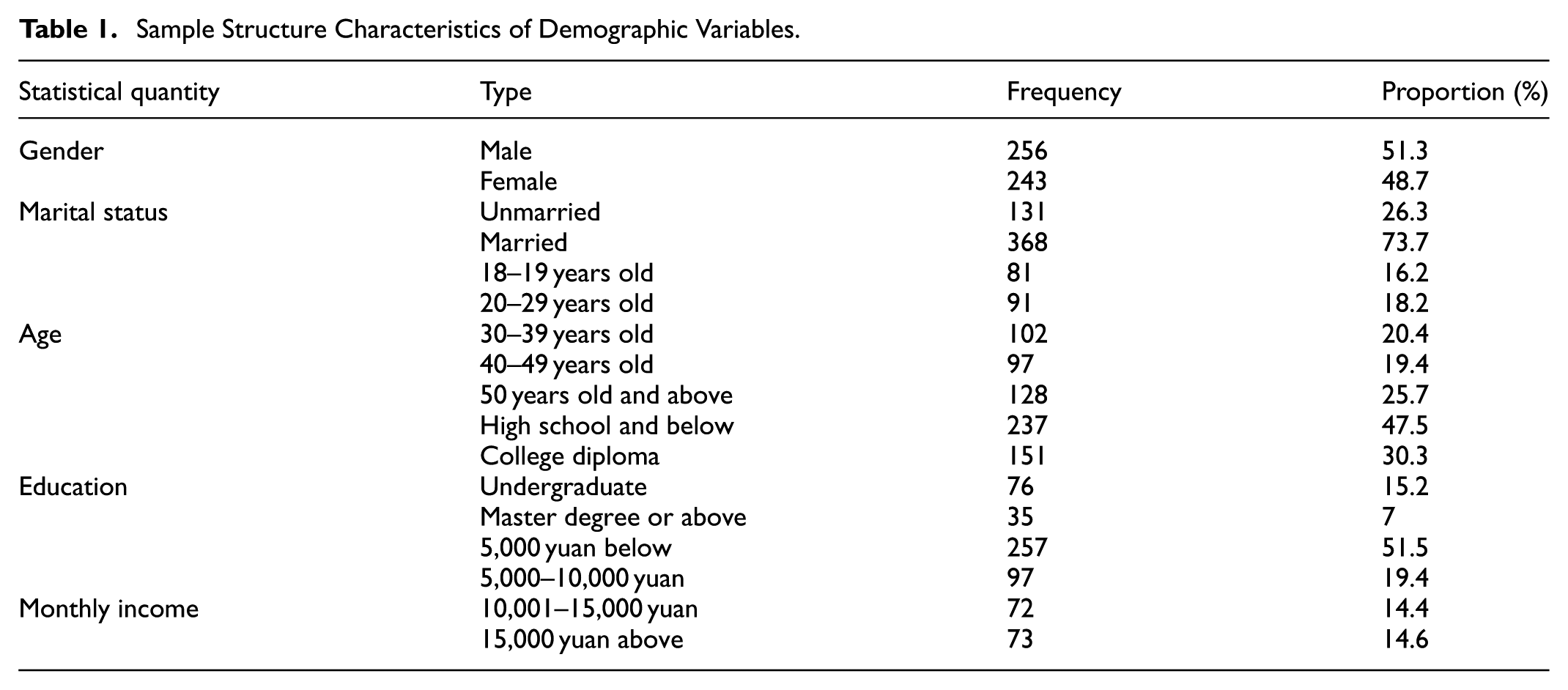
The second phase was the formal investigation, conducted from September 20, 2024 to November 20, 2024. To mitigate concerns about common method bias, we collected data at two different time points. At Time 1, we gathered demographic information, social norms, and low-carbon purchase intention. Three weeks later, at Time 2, we collected data on future orientation, perceived consumer effectiveness, and collectivist culture. The data from the two time points were matched using the last four digits of the participants’ ID cards, and participants could choose whether to report these digits. If they chose not to, their responses were discarded. The formal survey also used an online survey, with questionnaires distributed via the Credamo platform. Non-probability sampling methods, namely snowball sampling and quota sampling, were adopted for distributing and collecting questionnaires on internet platforms. Quota sampling was stratified based on gender, age, and income structures from the latest National Bureau of Statistics demographic report to ensure the sample’s distribution across key socioeconomic characteristics closely matched the national population composition. Snowball sampling leveraged Credamo’s online survey network to expand sample coverage. Respondents were drawn from 28 of China’s 32 provincial-level administrative regions, including Guangdong, Shandong, Shanxi, and Yunnan. A total of 600 questionnaires were collected, with 499 valid responses yielding an effective recovery rate of 83.2%. According to the 2023 China Statistical Yearbook, males constitute 51.1% of the national population while females account for 48.9%; individuals under 40 years old represent approximately 45.6% of the total population; and the median monthly disposable income per capita stands at approximately 4,663 yuan. In this sample, males constituted 51.3% and females 48.7%; respondents under 40 years old collectively accounted for 54.8%; and the median monthly income fell within the 4,500 to 5,000 yuan range. Thus, the sample closely aligns with national population characteristics in key indicators such as gender, age, and income structure, demonstrating considerable representativeness and value for extrapolation. For an example of a description, see Table 1.
Sample Structure Characteristics of Demographic Variables.
Common Method Deviation Test
Because this study adopts the form of self-report, there may be common method deviation among variables. Therefore, the questionnaire survey process is controlled by anonymous survey, partial use of reverse items, and emphasizing that there is no right or wrong way to fill in the questionnaire. Using one-factor confirmatory factor analysis, the common method deviation test was carried out for all self-evaluation items. The results showed that the model fitting was very poor, χ2/df = 7.632 > 3, RMSEA = 0.132 > 0.05, GFI = 0.679 < 0.9, AGFI = 0.611 < 0.9, CFI = 0.673 < 0.9.
Empirical Analysis and Hypothesis Testing
Reliability and Validity Test
The reliability and validity of the scale were tested by SPSS25.0 and AMOS 25.0 software. All variables showed good reliability, validity: DSN (Cronbach’s α = 0.797, AVE = 0.572, CR = 0.796), ISN (Cronbach’s α = 0.862, AVE = 0.676, CR = 0.862), FO (Cronbach’s α = 0.810, AVE = 0.589, CR = 0.811), PCE (Cronbach’s α = 0.819, AVE = 0.541, CR = 0.823), LPI (Cronbach’s α = 0.847, AVE = 0.652, CR = 0.849), CC (Cronbach’s α = 0.816, AVE = 0.600, CR = 0.818). Cronbach’s α coefficients of all latent variables were higher than the critical value .7, indicating that the reliability of the scale was good.
The results of the validation factor analysis showed that the standardized loading coefficients of the observed variables for each latent variable were greater than 0.6, the combined reliability (CR) values for all variables ranged from 0.79 to 0.86, and the average variance extracted (AVE values) ranged from 0.54 to 0.67, indicating that this study had good convergent validity. Validity analysis is used to express the accuracy of the measurement scale, and the study uses the classic scale, which has good content validity after revision. The test results for discriminant validity are shown in Table 2. Table 2 shows that the square root of AVE of each construct is greater than the correlation coefficient between itself and its latent variables, implying that the research scale has good discrimination validity.
Discriminatory Validity Test Results.

Note. The data on the diagonal of the table is the square root of the AVE value of each latent variable, and the other data are the person correlation coefficient between each latent variable.
Model Fit Test
The fitness of the structural model was tested by Amos 25.0 software. The investigation of the estimation shows that the absolute fitness index of the whole model is χ2 = 260.34, χ2/df = 2.74 < 3, RMSEA = 0.059 < 0.07, GFI = 0.942 > 0.9, RMR = 0.069 < 0.08. NFI = 0.928, TFI = 0.940, CFI = 0.953, all greater than 0.9. PNFI = 0.735, PGFI = 0.658, both greater than 0.5. All the fitness indexes meet the standard of index fitness, which shows that the structural model in this study has good fitness and can be tested.
Main Effects Test
The results show that in SN, the direct effects of DSN (β = 0.146, p < 0.05) and ISN (β = 0.227, p < 0.001) on LPI pass the significance test, and they play a positive role in driving LPI, assuming that H1a and H1b are verified. In addition, DSN (β1 = 0.224, p < 0.001. β2 = 0.244, p < 0.001) and ISN (β1 = 0.337, p < 0.001. β2 = 0.223, p < 0.001) can have significant direct and positive effects on FO and PCE respectively, and can indirectly affect LPI through FO (β = 0.254, p < 0.001) and PCE (β = 0.108, p < 0.05).
Mediated Adjustment Effect Test
This study used hierarchical regression analysis to take into account all of the control variables (see Table 3). Gender, marital status, age, education level, and disposable monthly income were added as control variables in stratified regression. DSN in model 1 and model 4 (β1 = 0.100, p < 0.001. β2 = 0.127, p < 0.001) and ISN (β1 = 0.248, p < 0.001. β2 = 0.233, p < 0.001) has a significant positive impact on FO and PCE respectively. Model 7 shows that DSN (β = 0.208, p < 0.001) and ISN (β = 0.300, p < 0.001) have significant positive effects on LPI. FO (β = 0.266, p < 0.001) and PCE (β = 0.186, p < 0.001) in Model 8 and Model 9 have positive effects on low-carbon purchasing intention, and DSN (β1 = 0.174, p < 0.001. β2 = 0.179, p < 0.001) and ISN (β1 = 0.236, p < 0.001. β2 = 0.266, p < 0.001) is still significant, indicating that FO and PCE play a partial mediating role in the influence of social norms on LPI, assuming that H2 and H3 are supported. In model 10, CC (β = 0.408, p < 0.001) has a significant positive impact on LPI, assuming that H6 is verified.
Results of Hierarchical Regression Analysis.

and ** in the table indicate the significance levels of 1% and 5% respectively.
As shown in Table 3, education level has a significant positive impact on future orientation, indicating that the higher the educational background, the stronger the future orientation. According to Models 4, 5, and 6, disposable monthly income has a significant positive impact on the perceived consumer effectiveness, and consumer income level is an important factor influencing perceived consumer effectiveness. In models 7, 8, and 9, gender (male = 0, female = 1) has a significant impact on the low-Carbon purchasing intention, indicating that women’s low-carbon purchasing intention is significantly different from that of men, and women’s low-carbon purchasing intention is stronger under the influence of social norms.
In order to further test the intermediary effect, referring to Hayes’ research results (Hayes, 2017), the process program in spss25.0 was used to test the multiple indirect effects of FO and PCE. Set bootstrap to sample 5,000 times, construct a 95% confidence interval, and calculate the indirect effect under the condition of multiple mediations. The test results of intermediary effect are shown in Table 4.
Test Results of Intermediary Effect.

As can be seen from Table 4: DSN → FO → LPI path has the highest effect value, β = .0979, and the 95% confidence interval is [0.0547, 0.1498], excluding 0, indicating that the mediation effect is significant and H2a is established. ISN → FO → LPI path is β = .0532, and the 95% confidence interval is [0.0268, 0.0842], which does not include 0, indicating that the mediation effect is significant and H2b is established. The β = .0665 of DSN → PCE → LPI path, and the 95% confidence interval is [0.0349, 0.1074], excluding 0, indicating that the mediation effect is significant and H3a is established. The β =0.0899, and the 95% confidence interval [0.0503, 0.1364], excluding 0, indicates that the mediation effect is remarkable and H3b is established.
This means that the mediating effects of future orientation and perceived consumer effectiveness on social norms and low-Carbon purchasing intention exist concurrently. Furthermore, the indirect effect value of future orientation is greater in the influence path of descriptive social norms, indicating that descriptive social norms are more likely to change people’s orientation toward the future in a subtle way, thus stimulating consumers’ willingness to buy low-carbon, and its role is more significant than enhancing consumers’ low-carbon beliefs. In the influence path of injunctive norms, the indirect effect value of perceived consumer effectiveness is greater, indicating that injunctive social norms can stimulate consumers’ low-Carbon purchasing intention by increasing their confidence in solving climate and environmental problems, which is more significant than the intermediary role of future orientation.
Adjustment Effect Test
This part employed hierarchical regression to examine the moderating effect of the Collectivist culture in the relationship between descriptive social norms and injunctive social norms on future orientation and perceived consumer effectiveness. If the regression coefficient of the interaction between independent variables and moderating variables passes the significance test in the data analysis results, it indicates that the moderating effect of moderating variables is significant.
As shown in Table 3, in terms of future orientation, the regression coefficients of the interactive items of collectivist culture, descriptive social norms, and command norms are all positive in Model 2 and Model 3, and they all pass the significance test (β1 = .129, p < .05; β2 = .073, p < .001), which shows that collectivist culture plays a positive role in the influence of descriptive social norms and injunctive social norms on the future orientation. Assuming that H4a and H4b are verified, that is, assuming H4 is established. In model 5, the regression coefficient of the interaction between collectivist culture and descriptive social norms is positive, and the significance test (β = .16, p < .05) shows that collectivist culture plays a positive regulatory role in the influence of descriptive social norms on perceived consumer effectiveness, assuming that H5a is verified. However, the regression coefficient of the interaction between collectivist culture and injunctive norms failed the significance test in Model 6, indicating that the moderating effect of collectivist culture on the relationship between injunctive norms and perceived consumer effectiveness does not exist, assuming that H5b is not verified.
This study used a simple slope test, as suggested by West (Aiken et al., 1991), to specifically verify the regulatory role of collectivist culture, as shown in Figure 2.

Test of the moderating effect of social norms. Moderating role of descriptive/injunctive norms on future orientation (FO)-related relationships (grouped by doctrine of the mean level): (a) Descriptive norms (FO → FO), (b) Descriptive norms (FO → perceived consumer effectiveness), (c) Injunctive norms (FO → FO), (d) Injunctive norms (FO → perceived consumer effectiveness).
As shown in Figures 2(a) and (b), for descriptive social norms, when collectivist culture is high, the simple slope of the influence of descriptive social norms on future orientation and perceived consumer effectiveness is greater than that under the condition of low Collectivist culture, that is, with the improvement of Collectivist culture, the future orientation and perceived consumer effectiveness of descriptive social norms are significantly higher than those of consumers with low Collectivist culture.
As shown in Figure 2(c), for injunctive social norms, when the degree of collectivist culture is high, the simple slope of the impact of injunctive social norms on future orientation is greater than that under the condition of collectivist culture; that is, with the improvement of collectivist culture, the increase in future orientation is significantly higher than that of consumers with low collectivist culture.
According to Figure 2(d), for injunctive social norms, when values of the mean are high, the simple slope of the influence of injunctive social norms on perceived consumer effectiveness is parallel to the slope under the condition of low values of the mean, that is, the moderating effect of values of the mean is not significant at this time.
Qualitative Comparative Analysis of Fuzzy Sets
Since SEM focuses on linear causal relationships between variables, quantifies the direct and indirect effects of social norms on low-carbon purchase intention through path coefficients, and emphasizes the sequential influence paths of individual variables, it is difficult for it to capture complex interaction effects. This paper introduces the fsQCA method to identify the synergistic effects of multiple variable combinations from a configurational perspective, and to reveal various path combinations that trigger high purchase intention. At first, the original values (average scores) of six variables—DSN, ISN, FO, PCE, CC, and LPI—were transformed into a set of three membership scores (between 0 and 1) to define complete membership, complete non-membership, and intermediate points. Because this study uses a 5-point Likert scale, we chose 4.0 (generally consistent), 3.0 (uncertain), and 2.0 (inconsistent) as the calibration parameters of complete membership, intermediate point, and complete non-membership based on previous research (Yadav et al., 2019), and fsQCA 3.0 software was used for the analysis.
Second, the analysis of necessary conditions was tested to see if there are any causal conditions that can be considered necessary for the result’s existence or non-existence (behavioral intention). If the consistency score exceeds 0.90 (Gong & Sun, 2021), the condition is considered “necessary.” FO (consistency = 0.913) and PCE (consistency = 0.902) are required conditions for a high level of LPI, as shown in Table 5. This demonstrates that FO and PCE are required for high-level behavioral intentions.
Necessity Analysis of Conditions.
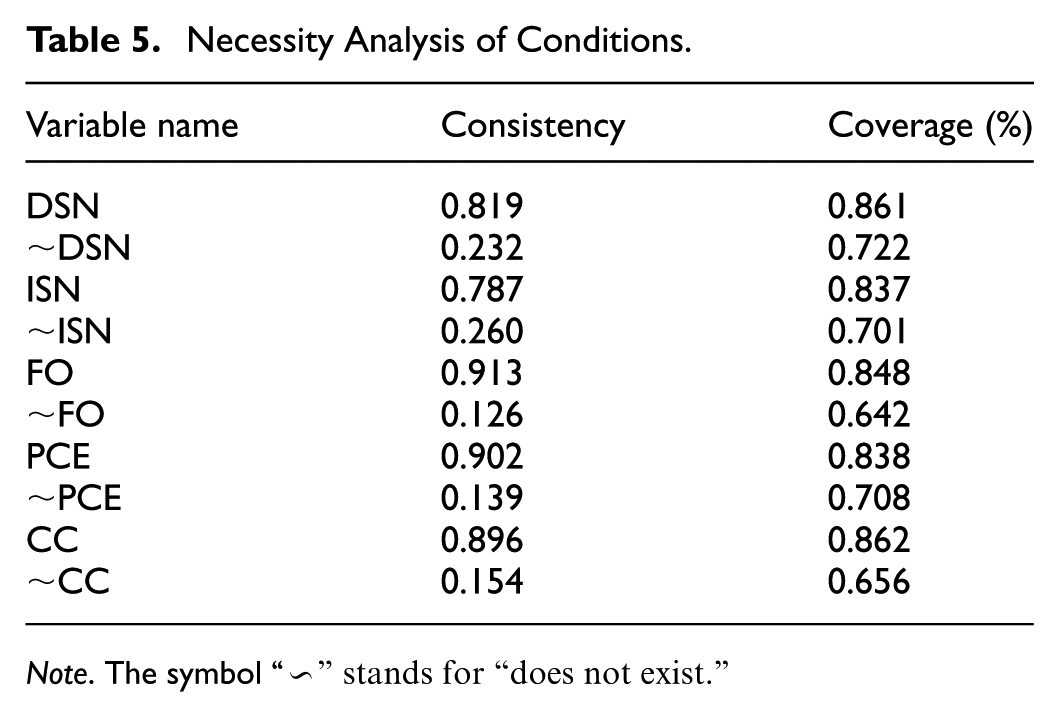
Note. The symbol “∼” stands for “does not exist.”
Finally, we can detect various causal configurations that lead to the level of low-Carbon purchasing intention using sufficient condition analysis. Using the fuzzy set algorithm, a truth table was generated from the calibration value. The original consistency threshold was set to 0.80, the case frequency threshold was set to 3, and the PRI consistency was ≥0.75. Given the results’ rationality and moderate complexity, this paper opted for the intermediate solution to explain them. Table 6 depicts the antecedent variable configuration of the final consumer’s low-carbon purchasing behavior intention. Where indicates that the condition appears, indicating that the condition does not appear, and spaces indicate that the condition variable can exist or not. As shown in Table 6, the overall coverage rate of the results with high (LPI) is 0.825, and the overall consistency is 0.881, indicating that the model is well explained.
Antecedent Variable Configuration of Consumers’ Low-Carbon Purchasing Intention.

As shown in Table 6, there are five paths to triggering low-carbon purchasing behavior. Further examination of the intermediate solution reveals that SN variables are present in both configurations S1 and S2, with configuration S1 representing the emergence of SN, FO, and CC. For SN, FO, and PCE, configuration S2 appears. The consistency of the S1 and S2 configurations is greater than 0.9, and the original coverage rate is 0.611 and 0.600, respectively, indicating that the two configurations can explain 61.1% and 60% of the cases, respectively.
Configuration S3 is the appearance of FO, PCE, and CC, with the highest consistency of 0.894 and original coverage of 0.761 among all configurations, indicating that the combination of the three is a sufficient condition to affect the LPI, and the intermediary role of FO and PCE has been confirmed again. Configuration S4 is the appearance of DSN, PCE, and CC, with a consistency of 0.889 and original coverage of 0.692, confirming the combined function of DSN and PCE, as well as the significant influence of DSN on people’s behavioral will. FO and CC appear in configuration S5, but SN do not. The consistency is 0.944, and the original coverage rate is 0.11, accounting for only 11.1% of the cases and belonging to individual cases.
This configuration demonstrates that future orientation and collectivist culture are sufficient conditions to influence low-carbon purchasing intention in groups who are unaware of social norms.
Discussion
The Impact of Social Norms on the Low-Carbon Purchasing Intention
This study conducts an empirical study on the influence mechanism of social norms on the low-carbon purchasing intention, and discusses the intermediary role played by future orientation and perceived consumer effectiveness, as well as the regulatory role of pro-environmental self-identity. In terms of research content, unlike previous literature, which mostly studied the influence of social norms on individual behavior as a whole concept and analyzed the direct effect of social norms on individual behavior (X. Zhang & Ye, 2018), this paper divided social norms into two dimensions: descriptive social norms and injunctive social norms, and analyzed and verified the influence of different types of social norms on the occurrence of low-carbon purchasing intention, which promoted the perfection of existing research. This study discovered that descriptive social norms and Injunctive social norms in social norms can positively promote low-carbon purchasing intention, that is, the behavior and evaluation norms of the groups around consumers (S) will cause changes in the individual’s internal psychological state (O), specifically, confidence in the long-term orientation of the future and the solution to the climate environment, thus promoting consumers’ low-carbon purchasing intention (R).
The Mediating Role of Future Orientation and Perceived Consumer Effectiveness
The study’s findings confirm that social norms can influence future orientation and perceived consumer effectiveness. Social norms are one of them. In comparison to descriptive social norms, injunctive norms have a greater influence on future orientation. Injunctive social norms will guide people to form long-term orientations and attach importance to long-term interests, whereas implicit descriptive social norms have a weaker effect. The study’s innovation lies in its discovery that future orientation partially mediates the influence of social norms on low-carbon purchasing intention, indicating that social norms can not only directly affect low-carbon purchasing intention, but also indirectly affect low-carbon purchasing intention through future orientation. The stronger the social norms, the clearer the future orientation values that consumers perceive society to promote, the more they can derive pride, happiness, and self-realization from carbon reduction, the easier it is to form future orientation, weaken the pursuit of short-term interests, stimulate consumers’ awareness of climate and environmental issues, and then promote their low-carbon purchasing intention.
Furthermore, social norms can positively influence perceived consumer effectiveness, and there is little difference between descriptive social norms and injunctive social norms. Descriptive social norms increase people’s perceived consumer effectiveness by reducing their sense of powerlessness in protecting the climate and environment. injunctive norms promote people’s belief in low-carbon environmental protection by describing how implementing low-carbon purchasing behavior will garner social support and positive evaluation, thereby improving the effectiveness of consumer perception. This study confirms that perceived consumer effectiveness plays a partial mediating role in the influence of social norms on low-carbon purchasing intention. The stronger the social norms, the easier it is for consumers to establish pro-environmental beliefs or cognition, which affects people’s confidence in implementing low-carbon environmental protection willingness, and perceived consumer effectiveness will further stimulate their low-carbon purchasing intention.
The Moderating Role of the Collectivist Culture
According to the findings of this study, the greater the degree of the collectivist culture, the greater the positive influence of social norms on future orientation. When an external factor such as social norms stimulates the body, it interacts with individual values, and people with different value orientations will have different judgement on objective things, as well as different changes in their psychological state. When the value of the collectivist culture is strong, individuals will be more sensitive to the description information of low-carbon purchase in social norms, have more global awareness, and have a deeper understanding of the negative consequences caused by non-compliance with norms. Therefore, it is easier to form long-term value thinking.
Only descriptive social norms are positively moderated by the collectivist culture in terms of perceived consumer effectiveness, and the moderating effect on injunctive norms is insignificant. The reason for this could be that, while injunctive norms express clear requirements, Table 3 shows that average disposable monthly income is also an important factor influencing perceived consumer effectiveness. As a result, in the path of injunctive norms affecting perceived consumer effectiveness, the role of the collectivist culture will be affected by personal consumption power, resulting in insignificant regulatory effect. In the path of descriptive social norms influencing perceived consumer effectiveness, descriptive social norms describe the information that people around individuals are implementing low-carbon purchasing behavior, and consumers will agree that they have similar economic levels with people around them, and then choose to form low-carbon purchasing intention, so they are not affected by average monthly income at this time, and the adjustment effect is remarkable.
Configuration Analysis Based on fsQCA
According to the findings of the fsQCA, perceived consumer effectiveness and future orientation are required conditions for the emergence of low-carbon purchasing intention, indicating that their existence is required for high-level low-carbon purchasing intention. According to the configuration analysis, there are five paths that can trigger low-carbon purchasing intention. Configurations s1 and s2 are combined with future orientation, perceived consumer effectiveness, and the collectivist culture to affect the low-carbon purchasing intention when social norms appear, and the coverage rate of both configurations is about 0.6, explaining about 60% of the cases. Configuration S3 is the emergence of future orientation, perceived consumer effectiveness, and the collectivist culture, with the highest coverage rate and consistency close to 0.9, indicating that the combination of the three is sufficient to affect low-carbon purchasing intention. Configuration S5 includes future orientation and collectivist culture, while social norms do not appear, the consistency is 0.944, and the original coverage rate is 0.11, which only explains 11.1% of the cases. It demonstrates that future orientation and the collectivist culture are sufficient conditions to influence low-carbon purchasing intentions in groups who are unaware of social norms.
FsQCA and SEM findings complement each other effectively. SEM focuses on validating linear causal relationships and mediating pathways among variables. This study employs path analysis to confirm that social norms exert significant direct and indirect effects on low-carbon purchase intention through future orientation and perceived consumer efficacy, revealing the sequential role of psychological mechanisms within the “S-O-R” chain. Meanwhile, fsQCA adopts a configurational perspective to identify multiple combinations of antecedent variables leading to high or low carbon purchasing intentions—addressing the configurational question of “under which variable combinations high or low carbon purchasing intentions emerge.” It generates five configurational clusters (S1–S5), further confirming that social norms, future orientation, perceived consumer efficacy, and collective cultural views jointly influence low-carbon purchasing intentions, aligning with SEM findings. However, fsQCA offers a unique discovery: within the S5 combination, even in the absence of social norms, the pairing of “future orientation + collectivist culture” remains a sufficient condition to trigger high intentions. This breaks through SEM’s limitation of focusing solely on net effects, complementing SEM research outcomes.
Conclusion and Enlightenment
Research Conclusion
(1) This paper uses the SOR theory and empirical analysis to prove that social norms (descriptive social norms and injunctive social norms) have a direct positive impact on low-carbon purchase intention, that is, the stronger the social norms, the stronger the individual’s low-carbon purchase intention.
(2) Social norms indirectly affect low-carbon purchase intention through two major pathways: future orientation (FO) and perceived consumer effectiveness (PCE). Specifically, both descriptive norms and injunctive social norms can not only directly promote low-carbon purchase intention, but also indirectly stimulate the generation of low-carbon purchase intention through future orientation and perceived consumer effectiveness. Moreover, for descriptive social norms, the mediating role of future orientation is more important than that of perceived consumer effectiveness; for injunctive social norms, the mediating role of perceived consumer effectiveness is more important than that of future orientation.
(3) Collectivist culture strengthens the impact of social norms on future orientation and perceived consumer effectiveness, and has a positive moderating effect. In addition, collectivist culture positively moderates the impact of descriptive social norms on perceived consumer effectiveness, that is, the higher the degree of collectivist culture, the stronger the positive promoting effect of descriptive social norms on perceived consumer effectiveness.
(4) Future orientation and perceived consumer effectiveness are necessary conditions for influencing individuals’ low-carbon purchase intention. Furthermore, in the absence of social norms, future orientation, and collectivist culture are sufficient conditions for the formation of low-carbon purchase behavior. Consumers with higher education levels have a stronger future orientation. Perceived consumer effectiveness increases with the increase in average monthly income.
Research Suggestion
Based on the above research conclusions, to stimulate consumers’ low-carbon purchase intention, promote the continuous development of low-carbon purchasing, and achieve the “dual-carbon” goals, this paper puts forward the following targeted suggestions:
Recommendations for Government Departments:
(1) Enhance the effectiveness of social norm dissemination by having subdistrict offices regularly collect and publish low-carbon behavior data within their jurisdictions. For example, post monthly updates on community bulletin boards with specific metrics such as “80% of households in this subdistrict now use energy-efficient lighting.” Collaborate with local television stations to produce special programs featuring energy-saving households sharing their experiences. Real-life case studies can reduce public unfamiliarity and feelings of helplessness toward low-carbon living.
(2) Leverage the collectivist cultural context by organizing “Quarterly Low-Carbon Community Competitions” through neighborhood committees under the community grid management system. Establish uniform scoring criteria, including waste sorting accuracy rates and year-on-year reductions in household electricity consumption. Award qualifying communities with rotating red flags, display competition results on community honor boards, and organize energy-saving experience-sharing events for winning households.
(3) Provide clear, long-term oriented information on low-carbon benefits. Establish low-carbon benefit exhibition zones in public education venues, using text and graphics to visually demonstrate the long-term value of emission reduction actions. For example, install interactive exhibits in science museums that use data visualization to show the correlation between “today’s emissions reduction” and “future healthcare cost savings,” with professional guides providing scientific interpretations.
Recommendations for Businesses:
(1) Emphasize the role of social norms in marketing strategies and actively employ descriptive norms. For example, clearly label user demographic data on product packaging and in advertising; initiate “responsible consumer” discussions on social media platforms; invite existing customers to share their experiences, fostering positive interactive communication.
(2) Align communication approaches with collectivist values by linking low-carbon purchasing to collective benefits. Collaborate with community property management to establish “Low-Carbon Contribution Leaderboards,” converting residents’ energy-efficient purchases into accumulative community points. Install electronic displays at neighborhood entrances showing real-time rankings, offering tangible rewards like property fee discounts to the top 10 households monthly.
(3) Provide quantifiable, tangible evidence of individual impact. Embed real-time calculation modules on product detail pages to display carbon savings per purchase. Partner with platforms like Alipay to develop “Carbon Footprint Ledger” features, showcasing cumulative personal emissions reductions via line graphs with goal-tracking alerts. Offer exclusive coupons to users reaching predetermined cumulative savings thresholds.
Research Limitations
This study may have certain endogeneity issues, mainly reflected in the following three aspects: First, the model may omit key variables that simultaneously affect social norms (SN) and low-carbon purchase intention (LPI); second, core variables such as social norms and future orientation rely on self-report scales, which may lead to subjective measurement bias; third, the sample coverage does not reach the national level, which may result in insufficient representativeness. To enhance the rigor of the research, future studies can make improvements in the following aspects: trying to find appropriate exogenous instrumental variables to address endogeneity issues, adopting reverse item design to reduce measurement bias, and further expanding the sample coverage to enhance the external validity of the conclusions. These improvement measures will help improve the reliability and universality of the research results.
Furthermore, different product categories may have different effects on social norms, future orientation, and perceived consumer effectiveness, and thus on low-carbon purchasing behavior. Further research can be conducted to investigate how the various characteristics of various product categories influence the formation of consumers’ low-carbon purchasing intention.
Footnotes
Acknowledgements
We extend our sincere gratitude to the participants who generously devoted their time to this study—especially the survey respondents, whose thoughtful inputs form the core foundation of our findings.We are also deeply thankful to the anonymous reviewers of Sage Open: their rigorous, constructive comments have significantly sharpened the clarity of our arguments, refined our analytical framework, and elevated the overall quality of this manuscript.

Ethical Considerations
The study was approved by the Ethics Committee of Xinhua Hospital Ethics Review Committee of Dalian University (approval number: 2024-79-01) on August 28, 2024. Respondents were consented by an informed consent process that was reviewed by the Ethics Committee of Dalian university and certify that the study was performed in accordance with the ethical standards as laid down in the 1964 Declaration of Helsinki.
Consent to Participate
Informed consent was obtained from all subjects involved in the study. The consent process was conducted through online oral inquiries, supplemented by the first two questions in the questionnaire: “Do you understand low-carbon consumption?” and “Are you willing to participate in this survey?” Only those who answered affirmatively to both questions were included in the study, with their responses to these questions serving as formal documentation of their voluntary participation.
Author Contributions
Shuang Wang: Investigation, Methodology, Data curation, Validation, Formal analysis, Writing—original draft. Jinxiao Liu: Methodology, Conceptualization, Software, Writing—original draft. Yafei Luo: Editing, Investigation, Data curation. Lingling Zhang: Investigation, Data curation, Supervision.
Funding
The authors received no financial support for the research, authorship, and/or publication of this article.
Declaration of Conflicting Interests
The authors declared no potential conflicts of interest with respect to the research, authorship, and/or publication of this article.
Data Availability Statement
The datasets generated during and/or analyzed during the current study are available from the corresponding author on reasonable request.