




Abstract
The study investigates the effects of smart city pilot policy (SCPP) on energy-saving and emissions-reduction (ESER) in urban areas of China. Using smart pilot cities in three batches in China since 2012 as quasi-natural experimental subjects and the time-varying Difference-in-Differences (DID) method, the study reveals that the ESER ramifications stemming from the implementation of SCPP manifest themselves as follows: energy saving increased by 1.7%, emission decreased by 5.3%, and the effects continue to enhance over time. This conclusion is still robust in multi-dimensional situations such as the placebo test and propensity score matching with Difference-in-Differences (PSM-DID). In addition, the ESER effect of SCPP has a significant dynamic effect and spatial spillover effect. The mechanism analysis reveals that smart cities can achieve ESER through industrial restructuring (front-prevention), energy efficiency improvement (process control), and green technology innovation (end treatment). Further heterogeneity analysis indicates that ESER effects of SCPP are more significant in central cities, non-old industrial-based cities, and non-resource-based cities. The study demonstrates the significance of smart city construction in achieving ESER goals from the perspective of a low-carbon economy and provides valuable insights for the coordinated development of intelligent, energy-saving, low-carbon, and green cities in developing countries.
Plain Language Summary
China is striving to achieve sustainable development and reduce carbon emissions. Smart city construction is seen as a key strategy to achieve these goals. This study investigates the impact of smart city pilot policies implemented in China since 2012 on energy saving and emissions reduction in urban areas. The study found that smart city initiatives led to a 1.7% increase in energy saving and a 5.3% decrease in emissions, and these positive effects continue to grow over time. This indicates that smart city development is a significant driver in accelerating China’s energy efficiency and emission reduction efforts. Furthermore, the study reveals that the impact of smart city policies varies across different types of cities. Central cities, non-traditional industrial cities, and resource-based cities tend to experience more significant energy saving and emission reduction benefits. This research highlights the importance of smart city construction in achieving China’s sustainable development goals and provides valuable insights for developing countries seeking to build intelligent, energy-efficient, low-carbon, and green cities.
Keywords
Introduction
China’s rapid urbanization, while attracting global attention for its progress, has resulted in environmental issues like energy consumption, carbon emissions, and pollution (Shan et al., 2025; Wu et al., 2021). Sustainable urban development is a priority for researchers and governments. Cities consume 75% of global resources and produce 60% to 80% of greenhouse gases. Regional economic growth, energy efficiency, and emissions reduction show geographical patterns (Huang & Liu, 2017). Therefore, understanding how cities can promote energy-saving and emissions-reduction (ESER) and achieve sustainable development is crucial (J. Wang, An, et al., 2023). The urban ecological environment’s complexity, stemming from information asymmetry, poses a significant challenge to effective environmental management. ESER is recognized as an effective approach to expedite the transition toward sustainability (López et al., 2023; Nie & Lee, 2023). Research on ESER primarily centers on influential factors and implementation approaches, particularly concerning industrial structure (Hao et al., 2023), technological advancements (Ai et al., 2024) environmental regulations (L. Lv & Chen, 2024), and foreign investment (Wen et al., 2015). For urban areas, the promotion of energy conservation and emission reduction to achieve sustainable development is of paramount significance. Thanks to the rapid progress and extensive adoption of information technology, internet technology has enhanced energy efficiency (Ishida, 2015). As the importance of information technology in environmental governance and oversight increases, its prominence has also risen (J. Zhang et al., 2019). In response to this, China introduced the Smart City Pilot Policy (SCPP) in 2012, aiming to promote social development through enhanced regional cooperation, technological innovation, and innovative solutions to urbanization-related challenges (Z. Yan et al., 2023). In order to support green, low-carbon, and sustainable urban development, smart city building aims to safeguard the environment and resources while still addressing the demands of economic growth (Lee, Wang, Lou, & Wang, 2023).
The profound integration of information technology and urbanization, symbolizing advanced information technology development, forms the cornerstone of the smart city concept (Yu & Zhang, 2019). Smart city development has the potential to enhance energy resource utilization (Y. Chen, Chen, et al., 2024), foster technological innovation, enable intelligent production control, and accelerate the transition to a more environmentally friendly economy (J. Chen, 2023; L. Wang, Shao, & Ma, 2023; Xu et al., 2025). Furthermore, smart city development can facilitate cross-industry and regional environmental data sharing, enhancing environmental regulation efficiency and reducing regulatory expenses (Niu et al., 2013). However, some scholars hold contrasting perspectives, arguing that the Internet has not led to significant reductions in energy consumption or efficiency (Salahuddin & Alam, 2016). Therefore, a thorough investigation is necessary to fully grasp the potential synergies resulting from the integration of ESER initiatives with smart city development empowered by digital technologies such as information technology, IoT (Internet of Things), and big data. Currently, some scholars are researching the impact of policy implementation on energy conservation and emission reduction, including the assessment of the effectiveness of policies like the smart city pilot policy (K. Chen, Li, et al., 2024; Cui & Cao, 2022; K. Gao & Yuan, 2022; Jiang & Sun, 2025; J. Tang & Li, 2024), from an emission reduction standpoint (Xu et al., 2025). For instance, the DID technique was employed to assess the effects of carbon dioxide emissions trading on PM2.5 and industrial pollutant emissions (Fan et al., 2025; Shen et al., 2025). Previous studies have analyzed the influence of smart pilot city policies on emissions reduction, laying a robust research groundwork for this study. The majority of scholars have investigated the impact of information technology or the Internet on economic growth, carbon emissions, and energy consumption. Despite China’s digital economy and commitment to sustainability, a unified research framework examining smart city development’s impact on ESER is lacking (Yi et al., 2024) Evidence on smart cities’ urban-level impact on ESER in China is limited. This study investigates China’s SCPP’s impact on ESER, contributing to innovative environmental governance. Furthermore, considering that the development of smart cities breaks traditional physical boundaries, its diffusion effect strengthens the exchange of information and resource sharing between regions, promotes remote work to reduce commuting-related carbon emissions, and consequently forms cross-regional innovation networks (Dian et al., 2024; W. F. Liu & Lu, 2024), reducing the overall carbon footprint (Škare et al., 2024). Through collaborative effects, it enhances the production efficiency of regions within the network, facilitates the dissemination of knowledge and technology, and enables cross-industry collaboration, allowing for precise control of resource usage, such as in smart grids and circular economies, significantly reducing energy consumption and carbon emissions (D. Yan et al., 2025; X. Zhang et al., 2024). Therefore, it is essential to further explore the potential spillover effects based on the relationship between smart city growth and ESER, providing insights for sustainable development.
This study’s novelties include: Firstly, integrating smart city development and ESER within a comprehensive research framework, providing insights into their interconnected mechanisms. Secondly, considering the “Metcalfe’s Law” of smart city development, which states that the value of a network is proportional to the square of the number of nodes, exhibiting increasing marginal network spillover effects, the impact of smart city development on urban energy conservation and emissions reduction may also exhibit spatial spillover effects. Therefore, investigating the tangible impacts and spillover effects of smart city development on ESER, aligning with the objectives of the Ministry of Housing and Urban-Rural Development (MHURD) for SCPP. Utilizing Chinese data, the study employs quasi-experimental DID and spatial econometrics, validating results through robustness assessments like placebo tests and propensity score matching with Difference-in-Differences (PSM-DID). This study is organized as follows: Section 2 — Mechanism Analysis and Research Hypotheses analyzes the mechanisms of smart city development on ESER, Section 3 — Research Design covers model development and data interpretation, Section 4 — Empirical Analysis and Discussion presents the estimation results, and Section 5 — Conclusion, Policy implications and Directions for future research provides recommendations and policy implications.
Mechanism Analysis and Research Hypotheses
The Direct Effect of SCPP on ESER
SCPP has an essential impact on ESER. Firstly, smart city construction helps to alleviate the issue of information asymmetry, promote technological innovation (Z. Wang & Hao, 2024), increase productivity, reduce environmental pollution, and encourage development that balances economic growth with ecological preservation (C. Lv et al., 2022). The creation of smart cities may effectively combine numerous information resources thanks to the Internet of Things, big data, and information technology (S. Yang et al., 2024), alleviate the problem of information asymmetry, effectively obtain market demand information, and reasonably optimize the use of energy and resources. By promoting factor mobility in innovation, bolstering green innovation capabilities, and advancing technology, the costs associated with pollution emissions can be mitigated, concurrently resulting in less environmental contamination (Yokoo et al., 2023).
Secondly, the development of smart cities makes it easier to improve energy efficiency and lower energy use. The utilization of the Internet and big data technology aids both enterprises and governments in the efficient management of resources, encourages intelligent energy management, and improves energy utilization and efficiency (P. Chen & Dagestani, 2023; F. Dong, Li, Li, et al., 2022). Furthermore, the progression of smart cities has accelerated the use of clean and sustainable energy sources, including wind power and solar power.
Thirdly, by encouraging the development of a green economy, reducing negative environmental effects, and furthering the preservation of the ecological environment, the progression of the smart city helps restructure the economic structure. In general, industrial development leads to pollution emissions, and when an industry holds a larger share of the national economy, it tends to produce more pollutants. Thus, the industrial structure has a notable influence on ESER (Antoci et al., 2018). Smart city development encourages the advancement of digital technologies like big data and artificial intelligence (AI). This hastened the rapid expansion of the digital industry and its integration with traditional sectors (Y. Chen, Chen, et al., 2024; Qian et al., 2021), resulting in a decrease in energy-intensive production capacity and a reduced environmental impact of industrial production (J. Gao et al., 2023).
Fourthly, smart city construction provides more advanced equipment and technology for environmental monitoring and management, which enables enterprises and governments to grasp the ecological monitoring situation in a timely, efficient, and dynamic manner and quickly formulate, implement, and adjust environmental governance decisions. Furthermore, it also facilitates the provision of public services and policy information to encourage public engagement in environmental protection. It promotes participation in environmental conservation activities, expands the scope of citizen involvement in environmental monitoring, and advances efforts in energy conservation and pollution control (Ruijer et al., 2023).
Fifth, the advancement of smart cities facilitates the preservation of energy and the reduction of emissions through improved public services and advancements in eco-friendly technologies. For instance, smart transportation systems have the capability to improve traffic flow and diminish the release of detrimental substances as well as carbon emissions (Moretto et al., 2022; Zawieska & Pieriegud, 2018). Overall, through the above five ways, smart city construction is highly instrumental in promoting energy conservation and mitigating emissions (Yi et al., 2024).
Moreover, as a result of the spatial correlation and geographical clustering of regional energy savings and emissions reduction efficiency (Huang & Liu, 2017), the construction of smart cities may have spatial spillover effects on surrounding cities while promoting their own ESER. Regional pilot policy implementation might have geographical spillover effects on city air pollution management. (J.-Y. Liu et al., 2021). The implementation of pilot policies on a regional scale can be conducive to advancing ESER in the surrounding cities. Surrounding city enterprises can emulate the ESER behaviors of pilot city enterprises, and the demonstration effect of this kind of ESER can facilitate the promotion of ESER in surrounding cities. In conclusion, SCPP may have an impact on ESER in terms of spatial spillover. Consequently, this study posits research hypothesis 1 based on this premise.
The Mediating Effect of Smart City Construction on ESER
To further investigate the mechanisms through which smart city pilot policies can impact urban ESER, this study delves into the deep layers from three perspectives: “front-prevention,”“process control,” and “end treatment,” to explain the influence mechanism by which smart city pilot policies exert an impact on energy preservation and emissions curtailment (Guo et al., 2022; Shu et al., 2023; F. Wang, 2023; Z. Wang & Hao, 2024). These outcomes are related to the industrial structure, energy utilization, and development of green technologies, respectively.
Drawing on the research of W. Gao and Peng (2023), a theoretical foundation is proposed in this study to examine how smart cities affect ESER. This theoretical derivation serves as a complementary component to our overall analysis. For further specifics, please refer to the following details.
“Front-Prevention”: Industrial Structure Effect
ESER and the rise of smart cities are strongly related. Through the lens of “front-prevention,” the construction of smart cities exerts an influence on ESER by influencing the industrial structure.
The term “structural transformation” pertains to the alteration in the distribution of production and workforce within individual sectors resulting from the movements and rearrangements of factors between different sectors. The ratio of output between any pair of industries can be represented as follows.

Assuming labor mobility across sectors, when the labor market reaches equilibrium, wages become equalized across all sectors. Based on the research of W. Gao and Peng (2023), we can deduce the following:

Moreover, we can deduce the following:


Hence, changes in the labor or output proportions of the various product sectors are affected by the pace of technical development within each sector, denoted as Δ. Different levels of smart city development result in differing rates of technology advancement across industries, thereby leading to a structural transformation.
Regarding the industrial structure effect, implementing the SCPP has improved urban network infrastructure construction. It encourages new industry development by optimizing production factors and reducing traditional sector transaction costs, thereby promoting industrial structure upgrading (Q. S. Ma et al., 2021). Smart city development promotes industrial upgrading through several key mechanisms. First, it fosters the growth of new information technology-based industries, such as the Internet, big data, and AI, by driving the construction of new urban network infrastructure (Z. Wang & Hao, 2024). Second, smart city development accelerates the movement, and recombination of labor, investment, and innovation components through the use of digital technologies (J. Tang & Li, 2024; Y. Tang et al., 2023),directing resources toward eco-friendly and low-carbon sectors with competitive advantages (Rasool et al., 2022; Stamopoulos et al., 2024). Finally, the connectivity and sharing features of smart cities enhance industrial division, and reduce transaction costs, facilitating industrial structure upgrading. Relevant research has shown that improving industrial structure can contribute to a reduction in energy use and pollutant emissions (Cheng et al., 2018, 2022; Xiong et al., 2019). To be more specific, the enhancement of industrial structure will facilitate the concentration of novel Internet-based sectors, diminishing the share of conventional high-emitting industries, trimming down energy usage, and mitigating environmental contamination, for instance, air pollution (Qiao et al., 2022). Additionally, optimizing industrial structure can reduce energy use and pollution, such as atmospheric contamination (X. Yang et al., 2019). Therefore, this study proposes hypothesis 2a.
“Process Control”: Energy Utilization Effect
The development of smart cities and ESER are closely related. From the “process control” perspective, the development of smart cities influences ESER by affecting energy use performance.
ESER can be achieved in the design of smart cities by increasing energy utilization effectiveness. Research conducted earlier has indicated that intelligent urban policies have augmented energy efficiency by approximately 4.5% (Yu & Zhang, 2019). Firstly, smart city construction enables many traditional industries to undertake reforms and development in an eco-friendly and more efficient manner. For example, with the construction of smart cities, many traditional service businesses have been transformed into network services, significantly reducing energy consumption, increasing the effectiveness of energy use, and accomplishing the ESER goal (Deng et al., 2022). Smart city construction fosters the emergence of environmentally conscious and energy-efficient industries. With the rise of sectors like cloud computing, businesses are actively improving energy consumption efficiency, developing eco-friendly products and technologies, and achieving energy conservation and emissions reduction goals. Smart city development also stimulates the growth of energy automation management enterprises, promotes interconnectivity within the supply chain, and accelerates sustainable advancements in the energy sector. For example, big data technology can reduce costs associated with developing automatic energy management systems, enabling corporations to optimize energy consumption efficiency and achieve energy conservation and emissions reduction targets (Ren et al., 2022). Hence, one of the efficient methods for carrying out smart city development and attaining ESER objectives is to improve energy efficiency (K. Liu et al., 2023). Therefore, this study proposes hypothesis 2b.
“End Treatment”: Green Technology Innovation Effect
There is a direct link between the growth of smart cities and the decrease in emissions and energy use. When seen from the “End treatment” perspective, promoting green technology innovation enables the influence of smart city development on ESER (Arsiwala et al., 2023).
According to W. Gao and Peng (2023), investments in smart city construction have the potential to bolster the efficiency of factor utilization and encourage improvements in technological development and research (Jiang & Sun, 2025). Technology research & development’s efficiency can be quantified as a function of the extent to which smart city construction and its associated technologies are implemented within the industry.

Where κ,
Let

The rate of technical advancement growth in the industry i, denoted as


The growth of smart cities can increase the effectiveness of industrial research and development (R&D)
In addition to enhancing energy utilization efficiency, the development of a smart city can also achieve ESER by fostering innovation in green technology (Guo et al., 2023; Lee, Wang, & Chang, 2023). Firstly, the development of smart cities enhances the growth of urban network infrastructure, fosters the widespread adoption of digital technology, accelerates the transmission of information (Jiang & Sun, 2025; K. Liu et al., 2023; Z. Yan et al., 2023), raises the green technologies innovation, and improves ESER activities. As smart city construction continues to progress, numerous businesses are starting to use digital technology to track and evaluate energy use in real-time, enhancing the ability to reduce pollution and carbon emissions (Makov et al., 2023). Green innovation generates dual positive externalities, specifically, knowledge transfer and environmental protection (Ben Arfi et al., 2018). Secondly, smart city construction incentivizes enterprises to actively pursue the development of energy-efficient, eco-friendly products and technologies, thereby promoting green technology innovation (H. Chen et al., 2023; Qiu, 2023). This helps reduce traditional fuel use, reduce carbon emissions, and achieve sustainable development. For instance, smart grids and energy-efficient buildings are examples of new technology that can help reduce pollution and carbon emissions. In summary, building smart cities encourages the development of green technology innovation in the energy industry, achieving the objectives of ESER. Leveraging cloud computing and big data enables intelligent energy management, saving costs, boosting R&D for green technologies, reducing carbon emissions, and mitigating negative environmental impacts (Meshulam et al., 2022). In light of the above, when building smart cities to support ESER, green technological innovation is crucial. Accordingly, this study puts forth hypothesis 2c.
Drawing on the comprehensive analysis above, we put forth a theoretical framework for examining the influence of SCPP from three dimensions: the industrial structure effect, the energy utilization effect, and the green technology innovation effect. This framework is illustrated in Figure 1.

Research framework.
Research Design
Model Setting
Using the SCPP as a quasi-natural experiment, this study builds on the theoretical analysis. To determine the effect of the pilot policies on ESER, the time-varying DID model is used (Wei et al., 2022).

Equation 9:
In addition, this research utilizes the PSM-DID approach for robust estimation, which involves the subsequent procedures: first, applying PSM to identify a control group that closely resembles the experimental group in terms of characteristics; second, utilizing the matched experimental and control groups to perform DID regression. The particular model can be expressed as follows:

Variable Description
Dependent Variables
Energy Intensity and Carbon Emission Intensity
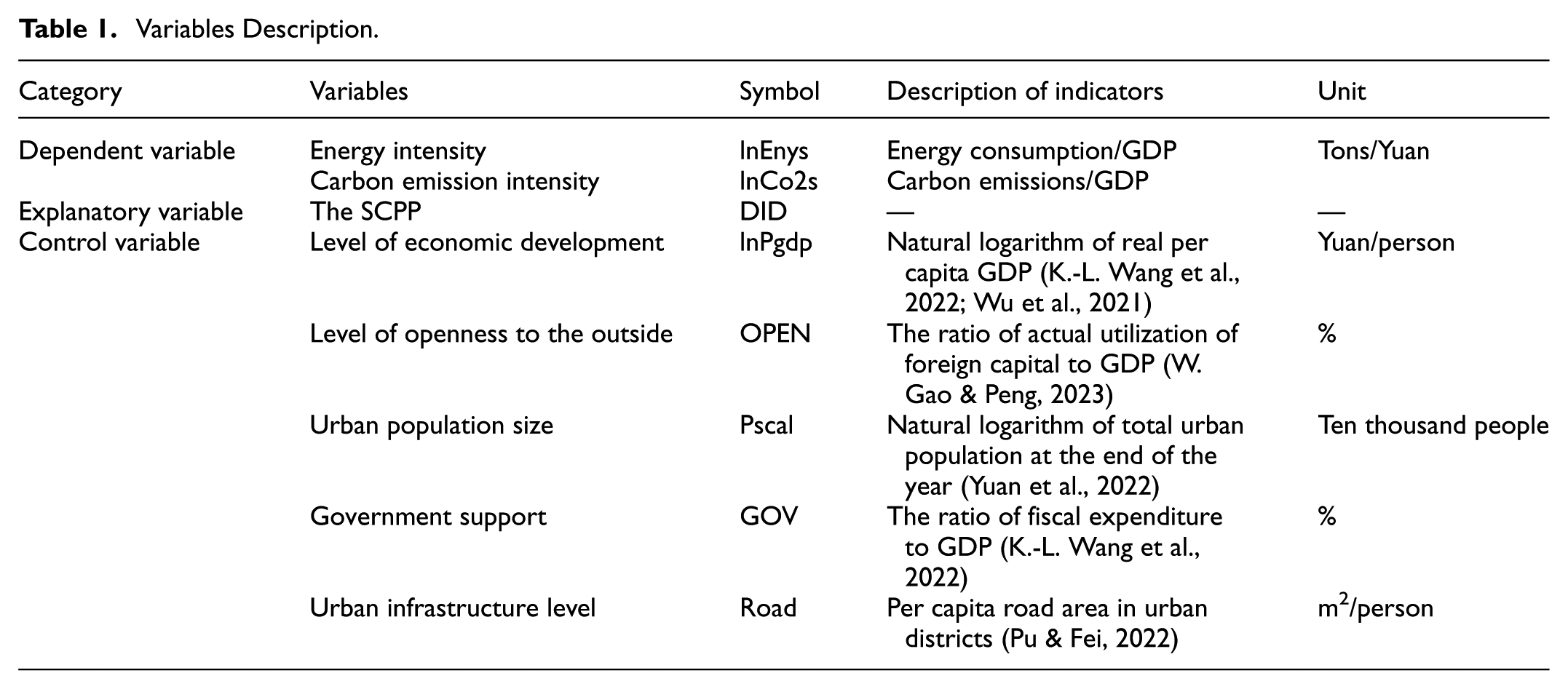
Energy consumption intensity: This study selects the natural logarithm of the ratio of total energy consumption (10,000 tons of coal) to regional GDP (10,000 yuan) to represent energy intensity (lnEnys) (Q. Ma et al., 2022; L. Zhang, Mu, et al., 2022). Energy intensity is one of the dependent variables used to examine the energy-saving effect of smart cities. In addition, the natural logarithm of total energy consumption is selected to measure the energy scale (lnEny) for the robustness test.
Carbon emission intensity: This study adopts the carbon emission calculation formula presented by the Intergovernmental Panel on Climate Change (IPCC), which estimates carbon dioxide emissions utilizing the methods outlined in Volume 2 of the 2006 IPCC National Greenhouse Gas Inventory Guidelines. This research selects eight fossil fuels, namely coal, coke, crude oil, gasoline, kerosene, diesel, natural gas, and fuel oil, to compute the carbon emissions in each region.
Supposing that all fossil fuels have been completely combusted, the approach for approximating carbon dioxide emissions is as follows:

Where:i represents the city, t means the year, and j describes various energy sources.
Based on this, the carbon emission intensity (lnCo2s) was chosen as one of the main explanatory variables. In addition, the carbon emission scale (lnCo2) was examined to assess the robustness of the carbon reduction effect of smart cities (Li et al., 2021; Z. Yang et al., 2022).
The Explanatory Variable
The SCPP (DID)
The MHURD introduced the SCPP initiative in 2012 (Guo et al., 2022; Shuang & Zheng, 2024). The initial group of pilot cities consisted of a total of 90, including 37 cities at the prefecture level, 50 districts (counties), and three towns. Subsequently, in August 2013, the MHURD designated an additional 103 cities (districts, counties, and towns) as the second batch of pilot cities, including the Beijing Economic-Technological Development Area and Yangquan City. The following year, 84 cities (districts, counties, and towns), including Mentougou District in Beijing, were designated as newly added smart city pilot cities for 2014. The core explanatory variable in this article is the SCPP (DID = treat × post). Here, “treat” is a virtual group variable. If it is a pilot city, it is set as the experimental group, and “treat” is assigned a value of 1. Otherwise, it is specified as the control group, and “treat is given a value of 0. “Post” is a virtual time variable, with a value of 1 for the policy implementation year and afterward and a value of 0 otherwise. Since the study sample only includes prefecture-level cities, some smart cities with county-level or district-level areas have been removed, along with cities with severe data gaps. The final sample consists of 99 pilot cities.
Control Variables
Based on existing research, this study controls for variables that may influence urban energy conservation and emissions reduction (K. Liu et al., 2023; M. Yang & Liu, 2023).
Government support (GOV). Following Wang et al. (2022), the ratio of fiscal support to GDP is used as an indicator. This variable reflects the government’s institutional capacity for intervention in environmental protection and low-carbon transformation, serving as an important dimension of urban governance effectiveness. On the one hand, it directly promotes energy conservation and emissions reduction in enterprises through subsidies, green credit, environmental taxes, and emissions trading markets; on the other hand, it enhances overall energy efficiency through public infrastructure construction and policy guidance.
Economic Development Level (lnPgdp). This study uses per capita GDP as the indicator (Wang et al., 2022; Wu et al., 2021), which reflects the stage of urban economic development and is closely related to consumption structure.
Degree of openness (OPEN). Following W. Gao and Peng (2023), this variable is measured as the ratio of actual foreign direct investment to GDP. It serves as a key indicator of the environmental effects of technology spillovers and pollution transfer. Cities with higher openness may attract advanced green technologies and management practices but may also become “safe havens” for pollution transfer, reflecting the potential external influences of the institutional environment.
Urban Population Size (Pscal). This study uses the total population at the end of the year as the indicator, serving as a basic load indicator for cities. Population size simultaneously determines the total energy consumption and the absorption capacity for low-carbon infrastructure. On one hand, population growth can lead to increased energy consumption and carbon emissions; on the other hand, it can also bring about scale effects such as the expansion of public transportation and the centralized use of energy, thereby reducing the intensity of emissions per unit.
Urban infrastructure level (Road). This study uses per capita road area as an indicator (Pu & Fei, 2022), which serves as a representative metric for urban transportation infrastructure and has a significant impact on urban energy consumption and carbon emissions. On the one hand, an increase in road area may stimulate growth in motor vehicle ownership, thereby increasing transportation energy consumption. On the other hand, higher per capita road area may alleviate congestion and improve transportation efficiency, thereby partially reducing unit energy consumption. Therefore, this variable reflects both the “urban scale economy” effect and the “transportation efficiency” logic, making it an important control variable in carbon emissions models (S. Wang et al., 2018).
The categories, definitions, symbols, units, and other information related to these main variables are shown in Table 1.
Variables Description.
Sample Selection and Data Sources
The green patent application data for this study is sourced from the Incopat patent database. The patent search was based on information such as the IPC Green List classification number, city of origin, and application time. Other data at the city level, such as urbanization population, GDP, fiscal expenditure, and road area, are sourced from the “China City Statistical Yearbook,”“China Energy Statistical Yearbook,” and China Stock Market & Accounting Research Database (CSMAR). In addition, to maintain the integrity and reliability of the data, the study made the following adjustments to the sample:
First, it excluded cities in Hong Kong, Macao, and Taiwan, as well as cities with severe data gaps. The reasons can be summarized as follows: On the one hand, in terms of data availability and completeness, some cities have serious deficiencies in statistical indicators and data, which may lead to biased results after data processing. On the other hand, in terms of research objectives and scope, this study focuses on regional research within mainland China. Considering the unique economic systems and policy environments of Hong Kong, Macao, and Taiwan, which differ from those of mainland China, the data from these regions may have limited relevance to the research theme, potentially introducing bias into the overall results. To ensure the research findings remain focused and precise, the data from Hong Kong, Macao, and Taiwan have been excluded from the analysis.
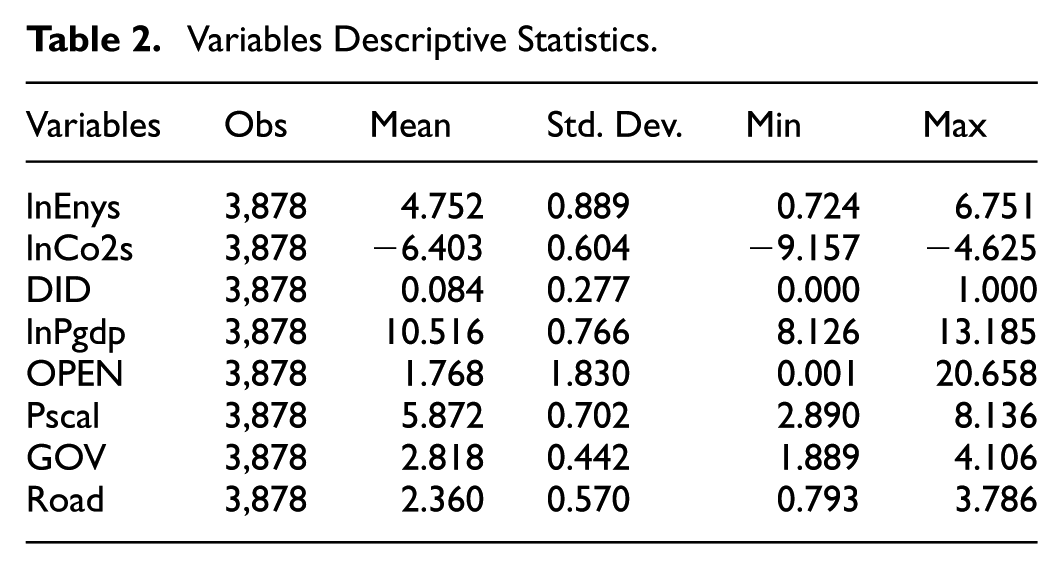
Second, interpolation was used to supplement some missing values. Finally, all variables related to monetary measurement were price-adjusted using 2007 as the base year. After these adjustments, a balanced panel dataset was obtained for 277 prefecture-level and above cities in China from 2007 to 2020. In addition, logarithmic transformation was applied to some of the highly volatile data in the panel. Descriptive statistics for the main variables are shown in Table 2.
Variables Descriptive Statistics.
Descriptive Statistics
Table 2 presents the statistical description of key variables in this study. The standard deviations of energy intensity (lnEnys) and carbon emission intensity (lnCo2s) are 0.889 and 0.604, indicating significant heterogeneity in these factors across Chinese cities. To meet the parallel trend test requirement for the DID regression analysis, this study examined the temporal patterns of lnEnys and lnCo2s. Figure 2 shows that trends in lnEnys and lnCo2s for smart and non-smart cities were consistent before the first pilot in 2012, suggesting that the parallel trend assumption is initially satisfied. After 2012, the decline in lnEnys and lnCo2s in smart cities accelerated compared to non-smart cities, indicating that the SCPP positively impacts energy conservation and emissions reduction. This sets the stage for further empirical investigation. Nonetheless, the aforementioned solely fulfills a preliminary parallel trend examination, and a more rigorous parallel trend test will be conducted in the subsequent dynamic effects section.

Preliminary parallel trend test.
Empirical Analysis and Discussion
Baseline Regression
The present research employs a two-way fixed-effects DID analytical framework to determine the effect of smart city development on conserving energy and reducing emissions. The fundamental outcome measures are presented in Table 3. Columns (1) and (3) depict the results of the regression analysis without incorporating control variables; conversely, columns (2) and (4) exhibit the corresponding findings with the inclusion of control variables. Columns (1) and (2) outline the impacts of the SCPP on energy conservation, whereas columns (3) and (4) elucidate the effects of the SCPP on reducing emissions. From columns (2) and (4) in Table 3, it can be seen that the estimated coefficients for the SCPP are significantly negative at the 5% level. This indicates that SCPP benefits ESER. To be specific, the implementation of SCPP yielded a reduction of 1.7% in EI and a decrease of 5.3% in CEI; noteworthy is that the emission reduction effect outweighed the energy conservation effect. Therefore, Hypothesis 1 is preliminarily validated, which is similar to findings of B. Zhang, Chen, and Cao (2022). This conclusion underscores the pivotal function of smart city development in attaining ESER, thus presenting empirical substantiation for innovative urban governance models and enhancing urban ecology.
Results of Baseline Regression.

Note. Robust-statistics in parentheses.
p < 0.1. **p < 0.05. ***p < 0.01.
Parallel Trend Test
The baseline regression indicates the average effect of SCPP on ESER across cities, but it does not capture how the effects may change over time. Hence, this research employs the event study methodology (Hu, 2023) to analyze the dynamic impacts of SCPP on ESER through a dynamic effects model. Moreover, the parallel trend assumption is put to a more rigorous examination using the event study methodology, specifically by constructing interaction terms between virtual variables for each year and the double difference variable (Tao et al., 2023). Based on this, the research conducts a formal parallel trend test and establishes the dynamic effects model:

Equation 4

Analysis of the dynamic effect of SCPP.
Figure 3 shows the estimated outcome as a circle, the 95% confidence interval as a solid vertical line, and the corresponding year as the horizontal axis. The coefficient estimates for each period before the adoption of SCPP are not statistically significant, as shown by using the year of the SCPP’s establishment as the base period. This supports the parallel trend assumption in this analysis by showing that the ESER impacts of smart cities and non-smart cities have the same temporal trend prior to the implementation of SCPP. The estimated coefficients following the policy implementation can be observed to be significantly negative for EI and to have a decreasing trend over time, whereas the estimated coefficients for CEI are equally negative and more significant in periods 1, 2, and 3. This indicates that the SCPP is beneficial for achieving ESER in cities. Additionally, it is important to note that SCPP’s ESER effects get stronger with time.
Robustness and Endogeneity
Introduction of Time Trend and Bacon Decomposition
Introduction of time trend. The selection of control cities and non-control cities should ideally be random in order to best use the asymptotic DID. Nonetheless, in actuality, the majority of selections are not randomized, as the choice of reference objects is frequently swayed by elements like geographic location and the level of urban economic growth. Over time, this influence can have an impact on the precision of the estimated results. To alleviate the partiality in regression findings brought about by non-random selection, we introduce interaction terms between city characteristics and time trends in the baseline model (Hu, 2023) in accordance with the data presented in Table 4. Upon the inclusion of the time trend interaction term, the estimated coefficients of DID remain noticeably negative. This result suggests that even after mitigating the impact of non-random selection, the asymptotic DID is still effective. That is, smart city pilot can promote energy saving and emission reduction.
Bacon decomposition. Considering that the effectiveness of asymptotic DID may be affected by the heterogeneity treatment effect, leading to estimation prejudice in the two-way fixed-effect estimator, that is, TWFE, there has been extensive discussion in the academic community (Sant’Anna & Zhao, 2020). To further examine the effectiveness of the asymptotic DID model, this study employs Bacon decomposition to estimate (Callaway & Sant’Anna, 2021), as demonstrated in Table 4. Upon examining the regression outcomes of Bacon decomposition, it becomes apparent that the findings remain significantly negative, thereby further substantiating the durability of the fundamental regression results.
Introduction of Time Trend and Bacon Decomposition.

Note. Robust-statistics in parentheses.
p < 0.01. **p < 0.05. *p < 0.1.
Propensity Score Matching With Difference-in-Differences (PSM-DID) and Exclusion of Confounding Factors
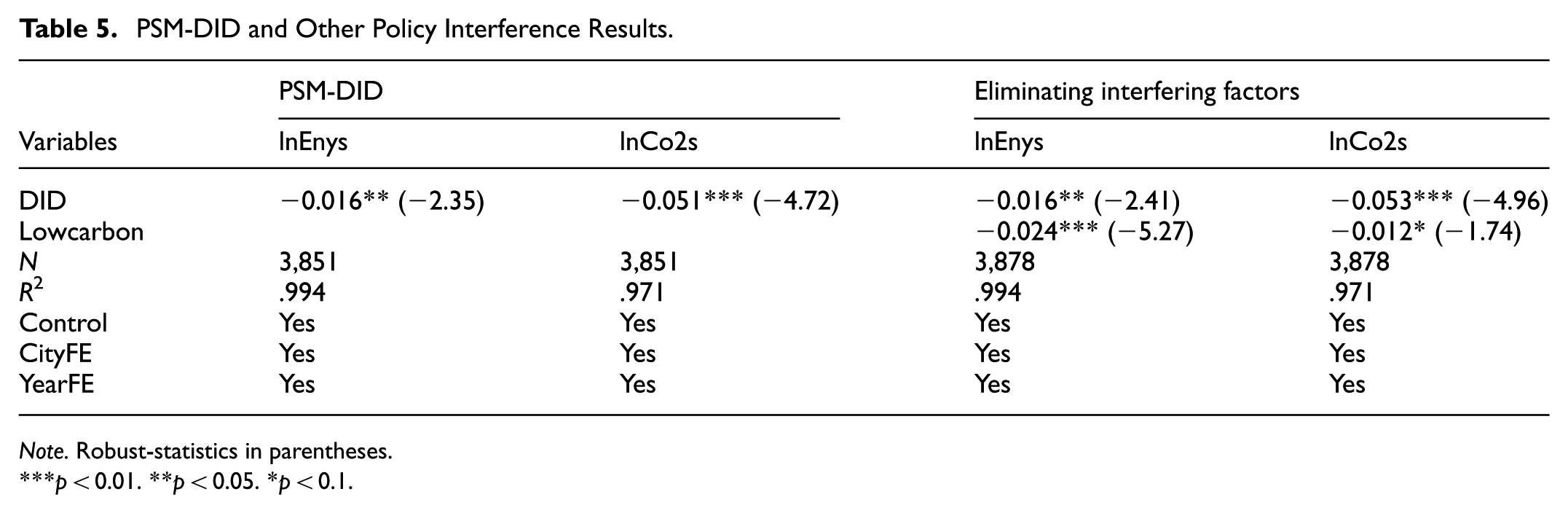
PSM-DID. This study also uses the PSM-DID approach for robustness testing to reduce any estimation bias that may result from sample selection. In the specific estimation, the caliper nearest neighbor matching method is employed for PSM-DID estimation to examine the robustness of the ESER of SCPP. Prior to estimation, this study also conducts a matching effect test between the experimental and control groups. Following the matching process, the experimental and control groups’ kernel density curves show greater closeness to one another. This observation suggests that the matching effect achieved in this study is robust. Consequently, by relying on the common support hypothesis, the feasibility and rationality of the PSM-DID method are further substantiated. The outcomes of PSM-DID estimation, as presented in Table 5, reveal that the estimated coefficients pertaining to the virtual variable for smart city policies are remarkably negative. This implies that SCPP has a positive impact on ESER, thereby affirming the robustness of the findings.
Exclusion of Confounding Factors (Low-carbon Cities). Other policies that are directly related to carbon emissions, such as those for environmental preservation, energy saving, and emission reduction, may have an impact on the SCPP’s net effect. This study’s emphasis is on choosing the low-carbon city pilot program that went into effect in 2010 in order to solve this issue. In order to conduct the analysis, a dummy variable is created, specifically referred to as the exogenous policy shock “Low_carbon.” After taking the low-carbon pilot strategy into account, the estimation results are shown in Table 5, and the DID approach’s predicted coefficient is still significantly negative. This suggests that the main regression result is relatively robust.
PSM-DID and Other Policy Interference Results.
Note. Robust-statistics in parentheses.
p < 0.01. **p < 0.05. *p < 0.1.
Replace Explained Variable and Placebo Test
Replace the Explained Variable
This study uses alternate indicators for robustness estimation to reduce any potential bias caused by the dependent variable’s measurement method. Specifically, the natural logarithm of energy consumption and carbon dioxide emissions is utilized, which is derived through fitting night light data. Table 6 provides the results of this robustness analysis. Notably, it can be observed that the coefficients associated with the SCPP on both energy consumption and carbon dioxide emissions exhibit significant negative values. This substantiates the robustness of the findings and supports the conclusion reached in the original analysis.
Results of Replace Variable and Counterfactual Test.

Note. Robust-statistics in parentheses.
p < 0.01. **p < 0.05. *p < 0.1.
Placebo Test
A placebo test is essential to further reduce the potential influence of unknown factors on the choice of the pilot city and guarantee that the results of this study are only attributable to smart cities. The placebo test ensures the robustness of the baseline study results by randomly selecting virtual treatment groups multiple times, in agreement with the baseline regression across all samples. This investigation expands on the work of Zhou et al. (2018) and employs a sampling approach. A total of 500 samplings were performed, encompassing 277 cities. Each time, 178 cities made up the control group, while the remaining 99 cities were randomly allocated to the experimental group. The results of these samplings are visually illustrated in Figure 4. The analysis reveals that the estimated coefficients exhibit a distribution centered around zero, conforming to a normal distribution. Furthermore, a significant portion of the regression coefficients are found to be nonsignificant, aligning with the anticipated outcomes of the placebo test. Furthermore, the dotted line signifies the real coefficient estimation of the fundamental explanatory factor in the initial regression model. It can be observed that the genuine coefficient estimation does not conform to the projected parameters in the placebo examination, suggesting an uncommon occurrence within the city placebo trial. Hence, it can be deduced that the ESER in cities following the implementation of the SCPP is attained through the establishment of smart cities rather than being influenced by other unobservable variables. This further substantiates the resilience of the baseline regression inference.

Placebo test.
Counterfactual Test
In this section, the policy implementation time is advanced by 3 years or delayed by 1 year, multiplied by “treat,” and incorporated into the foundational model to carry out a counterfactual placebo test, as illustrated in Table 6. When the policy implementation time is advanced by 3 years, the estimated coefficients of the interaction term “did1” are not significant, indicating that before the baseline year of the policy’s implementation in 2012, construction of smart cities was found to have no significant impact on ESER in both the treatment and control groups. Nevertheless, it is important to note that the calculated coefficients of the interaction term “did2” show a clear and statistically significant negative trend when the implementation period of the policy is postponed by 1 year. This serves as evidence that the actual year of implementing SCPP can indeed yield positive ESER effects for cities. Consequently, these results support the validity and dependability of the baseline regression results.
Exclusion of Weak Endogeneity Samples and Reduction of Time Samples
Exclusion of weak endogeneity samples. To mitigate the potential bias stemming from economic disparities among cities of different scales, we excluded all provincial capital cities from the sample. The outcomes presented in Table 7 reaffirm that the findings align with the baseline regression results, concluding that smart cities indeed facilitate ESER in urban areas.
Reduction of time samples. Samples from 2017 onwards were excluded to avoid the potential impact of encouraging the declaration and promotion of smart cities since 2017. The results in Table 7 show that the effects of the SCPP on ESER remain relatively robust.
Replacement Variable and Counterfactual Test.

Note. Robust-statistics in parentheses.
p < 0.01. **p < 0.05. *p < 0.1.
Mechanism Test
To delve deeper into the mechanisms by which smart city construction influences ESER in urban areas, we investigate three key aspects: “front-prevention,”“process control,” and “end treatment.” These aspects provide a comprehensive framework for exploring the various pathways through which smart city initiatives contribute to sustainable energy practices and reduced emissions. Among these, the ratio of the natural logarithm of the added value of the tertiary industry to that of the secondary industry is used as a gauge of the industrial structure in “front-prevention,” denoted as Stru; in “process control,” energy utilization efficiency is characterized by the natural logarithm of the ratio of GDP to total energy consumption (Hu, 2023), denoted as EEf; in “end treatment,” the measurement of green technology innovation involves assessing both the quantity and quality of green technology advancements. This is achieved by considering two indicators: the number of green innovation patent applications per 10,000 people (denoted as GAPP) and the number of green invention patents per 10,000 people (denoted as GIAP) (Song et al., 2021). In the mechanism test, we employ the mediation analysis method to expand upon the baseline model. The specific steps are as follows.
First, as stated in Model (5), regress the SCPP on the mechanism variables. If the coefficient of the SCPP


The above equations
Table 8 reports the empirical results of the “front-prevention” industrial structure as a mechanism variable in columns (1) to (3). Column (1) displays that the estimated coefficient of the DID variable is 0.044, which is statistically significant at the 1% level. This implies that the construction of smart cities positively influences the industrial structure’s optimization, aligning with previous research conducted by Q. S. Ma et al. (2021). The regression analysis in column (2) reveals that the coefficients for the DID variable and Stru are estimated as −0.015 and −0.027, respectively. Importantly, both coefficients demonstrate statistical significance. These findings show that industrial structure and the development of smart cities had a significant role in reducing EI. In column (3), the regression coefficients of the DID variable and Stru are −0.055 and −0.034, respectively, and both are significant, demonstrating that smart city development and industrial structures both significantly affect lowering CEI. Taken together, the results in columns (1) to (3) of Table 8 show that SCPP plays a crucial role in promoting ESER in cities by enhancing the structure of the industry. Furthermore, it is clear that the industrial structure serves as a partial mediator in this process, with mediation effects accounting for 7.0% (0.044 −0.027/−0.017) and 2.8% (0.044 −0.034/−0.053), respectively. The research conclusion in this section validates hypothesis 2a. Our mechanism analysis reveals coordinated pathways forming a “governance cascade,” contrasting fragmented single-channel studies (Yi et al., 2022). The front-prevention pathway through industrial restructuring operates proactively—attracting digital industries while accelerating high-energy sector exits—consistent with evidence that digital economy promotes industrial structure upgrading and reduces carbon intensity (Chang et al., 2023).
Mechanism Test I and II.

Note. Robust-statistics in parentheses.
p < 0.01. **p < 0.05. *p < 0.1.
Columns (4) to (6) of Table 8 report the empirical results of “process control” energy utilization efficiency as a mechanism variable. In column (4), the estimated coefficient of the DID variable is determined to be 0.013, which exhibits statistical significance at the 1% level. This finding indicates that smart city construction has a positive impact on enhancing energy utilization efficiency, which aligns with previous research conducted by Yu and Zhang (2019). Column (5) displays that the regression coefficients for the DID variable and EEf are estimated as −0.025 and −0.694, respectively. Notably, both coefficients demonstrate statistical significance. The findings of this study demonstrate that both smart city construction and EEf make significant contributions to the reduction of energy intensity. Likewise, the results from column (6) reveal that the regression coefficients for the DID variable and EEf are estimated as −0.059 and −0.443, respectively. Importantly, both coefficients demonstrate statistical significance. This suggests that both smart city construction and industrial structure play a significant role in reducing carbon emission intensity. The combined results from columns (4) to (6) of Table 8 demonstrate that SCPP effectively promotes ESER in cities by enhancing energy utilization efficiency. Moreover, it is evident that the EEf plays a partial mediating role in facilitating this process, with mediation effects accounting for 53.0% (0.013 −0.694/−0.017) and 10.9% (0.013 −0.443/−0.053), respectively. The research conclusion in this section validates hypothesis 2b.
Smart infrastructure creates locational advantages selectively drawing clean industries, with tertiary sector growth contributing 23% of SCPP’s ESER effect, aligning with findings that digital economy facilitates green transformation through structural optimization (K. Dong et al., 2023). The process control pathway validates smart energy systems improving greenhouse gas emission performance in urban China (F. Dong, Li, Li, et al., 2022). City-level analysis reveals that pilot cities have reduced energy intensity without experiencing rebound effects, with efficiency gains translated into absolute savings through bundled technical upgrades, behavioral interventions, and dynamic pricing mechanisms. This confirms that information infrastructure directly enhances energy efficiency beyond the level of simple information and communication technology (ICT) applications (Lange et al., 2020; W. Zhang, Liu, et al., 2022).
In Table 9, Columns (1) to (3) report the empirical results of the quantity of “end” green technology innovation as a mechanism variable. The result in column (1) reveals that the estimated coefficient of the DID variable is 1.165 and statistically significant at the 1% level. This finding suggests that the construction of smart cities positively influences the quantity of green technology innovation. This aligns with prior research conducted by Song et al. (2021). In column (2), the DID variable is estimated to be −0.018 and statistically significant, indicating that the construction of smart cities leads to a reduction in energy intensity. However, the regression coefficient of GAPP is estimated to be 0.001 and is not statistically significant. This suggests that while the construction of smart cities has an impact on reducing EI, the quantity of green innovation alone may not necessarily contribute to this reduction. In column (3), both the DID variable and the regression coefficient of GAPP are found to be statistically significant. The regression analysis reveals estimated coefficients of −0.034 and −0.016 for the DID variable and GAPP, respectively. These findings suggest that both smart city construction and the quantity of green innovation significantly contribute to the reduction of CEI. Overall, the results from Columns (1) to (3) in Table 9 indicate a positive association between smart city construction and urban carbon reduction through an increased quantity of green technology innovation. However, it is important to note that relying solely on an increase in the quantity of green technology innovation may not lead to significant improvements in energy efficiency in smart city construction. Additionally, the quantity of green innovation plays a partial mediator role in emissions reduction, with a mediation effect accounting for approximately 35.2% (1.165 −0.016/−0.053). The research conclusion in this section verifies hypothesis 2c that the construction of smart cities through increasing the quantity of green technology innovation can achieve carbon reduction.
Mechanism Test III.

Note. Robust-statistics in parentheses.
p < 0.01. **p < 0.05. *p < 0.1.
Columns (4) to (6) in Table 9 report the empirical results of “end” green technology innovation quality as a mechanism variable. In column (4), the regression analysis demonstrates that the estimated coefficient for the DID variable is 0.602, which exhibits statistical significance at the 1% level. These findings suggest that the construction of smart cities positively influences the enhancement of green technology innovation quality. This finding aligns with prior research conducted by Song et al. (2021). In column (5), the DID variable is −0.017 and significant. However, it is crucial to note that the estimated regression coefficient for GIAP is 0.001 and is not statistically significant. This suggests that the construction of smart cities can reduce energy intensity, but the quality of green technology innovation does not necessarily reduce EI. In column (6), the DID variable and the regression coefficient of GIAP are both significant at −0.037 and −0.028, respectively, indicating that the construction of smart cities and the quality of green innovation can both reduce CEI. To summarize, the findings from Columns (4) to (6) of Table 9 indicate that the construction of smart cities plays a role in promoting urban carbon reduction by enhancing the quality of green technology innovation. These results highlight the importance of focusing on the quality aspect of green technology innovation when aiming for sustainable urban development and emissions reduction. However, the construction of smart cities does not lead to a significant improvement in energy efficiency through the enhancement of green technology innovation quality. Additionally, the quality of green innovation only partially mediates emissions reduction, accounting for 32.8% (0.602 −0.028/−0.053). The research findings in this section provide support for hypothesis 2c, which states that the construction of smart cities can effectively achieve carbon reduction by enhancing the quality of green technology innovation. These results confirm the importance of prioritizing efforts to improve the quality of green technology innovations within smart city initiatives as a means to drive sustainable carbon reduction.
SCPP can promote the diffusion of green patents and green technologies, but its direct contribution to the overall effect is relatively limited, suggesting that “innovation-driven governance” needs to be supported by structural optimization and efficiency improvements in order to unleash greater marginal effects (Lange et al., 2020). Notably, our evidence shows significant complementarities between the three paths: for example, the fiscal and resource “space” created by efficiency improvements further supports investments in green infrastructure and R&D, forming a virtuous cycle (Lyu et al., 2023).
Heterogeneity Analysis
Industrial Characteristics Heterogeneity: Old Industrial Base Cities and Non-Old Industrial Base Cities
This article delves further into investigating whether the effects of ESER in smart cities vary depending on the characteristics of urban industry. Specifically, based on the classification criteria of the State Council of the People’s Republic of China “National Old Industrial Base Adjustment and Transformation Plan (2013–2020),” the sample cities are classified into two categories: old industrial base cities and non-old industrial base cities. The results are shown in Figure 5. Panel A shows that the degree of energy saving under the SCPP is different. Among them, the degree of energy saving under the SCPP in non-old industrial base cities is stronger and significantly different from zero, while the energy saving effect of the SCPP in old industrial base cities has not been realized. In Panel B of Figure 5, the results indicate that there are variations in the degree of emission reduction achieved through the smart city pilot policy. Specifically, the emission reduction magnitude in non-old industrial base cities is more pronounced and significantly different from zero. In contrast, the emission reduction degree in old industrial base cities is lower compared to both non-old industrial base cities and the benchmark regression result. Additionally, the emission reduction effect in old industrial base cities is not statistically significant. In conclusion, the ESER effects of the SCPP are significantly stronger in non-old industrial base cities compared to old industrial base cities. In other words, smart cities are more conducive to promoting ESER in non-old industrial base cities, which is significantly different from the research of Hu (2023). These findings highlight the importance of considering the specific characteristics and industrial context of cities when evaluating the effectiveness of smart city initiatives in achieving sustainable energy and emission reduction goals.

The heterogeneity of urban industrial characteristics: Panel A illustrates whether there is a difference in urban energy-saving effects depending on whether a city is an old industrial city. Panel B illustrates whether there is a difference in urban emission reduction effects depending on whether a city is an old industrial city.
The reason for this may be that old industrial bases are important energy bases in China, with a large overall energy consumption (H. Wang, Li, et al., 2023) and a heavy emphasis on heavy industries. The limited duration of the SCPP implementation, coupled with the broad development model adopted by old industrial bases, has led to relatively low effectiveness in terms of carbon governance in the short term. In comparison, non-old industrial base cities have relatively developed economies, improved industrial structures, and higher levels of marketization. Based on the network effect of Metcalfe’s Law, they are more conducive to the integration, development, and spillover diffusion of digital technology and energy-saving and low-carbon technology in smart cities (B. Zhang, Chen, Cao, 2022; J. Zhang, Fu, & Liu, 2022). This integration and diffusion of advanced technologies can result in reduced energy consumption and carbon emissions per unit of output, as well as the promotion of clean energy utilization at a larger scale, ultimately leading to improved energy efficiency. As a result, the positive impact of smart cities on ESER tends to be more significant in non-old industrial base cities. This supports the notion that the specific characteristics and context of a city can influence the effectiveness of smart city initiatives in achieving ESER goals.
Resource Endowment Heterogeneity: Resource-Based Cities and Non-Resource-Based Cities
This article delves further into examining whether the ESER effects of smart cities vary based on variations in urban resources endowment. The objective is to understand how the availability and distribution of resources in different cities influence the outcomes of smart city initiatives in terms of ESER. Specifically, based on the “National Sustainable Development Plan for Resource-based Cities (2013–2020)” notification document, all sample cities are divided into two categories: resource-based cities and non-resource-based cities. By considering the perspective of resource endowment, this analysis aims to uncover any variations or disparities in the outcomes of the SCPP across different types of cities. Panel C of Figure 6 shows that the degree of energy saving under the SCPP is different. Among them, the degree of energy saving under the SCPP in non-resource-based cities is stronger and significantly different from zero. The analysis indicates that the energy-saving effect of the SCPP in resource-based cities has not been observed. Panel D of the Figure 6 demonstrates variations in the degree of carbon reduction resulting from the implementation of smart city pilot policies. Specifically, the carbon emission reduction degree of the policy in non-resource-based cities is significantly stronger and different from zero. In contrast, the carbon emission reduction degree of the policy in resource-based cities is lower compared to that of non-resource-based cities and the baseline regression results. Furthermore, it is also significantly different from zero. In summary, the ESER degree of the SCPP in non-resource-based cities is significantly stronger than that in resource-based cities, and the emission reduction effect is stronger than the energy saving effect.

The heterogeneity of urban resource endowment: Panel C illustrates whether there is a difference in urban energy-saving effects depending on whether a city is a resource-based city. Panel D illustrates whether there is a difference in urban emission reduction effects depending on whether a city is a resource-based city.
The path dependence theory explains that resource-based cities often face path dependence and industrial structure lock-in effects due to their resource endowments, leading to reliance on high energy-consuming and high-emission industries. In addition, the traditional industries in resource-based cities have low integration with new digital technologies, and the emerging industries, such as energy saving and environmental protection, have weak linkages with traditional resource industries. As a result, resource-based cities cannot effectively carry out the digital transformation of traditional resource industries. As a result, the ESER effects of the SCPP in resource-based cities are comparatively less effective when compared to non-resource-based cities.
Administrative Level Heterogeneity: Central Cities and Peripheral Cities
This study further investigates whether the ESER effects of smart cities differ based on urban administrative levels. Cities are divided into two groups: central cities (provincial capitals, separately listed cities, and special economic zones) and peripheral cities. Panel E of Figure 7 demonstrates that there is a difference in the degree of energy saving under the SCPP. Among them, the degree of energy saving under the SCPP in central cities is stronger and significantly different from zero, while the degree of energy saving under the SCPP in peripheral cities is lower than that in central cities, and the benchmark regression result is not significant. Panel F of Figure 7 demonstrates variations in the degree of emission reduction resulting from the implementation of the SCPP. The emission reduction degree of the policy in central cities is notably stronger and significantly different from zero. In contrast, the emission reduction degree of the policy in peripheral cities is lower compared to that in central cities as well as the benchmark regression result.

The heterogeneity of urban administrative level: Panel E illustrates whether there is a difference in urban energy-saving effects depending on whether a city is a center city. Panel F illustrates whether there is a difference in urban emission reduction effects depending on whether a city is a center city.
In summary, the ESER effects of the SCPP in central cities are notably stronger compared to peripheral cities. Additionally, the degree of emission reduction is observed to be more pronounced than the energy saving effect. This may be due to the fact that the policy incentives for implementing the SCPP in central cities are more conducive to the optimization of industrial structure and technical innovation, hence enhancing energy efficiency based on current advantages. Compared with central cities, non-central cities have weaker foundations, and their economic development often relies on the radiation drive of central cities or the transfer of industries from central cities. In addition, affected by the “siphon effect” of central cities, the soft and hard environment for technological innovation and industrial structure optimization in non-central cities lags behind that in central cities, which implies that the ESER effects of smart city initiatives are less favorable in non-central cities.
Further Analysis
Marginal Effects
The SCPP effectively achieves sustainable ESER effects, but knowledge of its marginal impacts is limited. To investigate this, we used quantile regression models to analyze the marginal effects of the SCPP on EI and CEI, as shown in Figure 8. The findings demonstrate that the SCPP exhibits an increasing marginal effect in suppressing both EI and CEI. Indeed, the results indicate that the suppressive effect of the SCPP on EI and CEI intensity becomes stronger as these intensities increase. This implies that promoting smart city construction, specifically in regions with high EI and high CEI, can lead to greater environmental benefits and a higher potential for energy savings (Z. Yang et al., 2022). By focusing efforts on these areas, policymakers can maximize the positive impact of smart city initiatives and effectively address the pressing environmental challenges associated with high energy consumption and carbon emissions.
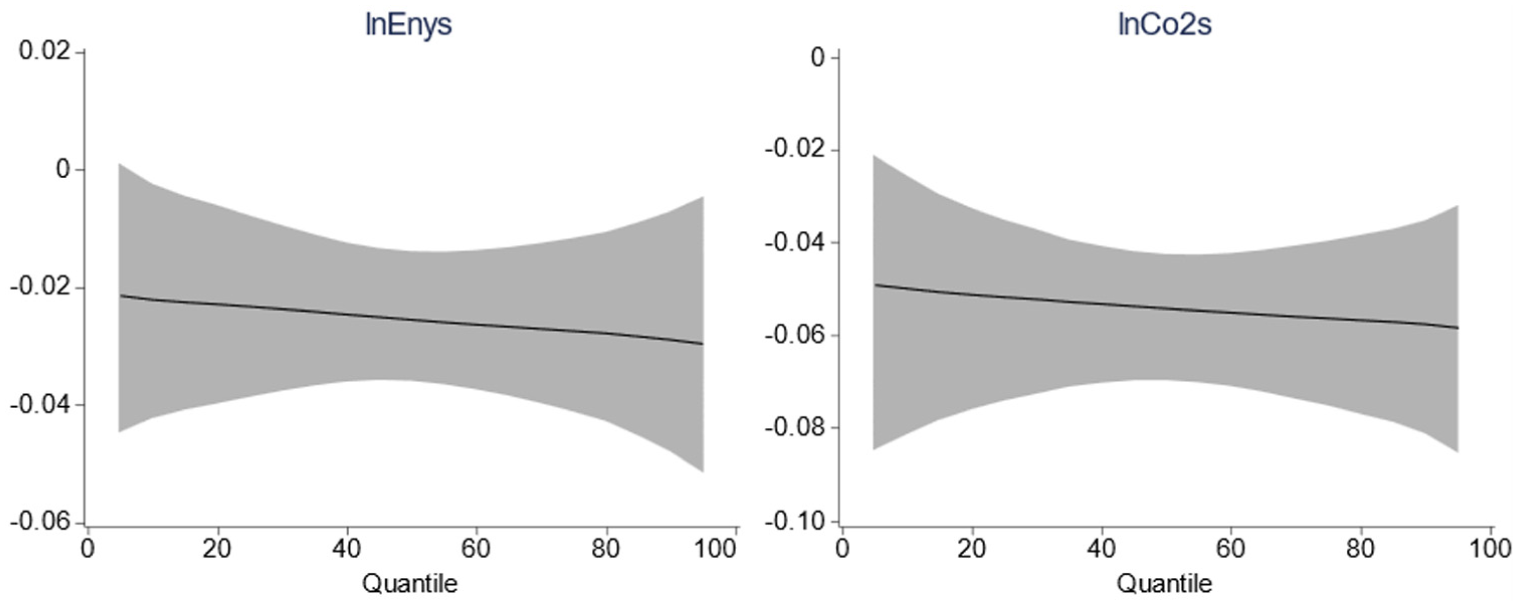
The marginal effect of the SCPP on ESER.
Spatial Effects
To investigate the SCPP’s spillover effects in greater detail, we employed spatial econometric models for estimation. The Spatial Durbin Model (SDM) was chosen for its ability to address biased point estimation through partial differentiation and to decompose the impacts of new network infrastructure on ESER into direct and spillover effects. Therefore, this study intends to construct the following SDM to measure the spillover effects of smart city construction on ESER:
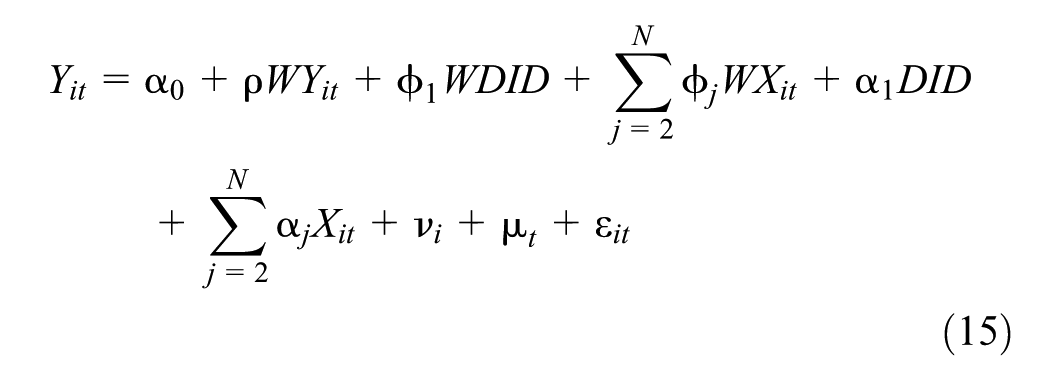
In Equation 15,
This section explores the spillover impacts of the SCPP, with estimation results in Table 10. Columns (1) and (2) show that the SCPP promotes ESER in pilot cities and significantly reduces EI and CEI in nearby cities. The demonstration and warning effects of smart cities significantly drive ESER, not only in pilot cities but also in surrounding areas, incentivizing collaborative efforts toward sustainable ESER goals. Therefore, the construction of smart cities should shift from urban competition to regional collaboration: by utilizing cross-city data platforms, unified standards, and joint procurement, it is possible to internalize spillover benefits, avoid redundant investments, and prevent “island systems.” For developing economies (such as India, Indonesia, and Kenya), this approach is replicable.
Spatial Spillover Effects of the SCPP Under Inverse Distance Matrix and Economic Distance Embedded Matrix.

Note. Robust-statistics in parentheses.
p < 0.01. **p < 0.05. *p < 0.1.
Conclusion, Policy Implications, and Directions for Future Research
Conclusion and Discussion
Establishing novel infrastructure, such as intelligent urban areas, is a key strategy for achieving ESER in China’s pursuit of economic development. This study analyzes the mechanisms of ESER in pilot intelligent urban projects, using the SCPP as a quasi-natural experiment to assess its impact on urban ESER. We utilized panel data from 277 cities in China, covering the period from 2007 to 2020. The results of this study can be summarized as follows:
Smart city construction increases energy saving by 1.7% and reduces emissions by 5.3%, demonstrating that the adoption of SCPP contributes positively to the attainment of ESER goals. This conclusion remains robust under various multi-dimensional scenarios, such as placebo tests and PSM-DID analysis, which have strong policy implications for China’s green and low-carbon development. Moreover, smart city construction also has significant dynamic effects and spatial spillover effects in influencing the process of urban ESER, meaning that as time goes on, the ESER effects of the SCPP will continue to increase and can drive the surrounding areas to achieve ESER.
Front-prevention (industrial structure upgrading), process control (energy utilization efficiency improvement), and end treatment (green technology innovation) are effective approaches for the SCPP to achieve ESER, with the impact of industrial structure upgrading being relatively modest.
The ESER effects of the SCPP have significant characteristics of marginal effects increasing.
The ESER effects of the SCPP exhibit heterogeneity. Notably, the ESER effects of SCPP are particularly pronounced in central cities, non-resource-based cities, and non-old industrial bases.
Policy Implications
This study highlights the importance of constructing new infrastructure, such as smart cities, for achieving ESER within a green and low-carbon economy. It emphasizes how cities can pursue sustainable development through digital transformation and contributes to research on ESER in the digital economic age. To enhance the effectiveness of the SCPP, the following policy implications are proposed:
To fully realize the ESER potential of smart cities, systematic expansion of the SCPP is recommended. The study confirms its positive impact on ESER, necessitating proactive government planning and promotion of the SCPP. This should involve a “trial first, promotion later” approach, fostering a model where pilot cities lead to broader adoption, maximizing scale and spillover effects. Such efforts will drive ESER growth and contribute to China’s urban green and low-carbon development. Key initiatives include: increased investment in ICT, fostering new digital sectors (e.g., big data and cloud computing), integrating digital technologies into energy and environmental sectors, optimizing urban layout, enhancing resource efficiency, and nurturing new energy conservation and low-carbon technologies, formats, and industries.
To achieve ESER synergy, a comprehensive approach is needed, encompassing “front-prevention,”“process control,” and “end treatment.” This study underscores the potential of smart cities to achieve ESER through industrial structure upgrading, energy efficiency improvement, and green technology innovation. We should fully leverage the policy window provided by smart city pilot programs to build a three-tiered collaborative governance system consisting of “front-end prevention, mid-control, and end-of-process supplementation.” In addition, smart city construction provides unprecedented technical means and institutional space for urban energy conservation and emission reduction. Its core lies not in the deployment of a single technology, but in the reconstruction of governance logic. As pointed out by North (1990) and Ostrom (2005), the interaction between institutions and behavior has a profound impact on policy implementation performance. Under the smart city framework, institutionalizing the “prevention-control” mechanism can more effectively stimulate the internal motivation for energy conservation and emission reduction (Sun & Zheng, 2024): “front-end prevention” and “process control” should be regarded as the main pathways for energy conservation and emission reduction. Through top-down design and system integration, the fragmented nature of traditional end-of-pipe governance can be overcome, and the experience of Freiburg, Germany, can be applied to the Chinese context. China’s emission reduction focus has shifted from “end-of-pipe governance” to “pre-emptive prevention” and “process control.” Policies should prioritize structural optimization, resource allocation, and governance of micro-level entities. Local governments should combine policy guidance with breakthroughs in ESER, particularly in smart industry, energy, and transportation sectors, to drive energy efficiency and green technology innovation across multiple sectors. To maximize the ESER impact of the SCPP, a differentiated approach tailored to local conditions is essential. This study highlights varying impacts across city types, emphasizing the need to consider heterogeneities. Implement targeted urban strategies leveraging smart cities’ unique strengths for green transformation. Differentiate SCPP policies based on industrial characteristics, resource endowments, and administrative levels. Actively explore digital transformation for old industrial/resource-based cities. Use digital tech to transform traditional industries, enhancing smart city adaptability and driving low-carbon advances. This approach helps overcome structural energy and resource challenges, unlocking the full potential of smart cities to empower urban green and low-carbon transformation. Additionally, the dividends of smart city development should be leveraged to support peripheral cities in achieving urban green and low-carbon development.
Directions for Future Research
Although this paper provides strong causal evidence of the role of SCPP in promoting ESER, there are still three limitations. First, based on macro-level data at the city level, it is still difficult to fully distinguish between stock adaptation (existing businesses becoming cleaner through digital transformation) and flow substitution (high-energy-consuming capacity being replaced by newly entered green entities) in their relative contributions to ESER. Second, the observation window is still relatively short, making it hard to determine the long-term sustainability of the policy effects and whether there is diminishing marginal returns once digital infrastructure matures. Third, the measurement of mechanisms mainly relies on macro-level proxy variables, which is not yet sufficient to precisely map the relationship between specific digital interventions (such as load aggregation on the energy consumption side, flexible scheduling on the supply side, and dynamic pricing on the demand side) and quantified environmental outcomes.
Looking to the future, research can proceed along three paths: first, linking platform-level micro data (enterprise-level energy consumption trajectories, equipment-level sensor data, project-level financial information) to decompose the effects of stock and flow and identify micro-level behavioral mechanisms; second, extending the time window and incorporating event study designs to evaluate the durability of policy effects and the potential “learning effects” or “fatigue effects;” third, conducting cross-country comparisons and institutional context analysis to test the global applicability and boundary conditions of smart city pathways for sustainable development under different governance capacities and fiscal systems.
Footnotes
Acknowledgements
The authors would like to acknowledge the reviewers and editors for their valuable guidance and helpful comments.

Funding
The authors disclosed receipt of the following financial support for the research, authorship, and/or publication of this article: This work was supported by Scientific Research Foundation for High-level Talents of Anhui University of Science and Technology (2023yjrc14); Humanity and Social Science Research Project of Anhui Educational Committee (2024AH052400).
Declaration of Conflicting Interests
The authors declared no potential conflicts of interest with respect to the research, authorship, and/or publication of this article.
Data Availability Statement
Data will be made available on request.